Articles | Volume 26, issue 19
https://doi.org/10.5194/acp-26-13845-2026
© Author(s) 2026. This work is distributed under
the Creative Commons Attribution 4.0 License.
https://doi.org/10.5194/acp-26-13845-2026
© Author(s) 2026. This work is distributed under
the Creative Commons Attribution 4.0 License.
The impact of orography on the troposphere-to-stratosphere transport during a typhoon event in the tropics

Massimo Martina
CORRESPONDING AUTHOR
Department of Atmospheric Physics, Faculty of Mathematics and Physics, Charles University, Prague, Czech Republic
Anahí Villalba-Pradas
Department of Atmospheric Physics, Faculty of Mathematics and Physics, Charles University, Prague, Czech Republic
Šimon Bartoň
Department of Atmospheric Physics, Faculty of Mathematics and Physics, Charles University, Prague, Czech Republic
Related authors
No articles found.
Dominika Hájková, Aleš Kuchař, and Petr Šácha
EGUsphere, https://doi.org/10.5194/egusphere-2026-5319, https://doi.org/10.5194/egusphere-2026-5319, 2026
This preprint is open for discussion and under review for Weather and Climate Dynamics (WCD).
Short summary
Short summary
Stratospheric polar vortex is one the most important parts of the winter stratospheric circulation. Its stability is hard to simulate and differs between general circulation models. Here, we show how the intermodel differences of parameterized orographic gravity wave drag influence propagation and breaking of resolved planetary waves; and consequently how it is connected to vortex stability. For this we use the geometry of polar vortex, potential vorticity as well as northern annular mode index.
Beth Dingley, James A. Anstey, Marta Abalos, Carsten Abraham, Tommi Bergman, Lisa Bock, Sonya Fiddes, Birgit Hassler, Ryan J. Kramer, Fei Luo, Fiona M. O'Connor, Petr Šácha, Isla R. Simpson, Laura J. Wilcox, and Mark D. Zelinka
Geosci. Model Dev., 19, 2945–2984, https://doi.org/10.5194/gmd-19-2945-2026, https://doi.org/10.5194/gmd-19-2945-2026, 2026
Short summary
Short summary
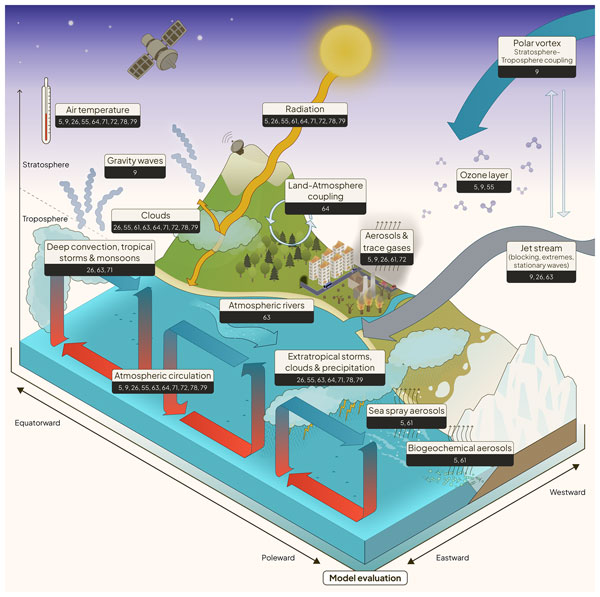
This manuscript defines as a list of variables and scientific opportunities which are requested from the Coupled Model Intercomparison Project Phase 7 (CMIP7) Assessment Fast Track to address open atmospheric science questions. The list reflects the output of a large public community engagement effort, coordinated across autumn 2025 through to summer 2025.
Radek Zajíček, Zuzana Procházková, and Petr Šácha
EGUsphere, https://doi.org/10.5194/egusphere-2026-909, https://doi.org/10.5194/egusphere-2026-909, 2026
Short summary
Short summary
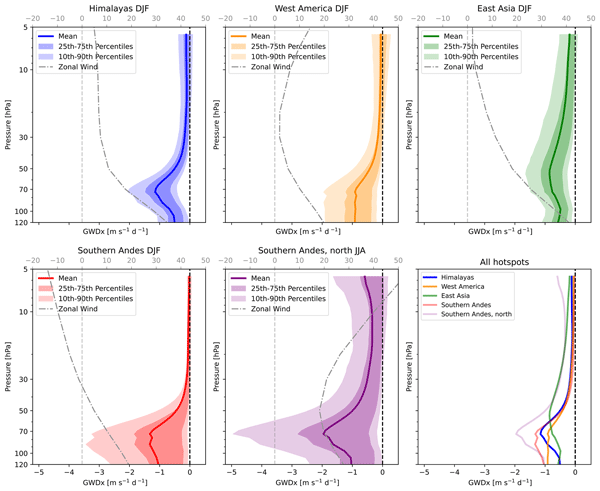
We compare resolved gravity wave drag from high-resolution reanalysis data with parameterized drag from global climate model simulations. Our results show strong similarity between parameterized and resolved drag, but their interactions with Rossby waves differ markedly. This discrepancy suggests that current climate models may misrepresent gravity wave influences on atmospheric circulation and highlight the need to improve gravity wave parameterizations for more reliable climate predictions.
Zuzana Procházková, Radek Zajíček, and Petr Šácha
Weather Clim. Dynam., 6, 927–947, https://doi.org/10.5194/wcd-6-927-2025, https://doi.org/10.5194/wcd-6-927-2025, 2025
Short summary
Short summary
In this work, we compute and analyze resolved gravity wave drag in high-resolution reanalysis data. Studying gravity waves with a realistic dataset helps us to understand them better and potentially improve climate projections. Part of our results supports a key hypothesis governing the vertical distribution of parameterized gravity wave drag in climate models; however, we also provide evidence of the strong influence of horizontal wave propagation, a mechanism that is currently missing in the models.
Masatomo Fujiwara, Patrick Martineau, Jonathon S. Wright, Marta Abalos, Petr Šácha, Yoshio Kawatani, Sean M. Davis, Thomas Birner, and Beatriz M. Monge-Sanz
Atmos. Chem. Phys., 24, 7873–7898, https://doi.org/10.5194/acp-24-7873-2024, https://doi.org/10.5194/acp-24-7873-2024, 2024
Short summary
Short summary
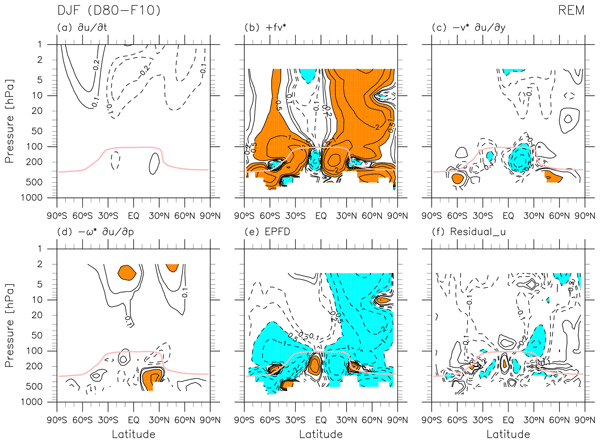
A climatology of the major variables and terms of the transformed Eulerian-mean (TEM) momentum and thermodynamic equations from four global atmospheric reanalyses is evaluated. The spread among reanalysis TEM momentum balance terms is around 10 % in Northern Hemisphere winter and up to 50 % in Southern Hemisphere winter. The largest uncertainties in the thermodynamic equation (about 50 %) are in the vertical advection, which does not show a structure consistent with the differences in heating.
Peter Huszar, Alvaro Patricio Prieto Perez, Lukáš Bartík, Jan Karlický, and Anahi Villalba-Pradas
Atmos. Chem. Phys., 24, 397–425, https://doi.org/10.5194/acp-24-397-2024, https://doi.org/10.5194/acp-24-397-2024, 2024
Short summary
Short summary
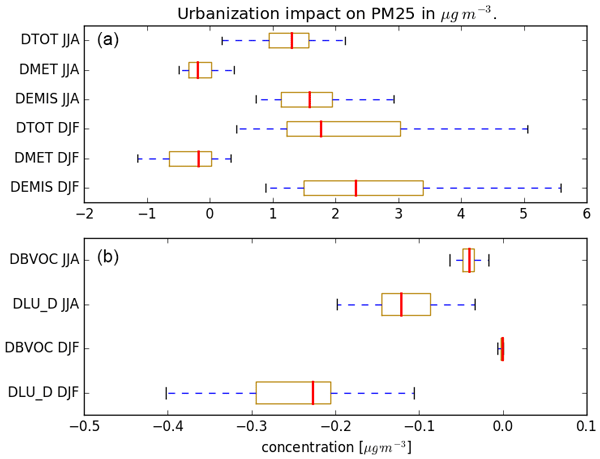
Urbanization transforms rural land into artificial land, while due to human activities, it also introduces a great quantity of emissions. We quantify the impact of urbanization on the final particulate matter pollutant levels by looking not only at these emissions, but also at the way urban land cover influences meteorological conditions, how the removal of pollutants changes due to urban land cover, and how biogenic emissions from vegetation change due to less vegetation in urban areas.
Anahí Villalba-Pradas and Francisco J. Tapiador
Geosci. Model Dev., 15, 3447–3518, https://doi.org/10.5194/gmd-15-3447-2022, https://doi.org/10.5194/gmd-15-3447-2022, 2022
Short summary
Short summary
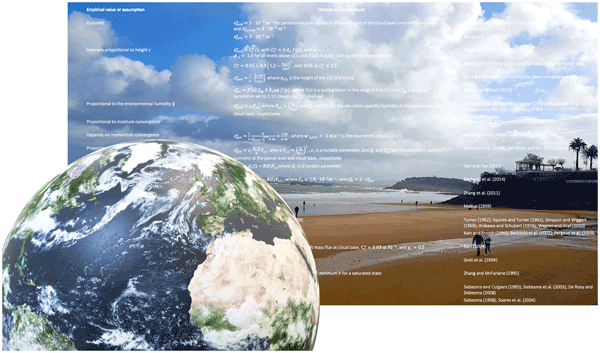
The paper provides a comprehensive review of the empirical values and assumptions used in the convection schemes of numerical models. The focus is on the values and assumptions used in the activation of convection (trigger), the transport and microphysics (commonly referred to as the cloud model), and the intensity of convection (closure). Such information can assist satellite missions focused on elucidating convective processes and the evaluation of model output uncertainties.
Cited articles
Archibald, A., Neu, J., Elshorbany, Y., Cooper, O., Young, P., Akiyoshi, H., Cox, R., Coyle, M., Derwent, R., Deushi, M., Finco, A., Frost, G., Galbally, I., Gerosa, G., Granier, C., Griffiths, P., Hossaini, R., Hu, L., Jöckel, P., Josse, B., Lin, M., Mertens, M., Morgenstern, O., Naja, M., Naik, V., Oltmans, S., Plummer, D., Revell, L., Saiz-Lopez, A., Saxena, P., Shin, Y., Shahid, I., Shallcross, D., Tilmes, S., Trickl, T., Wallington, T., Wang, T., Worden, H., and Zeng, G.: Tropospheric Ozone Assessment Report: A critical review of changes in the tropospheric ozone burden and budget from 1850 to 2100, Elem. Sci. Anth., 8, 034, https://doi.org/10.1525/elementa.2020.034, 2020. a
Bossolasco, A., Jegou, F., Sellitto, P., Berthet, G., Kloss, C., and Legras, B.: Global modeling studies of composition and decadal trends of the Asian Tropopause Aerosol Layer, Atmos. Chem. Phys., 21, 2745–2764, https://doi.org/10.5194/acp-21-2745-2021, 2021. a
Bourqui, M. S.: Stratosphere-troposphere exchange from the Lagrangian perspective: a case study and method sensitivities, Atmos. Chem. Phys., 6, 2651–2670, https://doi.org/10.5194/acp-6-2651-2006, 2006. a, b
Breuninger, A., Joppe, P., Wilsch, J., Schwenk, C., Bozem, H., Emig, N., Merkel, L., Rossberg, R., Keber, T., Kutschka, A., Waleska, P., Hofmann, S., Richter, S., Ungeheuer, F., Dörholt, K., Hoffmann, T., Miltenberger, A., Schneider, J., Hoor, P., and Vogel, A. L.: Organic aerosols mixing across the tropopause and its implication for anthropogenic pollution of the UTLS, Atmos. Chem. Phys., 25, 16533–16551, https://doi.org/10.5194/acp-25-16533-2025, 2025. a
Brioude, J., Arnold, D., Stohl, A., Cassiani, M., Morton, D., Seibert, P., Angevine, W., Evan, S., Dingwell, A., Fast, J. D., Easter, R. C., Pisso, I., Burkhart, J., and Wotawa, G.: The Lagrangian particle dispersion model FLEXPART-WRF version 3.1, Geosci. Model Dev., 6, 1889–1904, https://doi.org/10.5194/gmd-6-1889-2013, 2013. a, b, c, d
Chau, C. H., Hoor, P., and Tost, H.: Simulated mixing in the UTLS by small-scale turbulence using multi-scale chemistry-climate model MECO(n), Atmos. Chem. Phys., 25, 13123–13140, https://doi.org/10.5194/acp-25-13123-2025, 2025. a
Chen, D., Zhou, T., Guo, D., and Ge, S.: Simulation of the multi-timescale stratospheric intrusion processes in a typical cut-off low over northeast Asia, Atmosphere, 13, 68, https://doi.org/10.3390/atmos13010068, 2021. a
Chen, F. and Dudhia, J.: Coupling an advanced land surface–hydrology model with the Penn State–NCAR MM5 modeling system. Part I: Model implementation and sensitivity, Mon. Weather Rev., 129, 569–585, 2001. a
Cohen, N. Y. and Boos, W. R.: The influence of orographic Rossby and gravity waves on rainfall, Q. J. Roy. Meteor. Soc., 143, 845–851, 2017. a
Das, S. S., Ratnam, M. V., Uma, K. N., Subrahmanyam, K. V., Girach, I. A., Patra, A. K., Aneesh, S., Suneeth, K. V., Kumar, K. K., Kesarkar, A. P., Sijikumar, S., and Ramkumar, G.: Influence of tropical cyclones on tropospheric ozone: possible implications, Atmos. Chem. Phys., 16, 4837–4847, https://doi.org/10.5194/acp-16-4837-2016, 2016. a
Dauhut, T. and Hohenegger, C.: The Contribution of Convection to the Stratospheric Water Vapor: The First Budget Using a Global Storm-Resolving Model, J. Geophys. Res.-Atmos., 127, e2021JD036295, https://doi.org/10.1029/2021JD036295, 2022. a
Dessler, A. and Sherwood, S.: Effect of convection on the summertime extratropical lower stratosphere, J. Geophys. Res.-Atmos., 109, https://doi.org/10.1029/2004JD005209, 2004. a
Emanuel, K.: Tropical cyclones, Annu. Rev. Earth Pl. Sc., 31, 75–104, 2003. a
Evangeliou, N., Grythe, H., Klimont, Z., Heyes, C., Eckhardt, S., Lopez-Aparicio, S., and Stohl, A.: Atmospheric transport is a major pathway of microplastics to remote regions, Nat. Commun., 11, 3381, https://doi.org/10.1038/s41467-020-17201-9, 2020. a
Forster, P. M. D. F. and Shine, K.: Assessing the climate impact of trends in stratospheric water vapor, Geophys. Res. Lett., 29, 10–1, https://doi.org/10.1029/2001GL013909, 2002. a
Fueglistaler, S., Dessler, A., Dunkerton, T., Folkins, I., Fu, Q., and Mote, P. W.: Tropical tropopause layer, Rev. Geophys., 47, https://doi.org/10.1029/2008RG000267, 2009. a, b, c, d
Hersbach, H., Bell, B., Berrisford, P., Hirahara, S., Horányi, A., Muñoz-Sabater, J., Nicolas, J., Peubey, C., Radu, R., Schepers, D., Simmons, A., Soci, C., Abdalla, S., Abellan, X., Balsamo, G., Bechtold, P., Biavati, G., Bidlot, J., Bonavita, M., De Chiara, G., Dahlgren, P., Dee, D., Diamantakis, M., Dragani, R., Flemming, J., Forbes, R., Fuentes, M., Geer, A., Haimberger, L., Healy, S., Hogan, R., Hólm, E., Janisková, M., Keeley, S., Laloyaux, P., Lopez, P., Lupu, C., Radnoti, G., de Rosnay, P., Rozum, I., Vamborg, F., Villaume, S., and Thépaut, J.: The ERA5 global reanalysis, Q. J. Roy. Meteor. Soc., 146, 1999–2049, 2020. a
Highwood, E. and Hoskins, B.: The tropical tropopause, Q. J. Roy. Meteor. Soc., 124, 1579–1604, 1998. a
Holton, J. R. and Gettelman, A.: Horizontal transport and the dehydration of the stratosphere, Geophys. Res. Lett., 28, 2799–2802, 2001. a
Holton, J. R., Haynes, P. H., McIntyre, M. E., Douglass, A. R., Rood, R. B., and Pfister, L.: Stratosphere-troposphere exchange, Rev. Geophys., 33, 403–439, 1995. a
Homeyer, C. R., Bowman, K. P., and Pan, L. L.: Extratropical tropopause transition layer characteristics from high-resolution sounding data, J. Geophys. Res.-Atmos., 115, https://doi.org/10.1029/2009JD013664, 2010. a
Houze Jr., R. A.: Clouds in tropical cyclones, Mon. Weather Rev., 138, 293–344, 2010. a
Iacono, M. J., Delamere, J. S., Mlawer, E. J., Shephard, M. W., Clough, S. A., and Collins, W. D.: Radiative forcing by long-lived greenhouse gases: Calculations with the AER radiative transfer models, J. Geophys. Res.-Atmos., 113, https://doi.org/10.1029/2008JD009944, 2008. a
James, P., Stohl, A., Forster, C., Eckhardt, S., Seibert, P., and Frank, A.: A 15-year climatology of stratosphere-troposphere exchange with a Lagrangian particle dispersion model: 1. Methodology and validation, J. Geophys. Res.-Atmos., 108, https://doi.org/10.1029/2002JD002637, 2003. a, b
Janić, Z. I.: Nonsingular implementation of the Mellor-Yamada level 2.5 scheme in the NCEP Meso model, Office note (National Centers for Environmental Prediction (U.S.)), 437, https://repository.library.noaa.gov/view/noaa/11409 (last acess: 29 September 2026), 2001. a
Janjić, Z. I.: The step-mountain eta coordinate model: Further developments of the convection, viscous sublayer, and turbulence closure schemes, Mon. Weather Rev., 122, 927–945, 1994. a
Jewtoukoff, V., Plougonven, R., and Hertzog, A.: Gravity waves generated by deep tropical convection: Estimates from balloon observations and mesoscale simulations, J. Geophys. Res.-Atmos., 118, 9690–9707, 2013. a
Jiang, B., Lin, W., Hu, C., and Wu, Y.: Tropical cyclones impact on tropopause and the lower stratosphere vapour based on satellite data, Atmos. Sci. Lett., 21, e1006, https://doi.org/10.1002/asl.1006, 2020. a
Jiang, H. and Tao, C.: Contribution of tropical cyclones to global very deep convection, J. Climate, 27, 4313–4336, 2014. a
Kaluza, T., Kunkel, D., and Hoor, P.: Analysis of Turbulence Reports and ERA5 Turbulence Diagnostics in a Tropopause-Based Vertical Framework, Geophys. Res. Lett., 49, e2022GL100036, https://doi.org/10.1029/2022GL100036, 2022. a
Kruse, C. G., Alexander, M. J., Hoffmann, L., van Niekerk, A., Polichtchouk, I., Bacmeister, J. T., Holt, L., Plougonven, R., Šácha, P., Wright, C., Sato, K., Shibuya, R., Gisinger, S., Ern, M., Meyer, C., and Stein, O.: Observed and modeled mountain waves from the surface to the mesosphere near the Drake Passage, J. Atmos. Sci., 79, 909–932, 2022. a
Kunkel, D., Hoor, P., Kaluza, T., Ungermann, J., Kluschat, B., Giez, A., Lachnitt, H.-C., Kaufmann, M., and Riese, M.: Evidence of small-scale quasi-isentropic mixing in ridges of extratropical baroclinic waves, Atmos. Chem. Phys., 19, 12607–12630, https://doi.org/10.5194/acp-19-12607-2019, 2019. a
Legras, B. and Bucci, S.: Confinement of air in the Asian monsoon anticyclone and pathways of convective air to the stratosphere during the summer season, Atmos. Chem. Phys., 20, 11045–11064, https://doi.org/10.5194/acp-20-11045-2020, 2020. a
Lui, Y. S., Tse, L. K. S., Tam, C.-Y., Lau, K. H., and Chen, J.: Performance of MPAS-A and WRF in predicting and simulating western North Pacific tropical cyclone tracks and intensities, Theor. Appl. Climatol., 143, https://doi.org/10.1007/s00704-020-03444-5, 2021. a
Madala, S., Satyanarayana, A., Srinivas, C., and Kumar, M.: Mesoscale atmospheric flow-field simulations for air quality modeling over complex terrain region of Ranchi in eastern India using WRF, Atmos. Environ., 107, 315–328, 2015. a
Massimo, M.: Data – The impact of orography on the troposphere-to-stratosphere transport during a typhoon event in the tropics, Data Catch-all Repository [data set], doi:10.48700/v4e4p-cbc18, 2026. a
Martina, M., Villalba-Pradas, A., Bartoň, Š., and Šácha, P.: MassiMart/FLEXPART-WRF_AirIntrusions: FLEXPART-WRF AirIntrusions v1.0 (Version FLEXPART-WRF), Zenodo [software], https://doi.org/10.5281/zenodo.22668508, 2026. a
Moustaoui, M., Teitelbaum, H., Van Velthoven, P., and Kelder, H.: Analysis of gravity waves during the polinat experiment and some consequences for stratosphere–troposphere exchange, J. Atmos. Sci., 56, 1019–1030, 1999. a
Nicolas, Q. and Boos, W. R.: A theory for the response of tropical moist convection to mechanical orographic forcing, J. Atmo. Sci., 79, 1761–1779, 2022. a
Orbe, C., Waugh, D. W., and Newman, P. A.: Air-mass origin in the tropical lower stratosphere: The influence of Asian boundary layer air, Geophys. Res. Lett., 42, 4240–4248, 2015. a
Pisso, I., Sollum, E., Grythe, H., Kristiansen, N. I., Cassiani, M., Eckhardt, S., Arnold, D., Morton, D., Thompson, R. L., Groot Zwaaftink, C. D., Evangeliou, N., Sodemann, H., Haimberger, L., Henne, S., Brunner, D., Burkhart, J. F., Fouilloux, A., Brioude, J., Philipp, A., Seibert, P., and Stohl, A.: The Lagrangian particle dispersion model FLEXPART version 10.4, Geosci. Model Dev., 12, 4955–4997, https://doi.org/10.5194/gmd-12-4955-2019, 2019. a
Ploeger, F., Birner, T., Charlesworth, E., Konopka, P., and Müller, R.: Moist bias in the Pacific upper troposphere and lower stratosphere (UTLS) in climate models affects regional circulation patterns, Atmos. Chem. Phys., 24, 2033–2043, https://doi.org/10.5194/acp-24-2033-2024, 2024. a
Riese, M., Ploeger, F., Rap, A., Vogel, B., Konopka, P., Dameris, M., and Forster, P.: Impact of uncertainties in atmospheric mixing on simulated UTLS composition and related radiative effects, J. Geophys. Res.-Atmos., 117, https://doi.org/10.1029/2012JD017751, 2012. a
Romps, D. M. and Kuang, Z.: Overshooting convection in tropical cyclones, Geophys. Res. Lett., 36, https://doi.org/10.1029/2009GL037396, 2009. a
Seinfeld, J. H. and Pandis, S. N.: Atmospheric chemistry and physics: from air pollution to climate change, John Wiley & Sons, ISBN 978-1-118-94740-1, 2016. a
Sherwood, S. C. and Dessler, A. E.: On the control of stratospheric humidity, Geophys. Res. Lett., 27, 2513–2516, 2000. a
Skamarock, W. C., Klemp, J. B., Dudhia, J., Gill, D. O., Barker, D. M., Wang, W., and Powers, J. G.: A description of the advanced research WRF version 2, Tech. rep., https://doi.org/10.5065/D6DZ069T, 2005. a
Smith, R. B., Schafer, P., Kirshbaum, D., and Regina, E.: Orographic enhancement of precipitation inside Hurricane Dean, J. Hydrometeorol., 10, 820–831, 2009. a
Söder, J., Zülicke, C., Gerding, M., and Lübken, F.-J.: High-resolution observations of turbulence distributions across tropopause folds, J. Geophys. Res.-Atmos., 126, e2020JD033857, https://doi.org/10.1029/2020JD033857, 2021. a
Solomon, S., Daniel, J. S., Neely III, R. R., Vernier, J.-P., Dutton, E. G., and Thomason, L. W.: The persistently variable “background” stratospheric aerosol layer and global climate change, Science, 333, 866–870, 2011. a
Solomos, S., Amiridis, V., Zanis, P., Gerasopoulos, E., Sofiou, F., Herekakis, T., Brioude, J., Stohl, A., Kahn, R., and Kontoes, C.: Smoke dispersion modeling over complex terrain using high resolution meteorological data and satellite observations – The FireHub platform, Atmos. Environ., 119, 348–361, 2015. a
Srinivas, C., Bhaskar Rao, D., Yesubabu, V., Baskaran, R., and Venkatraman, B.: Tropical cyclone predictions over the Bay of Bengal using the high-resolution Advanced Research Weather Research and Forecasting (ARW) model, Q. J. Roy. Meteor. Soc., 139, 1810–1825, 2013. a
Stohl, A., Bonasoni, P., Cristofanelli, P., Collins, W., Feichter, J., Frank, A., Forster, C., Gerasopoulos, E., Gäggeler, H., James, P., Kentarchos, T., Kromp-Kolb, H., Krüger, B., Land, C., Meloen, J., Papayannis, A., Priller, A., Seibert, P., Sprenger, M., Roelofs, G., Scheel, H., Schnabel, C., Siegmund, P., Tobler, L., Trickl, T., Wernli, H., Wirth, V., Zanis, P., and Zerefos, C.: Stratosphere-troposphere exchange: A review, and what we have learned from STACCATO, J. Geophys. Res.-Atmos., 108, https://doi.org/10.1029/2002JD002490, 2003a. a
Stohl, A., Wernli, H., James, P., Bourqui, M., Forster, C., Liniger, M. A., Seibert, P., and Sprenger, M.: A new perspective of stratosphere–troposphere exchange, B. Am. Meteor. Soc., 84, 1565–1574, 2003b. a
Stohl, A., Forster, C., Frank, A., Seibert, P., and Wotawa, G.: Technical note: The Lagrangian particle dispersion model FLEXPART version 6.2, Atmos. Chem. Phys., 5, 2461–2474, https://doi.org/10.5194/acp-5-2461-2005, 2005. a, b, c
Sutherland, B. R.: Internal gravity waves, Cambridge University Press, https://doi.org/10.1017/CBO9780511780318, 2010. a
Tang, X.-D., Yang, M.-J., and Tan, Z.-M.: A modeling study of orographic convection and mountain waves in the landfalling typhoon Nari (2001), Q. J. Roy. Meteor. Soc., 138, 419–438, 2012. a
Tao, W.-K., Wu, D., Lang, S., Chern, J.-D., Peters-Lidard, C., Fridlind, A., and Matsui, T.: High-resolution NU-WRF simulations of a deep convective-precipitation system during MC3E: Further improvements and comparisons between Goddard microphysics schemes and observations, J. Geophysi. Res.-Atmos., 121, 1278–1305, 2016. a
Tinney, E. N. and Homeyer, C. R.: A 13-year trajectory-based analysis of convection-driven changes in upper troposphere lower stratosphere composition over the United States, J. Geophys. Res.-Atmos., 126, e2020JD033657, https://doi.org/10.1029/2020JD033657, 2021. a
Ueyama, R., Schoeberl, M., Jensen, E., Pfister, L., Park, M., and Ryoo, J.-M.: Convective impact on the global lower stratospheric water vapor budget, J. Geophys. Res.-Atmos., 128, e2022JD037135, https://doi.org/10.1029/2022JD037135, 2023. a
Venkat Ratnam, M., Ravindra Babu, S., Das, S. S., Basha, G., Krishnamurthy, B. V., and Venkateswararao, B.: Effect of tropical cyclones on the stratosphere–troposphere exchange observed using satellite observations over the north Indian Ocean, Atmos. Chem. Phys., 16, 8581–8591, https://doi.org/10.5194/acp-16-8581-2016, 2016. a, b
Vernier, J.-P., Thomason, L., and Kar, J.: CALIPSO detection of an Asian tropopause aerosol layer, Geophys. Res. Lette., 38, https://doi.org/10.1029/2010GL046614, 2011. a
Wernli, H. and Bourqui, M.: A Lagrangian “1-year climatology” of (deep) cross-tropopause exchange in the extratropical Northern Hemisphere, J. Geophys. Res.-Atmos., 107, ACL-13, https://doi.org/10.1029/2001JD000812, 2002. a, b
Zhu, Q., Liu, Y., Jia, R., Hua, S., Shao, T., and Wang, B.: A numerical simulation study on the impact of smoke aerosols from Russian forest fires on the air pollution over Asia, Atmos. Environ., 182, 263–274, 2018. a
Short summary
Our work presents a previously undocumented mechanism for stratosphere-troposphere exchange, which is triggered by the interaction of typhoons with the underlying orography. This interaction induces the rapid and efficient transport of emissions from the boundary layer to the tropical tropopause and stratosphere. Our study has significant implications for the development of climate models in terms of parameterization schemes and for our understanding of pollution transport in tropical regions.
Our work presents a previously undocumented mechanism for stratosphere-troposphere exchange,...
Altmetrics
Final-revised paper
Preprint