
Articles | Volume 26, issue 18
https://doi.org/10.5194/acp-26-13227-2026
© Author(s) 2026. This work is distributed under
the Creative Commons Attribution 4.0 License.
the Creative Commons Attribution 4.0 License.
https://doi.org/10.5194/acp-26-13227-2026
© Author(s) 2026. This work is distributed under
the Creative Commons Attribution 4.0 License.
the Creative Commons Attribution 4.0 License.
Research article
| 
21 Sep 2026
Research article |
| 21 Sep 2026
| 21 Sep 2026
Chemical characterization and source apportionment of carbonaceous aerosols during post-monsoon biomass burning and Diwali at an upwind site of Delhi

Centre for Atmospheric Sciences, Indian Institute of Technology Delhi, New Delhi, India
Dilip Ganguly
Centre for Atmospheric Sciences, Indian Institute of Technology Delhi, New Delhi, India
Jaswant Rathore
Centre for Atmospheric Sciences, Indian Institute of Technology Delhi, New Delhi, India
Lokesh Kumar Sahu
Space and Atmospheric Sciences Division, Physical Research Laboratory, Ahmedabad, India
Ravi Kumar Kunchala
Centre for Atmospheric Sciences, Indian Institute of Technology Delhi, New Delhi, India
Sagnik Dey
Centre for Atmospheric Sciences, Indian Institute of Technology Delhi, New Delhi, India
Related authors
No articles found.
Christopher R. Oxford, Haihui Zhu, Maya Mehrotra, Xuan Liu, Yuxuan Ren, Maya Arnott, Isaac Abionum Adimula, Taiye Benjamin Ajibolataiye, Clement Akoshile, Omar Amador-Munoz, Araya Asfaw, Rachel Ying-Wen Chang, Sagnik Dey, Ann M. Dillner, David J. Diner, Connor J. Flynn, Diana Francis, Paterne Gahungu, Rebecca M. Garland, Michel Grutter, Sina Hasheminassab, Fahad Imam, Jhoon Kim, Kristy Langerman, Pei-Chen Lee, Puji Lestari, Po-Hsiung Lin, S. Marcela Loria-Salazar, Tesfaye Mamo, Olga L. Mayol-Bracero, Mogesh Naidoo, Narendra Nelli, Sang Seo Park, Abdus Salam, Bighnaraj Sarangi, Trailokya Saud, Robyn Schofield, Yoav Schechner, Sachchida N. Tripathi, Emily K. West, Eli Windwer, Ming-Tsang Wu, Qiang Zhang, Michael Brauer, Yinon Rudich, Jay R. Turner, and Randall V. Martin
EGUsphere, https://doi.org/10.5194/egusphere-2026-3224, https://doi.org/10.5194/egusphere-2026-3224, 2026
Short summary
Short summary
A high-sensitivity balance, controlled temperature and relative humidity chamber, and filter samples collected around the world were used to develop a mass as a function of relative humidity relationship. We subsequently measured the chemical composition of these same samples. A relationship between the chemical composition and water mass was created and used to calculate aerosol water content showing how composition and water content varies worldwide.
Gaurav K. Srivastav, Aasif A. Wagay, Janne Lampilahti, Jaswant Rathore, Ravi K. Kunchala, Dilip Ganguly, Markku Kulmala, Tuukka Petäjä, Pauli Paasonen, Roseline C. Thakur, and Shahzad Gani
EGUsphere, https://doi.org/10.5194/egusphere-2026-2212, https://doi.org/10.5194/egusphere-2026-2212, 2026
Short summary
Short summary
Particle formation events affect climate and air quality. Using measurements of particle number concentrations down to very small particles (~3 nm) in polluted northern India, we show that these events occur frequently in summer under reduced background particle load. However, in this environment, emissions and changing air masses can mask or distort these events, making them difficult to detect. Such environments require adaptation of standard analytical methods used in cleaner regions.
Imran A. Girach, Mehul R. Pandya, Tabish Ansari, Sonam Angmo, Subrat Sharma, Bipasha Paul Shukla, Aditya Vaishya, Lokesh Kumar Sahu, Tim Butler, and Narendra Ojha
EGUsphere, https://doi.org/10.5194/egusphere-2026-3032, https://doi.org/10.5194/egusphere-2026-3032, 2026
Short summary
Short summary
We investigated variabilities in free-tropospheric ozone (O3) over the Trans-Himalaya, one of the most climate-sensitive regions. Daytime O3 buildup, a unique feature not observed over high-altitude mountains, is mainly governed by photochemistry and entrainment. Manmade NOx emitted outside South Asia is a larger contributor to O3. Seasonal cycle, shaped largely by stratospheric inputs and biogenic emissions of precursors, peaks in June, unlike April-May over the Himalaya and Gangatic regions.
Vimal Jose Vazhathara, Ravi Kumar Kunchala, Sajeev Philip, Jaswant Rathore, Dilip Ganguly, Sagnik Dey, Tomoki Nakayama, Yutaka Matsumi, and Prabir K. Patra
Atmos. Chem. Phys., 26, 6929–6949, https://doi.org/10.5194/acp-26-6929-2026, https://doi.org/10.5194/acp-26-6929-2026, 2026
Short summary
Short summary
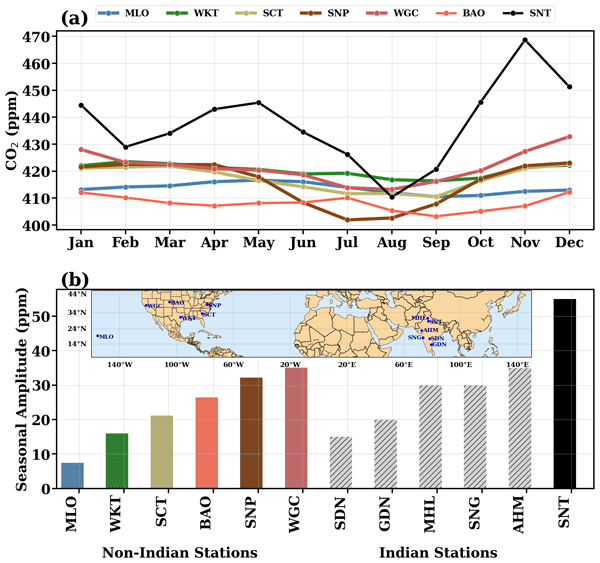
To address the lack of continuous ground-based CO2 measurements in the Indo-Gangetic Plain, we started ground-based measurements of atmospheric CO2 concentrations, for the very first time at Sonipat within the IGP. Based on these measurements, we examined the seasonal and diurnal patterns of atmospheric CO2. We found that the interplay of anthropogenic emissions, biospheric fluxes, and prevailing meteorology contributes to the observed high seasonal and diurnal variability of atmospheric CO2.
Ashutosh K. Shukla, Sachchida N. Tripathi, Shamitaksha Talukdar, Vishnu Murari, Sreenivas Gaddamidi, Manousos-Ioannis Manousakas, Vipul Lalchandani, Kuldeep Dixit, Vinayak M. Ruge, Peeyush Khare, Mayank Kumar, Vikram Singh, Neeraj Rastogi, Suresh Tiwari, Atul K. Srivastava, Dilip Ganguly, Kaspar Rudolf Daellenbach, and André S. H. Prévôt
Atmos. Chem. Phys., 25, 3765–3784, https://doi.org/10.5194/acp-25-3765-2025, https://doi.org/10.5194/acp-25-3765-2025, 2025
Short summary
Short summary
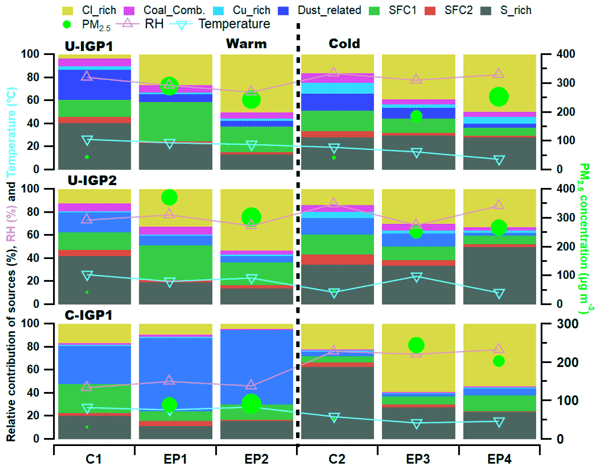
Our study delves into the elemental composition of aerosols at three sites across the Indo-Gangetic Plain (IGP), revealing distinct patterns during pollution episodes. We found significant increases in chlorine (Cl)-rich and solid fuel combustion (SFC) sources, indicating dynamic emission sources, agricultural burning impacts, and meteorological influences. Surges in Cl-rich particles during cold periods highlight their role in particle growth under high-relative-humidity conditions.
Wei Huang, Cheng Wu, Linyu Gao, Yvette Gramlich, Sophie L. Haslett, Joel Thornton, Felipe D. Lopez-Hilfiker, Ben H. Lee, Junwei Song, Harald Saathoff, Xiaoli Shen, Ramakrishna Ramisetty, Sachchida N. Tripathi, Dilip Ganguly, Feng Jiang, Magdalena Vallon, Siegfried Schobesberger, Taina Yli-Juuti, and Claudia Mohr
Atmos. Chem. Phys., 24, 2607–2624, https://doi.org/10.5194/acp-24-2607-2024, https://doi.org/10.5194/acp-24-2607-2024, 2024
Short summary
Short summary
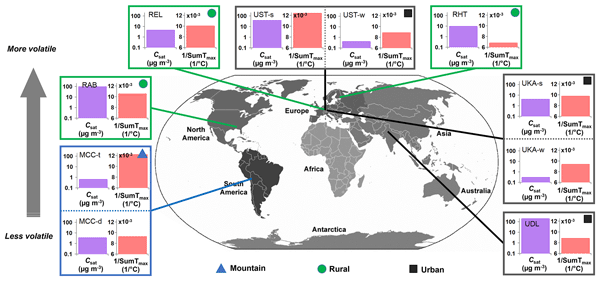
We present distinct molecular composition and volatility of oxygenated organic aerosol particles in different rural, urban, and mountain environments. We do a comprehensive investigation of the relationship between the chemical composition and volatility of oxygenated organic aerosol particles across different systems and environments. This study provides implications for volatility descriptions of oxygenated organic aerosol particles in different model frameworks.
Meghna Soni, Rolf Sander, Lokesh K. Sahu, Domenico Taraborrelli, Pengfei Liu, Ankit Patel, Imran A. Girach, Andrea Pozzer, Sachin S. Gunthe, and Narendra Ojha
Atmos. Chem. Phys., 23, 15165–15180, https://doi.org/10.5194/acp-23-15165-2023, https://doi.org/10.5194/acp-23-15165-2023, 2023
Short summary
Short summary
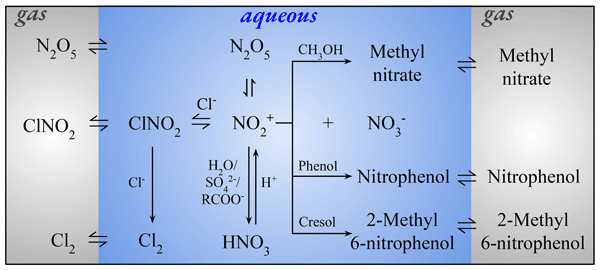
The study presents the implementation of comprehensive multiphase chlorine chemistry in the box model CAABA/MECCA. Simulations for contrasting urban environments of Asia and Europe highlight the significant impacts of chlorine on atmospheric oxidation capacity and composition. Chemical processes governing the production and loss of chlorine-containing species has been discussed. The updated chemical mechanism will be useful to interpret field measurements and for future air quality studies.
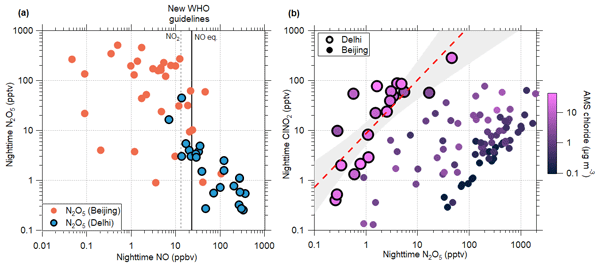
Sophie L. Haslett, David M. Bell, Varun Kumar, Jay G. Slowik, Dongyu S. Wang, Suneeti Mishra, Neeraj Rastogi, Atinderpal Singh, Dilip Ganguly, Joel Thornton, Feixue Zheng, Yuanyuan Li, Wei Nie, Yongchun Liu, Wei Ma, Chao Yan, Markku Kulmala, Kaspar R. Daellenbach, David Hadden, Urs Baltensperger, Andre S. H. Prevot, Sachchida N. Tripathi, and Claudia Mohr
Atmos. Chem. Phys., 23, 9023–9036, https://doi.org/10.5194/acp-23-9023-2023, https://doi.org/10.5194/acp-23-9023-2023, 2023
Short summary
Short summary
In Delhi, some aspects of daytime and nighttime atmospheric chemistry are inverted, and parodoxically, vehicle emissions may be limiting other forms of particle production. This is because the nighttime emissions of nitrogen oxide (NO) by traffic and biomass burning prevent some chemical processes that would otherwise create even more particles and worsen the urban haze.
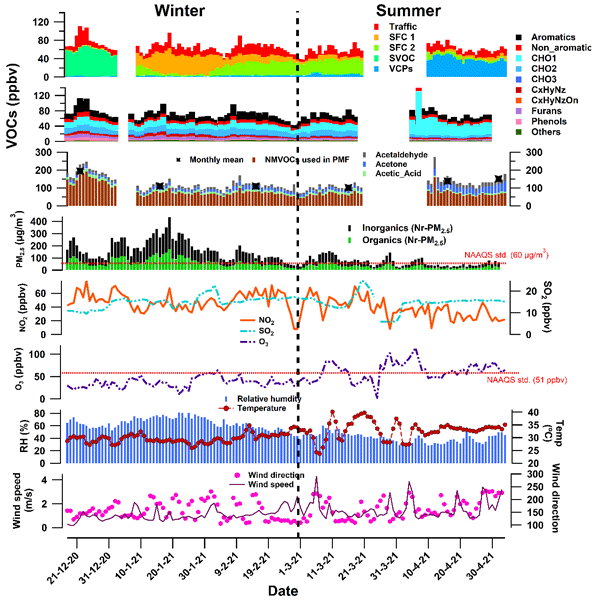
Vaishali Jain, Nidhi Tripathi, Sachchida N. Tripathi, Mansi Gupta, Lokesh K. Sahu, Vishnu Murari, Sreenivas Gaddamidi, Ashutosh K. Shukla, and Andre S. H. Prevot
Atmos. Chem. Phys., 23, 3383–3408, https://doi.org/10.5194/acp-23-3383-2023, https://doi.org/10.5194/acp-23-3383-2023, 2023
Short summary
Short summary
This research chemically characterises 173 different NMVOCs (non-methane volatile organic compounds) measured in real time for three seasons in the city of the central Indo-Gangetic basin of India, Lucknow. Receptor modelling is used to analyse probable sources of NMVOCs and their crucial role in forming ozone and secondary organic aerosols. It is observed that vehicular emissions and solid fuel combustion are the highest contributors to the emission of primary and secondary NMVOCs.
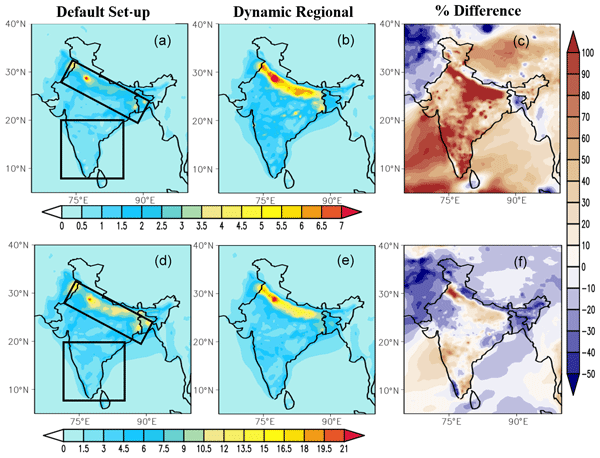
Sudipta Ghosh, Sagnik Dey, Sushant Das, Nicole Riemer, Graziano Giuliani, Dilip Ganguly, Chandra Venkataraman, Filippo Giorgi, Sachchida Nand Tripathi, Srikanthan Ramachandran, Thazhathakal Ayyappen Rajesh, Harish Gadhavi, and Atul Kumar Srivastava
Geosci. Model Dev., 16, 1–15, https://doi.org/10.5194/gmd-16-1-2023, https://doi.org/10.5194/gmd-16-1-2023, 2023
Short summary
Short summary
Accurate representation of aerosols in climate models is critical for minimizing the uncertainty in climate projections. Here, we implement region-specific emission fluxes and a more accurate scheme for carbonaceous aerosol ageing processes in a regional climate model (RegCM4) and show that it improves model performance significantly against in situ, reanalysis, and satellite data over the Indian subcontinent. We recommend improving the model performance before using them for climate studies.

Varun Kumar, Stamatios Giannoukos, Sophie L. Haslett, Yandong Tong, Atinderpal Singh, Amelie Bertrand, Chuan Ping Lee, Dongyu S. Wang, Deepika Bhattu, Giulia Stefenelli, Jay S. Dave, Joseph V. Puthussery, Lu Qi, Pawan Vats, Pragati Rai, Roberto Casotto, Rangu Satish, Suneeti Mishra, Veronika Pospisilova, Claudia Mohr, David M. Bell, Dilip Ganguly, Vishal Verma, Neeraj Rastogi, Urs Baltensperger, Sachchida N. Tripathi, André S. H. Prévôt, and Jay G. Slowik
Atmos. Chem. Phys., 22, 7739–7761, https://doi.org/10.5194/acp-22-7739-2022, https://doi.org/10.5194/acp-22-7739-2022, 2022
Short summary
Short summary
Here we present source apportionment results from the first field deployment in Delhi of an extractive electrospray ionization time-of-flight mass spectrometer (EESI-TOF). The EESI-TOF is a recently developed instrument capable of providing uniquely detailed online chemical characterization of organic aerosol (OA), in particular the secondary OA (SOA) fraction. Here, we are able to apportion not only primary OA but also SOA to specific sources, which is performed for the first time in Delhi.
Pawan Gupta, Prakash Doraiswamy, Jashwanth Reddy, Palak Balyan, Sagnik Dey, Ryan Chartier, Adeel Khan, Karmann Riter, Brandon Feenstra, Robert C. Levy, Nhu Nguyen Minh Tran, Olga Pikelnaya, Kurinji Selvaraj, Tanushree Ganguly, and Karthik Ganesan
Atmos. Meas. Tech. Discuss., https://doi.org/10.5194/amt-2022-140, https://doi.org/10.5194/amt-2022-140, 2022
Revised manuscript not accepted
Short summary
Short summary
The use of low-cost sensors in air quality monitoring has been gaining interest across all walks of society. We present the results of evaluations of the PurpleAir against regulatory-grade PM2.5. The results indicate that with proper calibration, we can achieve bias-corrected PM2.5 data using PA sensors. Our study also suggests that pre-deployment calibrations developed at local or regional scales are required for the PA sensors to correct data from the field for scientific data analysis.
Cited articles
Bhandari, S., Gani, S., Patel, K., Wang, D. S., Soni, P., Arub, Z., Habib, G., Apte, J. S., and Hildebrandt Ruiz, L.: Sources and atmospheric dynamics of organic aerosol in New Delhi, India: insights from receptor modeling, Atmos. Chem. Phys., 20, 735–752, https://doi.org/10.5194/acp-20-735-2020, 2020.
Bhowmik, H. S., Tripathi, S. N., Sahu, R., Shukla, A. K., Lalchandani, V., Talukdar, S., Tripathi, N., and Sahu, L.: Insights into the Regional Transport and Local Formation of Secondary Organic Aerosol in Delhi, India, Aerosol Air Qual. Res., 22, 220113, https://doi.org/10.4209/aaqr.220113, 2022.
Bikkina, S., Andersson, A., Kirillova, E. N., Holmstrand, H., Tiwari, S., Srivastava, A. K., Bisht, D. S., and Gustafsson, Ö.: Air quality in megacity Delhi affected by countryside biomass burning, Nat. Sustain., 2, 200–205, https://doi.org/10.1038/s41893-019-0219-0, 2019.
Biswal, A., Singh, V., Malik, L., Tiwari, G., Ravindra, K., and Mor, S.: Spatially resolved hourly traffic emission over megacity Delhi using advanced traffic flow data, Earth Syst. Sci. Data, 15, 661–680, https://doi.org/10.5194/essd-15-661-2023, 2023.
Canagaratna, M. R., Jimenez, J. L., Kroll, J. H., Chen, Q., Kessler, S. H., Massoli, P., Hildebrandt Ruiz, L., Fortner, E., Williams, L. R., Wilson, K. R., Surratt, J. D., Donahue, N. M., Jayne, J. T., and Worsnop, D. R.: Elemental ratio measurements of organic compounds using aerosol mass spectrometry: characterization, improved calibration, and implications, Atmos. Chem. Phys., 15, 253–272, https://doi.org/10.5194/acp-15-253-2015, 2015.
Canonaco, F., Crippa, M., Slowik, J. G., Baltensperger, U., and Prévôt, A. S. H.: SoFi, an IGOR-based interface for the efficient use of the generalized multilinear engine (ME-2) for the source apportionment: ME-2 application to aerosol mass spectrometer data, Atmos. Meas. Tech., 6, 3649–3661, https://doi.org/10.5194/amt-6-3649-2013, 2013.
Canonaco, F., Tobler, A., Chen, G., Sosedova, Y., Slowik, J. G., Bozzetti, C., Daellenbach, K. R., El Haddad, I., Crippa, M., Huang, R.-J., Furger, M., Baltensperger, U., and Prévôt, A. S. H.: A new method for long-term source apportionment with time-dependent factor profiles and uncertainty assessment using SoFi Pro: application to 1 year of organic aerosol data, Atmos. Meas. Tech., 14, 923–943, https://doi.org/10.5194/amt-14-923-2021, 2021.
Cash, J. M., Langford, B., Di Marco, C., Mullinger, N. J., Allan, J., Reyes-Villegas, E., Joshi, R., Heal, M. R., Acton, W. J. F., Hewitt, C. N., Misztal, P. K., Drysdale, W., Mandal, T. K., Shivani, Gadi, R., Gurjar, B. R., and Nemitz, E.: Seasonal analysis of submicron aerosol in Old Delhi using high-resolution aerosol mass spectrometry: chemical characterisation, source apportionment and new marker identification, Atmos. Chem. Phys., 21, 10133–10158, https://doi.org/10.5194/acp-21-10133-2021, 2021.
Cash, J. M., Di Marco, C., Langford, B., Heal, M. R., Mandal, T. K., Sharma, S. K., Gurjar, B. R., and Nemitz, E.: Response of organic aerosol to Delhi's pollution control measures over the period 2011–2018, Atmos. Environ., 315, 120123, https://doi.org/10.1016/j.atmosenv.2023.120123, 2023.
Crippa, M., El Haddad, I., Slowik, J. G., DeCarlo, P. F., Mohr, C., Heringa, M. F., Chirico, R., Marchand, N., Sciare, J., Baltensperger, U., and Prévôt, A. S. H.: Identification of marine and continental aerosol sources in Paris using high resolution aerosol mass spectrometry, J. Geophys. Res.-Atmos., 118, 1950–1963, https://doi.org/10.1002/jgrd.50151, 2013.
Cusworth, D. H., Mickley, L. J., Sulprizio, M. P., Liu, T., Marlier, M. E., DeFries, R. S., Guttikunda, S. K., and Gupta, P.: Quantifying the influence of agricultural fires in northwest India on urban air pollution in Delhi, India, Environ. Res. Lett., 13, 044018, https://doi.org/10.1088/1748-9326/aab303, 2018.
Deng, J., Guo, H., Zhang, H., Zhu, J., Wang, X., and Fu, P.: Source apportionment of black carbon aerosols from light absorption observation and source-oriented modeling: an implication in a coastal city in China, Atmos. Chem. Phys., 20, 14419–14435, https://doi.org/10.5194/acp-20-14419-2020, 2020.
Dey, S. and Di Girolamo, L.: A climatology of aerosol optical and microphysical properties over the Indian subcontinent from 9 years (2000–2008) of Multiangle Imaging Spectroradiometer (MISR) data, J. Geophys. Res., 115, 2009JD013395, https://doi.org/10.1029/2009JD013395, 2010.
Dumka, U. C., Kaskaoutis, D. G., Tiwari, S., Safai, P. D., Attri, S. D., Soni, V. K., Singh, N., and Mihalopoulos, N.: Assessment of biomass burning and fossil fuel contribution to black carbon concentrations in Delhi during winter, Atmos. Environ., 194, 93–109, https://doi.org/10.1016/j.atmosenv.2018.09.033, 2018.
Fröhlich, R., Cubison, M. J., Slowik, J. G., Bukowiecki, N., Prévôt, A. S. H., Baltensperger, U., Schneider, J., Kimmel, J. R., Gonin, M., Rohner, U., Worsnop, D. R., and Jayne, J. T.: The ToF-ACSM: a portable aerosol chemical speciation monitor with TOFMS detection, Atmos. Meas. Tech., 6, 3225–3241, https://doi.org/10.5194/amt-6-3225-2013, 2013.
Ganguly, D., Ginoux, P., Ramaswamy, V., Winker, D. M., Holben, B. N., and Tripathi, S. N.: Retrieving the composition and concentration of aerosols over the Indo‐Gangetic basin using CALIOP and AERONET data, Geophys. Res. Lett., 36, 2009GL038315, https://doi.org/10.1029/2009GL038315, 2009.
Gani, S., Bhandari, S., Seraj, S., Wang, D. S., Patel, K., Soni, P., Arub, Z., Habib, G., Hildebrandt Ruiz, L., and Apte, J. S.: Submicron aerosol composition in the world's most polluted megacity: the Delhi Aerosol Supersite study, Atmos. Chem. Phys., 19, 6843–6859, https://doi.org/10.5194/acp-19-6843-2019, 2019.
Ghude, S. D., Chate, D. M., Jena, C., Beig, G., Kumar, R., Barth, M. C., Pfister, G. G., Fadnavis, S., and Pithani, P.: Premature mortality in India due to PM2.5 and ozone exposure, Geophys. Res. Lett., 43, 4650–4658, https://doi.org/10.1002/2016GL068949, 2016.
Ghude, S. D., Govardhan, G., Kumar, R., Yadav, P. P., Jat, R., Debnath, S., Kalita, G., Jena, C., Ingle, S., Gunwani, P., Pawar, P. V., Ambulkar, R., Kumar, S., Kulkarni, S., Kulkarni, A., Khare, M., Kaginalkar, A., Soni, V. K., Nigam, N., Ray, K., Atri, S. D., Nanjundiah, R., and Rajeevan, M.: Air Quality Warning and Integrated Decision Support System for Emissions (AIRWISE): Enhancing Air Quality Management in Megacities, B. Am. Meteorol. Soc., 105, E2525–E2550, https://doi.org/10.1175/BAMS-D-23-0181.1, 2024.
Goel, V., Hazarika, N., Kumar, M., and Singh, V.: Source apportionment of black carbon over Delhi: A case study of extreme biomass burning events and Diwali festival, Urban Climate, 39, 100926, https://doi.org/10.1016/j.uclim.2021.100926, 2021.
Goel, V., Tripathi, N., Gupta, M., Sahu, L. K., Singh, V., and Kumar, M.: Study of secondary organic aerosol formation and aging using ambient air in an oxidation flow reactor during high pollution events over Delhi, Environ. Res., 251, 118542, https://doi.org/10.1016/j.envres.2024.118542, 2024.
Gunthe, S. S., Liu, P., Panda, U., Raj, S. S., Sharma, A., Darbyshire, E., Reyes-Villegas, E., Allan, J., Chen, Y., Wang, X., Song, S., Pöhlker, M. L., Shi, L., Wang, Y., Kommula, S. M., Liu, T., Ravikrishna, R., McFiggans, G., Mickley, L. J., Martin, S. T., Pöschl, U., Andreae, M. O., and Coe, H.: Enhanced aerosol particle growth sustained by high continental chlorine emission in India, Nat. Geosci., 14, 77–84, https://doi.org/10.1038/s41561-020-00677-x, 2021.
Guo, J., Zhou, S., Cai, M., Zhao, J., Song, W., Zhao, W., Hu, W., Sun, Y., He, Y., Yang, C., Xu, X., Zhang, Z., Cheng, P., Fan, Q., Hang, J., Fan, S., Wang, X., and Wang, X.: Characterization of submicron particles by time-of-flight aerosol chemical speciation monitor (ToF-ACSM) during wintertime: aerosol composition, sources, and chemical processes in Guangzhou, China, Atmos. Chem. Phys., 20, 7595–7615, https://doi.org/10.5194/acp-20-7595-2020, 2020.
Gupta, T., Rajeev, P., and Rajput, R.: Emerging Major Role of Organic Aerosols in Explaining the Occurrence, Frequency, and Magnitude of Haze and Fog Episodes during Wintertime in the Indo Gangetic Plain, ACS Omega, 7, 1575–1584, https://doi.org/10.1021/acsomega.1c05467, 2022.
Guttikunda, S. K. and Calori, G.: A GIS based emissions inventory at 1 km × 1 km spatial resolution for air pollution analysis in Delhi, India, Atmos. Environ., 67, 101–111, https://doi.org/10.1016/j.atmosenv.2012.10.040, 2013.
Harrison, R. M., Beddows, D. C. S., Jones, A. M., Calvo, A., Alves, C., and Pio, C.: An evaluation of some issues regarding the use of aethalometers to measure woodsmoke concentrations, Atmos. Environ., 80, 540–548, https://doi.org/10.1016/j.atmosenv.2013.08.026, 2013.
Haslett, S. L., Bell, D. M., Kumar, V., Slowik, J. G., Wang, D. S., Mishra, S., Rastogi, N., Singh, A., Ganguly, D., Thornton, J., Zheng, F., Li, Y., Nie, W., Liu, Y., Ma, W., Yan, C., Kulmala, M., Daellenbach, K. R., Hadden, D., Baltensperger, U., Prevot, A. S. H., Tripathi, S. N., and Mohr, C.: Nighttime NO emissions strongly suppress chlorine and nitrate radical formation during the winter in Delhi, Atmos. Chem. Phys., 23, 9023–9036, https://doi.org/10.5194/acp-23-9023-2023, 2023.
Henry, R., Norris, G. A., Vedantham, R., and Turner, J. R.: Source Region Identification Using Kernel Smoothing, Environ. Sci. Technol., 43, 4090–4097, https://doi.org/10.1021/es8011723, 2009.
Hu, W., Day, D. A., Campuzano-Jost, P., Nault, B. A., Park, T., Lee, T., Croteau, P., Canagaratna, M. R., Jayne, J. T., Worsnop, D. R., and Jimenez, J. L.: Evaluation of the New Capture Vaporizer for Aerosol Mass Spectrometers (AMS): Elemental Composition and Source Apportionment of Organic Aerosols (OA), ACS Earth Space Chem., 2, 410–421, https://doi.org/10.1021/acsearthspacechem.8b00002, 2018.
Jain, S., Sharma, S. K., Srivastava, M. K., Chaterjee, A., Singh, R. K., Saxena, M., and Mandal, T. K.: Source Apportionment of PM10 Over Three Tropical Urban Atmospheres at Indo-Gangetic Plain of India: An Approach Using Different Receptor Models, Arch. Environ. Contam. Toxicol., 76, 114–128, https://doi.org/10.1007/s00244-018-0572-4, 2019.
Jethva, H., Torres, O., Field, R. D., Lyapustin, A., Gautam, R., and Kayetha, V.: Connecting Crop Productivity, Residue Fires, and Air Quality over Northern India, Sci. Rep., 9, 16594, https://doi.org/10.1038/s41598-019-52799-x, 2019.
Kumar, R. R., Soni, V. K., and Jain, M. K.: Evaluation of spatial and temporal heterogeneity of black carbon aerosol mass concentration over India using three year measurements from IMD BC observation network, Sci. Total Environ., 723, 138060, https://doi.org/10.1016/j.scitotenv.2020.138060, 2020.
Lakra, A., Shukla, A. K., Bhowmik, H. S., Yadav, A. K., Jain, V., Murari, V., Gaddamidi, S., Lalchandani, V., and Tripathi, S. N.: Comparative analysis of winter composite-PM2.5 in Central Indo Gangetic Plain cities: Combined organic and inorganic source apportionment and characterization, with a focus on the photochemical age effect on secondary organic aerosol formation, Atmos. Environ., 338, 120827, https://doi.org/10.1016/j.atmosenv.2024.120827, 2024.
Lalchandani, V., Kumar, V., Tobler, A., M. Thamban, N., Mishra, S., Slowik, J. G., Bhattu, D., Rai, P., Satish, R., Ganguly, D., Tiwari, S., Rastogi, N., Tiwari, S., Močnik, G., Prévôt, A. S. H., and Tripathi, S. N.: Real-time characterization and source apportionment of fine particulate matter in the Delhi megacity area during late winter, Sci. Total Environ., 770, 145324, https://doi.org/10.1016/j.scitotenv.2021.145324, 2021.
Lalchandani, V., Srivastava, D., Dave, J., Mishra, S., Tripathi, N., Shukla, A. K., Sahu, R., Thamban, N. M., Gaddamidi, S., Dixit, K., Ganguly, D., Tiwari, S., Srivastava, A. K., Sahu, L., Rastogi, N., Gargava, P., and Tripathi, S. N.: Effect of Biomass Burning on PM2.5 Composition and Secondary Aerosol Formation During Post‐Monsoon and Winter Haze Episodes in Delhi, J. Geophys. Res.-Atmos., 127, e2021JD035232, https://doi.org/10.1029/2021JD035232, 2022.
Lanz, V. A., Alfarra, M. R., Baltensperger, U., Buchmann, B., Hueglin, C., and Prévôt, A. S. H.: Source apportionment of submicron organic aerosols at an urban site by factor analytical modelling of aerosol mass spectra, Atmos. Chem. Phys., 7, 1503–1522, https://doi.org/10.5194/acp-7-1503-2007, 2007.
Mathai, S., Ijaz, A., Gautam, T., Cheng, Z., Lata, N. N., Bhotika, H., Tseng, D., Chu, R. K., Mazzoleni, L., Mazzoleni, C., and China, S.: Haze processing of atmospheric particles during wintertime in the Indo-Gangetic Plains, Environ. Sci. Atmos., 6, 139–151, https://doi.org/10.1039/D5EA00150A, 2026.
Monod, A., Sive, B. C., Avino, P., Chen, T., Blake, D. R., and Sherwood Rowland, F.: Monoaromatic compounds in ambient air of various cities: a focus on correlations between the xylenes and ethylbenzene, Atmos. Environ., 35, 135–149, https://doi.org/10.1016/S1352-2310(00)00274-0, 2001.
Nair, V. S., Moorthy, K. K., Alappattu, D. P., Kunhikrishnan, P. K., George, S., Nair, P. R., Babu, S. S., Abish, B., Satheesh, S. K., Tripathi, S. N., Niranjan, K., Madhavan, B. L., Srikant, V., Dutt, C. B. S., Badarinath, K. V. S., and Reddy, R. R.: Wintertime aerosol characteristics over the Indo‐Gangetic Plain (IGP): Impacts of local boundary layer processes and long‐range transport, J. Geophys. Res., 112, 2006JD008099, https://doi.org/10.1029/2006JD008099, 2007.
Nault, B. A., Croteau, P., Jayne, J., Williams, A., Williams, L., Worsnop, D., Katz, E. F., DeCarlo, P. F., and Canagaratna, M.: Laboratory evaluation of organic aerosol relative ionization efficiencies in the aerodyne aerosol mass spectrometer and aerosol chemical speciation monitor, Aerosol Sci. Tech., 57, 981–997, https://doi.org/10.1080/02786826.2023.2223249, 2023.
Nelson, P. F. and Quigley, S. M.: The ,. A technique for estimating hydrocarbon age in ambient atmospheres, Atmos. Environ., 17, 659–662, https://doi.org/10.1016/0004-6981(83)90141-5, 1983.
Ng, N. L., Canagaratna, M. R., Jimenez, J. L., Zhang, Q., Ulbrich, I. M., and Worsnop, D. R.: Real-Time Methods for Estimating Organic Component Mass Concentrations from Aerosol Mass Spectrometer Data, Environ. Sci. Technol., 45, 910–916, https://doi.org/10.1021/es102951k, 2011.
Paatero, P. and Tapper, U.: Positive matrix factorization: A non‐negative factor model with optimal utilization of error estimates of data values, Environmetrics, 5, 111–126, https://doi.org/10.1002/env.3170050203, 1994.
Panda, U., Dey, S., Sharma, A., Singh, A., Reyes-Villegas, E., Darbyshire, E., Carbone, S., Das, T., Allan, J., McFiggans, G., Ravikrishna, R., Coe, H., Liu, P., and Gunthe, S. S.: Exploring the chemical composition and processes of submicron aerosols in Delhi using aerosol chemical speciation monitor driven factor analysis, Sci. Rep., 15, 14383, https://doi.org/10.1038/s41598-025-99245-9, 2025.
Pandey, A., Brauer, M., Cropper, M. L., et al.: Health and economic impact of air pollution in the states of India: the Global Burden of Disease Study 2019, The Lancet Planetary Health, 5, e25–e38, https://doi.org/10.1016/S2542-5196(20)30298-9, 2021.
Pant, P., Shukla, A., Kohl, S. D., Chow, J. C., Watson, J. G., and Harrison, R. M.: Characterization of ambient PM2.5 at a pollution hotspot in New Delhi, India and inference of sources, Atmos. Environ., 109, 178–189, https://doi.org/10.1016/j.atmosenv.2015.02.074, 2015.
Pant, P., Guttikunda, S. K., and Peltier, R. E.: Exposure to particulate matter in India: A synthesis of findings and future directions, Environ. Res., 147, 480–496, https://doi.org/10.1016/j.envres.2016.03.011, 2016.
Petit, J.-E., Favez, O., Albinet, A., and Canonaco, F.: A user-friendly tool for comprehensive evaluation of the geographical origins of atmospheric pollution: Wind and trajectory analyses, Environ. Modell. Softw., 88, 183–187, https://doi.org/10.1016/j.envsoft.2016.11.022, 2017.
Petzold, A., Ogren, J. A., Fiebig, M., Laj, P., Li, S.-M., Baltensperger, U., Holzer-Popp, T., Kinne, S., Pappalardo, G., Sugimoto, N., Wehrli, C., Wiedensohler, A., and Zhang, X.-Y.: Recommendations for reporting “black carbon” measurements, Atmos. Chem. Phys., 13, 8365–8379, https://doi.org/10.5194/acp-13-8365-2013, 2013.
Rathore, J., Ganguly, D., Singh, V., Gupta, M., Vazhathara, V. J., Biswal, A., Kunchala, R. K., Patra, P. K., Sahu, L. K., Gani, S., and Dey, S.: Characteristics of Haze Pollution Events During Biomass Burning Period at an Upwind Site of Delhi, J. Geophys. Res.-Atmos., 130, e2024JD042347, https://doi.org/10.1029/2024JD042347, 2025.
Reyes-Villegas, E., Panda, U., Darbyshire, E., Cash, J. M., Joshi, R., Langford, B., Di Marco, C. F., Mullinger, N. J., Alam, M. S., Crilley, L. R., Rooney, D. J., Acton, W. J. F., Drysdale, W., Nemitz, E., Flynn, M., Voliotis, A., McFiggans, G., Coe, H., Lee, J., Hewitt, C. N., Heal, M. R., Gunthe, S. S., Mandal, T. K., Gurjar, B. R., Shivani, Gadi, R., Singh, S., Soni, V., and Allan, J. D.: PM1 composition and source apportionment at two sites in Delhi, India, across multiple seasons, Atmos. Chem. Phys., 21, 11655–11667, https://doi.org/10.5194/acp-21-11655-2021, 2021.
Sahu, L. K., Kondo, Y., Moteki, N., Takegawa, N., Zhao, Y., Cubison, M. J., Jimenez, J. L., Vay, S., Diskin, G. S., Wisthaler, A., Mikoviny, T., Huey, L. G., Weinheimer, A. J., and Knapp, D. J.: Emission characteristics of black carbon in anthropogenic and biomass burning plumes over California during ARCTAS‐CARB 2008, J. Geophys. Res., 117, 2011JD017401, https://doi.org/10.1029/2011JD017401, 2012.
Sandradewi, J., Prévôt, A. S. H., Szidat, S., Perron, N., Alfarra, M. R., Lanz, V. A., Weingartner, E., and Baltensperger, U.: Using Aerosol Light Absorption Measurements for the Quantitative Determination of Wood Burning and Traffic Emission Contributions to Particulate Matter, Environ. Sci. Technol., 42, 3316–3323, https://doi.org/10.1021/es702253m, 2008.
Sarkar, S., Singh, R. P., and Chauhan, A.: Crop Residue Burning in Northern India: Increasing Threat to Greater India, J. Geophys. Res.-Atmos., 123, 6920–6934, https://doi.org/10.1029/2018JD028428, 2018.
Satish, R., Shamjad, P., Thamban, N., Tripathi, S., and Rastogi, N.: Temporal Characteristics of Brown Carbon over the Central Indo-Gangetic Plain, Environ. Sci. Technol., 51, 6765–6772, https://doi.org/10.1021/acs.est.7b00734, 2017.
Segura, S., Estellés, V., Titos, G., Lyamani, H., Utrillas, M. P., Zotter, P., Prévôt, A. S. H., Močnik, G., Alados-Arboledas, L., and Martínez-Lozano, J. A.: Determination and analysis of in situ spectral aerosol optical properties by a multi-instrumental approach, Atmos. Meas. Tech., 7, 2373–2387, https://doi.org/10.5194/amt-7-2373-2014, 2014.
Sharma, S., Zhang, M., Anshika, Gao, J., Zhang, H., and Kota, S. H.: Effect of restricted emissions during COVID-19 on air quality in India, Sci. Total Environ., 728, 138878, https://doi.org/10.1016/j.scitotenv.2020.138878, 2020.
Sharma, S. K., Mandal, T. K., Jain, S., Saraswati, Sharma, A., and Saxena, M.: Source Apportionment of PM2.5 in Delhi, India Using PMF Model, Bull. Environ. Contam. Toxicol., 97, 286–293, https://doi.org/10.1007/s00128-016-1836-1, 2016.
Shiraiwa, M., Kondo, Y., Moteki, N., Takegawa, N., Sahu, L. K., Takami, A., Hatakeyama, S., Yonemura, S., and Blake, D. R.: Radiative impact of mixing state of black carbon aerosol in Asian outflow, J. Geophys. Res., 113, 2008JD010546, https://doi.org/10.1029/2008JD010546, 2008.
Shukla, A. K., Lalchandani, V., Bhattu, D., Dave, J. S., Rai, P., Thamban, N. M., Mishra, S., Gaddamidi, S., Tripathi, N., Vats, P., Rastogi, N., Sahu, L., Ganguly, D., Kumar, M., Singh, V., Gargava, P., and Tripathi, S. N.: Real-time quantification and source apportionment of fine particulate matter including organics and elements in Delhi during summertime, Atmos. Environ., 261, 118598, https://doi.org/10.1016/j.atmosenv.2021.118598, 2021.
Shukla, A. K., Tripathi, S. N., Canonaco, F., Lalchandani, V., Sahu, R., Srivastava, D., Dave, J., Thamban, N. M., Gaddamidi, S., Sahu, L., Kumar, M., Singh, V., and Rastogi, N.: Spatio-temporal variation of C-PM2.5 (composition based PM2.5) sources using PMF*PMF (double-PMF) and single-combined PMF technique on real-time non-refractory, BC and elemental measurements during post-monsoon and winter at two sites in Delhi, India, Atmos. Environ., 293, 119456, https://doi.org/10.1016/j.atmosenv.2022.119456, 2023.
Shukla, A. K., Tripathi, S. N., Talukdar, S., Murari, V., Gaddamidi, S., Manousakas, M.-I., Lalchandani, V., Dixit, K., Ruge, V. M., Khare, P., Kumar, M., Singh, V., Rastogi, N., Tiwari, S., Srivastava, A. K., Ganguly, D., Daellenbach, K. R., and Prévôt, A. S. H.: Measurement report: Sources and meteorology influencing highly time-resolved PM2.5 trace elements at three urban sites in the extremely polluted Indo-Gangetic Plain in India, Atmos. Chem. Phys., 25, 3765–3784, https://doi.org/10.5194/acp-25-3765-2025, 2025.
Singh, A., Rastogi, N., Kumar, V., Slowik, J. G., Satish, R., Lalchandani, V., Thamban, N. M., Rai, P., Bhattu, D., Vats, P., Ganguly, D., Tripathi, S. N., and Prévôt, A. S. H.: Sources and characteristics of light-absorbing fine particulates over Delhi through the synergy of real-time optical and chemical measurements, Atmos. Environ., 252, 118338, https://doi.org/10.1016/j.atmosenv.2021.118338, 2021a.
Singh, T., Matsumi, Y., Nakayama, T., Hayashida, S., Patra, P. K., Yasutomi, N., Kajino, M., Yamaji, K., Khatri, P., Takigawa, M., Araki, H., Kurogi, Y., Kuji, M., Muramatsu, K., Imasu, R., Ananda, A., Arbain, A. A., Ravindra, K., Bhardwaj, S., Kumar, S., Mor, S., Dhaka, S. K., Dimri, A. P., Sharma, A., Singh, N., Bhatti, M. S., Yadav, R., Vatta, K., and Mor, S.: Very high particulate pollution over northwest India captured by a high-density in situ sensor network, Sci. Rep., 13, 13201, https://doi.org/10.1038/s41598-023-39471-1, 2023.
Singh, V., Singh, S., and Biswal, A.: Exceedances and trends of particulate matter (PM2.5) in five Indian megacities, Sci. Total Environ., 750, 141461, https://doi.org/10.1016/j.scitotenv.2020.141461, 2021b.
Singh, V., Ganguly, D., Rathore, J., Sahu, L., Kunchala, R. K., and Dey, S.: Chemical Characterization and Source Apportionment of Carbonaceous Aerosols during Post-Monsoon Biomass Burning and Diwali at an Upwind Site of Delhi, Version v1, Zenodo [data set], https://doi.org/10.5281/zenodo.22071367, 2026.
Stein, A. F., Draxler, R. R., Rolph, G. D., Stunder, B. J. B., Cohen, M. D., and Ngan, F.: NOAA's HYSPLIT Atmospheric Transport and Dispersion Modeling System, B. Am. Meteorol. Soc., 96, 2059–2077, https://doi.org/10.1175/BAMS-D-14-00110.1, 2015.
Thamban, N. M., Joshi, B., Tripathi, S. N., Sueper, D., Canagaratna, M. R., Moosakutty, S. P., Satish, R., and Rastogi, N.: Evolution of Aerosol Size and Composition in the Indo-Gangetic Plain: Size-Resolved Analysis of High-Resolution Aerosol Mass Spectra, ACS Earth Space Chem., 3, 823–832, https://doi.org/10.1021/acsearthspacechem.8b00207, 2019.
Thamban, N. M., Lalchandani, V., Kumar, V., Mishra, S., Bhattu, D., Slowik, J. G., Prevot, A. S. H., Satish, R., Rastogi, N., and Tripathi, S. N.: Evolution of size and composition of fine particulate matter in the Delhi megacity during later winter, Atmos. Environ., 267, 118752, https://doi.org/10.1016/j.atmosenv.2021.118752, 2021.
Titos, G., Del Águila, A., Cazorla, A., Lyamani, H., Casquero-Vera, J. A., Colombi, C., Cuccia, E., Gianelle, V., Močnik, G., Alastuey, A., Olmo, F. J., and Alados-Arboledas, L.: Spatial and temporal variability of carbonaceous aerosols: Assessing the impact of biomass burning in the urban environment, Sci. Total Environ., 578, 613–625, https://doi.org/10.1016/j.scitotenv.2016.11.007, 2017.
Tobler, A., Bhattu, D., Canonaco, F., Lalchandani, V., Shukla, A., Thamban, N. M., Mishra, S., Srivastava, A. K., Bisht, D. S., Tiwari, S., Singh, S., Močnik, G., Baltensperger, U., Tripathi, S. N., Slowik, J. G., and Prévôt, A. S. H.: Chemical characterization of PM2.5 and source apportionment of organic aerosol in New Delhi, India, Sci. Total Environ., 745, 140924, https://doi.org/10.1016/j.scitotenv.2020.140924, 2020.
Ulbrich, I. M., Canagaratna, M. R., Zhang, Q., Worsnop, D. R., and Jimenez, J. L.: Interpretation of organic components from Positive Matrix Factorization of aerosol mass spectrometric data, Atmos. Chem. Phys., 9, 2891–2918, https://doi.org/10.5194/acp-9-2891-2009, 2009.
Vaishya, A., Singh, P., Rastogi, S., and Babu, S. S.: Aerosol black carbon quantification in the central Indo-Gangetic Plain: Seasonal heterogeneity and source apportionment, Atmos. Res., 185, 13–21, https://doi.org/10.1016/j.atmosres.2016.10.001, 2017.
Vasilakopoulou, C. N., Matrali, A., Skyllakou, K., Georgopoulou, M., Aktypis, A., Florou, K., Kaltsonoudis, C., Siouti, E., Kostenidou, E., Błaziak, A., Nenes, A., Papagiannis, S., Eleftheriadis, K., Patoulias, D., Kioutsioukis, I., and Pandis, S. N.: Rapid transformation of wildfire emissions to harmful background aerosol, npj Clim Atmos Sci, 6, 218, https://doi.org/10.1038/s41612-023-00544-7, 2023.
Wang, H., Lou, S., Huang, C., Qiao, L., Tang, X., Chen, C., Zeng, L., Wang, Q., Zhou, M., Lu, S., and Yu, X.: Source Profiles of Volatile Organic Compounds from Biomass Burning in Yangtze River Delta, China, Aerosol Air Qual. Res., 14, 818–828, https://doi.org/10.4209/aaqr.2013.05.0174, 2014.
Yadav, S., Tripathi, S. N., and Rupakheti, M.: Current status of source apportionment of ambient aerosols in India, Atmos. Environ., 274, 118987, https://doi.org/10.1016/j.atmosenv.2022.118987, 2022.
Zhang, Z., Zhu, W., Hu, M., Liu, K., Wang, H., Tang, R., Shen, R., Yu, Y., Tan, R., Song, K., Li, Y., Zhang, W., Zhang, Z., Xu, H., Shuai, S., Li, S., Chen, Y., Li, J., Wang, Y., and Guo, S.: Formation and evolution of secondary organic aerosols derived from urban-lifestyle sources: vehicle exhaust and cooking emissions, Atmos. Chem. Phys., 21, 15221–15237, https://doi.org/10.5194/acp-21-15221-2021, 2021.
Zhao, J., Qiu, Y., Zhou, W., Xu, W., Wang, J., Zhang, Y., Li, L., Xie, C., Wang, Q., Du, W., Worsnop, D. R., Canagaratna, M. R., Zhou, L., Ge, X., Fu, P., Li, J., Wang, Z., Donahue, N. M., and Sun, Y.: Organic Aerosol Processing During Winter Severe Haze Episodes in Beijing, J. Geophys. Res.-Atmos., 124, 10248–10263, https://doi.org/10.1029/2019JD030832, 2019.
Zheng, Y., Cheng, X., Liao, K., Li, Y., Li, Y. J., Huang, R.-J., Hu, W., Liu, Y., Zhu, T., Chen, S., Zeng, L., Worsnop, D. R., and Chen, Q.: Characterization of anthropogenic organic aerosols by TOF-ACSM with the new capture vaporizer, Atmos. Meas. Tech., 13, 2457–2472, https://doi.org/10.5194/amt-13-2457-2020, 2020.
Zotter, P., Herich, H., Gysel, M., El-Haddad, I., Zhang, Y., Močnik, G., Hüglin, C., Baltensperger, U., Szidat, S., and Prévôt, A. S. H.: Evaluation of the absorption Ångström exponents for traffic and wood burning in the Aethalometer-based source apportionment using radiocarbon measurements of ambient aerosol, Atmos. Chem. Phys., 17, 4229–4249, https://doi.org/10.5194/acp-17-4229-2017, 2017.
Short summary
Each post-monsoon season, northern India faces severe air pollution, especially around Delhi, largely linked to crop residue burning and stagnant weather. We measured air pollution in Sonipat, northwest of Delhi, along the pathway of incoming smoke. Fine particle levels were extremely high and mainly made of carbon-rich particles from crop burning and solid fuels. Much of this pollution formed before reaching Delhi, showing regional sources drive the city’s severe haze.
Each post-monsoon season, northern India faces severe air pollution, especially around Delhi,...


Altmetrics
Final-revised paper
Preprint