
Articles | Volume 26, issue 17
https://doi.org/10.5194/acp-26-12911-2026
© Author(s) 2026. This work is distributed under
the Creative Commons Attribution 4.0 License.
the Creative Commons Attribution 4.0 License.
https://doi.org/10.5194/acp-26-12911-2026
© Author(s) 2026. This work is distributed under
the Creative Commons Attribution 4.0 License.
the Creative Commons Attribution 4.0 License.
Research article
| 
14 Sep 2026
Research article |
| 14 Sep 2026
| 14 Sep 2026
Inefficient consumption of natural gas drives methane emissions from a megacity

Department of Earth and Environmental Sciences, Columbia University, New York, NY 10027, USA
Lamont-Doherty Earth Observatory, Columbia University, Palisades, NY 10964, USA
Andrew Hallward-Driemeier
Department of Earth and Environmental Sciences, Columbia University, New York, NY 10027, USA
Lamont-Doherty Earth Observatory, Columbia University, Palisades, NY 10964, USA
Luke D. Schiferl
Lamont-Doherty Earth Observatory, Columbia University, Palisades, NY 10964, USA
Trey Maddaleno
Department of Soil, Water, and Climate, University of Minnesota, St. Paul, MN 55108, USA
Michael P. Vermeuel
Department of Earth, Atmospheric, and Planetary Sciences, Purdue University, West Lafayette, IN 47907, USA
Dylan B. Millet
Department of Soil, Water, and Climate, University of Minnesota, St. Paul, MN 55108, USA
Delphine Farmer
Department of Chemistry, Colorado State University, Fort Collins, CO 80523, USA
Róisín Commane
Department of Earth and Environmental Sciences, Columbia University, New York, NY 10027, USA
Lamont-Doherty Earth Observatory, Columbia University, Palisades, NY 10964, USA
Related authors
Andrew Hallward-Driemeier, Raghav Dhall, Yuwei Zhao, and Róisín Commane
EGUsphere, https://doi.org/10.5194/egusphere-2026-3919, https://doi.org/10.5194/egusphere-2026-3919, 2026
This preprint is open for discussion and under review for Atmospheric Measurement Techniques (AMT).
Short summary
Short summary
Nitrous oxide is the third most important greenhouse gas and an important ozone depleting substance. We tested three nitrous oxide analyzers and found all three were suitable for urban tower and mobile measurements. We observed large plumes of nitrous oxide associated with wastewater treatment, rather than traffic. We estimated that nitrous oxide emissions for the New York City region were three times larger than inventory estimates, which emphasizes the importance of urban measurements.

Luke D. Schiferl, Andrew Hallward-Driemeier, Yuwei Zhao, Ricardo Toledo-Crow, and Róisín Commane
Atmos. Chem. Phys., 25, 15683–15700, https://doi.org/10.5194/acp-25-15683-2025, https://doi.org/10.5194/acp-25-15683-2025, 2025
Short summary
Short summary
Identifying and quantifying methane emissions from urban sources is important for mitigating climate change. Using 6 years of winter and spring observations, we found that methane emissions from New York City are highly variable and underestimated compared to inventories, especially in winter, and correlate well with emissions of carbon monoxide (CO). Our results suggest a common urban incomplete combustion source for both methane and CO currently missing from emissions inventories.
Elisabeth N. Kray, Delaney B. Kilgour, Martina N. Rogers, Christopher M. Jernigan, Michael P. Vermeuel, and Timothy H. Bertram
EGUsphere, https://doi.org/10.5194/egusphere-2026-5120, https://doi.org/10.5194/egusphere-2026-5120, 2026
This preprint is open for discussion and under review for Atmospheric Measurement Techniques (AMT).
Short summary
Short summary
Carbonyl sulfide is the largest continuous contributor to stratospheric sulfate aerosol and a key molecular diagnostic for studying biosphere-atmosphere carbon exchange. We present a new technique for the simultaneous detection of carbonyl sulfide and its precursors, carbon disulfide and dimethyl sulfide. Reanalysis of past field measurements reveals a wide range of carbon disulfide concentrations across marine, urban, and continental environments highlighting the utility of this technique.
Xin Chen, Dylan B. Millet, Glenn M. Wolfe, Erin R. Delaria, M. Julian Deventer, Markus Müller, Arne Schiller, Kenneth Lee Thornhill, and Armin Wisthaler
Atmos. Meas. Tech., 19, 5353–5372, https://doi.org/10.5194/amt-19-5353-2026, https://doi.org/10.5194/amt-19-5353-2026, 2026
Short summary
Short summary
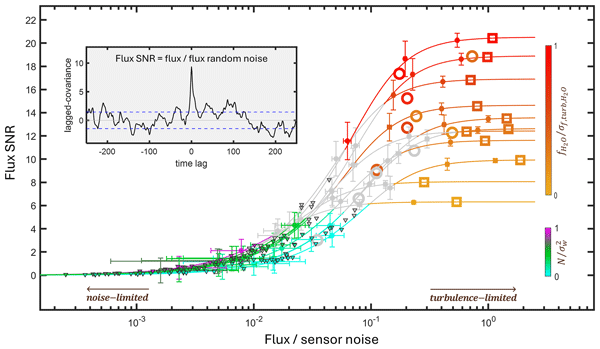
Air-sea exchange is a major uncertainty source for many volatile organic compounds (VOCs). Aircraft-based eddy covariance can be used to quantify these fluxes over large regions but such applications have been limited. We used observations over the Atlantic to characterize VOC fluxes and elucidate the drivers of measurement error. Results show how sensor noise and turbulent variability interact to determine flux detectability, and define instrumental priorities for future use of this technique.
Matthew L. Loman, Lee T. Murray, Peter D. Ivatt, Róisín Commane, Andrew Hallward-Driemeier, Raghav Dhall, Eric M. Leibensperger, Nicholas Balasus, Lucas Estrada, Melissa P. Sulprizio, Maryann R. Sargent, and Felix Vogel
EGUsphere, https://doi.org/10.5194/egusphere-2026-3153, https://doi.org/10.5194/egusphere-2026-3153, 2026
Short summary
Short summary
We evaluate methane emissions and their trends in New York State based on observations of methane from 29 sites, including four new long-term sites. These observations are most sensitive to emissions in southeastern New York State, including New York City. We find regional trends and biases in some locations, including underestimated emissions in the New York City area. Our results also demonstrate that policy-relevant validation of methane emissions needs a combination of observation platforms.
Andrew Hallward-Driemeier, Raghav Dhall, Yuwei Zhao, and Róisín Commane
EGUsphere, https://doi.org/10.5194/egusphere-2026-3919, https://doi.org/10.5194/egusphere-2026-3919, 2026
This preprint is open for discussion and under review for Atmospheric Measurement Techniques (AMT).
Short summary
Short summary
Nitrous oxide is the third most important greenhouse gas and an important ozone depleting substance. We tested three nitrous oxide analyzers and found all three were suitable for urban tower and mobile measurements. We observed large plumes of nitrous oxide associated with wastewater treatment, rather than traffic. We estimated that nitrous oxide emissions for the New York City region were three times larger than inventory estimates, which emphasizes the importance of urban measurements.
Sparkle L. Malone, Jaclyn H. Matthes, Cove S. Sturtevant, Angel Chen, Roisin Commane, Kyle B. Delwiche, Ankur R. Desai, Christopher R. Florian, Jonathan D. Gewirtzman, Samuel A. Jurado, David E. Reed, Jinshu Chi, Hiroki Iwata, Erik J. Lundin, Ivan Mammarella, Matthias Peichl, Masahito Ueyama, and Camilo Rey-Sanchez
Earth Syst. Sci. Data Discuss., https://doi.org/10.5194/essd-2026-413, https://doi.org/10.5194/essd-2026-413, 2026
Preprint under review for ESSD
Short summary
Short summary
We created the first continent-wide dataset to test the gradient flux method, which estimates how gases move between ecosystems and the atmosphere. This approach can provide reliable results when sensors are placed under favorable conditions, especially for shorter, less complex vegetation. The dataset will help improve future monitoring and support a better understanding of ecosystem responses to environmental change.
Julieta F. Juncosa Calahorrano, Dylan B. Millet, Kelley C. Wells, Chengyuan Hu, Jared F. Brewer, Vivienne H. Payne, Wade Permar, Lu Hu, Amy P. Sullivan, I.-Ting Ku, Emily V. Fischer, Vanessa Selimovic, Kanako Sekimoto, Aaron Lamplugh, Georgios Gkatzelis, Jessica B. Gilman, Matthew Coggon, and Carsten Warneke
EGUsphere, https://doi.org/10.5194/egusphere-2026-1669, https://doi.org/10.5194/egusphere-2026-1669, 2026
Short summary
Short summary
We use thermal infrared satellite observations to study trace gases emitted by fires. We observe large enhancements in smoke and strong relationships among key species. These relationships are consistent with aircraft observations but show greater variability than models predict. This variability is linked to pyrolysis temperatures within fires. Our results show satellite data can improve understanding of fire processes and help refine emission parameterizations in models.
Aoxing Zhang, Tzung-May Fu, Yuhang Wang, Enyu Xiong, Wenlu Wu, Yumin Li, Lei Zhu, Wei Tao, Kelley C. Wells, Dylan B. Millet, Zhe Wang, Bin Yuan, Min Shao, Christophe Lerot, Thomas Danckaert, Ruixiong Zhang, and Kelvin H. Bates
Atmos. Chem. Phys., 26, 5123–5150, https://doi.org/10.5194/acp-26-5123-2026, https://doi.org/10.5194/acp-26-5123-2026, 2026
Short summary
Short summary
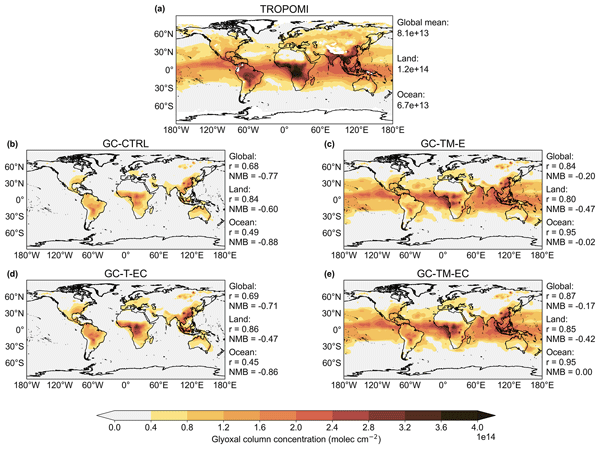
Glyoxal, a product of volatile organic compound oxidation, influences atmospheric oxidation and aerosol formation but is underestimated in models. By improving emissions, chemistry, and marine sources in GEOS-Chem, we better reproduce observed glyoxal over land and ocean, which strengthens global oxidation capacity and aerosol formation. The results highlight glyoxal's role as a proxy of atmospheric oxidation, and emphasize the needs of accurately representing glyoxal chemistry.
James Young Suk Yoon, Kelley C. Wells, Dylan B. Millet, Christian Frankenberg, Suniti Sanghavi, Abigail L. S. Swann, Joel A. Thornton, and Alexander J. Turner
Atmos. Chem. Phys., 26, 4509–4529, https://doi.org/10.5194/acp-26-4509-2026, https://doi.org/10.5194/acp-26-4509-2026, 2026
Short summary
Short summary
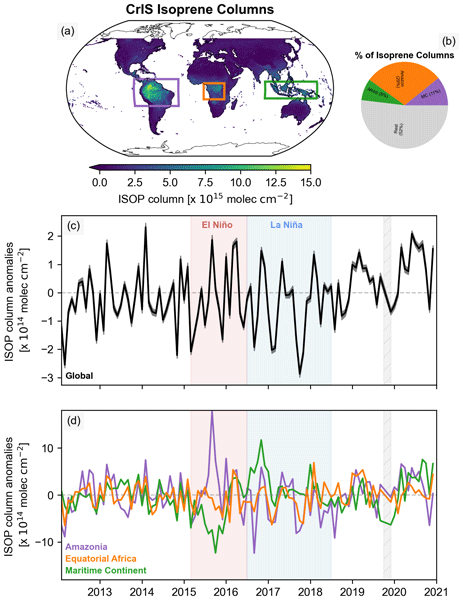
Isoprene is a molecule emitted by trees that is oxidized in the atmosphere within hours. Much of the isoprene globally is emitted in the remote tropics, where we have few direct observations of isoprene. Here, we use new satellite retrievals of isoprene to infer drivers of tropical isoprene variability. Across three regions, isoprene column variability is controlled by different factors, namely changes in isoprene emissions or changes in natural nitrogen oxide sources, like soils and fires.
Gunnar Myhre, Øivind Hodnebrog, Srinath Krishnan, Maria Sand, Marit Sandstad, Ragnhild B. Skeie, Lieven Clarisse, Bruno Franco, Dylan B. Millet, Kelley C. Wells, Alexander Archibald, Hannah N. Bryant, Alex T. Chaudhri, David S. Stevenson, Didier Hauglustaine, Michael Prather, J. Christopher Kaiser, Dirk J. L. Olivie, Michael Schulz, Oliver Wild, Ye Wang, Thérèse Salameh, Jason E. Williams, Philippe Le Sager, Fabien Paulot, Kostas Tsigaridis, and Haley E. Plaas
Geosci. Model Dev., 19, 2577–2591, https://doi.org/10.5194/gmd-19-2577-2026, https://doi.org/10.5194/gmd-19-2577-2026, 2026
Short summary
Short summary
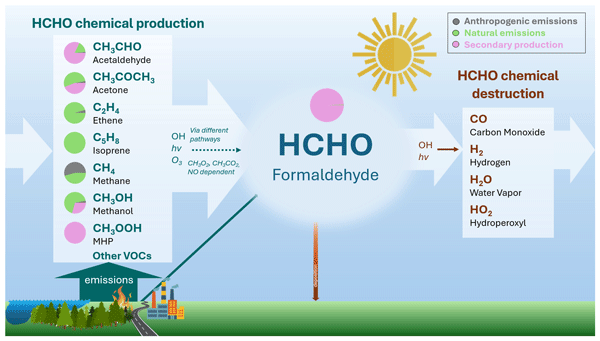
Volatile organic compounds (VOCs) affect air quality and climate, but their behavior in the atmosphere is still uncertain. We launched a global research effort to compare how different models represent these compounds and to improve their accuracy. By analyzing model results alongside observations and satellite data, we aim to better understand the atmospheric composition of these compounds.
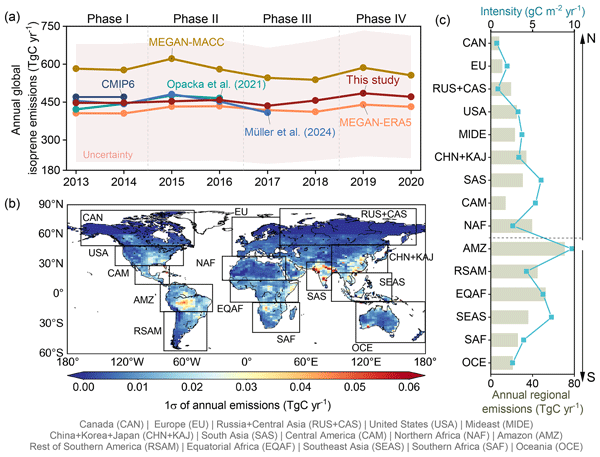
Hui Li, Philippe Ciais, Pramod Kumar, Didier A. Hauglustaine, Frédéric Chevallier, Grégoire Broquet, Dylan B. Millet, Kelley C. Wells, Jinghui Lian, and Bo Zheng
Earth Syst. Sci. Data, 17, 7035–7054, https://doi.org/10.5194/essd-17-7035-2025, https://doi.org/10.5194/essd-17-7035-2025, 2025
Short summary
Short summary
We present the first global, multi-year maps of monthly isoprene emissions (2013–2020) derived from satellite isoprene observations, averaging 456 TgC yr-1. The dataset reveals two emission peaks linked to 2015–2016 El Niño and 2019–2020 extreme heat events, driven mainly by tropical regions such as the Amazon. It highlights the region-specific sensitivity of biogenic isoprene emissions to temperature anomalies, providing new insights into their roles in air quality and climate feedbacks.
Luke D. Schiferl, Andrew Hallward-Driemeier, Yuwei Zhao, Ricardo Toledo-Crow, and Róisín Commane
Atmos. Chem. Phys., 25, 15683–15700, https://doi.org/10.5194/acp-25-15683-2025, https://doi.org/10.5194/acp-25-15683-2025, 2025
Short summary
Short summary
Identifying and quantifying methane emissions from urban sources is important for mitigating climate change. Using 6 years of winter and spring observations, we found that methane emissions from New York City are highly variable and underestimated compared to inventories, especially in winter, and correlate well with emissions of carbon monoxide (CO). Our results suggest a common urban incomplete combustion source for both methane and CO currently missing from emissions inventories.
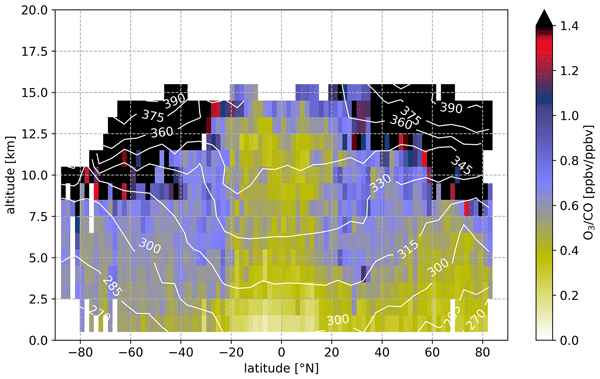
Linda Ort, Andrea Pozzer, Peter Hoor, Florian Obersteiner, Andreas Zahn, Thomas B. Ryerson, Chelsea R. Thompson, Jeff Peischl, Róisín Commane, Bruce Daube, Ilann Bourgeois, Jos Lelieveld, and Horst Fischer
Atmos. Chem. Phys., 25, 14987–15007, https://doi.org/10.5194/acp-25-14987-2025, https://doi.org/10.5194/acp-25-14987-2025, 2025
Short summary
Short summary
This study investigates the role of lightning emissions on the O3–CO ratio in the northern subtropics. We used in situ observations and a global circulation model to show an effect of up to 40 % onto the subtropical O3–CO ratio by tropical air masses transported via the Hadley cell. This influence of lightning emissions and its photochemistry has a global effect on trace and greenhouse gases and needs to be considered for global chemical distributions.
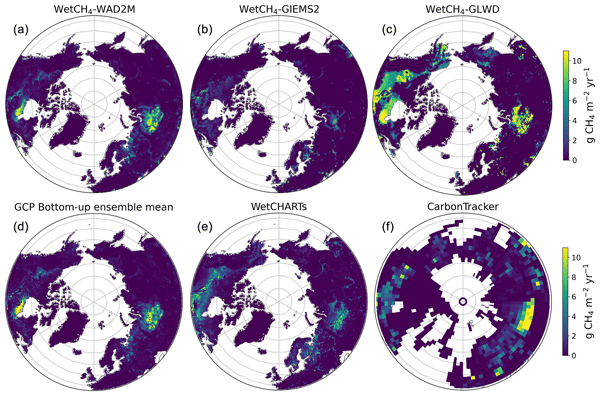
Qing Ying, Benjamin Poulter, Jennifer D. Watts, Kyle A. Arndt, Anna-Maria Virkkala, Lori Bruhwiler, Youmi Oh, Brendan M. Rogers, Susan M. Natali, Hilary Sullivan, Amanda Armstrong, Eric J. Ward, Luke D. Schiferl, Clayton D. Elder, Olli Peltola, Annett Bartsch, Ankur R. Desai, Eugénie Euskirchen, Mathias Göckede, Bernhard Lehner, Mats B. Nilsson, Matthias Peichl, Oliver Sonnentag, Eeva-Stiina Tuittila, Torsten Sachs, Aram Kalhori, Masahito Ueyama, and Zhen Zhang
Earth Syst. Sci. Data, 17, 2507–2534, https://doi.org/10.5194/essd-17-2507-2025, https://doi.org/10.5194/essd-17-2507-2025, 2025
Short summary
Short summary
We present daily methane (CH4) fluxes of northern wetlands at 10 km resolution during 2016–2022 (WetCH4) derived from a novel machine learning framework. We estimated an average annual CH4 emission of 22.8 ± 2.4 Tg CH4 yr−1 (15.7–51.6 Tg CH4 yr−1). Emissions were intensified in 2016, 2020, and 2022, with the largest interannual variation coming from Western Siberia. Continued, all-season tower observations and improved soil moisture products are needed for future improvement of CH4 upscaling.
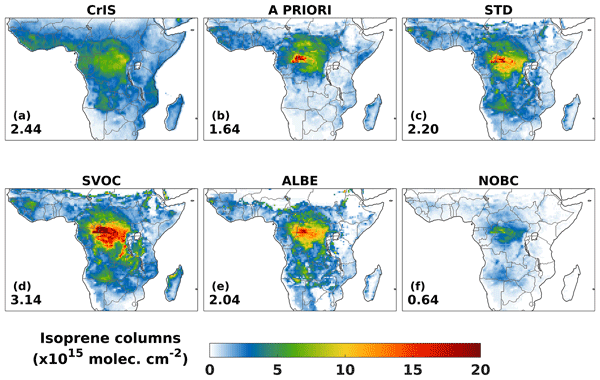
Beata Opacka, Trissevgeni Stavrakou, Jean-François Müller, Isabelle De Smedt, Jos van Geffen, Eloise A. Marais, Rebekah P. Horner, Dylan B. Millet, Kelly C. Wells, and Alex B. Guenther
Atmos. Chem. Phys., 25, 2863–2894, https://doi.org/10.5194/acp-25-2863-2025, https://doi.org/10.5194/acp-25-2863-2025, 2025
Short summary
Short summary
Vegetation releases biogenic volatile organic compounds, while soils and lightning contribute to the natural emissions of nitrogen oxides into the atmosphere. These gases interact in complex ways. Using satellite data and models, we developed a new method to simultaneously optimize these natural emissions over Africa in 2019. Our approach resulted in an increase in natural emissions, supported by independent data indicating that current estimates are underestimated.
Kelley C. Wells, Dylan B. Millet, Jared F. Brewer, Vivienne H. Payne, Karen E. Cady-Pereira, Rick Pernak, Susan Kulawik, Corinne Vigouroux, Nicholas Jones, Emmanuel Mahieu, Maria Makarova, Tomoo Nagahama, Ivan Ortega, Mathias Palm, Kimberly Strong, Matthias Schneider, Dan Smale, Ralf Sussmann, and Minqiang Zhou
Atmos. Meas. Tech., 18, 695–716, https://doi.org/10.5194/amt-18-695-2025, https://doi.org/10.5194/amt-18-695-2025, 2025
Short summary
Short summary
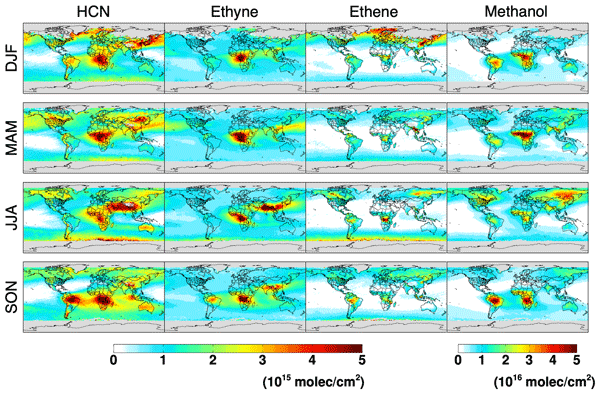
Atmospheric volatile organic compounds (VOCs) affect both air quality and climate. Satellite measurements can help us to assess and predict their global impacts. We present new decadal (2012–2023) measurements of four key VOCs – methanol, ethene, ethyne, and hydrogen cyanide (HCN) – from the Cross-track Infrared Sounder. The measurements reflect emissions from major forests, wildfires, and industry and provide new information to advance understanding of these sources and their changes over time.
Bryan N. Duncan, Daniel C. Anderson, Arlene M. Fiore, Joanna Joiner, Nickolay A. Krotkov, Can Li, Dylan B. Millet, Julie M. Nicely, Luke D. Oman, Jason M. St. Clair, Joshua D. Shutter, Amir H. Souri, Sarah A. Strode, Brad Weir, Glenn M. Wolfe, Helen M. Worden, and Qindan Zhu
Atmos. Chem. Phys., 24, 13001–13023, https://doi.org/10.5194/acp-24-13001-2024, https://doi.org/10.5194/acp-24-13001-2024, 2024
Short summary
Short summary
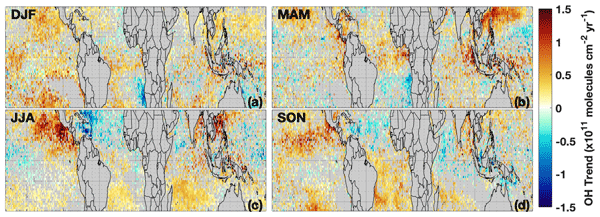
Trace gases emitted to or formed within the atmosphere may be chemically or physically removed from the atmosphere. One trace gas, the hydroxyl radical (OH), is responsible for initiating the chemical removal of many trace gases, including some greenhouse gases. Despite its importance, scientists have not been able to adequately measure OH. In this opinion piece, we discuss promising new methods to indirectly constrain OH using satellite data of trace gases that control the abundance of OH.
Yingjie Shen, Rudra P. Pokhrel, Amy P. Sullivan, Ezra J. T. Levin, Lauren A. Garofalo, Delphine K. Farmer, Wade Permar, Lu Hu, Darin W. Toohey, Teresa Campos, Emily V. Fischer, and Shane M. Murphy
Atmos. Chem. Phys., 24, 12881–12901, https://doi.org/10.5194/acp-24-12881-2024, https://doi.org/10.5194/acp-24-12881-2024, 2024
Short summary
Short summary
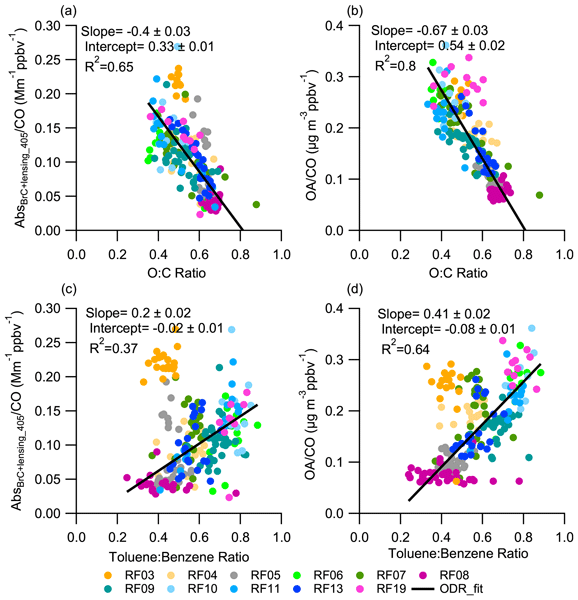
The magnitude and evolution of brown carbon (BrC) absorption remain unclear, with uncertainty in climate models. Data from the WE-CAN airborne experiment show that model parameterizations overestimate the mass absorption cross section (MAC) of BrC. Observed decreases in BrC absorption with chemical markers are due to decreasing organic aerosol (OA) mass rather than a decreasing BrC MAC, which is currently implemented in models. Water-soluble BrC contributes 23 % of total absorption at 660 nm.
Cynthia D. Nevison, Qing Liang, Paul A. Newman, Britton B. Stephens, Geoff Dutton, Xin Lan, Roisin Commane, Yenny Gonzalez, and Eric Kort
Atmos. Chem. Phys., 24, 10513–10529, https://doi.org/10.5194/acp-24-10513-2024, https://doi.org/10.5194/acp-24-10513-2024, 2024
Short summary
Short summary
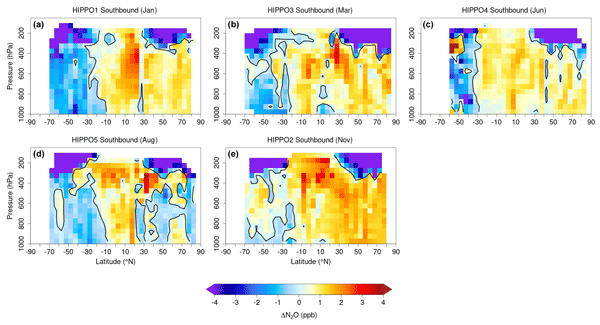
This study examines the drivers of interannual variability in tropospheric N2O. New insights are obtained from aircraft data and a chemistry–climate model that explicitly simulates stratospheric N2O. The stratosphere is found to be the dominant driver of N2O variability in the Northern Hemisphere, while both the stratosphere and El Niño cycles are important in the Southern Hemisphere. These results are consistent with known atmospheric dynamics and differences between the hemispheres.

Luke D. Schiferl, Cong Cao, Bronte Dalton, Andrew Hallward-Driemeier, Ricardo Toledo-Crow, and Róisín Commane
Atmos. Chem. Phys., 24, 10129–10142, https://doi.org/10.5194/acp-24-10129-2024, https://doi.org/10.5194/acp-24-10129-2024, 2024
Short summary
Short summary
Carbon monoxide (CO) is an air pollutant and an important indicator of the incomplete combustion of fossil fuels in cities. Using 4 years of winter and spring observations in New York City, we found that both the magnitude and variability of CO from the metropolitan area are greater than expected. Transportation emissions cannot explain the missing and variable CO, which points to energy from buildings as a likely underappreciated source of urban air pollution and greenhouse gas emissions.

Hanqin Tian, Naiqing Pan, Rona L. Thompson, Josep G. Canadell, Parvadha Suntharalingam, Pierre Regnier, Eric A. Davidson, Michael Prather, Philippe Ciais, Marilena Muntean, Shufen Pan, Wilfried Winiwarter, Sönke Zaehle, Feng Zhou, Robert B. Jackson, Hermann W. Bange, Sarah Berthet, Zihao Bian, Daniele Bianchi, Alexander F. Bouwman, Erik T. Buitenhuis, Geoffrey Dutton, Minpeng Hu, Akihiko Ito, Atul K. Jain, Aurich Jeltsch-Thömmes, Fortunat Joos, Sian Kou-Giesbrecht, Paul B. Krummel, Xin Lan, Angela Landolfi, Ronny Lauerwald, Ya Li, Chaoqun Lu, Taylor Maavara, Manfredi Manizza, Dylan B. Millet, Jens Mühle, Prabir K. Patra, Glen P. Peters, Xiaoyu Qin, Peter Raymond, Laure Resplandy, Judith A. Rosentreter, Hao Shi, Qing Sun, Daniele Tonina, Francesco N. Tubiello, Guido R. van der Werf, Nicolas Vuichard, Junjie Wang, Kelley C. Wells, Luke M. Western, Chris Wilson, Jia Yang, Yuanzhi Yao, Yongfa You, and Qing Zhu
Earth Syst. Sci. Data, 16, 2543–2604, https://doi.org/10.5194/essd-16-2543-2024, https://doi.org/10.5194/essd-16-2543-2024, 2024
Short summary
Short summary
Atmospheric concentrations of nitrous oxide (N2O), a greenhouse gas 273 times more potent than carbon dioxide, have increased by 25 % since the preindustrial period, with the highest observed growth rate in 2020 and 2021. This rapid growth rate has primarily been due to a 40 % increase in anthropogenic emissions since 1980. Observed atmospheric N2O concentrations in recent years have exceeded the worst-case climate scenario, underscoring the importance of reducing anthropogenic N2O emissions.
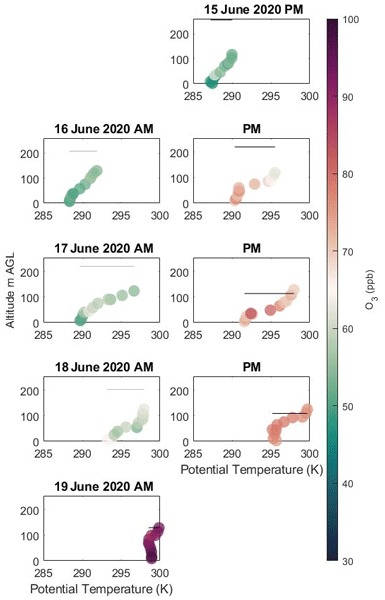
Josie K. Radtke, Benjamin N. Kies, Whitney A. Mottishaw, Sydney M. Zeuli, Aidan T. H. Voon, Kelly L. Koerber, Grant W. Petty, Michael P. Vermeuel, Timothy H. Bertram, Ankur R. Desai, Joseph P. Hupy, R. Bradley Pierce, Timothy J. Wagner, and Patricia A. Cleary
Atmos. Meas. Tech., 17, 2833–2847, https://doi.org/10.5194/amt-17-2833-2024, https://doi.org/10.5194/amt-17-2833-2024, 2024
Short summary
Short summary
The use of uncrewed aircraft systems (UASs) to conduct a vertical profiling of ozone and meteorological variables was evaluated using comparisons between tower or ground observations and UAS-based measurements. Changes to the UAS profiler showed an improvement in performance. The profiler was used to see the impact of Chicago pollution plumes on a shoreline area near Lake Michigan.

Sarah M. Ludwig, Luke Schiferl, Jacqueline Hung, Susan M. Natali, and Roisin Commane
Biogeosciences, 21, 1301–1321, https://doi.org/10.5194/bg-21-1301-2024, https://doi.org/10.5194/bg-21-1301-2024, 2024
Short summary
Short summary
Landscapes are often assumed to be homogeneous when using eddy covariance fluxes, which can lead to biases when calculating carbon budgets. In this study we report eddy covariance carbon fluxes from heterogeneous tundra. We used the footprints of each flux observation to unmix the fluxes coming from components of the landscape. We identified and quantified hot spots of carbon emissions in the landscape. Accurately scaling with landscape heterogeneity yielded half as much regional carbon uptake.
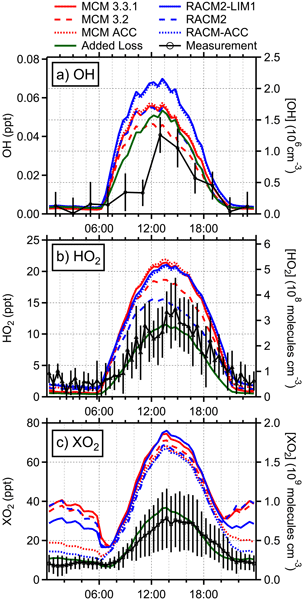
Brandon Bottorff, Michelle M. Lew, Youngjun Woo, Pamela Rickly, Matthew D. Rollings, Benjamin Deming, Daniel C. Anderson, Ezra Wood, Hariprasad D. Alwe, Dylan B. Millet, Andrew Weinheimer, Geoff Tyndall, John Ortega, Sebastien Dusanter, Thierry Leonardis, James Flynn, Matt Erickson, Sergio Alvarez, Jean C. Rivera-Rios, Joshua D. Shutter, Frank Keutsch, Detlev Helmig, Wei Wang, Hannah M. Allen, Johnathan H. Slade, Paul B. Shepson, Steven Bertman, and Philip S. Stevens
Atmos. Chem. Phys., 23, 10287–10311, https://doi.org/10.5194/acp-23-10287-2023, https://doi.org/10.5194/acp-23-10287-2023, 2023
Short summary
Short summary
The hydroxyl (OH), hydroperoxy (HO2), and organic peroxy (RO2) radicals play important roles in atmospheric chemistry and have significant air quality implications. Here, we compare measurements of OH, HO2, and total peroxy radicals (XO2) made in a remote forest in Michigan, USA, to predictions from a series of chemical models. Lower measured radical concentrations suggest that the models may be missing an important radical sink and overestimating the rate of ozone production in this forest.
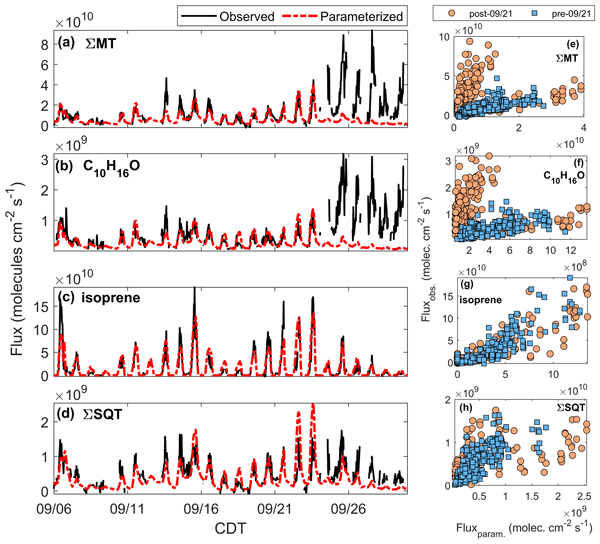
Michael P. Vermeuel, Gordon A. Novak, Delaney B. Kilgour, Megan S. Claflin, Brian M. Lerner, Amy M. Trowbridge, Jonathan Thom, Patricia A. Cleary, Ankur R. Desai, and Timothy H. Bertram
Atmos. Chem. Phys., 23, 4123–4148, https://doi.org/10.5194/acp-23-4123-2023, https://doi.org/10.5194/acp-23-4123-2023, 2023
Short summary
Short summary
Reactive carbon species emitted from natural sources such as forests play an important role in the chemistry of the atmosphere. Predictions of these emissions are based on plant responses during the growing season and do not consider potential effects from seasonal changes. To address this, we made measurements of reactive carbon over a forest during the summer to autumn transition. We learned that observed concentrations and emissions for some key species are larger than model predictions.
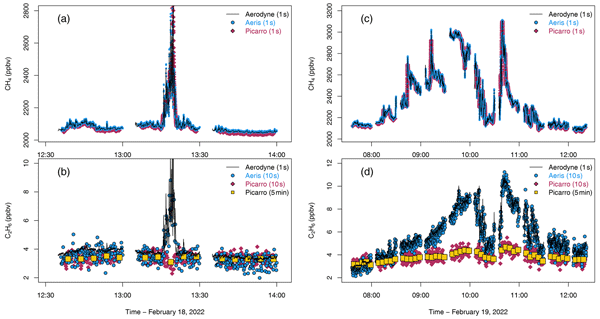
Róisín Commane, Andrew Hallward-Driemeier, and Lee T. Murray
Atmos. Meas. Tech., 16, 1431–1441, https://doi.org/10.5194/amt-16-1431-2023, https://doi.org/10.5194/amt-16-1431-2023, 2023
Short summary
Short summary
Methane / ethane ratios can be used to identify and partition the different sources of methane, especially in areas with natural gas mixed with biogenic methane emissions, such as cities. We tested three commercially available laser-based analyzers for sensitivity, precision, size, power requirement, ease of use on mobile platforms, and expertise needed to operate the instrument, and we make recommendations for use in various situations.
Xueying Yu, Dylan B. Millet, Daven K. Henze, Alexander J. Turner, Alba Lorente Delgado, A. Anthony Bloom, and Jianxiong Sheng
Atmos. Chem. Phys., 23, 3325–3346, https://doi.org/10.5194/acp-23-3325-2023, https://doi.org/10.5194/acp-23-3325-2023, 2023
Short summary
Short summary
We combine satellite measurements with a novel downscaling method to map global methane emissions at 0.1°×0.1° resolution. These fine-scale emission estimates reveal unreported emission hotspots and shed light on the roles of agriculture, wetlands, and fossil fuels for regional methane budgets. The satellite-derived emissions point in particular to missing fossil fuel emissions in the Middle East and to a large emission underestimate in South Asia that appears to be tied to monsoon rainfall.
Hao Guo, Clare M. Flynn, Michael J. Prather, Sarah A. Strode, Stephen D. Steenrod, Louisa Emmons, Forrest Lacey, Jean-Francois Lamarque, Arlene M. Fiore, Gus Correa, Lee T. Murray, Glenn M. Wolfe, Jason M. St. Clair, Michelle Kim, John Crounse, Glenn Diskin, Joshua DiGangi, Bruce C. Daube, Roisin Commane, Kathryn McKain, Jeff Peischl, Thomas B. Ryerson, Chelsea Thompson, Thomas F. Hanisco, Donald Blake, Nicola J. Blake, Eric C. Apel, Rebecca S. Hornbrook, James W. Elkins, Eric J. Hintsa, Fred L. Moore, and Steven C. Wofsy
Atmos. Chem. Phys., 23, 99–117, https://doi.org/10.5194/acp-23-99-2023, https://doi.org/10.5194/acp-23-99-2023, 2023
Short summary
Short summary
We have prepared a unique and unusual result from the recent ATom aircraft mission: a measurement-based derivation of the production and loss rates of ozone and methane over the ocean basins. These are the key products of chemistry models used in assessments but have thus far lacked observational metrics. It also shows the scales of variability of atmospheric chemical rates and provides a major challenge to the atmospheric models.
Luke D. Schiferl, Jennifer D. Watts, Erik J. L. Larson, Kyle A. Arndt, Sébastien C. Biraud, Eugénie S. Euskirchen, Jordan P. Goodrich, John M. Henderson, Aram Kalhori, Kathryn McKain, Marikate E. Mountain, J. William Munger, Walter C. Oechel, Colm Sweeney, Yonghong Yi, Donatella Zona, and Róisín Commane
Biogeosciences, 19, 5953–5972, https://doi.org/10.5194/bg-19-5953-2022, https://doi.org/10.5194/bg-19-5953-2022, 2022
Short summary
Short summary
As the Arctic rapidly warms, vast stores of thawing permafrost could release carbon dioxide (CO2) into the atmosphere. We combined observations of atmospheric CO2 concentrations from aircraft and a tower with observed CO2 fluxes from tundra ecosystems and found that the Alaskan North Slope in not a consistent source nor sink of CO2. Our study shows the importance of using both site-level and atmospheric measurements to constrain regional net CO2 fluxes and improve biogenic processes in models.
Peeyush Khare, Jordan E. Krechmer, Jo E. Machesky, Tori Hass-Mitchell, Cong Cao, Junqi Wang, Francesca Majluf, Felipe Lopez-Hilfiker, Sonja Malek, Will Wang, Karl Seltzer, Havala O. T. Pye, Roisin Commane, Brian C. McDonald, Ricardo Toledo-Crow, John E. Mak, and Drew R. Gentner
Atmos. Chem. Phys., 22, 14377–14399, https://doi.org/10.5194/acp-22-14377-2022, https://doi.org/10.5194/acp-22-14377-2022, 2022
Short summary
Short summary
Ammonium adduct chemical ionization is used to examine the atmospheric abundances of oxygenated volatile organic compounds associated with emissions from volatile chemical products, which are now key contributors of reactive precursors to ozone and secondary organic aerosols in urban areas. The application of this valuable measurement approach in densely populated New York City enables the evaluation of emissions inventories and thus the role these oxygenated compounds play in urban air quality.
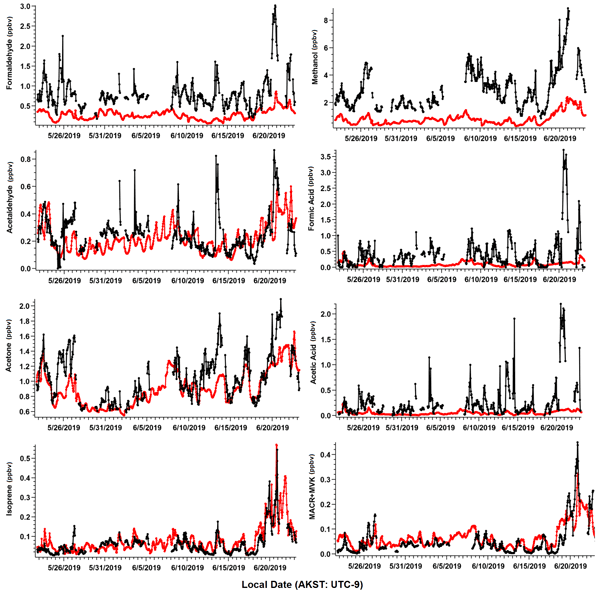
Vanessa Selimovic, Damien Ketcherside, Sreelekha Chaliyakunnel, Catherine Wielgasz, Wade Permar, Hélène Angot, Dylan B. Millet, Alan Fried, Detlev Helmig, and Lu Hu
Atmos. Chem. Phys., 22, 14037–14058, https://doi.org/10.5194/acp-22-14037-2022, https://doi.org/10.5194/acp-22-14037-2022, 2022
Short summary
Short summary
Arctic warming has led to an increase in plants that emit gases in response to stress, but how these gases affect regional chemistry is largely unknown due to lack of observational data. Here we present the most comprehensive gas-phase measurements for this area to date and compare them to predictions from a global transport model. We report 78 gas-phase species and investigate their importance to atmospheric chemistry in the area, with broader implications for similar plant types.
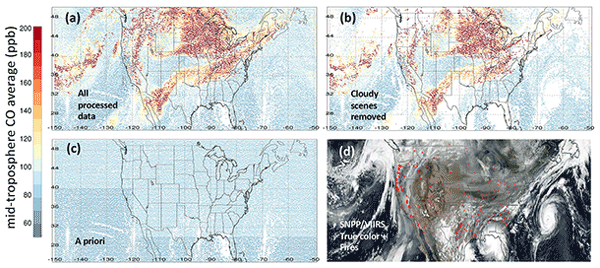
Helen M. Worden, Gene L. Francis, Susan S. Kulawik, Kevin W. Bowman, Karen Cady-Pereira, Dejian Fu, Jennifer D. Hegarty, Valentin Kantchev, Ming Luo, Vivienne H. Payne, John R. Worden, Róisín Commane, and Kathryn McKain
Atmos. Meas. Tech., 15, 5383–5398, https://doi.org/10.5194/amt-15-5383-2022, https://doi.org/10.5194/amt-15-5383-2022, 2022
Short summary
Short summary
Satellite observations of global carbon monoxide (CO) are essential for understanding atmospheric chemistry and pollution sources. This paper describes a new data product using radiance measurements from the Cross-track Infrared Sounder (CrIS) instrument on the Suomi National Polar-orbiting Partnership (SNPP) satellite that provides vertical profiles of CO from single-field-of-view observations. We show how these satellite CO profiles compare to aircraft observations and evaluate their biases.
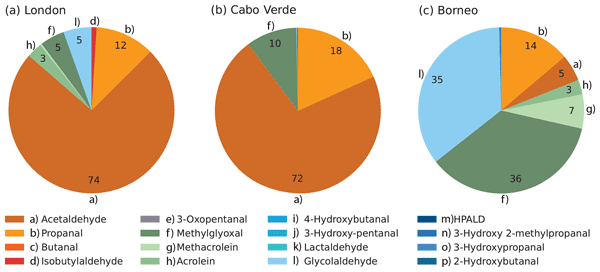
Maria Paula Pérez-Peña, Jenny A. Fisher, Dylan B. Millet, Hisashi Yashiro, Ray L. Langenfelds, Paul B. Krummel, and Scott H. Kable
Atmos. Chem. Phys., 22, 12367–12386, https://doi.org/10.5194/acp-22-12367-2022, https://doi.org/10.5194/acp-22-12367-2022, 2022
Short summary
Short summary
We used two atmospheric models to test the implications of previously unexplored aldehyde photochemistry on the atmospheric levels of molecular hydrogen (H2). We showed that the new photochemistry from aldehydes produces more H2 over densely forested areas. Compared to the rest of the world, it is over these forested regions where the produced H2 is more likely to be removed. The results highlight that other processes that contribute to atmospheric H2 levels should be studied further.
Erin K. Boedicker, Holly M. DeBolt, Ryan Fulgam, Ethan W. Emerson, and Delphine K. Farmer
Atmos. Chem. Phys. Discuss., https://doi.org/10.5194/acp-2022-431, https://doi.org/10.5194/acp-2022-431, 2022
Preprint withdrawn
Short summary
Short summary
We present particle flux and size-resolved dry deposition measurements from a pine forest for all four major seasons. Dry deposition of particles was highest in the winter and was significantly elevated compared to the summer data. Several mechanisms were investigated to determine what effects were driving the enhanced deposition in the winter. We show that the wintertime changes are likely caused by changes in plant physiology and needle structure that increase the influence of interception.
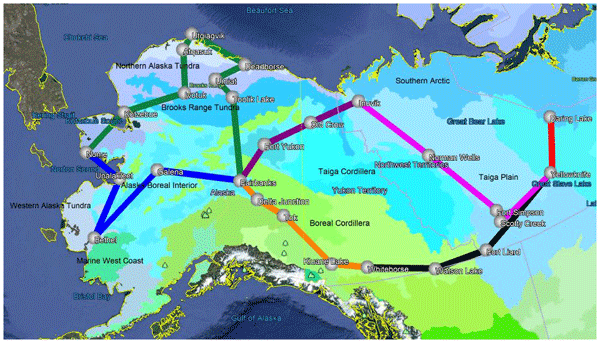
Colm Sweeney, Abhishek Chatterjee, Sonja Wolter, Kathryn McKain, Robert Bogue, Stephen Conley, Tim Newberger, Lei Hu, Lesley Ott, Benjamin Poulter, Luke Schiferl, Brad Weir, Zhen Zhang, and Charles E. Miller
Atmos. Chem. Phys., 22, 6347–6364, https://doi.org/10.5194/acp-22-6347-2022, https://doi.org/10.5194/acp-22-6347-2022, 2022
Short summary
Short summary
The Arctic Carbon Atmospheric Profiles (Arctic-CAP) project demonstrates the utility of aircraft profiles for independent evaluation of model-derived emissions and uptake of atmospheric CO2, CH4, and CO from land and ocean. Comparison with the Goddard Earth Observing System (GEOS) modeling system suggests that fluxes of CO2 are very consistent with observations, while those of CH4 have some regional and seasonal biases, and that CO comparison is complicated by transport errors.

Gordon A. Novak, Delaney B. Kilgour, Christopher M. Jernigan, Michael P. Vermeuel, and Timothy H. Bertram
Atmos. Chem. Phys., 22, 6309–6325, https://doi.org/10.5194/acp-22-6309-2022, https://doi.org/10.5194/acp-22-6309-2022, 2022
Short summary
Short summary
We describe field measurements of the mixing ratio and oceanic emission flux of dimethyl sulfide (DMS) and methanethiol (MeSH) from a coastal ocean site. DMS is known to impact aerosol formation and growth in the marine atmosphere, influencing cloud formation and climate. Measurements of MeSH, which is produced by the same oceanic source as DMS, are rare. We show that MeSH emissions are large and must be measured alongside DMS to understand marine sulfur chemistry and aerosol formation.
Sparkle L. Malone, Youmi Oh, Kyle A. Arndt, George Burba, Roisin Commane, Alexandra R. Contosta, Jordan P. Goodrich, Henry W. Loescher, Gregory Starr, and Ruth K. Varner
Biogeosciences, 19, 2507–2522, https://doi.org/10.5194/bg-19-2507-2022, https://doi.org/10.5194/bg-19-2507-2022, 2022
Short summary
Short summary
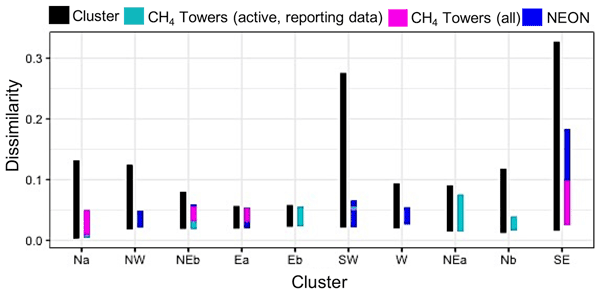
To understand the CH4 flux potential of natural ecosystems and agricultural lands in the United States of America, a multi-scale CH4 observation network focused on CH4 flux rates, processes, and scaling methods is required. This can be achieved with a network of ground-based observations that are distributed based on climatic regions and land cover.
Merritt Deeter, Gene Francis, John Gille, Debbie Mao, Sara Martínez-Alonso, Helen Worden, Dan Ziskin, James Drummond, Róisín Commane, Glenn Diskin, and Kathryn McKain
Atmos. Meas. Tech., 15, 2325–2344, https://doi.org/10.5194/amt-15-2325-2022, https://doi.org/10.5194/amt-15-2325-2022, 2022
Short summary
Short summary
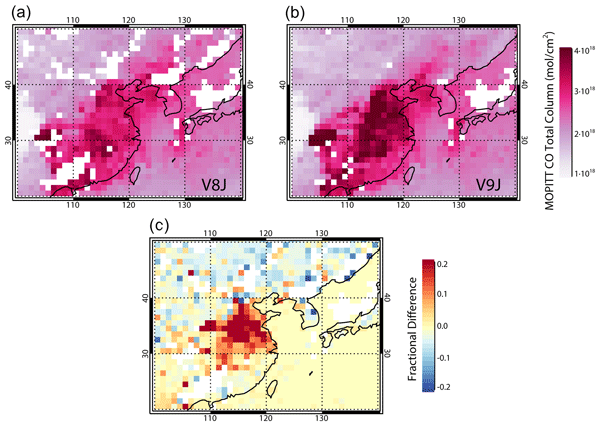
The MOPITT (Measurements of Pollution in the Troposphere) satellite instrument uses remote sensing to obtain retrievals (measurements) of carbon monoxide (CO) in the atmosphere. This paper describes the latest MOPITT data product, Version 9. Globally, the number of daytime MOPITT retrievals over land has increased by 30 %–40 % compared to the previous product. The reported improvements in the MOPITT product should benefit a wide variety of applications including studies of pollution sources.

Maria Tzortziou, Charlotte F. Kwong, Daniel Goldberg, Luke Schiferl, Róisín Commane, Nader Abuhassan, James J. Szykman, and Lukas C. Valin
Atmos. Chem. Phys., 22, 2399–2417, https://doi.org/10.5194/acp-22-2399-2022, https://doi.org/10.5194/acp-22-2399-2022, 2022
Short summary
Short summary
The COVID-19 pandemic created an extreme natural experiment in which sudden changes in human behavior significantly impacted urban air quality. Using a combination of model, satellite, and ground-based data, we examine the impact of multiple waves and phases of the pandemic on atmospheric nitrogen pollution in the New York metropolitan area, and address the role of weather as a key driver of high pollution episodes observed even during – and despite – the stringent early lockdowns.
Rupert Holzinger, Oliver Eppers, Kouji Adachi, Heiko Bozem, Markus Hartmann, Andreas Herber, Makoto Koike, Dylan B. Millet, Nobuhiro Moteki, Sho Ohata, Frank Stratmann, and Atsushi Yoshida
Atmos. Chem. Phys. Discuss., https://doi.org/10.5194/acp-2022-95, https://doi.org/10.5194/acp-2022-95, 2022
Revised manuscript not accepted
Short summary
Short summary
In spring 2018 the research aircraft Polar 5 conducted flights in the Arctic atmosphere. The flight operation was from Station Nord in Greenland, 1700 km north of the Arctic Circle (81°43'N, 17°47'W). Using a mass spectrometer we measured more than 100 organic compounds in the air. We found a clear signature of natural organic compounds that are transported from forests to the high Arctic. These compounds have the potential to change the cloud cover and energy budget of the Arctic region.
Anna-Maria Virkkala, Susan M. Natali, Brendan M. Rogers, Jennifer D. Watts, Kathleen Savage, Sara June Connon, Marguerite Mauritz, Edward A. G. Schuur, Darcy Peter, Christina Minions, Julia Nojeim, Roisin Commane, Craig A. Emmerton, Mathias Goeckede, Manuel Helbig, David Holl, Hiroki Iwata, Hideki Kobayashi, Pasi Kolari, Efrén López-Blanco, Maija E. Marushchak, Mikhail Mastepanov, Lutz Merbold, Frans-Jan W. Parmentier, Matthias Peichl, Torsten Sachs, Oliver Sonnentag, Masahito Ueyama, Carolina Voigt, Mika Aurela, Julia Boike, Gerardo Celis, Namyi Chae, Torben R. Christensen, M. Syndonia Bret-Harte, Sigrid Dengel, Han Dolman, Colin W. Edgar, Bo Elberling, Eugenie Euskirchen, Achim Grelle, Juha Hatakka, Elyn Humphreys, Järvi Järveoja, Ayumi Kotani, Lars Kutzbach, Tuomas Laurila, Annalea Lohila, Ivan Mammarella, Yojiro Matsuura, Gesa Meyer, Mats B. Nilsson, Steven F. Oberbauer, Sang-Jong Park, Roman Petrov, Anatoly S. Prokushkin, Christopher Schulze, Vincent L. St. Louis, Eeva-Stiina Tuittila, Juha-Pekka Tuovinen, William Quinton, Andrej Varlagin, Donatella Zona, and Viacheslav I. Zyryanov
Earth Syst. Sci. Data, 14, 179–208, https://doi.org/10.5194/essd-14-179-2022, https://doi.org/10.5194/essd-14-179-2022, 2022
Short summary
Short summary
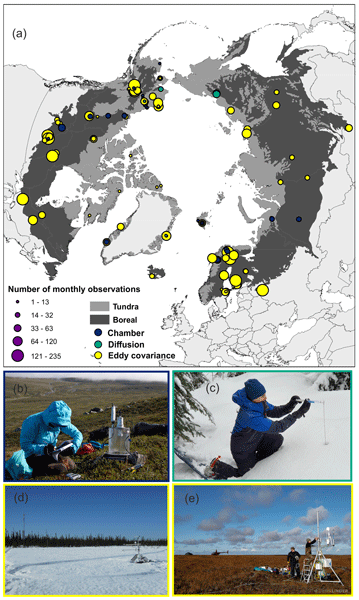
The effects of climate warming on carbon cycling across the Arctic–boreal zone (ABZ) remain poorly understood due to the relatively limited distribution of ABZ flux sites. Fortunately, this flux network is constantly increasing, but new measurements are published in various platforms, making it challenging to understand the ABZ carbon cycle as a whole. Here, we compiled a new database of Arctic–boreal CO2 fluxes to help facilitate large-scale assessments of the ABZ carbon cycle.
Jennifer D. Hegarty, Karen E. Cady-Pereira, Vivienne H. Payne, Susan S. Kulawik, John R. Worden, Valentin Kantchev, Helen M. Worden, Kathryn McKain, Jasna V. Pittman, Róisín Commane, Bruce C. Daube Jr., and Eric A. Kort
Atmos. Meas. Tech., 15, 205–223, https://doi.org/10.5194/amt-15-205-2022, https://doi.org/10.5194/amt-15-205-2022, 2022
Short summary
Short summary
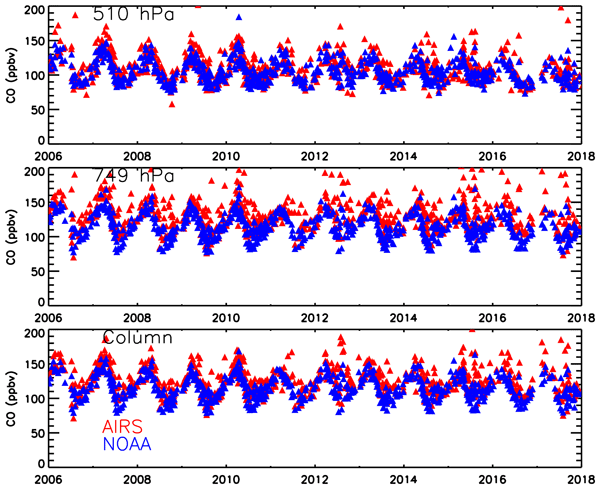
Carbon monoxide (CO) is produced by combustion of substances such as fossil fuels and plays an important role in atmospheric pollution and climate. We evaluated estimates of atmospheric CO derived from outgoing radiation measurements of the Atmospheric Infrared Sounder (AIRS) on a satellite orbiting the Earth against CO measurements from aircraft to show that these satellite measurements are reliable for continuous global monitoring of atmospheric CO concentrations.
Xueying Yu, Dylan B. Millet, and Daven K. Henze
Geosci. Model Dev., 14, 7775–7793, https://doi.org/10.5194/gmd-14-7775-2021, https://doi.org/10.5194/gmd-14-7775-2021, 2021
Short summary
Short summary
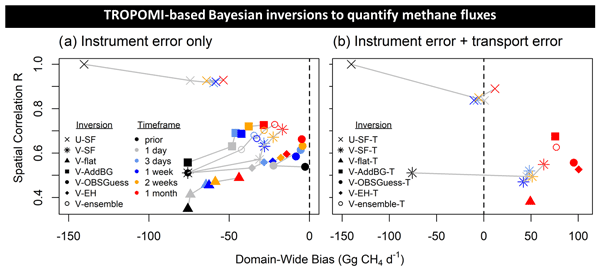
We conduct observing system simulation experiments to test how well inverse analyses of high-resolution satellite data from sensors such as TROPOMI can quantify methane emissions. Inversions can improve monthly flux estimates at 25 km even with a spatially biased prior or model transport errors, but results are strongly degraded when both are present. We further evaluate a set of alternate formalisms to overcome limitations of the widely used scale factor approach that arise for missing sources.
Linda M. J. Kooijmans, Ara Cho, Jin Ma, Aleya Kaushik, Katherine D. Haynes, Ian Baker, Ingrid T. Luijkx, Mathijs Groenink, Wouter Peters, John B. Miller, Joseph A. Berry, Jerome Ogée, Laura K. Meredith, Wu Sun, Kukka-Maaria Kohonen, Timo Vesala, Ivan Mammarella, Huilin Chen, Felix M. Spielmann, Georg Wohlfahrt, Max Berkelhammer, Mary E. Whelan, Kadmiel Maseyk, Ulli Seibt, Roisin Commane, Richard Wehr, and Maarten Krol
Biogeosciences, 18, 6547–6565, https://doi.org/10.5194/bg-18-6547-2021, https://doi.org/10.5194/bg-18-6547-2021, 2021
Short summary
Short summary
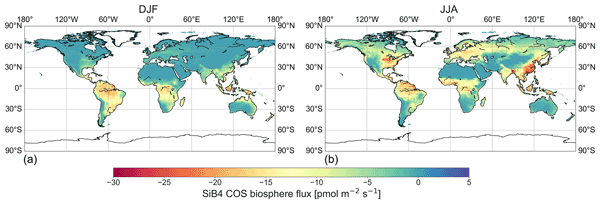
The gas carbonyl sulfide (COS) can be used to estimate photosynthesis. To adopt this approach on regional and global scales, we need biosphere models that can simulate COS exchange. So far, such models have not been evaluated against observations. We evaluate the COS biosphere exchange of the SiB4 model against COS flux observations. We find that the model is capable of simulating key processes in COS biosphere exchange. Still, we give recommendations for further improvement of the model.
Alexander A. T. Bui, Henry W. Wallace, Sarah Kavassalis, Hariprasad D. Alwe, James H. Flynn, Matt H. Erickson, Sergio Alvarez, Dylan B. Millet, Allison L. Steiner, and Robert J. Griffin
Atmos. Chem. Phys., 21, 17031–17050, https://doi.org/10.5194/acp-21-17031-2021, https://doi.org/10.5194/acp-21-17031-2021, 2021
Short summary
Short summary
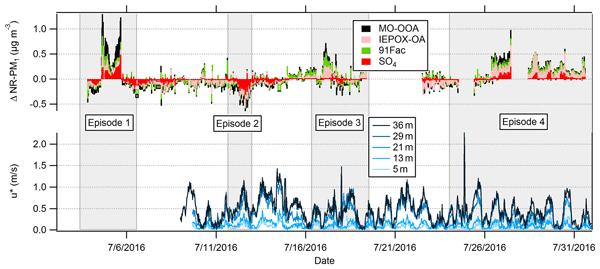
Differences in atmospheric species above and below a forest canopy provide insight into the relative importance of local mixing, long-range transport, and chemical processes in determining vertical gradients in atmospheric particles in a forested environment. This helps in understanding the flux of climate-relevant material out of the forest to the atmosphere. We studied this in a remote forest using vertically resolved measurements of gases and particles.
Dandan Wei, Hariprasad D. Alwe, Dylan B. Millet, Brandon Bottorff, Michelle Lew, Philip S. Stevens, Joshua D. Shutter, Joshua L. Cox, Frank N. Keutsch, Qianwen Shi, Sarah C. Kavassalis, Jennifer G. Murphy, Krystal T. Vasquez, Hannah M. Allen, Eric Praske, John D. Crounse, Paul O. Wennberg, Paul B. Shepson, Alexander A. T. Bui, Henry W. Wallace, Robert J. Griffin, Nathaniel W. May, Megan Connor, Jonathan H. Slade, Kerri A. Pratt, Ezra C. Wood, Mathew Rollings, Benjamin L. Deming, Daniel C. Anderson, and Allison L. Steiner
Geosci. Model Dev., 14, 6309–6329, https://doi.org/10.5194/gmd-14-6309-2021, https://doi.org/10.5194/gmd-14-6309-2021, 2021
Short summary
Short summary
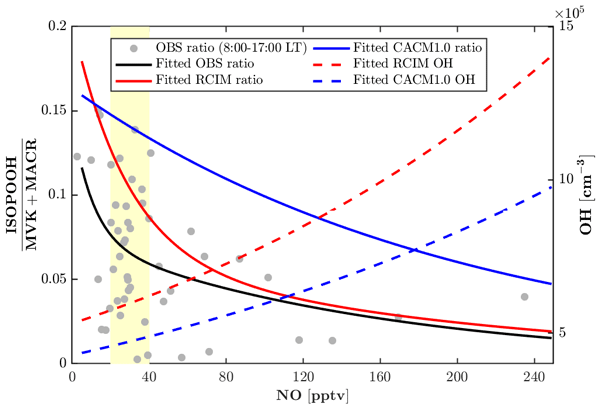
Over the past decade, understanding of isoprene oxidation has improved, and proper representation of isoprene oxidation and isoprene-derived SOA (iSOA) formation in canopy–chemistry models is now recognized to be important for an accurate understanding of forest–atmosphere exchange. The updated FORCAsT version 2.0 improves the estimation of some isoprene oxidation products and is one of the few canopy models currently capable of simulating SOA formation from monoterpenes and isoprene.
Eric J. Hintsa, Fred L. Moore, Dale F. Hurst, Geoff S. Dutton, Bradley D. Hall, J. David Nance, Ben R. Miller, Stephen A. Montzka, Laura P. Wolton, Audra McClure-Begley, James W. Elkins, Emrys G. Hall, Allen F. Jordan, Andrew W. Rollins, Troy D. Thornberry, Laurel A. Watts, Chelsea R. Thompson, Jeff Peischl, Ilann Bourgeois, Thomas B. Ryerson, Bruce C. Daube, Yenny Gonzalez Ramos, Roisin Commane, Gregory W. Santoni, Jasna V. Pittman, Steven C. Wofsy, Eric Kort, Glenn S. Diskin, and T. Paul Bui
Atmos. Meas. Tech., 14, 6795–6819, https://doi.org/10.5194/amt-14-6795-2021, https://doi.org/10.5194/amt-14-6795-2021, 2021
Short summary
Short summary
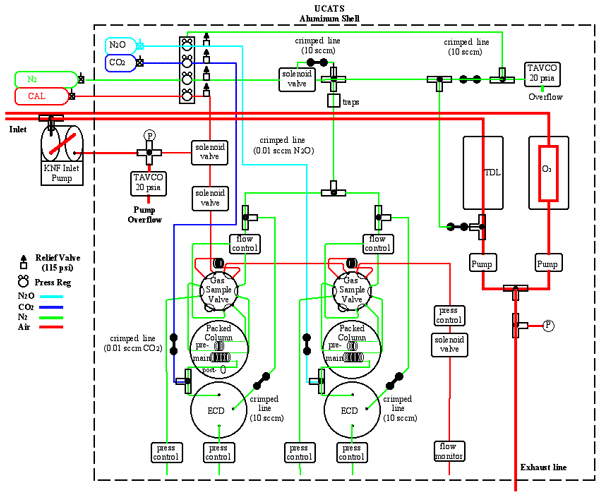
We built UCATS to study atmospheric chemistry and transport. It has measured trace gases including CFCs, N2O, SF6, CH4, CO, and H2 with gas chromatography, as well as ozone and water vapor. UCATS has been part of missions to study the tropical tropopause; transport of air into the stratosphere; greenhouse gases, transport, and chemistry in the troposphere; and ozone chemistry, on both piloted and unmanned aircraft. Its design, capabilities, and some results are shown and described here.
Cited articles
Benjamin, S. G., Weygandt, S. S., Brown, J. M., Hu, M., Alexander, C. R., Smirnova, T. G., Olson, J. B., James, E. P., Dowell, D. C., Grell, G. A., Lin, H., Peckham, S. E., Smith, T. L., Moninger, W. R., Kenyon, J. S., and Manikin, G. S.: A North American Hourly Assimilation and Model Forecast Cycle: The Rapid Refresh, Mon. Weather Rev., 144, 1669–1694, https://doi.org/10.1175/MWR-D-15-0242.1, 2016. a
Brasseur, G. P. and Jacob, D. J.: Atmospheric Observations and Model Evaluation, 436–486, Cambridge University Press, https://doi.org/10.1017/9781316544754.011, 2017. a
Commane, R., Hallward-Driemeier, A., and Murray, L. T.: Intercomparison of commercial analyzers for atmospheric ethane and methane observations, Atmos. Meas. Tech., 16, 1431–1441, https://doi.org/10.5194/amt-16-1431-2023, 2023. a
Crippa, M., Solazzo, E., Huang, G., Guizzardi, D., Koffi, E., Muntean, M., Schieberle, C., Friedrich, R., and Janssens-Maenhout, G.: High resolution temporal profiles in the Emissions Database for Global Atmospheric Research, Sci. Data, 7, 121, https://doi.org/10.1038/s41597-020-0462-2, 2020. a, b, c
Crippa, M., Guizzardi, D., Pagani, F., Schiavina, M., Melchiorri, M., Pisoni, E., Graziosi, F., Muntean, M., Maes, J., Dijkstra, L., Van Damme, M., Clarisse, L., and Coheur, P.: Insights into the spatial distribution of global, national, and subnational greenhouse gas emissions in the Emissions Database for Global Atmospheric Research (EDGAR v8.0), Earth Syst. Sci. Data, 16, 2811–2830, https://doi.org/10.5194/essd-16-2811-2024, 2024. a, b, c, d
EPA: Inventory of U.S. Greenhouse Gas Emissions and Sinks: 1990–2022, Tech. rep., U.S. Environmental Protection Agency, EPA 430R-24004, https://www.epa.gov/ghgemissions/inventory-us-greenhouse-gas-emissions-and-sinks-1990-2022 (last access: 26 March 2026), 2024. a
European Commission, Joint Research Centre: GHG emissions of all world countries: 2023, Publications Office, LU, https://data.europa.eu/doi/10.2760/953322 (last access: 26 March 2026), 2023. a
Fasoli, B., Lin, J. C., Bowling, D. R., Mitchell, L., and Mendoza, D.: Simulating atmospheric tracer concentrations for spatially distributed receptors: updates to the Stochastic Time-Inverted Lagrangian Transport model's R interface (STILT-R version 2), Geosci. Model Dev., 11, 2813–2824, https://doi.org/10.5194/gmd-11-2813-2018, 2018. a, b, c
Fischer, M. L., Chan, W. R., Delp, W., Jeong, S., Rapp, V., and Zhu, Z.: An Estimate of Natural Gas Methane Emissions from California Homes, Environ. Sci. Technol., 52, 10205–10213, https://doi.org/10.1021/acs.est.8b03217, 2018. a, b
Floerchinger, C., Shepson, P. B., Hajny, K., Daube, B. C., Stirm, B. H., Sweeney, C., and Wofsy, S. C.: Relative flux measurements of biogenic and natural gas-derived methane for seven U.S. cities, Elementa: Science of the Anthropocene, 9, 000119, https://doi.org/10.1525/elementa.2021.000119, 2021. a, b, c, d, e
Forster, P., Storelvmo, T., Armour, K., Collins, W., Dufresne, J.-L., Frame, D., Lunt, D. J., Mauritsen, T., Palmer, M. D., Watanabe, M., Wild, M., and Zhang, X.: The Earth's energy budget, climate feedbacks, and climate sensitivity, in: Climate Change 2021: The Physical Science Basis. Contribution of Working Group I to the Sixth Assessment Report of the Intergovernmental Panel on Climate Change, edited by: Masson-Delmotte, V., Zhai, P., Pirani, A., Connors, S. L., Péan, C., Berger, S., Caud, N., Chen, Y., Goldfarb, L., Gomis, M. I., Huang, M., Leitzell, K., Lonnoy, E., Matthews, J. B. R., Maycock, T. K., Waterfield, T., Yelekçi, Ö., Yu, R., and Zhou, B., 923–1054, Cambridge University Press, Cambridge, United Kingdom and New York, NY, USA, https://doi.org/10.1017/9781009157896.001, 2021. a
Global Methane Pledge: Fast action on methane to keep a 1.5 °C future within reach, http://www.globalmethanepledge.org (last access: 28 February 2025), 2021. a
He, L., Zeng, Z.-C., Pongetti, T. J., Wong, C., Liang, J., Gurney, K. R., Newman, S., Yadav, V., Verhulst, K., Miller, C. E., Duren, R., Frankenberg, C., Wennberg, P. O., Shia, R.-L., Yung, Y. L., and Sander, S. P.: Atmospheric Methane Emissions Correlate With Natural Gas Consumption From Residential and Commercial Sectors in Los Angeles, Geophys. Res. Lett., 46, 8563–8571, https://doi.org/10.1029/2019GL083400, 2019. a, b
Hopkins, F. M., Kort, E. A., Bush, S. E., Ehleringer, J. R., Lai, C.-T., Blake, D. R., and Randerson, J. T.: Spatial patterns and source attribution of urban methane in the Los Angeles Basin, J. Geophys. Res.-Atmos., 121, 2490–2507, https://doi.org/10.1002/2015JD024429, 2016. a
Huang, Y., Kort, E. A., Gourdji, S., Karion, A., Mueller, K., and Ware, J.: Seasonally Resolved Excess Urban Methane Emissions from the Baltimore/Washington, DC Metropolitan Region, Environ. Sci. Technol., 53, 11285–11293, https://doi.org/10.1021/acs.est.9b02782, 2019. a, b
Karion, A., Sweeney, C., Kort, E. A., Shepson, P. B., Brewer, A., Cambaliza, M., Conley, S. A., Davis, K., Deng, A., Hardesty, M., Herndon, S. C., Lauvaux, T., Lavoie, T., Lyon, D., Newberger, T., Pétron, G., Rella, C., Smith, M., Wolter, S., Yacovitch, T. I., and Tans, P.: Aircraft-Based Estimate of Total Methane Emissions from the Barnett Shale Region, Environ. Sci. Technol., 49, 8124–8131, https://doi.org/10.1021/acs.est.5b00217, 2015. a, b
Karion, A., Callahan, W., Stock, M., Prinzivalli, S., Verhulst, K. R., Kim, J., Salameh, P. K., Lopez-Coto, I., and Whetstone, J.: Greenhouse gas observations from the Northeast Corridor tower network, Earth Syst. Sci. Data, 12, 699–717, https://doi.org/10.5194/essd-12-699-2020, 2020. a
Karion, A., DiGangi, E., Prinzivalli, S., Draper, C., Baldelli, S., Fain, C., Biggs, B., Stock, M., Michalak, B., Salameh, P., Kim, J., Callahan, W., and Whetstone, J.: Observations of carbon dioxide (CO2), methane (CH4), and carbon monoxide (CO) mole fractions from the NIST Northeast Corridor urban testbed, National Institute of Standards and Technology (NIST), https://doi.org/10.18434/MDS2-3012, 2023a. a, b
Karion, A., Ghosh, S., Lopez-Coto, I., Mueller, K., Gourdji, S., Pitt, J., and Whetstone, J.: Methane Emissions Show Recent Decline but Strong Seasonality in Two US Northeastern Cities, Environ. Sci. Technol., 57, 19565–19574, https://doi.org/10.1021/acs.est.3c05050, 2023b. a
Karion, A., DiGangi, E., Prinzivalli, S., Draper, C., Baldelli, S., Fain, C., Biggs, B., Stock, M., Michalak, B., Salameh, P., Jooil, K., Lueker, T., and Whetstone, J.: Observations of carbon dioxide (CO2), methane (CH4), and carbon monoxide (CO) mole fractions from the NIST Northeast Corridor urban testbed, National Institute of Standards and Technology [data set], https://doi.org/10.18434/mds2-3765, 2025. a
Lamb, B. K., Cambaliza, M. O. L., Davis, K. J., Edburg, S. L., Ferrara, T. W., Floerchinger, C., Heimburger, A. M. F., Herndon, S., Lauvaux, T., Lavoie, T., Lyon, D. R., Miles, N., Prasad, K. R., Richardson, S., Roscioli, J. R., Salmon, O. E., Shepson, P. B., Stirm, B. H., and Whetstone, J.: Direct and Indirect Measurements and Modeling of Methane Emissions in Indianapolis, Indiana, Environ. Sci. Technol., 50, 8910–8917, https://doi.org/10.1021/acs.est.6b01198, 2016. a, b
Lebel, E. D., Finnegan, C. J., Ouyang, Z., and Jackson, R. B.: Methane and NOx Emissions from Natural Gas Stoves, Cooktops, and Ovens in Residential Homes, Environ. Sci. Technol., 56, 2529–2539, https://doi.org/10.1021/acs.est.1c04707, 2022. a
Lin, J. C., Gerbig, C., Wofsy, S. C., Andrews, A. E., Daube, B. C., Davis, K. J., and Grainger, C. A.: A near-field tool for simulating the upstream influence of atmospheric observations: The Stochastic Time-Inverted Lagrangian Transport (STILT) model, J. Geophys. Res.-Atmos., 108, https://doi.org/10.1029/2002JD003161, 2003. a, b, c
Lopez, M., Sherwood, O., Dlugokencky, E., Kessler, R., Giroux, L., and Worthy, D.: Isotopic signatures of anthropogenic CH4 sources in Alberta, Canada, Atmos. Environ., 164, 280–288, https://doi.org/10.1016/j.atmosenv.2017.06.021, 2017. a
Maasakkers, J. D., Jacob, D. J., Sulprizio, M. P., Turner, A. J., Weitz, M., Wirth, T., Hight, C., DeFigueiredo, M., Desai, M., Schmeltz, R., Hockstad, L., Bloom, A. A., Bowman, K. W., Jeong, S., and Fischer, M. L.: Gridded National Inventory of U.S. Methane Emissions, Environ. Sci. Technol., 50, 13123–13133, https://doi.org/10.1021/acs.est.6b02878, 2016. a, b
Maasakkers, J. D., McDuffie, E. E., Sulprizio, M. P., Chen, C., Schultz, M., Brunelle, L., Thrush, R., Steller, J., Sherry, C., Jacob, D. J., Jeong, S., Irving, B., and Weitz, M.: A Gridded Inventory of Annual 2012–2018 U.S. Anthropogenic Methane Emissions, Environ. Sci. Technol., 57, 16276–16288, https://doi.org/10.1021/acs.est.3c05138, 2023. a, b, c, d, e
Maazallahi, H., Fernandez, J. M., Menoud, M., Zavala-Araiza, D., Weller, Z. D., Schwietzke, S., von Fischer, J. C., Denier van der Gon, H., and Röckmann, T.: Methane mapping, emission quantification, and attribution in two European cities: Utrecht (NL) and Hamburg (DE), Atmos. Chem. Phys., 20, 14717–14740, https://doi.org/10.5194/acp-20-14717-2020, 2020. a, b
McKain, K., Down, A., Raciti, S. M., Budney, J., Hutyra, L. R., Floerchinger, C., Herndon, S. C., Nehrkorn, T., Zahniser, M. S., Jackson, R. B., Phillips, N., and Wofsy, S. C.: Methane emissions from natural gas infrastructure and use in the urban region of Boston, Massachusetts, P. Natl. Acad. Sci., 112, 1941–1946, https://doi.org/10.1073/pnas.1416261112, 2015. a, b, c, d, e, f, g
McDuffie, E., Maasakkers, J. D., Sulprizio, M. P., Chen, C., Schultz, M., Brunelle, L., Thrush, R., Steller, J., Sherry, C., Jacob, Daniel, J., Jeong, S., Irving, B., and Weitz, M.: Gridded EPA U.S. Anthropogenic Methane Greenhouse Gas Inventory (gridded GHGI) (Version v1.0), Zenodo [data set], https://doi.org/10.5281/zenodo.8367082, 2023. a
Menoud, M., Van Der Veen, C., Maazallahi, H., Hensen, A., Velzeboer, I., Van Den Bulk, P., Delre, A., Korben, P., Schwietzke, S., Ardelean, M., Calcan, A., Etiope, G., Baciu, C., Scheutz, C., Schmidt, M., and Röckmann, T.: CH4 isotopic signatures of emissions from oil and gas extraction sites in Romania, Elementa: Science of the Anthropocene, 10, 00092, https://doi.org/10.1525/elementa.2021.00092, 2022. a
Merrin, Z. and Francisco, P. W.: Unburned Methane Emissions from Residential Natural Gas Appliances, Environ. Sci. Technol., 53, 5473–5482, https://doi.org/10.1021/acs.est.8b05323, 2019. a
Mielke-Maday, I., Schwietzke, S., Yacovitch, T. I., Miller, B., Conley, S., Kofler, J., Handley, P., Thorley, E., Herndon, S. C., Hall, B., Dlugokencky, E., Lang, P., Wolter, S., Moglia, E., Crotwell, M., Crotwell, A., Rhodes, M., Kitzis, D., Vaughn, T., Bell, C., Zimmerle, D., Schnell, R., and Pétron, G.: Methane source attribution in a U.S. dry gas basin using spatial patterns of ground and airborne ethane and methane measurements, Elementa: Science of the Anthropocene, 7, 13, https://doi.org/10.1525/elementa.351, 2019. a
Mueller, K. L., Karion, A., Lopez-Coto, I., Marrs, J., Yadav, V., Plant, G., Pitt, J., Barkley, Z. R., and Whetstone, J.: Scaling Urban Methane Emissions: Utility of Single-Site Measurements in Five Urban Domains, Environ. Sci. Technol., 59, 14399–14409, https://doi.org/10.1021/acs.est.5c03844, 2025. a, b
Naik, V., Szopa, S., Adhikary, B., Artaxo Netto, P. E., Berntsen, T., Collins, W. D., Fuzzi, S., Gallardo, L., Kiendler-Scharr, A., Klimont, Z., Liao, H., Unger, N., and Zanis, P.: Short-lived climate forcers, in: Climate Change 2021: The Physical Science Basis. Contribution of Working Group I to the Sixth Assessment Report of the Intergovernmental Panel on Climate Change, edited by: Masson-Delmotte, V., Zhai, P., Pirani, A., Connors, S. L., Péan, C., Berger, S., Caud, N., Chen, Y., Goldfarb, L., Gomis, M. I., Huang, M., Leitzell, K., Lonnoy, E., Matthews, J. B. R., Maycock, T. K., Waterfield, T., Yelekçi, Ö., Yu, R., and Zhou, B., 817–922, Cambridge University Press, Cambridge, United Kingdom and New York, NY, USA, https://doi.org/10.1017/9781009157896.001, 2021. a
Nesser, H., Jacob, D. J., Maasakkers, J. D., Lorente, A., Chen, Z., Lu, X., Shen, L., Qu, Z., Sulprizio, M. P., Winter, M., Ma, S., Bloom, A. A., Worden, J. R., Stavins, R. N., and Randles, C. A.: High-resolution US methane emissions inferred from an inversion of 2019 TROPOMI satellite data: contributions from individual states, urban areas, and landfills, Atmos. Chem. Phys., 24, 5069–5091, https://doi.org/10.5194/acp-24-5069-2024, 2024. a, b
New York City Housing Authority: Heating Season, https://www.nyc.gov/site/nycha/residents/heating.page (last access: 30 November 2025), 2025. a
Oikawa, P. Y., Sihi, D., Forbrich, I., Fluet-Chouinard, E., Najarro, M., Thomas, O., Shahan, J., Arias-Ortiz, A., Russell, S., Knox, S. H., McNicol, G., Wolfe, J., Windham-Myers, L., Stuart-Haentjens, E., Bridgham, S. D., Needelman, B., Vargas, R., Schäfer, K., Ward, E. J., Megonigal, P., and Holmquist, J.: A New Coupled Biogeochemical Modeling Approach Provides Accurate Predictions of Methane and Carbon Dioxide Fluxes Across Diverse Tidal Wetlands, J. Geophys. Res.-Biogeo., 129, e2023JG007943, https://doi.org/10.1029/2023JG007943, 2024. a
Peischl, J., Eilerman, S. J., Neuman, J. A., Aikin, K. C., De Gouw, J., Gilman, J. B., Herndon, S. C., Nadkarni, R., Trainer, M., Warneke, C., and Ryerson, T. B.: Quantifying Methane and Ethane Emissions to the Atmosphere From Central and Western U.S. Oil and Natural Gas Production Regions, J. Geophys. Res.-Atmos., 123, 7725–7740, https://doi.org/10.1029/2018JD028622, 2018. a, b
Pitt, J. R., Lopez-Coto, I., Hajny, K. D., Tomlin, J., Kaeser, R., Jayarathne, T., Stirm, B. H., Floerchinger, C. R., Loughner, C. P., Gately, C. K., Hutyra, L. R., Gurney, K. R., Roest, G. S., Liang, J., Gourdji, S., Karion, A., Whetstone, J. R., and Shepson, P. B.: New York City greenhouse gas emissions estimated with inverse modeling of aircraft measurements, Elementa: Science of the Anthropocene, 10, 00082, https://doi.org/10.1525/elementa.2021.00082, 2022. a, b, c, d, e, f
Pitt, J. R., Lopez-Coto, I., Karion, A., Hajny, K. D., Tomlin, J., Kaeser, R., Jayarathne, T., Stirm, B. H., Floerchinger, C. R., Loughner, C. P., Commane, R., Gately, C. K., Hutyra, L. R., Gurney, K. R., Roest, G. S., Liang, J., Gourdji, S., Mueller, K. L., Whetstone, J. R., and Shepson, P. B.: Underestimation of Thermogenic Methane Emissions in New York City, Environ. Sci. Technol., 58, 9147–9157, https://doi.org/10.1021/acs.est.3c10307, 2024. a, b, c, d, e, f, g, h, i, j, k, l, m, n, o, p, q, r
Plant, G., Kort, E. A., Murray, L. T., Maasakkers, J. D., and Aben, I.: Evaluating urban methane emissions from space using TROPOMI methane and carbon monoxide observations, Remote Sens. Environ., 268, 112756, https://doi.org/10.1016/j.rse.2021.112756, 2022. a, b
Ren, X., Salmon, O. E., Hansford, J. R., Ahn, D., Hall, D., Benish, S. E., Stratton, P. R., He, H., Sahu, S., Grimes, C., Heimburger, A. M. F., Martin, C. R., Cohen, M. D., Stunder, B., Salawitch, R. J., Ehrman, S. H., Shepson, P. B., and Dickerson, R. R.: Methane Emissions From the Baltimore-Washington Area Based on Airborne Observations: Comparison to Emissions Inventories, J. Geophys. Res.-Atmos., 123, 8869–8882, https://doi.org/10.1029/2018JD028851, 2018. a, b
Saint-Vincent, P. M. B. and Pekney, N. J.: Beyond-the-Meter: Unaccounted Sources of Methane Emissions in the Natural Gas Distribution Sector, Environ. Sci. Technol., 54, 39–49, https://doi.org/10.1021/acs.est.9b04657, 2020. a
Sargent, M. R., Floerchinger, C., McKain, K., Budney, J., Gottlieb, E. W., Hutyra, L. R., Rudek, J., and Wofsy, S. C.: Majority of US urban natural gas emissions unaccounted for in inventories, P. Natl. Acad. Sci., 118, e2105804118, https://doi.org/10.1073/pnas.2105804118, 2021. a, b, c, d, e, f, g, h, i, j, k
Schiavina, M., Melchiorri, M., and Pesaresi, M.: GHS-SMOD R2023A – GHS Settlement Layers, Application of the Degree of Urbanisation Methodology (Stage I) to GHS-POP R2023A and GHS-BUILT-S R2023A, Multitemporal (1975–2030), European Commission, Joint Research Centre (JRC), https://doi.org/10.2905/A0DF7A6F-49DE-46EA-9BDE-563437A6E2BA, 2023. a
Schiferl, L. D., Cao, C., Dalton, B., Hallward-Driemeier, A., Toledo-Crow, R., and Commane, R.: Multi-year observations of variable incomplete combustion in the New York megacity, Atmos. Chem. Phys., 24, 10129–10142, https://doi.org/10.5194/acp-24-10129-2024, 2024. a, b
Schwietzke, S., Griffin, W. M., Matthews, H. S., and Bruhwiler, L. M. P.: Natural Gas Fugitive Emissions Rates Constrained by Global Atmospheric Methane and Ethane, Environ. Sci. Technol., 48, 7714–7722, https://doi.org/10.1021/es501204c, 2025. a, b
Shindell, D., Ravishankara, A. R., Kuylenstierna, J. C. I., Michalopoulou, E., Höglund-Isaksson, L., Zhang, Y., Seltzer, K., Ru, M., Castelino, R., Faluvegi, G., Naik, V., Horowitz, L., He, J., Lamarque, J.-F., Sudo, K., Collins, W. J., Malley, C., Harmsen, M., Stark, K., Junkin, J., Li, G., Glick, A., and Borgford-Parnell, N.: Global Methane Assessment: Benefits and Costs of Mitigating Methane Emissions, United Nations Environment Programme (UNEP), ISBN 978-92-807-3854-4, 2021. a
Simpson, I. J., Sulbaek Andersen, M. P., Meinardi, S., Bruhwiler, L., Blake, N. J., Helmig, D., Rowland, F. S., and Blake, D. R.: Long-term decline of global atmospheric ethane concentrations and implications for methane, Nature, 488, 490–494, https://doi.org/10.1038/nature11342, 2012. a, b
S&P Global: Connect. PointLogic. Select NJ Counties Distribution and Power, subscription required, last access: 20 November 2025, 2025a. a
S&P Global: Connect. PointLogic. Select NY Counties Distribution and Power, subscription required, last access: 20 November 2025, 2025b. a
Ueyama, M., Nakaoka, A., Umezawa, T., Terao, Y., and Lunt, M.: Natural Gas and Biogenic CH4 Emissions from an Urban Center, Sakai, Japan, Based on Simultaneous Measurements of CH4 and C2H6 fluxes Based on the Eddy Covariance Method, Environ. Sci. Technol., 59, 25877–25888, https://doi.org/10.1021/acs.est.5c09629, 2025. a
United Nations Environment Programme: About International Methane Emissions Observatory (IMEO), https://www.unep.org/topics/energy/methane/about-imeo (last access: 13 January 2026), 2025a. a
United Nations Environment Programme: Methane Alert and Response System (MARS), https://www.unep.org/topics/energy/methane/methane-alert-and-response-system-mars (last access: 13 January 2026), 2025b. a
Vanselow, S., Schneising, O., Buchwitz, M., Reuter, M., Bovensmann, H., Boesch, H., and Burrows, J. P.: Automated detection of regions with persistently enhanced methane concentrations using Sentinel-5 Precursor satellite data, Atmos. Chem. Phys., 24, 10441–10473, https://doi.org/10.5194/acp-24-10441-2024, 2024. a
Verhulst, K. R., Karion, A., Kim, J., Salameh, P. K., Keeling, R. F., Newman, S., Miller, J., Sloop, C., Pongetti, T., Rao, P., Wong, C., Hopkins, F. M., Yadav, V., Weiss, R. F., Duren, R. M., and Miller, C. E.: Carbon dioxide and methane measurements from the Los Angeles Megacity Carbon Project – Part 1: calibration, urban enhancements, and uncertainty estimates, Atmos. Chem. Phys., 17, 8313–8341, https://doi.org/10.5194/acp-17-8313-2017, 2017. a
Welp, L. R., Keeling, R. F., Weiss, R. F., Paplawsky, W., and Heckman, S.: Design and performance of a Nafion dryer for continuous operation at CO2 and CH4 air monitoring sites, Atmos. Meas. Tech., 6, 1217–1226, https://doi.org/10.5194/amt-6-1217-2013, 2013. a
Yacovitch, T. I., Herndon, S. C., Roscioli, J. R., Floerchinger, C., McGovern, R. M., Agnese, M., Pétron, G., Kofler, J., Sweeney, C., Karion, A., Conley, S. A., Kort, E. A., Nähle, L., Fischer, M., Hildebrandt, L., Koeth, J., McManus, J. B., Nelson, D. D., Zahniser, M. S., and Kolb, C. E.: Demonstration of an Ethane Spectrometer for Methane Source Identification, Environ. Sci. Technol., 48, 8028–8034, https://doi.org/10.1021/es501475q, 2014. a
Yacovitch, T. I., Daube, C., Vaughn, T. L., Bell, C. S., Roscioli, J. R., Knighton, W. B., Nelson, D. D., Zimmerle, D., Pétron, G., and Herndon, S. C.: Natural gas facility methane emissions: measurements by tracer flux ratio in two US natural gas producing basins, Elementa: Science of the Anthropocene, 5, 69, https://doi.org/10.1525/elementa.251, 2017. a, b
Zeng, Z.-C., Pongetti, T., Newman, S., Oda, T., Gurney, K., Palmer, P. I., Yung, Y. L., and Sander, S. P.: Decadal decrease in Los Angeles methane emissions is much smaller than bottom-up estimates, Nat. Commun., 14, 5353, https://doi.org/10.1038/s41467-023-40964-w, 2023. a
Zhao, Y., Hallward-Driemeier, A., Schiferl, L., Maddaleno, T., Vermeuel, M., Millet, D. B., Farmer, D., and Commane, R.: Data from: Mineola tower-based methane enhancement (ΔCH4), ethane enhancement (ΔC2H6), and carbon monoxide enhancement (ΔCO) observations and simulated ΔCH4, Dryad [data set], https://doi.org/10.5061/dryad.d7wm37qc7, 2026. a
Short summary
Reducing methane emissions offers a near-term climate mitigation opportunity. Cities contain large and often underestimated methane sources. In New York City, methane emissions peak during heating and cooling seasons, with natural gas as a dominant source. Emissions track gas consumption and show significant incomplete combustion signatures. We estimate a 1.7 % loss rate, ~300M USD/year in wasted gas, highlighting mechanisms of inefficient natural gas combustion as a future mitigation focus.
Reducing methane emissions offers a near-term climate mitigation opportunity. Cities contain...


Altmetrics
Final-revised paper
Preprint