
Articles | Volume 26, issue 17
https://doi.org/10.5194/acp-26-12729-2026
© Author(s) 2026. This work is distributed under
the Creative Commons Attribution 4.0 License.
the Creative Commons Attribution 4.0 License.
https://doi.org/10.5194/acp-26-12729-2026
© Author(s) 2026. This work is distributed under
the Creative Commons Attribution 4.0 License.
the Creative Commons Attribution 4.0 License.
Research article
| 
09 Sep 2026
Research article |
| 09 Sep 2026
| 09 Sep 2026
Numerical study of a Saharan dust plume impact on radiation, urban climate and thermal comfort in the Paris region during an heatwave event

Météo-France, CNRS, Univ. Toulouse, CNRM, Toulouse, France
EDYTEM, CNRS, Le Bourget du Lac, France
Tim Nagel
Météo-France, CNRS, Univ. Toulouse, CNRM, Toulouse, France
Valéry Masson
Météo-France, CNRS, Univ. Toulouse, CNRM, Toulouse, France
Aude Lemonsu
Météo-France, CNRS, Univ. Toulouse, CNRM, Toulouse, France
Jean Wurtz
Météo-France, CNRS, Univ. Toulouse, CNRM, Toulouse, France
Pierre Tulet
LAERO, CNRS, Univ. Toulouse, IRD , Toulouse, France
Quentin Rodier
Météo-France, CNRS, Univ. Toulouse, CNRM, Toulouse, France
Related authors
Jérémy Bernard, Erwan Bocher, Matthieu Gousseff, François Leconte, and Elisabeth Le Saux Wiederhold
Geosci. Model Dev., 17, 2077–2116, https://doi.org/10.5194/gmd-17-2077-2024, https://doi.org/10.5194/gmd-17-2077-2024, 2024
Short summary
Short summary
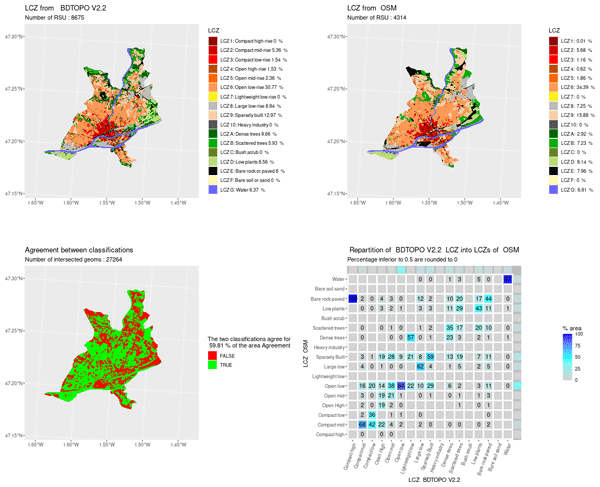
Geographical features may have a considerable effect on local climate. The local climate zone (LCZ) system proposed by Stewart and Oke (2012) is seen as a standard approach for classifying any zone according to a set of geographic indicators. While many methods already exist to map the LCZ, only a few tools are openly and freely available. We present the algorithm implemented in GeoClimate software to identify the LCZ of any place in the world using OpenStreetMap data.
Jérémy Bernard, Fredrik Lindberg, and Sandro Oswald
Geosci. Model Dev., 16, 5703–5727, https://doi.org/10.5194/gmd-16-5703-2023, https://doi.org/10.5194/gmd-16-5703-2023, 2023
Short summary
Short summary
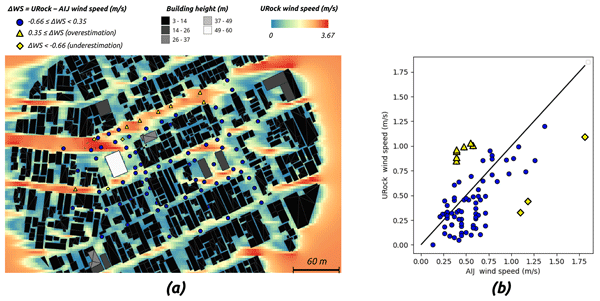
The UMEP plug-in integrated in the free QGIS software can now calculate the spatial variation of the wind speed within urban settings. This paper shows that the new wind model, URock, generally fits observations well and highlights the main needed improvements. According to this work, pedestrian wind fields and outdoor thermal comfort can now simply be estimated by any QGIS user (researchers, students, and practitioners).
Jérémy Bernard, Erwan Bocher, Elisabeth Le Saux Wiederhold, François Leconte, and Valéry Masson
Geosci. Model Dev., 15, 7505–7532, https://doi.org/10.5194/gmd-15-7505-2022, https://doi.org/10.5194/gmd-15-7505-2022, 2022
Short summary
Short summary
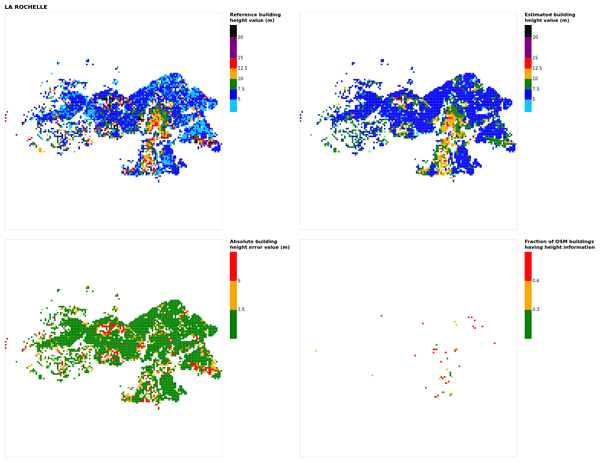
OpenStreetMap is a collaborative project aimed at creaing a free dataset containing topographical information. Since these data are available worldwide, they can be used as standard data for geoscience studies. However, most buildings miss the height information that constitutes key data for numerous fields (urban climate, noise propagation, air pollution). In this work, the building height is estimated using statistical modeling using indicators that characterize the building's environment.
Paul Boumendil, Pierre-Antoine Joulin, Quentin Rodier, and Valéry Masson
Wind Energ. Sci. Discuss., https://doi.org/10.5194/wes-2026-118, https://doi.org/10.5194/wes-2026-118, 2026
Preprint under review for WES
Short summary
Short summary
Wind turbines can modify atmospheric conditions in and around wind farms. This review brings together results from field measurements, satellite observations, and numerical simulations to examine meteorological changes occurring near the ground, where they may influence ecosystems and human activities. The reviewed studies show that wind turbines can affect wind, temperature, humidity, turbulence and surface exchanges, with effects that depend on weather conditions and site characteristics.
Robert Schoetter, Cyril Caliot, Florent Retailleau, Tim Nagel, Christophe Coustet, Vincent Eymet, Vincent Forest, Frédéric Hourdin, Atsushi Inagaki, Simone Kotthaus, Valéry Masson, William Morrison, and Najda Villefranque
EGUsphere, https://doi.org/10.5194/egusphere-2026-2061, https://doi.org/10.5194/egusphere-2026-2061, 2026
This preprint is open for discussion and under review for Geoscientific Model Development (GMD).
Short summary
Short summary
Temperature, humidity, radiation, and wind can have a negative impact on human comfort and infrastructure in urban areas. Building-resolving meteorological models can help to quantify such meteorological impacts and the potential benefits of adaptation measures to climate change. Here, a new unified algorithm to calculate the radiation, heat conduction, and sensible heat exchange in urban areas is coupled with an atmospheric model, and evaluated against experimental data.
Paul Boumendil, Pierre-Antoine Joulin, Quentin Rodier, and Valéry Masson
Wind Energ. Sci. Discuss., https://doi.org/10.5194/wes-2026-84, https://doi.org/10.5194/wes-2026-84, 2026
Revised manuscript accepted for WES
Short summary
Short summary
Wind turbines can modify atmospheric conditions over wind farms. This study uses multi-scale, coupled atmosphere-soil-vegetation-wind turbine simulations to investigate how a wind farm interacts with a spring frost event in a vineyard area with complex terrain. Such a numerical approach provides new insights into turbine-atmosphere interactions and shows that turbine operation induces vertical mixing that disrupts near-surface atmospheric layers, leading to local warming of up to 2°C.
Lorena de Carvalho Araujo, Valéry Masson, Robert Schoetter, Jean Wurtz, Anouk Le Bihan, and Marion Bonhomme
Earth Syst. Sci. Data Discuss., https://doi.org/10.5194/essd-2026-201, https://doi.org/10.5194/essd-2026-201, 2026
Revised manuscript under review for ESSD
Short summary
Short summary
Urban populations are increasingly exposed to heat stress due to climate change and the urban heat island effect. Urban climate models require detailed data on building materials (e.g. roof cover material, insulation in walls) to simulate the meteorological impact on humans and infrastructure. This study presents an open database of residential building types by country that has been created based on a global survey of architects and urban climatologists.
Alberto Alonso-Pinar, Jean-Baptiste Filippi, Adrien Guyot, Nicholas McCarthy, Pierre Tulet, and Alexander Filkov
EGUsphere, https://doi.org/10.5194/egusphere-2025-4855, https://doi.org/10.5194/egusphere-2025-4855, 2025
Short summary
Short summary
Wildfires can spread quickly when firebrands are carried by wind to ignite new fires, a process known as spotting. Predicting this process is vital for safety and firefighting, but it is difficult to model. This paper introduces a new, faster way to simulate spotting using a coupled fire–atmosphere model. Tested on real and ideal cases, our approach reproduced realistic fire spread and timing, showing promise for faster, more reliable forecasts to support wildfire management and decision-making.
Gabriel Colas, Valéry Masson, François Bouttier, and Ludovic Bouilloud
Geosci. Model Dev., 18, 9945–9966, https://doi.org/10.5194/gmd-18-9945-2025, https://doi.org/10.5194/gmd-18-9945-2025, 2025
Short summary
Short summary
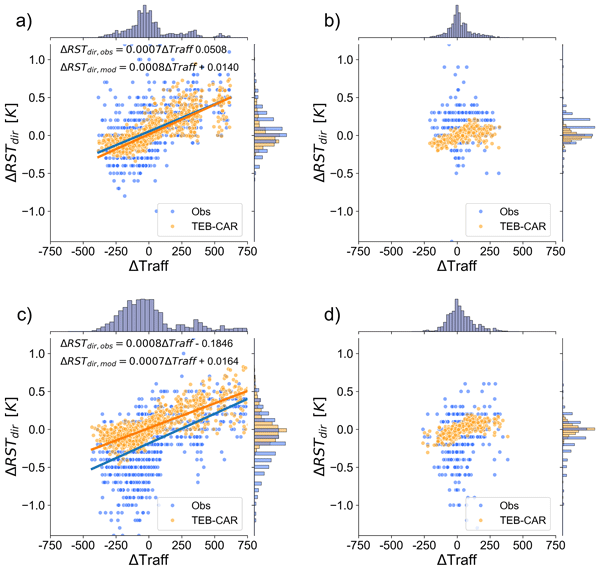
Each vehicle from road traffic is a source of heat and an obstacle that induce wind when it passes. It directly impacts the local atmospheric conditions and the road surface temperature. These impacts are included in the numerical model of the Town Energy Balance, used to simulate local conditions in urbanised environments. Simulations show that road traffic has a significant impact on the road surface temperature up to a few degrees, and on local variables.
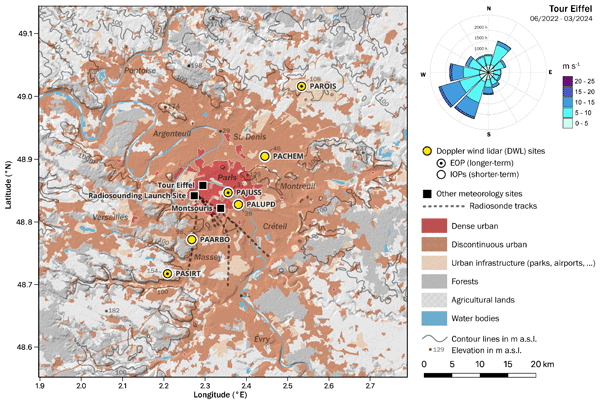
William Morrison, Dana Looschelders, Jonnathan Céspedes, Bernie Claxton, Marc-Antoine Drouin, Jean-Charles Dupont, Aurélien Faucheux, Martial Haeffelin, Christopher C. Holst, Simone Kotthaus, Valéry Masson, James McGregor, Jeremy Price, Matthias Zeeman, Sue Grimmond, and Andreas Christen
Earth Syst. Sci. Data, 17, 6507–6529, https://doi.org/10.5194/essd-17-6507-2025, https://doi.org/10.5194/essd-17-6507-2025, 2025
Short summary
Short summary
We conducted research using sophisticated wind sensors to better understand wind patterns in Paris. By installing these sensors across the city, we gathered detailed data on wind speeds and directions from 2022 to 2024. This information helps improve weather and climate models, making them more accurate for city environments. Our findings offer valuable insights for scientists studying urban air and weather, improving predictions and understanding of city-scale atmospheric processes.
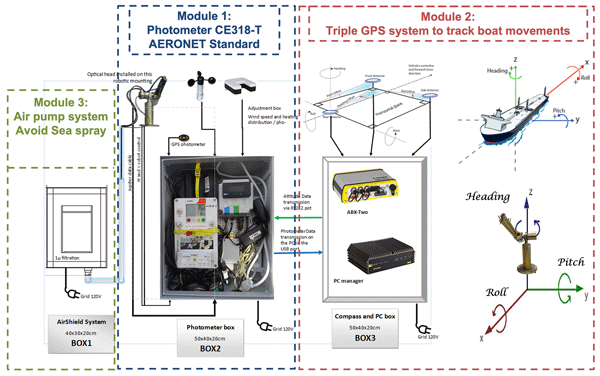
Benjamin Torres, Luc Blarel, Philippe Goloub, Gaël Dubois, Maria Fernanda Sanchez-Barrero, Ioana Elisabeta Popovici, Fabrice Maupin, Elena Lind, Alexander Smirnov, Ilya Slutsker, Julien Chimot, Ramiro González, Michaël Sicard, Jean Marc Metzger, and Pierre Tulet
Atmos. Meas. Tech., 18, 4809–4838, https://doi.org/10.5194/amt-18-4809-2025, https://doi.org/10.5194/amt-18-4809-2025, 2025
Short summary
Short summary
This study shows that it is possible to automatically monitor atmospheric aerosols from research vessels using automated instruments, following the same standards as AERONET (AErosol RObotic NETwork) land-based stations. By collecting 3 years of data in the Indian Ocean, we demonstrate that high-quality measurements can be made, even on a moving platform. These results open new possibilities for observing aerosols over the ocean and improving satellite data and climate studies.
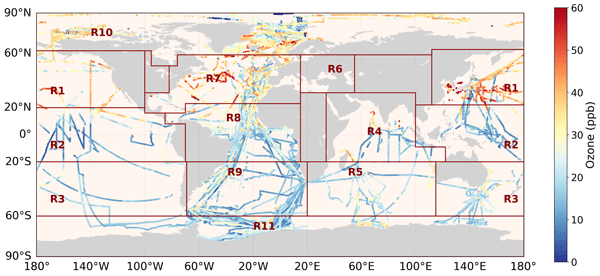
Yugo Kanaya, Roberto Sommariva, Alfonso Saiz-Lopez, Andrea Mazzeo, Theodore K. Koenig, Kaori Kawana, James E. Johnson, Aurélie Colomb, Pierre Tulet, Suzie Molloy, Ian E. Galbally, Rainer Volkamer, Anoop Mahajan, John W. Halfacre, Paul B. Shepson, Julia Schmale, Hélène Angot, Byron Blomquist, Matthew D. Shupe, Detlev Helmig, Junsu Gil, Meehye Lee, Sean C. Coburn, Ivan Ortega, Gao Chen, James Lee, Kenneth C. Aikin, David D. Parrish, John S. Holloway, Thomas B. Ryerson, Ilana B. Pollack, Eric J. Williams, Brian M. Lerner, Andrew J. Weinheimer, Teresa Campos, Frank M. Flocke, J. Ryan Spackman, Ilann Bourgeois, Jeff Peischl, Chelsea R. Thompson, Ralf M. Staebler, Amir A. Aliabadi, Wanmin Gong, Roeland Van Malderen, Anne M. Thompson, Ryan M. Stauffer, Debra E. Kollonige, Juan Carlos Gómez Martin, Masatomo Fujiwara, Katie Read, Matthew Rowlinson, Keiichi Sato, Junichi Kurokawa, Yoko Iwamoto, Fumikazu Taketani, Hisahiro Takashima, Mónica Navarro-Comas, Marios Panagi, and Martin G. Schultz
Earth Syst. Sci. Data, 17, 4901–4932, https://doi.org/10.5194/essd-17-4901-2025, https://doi.org/10.5194/essd-17-4901-2025, 2025
Short summary
Short summary
The first comprehensive dataset of tropospheric ozone over oceans/polar regions is presented, including 77 ship/buoy and 48 aircraft campaign observations (1977–2022, 0–5000 m altitude), supplemented by ozonesonde and surface data. Air masses isolated from land for 72+ hours are systematically selected as essentially oceanic. Among the 11 global regions, they show daytime decreases of 11–16 % in the tropics, while near-zero depletions are rare, unlike in the Arctic, implying different mechanisms.
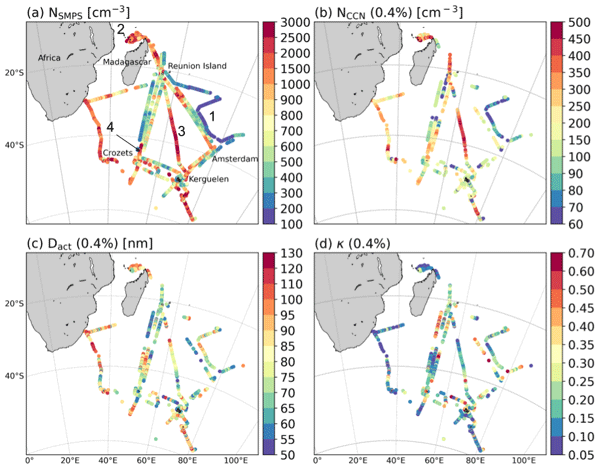
Meredith Dournaux, Pierre Tulet, Joris Pianezze, Jérome Brioude, Jean-Marc Metzger, Melilotus Thyssen, and Gilles Athier
Atmos. Chem. Phys., 25, 10315–10335, https://doi.org/10.5194/acp-25-10315-2025, https://doi.org/10.5194/acp-25-10315-2025, 2025
Short summary
Short summary
Aerosol measurements collected during six oceanographic campaigns carried out in 2021 and 2023 in the southwestern Indian Ocean are presented and analyzed in this paper. The results highlight large variability in the aerosol concentration, size, and water vapor affinity depending on in situ conditions and air mass transport over the ocean. Marine aerosol chemical composition is highly variable over this region and should be considered to better study the impacts of aerosols on regional weather and climate.
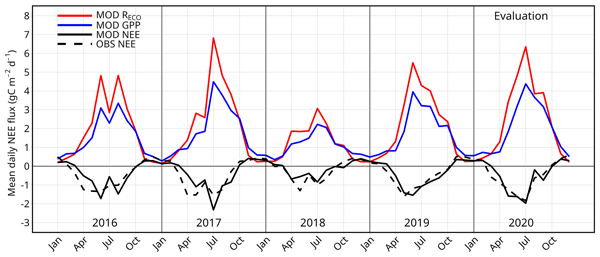
Aurélien Mirebeau, Cécile de Munck, Bertrand Bonan, Christine Delire, Aude Lemonsu, Valéry Masson, and Stephan Weber
Geosci. Model Dev., 18, 5329–5349, https://doi.org/10.5194/gmd-18-5329-2025, https://doi.org/10.5194/gmd-18-5329-2025, 2025
Short summary
Short summary
The greening of cities is recommended to limit the effects of climate change. In particular, green roofs can provide numerous environmental benefits, such as urban cooling, water retention, and carbon sequestration. The aim of this research is to develop a new module for calculating green roof CO2 fluxes within a model that can already simulate hydrological and thermal processes of such roofs. The calibration and evaluation of this module take advantage of long-term experimental data.
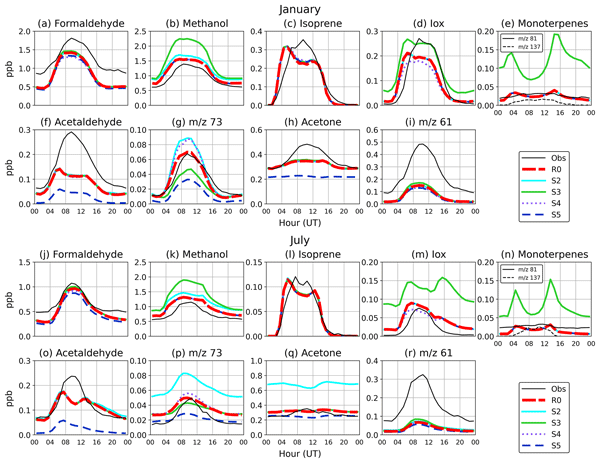
Catalina Poraicu, Jean-François Müller, Trissevgeni Stavrakou, Crist Amelynck, Bert W. D. Verreyken, Niels Schoon, Corinne Vigouroux, Nicolas Kumps, Jérôme Brioude, Pierre Tulet, and Camille Mouchel-Vallon
Atmos. Chem. Phys., 25, 6903–6941, https://doi.org/10.5194/acp-25-6903-2025, https://doi.org/10.5194/acp-25-6903-2025, 2025
Short summary
Short summary
We investigated the sources and impacts of nitrogen oxides and organic compounds over a remote tropical island. Simulations of the high-resolution Weather Research and Forecasting model coupled with chemistry (WRF-Chem) were evaluated using in situ Fourier transform infrared spectroscopy (FTIR) and satellite measurements. This work highlights gaps in current models, like missing sources of key organic compounds and inaccuracies in emission inventories, emphasizing the importance of improving chemical and dynamical processes in atmospheric modelling for budget estimates in tropical regions.
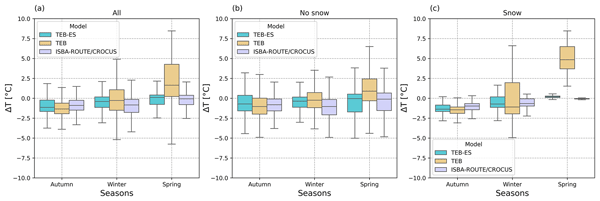
Gabriel Colas, Valéry Masson, François Bouttier, Ludovic Bouilloud, Laura Pavan, and Virve Karsisto
Geosci. Model Dev., 18, 3453–3472, https://doi.org/10.5194/gmd-18-3453-2025, https://doi.org/10.5194/gmd-18-3453-2025, 2025
Short summary
Short summary
In winter, snow- and ice-covered artificial surfaces are important aspects of the urban climate. They may influence the magnitude of the urban heat island effect, but this is still unclear. In this study, we improved the representation of the snow and ice cover in the Town Energy Balance (TEB) urban climate model. Evaluations have shown that the results are promising for using TEB to study the climate of cold cities.
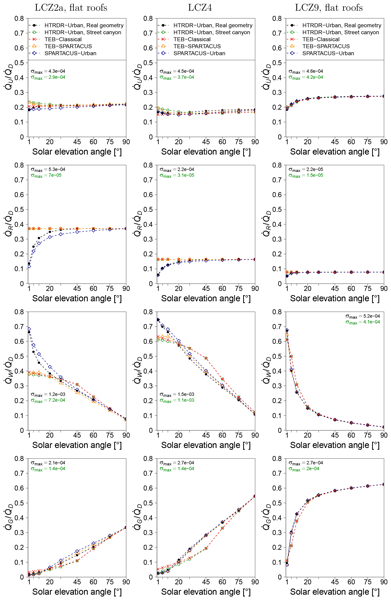
Robert Schoetter, Robin James Hogan, Cyril Caliot, and Valéry Masson
Geosci. Model Dev., 18, 405–431, https://doi.org/10.5194/gmd-18-405-2025, https://doi.org/10.5194/gmd-18-405-2025, 2025
Short summary
Short summary
Radiation is relevant to the atmospheric impact on people and infrastructure in cities as it can influence the urban heat island, building energy consumption, and human thermal comfort. A new urban radiation model, assuming a more realistic form of urban morphology, is coupled to the urban climate model Town Energy Balance (TEB). The new TEB is evaluated with a reference radiation model for a variety of urban morphologies, and an improvement in the simulated radiative observables is found.
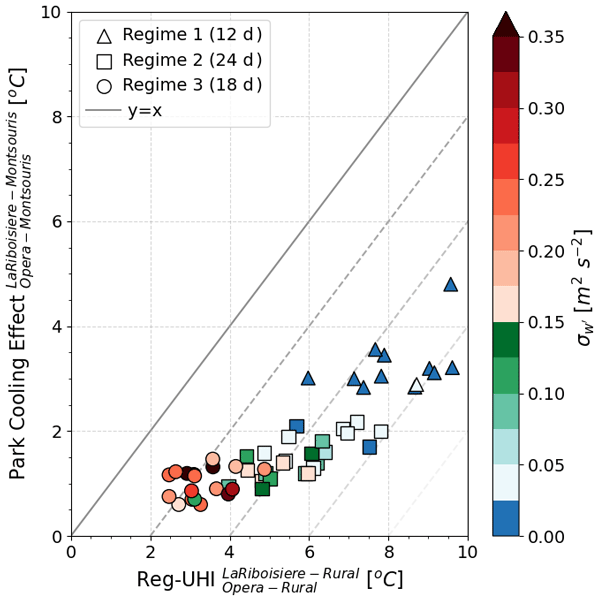
Martial Haeffelin, Jean-François Ribaud, Jonnathan Céspedes, Jean-Charles Dupont, Aude Lemonsu, Valéry Masson, Tim Nagel, and Simone Kotthaus
Atmos. Chem. Phys., 24, 14101–14122, https://doi.org/10.5194/acp-24-14101-2024, https://doi.org/10.5194/acp-24-14101-2024, 2024
Short summary
Short summary
This study highlights how the state of the urban atmospheric boundary layer impacts urban park cooling effect intensity at night. Under summertime heat wave conditions, the urban atmosphere becomes stable at night, which inhibits turbulent motions. Under those specific conditions, urban parks and woods cool much more efficiently than the surrounding built-up neighbourhoods in the evening and through the night, providing cooler air temperatures by 4 to 6° C depending on park size.
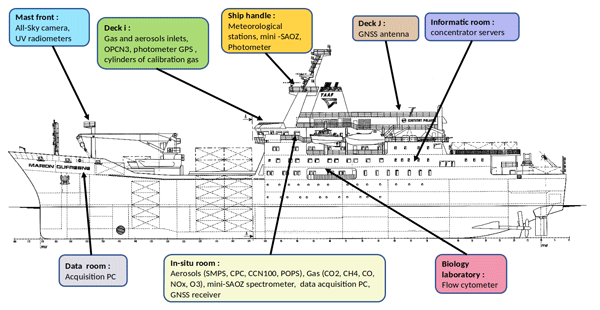
Pierre Tulet, Joel Van Baelen, Pierre Bosser, Jérome Brioude, Aurélie Colomb, Philippe Goloub, Andrea Pazmino, Thierry Portafaix, Michel Ramonet, Karine Sellegri, Melilotus Thyssen, Léa Gest, Nicolas Marquestaut, Dominique Mékiès, Jean-Marc Metzger, Gilles Athier, Luc Blarel, Marc Delmotte, Guillaume Desprairies, Mérédith Dournaux, Gaël Dubois, Valentin Duflot, Kevin Lamy, Lionel Gardes, Jean-François Guillemot, Valérie Gros, Joanna Kolasinski, Morgan Lopez, Olivier Magand, Erwan Noury, Manuel Nunes-Pinharanda, Guillaume Payen, Joris Pianezze, David Picard, Olivier Picard, Sandrine Prunier, François Rigaud-Louise, Michael Sicard, and Benjamin Torres
Earth Syst. Sci. Data, 16, 3821–3849, https://doi.org/10.5194/essd-16-3821-2024, https://doi.org/10.5194/essd-16-3821-2024, 2024
Short summary
Short summary
The MAP-IO program aims to compensate for the lack of atmospheric and oceanographic observations in the Southern Ocean by equipping the ship Marion Dufresne with a set of 17 scientific instruments. This program collected 700 d of measurements under different latitudes, seasons, sea states, and weather conditions. These new data will support the calibration and validation of numerical models and the understanding of the atmospheric composition of this region of Earth.
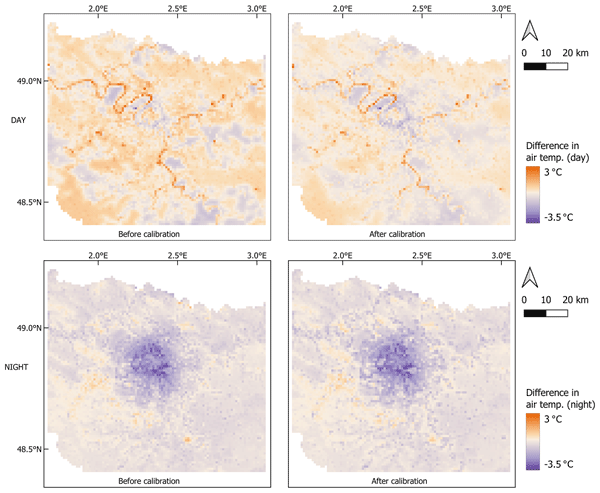
Perrine Hamel, Martí Bosch, Léa Tardieu, Aude Lemonsu, Cécile de Munck, Chris Nootenboom, Vincent Viguié, Eric Lonsdorf, James A. Douglass, and Richard P. Sharp
Geosci. Model Dev., 17, 4755–4771, https://doi.org/10.5194/gmd-17-4755-2024, https://doi.org/10.5194/gmd-17-4755-2024, 2024
Short summary
Short summary
The InVEST Urban Cooling model estimates the cooling effect of vegetation in cities. We further developed an algorithm to facilitate model calibration and evaluation. Applying the algorithm to case studies in France and in the United States, we found that nighttime air temperature estimates compare well with reference datasets. Estimated change in temperature from a land cover scenario compares well with an alternative model estimate, supporting the use of the model for urban planning decisions.
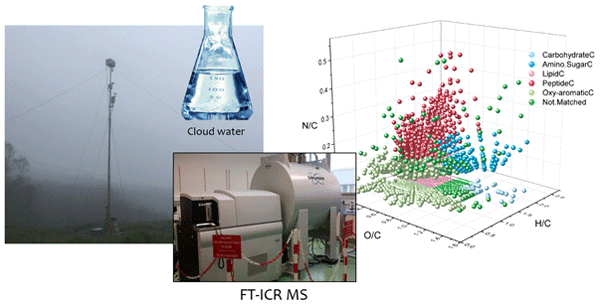
Lucas Pailler, Laurent Deguillaume, Hélène Lavanant, Isabelle Schmitz, Marie Hubert, Edith Nicol, Mickaël Ribeiro, Jean-Marc Pichon, Mickaël Vaïtilingom, Pamela Dominutti, Frédéric Burnet, Pierre Tulet, Maud Leriche, and Angelica Bianco
Atmos. Chem. Phys., 24, 5567–5584, https://doi.org/10.5194/acp-24-5567-2024, https://doi.org/10.5194/acp-24-5567-2024, 2024
Short summary
Short summary
The composition of dissolved organic matter of cloud water has been investigated through non-targeted high-resolution mass spectrometry on only a few samples collected in the Northern Hemisphere. In this work, the chemical composition of samples collected at Réunion Island (SH) is investigated and compared to samples collected at Puy de Dôme (NH). Sampling, analysis and data treatment with the same methodology produced a unique dataset for investigating the molecular composition of clouds.

Safae Oumami, Joaquim Arteta, Vincent Guidard, Pierre Tulet, and Paul David Hamer
Geosci. Model Dev., 17, 3385–3408, https://doi.org/10.5194/gmd-17-3385-2024, https://doi.org/10.5194/gmd-17-3385-2024, 2024
Short summary
Short summary
In this paper, we coupled the SURFEX and MEGAN models. The aim of this coupling is to improve the estimation of biogenic fluxes by using the SURFEX canopy environment model. The coupled model results were validated and several sensitivity tests were performed. The coupled-model total annual isoprene flux is 442 Tg; this value is within the range of other isoprene estimates reported. The ultimate aim of this coupling is to predict the impact of climate change on biogenic emissions.
Maud Leriche, Pierre Tulet, Laurent Deguillaume, Frédéric Burnet, Aurélie Colomb, Agnès Borbon, Corinne Jambert, Valentin Duflot, Stéphan Houdier, Jean-Luc Jaffrezo, Mickaël Vaïtilingom, Pamela Dominutti, Manon Rocco, Camille Mouchel-Vallon, Samira El Gdachi, Maxence Brissy, Maroua Fathalli, Nicolas Maury, Bert Verreyken, Crist Amelynck, Niels Schoon, Valérie Gros, Jean-Marc Pichon, Mickael Ribeiro, Eric Pique, Emmanuel Leclerc, Thierry Bourrianne, Axel Roy, Eric Moulin, Joël Barrie, Jean-Marc Metzger, Guillaume Péris, Christian Guadagno, Chatrapatty Bhugwant, Jean-Mathieu Tibere, Arnaud Tournigand, Evelyn Freney, Karine Sellegri, Anne-Marie Delort, Pierre Amato, Muriel Joly, Jean-Luc Baray, Pascal Renard, Angelica Bianco, Anne Réchou, and Guillaume Payen
Atmos. Chem. Phys., 24, 4129–4155, https://doi.org/10.5194/acp-24-4129-2024, https://doi.org/10.5194/acp-24-4129-2024, 2024
Short summary
Short summary
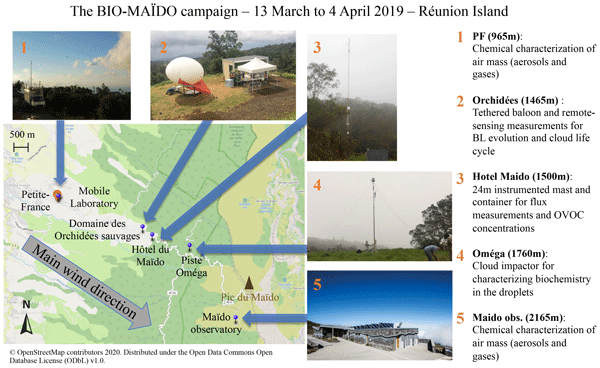
Aerosol particles in the atmosphere play a key role in climate change and air pollution. A large number of aerosol particles are formed from the oxidation of volatile organic compounds (VOCs and secondary organic aerosols – SOA). An important field campaign was organized on Réunion in March–April 2019 to understand the formation of SOA in a tropical atmosphere mostly influenced by VOCs emitted by forest and in the presence of clouds. This work synthesizes the results of this campaign.
Romain Salignat, Matti Rissanen, Siddharth Iyer, Jean-Luc Baray, Pierre Tulet, Jean-Marc Metzger, Jérôme Brioude, Karine Sellegri, and Clémence Rose
Atmos. Chem. Phys., 24, 3785–3812, https://doi.org/10.5194/acp-24-3785-2024, https://doi.org/10.5194/acp-24-3785-2024, 2024
Short summary
Short summary
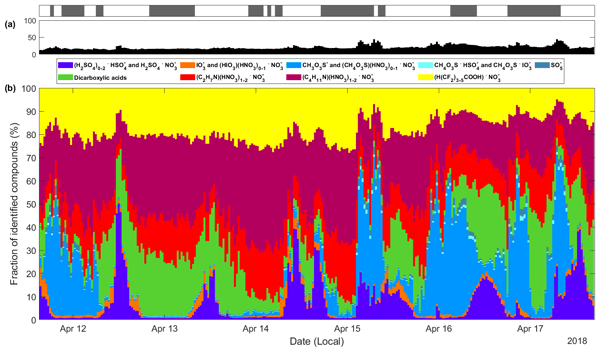
Using mass spectrometry data collected at the Maïdo Observatory (2160 m a.s.l., Réunion), we provide the first detailed analysis of molecular cluster chemical composition specifically in the marine free troposphere. The abundance of the identified species is related both to in situ meteorological parameters and air mass history, which also provide insight into their origin. Our work makes an important contribution to documenting the chemistry and physics of the marine free troposphere.
Jérémy Bernard, Erwan Bocher, Matthieu Gousseff, François Leconte, and Elisabeth Le Saux Wiederhold
Geosci. Model Dev., 17, 2077–2116, https://doi.org/10.5194/gmd-17-2077-2024, https://doi.org/10.5194/gmd-17-2077-2024, 2024
Short summary
Short summary
Geographical features may have a considerable effect on local climate. The local climate zone (LCZ) system proposed by Stewart and Oke (2012) is seen as a standard approach for classifying any zone according to a set of geographic indicators. While many methods already exist to map the LCZ, only a few tools are openly and freely available. We present the algorithm implemented in GeoClimate software to identify the LCZ of any place in the world using OpenStreetMap data.
Erwan Jézéquel, Frédéric Blondel, and Valéry Masson
Wind Energ. Sci., 9, 119–139, https://doi.org/10.5194/wes-9-119-2024, https://doi.org/10.5194/wes-9-119-2024, 2024
Short summary
Short summary
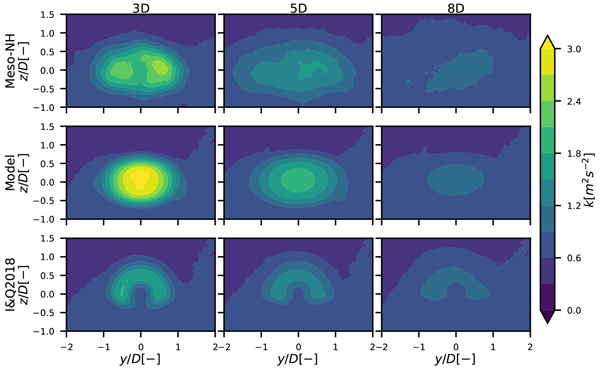
Analytical models allow us to quickly compute the decreased power output and lifetime induced by wakes in a wind farm. This is achieved by evaluating the modified velocity and turbulence in the wake. In this work, we present a new model based on the velocity and turbulence breakdowns presented in Part 1. This new model is physically based, allows us to compute the whole turbulence profile (rather than the maximum value) and is built to take atmospheric stability into account.
Erwan Jézéquel, Frédéric Blondel, and Valéry Masson
Wind Energ. Sci., 9, 97–117, https://doi.org/10.5194/wes-9-97-2024, https://doi.org/10.5194/wes-9-97-2024, 2024
Short summary
Short summary
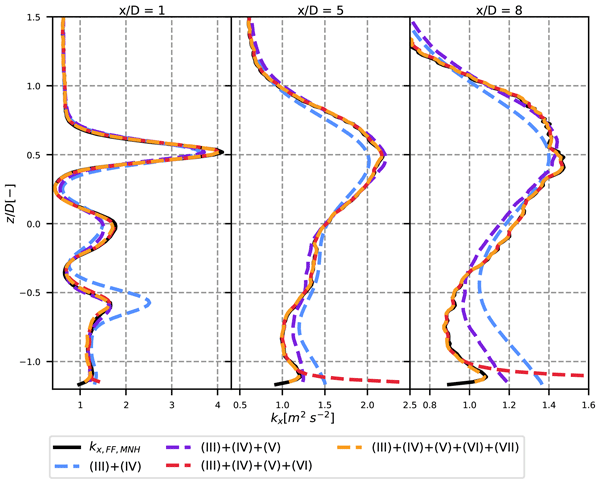
Wind turbine wakes affect the production and lifecycle of downstream turbines. They can be predicted with the dynamic wake meandering (DWM) method. In this paper, the authors break down the velocity and turbulence in the wake of a wind turbine into several terms. They show that it is implicitly assumed in the DWM that some of these terms are neglected. With high-fidelity simulations, it is shown that this can lead to some errors, in particular for the maximum turbulence added by the wake.
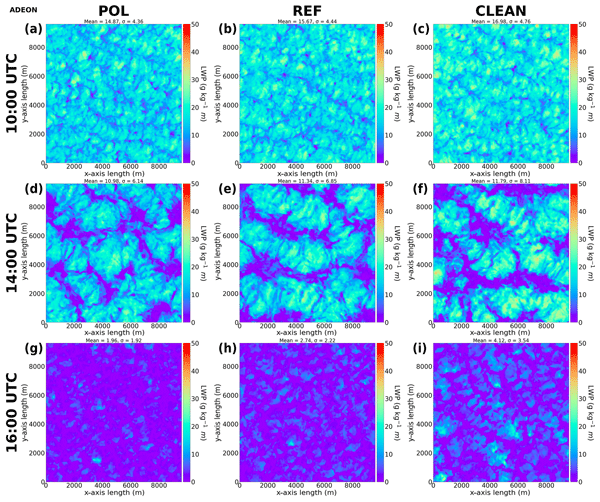
Lambert Delbeke, Chien Wang, Pierre Tulet, Cyrielle Denjean, Maurin Zouzoua, Nicolas Maury, and Adrien Deroubaix
Atmos. Chem. Phys., 23, 13329–13354, https://doi.org/10.5194/acp-23-13329-2023, https://doi.org/10.5194/acp-23-13329-2023, 2023
Short summary
Short summary
Low-level stratiform clouds (LLSCs) appear frequently over southern West Africa during the West African monsoon. Local and remote aerosol sources (biomass burning aerosols from central Africa) play a significant role in the LLSC life cycle. Based on measurements by the DACCIWA campaign, large-eddy simulation (LES) was conducted using different aerosol scenarios. The results show that both indirect and semi-direct effects can act individually or jointly to influence the life cycles of LLSCs.
Jérémy Bernard, Fredrik Lindberg, and Sandro Oswald
Geosci. Model Dev., 16, 5703–5727, https://doi.org/10.5194/gmd-16-5703-2023, https://doi.org/10.5194/gmd-16-5703-2023, 2023
Short summary
Short summary
The UMEP plug-in integrated in the free QGIS software can now calculate the spatial variation of the wind speed within urban settings. This paper shows that the new wind model, URock, generally fits observations well and highlights the main needed improvements. According to this work, pedestrian wind fields and outdoor thermal comfort can now simply be estimated by any QGIS user (researchers, students, and practitioners).
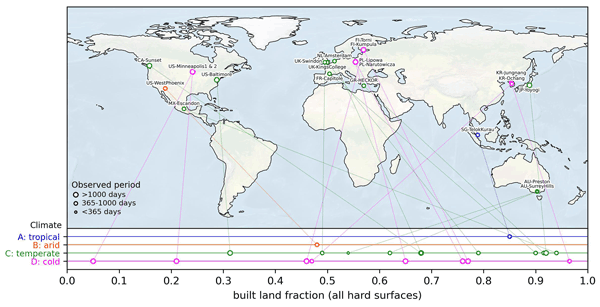
Mathew Lipson, Sue Grimmond, Martin Best, Winston T. L. Chow, Andreas Christen, Nektarios Chrysoulakis, Andrew Coutts, Ben Crawford, Stevan Earl, Jonathan Evans, Krzysztof Fortuniak, Bert G. Heusinkveld, Je-Woo Hong, Jinkyu Hong, Leena Järvi, Sungsoo Jo, Yeon-Hee Kim, Simone Kotthaus, Keunmin Lee, Valéry Masson, Joseph P. McFadden, Oliver Michels, Wlodzimierz Pawlak, Matthias Roth, Hirofumi Sugawara, Nigel Tapper, Erik Velasco, and Helen Claire Ward
Earth Syst. Sci. Data, 14, 5157–5178, https://doi.org/10.5194/essd-14-5157-2022, https://doi.org/10.5194/essd-14-5157-2022, 2022
Short summary
Short summary
We describe a new openly accessible collection of atmospheric observations from 20 cities around the world, capturing 50 site years. The observations capture local meteorology (temperature, humidity, wind, etc.) and the energy fluxes between the land and atmosphere (e.g. radiation and sensible and latent heat fluxes). These observations can be used to improve our understanding of urban climate processes and to test the accuracy of urban climate models.
Jérémy Bernard, Erwan Bocher, Elisabeth Le Saux Wiederhold, François Leconte, and Valéry Masson
Geosci. Model Dev., 15, 7505–7532, https://doi.org/10.5194/gmd-15-7505-2022, https://doi.org/10.5194/gmd-15-7505-2022, 2022
Short summary
Short summary
OpenStreetMap is a collaborative project aimed at creaing a free dataset containing topographical information. Since these data are available worldwide, they can be used as standard data for geoscience studies. However, most buildings miss the height information that constitutes key data for numerous fields (urban climate, noise propagation, air pollution). In this work, the building height is estimated using statistical modeling using indicators that characterize the building's environment.
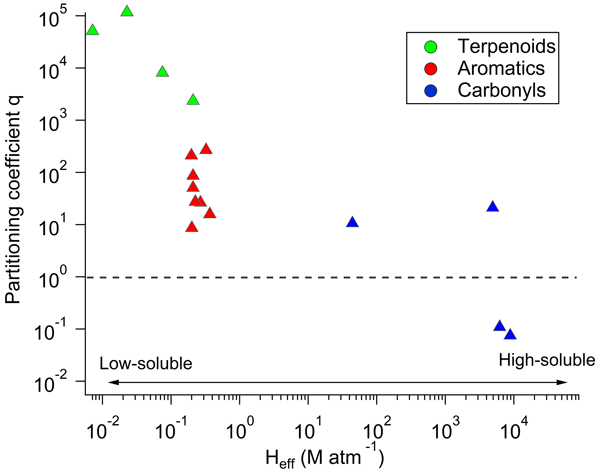
Pamela A. Dominutti, Pascal Renard, Mickaël Vaïtilingom, Angelica Bianco, Jean-Luc Baray, Agnès Borbon, Thierry Bourianne, Frédéric Burnet, Aurélie Colomb, Anne-Marie Delort, Valentin Duflot, Stephan Houdier, Jean-Luc Jaffrezo, Muriel Joly, Martin Leremboure, Jean-Marc Metzger, Jean-Marc Pichon, Mickaël Ribeiro, Manon Rocco, Pierre Tulet, Anthony Vella, Maud Leriche, and Laurent Deguillaume
Atmos. Chem. Phys., 22, 505–533, https://doi.org/10.5194/acp-22-505-2022, https://doi.org/10.5194/acp-22-505-2022, 2022
Short summary
Short summary
We present here the results obtained during an intensive field campaign conducted in March to April 2019 in Reunion. Our study integrates a comprehensive chemical and microphysical characterization of cloud water. Our investigations reveal that air mass history and cloud microphysical properties do not fully explain the variability observed in their chemical composition. This highlights the complexity of emission sources, multiphasic exchanges, and transformations in clouds.
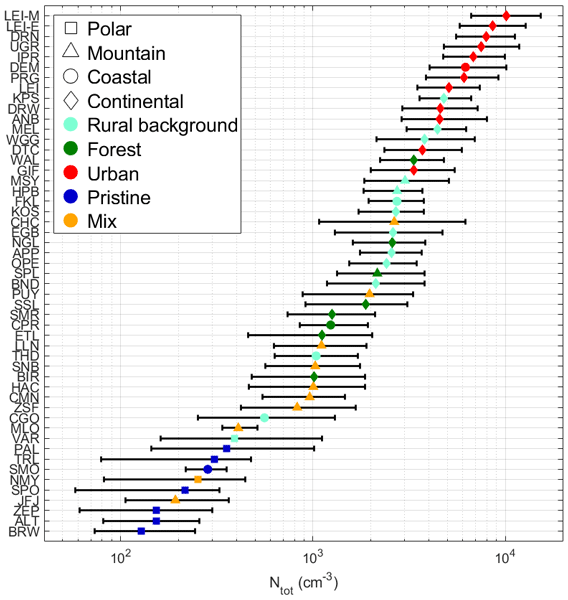
Clémence Rose, Martine Collaud Coen, Elisabeth Andrews, Yong Lin, Isaline Bossert, Cathrine Lund Myhre, Thomas Tuch, Alfred Wiedensohler, Markus Fiebig, Pasi Aalto, Andrés Alastuey, Elisabeth Alonso-Blanco, Marcos Andrade, Begoña Artíñano, Todor Arsov, Urs Baltensperger, Susanne Bastian, Olaf Bath, Johan Paul Beukes, Benjamin T. Brem, Nicolas Bukowiecki, Juan Andrés Casquero-Vera, Sébastien Conil, Konstantinos Eleftheriadis, Olivier Favez, Harald Flentje, Maria I. Gini, Francisco Javier Gómez-Moreno, Martin Gysel-Beer, Anna Gannet Hallar, Ivo Kalapov, Nikos Kalivitis, Anne Kasper-Giebl, Melita Keywood, Jeong Eun Kim, Sang-Woo Kim, Adam Kristensson, Markku Kulmala, Heikki Lihavainen, Neng-Huei Lin, Hassan Lyamani, Angela Marinoni, Sebastiao Martins Dos Santos, Olga L. Mayol-Bracero, Frank Meinhardt, Maik Merkel, Jean-Marc Metzger, Nikolaos Mihalopoulos, Jakub Ondracek, Marco Pandolfi, Noemi Pérez, Tuukka Petäjä, Jean-Eudes Petit, David Picard, Jean-Marc Pichon, Veronique Pont, Jean-Philippe Putaud, Fabienne Reisen, Karine Sellegri, Sangeeta Sharma, Gerhard Schauer, Patrick Sheridan, James Patrick Sherman, Andreas Schwerin, Ralf Sohmer, Mar Sorribas, Junying Sun, Pierre Tulet, Ville Vakkari, Pieter Gideon van Zyl, Fernando Velarde, Paolo Villani, Stergios Vratolis, Zdenek Wagner, Sheng-Hsiang Wang, Kay Weinhold, Rolf Weller, Margarita Yela, Vladimir Zdimal, and Paolo Laj
Atmos. Chem. Phys., 21, 17185–17223, https://doi.org/10.5194/acp-21-17185-2021, https://doi.org/10.5194/acp-21-17185-2021, 2021
Short summary
Short summary
Aerosol particles are a complex component of the atmospheric system the effects of which are among the most uncertain in climate change projections. Using data collected at 62 stations, this study provides the most up-to-date picture of the spatial distribution of particle number concentration and size distribution worldwide, with the aim of contributing to better representation of aerosols and their interactions with clouds in models and, therefore, better evaluation of their impact on climate.
Cited articles
Bangert, M., Nenes, A., Vogel, B., Vogel, H., Barahona, D., Karydis, V. A., Kumar, P., Kottmeier, C., and Blahak, U.: Saharan dust event impacts on cloud formation and radiation over Western Europe, Atmos. Chem. Phys., 12, 4045–4063, https://doi.org/10.5194/acp-12-4045-2012, 2012. a
Basart, S., Nickovic, S., Terradellas, E., Cuevas, E., García-Pando, C. P., García-Castrillo, G., Werner, E., and Benincasa, F.: The WMO SDS-WAS Regional Center for Northern Africa, Middle East and Europe, E3S Web of Conferences, 99, 04008, https://doi.org/10.1051/e3sconf/20199904008, 2019. a
Bernstein, D. N., Neelin, J. D., Li, Q. B., and Chen, D.: Could aerosol emissions be used for regional heat wave mitigation?, Atmos. Chem. Phys., 13, 6373–6390, https://doi.org/10.5194/acp-13-6373-2013, 2013. a
Boone, A., Samuelsson, P., Gollvik, S., Napoly, A., Jarlan, L., Brun, E., and Decharme, B.: The interactions between soil–biosphere–atmosphere land surface model with a multi-energy balance (ISBA-MEB) option in SURFEXv8 – Part 1: Model description, Geosci. Model Dev., 10, 843–872, https://doi.org/10.5194/gmd-10-843-2017, 2017. a
Bröde, P., Fiala, D., Błażejczyk, K., Holmér, I., Jendritzky, G., Kampmann, B., Tinz, B., and Havenith, G.: Deriving the operational procedure for the Universal Thermal Climate Index (UTCI), Int. J. Biometeorol., 56, 481–494, https://doi.org/10.1007/s00484-011-0454-1, 2012. a, b
Brousseau, P., Seity, Y., Ricard, D., and Léger, J.: Improvement of the forecast of convective activity from the AROME-France system, Q. J. Roy. Meteorol. Soc., 142, 2231–2243, https://doi.org/10.1002/qj.2822, 2016. a
Cao, C., Lee, X., Liu, S., Schultz, N., Xiao, W., Zhang, M., and Zhao, L.: Urban heat islands in China enhanced by haze pollution, Nat. Commun., 7, 12509, https://doi.org/10.1038/ncomms12509, 2016. a, b, c
Crumeyrolle, S., Tulet, P., Gomes, L., Garcia-Carreras, L., Flamant, C., Parker, D. J., Matsuki, A., Formenti, P., and Schwarzenboeck, A.: Transport of dust particles from the Bodélé region to the monsoon layer – AMMA case study of the 9–14 June 2006 period, Atmos. Chem. Phys., 11, 479–494, https://doi.org/10.5194/acp-11-479-2011, 2011. a
Córdoba-Jabonero, C., Sicard, M., López-Cayuela, M.-Á., Ansmann, A., Comerón, A., Zorzano, M.-P., Rodríguez-Gómez, A., and Muñoz-Porcar, C.: Aerosol radiative impact during the summer 2019 heatwave produced partly by an inter-continental Saharan dust outbreak – Part 1: Short-wave dust direct radiative effect, Atmos. Chem. Phys., 21, 6455–6479, https://doi.org/10.5194/acp-21-6455-2021, 2021. a
Cuxart, J., Bougeault, P., and Redelsperger, J.-L.: A turbulence scheme allowing for mesoscale and large-eddy simulations, Q. J. Roy. Meteorol. Soc., 126, 1–30, https://doi.org/10.1002/qj.49712656202, 2000. a
Decharme, B., Boone, A., Delire, C., and Noilhan, J.: Local evaluation of the Interaction between Soil Biosphere Atmosphere soil multilayer diffusion scheme using four pedotransfer functions, J. Geophys. Res.-Atmos., 116, https://doi.org/10.1029/2011JD016002, 2011. a
de Munck, C., Lemonsu, A., Masson, V., Le Bras, J., and Bonhomme, M.: Evaluating the impacts of greening scenarios on thermal comfort and energy and water consumptions for adapting Paris city to climate change, Urban Climate, 23, 260–286, https://doi.org/10.1016/j.uclim.2017.01.003, 2018. a
Demuzere, M., Kittner, J., Martilli, A., Mills, G., Moede, C., Stewart, I. D., van Vliet, J., and Bechtel, B.: A global map of local climate zones to support earth system modelling and urban-scale environmental science, Earth Syst. Sci. Data, 14, 3835–3873, https://doi.org/10.5194/essd-14-3835-2022, 2022. a
Fiala, D., Havenith, G., Bröde, P., Kampmann, B., and Jendritzky, G.: UTCI-Fiala multi-node model of human heat transfer and temperature regulation, Int. J. Biometeorol., 56, 429–441, https://doi.org/10.1007/s00484-011-0424-7, 2012. a
Fouquart, Y.: Computations of solar heating of the Earth's atmosphere: A new parameterization, Beitraeg. Physik Atmos., 53, 35, http://pascal-francis.inist.fr/vibad/index.php? (action=getRecordDetail&idt=PASCAL8030435628 (last access: 7 September 2026), 1980. a
Fujibe, F.: Urban warming in Japanese cities and its relation to climate change monitoring, Int. J. Climatol., 31, 162–173, https://doi.org/10.1002/joc.2142, 2011. a
Garrouste, O. and Lemonsu, A.: PANAME 2022 thermodynamic profiles from soundings at Bercy, AERIS atmosphere Data and Services Centre [dataset], https://doi.org/10.25326/448, 2023. a
Grini, A., Tulet, P., and Gomes, L.: Dusty weather forecasts using the MesoNH mesoscale atmospheric model, J. Geophys. Res.-Atmos., 111, https://doi.org/10.1029/2005JD007007, 2006. a, b
Haeffelin, M., Barthès, L., Bock, O., Boitel, C., Bony, S., Bouniol, D., Chepfer, H., Chiriaco, M., Cuesta, J., Delanoë, J., Drobinski, P., Dufresne, J.-L., Flamant, C., Grall, M., Hodzic, A., Hourdin, F., Lapouge, F., Lemaître, Y., Mathieu, A., Morille, Y., Naud, C., Noël, V., O'Hirok, W., Pelon, J., Pietras, C., Protat, A., Romand, B., Scialom, G., and Vautard, R.: SIRTA, a ground-based atmospheric observatory for cloud and aerosol research, Ann. Geophys., 23, 253–275, https://doi.org/10.5194/angeo-23-253-2005, 2005. a
Haeffelin, M., Ribaud, J.-F., Céspedes, J., Dupont, J.-C., Lemonsu, A., Masson, V., Nagel, T., and Kotthaus, S.: Impact of boundary layer stability on urban park cooling effect intensity, Atmos. Chem. Phys., 24, 14101–14122, https://doi.org/10.5194/acp-24-14101-2024, 2024. a
Han, W., Li, Z., Wu, F., Zhang, Y., Guo, J., Su, T., Cribb, M., Fan, J., Chen, T., Wei, J., and Lee, S.-S.: The mechanisms and seasonal differences of the impact of aerosols on daytime surface urban heat island effect, Atmos. Chem. Phys., 20, 6479–6493, https://doi.org/10.5194/acp-20-6479-2020, 2020. a, b
Hersbach, H., Bell, B., Berrisford, P., Biavati, G., Horányi, A., Muñoz Sabater, J., Nicolas, J., Peubey, C., Radu, R., Rozum, I., Schepers, D., Simmons, A., Soci, C., Dee, D., and Thépaut, J-N.: ERA5 hourly data on pressure levels from 1940 to present, Copernicus climate change service (c3s) climate data store (cds), Copernicus Climate Change Service, 10, 24381, https://doi.org/10.24381/cds.bd0915c6, 2023. a, b
Hoarau, T., Barthe, C., Tulet, P., Claeys, M., Pinty, J.-P., Bousquet, O., Delanoë, J., and Vié, B.: Impact of the generation and activation of sea salt aerosols on the evolution of Tropical Cyclone Dumile, J. Geophys. Res.-Atmos., 123, 8813–8831, https://doi.org/10.1029/2017JD028125, 2018. a
Hodnebrog, Ø., Myhre, G., Jouan, C., Andrews, T., Forster, P. M., Jia, H., Loeb, N. G., Olivié, D. J. L., Paynter, D., Quaas, J., Raghuraman, S. P., and Schulz, M.: Recent reductions in aerosol emissions have increased Earth's energy imbalance, Commun. Earth Environ., 5, 166, https://doi.org/10.1038/s43247-024-01324-8, 2024. a
Holben, B. N., Eck, T. F., Slutsker, I., Tanré, D., Buis, J. P., Setzer, A., Vermote, E., Reagan, J. A., Kaufman, Y. J., Nakajima, T., Lavenu, F., Jankowiak, I., and Smirnov, A.: AERONET – A Federated Instrument Network and Data Archive for Aerosol Characterization, Remote Sens. Environ., 66, 1–16, https://doi.org/10.1016/S0034-4257(98)00031-5, 1998. a
Honnert, R., Masson, V., Lac, C., and Nagel, T.: A theoretical analysis of mixing length for atmospheric models from micro to large scales, Front. Earth Sci., 8, 582056, https://doi.org/10.3389/feart.2020.582056, 2021. a
Inness, A., Ades, M., Agustí-Panareda, A., Barré, J., Benedictow, A., Blechschmidt, A.-M., Dominguez, J. J., Engelen, R., Eskes, H., Flemming, J., Huijnen, V., Jones, L., Kipling, Z., Massart, S., Parrington, M., Peuch, V.-H., Razinger, M., Remy, S., Schulz, M., and Suttie, M.: The CAMS reanalysis of atmospheric composition, Atmos. Chem. Phys., 19, 3515–3556, https://doi.org/10.5194/acp-19-3515-2019, 2019. a, b, c
IPCC: Climate Change 2021: The Physical Science Basis. Contribution of Working Group I to the Sixth Assessment Report of the Intergovernmental Panel on Climate Change, edited by: Masson-Delmotte, V., Zhai, P., Pirani, A., Connors, S. L., Péan, C., Berger, S., Caud, N., Chen, Y., Goldfarb, L., Gomis, M. I., Huang, M., Leitzell, K., Lonnoy, E., Matthews, J. B. R., Maycock, T. K., Waterfield, T., Yelekçi, O., Yu, R., and Zhou, B., Cambridge University Press, Cambridge, United Kingdom and New York, NY, USA, 2391 pp., https://doi.org/10.1017/9781009157896, 2021. a
Jendritzky, G., De Dear, R., and Havenith, G.: UTCI – why another thermal index?, Int. J. Biometeorol., 56, 421–428, https://doi.org/10.1007/s00484-011-0513-7, 2012. a
Kotthaus, S., Haeffelin, M., Drouin, M.-A., Dupont, J.-C., Grimmond, S., Haefele, A., Hervo, M., Poltera, Y., and Wiegner, M.: Tailored Algorithms for the Detection of the Atmospheric Boundary Layer Height from Common Automatic Lidars and Ceilometers (ALC), Remote Sens., 12, https://doi.org/10.3390/rs12193259, 2020. a
Lac, C., Chaboureau, J.-P., Masson, V., Pinty, J.-P., Tulet, P., Escobar, J., Leriche, M., Barthe, C., Aouizerats, B., Augros, C., Aumond, P., Auguste, F., Bechtold, P., Berthet, S., Bielli, S., Bosseur, F., Caumont, O., Cohard, J.-M., Colin, J., Couvreux, F., Cuxart, J., Delautier, G., Dauhut, T., Ducrocq, V., Filippi, J.-B., Gazen, D., Geoffroy, O., Gheusi, F., Honnert, R., Lafore, J.-P., Lebeaupin Brossier, C., Libois, Q., Lunet, T., Mari, C., Maric, T., Mascart, P., Mogé, M., Molinié, G., Nuissier, O., Pantillon, F., Peyrillé, P., Pergaud, J., Perraud, E., Pianezze, J., Redelsperger, J.-L., Ricard, D., Richard, E., Riette, S., Rodier, Q., Schoetter, R., Seyfried, L., Stein, J., Suhre, K., Taufour, M., Thouron, O., Turner, S., Verrelle, A., Vié, B., Visentin, F., Vionnet, V., and Wautelet, P.: Overview of the Meso-NH model version 5.4 and its applications, Geosci. Model Dev., 11, 1929–1969, https://doi.org/10.5194/gmd-11-1929-2018, 2018. a
Lau, K. K.-L., Tan, Z., Morakinyo, T. E., and Ren, C.: Effects of Urban Geometry on Mean Radiant Temperature, pp. 69–83, Springer Singapore, Singapore, ISBN 978-981-16-5245-5, https://doi.org/10.1007/978-981-16-5245-5_5, 2022. a
Lemonsu, A., Barrau, S., Capo, J., Céspedes, J., Dahech, S., de Munck, C., Dumas, G., Jean-Charles, D., Dupuis, V., Etienne, J.-C., Garrouste, O., Goret, M., Haeffelin, M., Keravec, P., Kotthaus, S., Madelin, M., Martinet, P., Masson, V., Nagel, T., Price, J., Ribaud, J.-F., Rivollet, M., Roberts, G., Roy, A., Unger, V., Wilson, R., Wallois, S., and Wurtz, J.: PANAME-Urban Campaign: Investigating Multiscale Surface – Atmosphere Interactions and Thermal Contrasts in the Paris Region (France), B. Am. Meteorol. Soc., 107, https://doi.org/10.1175/BAMS-D-23-0293.1, 2026. a, b, c
Li, H., Meier, F., Lee, X., Chakraborty, T., Liu, J., Schaap, M., and Sodoudi, S.: Interaction between urban heat island and urban pollution island during summer in Berlin, Sci. Total Environ., 636, 818–828, https://doi.org/10.1016/j.scitotenv.2018.04.254, 2018. a, b
Lindberg, F. and Grimmond, C.: The influence of vegetation and building morphology on shadow patterns and mean radiant temperatures in urban areas: model development and evaluation, Theor. Appl. Climatol., 105, 311–323, https://doi.org/10.1007/s00704-010-0382-8, 2011. a
Lindberg, F., Wallenberg, N., Thorsson, S., Haeger-Eugensson, M., Lönn, J., Holmberg, B., Frid, M., and Fahlström, J.: Micro-scale, city-wide analysis of outdoor thermal comfort during heatwaves in high latitude cities: influence of building geometry and vegetation, Int. J. Biometeorol., 69, 3421–3434, https://doi.org/10.1007/s00484-025-03030-2, 2025. a, b
Liu, B., Ma, Y., Gong, W., Zhang, M., and Shi, Y.: The relationship between black carbon and atmospheric boundary layer height, Atmos. Pollut. Res., 10, 65–72, https://doi.org/10.1016/j.apr.2018.06.007, 2019. a
Lunet, T., Lac, C., Auguste, F., Visentin, F., Masson, V., and Escobar, J.: Combination of WENO and explicit Runge–Kutta methods for wind transport in the Meso-NH model, Mon. Weather Rev., 145, 3817–3838, https://doi.org/10.1175/MWR-D-16-0343.1, 2017. a
Macdonald, R. W.: Modelling The Mean Velocity Profile In The Urban Canopy Layer, Bound.-Layer Meteorol., 97, 25–45, https://doi.org/10.1023/A:1002785830512, 2000. a
Masson, V.: A physically-based scheme for the urban energy budget in atmospheric models, Bound.-Layer Meteorol., 94, 357–397, https://doi.org/10.1023/A:1002463829265, 2000. a
Masson, V., Le Moigne, P., Martin, E., Faroux, S., Alias, A., Alkama, R., Belamari, S., Barbu, A., Boone, A., Bouyssel, F., Brousseau, P., Brun, E., Calvet, J.-C., Carrer, D., Decharme, B., Delire, C., Donier, S., Essaouini, K., Gibelin, A.-L., Giordani, H., Habets, F., Jidane, M., Kerdraon, G., Kourzeneva, E., Lafaysse, M., Lafont, S., Lebeaupin Brossier, C., Lemonsu, A., Mahfouf, J.-F., Marguinaud, P., Mokhtari, M., Morin, S., Pigeon, G., Salgado, R., Seity, Y., Taillefer, F., Tanguy, G., Tulet, P., Vincendon, B., Vionnet, V., and Voldoire, A.: The SURFEXv7.2 land and ocean surface platform for coupled or offline simulation of earth surface variables and fluxes, Geosci. Model Dev., 6, 929–960, https://doi.org/10.5194/gmd-6-929-2013, 2013. a
Masson, V., Lemonsu, A., Hidalgo, J., and Voogt, J.: Urban climates and climate change, Annu. Rev. Environ. Resour., 45, 411–444, https://doi.org/10.1146/annurev-environ-012320-083623, 2020. a
Meso-NH team: Meso-NH (5.7.1), Zenodo [software], https://doi.org/10.5281/zenodo.15095131, 2024. a
Mlawer, E. J., Taubman, S. J., Brown, P. D., Iacono, M. J., and Clough, S. A.: Radiative transfer for inhomogeneous atmospheres: RRTM, a validated correlated-k model for the longwave, J. Geophys. Res.-Atmos., 102, 16663–16682, https://doi.org/10.1029/97JD00237, 1997. a
Morcrette, J.-J. and Fouquart, Y.: The overlapping of cloud layers in shortwave radiation parameterizations, J. Atmos. Sci., 43, 321–328, https://doi.org/10.1175/1520-0469(1986)043<0321:TOOCLI>2.0.CO;2, 1986. a
Noilhan, J. and Planton, S.: A simple parameterization of land surface processes for meteorological models, Mon. Weather Rev., 117, 536–549, https://doi.org/10.1175/1520-0493(1989)117<0536:ASPOLS>2.0.CO;2, 1989. a
Oke, T. R.: Initial guidance to obtain representative meteorological observations at urban sites, vol. 81, World Meteorological Organization, WMO/TD No. 1250, https://library.wmo.int/viewer/35333?medianame=wmo-td_1250_#page=1&viewer=picture&o=bookmark&n=0&q= (last access: 7 September 2026), 2004. a
Oke, T. R., Mills, G., Christen, A., and Voogt, J. A.: Urban climates, Cambridge university press, https://doi.org/10.1017/9781139016476, 2017. a
Park, S.-U., Ahn, H.-J., and Park, M.-S.: Direct shortwave radiative forcing of the Asian dust aerosol on dust emission, Theor. Appl. Climatol., 101, 179–190, https://doi.org/10.1007/s00704-009-0245-3, 2010. a
Pergaud, J., Masson, V., Malardel, S., and Couvreux, F.: A parameterization of dry thermals and shallow cumuli for mesoscale numerical weather prediction, Bound.-Lay. Meteorol., 132, 83–106, https://doi.org/10.1007/s10546-009-9388-0, 2009. a
Petäjä, T., Järvi, L., Kerminen, V.-L., Ding, A. J., Sun, J. N., Nie, W., Kujansuu, J., Virkkula, A., Yang, X., Fu, C. B., Zilitinkevich, S., and Kulmala, M.: Enhanced air pollution via aerosol-boundary layer feedback in China, Sci. Rep., 6, 18998, https://doi.org/10.1038/srep18998, 2016. a
Pinty, J.-P. and Jabouille, P.: A mixed-phase cloud parameterization for use in mesoscale non-hydrostatic model: simulations of a squall line and of orographic precipitations, in: Proceedings of the Conference of Cloud Physics, 17–21 August 1998. Boston MA, pp. 217–220, American Meteorological Society, http://mesonh.aero.obs-mip.fr/mesonh/dir_publication/pinty_jabouille_ams_ccp1998.pdf (last access: 7 September 2026), 1998. a
Péré, J. C., Mallet, M., Pont, V., and Bessagnet, B.: Impact of aerosol direct radiative forcing on the radiative budget, surface heat fluxes, and atmospheric dynamics during the heat wave of summer 2003 over western Europe: A modeling study, J. Geophys. Res.-Atmos., 116, https://doi.org/10.1029/2011JD016240, 2011. a, b, c, d, e, f
Redon, E., Lemonsu, A., and Masson, V.: An urban trees parameterization for modeling microclimatic variables and thermal comfort conditions at street level with the Town Energy Balance model (TEB-SURFEX v8.0), Geosci. Model Dev., 13, 385–399, https://doi.org/10.5194/gmd-13-385-2020, 2020. a
Redon, E. C., Lemonsu, A., Masson, V., Morille, B., and Musy, M.: Implementation of street trees within the solar radiative exchange parameterization of TEB in SURFEX v8.0, Geosci. Model Dev., 10, 385–411, https://doi.org/10.5194/gmd-10-385-2017, 2017. a
Rémy, S., Kipling, Z., Huijnen, V., Flemming, J., Nabat, P., Michou, M., Ades, M., Engelen, R., and Peuch, V.-H.: Description and evaluation of the tropospheric aerosol scheme in the Integrated Forecasting System (IFS-AER, cycle 47R1) of ECMWF, Geosci. Model Dev., 15, 4881–4912, https://doi.org/10.5194/gmd-15-4881-2022, 2022. a, b
Riette, S.: Development of “Physical Parametrizations with PYthon” (PPPY, version 1.1) and its usage to reduce the time-step dependency in a microphysical scheme, Geosci. Model Dev., 13, 443–460, https://doi.org/10.5194/gmd-13-443-2020, 2020. a
Schepanski, K.: Transport of Mineral Dust and Its Impact on Climate, Geosciences, 8, 151, https://doi.org/10.3390/geosciences8050151, 2018. a, b
Schoetter, R., Kwok, Y. T., de Munck, C., Lau, K. K. L., Wong, W. K., and Masson, V.: Multi-layer coupling between SURFEX-TEB-v9.0 and Meso-NH-v5.3 for modelling the urban climate of high-rise cities, Geosci. Model Dev., 13, 5609–5643, https://doi.org/10.5194/gmd-13-5609-2020, 2020. a
Seity, Y., Brousseau, P., Malardel, S., Hello, G., Bénard, P., Bouttier, F., Lac, C., and Masson, V.: The AROME-France convective-scale operational model, Mon. Weather Rev., 139, 976–991, https://doi.org/10.1175/2010MWR3425.1, 2011. a
Skamarock, W. C., Klemp, J. B., Dudhia, J., Gill, D. O., Barker, D. M., Wang, W., and Powers, J. G.: A description of the advanced research WRF version 2, Tech. rep., NCAR, https://www2.mmm.ucar.edu/wrf/users/docs/technote/v2_technote.pdf (last access: 7 September 2026), 2005. a
Slater, J., Tonttila, J., McFiggans, G., Connolly, P., Romakkaniemi, S., Kühn, T., and Coe, H.: Using a coupled large-eddy simulation–aerosol radiation model to investigate urban haze: sensitivity to aerosol loading and meteorological conditions, Atmos. Chem. Phys., 20, 11893–11906, https://doi.org/10.5194/acp-20-11893-2020, 2020. a
Stocker, T. F., Qin, D., Plattner, G.-K., Tignor, M. M. B., Allen, S. K., Boschung, J., Nauels, A., Xia, Y., Bex, V., Midgley, P. M., Alexander, L. V., Allen, S. K., Bindoff, N. L., Breon, F.-M., Church, J. A., Cubasch, U., Emori, S., Forster, P., Friedlingstein, P., Gillett, N., Gregory, J. M., Hartmann, D. L., Jansen, E., Kirtman, B., Knutti, R., Kumar Kanikicharla, K., Lemke, P., Marotzke, J., Masson-Delmotte, V., Meehl, G. A., Mokhov, I. I., Piao, S., Plattner, G.-K., Dahe, Q., Ramaswamy, V., Randall, D., Rhein, M., Rojas, M., Sabine, C., Shindell, D., Stocker, T. F., Talley, L. D., Vaughan, D. G., Xie, S.-P., Allen, M. R., Boucher, O., Chambers, D., Hesselbjerg Christensen, J., Ciais, P., Clark, P. U., Collins, M., Comiso, J. C., Vasconcellos de Menezes, V., Feely, R. A., Fichefet, T., Fiore, A. M., Flato, G., Fuglestvedt, J., Hegerl, G., Hezel, P. J., Johnson, G. C., Kaser, G., Kattsov, V., Kennedy, J., Klein Tank, A. M. G., Le Quere, C., Myhre, G., Osborn, T., Payne, A. J., Perlwitz, J., Power, S., Prather, M., Rintoul, S. R., Rogelj, J., Rusticucci, M., Schulz, M., Sedlacek, J., Stott, P. A., Sutton, R., Thorne, P. W., and Wuebbles, D.: Climate Change 2013. The Physical Science Basis. Working Group I Contribution to the Fifth Assessment Report of the Intergovernmental Panel on Climate Change – Abstract for decision-makers, https://www.osti.gov/etdeweb/biblio/22221318 (last access: 7 September 2026), 2013. a
Tardieu, J. and Leroy, M.: Radome, le réseau temps réel d'observation au sol de Météo-France, La Météorologie, 40, 40–43, https://doi.org/10.4267/2042/36262, 2003. a
Tegen, I., Hollrig, P., Chin, M., Fung, I., Jacob, D., and Penner, J.: Contribution of different aerosol species to the global aerosol extinction optical thickness: Estimates from model results, J. Geophys. Res.-Atmos., 102, 23895–23915, https://doi.org/10.1029/97JD01864, 1997. a, b
Thorsson, S., Rocklöv, J., Konarska, J., Lindberg, F., Holmer, B., Dousset, B., and Rayner, D.: Mean radiant temperature – A predictor of heat related mortality, Urban Clim., 10, 332–345, https://doi.org/10.1016/j.uclim.2014.01.004, 2014. a
Tulet, P., Grini, A., Griffin, R. J., and Petitcol, S.: ORILAM-SOA: A computationally efficient model for predicting secondary organic aerosols in three-dimensional atmospheric models, J. Geophys. Res.-Atmos., 111, https://doi.org/10.1029/2006JD007152, 2006. a
Tulet, P., Mallet, M., Pont, V., Pelon, J., and Boone, A.: The 7–13 March 2006 dust storm over West Africa: Generation, transport, and vertical stratification, J. Geophys. Res.-Atmos., 113, https://doi.org/10.1029/2008JD009871, 2008. a
Wai, K.-M., Ng, E. Y. Y., Wong, C. M. S., Tan, T. Z., Lin, T.-H., Lien, W.-H., Tanner, P. A., Wang, C. S. H., Lau, K. K. L., He, N. M. H., and Kim, J.: Aerosol pollution and its potential impacts on outdoor human thermal sensation: East Asian perspectives, Environ. Res., 158, 753–758, https://doi.org/10.1016/j.envres.2017.07.036, 2017. a, b, c, d, e
Wang, Z., Xue, L., Liu, J., Ding, K., Lou, S., Ding, A., Wang, J., and Huang, X.: Roles of Atmospheric Aerosols in Extreme Meteorological Events: a Systematic Review, Curr. Pollut. Rep., 8, 177–188, https://doi.org/10.1007/s40726-022-00216-9, 2022. a, b
Wiki – CNRM: Wiki – ECOCLIMAP-SG – CNRM Open Source Site, https://opensource.umr-cnrm.fr/projects/ecoclimap-sg/wiki (last access: 20 February 2025), 2018. a
Wu, H., Wang, T., Wang, Q., Cao, Y., Qu, Y., and Nie, D.: Radiative effects and chemical compositions of fine particles modulating urban heat island in Nanjing, China, Atmos. Environ., 247, 118201, https://doi.org/10.1016/j.atmosenv.2021.118201, 2021. a, b
Wurtz, J., Bouniol, D., and Vié, B.: Improvements to the parametrization of snow in AROME in the context of ice crystal icing, Q. J. Roy. Meteorol. Soc., https://doi.org/10.1002/qj.4437, 2023. a
Zhang, Y., Wen, X. Y., and Jang, C. J.: Simulating chemistry-aerosol-cloud-radiation-climate feedbacks over the continental U.S. using the online-coupled Weather Research Forecasting Model with chemistry (WRF/Chem), Atmos. Environ., 44, 3568–3582, https://doi.org/10.1016/j.atmosenv.2010.05.056, 2010. a, b
Zhao, A., Bollasina, M. A., and Stevenson, D. S.: Strong Influence of Aerosol Reductions on Future Heatwaves, Geophys. Res. Lett., 46, 4913–4923, https://doi.org/10.1029/2019GL082269, 2019. a
Zheng, Z., Ren, G., Wang, H., Dou, J., Gao, Z., Duan, C., Li, Y., Ngarukiyimana, J. P., Zhao, C., Cao, C., Jiang, M., and Yang, Y.: Relationship between fine-particle pollution and the urban heat island in Beijing, China: Observational evidence, Bound.-Lay. Meteorol., 169, 93–113, https://doi.org/10.1007/s10546-018-0362-6, 2018. a
Short summary
Cities are particularly vulnerable to heat-waves because of their dense population combined with an amplification of the heat hazard caused by the urban heat island phenomenon. Heat event are sometimes associated with aerosol plume in the atmosphere, which affect the thermal comfort. This study shows that aerosol plumes can result in a heat stress reduction of up to 1 °C in sunny areas in cities while no difference in the shade of suburban areas.
Cities are particularly vulnerable to heat-waves because of their dense population combined with...


Altmetrics
Final-revised paper
Preprint