
Articles | Volume 26, issue 16
https://doi.org/10.5194/acp-26-12131-2026
© Author(s) 2026. This work is distributed under
the Creative Commons Attribution 4.0 License.
the Creative Commons Attribution 4.0 License.
https://doi.org/10.5194/acp-26-12131-2026
© Author(s) 2026. This work is distributed under
the Creative Commons Attribution 4.0 License.
the Creative Commons Attribution 4.0 License.
Research article
| 
26 Aug 2026
Research article |
| 26 Aug 2026
| 26 Aug 2026
Ecosystem-scale biogenic volatile organic compound fluxes over rapeseed by eddy-covariance

Université Paris Saclay, INRAE, AgroParisTech, UMR ECOSYS, Palaiseau, 91120, France
now at: INRAE-Institut Agro, UMR SAS, Rennes, 35000, France
Florence Lafouge
Université Paris Saclay, INRAE, AgroParisTech, UMR ECOSYS, Palaiseau, 91120, France
Raluca Ciuraru
Université Paris Saclay, INRAE, AgroParisTech, UMR ECOSYS, Palaiseau, 91120, France
Brigitte Durand
Université Paris Saclay, INRAE, AgroParisTech, UMR ECOSYS, Palaiseau, 91120, France
Olivier Zurfluh
Université Paris Saclay, INRAE, AgroParisTech, UMR ECOSYS, Palaiseau, 91120, France
Céline Décuq
Université Paris Saclay, INRAE, AgroParisTech, UMR ECOSYS, Palaiseau, 91120, France
Olivier Fanucci
Université Paris Saclay, INRAE, AgroParisTech, UMR ECOSYS, Palaiseau, 91120, France
Lais Gonzaga Gomez
Université Paris Saclay, INRAE, AgroParisTech, UMR ECOSYS, Palaiseau, 91120, France
Jean-Christophe Gueudet
Université Paris Saclay, INRAE, AgroParisTech, UMR ECOSYS, Palaiseau, 91120, France
Sandy Bsaibes
UMR CNRS-CEA-UVSQ, Université Paris Saclay, IPSL, LSCE, Gif-sur-Yvette, 91190, France
Nora Zannoni
UMR CNRS-CEA-UVSQ, Université Paris Saclay, IPSL, LSCE, Gif-sur-Yvette, 91190, France
now at: Institute of Atmospheric Sciences and Climate, National Research Council, Bologna, 40129, Italy
Valérie Gros
UMR CNRS-CEA-UVSQ, Université Paris Saclay, IPSL, LSCE, Gif-sur-Yvette, 91190, France
Benjamin Loubet
Université Paris Saclay, INRAE, AgroParisTech, UMR ECOSYS, Palaiseau, 91120, France
Related authors
Florian Couvidat, Antoine Guion, Victor Lannuque, Palmira Messina, Elsa Real, Gaël Descombes, Pauline Buysse, Augustin Colette, and Raia Silvia Massad
EGUsphere, https://doi.org/10.5194/egusphere-2026-4644, https://doi.org/10.5194/egusphere-2026-4644, 2026
This preprint is open for discussion and under review for Atmospheric Chemistry and Physics (ACP).
Short summary
Short summary
This study investigates weather-driven trends in atmospheric emissions and air quality across Europe over 1990–2022 using an enhanced version of the CHIMERE chemistry-transport model. Simulations reveal significant increases in biogenic VOC, ammonia, and soil NOx emissions, while ozone exhibits contrasting regional responses, increasing in southern Europe but decreasing in northern regions due to enhanced vegetation-driven deposition. Trends are also analyzed for NO2, particles and deposition.
Benjamin Loubet, Nicolas P. A. Saby, Bruna Winck, Maryam Gebleh, Pauline Buysse, Jean-Philippe Chenu, Céline Ratié, Claudy Jolivet, Carmen Kalalian, Florent Levavasseur, Jose-Luis Munera-Echeverri, Sébastien Lafont, Denis Loustau, Dario Papale, Giacomo Nicolini, and Dominique Arrouays
Biogeosciences, 23, 2059–2077, https://doi.org/10.5194/bg-23-2059-2026, https://doi.org/10.5194/bg-23-2059-2026, 2026
Short summary
Short summary
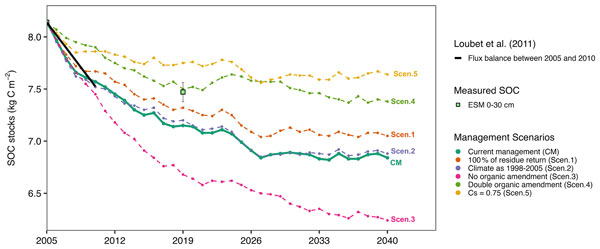
Soil is a large pool of carbon storing globally, from 2 to 3 times more carbon than the atmosphere and vegetation. We measure the soil stock change from 2005 to 2019 at the ICOS crop site FR-Gri near Paris. The soil carbon stock decreased by approximately 72 ± 17 g C m-2 yr-1 over the period, resulting in a total loss of around 8% of the initial soil stock. This strong destocking is primarily attributed to a decrease in residue return and organic amendments to the site.
Mubaraq Olarewaju Abdulwahab, Christophe Flechard, Yannick Fauvel, Christoph Häni, Adrien Jacotot, Anne-Isabelle Graux, Nadège Edouard, Pauline Buysse, Valérie Viaud, and Albrecht Neftel
Biogeosciences, 22, 6669–6693, https://doi.org/10.5194/bg-22-6669-2025, https://doi.org/10.5194/bg-22-6669-2025, 2025
Short summary
Short summary
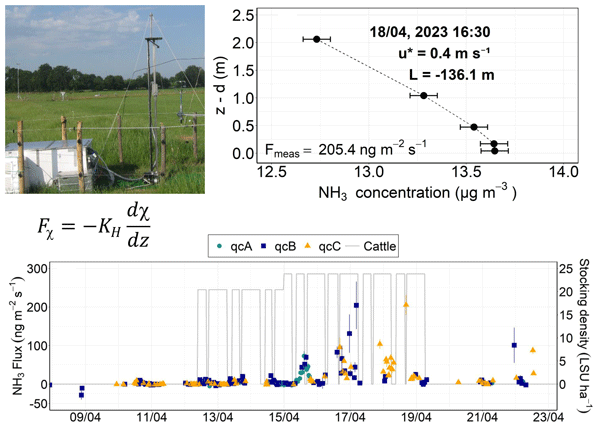
Pastures are an important source of ammonia, a major atmospheric pollutant with manifold environmental impacts. Ammonia is emitted from the decomposition of cattle urine in soils during grazing. We used micrometeorological methods to measure emissions over four grazing seasons. The results show the influence of weather and grassland management on emission processes. Emission factors, used to compile regional inventories, are hugely variable and still very uncertain despite decades of research.
Yang Liu, Raluca Ciuraru, Letizia Abis, Crist Amelynck, Pauline Buysse, Alex Guenther, Bernard Heinesch, Florence Lafouge, Florent Levavasseur, Benjamin Loubet, Auriane Voyard, and Raia-Silvia Massad
EGUsphere, https://doi.org/10.5194/egusphere-2024-530, https://doi.org/10.5194/egusphere-2024-530, 2024
Preprint archived
Short summary
Short summary
This paper reviews the emission and emission processes of biogenic volatile organic compounds (BVOCs) from various crops and soil under different management practices, highlighting challenges in modeling the emissions and proposing a conceptual model for estimation. The aim of this paper is to present agricultural BVOC data and related mechanistic processes to enhance model accuracy and reduce uncertainties in estimating BVOC emissions from agriculture.
Pauline Buysse, Benjamin Loubet, Raluca Ciuraru, Florence Lafouge, Brigitte Durand, Olivier Zurfluh, Céline Décuq, Olivier Fanucci, Lais Gonzaga Gomez, Jean-Christophe Gueudet, Sandy Bsaibes, Nora Zannoni, and Valérie Gros
EGUsphere, https://doi.org/10.5194/egusphere-2023-2438, https://doi.org/10.5194/egusphere-2023-2438, 2024
Preprint withdrawn
Short summary
Short summary
This research aimed at quantifying biogenic volatile organic compounds (BVOCs) emissions by a rapeseed crop field. Such compounds are precursors of atmospheric pollutants. Our study revealed that methanol, a BVOC that is not very reactive in the atmosphere, is by far the most emitted BVOC, while monoterpenes, being highly reactive, were emitted in larger quantities than expected. Our study therefore points out the potentially more significant contribution of croplands to atmospheric pollution.
Benjamin Loubet, Pauline Buysse, Lais Gonzaga-Gomez, Florence Lafouge, Raluca Ciuraru, Céline Decuq, Julien Kammer, Sandy Bsaibes, Christophe Boissard, Brigitte Durand, Jean-Christophe Gueudet, Olivier Fanucci, Olivier Zurfluh, Letizia Abis, Nora Zannoni, François Truong, Dominique Baisnée, Roland Sarda-Estève, Michael Staudt, and Valérie Gros
Atmos. Chem. Phys., 22, 2817–2842, https://doi.org/10.5194/acp-22-2817-2022, https://doi.org/10.5194/acp-22-2817-2022, 2022
Short summary
Short summary
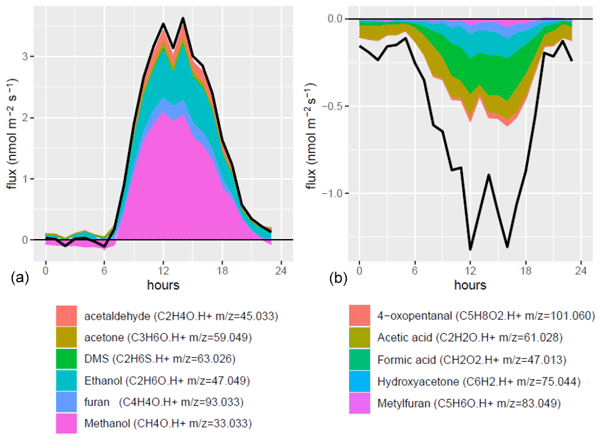
Volatile organic compounds (VOCs) are precursors of tropospheric pollutants like ozone or aerosols. Emission by agricultural land was still poorly characterized. We report experimental measurements of ecosystem-scale VOC fluxes above a wheat field with a highly sensitive proton transfer mass spectrometer. We report the fluxes of 123 compounds and confirm that methanol is the most emitted VOC by wheat. The second most emitted compound was C6H4O. Around 75 % of the compounds were deposited.
Guillaume Chamba, Karine Sellegri, Valérie Gros, Clémence Rose, Leah Williams, Elisa Berdalet, Dolors Vaqué, Magda Vila, Queralt Güell-Bujons, Elisabet-Laia Sà, Yaiza M. Castillo, Arianna Rocchi, Aurélie Colomb, Jean-Marc Pichon, Mickaël Ribeiro, Charel Wohl, Manuel Dall'Osto, and Rafel Simó
Biogeosciences, 23, 7469–7492, https://doi.org/10.5194/bg-23-7469-2026, https://doi.org/10.5194/bg-23-7469-2026, 2026
Short summary
Short summary
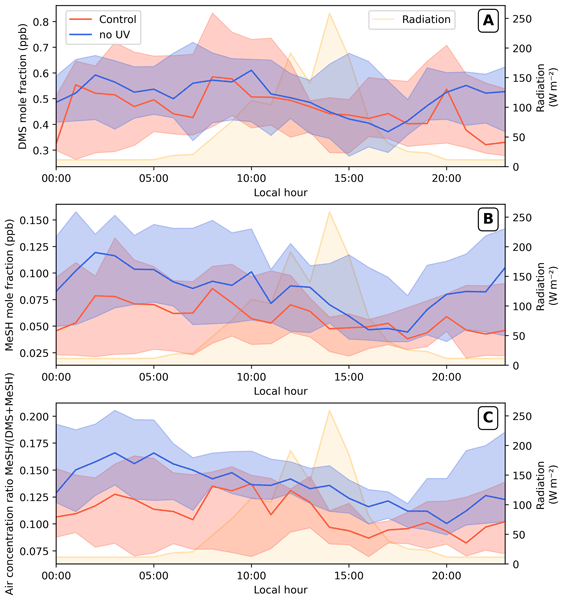
Oceans are a natural source of sulfur compounds that can influence climate by forming aerosol particles. During an oceanographic expedition around the Antarctic Peninsula, we measured the emissions of two of these compounds (DMS and methanethiol), their links to seawater microorganisms and particle formation in large enclosures exposed to natural or reduced UV radiation. Our results suggest that UV reduces these emissions and the formation of nanoparticles.
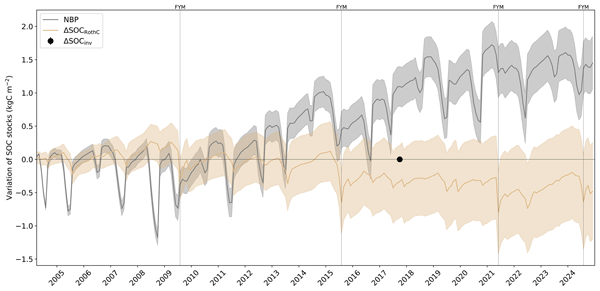
Quentin Beauclaire, Bernard Longdoz, Laura Delhez, Bruna Winck, Benjamin Loubet, Yue Zhou, Marmar Sabetizade, Neo Arquin, Nicolas Saby, and Bernard Heinesch
Biogeosciences, 23, 7345–7374, https://doi.org/10.5194/bg-23-7345-2026, https://doi.org/10.5194/bg-23-7345-2026, 2026
Short summary
Short summary
We studied how soil organic carbon stocks changed over 21 years in a Belgian cropland by combining soil sampling, a soil carbon model, and measurements from a flux tower. The soil appeared mostly stable overall, but the flux-tower approach suggested much larger carbon losses than the other methods. Our results show that using several approaches together is important to better understand soil organic carbon changes and to identify farming practices that either build up or reduce soil carbon.
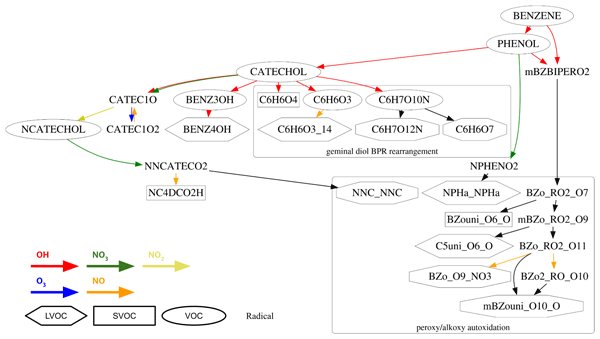
Aurélien Le Bayon, Aliisa Ojala, Siddharth Iyer, Zhizhao Wang, Victor Lannuque, Florian Couvidat, Raluca Ciuraru, and Karine Sartelet
Atmos. Chem. Phys., 26, 14749–14768, https://doi.org/10.5194/acp-26-14749-2026, https://doi.org/10.5194/acp-26-14749-2026, 2026
Short summary
Short summary
Aromatics compounds emitted in the atmosphere, such as benzene and phenol, contribute to the formation of organic aerosols. This study presents and evaluates an updated description of benzene chemistry, in which the most influential pathways are identified, including one developed in this work. The resulting mechanism reproduces laboratory observation with great accuracy and is reduced for use in large-scale air quality models.
Florian Couvidat, Antoine Guion, Victor Lannuque, Palmira Messina, Elsa Real, Gaël Descombes, Pauline Buysse, Augustin Colette, and Raia Silvia Massad
EGUsphere, https://doi.org/10.5194/egusphere-2026-4644, https://doi.org/10.5194/egusphere-2026-4644, 2026
This preprint is open for discussion and under review for Atmospheric Chemistry and Physics (ACP).
Short summary
Short summary
This study investigates weather-driven trends in atmospheric emissions and air quality across Europe over 1990–2022 using an enhanced version of the CHIMERE chemistry-transport model. Simulations reveal significant increases in biogenic VOC, ammonia, and soil NOx emissions, while ozone exhibits contrasting regional responses, increasing in southern Europe but decreasing in northern regions due to enhanced vegetation-driven deposition. Trends are also analyzed for NO2, particles and deposition.
Alohotsy Rafalimanana, Thomas Lauvaux, Charbel Abdallah, Mali Chariot, Michel Ramonet, Josselin Doc, Olivier Laurent, Morgan Lopez, Anja Raznjevic, Maarten Krol, Leena Järvi, Andreas Christen, Dana Looschelders, Leslie David, Olivier Sanchez, Laura Bignotti, Benjamin Loubet, Sue Grimmond, and William Morrison
EGUsphere, https://doi.org/10.5194/egusphere-2026-2581, https://doi.org/10.5194/egusphere-2026-2581, 2026
Short summary
Short summary
Using WRF-Chem simulations over Greater Paris at resolutions from 900 m to 100 m (LES), we show that horizontal resolution critically shapes urban CO2 plume structure. Mesoscale runs underestimate spatial contrasts by a factor of 2–3, with representativeness errors of 29–61 % (near-surface) and 21–59 % (XCO2). LES improves intra-urban variability and enables more accurate spatial attribution of emissions, a key step toward reliable top-down estimates for city-scale climate mitigation.
Juliette Brochet, Hasna Chebaicheb, Olivier Favez, Laura Cadeo, Tanguy Amodeo, Yunjiang Zhang, Antonin Bergé, Philip Croteau, Vincent Crenn, Valérie Gros, and Jean-Eudes Petit
Earth Syst. Sci. Data Discuss., https://doi.org/10.5194/essd-2026-490, https://doi.org/10.5194/essd-2026-490, 2026
Preprint under review for ESSD
Short summary
Short summary
This work proposes a new methodology for robust, homogeneous processing of long-term datasets of aerosol mass spectrometer measurements to remedy the challenges posed by the emergence of juxtaposed data processing periods over the years. The results showed a global decrease in PM1 at a semi-urban site in the Paris region between 2011 and 2024, along with a decrease in the frequency of persistent pollution episodes. Finally, it highlights the need for Sulfate source apportionment analysis.
Alohotsy Rafalimanana, Thomas Lauvaux, Charbel Abdallah, Mali Chariot, Michel Ramonet, Josselin Doc, Olivier Laurent, Morgan Lopez, Anja Raznjevic, Maarten Krol, Leena Järvi, Andreas Christen, Dana Looschelders, Leslie David, Olivier Sanchez, Laura Bignotti, Benjamin Loubet, Sue Grimmond, and William Morrison
EGUsphere, https://doi.org/10.5194/egusphere-2026-2109, https://doi.org/10.5194/egusphere-2026-2109, 2026
Short summary
Short summary
This study explores how city design and buildings affect CO2 levels in the air over Paris. Using a transport model, we tested different urban canopy models to represent the city environment and its influence on air motion. We found that realistic descriptions of urban surfaces are crucial, especially in winter, for accurately showing how CO2 builds up and disperses, leading to better satellite monitoring of city CO2 emissions.
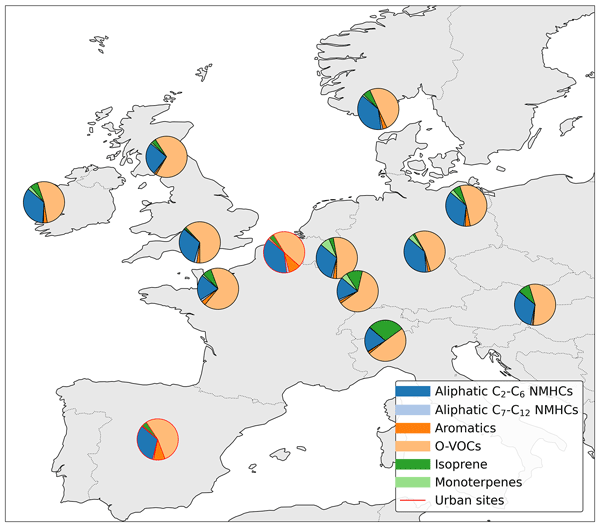
Wenche Aas, Thérèse Salameh, Robert Wegener, Heidi Hellén, Jean-Luc Jaffrezo, Pontus Roldin, Elisabeth Alonso-Blanco, Andres Alastuey, Crist Amelynck, Jgor Arduini, Benjamin Bergmans, Marie Bertrand, Agnes Borbon, Efstratios Bourtsoukidis, Laetitia Bouvier, David Butterfield, Iris Buxbaum, Darius Ceburnis, Anja Claude, Augustin Colette, Aurélie Colomb, Sophie Darfeuil, James Dernie, Maximilien Desservettaz, Elías Díaz-Ramiro, Marvin Dufresne, René Dubus, Mario Duval, Marie Dury, Anna Font, Kirsten N. Fossum, Evelyn Freney, Gotzon Gangoiti, Yao Ge, Maria Carmen Gomez, Francisco J. Gómez-Moreno, Marie Gohy, Valérie Gros, Paul Hamer, Bryan Hellack, Hartmut Herrmann, Robert Holla, Adéla Holubová, Niels R. Jensen, Tuija Jokinen, Matthew Jones, Uwe Käfer, Lukas Kesper, Dieter Klemp, Dagmar Kubistin, Angela Marinoni, Martina Mazzini, Vy Ngoc Thuy Dinh, Jurgita Ovadnevaite, Tuukka Petäjä, Miguel Portillo-Estrada, Jitka Přívozníková, Jean-Philippe Putaud, Stefan Reimann, Laura Renzi, Veronique Riffault, Stuart Ritchie, Chris Robins, Begoña Artíñano Rodríguez de Torres, Laurent Poulain, Julian Rüdiger, Agnieszka Sanocka, Estibaliz Saez de Camara Oleaga, Niels Schoon, Roger Seco, Ivan Simmons, Leïla Simon, David Simpson, Sverre Solberg, Emmanuel Tison, August Thomasson, Svetlana Tsyro, Marsailidh Twigg, Toni Tykkä, Bert Verreyken, Ågot Watne, Katie Williams, Ana Maria Yáñez-Serrano, Karen Yeung, Ilona Ylivinkka, and Karl Espen Yttri
Atmos. Chem. Phys., 26, 8717–8751, https://doi.org/10.5194/acp-26-8717-2026, https://doi.org/10.5194/acp-26-8717-2026, 2026
Short summary
Short summary
A one-week intensive measurement campaign during the 2022 European heatwave included monitoring of ozone, volatile organic compounds, aerosol chemical composition, and organic tracers to investigate air pollution sources. Results showed that emissions from vegetation and human activities contributed to peaks in ozone and secondary organic aerosol particles. Differences between measurements and model simulations underline the need for better characterization of sources and formation pathways.
Armand Favrot, Sophie Génermont, Vincent Guigue, Céline Décuq, and David Makowski
EGUsphere, https://doi.org/10.5194/egusphere-2026-2404, https://doi.org/10.5194/egusphere-2026-2404, 2026
Short summary
Short summary
Ammonia emissions after field fertilization are a major source of nitrogen losses from agriculture and air pollution, yet cumulative losses remain difficult to predict. Dynamic machine learning models are promising tools. Models tracking emissions over time outperformed those predicting only the final total, reducing errors by nearly 20 %. These advances could improve national emission inventories and support smarter fertilizer management to reduce pollution.
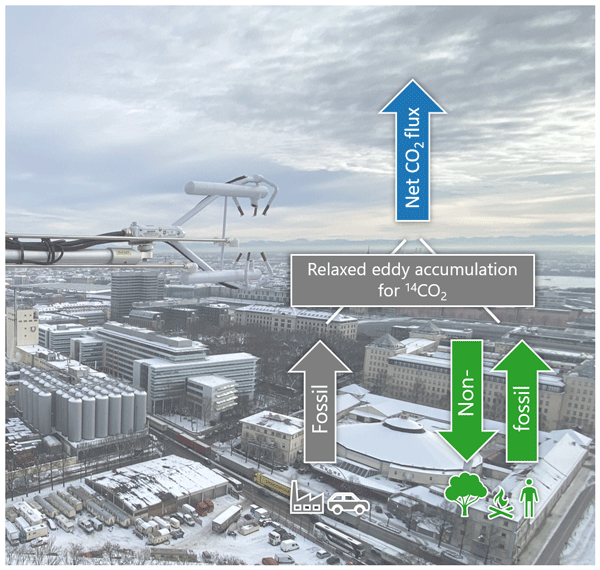
Ann-Kristin Kunz, Samuel Hammer, Patrick Aigner, Laura Bignotti, Lars Borchardt, Jia Chen, Julian Della Coletta, Lukas Emmenegger, Markus Eritt, Xochilt Gutiérrez, Josh Hashemi, Rainer Hilland, Christopher Holst, Armin Jordan, Natascha Kljun, Richard Kneißl, Changxing Lan, Virgile Legendre, Ingeborg Levin, Benjamin Loubet, Matthias Mauder, Betty Molinier, Susanne Preunkert, Michel Ramonet, Stavros Stagakis, and Andreas Christen
Atmos. Chem. Phys., 26, 4967–5003, https://doi.org/10.5194/acp-26-4967-2026, https://doi.org/10.5194/acp-26-4967-2026, 2026
Short summary
Short summary
We present radiocarbon (14C)-based fossil fuel CO2 fluxes from relaxed eddy accumulation measurements on tall towers in the cities of Zurich, Paris, and Munich. By separating net CO2 fluxes into fossil and non-fossil components, these data reveal significant and variable contributions from human, plant, and soil respiration, as well as point-source emissions. These unique insights into CO2 flux composition offer crucial information for observation-based validation of urban emission estimates.
Débora Pinheiro-Oliveira, Hella van Asperen, Murielli Garcia Caetano, Michelle Robin, Achim Edtbauer, Nora Zannoni, Joseph Byron, Jonathan Williams, Layon Oreste Demarchi, Maria Teresa Fernandez Piedade, Jochen Schöngart, Florian Wittmann, Sergio Duvoisin-Junior, Carla Batista, Rodrigo Augusto Ferreira de Souza, and Eliane Gomes Alves
Biogeosciences, 23, 2451–2476, https://doi.org/10.5194/bg-23-2451-2026, https://doi.org/10.5194/bg-23-2451-2026, 2026
Short summary
Short summary
Forests release trace gases that influence air and climate. While plants are the main source, soil and leaf litter can also release significant amounts, especially in tropical forests like the Amazon. We measured these fluxes in different forest types and found soil and litter to be active sources and sinks. This can improves climate models by including realistic forest processes, vital for understanding and protecting the Amazon.
Benjamin Loubet, Nicolas P. A. Saby, Bruna Winck, Maryam Gebleh, Pauline Buysse, Jean-Philippe Chenu, Céline Ratié, Claudy Jolivet, Carmen Kalalian, Florent Levavasseur, Jose-Luis Munera-Echeverri, Sébastien Lafont, Denis Loustau, Dario Papale, Giacomo Nicolini, and Dominique Arrouays
Biogeosciences, 23, 2059–2077, https://doi.org/10.5194/bg-23-2059-2026, https://doi.org/10.5194/bg-23-2059-2026, 2026
Short summary
Short summary
Soil is a large pool of carbon storing globally, from 2 to 3 times more carbon than the atmosphere and vegetation. We measure the soil stock change from 2005 to 2019 at the ICOS crop site FR-Gri near Paris. The soil carbon stock decreased by approximately 72 ± 17 g C m-2 yr-1 over the period, resulting in a total loss of around 8% of the initial soil stock. This strong destocking is primarily attributed to a decrease in residue return and organic amendments to the site.
Denis Leppla, Stefanie Hildmann, Nora Zannoni, Leslie A. Kremper, Bruna A. Holanda, Jonathan Williams, Christopher Pöhlker, Stefan Wolff, Marta Sà, Maria Christina Solci, Ulrich Pöschl, and Thorsten Hoffmann
Atmos. Chem. Phys., 26, 365–390, https://doi.org/10.5194/acp-26-365-2026, https://doi.org/10.5194/acp-26-365-2026, 2026
Short summary
Short summary
The chemical composition of organic particles in the Amazon rainforest was investigated to understand how biogenic and human emissions influence the atmosphere in this unique ecosystem. Seasonal patterns were found where wet seasons were dominated by biogenic compounds from natural sources while dry seasons showed increased fire-related pollutants. These findings reveal how emissions, fires and long-range transport affect atmospheric chemistry, with implications for climate models.
Laura Bouillon, Valérie Gros, Morgan Lopez, Nicolas Bonnaire, Carole Philippon, Camille Yver Kwok, Leslie David, Olivier Perrussel, Olivier Sanchez, Simone Kotthaus, Jean-Eudes Petit, Philippe Ciais, and Michel Ramonet
Earth Syst. Sci. Data Discuss., https://doi.org/10.5194/essd-2025-602, https://doi.org/10.5194/essd-2025-602, 2025
Revised manuscript accepted for ESSD
Short summary
Short summary
The Saclay observatory, 20 km southwest of Paris, monitored greenhouse and reactive gases, as well as aerosols, over 10 years to assess the impact of urban emissions. By comparing downwind and background conditions, the study revealed significant reductions in pollutants linked to traffic: -35.6 % for CO, -52.3 % for NOₓ, -56.7 % for eBC, and -15 % for CO2. These trends align with emission decrease estimates from AIRPARIF inventories over the same period.
Mubaraq Olarewaju Abdulwahab, Christophe Flechard, Yannick Fauvel, Christoph Häni, Adrien Jacotot, Anne-Isabelle Graux, Nadège Edouard, Pauline Buysse, Valérie Viaud, and Albrecht Neftel
Biogeosciences, 22, 6669–6693, https://doi.org/10.5194/bg-22-6669-2025, https://doi.org/10.5194/bg-22-6669-2025, 2025
Short summary
Short summary
Pastures are an important source of ammonia, a major atmospheric pollutant with manifold environmental impacts. Ammonia is emitted from the decomposition of cattle urine in soils during grazing. We used micrometeorological methods to measure emissions over four grazing seasons. The results show the influence of weather and grassland management on emission processes. Emission factors, used to compile regional inventories, are hugely variable and still very uncertain despite decades of research.
Ludovico Di Antonio, Matthias Beekmann, Guillaume Siour, Vincent Michoud, Christopher Cantrell, Astrid Bauville, Antonin Bergé, Mathieu Cazaunau, Servanne Chevaillier, Manuela Cirtog, Joel F. de Brito, Paola Formenti, Cecile Gaimoz, Olivier Garret, Aline Gratien, Valérie Gros, Martial Haeffelin, Lelia N. Hawkins, Simone Kotthaus, Gael Noyalet, Diana L. Pereira, Jean-Eudes Petit, Eva Drew Pronovost, Véronique Riffault, Chenjie Yu, Gilles Foret, Jean-François Doussin, and Claudia Di Biagio
Atmos. Chem. Phys., 25, 4803–4831, https://doi.org/10.5194/acp-25-4803-2025, https://doi.org/10.5194/acp-25-4803-2025, 2025
Short summary
Short summary
The summer of 2022 has been considered a proxy for future climate scenarios due to its hot and dry conditions. In this paper, we use the measurements from the Atmospheric Chemistry of the Suburban Forest (ACROSS) campaign, conducted in the Paris area in June–July 2022, along with observations from existing networks, to evaluate a 3D chemistry transport model (WRF–CHIMERE) simulation. Results are shown to be satisfactory, allowing us to explain the gas and aerosol variability at the campaign sites.
Xiansheng Liu, Xun Zhang, Marvin Dufresne, Tao Wang, Lijie Wu, Rosa Lara, Roger Seco, Marta Monge, Ana Maria Yáñez-Serrano, Marie Gohy, Paul Petit, Audrey Chevalier, Marie-Pierre Vagnot, Yann Fortier, Alexia Baudic, Véronique Ghersi, Grégory Gille, Ludovic Lanzi, Valérie Gros, Leïla Simon, Heidi Héllen, Stefan Reimann, Zoé Le Bras, Michelle Jessy Müller, David Beddows, Siqi Hou, Zongbo Shi, Roy M. Harrison, William Bloss, James Dernie, Stéphane Sauvage, Philip K. Hopke, Xiaoli Duan, Taicheng An, Alastair C. Lewis, James R. Hopkins, Eleni Liakakou, Nikolaos Mihalopoulos, Xiaohu Zhang, Andrés Alastuey, Xavier Querol, and Thérèse Salameh
Atmos. Chem. Phys., 25, 625–638, https://doi.org/10.5194/acp-25-625-2025, https://doi.org/10.5194/acp-25-625-2025, 2025
Short summary
Short summary
This study examines BTEX (benzene, toluene, ethylbenzene, xylenes) pollution in urban areas across seven European countries. Analyzing data from 22 monitoring sites, we found traffic and industrial activities significantly impact BTEX levels, with peaks during rush hours. The risk from BTEX exposure remains moderate, especially in high-traffic and industrial zones, highlighting the need for targeted air quality management to protect public health and improve urban air quality.
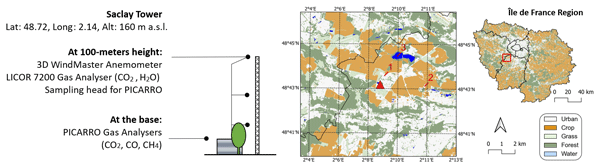
Pedro Henrique Herig Coimbra, Benjamin Loubet, Olivier Laurent, Laura Bignotti, Mathis Lozano, and Michel Ramonet
Atmos. Meas. Tech., 17, 6625–6645, https://doi.org/10.5194/amt-17-6625-2024, https://doi.org/10.5194/amt-17-6625-2024, 2024
Short summary
Short summary
This study presents direct flux measurements in tall towers using existing slow-response analysers and adding 3D sonic anemometers. This way, we can significantly improve greenhouse gas monitoring with little extra instrumental effort. Slow-response analysers may be used here as the relevant frequency ranges depend on measuring height. Tall towers offer a large footprint, amplifying spatial coverage. The presented concept is a valuable bridge between atmospheric and ecosystem communities.
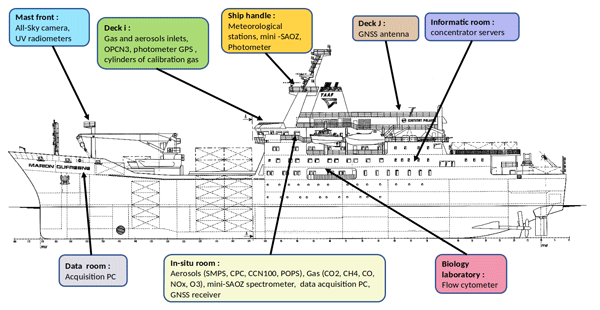
Pierre Tulet, Joel Van Baelen, Pierre Bosser, Jérome Brioude, Aurélie Colomb, Philippe Goloub, Andrea Pazmino, Thierry Portafaix, Michel Ramonet, Karine Sellegri, Melilotus Thyssen, Léa Gest, Nicolas Marquestaut, Dominique Mékiès, Jean-Marc Metzger, Gilles Athier, Luc Blarel, Marc Delmotte, Guillaume Desprairies, Mérédith Dournaux, Gaël Dubois, Valentin Duflot, Kevin Lamy, Lionel Gardes, Jean-François Guillemot, Valérie Gros, Joanna Kolasinski, Morgan Lopez, Olivier Magand, Erwan Noury, Manuel Nunes-Pinharanda, Guillaume Payen, Joris Pianezze, David Picard, Olivier Picard, Sandrine Prunier, François Rigaud-Louise, Michael Sicard, and Benjamin Torres
Earth Syst. Sci. Data, 16, 3821–3849, https://doi.org/10.5194/essd-16-3821-2024, https://doi.org/10.5194/essd-16-3821-2024, 2024
Short summary
Short summary
The MAP-IO program aims to compensate for the lack of atmospheric and oceanographic observations in the Southern Ocean by equipping the ship Marion Dufresne with a set of 17 scientific instruments. This program collected 700 d of measurements under different latitudes, seasons, sea states, and weather conditions. These new data will support the calibration and validation of numerical models and the understanding of the atmospheric composition of this region of Earth.
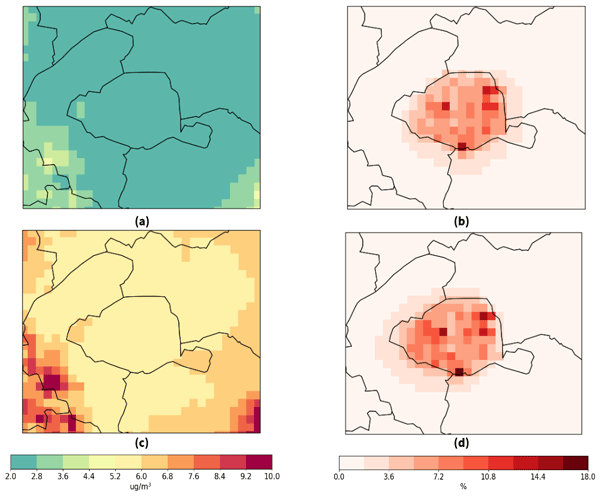
Alice Maison, Lya Lugon, Soo-Jin Park, Alexia Baudic, Christopher Cantrell, Florian Couvidat, Barbara D'Anna, Claudia Di Biagio, Aline Gratien, Valérie Gros, Carmen Kalalian, Julien Kammer, Vincent Michoud, Jean-Eudes Petit, Marwa Shahin, Leila Simon, Myrto Valari, Jérémy Vigneron, Andrée Tuzet, and Karine Sartelet
Atmos. Chem. Phys., 24, 6011–6046, https://doi.org/10.5194/acp-24-6011-2024, https://doi.org/10.5194/acp-24-6011-2024, 2024
Short summary
Short summary
This study presents the development of a bottom-up inventory of urban tree biogenic emissions. Emissions are computed for each tree based on their location and characteristics and are integrated in the regional air quality model WRF-CHIMERE. The impact of these biogenic emissions on air quality is quantified for June–July 2022. Over Paris city, urban trees increase the concentrations of particulate organic matter by 4.6 %, of PM2.5 by 0.6 %, and of ozone by 1.0 % on average over 2 months.
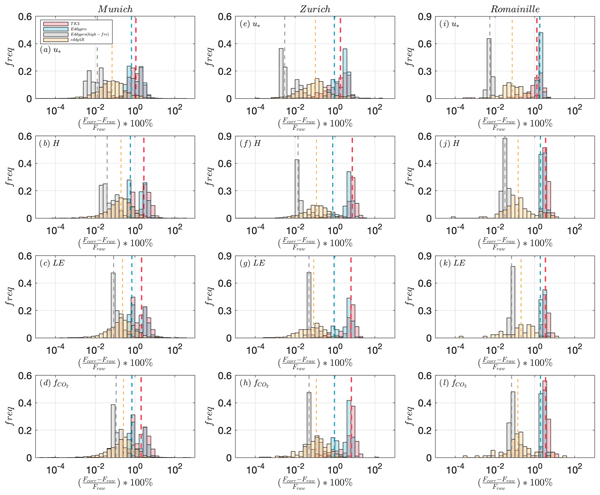
Changxing Lan, Matthias Mauder, Stavros Stagakis, Benjamin Loubet, Claudio D'Onofrio, Stefan Metzger, David Durden, and Pedro-Henrique Herig-Coimbra
Atmos. Meas. Tech., 17, 2649–2669, https://doi.org/10.5194/amt-17-2649-2024, https://doi.org/10.5194/amt-17-2649-2024, 2024
Short summary
Short summary
Using eddy-covariance systems deployed in three cities, we aimed to elucidate the sources of discrepancies in flux estimations from different software packages. One crucial finding is the impact of low-frequency spectral loss corrections on tall-tower flux estimations. Our findings emphasize the significance of a standardized measurement setup and consistent postprocessing configurations in minimizing the systematic flux uncertainty resulting from the usage of different software packages.
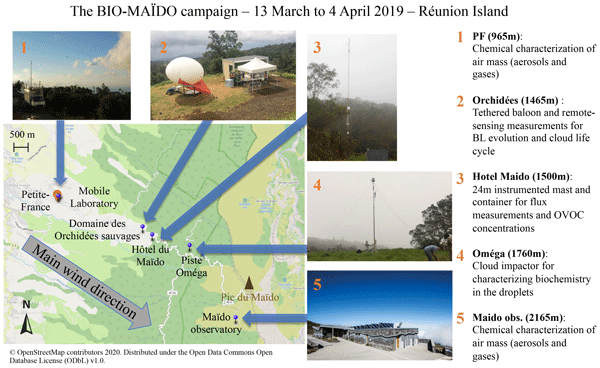
Maud Leriche, Pierre Tulet, Laurent Deguillaume, Frédéric Burnet, Aurélie Colomb, Agnès Borbon, Corinne Jambert, Valentin Duflot, Stéphan Houdier, Jean-Luc Jaffrezo, Mickaël Vaïtilingom, Pamela Dominutti, Manon Rocco, Camille Mouchel-Vallon, Samira El Gdachi, Maxence Brissy, Maroua Fathalli, Nicolas Maury, Bert Verreyken, Crist Amelynck, Niels Schoon, Valérie Gros, Jean-Marc Pichon, Mickael Ribeiro, Eric Pique, Emmanuel Leclerc, Thierry Bourrianne, Axel Roy, Eric Moulin, Joël Barrie, Jean-Marc Metzger, Guillaume Péris, Christian Guadagno, Chatrapatty Bhugwant, Jean-Mathieu Tibere, Arnaud Tournigand, Evelyn Freney, Karine Sellegri, Anne-Marie Delort, Pierre Amato, Muriel Joly, Jean-Luc Baray, Pascal Renard, Angelica Bianco, Anne Réchou, and Guillaume Payen
Atmos. Chem. Phys., 24, 4129–4155, https://doi.org/10.5194/acp-24-4129-2024, https://doi.org/10.5194/acp-24-4129-2024, 2024
Short summary
Short summary
Aerosol particles in the atmosphere play a key role in climate change and air pollution. A large number of aerosol particles are formed from the oxidation of volatile organic compounds (VOCs and secondary organic aerosols – SOA). An important field campaign was organized on Réunion in March–April 2019 to understand the formation of SOA in a tropical atmosphere mostly influenced by VOCs emitted by forest and in the presence of clouds. This work synthesizes the results of this campaign.
Yang Liu, Raluca Ciuraru, Letizia Abis, Crist Amelynck, Pauline Buysse, Alex Guenther, Bernard Heinesch, Florence Lafouge, Florent Levavasseur, Benjamin Loubet, Auriane Voyard, and Raia-Silvia Massad
EGUsphere, https://doi.org/10.5194/egusphere-2024-530, https://doi.org/10.5194/egusphere-2024-530, 2024
Preprint archived
Short summary
Short summary
This paper reviews the emission and emission processes of biogenic volatile organic compounds (BVOCs) from various crops and soil under different management practices, highlighting challenges in modeling the emissions and proposing a conceptual model for estimation. The aim of this paper is to present agricultural BVOC data and related mechanistic processes to enhance model accuracy and reduce uncertainties in estimating BVOC emissions from agriculture.
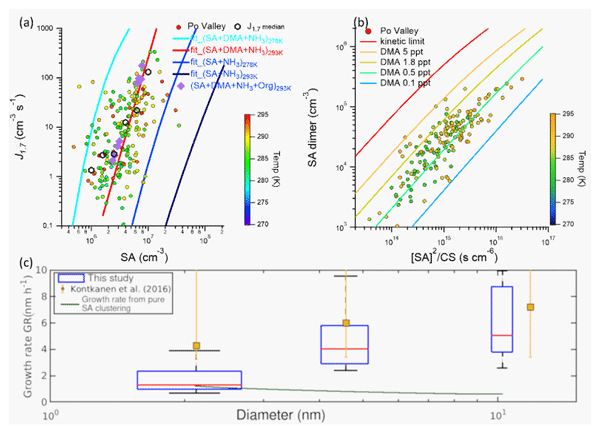
Jing Cai, Juha Sulo, Yifang Gu, Sebastian Holm, Runlong Cai, Steven Thomas, Almuth Neuberger, Fredrik Mattsson, Marco Paglione, Stefano Decesari, Matteo Rinaldi, Rujing Yin, Diego Aliaga, Wei Huang, Yuanyuan Li, Yvette Gramlich, Giancarlo Ciarelli, Lauriane Quéléver, Nina Sarnela, Katrianne Lehtipalo, Nora Zannoni, Cheng Wu, Wei Nie, Juha Kangasluoma, Claudia Mohr, Markku Kulmala, Qiaozhi Zha, Dominik Stolzenburg, and Federico Bianchi
Atmos. Chem. Phys., 24, 2423–2441, https://doi.org/10.5194/acp-24-2423-2024, https://doi.org/10.5194/acp-24-2423-2024, 2024
Short summary
Short summary
By combining field measurements, simulations and recent chamber experiments, we investigate new particle formation (NPF) and growth in the Po Valley, where both haze and frequent NPF occur. Our results show that sulfuric acid, ammonia and amines are the dominant NPF precursors there. A high NPF rate and a lower condensation sink lead to a greater survival probability for newly formed particles, highlighting the importance of gas-to-particle conversion for aerosol concentrations.
Victor Moinard, Antoine Savoie, Catherine Pasquier, Adeline Besnault, Yolaine Goubard-Delaunay, Baptiste Esnault, Marco Carozzi, Polina Voylokov, Sophie Génermont, Benjamin Loubet, Catherine Hénault, Florent Levavasseur, Jean-Marie Paillat, and Sabine Houot
EGUsphere, https://doi.org/10.5194/egusphere-2024-161, https://doi.org/10.5194/egusphere-2024-161, 2024
Preprint archived
Short summary
Short summary
Anaerobic digestion is used for biogas production. The resulting digestates may be associated with different crop performances and N losses compared to undigested animal effluents. We monitored N flows during a three-year field experiment with different fertilizations based on cattle effluents, digestates, or mineral fertilizers. Digestates were effective N fertilizer but required attention to NH3 volatilization. We identified no additional risks of N2O emissions with digestates.
Pauline Buysse, Benjamin Loubet, Raluca Ciuraru, Florence Lafouge, Brigitte Durand, Olivier Zurfluh, Céline Décuq, Olivier Fanucci, Lais Gonzaga Gomez, Jean-Christophe Gueudet, Sandy Bsaibes, Nora Zannoni, and Valérie Gros
EGUsphere, https://doi.org/10.5194/egusphere-2023-2438, https://doi.org/10.5194/egusphere-2023-2438, 2024
Preprint withdrawn
Short summary
Short summary
This research aimed at quantifying biogenic volatile organic compounds (BVOCs) emissions by a rapeseed crop field. Such compounds are precursors of atmospheric pollutants. Our study revealed that methanol, a BVOC that is not very reactive in the atmosphere, is by far the most emitted BVOC, while monoterpenes, being highly reactive, were emitted in larger quantities than expected. Our study therefore points out the potentially more significant contribution of croplands to atmospheric pollution.
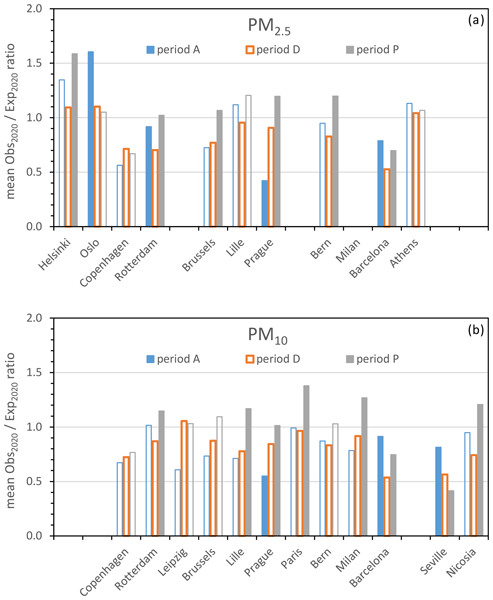
Jean-Philippe Putaud, Enrico Pisoni, Alexander Mangold, Christoph Hueglin, Jean Sciare, Michael Pikridas, Chrysanthos Savvides, Jakub Ondracek, Saliou Mbengue, Alfred Wiedensohler, Kay Weinhold, Maik Merkel, Laurent Poulain, Dominik van Pinxteren, Hartmut Herrmann, Andreas Massling, Claus Nordstroem, Andrés Alastuey, Cristina Reche, Noemí Pérez, Sonia Castillo, Mar Sorribas, Jose Antonio Adame, Tuukka Petaja, Katrianne Lehtipalo, Jarkko Niemi, Véronique Riffault, Joel F. de Brito, Augustin Colette, Olivier Favez, Jean-Eudes Petit, Valérie Gros, Maria I. Gini, Stergios Vratolis, Konstantinos Eleftheriadis, Evangelia Diapouli, Hugo Denier van der Gon, Karl Espen Yttri, and Wenche Aas
Atmos. Chem. Phys., 23, 10145–10161, https://doi.org/10.5194/acp-23-10145-2023, https://doi.org/10.5194/acp-23-10145-2023, 2023
Short summary
Short summary
Many European people are still exposed to levels of air pollution that can affect their health. COVID-19 lockdowns in 2020 were used to assess the impact of the reduction in human mobility on air pollution across Europe by comparing measurement data with values that would be expected if no lockdown had occurred. We show that lockdown measures did not lead to consistent decreases in the concentrations of fine particulate matter suspended in the air, and we investigate why.
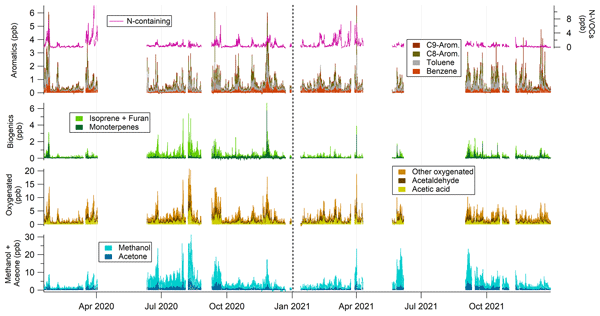
Leïla Simon, Valérie Gros, Jean-Eudes Petit, François Truong, Roland Sarda-Estève, Carmen Kalalian, Alexia Baudic, Caroline Marchand, and Olivier Favez
Earth Syst. Sci. Data, 15, 1947–1968, https://doi.org/10.5194/essd-15-1947-2023, https://doi.org/10.5194/essd-15-1947-2023, 2023
Short summary
Short summary
Long-term measurements of volatile organic compounds (VOCs) have been set up to better characterize the atmospheric chemistry at the SIRTA national facility (Paris area, France). Results obtained from the first 2 years (2020–2021) confirm the importance of local sources for short-lived compounds and the role played by meteorology and air mass origins in the long-term analysis of VOCs. They also point to a substantial influence of anthropogenic on the monoterpene loadings.
Valérie Gros, Bernard Bonsang, Roland Sarda-Estève, Anna Nikolopoulos, Katja Metfies, Matthias Wietz, and Ilka Peeken
Biogeosciences, 20, 851–867, https://doi.org/10.5194/bg-20-851-2023, https://doi.org/10.5194/bg-20-851-2023, 2023
Short summary
Short summary
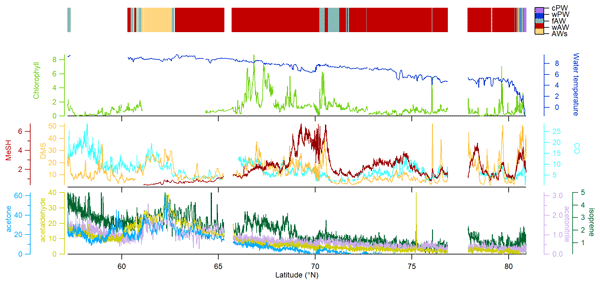
The oceans are both sources and sinks for trace gases important for atmospheric chemistry and marine ecology. Here, we quantified selected trace gases (including the biological metabolites dissolved dimethyl sulfide, methanethiol and isoprene) along a 2500 km transect from the North Atlantic to the Arctic Ocean. In the context of phytoplankton and bacterial communities, our study suggests that methanethiol (rarely measured before) might substantially influence ocean–atmosphere cycling.
Denis Leppla, Nora Zannoni, Leslie Kremper, Jonathan Williams, Christopher Pöhlker, Marta Sá, Maria Christina Solci, and Thorsten Hoffmann
Atmos. Chem. Phys., 23, 809–820, https://doi.org/10.5194/acp-23-809-2023, https://doi.org/10.5194/acp-23-809-2023, 2023
Short summary
Short summary
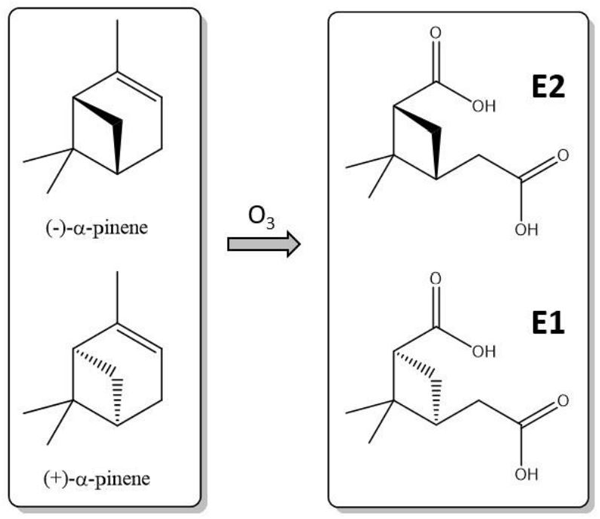
Chiral chemodiversity plays a critical role in biochemical processes such as insect and plant communication. Here we report on the measurement of chiral-specified secondary organic aerosol in the Amazon rainforest. The results show that the chiral ratio is mainly determined by large-scale emission processes. Characteristic emissions of chiral aerosol precursors from different forest ecosystems can thus provide large-scale information on different biogenic sources via chiral particle analysis.
Benjamin Loubet, Pauline Buysse, Lais Gonzaga-Gomez, Florence Lafouge, Raluca Ciuraru, Céline Decuq, Julien Kammer, Sandy Bsaibes, Christophe Boissard, Brigitte Durand, Jean-Christophe Gueudet, Olivier Fanucci, Olivier Zurfluh, Letizia Abis, Nora Zannoni, François Truong, Dominique Baisnée, Roland Sarda-Estève, Michael Staudt, and Valérie Gros
Atmos. Chem. Phys., 22, 2817–2842, https://doi.org/10.5194/acp-22-2817-2022, https://doi.org/10.5194/acp-22-2817-2022, 2022
Short summary
Short summary
Volatile organic compounds (VOCs) are precursors of tropospheric pollutants like ozone or aerosols. Emission by agricultural land was still poorly characterized. We report experimental measurements of ecosystem-scale VOC fluxes above a wheat field with a highly sensitive proton transfer mass spectrometer. We report the fluxes of 123 compounds and confirm that methanol is the most emitted VOC by wheat. The second most emitted compound was C6H4O. Around 75 % of the compounds were deposited.
Jean-Eudes Petit, Jean-Charles Dupont, Olivier Favez, Valérie Gros, Yunjiang Zhang, Jean Sciare, Leila Simon, François Truong, Nicolas Bonnaire, Tanguy Amodeo, Robert Vautard, and Martial Haeffelin
Atmos. Chem. Phys., 21, 17167–17183, https://doi.org/10.5194/acp-21-17167-2021, https://doi.org/10.5194/acp-21-17167-2021, 2021
Short summary
Short summary
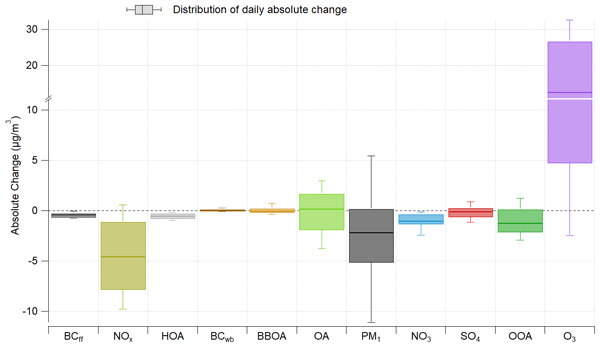
The COVID-19 outbreak led to lockdowns at national scales in spring 2020. Large cuts in emissions occurred, but the quantitative assessment of their role from observations is hindered by weather and interannual variability. That is why we developed an innovative methodology in order to best characterize the impact of lockdown on atmospheric chemistry. We find that a local decrease in traffic-related pollutants triggered a decrease of secondary aerosols and an increase in ozone.
Cited articles
Abis, L., Kalalian, C., Lunardelli, B., Wang, T., Zhang, L., Chen, J., Perrier, S., Loubet, B., Ciuraru, R., and George, C.: Measurement report: Biogenic volatile organic compound emission profiles of rapeseed leaf litter and its secondary organic aerosol formation potential, Atmos. Chem. Phys., 21, 12613–12629, https://doi.org/10.5194/acp-21-12613-2021, 2021.
Acton, W. J. F., Schallhart, S., Langford, B., Valach, A., Rantala, P., Fares, S., Carriero, G., Tillmann, R., Tomlinson, S. J., Dragosits, U., Gianelle, D., Hewitt, C. N., and Nemitz, E.: Canopy-scale flux measurements and bottom-up emission estimates of volatile organic compounds from a mixed oak and hornbeam forest in northern Italy, Atmos. Chem. Phys., 16, 7149–7170, https://doi.org/10.5194/acp-16-7149-2016, 2016.
Acton, W. J. F., Huang, Z., Davison, B., Drysdale, W. S., Fu, P., Hollaway, M., Langford, B., Lee, J., Liu, Y., Metzger, S., Mullinger, N., Nemitz, E., Reeves, C. E., Squires, F. A., Vaughan, A. R., Wang, X., Wang, Z., Wild, O., Zhang, Q., Zhang, Y., and Hewitt, C. N.: Surface–atmosphere fluxes of volatile organic compounds in Beijing, Atmos. Chem. Phys., 20, 15101–15125, https://doi.org/10.5194/acp-20-15101-2020, 2020.
AHDB: The growth stages of oilseed rape, https://ahdb.org.uk/knowledge-library/the-growth-stages-of-oilseed-rape (last access: 7 July 2023), 2023.
Atkinson, R. and Arey, J.: Gas-phase tropospheric chemistry of biogenic volatile organic compounds: a review, Atmos. Environ., 37, 197–219, https://doi.org/10.1016/S1352-2310(03)00391-1, 2003.
Atkinson, R., Tuazon, E. C., Arey, J., and Aschmann, S. M.: Atmospheric and indoor chemistry of gas-phase indole, quinoline, and isoquinoline, Atmos. Environ., 29, 3423–3432, 1995.
Aubinet, M., Grelle, A., Ibrom, A., Rannik, U., Moncrieff, J., Foken, T., Kowalski, A. S., Martin, P. H., Berbigier, P., Bernhofer, C., Clement, R., Elbers, J., Granier, A., Grunwald, T., Morgenstern, K., Pilegaard, K., Rebmann, C., Snijders, W., Valentini, R., and Vesala, T.: Estimates of the annual net carbon and water exchange of forests: The EUROFLUX methodology, Adv. Ecol. Res., 30, 113–175, 2000.
Bachy, A., Aubinet, M., Schoon, N., Amelynck, C., Bodson, B., Moureaux, C., and Heinesch, B.: Are BVOC exchanges in agricultural ecosystems overestimated? Insights from fluxes measured in a maize field over a whole growing season, Atmos. Chem. Phys., 16, 5343–5356, https://doi.org/10.5194/acp-16-5343-2016, 2016.
Bachy, A., Aubinet, M., Amelynck, C., Schoon, N., Bodson, B., Moureaux, C., Delaplace, P., De Ligne, A., and Heinesch, B.: Methanol exchange dynamics between a temperate cropland soil and the atmosphere, Atmos. Environ., 176, 229–239, https://doi.org/10.1016/j.atmosenv.2017.12.016, 2018.
Bachy, A., Aubinet, M., Amelynck, C., Schoon, N., Bodson, B., Delaplace, P., De Ligne, A., Digrado, A., du Jardin, P., Fauconnier, M.-L., Mozaffar, A., Müller, J.-F., and Heinesch, B.: Dynamics and mechanisms of volatile organic compound exchanges in a winter wheat field, Atmos. Environ., 221, 117105, https://doi.org/10.1016/j.atmosenv.2019.117105, 2020.
Bamberger, I., Hörtnagl, L., Ruuskanen, T. M., Schnitzhofer, R., Müller, M., Graus, M., Karl, T., Wohlfhart, G., and Hansel, A.: Deposition fluxes of terpenes over grassland, J. Geophys. Res., 116, D14305, https://doi.org/10.1029/2010JD015457, 2011.
Boy, M., Zhou, P., Kurtén, T., Chen, D., Xavier, C., Clusius, P., Roldin, P., Baykara, M., Pichelstorfer, L., Foreback, B., Bäck, J., Petäjä, T., Makkonen, R., Kerminen, V.-M., Pihlatie, M., Aalto, J., and Kulmala, M.: Positive feedback mechanism between biogenic volatile organic compounds and the methane lifetime in future climates, Clim. Atmos. Sci., 5, 72, https://doi.org/10.1038/s41612-022-00292-0, 2022.
Brilli, F., Gioli, B., Zona, D., Pallozzi, E., Zenone, T., Fratini, G., Calfapietra, C., Loreto, F., Janssens, I. A., and Ceulemans, R.: Simultaneous leaf- and ecosystem-level fluxes of volatile organic compounds from a poplar-based SRC plantation, Agr. Forest Meteorol., 187, 22–35, https://doi.org/10.1016/j.agrformet.2013.11.006, 2014a.
Brilli, F., Gioli, B., Ciccioli, P., Zona, D., Loreto, F., Janssens, I. A., and Ceulemans, R.: Proton Transfer Reaction Time-of-Flight Mass Spectrometric (PTR-TOFMS) determination of volatile organic compounds (VOCs) emitted from a biomass fire developed under stable nocturnal conditions, Atmos. Environ., 97, 54–67, 2014b.
Brilli, F., Gioli, B., Fares, S., Terenzio, Z., Zona, D., Gielen, B., Loreto, F., Janssens, I. A., and Ceulemans, R.: Rapid leaf development drives the seasonal pattern of volatile organic compound (VOC) fluxes in a “coppiced” bioenergy poplar plantation: Seasonality of VOC fluxes in coppiced poplars, Plant Cell Environ., 39, 539–555, https://doi.org/10.1111/pce.12638, 2016.
Bsaibes, S., Gros, V., Truong, F., Boissard, C., Baisnée, D., Sarda-Esteve, R., Zannoni, N., Lafouge, F., Ciuraru, R., Buysse, P., Kammer, J., Gomez, L. G., and Loubet, B.: Characterization of Total OH Reactivity in a Rapeseed Field: Results from the COV3ER Experiment in April 2017, Atmosphere, 11, 261, https://doi.org/10.3390/atmos11030261, 2020.
Butcher, R. D., Macfarlane-Smith, W., Robertson, G. W., and Griffiths, D. W.: The identification of potential aeroallergen/irritant(s) from oilseed rape (Brassica napus spp. oleifera): volatile organic compounds emitted during flowering progression, Clin. Exp. Allergy, 24, 1105–1114, https://doi.org/10.1111/j.1365-2222.1994.tb03315.x, 1994.
Butcher, R. D., Goodman, B. A., and Deighton, N.: Evaluation of the allergic/irritant potential of air pollutants: detection of proteins modified by volatile organic compounds from oilseed rape (Brassica napus ssp. oleiferd) using electrospray ionization-mass spectrometry, Clin. Exp. Allergy, 25, 985–992, https://doi.org/10.1111/j.1365-2222.1995.tb00401.x, 1995.
Buysse, P.: Data_ECFlux_COV3ER2017, Recherche Data Gouv, V2 [code and data set], https://doi.org/10.57745/AIINCW, 2023.
Buysse, P., Loubet, B., Depuydt, J., Durand, B., and Gueudet, J.: Fluxnet Archive Product from Grignon, 2004–2023, FLUXNET [data set], https://hdl.handle.net/11676/78Q_tkc0nWxtTDAo1Of0UHoB (last access: 19 August 2026), 2024.
Chen, S., Xu, Z., Liu, P., Zhuang, Y., Jiang, M., Zhang, X., Han, Z., Liu, Y., and Chen, X.: Assessment of volatile organic compound emissions from pesticides in China and their contribution to ozone formation potential, Environ. Monit. Assess., 194, 737, https://doi.org/10.1007/s10661-022-10423-y, 2022.
Courtois, E. A., Paine, C. E. T., Blandinieres, P.-A., Stien, D., Bessiere, J.-M., Houel, E., Baraloto, C., and Chave, J.: Diversity of the Volatile Organic Compounds Emitted by 55 Species of Tropical Trees: a Survey in French Guiana, J. Chem. Ecol., 35, 1349–1362, https://doi.org/10.1007/s10886-009-9718-1, 2009.
Das, M., Kang, D., Aneja, V. P., Lonneman, W., Cook, D. R., and Wesely, M. L.: Measurements of hydrocarbon air–surface exchange rates over maize, Atmos. Environ., 37, 2269–2277, https://doi.org/10.1016/S1352-2310(03)00076-1, 2003.
Fall, R. and Benson, A. A.: Leaf methanol – the simplest natural product from plants, Trends Plant Sci., 1, 296–301, https://doi.org/10.1016/S1360-1385(96)88175-0, 1996.
FAOSTAT: FAOSTAT: Food and agriculture data, https://www.fao.org/faostat/en/#home (last access: 7 July 2023), 2023.
Fruekilde, P., Hjorth, J., Jensen, N. R., Kotzias, D., and Larsen, B.: Ozonolysis at vegetation surfaces: A source of acetone, 4-oxopentanal, 6-methyl-5-hepten-2-one, and geranyl acetone in the troposphere, Atmos. Environ., 32, 1893–1902, 1998.
Gallagher, M. W., Clayborough, R., Beswick, K. M., Hewitt, C. N., Owen, S., Moncrie, J., and Pilegaard, K.: Assessment of a relaxed eddy accumulation for measurements of fluxes of biogenic volatile organic compounds: study over arable crops and a mature beech forest, Atmos. Environ., 34, 2887–2899, 2000.
Gomez, L. G., Loubet, B., Lafouge, F., Ciuraru, R., Bsaibes, S., Kammer, J., Buysse, P., Durand, B., Gueudet, J.-C., Fanucci, O., Zurfluh, O., Decuq, C., Truong, F., Gros, V., and Boissard, C.: Effect of senescence on biogenic volatile organic compound fluxes in wheat plants, Atmos. Environ., 266, 118665, https://doi.org/10.1016/j.atmosenv.2021.118665, 2021.
Gonzaga Gomez, L., Loubet, B., Lafouge, F., Ciuraru, R., Buysse, P., Durand, B., Gueudet, J.-C., Fanucci, O., Fortineau, A., Zurfluh, O., Decuq, C., Kammer, J., Duprix, P., Bsaibes, S., Truong, F., Gros, V., and Boissard, C.: Comparative study of biogenic volatile organic compounds fluxes by wheat, maize and rapeseed with dynamic chambers over a short period in northern France, Atmos. Environ., 214, 116855, https://doi.org/10.1016/j.atmosenv.2019.116855, 2019.
Graus, M., Eller, A. S. D., Fall, R., Yuan, B., Qian, Y., Westra, P., de Gouw, J., and Warneke, C.: Biosphere-atmosphere exchange of volatile organic compounds over C4 biofuel crops, Atmos. Environ., 66, 161–168, https://doi.org/10.1016/j.atmosenv.2011.12.042, 2013.
Gros, V. and Zannoni, N.: Total OH Reactivity, in: Atmospheric Chemistry in the Mediterranean Region, edited by: Dulac, F., Sauvage, S., and Hamonou, E., Springer, Cham, https://doi.org/10.1007/978-3-030-82385-6_7, 2022.
Guenther, A.: Seasonal and spatial variations in natural volatile organic compound emissions, Ecol. Appl., 7, 34–45, https://doi.org/10.1890/1051-0761(1997)007[0034:SASVIN]2.0.CO;2, 1997.
Guenther, A., Hewitt, C. N., Erickson, D., Fall, R., Geron, C., Graedel, T., Harley, P., Klinger, L., Lerdau, M., Mckay, W. A., Pierce, T., Scholes, B., Steinbrecher, R., Tallamraju, R., Taylor, J., and Zimmerman, P.: A global model of natural volatile organic compound emissions, J. Geophys. Res., 100, 8873, https://doi.org/10.1029/94JD02950, 1995.
Guenther, A. B., Jiang, X., Heald, C. L., Sakulyanontvittaya, T., Duhl, T., Emmons, L. K., and Wang, X.: The Model of Emissions of Gases and Aerosols from Nature version 2.1 (MEGAN2.1): an extended and updated framework for modeling biogenic emissions, Geosci. Model Dev., 5, 1471–1492, https://doi.org/10.5194/gmd-5-1471-2012, 2012.
Harley, P., Greenberg, J., Niinemets, Ü., and Guenther, A.: Environmental controls over methanol emission from leaves, Biogeosciences, 4, 1083–1099, https://doi.org/10.5194/bg-4-1083-2007, 2007.
Havermann, F., Ghirardo, A., Schnitzler, J., Nendel, C., Hoffmann, M., Kraus, D., and Grote, R.: Modeling Intra‐ and Interannual Variability of BVOC Emissions From Maize, Oil‐Seed Rape, and Ryegrass, J. Adv. Model. Earth Sy., 14, https://doi.org/10.1029/2021MS002683, 2022.
Holzinger, R., Acton, W. J. F., Bloss, W. J., Breitenlechner, M., Crilley, L. R., Dusanter, S., Gonin, M., Gros, V., Keutsch, F. N., Kiendler-Scharr, A., Kramer, L. J., Krechmer, J. E., Languille, B., Locoge, N., Lopez-Hilfiker, F., Materić, D., Moreno, S., Nemitz, E., Quéléver, L. L. J., Sarda Esteve, R., Sauvage, S., Schallhart, S., Sommariva, R., Tillmann, R., Wedel, S., Worton, D. R., Xu, K., and Zaytsev, A.: Validity and limitations of simple reaction kinetics to calculate concentrations of organic compounds from ion counts in PTR-MS, Atmos. Meas. Tech., 12, 6193–6208, https://doi.org/10.5194/amt-12-6193-2019, 2019.
Hüve, K., Christ, M., Kleist, E., Uerlings, R., Niinemets, Ü., Walter, A., and Wildt, J.: Simultaneous growth and emission measurements demonstrate an interactive control of methanol release by leaf expansion and stomata, J. Exp. Bot., 58, 1783–1793, https://doi.org/10.1093/jxb/erm038, 2007.
Isaksen, I. S. A., Granier, C., Myhre, G., Berntsen, T. K., Dalsøren, S. B., Gauss, M., Klimont, Z., Benestad, R., Bousquet, P., Collins, W., Cox, T., Eyring, V., Fowler, D., Fuzzi, S., Jöckel, P., Laj, P., Lohmann, U., Maione, M., Monks, P., Prevot, A. S. H., Raes, F., Richter, A., Rognerud, B., Schulz, M., Shindell, D., Stevenson, D. S., Storelvmo, T., Wang, W.-C., van Weele, M., Wild, M., and Wuebbles, D.: Atmospheric composition change: Climate–Chemistry interactions, Atmos. Environ., 43, 5138–5192, https://doi.org/10.1016/j.atmosenv.2009.08.003, 2009.
Jakobsen, H. B., Friis, P., Nielsen, J. K., and Olsen, C. E.: Emission of volatiles from flowers and leaves of Brassica napus in situ, Phytochemistry, 37, 695–699, 1994.
Jensen, N. R., Gruening, C., Goded, I., Müller, M., Hjorth, J., and Wisthaler, A.: Eddy-covariance flux measurements in an Italian deciduous forest using PTR-ToF-MS, PTR-QMS and FIS, Int. J. Environ. Anal. Chem., 98, 758–788, https://doi.org/10.1080/03067319.2018.1502758, 2018.
Jiao, Y., Acdan, J., Xu, R., Deventer, M. J., Zhang, W., and Rhew, R.C.: Global Methyl Halide Emissions From Rapeseed (Brassica napus) Using Life Cycle Measurements, Geophys. Res. Lett., 47, e2020GL089373. https://doi.org/10.1029/2020GL089373, 2020.
Kammer, J., Décuq, C., Baisnée, D., Ciuraru, R., Lafouge, F., Buysse, P., Bsaibes, S., Henderson, B., Cristescu, S. M., Benabdallah, R., Chandra, V., Durand, B., Fanucci, O., Petit, J.-E., Truong, F., Bonnaire, N., Sarda-Estève, R., Gros, V., and Loubet, B.: Characterization of particulate and gaseous pollutants from a French dairy and sheep farm, Sci. Total Environ., 712, 135598, https://doi.org/10.1016/j.scitotenv.2019.135598, 2020.
Kaplan, J. O., Folberth, G., and Hauglustaine, D. A.: Role of methane and biogenic volatile organic compound sources in late glacial and Holocene fluctuations of atmospheric methane concentrations, Global Biogeochem. Cy., 20, https://doi.org/10.1029/2005GB002590, 2006.
Karl, M., Guenther, A., Köble, R., Leip, A., and Seufert, G.: A new European plant-specific emission inventory of biogenic volatile organic compounds for use in atmospheric transport models, Biogeosciences, 6, 1059–1087, https://doi.org/10.5194/bg-6-1059-2009, 2009.
Karl, T., Guenther, A., Lindinger, C., Jordan, A., Fall, R., and Lindinger, W.: Eddy covariance measurements of oxygenated volatile organic compound fluxes from crop harvesting using a redesigned proton-transfer-reaction mass spectrometer, J. Geophys. Res., 106, 24157–24167, https://doi.org/10.1029/2000JD000112, 2001.
Kesselmeier, J., Bode, K., Gerlach, C., and Jork, E.-M.: Exchange of atmospheric formic and acetic acids with trees and crop plants under controlled chamber and purified air conditions, Atmos. Environ.t, 32, 1765–1775, https://doi.org/10.1016/S1352-2310(97)00465-2, 1998.
Kljun, N., Calanca, P., Rotach, M. W., and Schmid, H. P.: A simple two-dimensional parameterisation for Flux Footprint Prediction (FFP), Geosci. Model Dev., 8, 3695–3713, https://doi.org/10.5194/gmd-8-3695-2015, 2015.
Konig, G.: Relative contribution of oxygenated hydrocarbons to the total biogenic VOC emissions of selected mid-European agricultural and natural plant species, Atmos. Environ., 29, 861–874, https://doi.org/10.1016/1352-2310(95)00026-U, 1995.
Koss, A. R., Sekimoto, K., Gilman, J. B., Selimovic, V., Coggon, M. M., Zarzana, K. J., Yuan, B., Lerner, B. M., Brown, S. S., Jimenez, J. L., Krechmer, J., Roberts, J. M., Warneke, C., Yokelson, R. J., and de Gouw, J.: Non-methane organic gas emissions from biomass burning: identification, quantification, and emission factors from PTR-ToF during the FIREX 2016 laboratory experiment, Atmos. Chem. Phys., 18, 3299–3319, https://doi.org/10.5194/acp-18-3299-2018, 2018.
Langford, B., Acton, W., Ammann, C., Valach, A., and Nemitz, E.: Eddy-covariance data with low signal-to-noise ratio: time-lag determination, uncertainties and limit of detection, Atmos. Meas. Tech., 8, 4197–4213, https://doi.org/10.5194/amt-8-4197-2015, 2015.
Loubet, B., Laville, P., Lehuger, S., Larmanou, E., Fléchard, C., Mascher, N., Genermont, S., Roche, R., Ferrara, R. M., Stella, P., Personne, E., Durand, B., Decuq, C., Flura, D., Masson, S., Fanucci, O., Rampon, J.-N., Siemens, J., Kindler, R., Gabrielle, B., Schrumpf, M., and Cellier, P.: Carbon, nitrogen and Greenhouse gases budgets over a four years crop rotation in northern France, Plant Soil, 343, 109–137, https://doi.org/10.1007/s11104-011-0751-9, 2011.
Loubet, B., Buysse, P., Gonzaga-Gomez, L., Lafouge, F., Ciuraru, R., Decuq, C., Kammer, J., Bsaibes, S., Boissard, C., Durand, B., Gueudet, J.-C., Fanucci, O., Zurfluh, O., Abis, L., Zannoni, N., Truong, F., Baisnée, D., Sarda-Estève, R., Staudt, M., and Gros, V.: Volatile organic compound fluxes over a winter wheat field by PTR-Qi-TOF-MS and eddy covariance, Atmos. Chem. Phys., 22, 2817–2842, https://doi.org/10.5194/acp-22-2817-2022, 2022.
Mahilang, M., Deb, M. K., and Pervez, S.: Biogenic secondary organic aerosols: A review on formation mechanism, analytical challenges and environmental impacts, Chemosphere, 262, 127771, https://doi.org/10.1016/j.chemosphere.2020.127771, 2021.
Manco, A., Brilli, F., Famulari, D., Gasbarra, D., Gioli, B., Vitale, L., Tommasi, P. di, Loubet, B., Arena, C., and Magliulo, V.: Cross-correlations of Biogenic Volatile Organic Compounds (BVOC) emissions typify different phenological stages and stressful events in a Mediterranean Sorghum plantation, Agr. Forest Meteorol., 303, 108380, https://doi.org/10.1016/j.agrformet.2021.108380, 2021.
McEwan, M. and Macfarlane Smith, W. H.: Identification of volatile organic compounds emitted in the field by oilseed rape (Brassica napus ssp. oleifera) over the growing season, Clin. Exp. Allergy, 28, 332–338, https://doi.org/10.1046/j.1365-2222.1998.00234.x, 1998.
Millet, D. B., Alwe, H. D., Chen, X., Deventer, M. J., Griffis, T. J., Holzinger, R., Bertman, S. B., Rickly, B. S., Stevens, B. S., Léonardis, T., Locoge, N., Dusanter, S., Tyndall, G. S., Alvarez, S. L., Erickson, M. H., and Flynn, J. H.: Bidirectional Ecosystem–Atmosphere Fluxes of Volatile Organic Compounds Across the Mass Spectrum: How Many Matter?, ACS Earth Space Chem., 2, , 764–777, https://doi.org/10.1021/acsearthspacechem.8b00061, 2018.
Morrison, E. C., Drewer, J., and Heal, M. R.: A comparison of isoprene and monoterpene emission rates from the perennial bioenergy crops short-rotation coppice willow and Miscanthus and the annual arable crops wheat and oilseed rape, GCB Bioenergy, 8, 211–225, https://doi.org/10.1111/gcbb.12257, 2016.
Mozaffar, A., Schoon, N., Digrado, A., Bachy, A., Delaplace, P., Du Jardin, P., Fauconnier, M.-L., Aubinet, M., Heinesch, B., and Amelynck, C.: Methanol emissions from maize: Ontogenetic dependence to varying light conditions and guttation as an additional factor constraining the flux, Atmos. Environ., 152, 405–417, https://doi.org/10.1016/j.atmosenv.2016.12.041, 2017.
Mozaffar, A., Schoon, N., Bachy, A., Digrado, A., Heinesch, B., Aubinet, M., Fauconnier, M.-L., Delaplace, P., du Jardin, P., and Amelynck, C.: Biogenic volatile organic compound emissions from senescent maize leaves and a comparison with other leaf developmental stages, Atmos. Environ., 176, 71–81, https://doi.org/10.1016/j.atmosenv.2017.12.020, 2018.
Müller, K., Pelzing, M., Gnauk, T., Kappe, A., Teichmann, U., Spindler, G., Haferkorn, S., Jahn, Y., and Herrmann, H.: Monoterpene emissions and carbonyl compound air concentrations during the blooming period of rape (Brassica napus), Chemosphere, 49, 1247–1256, https://doi.org/10.1016/S0045-6535(02)00610-0, 2002.
Niinemets, U., Loreto, F., and Reichstein, M.: Physiological and physicochemical controls on foliar volatile organic compound emissions, Trends Plant Sci. 9, 180–186, 2004.
NIST (National Institute of Standards and Technology) database: Standard reference dataset, https://doi.org/10.18434/T4D303, 2023.
Pagonis, D., Sekimoto, K., and de Gouw, J. : A Library of Proton-Transfer Reactions of H3O+ Ions Used for Trace Gas Detection, J. Am. Soc. Mass Spectrom., 30, 1330–1335, https://doi.org/10.1007/s13361-019-02209-3, 2019.
Park, J.-H., Goldstein, A. H., Timkovsky, J., Fares, S., Weber, R., Karlik, J., and Holzinger, R.: Eddy covariance emission and deposition flux measurements using proton transfer reaction – time of flight – mass spectrometry (PTR-TOF-MS): comparison with PTR-MS measured vertical gradients and fluxes, Atmos. Chem. Phys., 13, 1439–1456, https://doi.org/10.5194/acp-13-1439-2013, 2013.
Park, J.-H., Fares, S., Weber, R., and Goldstein, A. H.: Biogenic volatile organic compound emissions during BEARPEX 2009 measured by eddy covariance and flux–gradient similarity methods, Atmos. Chem. Phys., 14, 231–244, https://doi.org/10.5194/acp-14-231-2014, 2014.
Peñuelas, J. and Staudt, M.: BVOC and global change, Trend. Plant Sci., 15, 133–144, https://doi.org/10.1016/j.tplants.2009.12.005, 2010.
Piesik, D., Pańka, D., Delaney, K. J., Skoczek, A., Lamparski, R., and Weaver, D. K.: Cereal crop volatile organic compound induction after mechanical injury, beetle herbivory (Oulema spp.), or fungal infection (Fusarium spp.), J. Plant Physiol., 168, 878–886, https://doi.org/10.1016/j.jplph.2010.11.010, 2011.
Rottenberger, S., Kuhn, U., Wolf, A., Schebeske, G., Oliva, S. T., Tavares, T. M., and Kesselmeier, J.: Formaldehyde and acetaldehyde exchange during leaf development of the Amazonian deciduous tree species Hymenaea courbaril, Atmos. Environ., 39, 2275–2279, https://doi.org/10.1016/j.atmosenv.2004.12.027, 2005.
Ruuskanen, T. M., Müller, M., Schnitzhofer, R., Karl, T., Graus, M., Bamberger, I., Hörtnagl, L., Brilli, F., Wohlfahrt, G., and Hansel, A.: Eddy covariance VOC emission and deposition fluxes above grassland using PTR-TOF, Atmos. Chem. Phys., 11, 611–625, https://doi.org/10.5194/acp-11-611-2011, 2011.
Sakulyanontvittaya, T., Guenther, A., Helmig, D., Milford, J., and Wiedinmyer, C.: Secondary Organic Aerosol from Sesquiterpene and Monoterpene Emissions in the United States, Environ. Sci. Technol., 42, 8784–8790, https://doi.org/10.1021/es800817r, 2008.
Salazar Gómez, J. I., Klucken, C., Sojka, M., Masliuk, L., Lunkenbein, T., Schlögl, R., and Ruland, H.: Elucidation of artefacts in proton transfer reaction time-of-flight mass spectrometers, J. Mass Spectrom., 54, 987–1002, 2019.
Salazar Gómez, J. I., Sojka, M., Klucken, C., Schlögl, R., and Ruland, H.: Determination of trace compounds and artifacts in nitrogen background measurements by proton transfer reaction time-of-flight mass spectrometry under dry and humid conditions, J. Mass Spectrom., 56, e4777, https://doi.org/10.1002/jms.4777, 2021.
Sarkar, C., Guenther, A. B., Park, J.-H., Seco, R., Alves, E., Batalha, S., Santana, R., Kim, S., Smith, J., Tóta, J., and Vega, O.: PTR-TOF-MS eddy covariance measurements of isoprene and monoterpene fluxes from an eastern Amazonian rainforest, Atmos. Chem. Phys., 20, 7179–7191, https://doi.org/10.5194/acp-20-7179-2020, 2020.
Sartelet, K. N., Couvidat, F., Seigneur, C., and Roustan, Y.: Impact of biogenic emissions on air quality over Europe and North America, Atmos. Environ., 53, 131–141, https://doi.org/10.1016/j.atmosenv.2011.10.046, 2012.
Schallhart, S., Rantala, P., Nemitz, E., Taipale, D., Tillmann, R., Mentel, T. F., Loubet, B., Gerosa, G., Finco, A., Rinne, J., and Ruuskanen, T. M.: Characterization of total ecosystem-scale biogenic VOC exchange at a Mediterranean oak–hornbeam forest, Atmos. Chem. Phys., 16, 7171–7194, https://doi.org/10.5194/acp-16-7171-2016, 2016.
Schallhart, S., Rantala, P., Kajos, M. K., Aalto, J., Mammarella, I., Ruuskanen, T. M., and Kulmala, M.: Temporal variation of VOC fluxes measured with PTR-TOF above a boreal forest, Atmos. Chem. Phys., 18, 815–832, https://doi.org/10.5194/acp-18-815-2018, 2018.
Seco, R., Peñuelas, J., and Filella, I.: Short-chain oxygenated VOCs: Emission and uptake by plants and atmospheric sources, sinks, and concentrations, Atmos. Environ., 41, 2477–2499, https://doi.org/10.1016/j.atmosenv.2006.11.029, 2007.
Seco, R., Holst, T., Matzen, M. S., Westergaard-Nielsen, A., Li, T., Simin, T., Jansen, J., Crill, P., Friborg, T., Rinne, J., and Rinnan, R.: Volatile organic compound fluxes in a subarctic peatland and lake, Atmos. Chem. Phys., 20, 13399–13416, https://doi.org/10.5194/acp-20-13399-2020, 2020.
Sindelarova, K., Granier, C., Bouarar, I., Guenther, A., Tilmes, S., Stavrakou, T., Müller, J.-F., Kuhn, U., Stefani, P., and Knorr, W.: Global data set of biogenic VOC emissions calculated by the MEGAN model over the last 30 years, Atmos. Chem. Phys., 14, 9317–9341, https://doi.org/10.5194/acp-14-9317-2014, 2014.
Spirig, C., Neftel, A., Ammann, C., Dommen, J., Grabmer, W., Thielmann, A., Schaub, A., Beauchamp, J., Wisthaler, A., and Hansel, A.: Eddy covariance flux measurements of biogenic VOCs during ECHO 2003 using proton transfer reaction mass spectrometry, Atmos. Chem. Phys., 5, 465–481, https://doi.org/10.5194/acp-5-465-2005, 2005.
Stevenson, D. S., Zhao, A., Naik, V., O'Connor, F. M., Tilmes, S., Zeng, G., Murray, L. T., Collins, W. J., Griffiths, P. T., Shim, S., Horowitz, L. W., Sentman, L. T., and Emmons, L.: Trends in global tropospheric hydroxyl radical and methane lifetime since 1850 from AerChemMIP, Atmos. Chem. Phys., 20, 12905–12920, https://doi.org/10.5194/acp-20-12905-2020, 2020.
Veromann, E., Toome, M., Kännaste, A., Kaasik, R., Copolovici, L., Flink, J., Kovács, G., Narits, L., Luik, A., and Niinemets, Ü.: Effects of nitrogen fertilization on insect pests, their parasitoids, plant diseases and volatile organic compounds in Brassica napus, Crop Protect., 43, 79–88, https://doi.org/10.1016/j.cropro.2012.09.001, 2013.
Vivaldo, G., Masi, E., Taiti, C., Caldarelli, G., and Mancuso, S.: The network of plants volatile organic compounds, Sci. Rep., 7, 11050, https://doi.org/10.1038/s41598-017-10975-x, 2017.
Voyard, A., Ciuraru, R., Lafouge, F., Décuq, C., Fortineau, A., Loubet, B., Staudt, M., and Rees, F.: Emissions of volatile organic compounds from aboveground and belowground parts of rapeseed (Brassica napus L.) and tomato (Solanum lycopersicum L.), Sci. Total Environ., 955, 177081, https://doi.org/10.1016/j.scitotenv.2024.177081, 2024.
Vuolo, R. M., Loubet, B., Mascher, N., Gueudet, J.-C., Durand, B., Laville, P., Zurfluh, O., Ciuraru, R., Stella, P., and Trebs, I.: Nitrogen oxides and ozone fluxes from an oilseed-rape management cycle: the influence of cattle slurry application, Biogeosciences, 14, 2225–2244, https://doi.org/10.5194/bg-14-2225-2017, 2017.
Wiß, F., Ghirardo, A., Schnitzler, J.-P., Nendel, C., Augustin, J., Hoffmann, M., and Grote, R.: Net ecosystem fluxes and composition of biogenic volatile organic compounds over a maize field-interaction of meteorology and phenological stages, GCB Bioenergy, 9, 1627–1643, https://doi.org/10.1111/gcbb.12454, 2017.
Woźniak, E., Waszkowska, E., Zimny, T., Sowa, S., and Twardowski, T.: The Rapeseed Potential in Poland and Germany in the Context of Production, Legislation, and Intellectual Property Rights, Front. Plant Sci., 10, 1423, https://doi.org/10.3389/fpls.2019.01423, 2019.
Xue, J., Ma, F., Elm, J., Chen, J., and Xie, H.-B.: Atmospheric oxidation mechanism and kinetics of indole initiated by ⚫OH and ⚫Cl: a computational study, Atmos. Chem. Phys., 22, 11543–11555, https://doi.org/10.5194/acp-22-11543-2022, 2022.
Yáñez-Serrano, A. M., Filella, I., LLusià, J., Gargallo-Garriga, A., Granda, V., Bourtsoukidis, E., Williams, J., Seco, R., Cappellin, L., Werner, C., de Gouw, J., and Peñuelas, J.: GLOVOCS – Master compound assignment guide for proton transfer reaction mass spectrometry users, Atmos. Environ., 244, 117929, https://doi.org/10.1016/j.atmosenv.2020.117929, 2021.
Short summary
This research aimed at quantifying biogenic volatile organic compounds (BVOCs) emissions by a rapeseed crop field. Such compounds are precursors of atmospheric pollutants. Our study revealed that methanol, a BVOC that is not very reactive in the atmosphere, is by far the most emitted BVOC, while monoterpenes, being highly reactive, were emitted in larger quantities than expected. Our study therefore points out the potentially more significant contribution of croplands to atmospheric pollution.
This research aimed at quantifying biogenic volatile organic compounds (BVOCs) emissions by a...


Altmetrics
Final-revised paper
Preprint