
Articles | Volume 26, issue 16
https://doi.org/10.5194/acp-26-11605-2026
© Author(s) 2026. This work is distributed under
the Creative Commons Attribution 4.0 License.
the Creative Commons Attribution 4.0 License.
Special issue:
https://doi.org/10.5194/acp-26-11605-2026
© Author(s) 2026. This work is distributed under
the Creative Commons Attribution 4.0 License.
the Creative Commons Attribution 4.0 License.
Research article
| 
18 Aug 2026
Research article |
| 18 Aug 2026
| 18 Aug 2026
Characteristics of tropical clouds with strong updrafts revealed by Doppler-velocity measurements from EarthCARE/CPR

Atmosphere and Ocean Research Institute, University of Tokyo, Kashiwa, 277-8564, Japan
Earth Observation Research Center, Japan Aerospace Exploration Agency, Tsukuba, 305-8505, Japan
Kentaroh Suzuki
Atmosphere and Ocean Research Institute, University of Tokyo, Kashiwa, 277-8564, Japan
Maki Kikuchi
Earth Observation Research Center, Japan Aerospace Exploration Agency, Tsukuba, 305-8505, Japan
Shunsuke Aoki
Earth Observation Research Center, Japan Aerospace Exploration Agency, Tsukuba, 305-8505, Japan
Takuji Kubota
Earth Observation Research Center, Japan Aerospace Exploration Agency, Tsukuba, 305-8505, Japan
Related authors
No articles found.
Haruka Hotta, Kentaroh Suzuki, Maki Kikuchi, Shunsuke Aoki, and Takuji Kubota
EGUsphere, https://doi.org/10.5194/egusphere-2026-5649, https://doi.org/10.5194/egusphere-2026-5649, 2026
This preprint is open for discussion and under review for Atmospheric Chemistry and Physics (ACP).
Short summary
Short summary
Vertical motion within clouds links cloud microphysics and dynamics. Using EarthCARE’s Cloud Profiling Radar, we establish a global climatology of cloud-radar Doppler velocity. Doppler velocity varies with temperature, precipitation intensity, and region, with differences persisting even at comparable reflectivity. These statistics provide information on sedimentation and precipitation pathways and offer a new observational benchmark for evaluating cloud processes in global models.
Woosub Roh, Masaki Satoh, Romain Fiévet, Mark D. Fielding, Robin J. Hogan, Bjorn Stevens, Takuji Kubota, and Hajime Okamoto
EGUsphere, https://doi.org/10.5194/egusphere-2026-3606, https://doi.org/10.5194/egusphere-2026-3606, 2026
This preprint is open for discussion and under review for Geoscientific Model Development (GMD).
Short summary
Short summary
Clouds and rainfall are still difficult to represent accurately in weather and climate models. We introduce a new project called the EarthCARE–ORCESTRA Model Intercomparison Project (ECOMIP), which uses observations from the new Earth Cloud, Aerosol and Radiation Explorer (EarthCARE) satellite and a tropical field campaign to compare and improve atmospheric models. Initial results show that different models can reproduce the same storm system but differ in its size and structure.
Yuki Imura, Shunsuke Aoki, Takuji Kubota, Hirotaka Nakatsuka, Yuichi Ohno, and Hajime Okamoto
Atmos. Meas. Tech., 19, 5617–5631, https://doi.org/10.5194/amt-19-5617-2026, https://doi.org/10.5194/amt-19-5617-2026, 2026
Short summary
Short summary
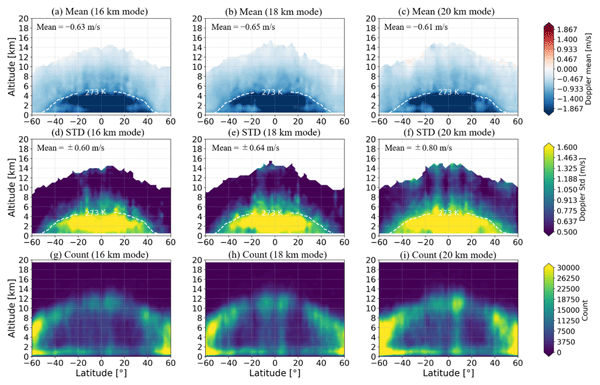
Understanding air motion within clouds is essential for weather and climate research. A new satellite launched in 2024 can observe how clouds move around the world for the first time. In this study, we compare three observation modes using real satellite data. We find that some modes provide more accurate measurements but reduce the ability to observe very high clouds and increase the risk of false signals. Our results show which observation modes work best in different regions of the world.
Takashi M. Nagao, Kentaroh Suzuki, Akira Yamauchi, Eiji Oikawa, Miho Sekiguchi, Haruma Ishida, and Masataka Muto
EGUsphere, https://doi.org/10.5194/egusphere-2026-4324, https://doi.org/10.5194/egusphere-2026-4324, 2026
This preprint is open for discussion and under review for Atmospheric Measurement Techniques (AMT).
Short summary
Short summary
This study presents the initial validation of the JAXA four-sensor synergy radiation budget product (ALL_RAD) for the EarthCARE mission. ALL_RAD provides broadband radiative fluxes, heating rates, and cloud/aerosol radiative effects by combining EarthCARE cloud and aerosol retrievals with 1D radiative transfer calculations. Comparisons with BMA-FLX and ground-based observations demonstrate good consistency, supporting future EarthCARE radiative closure studies.
Shunsuke Aoki, Takuji Kubota, Hiroaki Horie, and Yuichi Ohno
EGUsphere, https://doi.org/10.5194/egusphere-2026-3256, https://doi.org/10.5194/egusphere-2026-3256, 2026
Short summary
Short summary
The EarthCARE Cloud Profiling Radar (CPR) observations can be contaminated by spurious cloud signals from multiple-trip echoes, including mirror images, multiple scattering (MS) tails, and satellite mirror images (SMIs). Distinguishing and removing them is essential for scientific analyses using CPR. This study characterizes their global occurrence and properties, and evaluates identification methods developed from CloudSat heritage and newly enhanced using CPR Doppler velocity measurements.
Silke Groß, Florian Ewald, Bjorn Stevens, Martin Wirth, Georgios Dekoutsidis, André Ehrlich, Dimitra Kouklaki, Konstantin Krüger, Sophie Rosenburg, Lea Volkmer, Jonas von Bismark, Lutz Hirsch, Anna E. Luebke, Eleni Marinou, Bernhard Mayer, Montserrat Pinol Sole, Manfred Wendisch, Julia Windmiller, Vassilis Amiridis, Rob Koopman, Takuji Kubota, and Markus Rapp
Atmos. Meas. Tech., 19, 3933–3959, https://doi.org/10.5194/amt-19-3933-2026, https://doi.org/10.5194/amt-19-3933-2026, 2026
Short summary
Short summary
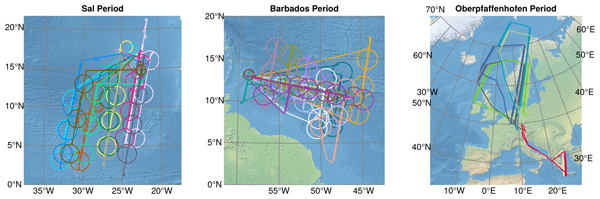
In May 2024 the joint European Space Agency (ESA) and the Japan Aerospace Exploration Agency (JAXA) mission EarthCARE was launched. A similar payload as on the satellite was set up on the German research aircraft HALO, and deployed during an extensive measurement campaign to validated the satellite. We present our instrumentation, the measurements, and its potential for the validation of EarthCARE. We show first validation results and assessments of the EarthCARE data quality.
Minrui Wang, Takashi Y. Nakajima, Jiaqi Wu, Yamato Ogura, Mayumi Yoshida, Masataka Muto, and Takuji Kubota
EGUsphere, https://doi.org/10.5194/egusphere-2026-1679, https://doi.org/10.5194/egusphere-2026-1679, 2026
Short summary
Short summary
This paper describes a scientific method of vicarious calibration to obtain the calibration coefficient, which will be used for Multi-Spectial Imager level 2 cloud and aerosol products. In the case of cloud product, slight overestimation was found for the visible band, and almost no overestimation or underestimation for near-infrared band. On the other side, slight overestimation for the visible band and slight underestimation for near-infrared band was found for aerosol product.
Shunsuke Aoki, Takuji Kubota, and F. Joseph Turk
Atmos. Meas. Tech., 19, 79–100, https://doi.org/10.5194/amt-19-79-2026, https://doi.org/10.5194/amt-19-79-2026, 2026
Short summary
Short summary
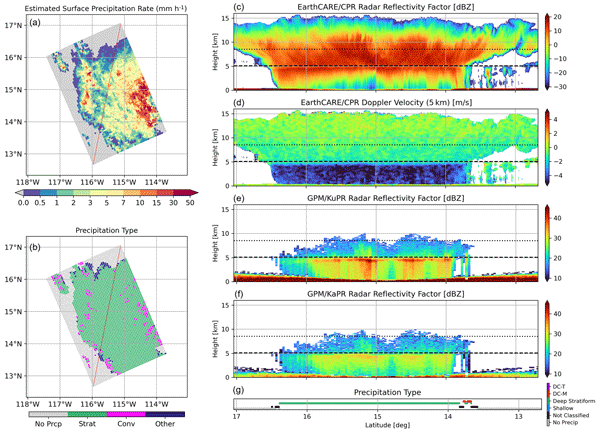
Using coincident observations from the EarthCARE Cloud Profiling Radar with Doppler velocity measurement capability and the Dual-Frequency Precipitation Radar on the Global Precipitation Measurement, vertical motions in stratiform and convective precipitation systems are examined, providing insights into the dynamical and microphysical processes inside deep clouds. This enables a more comprehensive understanding of hydrometeor fall speeds and vertical air motions in precipitation systems.
Tatsuya Seiki, Horoaki Horie, Yuichiro Hagihara, Shunsuke Aoki, and Akira T. Noda
EGUsphere, https://doi.org/10.5194/egusphere-2025-4819, https://doi.org/10.5194/egusphere-2025-4819, 2025
Short summary
Short summary
How ice particles grow in extremely cold conditions remains poorly understood due to limited observations. This study develops a new method to identify dominant ice-particle growth from radar reflectivity and Doppler velocity. It reveals, for the first time, that key growth processes vary not only with temperature but also by region. These findings highlight EarthCARE's value for monitoring clouds and improving climate model representation.
Takashi M. Nagao, Kentaroh Suzuki, and Makoto Kuji
Atmos. Meas. Tech., 18, 773–792, https://doi.org/10.5194/amt-18-773-2025, https://doi.org/10.5194/amt-18-773-2025, 2025
Short summary
Short summary
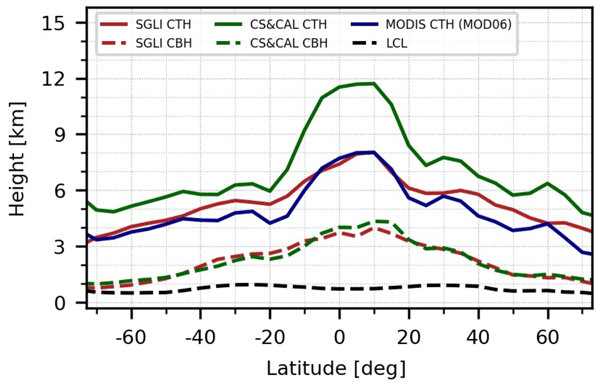
In satellite remote sensing, estimating cloud-base height (CBH) is more challenging than estimating cloud-top height because the cloud base is obscured by the cloud itself. We developed an algorithm using the specific channel (known as the oxygen A-band channel) of the SGLI on JAXA’s GCOM-C satellite to estimate CBHs together with other cloud properties. This algorithm can provide global distributions of CBH across various cloud types, including liquid, ice, and mixed-phase clouds.

Akira Yamauchi, Kentaroh Suzuki, Eiji Oikawa, Miho Sekiguchi, Takashi M. Nagao, and Haruma Ishida
Atmos. Meas. Tech., 17, 6751–6767, https://doi.org/10.5194/amt-17-6751-2024, https://doi.org/10.5194/amt-17-6751-2024, 2024
Short summary
Short summary
A Japanese team developed the Level 2 atmospheric radiation flux and heating rate product for EarthCARE, which offers vertical profiles of longwave and shortwave radiative fluxes and heating rates. This study outlines the algorithm for the radiative product and its comparative validation against satellite and ground-based observations. It also analyzes errors in radiative fluxes at various scales and their dependence on cloud type, with ice-containing clouds identified as a primary error source.
Hajime Okamoto, Kaori Sato, Tomoaki Nishizawa, Yoshitaka Jin, Shota Ogawa, Hiroshi Ishimoto, Yuichiro Hagihara, EIji Oikawa, Maki Kikuchi, Masaki Satoh, and Wooosub Roh
Atmos. Meas. Tech. Discuss., https://doi.org/10.5194/amt-2024-103, https://doi.org/10.5194/amt-2024-103, 2024
Publication in AMT not foreseen
Short summary
Short summary
The article gives the descriptions of the Japan Aerospace Exploration Agency (JAXA) level 2 (L2) cloud mask and cloud particle type algorithms for CPR and ATLID onboard Earth Clouds, Aerosols and Radiation Explorer (EarthCARE) satellite. The 355nm-multiple scattering polarization lidar was used to develop ATLID algorithm. Evaluations show the agreements for CPR-only, ATLID-only and CPR-ATLID synergy algorithms to be about 80%, 85% and 80%, respectively on average for about two EarthCARE orbits.
Hajime Okamoto, Kaori Sato, Tomoaki Nishizawa, Yoshitaka Jin, Takashi Nakajima, Minrui Wang, Masaki Satoh, Kentaroh Suzuki, Woosub Roh, Akira Yamauchi, Hiroaki Horie, Yuichi Ohno, Yuichiro Hagihara, Hiroshi Ishimoto, Rei Kudo, Takuji Kubota, and Toshiyuki Tanaka
Atmos. Meas. Tech. Discuss., https://doi.org/10.5194/amt-2024-101, https://doi.org/10.5194/amt-2024-101, 2024
Publication in AMT not foreseen
Short summary
Short summary
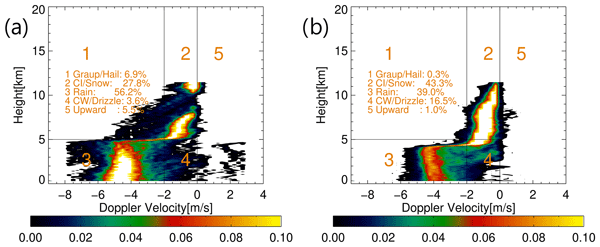
This article gives overviews of the JAXA L2 algorithms and products by Japanese science teams for EarthCARE. The algorithms provide corrected Doppler velocity, cloud particle shape and orientations, microphysics of clouds and aerosols, and radiative fluxes and heating rate. The retrievals by the algorithms are demonstrated and evaluated using NICAM/J-simulator outputs. The JAXA EarthCARE L2 products will bring new scientific knowledge about the clouds, aerosols, radiation and convections.
Woosub Roh, Masaki Satoh, Yuichiro Hagihara, Hiroaki Horie, Yuichi Ohno, and Takuji Kubota
Atmos. Meas. Tech., 17, 3455–3466, https://doi.org/10.5194/amt-17-3455-2024, https://doi.org/10.5194/amt-17-3455-2024, 2024
Short summary
Short summary
The advantage of the use of Doppler velocity in the categorization of the hydrometeors is that Doppler velocities suffer less impact from the attenuation of rain and wet attenuation on an antenna. The ground Cloud Profiling Radar observation of the radar reflectivity for the precipitation case is limited because of wet attenuation on an antenna. We found the main contribution to Doppler velocities is the terminal velocity of hydrometeors by analysis of simulation results.
Charlotte M. Beall, Po-Lun Ma, Matthew W. Christensen, Johannes Mülmenstädt, Adam Varble, Kentaroh Suzuki, and Takuro Michibata
Atmos. Chem. Phys., 24, 5287–5302, https://doi.org/10.5194/acp-24-5287-2024, https://doi.org/10.5194/acp-24-5287-2024, 2024
Short summary
Short summary
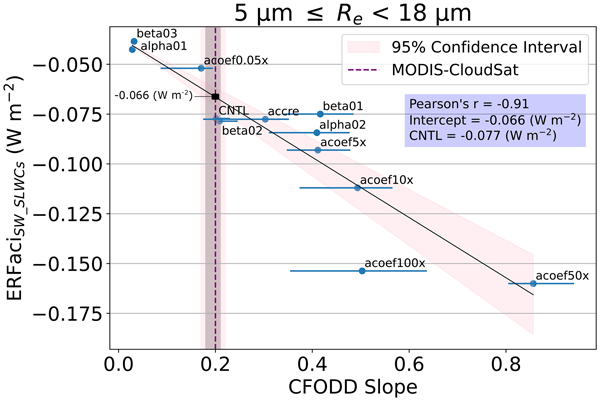
Single-layer warm liquid clouds cover nearly one-third of the Earth's surface, and uncertainties regarding the impact of aerosols on their radiative properties pose a significant challenge to climate prediction. Here, we demonstrate how satellite observations can be used to constrain Earth system model estimates of the radiative forcing from the interactions of aerosols with clouds due to warm rain processes.
Michael Eisinger, Fabien Marnas, Kotska Wallace, Takuji Kubota, Nobuhiro Tomiyama, Yuichi Ohno, Toshiyuki Tanaka, Eichi Tomita, Tobias Wehr, and Dirk Bernaerts
Atmos. Meas. Tech., 17, 839–862, https://doi.org/10.5194/amt-17-839-2024, https://doi.org/10.5194/amt-17-839-2024, 2024
Short summary
Short summary
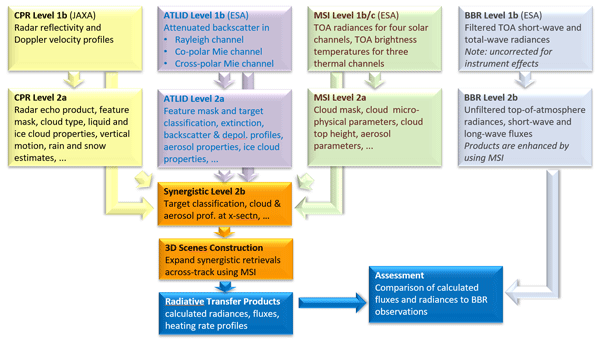
The Earth Cloud Aerosol and Radiation Explorer (EarthCARE) is an ESA–JAXA satellite mission to be launched in 2024. We presented an overview of the EarthCARE processors' development, with processors developed by teams in Europe, Japan, and Canada. EarthCARE will allow scientists to evaluate the representation of cloud, aerosol, precipitation, and radiative flux in weather forecast and climate models, with the objective to better understand cloud processes and improve weather and climate models.
Daisuke Goto, Tatsuya Seiki, Kentaroh Suzuki, Hisashi Yashiro, and Toshihiko Takemura
Geosci. Model Dev., 17, 651–684, https://doi.org/10.5194/gmd-17-651-2024, https://doi.org/10.5194/gmd-17-651-2024, 2024
Short summary
Short summary
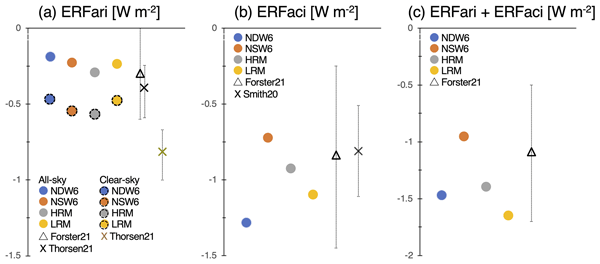
Global climate models with coarse grid sizes include uncertainties about the processes in aerosol–cloud–precipitation interactions. To reduce these uncertainties, here we performed numerical simulations using a new version of our global aerosol transport model with a finer grid size over a longer period than in our previous study. As a result, we found that the cloud microphysics module influences the aerosol distributions through both aerosol wet deposition and aerosol–cloud interactions.
Tobias Wehr, Takuji Kubota, Georgios Tzeremes, Kotska Wallace, Hirotaka Nakatsuka, Yuichi Ohno, Rob Koopman, Stephanie Rusli, Maki Kikuchi, Michael Eisinger, Toshiyuki Tanaka, Masatoshi Taga, Patrick Deghaye, Eichi Tomita, and Dirk Bernaerts
Atmos. Meas. Tech., 16, 3581–3608, https://doi.org/10.5194/amt-16-3581-2023, https://doi.org/10.5194/amt-16-3581-2023, 2023
Short summary
Short summary
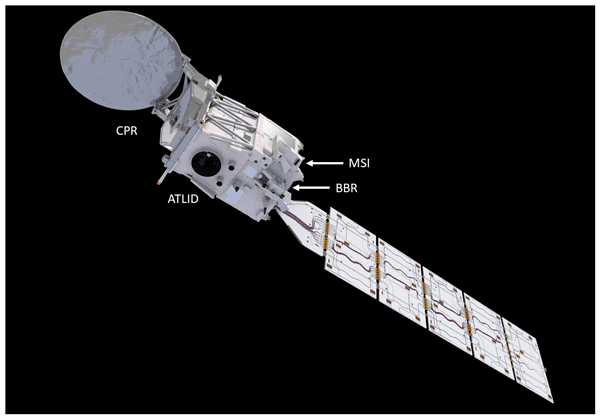
The EarthCARE satellite is due for launch in 2024. It includes four scientific instruments to measure global vertical profiles of aerosols, clouds and precipitation properties together with radiative fluxes and derived heating rates. The mission's scientific requirements, the satellite and the ground segment are described. In particular, the four scientific instruments and their performance are described at the level of detail required by mission data users.
Woosub Roh, Masaki Satoh, Tempei Hashino, Shuhei Matsugishi, Tomoe Nasuno, and Takuji Kubota
Atmos. Meas. Tech., 16, 3331–3344, https://doi.org/10.5194/amt-16-3331-2023, https://doi.org/10.5194/amt-16-3331-2023, 2023
Short summary
Short summary
JAXA EarthCARE synthetic data (JAXA L1 data) were compiled using the global storm-resolving model (GSRM) NICAM (Nonhydrostatic ICosahedral
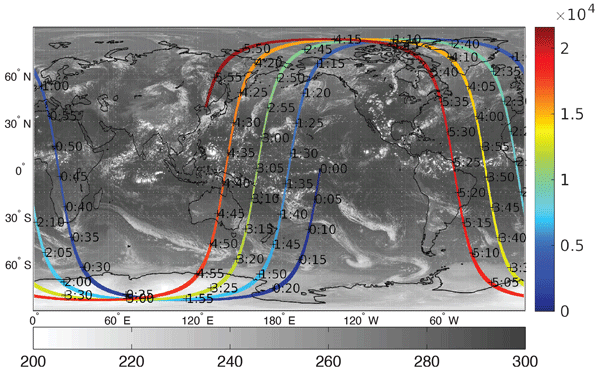
Atmospheric Model) simulation with 3.5 km horizontal resolution and the Joint-Simulator. JAXA L1 data are intended to support the development of JAXA retrieval algorithms for the EarthCARE sensor before launch of the satellite. The expected orbit of EarthCARE and horizontal sampling of each sensor were used to simulate the signals.
Yuichiro Hagihara, Yuichi Ohno, Hiroaki Horie, Woosub Roh, Masaki Satoh, and Takuji Kubota
Atmos. Meas. Tech., 16, 3211–3219, https://doi.org/10.5194/amt-16-3211-2023, https://doi.org/10.5194/amt-16-3211-2023, 2023
Short summary
Short summary
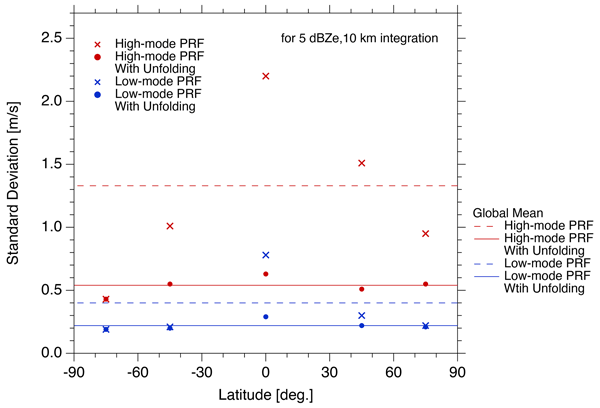
The CPR on the EarthCARE satellite is the first satellite-borne Doppler radar. We evaluated the effectiveness of horizontal integration and the unfolding method for the reduction of the Doppler error (the standard deviation of the random error) in the CPR_ECO product. The error was higher in the tropics than in the other latitudes due to frequent rain echo occurrence and limitation of its unfolding correction. If we use low-mode operation (high PRF), the errors become small enough.

Minrui Wang, Takashi Y. Nakajima, Woosub Roh, Masaki Satoh, Kentaroh Suzuki, Takuji Kubota, and Mayumi Yoshida
Atmos. Meas. Tech., 16, 603–623, https://doi.org/10.5194/amt-16-603-2023, https://doi.org/10.5194/amt-16-603-2023, 2023
Short summary
Short summary
SMILE (a spectral misalignment in which a shift in the center wavelength appears as a distortion in the spectral image) was detected during our recent work. To evaluate how it affects the cloud retrieval products, we did a simulation of EarthCARE-MSI forward radiation, evaluating the error in simulated scenes from a global cloud system-resolving model and a satellite simulator. Our results indicated that the error from SMILE was generally small and negligible for oceanic scenes.
Cited articles
Abbott, T. H., Jeevanjee, N., Cheng, K.-Y., Zhou, L., and Harris, L.: The land-ocean contrast in deep convective intensity in a global storm-resolving model, J. Adv. Model. Earth Sy., 17, 5, https://doi.org/10.1029/2024MS004467, 2025.
Adler, R. F. and Fenn, D. D.: Thunderstorm vertical velocities estimated from satellite data, J. Atmos. Sci., 36, 1747–1754, https://doi.org/10.1175/1520-0469(1979)036<1747:TVVEFS>2.0.CO;2, 1979.
Albrecht, R. I., Goodman, S. J., Buechler, D. E., Blakeslee, R. J., and Christian, H. J.: Where Are the Lightning Hotspots on Earth?, B. Am. Meteorol. Soc., 97, 2051–2068, https://doi.org/10.1175/BAMS-D-14-00193.1, 2016.
Aoki, S., Kubota, T., and Turk, F. J.: Exploring vertical motions in convective and stratiform precipitation using spaceborne radar observations: insights from EarthCARE and GPM coincidence dataset, Atmos. Meas. Tech., 19, 79–100, https://doi.org/10.5194/amt-19-79-2026, 2026.
Battaglia, A.: Impact of second-trip echoes for space-borne high-pulse-repetition-frequency nadir-looking W-band cloud radars, Atmos. Meas. Tech., 14, 7809–7820, https://doi.org/10.5194/amt-14-7809-2021, 2021.
Battaglia, A., Augustynek, T., Tanelli, S., and Kollias, P.: Multiple scattering identification in spaceborne W-band radar measurements of deep convective cores, J. Geophys. Res.-Atmos., 116, D19201, https://doi.org/10.1029/2011JD016142, 2011.
Bechtold, P., Bazile, E., Guichard, F., Mascart, P., and Richard, E.: A mass-flux convection scheme for regional and global models, Q. J. Roy. Meteor. Soc., 127, 869–886, https://doi.org/10.1002/qj.49712757309, 2001.
Bedka, K., Brunner, J., Dworak, R., Feltz, W., Otkin, J., and Greenwald, T.: Objective satellite-based detection of overshooting tops using infrared window channel brightness temperature gradients, J. Appl. Meteorol. Clim., 49, 181–202, https://doi.org/10.1175/2009JAMC2286.1, 2010.
Cecil, D. J., Goodman, S. J., Boccippio, D. J., Zipser, E. J., and Nesbitt, S. W.: Three years of TRMM precipitation features. Part I: Radar, radiometric, and lightning characteristics, Mon. Weather Rev., 133, 543–566, https://doi.org/10.1175/MWR-2876.1, 2005.
Cecil, D. J., Buechler, D. E., and Blakeslee, R. J.: Gridded lightning climatology from TRMM-LIS and OTD: Dataset description, Atmos. Res., 135–136, 404–414, https://doi.org/10.1016/j.atmosres.2012.06.028, 2014.
Chase, R. J., Dolan, B., Rasmussen, K. L., Schulte, R. M., Stephens, G. L., Turk, F. J., and van den Heever, S. C.: A multifrequency spaceborne radar perspective of deep convection, J. Appl. Meteorol. Clim., 64, 133–145, https://doi.org/10.1175/JAMC-D-24-0109.1, 2025.
Christian, H. J., Blakeslee, R. J., Boccippio, D. J., Boeck, W. L., Buechler, D. E., Driscoll, K. T., Goodman, S. J., Hall, J. M., Koshak, J. M., Mach, D. M., and Stewart, M. F.: Global frequency and distribution of lightning as observed from space by the Optical Transient Detector, J. Geophys. Res.-Atmos., 108, ACL 4-1–ACL 4-15, https://doi.org/10.1029/2002JD002347, 2003.
Christopoulos, C. and Schneider, T.: Assessing biases and climate implications of the diurnal precipitation cycle in climate models, Geophys. Res. Lett., 48, e2021GL093017, https://doi.org/10.1029/2021GL093017, 2021.
Collis, S., Protat, A., May, P. T., and Williams, C.: Statistics of storm updraft velocities from TWP-ICE including verification with profiling measurements, J. Appl. Meteorol. Clim., 52, 1909–1922, https://doi.org/10.1175/JAMC-D-12-0230.1, 2013.
Deierling, W. and Petersen, W. A.: Total lightning activity as an indicator of updraft characteristics, J. Geophys. Res.-Atmos., 113, D16210, https://doi.org/10.1029/2007JD009598, 2008.
Doviak, R. J. and Zrnić, D. S.: Doppler Radar & Weather Observations, 2nd Edn., Academic Press, ISBN 148329482X, 9781483294827, 2014.
Eisinger, M., Marnas, F., Wallace, K., Kubota, T., Tomiyama, N., Ohno, Y., Tanaka, T., Tomita, E., Wehr, T., and Bernaerts, D.: The EarthCARE mission: science data processing chain overview, Atmos. Meas. Tech., 17, 839–862, https://doi.org/10.5194/amt-17-839-2024, 2024.
Galfione, A., Battaglia, A., Puigdomènech Treserras, B., and Kollias, P.: First insights into deep convection by the Doppler velocity measurements of the EarthCARE Cloud Profiling Radar, Atmos. Meas. Tech., 18, 6747–6763, https://doi.org/10.5194/amt-18-6747-2025, 2025.
Giangrande, S. E., Toto, T., Jensen, M. P., Bartholomew, M. J., Feng, Z., Protat, A., Williams, C. R., Schumacher, C., and Machado, L.: Convective cloud vertical velocity and mass-flux characteristics from radar wind profiler observations during GoAmazon2014/5, J. Geophys. Res.-Atmos., 121, 12891–12913, https://doi.org/10.1002/2016JD025303, 2016.
Hagihara, Y., Ohno, Y., Horie, H., Roh, W., Satoh, M., and Kubota, T.: Global evaluation of Doppler velocity errors of EarthCARE cloud-profiling radar using a global storm-resolving simulation, Atmos. Meas. Tech., 16, 3211–3219, https://doi.org/10.5194/amt-16-3211-2023, 2023.
Hamada, A. and Takayabu, Y. N.: Convective cloud top vertical velocity estimated from geostationary satellite rapid-scan measurements, Geophys. Res. Lett., 43, 5435–5441, https://doi.org/10.1002/2016GL068962, 2016.
Hamada, A., Takayabu, Y. N., Liu, C., and Zipser, E. J.: Weak linkage between the heaviest rainfall and tallest storms, Nat. Commun., 6, 6213, https://doi.org/10.1038/ncomms7213, 2015.
Hartmann, D. L., Moy, L. A., and Fu, Q.: Tropical convection and the energy balance at the top of the atmosphere, J. Climate, 14, 4495–4511, https://doi.org/10.1175/1520-0442(2001)014<4495:TCATEB>2.0.CO;2, 2001.
Heymsfield, G. M., Tian, L., Heymsfield, A. J., Li, L., and Guimond, S.: Characteristics of deep tropical and subtropical convection from nadir-viewing high-altitude airborne Doppler radar, J. Atmos. Sci., 67, 285–308, https://doi.org/10.1175/2009JAS3132.1, 2010.
Hou, A. Y., Kakar, R. K., Neeck, S., Azarbarzin, A. A., Kummerow, C. D., Kojima, M., Oki, R., Nakamura, K., and Iguchi, T.: The Global Precipitation Measurement mission, B. Am. Meteorol. Soc., 95, 701–722, https://doi.org/10.1175/BAMS-D-13-00164.1, 2014.
Houze Jr., R. A., Rasmussen, K. L., Zuluaga, M. D., and Brodzik, S. R.: The variable nature of convection in the tropics and subtropics: A legacy of 16 years of the Tropical Rainfall Measuring Mission (TRMM) satellite, Rev. Geophys., 53, 994–1029, https://doi.org/10.1002/2015RG000488, 2015.
Iguchi, T., Kozu, T., Meneghini, R., Awaka, J., and Okamoto, K.: Rain-profiling algorithm for the TRMM precipitation radar, J. Appl. Meteorol., 39, 2038–2052, https://doi.org/10.1175/1520-0450(2001)040<2038:RPAFTT>2.0.CO;2, 2000.
Illingworth, A. J., Barker, H. W., Beljaars, A., Ceccaldi, M., Chepfer, H., Clerbaux, N., Cole, J., Delanoë, J., Domenech, C., Donovan, D. P., Fukuda, S., Hirakata, M., Hogan, R. J., Huenerbein, A., Kollias, P., Kubota, T., Nakajima, T., Nakajima, T. Y., Nishizawa, T., Ohno, Y., Okamoto, H., Oki, R., Sato, K., Satoh, M., Shephard, M., Velázquez-Blázquez, A., Wandinger, U., Wehr, T., and van Zadelhoff, G.-J.: The EarthCARE Satellite: The next step forward in global measurements of clouds, aerosols, precipitation and radiation, B. Am. Meteorol. Soc., 96, 1311–1332, https://doi.org/10.1175/BAMS-D-12-00227.1, 2015.
JAXA: EarthCARE/CPR L2A CPR one-sensor Cloud Products, JAXA [data set], https://doi.org/10.57746/EO.01jdvd2gqq34e6yz9p8kfe68x5, 2025a.
JAXA: EarthCARE JAXA Level 2 Algorithm Theoretical Basis Document (L2 ATBD), JAXA, https://www.eorc.jaxa.jp/EARTHCARE/document/JAXAL2ProductList/ATBD/NDX-110018N_EarthCARE_L2_ATBD_draft_rev2.pdf (last access: 5 January 2026), 2025b.
JAXA: Release notes for the EarthCARE/CPR Level-1b Product, JAXA, https://www.eorc.jaxa.jp/EARTHCARE/document/L1ProductList/ReleaseNote/CPR/SEC-2024057-0D_Release_Notes_for_EarthCARE_CPR_L1b_Product.pdf (last access: 5 January 2026), 2025c.
JAXA: EarthCARE JAXA Level 2 Algorithm Theoretical Basis Document (L2 ATBD), ver. P, Japan Aerospace Exploration Agency, JAXA, https://www.eorc.jaxa.jp/EARTHCARE/document/JAXAL2ProductList/ATBD/EarthCARE_JAXA_L2_ATBD_verP_Apr2026.pdf (last access: 19 May 2026), 2026.
Jeyaratnam, J., Luo, Z. J., Giangrande, S. E., Wang, D., and Masunaga, H.: A Satellite-Based Estimate of Convective Vertical Velocity and Convective Mass Flux: Global Survey and Comparison With Radar Wind Profiler Observations, Geophys. Res. Lett., 48, e2020GL090675, https://doi.org/10.1029/2020GL090675, 2021.
Kikuchi, M. and Suzuki, K.: Characterizing vertical particle structure of precipitating cloud system from multiplatform measurements of A-Train constellation, Geophys. Res. Lett., 46, 1040–1048, https://doi.org/10.1029/2018GL081244, 2019.
Kollias, P., Tanelli, S., Battaglia, A., and Tatarevic, A.: Evaluation of EarthCARE cloud profiling radar Doppler velocity measurements in particle sedimentation regimes, J. Atmos. Ocean. Tech., 31, 366–386, https://doi.org/10.1175/JTECH-D-11-00202.1, 2014.
Kollias, P., Battaglia, A., Lamer, K., Treserras, B. P., and Braun, S. A.: Mind the Gap – Part 3: Doppler velocity measurements from space, Front. Remote Sens., 3, 860284, https://doi.org/10.3389/frsen.2022.860284, 2022.
Koren, I., Altaratz, O., Feingold, G., Levin, Z., and Reisin, T.: Cloud's Center of Gravity – a compact approach to analyze convective cloud development, Atmos. Chem. Phys., 9, 155–161, https://doi.org/10.5194/acp-9-155-2009, 2009.
Kummerow, C., Barnes, W., Kozu, T., Shiue, J., and Simpson, J.: The Tropical Rainfall Measuring Mission (TRMM) sensor package, J. Atmos. Ocean. Tech., 15, 809–817, https://doi.org/10.1175/1520-0426(1998)015<0809:TTRMMT>2.0.CO;2, 1998.
LeMone, M. A. and Zipser, E. J.: Cumulonimbus vertical velocity events in GATE. Part I: Diameter, intensity and mass flux, J. Atmos. Sci., 37, 2444–2457, https://doi.org/10.1175/1520-0469(1980)037<2444:CVVEIG>2.0.CO;2, 1980.
Li, Y., Liu, Y., Chen, Y., Chen, B., Zhang, X., Wang, W., Shu, Z., and Huo, Z.: Characteristics of Deep Convective Systems and Initiation during Warm Seasons over China and Its Vicinity, Remote Sensing, 13, 4289, https://doi.org/10.3390/rs13214289, 2021.
Liu, C. and Zipser, E. J.: Global distribution of convection penetrating the tropical tropopause, J. Geophys. Res.-Atmos., 110, D23104, https://doi.org/10.1029/2005JD006063, 2005.
Liu, C. and Zipser, E. J.: Diurnal cycles of precipitation, clouds, and lightning in the tropics from 9 years of TRMM observations, Geophys. Res. Lett., 35, L04819, https://doi.org/10.1029/2007GL032437, 2008.
Liu, C. and Zipser, E. J.: The global distribution of largest, deepest, and most intense precipitation systems, Geophys. Res. Lett., 42, 3591–3596, https://doi.org/10.1002/2015GL063776, 2015.
Liu, C., Zipser, E. J., and Nesbitt, S. W.: Global distribution of tropical deep convection: different perspectives from TRMM infrared and radar data, J. Climate, 20, 489–503, https://doi.org/10.1175/JCLI4023.1, 2007.
Liu, C., Zipser, E. J., Cecil, D. J., Nesbitt, S. W., and Sherwood, S.: A cloud and precipitation feature database from nine years of TRMM observations, J. Appl. Meteorol. Clim., 47, 2712–2728, https://doi.org/10.1175/2008JAMC1890.1, 2008.
Lucas, C., Zipser, E. J., and LeMone, M. A.: Vertical velocity in oceanic convection off tropical Australia in early morning: Roles of buoyancy and dynamic pressure, J. Atmos. Sci., 51, 3183–3193, https://doi.org/10.1175/1520-0469(1994)051<3183:VVIOCO>2.0.CO;2, 1994.
Luo, Y., Zhang, R., and Wang, H.: Comparing occurrences and vertical structures of hydrometeors between eastern China and the Indian monsoon region using CloudSat/CALIPSO data, J. Climate, 22, 1052–1064, https://doi.org/10.1175/2008JCLI2606.1, 2009.
Luo, Y., Zhang, R., Qian, W., Luo, Z., and Hu, J.: Intercomparison of deep convection over the Tibetan Plateau–Asian monsoon region and subtropical North America in boreal summer using CloudSat/CALIPSO data, J. Climate, 24, 2164–2177, https://doi.org/10.1175/2010JCLI4032.1, 2011.
Luo, Z. J., Liu, C., and Stephens, G. L.: CloudSat adding new insight into tropical penetrating convection, Geophys. Res. Lett., 35, L19819, https://doi.org/10.1029/2008GL035330, 2008.
Luo, Z. J., Jeyaratnam, J., Iwasaki, S., Takahashi, H., and Anderson, R.: Convective vertical velocity and cloud internal vertical structure: An A-Train perspective, Geophys. Res. Lett., 41, 723–729, https://doi.org/10.1002/2013GL058922, 2014.
Maloney, E. D., Gettelman, A., Ming, Y., Neelin, J. D., Barrie, D., Mariotti, A., Chen, C.-C., Coleman, D. R. B., Kuo, Y.-H., Singh, B., Annamalai, H., Berg, A., Booth, J. F., Camargo, S. J., Dai, A., Gonzalez, A., Hafner, J., Jiang, X., Jing, X., Kim, D., Kumar, A., Moon, Y., Naud, C. M., Sobel, A. H., Suzuki, K., Wang, F., Wang, J., Wing, A. A., Xu, X., and Zhao, M.: Process-Oriented Evaluation of Climate and Weather Forecasting Models, B. Am. Meteorol. Soc., 100, 1665–1686, https://doi.org/10.1175/bams-d-18-0042.1, 2019.
Manabe, S., Smagorinsky, J., and Strickler, R. F.: Simulated climatology of a general circulation model with a hydrologic cycle, Mon. Weather Rev., 93, 769–798, https://doi.org/10.1175/1520-0493(1965)093<0769:SCOAGC>2.3.CO;2, 1965.
Masunaga, H. and Kummerow, C. D.: Observations of tropical precipitating clouds ranging from shallow to deep convective systems, Geophys. Res. Lett., 33, L16805, https://doi.org/10.1029/2006GL026547, 2006.
Masunaga, H., L'Ecuyer, T. S., and Kummerow, C. D.: Variability in the characteristics of precipitation systems in the tropical Pacific. Part I: Spatial structure, J. Climate, 18, 823–840, https://doi.org/10.1175/JCLI-3304.1, 2005.
Matrosov, S. Y.: Potential for attenuation-based estimations of rainfall rate from CloudSat, Geophys. Res. Lett., 34, 5, https://doi.org/10.1029/2006GL029161, 2007.
Mohr, K. I. and Zipser, E. J.: Defining mesoscale convective systems by their 85-GHz ice scattering signatures, B. Am. Meteorol. Soc., 77, 1179–1190, https://doi.org/10.1175/1520-0477(1996)077<1179:DMCSBT>2.0.CO;2, 1996.
Nesbitt, S. W. and Zipser, E. J.: The diurnal cycle of rainfall and convective intensity according to three years of TRMM measurements, J. Climate, 16, 1456–1475, https://doi.org/10.1175/1520-0442(2003)016<1456:TDCORA>2.0.CO;2, 2003.
Pilewskie, J. A. and L'Ecuyer, T. S.: The Global Nature of Early-Afternoon and Late-Night Convection Through the Eyes of the A-Train, J. Geophys. Res.-Atmos., 127, e2022JD036438, https://doi.org/10.1029/2022JD036438, 2022.
Price, C. and Rind, D.: A simple lightning parameterization for calculating global lightning distributions, J. Geophys. Res.-Atmos., 97, 9919–9933, https://doi.org/10.1029/92JD00719, 1992.
Puigdomènech Treserras, B., Kollias, P., Battaglia, A., Tanelli, S., and Nakatsuka, H.: EarthCARE's cloud profiling radar antenna pointing correction using surface Doppler measurements, Atmos. Meas. Tech., 18, 5607–5618, https://doi.org/10.5194/amt-18-5607-2025, 2025.
Ramanathan, V. L., Cess, R. D., Harrison, E. F., Minnis, P., Barkstrom, B. R., Ahmad, E., and Hartmann, D.: Cloud-radiative forcing and climate: Results from the Earth Radiation Budget Experiment, Science, 243, 57–63, https://doi.org/10.1126/science.243.4887.57, 1989.
Romatschke, U., Medina, S., and Houze Jr., R. A.: Regional, seasonal, and diurnal variations of extreme convection in the South Asian region, J. Climate, 23, 419–439, https://doi.org/10.1175/2009JCLI3140.1, 2010.
Sato, K., Okamoto, H., Nishizawa, T., Jin, Y., Nakajima, T. Y., Wang, M., Satoh, M., Roh, W., Ishimoto, H., and Kudo, R.: JAXA Level 2 cloud and precipitation microphysics retrievals based on EarthCARE radar, lidar, and imager: the CPR_CLP, AC_CLP, and ACM_CLP products, Atmos. Meas. Tech., 18, 1325–1338, https://doi.org/10.5194/amt-18-1325-2025, 2025.
Schiro, K. A. and Neelin, J. D.: Tropical continental downdraft characteristics: mesoscale systems versus unorganized convection, Atmos. Chem. Phys., 18, 1997–2010, https://doi.org/10.5194/acp-18-1997-2018, 2018.
Schumacher, C., Stevenson, S. N., and Williams, C. R.: Vertical motions of the tropical convective cloud spectrum over Darwin, Australia, Q. J. Roy. Meteor. Soc., 141, 2277–2288, https://doi.org/10.1002/qj.2520, 2015.
Seiki, T., Horie, H., Hagihara, Y., Aoki, S., and Noda, A. T.: Global identification of dominant ice-particle growth in cirrus clouds using EarthCARE satellite observations, EGUsphere [preprint], https://doi.org/10.5194/egusphere-2025-4819, 2025.
Sherwood, S. C., Bony, S., and Dufresne, J.-L.: Spread in model climate sensitivity traced to atmospheric convective mixing, Nature, 505, 37–42, https://doi.org/10.1038/nature12829, 2014.
Skofronick-Jackson, G., Petersen, W., Berg, W., Kidd, C., Stocker, E., Kirschbaum, D., Kakar, R., Braun, S., Huffman, G., Iguchi, T., Kirstetter, P., Kummerow, C., Meneghini, R., Oki, R., Olson, W., Takayabu, Y., Furukawa, K., and Wilheit, T.: The Global Precipitation Measurement (GPM) mission for science and society, B. Am. Meteorol. Soc., 98, 1679–1695, https://doi.org/10.1175/BAMS-D-15-00306.1, 2017.
Song, H. J., Kim, S., Roh, S., and Lee, H: Difference between cloud top height and storm height for heavy rainfall using TRMM measurements, J. Meteorol. Soc. Jpn., 98, 901–914, https://doi.org/10.2151/jmsj.2020-044, 2020.
Stephens, G., Vane, D. G., Tanelli, S., Im, E., Durden, S., Rokey, M., Reinke, D., Partain, P., Mace, G. G., Austin, R., L'Ecuyer, T., Haynes, J., Lebsock, M., Suzuki, K., Waliser, D., Wu, D., Kay, J., Gettelman, A., Wang, Z., and Marchand, R.: CloudSat mission: Performance and early science after the first year of operation, J. Geophys. Res.-Atmos., 113, https://doi.org/10.1029/2008JD009982, 2008.
Stephens, G. L., Vane, D. G., Boain, R. J., Mace, G. G., Sassen, K., Wang, Z., Illingworth, A. J., O'Connor, E. J., Rossow, W. B., Durden, S. L., Miller, S. D., Austin, R. T., Benedetti, A., Mitrescu, C., and the CloudSat Science Team: The cloudsat mission and the A-train, B. Am. Meteorol. Soc., 83, 1771–1790, https://doi.org/10.1175/BAMS-83-12-1771, 2002.
Sy, O. O., Tanelli, S., Takahashi, N., Ohno, Y., Horie, H., and Kollias, P.: Simulation of EarthCARE spaceborne Doppler radar products using ground-based and airborne data: Effects of aliasing and nonuniform beam-filling, IEEE T. Geosci. Remote Sens., 52, 1463–1479, https://doi.org/10.1109/TGRS.2013.2251639, 2014.
Takahashi, H. and Luo, Z. J.: Characterizing tropical overshooting deep convection from joint analysis of CloudSat and geostationary satellite observations, J. Geophys. Res.-Atmos., 119, 112–121, https://doi.org/10.1002/2013JD020972, 2014.
Takahashi, H., Luo, Z. J., and Stephens, G. L.: Level of neutral buoyancy, deep convective outflow, and convective core: New perspectives based on 5 years of CloudSat data, J. Geophys. Res.-Atmos., 122, 2958–2969, https://doi.org/10.1002/2016JD025969, 2017.
Takahashi, H., Luo, Z. J., Stephens, G., and Mulholland, J. P.: Revisiting the Land-Ocean Contrasts in Deep Convective Cloud Intensity Using Global Satellite Observations, Geophys. Res. Lett., 50, e2022GL102089, https://doi.org/10.1029/2022GL102089, 2023.
Takahashi, H., Wu, L., Smalley, M. A., Stephens, G., Suzuki, K., and Posselt, D. J.: Land‐Ocean Differences in Tropical Deep Convective Clouds: Intercomparison of DYAMOND Simulations and CloudSat Observations, J. Geophys. Res.-Atmos., 130, https://doi.org/10.1029/2025JD044688, 2025.
Tanelli, S., Im, E., Mascelloni, S. R., and Facheris, L.: Spaceborne Doppler radar measurements of rainfall: correction of errors induced by pointing uncertainties, J. Atmos. Ocean. Tech., 22, 1676–1690, https://doi.org/10.1175/JTECH1797.1, 2005.
Tanelli, S., Durden, S. L., Im, E., Pak, K. S., Reinke, D. G., Partain, P., Haynes, J. M., and Marchand, R. T.: CloudSat's Cloud Profiling Radar After Two Years in Orbit: Performance, Calibration, and Processing, IEEE T. Geosci. Remote, 46, 3560–3573, https://doi.org/10.1109/TGRS.2008.2002030, 2008.
Tian, B. and Dong, X.: The Double-ITCZ Bias in CMIP3, CMIP5, and CMIP6 Models Based on Annual Mean Precipitation, Geophys. Res. Lett., 47, e2020GL087232, https://doi.org/10.1029/2020GL087232, 2020.
Tiedtke, M.: A comprehensive mass flux scheme for cumulus parameterization in large-scale models, Mon. Weather Rev., 117, 1779–1800, https://doi.org/10.1175/1520-0493(1989)117<1779:ACMFSF>2.0.CO;2, 1989.
Wehr, T., Kubota, T., Tzeremes, G., Wallace, K., Nakatsuka, H., Ohno, Y., Koopman, R., Rusli, S., Kikuchi, M., Eisinger, M., Tanaka, T., Taga, M., Deghaye, P., Tomita, E., and Bernaerts, D.: The EarthCARE mission – science and system overview, Atmos. Meas. Tech., 16, 3581–3608, https://doi.org/10.5194/amt-16-3581-2023, 2023.
Williams, E. R. and Stanfill, S.: The physical origin of the land-ocean contrast in lightning activity, C.R. Phys., 3, 1277–1292, https://doi.org/10.1016/S1631-0705(02)01407-X, 2002.
Williams, E. R., Mushtak, V., Rosenfeld, D., Goodman, S., and Boccippio, D.: Thermodynamic conditions favorable to superlative thunderstorm updraft, mixed phase microphysics and lightning flash rate, Atmos. Res., 76, 288–306, https://doi.org/10.1016/j.atmosres.2004.11.010, 2005.
Xu, W., Chen, H., Wei, H., Luo, Y., and Zhao, T.: Extreme Precipitation Produced by Relatively Weak Convective Systems in the Tropics and Subtropics, Geophys. Res. Lett., 49, e2022GL098048, https://doi.org/10.1029/2022GL098048, 2022.
Yang, G.-Y. and Slingo, J.: The diurnal cycle in the tropics, Mon. Weather Rev., 129, 784–801, https://doi.org/10.1175/1520-0493(2001)129<0784:TDCITT>2.0.CO;2, 2001.
Yuter, S. E. and Houze Jr., R. A.: Three-dimensional kinematic and microphysical evolution of Florida cumulonimbus. Part II: Frequency distributions of vertical velocity, reflectivity, and differential reflectivity, Mon. Weather Rev., 123, 1941–1963, https://doi.org/10.1175/1520-0493(1995)123<1941:TDKAME>2.0.CO;2, 1995.
Zhao, M.: An investigation of the connections among convection, clouds, and climate sensitivity in a global climate model, J. Climate, 27, 1845–1862, https://doi.org/10.1175/JCLI-D-13-00145.1, 2014.
Zipser, E. J., Cecil, D. J., Liu, C., Nesbitt, S. W., and Yorty, D. P.: Where are the most intense thunderstorms on Earth?, B. Am. Meteorol. Soc., 87, 1057–1071, https://doi.org/10.1175/BAMS-87-8-1057, 2006.
Short summary
Cloud updrafts play a key role in the climate system, but global assessments remain indirect. Doppler velocities from EarthCARE (Earth Cloud, Aerosol and Radiation Explorer) Cloud Profiling Radar revealed that strong updrafts in tropical convections were most likely when radar echoes reached close to the cloud top, even in moderately tall storms, and they were more frequent over land in the early afternoon. These results provide new benchmarks to improve how numerical models represent convection and cloud microphysics.
Cloud updrafts play a key role in the climate system, but global assessments remain indirect....


Altmetrics
Final-revised paper
Preprint