
Articles | Volume 26, issue 14
https://doi.org/10.5194/acp-26-10661-2026
© Author(s) 2026. This work is distributed under
the Creative Commons Attribution 4.0 License.
the Creative Commons Attribution 4.0 License.
https://doi.org/10.5194/acp-26-10661-2026
© Author(s) 2026. This work is distributed under
the Creative Commons Attribution 4.0 License.
the Creative Commons Attribution 4.0 License.
Research article
| 
30 Jul 2026
Research article |
| 30 Jul 2026
| 30 Jul 2026
Detection and quantification of agricultural methane plumes using MethaneAIR through targeted scene selection, wavelet denoising, and divergence-integral analysis
Penelope Smale
CORRESPONDING AUTHOR

Earth Sciences New Zealand, Private Bag 50061, Lauder, 9320, New Zealand
Alexander Geddes
Earth Sciences New Zealand, Private Bag 50061, Lauder, 9320, New Zealand
Sara Mikaloff-Fletcher
Earth Sciences New Zealand, Private Bag 50061, Lauder, 9320, New Zealand
Zhan Zhang
Harvard John A. Paulson School of Engineering and Applied Sciences, Harvard University, Cambridge, MA, USA
Environmental Defense Fund, Washington, D.C., USA
Apisada Chulakadabba
Harvard John A. Paulson School of Engineering and Applied Sciences, Harvard University, Cambridge, MA, USA
Environmental Sensing and Modeling (ESM), Technische Universität München (TUM), Theresienstr. 90, 80333 Munich, Germany
MaryAnn Sargent
Harvard John A. Paulson School of Engineering and Applied Sciences, Harvard University, Cambridge, MA, USA
Christopher C. Miller
Harvard John A. Paulson School of Engineering and Applied Sciences, Harvard University, Cambridge, MA, USA
Environmental Defense Fund, Washington, D.C., USA
Harvard-Smithsonian Center for Astrophysics, Cambridge, MA, USA
Sébastien Roche
Harvard John A. Paulson School of Engineering and Applied Sciences, Harvard University, Cambridge, MA, USA
Environmental Defense Fund, Washington, D.C., USA
Harvard-Smithsonian Center for Astrophysics, Cambridge, MA, USA
Joseph Rudek
Environmental Defense Fund, New York, NY, USA
Jonathan Franklin
Harvard John A. Paulson School of Engineering and Applied Sciences, Harvard University, Cambridge, MA, USA
Jack Warren
Environmental Defense Fund, Washington, D.C., USA
Steven Wofsy
Harvard John A. Paulson School of Engineering and Applied Sciences, Harvard University, Cambridge, MA, USA
Related authors
Kate Smith, Alexandre Baron, Joshua Schwarz, Elizabeth Asher, Emrys Hall, Patrick Cullis, Alex Fritz, Hagen Telg, Ross Burgener, Bryan Thomas, Matthew Martinsen, David Nardini, Darryl Kuniyuki, Penny Smale, Ben Liley, Richard Querel, Krystian Kopka, Ian Crocker, Skyler Jordan, Michael Doneghey, Luke Longren, Stephanie Evan, Jerome Brioude, Jean-Marc Metzger, David Combemale, Cor Becker, Dwight Samuel, Cheryll Tjon A Ten, Mohammed Amierali, Christopher Wongsowidjojo, Dennis Rodrigues, George Paiman, Ankie Piters, Katrin Müller, and Troy Thornberry
Earth Syst. Sci. Data Discuss., https://doi.org/10.5194/essd-2026-644, https://doi.org/10.5194/essd-2026-644, 2026
Preprint under review for ESSD
Short summary
Short summary
Direct measurements of stratospheric aerosol are sparse, yet it plays an important role in Earth’s climate by scattering incoming solar radiation. The B2SAP network addresses this gap by regularly launching balloons carrying Portable Optical Particle Spectrometers (POPS) from 8 latitudinally diverse sites. The dataset provides vertical profiles of aerosol abundance and size distributions from the ground to 28 km, helping characterize global stratospheric aerosol abundance and variability.
Daniel Cusworth, Daniel Varon, Dylan Jervis, Jason McKeever, Alexander Turner, Christian Frankenberg, John Worden, Andrew Thorpe, Jay Fahlen, Sudhanshu Pandey, Joannes Maasakkers, Ilse Aben, Annmarie Eldering, Riley Duren, Bradley Conrad, Tia Scarpelli, Daniel Bon, Mackenzie Huffman, Itziar Irakulis-Loitxate, Luis Guanter, Jason Schroeder, Benjamin Hmiel, Evan Sherwin, Sean Crowell, Eric Kort, Adam Brandt, Frances Reuland, Maryann Sargent, James East, and Daniel Jacob
EGUsphere, https://doi.org/10.5194/egusphere-2026-6060, https://doi.org/10.5194/egusphere-2026-6060, 2026
This preprint is open for discussion and under review for Atmospheric Chemistry and Physics (ACP).
Short summary
Short summary
In this review, we summarize the current and anticipated state of satellite remote sensing for point sources. In particular, we are provide and update to the fleet of point source imaging satellites, summarize the nuance around data availability and revisit, detail data processing pipelines and validation procedures, describe how to benchmark detection performance, and finally, describe demonstrated use-cases for satellite point source observations.
Jacob B. H. Bushey, Michael Bertolacci, Joshua Benmergui, Julian Kostinek, Maryann Sargent, Marvin Knapp, Ethan Kyzivat, Sasha Ayvazov, Marcus Russi, Zhan Zhang, Apisada Chulakadabba, Jia Chen, Christopher Chan Miller, Sébastien Roche, Lucas A. Estrada, James D. East, Luna Yin, James P. Williams, Anthony Himmelberger, Ritesh Gautam, Mark Omara, and Steven C. Wofsy
EGUsphere, https://doi.org/10.5194/egusphere-2026-4693, https://doi.org/10.5194/egusphere-2026-4693, 2026
This preprint is open for discussion and under review for Atmospheric Measurement Techniques (AMT).
Short summary
Short summary
MethaneSAT was a designed to measure the concentration of methane in the atmosphere over oil and gas producing regions. Our modeling framework uses observations from MethaneSAT to estimate emissions from the Permian Basin. We show that the model accurately captures spatial patterns in emissions and compares well to other models that rely on different atmospheric transport. This data set is valuable for emissions monitoring and mitigation at high spatial resolution and with high precision.
Clara M. Nussbaumer, Colette L. Heald, Teresa Campos, Eric A. Kort, Paul B. Krummel, Ray L. Langenfelds, Monica Madronich, Kathryn McKain, Gabrielle Pétron, Ann Stavert, and Steven C. Wofsy
EGUsphere, https://doi.org/10.5194/egusphere-2026-5476, https://doi.org/10.5194/egusphere-2026-5476, 2026
This preprint is open for discussion and under review for Atmospheric Chemistry and Physics (ACP).
Short summary
Short summary
Changes in emissions and climate increasingly impact the remote Southern Hemisphere and we know little about the consequences for the atmospheric composition. We investigate if rapid increases in the greenhouse gas methane since 2008 have led to increases in carbon monoxide. A global model confirms this hypothesis and shows that enhanced emissions from plants and rising temperatures also contribute to the trend. Observations are inconsistent and highlight the need for more accurate measurements.
Kate Smith, Alexandre Baron, Joshua Schwarz, Elizabeth Asher, Emrys Hall, Patrick Cullis, Alex Fritz, Hagen Telg, Ross Burgener, Bryan Thomas, Matthew Martinsen, David Nardini, Darryl Kuniyuki, Penny Smale, Ben Liley, Richard Querel, Krystian Kopka, Ian Crocker, Skyler Jordan, Michael Doneghey, Luke Longren, Stephanie Evan, Jerome Brioude, Jean-Marc Metzger, David Combemale, Cor Becker, Dwight Samuel, Cheryll Tjon A Ten, Mohammed Amierali, Christopher Wongsowidjojo, Dennis Rodrigues, George Paiman, Ankie Piters, Katrin Müller, and Troy Thornberry
Earth Syst. Sci. Data Discuss., https://doi.org/10.5194/essd-2026-644, https://doi.org/10.5194/essd-2026-644, 2026
Preprint under review for ESSD
Short summary
Short summary
Direct measurements of stratospheric aerosol are sparse, yet it plays an important role in Earth’s climate by scattering incoming solar radiation. The B2SAP network addresses this gap by regularly launching balloons carrying Portable Optical Particle Spectrometers (POPS) from 8 latitudinally diverse sites. The dataset provides vertical profiles of aerosol abundance and size distributions from the ground to 28 km, helping characterize global stratospheric aerosol abundance and variability.
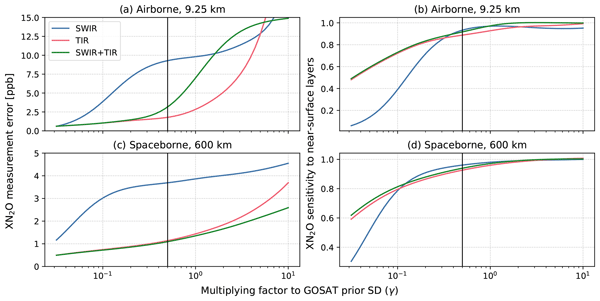
Ayesha Riaz, Kang Sun, Brian D. Baker, Brian Buma, Karen E. Cady-Pereira, Christopher Chan Miller, William C. Eddy III, Betsy M. Farris, Thomas U. Kampe, Eric A. Kort, Nathan P. Leisso, Robert Spurr, Emily R. Stuchiner, and Wendy H. Yang
Atmos. Meas. Tech., 19, 5169–5191, https://doi.org/10.5194/amt-19-5169-2026, https://doi.org/10.5194/amt-19-5169-2026, 2026
Short summary
Short summary
N2O is a powerful greenhouse gas mainly released from agricultural soils, but its emissions are difficult to track as they vary strongly in space and time. We tested whether combining two kind of infrared measurements in one instrument could improve ability of airborne and satellite instruments to observe these emissions. We found that this combined approach improves sensitivity to near-surface emissions with low measurement error and could guide the design of future N2O dedicated missions.
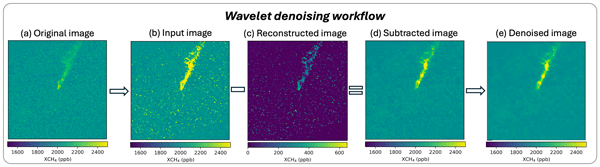
Zhan Zhang, Maryann Sargent, Ethan Manninen, Jack D. Warren, Apisada Chulakadabba, Marcus Russi, Sasha Ayvazov, Joshua Benmergui, Marvin Knapp, Ethan Kyzivat, Christopher C. Miller, Sébastien Roche, Bingkun Luo, David J. Miller, Maya Nasr, Manuel Perez-Carrasco, Kang Sun, James P. Williams, Katlyn MacKay, Mark Omara, Jia Chen, Luis Guanter, Ritesh Gautam, Jonathan Franklin, Xiong Liu, and Steven C. Wofsy
Atmos. Meas. Tech., 19, 4637–4651, https://doi.org/10.5194/amt-19-4637-2026, https://doi.org/10.5194/amt-19-4637-2026, 2026
Short summary
Short summary
Methane released into the atmosphere is often difficult to detect in satellite imagery because the signals can be weak and hidden by background noise. We developed an automated method that improves the visibility of methane plumes while reducing false detections, decreasing the need for time-consuming manual inspection. The method identifies more small emission sources across different instruments, helping build a more complete understanding of methane emissions and their impacts.
Christopher Chan Miller, Sébastien Roche, Jonas Wilzweski, Xiong Liu, Kelly V. Chance, Bingkun Luo, Kang Sun, Jonathan E. Franklin, Joshua S. Benmergui, Maya Nasr, David J. Miller, Sean Crowell, Nathan Leisso, Eleanor Walker, Ritesh Gautam, Nicholas LoFaso, Sasha Ayvazov, David Wells, Carlos Cervantes, Christopher Hairfield, and Steven Wofsy
EGUsphere, https://doi.org/10.5194/egusphere-2026-3365, https://doi.org/10.5194/egusphere-2026-3365, 2026
Short summary
Short summary
Reducing oil and gas methane emissions is among the fastest ways to slow near-term climate change, and satellites offer a transparent means of verifying progress. MethaneSAT fills a gap between existing instruments, which either measure methane accurately but at coarse scales, or detect large leaks at fine resolution without the accuracy to account for all sources. We present the first measurements and show they meet the accuracy requirements for regional emissions mapping at the 2–4 km2 scale.
David J. Miller, Kang Sun, Jonathan E. Franklin, Nathan Leisso, Sébastien Roche, Bingkun Luo, Christopher Chan Miller, Sasha Ayvazov, Sean Crowell, Nick LoFaso, Tom Kampe, Peter Spuhler, Betsy Farris, Eleanor Walker, Tom Melendez, Ritesh Gautam, Xiong Liu, and Steven C. Wofsy
EGUsphere, https://doi.org/10.5194/egusphere-2026-2675, https://doi.org/10.5194/egusphere-2026-2675, 2026
This preprint is open for discussion and under review for Atmospheric Measurement Techniques (AMT).
Short summary
Short summary
With a focus on mitigating climate change, the MethaneSAT satellite mission aims to catalyze methane emission reductions. MethaneSAT has provided high-resolution emissions products across global oil and gas basins. We present novel calibration methods of MethaneSAT's instrumentation that demonstrate stable on-orbit performance compared with ground-based calibration. Our results are important for similar satellite missions focused on monitoring climate-relevant emissions.
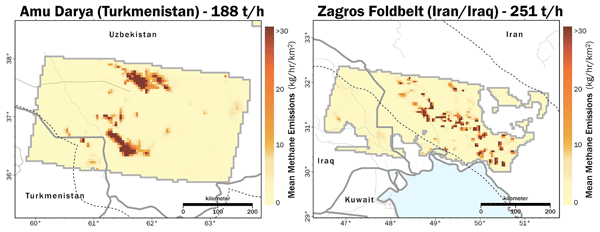
James P. Williams, Joshua Benmergui, Marvin Knapp, Mark Omara, Anthony Himmelberger, Ethan Kyzivat, Kaiya Weatherby, Ben Lyke, Jack Warren, Katlyn MacKay, Sasha Ayvazov, Marcus Russi, Nicholas LoFaso, Tom Melendez, Christopher C. Miller, Sebastien Roche, Maryann Sargent, Jonathan Franklin, Maya Nasr, Zhan Zhang, David J. Miller, Bingkun Luo, Luis Guanter, Steven P. Hamburg, Steven C. Wofsy, and Ritesh Gautam
Atmos. Chem. Phys., 26, 5961–5981, https://doi.org/10.5194/acp-26-5961-2026, https://doi.org/10.5194/acp-26-5961-2026, 2026
Short summary
Short summary
Methane is a potent greenhouse gas, and satellite observations are critical for reducing emissions. Using 2024–2025 MethaneSAT data, we quantify methane emissions across six major oil and gas basins at high resolution, revealing substantial underestimation at basin, subbasin, and local levels. Our results underscore the need for new, spatially resolved measurements and the continued advancement of remote sensing capabilities to provide more detailed, actionable insights for methane mitigation.
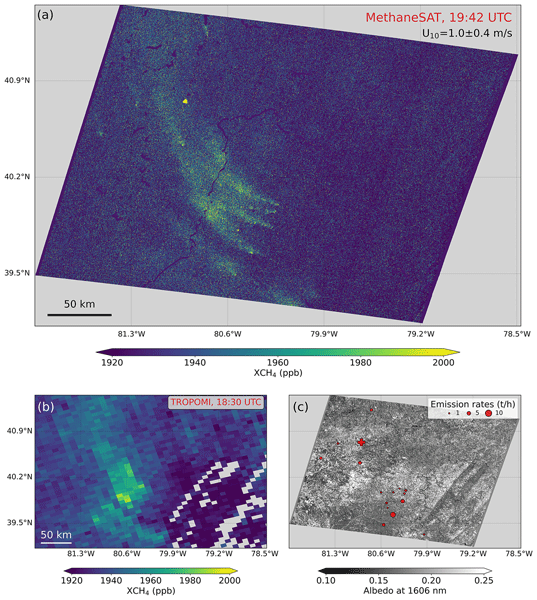
Luis Guanter, Javier Roger, Jack Warren, Maryann Sargent, Zhan Zhang, Sébastien Roche, Christopher Chan Miller, Michael Steiner, Harvey Hadfield, Mark Omara, James Williams, Katlyn MacKay, Jonathan E. Franklin, Bingkun Luo, Steven C. Wofsy, Steven P. Hamburg, and Ritesh Gautam
Atmos. Chem. Phys., 26, 2941–2963, https://doi.org/10.5194/acp-26-2941-2026, https://doi.org/10.5194/acp-26-2941-2026, 2026
Short summary
Short summary
We evaluate the potential of the MethaneSAT satellite mission to detect and quantify methane plumes from high emitting point sources and use the existing MethaneSAT data archive to evaluate super-emissions from the most important oil and gas basins in the world.
Ethan Manninen, Apisada Chulakadabba, Maryann Sargent, Zhan Zhang, Harshil Kamdar, Jack Warren, Sébastien Roche, Christopher Chan Miller, Ethan Kyzivat, Joshua Benmergui, Jasna Pittman, Eleanor Walker, Jacob Bushey, Jenna Samra, Jacob Hawthorne, Bingkun Luo, Maya Nasr, Kang Sun, Jonathan Franklin, Xiong Liu, Jia Chen, and Steven Wofsy
EGUsphere, https://doi.org/10.5194/egusphere-2026-115, https://doi.org/10.5194/egusphere-2026-115, 2026
Short summary
Short summary
In this work, my coauthors and I interpret methane emissions observed by remote sensing systems as plumes, or point sources. We model the probability that a general imaging spectrometer will detect a plume, and apply this framework to multiple remote sensing systems. We show how two recent systems- MethanAIR and MethaneSAT- provide enough sensitivity to facility scale point sources to effectively characterize most plume emissions in the Permian Basin.
Friedrich Klappenbach, Jia Chen, Moritz Makowski, Andreas Luther, Ronald C. Cohen, Jonathan E. Franklin, Steven Wofsy, and Taylor Jones
EGUsphere, https://doi.org/10.5194/egusphere-2026-204, https://doi.org/10.5194/egusphere-2026-204, 2026
Short summary
Short summary
This work presents a method to infer the upwind distance of emission sources from observed peak enhancements in atmospheric trace gas measurements. Using meteorological model output, the expected dilution of emissions from candidate source locations is quantified and compared with the observed concentration signals. The method enables the identification of plausible source locations and provides quantitative estimates of their emission strengths.
Katlyn MacKay, Joshua Benmergui, James P. Williams, Mark Omara, Anthony Himmelberger, Maryann Sargent, Jack D. Warren, Christopher C. Miller, Sébastien Roche, Zhan Zhang, Jonathan Franklin, Luis Guanter, Steven Wofsy, and Ritesh Gautam
Atmos. Chem. Phys., 26, 1179–1192, https://doi.org/10.5194/acp-26-1179-2026, https://doi.org/10.5194/acp-26-1179-2026, 2026
Short summary
Short summary
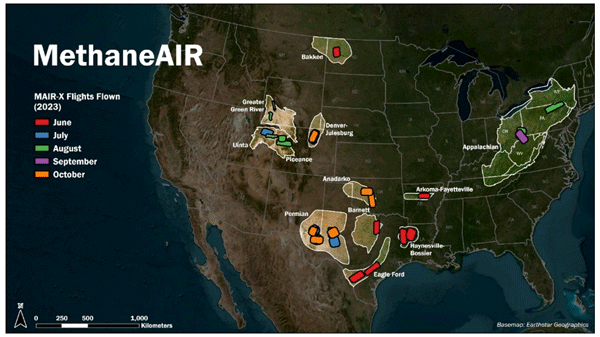
Reducing methane emissions from the oil/gas sector can mitigate near-term climate warming and the losses of a valuable energy resource. We analyze data collected using MethaneAIR to assess methane emissions in regions accounting for 70 % of United States onshore oil/gas production in 2023. We estimate total oil/gas methane emissions across all measured regions to be ~8 Tg/yr, equivalent to 1.6 % of produced gas, which is five times higher than reported by the US Environmental Protection Agency.
Jack H. Bruno, Daniel J. Jacob, Xiaolin Wang, Melissa P. Sulprizio, Lucas A. Estrada, Daniel J. Varon, Steven C. Wofsy, Mark Omara, and Ritesh Gautam
EGUsphere, https://doi.org/10.5194/egusphere-2025-4626, https://doi.org/10.5194/egusphere-2025-4626, 2025
Preprint archived
Short summary
Short summary
We use data from both aircraft (MethaneAIR) and satellite (TROPOMI) based measurements of methane in the atmosphere to better understand methane emissions from fossil fuel extraction. Data from these instruments are combined with a computer model of the atmosphere to improve estimates of methane emissions. We find that combining data from multiple sources provides more information than either source on its own. The tools and data we use are freely available.
Jack D. Warren, Maryann Sargent, James P. Williams, Mark Omara, Christopher C. Miller, Sebastien Roche, Katlyn MacKay, Ethan Manninen, Apisada Chulakadabba, Anthony Himmelberger, Joshua Benmergui, Zhan Zhang, Luis Guanter, Steve Wofsy, and Ritesh Gautam
Atmos. Chem. Phys., 25, 10661–10675, https://doi.org/10.5194/acp-25-10661-2025, https://doi.org/10.5194/acp-25-10661-2025, 2025
Short summary
Short summary
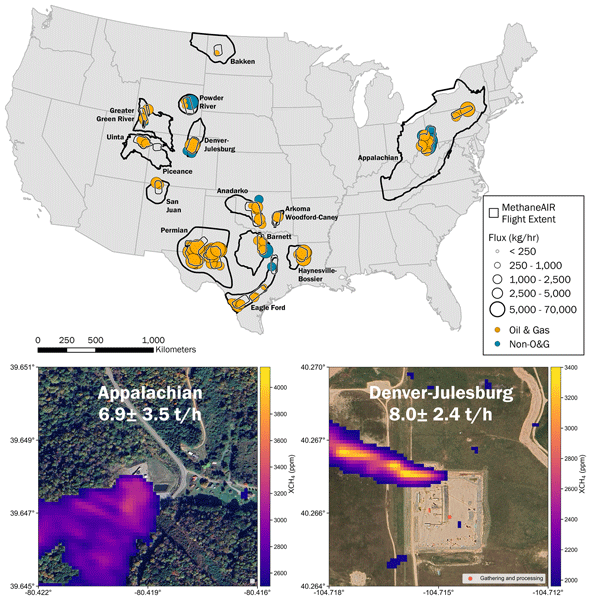
Mitigating anthropogenic methane emissions requires a detailed understanding of emitting facilities. We use observations of methane point sources from the MethaneAIR instrument from 2021–2023 that covered ~80 % of US onshore oil and gas production regions. We attribute these observations to facility types to explore how emissions vary by industrial sectors. Oil and gas facilities make up most point source emissions nationally, but in certain basins other sectors can make up the majority.
Christian Lewis, Rachel Corran, Sara E. Mikaloff-Fletcher, Erik Behrens, Rowena Moss, Gordon Brailsford, Andrew Lorrey, Margaret Norris, and Jocelyn Turnbull
Biogeosciences, 22, 4187–4201, https://doi.org/10.5194/bg-22-4187-2025, https://doi.org/10.5194/bg-22-4187-2025, 2025
Short summary
Short summary
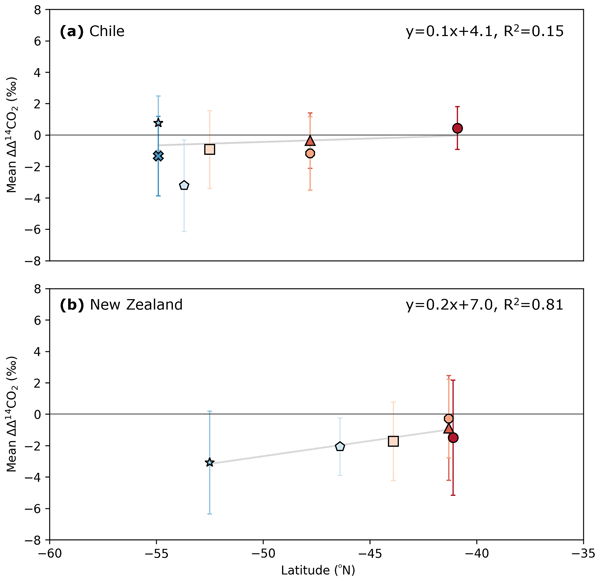
The Southern Ocean carbon sink is a balance between two opposing forces: CO2 absorption at mid-latitudes and CO2 outgassing at high latitudes. Radiocarbon analysis can be used to constrain the latter, as upwelling waters outgas old CO2, diluting atmospheric radiocarbon content. We present tree-ring radiocarbon measurements from Aotearoa / New Zealand and Chile. We show that low radiocarbon in Aotearoa / New Zealand’s Motu Ihupuku / Campbell Island is linked to outgassing in the critical Antarctic Southern Zone.
Luis Guanter, Jack Warren, Mark Omara, Apisada Chulakadabba, Javier Roger, Maryann Sargent, Jonathan E. Franklin, Steven C. Wofsy, and Ritesh Gautam
Atmos. Meas. Tech., 18, 3857–3872, https://doi.org/10.5194/amt-18-3857-2025, https://doi.org/10.5194/amt-18-3857-2025, 2025
Short summary
Short summary
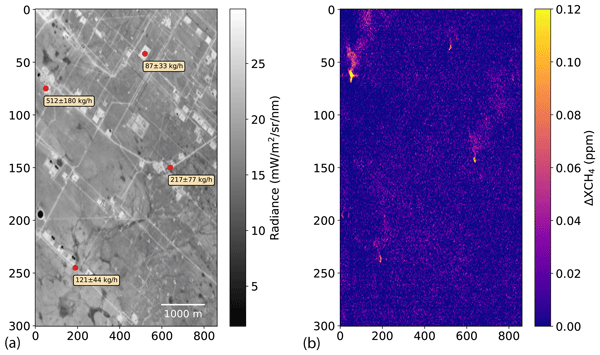
This study presents a data processing scheme for the detection and quantification of methane emissions using the MethaneAIR airborne spectrometer. We show that the proposed methods enable the detection of smaller plumes (compared with those detectable using other existing methods) and improve the potential of MethaneAIR to survey methane point sources across large regions.
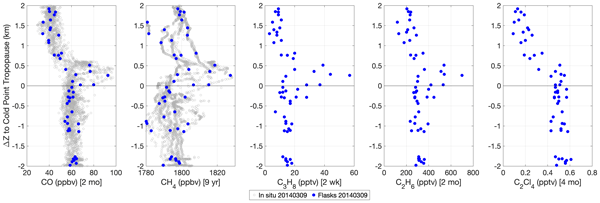
Jasna V. Pittman, Bruce C. Daube, Steven C. Wofsy, Elliot L. Atlas, Maria A. Navarro, Eric J. Hintsa, Fred L. Moore, Geoff S. Dutton, James W. Elkins, Troy D. Thornberry, Andrew W. Rollins, Eric J. Jensen, Thaopaul Bui, Jonathan Dean-Day, and Leonhard Pfister
Atmos. Chem. Phys., 25, 7543–7562, https://doi.org/10.5194/acp-25-7543-2025, https://doi.org/10.5194/acp-25-7543-2025, 2025
Short summary
Short summary
Biomass fires emit aerosols and precursors that can provide a novel environment for initiating stratospheric ozone loss. The Airborne Tropical TRopopause EXperiment campaign sampled the western Pacific, the dominant longitudes for surface air lofted by convection to enter the global stratosphere. Aircraft measurements over multiple flights revealed persistent layers of biomass burning pollutants entering the lower stratosphere and originating from fires as far away as Africa and Indonesia.
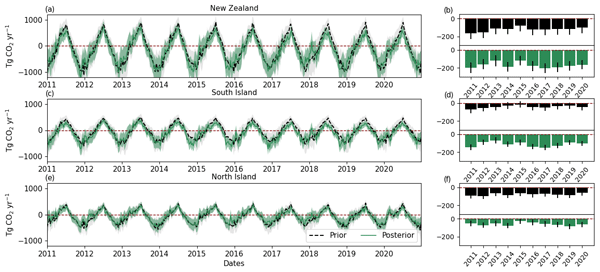
Beata Bukosa, Sara Mikaloff-Fletcher, Gordon Brailsford, Dan Smale, Elizabeth D. Keller, W. Troy Baisden, Miko U. F. Kirschbaum, Donna L. Giltrap, Lìyǐn Liáng, Stuart Moore, Rowena Moss, Sylvia Nichol, Jocelyn Turnbull, Alex Geddes, Daemon Kennett, Dóra Hidy, Zoltán Barcza, Louis A. Schipper, Aaron M. Wall, Shin-Ichiro Nakaoka, Hitoshi Mukai, and Andrea Brandon
Atmos. Chem. Phys., 25, 6445–6473, https://doi.org/10.5194/acp-25-6445-2025, https://doi.org/10.5194/acp-25-6445-2025, 2025
Short summary
Short summary
We used atmospheric measurements and inverse modelling to estimate New Zealand's carbon dioxide (CO2) emissions and removals from 2011 to 2020. Our study reveals that New Zealand's land absorbs more CO2 than previously estimated, particularly in areas dominated by indigenous forests. Our results highlight gaps in current national CO2 estimates and methods, suggesting a need for further research to improve emissions reports and refine approaches to track progress toward climate mitigation goals.
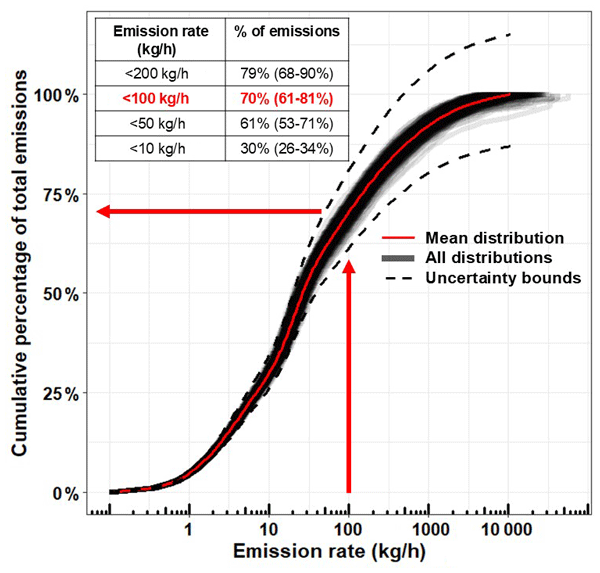
James P. Williams, Mark Omara, Anthony Himmelberger, Daniel Zavala-Araiza, Katlyn MacKay, Joshua Benmergui, Maryann Sargent, Steven C. Wofsy, Steven P. Hamburg, and Ritesh Gautam
Atmos. Chem. Phys., 25, 1513–1532, https://doi.org/10.5194/acp-25-1513-2025, https://doi.org/10.5194/acp-25-1513-2025, 2025
Short summary
Short summary
We utilize peer-reviewed facility-level oil and gas methane emission rate data gathered in prior work to estimate the relative contributions of methane sources emitting at different emission rates in the United States. We find that the majority of total methane emissions in the US oil and gas sector stem from a large number of small sources emitting in aggregate, corroborating findings from several other studies.
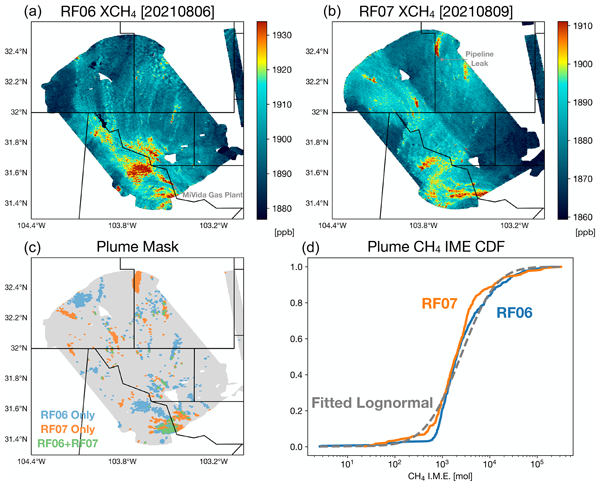
Christopher Chan Miller, Sébastien Roche, Jonas S. Wilzewski, Xiong Liu, Kelly Chance, Amir H. Souri, Eamon Conway, Bingkun Luo, Jenna Samra, Jacob Hawthorne, Kang Sun, Carly Staebell, Apisada Chulakadabba, Maryann Sargent, Joshua S. Benmergui, Jonathan E. Franklin, Bruce C. Daube, Yang Li, Joshua L. Laughner, Bianca C. Baier, Ritesh Gautam, Mark Omara, and Steven C. Wofsy
Atmos. Meas. Tech., 17, 5429–5454, https://doi.org/10.5194/amt-17-5429-2024, https://doi.org/10.5194/amt-17-5429-2024, 2024
Short summary
Short summary
MethaneSAT is an upcoming satellite mission designed to monitor methane emissions from the oil and gas (O&G) industry globally. Here, we present observations from the first flight campaign of MethaneAIR, a MethaneSAT-like instrument mounted on an aircraft. MethaneAIR can map methane with high precision and accuracy over a typically sized oil and gas basin (~200 km2) in a single flight. This paper demonstrates the capability of the upcoming satellite to routinely track global O&G emissions.
Mark Omara, Anthony Himmelberger, Katlyn MacKay, James P. Williams, Joshua Benmergui, Maryann Sargent, Steven C. Wofsy, and Ritesh Gautam
Earth Syst. Sci. Data, 16, 3973–3991, https://doi.org/10.5194/essd-16-3973-2024, https://doi.org/10.5194/essd-16-3973-2024, 2024
Short summary
Short summary
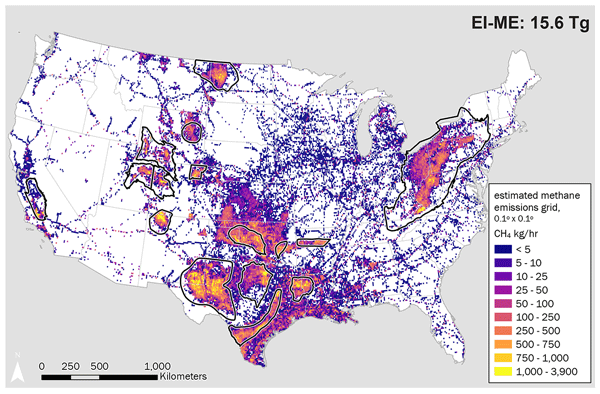
We review, analyze, and synthesize previous peer-reviewed measurement-based data on facility-level oil and gas methane emissions and use these data to develop a high-resolution spatially explicit inventory of US basin-level and national methane emissions. This work provides an improved assessment of national methane emissions relative to government inventories in support of accurate and comprehensive methane emissions assessment, attribution, and mitigation.
Andrea E. Gordon, Cameron R. Homeyer, Jessica B. Smith, Rei Ueyama, Jonathan M. Dean-Day, Elliot L. Atlas, Kate Smith, Jasna V. Pittman, David S. Sayres, David M. Wilmouth, Apoorva Pandey, Jason M. St. Clair, Thomas F. Hanisco, Jennifer Hare, Reem A. Hannun, Steven Wofsy, Bruce C. Daube, and Stephen Donnelly
Atmos. Chem. Phys., 24, 7591–7608, https://doi.org/10.5194/acp-24-7591-2024, https://doi.org/10.5194/acp-24-7591-2024, 2024
Short summary
Short summary
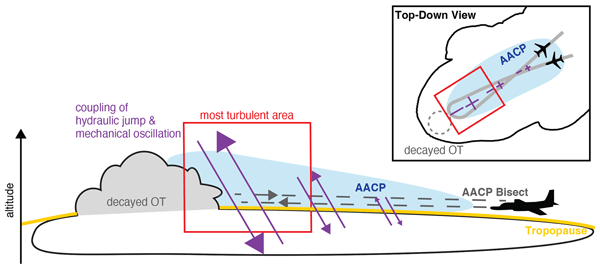
In situ airborne observations of ongoing tropopause-overshooting convection and an above-anvil cirrus plume from the 31 May 2022 flight of the Dynamics and Chemistry of the Summer Stratosphere (DCOTSS) field campaign are examined. Upper troposphere and lower stratosphere composition changes are evaluated along with possible contributing dynamical and physical processes. Measurements reveal multiple changes in air mass composition and stratospheric hydration throughout the flight.

Heesung Chong, Gonzalo González Abad, Caroline R. Nowlan, Christopher Chan Miller, Alfonso Saiz-Lopez, Rafael P. Fernandez, Hyeong-Ahn Kwon, Zolal Ayazpour, Huiqun Wang, Amir H. Souri, Xiong Liu, Kelly Chance, Ewan O'Sullivan, Jhoon Kim, Ja-Ho Koo, William R. Simpson, François Hendrick, Richard Querel, Glen Jaross, Colin Seftor, and Raid M. Suleiman
Atmos. Meas. Tech., 17, 2873–2916, https://doi.org/10.5194/amt-17-2873-2024, https://doi.org/10.5194/amt-17-2873-2024, 2024
Short summary
Short summary
We present a new bromine monoxide (BrO) product derived using radiances measured from OMPS-NM on board the Suomi-NPP satellite. This product provides nearly a decade of global stratospheric and tropospheric column retrievals, a feature that is currently rare in publicly accessible datasets. Both stratospheric and tropospheric columns from OMPS-NM demonstrate robust performance, exhibiting good agreement with ground-based observations collected at three stations (Lauder, Utqiagvik, and Harestua).
Eamon K. Conway, Amir H. Souri, Joshua Benmergui, Kang Sun, Xiong Liu, Carly Staebell, Christopher Chan Miller, Jonathan Franklin, Jenna Samra, Jonas Wilzewski, Sebastien Roche, Bingkun Luo, Apisada Chulakadabba, Maryann Sargent, Jacob Hohl, Bruce Daube, Iouli Gordon, Kelly Chance, and Steven Wofsy
Atmos. Meas. Tech., 17, 1347–1362, https://doi.org/10.5194/amt-17-1347-2024, https://doi.org/10.5194/amt-17-1347-2024, 2024
Short summary
Short summary
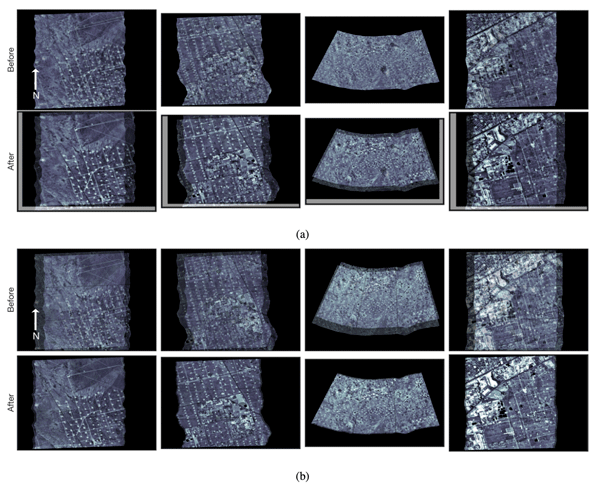
The work presented here describes the processes required to convert raw sensor data for the MethaneAIR instrument to geometrically calibrated data. Each algorithm is described in detail. MethaneAIR is the airborne simulator for MethaneSAT, a new satellite under development by MethaneSAT LLC, a subsidiary of the EDF. MethaneSAT's goals are to precisely map over 80 % of the production sources of methane emissions from oil and gas fields across the globe to a high degree of accuracy.
Apisada Chulakadabba, Maryann Sargent, Thomas Lauvaux, Joshua S. Benmergui, Jonathan E. Franklin, Christopher Chan Miller, Jonas S. Wilzewski, Sébastien Roche, Eamon Conway, Amir H. Souri, Kang Sun, Bingkun Luo, Jacob Hawthrone, Jenna Samra, Bruce C. Daube, Xiong Liu, Kelly Chance, Yang Li, Ritesh Gautam, Mark Omara, Jeff S. Rutherford, Evan D. Sherwin, Adam Brandt, and Steven C. Wofsy
Atmos. Meas. Tech., 16, 5771–5785, https://doi.org/10.5194/amt-16-5771-2023, https://doi.org/10.5194/amt-16-5771-2023, 2023
Short summary
Short summary
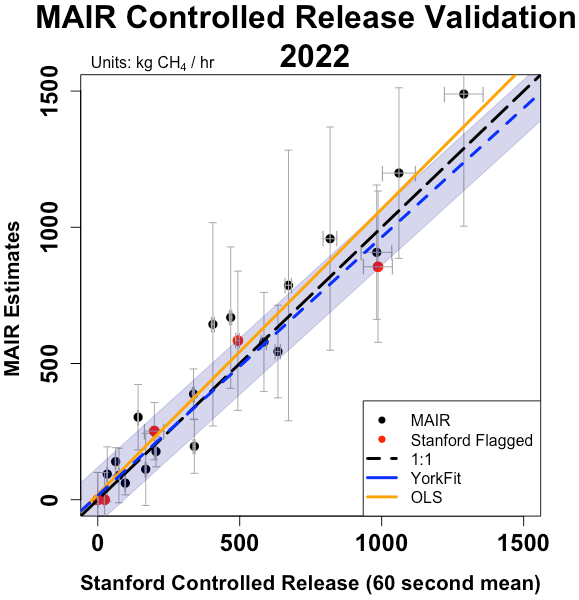
We show that MethaneAIR, a precursor to the MethaneSAT satellite, demonstrates accurate point source quantification during controlled release experiments and regional observations in 2021 and 2022. Results from our two independent quantification methods suggest the accuracy of our sensor and algorithms is better than 25 % for sources emitting 200 kg h−1 or more. Insights from these measurements help establish the capabilities of MethaneSAT and MethaneAIR.
Mark Omara, Ritesh Gautam, Madeleine A. O'Brien, Anthony Himmelberger, Alex Franco, Kelsey Meisenhelder, Grace Hauser, David R. Lyon, Apisada Chulakadabba, Christopher Chan Miller, Jonathan Franklin, Steven C. Wofsy, and Steven P. Hamburg
Earth Syst. Sci. Data, 15, 3761–3790, https://doi.org/10.5194/essd-15-3761-2023, https://doi.org/10.5194/essd-15-3761-2023, 2023
Short summary
Short summary
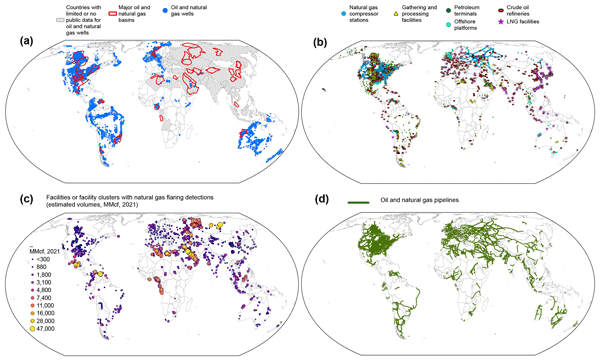
We acquire, integrate, and analyze ~ 6 million geospatial oil and gas infrastructure data records based on information available in the public domain and develop an open-access global database including all the major oil and gas facility types that are important sources of methane emissions. This work helps fulfill a crucial geospatial data need, in support of the assessment, attribution, and mitigation of global oil and gas methane emissions at high resolution.
Huiqun Wang, Gonzalo González Abad, Chris Chan Miller, Hyeong-Ahn Kwon, Caroline R. Nowlan, Zolal Ayazpour, Heesung Chong, Xiong Liu, Kelly Chance, Ewan O'Sullivan, Kang Sun, Robert Spurr, and Robert J. Hargreaves
Atmos. Meas. Tech. Discuss., https://doi.org/10.5194/amt-2023-66, https://doi.org/10.5194/amt-2023-66, 2023
Preprint withdrawn
Short summary
Short summary
A pipeline for retrieving Total Column Water Vapor from satellite blue spectra is developed. New constraints are considered. Water-leaving radiance is important over the oceans. Results agree with reference datasets well under clear conditions. Due to high sensitivity to clouds, strict data filtering criteria are required. All-sky retrievals can be corrected using machine learning. GPS stations’ representation errors follow a power law relationship with grid resolutions.
Hao Guo, Clare M. Flynn, Michael J. Prather, Sarah A. Strode, Stephen D. Steenrod, Louisa Emmons, Forrest Lacey, Jean-Francois Lamarque, Arlene M. Fiore, Gus Correa, Lee T. Murray, Glenn M. Wolfe, Jason M. St. Clair, Michelle Kim, John Crounse, Glenn Diskin, Joshua DiGangi, Bruce C. Daube, Roisin Commane, Kathryn McKain, Jeff Peischl, Thomas B. Ryerson, Chelsea Thompson, Thomas F. Hanisco, Donald Blake, Nicola J. Blake, Eric C. Apel, Rebecca S. Hornbrook, James W. Elkins, Eric J. Hintsa, Fred L. Moore, and Steven C. Wofsy
Atmos. Chem. Phys., 23, 99–117, https://doi.org/10.5194/acp-23-99-2023, https://doi.org/10.5194/acp-23-99-2023, 2023
Short summary
Short summary
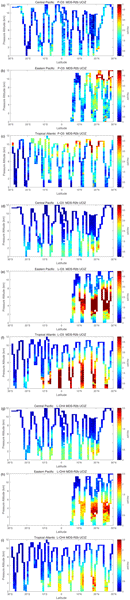
We have prepared a unique and unusual result from the recent ATom aircraft mission: a measurement-based derivation of the production and loss rates of ozone and methane over the ocean basins. These are the key products of chemistry models used in assessments but have thus far lacked observational metrics. It also shows the scales of variability of atmospheric chemical rates and provides a major challenge to the atmospheric models.
Kang Sun, Mahdi Yousefi, Christopher Chan Miller, Kelly Chance, Gonzalo González Abad, Iouli E. Gordon, Xiong Liu, Ewan O'Sullivan, Christopher E. Sioris, and Steven C. Wofsy
Atmos. Meas. Tech., 15, 3721–3745, https://doi.org/10.5194/amt-15-3721-2022, https://doi.org/10.5194/amt-15-3721-2022, 2022
Short summary
Short summary
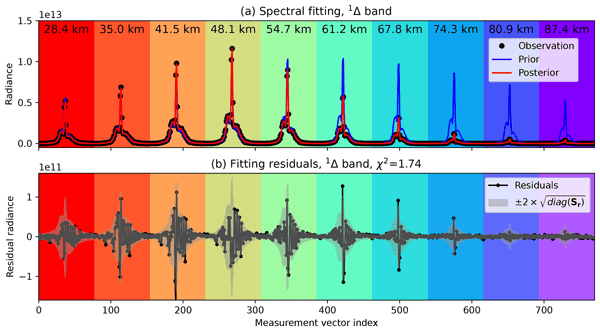
This study of upper atmospheric airglow from oxygen is motivated by the need to measure oxygen simultaneously with methane and CO2 in satellite remote sensing. We provide an accurate understanding of the spatial, temporal, and spectral distribution of airglow emissions, which will help in the satellite remote sensing of greenhouse gases and constraining the chemical and physical processes in the upper atmosphere.
Carlos Alberti, Frank Hase, Matthias Frey, Darko Dubravica, Thomas Blumenstock, Angelika Dehn, Paolo Castracane, Gregor Surawicz, Roland Harig, Bianca C. Baier, Caroline Bès, Jianrong Bi, Hartmut Boesch, André Butz, Zhaonan Cai, Jia Chen, Sean M. Crowell, Nicholas M. Deutscher, Dragos Ene, Jonathan E. Franklin, Omaira García, David Griffith, Bruno Grouiez, Michel Grutter, Abdelhamid Hamdouni, Sander Houweling, Neil Humpage, Nicole Jacobs, Sujong Jeong, Lilian Joly, Nicholas B. Jones, Denis Jouglet, Rigel Kivi, Ralph Kleinschek, Morgan Lopez, Diogo J. Medeiros, Isamu Morino, Nasrin Mostafavipak, Astrid Müller, Hirofumi Ohyama, Paul I. Palmer, Mahesh Pathakoti, David F. Pollard, Uwe Raffalski, Michel Ramonet, Robbie Ramsay, Mahesh Kumar Sha, Kei Shiomi, William Simpson, Wolfgang Stremme, Youwen Sun, Hiroshi Tanimoto, Yao Té, Gizaw Mengistu Tsidu, Voltaire A. Velazco, Felix Vogel, Masataka Watanabe, Chong Wei, Debra Wunch, Marcia Yamasoe, Lu Zhang, and Johannes Orphal
Atmos. Meas. Tech., 15, 2433–2463, https://doi.org/10.5194/amt-15-2433-2022, https://doi.org/10.5194/amt-15-2433-2022, 2022
Short summary
Short summary
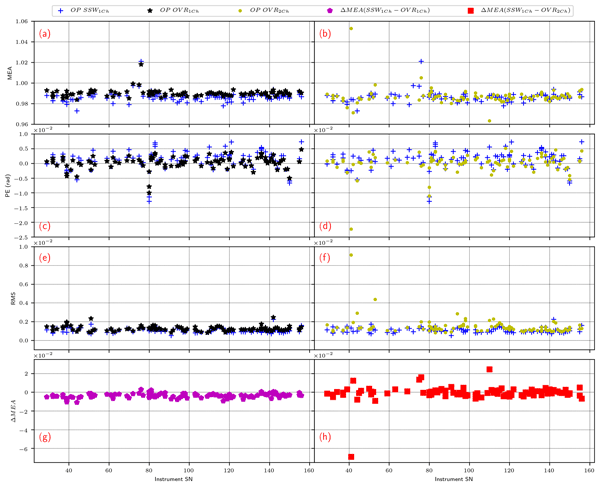
Space-borne greenhouse gas missions require ground-based validation networks capable of providing fiducial reference measurements. Here, considerable refinements of the calibration procedures for the COllaborative Carbon Column Observing Network (COCCON) are presented. Laboratory and solar side-by-side procedures for the characterization of the spectrometers have been refined and extended. Revised calibration factors for XCO2, XCO and XCH4 are provided, incorporating 47 new spectrometers.
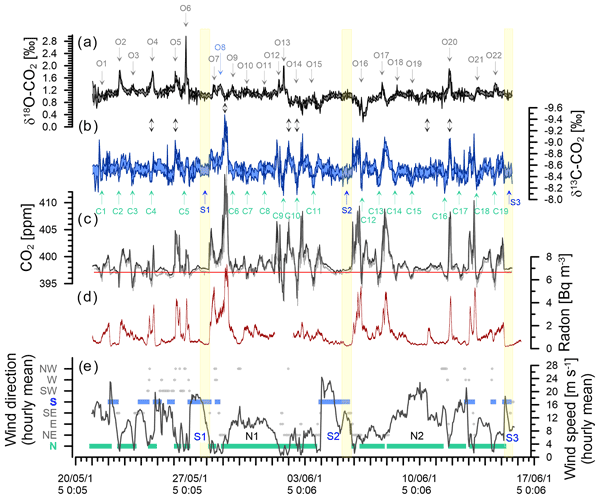
Peter Sperlich, Gordon W. Brailsford, Rowena C. Moss, John McGregor, Ross J. Martin, Sylvia Nichol, Sara Mikaloff-Fletcher, Beata Bukosa, Magda Mandic, C. Ian Schipper, Paul Krummel, and Alan D. Griffiths
Atmos. Meas. Tech., 15, 1631–1656, https://doi.org/10.5194/amt-15-1631-2022, https://doi.org/10.5194/amt-15-1631-2022, 2022
Short summary
Short summary
We tested an in situ analyser for carbon and oxygen isotopes in atmospheric CO2 at Baring Head, New Zealand’s observatory for Southern Ocean baseline air. The analyser was able to resolve regional signals of the terrestrial carbon cycle, although the analysis of small events was limited by analytical uncertainty. Further improvement of the instrument performance would be desirable for the robust analysis of distant signals and to resolve the small variability in Southern Ocean baseline air.
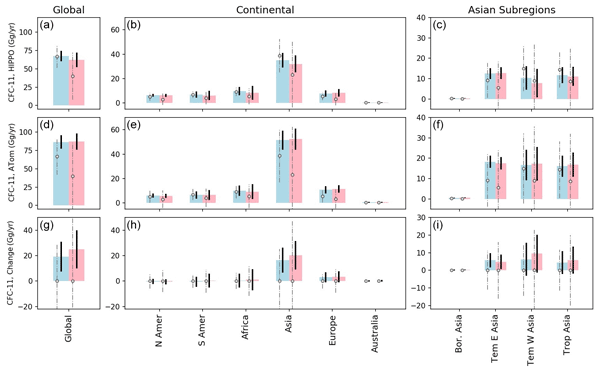
Lei Hu, Stephen A. Montzka, Fred Moore, Eric Hintsa, Geoff Dutton, M. Carolina Siso, Kirk Thoning, Robert W. Portmann, Kathryn McKain, Colm Sweeney, Isaac Vimont, David Nance, Bradley Hall, and Steven Wofsy
Atmos. Chem. Phys., 22, 2891–2907, https://doi.org/10.5194/acp-22-2891-2022, https://doi.org/10.5194/acp-22-2891-2022, 2022
Short summary
Short summary
The unexpected increase in CFC-11 emissions between 2012 and 2017 resulted in concerns about delaying the stratospheric ozone recovery. Although the subsequent decline of CFC-11 emissions indicated a mitigation in part to this problem, the regions fully responsible for these large emission changes were unclear. Here, our new estimate, based on atmospheric measurements from two global campaigns and from NOAA, suggests Asia primarily contributed to the global CFC-11 emission rise during 2012–2017.
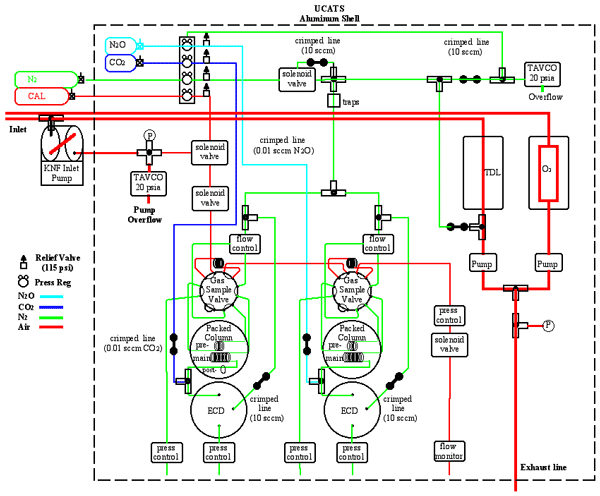
Eric J. Hintsa, Fred L. Moore, Dale F. Hurst, Geoff S. Dutton, Bradley D. Hall, J. David Nance, Ben R. Miller, Stephen A. Montzka, Laura P. Wolton, Audra McClure-Begley, James W. Elkins, Emrys G. Hall, Allen F. Jordan, Andrew W. Rollins, Troy D. Thornberry, Laurel A. Watts, Chelsea R. Thompson, Jeff Peischl, Ilann Bourgeois, Thomas B. Ryerson, Bruce C. Daube, Yenny Gonzalez Ramos, Roisin Commane, Gregory W. Santoni, Jasna V. Pittman, Steven C. Wofsy, Eric Kort, Glenn S. Diskin, and T. Paul Bui
Atmos. Meas. Tech., 14, 6795–6819, https://doi.org/10.5194/amt-14-6795-2021, https://doi.org/10.5194/amt-14-6795-2021, 2021
Short summary
Short summary
We built UCATS to study atmospheric chemistry and transport. It has measured trace gases including CFCs, N2O, SF6, CH4, CO, and H2 with gas chromatography, as well as ozone and water vapor. UCATS has been part of missions to study the tropical tropopause; transport of air into the stratosphere; greenhouse gases, transport, and chemistry in the troposphere; and ozone chemistry, on both piloted and unmanned aircraft. Its design, capabilities, and some results are shown and described here.
Cited articles
CDPHE: Feedlot registration and compliance data, Colorado Department of Public Health Environment – Environmental Agriculture Program, 2017.
Chan Miller, C., Roche, S., Wilzewski, J. S., Liu, X., Chance, K., Souri, A. H., Conway, E., Luo, B., Samra, J., Hawthorne, J., Sun, K., Staebell, C., Chulakadabba, A., Sargent, M., Benmergui, J. S., Franklin, J. E., Daube, B. C., Li, Y., Laughner, J. L., Baier, B. C., Gautam, R., Omara, M., and Wofsy, S. C.: Methane retrieval from MethaneAIR using the CO2 proxy approach: a demonstration for the upcoming MethaneSAT mission, Atmos. Meas. Tech., 17, 5429–5454, https://doi.org/10.5194/amt-17-5429-2024, 2024.
Chang, J., Peng, S., Yin, Y., Ciais, P., Havlik, P., and Herrero, M.: The Key Role of Production Efficiency Changes in Livestock Methane Emission Mitigation, AGU Advances, 2, e2021AV000391, https://doi.org/10.1029/2021AV000391, 2021.
Chen, Y., Sherwin, E. D., Berman, E. S. F., Jones, B. B., Gordon, M. P., Wetherley, E. B., Kort, E. A., and Brandt, A. R.: Quantifying Regional Methane Emissions in the New Mexico Permian Basin with a Comprehensive Aerial Survey, Environ. Sci. Technol. 56, 4317–4323, 10.1021/acs.est.1c06458, 2022.
Chulakadabba, A., Sargent, M., Lauvaux, T., Benmergui, J. S., Franklin, J. E., Chan Miller, C., Wilzewski, J. S., Roche, S., Conway, E., Souri, A. H., Sun, K., Luo, B., Hawthrone, J., Samra, J., Daube, B. C., Liu, X., Chance, K., Li, Y., Gautam, R., Omara, M., Rutherford, J. S., Sherwin, E. D., Brandt, A., and Wofsy, S. C.: Methane point source quantification using MethaneAIR: a new airborne imaging spectrometer, Atmos. Meas. Tech., 16, 5771–5785, https://doi.org/10.5194/amt-16-5771-2023, 2023.
Climate TRACE: Climate TRACE Emissions Inventory, version 4.2.0, https://climatetrace.org (last access: 18 July 2025), 2025.
Crippa, M., Guizzardi, D., Muntean, M., Schaaf, E., Lo Vullo, E., Solazzo, E., Monforti-Ferrario, F., Olivier, J., and Vignati, E.: EDGAR v6.0 Greenhouse Gas Emissions. European Commission Joint Research Centre, https://doi.org/10.2905/JRC.787T5VR, 2021.
Cusworth, D. H., Bloom, A. A., Ma, S., Miller, C. E., Bowman, K., Yin, Y., Maasakkers, J. D., Zhang, Y., Scarpelli, T. R., Qu, Z., Jacob, D. J., and Worden, J. R.: A Bayesian framework for deriving sector-based methane emissions from top-down fluxes, Commun. Earth Environ., 2, 242, https://doi.org/10.1038/s43247-021-00312-6, 2021.
Davitt, A., Lewis, C., Andoe-Leggett, M., and Schiller, S.: Agriculture sector – Countrylevel Enteric fermentation and Manure Management Emissions Estimates from Cattle Operations. WattTime, USA and Carbon Yield, USA, https://climatetrace.org (last access: 20 January 2025), 2024.
El Abbadi, S. H., Chen, Z., Burdeau, P. M., Rutherford, J. S., Chen, Y., Zhang, Z., Sherwin, E. D., and Brandt, A. R.: Technological Maturity of Aircraft-Based Methane Sensing for Greenhouse Gas Mitigation, Environ. Sci. Technol. 58, 9591–9600, 10.1021/acs.est.4c02439, 2024.
Golston, L. M., Pan, D., Sun, K., Tao, L., Zondlo, M. A., Eilerman, S. J., Peischl, J., Neuman, J. A., and Floerchinger, C.: Variability of Ammonia and Methane Emissions from Animal Feeding Operations in Northeastern Colorado, Environ. Sci. Technol. 54, 11015–11024, https://doi.org/10.1021/acs.est.0c00301, 2020.
Google Earth Engine Data Catalog: MethaneAIR datasets, available at: https://developers.google.com/earth-engine/datasets/tags/methaneair (last access: 10 November 2025), 2025.
Guanter, L., Warren, J., Omara, M., Chulakadabba, A., Roger, J., Sargent, M., Franklin, J. E., Wofsy, S. C., and Gautam, R.: Detection and quantification of methane plumes with the MethaneAIR airborne spectrometer, Atmos. Meas. Tech., 18, 3857–3872, https://doi.org/10.5194/amt-18-3857-2025, 2025.
Hancock, S. E., Jacob, D. J., Chen, Z., Nesser, H., Davitt, A., Varon, D. J., Sulprizio, M. P., Balasus, N., Estrada, L. A., Cazorla, M., Dawidowski, L., Diez, S., East, J. D., Penn, E., Randles, C. A., Worden, J., Aben, I., Parker, R. J., and Maasakkers, J. D.: Satellite quantification of methane emissions from South American countries: a high-resolution inversion of TROPOMI and GOSAT observations, Atmos. Chem. Phys., 25, 797–817, https://doi.org/10.5194/acp-25-797-2025, 2025.
IPCC: 2006 IPCC Guidelines for National Greenhouse Gas Inventories, IPCC, ISBN 4-88788-032-4, https://www.ipcc-nggip.iges.or.jp/public/2006gl/ (last access: 21 November 2024), 2006.
IPCC: 2019 Refinement to the 2006 IPCC Guidelines for National Greenhouse Gas Inventories, IPCC, ISBN 978-4-88788-232-4, https://www.ipcc-nggip.iges.or.jp/public/2019rf/index.html (last access: 21 January 2025), 2019.
IPCC: Sections, in: Climate Change 2023: Synthesis Report. Contribution of Working Groups I, II and III to the Sixth Assessment Report of the Intergovernmental Panel on Climate Change IPCC, Geneva, Switzerland, 35–115, https://doi.org/10.59327/IPCC/AR6-9789291691647, 2023.
Jacob, D. J., Turner, A. J., Maasakkers, J. D., Sheng, J., Sun, K., Liu, X., Chance, K., Aben, I., McKeever, J., and Frankenberg, C.: Satellite observations of atmospheric methane and their value for quantifying methane emissions, Atmos. Chem. Phys., 16, 14371–14396, https://doi.org/10.5194/acp-16-14371-2016, 2016.
Jacob, D. J., Varon, D. J., Cusworth, D. H., Dennison, P. E., Frankenberg, C., Gautam, R., Guanter, L., Kelley, J., McKeever, J., Ott, L. E., Poulter, B., Qu, Z., Thorpe, A. K., Worden, J. R., and Duren, R. M.: Quantifying methane emissions from the global scale down to point sources using satellite observations of atmospheric methane, Atmos. Chem. Phys., 22, 9617–9646, https://doi.org/10.5194/acp-22-9617-2022, 2022.
Karion, A., Sweeney, C., Pétron, G., Frost, G., Michael Hardesty, R., Kofler, J., Miller, B. R., Newberger, T., Wolter, S., Banta, R., Brewer, A., Dlugokencky, E., Lang, P., Montzka, S. A., Schnell, R., Tans, P., Trainer, M., Zamora, R., and Conley, S.: Methane emissions estimate from airborne measurements over a western United States natural gas field, Geophys. Res. Lett., 40, 4393–4397, https://doi.org/10.1002/grl.50811, 2013.
Leytem, A. B., Bjorneberg, D. L., Koehn, A. C., Moraes, L. E., Kebreab, E., and Dungan, R. S.: Methane emissions from dairy lagoons in the western United States, J. Dairy Sci., 100, 6785–6803, https://doi.org/10.3168/jds.2017-12777, 2017.
Li, F., Bai, S., Lin, K., Feng, C., Sun, S., Zhao, S., Wang, Z., Zhou, W., Zhou, C., and Zhang, Y.: Satellite-Based Surveys Reveal Substantial Methane Point-Source Emissions in Major Oil & Gas Basins of North America During 2022–2023, J. Geophys. Res.-Atmos., 129, e2024JD040870, https://doi.org/10.1029/2024JD040870, 2024.
Maasakkers, J. D., Jacob, D. J., Sulprizio, M. P., Scarpelli, T. R., Nesser, H., Sheng, J.-X., Zhang, Y., Hersher, M., Bloom, A. A., Bowman, K. W., Worden, J. R., Janssens-Maenhout, G., and Parker, R. J.: Global distribution of methane emissions, emission trends, and OH concentrations and trends inferred from an inversion of GOSAT satellite data for 2010–2015, Atmos. Chem. Phys., 19, 7859–7881, https://doi.org/10.5194/acp-19-7859-2019, 2019.
Maasakkers, J. D., McDuffie, E. E., Sulprizio, M. P., Chen, C., Schultz, M., Brunelle, L., Thrush, R., Steller, J., Sherry, C., Jacob, D. J., Jeong, S., Irving, B., and Weitz, M.: A Gridded Inventory of Annual 2012–2018 U.S. Anthropogenic Methane Emissions, Environ. Sci. Technol. 57, 16276–16288, 10.1021/acs.est.3c05138, 2023.
Manninen, E., Chulakadabba, A., Sargent, M., Zhang, Z., Kamdar, H., Warren, J., Roche, S., Chan Miller, C., Kyzivat, E., Benmergui, J., Pittman, J., Walker, E., Bushey, J., Samra, J., Hawthorne, J., Luo, B., Nasr, M., Sun, K., Franklin, J., Liu, X., Chen, J., and Wofsy, S.: Probabilities of Detection of Methane Plumes by Remote Sensing and Implications for Inferred Emissions Distributions, EGUsphere [preprint], https://doi.org/10.5194/egusphere-2026-115, 2026.
McCabe, M. E., Pollack, I. B., Fischer, E. V., Steinmann, K. M., and Caulton, D. R.: Technical note: Isolating methane emissions from animal feeding operations in an interfering location, Atmos. Chem. Phys., 23, 7479–7494, https://doi.org/10.5194/acp-23-7479-2023, 2023.
Mead, G. J., Herman, D. I., Giorgetta, F. R., Malarich, N. A., Baumann, E., Washburn, B. R., Newbury, N. R., Coddington, I., and Cossel, K. C.: Apportionment and Inventory Optimization of Agriculture and Energy Sector Methane Emissions Using Multi-Month Trace Gas Measurements in Northern Colorado, Geophys. Res. Lett., 51, e2023GL105973, https://doi.org/10.1029/2023GL105973, 2024.
Michel, S. E., Lan, X., Miller, J., Tans, P., Clark, J. R., Schaefer, H., Sperlich, P., Brailsford, G., Morimoto, S., Moossen, H., and Li, J.: Rapid shift in methane carbon isotopes suggests microbial emissions drove record high atmospheric methane growth in 2020–2022, P. Natl. Acad. Sci., 121, e2411212121, https://doi.org/10.1073/pnas.2411212121, 2024.
National Academies of Sciences, Engineering, and Medicine: Improving Characterization of Anthropogenic Methane Emissions in the United States, National Academies Press, ISBN 978-0-309-47050-6, https://doi.org/10.17226/24987, 2018.
NOAA: High-Resolution Rapid Refresh (HRRR) Model, Registry of Open Data on AWS, NOAA [data set], https://rapidrefresh.noaa.gov/hrrr/ (last access: 21 May 2025), 2025.
Ouatahar, L., Bannink, A., Zentek, J., Amon, T., Deng, J., Hempel, S., Janke, D., Beukes, P., van der Weerden, T., Krol, D., Lanigan, G. J., and Amon, B.: An integral assessment of the impact of diet and manure management on whole-farm greenhouse gas and nitrogen emissions in dairy cattle production systems using process-based models, Waste Manage., 187, 79–90, https://doi.org/10.1016/j.wasman.2024.07.007, 2024.
Peischl, J., Karion, A., Sweeney, C., Kort, E. A., Smith, M. L., Brandt, A. R., Yeskoo, T., Aikin, K. C., Conley, S. A., Gvakharia, A., Trainer, M., Wolter, S., and Ryerson, T. B.: Quantifying atmospheric methane emissions from oil and natural gas production in the Bakken shale region of North Dakota, J. Geophys. Res.-Atmos., 121, 6101–6111, https://doi.org/10.1002/2015JD024631, 2016.
Petrescu, A. M. R., Peters, G. P., Engelen, R., Houweling, S., Brunner, D., Tsuruta, A., Matthews, B., Patra, P. K., Belikov, D., Thompson, R. L., Höglund-Isaksson, L., Zhang, W., Segers, A. J., Etiope, G., Ciotoli, G., Peylin, P., Chevallier, F., Aalto, T., Andrew, R. M., Bastviken, D., Berchet, A., Broquet, G., Conchedda, G., Dellaert, S. N. C., Denier van der Gon, H., Gütschow, J., Haussaire, J.-M., Lauerwald, R., Markkanen, T., van Peet, J. C. A., Pison, I., Regnier, P., Solum, E., Scholze, M., Tenkanen, M., Tubiello, F. N., van der Werf, G. R., and Worden, J. R.: Comparison of observation- and inventory-based methane emissions for eight large global emitters, Earth Syst. Sci. Data, 16, 4325–4350, https://doi.org/10.5194/essd-16-4325-2024, 2024.
Roques, S., Martinez-Fernandez, G., Ramayo-Caldas, Y., Popova, M., Denman, S., Meale, S. J., and Morgavi, D. P.: Recent Advances in Enteric Methane Mitigation and the Long Road to Sustainable Ruminant Production, Annu. Rev. Anim. Biosci., 12, 321–343, https://doi.org/10.1146/annurev-animal-021022-024931, 2024.
Saunois, M., Martinez, A., Poulter, B., Zhang, Z., Raymond, P. A., Regnier, P., Canadell, J. G., Jackson, R. B., Patra, P. K., Bousquet, P., Ciais, P., Dlugokencky, E. J., Lan, X., Allen, G. H., Bastviken, D., Beerling, D. J., Belikov, D. A., Blake, D. R., Castaldi, S., Crippa, M., Deemer, B. R., Dennison, F., Etiope, G., Gedney, N., Höglund-Isaksson, L., Holgerson, M. A., Hopcroft, P. O., Hugelius, G., Ito, A., Jain, A. K., Janardanan, R., Johnson, M. S., Kleinen, T., Krummel, P. B., Lauerwald, R., Li, T., Liu, X., McDonald, K. C., Melton, J. R., Mühle, J., Müller, J., Murguia-Flores, F., Niwa, Y., Noce, S., Pan, S., Parker, R. J., Peng, C., Ramonet, M., Riley, W. J., Rocher-Ros, G., Rosentreter, J. A., Sasakawa, M., Segers, A., Smith, S. J., Stanley, E. H., Thanwerdas, J., Tian, H., Tsuruta, A., Tubiello, F. N., Weber, T. S., van der Werf, G. R., Worthy, D. E. J., Xi, Y., Yoshida, Y., Zhang, W., Zheng, B., Zhu, Q., Zhu, Q., and Zhuang, Q.: Global Methane Budget 2000–2020, Earth Syst. Sci. Data, 17, 1873–1958, https://doi.org/10.5194/essd-17-1873-2025, 2025.
Schuit, B. J., Maasakkers, J. D., Bijl, P., Mahapatra, G., van den Berg, A.-W., Pandey, S., Lorente, A., Borsdorff, T., Houweling, S., Varon, D. J., McKeever, J., Jervis, D., Girard, M., Irakulis-Loitxate, I., Gorroño, J., Guanter, L., Cusworth, D. H., and Aben, I.: Automated detection and monitoring of methane super-emitters using satellite data, Atmos. Chem. Phys., 23, 9071–9098, https://doi.org/10.5194/acp-23-9071-2023, 2023.
Sherwin, E. D., El Abbadi, S. H., Burdeau, P. M., Zhang, Z., Chen, Z., Rutherford, J. S., Chen, Y., and Brandt, A. R.: Single-blind test of nine methane-sensing satellite systems from three continents, Atmos. Meas. Tech., 17, 765–782, https://doi.org/10.5194/amt-17-765-2024, 2024.
Staebell, C., Sun, K., Samra, J., Franklin, J., Chan Miller, C., Liu, X., Conway, E., Chance, K., Milligan, S., and Wofsy, S.: Spectral calibration of the MethaneAIR instrument, Atmos. Meas. Tech., 14, 3737–3753, https://doi.org/10.5194/amt-14-3737-2021, 2021.
Tedeschi, L. O., Abdalla, A. L., Álvarez, C., Anuga, S. W., Arango, J., Beauchemin, K. A., Becquet, P., Berndt, A., Burns, R., De Camillis, C., Chará, J., Echazarreta, J. M., Hassouna, M., Kenny, D., Mathot, M., Mauricio, R. M., McClelland, S. C., Niu, M., Onyango, A. A., Parajuli, R., Pereira, L. G. R., Del Prado, A., Paz Tieri, M., Uwizeye, A., and Kebreab, E.: Quantification of methane emitted by ruminants: a review of methods, J. Anim. Sci., 100, https://doi.org/10.1093/jas/skac197, 2022.
U.S. Environmental Protection Agency: Inventory of U.S. Greenhouse Gas Emissions and Sinks: 1990–2022 – Annexes, https://www.epa.gov/ghgemissions/inventory-us-greenhouse-gas-emissions-and-sinks-1990-2022 (last access: 14 February 2025), 2024.
Varon, D. J., Jacob, D. J., McKeever, J., Jervis, D., Durak, B. O. A., Xia, Y., and Huang, Y.: Quantifying methane point sources from fine-scale satellite observations of atmospheric methane plumes, Atmos. Meas. Tech., 11, 5673–5686, https://doi.org/10.5194/amt-11-5673-2018, 2018.
Warren, J. D., Sargent, M., Williams, J. P., Omara, M., Miller, C. C., Roche, S., MacKay, K., Manninen, E., Chulakadabba, A., Himmelberger, A., Benmergui, J., Zhang, Z., Guanter, L., Wofsy, S., and Gautam, R.: Sectoral contributions of high-emitting methane point sources from major US onshore oil and gas producing basins using airborne measurements from MethaneAIR, Atmos. Chem. Phys., 25, 10661–10675, https://doi.org/10.5194/acp-25-10661-2025, 2025.
Wójcik-Gront, E. and Wnuk, A.: Evaluating Methane Emission Estimates from Intergovernmental Panel on Climate Change Compared to Sentinel-Derived Air–Methane Data, Sustainability, 17, 850 https://doi.org/10.3390/su17030850, 2025.
Worden, J. R., Cusworth, D. H., Qu, Z., Yin, Y., Zhang, Y., Bloom, A. A., Ma, S., Byrne, B. K., Scarpelli, T., Maasakkers, J. D., Crisp, D., Duren, R., and Jacob, D. J.: The 2019 methane budget and uncertainties at 1° resolution and each country through Bayesian integration Of GOSAT total column methane data and a priori inventory estimates, Atmos. Chem. Phys., 22, 6811–6841, https://doi.org/10.5194/acp-22-6811-2022, 2022.
Yu, X., Millet, D. B., Wells, K. C., Henze, D. K., Cao, H., Griffis, T. J., Kort, E. A., Plant, G., Deventer, M. J., Kolka, R. K., Roman, D. T., Davis, K. J., Desai, A. R., Baier, B. C., McKain, K., Czarnetzki, A. C., and Bloom, A. A.: Aircraft-based inversions quantify the importance of wetlands and livestock for Upper Midwest methane emissions, Atmos. Chem. Phys., 21, 951–971, https://doi.org/10.5194/acp-21-951-2021, 2021.
Zhang, Z., Sargent, M., Benmergui, J., and Wofsy, S. C.: Automatic Methane Point Source Plume Masking Based on Wavelet Transform Image Processing, AGU24, Washington, D.C., https://ui.adsabs.harvard.edu/abs/2024AGUFMA11R.1893Z (last access: 24 July 2026), 2024.
Zhang, Z., Sargent, M., Warren, J. D., Chulakadabba, A., Russi, M., Ayvazov, S., Benmergui, J., Knapp, M., Kyzivat, E., Miller, C. C., Roche, S., Luo, B., Miller, D. J., Nasr, M., Sun, K., Williams, J. P., MacKay, K., Omara, M., Guanter, L., Gautam, R., Franklin, J., Liu, X., and Wofsy, S. C.: Automatic Methane Plume Masking Based on Wavelet Transform Image Processing: Application to MethaneAIR and MethaneSAT data, EGUsphere [preprint], https://doi.org/10.5194/egusphere-2026-141, 2026.
Short summary
MethaneAIR was used to quantify methane emissions from concentrated animal feeding operations (CAFOs) using a targeted scene‑based approach with wavelet denoising. Emissions show substantial variability and are often elevated relative to inventory estimates under detectable conditions, reflecting variability, detection bias, and activity data uncertainty. Results highlight MethaneAIR capability and the potential of future satellite platforms.
MethaneAIR was used to quantify methane emissions from concentrated animal feeding operations...


Altmetrics
Final-revised paper
Preprint