
Articles | Volume 26, issue 2
https://doi.org/10.5194/acp-26-1041-2026
© Author(s) 2026. This work is distributed under
the Creative Commons Attribution 4.0 License.
the Creative Commons Attribution 4.0 License.
https://doi.org/10.5194/acp-26-1041-2026
© Author(s) 2026. This work is distributed under
the Creative Commons Attribution 4.0 License.
the Creative Commons Attribution 4.0 License.
ACP Letters
| Highlight paper
| 
22 Jan 2026
ACP Letters | Highlight paper |
| 22 Jan 2026
| 22 Jan 2026
Impact on cloud properties of reduced-sulphur shipping fuel in the Eastern North Atlantic

Department of Atmospheric Science, University of Utah, Salt Lake City, UT, 84112, USA
Sally Benson
Department of Atmospheric Science, University of Utah, Salt Lake City, UT, 84112, USA
Peter Gombert
Department of Atmospheric Science, University of Utah, Salt Lake City, UT, 84112, USA
Tiffany Smallwood
Department of Atmospheric Science, University of Utah, Salt Lake City, UT, 84112, USA
Related authors
Gerald G. Mace
Atmos. Meas. Tech., 17, 3679–3695, https://doi.org/10.5194/amt-17-3679-2024, https://doi.org/10.5194/amt-17-3679-2024, 2024
Short summary
Short summary
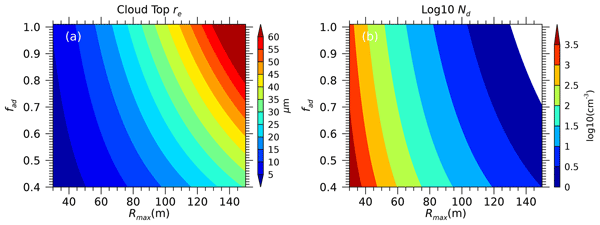
The number of cloud droplets per unit volume, Nd, in a cloud is important for understanding aerosol–cloud interaction. In this study, we develop techniques to derive cloud droplet number concentration from lidar measurements combined with other remote sensing measurements such as cloud radar and microwave radiometers. We show that deriving Nd is very uncertain, although a synergistic algorithm seems to produce useful characterizations of Nd and effective particle size.
Ruhi S. Humphries, Melita D. Keywood, Jason P. Ward, James Harnwell, Simon P. Alexander, Andrew R. Klekociuk, Keiichiro Hara, Ian M. McRobert, Alain Protat, Joel Alroe, Luke T. Cravigan, Branka Miljevic, Zoran D. Ristovski, Robyn Schofield, Stephen R. Wilson, Connor J. Flynn, Gourihar R. Kulkarni, Gerald G. Mace, Greg M. McFarquhar, Scott D. Chambers, Alastair G. Williams, and Alan D. Griffiths
Atmos. Chem. Phys., 23, 3749–3777, https://doi.org/10.5194/acp-23-3749-2023, https://doi.org/10.5194/acp-23-3749-2023, 2023
Short summary
Short summary
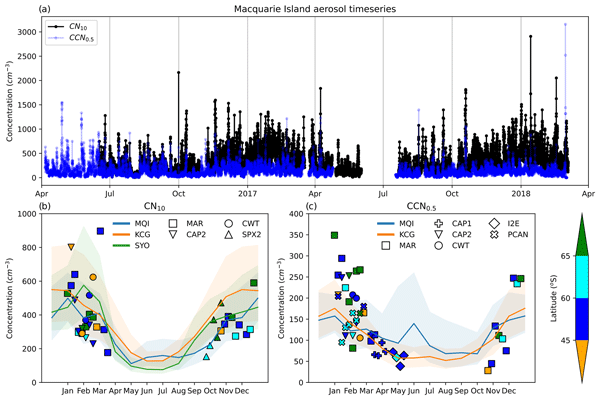
Observations of aerosols in pristine regions are rare but are vital to constraining the natural baseline from which climate simulations are calculated. Here we present recent seasonal observations of aerosols from the Southern Ocean and contrast them with measurements from Antarctica, Australia and regionally relevant voyages. Strong seasonal cycles persist, but striking differences occur at different latitudes. This study highlights the need for more long-term observations in remote regions.
Gerald G. Mace, Sally Benson, Ruhi Humphries, Peter M. Gombert, and Elizabeth Sterner
Atmos. Chem. Phys., 23, 1677–1685, https://doi.org/10.5194/acp-23-1677-2023, https://doi.org/10.5194/acp-23-1677-2023, 2023
Short summary
Short summary
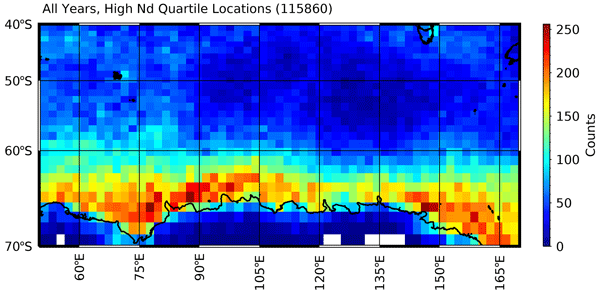
The number of cloud droplets per unit volume is a significantly important property of clouds that controls their reflective properties. Computer models of the Earth's atmosphere and climate have low skill at predicting the reflective properties of Southern Ocean clouds. Here we investigate the properties of those clouds using satellite data and find that the cloud droplet number and cloud albedo in the Southern Ocean are related to the oceanic phytoplankton abundance near Antarctica.
Yuli Liu and Gerald G. Mace
Atmos. Meas. Tech., 15, 927–944, https://doi.org/10.5194/amt-15-927-2022, https://doi.org/10.5194/amt-15-927-2022, 2022
Short summary
Short summary
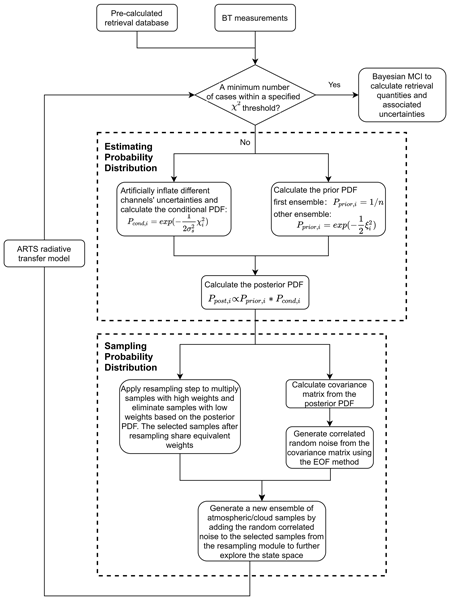
We propose a suite of Bayesian algorithms for synergistic radar and radiometer retrievals to evaluate the next-generation NASA Cloud, Convection and Precipitation (CCP) observing system. The algorithms address pixel-level retrievals using active-only, passive-only, and synergistic active–passive observations. Novel techniques in developing synergistic algorithms are presented. Quantitative assessments of the CCP observing system's capability in retrieving ice cloud microphysics are provided.
Gerald G. Mace
Atmos. Meas. Tech., 17, 3679–3695, https://doi.org/10.5194/amt-17-3679-2024, https://doi.org/10.5194/amt-17-3679-2024, 2024
Short summary
Short summary
The number of cloud droplets per unit volume, Nd, in a cloud is important for understanding aerosol–cloud interaction. In this study, we develop techniques to derive cloud droplet number concentration from lidar measurements combined with other remote sensing measurements such as cloud radar and microwave radiometers. We show that deriving Nd is very uncertain, although a synergistic algorithm seems to produce useful characterizations of Nd and effective particle size.
Ruhi S. Humphries, Melita D. Keywood, Jason P. Ward, James Harnwell, Simon P. Alexander, Andrew R. Klekociuk, Keiichiro Hara, Ian M. McRobert, Alain Protat, Joel Alroe, Luke T. Cravigan, Branka Miljevic, Zoran D. Ristovski, Robyn Schofield, Stephen R. Wilson, Connor J. Flynn, Gourihar R. Kulkarni, Gerald G. Mace, Greg M. McFarquhar, Scott D. Chambers, Alastair G. Williams, and Alan D. Griffiths
Atmos. Chem. Phys., 23, 3749–3777, https://doi.org/10.5194/acp-23-3749-2023, https://doi.org/10.5194/acp-23-3749-2023, 2023
Short summary
Short summary
Observations of aerosols in pristine regions are rare but are vital to constraining the natural baseline from which climate simulations are calculated. Here we present recent seasonal observations of aerosols from the Southern Ocean and contrast them with measurements from Antarctica, Australia and regionally relevant voyages. Strong seasonal cycles persist, but striking differences occur at different latitudes. This study highlights the need for more long-term observations in remote regions.
Gerald G. Mace, Sally Benson, Ruhi Humphries, Peter M. Gombert, and Elizabeth Sterner
Atmos. Chem. Phys., 23, 1677–1685, https://doi.org/10.5194/acp-23-1677-2023, https://doi.org/10.5194/acp-23-1677-2023, 2023
Short summary
Short summary
The number of cloud droplets per unit volume is a significantly important property of clouds that controls their reflective properties. Computer models of the Earth's atmosphere and climate have low skill at predicting the reflective properties of Southern Ocean clouds. Here we investigate the properties of those clouds using satellite data and find that the cloud droplet number and cloud albedo in the Southern Ocean are related to the oceanic phytoplankton abundance near Antarctica.
Yuli Liu and Gerald G. Mace
Atmos. Meas. Tech., 15, 927–944, https://doi.org/10.5194/amt-15-927-2022, https://doi.org/10.5194/amt-15-927-2022, 2022
Short summary
Short summary
We propose a suite of Bayesian algorithms for synergistic radar and radiometer retrievals to evaluate the next-generation NASA Cloud, Convection and Precipitation (CCP) observing system. The algorithms address pixel-level retrievals using active-only, passive-only, and synergistic active–passive observations. Novel techniques in developing synergistic algorithms are presented. Quantitative assessments of the CCP observing system's capability in retrieving ice cloud microphysics are provided.
Cited articles
Albrecht, B. A.: Aerosols, cloud microphysics, and fractional cloudiness, Science, 245, 1227–1230, https://doi.org/10.1126/science.245.4923.1227, 1989.
Albrecht B. A., Bretherton C. S., Johnson D., Schubert, W. H., and Frisch, A. S.: The Atlantic Stratocumulus Transition Experiment–ASTEX, Bulletin of the American Meteorological Society, 76, 889–904, https://doi.org/10.1175/1520-0477(1995)076<0889:taste>2.0.co;2, 1995.
Benson, S. and Mace, G. G.: Impact on cloud properties of reduced sulfur fuel in the Eastern North Atlantic, University of Utah Hive [code and data set], https://doi.org/10.7278/S5d-ppzy-3nkj, 2025.
Bretherton, C. S., Blossey, P. N., and Jones, C. R.: Mechanisms of marine low cloud sensitivity to idealized climate perturbations: A single-Les exploration extending the CGILS cases, Journal of Advances in Modeling Earth Systems, 5, 316–337, https://doi.org/10.1002/jame.20019, 2013.
Brueck, M., Nuijens, L., and Stevens, B.: On the seasonal and synoptic time-scale variability of the North Atlantic trade wind region and its low-level clouds, Journal of the Atmospheric Sciences, 72, 1428–1446, https://doi.org/10.1175/jas-d-14-0054.1, 2015.
Cadeddu, M., Gibler, G., Koontz, A., and Tuftedal, M.: Microwave Radiometer, 3 Channel (MWR3C). Atmospheric Radiation Measurement (ARM) User Facility [data set], https://doi.org/10.5439/1025248, 2020.
Chen, Y.-C., Christensen, M. W., Stephens, G. L., and Seinfeld, J. H.: Satellite-based estimate of global aerosol–cloud radiative forcing by marine warm clouds, Nature Geoscience, 7, 643–646, https://doi.org/10.1038/ngeo2214, 2014.
Christensen, M. W. and Stephens, G. L.: Microphysical and macrophysical responses of marine stratocumulus polluted by underlying ships: Evidence of cloud deepening, Journal of Geophysical Research, 116, https://doi.org/10.1029/2010jd014638, 2011.
Comstock, K. K., Wood, R., Yuter, S. E., and Bretherton, C. S.: Reflectivity and rain rate in and below drizzling stratocumulus. Quarterly Journal of the Royal Meteorological Society, 130, 2891–2918, https://doi.org/10.1256/qj.03.187, 2004.
Conover, J. H.: Anomalous Cloud Lines, Journal of the Atmospheric Sciences, 23, 778–785, https://doi.org/10.1175/1520-0469(1966)023<0778:acl>2.0.co;2, 1966.
Diamond, M. S.: Detection of large-scale cloud microphysical changes within a major shipping corridor after implementation of the International Maritime Organization 2020 fuel sulfur regulations, Atmos. Chem. Phys., 23, 8259–8269, https://doi.org/10.5194/acp-23-8259-2023, 2023.
Diamond, M. S., Director, H. M., Eastman, R., Possner, A., and Wood, R.: Substantial cloud brightening from shipping in subtropical low clouds, AGU Advances, 1, https://doi.org/10.1029/2019av000111, 2020.
Eitzen, Z. A., Xu, K.-M., and Wong, T.: An Estimate of Low-Cloud Feedbacks from Variations of Cloud Radiative and Physical Properties with Sea Surface Temperature on Interannual Time Scales, Journal of Climate, 24, 1106–1121, https://doi.org/10.1175/2010jcli3670.1, 2011.
Feng, Y.-C., Lindenmaier, I., Johnson, K., Nelson, D., Isom, B., Matthews, A., Wendler, T., Melo de Castro, V., Deng, M., and Rocque, M.: Ka ARM Zenith Radar (KAZR2CFRGE). Atmospheric Radiation Measurement (ARM) User Facility [data set], https://doi.org/10.5439/1891991, 2025.
Gallo, F., Uin, J., Springston, S., Wang, J., Zheng, G., Kuang, C., Wood, R., Azevedo, E. B., McComiskey, A., Mei, F., Theisen, A., Kyrouac, J., and Aiken, A. C.: Identifying a regional aerosol baseline in the eastern North Atlantic using collocated measurements and a mathematical algorithm to mask high-submicron-number-concentration aerosol events, Atmos. Chem. Phys., 20, 7553–7573, https://doi.org/10.5194/acp-20-7553-2020, 2020.
Gelaro, R., McCarty, W., Suárez, M. J., Todling, R., Molod, A., Takacs, L., Randles, C. A., Darmenov, A., Bosilovich, M. G., Reichle, R., Wargan, K., Coy, L., Cullather, R., Draper, C., Akella, S., Buchard, V., Conaty, A., da Silva, A. M., Gu, W., Kim, G., Koster, R., Lucchesi, R., Merkova, D., Nielsen, J. E., Partyka, G., Pawson, S., Putman, W., Rienecker, M., Schubert, S. D., Sienkiewicz, M., and Zhao, B.: The Modern-Era Retrospective Analysis for Research and Applications, Version 2 (MERRA-2), J. Climate, 30, 5419–5454, https://doi.org/10.1175/JCLI-D-16-0758.1, 2017.
Glassmeier, F., Hoffmann, F., Johnson, J. S., Yamaguchi, T., Carslaw, K. S., and Feingold, G.: Aerosol-cloud-climate cooling overestimated by ship-track data, Science, 371, 485–489, https://doi.org/10.1126/science.abd3980, 2021.
Goessling, H., Rackow, T., and Jung, T.: Recent global temperature surge intensified by record-low planetary albedo, EGU General Assembly 2025, Vienna, Austria, 27 Apr–2 May 2025, EGU25-15920, https://doi.org/10.5194/egusphere-egu25-15920, 2025.
Gordon, N. D. and Klein, S. A.: Low-cloud Optical Depth Feedback in Climate Models, Journal of Geophysical Research: Atmospheres, 119, 6052–6065, https://doi.org/10.1002/2013jd021052, 2014.
Goren, T., Kazil, J., Hoffmann, F., Yamaguchi, T., and Feingold, G.: Anthropogenic air pollution delays marine stratocumulus break-up to open-cells, Geophysical Research Letters, 46, 14135–14144, https://doi.org/10.1029/2019GL085412, 2019.
Grosvenor, D. P., Sourdeval, O., Zuidema, P., Ackerman, A., Alexandrov, M. D., Bennartz, R., Boers, R., Cairns, B., Chiu, J. C., Christensen, M., Deneke, H., Diamond, M., Feingold, G., Fridlind, A., Hünerbein, A., Knist, C., Kollias, P., Marshak, A., McCoy, D., and Quaas, J.: Remote sensing of droplet number concentration in warm clouds: A review of the current state of knowledge and perspectives, Rev. Geophys., 56, 409–453, https://doi.org/10.1029/2017RG000593, 2018.
Hansen, J. E., Sato, M., Simons, L., Nazarenko, L. S., Sangha, I., Kharecha, P., Zachos, J. C., von Schuckmann, K., Loeb, N. G., Osman, M. B., Jin, Q., Tselioudis, G., Jeong, E., Lacis, A., Ruedy, R., Russell, G., Cao, J., and Li, J.: Global warming in the pipeline, Oxford Open Climate Change, 3, https://doi.org/10.1093/oxfclm/kgad008, 2023.
Hodnebrog, Ø., Myhre, G., Jouan, C., Andrews, T., Forster, P. M., Jia, H., Loeb, N. G., Olivié, D. J., Paynter, D., Quaas, J., Raghuraman, S. P., and Schulz, M.: Recent reductions in aerosol emissions have increased Earth's energy imbalance, Communications Earth & Environment, 5, https://doi.org/10.1038/s43247-024-01324-8, 2024.
Kang, L., Marchand, R. T., Wood, R., and McCoy, I. L.: Coalescence scavenging drives droplet number concentration in Southern Ocean low clouds, Geophysical Research Letters, 49, https://doi.org/10.1029/2022gl097819, 2022.
Keeler, E., Burk, K., and Kyrouac, J.: Balloon-Borne Sounding System (SONDEWNPN), Atmospheric Radiation Measurement (ARM) User Facility [data set], https://doi.org/10.5439/1595321, 2012.
Klein, S. A. and Hartmann, D. L.: The seasonal cycle of low stratiform clouds, Journal of Climate, 6, 1587–1606, https://doi.org/10.1175/1520-0442(1993)006<1587:tscols>2.0.co;2, 1993.
Klein, S. A., Hall, A., Norris, J. R., and Pincus, R.: Low-cloud feedbacks from cloud-controlling factors: A Review, Surveys in Geophysics, 38, 1307–1329, https://doi.org/10.1007/s10712-017-9433-3, 2017.
Knight, J. R. and Scaife, A. A.: Influences on North-atlantic Summer Climate from the El Niño-southern Oscillation, Quarterly Journal of the Royal Meteorological Society, 150, 4498–4510, https://doi.org/10.1002/qj.4826, 2024.
Kollias, P., Puigdomènech Treserras, B., and Protat, A.: Calibration of the 2007–2017 record of Atmospheric Radiation Measurements cloud radar observations using CloudSat, Atmos. Meas. Tech., 12, 4949–4964, https://doi.org/10.5194/amt-12-4949-2019, 2019.
Koontz, A., Uin, J., Andrews, E., Enekwizu, O., Hayes, C., and Salwen, C.: Cloud Condensation Nuclei Particle Counter (AOSCCN2COLASPECTRA), Atmospheric Radiation Measurement (ARM) User Facility [data set], https://doi.org/10.5439/1323896, 2010.
Kyrouac, J., Shi, Y., and Tuftedal, M.: Surface Meteorological Instrumentation (MET), Atmospheric Radiation Measurement (ARM) User Facility [data set], https://doi.org/10.5439/1786358, 2024.
Lebsock, M. D., Stephens, G. L., and Kummerow, C.: Multisensor satellite observations of aerosol effects on warm clouds, Journal of Geophysical Research: Atmospheres, 113, https://doi.org/10.1029/2008jd009876, 2008.
Li, J., Hu, Y., Huang, J., Stamnes, K., Yi, Y., and Stamnes, S.: A new method for retrieval of the extinction coefficient of water clouds by using the tail of the CALIOP signal, Atmos. Chem. Phys., 11, 2903–2916, https://doi.org/10.5194/acp-11-2903-2011, 2011.
Loeb, N. G., Doelling, D. R., Wang, H., Su, W., Nguyen, C., Corbett, J. G., Liang, L., Mitrescu, C., Rose, F. G., and Kato, S.: Clouds and the Earth's radiant energy system (ceres) energy balanced and filled (EBAF) top-of-atmosphere (TOA) edition-4.0 data product, Journal of Climate, 31, 895–918, https://doi.org/10.1175/jcli-d-17-0208.1, 2018.
Lopes, R. H. C., Reid, I. D., and Hobson, P. R.: A two-dimensional Kolmogorov-Smirnov test, in: XI International Workshop on Advanced Computing and Analysis Techniques in Physics Research (ACAT 2007), Proceedings of Science, Vol. 050, https://doi.org/10.22323/1.050.0045, 2009.
Maahn, M., Turner, D. D., Löhnert, U., Posselt, D. J., Ebell, K., Mace, G. G., and Comstock, J. M.: Optimal estimation retrievals and their uncertainties: What every atmospheric scientist should know, Bulletin of the American Meteorological Society, 101, https://doi.org/10.1175/bams-d-19-0027.1, 2020.
Mace, G. G.: Deriving cloud droplet number concentration from surface-based remote sensors with an emphasis on lidar measurements, Atmos. Meas. Tech., 17, 3679–3695, https://doi.org/10.5194/amt-17-3679-2024, 2024.
Mace, G. G., Benson, S., Humphries, R., Gombert, P. M., and Sterner, E.: Natural marine cloud brightening in the Southern Ocean, Atmos. Chem. Phys., 23, 1677–1685, https://doi.org/10.5194/acp-23-1677-2023, 2023.
Mace, G. G., Benson, S., Sterner, E., Protat, A., Humphries, R., and Hallar, A. G.: The association between cloud droplet number over the summer Southern Ocean and air mass history, Journal of Geophysical Research: Atmospheres, 129, https://doi.org/10.1029/2023jd040673, 2024.
Manshausen, P., Watson-Parris, D., Christensen, M. W., Jalkanen, J.-P., and Stier, P.: Rapid saturation of cloud water adjustments to shipping emissions, Atmos. Chem. Phys., 23, 12545–12555, https://doi.org/10.5194/acp-23-12545-2023, 2023.
Manshausen, P., Watson-Parris, D., Christensen, M. W., Jalkanen, J.-P., and Stier, P.: Invisible ship tracks show large cloud sensitivity to aerosol, Nature, 610, 101–106, https://doi.org/10.1038/s41586-022-05122-0, 2022.
Mirrielees, J. A. and Brooks, S. D.: Instrument artifacts lead to uncertainties in parameterizations of cloud condensation nucleation, Atmos. Meas. Tech., 11, 6389–6407, https://doi.org/10.5194/amt-11-6389-2018, 2018.
Muradyan, P., Cromwell, E., Koontz, A., Coulter, R., Flynn, C., Ermold, B., and OBrien, J.: Micropulse Lidar (MPLPOLFS). Atmospheric Radiation Measurement (ARM) User Facility [data set], https://doi.org/10.5439/1320657, 2010.
Nakajima, T. and King, M. D.: Determination of the optical thickness and effective particle radius of clouds from reflected solar radiation measurements. part I: Theory, Journal of the Atmospheric Sciences, 47, 1878–1893, https://doi.org/10.1175/1520-0469(1990)047<1878:dotota>2.0.co;2, 1990.
NASA/LARC/SD/ASDC: CERES Single Scanner Footprint (SSF) TOA/Surface Fluxes, Clouds and Aerosols Terra-FM2 Edition4A, NASA Langley Atmospheric Science Data Center DAAC [data set], https://doi.org/10.5067/TERRA/CERES/SSF-FM2_L2.004A, 2014a.
NASA/LARC/SD/ASDC: CERES Single Scanner Footprint (SSF) TOA/Surface Fluxes, Clouds and Aerosols Aqua-FM3 Edition4A, NASA Langley Atmospheric Science Data Center DAAC [data set], https://doi.org/10.5067/AQUA/CERES/SSF-FM3_L2.004A, 2014b.
Osipova, L., Ferrini Rodrigues, P., Carvalho, F., and Gore, K.: From concept to impact: Evaluating the potential for emissions reduction in the proposed North Atlantic Emission Control Area under different compliance scenarios. International Council on Clean, Transportation, https://theicct.org/publication/evaluating-the-potential-for-emissions-reduction-in-the-proposed-atleca-under-different-compliance-scenarios-june24/ (last access: April 2025), 2024.
Peacock, J. A.: Two-dimensional goodness-of-fit testing in astronomy, Mon. Not. R. Astron. Soc., 202, 615–627, https://doi.org/10.1093/mnras/202.3.615, 1983.
Platnick, S., King, M. D., Ackerman, S. A., Menzel, W. P., Baum, B. A., Riedi, J. C., and Frey, R. A.: The Modis Cloud Products: Algorithms and examples from Terra, IEEE Transactions on Geoscience and Remote Sensing, 41, 459–473, https://doi.org/10.1109/tgrs.2002.808301, 2003.
Platnick, S., Ackerman, S. A., King, M. D., Meyer, K., Menzel, W. P., Holz, R. E., Baum, B. A., and Yang, P.: MODIS atmosphere L2 cloud product (06_L2), Terra, NASA MODIS Adaptive Processing System, Goddard Space Flight Center [data set], https://doi.org/10.5067/MODIS/MOD06_L2.006, 2015a.
Platnick, S., Ackerman, S. A., King, M. D., Meyer, K., Menzel, W. P., Holz, R. E., Baum, B. A., and Yang, P.: MODIS atmosphere L2 cloud product (06_L2), Aqua, NASA MODIS AdaptiveProcessing System, Goddard Space Flight Center [data set], https://doi.org/10.5067/MODIS/MYD06_L2.006, 2015b.
Press, W. H., Teukolsky, S. A., Vetterling, W. T., and Flannery, B. P.: Numerical Recipes in C: The Art of Scientific Computing, 2nd edn., Cambridge University Press, Cambridge, UK, 994 pp., ISBN 978-0-521-43108-8, 1993.
Sherwood, S. C., Bony, S., and Dufresne, J.-L.: Spread in model climate sensitivity traced to atmospheric convective mixing, Nature, 505, 37–42, https://doi.org/10.1038/nature12829, 2014.
Sherwood, S. C., Webb, M. J., Annan, J. D., Armour, K. C., Forster, P. M., Hargreaves, J. C., Hegerl, G., Klein, S. A., Marvel, K. D., Rohling, E. J., Watanabe, M., Andrews, T., Braconnot, P., Bretherton, C. S., Foster, G. L., Hausfather, Z., von der Heydt, A. S., Knutti, R., Mauritsen, T., and Zelinka, M. D.: An assessment of Earth's climate sensitivity using multiple lines of evidence, Rev. Geophys., 58, e2019RG000678, https://doi.org/10.1029/2019RG000678, 2020.
Stephens, G. L.: Radiation profiles in extended water clouds. II: Parameterization schemes, Journal of the Atmospheric Sciences, 35, 2123–2132, https://doi.org/10.1175/1520-0469(1978)035<2123:rpiewc>2.0.co;2, 1978.
Stevens, B. and Feingold, G.: Untangling aerosol effects on clouds and precipitation in a buffered system, Nature, 461, 607–613, https://doi.org/10.1038/nature08281, 2009.
Stevens, B. and Seifert, A.: Understanding macrophysical outcomes of microphysical choices in simulations of shallow cumulus convection, Journal of the Meteorological Society of Japan. Ser. II, 86, 143–162, https://doi.org/10.2151/jmsj.86a.143, 2008.
Toll, V., Christensen, M., Quaas, J., and Bellouin, N.: Weak average liquid-cloud-water response to anthropogenic aerosols, Nature, 572, 51–55, https://doi.org/10.1038/s41586-019-1423-9, 2019.
Turner, D. D., Kneifel, S., and Cadeddu, M. P.: An improved liquid water absorption model at microwave frequencies for supercooled liquid water clouds. Journal of Atmospheric and Oceanic Technology, 33, 33–44, https://doi.org/10.1175/jtech-d-15-0074.1, 2016.
Twomey, S.: The influence of pollution on the shortwave albedo of clouds, Journal of the Atmospheric Sciences, 34, 1149–1152, https://doi.org/10.1175/1520-0469(1977)034<1149:tiopot>2.0.co;2, 1977.
Wang, H. and Feingold, G.: Modeling Mesoscale Cellular Structures and Drizzle in Marine Stratocumulus. Part I: Impact of Drizzle on the Formation and Evolution of Open Cells, Journal of the Atmospheric Sciences, 66, 3237–3256, https://doi.org/10.1175/2009jas3022.1, 2009.
Widener, K, Bharadwaj, N., and Johnson, K.: Ka-Band ARM Zenith Radar Handbook, U.S. Department of Energy, DOE/SC-ARM/TR-106, https://doi.org/10.2172/1035855, 2012.
Uin, J. and Enekwizu, O.: Cloud Condensation Nuclei Particle Counter Instrument Handbook, U.S. Department of Energy, Atmospheric Radiation Measurement (ARM) user facility, Richland, Washington, DOE/SC-ARM-TR-168, https://www.arm.gov/publications/tech_reports/handbooks/ccn_handbook.pdf, last access: June 2024.
Wood, R.: Drizzle in stratiform boundary layer clouds. part I: Vertical and horizontal structure, Journal of the Atmospheric Sciences, 62, 3011–3033, https://doi.org/10.1175/jas3529.1, 2005.
Wood, R.: Stratocumulus clouds, Monthly Weather Review, 140, 2373–2423, https://doi.org/10.1175/mwr-d-11-00121.1, 2012.
Wood, R. and Bretherton, C. S.: On the relationship between stratiform low cloud cover and lower-tropospheric stability, Journal of Climate, 19, 6425–6432, https://doi.org/10.1175/jcli3988.1, 2006.
Wood, R. and Hartmann, D. L.: Spatial Variability of Liquid Water Path in Marine Low Cloud: The Importance of Mesoscale Cellular Convection, Journal of Climate, 19, 1748–1764, https://doi.org/10.1175/jcli3702.1, 2006.
Wood, Robert, Wyant, M., Bretherton, C. S., Rémillard, J., Kollias, P., Fletcher, J., Stemmler, J., de Szoeke, S., Yuter, S., Miller, M., Mechem, D., Tselioudis, G., Chiu, J. C., Mann, J. A., O'Connor, E. J., Hogan, R. J., Dong, X., Miller, M., Ghate, V., Jefferson, A., Min, Q., Minnis, P. , Palikonda, R., Albrecht, B., Luke, E., Hannay, C., and Lin, Y.: Clouds, aerosols, and precipitation in the Marine Boundary Layer: An ARM Mobile, 2015 facility deployment, Bulletin of the American Meteorological Society, 96, 419–440, https://doi.org/10.1175/bams-d-13-00180.1, 2015.
Xu, Z., Mace, G. G., and Posselt, D. J.: Impact of Rain on Retrieved Warm Cloud Properties Using Visible and Near-Infrared Reflectances Using Markov Chain Monte Carlo Techniques, IEEE Transactions on Geoscience and Remote Sensing, 60, 4110110, https://doi.org/10.1109/TGRS.2022.3208007, 2022.
Yamaguchi, T. and Feingold, G.: On the relationship between open cellular convective cloud patterns and the spatial distribution of precipitation, Atmos. Chem. Phys., 15, 1237–1251, https://doi.org/10.5194/acp-15-1237-2015, 2015.
Yuan, T., Song, H., Wood, R., Wang, C., Oreopoulos, L., Platnick, S. E., von Hippel, S., Meyer, K., Light, S., and Wilcox, E.: Global reduction in ship-tracks from Sulphur Regulations for shipping fuel, Science Advances, 8, https://doi.org/10.1126/sciadv.abn7988, 2022.
Yuan, T., Song, H., Oreopoulos, L., Wood, R., Bian, H., Breen, K., Chin, M., Yu, H., Barahona, D., Meyer, K., and Platnick, S.: Abrupt reduction in shipping emission as an inadvertent geoengineering termination shock produces substantial radiative warming, Communications Earth & Environment, 5, https://doi.org/10.1038/s43247-024-01442-3, 2024.
Editorial statement
Following the 2020 global reduction in shipping fuel sulphur, a natural experiment revealed significant changes in marine boundary layer (MBL) cloud properties over the Eastern North Atlantic. These new observations show a ~15% drop in cloud condensation nuclei, leading to fewer but larger cloud droplets. Normally, this would change how clouds reflect sunlight, but an increase in liquid water path (LWP) counteracted these effects. As a result, cloud optical depth and albedo changed very little. Simultaneous shifts in large-scale meteorology, including weaker inversion strength and increased dry air mixing, further complicated attribution of the observed cloud changes. The study suggests that overall, the cooling influence of marine boundary layer clouds seems to be weakening with implications for future climate feedbacks.
Following the 2020 global reduction in shipping fuel sulphur, a natural experiment revealed...
Short summary
The amount of sunlight reflected by marine boundary layer clouds in the Eastern North Atlantic does not change due to a decrease in aerosol caused by reduced sulphur in shipping fuel because adjustments to liquid water path offset the decease in cloud droplet number concentration.
The amount of sunlight reflected by marine boundary layer clouds in the Eastern North Atlantic...


Altmetrics
Final-revised paper
Preprint