
Articles | Volume 25, issue 24
https://doi.org/10.5194/acp-25-18461-2025
© Author(s) 2025. This work is distributed under
the Creative Commons Attribution 4.0 License.
the Creative Commons Attribution 4.0 License.
https://doi.org/10.5194/acp-25-18461-2025
© Author(s) 2025. This work is distributed under
the Creative Commons Attribution 4.0 License.
the Creative Commons Attribution 4.0 License.
Research article
| 
18 Dec 2025
Research article |
| 18 Dec 2025
| 18 Dec 2025
Why is height-dependent mixing observed in stratocumulus clouds?

Environmental Science and Technologies Department, Brookhaven National Laboratory, Upton, NY, 11973, USA
Environmental Science and Technologies Department, Brookhaven National Laboratory, Upton, NY, 11973, USA
Steven Krueger
Department of Atmospheric Science, University of Utah, Salt Lake City, UT, 84112, USA
Yangang Liu
Environmental Science and Technologies Department, Brookhaven National Laboratory, Upton, NY, 11973, USA
Related authors
Min Deng, Scott E. Giangrande, Adam K. Theisen, Karen L. Johnson, Iosif A. Lindenmaier, Timothy G. Wendler, Jennifer Comstock, Marquette Rocque, Zeen Zhu, and Alyssa Matthews
Atmos. Meas. Tech., 19, 6327–6339, https://doi.org/10.5194/amt-19-6327-2026, https://doi.org/10.5194/amt-19-6327-2026, 2026
Short summary
Short summary
Cloud radars are used to measure air motion, clouds, and precipitation, but small pointing errors can reduce their accuracy. We developed a method to detect these errors using routine weather balloon observations. Tests with several radar systems in different environments showed that the method can identify small but important pointing biases, helping improve the accuracy and long-term consistency of weather and climate observations.
Florian Poydenot, Nina Robbins-Blanch, Zeen Zhu, and Raphaela Vogel
EGUsphere, https://doi.org/10.5194/egusphere-2026-1974, https://doi.org/10.5194/egusphere-2026-1974, 2026
Short summary
Short summary
Trade wind cumuli often rain, which produces downward motion of the surrounding air as the raindrops evaporate. However, we do not understand well what controls this due to a lack of observations inside raining clouds. We use a combination of radar and lidar to obtain the vertical wind for six years at the Barbados Cloud Observatory. We show that trade wind cumuli are organized in similar ways to storms. These observations can help us design better models of clouds used to study the climate.
Israel Silber, Jennifer M. Comstock, Adam K. Theisen, Michael R. Kieburtz, Zeen Zhu, and Jenni Kyrouac
Atmos. Meas. Tech., 19, 485–506, https://doi.org/10.5194/amt-19-485-2026, https://doi.org/10.5194/amt-19-485-2026, 2026
Short summary
Short summary
We present PrecipBE, a multi-instrument precipitation event best-estimate data product developed at the Atmospheric Radiation Measurement (ARM) User Facility, providing time series and tabular statistics of events, which could help advance model evaluation and cloud-process studies. We demonstrate PrecipBE's utilization with a brief 30-year trend analysis of ARM Southern Great Plains (SGP) site data, suggesting shorter, less intense events, but rising annual rainfall, driven by rare extremes.
Min Deng, Scott E. Giangrande, Michael P. Jensen, Karen Johnson, Christopher R. Williams, Jennifer M. Comstock, Ya-Chien Feng, Alyssa Matthews, Iosif A. Lindenmaier, Timothy G. Wendler, Marquette Rocque, Aifang Zhou, Zeen Zhu, Edward Luke, and Die Wang
Atmos. Meas. Tech., 18, 1641–1657, https://doi.org/10.5194/amt-18-1641-2025, https://doi.org/10.5194/amt-18-1641-2025, 2025
Short summary
Short summary
A relative calibration technique is developed for the cloud radar by monitoring the intercept of the wet-radome attenuation log-linear behavior as a function of rainfall rates in light and moderate rain conditions. This resulting reflectivity offset during the recent field campaign is compared favorably with the traditional disdrometer comparison near the rain onset, while it also demonstrates similar trends with respect to collocated and independently calibrated reference radars.
Zeen Zhu, Fan Yang, Pavlos Kollias, Raymond A. Shaw, Alex B. Kostinski, Steve Krueger, Katia Lamer, Nithin Allwayin, and Mariko Oue
Atmos. Meas. Tech., 17, 1133–1143, https://doi.org/10.5194/amt-17-1133-2024, https://doi.org/10.5194/amt-17-1133-2024, 2024
Short summary
Short summary
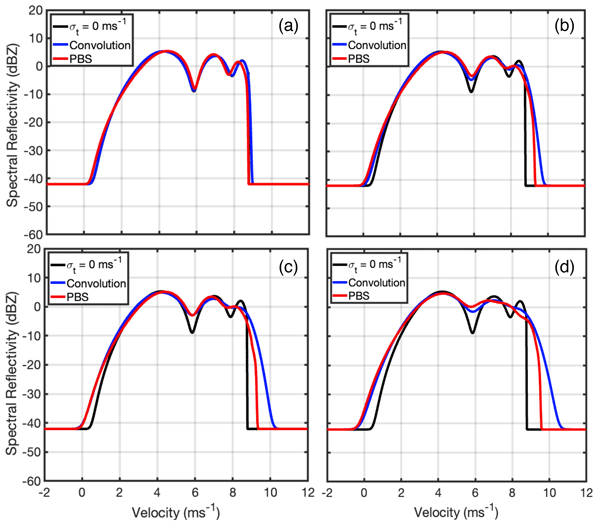
In this article, we demonstrate the feasibility of applying advanced radar technology to detect liquid droplets generated in the cloud chamber. Specifically, we show that using radar with centimeter-scale resolution, single drizzle drops with a diameter larger than 40 µm can be detected. This study demonstrates the applicability of remote sensing instruments in laboratory experiments and suggests new applications of ultrahigh-resolution radar for atmospheric sensing.
Zeen Zhu, Pavlos Kollias, and Fan Yang
Atmos. Meas. Tech., 16, 3727–3737, https://doi.org/10.5194/amt-16-3727-2023, https://doi.org/10.5194/amt-16-3727-2023, 2023
Short summary
Short summary
We show that large rain droplets, with large inertia, are unable to follow the rapid change of velocity field in a turbulent environment. A lack of consideration for this inertial effect leads to an artificial broadening of the Doppler spectrum from the conventional simulator. Based on the physics-based simulation, we propose a new approach to generate the radar Doppler spectra. This simulator provides a valuable tool to decode cloud microphysical and dynamical properties from radar observation.

Zackary Mages, Pavlos Kollias, Zeen Zhu, and Edward P. Luke
Atmos. Chem. Phys., 23, 3561–3574, https://doi.org/10.5194/acp-23-3561-2023, https://doi.org/10.5194/acp-23-3561-2023, 2023
Short summary
Short summary
Cold-air outbreaks (when cold air is advected over warm water and creates low-level convection) are a dominant cloud regime in the Arctic, and we capitalized on ground-based observations, which did not previously exist, from the COMBLE field campaign to study them. We characterized the extent and strength of the convection and turbulence and found evidence of secondary ice production. This information is useful for model intercomparison studies that will represent cold-air outbreak processes.

Zeen Zhu, Pavlos Kollias, Edward Luke, and Fan Yang
Atmos. Chem. Phys., 22, 7405–7416, https://doi.org/10.5194/acp-22-7405-2022, https://doi.org/10.5194/acp-22-7405-2022, 2022
Short summary
Short summary
Drizzle (small rain droplets) is an important component of warm clouds; however, its existence is poorly understood. In this study, we capitalized on a machine-learning algorithm to develop a drizzle detection method. We applied this algorithm to investigate drizzle occurrence and found out that drizzle is far more ubiquitous than previously thought. This study demonstrates the ubiquitous nature of drizzle in clouds and will improve understanding of the associated microphysical process.
Min Deng, Scott E. Giangrande, Adam K. Theisen, Karen L. Johnson, Iosif A. Lindenmaier, Timothy G. Wendler, Jennifer Comstock, Marquette Rocque, Zeen Zhu, and Alyssa Matthews
Atmos. Meas. Tech., 19, 6327–6339, https://doi.org/10.5194/amt-19-6327-2026, https://doi.org/10.5194/amt-19-6327-2026, 2026
Short summary
Short summary
Cloud radars are used to measure air motion, clouds, and precipitation, but small pointing errors can reduce their accuracy. We developed a method to detect these errors using routine weather balloon observations. Tests with several radar systems in different environments showed that the method can identify small but important pointing biases, helping improve the accuracy and long-term consistency of weather and climate observations.
James Simmons, Jesse Anderson, Corey Bois, Hamed Fahandezh Sadi, Kadja Flore Gali, Suryadev Pratap Singh, Andrei Vakhtin, Kurt Hibert, Bruce Boe, Youssef Wehbe, Steve Krueger, Raymond A. Shaw, and Will Cantrell
Atmos. Chem. Phys., 26, 10881–10891, https://doi.org/10.5194/acp-26-10881-2026, https://doi.org/10.5194/acp-26-10881-2026, 2026
Short summary
Short summary
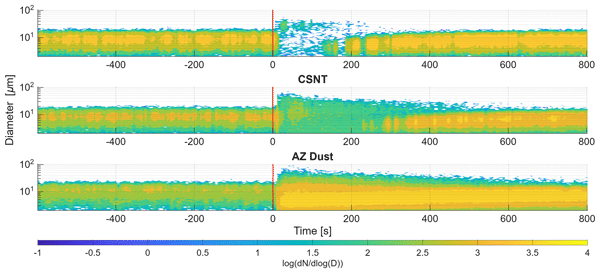
Precipitation from warm clouds requires large droplets to promote collision-coalescence. As part of an investigation into cloud seeding, we tested two hygroscopic materials in a laboratory cloud chamber where they formed large droplets and increased the concentration of liquid water. Sodium chloride particles with diameters of 4 to 25 micrometers proved most effective, supporting in-cloud seeding for precipitation enhancement in warm clouds, particularly in arid regions.
Jianing Guo, Xiaoning Xie, Gunnar Myhre, Drew Shindell, Alf Kirkevåg, Trond Iversen, Apostolos Voulgarakis, Toshihiko Takemura, Ke Shang, Xinzhou Li, Zhengguo Shi, Yangang Liu, Xiaodong Liu, and Hong Yan
Atmos. Chem. Phys., 26, 5169–5184, https://doi.org/10.5194/acp-26-5169-2026, https://doi.org/10.5194/acp-26-5169-2026, 2026
Short summary
Short summary
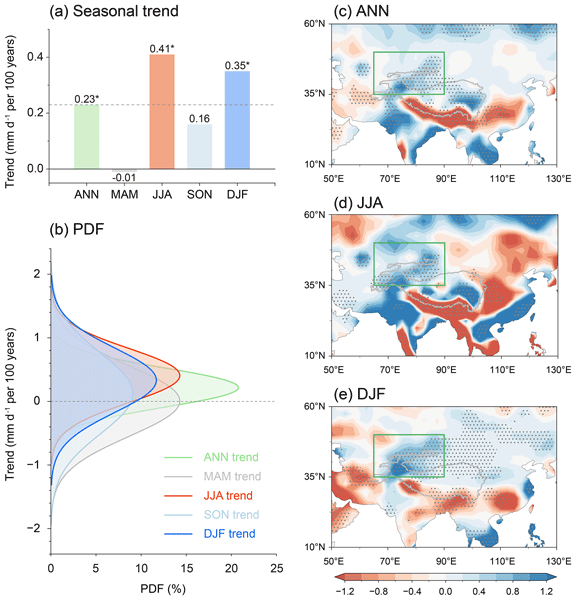
Central Asia has grown wetter in recent decades, but the drivers differ by season. We analyzed observations and climate model experiments to understand these changes and their future. Our analysis reveals that greenhouse gases from human activities drive winter wetting, whereas aerosol from Asia urbanization and industrialization enhances summer precipitation. As future reductions in air pollution, the region may experience drier summers and create new risks for regional water resources.
Florian Poydenot, Nina Robbins-Blanch, Zeen Zhu, and Raphaela Vogel
EGUsphere, https://doi.org/10.5194/egusphere-2026-1974, https://doi.org/10.5194/egusphere-2026-1974, 2026
Short summary
Short summary
Trade wind cumuli often rain, which produces downward motion of the surrounding air as the raindrops evaporate. However, we do not understand well what controls this due to a lack of observations inside raining clouds. We use a combination of radar and lidar to obtain the vertical wind for six years at the Barbados Cloud Observatory. We show that trade wind cumuli are organized in similar ways to storms. These observations can help us design better models of clouds used to study the climate.
Israel Silber, Jennifer M. Comstock, Adam K. Theisen, Michael R. Kieburtz, Zeen Zhu, and Jenni Kyrouac
Atmos. Meas. Tech., 19, 485–506, https://doi.org/10.5194/amt-19-485-2026, https://doi.org/10.5194/amt-19-485-2026, 2026
Short summary
Short summary
We present PrecipBE, a multi-instrument precipitation event best-estimate data product developed at the Atmospheric Radiation Measurement (ARM) User Facility, providing time series and tabular statistics of events, which could help advance model evaluation and cloud-process studies. We demonstrate PrecipBE's utilization with a brief 30-year trend analysis of ARM Southern Great Plains (SGP) site data, suggesting shorter, less intense events, but rising annual rainfall, driven by rare extremes.
Jialin Yan, Mariko Oue, Pavlos Kollias, Edward Luke, and Fan Yang
Atmos. Chem. Phys., 25, 16479–16490, https://doi.org/10.5194/acp-25-16479-2025, https://doi.org/10.5194/acp-25-16479-2025, 2025
Short summary
Short summary
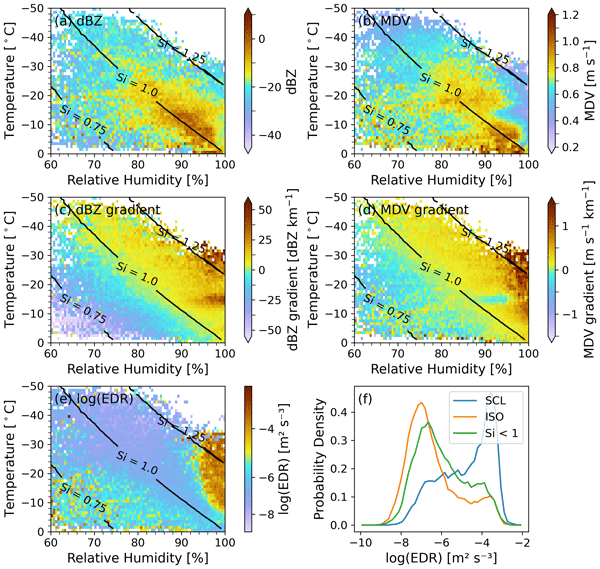
In this study, we analyzed over six years of ground-based radar and weather balloon data collected in northern Alaska. We found that ice particle changes depend strongly on temperature, humidity conditions, and turbulence. We also found that turbulence and the presence of supercooled liquid water often occur together, and when they do, ice particle growth is especially strong. These findings help scientists to improve weather models.
Min Deng, Scott E. Giangrande, Michael P. Jensen, Karen Johnson, Christopher R. Williams, Jennifer M. Comstock, Ya-Chien Feng, Alyssa Matthews, Iosif A. Lindenmaier, Timothy G. Wendler, Marquette Rocque, Aifang Zhou, Zeen Zhu, Edward Luke, and Die Wang
Atmos. Meas. Tech., 18, 1641–1657, https://doi.org/10.5194/amt-18-1641-2025, https://doi.org/10.5194/amt-18-1641-2025, 2025
Short summary
Short summary
A relative calibration technique is developed for the cloud radar by monitoring the intercept of the wet-radome attenuation log-linear behavior as a function of rainfall rates in light and moderate rain conditions. This resulting reflectivity offset during the recent field campaign is compared favorably with the traditional disdrometer comparison near the rain onset, while it also demonstrates similar trends with respect to collocated and independently calibrated reference radars.
Fan Yang, Hamed Fahandezh Sadi, Raymond A. Shaw, Fabian Hoffmann, Pei Hou, Aaron Wang, and Mikhail Ovchinnikov
Atmos. Chem. Phys., 25, 3785–3806, https://doi.org/10.5194/acp-25-3785-2025, https://doi.org/10.5194/acp-25-3785-2025, 2025
Short summary
Short summary
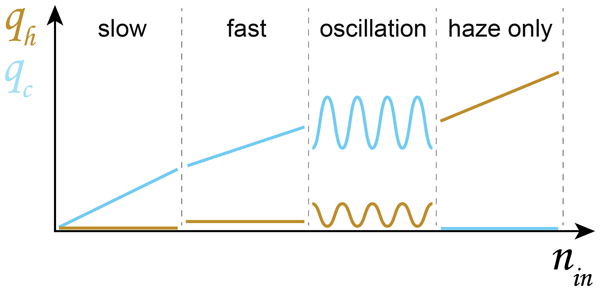
Large-eddy simulations of a convection cloud chamber show two new microphysics regimes, cloud oscillation and cloud collapse, due to haze–cloud interactions. Our results suggest that haze particles and their interactions with cloud droplets should be considered especially in polluted conditions. To properly simulate haze–cloud interactions, we need to resolve droplet activation and deactivation processes, instead of using Twomey-type activation parameterization.
Karlie N. Rees, Timothy J. Garrett, Thomas D. DeWitt, Corey Bois, Steven K. Krueger, and Jérôme C. Riedi
Nonlin. Processes Geophys., 31, 497–513, https://doi.org/10.5194/npg-31-497-2024, https://doi.org/10.5194/npg-31-497-2024, 2024
Short summary
Short summary
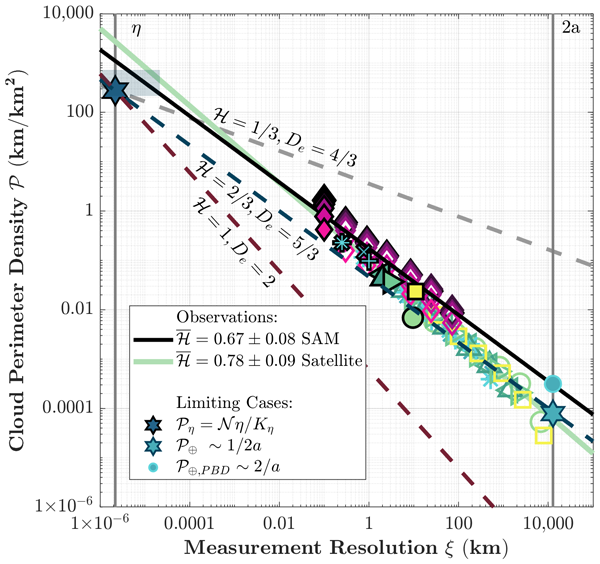
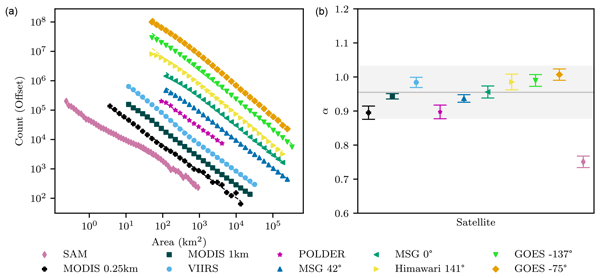
The shapes of clouds viewed from space reflect vertical and horizontal motions in the atmosphere. We theorize that, globally, cloud perimeter complexity is related to the dimension of turbulence also governed by horizontal and vertical motions. We find agreement between theory and observations from various satellites and a numerical model and, remarkably, that the theory applies globally using only basic planetary physical parameters from the smallest scales of turbulence to the planetary scale.
Nabia Gulistan, Khan Alam, and Yangang Liu
Atmos. Chem. Phys., 24, 11333–11349, https://doi.org/10.5194/acp-24-11333-2024, https://doi.org/10.5194/acp-24-11333-2024, 2024
Short summary
Short summary
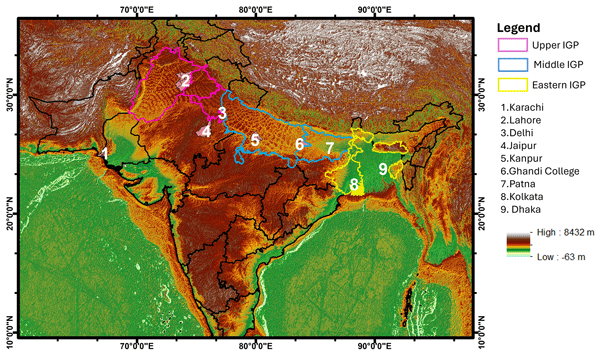
This study looks at the influence of aerosol and meteorology on precipitating and non-precipitating clouds over the Indo-Gangetic Plain (IGP). A major finding of this study was that the high loading of aerosols led to a high occurrence of precipitating clouds under unstable conditions in summer. The study has the potential to open a new avenue for the scientific community to further explore and understand the complications of aerosol–cloud–precipitation over the complex topography of the IGP.
Aaron Wang, Steve Krueger, Sisi Chen, Mikhail Ovchinnikov, Will Cantrell, and Raymond A. Shaw
Atmos. Chem. Phys., 24, 10245–10260, https://doi.org/10.5194/acp-24-10245-2024, https://doi.org/10.5194/acp-24-10245-2024, 2024
Short summary
Short summary
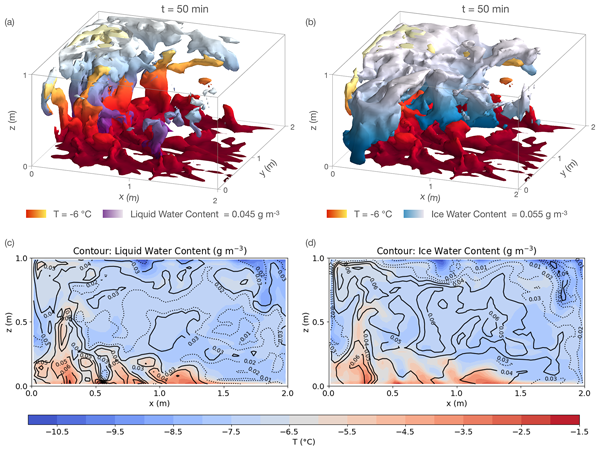
We employ two methods to examine a laboratory experiment on clouds with both ice and liquid phases. The first assumes well-mixed properties; the second resolves the spatial distribution of turbulence and cloud particles. Results show that while the trends in mean properties generally align, when turbulence is resolved, liquid droplets are not fully depleted by ice due to incomplete mixing. This underscores the threshold of ice mass fraction in distinguishing mixed-phase clouds from ice clouds.
Zeen Zhu, Fan Yang, Pavlos Kollias, Raymond A. Shaw, Alex B. Kostinski, Steve Krueger, Katia Lamer, Nithin Allwayin, and Mariko Oue
Atmos. Meas. Tech., 17, 1133–1143, https://doi.org/10.5194/amt-17-1133-2024, https://doi.org/10.5194/amt-17-1133-2024, 2024
Short summary
Short summary
In this article, we demonstrate the feasibility of applying advanced radar technology to detect liquid droplets generated in the cloud chamber. Specifically, we show that using radar with centimeter-scale resolution, single drizzle drops with a diameter larger than 40 µm can be detected. This study demonstrates the applicability of remote sensing instruments in laboratory experiments and suggests new applications of ultrahigh-resolution radar for atmospheric sensing.
Thomas D. DeWitt, Timothy J. Garrett, Karlie N. Rees, Corey Bois, Steven K. Krueger, and Nicolas Ferlay
Atmos. Chem. Phys., 24, 109–122, https://doi.org/10.5194/acp-24-109-2024, https://doi.org/10.5194/acp-24-109-2024, 2024
Short summary
Short summary
Viewed from space, a defining feature of Earth's atmosphere is the wide spectrum of cloud sizes. A recent study predicted the distribution of cloud sizes, and this paper compares the prediction to observations. Although there is nuance in viewing perspective, we find robust agreement with theory across different climatological conditions, including land–ocean contrasts, time of year, or latitude, suggesting a minor role for Coriolis forces, aerosol loading, or surface temperature.
Damao Zhang, Andrew M. Vogelmann, Fan Yang, Edward Luke, Pavlos Kollias, Zhien Wang, Peng Wu, William I. Gustafson Jr., Fan Mei, Susanne Glienke, Jason Tomlinson, and Neel Desai
Atmos. Meas. Tech., 16, 5827–5846, https://doi.org/10.5194/amt-16-5827-2023, https://doi.org/10.5194/amt-16-5827-2023, 2023
Short summary
Short summary
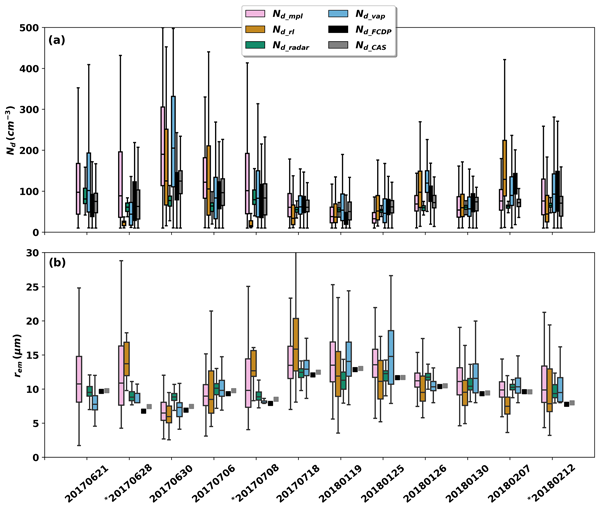
Cloud droplet number concentration can be retrieved from remote sensing measurements. Aircraft measurements are used to validate four ground-based retrievals of cloud droplet number concentration. We demonstrate that retrieved cloud droplet number concentrations align well with aircraft measurements for overcast clouds, but they may substantially differ for broken clouds. The ensemble of various retrievals can help quantify retrieval uncertainties and identify reliable retrieval scenarios.
Zeen Zhu, Pavlos Kollias, and Fan Yang
Atmos. Meas. Tech., 16, 3727–3737, https://doi.org/10.5194/amt-16-3727-2023, https://doi.org/10.5194/amt-16-3727-2023, 2023
Short summary
Short summary
We show that large rain droplets, with large inertia, are unable to follow the rapid change of velocity field in a turbulent environment. A lack of consideration for this inertial effect leads to an artificial broadening of the Doppler spectrum from the conventional simulator. Based on the physics-based simulation, we propose a new approach to generate the radar Doppler spectra. This simulator provides a valuable tool to decode cloud microphysical and dynamical properties from radar observation.
Zackary Mages, Pavlos Kollias, Zeen Zhu, and Edward P. Luke
Atmos. Chem. Phys., 23, 3561–3574, https://doi.org/10.5194/acp-23-3561-2023, https://doi.org/10.5194/acp-23-3561-2023, 2023
Short summary
Short summary
Cold-air outbreaks (when cold air is advected over warm water and creates low-level convection) are a dominant cloud regime in the Arctic, and we capitalized on ground-based observations, which did not previously exist, from the COMBLE field campaign to study them. We characterized the extent and strength of the convection and turbulence and found evidence of secondary ice production. This information is useful for model intercomparison studies that will represent cold-air outbreak processes.
Zeen Zhu, Pavlos Kollias, Edward Luke, and Fan Yang
Atmos. Chem. Phys., 22, 7405–7416, https://doi.org/10.5194/acp-22-7405-2022, https://doi.org/10.5194/acp-22-7405-2022, 2022
Short summary
Short summary
Drizzle (small rain droplets) is an important component of warm clouds; however, its existence is poorly understood. In this study, we capitalized on a machine-learning algorithm to develop a drizzle detection method. We applied this algorithm to investigate drizzle occurrence and found out that drizzle is far more ubiquitous than previously thought. This study demonstrates the ubiquitous nature of drizzle in clouds and will improve understanding of the associated microphysical process.
Xiaoqi Xu, Chunsong Lu, Yangang Liu, Shi Luo, Xin Zhou, Satoshi Endo, Lei Zhu, and Yuan Wang
Atmos. Chem. Phys., 22, 5459–5475, https://doi.org/10.5194/acp-22-5459-2022, https://doi.org/10.5194/acp-22-5459-2022, 2022
Short summary
Short summary
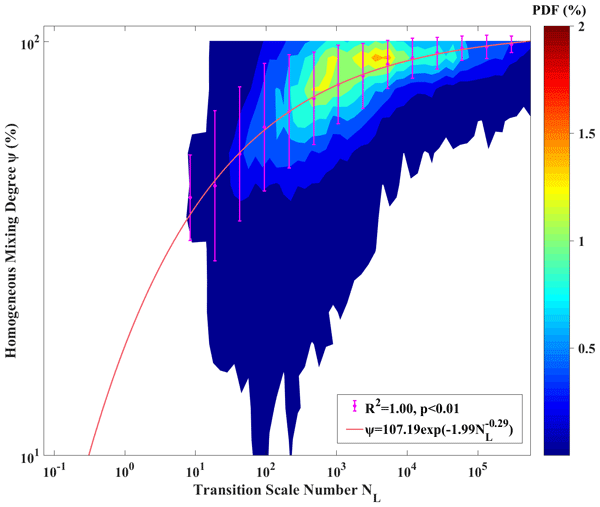
A new entrainment–mixing parameterization which can be directly implemented in microphysics schemes without requiring the relative humidity of the entrained air is proposed based on the explicit mixing parcel model. The parameterization is implemented in the two-moment microphysics scheme and exhibits different effects on different types of clouds and even on different stages of stratocumulus clouds, which are affected by turbulent dissipation rate and aerosol concentration.
Cited articles
Allwayin, N., Larsen, M. L., Glienke, S., and Shaw, R. A.: Locally narrow droplet size distributions are ubiquitous in stratocumulus clouds, Science, 384, 528–532, 2024.
Baker, M., Corbin, R., and Latham, J.: The influence of entrainment on the evolution of cloud droplet spectra: I. A model of inhomogeneous mixing, Quarterly Journal of the Royal Meteorological Society, 106, 581–598, 1980.
Beals, M. A., Fugal, J. P., Shaw, R. A., Lu, J., Spuler, S. M., and Stith, J. L.: Holographic measurements of inhomogeneous cloud mixing at the centimeter scale, Science, 350, 87–90, 2015.
Burnet, F. and Brenguier, J.-L.: Observational study of the entrainment-mixing process in warm convective clouds, Journal of the Atmospheric Sciences, 64, 1995–2011, 2007.
Chosson, F., Brenguier, J.-L., and Schüller, L.: Entrainment-mixing and radiative transfer simulation in boundary layer clouds, Journal of the Atmospheric Sciences, 64, 2670–2682, 2007.
Desai, N., Liu, Y., Glienke, S., Shaw, R. A., Lu, C., Wang, J., and Gao, S.: Vertical variation of turbulent entrainment mixing processes in marine stratocumulus clouds using high-resolution digital holography, Journal of Geophysical Research: Atmospheres, 126, e2020JD033527, https://doi.org/10.1029/2020JD033527, 2021.
Gao, S., Lu, C., Liu, Y., Yum, S. S., Zhu, J., Zhu, L., Desai, N., Ma, Y., and Wu, S.: Comprehensive quantification of height dependence of entrainment mixing between stratiform cloud top and environment, Atmospheric Chemistry and Physics, 21, 11225–11241, https://doi.org/10.5194/acp-21-11225-2021, 2021.
Hoffmann, F. and Feingold, G.: Entrainment and mixing in stratocumulus: Effects of a new explicit subgrid-scale scheme for large-eddy simulations with particle-based microphysics, Journal of the Atmospheric Sciences, 76, 1955–1973, 2019.
Jeffery, C. A. and Reisner, J. M.: A study of cloud mixing and evolution using PDF methods. Part I: Cloud front propagation and evaporation, Journal of the Atmospheric Sciences, 63, 2848–2864, 2006.
Kerstein, A. R.: Linear-eddy modelling of turbulent transport. Part 6. Microstructure of diffusive scalar mixing fields, Journal of Fluid Mechanics, 231, 361–394, 1991.
Krueger, S. K., Su, C.-W., and McMurtry, P. A.: Modeling entrainment and finescale mixing in cumulus clouds, Journal of the Atmospheric Sciences, 54, 2697–2712, 1997.
Lasher-Trapp, S. G., Cooper, W. A., and Blyth, A. M.: Broadening of droplet size distributions from entrainment and mixing in a cumulus cloud, Quarterly Journal of the Royal Meteorological Society, 131, 195–220, 2005.
Latham, J. and Reed, R.: Laboratory studies of the effects of mixing on the evolution of cloud droplet spectra, Quarterly Journal of the Royal Meteorological Society, 103, 297–306, 1977.
Lehmann, K., Siebert, H., and Shaw, R. A.: Homogeneous and inhomogeneous mixing in cumulus clouds: Dependence on local turbulence structure, Journal of the Atmospheric Sciences, 66, 3641–3659, 2009.
Lim, J. S. and Hoffmann, F.: Between broadening and narrowing: How mixing affects the width of the droplet size distribution, Journal of Geophysical Research: Atmospheres, 128, e2022JD037900, https://doi.org/10.1029/2022JD037900, 2023.
Lim, J. S. and Hoffmann, F.: Life cycle evolution of mixing in shallow cumulus clouds, Journal of Geophysical Research: Atmospheres, 129, e2023JD040393, https://doi.org/10.1029/2023JD040393, 2024.
Lu, C., Liu, Y., Niu, S., Krueger, S., and Wagner, T.: Exploring parameterization for turbulent entrainment-mixing processes in clouds, Journal of Geophysical Research: Atmospheres, 118, 185–194, 2013.
Luo, S., Lu, C., Liu, Y., Li, Y., Gao, W., Qiu, Y., Xu, X., Li, J., Zhu, L., and Wang, Y.: Relationships between cloud droplet spectral relative dispersion and entrainment rate and their impacting factors, Advances in Atmospheric Sciences, 39, 2087–2106, 2022.
Magaritz-Ronen, L., Pinsky, M., and Khain, A.: Effects of turbulent mixing on the structure and macroscopic properties of stratocumulus clouds demonstrated by a Lagrangian trajectory model, Journal of the Atmospheric Sciences, 71, 1843–1862, 2014.
Schröder, M.: Cloud Microphysics Investigations with the Cloudkite Laboratory, PhD thesis, Georg-August-Universität Göttingen, Göttingen, https://doi.org/10.53846/goediss-9830, 2023.
Su, C.-W., Krueger, S. K., McMurtry, P. A., and Austin, P. H.: Linear eddy modeling of droplet spectral evolution during entrainment and mixing in cumulus clouds, Atmospheric Research, 47, 41–58, 1998.
Tölle, M. H. and Krueger, S. K.: Effects of entrainment and mixing on droplet size distributions in warm cumulus clouds, Journal of Advances in Modeling Earth Systems, 6, 281–299, 2014.
Wang, J., Daum, P. H., Yum, S. S., Liu, Y., Senum, G. I., Lu, M. L., Seinfeld, J. H., and Jonsson, H.: Observations of marine stratocumulus microphysics and implications for processes controlling droplet spectra: Results from the Marine Stratus/Stratocumulus Experiment, Journal of Geophysical Research: Atmospheres, 114, https://doi.org/10.1029/2008JD011035, 2009.
Wang, J., Wood, R., Jensen, M. P., Chiu, J. C., Liu, Y., Lamer, K., Desai, N., Giangrande, S. E., Knopf, D. A., and Kollias, P.: Aerosol and cloud experiments in the Eastern North Atlantic (ACE-ENA), Bulletin of the American Meteorological Society, 103, E619–E641, 2022.
Wood, R.: Stratocumulus Clouds, Monthly Weather Review, 140, 2373–2423, https://doi.org/10.1175/mwr-d-11-00121.1, 2012.
Yang, F., Kollias, P., Shaw, R. A., and Vogelmann, A. M.: Cloud droplet size distribution broadening during diffusional growth: ripening amplified by deactivation and reactivation, Atmospheric Chemistry and Physics, 18, 7313–7328, https://doi.org/10.5194/acp-18-7313-2018, 2018.
Yeom, J. M., Yum, S. S., Shaw, R. A., La, I., Wang, J., Lu, C., Liu, Y., Mei, F., Schmid, B., and Matthews, A.: Vertical variations of cloud microphysical relationships in marine stratocumulus clouds observed during the ACE-ENA campaign, Journal of Geophysical Research: Atmospheres, 126, e2021JD034700, https://doi.org/10.1029/2021JD034700, 2021.
Yeom, J. M., Helman, I., Prabhakaran, P., Anderson, J. C., Yang, F., Shaw, R. A., and Cantrell, W.: Cloud microphysical response to entrainment and mixing is locally inhomogeneous and globally homogeneous: Evidence from the lab, Proceedings of the National Academy of Sciences, 120, e2307354120, https://doi.org/10.1073/pnas.2307354120, 2023.
Yum, S. S., Wang, J., Liu, Y., Senum, G., Springston, S., McGraw, R., and Yeom, J. M.: Cloud microphysical relationships and their implication on entrainment and mixing mechanism for the stratocumulus clouds measured during the VOCALS project, Journal of Geophysical Research: Atmospheres, 120, 5047–5069, 2015.
Short summary
To better understand cloud behavior, we used model simulation to study how the air mix in clouds. Our results show that the pattern of mixing seen from aircraft measurements may not reflect the true mixing process happening inside clouds. This result suggests that care is needed when using aircraft data to study the cloud mixing process and that new ways of observing clouds could offer clearer insights.
To better understand cloud behavior, we used model simulation to study how the air mix in...


Altmetrics
Final-revised paper
Preprint