Articles | Volume 21, issue 7
https://doi.org/10.5194/acp-21-5253-2021
© Author(s) 2021. This work is distributed under
the Creative Commons Attribution 4.0 License.
https://doi.org/10.5194/acp-21-5253-2021
© Author(s) 2021. This work is distributed under
the Creative Commons Attribution 4.0 License.
Characteristics of the summer atmospheric boundary layer height over the Tibetan Plateau and influential factors
Junhui Che
State Key Laboratory of Severe Weather, Chinese Academy of Meteorological Sciences, Beijing, 100081, China
Collaborative Innovation Center on Forecast and Evaluation of Meteorological Disasters, Nanjing University of Information Science and Technology, Nanjing, 210044, China
Shandong Meteorological Service Center, Jinan, 250031, China
Ping Zhao
CORRESPONDING AUTHOR
State Key Laboratory of Severe Weather, Chinese Academy of Meteorological Sciences, Beijing, 100081, China
Collaborative Innovation Center on Forecast and Evaluation of Meteorological Disasters, Nanjing University of Information Science and Technology, Nanjing, 210044, China
Related authors
No articles found.
Fenglin Xu, Yong Liu, Guoqing Zhang, Ping Zhao, R. Iestyn Woolway, Yani Zhu, Jianting Ju, Tao Zhou, Xue Wang, and Wenfeng Chen
Nat. Hazards Earth Syst. Sci., 25, 1187–1206, https://doi.org/10.5194/nhess-25-1187-2025, https://doi.org/10.5194/nhess-25-1187-2025, 2025
Short summary
Short summary
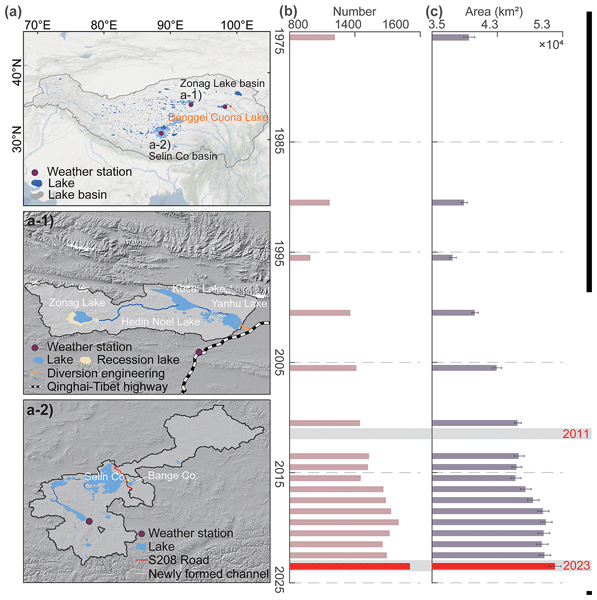
Glacial lake outbursts have been widely studied, but large-inland-lake outbursts have received less attention. Recently, with the rapid expansion of inland lakes, signs of potential outbursts have increased. However, their processes, causes, and mechanisms are still not well understood. Here, the outburst processes of two inland lakes were investigated using a combination of field surveys, remote sensing mapping, and hydrodynamic modeling. Their causes and mechanisms were also investigated.
Cited articles
Blay-Carreras, E., Pino, D., Vilà-Guerau de Arellano, J., van de Boer, A., De Coster,
O., Darbieu, C., Hartogensis, O., Lohou, F., Lothon, M., and Pietersen, H.: Role of the residual
layer and large-scale subsidence on the development and evolution of the convective boundary
layer, Atmos. Chem. Phys., 14, 4515–4530, https://doi.org/10.5194/acp-14-4515-2014, 2014.
Bosveld, F. C., Baas, P., Steeneveld, G., Holtslag, A. A. M., Angevine, W. M., Bazile, E., Bruijn, E. I. F., Deacu, D., Edwards, J. M., Ek, M., Larson, V. E., Pleim, J. E., Raschendorfer, M., and Svensson, G.: The third GABLS intercomparison case for evaluation studies of boundary-layer models, Part B: Results and process understanding, Bound.-Lay. Meteorol., 152, 157–187, https://doi.org/10.1007/s10546-014-9919-1, 2014.
Brooks, I. M. and Rogers, D. P.: Aircraft observations of the mean and turbulent
structure of a shallow boundary layer over the Persian Gulf, Bound.-Lay. Meteorol., 95, 189–210,
https://doi.org/10.1023/A:1002623712237, 2000.
Chen, S. S. and Houze, R. A.: Diurnal variation and life-cycle of deep convective
systems over the tropical Pacific warm pool, Q. J. Roy. Meteor. Soc., 123, 357–388,
https://doi.org/10.1002/qj.49712353806, 1997.
Chen, X. L., Juan, A. Añel., Su, Z. B., Laura, de. La. Torre., Hennie, Kelder.,
Jacob, van. Peet., and Ma, Y. M.: The deep atmospheric boundary layer and its significance to the
stratosphere and troposphere exchange over the Tibetan Plateau, PLoS. ONE, 8, e56909,
https://doi.org/10.1371/journal.pone.0056909, 2013.
Chen, X. L., Škerlak, B., Rotach, M. W., Juan, A. Anel., Su, Z. B., Ma, Y. M., and
Li, M. S.: Reasons for the extremely high-ranging planetary boundary layer over the Western
Tibetan Plateau in winter, J. Atmos. Sci., 73, 2021–2038, https://doi.org/10.1175/jas-d-15-0148.1, 2016.
Dai, C., Wang, Q., Kalogiros, J. A., Lenschow, D. H., Gao,Z., and Zhou, M.: Determining
boundary-layer height from aircraft measurements, Bound.-Lay. Meteorol., 152, 277–302,
https://doi.org/10.1007/s10546-014-9929-z, 2014.
Davy, R.: The climatology of the atmospheric boundary layer in contemporary global climate models, J. Climate, 31, 9151–9173, https://doi.org/10.1175/JCLI-D-17-0498.1, 2018.
Davy, R. and Esau, I.: Differences in the efficacy of climate forcings explained by
variations in atmospheric boundary layer depth, Nat. Commun., 7, 11690, https://doi.org/10.1038/ncomms11690,
2016.
Driedonks, A. G. M. and Tennekes, H.: Entrainment effects in the well-mixed atmospheric
boundary layer, Bound.-Lay. Meteorol., 30, 75–105, https://doi.org/10.1007/BF00121950, 1984.
Esau, I. and Zilitinkevich, S.: On the role of the planetary boundary layer depth in
the climate system, Adv. Sci. Res., 4, 63–69, https://doi.org/10.5194/asr-4-63-2010, 2010.
Garratt, J. R.: The Atmospheric Boundary Layer, Cambridge, Univ. Press., 37, 89–134, https://doi.org/10.1007/3-211-38078-7_4, 1992.
Garratt, J. R.: Sensitivity of climate simulations to land-surface and atmospheric
boundary-layer treatments–A review, J. Climate, 6, 419–448,
https://doi.org/10.1175/1520-0442(1993)006< 0419:socstl> 2.0.co;2, 1993.
Goutorbe, J. P., Lebel, T., Dolman, A. J., Gash, J. H. C., Kabat, P., Kerr, Y. H.,
Monteny, B., Prince, S. D., Stricker, J. N. M., Tinga, A., and Wallace, J. S.: An overview of
HAPEX-Sahel: A study in climate and desertification, J. Hydrol., 188–189, 4–17,
https://doi.org/10.1016/S0022-1694(96)03308-2, 1997.
Guo, J., Miao, Y., Zhang, Y., Liu, H., Li, Z., Zhang, W., He, J., Lou, M., Yan, Y.,
Bian, L., and Zhai, P.: The climatology of planetary boundary layer height in China derived from
radiosonde and reanalysis data, Atmos. Chem. Phys., 16, 13309–13319,
https://doi.org/10.5194/acp-16-13309-2016, 2016.
Guo, J. P., Zhang, X. Y., Che, H. Z., Gong, S. L., An, X., and Cao, C. X.: Correlation
between PM concentrations and aerosol optical depth in eastern China, Atmos. Environ., 43,
5876–5886, https://doi.org/10.1016/j.atmosenv.2009.08.026, 2009.
Holtslag, B. and Boville, B. A.: Local versus nonlocal boundary-layer diffusion in a
global climate model, J. Climate, 6, 1825–1842, https://doi.org/10.1175/1520-0442(1993)0062.0.CO;2,1993.
Hong, J., Guo, J., Du, J., and Wang, P.: An observational study on the vertical
structure of the upper troposphere and lower stratosphere in Gaize, Tibet during the rainy season,
Acta Meteorol. Sin., 74, 827–836, https://doi.org/10.11676/qxxb2016.05, 2016.
Huang, J. P., Minnis, P., Yi, Y., Tang, Q., Wang, X., Hu, Y., Liu, Z., Ayers, K.,
Trepte, C., and Winker, D.: Summer dust aerosols detected from CALIPSO over the Tibetan Plateau,
Geophys. Res. Lett., 34, L18805, https://doi.org/10.1029/2007GL029938, 2007.
Huang, Q., Marsham, J. H., Parker, D. J., Tian, W., and Weckwerth, T.: A comparision of
roll and nonroll convection and the subsequent deepening moist convection: An LEM case study based
on SCMS data, Mon. Weather Rev., 137, 350–365, https://doi.org/10.1175/2008MWR2450.1, 2009.
Lee, T. R. and Pal, S.: On the potential of 25 Years (1991–2015) of rawinsonde
measurements for elucidating climatological and spatiotemporal patterns of afternoon boundary
layer depths over the contiguous US, Adv. Meteorol., 2017, 6841239, https://doi.org/10.1155/2017/6841239,
2017.
Lee, T. R. and Pal, S.: The impact of height-independent errors in state variables on
the determination of the daytime atmospheric boundary layer depth using the bulk Richardson
approach, J. Atmos. Ocean. Tech., 38, 47–61, https://doi.org/10.1175/JTECH-D-20-0135.1, 2021.
Li, J. L., Hong, Z. X., and Sun, S. F.: An observational experiment on the atmospheric
boundary layer in Gerze area of the Tibetan Plateau, Chinese J. Atmos. Sci., 24, 301–312,
https://doi.org/10.3878/j.issn.1006-9895.2000.03.02, 2000.
Li, M. S., Ma, Y. M., Ma, W. Q., I, Hirohiko., Sun, F. L., and Ogino, S. Y.: Structural
difference of atmospheric boundary layer between dry and rainy seasons over the central Tibetan
Plateau, J. Glaciol. Geocryol., 33, 72–79, https://doi.org/10.3969/j.issn.1000-6826.2014.06.03, 2011.
Li, N., Zhao, P., Wang, J., and Deng, Y.: Estimation of surface heat fluxes over the
central Tibetan Plateau using the maximum entropy production model, J. Geophys. Res.-Atmos., 124,
6827–6840, https://doi.org/10.1029/2018JD029959, 2019.
Li, N., Zhao, P., Wang, J., and Deng, Y.: The Long-Term Change of Latent Heat Flux over
the Western Tibetan Plateau, Atmosphere-Basel, 11, 262, https://doi.org/10.3390/atmos11030262, 2020.
Li, Y. and Gao, W.: Atmospheric boundary layer circulation on the eastern edge of the
Tibetan Plateau, China, in summer, Arct. Antarct. Alp. Res., 39, 708–713,
https://doi.org/10.1657/1523-0430(07-50 4)[li]2.0.co;2, 2007.
Li, Z., Guo, J., Ding, A., Liao, H., Liu, J., and Sun, Y.: Aerosol and boundary-layer
interactions and impact on air quality, Natl. Sci. Rev., 4, 810–833, https://doi.org/10.1093/nsr/nwx117,
2017.
Lin, Y., Wang, Y., Zhang, R., and Liu, Y.: Response of boundary layer clouds to
continental pollution during the RACORO campaign, J. Atmos. Sci., 73, 3681–3700,
https://doi.org/10.1175/JAS-D-15-0361.1, 2016.
Liu, H. Y. and Miao, M. Q.: Preliminary analysis on characteristics of boundary layer
in Qinghai-Tibet Plateau, Journal of Nanjing University (Natural Sciences), 37, 348–357,
https://doi.org/10.3321/j.issn:0469-5097.2001.03.013, 2001.
Liu, S. H., Xu, Y., and Hu, F.: Using a Modified Soil-Plant-Atmosphere Scheme (MSPAS)
to simulate the interaction between land surface processes and atmospheric boundary layer in
semi-arid regions, Adv. Atmos. Sci., 21, 245–259, https://doi.org/10.1007/bf02915711, 2004.
Liu, S. Y. and Liang, X. Z.: Observed diurnal cycle climatology of planetary boundary
layer height, J. Climate, 23, 5790–5809, https://doi.org/10.1175/2010JCLI3552.1, 2010.
Lü, Y. Q., Ma, Y. M., Li, M. S., and Sun, F. L.: Study on characteristic of atmospheric boundary layer over Lake Namco region, Tibetan Plateau, Plateau Meteor., 27, 1205–1210, 2008.
McCumber, M. C. and Pielke, R. A.: Simulation of the effects of surface fluxes of heat
and moisture in a mesoscale numerical model: 1. Soil layer, J. Geophys. Res., 86, 9929–9938,
https://doi.org/10.1029/JC086iC10p09929, 1981.
Medeiros, B., Hall, A., and Stevens, B.: What controls the mean depth of the PBL?,
J. Climate, 18, 3157–3172, https://doi.org/10.1175/JCLI3417.1, 2005.
Miao, Y. C., Hu, X. M., Liu, S. H., Qian, T. T., Xue, M., Zheng, Y. J., and Wang, S.:
Seasonal variation of local atmospheric circulations and boundary layer structure in the
Beijing-Tianjin-Hebei region and implications for air quality, J. Adv. Model. Earth Sy., 7,
1602–1626, https://doi.org/10.1002/2015MS000522, 2015.
Pal, S. and Haeffelin, M.: Forcing mechanisms governing diurnal, seasonal, and
interannual variability in the boundary layer depths: Five years of continuous lidar observations
over a suburban site near Paris, J. Geophys. Res.-Atmos., 120, 11936–11956,
https://doi.org/10.1002/2015JD023268, 2015.
Poulos, G. S., Blumen, W., Fritts, D. C., Lundquist, J. K., Sun, J., Burns, S. P., Nappo, C., Banta, R., Newsom, R., Cuxart, J., Terradellas, E., Balsley, B., and Jensen, M.: CASES-99: A comprehensive investigation of the stable nocturnal boundary layer, Bull. Amer. Meteor. Soc., 83, 555–581, https://doi.org/10.1175/1520-0477(2002)083<0555:CACIOT>2.3.CO;2, 2002.
Qiao, L., Zhang, Q., Yue, P. and Jin, H. M.: Analysis of changes in the structure of atmospheric boundary layer from non-monsoon zone to monsoon zone, Chinese J. Atmos. Sci., 43, 251–265, https://doi.org/10.3878/j.issn.1006-9895.1805.17231, 2019.
Raman, S., Templeman, B., Templeman, S., Holt, T., Murthy, A. B., Singh, M. P.,
Agarwaal, P., Nigam, S., Prabhu, A., and Ameenullah, S.: Structure of the Indian southwesterly
pre-monsoon and monsoon boundary layers: Observations and numerical simulation, Atmos. Environ.,
24, 723–734, https://doi.org/10.1016/0960-1686(90)90273-p, 1990.
Rihani, J. F., Chow, F. K., and Maxwell, R. M.: Isolating effects of terrain and soil
moisture heterogeneity on the atmospheric boundary layer: Idealized simulations to diagnose land
atmosphere feedbacks, J. Adv. Model. Earth Sy., 7, 915–937, https://doi.org/10.1002/2014MS000371, 2015.
Sanchez-Mejia, Z. M. and Papug, S. A.: Observations of a two-layer soil moisture
influence on surface energy dynamics and planetary boundary layer characteristics in a semiarid
shrubland, Water Resour. Res., 50, 306–317, https://doi.org/10.1002/2013WR014135, 2014.
Segal, M. and Arritt, R. W.: Nonclassical mesoscale circulations caused by surface
sensible heat-flux gradients, Bull. Amer. Meteor. Soc., 73, 1593–1604,
https://doi.org/10.1175/1520-0477(1992)0732.0.CO;2, 1992.
Seibert, P., Beyrich, F., Gryning, S. E., Joffre, S., Rasmussen, A., and Tercier, P.:
Review and intercomparison of operational methods for the determination of the mixing height,
Atmos. Environ., 34, 1001–1027, https://doi.org/10.1016/s1352-2310(99)00349-0, 2000.
Seidel, D. J., Ao, C. O., and Li, K.: Estimating climatological planetary boundary
layer heights from radiosonde observations: Comparison of methods and uncertainty analysis,
J. Geophys. Res.-Atmos., 115, D16113, https://doi.org/10.1016/s1352-2310(99)00349-0, 2010.
Seidel, D. J., Zhang, Y., Beljaars, A., Golaz, J.-C., Jacobson, A. R., and Medeiros,
B.: Climatology of the planetary boundary layer over the continental United States and Europe,
J. Geophys. Res.-Atmos., 117, D17106, https://doi.org/10.1029/2012jd018143, 2012.
Song, Z. S., Zhu, B., Sun, G. W.: A preliminary study on the thermal mixing layer in
the western Tibetan Plateau, the Collected Works of the Tibetan Plateau Meteorological Scientific
Experiment (Series 2), Beijing: Science Press, 253–261, 1984.
Stull, R. B.: An Introduction to Boundary Layer Meteorology, Springer Netherlands,
https://doi.org/10.1007/978-94-009-3027-8, 1988.
Sun, F., Ma, Y., and Li, M.: Boundary layer effects above a Himalayan valley near Mount
Everest, Geophys. Res. Lett., 34, L08808, https://doi.org/10.1029/2007gl029484, 2007.
Tao, S. Y. and Ding, Y. H.: Observational evidence of the influence of the
Qinghai-Xizang (Tibet) Plateau on the occurrence of heavy rain and severe convective storms in
China, Bull. Amer. Meteor. Soc., 62, 23–30,
https://doi.org/10.1175/1520-0477(1981)062h0023:OEOTIOi2.0.CO;2, 1981.
Wang, Y. J., Xu, X. D., Liu, H. Z., Li, Y. Q., Li, Y. H., Hu, Z. Y., Gao, X. Q., Ma,
Y. M., and Sun, J. H., Lenschow, D. H., Zhong, S. Y., Zhou, M. Y., Bian, X. D., Zhao, P., Wang,
Y. J.: Analysis of land surface parameters and turbulence characteristics over the Tibetan Plateau
and surrounding region, J. Geophys. Res.-Atmos., 121, 9540–9560, https://doi.org/10.1002/2016JD025401,
2016.
Xu, X. D., Zhou, M. Y., Chen, J. Y., Bian, L. G., Zhang, G. Z., Liu, H. Z., Li, S. M., Zhang, H. S., Zhao, Y. J., Suolong, D., and Wang, J. Z.: A comprehensive physical pattern of land-air dynamic and thermal structure on the Qinghai-Xizang Plateau, Sci. China Ser. D, 45, 577–594, https://doi.org/10.1360/0 2yd9060, 2002.
Yanai, M. and Li, C.: Mechanism of heating and the boundary layer over the Tibetan
Plateau, Mon. Weather Rev., 122, 305–323, https://doi.org/10.1175/1520-0493(1994)1222.0.CO;2, 1994.
Yang, K., Koike, T., Fujii, H., Tamura, T., Xu, X., Bian, L., and Zhou, M. Y.: The
daytime evolution of the atmospheric boundary layer and convection over the Tibetan Plateau:
observations and simulations, J. Meteor. Soc., 82, 1777–1792, https://doi.org/10.2151/jmsj.82.1777, 2004.
Ye, D., Gao, Y. X.: The Meteorology of the Qinghai-Xizang Plateau, Beijing: Science Press, 89–101, 1979.
Yu, X. J., Du, J., Wang, M. Z., Xu, H. X., and He, Q.: Impact of assimilating the new
radiosonde data on Qinghai-Tibetan Plateau on summer rainfall forecast over southern Xinjiang,
Plateau Meteor., 37, 13–27, https://doi.org/10.7522/j.issn.1000-0534.2017.00034, 2018.
Zhang, G., Xu, X., and Wang, J.: A dynamic study of Ekman characteristics by using 1998
SCSMEX and TIPEX boundary layer data, Adv. Atmos. Sci., 20, 349–356, https://doi.org/10.1007/bf02690793,
2003.
Zhang, Q., Zhang, J., Qiao, J., and Wang, S.: Relationship of atmospheric boundary
layer depth with thermodynamic processes at the land surface in arid regions of China, Sci. China
Earth Sci., 54, 1586–1594, https://doi.org/10.1007/s11430-011-4207-0, 2011.
Zhang, Q., Yue, P., Zhang, L., Wang, S., Zhang, J., Zhao, J. H., Wang, R. Y., and Yang, F. L.: Land-atmosphere interaction over the summer monsoon transition zone in China: A review and prospects, Acta Meteorol. Sin., 77, 758–773, https://doi.org/10.11676/qxxb2019.038, 2019.
Zhang, W., Guo, J., Miao, Y., Liu, H., Yang, S., Fang, Z., He, J., Lou, M. Y., Yan, Y., Li, Y., and Zhai, P. M.: On the summertime planetary boundary layer with different thermodynamic stability in China: a radiosonde perspective, J. Climate, 31, 1451–1465, https://doi.org/10.1175/jcli-d-17-0231.1, 2017.
Zhang, Y., Seidel, D. J., Golaz, J.-C., Deser, C., and Tomas, R. A.: Climatological
characteristics of Arctic and Antarctic surface-based inversions, J. Climate., 24, 5167–5186,
https://doi.org/10.1175/2011JCLI4004.1, 2011.
Zhao, C. L., Li, Y. H., Liu, Y. P., Zhou, G. L., and Sun, X. Y.: The variation characteristics of planetary boundary layer height in Northwest China: Based on radiosonde and ERA-Interim reanalysis data, Plateau Meteor., 38, 1181–1193, https://doi.org/10.7522/j.issn.1000-0534.2018.00152, 2019.
Zhao, J. H., Zhang, Q., and Wang, S.: A simulative study of the thermal mechanism for
development of the convective boundary layer in the arid zone of Northwest China, Acta
Meteorol. Sin., 69, 1029–1037, https://doi.org/10.11676/qxxb2011.090, 2011.
Zhao, M., Miao, M. Q.: The atmospheric boundary layer, Beijing: China Meteorological Press, 1992.
Zhao, P., Xu, X., Chen, F., Guo, X., Zheng, X., Liu, L., Hong, Y., Li, Y., La, Z., Peng, H., Zhong, L., Ma, Y., Tang, S., Liu, Y., Liu, H., Li, Y., Zhang, Q., Hu, Z., Sun, J., Zhang, S., Dong, L., Zhang, H., Zhao, Y., Yan, X., Xiao, A., Wan, W., Liu, Y., Chen, J., Liu, G., Zhaxi, Y., and Zhou, X.: The Third Atmospheric Scientific Experiment for understanding the earth–atmosphere coupled system over the Tibetan Plateau and its effects, Bull. Amer. Meteor. Soc., 99, 757–776, https://doi.org/10.1175/BAMS-D-16-0050.1, 2018.
Zhao, P., Zhou, X., Chen, J., Liu, G., and Nan, S.: Global climate effects of summer Tibetan Plateau, Sci. Bull., 64, 1–3, https://doi.org/10.1016/j.scib.2018.11.019, 2019a.
Zhao, P., Li, Y. Q., Guo, X., Xu, X., Liu, Y., Tang, S., Xiao, W., Shi, C., Ma, Y., Yu, X., Liu, H., Jia, L., Chen, Y., Liu, Y., Li, J., Luo, D., Cao, Y., Zheng, X., Chen, J., Xiao, A., Yuan, F., Chen, D., Pang, Y., Hu, Z., Zhang, S., Dong, L., Hu, J., Han, S., and Zhou, X.: The Tibetan Plateau surface -atmosphere coupling system and its weather and climate effects: The Third Tibetan Plateau Atmospheric Science Experiment, J. Meteor. Res., 33,
1–25, https://doi.org/10.1007/s13351-019-8602-3, 2019b.
Zhou, W., Yang, S. P., Jiang, X., and Guo, Q. Y.: Estimating planetary boundary layer height over the Tibetan Plateau using COSMIC radio occultation
data, Acta Meteorol. Sin., 76, 117–133, https://doi.org/10.11676/qxxb2017.069, 2018.
Zuo, H. C., Hu, Y. Q., Lü, S. H., and Ma, Y. M.: Seasonal transition and its boundary layer characteristics in Anduo area of Tibetan Plateau, Prog. Nat. Sci., 14, 535–540, https://doi.org/10.3321/j.issn:1002-008X.2004.05.009, 2004.
Short summary
The importance of the atmospheric boundary layer (ABL) is recognized, but little is known about the Tibetan Plateau (TP) ABL due to the scarce data. Based on new observations from the Third Tibetan Plateau Atmospheric Scientific Experiment, we reveal a big drop in the ABL height from the west to the east of the TP for the first time, which is more remarkable than in the United States and all of China. This steep inhomogeneity in the TP is due to the difference in local climate and environment.
The importance of the atmospheric boundary layer (ABL) is recognized, but little is known about...
Altmetrics
Final-revised paper
Preprint