Articles | Volume 26, issue 12
https://doi.org/10.5194/acp-26-8753-2026
© Author(s) 2026. This work is distributed under
the Creative Commons Attribution 4.0 License.
https://doi.org/10.5194/acp-26-8753-2026
© Author(s) 2026. This work is distributed under
the Creative Commons Attribution 4.0 License.
Critical role of dust induced electrostatic coagulation in the evolution of aerosol size distributions in the atmosphere
Luoqiu Quan
Department of Environmental Science and Engineering, Shanghai Key Laboratory of Atmospheric Particle Pollution and Prevention, Fudan University, Shanghai 200433, China
Ruoyu Zhang
Department of Environmental Science and Engineering, Shanghai Key Laboratory of Atmospheric Particle Pollution and Prevention, Fudan University, Shanghai 200433, China
Gui Dai
Department of Environmental Science and Engineering, Shanghai Key Laboratory of Atmospheric Particle Pollution and Prevention, Fudan University, Shanghai 200433, China
Xinghua Jiang
Department of Environmental Science and Engineering, Shanghai Key Laboratory of Atmospheric Particle Pollution and Prevention, Fudan University, Shanghai 200433, China
Xiangyang Wang
Department of Environmental Science and Engineering, Shanghai Key Laboratory of Atmospheric Particle Pollution and Prevention, Fudan University, Shanghai 200433, China
Xiewen Ma
Department of Environmental Science and Engineering, Shanghai Key Laboratory of Atmospheric Particle Pollution and Prevention, Fudan University, Shanghai 200433, China
Xinyu Liu
Department of Environmental Science and Engineering, Shanghai Key Laboratory of Atmospheric Particle Pollution and Prevention, Fudan University, Shanghai 200433, China
Qianqian Gao
Department of Environmental Science and Engineering, Shanghai Key Laboratory of Atmospheric Particle Pollution and Prevention, Fudan University, Shanghai 200433, China
Xiaohui Lu
CORRESPONDING AUTHOR
Department of Environmental Science and Engineering, Shanghai Key Laboratory of Atmospheric Particle Pollution and Prevention, Fudan University, Shanghai 200433, China
Xiaofei Wang
CORRESPONDING AUTHOR
Department of Environmental Science and Engineering, Shanghai Key Laboratory of Atmospheric Particle Pollution and Prevention, Fudan University, Shanghai 200433, China
Shanghai Institute of Pollution Control and Ecological Security, Shanghai 200092, China
Fudan Zhangjiang Institute, Shanghai 201203, China
Related authors
No articles found.
Guochao Chen, Yiheng Wang, Qi Ying, Xiaofei Wang, and Hongliang Zhang
EGUsphere, https://doi.org/10.5194/egusphere-2026-1196, https://doi.org/10.5194/egusphere-2026-1196, 2026
This preprint is open for discussion and under review for Atmospheric Chemistry and Physics (ACP).
Short summary
Short summary
Brown carbon (BrC) aerosols absorb solar shortwave radiation and affect the environment and climate. Using a chemical transport model, we investigated the sources and long-term trends of primary BrC in China. Residential and industrial emissions dominate primary BrC in China, unlike the global pattern. Anthropogenic BrC accounts for most of the direct radiative effects and responds significantly to emission changes, indicating potential climate benefits of emission control measures.
Qianqian Gao, Guochao Chen, Xiaohui Lu, Jianmin Chen, Hongliang Zhang, and Xiaofei Wang
Atmos. Chem. Phys., 25, 12657–12673, https://doi.org/10.5194/acp-25-12657-2025, https://doi.org/10.5194/acp-25-12657-2025, 2025
Short summary
Short summary
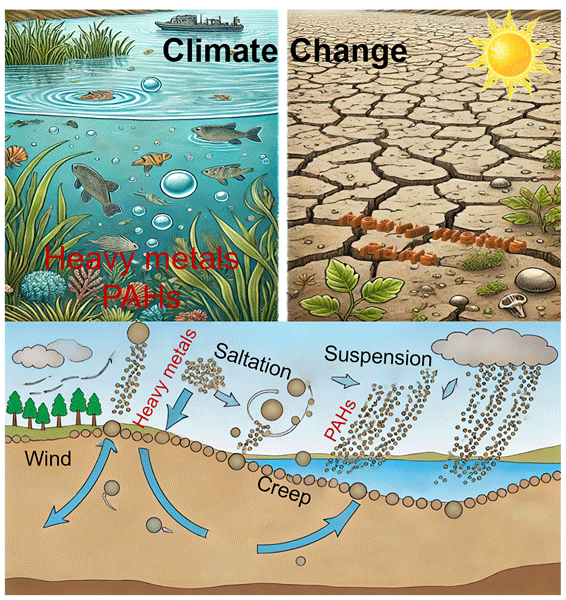
Numerous lakes are shrinking, owing to climate change and human activities, releasing pollutants from dried lake beds as dust aerosols. The health risks remain unclear. Recently, Poyang and Dongting lakes faced record droughts, exposing 99 % and 88 % of their areas. We show that lake bed dust can raise PM10 to 637.5 μg m-³ and exceed non-carcinogenic (HQ = 4.13) and Cr carcinogenic (approx. 2.10 × 10−⁶) risk thresholds, posing growing health threats.
Xiufeng Lian, Yongjiang Xu, Fengxian Liu, Long Peng, Xiaodong Hu, Guigang Tang, Xu Dao, Hui Guo, Liwei Wang, Bo Huang, Chunlei Cheng, Lei Li, Guohua Zhang, Xinhui Bi, Xiaofei Wang, Zhen Zhou, and Mei Li
Atmos. Chem. Phys., 25, 8891–8905, https://doi.org/10.5194/acp-25-8891-2025, https://doi.org/10.5194/acp-25-8891-2025, 2025
Short summary
Short summary
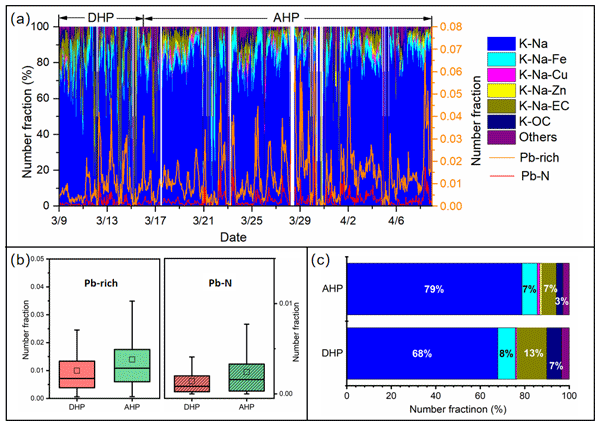
In this study, we analyzed the mixing state and atmospheric chemical processes of Pb-rich single particles in Beijing. We focused on analyzing the differences in Pb-rich particles between the heating period and non-heating period, as well as the formation mechanism of lead nitrate after coal-to-gas conversion. Our results highlighted the improvement of Pb levels in the particulate as a result of coal-to-gas conversion.
Jinghao Zhai, Yin Zhang, Pengfei Liu, Yujie Zhang, Antai Zhang, Yaling Zeng, Baohua Cai, Jingyi Zhang, Chunbo Xing, Honglong Yang, Xiaofei Wang, Jianhuai Ye, Chen Wang, Tzung-May Fu, Lei Zhu, Huizhong Shen, Shu Tao, and Xin Yang
Atmos. Chem. Phys., 25, 7959–7972, https://doi.org/10.5194/acp-25-7959-2025, https://doi.org/10.5194/acp-25-7959-2025, 2025
Short summary
Short summary
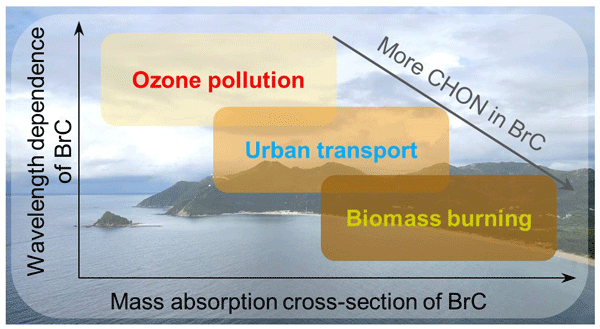
Our study shows that the optical properties of brown carbon depend on its source. Brown carbon from ozone pollution had the weakest light absorption but the strongest wavelength dependence, while biomass burning brown carbon showed the strongest absorption and the weakest wavelength dependence. Nitrogen-containing organic carbon compounds were identified as key light absorbers. These results improve understanding of brown carbon sources and help refine climate models.
Qianqian Gao, Shengqiang Zhu, Kaili Zhou, Jinghao Zhai, Shaodong Chen, Qihuang Wang, Shurong Wang, Jin Han, Xiaohui Lu, Hong Chen, Liwu Zhang, Lin Wang, Zimeng Wang, Xin Yang, Qi Ying, Hongliang Zhang, Jianmin Chen, and Xiaofei Wang
Atmos. Chem. Phys., 23, 13049–13060, https://doi.org/10.5194/acp-23-13049-2023, https://doi.org/10.5194/acp-23-13049-2023, 2023
Short summary
Short summary
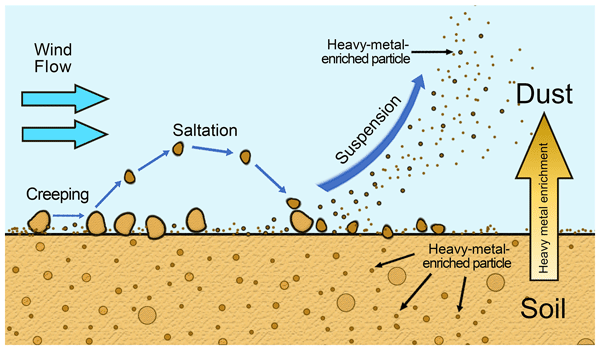
Dust is a major source of atmospheric aerosols. Its chemical composition is often assumed to be similar to the parent soil. However, this assumption has not been rigorously verified. Dust aerosols are mainly generated by wind erosion, which may have some chemical selectivity. Mn, Cd and Pb were found to be highly enriched in fine-dust (PM2.5) aerosols. In addition, estimation of heavy metal emissions from dust generation by air quality models may have errors without using proper dust profiles.
Cited articles
Adachi, M., Okuyama, K., and Kousaka, Y.: Electrostatic coagulation of bipolarly charged aerosol particles, J. Chem. Eng. Jpn., 14, 467–473, https://doi.org/10.1252/JCEJ.14.467, 1981.
Chen, S., Zhao, D., Huang, J., He, J., Chen, Y., Chen, J., Bi, H., Lou, G., Du, S., Zhang, Y., and Yang, F.: Mongolia contributed more than 42 % of the dust concentrations in northern China in March and April 2023, Adv. Atmos. Sci., 40, 1549–1557, https://doi.org/10.1007/s00376-023-3062-1, 2023.
Cimarelli, C. and Genareau, K.: A review of volcanic electrification of the atmosphere and volcanic lightning, J. Volcanol. Geoth. Res., 422, 107449, https://doi.org/10.1016/j.jvolgeores.2021.107449, 2022.
Fuchs, N. A.: The Mechanics of Aerosols, Pergamon Press, Oxford, 1964.
Grell, G. A., Peckham, S. E., Schmitz, R., McKeen, S. A., Frost, G., Skamarock, W. C., and Eder, B.: Fully coupled “online” chemistry within the WRF model, Atmos. Environ., 39, 6957–6975, https://doi.org/10.1016/j.atmosenv.2005.04.027, 2005.
Harrison, R. G. and Carslaw, K. S.: Ion–aerosol–cloud processes in the lower atmosphere, Rev. Geophys., 41, 1012, https://doi.org/10.1029/2002RG000114, 2003.
Haywood, J. M., Francis, P. N., Osborne, S. R., Glew, M. D., Loeb, N., Highwood, E. J., Tanré, D., Myhre, G., Formenti, P., and Hirst, E.: Radiative properties and direct radiative effect of Saharan dust measured by the C-130 aircraft during SHADE: 1. Solar spectrum, J. Geophys. Res.-Atmos., 108, 8577, https://doi.org/10.1029/2002JD002687, 2003.
Hoppel, W. A., Anderson, R. V., and Willett, J. C.: Atmospheric electricity in the planetary boundary layer, in: The Earth's Electrical Environment, 149–165, National Academy Press, Washington, D.C., https://doi.org/10.17226/898, 1986a.
Israel, H.: Atmospheric Electricity, Vol. 1, Israel Program for Scientific Translations, Jerusalem, distributed by the National Science Foundation, Washington, D.C., ISBN 978-0-7065-0517-7, 1970.
Israel, H.: Atmospheric Electricity, Vol. 2, Israel Program for Scientific Translations, Jerusalem, National Science Foundation, Washington, D.C., ISBN 978-0-7065-1129-1, 1973.
Kok, J. F., Adebiyi, A. A., Albani, S., Balkanski, Y., Checa-Garcia, R., Chin, M., Colarco, P. R., Hamilton, D. S., Huang, Y., Ito, A., Klose, M., Leung, D. M., Li, L., Mahowald, N. M., Miller, R. L., Obiso, V., Pérez García-Pando, C., Rocha-Lima, A., Wan, J. S., and Whicker, C. A.: Improved representation of the global dust cycle using observational constraints on dust properties and abundance, Atmos. Chem. Phys., 21, 8127–8167, https://doi.org/10.5194/acp-21-8127-2021, 2021.
Kumar, P., Morawska, L., Birmili, W., Paasonen, P., Hu, M., Kulmala, M., Harrison, R. M., Norford, L., and Britter, R.: Ultrafine particles in cities, Environ. Int., 66, 1–10, https://doi.org/10.1016/j.envint.2014.01.013, 2014.
Lee, Y. H., Chen, K., and Adams, P. J.: Development of a global model of mineral dust aerosol microphysics, Atmos. Chem. Phys., 9, 2441–2458, https://doi.org/10.5194/acp-9-2441-2009, 2009.
Li, Y., Chen, X., and Jiang, J.: Measuring size distributions of atmospheric aerosols using natural air ions, Aerosol Sci. Tech., 56, 655–664, https://doi.org/10.1080/02786826.2022.2060795, 2022.
Liu, B. Y. H. and Pui, D. Y. H.: Equilibrium bipolar charge distribution of aerosols, J. Colloid Interf. Sci., 49, 305–312, https://doi.org/10.1016/0021-9797(74)90366-X, 1974.
Ma, X., Gao, Q., Jiang, X., Chen, S., Gan, Y., Zhang, T., Lu, X., and Wang, X.: Direct effects of air humidity on dust aerosol production: Evidence for the surprising role of electrostatic forces, Geophys. Res. Lett., 50, e2023GL103639, https://doi.org/10.1029/2023GL103639, 2023.
Mallios, S. A., Daskalopoulou, V., and Amiridis, V.: Modeling of the electrical interaction between desert dust particles and the Earth's atmosphere, J. Aerosol Sci., 165, 106044, https://doi.org/10.1016/j.jaerosci.2022.106044, 2022.
Maring, H., Savoie, D. L., Izaguirre, M. A., Custals, L., and Reid, J. S.: Mineral dust aerosol size distribution change during atmospheric transport, J. Geophys. Res.-Atmos., 108, 8592, https://doi.org/10.1029/2002JD002536, 2003.
Morawska, L., Ristovski, Z., Jayaratne, E. R., Keogh, D. U., and Ling, X.: Ambient nano and ultrafine particles from motor vehicle emissions: Characteristics, ambient processing and implications on human exposure, Atmos. Environ., 42, 8113–8138, https://doi.org/10.1016/j.atmosenv.2008.07.050, 2008.
Mu, F. and Fiedler, S.: How much do atmospheric depressions and Mongolian cyclones contribute to spring dust activities in East Asia?, npj Clim. Atmos. Sci., 8, 51, https://doi.org/10.1038/s41612-025-00929-w, 2025.
Oron, A. and Seinfeld, J. H.: The dynamic behavior of charged aerosols: II. Numerical solution by the sectional method, J. Colloid Interf. Sci., 133, 66–79, https://doi.org/10.1016/0021-9797(89)90282-8, 1989.
Pöschl, U.: Atmospheric aerosols: Composition, transformation, climate and health effects, Angew. Chem. Int. Edit., 44, 7520–7540, https://doi.org/10.1002/anie.200501122, 2005.
Qu, Z., Trabelsi, Z. A., Losno, R., Monna, F., Nowak, S., Masmoudi, M., and Quisefit, J.-P.: A laboratory dust generator applying vibration to soil sample: Mineralogical study and compositional analyses, J. Geophys. Res.-Atmos., 125, e2019JD032224, https://doi.org/10.1029/2019JD032224, 2020.
Quan, L.: Critical Role of Dust Induced Electrostatic Coagulation in the Evolution of Aerosol Size Distributions in the Atmosphere, Mendeley Data [code, data set], https://doi.org/10.17632/n8ys5rzcty.1, 2026.
Ramnarine, E., Kodros, J. K., Hodshire, A. L., Lonsdale, C. R., Alvarado, M. J., and Pierce, J. R.: Effects of near-source coagulation of biomass burning aerosols on global predictions of aerosol size distributions and implications for aerosol radiative effects, Atmos. Chem. Phys., 19, 6561–6577, https://doi.org/10.5194/acp-19-6561-2019, 2019.
Rose, C., Collaud Coen, M., Andrews, E., Lin, Y., Bossert, I., Lund Myhre, C., Tuch, T., Wiedensohler, A., Fiebig, M., Aalto, P., Alastuey, A., Alonso-Blanco, E., Andrade, M., Artíñano, B., Arsov, T., Baltensperger, U., Bastian, S., Bath, O., Beukes, J. P., Brem, B. T., Bukowiecki, N., Casquero-Vera, J. A., Conil, S., Eleftheriadis, K., Favez, O., Flentje, H., Gini, M. I., Gómez-Moreno, F. J., Gysel-Beer, M., Hallar, A. G., Kalapov, I., Kalivitis, N., Kasper-Giebl, A., Keywood, M., Kim, J. E., Kim, S.-W., Kristensson, A., Kulmala, M., Lihavainen, H., Lin, N.-H., Lyamani, H., Marinoni, A., Martins Dos Santos, S., Mayol-Bracero, O. L., Meinhardt, F., Merkel, M., Metzger, J.-M., Mihalopoulos, N., Ondracek, J., Pandolfi, M., Pérez, N., Petäjä, T., Petit, J.-E., Picard, D., Pichon, J.-M., Pont, V., Putaud, J.-P., Reisen, F., Sellegri, K., Sharma, S., Schauer, G., Sheridan, P., Sherman, J. P., Schwerin, A., Sohmer, R., Sorribas, M., Sun, J., Tulet, P., Vakkari, V., van Zyl, P. G., Velarde, F., Villani, P., Vratolis, S., Wagner, Z., Wang, S.-H., Weinhold, K., Weller, R., Yela, M., Zdimal, V., and Laj, P.: Seasonality of the particle number concentration and size distribution: a global analysis retrieved from the network of Global Atmosphere Watch (GAW) near-surface observatories, Atmos. Chem. Phys., 21, 17185–17223, https://doi.org/10.5194/acp-21-17185-2021, 2021.
Seinfeld, J. H. and Pandis, S. N.: Atmospheric Chemistry and Physics: From Air Pollution to Climate Change, 3rd edn., John Wiley & Sons, Hoboken, NJ, ISBN 978-1-118-94740-1, 2016.
Shao, J. and Mao, J.: Dust particle size distributions during spring in Yinchuan, China, Adv. Meteorol., 2016, 4050240, https://doi.org/10.1155/2016/6940502, 2016.
Tammet, H., Hõrrak, U., Laakso, L., and Kulmala, M.: Factors of air ion balance in a coniferous forest according to measurements in Hyytiälä, Finland, Atmos. Chem. Phys., 6, 3377–3390, https://doi.org/10.5194/acp-6-3377-2006, 2006.
Tegen, I. and Lacis, A. A.: Modeling of particle size distribution and its influence on the radiative properties of mineral dust aerosol, J. Geophys. Res.-Atmos., 101, 19237–19244, https://doi.org/10.1029/95JD03610, 1996.
Tigges, L., Wiedensohler, A., Weinhold, K., Gandhi, J., and Schmid, H.-J.: Bipolar charge distribution of a soft X-ray diffusion charger, J. Aerosol Sci., 90, 77–86, https://doi.org/10.1016/j.jaerosci.2015.07.002, 2015.
Xie, H., Wang, Z., Luo, T., Yang, K., Zhang, D., Zhou, T., Yang, X., Liu, X., and Fu, Q.: Seasonal variation of dust aerosol vertical distribution in Arctic based on polarized micropulse lidar measurement, Remote Sensing, 14, 5581, https://doi.org/10.3390/rs14215581, 2022.
Zebel, G.: Zur Theorie des Verhaltens elektrisch geladener Aerosole, Kolloid Z., 157, 37–50, 1958.
Zhang, H. and Zhou, Y.-H.: Reconstructing the electrical structure of dust storms from locally observed electric field data, Nat. Commun., 11, 5072, https://doi.org/10.1038/s41467-020-18759-0, 2020.
Zhang, R., Lu, X., Wang, L., Chen, J., Chen, D.-R., and Wang, X.: Extremely inexpensive and simple method to remove indoor respiratory aerosols, Environ. Sci. Technol. Let., 10, 786–791, https://doi.org/10.1021/acs.estlett.3c00541, 2023.

Short summary
Dust aerosols in the atmosphere often carry electric charges, which can change how they collide and grow. We measured these charges and found that electrical forces can speed up aerosol removal compared with traditional assumptions. This effect alters aerosol numbers and lifetimes and may influence air quality, cloud formation, and climate predictions.
Dust aerosols in the atmosphere often carry electric charges, which can change how they collide...
Altmetrics
Final-revised paper
Preprint