
Articles | Volume 26, issue 11
https://doi.org/10.5194/acp-26-7789-2026
© Author(s) 2026. This work is distributed under
the Creative Commons Attribution 4.0 License.
the Creative Commons Attribution 4.0 License.
Special issue:
https://doi.org/10.5194/acp-26-7789-2026
© Author(s) 2026. This work is distributed under
the Creative Commons Attribution 4.0 License.
the Creative Commons Attribution 4.0 License.
Research article
| 
02 Jun 2026
Research article |
| 02 Jun 2026
| 02 Jun 2026
Quantifying meteorological impacts on local landfill methane emissions by using field measurements and machine learning
Donghee Kim
Department of Environmental Management, Graduate School of Environmental Studies, Seoul National University, Seoul, Republic of Korea

Department of Environmental Management, Graduate School of Environmental Studies, Seoul National University, Seoul, Republic of Korea
Dong Yeong Chang
Department of Environmental Management, Graduate School of Environmental Studies, Seoul National University, Seoul, Republic of Korea
Jaewon Joo
Department of Environmental Management, Graduate School of Environmental Studies, Seoul National University, Seoul, Republic of Korea
Related authors
Hayoung Park, Sujong Jeong, Jaewon Joo, Dong Yeong Chang, Yu-Ri Lee, Hyuckjae Lee, Jueun Kim, Jaewon Shin, Jonghyuk Lee, Jaemin Hong, Jae Hyun Lim, Donghee Kim, Isamu Morino, Matthias M. Frey, Gwangju Moon, Hyojin Eom, Sumin Kim, Sunran Lee, Jungho Yu, and Kyucheol Shin
EGUsphere, https://doi.org/10.5194/egusphere-2026-3755, https://doi.org/10.5194/egusphere-2026-3755, 2026
Short summary
Short summary
This study analyzed greenhouse gas emissions from one of South Korea’s largest petrochemical complexes using ground, mobile, aircraft, and satellite measurements. The results revealed higher emissions, including methane leaks, than what was reported in existing inventory estimates. By integrating different types of observations, this study shows a more accurate way to measure industrial emissions and provides information that can support better emissions reporting and climate action.
Jaewon Joo, Sujong Jeong, Hyuckjae Lee, Yeonsoo Kim, Jaewon Shin, Donghee Kim, and Dong Yeong Chang
Atmos. Meas. Tech., 19, 3019–3030, https://doi.org/10.5194/amt-19-3019-2026, https://doi.org/10.5194/amt-19-3019-2026, 2026
Short summary
Short summary
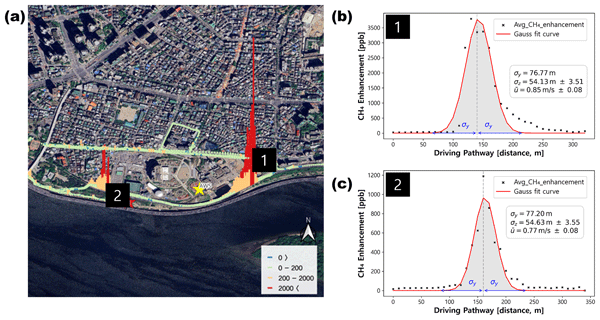
This research presents an assessment of fugitive methane emissions from a liquefied natural gas (LNG) power plant in Seoul, using a mobile greenhouse gas (GHG) measurement platform. Three key emission hotspots were identified, including continuous methane leaks and one stochastic super-emitter from the LNG power plant facilities. Our measurements revealed significant discrepancies compared to bottom-up inventories, which fail to capture these intermittent, high-emission events.
Hayoung Park, Sujong Jeong, Jaewon Joo, Dong Yeong Chang, Yu-Ri Lee, Hyuckjae Lee, Jueun Kim, Jaewon Shin, Jonghyuk Lee, Jaemin Hong, Jae Hyun Lim, Donghee Kim, Isamu Morino, Matthias M. Frey, Gwangju Moon, Hyojin Eom, Sumin Kim, Sunran Lee, Jungho Yu, and Kyucheol Shin
EGUsphere, https://doi.org/10.5194/egusphere-2026-3755, https://doi.org/10.5194/egusphere-2026-3755, 2026
Short summary
Short summary
This study analyzed greenhouse gas emissions from one of South Korea’s largest petrochemical complexes using ground, mobile, aircraft, and satellite measurements. The results revealed higher emissions, including methane leaks, than what was reported in existing inventory estimates. By integrating different types of observations, this study shows a more accurate way to measure industrial emissions and provides information that can support better emissions reporting and climate action.
Jeonghyeok Moon, Wonbae Jeon, Sujong Jeong, Yunsoo Choi, Hyun Cheol Kim, Soon-Young Park, Juseon Bak, Jung-Woo Yoo, Jaehyeong Park, Dongjin Kim, Hyeonsik Choe, Chae-Yeong Yang, and Min Heo
Atmos. Chem. Phys., 26, 10379–10398, https://doi.org/10.5194/acp-26-10379-2026, https://doi.org/10.5194/acp-26-10379-2026, 2026
Short summary
Short summary
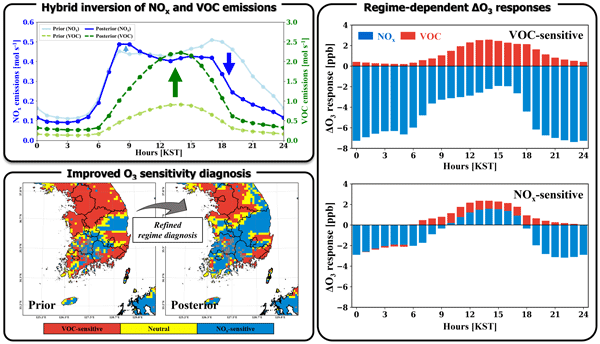
This study develops a hybrid inverse modeling framework to better estimate the spatiotemporal distributions of nitrogen oxides (NOx) and volatile organic compound (VOC) emissions over South Korea. The optimized emissions improve ozone simulations and clarify whether ozone formation is more sensitive to NOx or to VOC. By identifying when precursor emissions exert the strongest influence on ozone, this work provides time-resolved guidance for region-specific air quality strategies.
Jaewon Joo, Sujong Jeong, Hyuckjae Lee, Yeonsoo Kim, Jaewon Shin, Donghee Kim, and Dong Yeong Chang
Atmos. Meas. Tech., 19, 3019–3030, https://doi.org/10.5194/amt-19-3019-2026, https://doi.org/10.5194/amt-19-3019-2026, 2026
Short summary
Short summary
This research presents an assessment of fugitive methane emissions from a liquefied natural gas (LNG) power plant in Seoul, using a mobile greenhouse gas (GHG) measurement platform. Three key emission hotspots were identified, including continuous methane leaks and one stochastic super-emitter from the LNG power plant facilities. Our measurements revealed significant discrepancies compared to bottom-up inventories, which fail to capture these intermittent, high-emission events.
Anna Martin, Klaus Klingmüller, Benedikt Steil, Sergey Gromov, Yu-Ri Lee, Dong Yeong Chang, Nic Surawski, Jos Lelieveld, Sujong Jeong, and Andrea Pozzer
EGUsphere, https://doi.org/10.5194/egusphere-2026-371, https://doi.org/10.5194/egusphere-2026-371, 2026
Short summary
Short summary
We evaluate a new model simulating soil uptake of methane and hydrogen from the atmosphere. Coupled to an atmospheric chemistry and land surface model, it accounts for weather and soil conditions. Our results match observations, showing accurate removal depending on soil properties, temperature, moisture, and atmospheric conditions. This work improves the model’s ability to represent natural cycles of methane and hydrogen.
Sojung Sim and Sujong Jeong
Atmos. Chem. Phys., 25, 18509–18526, https://doi.org/10.5194/acp-25-18509-2025, https://doi.org/10.5194/acp-25-18509-2025, 2025
Short summary
Short summary
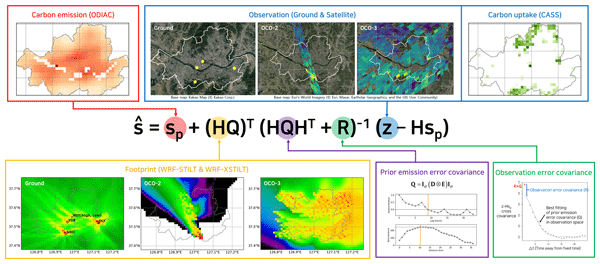
This study develops a high-resolution inverse modeling framework that combines ground-based and satellite CO2 observations to improve urban emission estimates in Seoul. By integrating atmospheric data and transport models, the research reduces uncertainties in CO2 emissions and reveals spatial and temporal patterns. The method offers a valuable tool for supporting climate policies and can be applied to other cities for better emission verification.
Ran Chen, Jin-Soo Kim, Jung-Eun Chu, Hyo-Jeong Kim, Bora Lee, Sujong Jeong, and Gabriela Schaepman-Strub
EGUsphere, https://doi.org/10.5194/egusphere-2025-5805, https://doi.org/10.5194/egusphere-2025-5805, 2025
Short summary
Short summary
We investigated the responses of mangroves to temperature and solar radiation, and further projected future climate favourability for mangroves across East Asia. East Asian mangrove growth is positively linked to temperature and solar radiation, particularly in cumulative anomalies on seasonal time scales. Winter isotherm shifts suggest northward mangrove expansion under global warming, but low solar radiation from aerosol emissions in East Asia may still constrain their growth.
Brendan Byrne, David F. Baker, Sourish Basu, Michael Bertolacci, Kevin W. Bowman, Dustin Carroll, Abhishek Chatterjee, Frédéric Chevallier, Philippe Ciais, Noel Cressie, David Crisp, Sean Crowell, Feng Deng, Zhu Deng, Nicholas M. Deutscher, Manvendra K. Dubey, Sha Feng, Omaira E. García, David W. T. Griffith, Benedikt Herkommer, Lei Hu, Andrew R. Jacobson, Rajesh Janardanan, Sujong Jeong, Matthew S. Johnson, Dylan B. A. Jones, Rigel Kivi, Junjie Liu, Zhiqiang Liu, Shamil Maksyutov, John B. Miller, Scot M. Miller, Isamu Morino, Justus Notholt, Tomohiro Oda, Christopher W. O'Dell, Young-Suk Oh, Hirofumi Ohyama, Prabir K. Patra, Hélène Peiro, Christof Petri, Sajeev Philip, David F. Pollard, Benjamin Poulter, Marine Remaud, Andrew Schuh, Mahesh K. Sha, Kei Shiomi, Kimberly Strong, Colm Sweeney, Yao Té, Hanqin Tian, Voltaire A. Velazco, Mihalis Vrekoussis, Thorsten Warneke, John R. Worden, Debra Wunch, Yuanzhi Yao, Jeongmin Yun, Andrew Zammit-Mangion, and Ning Zeng
Earth Syst. Sci. Data, 15, 963–1004, https://doi.org/10.5194/essd-15-963-2023, https://doi.org/10.5194/essd-15-963-2023, 2023
Short summary
Short summary
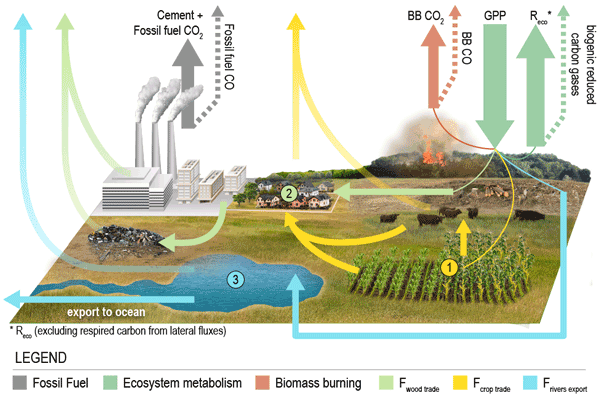
Changes in the carbon stocks of terrestrial ecosystems result in emissions and removals of CO2. These can be driven by anthropogenic activities (e.g., deforestation), natural processes (e.g., fires) or in response to rising CO2 (e.g., CO2 fertilization). This paper describes a dataset of CO2 emissions and removals derived from atmospheric CO2 observations. This pilot dataset informs current capabilities and future developments towards top-down monitoring and verification systems.
Carlos Alberti, Frank Hase, Matthias Frey, Darko Dubravica, Thomas Blumenstock, Angelika Dehn, Paolo Castracane, Gregor Surawicz, Roland Harig, Bianca C. Baier, Caroline Bès, Jianrong Bi, Hartmut Boesch, André Butz, Zhaonan Cai, Jia Chen, Sean M. Crowell, Nicholas M. Deutscher, Dragos Ene, Jonathan E. Franklin, Omaira García, David Griffith, Bruno Grouiez, Michel Grutter, Abdelhamid Hamdouni, Sander Houweling, Neil Humpage, Nicole Jacobs, Sujong Jeong, Lilian Joly, Nicholas B. Jones, Denis Jouglet, Rigel Kivi, Ralph Kleinschek, Morgan Lopez, Diogo J. Medeiros, Isamu Morino, Nasrin Mostafavipak, Astrid Müller, Hirofumi Ohyama, Paul I. Palmer, Mahesh Pathakoti, David F. Pollard, Uwe Raffalski, Michel Ramonet, Robbie Ramsay, Mahesh Kumar Sha, Kei Shiomi, William Simpson, Wolfgang Stremme, Youwen Sun, Hiroshi Tanimoto, Yao Té, Gizaw Mengistu Tsidu, Voltaire A. Velazco, Felix Vogel, Masataka Watanabe, Chong Wei, Debra Wunch, Marcia Yamasoe, Lu Zhang, and Johannes Orphal
Atmos. Meas. Tech., 15, 2433–2463, https://doi.org/10.5194/amt-15-2433-2022, https://doi.org/10.5194/amt-15-2433-2022, 2022
Short summary
Short summary
Space-borne greenhouse gas missions require ground-based validation networks capable of providing fiducial reference measurements. Here, considerable refinements of the calibration procedures for the COllaborative Carbon Column Observing Network (COCCON) are presented. Laboratory and solar side-by-side procedures for the characterization of the spectrometers have been refined and extended. Revised calibration factors for XCO2, XCO and XCH4 are provided, incorporating 47 new spectrometers.
Cited articles
Alexander, A., Burklin, C., and Singleton, A.: Landfill gas emissions model (LandGEM) version 3.02 user's guide, https://www.epa.gov/ (last access: 16 March 2026), 2005.
Amini, H. R., Reinhart, D. R., and Mackie, K. R.: Determination of first-order landfill gas modeling parameters and uncertainties, Waste Manag., 32, 305–316, https://doi.org/10.1016/j.wasman.2011.09.021, 2012.
Amini, H. R., Reinhart, D. R., and Niskanen, A.: Comparison of first-order-decay modeled and actual field measured municipal solid waste landfill methane data, Waste Manag., 33, 2720–2728, https://doi.org/10.1016/j.wasman.2013.07.025, 2013
Babilotte, A., Lagier, T., Fiani, E., and Taramini, V.: Fugitive methane emissions from landfills: Field comparison of five methods on a French landfill, J. Environ. Eng., 136, 777–784, https://doi.org/10.1061/(ASCE)EE.1943-7870.0000200, 2010.
Bai, S., Li, F., Yan, Y., Huang, Q., Jiang, F., Chen, H., and Zhang, Y.: Seasonal variations of methane emissions from a Urumqi landfill in China and its driving factors using hyperspectral satellite time-series observations, J. Geophys. Res.-Atmos., 130, e2025JD044272, https://doi.org/10.1029/2025JD044272, 2025.
Barlaz, M. A.: Forest products decomposition in municipal solid waste landfills, Waste Manag., 26, 321–333, https://doi.org/10.1016/j.wasman.2005.11.002, 2006.
Barlaz, M. A., Ham, R. K., Schaefer, D. M., and Isaacson, R.: Methane production from municipal refuse: a review of enhancement techniques and microbial dynamics, Crit. Rev. Environ. Sci. Technol., 19, 557–584, https://doi.org/10.1080/10643389009388384, 1990.
Bian, R., Chen, J., Li, W., Shi, W., Lin, Y., Chai, X., and Sun, Y.: Methane emissions and energy generation potential from a municipal solid waste landfill based on inventory models: A case study, Environ. Prog. Sustain. Energy, 40, e13654, https://doi.org/10.1002/ep.13654, 2021.
Breiman, L.: Statistical modeling: The two cultures (with comments and a rejoinder by the author), Stat. Sci., 16, 199-231, https://doi.org/10.1214/ss/1009213726, 2001.
Cambaliza, M. O. L., Bogner, J. E., Green, R. B., Shepson, P. B., Harvey, T. A., Spokas, K. A., Stirm, B. H., and Corcoran, M.: Field measurements and modeling to resolve m2 to km2 CH4 emissions for a complex urban source: An Indiana landfill study, Elem. Sci. Anth., 5, 36, https://doi.org/10.1525/elementa.145, 2017.
Chanton, J. P., Powelson, D. K., and Green, R. B.: Methane oxidation in landfill cover soils, is a 10 % default value reasonable?, J. Environ. Qual., 38, 654–663, https://doi.org/10.2134/jeq2008.0221, 2009.
Christophersen, M., Linderød, L., Jensen, P. E., and Kjeldsen, P.: Methane oxidation at low temperatures in soil exposed to landfill gas, J. Environ. Qual., 29, 1989–1997, https://doi.org/10.2134/jeq2000.00472425002900060036x, 2000.
Cusworth, D. H., Duren, R. M., Ayasse, A. K., Jiorle, R., Howell, K., Aubrey, A., Green, R. O., Eastwood, M. L., Chapman, J. W., and Thorpe, A. K.: Quantifying methane emissions from United States landfills, Science, 383, 1499–1504, https://doi.org/10.1126/science.adi7735, 2024.
Duan, Z., Kjeldsen, P., and Scheutz, C.: Efficiency of gas collection systems at Danish landfills and implications for regulations, Waste Manag., 139, 269–278, https://doi.org/10.1016/j.wasman.2021.12.023, 2022.
Eggleston, H., Buendia, L., Miwa, K., Ngara, T., and Tanabe, K.: 2006 IPCC guidelines for national greenhouse gas inventories, https://www.ipcc-nggip.iges.or.jp/public/2006gl/ (last access: 16 March 2026), 2006.
European Commission and United States of America: Global methane pledge, https://www.ccacoalition.org/resources/global-methane-pledge (last access: 7 February 2026), 2021.
Fei, X., Fang, M., and Wang, Y.: Climate change affects land-disposed waste, Nat. Clim. Change, 11, 1004-1005, https://doi.org/10.1038/s41558-021-01220-5, 2021.
Fei, X., Zekkos, D., and Raskin, L.: Quantification of parameters influencing methane generation due to biodegradation of municipal solid waste in landfills and laboratory experiments, Waste Manag., 55, 276–287, https://doi.org/10.1016/j.wasman.2015.10.015, 2016.
Fjelsted, L., Christensen, A. G., Larsen, J. E., Kjeldsen, P., and Scheutz, C.: Closing the methane mass balance for an old closed Danish landfill, Waste Manag., 102, 179–189, https://doi.org/10.1016/j.wasman.2019.10.045, 2020.
Fosco, D., De Molfetta, M., Renzulli, P., and Notarnicola, B.: Progress in monitoring methane emissions from landfills using drones: An overview of the last ten years, Sci. Total Environ., 173981, https://doi.org/10.1016/j.scitotenv.2024.173981, 2024.
Herrador, M. A. and Gonzalez, A. G.: Evaluation of measurement uncertainty in analytical assays by means of Monte-Carlo simulation, Talanta, 64, 415–422, https://doi.org/10.1016/j.talanta.2004.03.011, 2004.
Iacobucci, D., Schneider, M. J., Popovich, D. L., and Bakamitsos, G. A.: Mean centering helps alleviate “micro” but not “macro” multicollinearity, Behav. Res. Methods, 48, 1308–1317, https://doi.org/10.3758/s13428-015-0624-x, 2016.
IEA: Global methane tracker 2022, IEA, Paris, https://www.iea.org/reports/global-methane-tracker-2022 (last access: 7 February 2026), 2022.
Innocenti, F., Robinson, R., Gardiner, T., Finlayson, A., and Connor, A.: Differential absorption lidar (DIAL) measurements of landfill methane emissions, Remote Sens., 9, 953, https://doi.org/10.3390/rs9090953, 2017.
Jain, P., Wally, J., Townsend, T. G., Krause, M., and Tolaymat, T.: Greenhouse gas reporting data improves understanding of regional climate impact on landfill methane production and collection, PLoS One, 16, e0246334, https://doi.org/10.1371/journal.pone.0246334, 2021.
Jeon, E., Bae, S., Lee, D., Seo, D., Chun, S., Lee, N., and Kim, J.: Methane generation potential and biodegradability of MSW components, in: Proc. 11th Int. Waste Manag. and Landfill Symp. (Sardinia 2007), S. Margherita di Pula, Cagliari, Italy, 2007.
Jeong, S., Park, J., Kim, Y. M., Park, M. H., and Kim, J. Y.: Innovation of flux chamber network design for surface methane emission from landfills using spatial interpolation models, Sci. Total Environ., 688, 18–25, https://doi.org/10.1016/j.scitotenv.2019.06.138, 2019.
Kalos, M. H. and Whitlock, P. A.: Monte Carlo Methods, 2nd Edn., Wiley-VCH, https://doi.org/10.1002/9783527626212, 2008.
Kang, M., Cho, S., Lee, Y., Lee, K.-H., Sohn, S., Choi, S.-W., Kim, J., and Park, J.: Quantification of methane and carbon dioxide surface emissions from a metropolitan landfill based on quasi-continuous eddy covariance measurement, Waste Manag., 186, 355–365, https://doi.org/10.1016/j.wasman.2024.06.020, 2024.
Karanjekar, R. V., Bhatt, A., Altouqui, S., Jangikhatoonabad, N., Durai, V., Sattler, M. L., Hossain, M. D., and Chen, V.: Estimating methane emissions from landfills based on rainfall, ambient temperature, and waste composition: The CLEEN model, Waste Manag., 46, 389–398, https://doi.org/10.1016/j.wasman.2015.07.030, 2015.
Kaza, S., Yao, L., Bhada-Tata, P., and Van Woerden, F.: What a waste 2.0: a global snapshot of solid waste management to 2050, World Bank Publications, https://doi.org/10.1596/978-1-4648-1329-0, 2018.
Kim, H. and Townsend, T. G.: Wet landfill decomposition rate determination using methane yield results for excavated waste samples, Waste Manag., 32, 1427–1433, https://doi.org/10.1016/j.wasman.2012.03.017, 2012.
Kim, Y. M., Park, M. H., Jeong, S., Lee, K. H., and Kim, J. Y.: Evaluation of error inducing factors in unmanned aerial vehicle mounted detector to measure fugitive methane from solid waste landfill, Waste Manag., 124, 368–376, https://doi.org/10.1016/j.wasman.2021.02.023, 2021.
Kormi, T., Mhadhebi, S., Bel Hadj Ali, N., Abichou, T., and Green, R.: Estimation of fugitive landfill methane emissions using surface emission monitoring and Genetic Algorithms optimization, Waste Manag., 72, 313–328, https://doi.org/10.1016/j.wasman.2016.11.024, 2018.
Kraemer, H. C. and Blasey, C. M.: Centring in regression analyses: a strategy to prevent errors in statistical inference, Int. J. Methods Psychiatr. Res., 13, 141–151, https://doi.org/10.1002/mpr.170, 2004.
Krause, M. J., Chickering, G. W., Townsend, T. G., and Reinhart, D. R.: Critical review of the methane generation potential of municipal solid waste, Crit. Rev. Environ. Sci. Technol., 46, 1117–1182, https://doi.org/10.1080/10643389.2016.1204812, 2016.
Kumar, S., Nimchuk, N., Kumar, R., Zietsman, J., Ramani, T., Spiegelman, C., and Kenney, M.: Specific model for the estimation of methane emission from municipal solid waste landfills in India, Bioresour. Technol., 216, 981–987, https://doi.org/10.1016/j.biortech.2016.06.050, 2016.
Maasakkers, J. D., Varon, D. J., Elfarsdottir, A., McKeever, J., Jervis, D., Mahapatra, G., Pandey, S., Lorente, A., Borsdorff, T., and Foorthuis, L. R.: Using satellites to uncover large methane emissions from landfills, Sci. Adv., 8, eabn9683, https://doi.org/10.1126/sciadv.abn9683, 2022.
Machado, S. L., Carvalho, M. F., Gourc, J.-P., Vilar, O. M., and do Nascimento, J. C.: Methane generation in tropical landfills: Simplified methods and field results, Waste Manag., 29, 153–161, https://doi.org/10.1016/j.wasman.2008.02.017, 2009.
Masson-Delmotte, V., Zhai, P., Pirani, A., Connors, S. L., Pean, C., Berger, S., Caud, N., Chen, Y., Goldfarb, L., and Gomis, M.: Climate change 2021: The physical science basis. Contribution of Working Group I to the Sixth Assessment Report of the Intergovernmental Panel on Climate Change, 2, 2391, https://doi.org/10.1017/9781009157896, 2021.
Mønster, J., Kjeldsen, P., and Scheutz, C.: Methodologies for measuring fugitive methane emissions from landfills – A review, Waste Manag., 87, 835–859, https://doi.org/10.1016/j.wasman.2018.12.047, 2019.
Montzka, S. A., Dlugokencky, E. J., and Butler, J. H.: Non-CO2 greenhouse gases and climate change, Nature, 476, 43–50, https://doi.org/10.1038/nature10322, 2011.
Myhre, G., Samset, B. H., Schulz, M., Balkanski, Y., Bauer, S., Berntsen, T. K., Bian, H., Bellouin, N., Chin, M., Diehl, T., Easter, R. C., Feichter, J., Ghan, S. J., Hauglustaine, D., Iversen, T., Kinne, S., Kirkevåg, A., Lamarque, J.-F., Lin, G., Liu, X., Lund, M. T., Luo, G., Ma, X., van Noije, T., Penner, J. E., Rasch, P. J., Ruiz, A., Seland, Ø., Skeie, R. B., Stier, P., Takemura, T., Tsigaridis, K., Wang, P., Wang, Z., Xu, L., Yu, H., Yu, F., Yoon, J.-H., Zhang, K., Zhang, H., and Zhou, C.: Radiative forcing of the direct aerosol effect from AeroCom Phase II simulations, Atmos. Chem. Phys., 13, 1853–1877, https://doi.org/10.5194/acp-13-1853-2013, 2013.
Nesser, H., Jacob, D. J., Maasakkers, J. D., Lorente, A., Chen, Z., Lu, X., Shen, L., Qu, Z., Sulprizio, M. P., Winter, M., Ma, S., Bloom, A. A., Worden, J. R., Stavins, R. N., and Randles, C. A.: High-resolution US methane emissions inferred from an inversion of 2019 TROPOMI satellite data: contributions from individual states, urban areas, and landfills, Atmos. Chem. Phys., 24, 5069–5091, https://doi.org/10.5194/acp-24-5069-2024, 2024.
Owlcation: Landfills and dumps around the world with statistics, https://owlcation.com/stem/15-of-the-Worlds-Largest-Landfills (last access: 1 July 2025), 2024.
Papadopoulos, C. E. and Yeung, H.: Uncertainty estimation and Monte Carlo simulation method, Flow Meas. Instrum., 12, 291–298, https://doi.org/10.1016/S0955-5986(01)00015-2, 2001.
Park, J.-K., Chong, Y.-G., Tameda, K., and Lee, N.-H.: Applying methane and carbon flow balances for determination of first-order landfill gas model parameters, Environ. Eng. Res., 25, 374–383, https://doi.org/10.4491/eer.2019.074, 2019.
Park, J.-W. and Shin, H.-C.: Surface emission of landfill gas from solid waste landfill, Atmos. Environ., 35, 3445–3451, https://doi.org/10.1016/S1352-2310(01)00118-2, 2001.
Prather, M. J., Holmes, C. D., and Hsu, J.: Reactive greenhouse gas scenarios: Systematic exploration of uncertainties and the role of atmospheric chemistry, Geophys. Res. Lett., 39, https://doi.org/10.1029/2012GL051440, 2012.
Przydatek, G., Generowicz, A., and Kanownik, W.: Evaluation of the activity of a municipal waste landfill site in the operational and non-operational sectors based on landfill gas productivity, Energies, 17, 2421, https://doi.org/10.3390/en17102421, 2024.
Purmessur, B. and Surroop, D.: Power generation using landfill gas generated from new cell at the existing landfill site, J. Environ. Chem. Eng., 7, 103060, https://doi.org/10.1016/j.jece.2019.103060, 2019.
Rachor, I., Gebert, J., Grongroft, A., and Pfeiffer, E. M.: Variability of methane emissions from an old landfill over different time-scales, Eur. J. Soil Sci., 64, 16–26, https://doi.org/10.1111/ejss.12004, 2013.
Reinhart, D. R., Cooper, D. C., and Walker, B. L.: Flux chamber design and operation for the measurement of municipal solid waste landfill gas emission rates, J. Air Waste Manage. Assoc., 42, 1067–1070, https://doi.org/10.1080/10473289.1992.10467053, 1992.
Ress, B. B., Calvert, P. P., Pettigrew, C. A., and Barlaz, M. A.: Testing anaerobic biodegradability of polymers in a laboratory-scale simulated landfill, Environ. Sci. Technol., 32, 821–827, https://doi.org/10.1021/es970296h, 1998.
Robinson, R., Gardiner, T., Innocenti, F., Woods, P., and Coleman, M.: Infrared differential absorption Lidar (DIAL) measurements of hydrocarbon emissions, J. Environ. Monit., 13, 2213–2220, https://doi.org/10.1039/C0EM00312C, 2011.
Sacramento, F. C. C., Rangel, G., Zanta, V. M., and Queiroz, L. M.: Climate variability impacts on methane recovery in a municipal solid waste landfill: A case study in a humid tropical climate region, Environ. Res., 247, 118181, https://doi.org/10.1016/j.envres.2024.118181, 2024.
Saunois, M., Martinez, A., Poulter, B., Zhang, Z., Raymond, P. A., Regnier, P., Canadell, J. G., Jackson, R. B., Patra, P. K., Bousquet, P., Ciais, P., Dlugokencky, E. J., Lan, X., Allen, G. H., Bastviken, D., Beerling, D. J., Belikov, D. A., Blake, D. R., Castaldi, S., Crippa, M., Deemer, B. R., Dennison, F., Etiope, G., Gedney, N., Höglund-Isaksson, L., Holgerson, M. A., Hopcroft, P. O., Hugelius, G., Ito, A., Jain, A. K., Janardanan, R., Johnson, M. S., Kleinen, T., Krummel, P. B., Lauerwald, R., Li, T., Liu, X., McDonald, K. C., Melton, J. R., Mühle, J., Müller, J., Murguia-Flores, F., Niwa, Y., Noce, S., Pan, S., Parker, R. J., Peng, C., Ramonet, M., Riley, W. J., Rocher-Ros, G., Rosentreter, J. A., Sasakawa, M., Segers, A., Smith, S. J., Stanley, E. H., Thanwerdas, J., Tian, H., Tsuruta, A., Tubiello, F. N., Weber, T. S., van der Werf, G. R., Worthy, D. E. J., Xi, Y., Yoshida, Y., Zhang, W., Zheng, B., Zhu, Q., Zhu, Q., and Zhuang, Q.: Global Methane Budget 2000–2020, Earth Syst. Sci. Data, 17, 1873–1958, https://doi.org/10.5194/essd-17-1873-2025, 2025.
Scheutz, C., Kjeldsen, P., Bogner, J. E., De Visscher, A., Gebert, J., Hilger, H. A., Huber-Humer, M., and Spokas, K.: Microbial methane oxidation processes and technologies for mitigation of landfill gas emissions, Waste Manag. Res., 27, 409-455, https://doi.org/10.1177/0734242X09339325, 2009.
Seoul Carbon Neutrality Support Center (SCNSC): 2022 Seoul Greenhouse Gas Inventory Report, SCNSC, https://seoulnetzero.si.re.kr/archives/data/ (last access: 16 March 2026), 2024.
Sil, A., Kumar, S., and Wong, J. W.: Development of correction factors for landfill gas emission model suiting Indian condition to predict methane emission from landfills, Bioresour. Technol., 168, 97–99, 2014.
Solomon, S., Qin, D., Manning, M., Chen, Z., Marquis, M., Averyt, K. B., Tignor, M., and Miller, H. L.: AR4 Climate Change 2007: The Physical Science Basis. Contribution of Working Group I to the Fourth Assessment Report of the Intergovernmental Panel on Climate Change, Cambridge University Press, Cambridge, UK, ISBN 978-0521-88009-1, 2007.
Spokas, K. A. and Bogner, J. E.: Limits and dynamics of methane oxidation in landfill cover soils, Waste Manag., 31, 823–832, https://doi.org/10.1016/j.wasman.2009.12.018, 2011.
Sudokwon Landfill Cooperation (SLC): 2019 On-site monitoring and emission characteristics analysis of landfill gas in the Sudokwon landfill, https://www.slc.or.kr/ (last access: 16 March 2026), 2020.
Sudokwon Landfill Cooperation (SLC): Journal of Resource Circulation Technology Research, 18, https://www.slc.or.kr/ (last access: 16 March 2026), 2022.
Sudokwon Landfill Cooperation (SLC): Year 2023 Sudokwon Landfill Statistics Year Book, https://www.slc.or.kr/ (last access: 16 March 2026), 2024.
Symons, G. and Buswell, A.: The methane fermentation of carbohydrates, J. Am. Chem. Soc., 55, 2028–2036, https://doi.org/10.1021/ja01332a039, 1933.
Tchobanoglous, G., Theisen, H., and Vigil, S.: Integrated solid waste management: Engineering principles and management issues, McGraw-Hill, , ISBN 978-0070632370, 1993.
Themelis, N. J. and Ulloa, P. A.: Methane generation in landfills, Renew. Energy, 32, 1243–1257, https://doi.org/10.1016/j.renene.2006.04.020, 2007.
Tyagi, L., Devi, R., Tyagi, S., Kumar, V., Sharma, K., Gautam, Y. K., Kumar, A., Kapoor, S., Bhardwaj, A., and Kumar, A.: Environmental impacts and recent advancements in the sensing of methane: A review, Environ. Technol. Rev., 14, 191–212, https://doi.org/10.1080/21622515.2025.2470448, 2025.
US-EPA: Other Test Method 10 (OTM10): Optical remote sensing for emission characterization from non-point sources, US-EPA, https://www.epa.gov/emc/emc-other-test-methods (last access: 16 March 2026), 2006.
US-EPA: Global Anthropogenic Non-CO2 Greenhouse Gas Emissions: 1990–2030, EPA 430-R-12-006, US-EPA, https://www.epa.gov/global-mitigation-non-co2-greenhouse-gases/global-non-co2-ghg-emissions-1990-2030 (last access: 16 March 2026), 2012.
Visvanathan, C., Pokhrel, D., Cheimchaisri, W., Hettiaratchi, J., and Wu, J. S.: Methanotrophic activities in tropical landfill cover soils: Effects of temperature, moisture content and methane concentration, Waste Manag. Res., 17, 313–323, https://doi.org/10.1177/0734242X9901700407, 1999.
Vu, H. L., Ng, K. T. W., and Richter, A.: Optimization of first order decay gas generation model parameters for landfills located in cold semi-arid climates, Waste Manag., 69, 315–324, https://doi.org/10.1016/j.wasman.2017.08.028, 2017.
Wang, Y., Fang, M., Lou, Z., He, H., Guo, Y., Pi, X., Wang, Y., Yin, K., and Fei, X.: Methane emissions from landfills differentially underestimated worldwide, Nat. Sustain., 7, 496–507, https://doi.org/10.1038/s41893-024-01307-9, 2024.
Wang, Y., Pelkonen, M., and Kaila, J.: Effects of temperature on the long-term behaviour of waste degradation, emissions and post-closure management based on landfill simulators, Open Waste Manag. J., 5, 19–27, https://doi.org/10.2174/1876400201205010019, 2012.
Warith, M. and Sharma, R.: Technical review of methods to enhance biological degradation in sanitary landfills, Water Qual. Res. J., 33, 417–438, https://doi.org/10.2166/wqrj.1998.024, 1998.
Whalen, S., Reeburgh, W., and Sandbeck, K.: Rapid methane oxidation in a landfill cover soil, Appl. Environ. Microbiol., 56, 3405–3411, https://doi.org/10.1128/aem.56.11.3405-3411.1990, 1990.
Yesiller, N. and Hanson, J. L.: Analysis of temperatures at a municipal solid waste landfill, in: Proc. 9th Int. Waste Manag. Landfill Symp. (Sardinia 2003), S. Margherita di Pula, Cagliari, Italy, ISBN 88-900254-2-6, 2003.
Yilmaz, M., Tinjum, J. M., Acker, C., and Marten, B.: Transport mechanisms and emission of landfill gas through various cover soil configurations in an MSW landfill using a static flux chamber technique, J. Environ. Manag., 280, 111677, https://doi.org/10.1016/j.jenvman.2020.111677, 2021.
Short summary
This study uses data and machine learning to better estimate methane emissions from a major landfill in South Korea. By considering local weather conditions like temperature and rain, the research improves how landfill methane is tracked over time. The results help us understand how climate affects emissions and provide tools that can be used worldwide to improve greenhouse gas monitoring and climate action planning.
This study uses data and machine learning to better estimate methane emissions from a major...


Special issue
Altmetrics
Final-revised paper
Preprint