Articles | Volume 26, issue 10
https://doi.org/10.5194/acp-26-7555-2026
© Author(s) 2026. This work is distributed under
the Creative Commons Attribution 4.0 License.

https://doi.org/10.5194/acp-26-7555-2026
© Author(s) 2026. This work is distributed under
the Creative Commons Attribution 4.0 License.
Melt period methane emissions in northern high latitude wetlands are governed by the length of the period and presence of permafrost

Finnish Meteorological Institute, 00101 Helsinki, Finland
Maria K. Tenkanen
Finnish Meteorological Institute, 00101 Helsinki, Finland
Aki Tsuruta
Finnish Meteorological Institute, 00101 Helsinki, Finland
Anttoni Erkkilä
Finnish Meteorological Institute, 00101 Helsinki, Finland
Kimmo Rautiainen
Finnish Meteorological Institute, 00101 Helsinki, Finland
Hermanni Aaltonen
Finnish Meteorological Institute, 00101 Helsinki, Finland
Motoki Sasakawa
National Institute for Environmental Studies, Ibaraki, Japan
Tuula Aalto
Finnish Meteorological Institute, 00101 Helsinki, Finland
Related authors
No articles found.
Mengze Li, Robert B. Jackson, Marielle Saunois, Philippe Ciais, Ben Poulter, Josep G. Canadell, Prabir K. Patra, Hanqin Tian, Zhen Zhang, Etienne Fluet-Chouinard, Zutao Ouyang, Ting Zhang, David J. Beerling, Dmitry A. Belikov, Philippe Bousquet, Danilo Custodio, Naveen Chandra, Xinyu Dou, Nicola Gedney, Peter O. Hopcroft, Alison M. Hoyt, Kazuhito Ichii, Akihito Ito, Atul K. Jain, Katherine Jensen, Fortunat Joos, Thomas Kleinen, Masayuki Kondo, Fa Li, Tingting Li, Xiangyu Liu, Shamil Maksyutov, Avni Malhotra, Adrien Martinez, Kyle McDonald, Joe R. Melton, Jurek Müller, Yosuke Niwa, Shufen Pan, Shushi Peng, Changhui Peng, Zhangcai Qin, Peter Raymond, William Riley, Arjo Segers, Rona L. Thompson, Aki Tsuruta, Yi Xi, Kunxiaojia Yuan, Wenxin Zhang, Bo Zheng, Qing Zhu, Qiuan Zhu, and Qianlai Zhuang
Earth Syst. Sci. Data, 18, 3507–3524, https://doi.org/10.5194/essd-18-3507-2026, https://doi.org/10.5194/essd-18-3507-2026, 2026
Short summary
Short summary
We proposed a framework that combines machine-learning and climate data to predict global natural vegetated wetland methane emissions for 2000–2025. We found that although total global emissions remained stable in the post-2020s, Northern Hemisphere emissions surged whilst tropical emissions fell. This approach allows us to rapidly monitor emissions and provides early warnings for climate impacts.
Rebecca H. Ward, Luke M. Western, Rachel L. Tunnicliffe, Elena Fillola, Aki Tsuruta, Tuula Aalto, and Anita L. Ganesan
Atmos. Meas. Tech., 19, 813–837, https://doi.org/10.5194/amt-19-813-2026, https://doi.org/10.5194/amt-19-813-2026, 2026
Short summary
Short summary
We studied methane emissions in Arctic Alaska using satellite observations to assess how well they can monitor this important greenhouse gas. We found that emission estimates varied depending on the satellite data product and were strongly affected by assumptions in the model. Our results highlight the need for careful interpretation of emissions from Arctic satellite data and thorough testing of models, with implications for reliable climate monitoring.
Ahmed Hasan Shahriyer, David Kraus, Tiina Markkanen, Mika Korkiakoski, Helena Rautakoski, Suvi Orttenvuori, Yao Gao, Henri Kajasilta, Rüdiger Grote, Annalea Lohila, and Tuula Aalto
EGUsphere, https://doi.org/10.5194/egusphere-2025-5197, https://doi.org/10.5194/egusphere-2025-5197, 2026
Short summary
Short summary
We successfully represented hydrology and carbon cycle associated with different forestry managements (Rotational and continuous cover forestry) for a drained peatland ecosystem using the processed based model LDNDC. This provides a robust framework for investigating future management scenarios and develop forest management strategies that supports climate neutrality in peatland ecosystems.
Anteneh Getachew Mengistu, Aki Tsuruta, Antoine Berchet, Rona Thompson, Maria Tenkanen, Hannakaisa Lindqvist, Tiina Markkanen, Antti Leppänen, Antti Laitinen, Adrien Martinez, Audrey Fortems-Cheiney, Lena Höglund-Isaksson, and Tuula Aalto
EGUsphere, https://doi.org/10.5194/egusphere-2025-5877, https://doi.org/10.5194/egusphere-2025-5877, 2026
Short summary
Short summary
Our manuscript presents a six-year, high-resolution inversion of European methane emissions using the Community Inversion Framework and FLEXPART. Leveraging an expanded in situ network, we reconcile inventories with observations, reveal regional biases, refine European methane budgets, and highlight the dominance of agricultural emissions. Results provide policy-relevant insights for mitigation and inventory verification.
Eleftherios Ioannidis, Antoon Meesters, Michael Steiner, Dominik Brunner, Friedemann Reum, Isabelle Pison, Antoine Berchet, Rona Thompson, Espen Sollum, Frank-Thomas Koch, Christoph Gerbig, Fenjuan Wang, Shamil Maksyutov, Aki Tsuruta, Maria Tenkanen, Tuula Aalto, Guillaume Monteil, Hong Lin, Ge Ren, Marko Scholze, and Sander Houweling
Earth Syst. Sci. Data, 18, 167–198, https://doi.org/10.5194/essd-18-167-2026, https://doi.org/10.5194/essd-18-167-2026, 2026
Short summary
Short summary
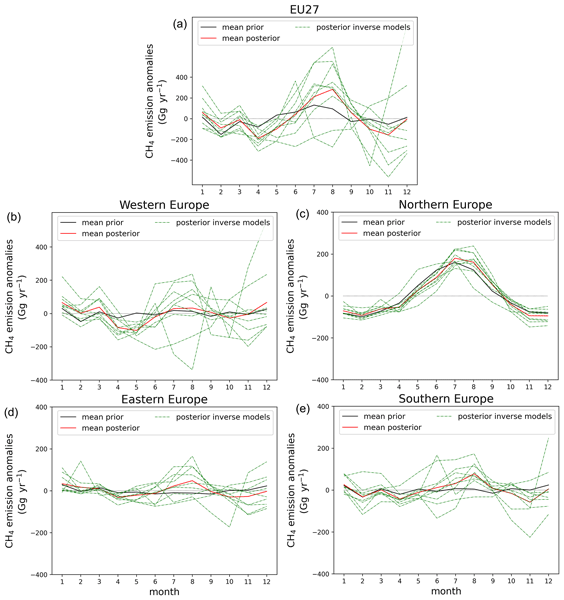
This paper describes a detailed study on CH4 European emissions, using different methodologies (9 total inverse models). The study spans over 15 years and provides detailed information on European CH4 emission trends and seasonality, using in-situ data, including Integrated Carbon Observation System (ICOS) network. Our results highlight the importance of improving details in the inversion setup, such as the treatment of lateral boundary conditions to narrow the uncertainty ranges further.
Hui Tang, Samuli Launianen, Julius Vira, Liisa Kulmala, Taru Palosuo, Hermanni Aaltonen, Olli Nevalainen, Istem Fer, Henriikka Vekuri, Jari-Pekka Nousu, Mika Korkiakoski, and Jari Liski
EGUsphere, https://doi.org/10.5194/egusphere-2025-5972, https://doi.org/10.5194/egusphere-2025-5972, 2025
This preprint is open for discussion and under review for Biogeosciences (BG).
Short summary
Short summary
We present a modelling approach to study how crops in northern climates deal with water stress. By combining several years of field measurements with the modelling approach, we show that both oat and forage grasses use water cautiously, helping them preserve enough soil water to stay productive during dry periods. Our results highlight the need to better understand how northern crops use water for improving their food production in the future, when more frequent and severe drought will occur.
Juha Leskinen, Leif Backman, Tiina Markkanen, Jussi Lintunen, and Tuula Aalto
EGUsphere, https://doi.org/10.5194/egusphere-2025-4882, https://doi.org/10.5194/egusphere-2025-4882, 2025
Preprint archived
Short summary
Short summary
In forest management, carbon sequestration is often the main focus when it comes to climate change mitigation. However, forests impact the climate in other ways too. We examined albedo and heat fluxes alongside carbon sequestration in a boreal Finnish pine forest. For the studied management scenarios we found that the differences in carbon sequestration were the main drivers for total climate impact, albedo mitigated it by a few percentage points, the offset from the heat fluxes were even less.
Annett Bartsch, Rodrigue Tanguy, Helena Bergstedt, Clemens von Baeckmann, Hans Tømmervik, Marc Macias-Fauria, Juha Lemmetyinen, Kimmo Rautiainen, Chiara Gruber, and Bruce C. Forbes
The Cryosphere, 19, 4929–4967, https://doi.org/10.5194/tc-19-4929-2025, https://doi.org/10.5194/tc-19-4929-2025, 2025
Short summary
Short summary
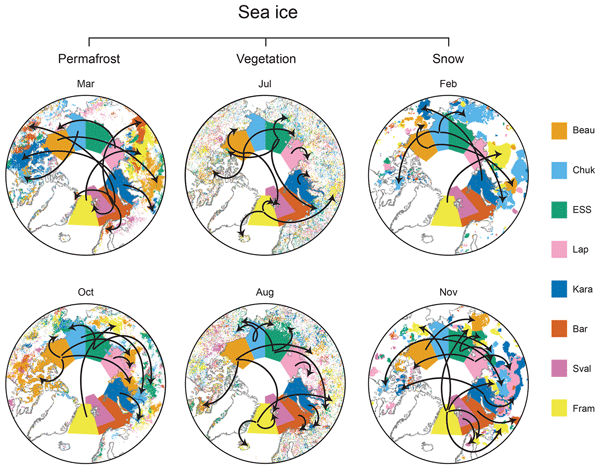
We identified similarities between sea ice dynamics and conditions on land across the Arctic, above 60° N, for 2000–2019. Significant correlations were more common for snow water equivalent and permafrost ground temperature than for the vegetation parameters. Changes across all the different parameters could specifically be determined for eastern Siberia. The results provide a baseline for future studies on common drivers of essential climate variables and causative effects across the Arctic.
Kimmo Rautiainen, Manu Holmberg, Juval Cohen, Arnaud Mialon, Mike Schwank, Juha Lemmetyinen, Antonio de la Fuente, and Yann Kerr
Earth Syst. Sci. Data, 17, 5337–5353, https://doi.org/10.5194/essd-17-5337-2025, https://doi.org/10.5194/essd-17-5337-2025, 2025
Short summary
Short summary
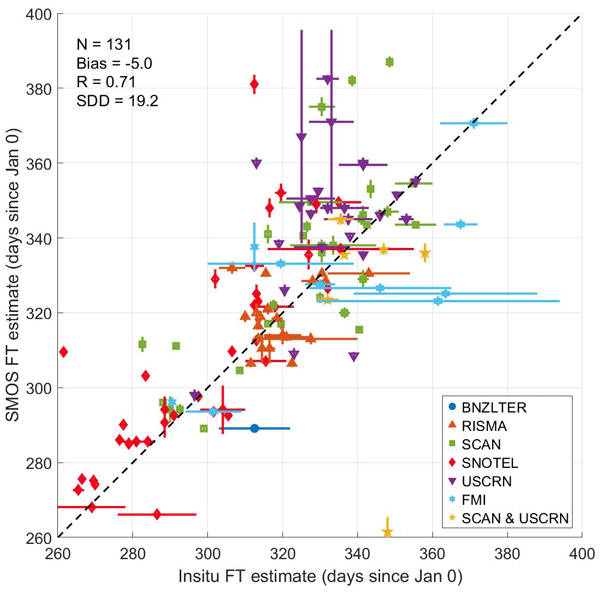
The SMOS (Soil Moisture and Ocean Salinity) Soil Freeze–Thaw State product uses satellite data to monitor seasonal soil freezing and thawing globally, with a focus on high-latitude regions. This is important for understanding greenhouse gas emissions, as frozen soil is associated with methane release. The product provides accurate data on key events such as the first day of soil freezing in autumn, helping scientists to study climate change, ecosystem dynamics, and its impact on our planet.
Rona L. Thompson, Nalini Krishnankutty, Ignacio Pisso, Philipp Schneider, Kerstin Stebel, Motoki Sasakawa, Andreas Stohl, and Stephen M. Platt
Atmos. Chem. Phys., 25, 12737–12751, https://doi.org/10.5194/acp-25-12737-2025, https://doi.org/10.5194/acp-25-12737-2025, 2025
Short summary
Short summary
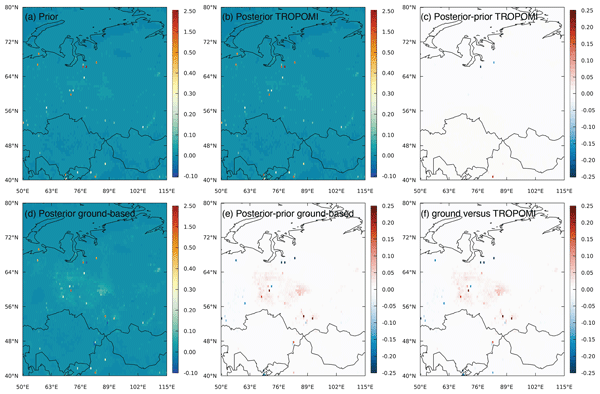
Satellite remote sensing of atmospheric mixing ratios of greenhouse gases (GHGs) can provide information on their emissions. This study presents a novel method to use atmospheric mixing ratios observed by satellites with a Lagrangian model of atmospheric transport to estimate GHG emissions. This method can reduce model errors resulting from how an observation is represented by an atmospheric model, thereby helping to reduce the errors in the GHG emissions derived.
Ella Kivimäki, Maria Tenkanen, Tuula Aalto, Michael Buchwitz, Kari Luojus, Jouni Pulliainen, Kimmo Rautiainen, Oliver Schneising, Anu-Maija Sundström, Johanna Tamminen, Aki Tsuruta, and Hannakaisa Lindqvist
Biogeosciences, 22, 5193–5230, https://doi.org/10.5194/bg-22-5193-2025, https://doi.org/10.5194/bg-22-5193-2025, 2025
Short summary
Short summary
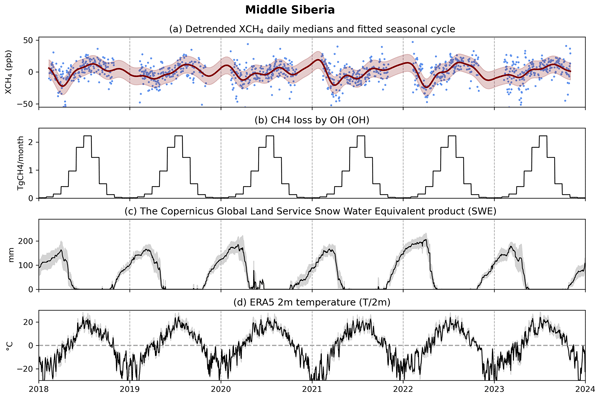
We study how environmental variables influencing natural methane fluxes explain the seasonal variability in satellite-observed methane in Northern Hemisphere high-latitude wetland areas. Using two atmospheric model set-ups, we assess consistency with satellite data. Methane loss through reaction with hydroxyl radicals and links with snow cover, temperature, and snowmelt had the strongest influence. Our study highlights the value of satellite observations for understanding large-scale wetland emissions.
Juliette Ortet, Arnaud Mialon, Alain Royer, Mike Schwank, Manu Holmberg, Kimmo Rautiainen, Simone Bircher-Adrot, Andreas Colliander, Yann Kerr, and Alexandre Roy
The Cryosphere, 19, 3571–3598, https://doi.org/10.5194/tc-19-3571-2025, https://doi.org/10.5194/tc-19-3571-2025, 2025
Short summary
Short summary
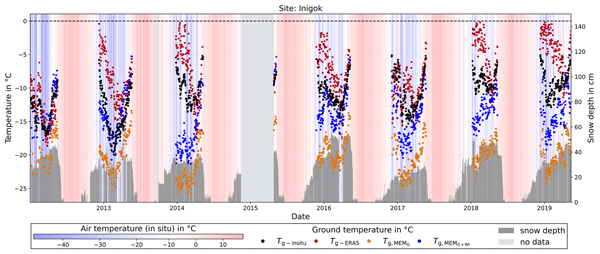
We propose a new method to determine the ground surface temperature under the snowpack in the Arctic area from satellite observations. The obtained ground temperature time series were evaluated over 21 reference sites in Northern Alaska and compared with ground temperatures obtained with global models. The method is extremely promising for monitoring ground temperature below the snowpack and studying the spatio-temporal variability thanks to 15 years of observations over the whole Arctic area.
Aki Tsuruta, Akihiko Kuze, Kei Shiomi, Fumie Kataoka, Nobuhiro Kikuchi, Tuula Aalto, Leif Backman, Ella Kivimäki, Maria K. Tenkanen, Kathryn McKain, Omaira E. García, Frank Hase, Rigel Kivi, Isamu Morino, Hirofumi Ohyama, David F. Pollard, Mahesh K. Sha, Kimberly Strong, Ralf Sussmann, Yao Te, Voltaire A. Velazco, Mihalis Vrekoussis, Thorsten Warneke, Minqiang Zhou, and Hiroshi Suto
Atmos. Chem. Phys., 25, 7829–7862, https://doi.org/10.5194/acp-25-7829-2025, https://doi.org/10.5194/acp-25-7829-2025, 2025
Short summary
Short summary
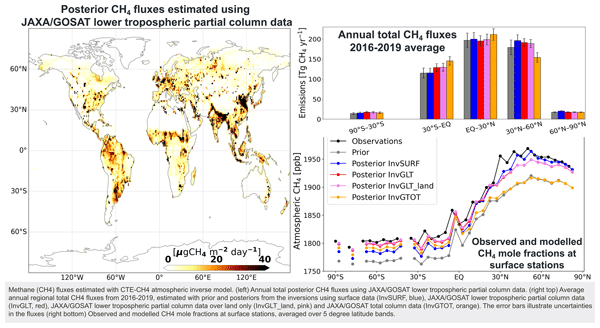
Satellite data bring invaluable information about greenhouse gas emissions globally. We found that a new type of data from the Greenhouse Gas Observing Satellite (GOSAT), which contains information about methane in the lowest layer of Earth's atmosphere, could provide reliable estimates of recent methane emissions when combined with atmospheric modelling. Therefore, the use of such data is encouraged to improve emission quantification methods and advance our understanding of methane cycles.
Antti Laitinen, Hermanni Aaltonen, Christoph Zellweger, Aki Tsuruta, Tuula Aalto, and Juha Hatakka
Atmos. Meas. Tech., 18, 3109–3133, https://doi.org/10.5194/amt-18-3109-2025, https://doi.org/10.5194/amt-18-3109-2025, 2025
Short summary
Short summary
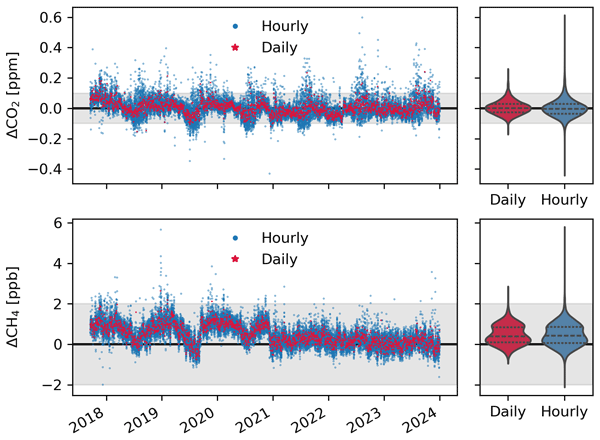
This paper presents long-term observations of atmospheric CO2 and CH4 mole fractions and a comparison of two permanent and two mobile measurement systems located in Northern Finland. Furthermore, the observed mole fractions are compared against the mean marine boundary layer product for the Northern Hemisphere. The comparisons of all the systems show good agreement in relation to the World Meteorological Organization/Global Atmosphere Watch network compatibility goal limits for CO2 and CH4.
Yosuke Niwa, Yasunori Tohjima, Yukio Terao, Tazu Saeki, Akihiko Ito, Taku Umezawa, Kyohei Yamada, Motoki Sasakawa, Toshinobu Machida, Shin-Ichiro Nakaoka, Hideki Nara, Hiroshi Tanimoto, Hitoshi Mukai, Yukio Yoshida, Shinji Morimoto, Shinya Takatsuji, Kazuhiro Tsuboi, Yousuke Sawa, Hidekazu Matsueda, Kentaro Ishijima, Ryo Fujita, Daisuke Goto, Xin Lan, Kenneth Schuldt, Michal Heliasz, Tobias Biermann, Lukasz Chmura, Jarsolaw Necki, Irène Xueref-Remy, and Damiano Sferlazzo
Atmos. Chem. Phys., 25, 6757–6785, https://doi.org/10.5194/acp-25-6757-2025, https://doi.org/10.5194/acp-25-6757-2025, 2025
Short summary
Short summary
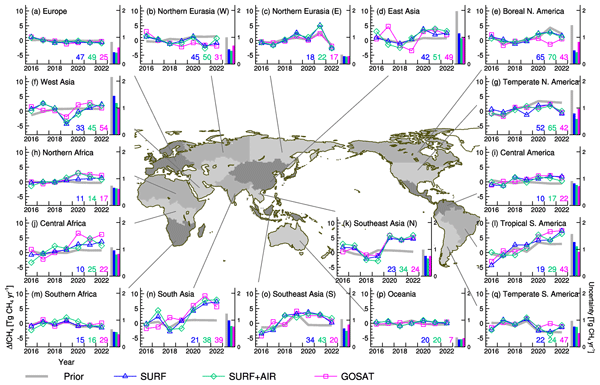
This study estimated regional and sectoral emission contributions to the unprecedented surge of atmospheric methane for 2020–2022. The methane is the second most important greenhouse gas, and its emissions reduction is urgently required to mitigate global warming. Numerical modeling-based estimates with three different sets of atmospheric observations consistently suggested large contributions of biogenic emissions from South Asia and Southeast Asia to the surge of atmospheric methane.
Marielle Saunois, Adrien Martinez, Benjamin Poulter, Zhen Zhang, Peter A. Raymond, Pierre Regnier, Josep G. Canadell, Robert B. Jackson, Prabir K. Patra, Philippe Bousquet, Philippe Ciais, Edward J. Dlugokencky, Xin Lan, George H. Allen, David Bastviken, David J. Beerling, Dmitry A. Belikov, Donald R. Blake, Simona Castaldi, Monica Crippa, Bridget R. Deemer, Fraser Dennison, Giuseppe Etiope, Nicola Gedney, Lena Höglund-Isaksson, Meredith A. Holgerson, Peter O. Hopcroft, Gustaf Hugelius, Akihiko Ito, Atul K. Jain, Rajesh Janardanan, Matthew S. Johnson, Thomas Kleinen, Paul B. Krummel, Ronny Lauerwald, Tingting Li, Xiangyu Liu, Kyle C. McDonald, Joe R. Melton, Jens Mühle, Jurek Müller, Fabiola Murguia-Flores, Yosuke Niwa, Sergio Noce, Shufen Pan, Robert J. Parker, Changhui Peng, Michel Ramonet, William J. Riley, Gerard Rocher-Ros, Judith A. Rosentreter, Motoki Sasakawa, Arjo Segers, Steven J. Smith, Emily H. Stanley, Joël Thanwerdas, Hanqin Tian, Aki Tsuruta, Francesco N. Tubiello, Thomas S. Weber, Guido R. van der Werf, Douglas E. J. Worthy, Yi Xi, Yukio Yoshida, Wenxin Zhang, Bo Zheng, Qing Zhu, Qiuan Zhu, and Qianlai Zhuang
Earth Syst. Sci. Data, 17, 1873–1958, https://doi.org/10.5194/essd-17-1873-2025, https://doi.org/10.5194/essd-17-1873-2025, 2025
Short summary
Short summary
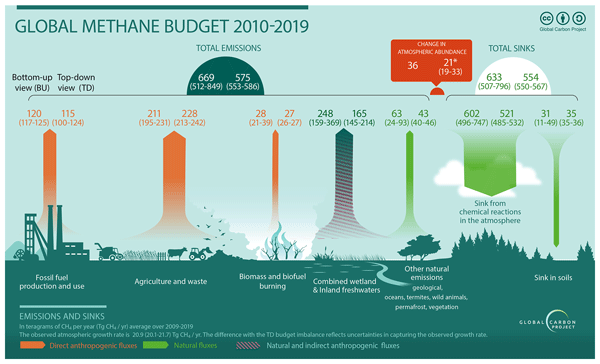
Methane (CH4) is the second most important human-influenced greenhouse gas in terms of climate forcing after carbon dioxide (CO2). A consortium of multi-disciplinary scientists synthesise and update the budget of the sources and sinks of CH4. This edition benefits from important progress in estimating emissions from lakes and ponds, reservoirs, and streams and rivers. For the 2010s decade, global CH4 emissions are estimated at 575 Tg CH4 yr-1, including ~65 % from anthropogenic sources.
Motoki Sasakawa, Noritsugu Tsuda, Toshinobu Machida, Mikhail Arshinov, Denis Davydov, Aleksandr Fofonov, and Boris Belan
Atmos. Meas. Tech., 18, 1717–1730, https://doi.org/10.5194/amt-18-1717-2025, https://doi.org/10.5194/amt-18-1717-2025, 2025
Short summary
Short summary
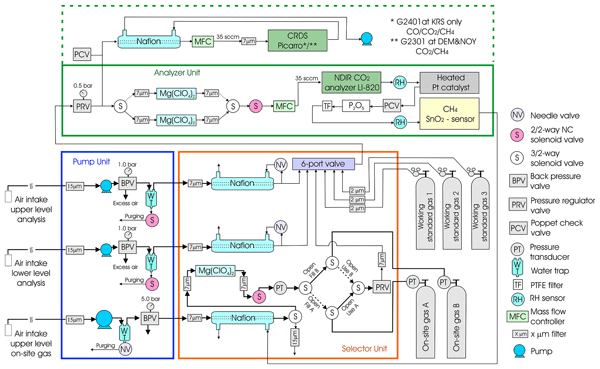
Standard gases are essential for accurate greenhouse gas measurements. However, exchanging cylinders at remote sites presents logistical challenges, requiring systems that minimize gas consumption. We developed methods for calculating greenhouse gas mole fractions and uncertainties using our original system designed to reduce standard gas use. We validated its long-term stability through instrument comparisons. The system has proven effective for maintaining observations at remote sites.
Zhu Deng, Philippe Ciais, Liting Hu, Adrien Martinez, Marielle Saunois, Rona L. Thompson, Kushal Tibrewal, Wouter Peters, Brendan Byrne, Giacomo Grassi, Paul I. Palmer, Ingrid T. Luijkx, Zhu Liu, Junjie Liu, Xuekun Fang, Tengjiao Wang, Hanqin Tian, Katsumasa Tanaka, Ana Bastos, Stephen Sitch, Benjamin Poulter, Clément Albergel, Aki Tsuruta, Shamil Maksyutov, Rajesh Janardanan, Yosuke Niwa, Bo Zheng, Joël Thanwerdas, Dmitry Belikov, Arjo Segers, and Frédéric Chevallier
Earth Syst. Sci. Data, 17, 1121–1152, https://doi.org/10.5194/essd-17-1121-2025, https://doi.org/10.5194/essd-17-1121-2025, 2025
Short summary
Short summary
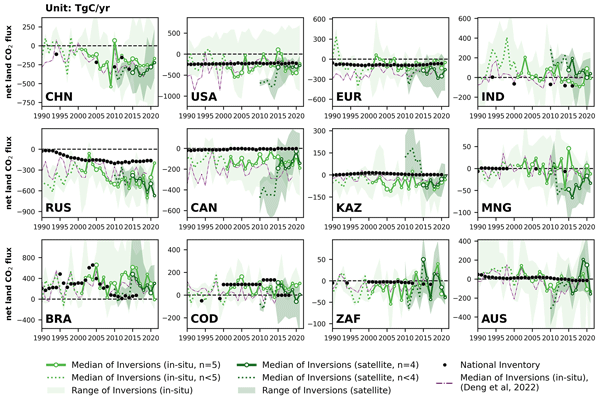
This study reconciles national greenhouse gas (GHG) inventories with updated atmospheric inversion results to evaluate discrepancies for three principal GHG fluxes at the national level. Compared to our previous study, new satellite-based CO2 inversions were included and an updated mask of managed lands was used, improving agreement for Brazil and Canada. The proposed methodology can be regularly applied as a check to assess the gap between top-down inversions and bottom-up inventories.
Joël Thanwerdas, Antoine Berchet, Lionel Constantin, Aki Tsuruta, Michael Steiner, Friedemann Reum, Stephan Henne, and Dominik Brunner
Geosci. Model Dev., 18, 1505–1544, https://doi.org/10.5194/gmd-18-1505-2025, https://doi.org/10.5194/gmd-18-1505-2025, 2025
Short summary
Short summary
The Community Inversion Framework (CIF) brings together methods for estimating greenhouse gas fluxes from atmospheric observations. The initial ensemble method implemented in CIF was found to be incomplete and could hardly be compared to other ensemble methods employed in the inversion community. In this paper, we present and evaluate a new implementation of the ensemble mode, building upon the initial developments.
Maria K. Tenkanen, Aki Tsuruta, Hugo Denier van der Gon, Lena Höglund-Isaksson, Antti Leppänen, Tiina Markkanen, Ana Maria Roxana Petrescu, Maarit Raivonen, Hermanni Aaltonen, and Tuula Aalto
Atmos. Chem. Phys., 25, 2181–2206, https://doi.org/10.5194/acp-25-2181-2025, https://doi.org/10.5194/acp-25-2181-2025, 2025
Short summary
Short summary
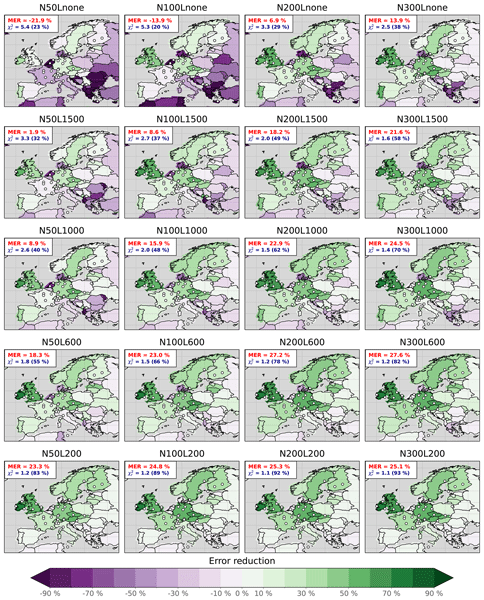
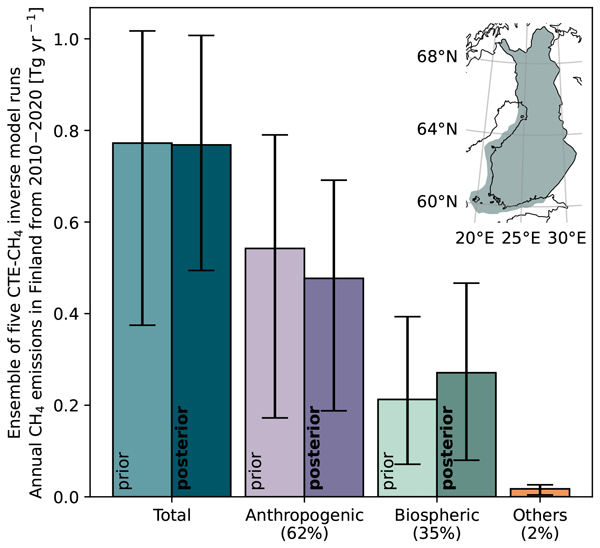
Accurate national methane (CH4) emission estimates are essential for tracking progress towards climate goals. This study compares estimates from Finland, which use different methods and scales, and shows how well a global model estimates emissions within a country. The bottom-up estimates vary a lot, but constraining them with atmospheric CH4 measurements brought the estimates closer together. We also highlight the importance of quantifying natural emissions alongside anthropogenic emissions.
Annett Bartsch, Xaver Muri, Markus Hetzenecker, Kimmo Rautiainen, Helena Bergstedt, Jan Wuite, Thomas Nagler, and Dmitry Nicolsky
The Cryosphere, 19, 459–483, https://doi.org/10.5194/tc-19-459-2025, https://doi.org/10.5194/tc-19-459-2025, 2025
Short summary
Short summary
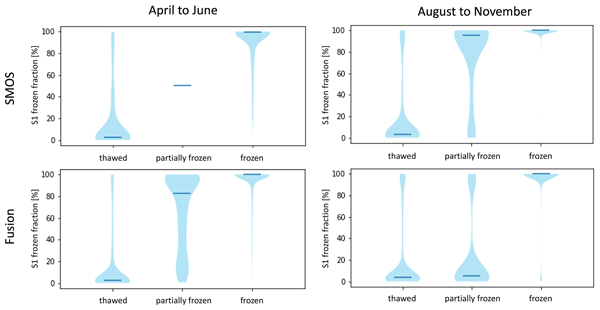
We developed a robust freeze–thaw detection approach, applying a constant threshold to Copernicus Sentinel-1 data that is suitable for tundra regions. All global, coarser-resolution products, tested with the resulting benchmarking dataset, are of value for freeze–thaw retrieval, although differences were found depending on the seasons, particularly during the spring and autumn transition.
Tuula Aalto, Aki Tsuruta, Jarmo Mäkelä, Jurek Müller, Maria Tenkanen, Eleanor Burke, Sarah Chadburn, Yao Gao, Vilma Mannisenaho, Thomas Kleinen, Hanna Lee, Antti Leppänen, Tiina Markkanen, Stefano Materia, Paul A. Miller, Daniele Peano, Olli Peltola, Benjamin Poulter, Maarit Raivonen, Marielle Saunois, David Wårlind, and Sönke Zaehle
Biogeosciences, 22, 323–340, https://doi.org/10.5194/bg-22-323-2025, https://doi.org/10.5194/bg-22-323-2025, 2025
Short summary
Short summary
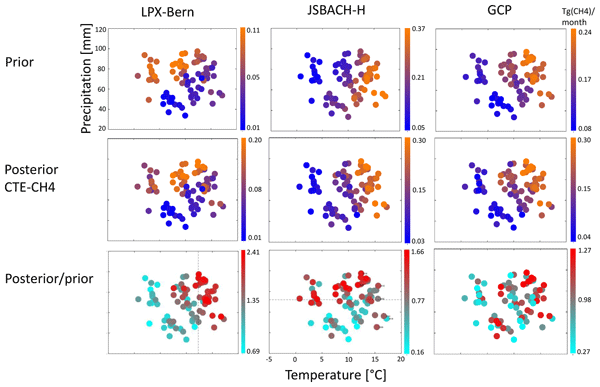
Wetland methane responses to temperature and precipitation were studied in a boreal wetland-rich region in northern Europe using ecosystem models, atmospheric inversions, and upscaled flux observations. The ecosystem models differed in their responses to temperature and precipitation and in their seasonality. However, multi-model means, inversions, and upscaled fluxes had similar seasonality, and they suggested co-limitation by temperature and precipitation.
Vilna Tyystjärvi, Tiina Markkanen, Leif Backman, Maarit Raivonen, Antti Leppänen, Xuefei Li, Paavo Ojanen, Kari Minkkinen, Roosa Hautala, Mikko Peltoniemi, Jani Anttila, Raija Laiho, Annalea Lohila, Raisa Mäkipää, and Tuula Aalto
Biogeosciences, 21, 5745–5771, https://doi.org/10.5194/bg-21-5745-2024, https://doi.org/10.5194/bg-21-5745-2024, 2024
Short summary
Short summary
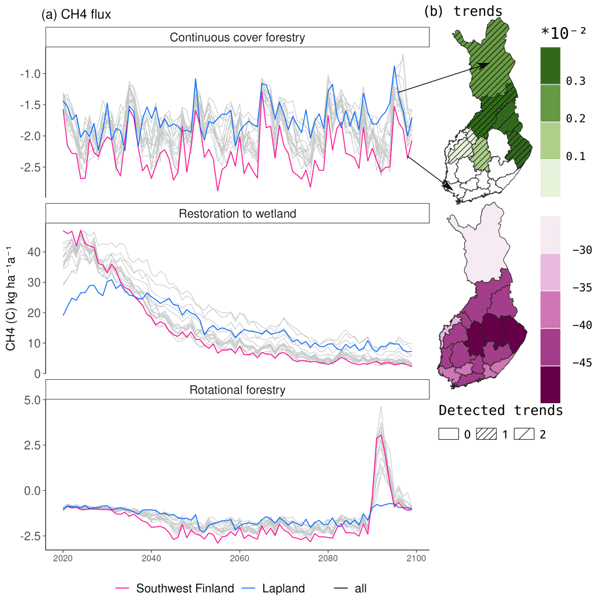
Drainage of boreal peatlands strongly influences soil methane fluxes, with important implications for climatic impacts. Here we simulate methane fluxes in forestry-drained and restored peatlands during the 21st century. We found that restoration turned peatlands into a source of methane, but the magnitude varied regionally. In forests, changes in the water table level influenced methane fluxes, and in general, the sink was weaker under rotational forestry compared to continuous cover forestry.
Outi Kinnunen, Leif Backman, Juha Aalto, Tuula Aalto, and Tiina Markkanen
Biogeosciences, 21, 4739–4763, https://doi.org/10.5194/bg-21-4739-2024, https://doi.org/10.5194/bg-21-4739-2024, 2024
Short summary
Short summary
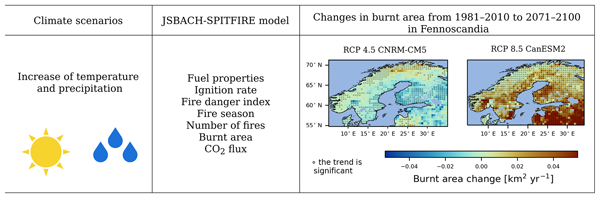
Climate change is expected to increase the risk of forest fires. Ecosystem process model simulations are used to project changes in fire occurrence in Fennoscandia under six climate projections. The findings suggest a longer fire season, more fires, and an increase in burnt area towards the end of the century.
Ana Maria Roxana Petrescu, Glen P. Peters, Richard Engelen, Sander Houweling, Dominik Brunner, Aki Tsuruta, Bradley Matthews, Prabir K. Patra, Dmitry Belikov, Rona L. Thompson, Lena Höglund-Isaksson, Wenxin Zhang, Arjo J. Segers, Giuseppe Etiope, Giancarlo Ciotoli, Philippe Peylin, Frédéric Chevallier, Tuula Aalto, Robbie M. Andrew, David Bastviken, Antoine Berchet, Grégoire Broquet, Giulia Conchedda, Stijn N. C. Dellaert, Hugo Denier van der Gon, Johannes Gütschow, Jean-Matthieu Haussaire, Ronny Lauerwald, Tiina Markkanen, Jacob C. A. van Peet, Isabelle Pison, Pierre Regnier, Espen Solum, Marko Scholze, Maria Tenkanen, Francesco N. Tubiello, Guido R. van der Werf, and John R. Worden
Earth Syst. Sci. Data, 16, 4325–4350, https://doi.org/10.5194/essd-16-4325-2024, https://doi.org/10.5194/essd-16-4325-2024, 2024
Short summary
Short summary
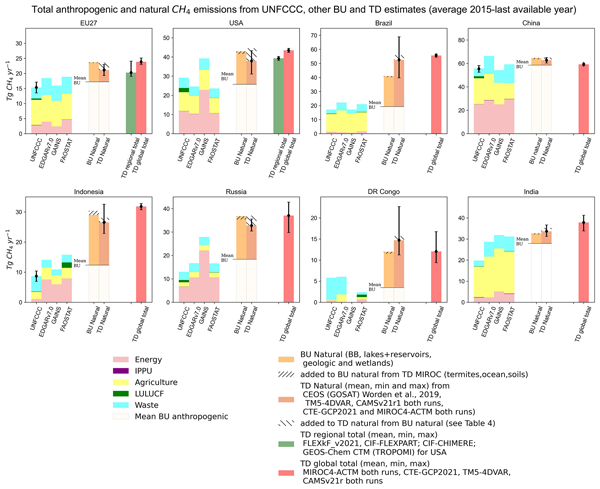
This study provides an overview of data availability from observation- and inventory-based CH4 emission estimates. It systematically compares them and provides recommendations for robust comparisons, aiming to steadily engage more parties in using observational methods to complement their UNFCCC submissions. Anticipating improvements in atmospheric modelling and observations, future developments need to resolve knowledge gaps in both approaches and to better quantify remaining uncertainty.
Sophie Wittig, Antoine Berchet, Isabelle Pison, Marielle Saunois, Joël Thanwerdas, Adrien Martinez, Jean-Daniel Paris, Toshinobu Machida, Motoki Sasakawa, Douglas E. J. Worthy, Xin Lan, Rona L. Thompson, Espen Sollum, and Mikhail Arshinov
Atmos. Chem. Phys., 23, 6457–6485, https://doi.org/10.5194/acp-23-6457-2023, https://doi.org/10.5194/acp-23-6457-2023, 2023
Short summary
Short summary
Here, an inverse modelling approach is applied to estimate CH4 sources and sinks in the Arctic from 2008 to 2019. We study the magnitude, seasonal patterns and trends from different sources during recent years. We also assess how the current observation network helps to constrain fluxes. We find that constraints are only significant for North America and, to a lesser extent, West Siberia, where the observation network is relatively dense. We find no clear trend over the period of inversion.
Ana Maria Roxana Petrescu, Chunjing Qiu, Matthew J. McGrath, Philippe Peylin, Glen P. Peters, Philippe Ciais, Rona L. Thompson, Aki Tsuruta, Dominik Brunner, Matthias Kuhnert, Bradley Matthews, Paul I. Palmer, Oksana Tarasova, Pierre Regnier, Ronny Lauerwald, David Bastviken, Lena Höglund-Isaksson, Wilfried Winiwarter, Giuseppe Etiope, Tuula Aalto, Gianpaolo Balsamo, Vladislav Bastrikov, Antoine Berchet, Patrick Brockmann, Giancarlo Ciotoli, Giulia Conchedda, Monica Crippa, Frank Dentener, Christine D. Groot Zwaaftink, Diego Guizzardi, Dirk Günther, Jean-Matthieu Haussaire, Sander Houweling, Greet Janssens-Maenhout, Massaer Kouyate, Adrian Leip, Antti Leppänen, Emanuele Lugato, Manon Maisonnier, Alistair J. Manning, Tiina Markkanen, Joe McNorton, Marilena Muntean, Gabriel D. Oreggioni, Prabir K. Patra, Lucia Perugini, Isabelle Pison, Maarit T. Raivonen, Marielle Saunois, Arjo J. Segers, Pete Smith, Efisio Solazzo, Hanqin Tian, Francesco N. Tubiello, Timo Vesala, Guido R. van der Werf, Chris Wilson, and Sönke Zaehle
Earth Syst. Sci. Data, 15, 1197–1268, https://doi.org/10.5194/essd-15-1197-2023, https://doi.org/10.5194/essd-15-1197-2023, 2023
Short summary
Short summary
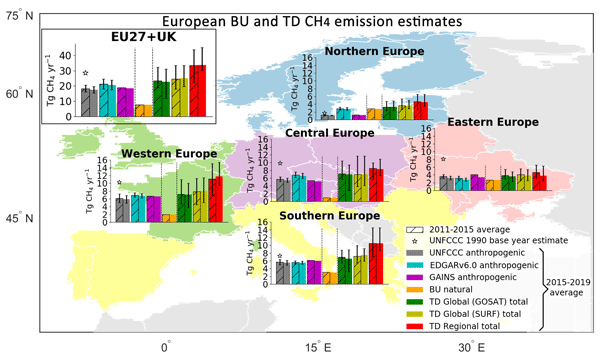
This study updates the state-of-the-art scientific overview of CH4 and N2O emissions in the EU27 and UK in Petrescu et al. (2021a). Yearly updates are needed to improve the different respective approaches and to inform on the development of formal verification systems. It integrates the most recent emission inventories, process-based model and regional/global inversions, comparing them with UNFCCC national GHG inventories, in support to policy to facilitate real-time verification procedures.
Annett Bartsch, Helena Bergstedt, Georg Pointner, Xaver Muri, Kimmo Rautiainen, Leena Leppänen, Kyle Joly, Aleksandr Sokolov, Pavel Orekhov, Dorothee Ehrich, and Eeva Mariatta Soininen
The Cryosphere, 17, 889–915, https://doi.org/10.5194/tc-17-889-2023, https://doi.org/10.5194/tc-17-889-2023, 2023
Short summary
Short summary
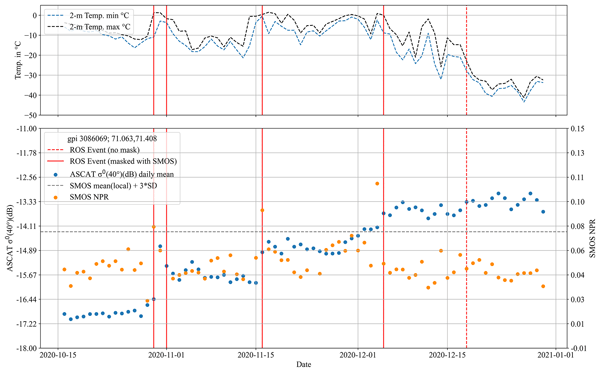
Rain-on-snow (ROS) events occur across many regions of the terrestrial Arctic in mid-winter. In extreme cases ice layers form which affect wildlife, vegetation and soils beyond the duration of the event. The fusion of multiple types of microwave satellite observations is suggested for the creation of a climate data record. Retrieval is most robust in the tundra biome, where records can be used to identify extremes and the results can be applied to impact studies at regional scale.
Yao Gao, Eleanor J. Burke, Sarah E. Chadburn, Maarit Raivonen, Mika Aurela, Lawrence B. Flanagan, Krzysztof Fortuniak, Elyn Humphreys, Annalea Lohila, Tingting Li, Tiina Markkanen, Olli Nevalainen, Mats B. Nilsson, Włodzimierz Pawlak, Aki Tsuruta, Huiyi Yang, and Tuula Aalto
Biogeosciences Discuss., https://doi.org/10.5194/bg-2022-229, https://doi.org/10.5194/bg-2022-229, 2022
Manuscript not accepted for further review
Short summary
Short summary
We coupled a process-based peatland CH4 emission model HIMMELI with a state-of-art land surface model JULES. The performance of the coupled model was evaluated at six northern wetland sites. The coupled model is considered to be more appropriate in simulating wetland CH4 emission. In order to improve the simulated CH4 emission, the model requires better representation of the peat soil carbon and hydrologic processes in JULES and the methane production and transportation processes in HIMMELI.
Sourish Basu, Xin Lan, Edward Dlugokencky, Sylvia Michel, Stefan Schwietzke, John B. Miller, Lori Bruhwiler, Youmi Oh, Pieter P. Tans, Francesco Apadula, Luciana V. Gatti, Armin Jordan, Jaroslaw Necki, Motoki Sasakawa, Shinji Morimoto, Tatiana Di Iorio, Haeyoung Lee, Jgor Arduini, and Giovanni Manca
Atmos. Chem. Phys., 22, 15351–15377, https://doi.org/10.5194/acp-22-15351-2022, https://doi.org/10.5194/acp-22-15351-2022, 2022
Short summary
Short summary
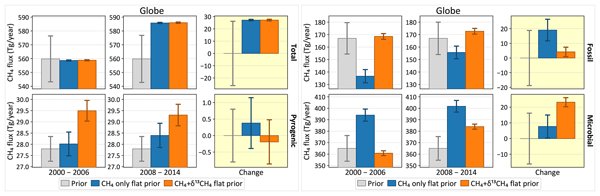
Atmospheric methane (CH4) has been growing steadily since 2007 for reasons that are not well understood. Here we determine sources of methane using a technique informed by atmospheric measurements of CH4 and its isotopologue 13CH4. Measurements of 13CH4 provide for better separation of microbial, fossil, and fire sources of methane than CH4 measurements alone. Compared to previous assessments such as the Global Carbon Project, we find a larger microbial contribution to the post-2007 increase.
Hanna K. Lappalainen, Tuukka Petäjä, Timo Vihma, Jouni Räisänen, Alexander Baklanov, Sergey Chalov, Igor Esau, Ekaterina Ezhova, Matti Leppäranta, Dmitry Pozdnyakov, Jukka Pumpanen, Meinrat O. Andreae, Mikhail Arshinov, Eija Asmi, Jianhui Bai, Igor Bashmachnikov, Boris Belan, Federico Bianchi, Boris Biskaborn, Michael Boy, Jaana Bäck, Bin Cheng, Natalia Chubarova, Jonathan Duplissy, Egor Dyukarev, Konstantinos Eleftheriadis, Martin Forsius, Martin Heimann, Sirkku Juhola, Vladimir Konovalov, Igor Konovalov, Pavel Konstantinov, Kajar Köster, Elena Lapshina, Anna Lintunen, Alexander Mahura, Risto Makkonen, Svetlana Malkhazova, Ivan Mammarella, Stefano Mammola, Stephany Buenrostro Mazon, Outi Meinander, Eugene Mikhailov, Victoria Miles, Stanislav Myslenkov, Dmitry Orlov, Jean-Daniel Paris, Roberta Pirazzini, Olga Popovicheva, Jouni Pulliainen, Kimmo Rautiainen, Torsten Sachs, Vladimir Shevchenko, Andrey Skorokhod, Andreas Stohl, Elli Suhonen, Erik S. Thomson, Marina Tsidilina, Veli-Pekka Tynkkynen, Petteri Uotila, Aki Virkkula, Nadezhda Voropay, Tobias Wolf, Sayaka Yasunaka, Jiahua Zhang, Yubao Qiu, Aijun Ding, Huadong Guo, Valery Bondur, Nikolay Kasimov, Sergej Zilitinkevich, Veli-Matti Kerminen, and Markku Kulmala
Atmos. Chem. Phys., 22, 4413–4469, https://doi.org/10.5194/acp-22-4413-2022, https://doi.org/10.5194/acp-22-4413-2022, 2022
Short summary
Short summary
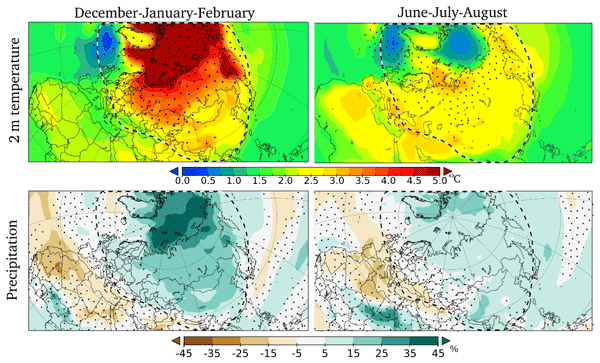
We summarize results during the last 5 years in the northern Eurasian region, especially from Russia, and introduce recent observations of the air quality in the urban environments in China. Although the scientific knowledge in these regions has increased, there are still gaps in our understanding of large-scale climate–Earth surface interactions and feedbacks. This arises from limitations in research infrastructures and integrative data analyses, hindering a comprehensive system analysis.
Olli Nevalainen, Olli Niemitalo, Istem Fer, Antti Juntunen, Tuomas Mattila, Olli Koskela, Joni Kukkamäki, Layla Höckerstedt, Laura Mäkelä, Pieta Jarva, Laura Heimsch, Henriikka Vekuri, Liisa Kulmala, Åsa Stam, Otto Kuusela, Stephanie Gerin, Toni Viskari, Julius Vira, Jari Hyväluoma, Juha-Pekka Tuovinen, Annalea Lohila, Tuomas Laurila, Jussi Heinonsalo, Tuula Aalto, Iivari Kunttu, and Jari Liski
Geosci. Instrum. Method. Data Syst., 11, 93–109, https://doi.org/10.5194/gi-11-93-2022, https://doi.org/10.5194/gi-11-93-2022, 2022
Short summary
Short summary
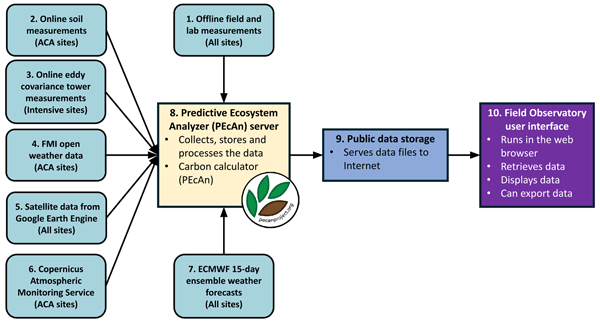
Better monitoring of soil carbon sequestration is needed to understand the best carbon farming practices in different soils and climate conditions. We, the Field Observatory Network (FiON), have therefore established a methodology for monitoring and forecasting agricultural carbon sequestration by combining offline and near-real-time field measurements, weather data, satellite imagery, and modeling. To disseminate our work, we built a website called the Field Observatory (fieldobservatory.org).
Vilma Kangasaho, Aki Tsuruta, Leif Backman, Pyry Mäkinen, Sander Houweling, Arjo Segers, Maarten Krol, Ed Dlugokencky, Sylvia Michel, James White, and Tuula Aalto
Atmos. Chem. Phys. Discuss., https://doi.org/10.5194/acp-2021-843, https://doi.org/10.5194/acp-2021-843, 2021
Revised manuscript not accepted
Short summary
Short summary
Understanding the composition of carbon isotopes can help to better understand the changes in methane budgets. This study investigates how methane sources affect the seasonal cycle of the methane carbon-13 isotope during 2000–2012 using an atmospheric transport model. We found that emissions from both anthropogenic and natural sources contribute. The findings raise a need to revise the magnitudes, proportion, and seasonal cycles of anthropogenic sources and northern wetland emissions.
Shohei Nomura, Manish Naja, M. Kawser Ahmed, Hitoshi Mukai, Yukio Terao, Toshinobu Machida, Motoki Sasakawa, and Prabir K. Patra
Atmos. Chem. Phys., 21, 16427–16452, https://doi.org/10.5194/acp-21-16427-2021, https://doi.org/10.5194/acp-21-16427-2021, 2021
Short summary
Short summary
Long-term measurements of greenhouse gases (GHGs) in India and Bangladesh unveiled specific characteristics in their variations in these regions. Plants including rice cultivated in winter and summer strongly affected seasonal variations and levels in CO2 and CH4. Long-term variability of GHGs showed quite different features in their growth rates from those in Mauna Loa. GHG trends in this region seemed to be hardly affected by El Niño–Southern Oscillation (ENSO).
Antoine Berchet, Espen Sollum, Rona L. Thompson, Isabelle Pison, Joël Thanwerdas, Grégoire Broquet, Frédéric Chevallier, Tuula Aalto, Adrien Berchet, Peter Bergamaschi, Dominik Brunner, Richard Engelen, Audrey Fortems-Cheiney, Christoph Gerbig, Christine D. Groot Zwaaftink, Jean-Matthieu Haussaire, Stephan Henne, Sander Houweling, Ute Karstens, Werner L. Kutsch, Ingrid T. Luijkx, Guillaume Monteil, Paul I. Palmer, Jacob C. A. van Peet, Wouter Peters, Philippe Peylin, Elise Potier, Christian Rödenbeck, Marielle Saunois, Marko Scholze, Aki Tsuruta, and Yuanhong Zhao
Geosci. Model Dev., 14, 5331–5354, https://doi.org/10.5194/gmd-14-5331-2021, https://doi.org/10.5194/gmd-14-5331-2021, 2021
Short summary
Short summary
We present here the Community Inversion Framework (CIF) to help rationalize development efforts and leverage the strengths of individual inversion systems into a comprehensive framework. The CIF is a programming protocol to allow various inversion bricks to be exchanged among researchers.
The ensemble of bricks makes a flexible, transparent and open-source Python-based tool. We describe the main structure and functionalities and demonstrate it in a simple academic case.
Cited articles
Al Bitar, A., Mialon, A., Kerr, Y. H., Cabot, F., Richaume, P., Jacquette, E., Quesney, A., Mahmoodi, A., Tarot, S., Parrens, M., Al-Yaari, A., Pellarin, T., Rodriguez-Fernandez, N., and Wigneron, J.-P.: The global SMOS Level 3 daily soil moisture and brightness temperature maps, Earth Syst. Sci. Data, 9, 293–315, https://doi.org/10.5194/essd-9-293-2017, 2017. a
Aselmann, I. and Crutzen, P. J.: Global distribution of natural freshwater wetlands and rice paddies, their net primary productivity, seasonality and possible methane emissions, J. Atmos. Chem., 8, 307–358, https://doi.org/10.1007/BF00052709, 1989. a
Bartsch, A., Westermann, S., Strozzi, T., Wiesmann, A., and Kroisleitner, C.: Permafrost cci. D1.2 Product Specifications Document (PSD), Tech. rep., ESA, (version 3.0), https://climate.esa.int/media/documents/CCI_PERMA_PSD_v3.0.pdf (last access: 10 September 2024), 2020. a
Bruhwiler, L., Dlugokencky, E., Masarie, K., Ishizawa, M., Andrews, A., Miller, J., Sweeney, C., Tans, P., and Worthy, D.: CarbonTracker-CH4: an assimilation system for estimating emissions of atmospheric methane, Atmos. Chem. Phys., 14, 8269–8293, https://doi.org/10.5194/acp-14-8269-2014, 2014. a, b
Cao, B., Gruber, S., Zheng, D., and Li, X.: The ERA5-Land soil temperature bias in permafrost regions, The Cryosphere, 14, 2581–2595, https://doi.org/10.5194/tc-14-2581-2020, 2020. a
Castro-Morales, K., Kleinen, T., Kaiser, S., Zaehle, S., Kittler, F., Kwon, M. J., Beer, C., and Göckede, M.: Year-round simulated methane emissions from a permafrost ecosystem in Northeast Siberia, Biogeosciences, 15, 2691–2722, https://doi.org/10.5194/bg-15-2691-2018, 2018. a, b, c
de Vrese, P., Beckebanze, L., Galera, L. d. A., Holl, D., Kleinen, T., Kutzbach, L., Rehder, Z., and Brovkin, V.: Sensitivity of Arctic CH4 emissions to landscape wetness diminished by atmospheric feedbacks, Nat. Clim. Change, 13, 832–839, https://doi.org/10.1038/s41558-023-01715-3, 2023. a
ECMWF: ECMWF Reanalysis v5 (ERA5), https://www.ecmwf.int/en/forecasts/dataset/ecmwf-reanalysis-v5, last access: 11 June 2025. a
European Space Agency: SMOS Soil Freeze and Thaw State, Version 300, https://doi.org/10.57780/sm1-fbf89e0 (last access: 31 March 2026), 2023. a, b
Evensen, G.: The Ensemble Kalman Filter: theoretical formulation and practical implementation, Ocean Dynam., 53, 343–367, https://doi.org/10.1007/s10236-003-0036-9, 2003. a
Forster, P., Storelvmo, T., Armour, K., Collins, W., Dufresne, J.-L., Frame, D., Lunt, D. J., Mauritsen, T., Palmer, M. D., Watanabe, M., Wild, M., and Zhang, H.: The Earth's Energy Budget, Climate Feedbacks, and Climate Sensitivity, in: Climate Change 2021: The Physical Science Basis. Contribution of Working Group I to the Sixth Assessment Report of the Intergovernmental Panel on Climate Change, edited by: Masson-Delmotte, V., Zhai, P., Pirani, A., Connors, S. L., Péan, C., Berger, S., Caud, N., Chen, Y., Goldfarb, L., Gomis, M. I., Huang, M., Leitzell, K., Lonnoy, E., Matthews, J. B. R., Maycock, T. K., Waterfield, T., Yelekçi, O., Yu, R., and Zhou, B., Cambridge University Press, Cambridge, United Kingdom and New York, NY, USA, 923–1054, https://doi.org/10.1017/9781009157896.009, 2021. a
Hargreaves, K. J., Fowler, D., Pitcairn, C. E. R., and Aurela, M.: Annual methane emission from Finnish mires estimated from eddy covariance campaign measurements, Theor. Appl. Climatol., 70, 203–213, https://doi.org/10.1007/s007040170015, 2001. a
Hersbach, H., Bell, B., Berrisford, P., Hirahara, S., Horányi, A., Muñoz-Sabater, J., Nicolas, J., Peubey, C., Radu, R., Schepers, D., Simmons, A., Soci, C., Abdalla, S., Abellan, X., Balsamo, G., Bechtold, P., Biavati, G., Bidlot, J., Bonavita, M., De Chiara, G., Dahlgren, P., Dee, D., Diamantakis, M., Dragani, R., Flemming, J., Forbes, R., Fuentes, M., Geer, A., Haimberger, L., Healy, S., Hogan, R. J., Hólm, E., Janisková, M., Keeley, S., Laloyaux, P., Lopez, P., Lupu, C., Radnoti, G., de Rosnay, P., Rozum, I., Vamborg, F., Villaume, S., and Thépaut, J.-N.: The ERA5 global reanalysis, Q. J. Roy. Meteor. Soc., 146, 1999–2049, https://doi.org/10.1002/qj.3803, 2020. a, b
Houweling, S., Krol, M., Bergamaschi, P., Frankenberg, C., Dlugokencky, E. J., Morino, I., Notholt, J., Sherlock, V., Wunch, D., Beck, V., Gerbig, C., Chen, H., Kort, E. A., Röckmann, T., and Aben, I.: A multi-year methane inversion using SCIAMACHY, accounting for systematic errors using TCCON measurements, Atmos. Chem. Phys., 14, 3991–4012, https://doi.org/10.5194/acp-14-3991-2014, 2014. a
Hugelius, G., Loisel, J., Chadburn, S., Jackson, R. B., Jones, M., MacDonald, G., Marushchak, M., Olefeldt, D., Packalen, M., Siewert, M. B., Treat, C., Turetsky, M., Voigt, C., and Yu, Z.: Large stocks of peatland carbon and nitrogen are vulnerable to permafrost thaw, P. Natl. Acad. Sci. USA, 117, 20438–20446, https://doi.org/10.1073/pnas.1916387117, 2020. a, b, c
Hyvärinen, S., Tenkanen, M. K., and Aalto, T.: Data for manuscript: “Melt period methane emissions in northern high latitude wetlands are governed by the length of the period and presence of permafrost” by Hyvärinen et al., Finnish Meteorological Institute [data set], https://doi.org/10.57707/fmi-b2share.zpbfd-y6t38, 2026. a
Ilmatieteen laitos: Kevätsään tilastot, https://www.ilmatieteenlaitos.fi/kevattilastot (last access: 23 August 2023), 2025. a
Ito, A. and Inatomi, M.: Use of a process-based model for assessing the methane budgets of global terrestrial ecosystems and evaluation of uncertainty, Biogeosciences, 9, 759–773, https://doi.org/10.5194/bg-9-759-2012, 2012. a
Ito, A., Li, T., Qin, Z., Melton, J. R., Tian, H., Kleinen, T., Zhang, W., Zhang, Z., Joos, F., Ciais, P., Hopcroft, P. O., Beerling, D. J., Liu, X., Zhuang, Q., Zhu, Q., Peng, C., Chang, K.-Y., Fluet-Chouinard, E., McNicol, G., Patra, P., Poulter, B., Sitch, S., Riley, W., and Zhu, Q.: Cold-Season Methane Fluxes Simulated by GCP-CH4 Models, Geophys. Res. Lett., 50, e2023GL103037, https://doi.org/10.1029/2023GL103037, 2023. a, b, c
Jin, H., Wu, J., Cheng, G., Nakano, T., and Sun, G.: Methane emissions from wetlands on the Qinghai-Tibet Plateau, Chinese Sci. Bull., 44, 2282–2286, https://doi.org/10.1007/BF02885940, 1999. a, b
Jöckel, P., Tost, H., Pozzer, A., Brühl, C., Buchholz, J., Ganzeveld, L., Hoor, P., Kerkweg, A., Lawrence, M. G., Sander, R., Steil, B., Stiller, G., Tanarhte, M., Taraborrelli, D., van Aardenne, J., and Lelieveld, J.: The atmospheric chemistry general circulation model ECHAM5/MESSy1: consistent simulation of ozone from the surface to the mesosphere, Atmos. Chem. Phys., 6, 5067–5104, https://doi.org/10.5194/acp-6-5067-2006, 2006. a
Kangasaho, V., Tsuruta, A., Backman, L., Mäkinen, P., Houweling, S., Segers, A., Krol, M., Dlugokencky, E. J., Michel, S., White, J. W. C., and Aalto, T.: The Role of Emission Sources and Atmospheric Sink in the Seasonal Cycle of CH4 and δ13−CH4: Analysis Based on the Atmospheric Chemistry Transport Model TM5, Atmosphere-Basel, 13, https://doi.org/10.3390/atmos13060888, 2022. a
Kerr, Y. H., Waldteufel, P., Wigneron, J.-P., Delwart, S., Cabot, F., Boutin, J., Escorihuela, M.-J., Font, J., Reul, N., Gruhier, C., Juglea, S. E., Drinkwater, M. R., Hahne, A., Martín-Neira, M., and Mecklenburg, S.: The SMOS Mission: New Tool for Monitoring Key Elements ofthe Global Water Cycle, P. IEEE, 98, 666–687, https://doi.org/10.1109/JPROC.2010.2043032, 2010. a
Knoblauch, C., Beer, C., Liebner, S., Grigoriev, M., and Pfeiffer, E.: Methane production as key to the greenhouse gas budget of thawing permafrost., Nat. Clim. Change, 8, 309–312, https://doi.org/10.1038/s41558-018-0095-z, 2018. a
Krol, M., Houweling, S., Bregman, B., van den Broek, M., Segers, A., van Velthoven, P., Peters, W., Dentener, F., and Bergamaschi, P.: The two-way nested global chemistry-transport zoom model TM5: algorithm and applications, Atmos. Chem. Phys., 5, 417–432, https://doi.org/10.5194/acp-5-417-2005, 2005. a
Lawrence, D. M., Koven, C. D., Swenson, S. C., Riley, W. J., and Slater, A. G.: Permafrost thaw and resulting soil moisture changes regulate projected high-latitude CO2 and CH4 emissions, Environ. Res. Lett., 10, 094011, https://doi.org/10.1088/1748-9326/10/9/094011, 2015. a
Li, M., Wu, P., and Ma, Z.: A comprehensive evaluation of soil moisture and soil temperature from third-generation atmospheric and land reanalysis data sets, Int. J. Climatol., 40, 5744–5766, https://doi.org/10.1002/joc.6549, 2020. a
Lienert, S. and Joos, F.: A Bayesian ensemble data assimilation to constrain model parameters and land-use carbon emissions, Biogeosciences, 15, 2909–2930, https://doi.org/10.5194/bg-15-2909-2018, 2018. a
Masarie, K. A., Peters, W., Jacobson, A. R., and Tans, P. P.: ObsPack: a framework for the preparation, delivery, and attribution of atmospheric greenhouse gas measurements, Earth Syst. Sci. Data, 6, 375–384, https://doi.org/10.5194/essd-6-375-2014, 2014. a
Mastepanov, M., Sigsgaard, C., Tagesson, T., Ström, L., Tamstorf, M. P., Lund, M., and Christensen, T. R.: Revisiting factors controlling methane emissions from high-Arctic tundra, Biogeosciences, 10, 5139–5158, https://doi.org/10.5194/bg-10-5139-2013, 2013. a
Monforti Ferrario, F., Crippa, M., Guizzardi, D., Muntean, M., Schaaf, E., Lo Vullo, E., Solazzo, E., Olivier, J., and Vignati, E.: EDGAR v6.0 Greenhouse Gas Emissions, European Commission, Joint Research Centre (JRC) [Dataset], PID: http://data.europa.eu/89h/97a67d67-c62e-4826-b873-9d972c4f670b (last access: 24 April 2025), 2021. a
Neumann, R. B., Moorberg, C. J., Lundquist, J. D., Turner, J. C., Waldrop, M. P., McFarland, J. W., Euskirchen, E. S., Edgar, C. W., and Turetsky, M. R.: Warming effects of spring rainfall increase methane emissions from thawing permafrost, Geophys. Res. Lett., 46, 1393–1401, https://doi.org/10.1029/2018GL081274, 2019. a
Obu, J., Westermann, S., Bartsch, A., Berdnikov, N., Christiansen, H. H., Dashtseren, A., Delaloye, R., Elberling, B., Etzelmüller, B., Kholodov, A., Khomutov, A., Kääb, A., Leibman, M. O., Lewkowicz, A. G., Panda, S. K., Romanovsky, V., Way, R. G., Westergaard-Nielsen, A., Wu, T., Yamkhin, J., and Zou, D.: Northern Hemisphere permafrost map based on TTOP modelling for 2000–2016 at 1 km2 scale, Earth-Sci. Rev., 193, 299–316, https://doi.org/10.1016/j.earscirev.2019.04.023, 2019. a
Obu, J., Westermann, S., Barboux, C., Bartsch, A., Delaloye, R., Grosse, G., Heim, B., Hugelius, G., Irrgang, A., and Kääb, A.: ESA permafrost climate change initiative (Permafrost_cci): Permafrost extent for the Northern Hemisphere, v3. 0, The Centre for Environmental Data Analysis, RAL Space, https://doi.org/10.5285/b25d4a6174de4ac78000d034f500a268, 2021. a
Oliva, R., Daganzo, E., Richaume, P., Kerr, Y., Cabot, F., Soldo, Y., Anterrieu, E., Reul, N., Gutierrez, A., Barbosa, J., and Lopes, G.: Status of Radio Frequency Interference (RFI) in the 1400–1427 MHz passive band based on six years of SMOS mission, Remote Sens. Environ., 180, 64–75, https://doi.org/10.1016/j.rse.2016.01.013, 2016. a
Parmentier, F. J. W., van Huissteden, J., van der Molen, M. K., Schaepman-Strub, G., Karsanaev, S. A., Maximov, T. C., and Dolman, A. J.: Spatial and temporal dynamics in eddy covariance observations of methane fluxes at a tundra site in northeastern Siberia, J. Geophys. Res.-Biogeo., 116, https://doi.org/10.1029/2010JG001637, 2011. a
Peltola, O., Vesala, T., Gao, Y., Räty, O., Alekseychik, P., Aurela, M., Chojnicki, B., Desai, A. R., Dolman, A. J., Euskirchen, E. S., Friborg, T., Göckede, M., Helbig, M., Humphreys, E., Jackson, R. B., Jocher, G., Joos, F., Klatt, J., Knox, S. H., Kowalska, N., Kutzbach, L., Lienert, S., Lohila, A., Mammarella, I., Nadeau, D. F., Nilsson, M. B., Oechel, W. C., Peichl, M., Pypker, T., Quinton, W., Rinne, J., Sachs, T., Samson, M., Schmid, H. P., Sonnentag, O., Wille, C., Zona, D., and Aalto, T.: Monthly gridded data product of northern wetland methane emissions based on upscaling eddy covariance observations, Earth Syst. Sci. Data, 11, 1263–1289, https://doi.org/10.5194/essd-11-1263-2019, 2019. a
Peters, W., Miller, J. B., Whitaker, J., Denning, A. S., Hirsch, A., Krol, M. C., Zupanski, D., Bruhwiler, L., and Tans, P. P.: An ensemble data assimilation system to estimate CO2 surface fluxes from atmospheric trace gas observations, J. Geophys. Res.-Atmos., 110, https://doi.org/10.1029/2005JD006157, 2005. a, b, c
Pickett-Heaps, C. A., Jacob, D. J., Wecht, K. J., Kort, E. A., Wofsy, S. C., Diskin, G. S., Worthy, D. E. J., Kaplan, J. O., Bey, I., and Drevet, J.: Magnitude and seasonality of wetland methane emissions from the Hudson Bay Lowlands (Canada), Atmos. Chem. Phys., 11, 3773–3779, https://doi.org/10.5194/acp-11-3773-2011, 2011. a
Poulter, B., Bousquet, P., Canadell, J. G., Ciais, P., Peregon, A., Saunois, M., Arora, V. K., Beerling, D. J., Brovkin, V., Jones, C. D., Joos, F., Gedney, N., Ito, A., Kleinen, T., Koven, C. D., McDonald, K., Melton, J. R., Peng, C., Peng, S., Prigent, C., Schroeder, R., Riley, W. J., Saito, M., Spahni, R., Tian, H., Taylor, L., Viovy, N., Wilton, D., Wiltshire, A., Xu, X., Zhang, B., Zhang, Z., and Zhu, Q.: Global wetland contribution to 2000–2012 atmospheric methane growth rate dynamics, Environ. Res. Lett., 12, 094013, https://doi.org/10.1088/1748-9326/aa8391, 2017. a
Randerson, J., Van Der Werf, G., Giglio, L., Collaz, G., and Kasibhatla, P.: Global Fire Emissions Database, Version 4.1 (GFEDv4), https://doi.org/10.3334/ORNLDAAC/1293, 2017. a
Rautiainen, K., Parkkinen, T., Lemmetyinen, J., Schwank, M., Wiesmann, A., Ikonen, J., Derksen, C., Davydov, S., Davydova, A., Boike, J., Langer, M., Drusch, M., and Pulliainen, J.: SMOS prototype algorithm for detecting autumn soil freezing, Remote Sens. Environ., 180, 346–360, https://doi.org/10.1016/j.rse.2016.01.012, 2016. a, b
Rawlins, M. A. and Karmalkar, A. V.: Regime shifts in Arctic terrestrial hydrology manifested from impacts of climate warming, The Cryosphere, 18, 1033–1052, https://doi.org/10.5194/tc-18-1033-2024, 2024. a
Raz-Yaseef, N., Torn, M. S., Wu, Y., Billesbach, D. P., Liljedahl, A. K., Kneafsey, T. J., Romanovsky, V. E., Cook, D. R., and Wullschleger, S. D.: Large CO2 and CH4 emissions from polygonal tundra during spring thaw in northern Alaska, Geophys. Res. Lett., 44, 504–513, https://doi.org/10.1002/2016GL071220, 2017. a, b, c, d, e, f, g
Rinne, J., Riutta, T., Pihlatie, M., Aurela, M., Haapanala, S., Tuovinen, J.-P., Tuittila, E.-S., and Vesala, T.: Annual cycle of methane emission from a boreal fen measured by the eddy covariance technique, Tellus B, 59, 449–457, https://doi.org/10.1111/j.1600-0889.2007.00261.x, 2007. a
Rinne, J., Tuittila, E.-S., Peltola, O., Li, X., Raivonen, M., Alekseychik, P., Haapanala, S., Pihlatie, M., Aurela, M., Mammarella, I., and Vesala, T.: Temporal Variation of Ecosystem Scale Methane Emission From a Boreal Fen in Relation to Temperature, Water Table Position, and Carbon Dioxide Fluxes, Global Biogeochem. Cy., 32, 1087–1106, https://doi.org/10.1029/2017GB005747, 2018. a
Rychlik, S.: Relating interannual variability of atmospheric CH4 growth rate to large-scale CH4 emissions from northern wetlands, Master's thesis, Department of Physical Geography and Ecosystem Analysis, Lund University, https://api.semanticscholar.org/CorpusID:128863590 (last access: 25 August 2024), 2009. a
Sachs, T., Wille, C., Boike, J., and Kutzbach, L.: Environmental controls on ecosystem-scale CH4 emission from polygonal tundra in the Lena River Delta, Siberia, J. Geophys. Res.-Biogeo., 113, https://doi.org/10.1029/2007JG000505, 2008. a
Sasakawa, M., Shimoyama, K., Machida, T., Tsuda, N., Suto, H., Arshinov, M., Davydov, D., Fofonov, A., Krasnov, O., Saeki, T., Koyama, Y., and Maksyutov, S.: Continuous measurements of methane from a tower network over Siberia, Tellus B, https://doi.org/10.1111/j.1600-0889.2010.00494.x, 2010. a
Sasakawa, M., Tsuda, N., Machida, T., Arshinov, M., Davydov, D., Fofonov, A., and Belan, B.: Revised methodology for CO2 and CH4 measurements at remote sites using a working standard-gas-saving system, Atmos. Meas. Tech., 18, 1717–1730, https://doi.org/10.5194/amt-18-1717-2025, 2025. a, b
Saunois, M., Martinez, A., Poulter, B., Zhang, Z., Raymond, P. A., Regnier, P., Canadell, J. G., Jackson, R. B., Patra, P. K., Bousquet, P., Ciais, P., Dlugokencky, E. J., Lan, X., Allen, G. H., Bastviken, D., Beerling, D. J., Belikov, D. A., Blake, D. R., Castaldi, S., Crippa, M., Deemer, B. R., Dennison, F., Etiope, G., Gedney, N., Höglund-Isaksson, L., Holgerson, M. A., Hopcroft, P. O., Hugelius, G., Ito, A., Jain, A. K., Janardanan, R., Johnson, M. S., Kleinen, T., Krummel, P. B., Lauerwald, R., Li, T., Liu, X., McDonald, K. C., Melton, J. R., Mühle, J., Müller, J., Murguia-Flores, F., Niwa, Y., Noce, S., Pan, S., Parker, R. J., Peng, C., Ramonet, M., Riley, W. J., Rocher-Ros, G., Rosentreter, J. A., Sasakawa, M., Segers, A., Smith, S. J., Stanley, E. H., Thanwerdas, J., Tian, H., Tsuruta, A., Tubiello, F. N., Weber, T. S., van der Werf, G. R., Worthy, D. E. J., Xi, Y., Yoshida, Y., Zhang, W., Zheng, B., Zhu, Q., Zhu, Q., and Zhuang, Q.: Global Methane Budget 2000–2020, Earth Syst. Sci. Data, 17, 1873–1958, https://doi.org/10.5194/essd-17-1873-2025, 2025. a, b
Scharlemann, J. P., Tanner, E. V., Hiederer, R., and Kapos, V.: Global soil carbon: understanding and managing the largest terrestrial carbon pool, Carbon Manag., 5, 81–91, https://doi.org/10.4155/cmt.13.77, 2014. a
Schuldt, K. N., Aalto, T., Andrews, A., Aoki, S., Arduini, J., Baier, B., Bergamaschi, P., Biermann, T., Biraud, S. C., Boenisch, H., Chen, H., Colomb, A., Conil, S., Cristofanelli, P., Daube, B., Davis, K., De Mazière, M., Delmotte, M., Desai, A., DiGangi, J. P., Dlugokencky, E., Elkins, J. W., Emmenegger, L., Fischer, M. L., Gatti, L. V., Gehrlein, T., Gerbig, C., Gloor, E., Goto, D., Haszpra, L., Hatakka, J., Heliasz, M., Hermanssen, O., Hintsa, E., Holst, J., Jaffe, D., Karion, A., Kazan, V., Keronen, P., Kominkova, K., Kort, E., Krummel, P., Kubistin, D., Langenfelds, R., Laurent, O., Laurila, T., Lauvaux, T., Lee, J., Lehner, I., Leuenberger, M., Lindauer, M., Loh, Z., Lopez, M., Machida, T., Mammarella, I., Manca, G., Marek, M. V., Martin, M. Y., Matsueda, H., McKain, K., Miles, N., Miller, C. E., Miller, J. B., Moore, F., Morimoto, S., Myhre, C. L., Mölder, M., Müller-Williams, J., Niwa, Y., O'Doherty, S., Obersteiner, F., Pichon, J. M., Pittman, J., Plass-Duelmer, C., Ramonet, M., Richardson, S., Saito, K., Santoni, G., Sawa, Y., Scheeren, B., Schuck, T., Schumacher, M., Sha, M. K., Shepson, P., Sloop, C. D., Smith, P., Steinbacher, M., Stephens, B., Sweeney, C., Torn, M., Trisolino, P., Turnbull, J., Tørseth, K., Viner, B., Vitkova, G., Wofsy, S., Worthy, D., and Zahn, A.: Multi-Laboratory Compilation of Atmospheric Methane Data for the Period 1983–2020, Tech. rep., NOAA Earth System Research Laboratory, Global Monitoring Laboratory, Silver Spring, MD, USA, https://doi.org/10.25925/20210401, 2021. a
Schuur, E. and Abbott, B.: High risk of permafrost thaw, Nature, 480, 32–33, https://doi.org/10.1038/480032a, 2011. a
Schuur, E., McGuire, A., Schädel, C., Grosse, G., Harden, J., Hayes, D., Hugelius, G., Koven, C., Kuhry, P., Lawrence, D., Natali, S., Olefeldt, D., Romanovsky, V., Schaefer, K., Turetsky, M., Treat, C., and Vonk, J.: Climate change and the permafrost carbon feedback, Science Advances, 520, 171–179, https://doi.org/10.1038/nature14338, 2015. a
Spahni, R., Wania, R., Neef, L., van Weele, M., Pison, I., Bousquet, P., Frankenberg, C., Foster, P. N., Joos, F., Prentice, I. C., and van Velthoven, P.: Constraining global methane emissions and uptake by ecosystems, Biogeosciences, 8, 1643–1665, https://doi.org/10.5194/bg-8-1643-2011, 2011. a
Stocker, B. D., Spahni, R., and Joos, F.: DYPTOP: a cost-efficient TOPMODEL implementation to simulate sub-grid spatio-temporal dynamics of global wetlands and peatlands, Geosci. Model Dev., 7, 3089–3110, https://doi.org/10.5194/gmd-7-3089-2014, 2014. a
Tagesson, T., Migliavacca, M., Mastepanov, M., Sigsgaard, C., Tamstorf, M. P., Lund, M. N., Falk, J. M., Lindroth, A., Christensen, T. R., and Ström, L.: Land-atmosphere exchange of methane from soil thawing to soil freezing in a high-arctic wet tundra ecosystem, Glob. Change Biol., 18, 1928–1940, https://doi.org/10.1111/j.1365-2486.2012.02647.x, 2012. a, b
Tenkanen, M. K.: Inversiomalli CarbonTracker Europe – CH4:n arviot pohjoisten soiden metaaniemissioista maan routaantumisen aikana, Master's thesis, Turun yliopisto, Fysiikan ja tähtitieteen laitos, https://urn.fi/URN:NBN:fi-fe2019101633273 (last access: 25 August 2024), 2019. a
Tenkanen, M. K., Tsuruta, A., Rautiainen, K., Kangasaho, V., Ellul, R., and Aalto, T.: Utilizing Earth Observations of Soil Freeze/Thaw Data and Atmospheric Concentrations to Estimate Cold Season Methane Emissions in the Northern High Latitudes, Remote Sens.-Basel, 13, https://doi.org/10.3390/rs13245059, 2021. a, b, c, d, e
Thompson, R. L., Sasakawa, M., Machida, T., Aalto, T., Worthy, D., Lavric, J. V., Lund Myhre, C., and Stohl, A.: Methane fluxes in the high northern latitudes for 2005–2013 estimated using a Bayesian atmospheric inversion, Atmos. Chem. Phys., 17, 3553–3572, https://doi.org/10.5194/acp-17-3553-2017, 2017. a
Tokida, T., Mizoguchi, M., Miyazaki, T., Kagemoto, A., Nagata, O., and Hatano, R.: Episodic release of methane bubbles from peatland during spring thaw, Chemosphere, 70, 165–171, https://doi.org/10.1016/j.chemosphere.2007.06.042, 2007. a, b
Tsuruta, A., Aalto, T., Backman, L., Hakkarainen, J., van der Laan-Luijkx, I. T., Krol, M. C., Spahni, R., Houweling, S., Laine, M., Dlugokencky, E., Gomez-Pelaez, A. J., van der Schoot, M., Langenfelds, R., Ellul, R., Arduini, J., Apadula, F., Gerbig, C., Feist, D. G., Kivi, R., Yoshida, Y., and Peters, W.: Global methane emission estimates for 2000–2012 from CarbonTracker Europe-CH4 v1.0, Geosci. Model Dev., 10, 1261–1289, https://doi.org/10.5194/gmd-10-1261-2017, 2017. a, b, c, d, e
Tsuruta, A., Aalto, T., Backman, L., Krol, M. C., Peters, W., Lienert, S., Joos, F., Miller, P. A., Zhang, W., Laurila, T., Hatakka, J., Leskinen, A., Lehtinen, K. E. J., Peltola, O., Vesala, T., Levula, J., Dlugokencky, E., Heimann, M., Kozlova, E., Aurela, M., Lohila, A., Kauhaniemi, M., and Gomez-Pelaez, A. J.: Methane budget estimates in Finland from the CarbonTracker Europe-CH4 data assimilation system, Tellus B, 71, 1565030, https://doi.org/10.1080/16000889.2018.1565030, 2019. a, b, c
Turetsky, M., Abbott, B., Jones, M., Anthony, K., Olefeldt, D., Schuur, E., Grosse, G., Kuhry, P., Hugelius, G., Koven, C., Lawrence, D., Gibson, C., Sannel, A., and McGuire, A.: Carbon release through abrupt permafrost thaw., Nat. Geosci., 13, 138–143, https://doi.org/10.1038/s41561-019-0526-0, 2020. a
Turetsky, M. R., Treat, C. C., Waldrop, M. P., Waddington, J. M., Harden, J. W., and McGuire, A. D.: Short-term response of methane fluxes and methanogen activity to water table and soil warming manipulations in an Alaskan peatland, J. Geophys. Res.-Biogeo., 113, https://doi.org/10.1029/2007JG000496, 2008. a
Umezawa, T., Machida, T., Aoki, S., and Nakazawa, T.: Contributions of natural and anthropogenic sources to atmospheric methane variations over western Siberia estimated from its carbon and hydrogen isotopes, Global Biogeochem. Cy., 26, https://doi.org/10.1029/2011GB004232, 2012. a
Uranga, E., Llorente, Á., González, J., de la Fuente, A., Oliva, R., Soldo, Y., and Jorge, F.: SMOS ESA RFI Monitoring and Information Tool: Lessons Learned, Remote Sens.-Basel, 14, https://doi.org/10.3390/rs14215387, 2022. a
van der Laan-Luijkx, I. T., van der Velde, I. R., van der Veen, E., Tsuruta, A., Stanislawska, K., Babenhauserheide, A., Zhang, H. F., Liu, Y., He, W., Chen, H., Masarie, K. A., Krol, M. C., and Peters, W.: The CarbonTracker Data Assimilation Shell (CTDAS) v1.0: implementation and global carbon balance 2001–2015, Geosci. Model Dev., 10, 2785–2800, https://doi.org/10.5194/gmd-10-2785-2017, 2017. a
van der Werf, G. R., Randerson, J. T., Giglio, L., van Leeuwen, T. T., Chen, Y., Rogers, B. M., Mu, M., van Marle, M. J. E., Morton, D. C., Collatz, G. J., Yokelson, R. J., and Kasibhatla, P. S.: Global fire emissions estimates during 1997–2016, Earth Syst. Sci. Data, 9, 697–720, https://doi.org/10.5194/essd-9-697-2017, 2017. a
Voigt, C., Marushchak, M., Mastepanov, M., Lamprecht, R., Christensen, T., Dorodnikov, M., Jackowicz-Korczyński, M., Lindgren, A., Lohila, A., Nykänen, H., Oinonen, M., Oksanen, T., Palonen, V., Treat, C., Martikainen, P., and Biasi, C.: Ecosystem carbon response of an Arctic peatland to simulated permafrost thaw., Glob. Change Biol., 25, 1746–1764, https://doi.org/10.1111/gcb.14574, 2019. a
Vourlitis, G. L., Oechel, W. C., Hastings, S. J., and Jenkins, M. A.: A System for Measuring in situ CO2 and CH4 Flux in Unmanaged Ecosystems: An Arctic Example, Funct. Ecol., 7, 369–379, https://doi.org/10.2307/2390217, 1993. a
Weber, T., Wiseman, N. A., and Kock, A.: Global ocean methane emissions dominated by shallow coastal waters, Nat. Commun., 10, 4584, https://doi.org/10.1038/s41467-019-12541-7, 2019. a
Westermann, S., Barboux, C., Bartsch, A., Delaloye, R., Grosse, G., Heim, B., Hugelius, G., Irrgang, A., Kääb, A., Matthes, H., Nitze, I., Pellet, C., Seifert, F., Strozzi, T., Wegmüller, U., Wieczorek, M., and Wiesmann, A.: ESA Permafrost Climate Change Initiative (Permafrost_cci): Permafrost extent for the Northern Hemisphere, v4.0, https://doi.org/10.5285/93444bc1c4364a59869e004bf9bfd94a, 2024. a
Wittig, S.: Estimating methane sources and sinks in the Arctic using atmospheric data assimilation, Theses, Université Paris-Saclay, https://theses.hal.science/tel-03997135 (last access: 25 April 2025), 2023. a
Zhu, X., Zhuang, Q., Qin, Z., Glagolev, M., and Song, L.: Estimating wetland methane emissions from the northern high latitudes from 1990 to 2009 using artificial neural networks, Global Biogeochem. Cy., 27, 592–604, https://doi.org/10.1002/gbc.20052, 2013. a
Zona, D., Oechel, W. C., Kochendorfer, J., Paw U, K. T., Salyuk, A. N., Olivas, P. C., Oberbauer, S. F., and Lipson, D. A.: Methane fluxes during the initiation of a large-scale water table manipulation experiment in the Alaskan Arctic tundra, Global Biogeochem. Cy., 23, https://doi.org/10.1029/2009GB003487, 2009. a
Zona, D., Gioli, B., Commane, R., Lindaas, J., Wofsy, S. C., Miller, C. E., Dinardo, S. J., Dengel, S., Sweeney, C., Karion, A., Chang, R. Y.-W., Henderson, J. M., Murphy, P. C., Goodrich, J. P., Moreaux, V., Liljedahl, A., Watts, J. D., Kimball, J. S., Lipson, D. A., and Oechel, W. C.: Cold season emissions dominate the Arctic tundra methane budget, P. Natl. Acad. Sci. USA, 113, 40–45, https://doi.org/10.1073/pnas.1516017113, 2016. a, b, c, d, e
Short summary
We analyzed melt period methane emissions from northern high-latitude wetlands using satellite thaw data and inverse modeling (2011–2021). Comparing region-based and grid-based approaches, we found that emissions varied with the length of the melt period, which depended on air temperature. We found spring melt period emissions ranged from 0.45 to 1.83 Tg depending on the approach, with no clear trend over the period. Our methods allow for seasonal methane monitoring across different scales.
We analyzed melt period methane emissions from northern high-latitude wetlands using satellite...
Altmetrics
Final-revised paper
Preprint