
Articles | Volume 26, issue 10
https://doi.org/10.5194/acp-26-7407-2026
© Author(s) 2026. This work is distributed under
the Creative Commons Attribution 4.0 License.
the Creative Commons Attribution 4.0 License.
https://doi.org/10.5194/acp-26-7407-2026
© Author(s) 2026. This work is distributed under
the Creative Commons Attribution 4.0 License.
the Creative Commons Attribution 4.0 License.
Research article
| 
29 May 2026
Research article |
| 29 May 2026
| 29 May 2026
A modified stratiform cloud microphysics parameterization: evaluation using the Community Atmosphere Model version 6 single-column model

Department of Hydro and Renewable Energy, Indian Institute of Technology Roorkee, Roorkee, India
Deepak Waman
Institute of Meteorology and Climate Research Troposphere Research, Karlsruhe Institute of Technology, Karlsruhe, Germany
Sachin Patade
Indian Institute of Tropical Meteorology (Ministry of Earth Sciences), Dr. Homi Bhabha Road, Pashan Pune, India
Akash Deshmukh
Atmospheric Research Center of Eastern Finland, Finnish Meteorological Institute, Kuopio, Finland
University of Lille, CNRS, UMR 8518 – LOA – Laboratoire d'Optique Atmosphérique, 59000 Lille, France
Niharika Singh
Department of Hydro and Renewable Energy, Indian Institute of Technology Roorkee, Roorkee, India
Vaughan Phillips
Department of Earth and Environmental Science, Lund University, Lund, Sweden
Aaron Bansemer
NSF National Center for Atmospheric Research, Boulder, Colorado, USA
Related authors
No articles found.
Vaughan T. J. Phillips, Sanne M. H. de Jong, Robert Garvey, Martin K. Skoglund, Torbjörn Ahlström, Fredrik Charpentier Ljungqvist, Mikael Pontarp, Joacim Rocklöv, Matthew Toohey, Jun-Ichi Yano, Helene Castenbrandt, Carl-Johan Fraenkel, Adam Linder, Henrik Sjödin, and Jesper Sjolte
EGUsphere, https://doi.org/10.5194/egusphere-2026-5195, https://doi.org/10.5194/egusphere-2026-5195, 2026
This preprint is open for discussion and under review for Climate of the Past (CP).
Short summary
Short summary
We investigate how volcanic eruptions may have amplified plague pandemics through climate-driven harvest failure and malnutrition. Using a model linking climate, food production, nutrition and disease, we find that the eruptions of 536 and 540 CE could have greatly increased mortality during the Justinianic Plague. The results suggest that food shortages and human movement were important in shaping the pandemic's severity and spread.
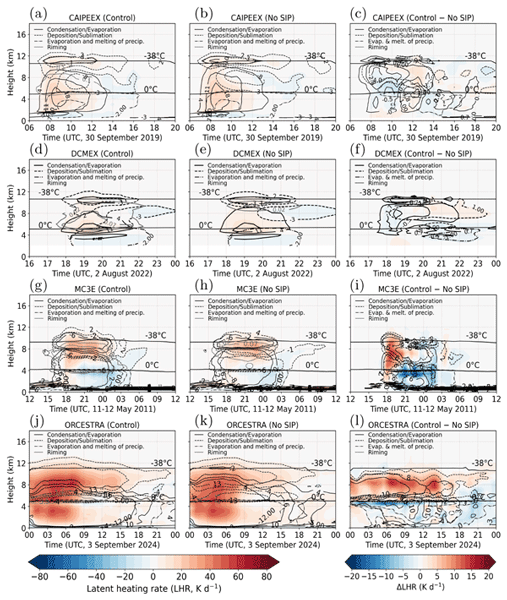
Deepak Waman, Julian Meusel, Behrooz Keshtgar, Gabriella Wallentin, Christian Barthlott, Sachin Patade, Sonali Shete, Thara Prabhakaran, Romain Fievet, Declan Finney, Alan Blyth, and Corinna Hoose
Atmos. Chem. Phys., 26, 11371–11407, https://doi.org/10.5194/acp-26-11371-2026, https://doi.org/10.5194/acp-26-11371-2026, 2026
Short summary
Short summary
We use a weather model with aircraft and satellite data to study ice multiplication in thunderstorms across India, Mexico, Oklahoma, and the tropical Atlantic. This process can create spurious ice particles in clouds, thereby increasing latent and radiative heating that strengthens stratiform ascents in storms and extends anvil-cloud lifetimes. These results improve our understanding of how small-scale ice processes influence large-scale storm behavior and rainfall patterns.
Samuel Ephraim, Paquita Zuidema, Aaron Bansemer, Lintong Cai, Markus Petters, Elise Rosky, Jefferson R. Snider, Zhien Wang, Sarah Woods, Kevin Barry, Theresa Campos, Owen Cruikshank, Sabine Eckhardt, Nikolaos Evangeliou, Romanos Foskinis, Jeffrey R. French, Bart Geerts, Coltin Grasmick, Silvia Henning, Varun Kumar, Andreas Massling, Camille Mavis, Greg M. McFarquhar, Athanasios Nenes, Gunnar Noer, Ryan Patnaude, Russell Perkins, Lise Lotte Sorensen, Henrik Skov, Tyler Tatro, Florian Tornow, and Lu Zhang
EGUsphere, https://doi.org/10.5194/egusphere-2026-2940, https://doi.org/10.5194/egusphere-2026-2940, 2026
Short summary
Short summary
The processes that establish how mixed-phase closed-cell clouds transition to more open cellular structures are poorly known. First-of-its kind aircraft observations document such a transition in the presence of anomalously high aerosol concentrations over the Nordic Seas at cloud temperatures < -15 °C. The reduces the drop size, discouraging riming. Eventually, ice precipitation produces surface cold pools that drive the convective transition, despite strong counteracting surface fluxes.
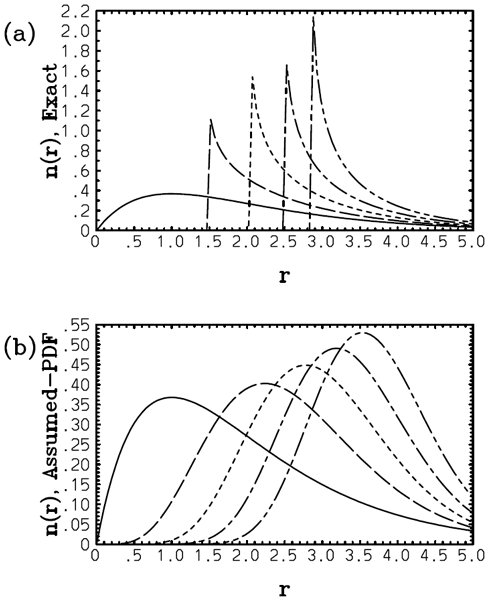
Jun-Ichi Yano, Vincent E. Larson, and Vaughan T. J. Phillips
Atmos. Chem. Phys., 25, 9357–9386, https://doi.org/10.5194/acp-25-9357-2025, https://doi.org/10.5194/acp-25-9357-2025, 2025
Short summary
Short summary
The distribution problems appear in atmospheric sciences at almost every corner when describing diverse processes. This paper presents a general formulation for addressing all these problems.
Freddy P. Paul, Martanda Gautam, Deepak Waman, Sachin Patade, Ushnanshu Dutta, Christoffer Pichler, Marcin Jackowicz-Korczynski, and Vaughan Phillips
EGUsphere, https://doi.org/10.5194/egusphere-2024-3800, https://doi.org/10.5194/egusphere-2024-3800, 2025
Preprint archived
Short summary
Short summary
This study shows observations of a key mechanism for initiation of ice particles in clouds with a chamber deployed on the top of a mountain during snowfall in winter. The mechanism involves the fragmentation of snow particles in collisions with denser rimed ice precipitation, namely "graupel" or "hail". The study shows how the fragmentation can be represented in atmospheric models. An improved formulation of the mechanism is proposed in light of our observations with the chamber.
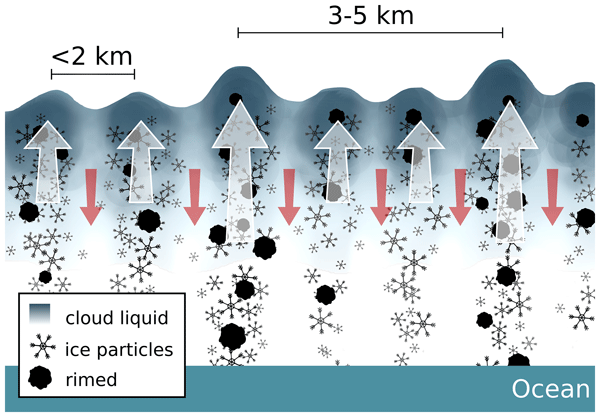
Nina Maherndl, Manuel Moser, Imke Schirmacher, Aaron Bansemer, Johannes Lucke, Christiane Voigt, and Maximilian Maahn
Atmos. Chem. Phys., 24, 13935–13960, https://doi.org/10.5194/acp-24-13935-2024, https://doi.org/10.5194/acp-24-13935-2024, 2024
Short summary
Short summary
It is not clear why ice crystals in clouds occur in clusters. Here, airborne measurements of clouds in mid-latitudes and high latitudes are used to study the spatial variability of ice. Further, we investigate the influence of riming, which occurs when liquid droplets freeze onto ice crystals. We find that riming enhances the occurrence of ice clusters. In the Arctic, riming leads to ice clustering at spatial scales of 3–5 km. This is due to updrafts and not higher amounts of liquid water.
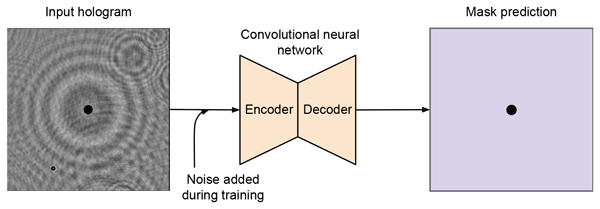
John S. Schreck, Gabrielle Gantos, Matthew Hayman, Aaron Bansemer, and David John Gagne
Atmos. Meas. Tech., 15, 5793–5819, https://doi.org/10.5194/amt-15-5793-2022, https://doi.org/10.5194/amt-15-5793-2022, 2022
Short summary
Short summary
We show promising results for a new machine-learning based paradigm for processing field-acquired cloud droplet holograms. The approach is fast, scalable, and leverages GPUs and other heterogeneous computing platforms. It combines applications of transfer and active learning by using synthetic data for training and a small set of hand-labeled data for refinement and validation. Artificial noise applied during synthetic training enables optimized models for real-world situations.

Sachin Patade, Deepak Waman, Akash Deshmukh, Ashok Kumar Gupta, Arti Jadav, Vaughan T. J. Phillips, Aaron Bansemer, Jacob Carlin, and Alexander Ryzhkov
Atmos. Chem. Phys., 22, 12055–12075, https://doi.org/10.5194/acp-22-12055-2022, https://doi.org/10.5194/acp-22-12055-2022, 2022
Short summary
Short summary
This modeling study focuses on the role of multiple groups of primary biological aerosol particles as ice nuclei on cloud properties and precipitation. This was done by implementing a more realistic scheme for biological ice nucleating particles in the aerosol–cloud model. Results show that biological ice nucleating particles have a limited role in altering the ice phase and precipitation in deep convective clouds.
Jonas K. F. Jakobsson, Deepak B. Waman, Vaughan T. J. Phillips, and Thomas Bjerring Kristensen
Atmos. Chem. Phys., 22, 6717–6748, https://doi.org/10.5194/acp-22-6717-2022, https://doi.org/10.5194/acp-22-6717-2022, 2022
Short summary
Short summary
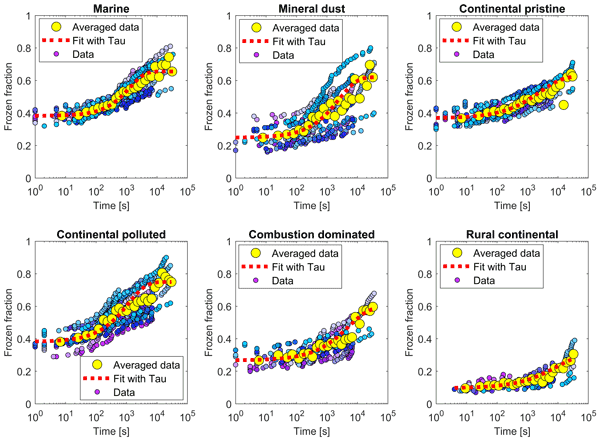
Long-lived cold-layer clouds at subzero temperatures are observed to be remarkably persistent in their generation of ice particles and snow precipitation. There is uncertainty about why this is so. This motivates the present lab study to observe the long-term ice-nucleating ability of aerosol samples from the real troposphere. Time dependence of their ice nucleation is observed to be weak in lab experiments exposing the samples to isothermal conditions for up to about 10 h.
Tommi Bergman, Risto Makkonen, Roland Schrödner, Erik Swietlicki, Vaughan T. J. Phillips, Philippe Le Sager, and Twan van Noije
Geosci. Model Dev., 15, 683–713, https://doi.org/10.5194/gmd-15-683-2022, https://doi.org/10.5194/gmd-15-683-2022, 2022
Short summary
Short summary
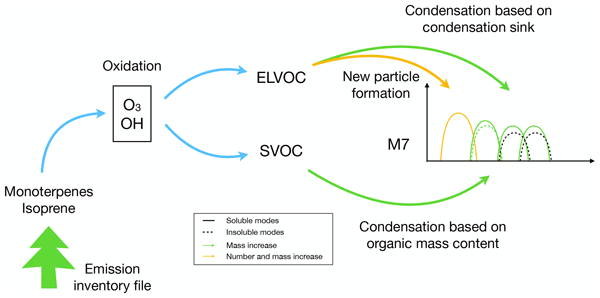
We describe in this paper the implementation of a process-based secondary organic aerosol and new particle formation scheme within the chemistry transport model TM5-MP version 1.2. The performance of the model simulations for the year 2010 is evaluated against in situ observations, ground-based remote sensing and satellite retrievals. Overall, the simulated aerosol fields are improved, although in some areas the model shows a decline in performance.
Rachel L. James, Vaughan T. J. Phillips, and Paul J. Connolly
Atmos. Chem. Phys., 21, 18519–18530, https://doi.org/10.5194/acp-21-18519-2021, https://doi.org/10.5194/acp-21-18519-2021, 2021
Short summary
Short summary
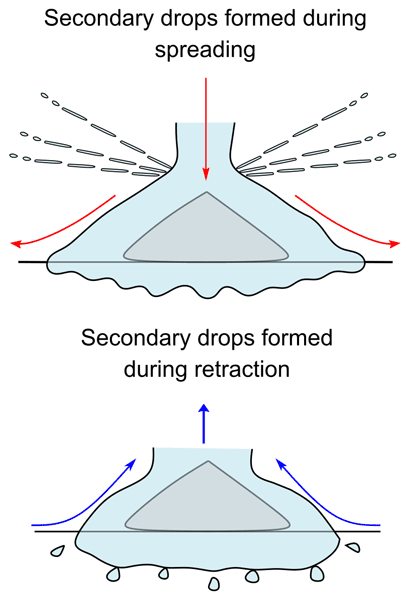
Secondary ice production (SIP) plays an important role in ice formation within mixed-phase clouds. We present a laboratory investigation of a potentially new SIP mechanism involving the collisions of supercooled water drops with ice particles. At impact, the supercooled water drop fragments form smaller secondary drops. Approximately 30 % of the secondary drops formed during the retraction phase of the supercooled water drop impact freeze over a temperature range of −4 °C to −12 °C.
Cited articles
Abdul-Razzak, H. and Ghan, S. J.: A parameterization of aerosol activation 2. Multiple aerosol types, J. Geophys. Res.-Atmos., 105, https://doi.org/10.1029/1999JD901161, 2000. a
Andreae, M. O. and Rosenfeld, D.: Aerosol–cloud–precipitation interactions. Part 1. The nature and sources of cloud-active aerosols, Earth-Sci. Rev., 89, 13–41, https://doi.org/10.1016/j.earscirev.2008.03.001, 2008. a
Benmoshe, N. and Khain, A. P.: The effects of turbulence on the microphysics of mixed-phase deep convective clouds investigated with a 2-D cloud model with spectral bin microphysics, J. Geophys. Res.-Atmos., 119, 207–221, https://doi.org/10.1002/2013JD020118, 2014. a
Bryan, G. H. and Morrison, H.: Sensitivity of a Simulated Squall Line to Horizontal Resolution and Parameterization of Microphysics, Mon. Weather Rev., 140, 202–225, https://doi.org/10.1175/MWR-D-11-00046.1, 2012. a
Chin, M., Rood, R., Lin, S.-J., Müller, J.-F., and Thompson, A.: Atmospheric sulfur cycle simulated in the global model GOCART: Model description and global properties, J. Geophys. Res., 105, 24671–24688, https://doi.org/10.1029/2000JD900384, 2000. a
DeMott, P., Cziczo, D., Prenni, A., Murphy, D., Kreidenweis, S., Thomson, D., Borys, R., and Rogers, D.: Measurements of the concentration and composition of nuclei for cirrus formation, P. Natl. Acad. Sci. USA, 100, 14655–14660, https://doi.org/10.1073/pnas.2532677100, 2003. a
Dye, J. E. and Hobbs, P. V.: The influence of environmental parameters on the freezing and fragmentation of suspended water drop, J. Atmos. Sci., 25, 82–96, 1968. a
Ferrier, B. S.: A Double-Moment Multiple-Phase Four-Class Bulk Ice Scheme. Part I: Description, J. Atmos. Sci., 51, 249–280, https://doi.org/10.1175/1520-0469(1994)051<0249:ADMMPF>2.0.CO;2, 1994. a, b
Field, P. R. and Heymsfield, A. J.: Importance of snow to global precipitation, Geophys. Res. Lett., 42, 9512–9520, https://doi.org/10.1002/2015GL065497, 2015. a
Field, P. R., Heymsfield, A. J., and Bansemer, A.: Shattering and Particle Interarrival Times Measured by Optical Array Probes in Ice Clouds, J. Atmos. Ocean. Tech., 23, 1357–1371, https://doi.org/10.1175/JTECH1922.1, 2006. a
Field, P. R., Lawson, R. P., Brown, P. R. A., Lloyd, G., Westbrook, C., Moisseev, D., Miltenberger, A., Nenes, A., Blyth, A., Choularton, T., Connolly, P., Buehl, J., Crosier, J., Cui, Z., Dearden, C., DeMott, P., Flossmann, A., Heymsfield, A., Huang, Y., Kalesse, H., Kanji, Z. A., Korolev, A., Kirchgaessner, A., Lasher-Trapp, S., Leisner, T., McFarquhar, G., Phillips, V., Stith, J., and Sullivan, S.: Chapter 7. Secondary Ice Production – current state of the science and recommendations for the future, Meteorol. Monogr., https://doi.org/10.1175/amsmonographs-d-16-0014.1, 2016. a, b
Fridlind, A. M., Li, X., Wu, D., van Lier-Walqui, M., Ackerman, A. S., Tao, W.-K., McFarquhar, G. M., Wu, W., Dong, X., Wang, J., Ryzhkov, A., Zhang, P., Poellot, M. R., Neumann, A., and Tomlinson, J. M.: Derivation of aerosol profiles for MC3E convection studies and use in simulations of the 20 May squall line case, Atmos. Chem. Phys., 17, 5947–5972, https://doi.org/10.5194/acp-17-5947-2017, 2017. a
Gautam, M., Waman, D., Patade, S., Deshmukh, A., Phillips, V., Jackowicz-Korczynski, M., Paul, F. P., Smith, P., and Bansemer, A.: Fragmentation in Collisions of Snow with Graupel/Hail: New Formulation from Field Observations, J. Atmos. Sci., 81, 2149–2164, 2024. a
Gettelman, A. and Morrison, H.: Advanced two-moment bulk microphysics for global models. Part I: Off-line tests and comparison with other schemes, J. Climate, 28, 1268–1287, https://doi.org/10.1175/JCLI-D-14-00102.1, 2015.
Gettelman, A., Truesdale, J., Bacmeister, J., Caldwell, P., Neale, R., Bogenschutz, P., and Simpson, I.: The Single Column Atmosphere Model version 6 (SCAM6): Not a scam but a tool for model evaluation and development, J. Adv. Model. Earth Sy., 11, 1381–1401, 2019. a
Golaz, J.-C., Salzmann, M., Donner, L. J., Horowitz, L. W., Ming, Y., and Zhao, M.: Sensitivity of the aerosol indirect effect to subgrid variability in the cloud parameterization of the GFDL atmosphere general circulation model AM3, J. Climate, 24, 3145–3160, 2011. a
Gupta, A. K., Deshmukh, A., Waman, D., Patade, S., Jadav, A., Phillips, V. T. J., Bansemer, A., Martins, J. A., and Gonçalves, F. L. T.: The microphysics of the warm-rain and ice crystal processes of precipitation in simulated continental convective storms, Commun. Earth Environ., 4, 226, https://doi.org/10.1038/s43247-023-00884-5, 2023. a, b, c, d, e, f, g, h
Hallett, J. and Mossop, S. C.: Production of secondary ice particles during the riming process, Nature, 249, 26–28, https://doi.org/10.1038/249026a0, 1974. a
Harris-Hobbs, R. L. and Cooper, W. A.: Field Evidence Supporting Quantitative Predictions of Secondary Ice Production Rates, J. Atmos. Sci., 44, 1071–1082, https://doi.org/10.1175/1520-0469(1987)044<1071:FESQPO>2.0.CO;2, 1987. a
Heymsfield, A. J., Bansemer, A., Field, P. R., Durden, S. L., Stith, J. L., Dye, J. E., Hall, W., and Grainger, C. A.: Observations and Parameterizations of Particle Size Distributions in Deep Tropical Cirrus and Stratiform Precipitating Clouds: Results from In Situ Observations in TRMM Field Campaigns, J. Atmos. Sci., 59, 3457–3491, https://doi.org/10.1175/1520-0469(2002)059<3457:OAPOPS>2.0.CO;2, 2002. a
Hoesly, R. M., Smith, S. J., Feng, L., Klimont, Z., Janssens-Maenhout, G., Pitkanen, T., Seibert, J. J., Vu, L., Andres, R. J., Bolt, R. M., Bond, T. C., Dawidowski, L., Kholod, N., Kurokawa, J.-I., Li, M., Liu, L., Lu, Z., Moura, M. C. P., O'Rourke, P. R., and Zhang, Q.: Historical (1750–2014) anthropogenic emissions of reactive gases and aerosols from the Community Emissions Data System (CEDS), Geosci. Model Dev., 11, 369–408, https://doi.org/10.5194/gmd-11-369-2018, 2018. a
Houze, R. A.: Observed structure of mesoscale convective systems and implications for large‐scale heating, Q. J. Roy. Meteor. Soc., 115, 425–461, https://doi.org/10.1002/qj.49711548702, 1989. a
Houze, R. A.: Cloud Dynamics, 2nd Edn., vol. 104, ISBN 9780123742667, 2014. a
James, R. L., Phillips, V. T. J., and Connolly, P. J.: Secondary ice production during the break-up of freezing water drops on impact with ice particles, Atmos. Chem. Phys., 21, 18519–18530, https://doi.org/10.5194/acp-21-18519-2021, 2021. a
Jensen, M. P., Petersen, W. A., Bansemer, A., Bharadwaj, N., Carey, L. D., Cecil, D. J., Collis, S. M., Genio, A. D. D., Dolan, B., Gerlach, J., Giangrande, S. E., Heymsfield, A., Heymsfield, G., Kollias, P., Lang, T. J., Nesbitt, S. W., Neumann, A., Poellot, M., Rutledge, S. A., Schwaller, M., Tokay, A., Williams, C. R., Wolff, D. B., Xie, S., and Zipser, E. J.: The Midlatitude Continental Convective Clouds Experiment (MC3E), B. Am. Meteorol. Soc., 97, 1667–1686, https://doi.org/10.1175/BAMS-D-14-00228.1, 2016. a, b, c
Kärcher, B. and Lohmann, U.: A parameterization of cirrus cloud formation: Homogeneous freezing of supercooled aerosols, J. Geophys. Res.-Atmos., 107, AAC–4, https://doi.org/10.1029/2001JD000470, 2002. a
Klein, S. A., McCoy, R. B., Morrison, H., Ackerman, A. S., Avramov, A., de Boer, G., Chen, M., Cole, J. N., del Genio, A. D., Falk, M., Foster, M. J., Fridlind, A., Golaz, J. C., Hashino, T., Harrington, J. Y., Hoose, C., Khairoutdinov, M. F., Larson, V. E., Liu, X., Luo, Y., McFarquhar, G. M., Menon, S., Neggers, R. A., Park, S., Poellot, M. R., Schmidt, J. M., Sednev, I., Shipway, B. J., Shupe, M. D., Spangenberg, D. A., Sud, Y. C., Turner, D. D., Veron, D. E., von Salzen, K., Walker, G. K., Wang, Z., Wolf, A. B., Xie, S., Xu, K. M., Yang, F., and Zhang, G.: Intercomparison of model simulations of mixed-phase clouds observed during the ARM Mixed-Phase Arctic Cloud Experiment. I: single-layer cloud, Q. J. Roy. Meteor. Soc., 135, 979–1002, https://doi.org/10.1002/QJ.416, 2009. a
Korolev, A. and Leisner, T.: Review of experimental studies of secondary ice production, Atmos. Chem. Phys., 20, 11767–11797, https://doi.org/10.5194/acp-20-11767-2020, 2020. a
Korolev, A. V., Emery, E. F., Strapp, J. W., Cober, S. G., Isaac, G. A., Wasey, M., and Marcotte, D.: Small ice particles in tropospheric clouds: Fact or artifact? Airborne icing instrumentation evaluation experiment, B. Am. Meteorol. Soc., 92, https://doi.org/10.1175/2010BAMS3141.1, 2011. a, b
Kudzotsa, I., Phillips, V. T. J., Dobbie, S., Formenton, M., Sun, J., Allen, G., Bansemer, A., Spracklen, D., and Pringle, K.: Aerosol indirect effects on glaciated clouds. Part I: Model description, Q. J. Roy. Meteor. Soc., 142, 1958–1969, https://doi.org/10.1002/QJ.2791, 2016. a, b, c
Ladino, L. A., Korolev, A., Heckman, I., Wolde, M., Fridlind, A. M., and Ackerman, A. S.: On the role of ice-nucleating aerosol in the formation of ice particles in tropical mesoscale convective systems, Geophys. Res. Lett., 44, 1574–1582, https://doi.org/10.1002/2016GL072455, 2017. a
Lasher-Trapp, S., Scott, E. L., Järvinen, E., Schnaiter, M., Waitz, F., DeMott, P. J., McCluskey, C. S., and Hill, T. C.: Observations and Modeling of Rime Splintering in Southern Ocean Cumuli, J. Geophys. Res.-Atmos., 126, https://doi.org/10.1029/2021JD035479, 2021. a
Li, X., Tao, W.-K., Khain, A. P., Simpson, J., and Johnson, D. E.: Sensitivity of a Cloud-Resolving Model to Bulk and Explicit Bin Microphysical Schemes. Part I: Comparisons, J. Atmos. Sci., 66, 3–21, https://doi.org/10.1175/2008JAS2646.1, 2009. a
Liou, K. N.: An introduction to atmospheric radiation, Vol. 84, Academic press, ISBN 978-0124514515, 2002.
Liu, X. and Penner, J. E.: Ice nucleation parameterization for global models, Meteorol. Z., 14, 499–514, https://doi.org/10.1127/0941-2948/2005/0059, 2005. a
Liu, X., Ma, P.-L., Wang, H., Tilmes, S., Singh, B., Easter, R. C., Ghan, S. J., and Rasch, P. J.: Description and evaluation of a new four-mode version of the Modal Aerosol Module (MAM4) within version 5.3 of the Community Atmosphere Model, Geosci. Model Dev., 9, 505–522, https://doi.org/10.5194/gmd-9-505-2016, 2016. a
Ming, Y., Ramaswamy, V., Donner, L. J., and Phillips, V. T. J.: A New Parameterization of Cloud Droplet Activation Applicable to General Circulation Models, J. Atmos. Sci., 63, 1348–1356, https://doi.org/10.1175/JAS3686.1, 2006. a, b, c, d
Morrison, H. and Gettelman, A.: A new two-moment bulk stratiform cloud microphysics scheme in the Community Atmosphere Model, version 3 (CAM3). Part I: Description and numerical tests, J. Climate, 21, 3642–3659, https://doi.org/10.1175/2008JCLI2105.1, 2008.
Morrison, H., Curry, J. A., and Khvorostyanov, V. I.: A new double-moment microphysics parameterization for application in cloud and climate models. Part I: Description, J. Atmos. Sci., 62, 1665–1677, https://doi.org/10.1175/JAS3446.1, 2005. a, b
Mülmenstädt, J., Sourdeval, O., Delanoë, J., and Quaas, J.: Frequency of occurrence of rain from liquid-, mixed-, and ice-phase clouds derived from A-Train satellite retrievals, Geophys. Res. Lett., 42, 6502–6509, https://doi.org/10.1002/2015GL064604, 2015. a
Ochs III, H. T.: Moment-conserving techniques for warm cloud microphysical computation. Part II. Model testing and results, J. Atmos. Sci., 35, 1959–1973, 1978. a
Pant, C. S.: A modified stratiform cloud microphysics parameterization: evaluation using the Community Atmosphere Model version 6 single-column model, Zenodo [data set], https://doi.org/10.5281/zenodo.19758936, 2026. a
Petters, M. D. and Kreidenweis, S. M.: A single parameter representation of hygroscopic growth and cloud condensation nucleus activity, Atmos. Chem. Phys., 7, 1961–1971, https://doi.org/10.5194/acp-7-1961-2007, 2007. a, b, c, d
Phillips, V. T. J.: Theory of In-Cloud Activation of Aerosols and Microphysical Quasi-Equilibrium in a Deep Updraft, J. Atmos. Sci., 79, 1865–1886, https://doi.org/10.1175/JAS-D-21-0176.1, 2022. a
Phillips, V. T. J., Andronache, C., Sherwood, S. C., Bansemer, A., Conant, W. C., Demott, P. J., Flagan, R. C., Heymsfield, A., Jonsson, H., Poellot, M., Rissman, T. A., Seinfeld, J. H., Vanreken, T., Varutbangkul, V., and Wilson, J. C.: Anvil glaciation in a deep cumulus updraught over Florida simulated with the Explicit Microphysics Model. I: Impact of various nucleation processes, Q. J. Roy. Meteor. Soc., 131, 2019–2046, https://doi.org/10.1256/qj.04.85, 2005. a
Phillips, V. T. J., DeMott, P. J., and Andronache, C.: An empirical parameterization of heterogeneous ice nucleation for multiple chemical species of aerosol, J. Atmos. Sci., 65, https://doi.org/10.1175/2007JAS2546.1, 2008. a, b
Phillips, V. T. J., Andronache, C., Christner, B., Morris, C. E., Sands, D. C., Bansemer, A., Lauer, A., McNaughton, C., and Seman, C.: Potential impacts from biological aerosols on ensembles of continental clouds simulated numerically, Biogeosciences, 6, 987–1014, https://doi.org/10.5194/bg-6-987-2009, 2009. a, b, c
Phillips, V. T. J., Demott, P. J., Andronache, C., Pratt, K. A., Prather, K. A., Subramanian, R., and Twohy, C.: Improvements to an Empirical Parameterization of Heterogeneous Ice Nucleation and Its Comparison with Observations, J. Atmos. Sci., 70, 378–409, https://doi.org/10.1175/JAS-D-12-080.1, 2013. a, b
Phillips, V. T. J., Formenton, M., Bansemer, A., Kudzotsa, I., and Lienert, B.: A Parameterization of Sticking Efficiency for Collisions of Snow and Graupel with Ice Crystals: Theory and Comparison with Observations, J. Atmos. Sci., 72, 4885–4902, https://doi.org/10.1175/JAS-D-14-0096.1, 2015. a, b
Phillips, V. T. J., Yano, J.-I., Formenton, M., Ilotoviz, E., Kanawade, V., Kudzotsa, I., Sun, J., Bansemer, A., Detwiler, A. G., Khain, A., and Tessendorf, S. A.: Ice Multiplication by Breakup in Ice–Ice Collisions. Part II: Numerical Simulations, J. Atmos. Sci., 74, 2789–2811, https://doi.org/10.1175/JAS-D-16-0223.1, 2017a. a, b, c, d, e, f, g
Phillips, V. T. J., Patade, S., Gutierrez, J., and Bansemer, A.: Secondary Ice Production by Fragmentation of Freezing Drops: Formulation and Theory, J. Atmos. Sci., 75, 3031–3070, https://doi.org/10.1175/JAS-D-17-0190.1, 2018. a, b
Phillips, V. T. J., Formenton, M., Kanawade, V. P., Karlsson, L. R., Patade, S., Sun, J., Barthe, C., Pinty, J.-P., Detwiler, A. G., Lyu, W., and Tessendorf, S. A.: Multiple Environmental Influences on the Lightning of Cold-Based Continental Cumulonimbus Clouds. Part I: Description and Validation of Model, J. Atmos. Sci., 77, 3999–4024, https://doi.org/10.1175/JAS-D-19-0200.1, 2020. a, b, c
Pruppacher, H. R. and Klett, J. D.: Microphysics of Clouds and Precipitation, vol. 18 of Atmospheric and Oceanographic Sciences Library, Springer Dordrecht, https://doi.org/10.1007/978-0-306-48100-0, 2010. a
Richardson, M. S., DeMott, P. J., Kreidenweis, S. M., Cziczo, D. J., Dunlea, E. J., Jimenez, J. L., Thomson, D. S., Ashbaugh, L. L., Borys, R. D., Westphal, D. L., Casuccio, G. S., and Lersch, T. L.: Measurements of heterogeneous ice nuclei in the western United States in springtime and their relation to aerosol characteristics, J. Geophys. Res.-Atmos., 112, https://doi.org/10.1029/2006JD007500, 2007. a
Seidel, J. S., Kiselev, A. A., Keinert, A., Stratmann, F., Leisner, T., and Hartmann, S.: Secondary ice production – no evidence of efficient rime-splintering mechanism, Atmos. Chem. Phys., 24, 5247–5263, https://doi.org/10.5194/acp-24-5247-2024, 2024. a
Sotiropoulou, G., Sullivan, S., Savre, J., Lloyd, G., Lachlan-Cope, T., Ekman, A. M. L., and Nenes, A.: The impact of secondary ice production on Arctic stratocumulus, Atmos. Chem. Phys., 20, 1301–1316, https://doi.org/10.5194/acp-20-1301-2020, 2020. a
Sotiropoulou, G., Vignon, É., Young, G., Morrison, H., O'Shea, S. J., Lachlan-Cope, T., Berne, A., and Nenes, A.: Secondary ice production in summer clouds over the Antarctic coast: an underappreciated process in atmospheric models, Atmos. Chem. Phys., 21, 755–771, https://doi.org/10.5194/acp-21-755-2021, 2021. a, b
Sui, C. H., Tsay, C. T., and Li, X.: Convective–stratiform rainfall separation by cloud content, J. Geophys. Ress.-Atmos., 112, 14213, https://doi.org/10.1029/2006JD008082, 2007. a
Sullivan, S. C., Hoose, C., and Nenes, A.: Investigating the contribution of secondary ice production to in-cloud ice crystal numbers, J. Geophys. Res.-Atmos., 122, 9391–9412, https://doi.org/10.1002/2017JD026546, 2017. a
Sullivan, S. C., Hoose, C., Kiselev, A., Leisner, T., and Nenes, A.: Initiation of secondary ice production in clouds, Atmos. Chem. Phys., 18, 1593–1610, https://doi.org/10.5194/acp-18-1593-2018, 2018. a
Sun, Z. and Shine, K. P.: Studies of the radiative properties of ice and mixed-phase clouds, Q. J. Roy. Meteor. Soc., 120, 111–137, https://doi.org/10.1002/qj.49712051508, 1994. a
Takahashi, C. and Yamashita, A.: Production of ice splinters by the freezing of water drops in free fall, J. Meteorol. Soc. Jpn. Ser. II, 55, 139–141, https://doi.org/10.2151/jmsj1965.55.1_139, 1977.
Takahashi, T., Nagao, Y., and Kushiyama, Y.: Possible High Ice Particle Production during Graupel–Graupel Collisions, J. Atmos. Sci., 52, 4523–4527, https://doi.org/10.1175/1520-0469(1995)052<4523:PHIPPD>2.0.CO;2, 1995. a
Uin, J.: Cloud Condensation Nuclei Particle Counter (CCN) Instrument Handbook, U.S. Department of Energy, https://doi.org/10.2172/1251411, 2016. a
Varble, A., Zipser, E. J., Fridlind, A. M., Zhu, P., Ackerman, A. S., Chaboureau, J.-P., Fan, J., Hill, A., Shipway, B., and Williams, C.: Evaluation of cloud-resolving and limited area model intercomparison simulations using TWP-ICE observations: 2. Precipitation microphysics, J. Geophys. Res.-Atmos., 119, 913–919, https://doi.org/10.1002/2013JD021372, 2014. a, b
Vardiman, L.: The Generation of Secondary Ice Particles in Clouds by Crystal–Crystal Collision, J. Atmos. Sci., 35, https://doi.org/10.1175/1520-0469(1978)035<2168:tgosip>2.0.co;2, 1978. a
Waman, D., Patade, S., Jadav, A., Deshmukh, A., Gupta, A. K., Phillips, V. T. J., Bansemer, A., and DeMott, P. J.: Dependencies of Four Mechanisms of Secondary Ice Production on Cloud-Top Temperature in a Continental Convective Storm, J. Atmos. Sci., 79, 3375–3404, https://doi.org/10.1175/JAS-D-21-0278.1, 2022. a, b, c, d, e
Wesely, M. L. and Lesht, B. M.: Comparison of RADM dry deposition algorithms with a site-specific method for inferring dry deposition, Water, Air, Soil Pollut., 44, 273–293, 1989.
Xie, S., Zhang, Y., Giangrande, S. E., Jensen, M. P., McCoy, R., and Zhang, M.: Interactions between cumulus convection and its environment as revealed by the MC3E sounding array, J. Geophys. Res.-Atmos., 119, 711–784, https://doi.org/10.1002/2014JD022011, 2014. a, b, c
Yang, J., Wang, Z., Heymsfield, A. J., and French, J. R.: Characteristics of vertical air motion in isolated convective clouds, Atmos. Chem. Phys., 16, 10159–10173, https://doi.org/10.5194/acp-16-10159-2016, 2016. a
Yano, J.-I. and Phillips, V. T. J.: Ice–Ice Collisions: An Ice Multiplication Process in Atmospheric Clouds, J. Atmos. Sci., 68, 322–333, https://doi.org/10.1175/2010JAS3607.1, 2011. a
Short summary
Large-scale stratiform clouds play a decisive role in the Earth's radiation budget and precipitation patterns, yet global models historically exhibit major biases in their simulations. Our study addresses these gaps by implementing physically-based representations of secondary ice production pathways and advanced aerosol activation schemes, including bin-bulk microphysics. These improvements enable the robust simulation of both cloud droplet and ice formation.
Large-scale stratiform clouds play a decisive role in the Earth's radiation budget and...


Altmetrics
Final-revised paper
Preprint