
Articles | Volume 26, issue 10
https://doi.org/10.5194/acp-26-7207-2026
© Author(s) 2026. This work is distributed under
the Creative Commons Attribution 4.0 License.
the Creative Commons Attribution 4.0 License.
https://doi.org/10.5194/acp-26-7207-2026
© Author(s) 2026. This work is distributed under
the Creative Commons Attribution 4.0 License.
the Creative Commons Attribution 4.0 License.
Research article
| 
27 May 2026
Research article |
| 27 May 2026
| 27 May 2026
Errors in satellite-based global horizontal irradiance retrievals due to three-dimensional cloud-radiation interactions

R&D Satellite Observations, Royal Netherlands Meteorological Institute (KNMI), De Bilt, the Netherlands
Meteorology and Air Quality Group,Wageningen University & Research, Wageningen, the Netherlands
Victor J. H. Trees
R&D Satellite Observations, Royal Netherlands Meteorological Institute (KNMI), De Bilt, the Netherlands
Geoscience and Remote Sensing Department, Delft University of Technology, Delft, the Netherlands
Chiel C. van Heerwaarden
Meteorology and Air Quality Group,Wageningen University & Research, Wageningen, the Netherlands
Jan Fokke Meirink
R&D Satellite Observations, Royal Netherlands Meteorological Institute (KNMI), De Bilt, the Netherlands
Related authors
Victor J. H. Trees, Ping Wang, Job I. Wiltink, Piet Stammes, Daphne M. Stam, David P. Donovan, and A. Pier Siebesma
Geosci. Model Dev., 19, 9677–9728, https://doi.org/10.5194/gmd-19-9677-2026, https://doi.org/10.5194/gmd-19-9677-2026, 2026
Short summary
Short summary
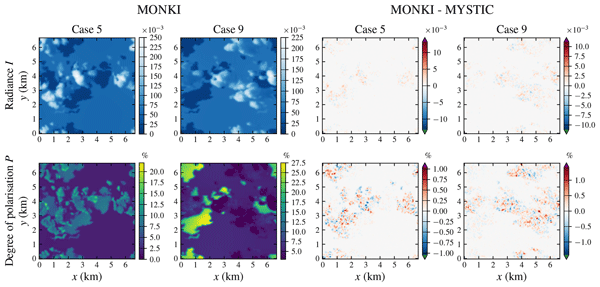
We present MONKI (Monte Carlo KNMI), an accurate and efficient Fortran radiative transfer code for simulating total and polarised sunlight in 3D planetary atmospheres. Its novelty is the derivation of Monte Carlo equations for the transfer of polarised light, fully accounting for polarisation-dependent scattering directions. This formulation gives reliable convergence even for optically thick, strongly polarising atmospheres, supporting observations of Earth, Venus, or any other planet.
Job I. Wiltink, Hartwig Deneke, Chiel C. van Heerwaarden, and Jan Fokke Meirink
Atmos. Meas. Tech., 18, 3917–3936, https://doi.org/10.5194/amt-18-3917-2025, https://doi.org/10.5194/amt-18-3917-2025, 2025
Short summary
Short summary
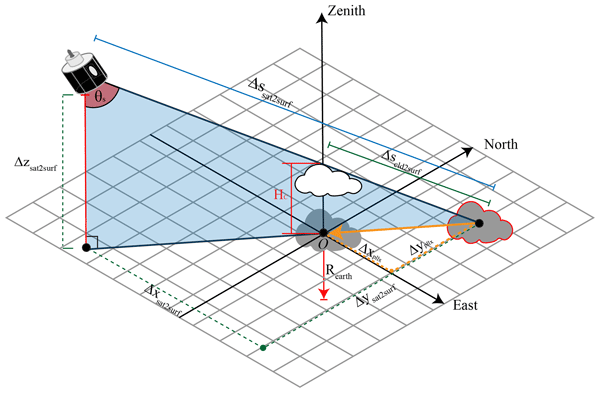
Global horizontal irradiance retrievals from satellite observations are affected by spatial displacements due to parallax and cloud shadows. We assess different approaches to correct for these displacements and quantify their added value by comparison with a network of ground-based pyranometer observations. The corrections are found to become increasingly important at higher spatial resolutions and are most relevant for variable cloud types.
Job I. Wiltink, Hartwig Deneke, Yves-Marie Saint-Drenan, Chiel C. van Heerwaarden, and Jan Fokke Meirink
Atmos. Meas. Tech., 17, 6003–6024, https://doi.org/10.5194/amt-17-6003-2024, https://doi.org/10.5194/amt-17-6003-2024, 2024
Short summary
Short summary
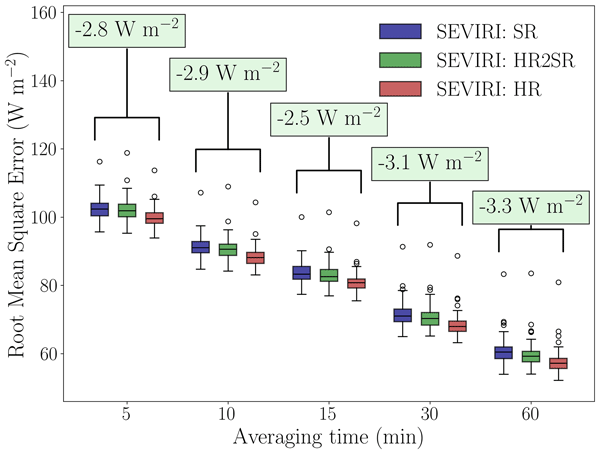
Meteosat Spinning Enhanced Visible and Infrared Imager (SEVIRI) global horizontal irradiance (GHI) retrievals are validated at standard and increased spatial resolution against a network of 99 pyranometers. GHI accuracy is strongly dependent on the cloud regime. Days with variable cloud conditions show significant accuracy improvements when retrieved at higher resolution. We highlight the benefits of dense network observations and a cloud-regime-resolved approach in validating GHI retrievals.
Victor J. H. Trees, Ping Wang, Job I. Wiltink, Piet Stammes, Daphne M. Stam, David P. Donovan, and A. Pier Siebesma
Geosci. Model Dev., 19, 9677–9728, https://doi.org/10.5194/gmd-19-9677-2026, https://doi.org/10.5194/gmd-19-9677-2026, 2026
Short summary
Short summary
We present MONKI (Monte Carlo KNMI), an accurate and efficient Fortran radiative transfer code for simulating total and polarised sunlight in 3D planetary atmospheres. Its novelty is the derivation of Monte Carlo equations for the transfer of polarised light, fully accounting for polarisation-dependent scattering directions. This formulation gives reliable convergence even for optically thick, strongly polarising atmospheres, supporting observations of Earth, Venus, or any other planet.
Tristan Roelofs, Marc Castellnou, Jordi Vilà-Guerau de Arellano, Martin Janssens, and Chiel van Heerwaarden
Atmos. Chem. Phys., 26, 13531–13555, https://doi.org/10.5194/acp-26-13531-2026, https://doi.org/10.5194/acp-26-13531-2026, 2026
Short summary
Short summary
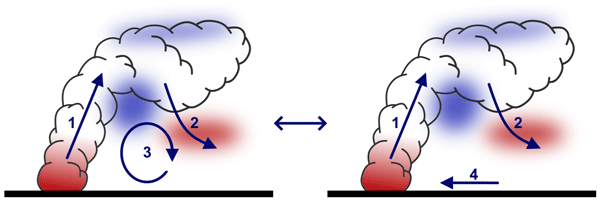
With simulations, we studied the impact of fire-induced circulations on the atmosphere and the factors governing these circulations. The results showed that two parts of the circulations, the up- and downdrafts, altered the vertical structure of the atmosphere ahead of the fire. Furthermore, we found that the wind speed in the direction of the circulation determines whether a circulation can develop. Further research is needed to study how fire-induced circulations affect the fire behaviour.
Martin de Graaf, Ping Wang, Nikos Benas, and Jan Fokke Meirink
EGUsphere, https://doi.org/10.5194/egusphere-2026-4481, https://doi.org/10.5194/egusphere-2026-4481, 2026
Short summary
Short summary
Clouds are monitored from space using satellite sensors, but the quantification of cloud properties are biased when smoke is overlying the clouds. This happens often near Africa, where biomass burning during the monsoonal dry season is common. The retrievals of the cloud properties can be improved when the absorption of the sunlight due to smoke is accounted for. In this paper, the change of cloud properties is quantified as a function of the amount of smoke in the atmosphere.
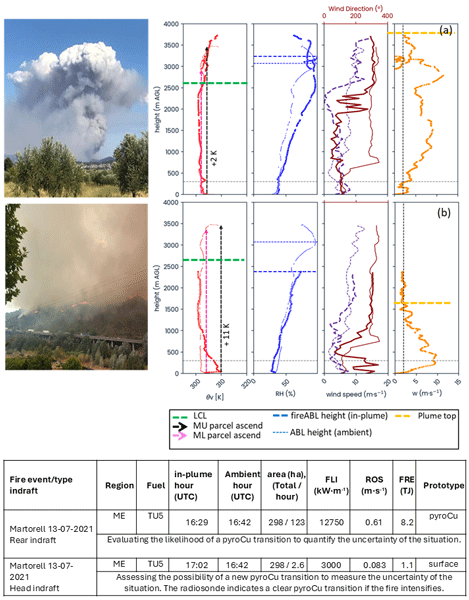
Marc Castellnou Ribau, Mercedes Bachfischer, Pau Guarque, Laia Estivill, Marta Miralles Bover, Borja Ruiz, Jordi Pagès, Brian Verhoeven, Zisoula Ntasiou, Ove Stokkeland, Chiel van Heerwaarden, Tristan Roelofs, Martin Janssens, Cathelijne R. Stoof, and Jordi Vilà-Guerau de Arellano
Atmos. Meas. Tech., 18, 7805–7831, https://doi.org/10.5194/amt-18-7805-2025, https://doi.org/10.5194/amt-18-7805-2025, 2025
Short summary
Short summary
Firefighter entrapments can occur when wildfires escalate suddenly due to fire-atmosphere interactions. This study presents a method to analyze this in real-time using two weather balloon measurements: ambient and in-plume conditions. Researchers launched 156 balloons during wildfire seasons in Spain, Chile, Greece, and the Netherlands. This methodology detects sudden changes in fire behavior by comparing ambient and in-plume data, ultimately enhancing research on fire-atmosphere interactions.
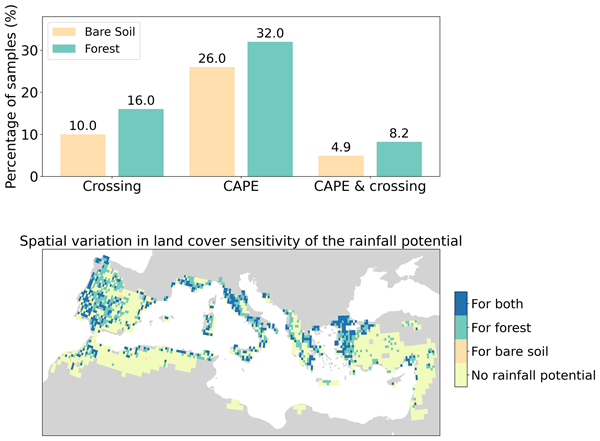
Jolanda J. E. Theeuwen, Sarah N. Warnau, Imme B. Benedict, Stefan C. Dekker, Hubertus V. M. Hamelers, Chiel C. van Heerwaarden, and Arie Staal
Biogeosciences, 22, 6913–6936, https://doi.org/10.5194/bg-22-6913-2025, https://doi.org/10.5194/bg-22-6913-2025, 2025
Short summary
Short summary
The Mediterranean Basin is prone to drying. This study uses a simple model to explore how forests affect the potential for rainfall by analyzing the lowest part of the atmosphere. Results show that forest contributes to rainfall potential in wet regions, where it also promotes cooling, and may reduce local precipitation in dry regions. These findings suggest that the impact of forestation varies with soil moisture, and may possibly mitigate or intensify future drying.
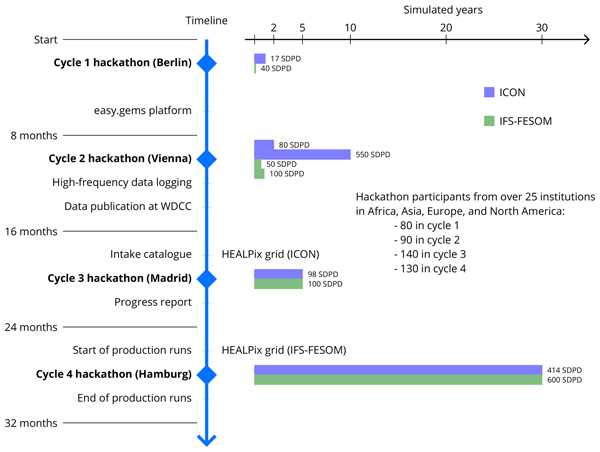
Hans Segura, Xabier Pedruzo-Bagazgoitia, Philipp Weiss, Sebastian K. Müller, Thomas Rackow, Junhong Lee, Edgar Dolores-Tesillos, Imme Benedict, Matthias Aengenheyster, Razvan Aguridan, Gabriele Arduini, Alexander J. Baker, Jiawei Bao, Swantje Bastin, Eulàlia Baulenas, Tobias Becker, Sebastian Beyer, Hendryk Bockelmann, Nils Brüggemann, Lukas Brunner, Suvarchal K. Cheedela, Sushant Das, Jasper Denissen, Ian Dragaud, Piotr Dziekan, Madeleine Ekblom, Jan Frederik Engels, Monika Esch, Richard Forbes, Claudia Frauen, Lilli Freischem, Diego García-Maroto, Philipp Geier, Paul Gierz, Álvaro González-Cervera, Katherine Grayson, Matthew Griffith, Oliver Gutjahr, Helmuth Haak, Ioan Hadade, Kerstin Haslehner, Shabeh ul Hasson, Jan Hegewald, Lukas Kluft, Aleksei Koldunov, Nikolay Koldunov, Tobias Kölling, Shunya Koseki, Sergey Kosukhin, Josh Kousal, Peter Kuma, Arjun U. Kumar, Rumeng Li, Nicolas Maury, Maximilian Meindl, Sebastian Milinski, Kristian Mogensen, Bimochan Niraula, Jakub Nowak, Divya Sri Praturi, Ulrike Proske, Dian Putrasahan, René Redler, David Santuy, Domokos Sármány, Reiner Schnur, Patrick Scholz, Dmitry Sidorenko, Dorian Spät, Birgit Sützl, Daisuke Takasuka, Adrian Tompkins, Alejandro Uribe, Mirco Valentini, Menno Veerman, Aiko Voigt, Sarah Warnau, Fabian Wachsmann, Marta Wacławczyk, Nils Wedi, Karl-Hermann Wieners, Jonathan Wille, Marius Winkler, Yuting Wu, Florian Ziemen, Janos Zimmermann, Frida A.-M. Bender, Dragana Bojovic, Sandrine Bony, Simona Bordoni, Patrice Brehmer, Marcus Dengler, Emanuel Dutra, Saliou Faye, Erich Fischer, Chiel van Heerwaarden, Cathy Hohenegger, Heikki Järvinen, Markus Jochum, Thomas Jung, Johann H. Jungclaus, Noel S. Keenlyside, Daniel Klocke, Heike Konow, Martina Klose, Szymon Malinowski, Olivia Martius, Thorsten Mauritsen, Juan Pedro Mellado, Theresa Mieslinger, Elsa Mohino, Hanna Pawłowska, Karsten Peters-von Gehlen, Abdoulaye Sarré, Pajam Sobhani, Philip Stier, Lauri Tuppi, Pier Luigi Vidale, Irina Sandu, and Bjorn Stevens
Geosci. Model Dev., 18, 7735–7761, https://doi.org/10.5194/gmd-18-7735-2025, https://doi.org/10.5194/gmd-18-7735-2025, 2025
Short summary
Short summary
The Next Generation of Earth Modeling Systems project (nextGEMS) developed two Earth system models that use horizontal grid spacing of 10 km and finer, giving more fidelity to the representation of local phenomena, globally. In its fourth cycle, nextGEMS simulated the Earth System climate over the 2020–2049 period under the SSP3-7.0 scenario. Here, we provide an overview of nextGEMS, insights into the model development, and the realism of multi-decadal, kilometer-scale simulations.
Job I. Wiltink, Hartwig Deneke, Chiel C. van Heerwaarden, and Jan Fokke Meirink
Atmos. Meas. Tech., 18, 3917–3936, https://doi.org/10.5194/amt-18-3917-2025, https://doi.org/10.5194/amt-18-3917-2025, 2025
Short summary
Short summary
Global horizontal irradiance retrievals from satellite observations are affected by spatial displacements due to parallax and cloud shadows. We assess different approaches to correct for these displacements and quantify their added value by comparison with a network of ground-based pyranometer observations. The corrections are found to become increasingly important at higher spatial resolutions and are most relevant for variable cloud types.
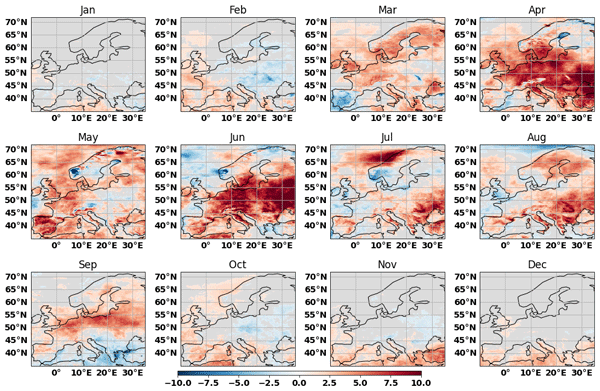
Abhay Devasthale, Sandra Andersson, Erik Engström, Frank Kaspar, Jörg Trentmann, Anke Duguay-Tetzlaff, Jan Fokke Meirink, Erik Kjellström, Tomas Landelius, Manu Anna Thomas, and Karl-Göran Karlsson
Earth Syst. Dynam., 16, 1169–1182, https://doi.org/10.5194/esd-16-1169-2025, https://doi.org/10.5194/esd-16-1169-2025, 2025
Short summary
Short summary
By compositing trends in multiple climate variables, this study presents emerging regimes that are relevant for solar energy applications. It is shown that the favourable conditions for exploiting solar energy are emerging during spring and early summer. The study also underscores the increasingly important role of clouds in regulating surface solar radiation as the aerosol concentrations are decreasing over Europe and the societal value of satellite-based climate monitoring.
Nikos Benas, Jan Fokke Meirink, Rob Roebeling, and Martin Stengel
Atmos. Chem. Phys., 25, 6957–6973, https://doi.org/10.5194/acp-25-6957-2025, https://doi.org/10.5194/acp-25-6957-2025, 2025
Short summary
Short summary
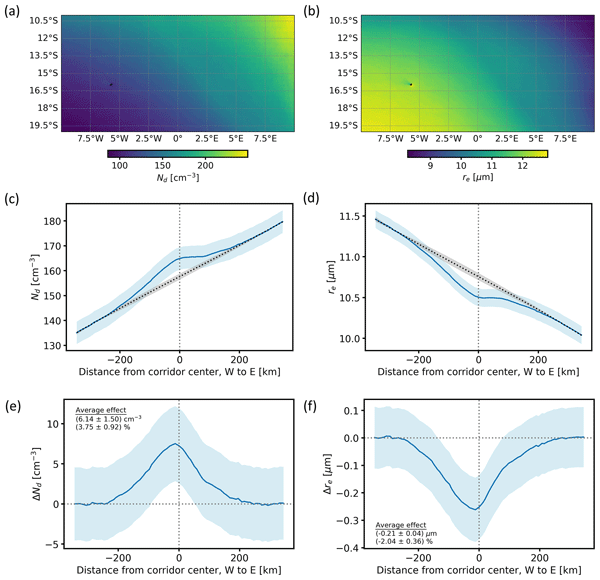
This study examines how ship emissions affect clouds over a shipping corridor in the southeastern Atlantic. Using satellite data from 2004 to 2023, we find that ship emissions increase the number of cloud droplets while reducing their size and slightly decrease cloud water content. Effects on seasonal and daily patterns vary based on regional factors. The impact of emissions weakened after stricter regulations were implemented in 2020.
Wouter Mol and Chiel van Heerwaarden
Atmos. Chem. Phys., 25, 4419–4441, https://doi.org/10.5194/acp-25-4419-2025, https://doi.org/10.5194/acp-25-4419-2025, 2025
Short summary
Short summary
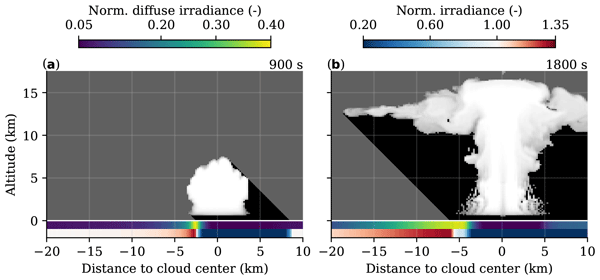
Sunlight varies often and quickly under broken cloud cover, and every cloud field creates a unique pattern of sunlight on the surface below. These variations affect many processes in the Earth system, from photosynthesis and chemistry to cloud formation itself. The exact way in which cloud particles interact with sunlight is complex and expensive to calculate. We demonstrate a simplified framework which explains how sunlight changes for potentially any cloud field.
Jippe J. A. Hoogeveen, Jan Fokke Meirink, and Frank M. Selten
EGUsphere, https://doi.org/10.5194/egusphere-2025-418, https://doi.org/10.5194/egusphere-2025-418, 2025
Preprint archived
Short summary
Short summary
We investigated the effect of clouds on the reflection of sunlight to space and thermal radiation from earth to space. We found a few possible inhomogeneities in the measurements. A clear decrease in reflection of sunlight was found, which we partly attributed to changes in cloud cover. Thermal radiation could be attributed relatively reliably, however we were unable to find the expected decrease due to greenhouse gasses. We do not know a conclusive cause for this.
Victor J. H. Trees, Ping Wang, Piet Stammes, Lieuwe G. Tilstra, David P. Donovan, and A. Pier Siebesma
Atmos. Meas. Tech., 18, 73–91, https://doi.org/10.5194/amt-18-73-2025, https://doi.org/10.5194/amt-18-73-2025, 2025
Short summary
Short summary
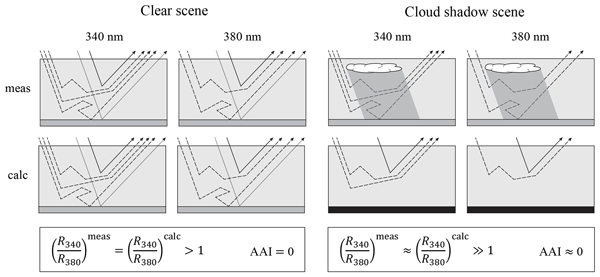
Our study investigates the impact of cloud shadows on satellite-based aerosol index measurements over Europe by TROPOMI. Using a cloud shadow detection algorithm and simulations, we found that the overall effect on the aerosol index is minimal. Interestingly, we found that cloud shadows are significantly bluer than their shadow-free surroundings, but the traditional algorithm already (partly) automatically corrects for this increased blueness.
Job I. Wiltink, Hartwig Deneke, Yves-Marie Saint-Drenan, Chiel C. van Heerwaarden, and Jan Fokke Meirink
Atmos. Meas. Tech., 17, 6003–6024, https://doi.org/10.5194/amt-17-6003-2024, https://doi.org/10.5194/amt-17-6003-2024, 2024
Short summary
Short summary
Meteosat Spinning Enhanced Visible and Infrared Imager (SEVIRI) global horizontal irradiance (GHI) retrievals are validated at standard and increased spatial resolution against a network of 99 pyranometers. GHI accuracy is strongly dependent on the cloud regime. Days with variable cloud conditions show significant accuracy improvements when retrieved at higher resolution. We highlight the benefits of dense network observations and a cloud-regime-resolved approach in validating GHI retrievals.
Mirjam Tijhuis, Bart J. H. van Stratum, and Chiel C. van Heerwaarden
Atmos. Chem. Phys., 24, 10567–10582, https://doi.org/10.5194/acp-24-10567-2024, https://doi.org/10.5194/acp-24-10567-2024, 2024
Short summary
Short summary
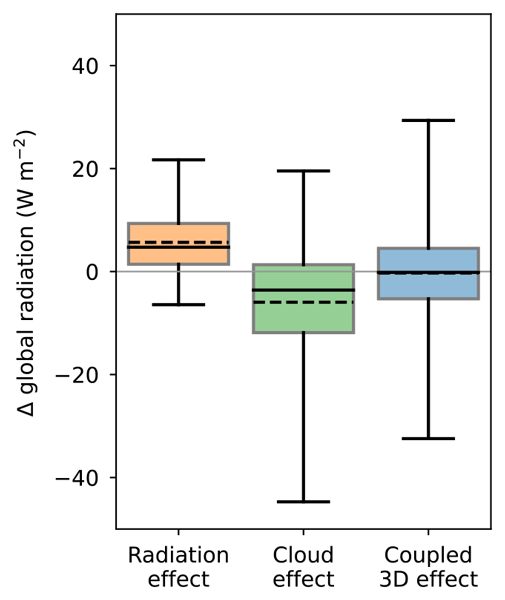
Radiative transfer in the atmosphere is a 3D processes, which is often modelled in 1D for computational efficiency. We studied the differences between using 1D and 3D radiative transfer. With 3D radiation, larger clouds that contain more liquid water develop. However, they cover roughly the same part of the sky, and the average total radiation at the surface is nearly unchanged. The increase in cloud size might be important for weather models, as it can impact the formation of rain, for example.
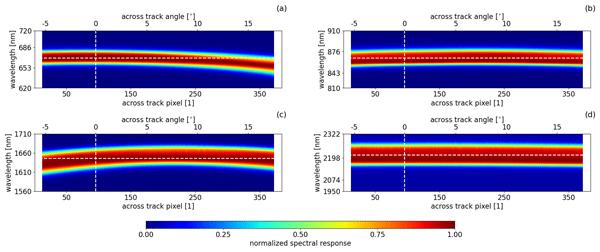
Nicole Docter, Anja Hünerbein, David P. Donovan, Rene Preusker, Jürgen Fischer, Jan Fokke Meirink, Piet Stammes, and Michael Eisinger
Atmos. Meas. Tech., 17, 2507–2519, https://doi.org/10.5194/amt-17-2507-2024, https://doi.org/10.5194/amt-17-2507-2024, 2024
Short summary
Short summary
MSI is the imaging spectrometer on board EarthCARE and will provide across-track information on clouds and aerosol properties. The MSI solar channels exhibit a spectral misalignment effect (SMILE) in the measurements. This paper describes and evaluates how the SMILE will affect the cloud and aerosol retrievals that do not account for it.
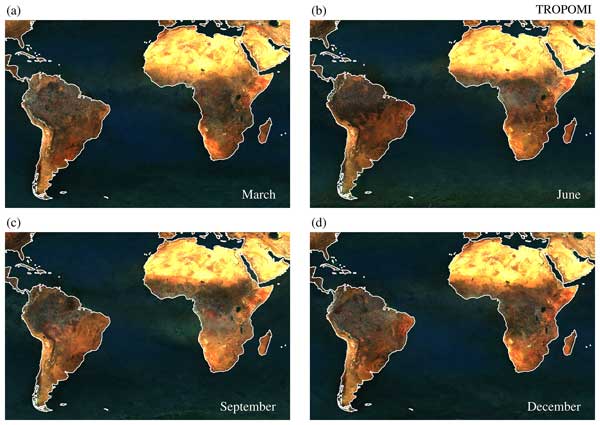
Lieuwe G. Tilstra, Martin de Graaf, Victor J. H. Trees, Pavel Litvinov, Oleg Dubovik, and Piet Stammes
Atmos. Meas. Tech., 17, 2235–2256, https://doi.org/10.5194/amt-17-2235-2024, https://doi.org/10.5194/amt-17-2235-2024, 2024
Short summary
Short summary
This paper introduces a new surface albedo climatology of directionally dependent Lambertian-equivalent reflectivity (DLER) observed by TROPOMI on the Sentinel-5 Precursor satellite. The database contains monthly fields of DLER for 21 wavelength bands at a relatively high spatial resolution of 0.125 by 0.125 degrees. The anisotropy of the surface reflection is handled by parameterisation of the viewing angle dependence.
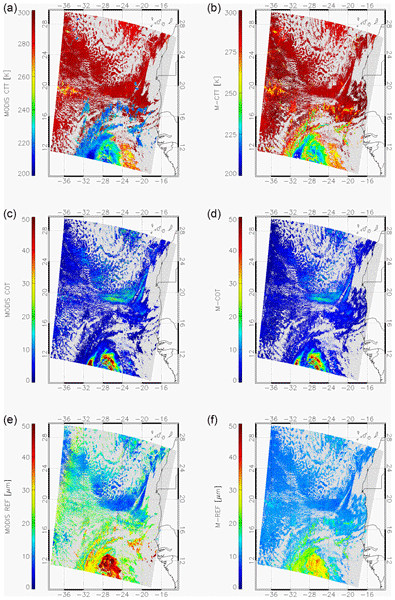
Anja Hünerbein, Sebastian Bley, Hartwig Deneke, Jan Fokke Meirink, Gerd-Jan van Zadelhoff, and Andi Walther
Atmos. Meas. Tech., 17, 261–276, https://doi.org/10.5194/amt-17-261-2024, https://doi.org/10.5194/amt-17-261-2024, 2024
Short summary
Short summary
The ESA cloud, aerosol and radiation mission EarthCARE will provide active profiling and passive imaging measurements from a single satellite platform. The passive multi-spectral imager (MSI) will add information in the across-track direction. We present the cloud optical and physical properties algorithm, which combines the visible to infrared MSI channels to determine the cloud top pressure, optical thickness, particle size and water path.
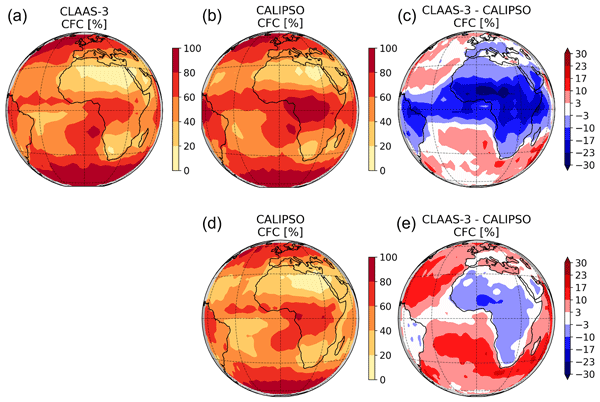
Nikos Benas, Irina Solodovnik, Martin Stengel, Imke Hüser, Karl-Göran Karlsson, Nina Håkansson, Erik Johansson, Salomon Eliasson, Marc Schröder, Rainer Hollmann, and Jan Fokke Meirink
Earth Syst. Sci. Data, 15, 5153–5170, https://doi.org/10.5194/essd-15-5153-2023, https://doi.org/10.5194/essd-15-5153-2023, 2023
Short summary
Short summary
This paper describes CLAAS-3, the third edition of the Cloud property dAtAset using SEVIRI, which was created based on observations from geostationary Meteosat satellites. CLAAS-3 cloud properties are evaluated using a variety of reference datasets, with very good overall results. The demonstrated quality of CLAAS-3 ensures its usefulness in a wide range of applications, including studies of local- to continental-scale cloud processes and evaluation of climate models.
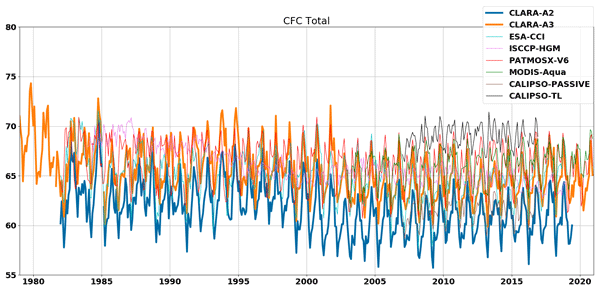
Karl-Göran Karlsson, Martin Stengel, Jan Fokke Meirink, Aku Riihelä, Jörg Trentmann, Tom Akkermans, Diana Stein, Abhay Devasthale, Salomon Eliasson, Erik Johansson, Nina Håkansson, Irina Solodovnik, Nikos Benas, Nicolas Clerbaux, Nathalie Selbach, Marc Schröder, and Rainer Hollmann
Earth Syst. Sci. Data, 15, 4901–4926, https://doi.org/10.5194/essd-15-4901-2023, https://doi.org/10.5194/essd-15-4901-2023, 2023
Short summary
Short summary
This paper presents a global climate data record on cloud parameters, radiation at the surface and at the top of atmosphere, and surface albedo. The temporal coverage is 1979–2020 (42 years) and the data record is also continuously updated until present time. Thus, more than four decades of climate parameters are provided. Based on CLARA-A3, studies on distribution of clouds and radiation parameters can be made and, especially, investigations of climate trends and evaluation of climate models.
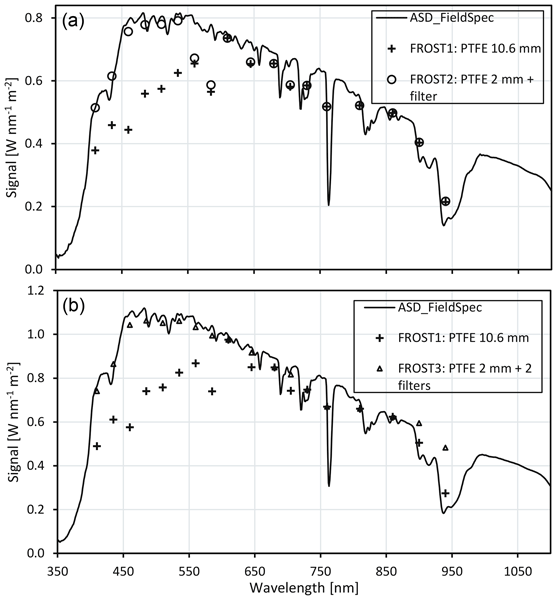
Bert G. Heusinkveld, Wouter B. Mol, and Chiel C. van Heerwaarden
Atmos. Meas. Tech., 16, 3767–3785, https://doi.org/10.5194/amt-16-3767-2023, https://doi.org/10.5194/amt-16-3767-2023, 2023
Short summary
Short summary
This paper presents a new instrument for fast measurements of solar irradiance in 18 wavebands (400–950 nm): GPS perfectly synchronizes 10 Hz measurement speed to universal time, low-cost (< EUR 200) complete standalone solution for realizing dense measurement grids to study cloud-shading dynamics, 940 nm waveband reveals atmospheric moisture column information, 11 wavebands to study photosynthetic active radiation and light interaction with vegetation, and good reflection spectra performance.

Wouter B. Mol, Wouter H. Knap, and Chiel C. van Heerwaarden
Earth Syst. Sci. Data, 15, 2139–2151, https://doi.org/10.5194/essd-15-2139-2023, https://doi.org/10.5194/essd-15-2139-2023, 2023
Short summary
Short summary
We describe a dataset of detailed measurements of sunlight reaching the surface, recorded at a rate of one measurement per second for 10 years. The dataset includes detailed information on direct and scattered sunlight; classifications and statistics of variability; and observations of clouds, atmospheric composition, and wind. The dataset can be used to study how the atmosphere influences sunlight variability and to validate models that aim to predict this variability with greater accuracy.
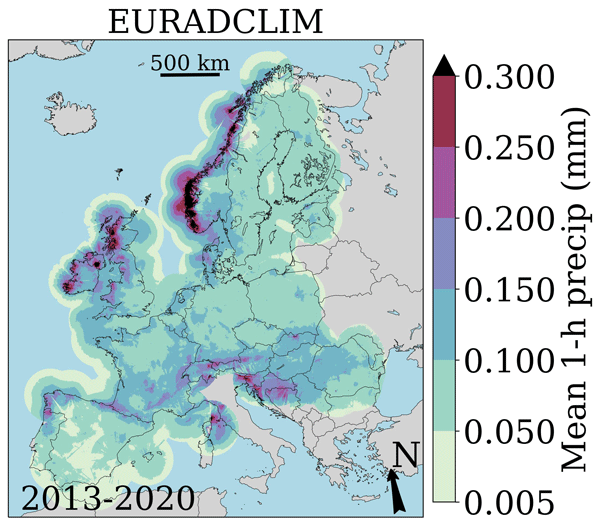
Aart Overeem, Else van den Besselaar, Gerard van der Schrier, Jan Fokke Meirink, Emiel van der Plas, and Hidde Leijnse
Earth Syst. Sci. Data, 15, 1441–1464, https://doi.org/10.5194/essd-15-1441-2023, https://doi.org/10.5194/essd-15-1441-2023, 2023
Short summary
Short summary
EURADCLIM is a new precipitation dataset covering a large part of Europe. It is based on weather radar data to provide local precipitation information every hour and combined with rain gauge data to obtain good precipitation estimates. EURADCLIM provides a much better reference for validation of weather model output and satellite precipitation datasets. It also allows for climate monitoring and better evaluation of extreme precipitation events and their impact (landslides, flooding).
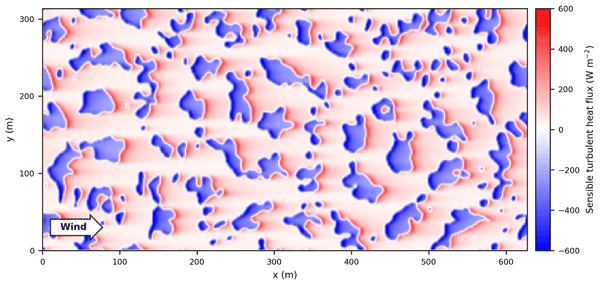
Luuk D. van der Valk, Adriaan J. Teuling, Luc Girod, Norbert Pirk, Robin Stoffer, and Chiel C. van Heerwaarden
The Cryosphere, 16, 4319–4341, https://doi.org/10.5194/tc-16-4319-2022, https://doi.org/10.5194/tc-16-4319-2022, 2022
Short summary
Short summary
Most large-scale hydrological and climate models struggle to capture the spatially highly variable wind-driven melt of patchy snow cover. In the field, we find that 60 %–80 % of the total melt is wind driven at the upwind edge of a snow patch, while it does not contribute at the downwind edge. Our idealized simulations show that the variation is due to a patch-size-independent air-temperature reduction over snow patches and also allow us to study the role of wind-driven snowmelt on larger scales.
Anja Ražnjević, Chiel van Heerwaarden, and Maarten Krol
Atmos. Meas. Tech., 15, 3611–3628, https://doi.org/10.5194/amt-15-3611-2022, https://doi.org/10.5194/amt-15-3611-2022, 2022
Short summary
Short summary
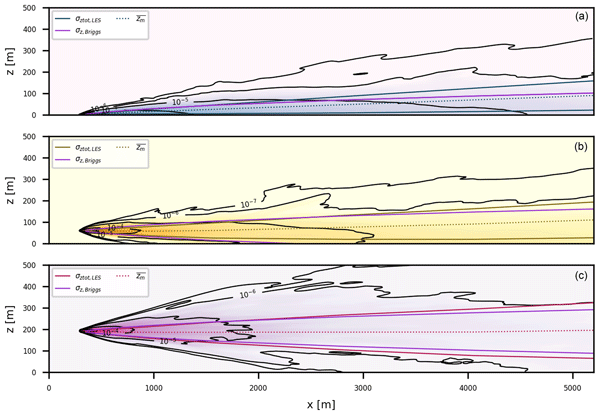
We evaluate two widely used observational techniques (Other Test Method (OTM) 33A and car drive-bys) that estimate point source gas emissions. We performed our analysis on high-resolution plume dispersion simulation. For car drive-bys we found that at least 15 repeated measurements were needed to get within 40 % of the true emissions. OTM 33A produced large errors in estimation (50 %–200 %) due to its sensitivity to dispersion coefficients and underlying simplifying assumptions.
Victor J. H. Trees, Ping Wang, Piet Stammes, Lieuwe G. Tilstra, David P. Donovan, and A. Pier Siebesma
Atmos. Meas. Tech., 15, 3121–3140, https://doi.org/10.5194/amt-15-3121-2022, https://doi.org/10.5194/amt-15-3121-2022, 2022
Short summary
Short summary
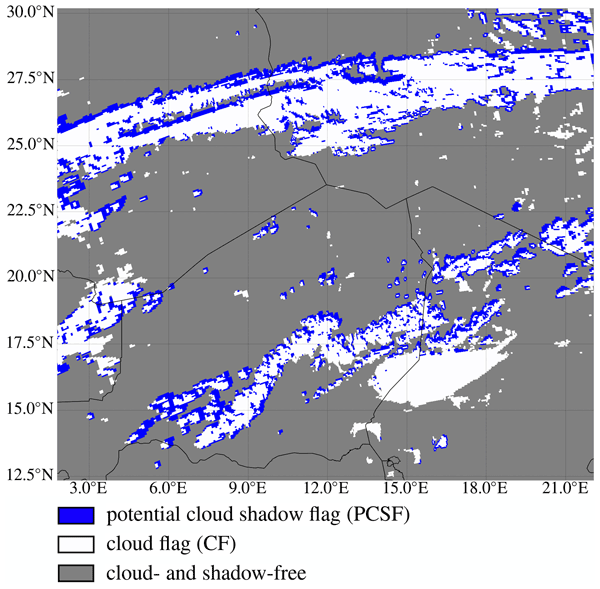
Cloud shadows are observed by the TROPOMI satellite instrument as a result of its high spatial resolution. These shadows contaminate TROPOMI's air quality measurements, because shadows are generally not taken into account in the models that are used for aerosol and trace gas retrievals. We present the Detection AlgoRithm for CLOud Shadows (DARCLOS) for TROPOMI, which is the first cloud shadow detection algorithm for a satellite spectrometer.
Anja Ražnjević, Chiel van Heerwaarden, Bart van Stratum, Arjan Hensen, Ilona Velzeboer, Pim van den Bulk, and Maarten Krol
Atmos. Chem. Phys., 22, 6489–6505, https://doi.org/10.5194/acp-22-6489-2022, https://doi.org/10.5194/acp-22-6489-2022, 2022
Short summary
Short summary
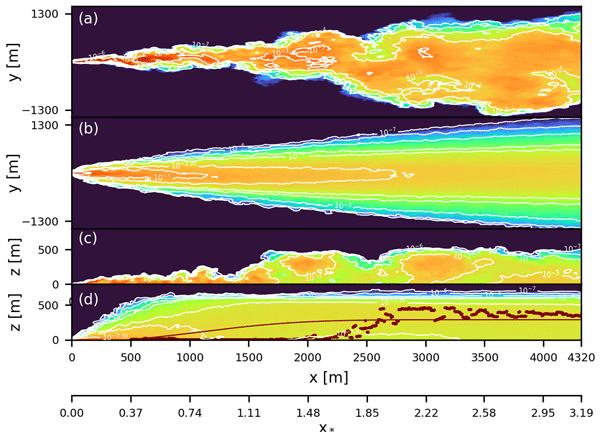
Mobile measurement techniques (e.g., instruments placed in cars) are often employed to identify and quantify individual sources of greenhouse gases. Due to road restrictions, those observations are often sparse (temporally and spatially). We performed high-resolution simulations of plume dispersion, with realistic weather conditions encountered in the field, to reproduce the measurement process of a methane plume emitted from an oil well and provide additional information about the plume.
Wim C. de Rooy, Pier Siebesma, Peter Baas, Geert Lenderink, Stephan R. de Roode, Hylke de Vries, Erik van Meijgaard, Jan Fokke Meirink, Sander Tijm, and Bram van 't Veen
Geosci. Model Dev., 15, 1513–1543, https://doi.org/10.5194/gmd-15-1513-2022, https://doi.org/10.5194/gmd-15-1513-2022, 2022
Short summary
Short summary
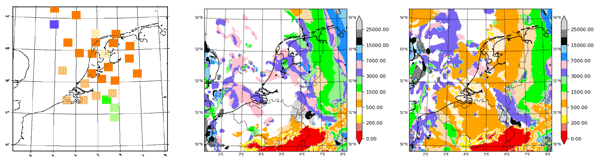
This paper describes a comprehensive model update to the boundary layer schemes. Because the involved parameterisations are all built on widely applied frameworks, the here-described modifications are applicable to many NWP and climate models. The model update contains substantial modifications to the cloud, turbulence, and convection schemes and leads to a substantial improvement of several aspects of the model, especially low cloud forecasts.
Cited articles
Ademakinwa, A. S., Tushar, Z. H., Zheng, J., Wang, C., Purushotham, S., Wang, J., Meyer, K. G., Várnai, T., and Zhang, Z.: Influence of cloud retrieval errors due to three-dimensional radiative effects on calculations of broadband shortwave cloud radiative effect, Atmos. Chem. Phys., 24, 3093–3114, https://doi.org/10.5194/acp-24-3093-2024, 2024. a
Alexandri, G., Georgoulias, A. K., Zanis, P., Katragkou, E., Tsikerdekis, A., Kourtidis, K., and Meleti, C.: On the ability of RegCM4 regional climate model to simulate surface solar radiation patterns over Europe: an assessment using satellite-based observations, Atmos. Chem. Phys., 15, 13195–13216, https://doi.org/10.5194/acp-15-13195-2015, 2015. a
Anderson, G. P., Clough, S. A., Kneizys, F. X., Chetwynd, J. H., and Shettle, E. P.: AFGL Atmospheric Constituent Profiles (0.120 km) AFGL-TR-86-011, Tech. rep., Optical Physics Division Air Force Geophysics Laboratory, Hanscom AFB, Massachusetts, https://www.researchgate.net/publication/235054307 (last access: 19 May 2026), 1986. a, b
Arbizu-Barrena, C., Ruiz-Arias, J. A., Rodríguez-Benítez, F. J., Pozo-Vázquez, D., and Tovar-Pescador, J.: Short-term solar radiation forecasting by advecting and diffusing MSG cloud index, Sol. Energy, 155, 1092–1103, https://doi.org/10.1016/J.SOLENER.2017.07.045, 2017. a
Barrios, J. M., Arboleda, A., Dutra, E., Trigo, I., and Gellens-Meulenberghs, F.: Evapotranspiration and surface energy fluxes across Europe, Africa and Eastern South America throughout the operational life of the Meteosat second generation satellite, Geosci. Data J., 11, 589–607, https://doi.org/10.1002/gdj3.235, 2024. a
Benas, N., Solodovnik, I., Stengel, M., Huser, I., Karlsson, K. G., Hakansson, N., Johansson, E., Eliasson, S., Schroder, M., Hollmann, R., and Meirink, J. F.: CLAAS-3: the third edition of the CM SAF cloud data record based on SEVIRI observations, Earth Syst. Sci. Data, 15, 5153–5170, https://doi.org/10.5194/essd-15-5153-2023, 2023. a
Cahalan, R. F., Ridgway, W., Wiscombe, W. J., Gollmer, S., and Harshvardhan: Independent Pixel and Monte Carlo Estimates of Stratocumulus Albedo, J. Atmos. Sci., 51, 3776–3790, https://doi.org/10.1175/1520-0469(1994)051<3776:IPAMCE>2.0.CO;2, 1994. a, b
Chen, S., Poll, S., Franssen, H. J. H., Heinrichs, H., Vereecken, H., and Goergen, K.: Convection-Permitting ICON-LAM Simulations for Renewable Energy Potential Estimates Over Southern Africa, J. Geophys. Res. Atmos., 129, e2023JD039569, https://doi.org/10.1029/2023JD039569, 2024. a
Copernicus: Sentinel-2 (processed by ESA) MSI Level-1C TOA Reflectance Product, Collection 1, European Space Agency [data set], https://doi.org/10.5270/S2_-742ikth, 2021. a
Cui, Y., Wang, P., Meirink, J. F., Ntantis, N., and Wijnands, J. S.: Solar radiation nowcasting based on geostationary satellite images and deep learning models, Sol. Energy, 282, 112866, https://doi.org/10.1016/J.SOLENER.2024.112866, 2024. a
Davis, A., Marshak, A., Robert, C., and Warren, W.: The Landsat Scale Break in Stratocumulus as a Three-Dimensional Radiative Transfer Effect: Implications for Cloud Remote Sensing, J. Atmos. Sci., 54, 241–260, https://doi.org/10.1175/1520-0469(1997)054<0241:TLSBIS>2.0.CO;2, 1997. a
de Haan, J. F., Bosma, P. B., and Hovenier, J. W.: The adding method for multiple scattering of polarized light, Astron. Astrophys., 183, 371–391, https://www.researchgate.net/publication/234349852 (last access: 19 May 2026), 1987. a
de Rooij, V. A. and van der Stap, C. C. A. H.: Expansion of Mie scattering matrices in generalized spherical functions, Astron. Astrophys., 131, 237–248, https://ui.adsabs.harvard.edu/abs/1984A&A...131..237D/abstract (last access: 19 May 2026), 1984. a
Drusch, M., Bello, U. D., Carlier, S., Colin, O., Fernandez, V., Gascon, F., Hoersch, B., Isola, C., Laberinti, P., Martimort, P., Meygret, A., Spoto, F., Sy, O., Marchese, F., and Bargellini, P.: Sentinel-2: ESA's Optical High-Resolution Mission for GMES Operational Services, Remote Sens. Environ., 120, 25–36, https://doi.org/10.1016/j.rse.2011.11.026, 2012. a
Emde, C., Buras, R., Mayer, B., and Blumthaler, M.: The impact of aerosols on polarized sky radiance: model development, validation, and applications, Atmos. Chem. Phys., 10, 383–396, https://doi.org/10.5194/acp-10-383-2010, 2010. a
Freidenreich, S. M. and Ramaswamy, V.: Analysis of the biases in the downward shortwave surface flux in the GFDL CM2.1 general circulation model, J. Geophys. Res. Atmos., 116, https://doi.org/10.1029/2010JD014930, 2011. a
Greuell, W., Meirink, J. F., and Wang, P.: Retrieval and validation of global, direct, and diffuse irradiance derived from SEVIRI satellite observations, J. Geophys. Res. Atmos., 118, 2340–2361, https://doi.org/10.1002/jgrd.50194, 2013. a, b, c
Gristey, J. J., Feingold, G., Glenn, I. B., Schmidt, K. S., and Chen, H.: On the Relationship Between Shallow Cumulus Cloud Field Properties and Surface Solar Irradiance, Geophys. Res. Lett., 47, https://doi.org/10.1029/2020GL090152, 2020. a, b
Gristey, J. J., Feingold, G., Schmidt, K. S., and Chen, H.: Influence of Aerosol Embedded in Shallow Cumulus Cloud Fields on the Surface Solar Irradiance, J. Geophys. Res. Atmos., 127, e2022JD036 822, https://doi.org/10.1029/2022JD036822, 2022. a
Hammer, A., Heinemann, D., Lorenz, E., and Lückehe, B.: Short-term forecasting of solar radiation: A statistical approach using satellite data, Sol. Energy, 67, 139–150, https://doi.org/10.1016/S0038-092X(00)00038-4, 1999. a
Hersbach, H., Bell, B., Berrisford, P., Hirahara, S., Horányi, A., Muñoz-Sabater, J., Nicolas, J., Peubey, C., Radu, R., Schepers, D., Simmons, A., Soci, C., Abdalla, S., Abellan, X., Balsamo, G., Bechtold, P., Biavati, G., Bidlot, J., Bonavita, M., De Chiara, G., Dahlgren, P., Dee, D., Diamantakis, M., Dragani, R., Flemming, J., Forbes, R., Fuentes, M., Geer, A., Haimberger, L., Healy, S., Hogan, R. J., Hólm, E., Janisková, M., Keeley, S., Laloyaux, P., Lopez, P., Lupu, C., Radnoti, G., de Rosnay, P., Rozum, I., Vamborg, F., Villaume, S., and Thépaut, J.-N.: The ERA5 global reanalysis, Q. J. R. Meteorol. Soc., 146, 1999–2049, https://doi.org/10.1002/qj.3803, 2020. a
Hogan, R. J., Fielding, M. D., Barker, H. W., Villefranque, N., and Schäfer, S. A.: Entrapment: An Important Mechanism to Explain the Shortwave 3D Radiative Effect of Clouds, J. Atmos. Sci., 76, 2123–2141, https://doi.org/10.1175/JAS-D-18-0366.1, 2019. a
Holmlund, K., Grandell, J., Schmetz, J., Stuhlmann, R., Bojkov, B., Munro, R., Lekouara, M., Coppens, D., Viticchie, B., August, T., Theodore, B., Watts, P., Dobber, M., Fowler, G., Bojinski, S., Schmid, A., Salonen, K., Tjemkes, S., Aminou, D., and Blythe, P.: Meteosat Third Generation (MTG): Continuation and Innovation of Observations from Geostationary Orbit, Bull. Amer. Meteor. Soc., 102, E990–E1015, https://doi.org/10.1175/BAMS-D-19-0304.1, 2021. a, b
Huang, G., Ma, M., Liang, S., Liu, S., and Li, X.: A LUT-based approach to estimate surface solar irradiance by combining MODIS and MTSAT data, J. Geophys. Res. Atmos., 116, https://doi.org/10.1029/2011JD016120, 2011. a
Huang, G., Li, Z., Li, X., Liang, S., Yang, K., Wang, D., and Zhang, Y.: Estimating surface solar irradiance from satellites: Past, present, and future perspectives, Remote Sens. Environ., 233, https://doi.org/10.1016/j.rse.2019.111371, 2019. a
Justice, C. O., Townshend, J. R. G., Vermote, E. F., Masuoka, E., Wolfe, R. E., Saleous, N., Roy, D. P., and Morisette, J. T.: An overview of MODIS Land data processing and product status, Remote Sens. Environ., 83, 3–15, https://doi.org/10.1016/S0034-4257(02)00084-6, 2002. a, b
Liou, K.-N.: An introduction to atmospheric radiation, 84, Elsevier, ISBN 978-0-12-451451-5, 2002. a
Loveridge, J. R., Fu, D., and Girolamo, L. D.: Validating Machine Learning Retrievals of the Cloud-Top Droplet Effective Radius Over Oceans That Account for 3D Radiative Transfer Effects, J. Geophys. Res. Atmos., 130, https://doi.org/10.1029/2025JD044317, 2025. a
Ma, Y. and Pinker, R. T.: Modeling shortwave radiative fluxes from satellites, J. Geophys. Res. Atmos., 117, 23202, https://doi.org/10.1029/2012JD018332, 2012. a
Marshak, A. and Davis, A.: 3D Radiative Transfer in Cloudy Atmospheres, Springer Science & Business Media, https://doi.org/10.1007/3-540-28519-9, 2005. a
Marshak, A., Davis, A., Wiscombe, W., and Titov, G.: The verisimilitude of the independent pixel approximation used in cloud remote sensing, Remote Sens. Environ., 52, 71–78, https://doi.org/10.1016/0034-4257(95)00016-T, 1995. a
Marshak, A., Platnick, S., Várnai, T., Wen, G., and Cahalan, R. F.: Impact of three-dimensional radiative effects on satellite retrievals of cloud droplet sizes, J. Geophys. Res. Atmos., 111, 9207, https://doi.org/10.1029/2005JD006686, 2006. a
Masuda, R., Iwabuchi, H., Schmidt, K. S., Damiani, A., and Kudo, R.: Retrieval of cloud optical thickness from sky-view camera images using a deep convolutional neural network based on three-dimensional radiative transfer, Remote Sens., 11, https://doi.org/10.3390/rs11171962, 2019. a
Miller, S. D., Rogers, M. A., Haynes, J. M., Sengupta, M., and Heidinger, A. K.: Short-term solar irradiance forecasting via satellite/model coupling, Sol. Energy, 168, 102–117, https://doi.org/10.1016/J.SOLENER.2017.11.049, 2018. a
Mol, W. and van Heerwaarden, C.: Mechanisms of surface solar irradiance variability under broken clouds, Atmos. Chem. Phys., 25, 4419–4441, https://doi.org/10.5194/acp-25-4419-2025, 2025. a, b
Mol, W. B., Heusinkveld, B., Mangan, M. R., Hartogensis, O., Veerman, M. A., and van Heerwaarden, C. C.: Observed patterns of surface solar irradiance under cloudy and clear-sky conditions, Q. J. R. Meteorol. Soc., 150, 2338–2363, https://doi.org/10.1002/qj.4712, 2024. a
Mueller, R., Matsoukas, C., Gratzki, A., Behr, H., and Hollmann, R.: The CM-SAF operational scheme for the satellite based retrieval of solar surface irradiance – A LUT based eigenvector hybrid approach, Remote Sens. Environ., 113, 1012–1024, https://doi.org/10.1016/j.rse.2009.01.012, 2009. a
Munneke, P. K., Reijmer, C. H., van den Broeke, M. R., König-Langlo, G., Stammes, P., and Knap, W. H.: Analysis of clear-sky Antarctic snow albedo using observations and radiative transfer modeling, J. Geophys. Res. Atmos., 113, 17118, https://doi.org/10.1029/2007JD009653, 2008. a
Nakajima, T. and King, M. D.: Determination of the Optical Thickness and Effective Particle Radius of Clouds from Reflected Solar Radiation Measurements, Part I: Theory, J. Atmos. Sci., 47, https://doi.org/10.1175/1520-0469(1990)047<1878:DOTOTA>2.0.CO;2, 1990. a
Nataraja, V., Schmidt, S., Chen, H., Yamaguchi, T., Kazil, J., Feingold, G., Wolf, K., and Iwabuchi, H.: Segmentation-based multi-pixel cloud optical thickness retrieval using a convolutional neural network, Atmos. Meas. Tech., 15, 5181–5205, https://doi.org/10.5194/amt-15-5181-2022, 2022. a
Okamura, R., Iwabuchi, H., and Schmidt, K. S.: Feasibility study of multi-pixel retrieval of optical thickness and droplet effective radius of inhomogeneous clouds using deep learning, Atmos. Meas. Tech., 10, 4747–4759, https://doi.org/10.5194/amt-10-4747-2017, 2017. a
Pfeifroth, U., Drücke, J., Kothe, S., Trentmann, J., Schröder, M., and Hollmann, R.: SARAH-3 – satellite-based climate data records of surface solar radiation, Earth Syst. Sci. Data, 16, 5243–5265, https://doi.org/10.5194/essd-16-5243-2024, 2024. a, b
Pincus, R., Mlawer, E. J., and Delamere, J. S.: Balancing Accuracy, Efficiency, and Flexibility in Radiation Calculations for Dynamical Models, J. Adv. Model. Earth Syst., 11, 3074–3089, https://doi.org/10.1029/2019MS001621, 2019. a
Platnick, S.: Vertical photon transport in cloud remote sensing problems, J. Geophys. Res. Atmos., 105, 22919–22935, https://doi.org/10.1029/2000JD900333, 2000. a
Platnick, S., Meyer, K. G., King, M. D., Wind, G., Amarasinghe, N., Marchant, B., Arnold, G. T., Zhang, Z., Hubanks, P. A., Holz, R. E., Yang, P., Ridgway, W. L., and Riedi, J.: The MODIS cloud optical and microphysical products: Collection 6 updates and examples from Terra and Aqua, IEEE Trans. Geosci. Remote Sens., 55, 502–525, https://doi.org/10.1109/TGRS.2016.2610522, 2017. a
Platzer, W. and Stieglitz, R.: Solar Thermal Energy Systems Fundamentals, Technology, Applications, 1, Springer Cham, ISBN 978-3-031-43172-2, https://doi.org/10.1007/978-3-031-43173-9, 2024. a
Prahl, S.: miepython: A Python library for Mie scattering calculations, Zenodo [code], https://doi.org/10.5281/zenodo.7949263, 2025. a
Qu, Z., Oumbe, A., Blanc, P., Espinar, B., Gesell, G., Gschwind, B., Klüser, L., Lefèvre, M., Saboret, L., Schroedter-Homscheidt, M., and Wald, L.: Fast radiative transfer parameterisation for assessing the surface solar irradiance: The Heliosat-4 method, Meteorol. Z., 26, 33–57, https://doi.org/10.1127/METZ/2016/0781, 2017. a
Schäfer, S. A., Hogan, R. J., Klinger, C., Chiu, J. C., and Mayer, B.: Representing 3-D cloud radiation effects in two-stream schemes: 1. Longwave considerations and effective cloud edge length, J. Geophys. Res., 121, 8567–8582, https://doi.org/10.1002/2016JD024876, 2016. a
Schmetz, J., Paolo, P., Tjemkes, S., Just, D., Kerkman, J., Rota, S., and Ratier, A.: An Introduction to Meteosat Second Generation (MSG), Bull. Amer. Meteor. Soc., 83, 977–992, https://doi.org/10.1175/1520-0477(2002)083<0977:AITMSG>2.3.CO;2, 2002. a, b
Spiridonov, V., Ćurić, M., and Novkovski, N.: Atmospheric Perspectives Unveiling Earth's Environmental Challenges, vol. 1, Springer Cham, ISBN 978-3-031-86756-9, https://doi.org/10.1007/978-3-031-86757-6, 2025. a
Stammes, P.: Spectral radiance modelling in the UV-visible range, in: IRS 2000: Current Problems in Atmospheric Radiation: Proceedings of the International Radiation Symposium, St. Peterberg, Russia, 24–29 July 2000, A. Deepak Publishing, ISBN 978-0937194430, 2001. a
Stephens, G. L.: Radiation Profiles in Extended Water Clouds, II: Parameterization Schemes, J. Atmos. Sci., 35, 2123–2132, https://doi.org/10.1175/1520-0469(1978)035<2123:RPIEWC>2.0.CO;2, 1978. a
Tijhuis, M.: Code used for publication about coupled 3D radiative transfer, Zenodo [code], https://doi.org/10.5281/zenodo.11234716, 2024. a
Trees, V. J. H.: MONKI (Monte Carlo KNMI), Zenodo [code], https://doi.org/10.5281/zenodo.155133391, 2025. a
Trees, V. J. H., Wang, P., Wiltink, J. I., Stammes, P., Stam, D. M., Donovan, D. P., and Siebesma, A. P.: MONKI: a three-dimensional Monte Carlo simulator of total and polarised radiation reflected by planetary atmospheres, EGUsphere [preprint], https://doi.org/10.5194/egusphere-2025-2197, 2025. a, b, c
Trigo, I. F., de Bruin, H., Beyrich, F., Bosveld, F. C., Gavilán, P., Groh, J., and López-Urrea, R.: Validation of reference evapotranspiration from Meteosat Second Generation (MSG) observations, Agric. For. Meteorol., 259, 271–285, https://doi.org/10.1016/J.AGRFORMET.2018.05.008, 2018. a
van Heerwaarden, C. C., van Stratum, B. J. H., Heus, T., Gibbs, J. A., Fedorovich, E., and Mellado, J. P.: MicroHH 1.0: a computational fluid dynamics code for direct numerical simulation and large-eddy simulation of atmospheric boundary layer flows, Geosci. Model Dev., 10, 3145–3165, https://doi.org/10.5194/gmd-10-3145-2017, 2017. a
van Stratum, B. J. H., van Heerwaarden, C. C., and Vilà-Guerau de Arellano, J.: The Benefits and Challenges of Downscaling a Global Reanalysis With Doubly-Periodic Large-Eddy Simulations, J. Adv. Model. Earth Syst., 15, e2023MS003750, https://doi.org/10.1029/2023MS003750, 2023. a
Várnai, T. and Marshak, A.: Statistical Analysis of the Uncertainties in Cloud Optical Depth Retrievals Caused by Three-Dimensional Radiative Effects, J. Atmos. Sci., 58, 1540–1548, https://doi.org/10.1175/1520-0469(2001)058<1540:SAOTUI>2.0.CO;2, 2001. a, b
Veerman, M. A., van Stratum, B. J. H., and van Heerwaarden, C. C.: A Case Study of Cumulus Convection Over Land in Cloud-Resolving Simulations With a Coupled Ray Tracer, Geophys. Res. Lett., 49, e2022GL100808, https://doi.org/10.1029/2022GL100808, 2022. a, b, c, d
Veerman, M. A., van Heerwaarden, C. C., van Stratum, B. J. H., Tijhuis, M., Sclocco, A., van den Oord, G., van Werkhoven, B., Powell, M., and Pincus, R.: C++/CUDA implementation of RTE+RRTMGP including ray tracer, Github [code], https://github.com/microhh/rte-rrtmgp-cpp (last access: 10 December 2025), 2025. a
Villefranque, N., Fournier, R., Couvreux, F., Blanco, S., Cornet, C., Eymet, V., Forest, V., and Tregan, J. M.: A Path-Tracing Monte Carlo Library for 3-D Radiative Transfer in Highly Resolved Cloudy Atmospheres, J. Adv. Model. Earth Syst., 11, 2449–2473, https://doi.org/10.1029/2018MS001602, 2019. a
Visconti, G.: Fundamentals of Physics and Chemistry of the Atmosphere Second Edition, 2, Springer, ISBN 978-3-319-29447-6, https://doi.org/10.1007/978-3-319-29449-0, 2016. a
Wiltink, J. I., Deneke, H., Saint-Drenan, Y.-M., van Heerwaarden, C. C., and Meirink, J. F.: Validating global horizontal irradiance retrievals from Meteosat SEVIRI at increased spatial resolution against a dense network of ground-based observations, Atmos. Meas. Tech., 17, 6003–6024, https://doi.org/10.5194/amt-17-6003-2024, 2024. a, b
Wiltink, J. I., Deneke, H., van Heerwaarden, C. C., and Meirink, J. F.: Evaluating parallax and shadow correction methods for global horizontal irradiance retrievals from Meteosat SEVIRI, Atmos. Meas. Tech., 18, 3917–3936, https://doi.org/10.5194/amt-18-3917-2025, 2025a. a, b, c, d
Wiltink, J. I., Trees, V. J. H., van Heerwaarden, C. C., and Meirink, J. F.: Code and data used for Errors in satellite-based global horizontal irradiance retrievals due to three-dimensional cloud-radiation interactions, Zenodo [data set], https://doi.org/10.5281/zenodo.17987194, 2025b. a
Zhang, Z., Ackerman, A. S., Feingold, G., Platnick, S., Pincus, R., and Xue, H.: Effects of cloud horizontal inhomogeneity and drizzle on remote sensing of cloud droplet effective radius: Case studies based on large-eddy simulations, J. Geophys. Res. Atmos., 117, 19208, https://doi.org/10.1029/2012JD017655, 2012. a
Zhang, Z., Werner, F., Cho, H. M., Wind, G., Platnick, S., Ackerman, A. S., Girolamo, L. D., Marshak, A., and Meyer, K.: A framework based on 2-D Taylor expansion for quantifying the impacts of subpixel reflectance variance and covariance on cloud optical thickness and effective radius retrievals based on the bispectral method, J. Geophys. Res. Atmos., 121, 7007–7025, https://doi.org/10.1002/2016JD024837, 2016. a, b
Zinner, T. and Mayer, B.: Remote sensing of stratocumulus clouds: Uncertainties and biases due to inhomogeneity, J. Geophys. Res. Atmos., 111, 14 209, https://doi.org/10.1029/2005JD006955, 2006. a, b, c, d
Short summary
Retrievals of surface solar radiation from passive satellite instruments normally neglect the three-dimensional (3D) interaction between clouds and radiation. This study identifies error sources arising from this neglect and demonstrates their influence on retrieval accuracy across a range of spatial resolutions. At the resolution of current geostationary satellites, 3D interactions can already introduce considerable errors, underscoring the need to develop corrections that account for them.
Retrievals of surface solar radiation from passive satellite instruments normally neglect the...


Altmetrics
Final-revised paper
Preprint