
Articles | Volume 26, issue 1
https://doi.org/10.5194/acp-26-681-2026
© Author(s) 2026. This work is distributed under
the Creative Commons Attribution 4.0 License.
the Creative Commons Attribution 4.0 License.
https://doi.org/10.5194/acp-26-681-2026
© Author(s) 2026. This work is distributed under
the Creative Commons Attribution 4.0 License.
the Creative Commons Attribution 4.0 License.
Research article
| 
15 Jan 2026
Research article |
| 15 Jan 2026
| 15 Jan 2026
Cloud base height determines fog occurrence patterns in the Namib Desert

Institute of Photogrammetry and Remote Sensing, Karlsruhe Institute of Technology (KIT), Karlsruhe, Germany
Institute of Meteorology and Climate Research Atmospheric Trace Gases and Remote Sensing, Karlsruhe Institute of Technology (KIT), Karlsruhe, Germany
Hendrik Andersen
CORRESPONDING AUTHOR
Institute of Photogrammetry and Remote Sensing, Karlsruhe Institute of Technology (KIT), Karlsruhe, Germany
Institute of Meteorology and Climate Research Atmospheric Trace Gases and Remote Sensing, Karlsruhe Institute of Technology (KIT), Karlsruhe, Germany
Jan Cermak
Institute of Photogrammetry and Remote Sensing, Karlsruhe Institute of Technology (KIT), Karlsruhe, Germany
Institute of Meteorology and Climate Research Atmospheric Trace Gases and Remote Sensing, Karlsruhe Institute of Technology (KIT), Karlsruhe, Germany
Roland Vogt
Department of Environmental Sciences, University of Basel, Basel, Switzerland
Bianca Adler
Cooperative Institute for Research in Environmental Sciences (CIRES), University of Colorado Boulder, Boulder, Colorado, USA
NOAA Physical Sciences Laboratory, Boulder, Colorado, USA
Related authors
Deepanshu Malik, Hendrik Andersen, Jan Cermak, and Roland Vogt
EGUsphere, https://doi.org/10.5194/egusphere-2026-2693, https://doi.org/10.5194/egusphere-2026-2693, 2026
This preprint is open for discussion and under review for Atmospheric Measurement Techniques (AMT).
Short summary
Short summary
We created the first continuous maps of fog occurrence for the central Namib Desert by combining satellite observations with ground measurements. The study shows where and how often fog reaches the surface and distinguishes it from low clouds that remain above the ground. These maps improve understanding of an important hidden water source that supports desert ecosystems and may help future studies of climate and water availability.
Viola Hipler, Hendrik Andersen, Robert Spirig, Roland Vogt, Stuart Piketh, Bianca Adler, and Jan Cermak
Atmos. Chem. Phys., 26, 14367–14384, https://doi.org/10.5194/acp-26-14367-2026, https://doi.org/10.5194/acp-26-14367-2026, 2026
Short summary
Short summary
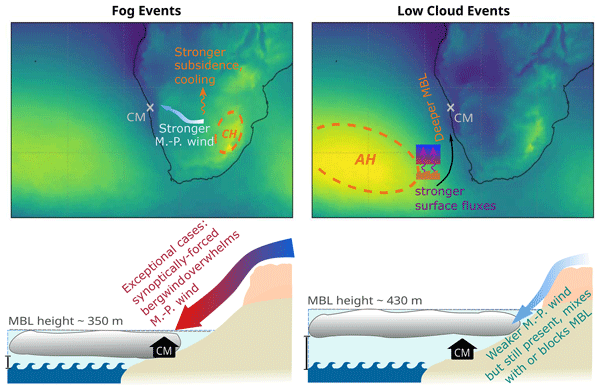
Fog is a key component of the Namib Desert ecosystem, and is mostly associated with the advection of marine stratus clouds. Here, we use local measurements near the coast to distinguish fog situations from lifted low-cloud situations. Using reanalysis data, we find synoptic and regional-scale processes over the ocean and over the continent that are connected to stratus altitude and therefore fog occurrence patterns. The results lead to a better understanding of the coastal desert fog system.
Bianca Adler, Laura Bianco, David D. Turner, Joseph Olson, Xia Sun, Joshua Gebauer, Nicola Bodini, Stefano Letizia, and James M. Wilczak
Geosci. Model Dev., 19, 8627–8649, https://doi.org/10.5194/gmd-19-8627-2026, https://doi.org/10.5194/gmd-19-8627-2026, 2026
Short summary
Short summary
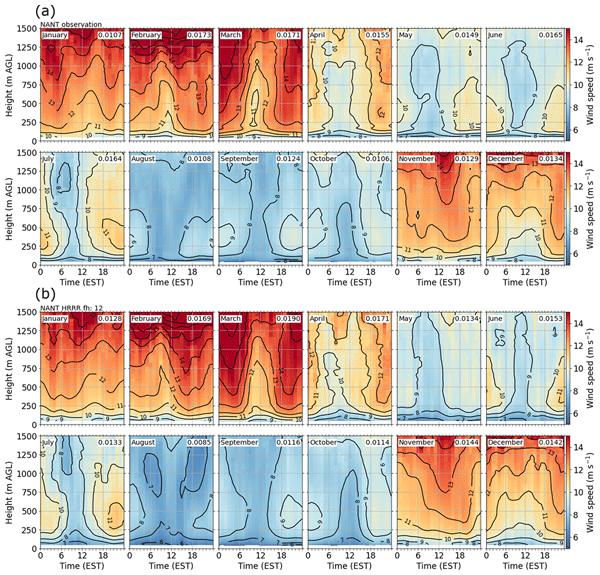
Accurate operational forecasts of temperature and wind in the coastal marine boundary layer are important for a wide range of applications. Leveraging data that were collected along the United States northeast coast during a multi-year period for the Third Wind Forecast Improvement project, we investigated the performance of the operational forecast model and identified systematic errors in wind and temperature forecasts that are now being addressed by the model developers.
Deepanshu Malik, Hendrik Andersen, Jan Cermak, and Roland Vogt
EGUsphere, https://doi.org/10.5194/egusphere-2026-2693, https://doi.org/10.5194/egusphere-2026-2693, 2026
This preprint is open for discussion and under review for Atmospheric Measurement Techniques (AMT).
Short summary
Short summary
We created the first continuous maps of fog occurrence for the central Namib Desert by combining satellite observations with ground measurements. The study shows where and how often fog reaches the surface and distinguishes it from low clouds that remain above the ground. These maps improve understanding of an important hidden water source that supports desert ecosystems and may help future studies of climate and water availability.
Alexandre Mass, Jan Cermak, and Hendrik Andersen
Atmos. Chem. Phys., 26, 12565–12589, https://doi.org/10.5194/acp-26-12565-2026, https://doi.org/10.5194/acp-26-12565-2026, 2026
Short summary
Short summary
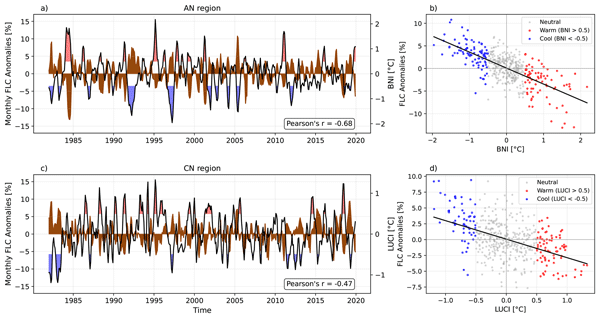
Fog is a vital water source in the Namib Desert, but its year-to-year variability is poorly understood. Using satellite observations and reanalysis data, we show that fog and low-cloud variability is closely tied to sea surface temperatures in the Benguela upwelling system. Warm events driven by tropical water intrusions are followed by reduced fog in the northern Namib, indicating that ocean state carries predictive information for fog in this hyper-arid ecosystem.
Jaume Ruiz de Morales, Josep Calbó, Josep-Abel González, Hendrik Andersen, Jan Cermak, Julia Fuchs, Yolanda Sola, and José Luis Gómez-Amo
EGUsphere, https://doi.org/10.5194/egusphere-2026-3737, https://doi.org/10.5194/egusphere-2026-3737, 2026
Short summary
Short summary
This study presents cloud–aerosol transition zone distributions from coincidental ground-based and satellite lidar observations. The aim is to evaluate the capabilities of both observing systems and improve knowledge of transition zones, including their occurrence, horizontal extent, and vertical distribution. The results show how integrating both methods can compensate for their individual limitations and provide a more comprehensive characterization of cloud-TZ-aerosol distribution.
Alexandre Mass, Jan Cermak, Reto Knutti, Anna L. Merrifield, and Hendrik Andersen
EGUsphere, https://doi.org/10.5194/egusphere-2026-3242, https://doi.org/10.5194/egusphere-2026-3242, 2026
Short summary
Short summary
Fog is a critical water source for life in the Namib Desert. To assess how fog may change in the future, we combined satellite observations with climate model projections. Warming ocean temperatures reduce fog, but stronger onshore winds and increased atmospheric stability counteract this effect. Overall, Namib fog appears more resilient to climate change than previously thought, a finding that may apply to other fog-prone coasts worldwide.
Nicola Bodini, Joseph Olson, Brian Gaudet, Giacomo Valerio Iungo, Mojtaba Shams Solari, Sayahnya Roy, Julie K. Lundquist, Nathan Agarwal, Timothy A. Myers, Bianca Adler, Jeffrey D. Mirocha, Eric James, Laura Bianco, James M. Wilczak, and David D. Turner
Wind Energ. Sci., 11, 1949–1961, https://doi.org/10.5194/wes-11-1949-2026, https://doi.org/10.5194/wes-11-1949-2026, 2026
Short summary
Short summary
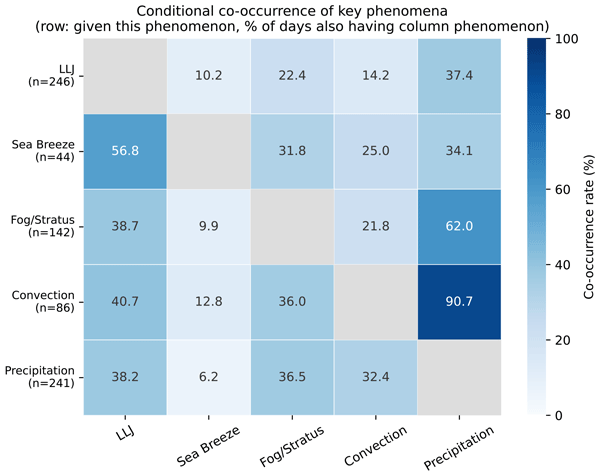
To improve offshore wind forecasts, the Third Wind Forecast Improvement Project monitored the United States east coast for 18 months. We compiled a daily log of weather events using advanced scanners and expert notes. This public dataset identifies important wind patterns, helping scientists test computer models and choose specific cases to study.
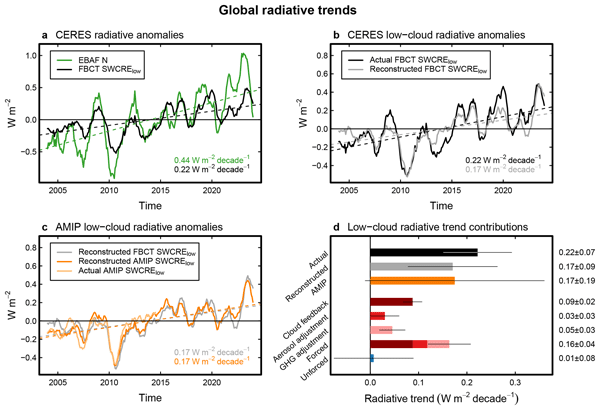
Paulo Ceppi, Sarah Wilson Kemsley, Hendrik Andersen, Timothy Andrews, Ryan J. Kramer, Peer Nowack, Casey J. Wall, and Mark D. Zelinka
Atmos. Chem. Phys., 26, 4153–4171, https://doi.org/10.5194/acp-26-4153-2026, https://doi.org/10.5194/acp-26-4153-2026, 2026
Short summary
Short summary
Recent decades have seen a marked decrease in global low-level cloud cover, leading to more sunlight heating the Earth. This trend is poorly understood, raising the concern that clouds may amplify global warming more than previously thought. We show that the cloud decrease is mostly caused by human forcing on climate, and that it agrees with previous estimates of how clouds respond to decreasing aerosol pollution, increasing greenhouse gas concentration, and their effects on global temperature.

David D. Turner, Bianca Adler, Laura Bianco, James M. Wilczak, Vincent Michaud-Belleau, and Luc Rochette
Atmos. Meas. Tech., 19, 1573–1586, https://doi.org/10.5194/amt-19-1573-2026, https://doi.org/10.5194/amt-19-1573-2026, 2026
Short summary
Short summary
It is critical that a network of ground-based instruments that measure temperature and humidity profiles be well calibrated, so that differences between any two profiles can be attributed to atmospheric differences and not instrument calibration issues. This study evaluated the relative accuracy of 7 ground-based infrared spectrometers and their ability to measure these profiles, and found that the profile bias was much smaller than the uncertainty in the retrieved profiles themselves.
Yichen Jia, Hendrik Andersen, David Neubauer, Ulrike Lohmann, Corinna Hoose, and Jan Cermak
EGUsphere, https://doi.org/10.5194/egusphere-2026-569, https://doi.org/10.5194/egusphere-2026-569, 2026
Short summary
Short summary
Understanding how ocean clouds respond to air pollution is important for climate projections. Using artificial intelligence and a climate model, we show that some model settings produce very high cloud cover, leaving little room for further cloud growth as pollution increases. This “headroom effect” can make cloud responses appear weak. Our results highlight the need to consider existing cloud conditions when interpreting how cloud cover responds to the environment.
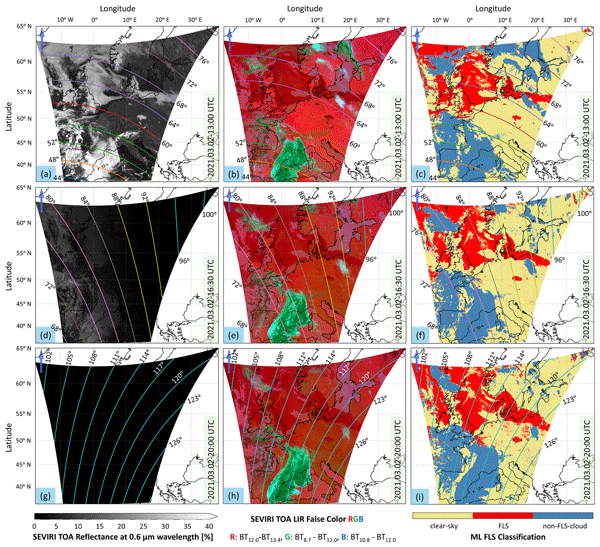
Babak Jahani, Steffen Karalus, Julia Fuchs, Tobias Zech, Marina Zara, and Jan Cermak
Atmos. Meas. Tech., 18, 1927–1941, https://doi.org/10.5194/amt-18-1927-2025, https://doi.org/10.5194/amt-18-1927-2025, 2025
Short summary
Short summary
Fog and low stratus (FLS) are both persistent clouds close to the Earth's surface. This study introduces a new machine-learning-based algorithm developed for the Meteosat Second Generation geostationary satellites that can provide a coherent and detailed view of FLS development over large areas over the 24 h day cycle.
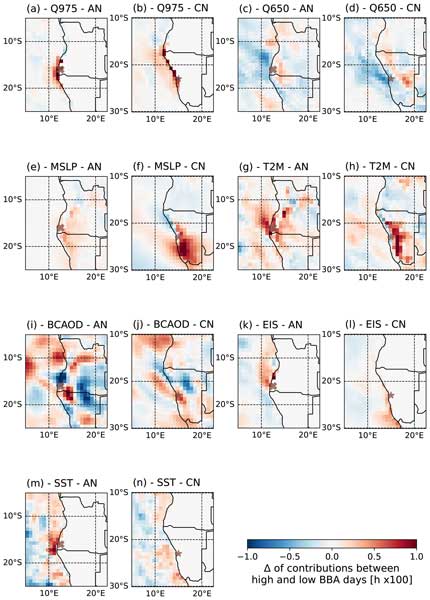
Alexandre Mass, Hendrik Andersen, Jan Cermak, Paola Formenti, Eva Pauli, and Julian Quinting
Atmos. Chem. Phys., 25, 491–510, https://doi.org/10.5194/acp-25-491-2025, https://doi.org/10.5194/acp-25-491-2025, 2025
Short summary
Short summary
This study investigates the interaction between smoke aerosols and fog and low clouds (FLCs) in the Namib Desert between June and October. Here, a satellite-based dataset of FLCs, reanalysis data and machine learning are used to systematically analyze FLC persistence under different aerosol loadings. Aerosol plumes are shown to modify local thermodynamics, which increase FLC persistence. But fully disentangling aerosol effects from meteorological ones remains a challenge.
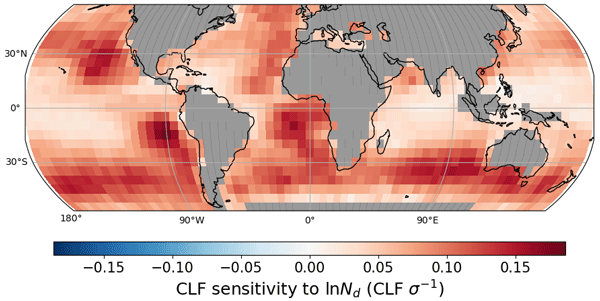
Yichen Jia, Hendrik Andersen, and Jan Cermak
Atmos. Chem. Phys., 24, 13025–13045, https://doi.org/10.5194/acp-24-13025-2024, https://doi.org/10.5194/acp-24-13025-2024, 2024
Short summary
Short summary
We present a near-global observation-based explainable machine learning framework to quantify the response of cloud fraction (CLF) of marine low clouds to cloud droplet number concentration (Nd), accounting for the covariations with meteorological factors. This approach provides a novel data-driven method to analyse the CLF adjustment by assessing the CLF sensitivity to Nd and numerous meteorological factors as well as the dependence of the Nd–CLF sensitivity on the meteorological conditions.
Bianca Adler, David D. Turner, Laura Bianco, Irina V. Djalalova, Timothy Myers, and James M. Wilczak
Atmos. Meas. Tech., 17, 6603–6624, https://doi.org/10.5194/amt-17-6603-2024, https://doi.org/10.5194/amt-17-6603-2024, 2024
Short summary
Short summary
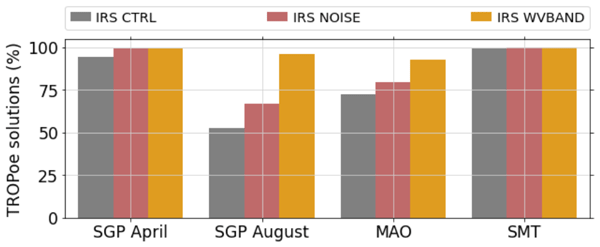
Continuous profile observations of temperature and humidity in the lowest part of the atmosphere are essential for the evaluation of numerical weather prediction models and data assimilation for better weather forecasts. Such profiles can be retrieved from passive ground-based remote sensing instruments like infrared spectrometers and microwave radiometers. In this study, we describe three recent modifications to the retrieval framework TROPoe for improved temperature and humidity profiles.
Sarah Wilson Kemsley, Paulo Ceppi, Hendrik Andersen, Jan Cermak, Philip Stier, and Peer Nowack
Atmos. Chem. Phys., 24, 8295–8316, https://doi.org/10.5194/acp-24-8295-2024, https://doi.org/10.5194/acp-24-8295-2024, 2024
Short summary
Short summary
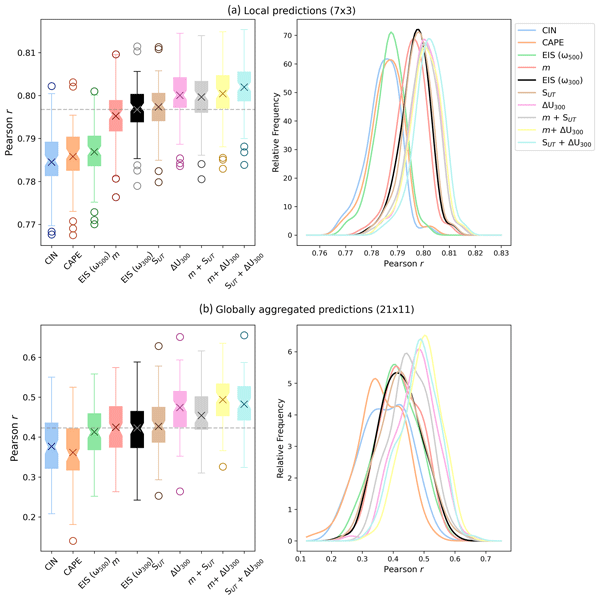
Aiming to inform parameter selection for future observational constraint analyses, we incorporate five candidate meteorological drivers specifically targeting high clouds into a cloud controlling factor framework within a range of spatial domain sizes. We find a discrepancy between optimal domain size for predicting locally and globally aggregated cloud radiative anomalies and identify upper-tropospheric static stability as an important high-cloud controlling factor.
Laura Bianco, Bianca Adler, Ludovic Bariteau, Irina V. Djalalova, Timothy Myers, Sergio Pezoa, David D. Turner, and James M. Wilczak
Atmos. Meas. Tech., 17, 3933–3948, https://doi.org/10.5194/amt-17-3933-2024, https://doi.org/10.5194/amt-17-3933-2024, 2024
Short summary
Short summary
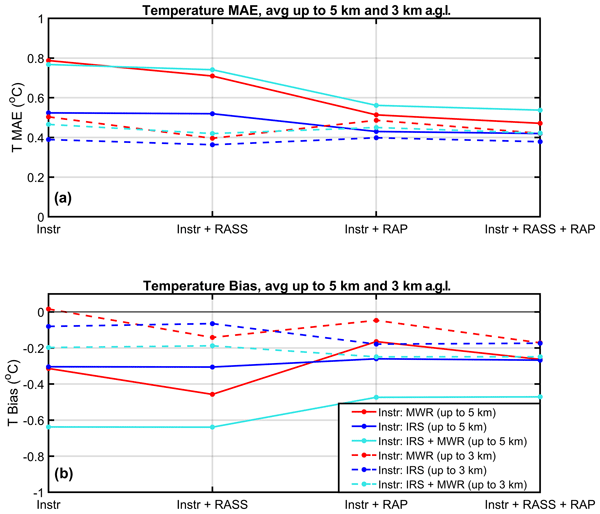
The Tropospheric Remotely Observed Profiling via Optimal Estimation physical retrieval is used to retrieve temperature and humidity profiles from various combinations of passive and active remote sensing instruments, surface platforms, and numerical weather prediction models. The retrieved profiles are assessed against collocated radiosonde in non-cloudy conditions to assess the sensitivity of the retrievals to different input combinations. Case studies with cloudy conditions are also inspected.
Nevio Babić, Bianca Adler, Alexander Gohm, Manuela Lehner, and Norbert Kalthoff
Weather Clim. Dynam., 5, 609–631, https://doi.org/10.5194/wcd-5-609-2024, https://doi.org/10.5194/wcd-5-609-2024, 2024
Short summary
Short summary
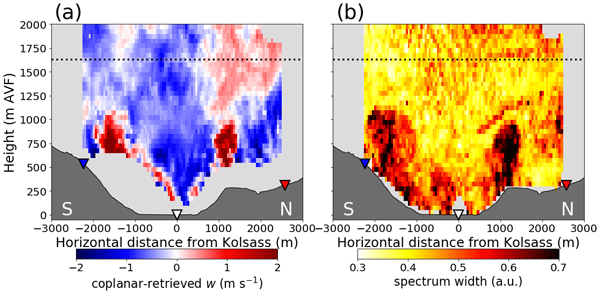
Day-to-day weather over mountains remains a significant challenge in the domain of weather forecast. Using a combination of measurements from several instrument platforms, including Doppler lidars, aircraft, and radiosondes, we developed a method that relies primarily on turbulence characteristics of the lowest layers of the atmosphere. As a result, we identified new ways in which atmosphere behaves over mountains during daytime, which may serve to further improve forecasting capabilities.
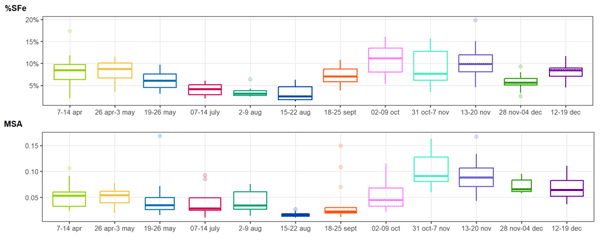
Karine Desboeufs, Paola Formenti, Raquel Torres-Sánchez, Kerstin Schepanski, Jean-Pierre Chaboureau, Hendrik Andersen, Jan Cermak, Stefanie Feuerstein, Benoit Laurent, Danitza Klopper, Andreas Namwoonde, Mathieu Cazaunau, Servanne Chevaillier, Anaïs Feron, Cécile Mirande-Bret, Sylvain Triquet, and Stuart J. Piketh
Atmos. Chem. Phys., 24, 1525–1541, https://doi.org/10.5194/acp-24-1525-2024, https://doi.org/10.5194/acp-24-1525-2024, 2024
Short summary
Short summary
This study investigates the fractional solubility of iron (Fe) in dust particles along the coast of Namibia, a critical region for the atmospheric Fe supply of the South Atlantic Ocean. Our results suggest a possible two-way interplay whereby marine biogenic emissions from the coastal marine ecosystems into the atmosphere would increase the solubility of Fe-bearing dust by photo-reduction processes. The subsequent deposition of soluble Fe could act to further enhance marine biogenic emissions.
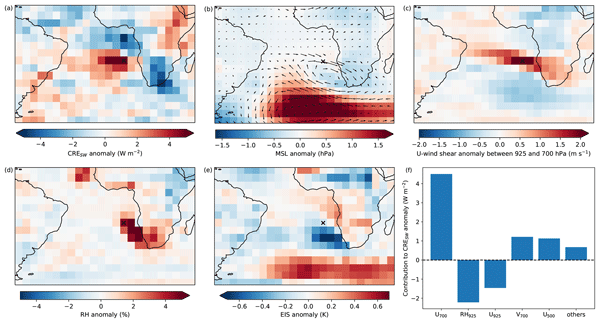
Hendrik Andersen, Jan Cermak, Alyson Douglas, Timothy A. Myers, Peer Nowack, Philip Stier, Casey J. Wall, and Sarah Wilson Kemsley
Atmos. Chem. Phys., 23, 10775–10794, https://doi.org/10.5194/acp-23-10775-2023, https://doi.org/10.5194/acp-23-10775-2023, 2023
Short summary
Short summary
This study uses an observation-based cloud-controlling factor framework to study near-global sensitivities of cloud radiative effects to a large number of meteorological and aerosol controls. We present near-global sensitivity patterns to selected thermodynamic, dynamic, and aerosol factors and discuss the physical mechanisms underlying the derived sensitivities. Our study hopes to guide future analyses aimed at constraining cloud feedbacks and aerosol–cloud interactions.

Bianca Adler, James M. Wilczak, Jaymes Kenyon, Laura Bianco, Irina V. Djalalova, Joseph B. Olson, and David D. Turner
Geosci. Model Dev., 16, 597–619, https://doi.org/10.5194/gmd-16-597-2023, https://doi.org/10.5194/gmd-16-597-2023, 2023
Short summary
Short summary
Rapid changes in wind speed make the integration of wind energy produced during persistent orographic cold-air pools difficult to integrate into the electrical grid. By evaluating three versions of NOAA’s High-Resolution Rapid Refresh model, we demonstrate how model developments targeted during the second Wind Forecast Improvement Project improve the forecast of a persistent cold-air pool event.
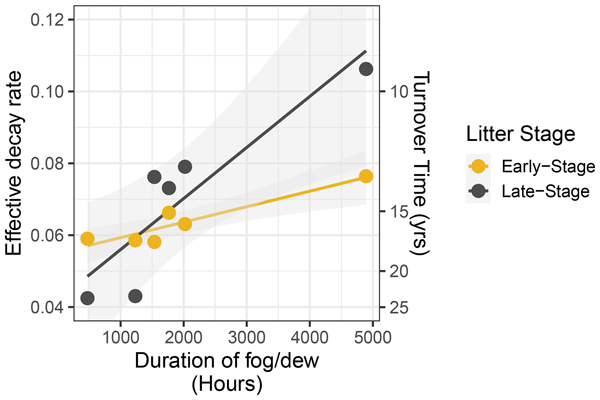
J. Robert Logan, Kathe E. Todd-Brown, Kathryn M. Jacobson, Peter J. Jacobson, Roland Vogt, and Sarah E. Evans
Biogeosciences, 19, 4129–4146, https://doi.org/10.5194/bg-19-4129-2022, https://doi.org/10.5194/bg-19-4129-2022, 2022
Short summary
Short summary
Understanding how plants decompose is important for understanding where the atmospheric CO2 they absorb ends up after they die. In forests, decomposition is controlled by rain but not in deserts. We performed a 2.5-year study in one of the driest places on earth (the Namib desert in southern Africa) and found that fog and dew, not rainfall, closely controlled how quickly plants decompose. We also created a model to help predict decomposition in drylands with lots of fog and/or dew.
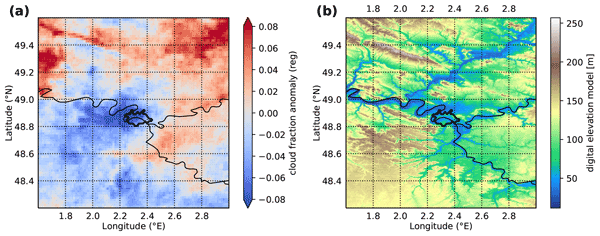
Julia Fuchs, Hendrik Andersen, Jan Cermak, Eva Pauli, and Rob Roebeling
Atmos. Meas. Tech., 15, 4257–4270, https://doi.org/10.5194/amt-15-4257-2022, https://doi.org/10.5194/amt-15-4257-2022, 2022
Short summary
Short summary
Two cloud-masking approaches, a local and a regional approach, using high-resolution satellite data are developed and validated for the region of Paris to improve applicability for analyses of urban effects on low clouds. We found that cloud masks obtained from the regional approach are more appropriate for the high-resolution analysis of locally induced cloud processes. Its applicability is tested for the analysis of typical fog conditions over different surface types.
James B. Duncan Jr., Laura Bianco, Bianca Adler, Tyler Bell, Irina V. Djalalova, Laura Riihimaki, Joseph Sedlar, Elizabeth N. Smith, David D. Turner, Timothy J. Wagner, and James M. Wilczak
Atmos. Meas. Tech., 15, 2479–2502, https://doi.org/10.5194/amt-15-2479-2022, https://doi.org/10.5194/amt-15-2479-2022, 2022
Short summary
Short summary
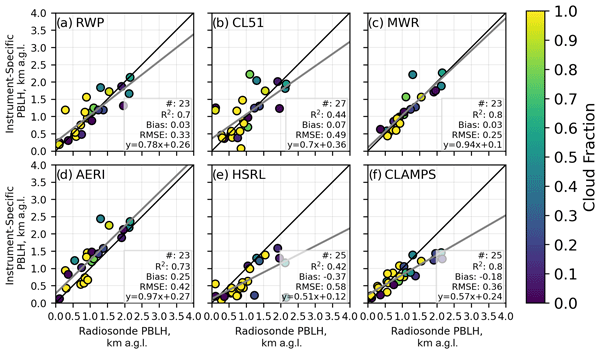
In this study, several ground-based remote sensing instruments are used to estimate the height of the convective planetary boundary layer, and their performance is compared against independent boundary layer depth estimates obtained from radiosondes launched as part of the CHEESEHEAD19 field campaign. The impact of clouds (particularly boundary layer clouds) on the estimation of the boundary layer depth is also investigated.
Irina V. Djalalova, David D. Turner, Laura Bianco, James M. Wilczak, James Duncan, Bianca Adler, and Daniel Gottas
Atmos. Meas. Tech., 15, 521–537, https://doi.org/10.5194/amt-15-521-2022, https://doi.org/10.5194/amt-15-521-2022, 2022
Short summary
Short summary
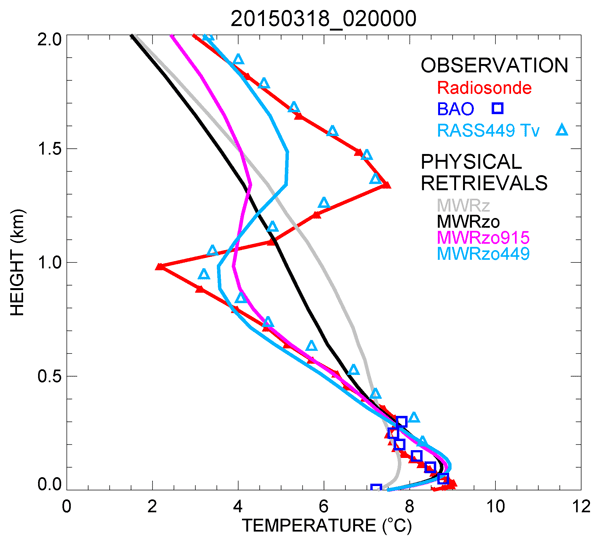
In this paper we investigate the synergy obtained by combining active (radio acoustic sounding system – RASS) and passive (microwave radiometer) remote sensing observations to obtain temperature vertical profiles through a radiative transfer model. Inclusion of the RASS observations leads to more accurate temperature profiles from the surface to 5 km above ground, well above the maximum height of the RASS observations themselves (2000 m), when compared to the microwave radiometer used alone.
Babak Jahani, Hendrik Andersen, Josep Calbó, Josep-Abel González, and Jan Cermak
Atmos. Chem. Phys., 22, 1483–1494, https://doi.org/10.5194/acp-22-1483-2022, https://doi.org/10.5194/acp-22-1483-2022, 2022
Short summary
Short summary
The change in the state of sky from cloudy to cloudless (or vice versa) comprises an additional phase called
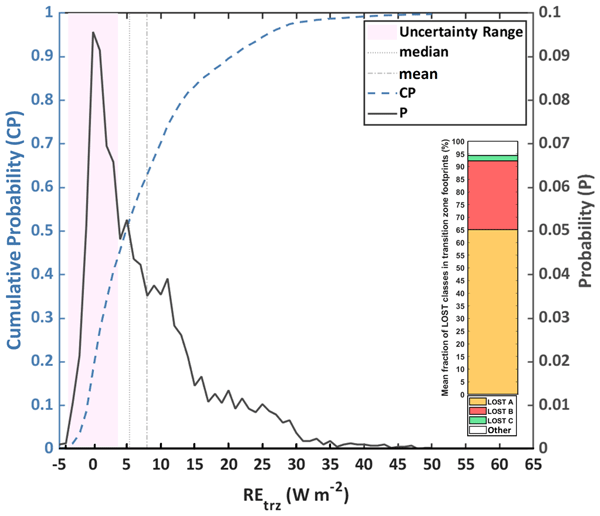
transition zonewith characteristics laying between those of aerosols and clouds. This study presents an approach for the quantification of the broadband longwave radiative effects of the cloud–aerosol transition zone at the top of the atmosphere during daytime over the ocean based on satellite observations and radiative transfer simulations.

Matthew W. Christensen, Andrew Gettelman, Jan Cermak, Guy Dagan, Michael Diamond, Alyson Douglas, Graham Feingold, Franziska Glassmeier, Tom Goren, Daniel P. Grosvenor, Edward Gryspeerdt, Ralph Kahn, Zhanqing Li, Po-Lun Ma, Florent Malavelle, Isabel L. McCoy, Daniel T. McCoy, Greg McFarquhar, Johannes Mülmenstädt, Sandip Pal, Anna Possner, Adam Povey, Johannes Quaas, Daniel Rosenfeld, Anja Schmidt, Roland Schrödner, Armin Sorooshian, Philip Stier, Velle Toll, Duncan Watson-Parris, Robert Wood, Mingxi Yang, and Tianle Yuan
Atmos. Chem. Phys., 22, 641–674, https://doi.org/10.5194/acp-22-641-2022, https://doi.org/10.5194/acp-22-641-2022, 2022
Short summary
Short summary
Trace gases and aerosols (tiny airborne particles) are released from a variety of point sources around the globe. Examples include volcanoes, industrial chimneys, forest fires, and ship stacks. These sources provide opportunistic experiments with which to quantify the role of aerosols in modifying cloud properties. We review the current state of understanding on the influence of aerosol on climate built from the wide range of natural and anthropogenic laboratories investigated in recent decades.
Cited articles
Andersen, H., Cermak, J., Solodovnik, I., Lelli, L., and Vogt, R.: Spatiotemporal dynamics of fog and low clouds in the Namib unveiled with ground- and space-based observations, Atmospheric Chemistry and Physics, 19, 4383–4392, https://doi.org/10.5194/acp-19-4383-2019, 2019. a, b, c, d, e, f, g, h, i, j, k, l, m, n, o
Andersen, H., Cermak, J., Fuchs, J., Knippertz, P., Gaetani, M., Quinting, J., Sippel, S., and Vogt, R.: Synoptic-scale controls of fog and low-cloud variability in the Namib Desert, Atmospheric Chemistry and Physics, 20, 3415–3438, https://doi.org/10.5194/acp-20-3415-2020, 2020. a, b
Andrews, W. and Hutchings, L.: Upwelling in the southern Benguela Current, Progress in Oceanography, 9, 1–81, 1980. a
Azúa-Bustos, A., González-Silva, C., Mancilla, R. A., Salas, L., Gómez-Silva, B., McKay, C. P., and Vicuña, R.: Hypolithic cyanobacteria supported mainly by fog in the coastal range of the Atacama Desert, Microbial Ecology, 61, 568–581, 2011. a
Barbato, G., Zollo, A. L., and Mercogliano, P.: Analysis of the planetary boundary layer using CS135 ceilometer, in: 2016 IEEE Metrology for Aerospace (MetroAeroSpace), 124–129, IEEE, https://doi.org/10.1109/MetroAeroSpace.2016.7573198, 2016. a
CampbellScientific: Loggernet user manual, Campbell Scientific, https://s.campbellsci.com/documents/au/manuals/loggernet2-1.pdf (last access: 10 December 2025), 2007. a
CampbellScientific: wind monitor: user manual, Campbell Scientific, https://s.campbellsci.com/documents/us/miscellaneous/old-manuals/05103, 05103-45, 05106, 05108, 05108-45, and 05305 Wind Monitors.pdf, 2013a. a
CampbellScientific: CS215 temp and rh probe: user manual, Campbell Scientific, https://s.campbellsci.com/documents/ca/manuals/cs215_man.pdf (last access: 10 December 2025), 2013b. a
CampbellScientific: CNR4 net radiometer: user manual, Campbell Scientific, https://s.campbellsci.com/documents/ca/manuals/cnr4_man.pdf (last access: 10 December 2025), 2017. a
CampbellScientific: CS135 Ceilometer: user manual, Campbell Scientific, https://s.campbellsci.com/documents/eu/manuals/cs135.pdf (last access: 10 December 2025), 2018. a
Cermak, J.: Low clouds and fog along the South-Western African coast—Satellite-based retrieval and spatial patterns, Atmospheric Research, 116, 15–21, 2012. a
Cermak, J.: Fog and low cloud frequency and properties from active-sensor satellite data, Remote Sensing, 10, 1209, https://doi.org/10.3390/rs10081209, 2018. a
Cermak, J. and Bendix, J.: Detecting ground fog from space – a microphysics-based approach, International Journal of Remote Sensing, 32, 3345–3371, 2011. a
Craven, J. P., Jewell, R. E., and Brooks, H. E.: Comparison between observed convective cloud-base heights and lifting condensation level for two different lifted parcels, Weather and Forecasting, 17, 885–890, 2002. a
Del Río, C., Lobos, F., Siegmund, A., Tejos, C., Osses, P., Huaman, Z., Meneses, J. P., and García, J.-L.: GOFOS, ground optical fog observation system for monitoring the vertical stratocumulus-fog cloud distribution in the coast of the Atacama Desert, Chile, Journal of Hydrology, 597, 126190, https://doi.org/10.1016/j.jhydrol.2021.126190, 2021. a
Dione, C., Haeffelin, M., Burnet, F., Lac, C., Canut, G., Delanoë, J., Dupont, J.-C., Jorquera, S., Martinet, P., Ribaud, J.-F., and Toledo, F.: Role of thermodynamic and turbulence processes on the fog life cycle during SOFOG3D experiment, Atmospheric Chemistry and Physics, 23, 15711–15731, https://doi.org/10.5194/acp-23-15711-2023, 2023. a, b
Ebner, M., Miranda, T., and Roth-Nebelsick, A.: Efficient fog harvesting by Stipagrostis sabulicola (Namib dune bushman grass), Journal of Arid Environments, 75, 524–531, 2011. a
Eckardt, F., Soderberg, K., Coop, L., Muller, A., Vickery, K., Grandin, R., Jack, C., Kapalanga, T., and Henschel, J.: The nature of moisture at Gobabeb, in the central Namib Desert, Journal of Arid Environments, 93, 7–19, 2013. a
Egli, S., Thies, B., and Bendix, J.: A hybrid approach for fog retrieval based on a combination of satellite and ground truth data, Remote Sensing, 10, 628, https://doi.org/10.3390/rs10040628 2018. a
Formenti, P., D'Anna, B., Flamant, C., Mallet, M., Piketh, S. J., Schepanski, K., Waquet, F., Auriol, F., Brogniez, G., Burnet, F., Chaboureau, J.-P., Chauvigné, A., Chazette, P., Denjean, C., Desboeufs, K., Doussin, J.-F., Elguindi, N., Feuerstein, S., Gaetani, M., Giorio, C., Klopper, D., Mallet, M. D., Nabat, P., Monod, A., Solmon, F., Namwoonde, A., Chikwililwa, C., Mushi, R., Welton, E. J., and Holben, B.: The aerosols, radiation and clouds in southern Africa field campaign in Namibia: Overview, illustrative observations, and way forward, Bulletin of the American Meteorological Society, 100, 1277–1298, https://doi.org/10.1175/BAMS-D-17-0278.1, 2019. a
Gan, H. Y., Hohberg, K., Schneider, C., Ebner, M., Marais, E., Miranda, T., Lehmitz, R., Maggs-Kölling, G., and Bocherens, H.: The hidden oases: unveiling trophic dynamics in Namib's fog plant ecosystem, Scientific Reports, 14, 13334, https://doi.org/10.1038/s41598-024-61796-8, 2024. a
Gottlieb, T. R., Eckardt, F. D., Venter, Z. S., and Cramer, M. D.: The contribution of fog to water and nutrient supply to Arthraerua leubnitziae in the central Namib Desert, Namibia, Journal of Arid Environments, 161, 35–46, 2019. a
Juvik, J. O. and Nullet, D.: Comments on “A Proposed Standard Fog Collector for Use in High-Elevation Regions”, Journal of Applied Meteorology, 34, 2108–2110, 1995. a
Kaspar, F., Helmschrot, J., Mhanda, A., Butale, M., de Clercq, W., Kanyanga, J. K., Neto, F. O. S., Kruger, S., Castro Matsheka, M., Muche, G., Hillmann, T., Josenhans, K., Posada, R., Riede, J., Seely, M., Ribeiro, C., Kenabatho, P., Vogt, R., and Jürgens, N.: The SASSCAL contribution to climate observation, climate data management and data rescue in Southern Africa, Advances in Science and Research, 12, 171–177, https://doi.org/10.5194/asr-12-171-2015, 2015. a, b
Koenker, R. and Hallock, K. F.: Quantile regression, Journal of Economic Perspectives, 15, 143–156, 2001. a
Koračin, D., Lewis, J., Thompson, W. T., Dorman, C. E., and Businger, J. A.: Transition of stratus into fog along the California coast: Observations and modeling, Journal of the Atmospheric Sciences, 58, 1714–1731, 2001. a
Kutta, E. and Hubbart, J. A.: Seasonal lifting condensation level trends: implications of warming and reforestation in Appalachia's deciduous forest, Atmosphere, 14, 98, https://doi.org/10.3390/atmos14010098, 2023. a
Lobos-Roco, F., Vilà-Guerau de Arellano, J., and del Río, C.: Observation-driven model for calculating water-harvesting potential from advective fog in (semi-)arid coastal regions, Hydrology and Earth System Sciences, 29, 109–125, https://doi.org/10.5194/hess-29-109-2025, 2025. a
Malik, D. and Andersen, H.: Data and Code of Malik et al. (2025) “Cloud Base Height Determines Fog Occurrence Patterns in the Namib Desert” (ACP), Zenodo [code, data set], https://doi.org/10.5281/zenodo.17709909, 2025. a
Mass, A., Andersen, H., Cermak, J., Formenti, P., Pauli, E., and Quinting, J.: A satellite-based analysis of semi-direct effects of biomass burning aerosols on fog and low-cloud dissipation in the Namib Desert, Atmospheric Chemistry and Physics, 25, 491–510, https://doi.org/10.5194/acp-25-491-2025, 2025. a
Maúre, G., Pinto, I., Ndebele-Murisa, M., Muthige, M., Lennard, C., Nikulin, G., Dosio, A., and Meque, A.: The southern African climate under 1.5 °C and 2 °C of global warming as simulated by CORDEX regional climate models, Environmental Research Letters, 13, 065002, https://doi.org/10.1088/1748-9326/aab190, 2018. a
McHugh, T. A., Morrissey, E. M., Reed, S. C., Hungate, B. A., and Schwartz, E.: Water from air: an overlooked source of moisture in arid and semiarid regions, Scientific Reports, 5, 13767, https://doi.org/10.1038/srep13767, 2015. a
Nicholls, S.: The dynamics of stratocumulus: Aircraft observations and comparisons with a mixed layer model, Quarterly Journal of the Royal Meteorological Society, 110, 783–820, 1984. a
Olivier, J.: Spatial distribution of fog in the Namib, Journal of Arid Environments, 29, 129–138, https://doi.org/10.1016/S0140-1963(05)80084-9, 1995. a
Olivier, J. and Stockton, P. L.: The influence of upwelling extent upon fog incidence at Lüderitz, southern Africa, International Journal of Climatology, 9, 69–75, https://doi.org/10.1002/joc.3370090106, 1989. a
Pilié, R., Mack, E., Rogers, C., Katz, U., and Kocmond, W.: The formation of marine fog and the development of fog-stratus systems along the California coast, Journal of Applied Meteorology, 1275–1286, 1979. a
Pope, N. H. and Igel, A. L.: Counteracting influences of gravitational settling modulate aerosol impacts on cloud-base-lowering fog characteristics, Atmospheric Chemistry and Physics, 25, 5433–5444, https://doi.org/10.5194/acp-25-5433-2025, 2025. a
Qiao, N., Wang, L., Marais, E., and Li, F.: Fog detection and estimation using CALIPSO lidar observations, Geophysical Research Letters, 49, e2022GL101375, https://doi.org/10.1029/2022GL101375, 2022. a
Roth-Nebelsick, A., Ebner, M., Miranda, T., Gottschalk, V., Voigt, D., Gorb, S., Stegmaier, T., Sarsour, J., Linke, M., and Konrad, W.: Leaf surface structures enable the endemic Namib desert grass Stipagrostis sabulicola to irrigate itself with fog water, Journal of the Royal Society interface, 9, 1965–1974, 2012. a
Shanyengana, E., Henschel, J., Seely, M., and Sanderson, R.: Exploring fog as a supplementary water source in Namibia, Atmospheric Research, 64, 251–259, 2002. a
Spirig, R., Vogt, R., Larsen, J. A., Feigenwinter, C., Wicki, A., Franceschi, J., Parlow, E., Adler, B., Kalthoff, N., Cermak, J., Andersen, H., Fuchs, J., Bott, A., Hacker, M., Wagner, N., Maggs-Kolling, G., Wassenaar, T., and Seely, M.: Probing the fog life cycles in the Namib Desert, Bulletin of the American Meteorological Society, 100, 2491–2507, https://doi.org/10.1175/BAMS-D-18-0142.1, 2019. a, b, c, d, e, f, g, h
Toledo, F., Haeffelin, M., Wærsted, E., and Dupont, J.-C.: A new conceptual model for adiabatic fog, Atmospheric Chemistry and Physics, 21, 13099–13117, https://doi.org/10.5194/acp-21-13099-2021, 2021. a, b
Turton, J. and Nicholls, S.: A study of the diurnal variation of stratocumulus using a multiple mixed layer model, Quarterly Journal of the Royal Meteorological Society, 113, 969–1009, 1987. a
Vaisala: CL31 Ceilometer: user manual, Vaisala, https://docs.vaisala.com/r/M210482EN-L/en-US (last access: 10 December 2025), 2024. a
Vogelmann, A. M., Fridlind, A. M., Toto, T., Endo, S., Lin, W., Wang, J., Feng, S., Zhang, Y., Turner, D. D., Liu, Y., Li, Z., Xie, S., Ackerman, A. S., Zhang, M., and Khairoutdinov, M.: RACORO continental boundary layer cloud investigations: 1. Case study development and ensemble large-scale forcings, Journal of Geophysical Research: Atmospheres, 120, 5962–5992, https://doi.org/10.1002/2014JD022713, 2015. a
Wagh, S., Krishnamurthy, R., Wainwright, C., Wang, S., Dorman, C. E., Fernando, H. J., and Gultepe, I.: Study of stratus-lowering marine-fog events observed during C-FOG, Boundary-Layer Meteorology, 181, 317–344, 2021. a
Wagner, F., Geiss, A., Barnaba, F., Belegante, L., Bellini, A., Buxmann, J., Diémoz, H., Fenner, D., Kotthaus, S., Osborne, M., Ruefenacht, R., Ruiz de Morales Céspedes, J., and Van Hove, M.: JND European networks observing the atmospheric boundary layer: Overview, access and impacts – Chapter 2a: Automatic low-power Lidar and Ceilometer (ALC), Zenodo, https://doi.org/10.5281/zenodo.11211873, 2024. a, b, c
Warren-Rhodes, K. A., McKay, C. P., Boyle, L. N., Wing, M. R., Kiekebusch, E. M., Cowan, D. A., Stomeo, F., Pointing, S. B., Kaseke, K. F., Eckardt, F., Henschel, J. R., Anisfeld, A., Seely, M., and Rhodes, K. L.: Physical ecology of hypolithic communities in the central Namib Desert: the role of fog, rain, rock habitat, and light, Journal of Geophysical Research: Biogeosciences, 118, 1451–1460, https://doi.org/10.1002/jgrg.20117, 2013. a
Weathers, K. C., Ponette-González, A. G., and Dawson, T. E.: Medium, vector, and connector: Fog and the maintenance of ecosystems, Ecosystems, 23, 217–229, 2020. a
Wiegner, M., Mattis, I., Pattantyús-Ábrahám, M., Bravo-Aranda, J. A., Poltera, Y., Haefele, A., Hervo, M., Görsdorf, U., Leinweber, R., Gasteiger, J., Haeffelin, M., Wagner, F., Cermak, J., Komínková, K., Brettle, M., Münkel, C., and Pönitz, K.: Aerosol backscatter profiles from ceilometers: validation of water vapor correction in the framework of CeiLinEx2015, Atmospheric Measurement Techniques, 12, 471–490, https://doi.org/10.5194/amt-12-471-2019, 2019. a, b
Yang, L., Liu, J.-W., Xie, S.-P., and Shen, S. S.: Transition from fog to stratus over the northwest Pacific Ocean: Large-eddy simulation, Monthly Weather Review, 149, 2913–2925, 2021. a
Zivot, E. and Wang, J.: Rolling Analysis of Time Series, 299–346, Springer New York, New York, NY, ISBN 978-0-387-21763-5, https://doi.org/10.1007/978-0-387-21763-5_9, 2003. a
Short summary
We investigated cloud base height changes in the Namib Desert and developed a method to estimate it using ground-based humidity data. This improves fog monitoring by distinguishing fog from low clouds, which satellites alone cannot reliably do. Our results reveal diurnal patterns and linkages to coastal proximity in the vertical dynamics of fog and low clouds, highlighting key atmospheric processes with potential importance for future research.
We investigated cloud base height changes in the Namib Desert and developed a method to estimate...


Altmetrics
Final-revised paper
Preprint