
Articles | Volume 26, issue 9
https://doi.org/10.5194/acp-26-6147-2026
© Author(s) 2026. This work is distributed under
the Creative Commons Attribution 4.0 License.
the Creative Commons Attribution 4.0 License.
https://doi.org/10.5194/acp-26-6147-2026
© Author(s) 2026. This work is distributed under
the Creative Commons Attribution 4.0 License.
the Creative Commons Attribution 4.0 License.
Research article
| 
08 May 2026
Research article |
| 08 May 2026
| 08 May 2026
Investigating the role of ammonia in enhancing secondary organic aerosol formation from the co-photooxidation of anthropogenic and biogenic VOCs
Yongxin Yan
State Key Laboratory of Environmental Criteria and Risk Assessment, Chinese Research Academy of Environmental Sciences, Beijing, 100012, China

State Key Laboratory of Environmental Criteria and Risk Assessment, Chinese Research Academy of Environmental Sciences, Beijing, 100012, China
Yufei Song
State Key Laboratory of Environmental Criteria and Risk Assessment, Chinese Research Academy of Environmental Sciences, Beijing, 100012, China
Yushi Gong
State Key Laboratory of Environmental Criteria and Risk Assessment, Chinese Research Academy of Environmental Sciences, Beijing, 100012, China
Shudan Wei
State Key Laboratory of Environmental Criteria and Risk Assessment, Chinese Research Academy of Environmental Sciences, Beijing, 100012, China
Zhaolin Wang
State Key Laboratory of Environmental Criteria and Risk Assessment, Chinese Research Academy of Environmental Sciences, Beijing, 100012, China
Haijie Zhang
State Key Laboratory of Environmental Criteria and Risk Assessment, Chinese Research Academy of Environmental Sciences, Beijing, 100012, China
Yanqin Ren
State Key Laboratory of Environmental Criteria and Risk Assessment, Chinese Research Academy of Environmental Sciences, Beijing, 100012, China
Institute of Chemistry, Chinese Academy of Sciences, Beijing, 100190, China
Hong Li
CORRESPONDING AUTHOR
State Key Laboratory of Environmental Criteria and Risk Assessment, Chinese Research Academy of Environmental Sciences, Beijing, 100012, China
Related authors
Junling Li, Chaofan Lian, Mingyuan Liu, Hao Zhang, Yongxin Yan, Yufei Song, Chun Chen, Jiaqi Wang, Haijie Zhang, Yanqin Ren, Yucong Guo, Weigang Wang, Yisheng Xu, Hong Li, Jian Gao, and Maofa Ge
Atmos. Chem. Phys., 25, 2551–2568, https://doi.org/10.5194/acp-25-2551-2025, https://doi.org/10.5194/acp-25-2551-2025, 2025
Short summary
Short summary
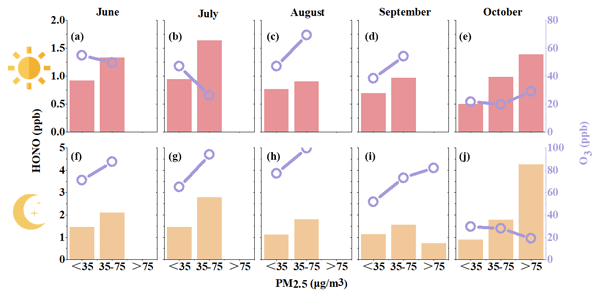
As a key source of hydroxyl (OH) radical, nitrous acid (HONO) has attracted much attention for its important role in the atmospheric oxidant capacity (AOC) increase. In this study, we made a comparison of the ambient levels, variation patterns, sources, and formation pathway in the warm season on the basis of continuous intensive observations at an urban site of Beijing. This work highlights the importance of HONO for the AOC in the warm season.
Can Wu, Huijun Zhang, Kehan Sun, Rongjie Li, Ziting Yan, Yubao Chen, Zheng Li, Binyu Xiao, Yanqin Ren, and Gehui Wang
Atmos. Chem. Phys., 26, 14229–14243, https://doi.org/10.5194/acp-26-14229-2026, https://doi.org/10.5194/acp-26-14229-2026, 2026
Short summary
Short summary
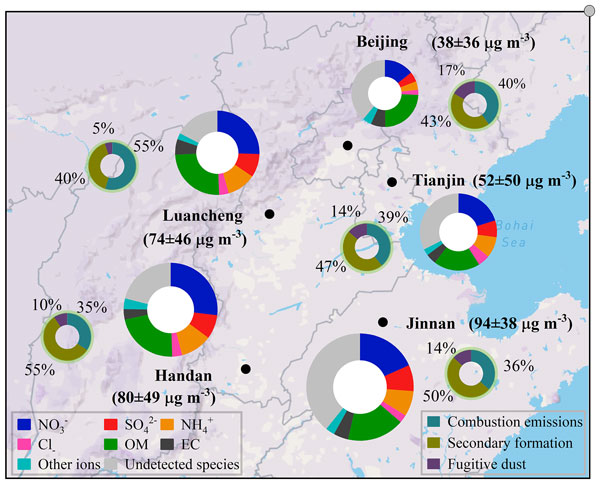
Nitrogenous organic compounds represent the pivotal chromophores governing the optical properties of atmospheric brown carbon (BrC) across the North China Plain, which are mainly formed through ammonia-driven aqueous reactions. Accordingly, the mitigation of ammonia emissions is indispensable for the further abatement of haze and BrC pollution in this region.
Meifang Chen, Shengrui Tong, Shanshan Yu, Xiaofan Lv, Yanyong Xu, Hailiang Zhang, and Maofa Ge
Atmos. Chem. Phys., 26, 2103–2116, https://doi.org/10.5194/acp-26-2103-2026, https://doi.org/10.5194/acp-26-2103-2026, 2026
Short summary
Short summary
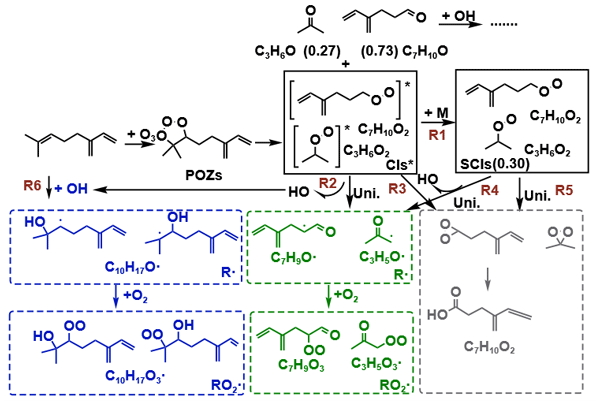
The critical role of Criegee intermediates (CIs) in the myrcene ozonolysis was elucidated through the combined approach of matrix isolation Fourier transform infrared spectroscopy and smog chamber experiments. Distinct mechanisms of different-sized CIs in secondary organic aerosol formation were proposed, and a synergistic effect between RO2 autoxidation and CIs oligomerization was identified. This study provided new insights into the ozonolysis process from the Criegee chemistry perspective.
Mingzhu Zhai, Shengrui Tong, Wenqian Zhang, Hailiang Zhang, Xin Li, Xiaoqi Wang, and Maofa Ge
Atmos. Chem. Phys., 25, 16679–16695, https://doi.org/10.5194/acp-25-16679-2025, https://doi.org/10.5194/acp-25-16679-2025, 2025
Short summary
Short summary
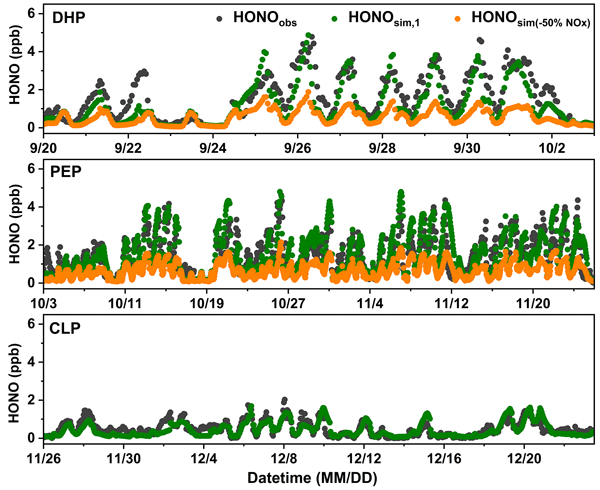
To explore how anthropogenic activities affect HONO formation, we conducted comprehensive observations in Beijing. During clean periods with a 53 % drop in Traffic Performance Index, HONO, CO, and NO2 levels decreased by 2–3 times compared to polluted periods. Emission reduction simulations showed that a 50 % NOx reduction could lower HONO by up to 46.3 %, indicating that reducing anthropogenic activities significantly suppresses HONO formation and provides direct evidence for pollution control.
Yanqin Ren, Zhenhai Wu, Fang Bi, Hong Li, Haijie Zhang, Junling Li, Rui Gao, Fangyun Long, Zhengyang Liu, Yuanyuan Ji, and Gehui Wang
Atmos. Chem. Phys., 25, 6975–6990, https://doi.org/10.5194/acp-25-6975-2025, https://doi.org/10.5194/acp-25-6975-2025, 2025
Short summary
Short summary
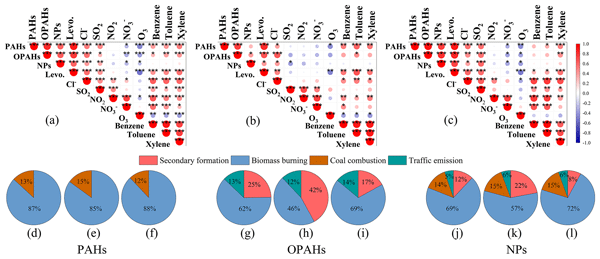
The daily concentrations of Polycyclic aromatic hydrocarbons (PAHs), oxygenated PAHs (OPAHs), and nitrated phenols (NPs) in PM2.5 were all increased during the heating season. Biomass burning was identified to be the primary source of these aromatic compounds, particularly for PAHs. Phenol and nitrobenzene are two main primary precursors for 4NP, with phenol showing lower reaction barriers. P-Cresol was identified as the primary precursor for the formation of 4-methyl-5-nitrocatechol.
Junling Li, Chaofan Lian, Mingyuan Liu, Hao Zhang, Yongxin Yan, Yufei Song, Chun Chen, Jiaqi Wang, Haijie Zhang, Yanqin Ren, Yucong Guo, Weigang Wang, Yisheng Xu, Hong Li, Jian Gao, and Maofa Ge
Atmos. Chem. Phys., 25, 2551–2568, https://doi.org/10.5194/acp-25-2551-2025, https://doi.org/10.5194/acp-25-2551-2025, 2025
Short summary
Short summary
As a key source of hydroxyl (OH) radical, nitrous acid (HONO) has attracted much attention for its important role in the atmospheric oxidant capacity (AOC) increase. In this study, we made a comparison of the ambient levels, variation patterns, sources, and formation pathway in the warm season on the basis of continuous intensive observations at an urban site of Beijing. This work highlights the importance of HONO for the AOC in the warm season.
Jiemeng Bao, Xin Zhang, Zhenhai Wu, Li Zhou, Jun Qian, Qinwen Tan, Fumo Yang, Junhui Chen, Yunfeng Li, Hefan Liu, Liqun Deng, and Hong Li
Atmos. Chem. Phys., 25, 1899–1916, https://doi.org/10.5194/acp-25-1899-2025, https://doi.org/10.5194/acp-25-1899-2025, 2025
Short summary
Short summary
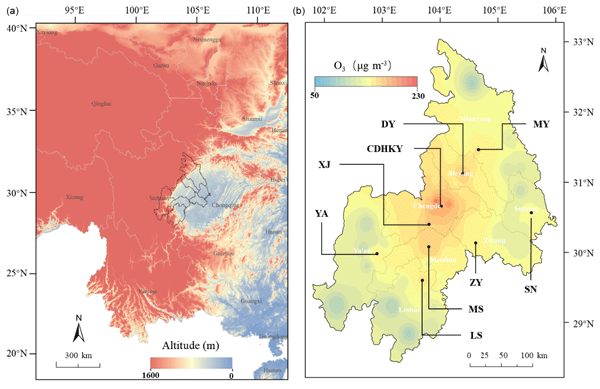
We studied carbonyl compounds' role in ozone pollution in the Chengdu Plain Urban Agglomeration, China. During heavy pollution in August 2019, we measured carbonyls at nine sites and analyzed their impact. Areas with higher carbonyl levels, like Chengdu, had worse ozone pollution. While their abundance matters, chemical reactions with other pollutants are the main drivers. Our findings show regional cooperation is vital to reducing ozone pollution effectively.
Bowen Li, Jian Gao, Chun Chen, Liang Wen, Yuechong Zhang, Junling Li, Yuzhe Zhang, Xiaohui Du, Kai Zhang, and Jiaqi Wang
Atmos. Chem. Phys., 24, 13183–13198, https://doi.org/10.5194/acp-24-13183-2024, https://doi.org/10.5194/acp-24-13183-2024, 2024
Short summary
Short summary
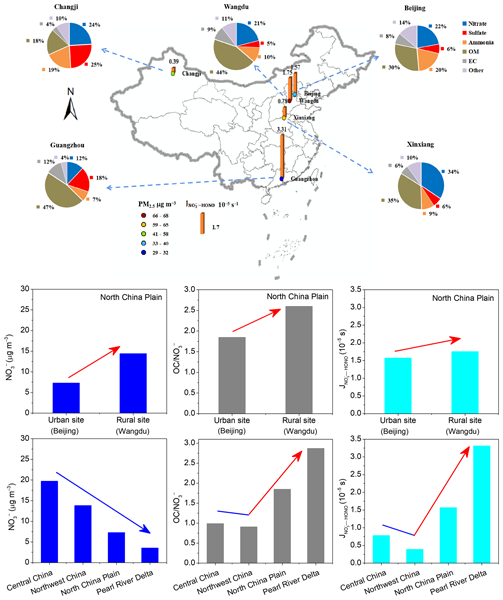
The photolysis rate constant of particulate nitrate for HONO production (JNO3−–HONO), derived from PM2.5 samples collected at five representative sites in China, exhibited a wide range of variation. A parameterization equation relating JNO3−–HONO to OC/NO3− has been established and can be used to estimate JNO3−–HONO in different environments. Our work provides an important reference for research in other regions of the world where aerosol samples have a high proportion of organic components.
Yanqin Ren, Zhenhai Wu, Yuanyuan Ji, Fang Bi, Junling Li, Haijie Zhang, Hao Zhang, Hong Li, and Gehui Wang
Atmos. Chem. Phys., 24, 6525–6538, https://doi.org/10.5194/acp-24-6525-2024, https://doi.org/10.5194/acp-24-6525-2024, 2024
Short summary
Short summary
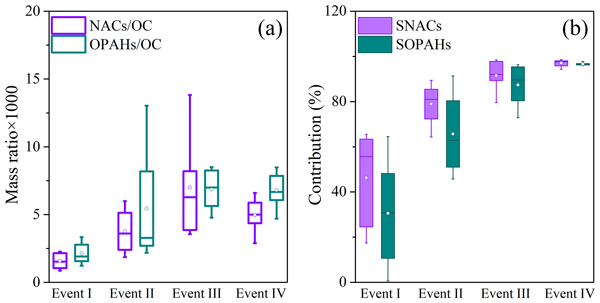
Nitrated aromatic compounds (NACs) and oxygenated derivatives of polycyclic aromatic hydrocarbons (OPAHs) in PM2.5 were examined from an urban area in Beijing during the autumn and winter. The OPAH and NAC concentrations were much higher during heating than before heating. They majorly originated from the combustion of biomass and automobile emissions, and the secondary generation was the major contributor throughout the whole sampling period.
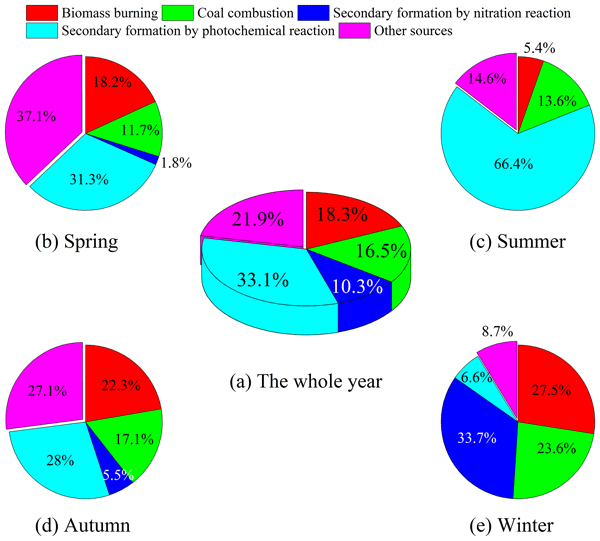
Yanqin Ren, Gehui Wang, Jie Wei, Jun Tao, Zhisheng Zhang, and Hong Li
Atmos. Chem. Phys., 23, 6835–6848, https://doi.org/10.5194/acp-23-6835-2023, https://doi.org/10.5194/acp-23-6835-2023, 2023
Short summary
Short summary
Nine quantified nitrated aromatic compounds (NACs) in PM2.5 were examined at the peak of Mt. Wuyi. They manifested a significant rise in overall abundance in the winter and autumn. The transport of contaminants had a significant impact on NACs. Under low-NOx conditions, the formation of NACs was comparatively sensitive to NO2, suggesting that NACs would become significant in the aerosol characteristics when nitrate concentrations decreased as a result of emission reduction measures.
Junling Li, Kun Li, Hao Zhang, Xin Zhang, Yuanyuan Ji, Wanghui Chu, Yuxue Kong, Yangxi Chu, Yanqin Ren, Yujie Zhang, Haijie Zhang, Rui Gao, Zhenhai Wu, Fang Bi, Xuan Chen, Xuezhong Wang, Weigang Wang, Hong Li, and Maofa Ge
Atmos. Chem. Phys., 22, 10489–10504, https://doi.org/10.5194/acp-22-10489-2022, https://doi.org/10.5194/acp-22-10489-2022, 2022
Short summary
Short summary
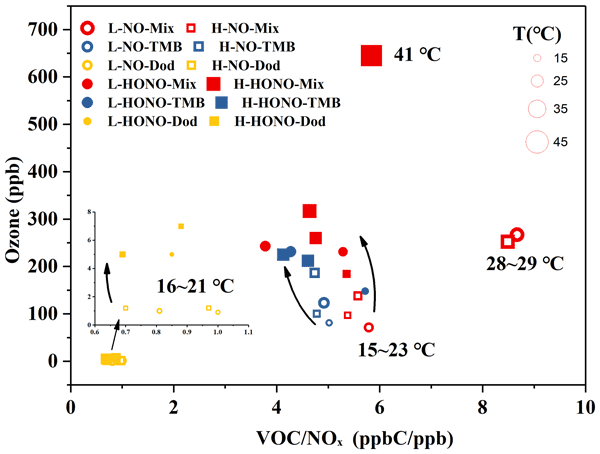
Ozone formation is enhanced by higher OH concentration and higher temperature but is influenced little by SO2. SO2 can largely enhance the particle formation. Organo-sulfates and organo-nitrates are detected in the formed particles, and the presence of SO2 can promote the formation of organo-sulfates. The results provide a scientific basis for systematically evaluating the effects of SO2, OH concentration, and temperature on the oxidation of mixed organic gases in the atmosphere.
Junlei Zhan, Yongchun Liu, Wei Ma, Xin Zhang, Xuezhong Wang, Fang Bi, Yujie Zhang, Zhenhai Wu, and Hong Li
Atmos. Meas. Tech., 15, 1511–1520, https://doi.org/10.5194/amt-15-1511-2022, https://doi.org/10.5194/amt-15-1511-2022, 2022
Short summary
Short summary
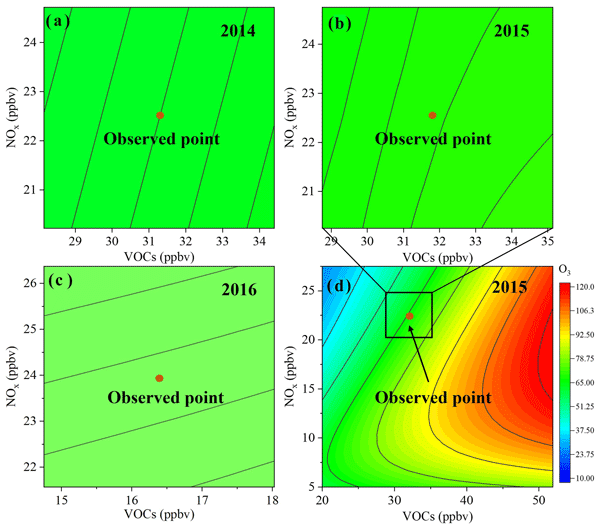
Our study investigated the O3 formation sensitivity in Beijing using a random forest model coupled with the reactivity of volatile organic
compound (VOC) species. Results found that random forest accurately predicted O3 concentration when initial VOCs were considered, and relative importance correlated well with O3 formation potential. The O3 isopleth curves calculated by the random forest model were generally comparable with those calculated by the box model.

Jingwei Zhang, Chaofan Lian, Weigang Wang, Maofa Ge, Yitian Guo, Haiyan Ran, Yusheng Zhang, Feixue Zheng, Xiaolong Fan, Chao Yan, Kaspar R. Daellenbach, Yongchun Liu, Markku Kulmala, and Junling An
Atmos. Chem. Phys., 22, 3275–3302, https://doi.org/10.5194/acp-22-3275-2022, https://doi.org/10.5194/acp-22-3275-2022, 2022
Short summary
Short summary
This study added six potential HONO sources to the WRF-Chem model, evaluated their impact on HONO and O3 concentrations, including surface and vertical concentrations. The simulations extend our knowledge on atmospheric HONO sources, especially for nitrate photolysis. The study also explains the HONO difference in O3 formation on clean and hazy days, and reveals key potential HONO sources to O3 enhancements in haze-aggravating processes with a co-occurrence of high PM2.5 and O3 concentrations.
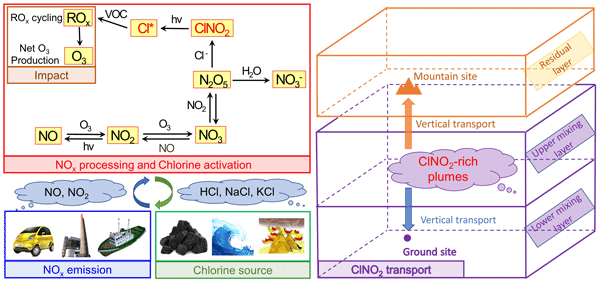
Men Xia, Xiang Peng, Weihao Wang, Chuan Yu, Zhe Wang, Yee Jun Tham, Jianmin Chen, Hui Chen, Yujing Mu, Chenglong Zhang, Pengfei Liu, Likun Xue, Xinfeng Wang, Jian Gao, Hong Li, and Tao Wang
Atmos. Chem. Phys., 21, 15985–16000, https://doi.org/10.5194/acp-21-15985-2021, https://doi.org/10.5194/acp-21-15985-2021, 2021
Short summary
Short summary
ClNO2 is an important precursor of chlorine radical that affects photochemistry. However, its production and impact are not well understood. Our study presents field observations of ClNO2 at three sites in northern China. These observations provide new insights into nighttime processes that produce ClNO2 and the significant impact of ClNO2 on secondary pollutions during daytime. The results improve the understanding of photochemical pollution in the lower part of the atmosphere.
Cited articles
Agrawal, H., Sawant, A. A., Jansen, K., Miller, J. W., and Cocker, D. R.: Characterization of chemical and particulate emissions from aircraft engines, Atmos. Environ., 42, 4380–4392, https://doi.org/10.1016/j.atmosenv.2008.01.069, 2008.
Ahlberg, E., Falk, J., Eriksson, A., Holst, T., Brune, W. H., Kristensson, A., Roldin, P., and Svenningsson, B.: Secondary organic aerosol from VOC mixtures in an oxidation flow reactor, Atmos. Environ., 161, 210–220, https://doi.org/10.1016/j.atmosenv.2017.05.005, 2017.
Atkinson, R. and Arey, J.: Atmospheric Degradation of Volatile Organic Compounds, Chem. Rev., 103, 4605–4638, 2003.
Babar, Z. B., Park, J.-H., and Lim, H.-J.: Influence of NH3 on secondary organic aerosols from the ozonolysis and photooxidation of α-pinene in a flow reactor, Atmos. Environ., 164, 71–84, https://doi.org/10.1016/j.atmosenv.2017.05.034, 2017.
Berndt, T.: Peroxy Radical Processes and Product Formation in the OH Radical-Initiated Oxidation of α-Pinene for NearAtmospheric Conditions, J. Phys. Chem. A, 125, 9151–9160, https://doi.org/10.1021/acs.jpca.1c05576, 2021.
Capouet, M., Peeters, J., Nozière, B., and Müller, J. F.: Alpha-pinene oxidation by OH: simulations of laboratory experiments, Atmos. Chem. Phys., 4, 2285–2311, https://doi.org/10.5194/acp-4-2285-2004, 2004.
Chen, T. and Jang, M.: Secondary organic aerosol formation from photooxidation of a mixture of dimethyl sulfide and isoprene, Atmos. Environ., 46, 271–278, https://doi.org/10.1016/j.atmosenv.2011.09.082, 2012.
Cui, Y., Chen, K., Zhang, H., Lin, Y. H., and Bahreini, R.: Chemical Composition and Optical Properties of Secondary Organic Aerosol from Photooxidation of Volatile Organic Compound Mixtures, ACS ES&T Air, 1, 247–258, https://doi.org/10.1021/acsestair.3c00041, 2024.
Deng, W., Liu, T. Y., Zhang, Y. L., Situ, S. P., Hu, Q. H., He, Q. F., Zhang, Z., Lü, S. J., Bi, X. H., Wang, X. M., Boreave, A., George, C., Ding, X., and Wang, X. M.: Secondary organic aerosol formation from photo-oxidation of toluene with NOx and SO2: Chamber simulation with purified air versus urban ambient air as matrix, Atmos. Environ., 150, 67–76, https://doi.org/10.1016/j.atmosenv.2016.11.047, 2017a.
Deng, W., Hu, Q., Liu, T., Wang, X., Zhang, Y., Song, W., Sun, Y., Bi, X., Yu, J., Yang, W., Huang, X., Zhang, Z., Huang, Z., He, Q., Mellouki, A., and George, C.: Primary particulate emissions and secondary organic aerosol (SOA) formation from idling diesel vehicle exhaust in China, Sci. Total Environ., 593–594, 462–469, https://doi.org/10.1016/j.scitotenv.2017.03.088, 2017b.
Donahue, N. M., Robinson, A. L., Stanier, C. O., and Pandis, S. N.: Coupled partitioning, dilution, and chemical aging of semivolatile organics, Environ. Sci. Technol., 40, 2635–2643, https://doi.org/10.1021/es052297c, 2006.
Donahue, N. M., Robinson, A. L., and Pandis, S. N.: Atmospheric organic particulate matter: From smoke to secondary organic aerosol, Atmos. Environ., 43, 94–106, https://doi.org/10.1016/j.atmosenv.2008.09.055, 2009.
Du, L., Xu, L., Li, K., George, C., and Ge, M.: NH3 Weakens the Enhancing Effect of SO2 on Biogenic Secondary Organic Aerosol Formation, Environ. Sci. Technol. Lett., 10, 145–151, https://doi.org/10.1021/acs.estlett.2c00959, 2023.
Eddingsaas, N. C., Loza, C. L., Yee, L. D., Chan, M., Schilling, K. A., Chhabra, P. S., Seinfeld, J. H., and Wennberg, P. O.: α-pinene photooxidation under controlled chemical conditions – Part 2: SOA yield and composition in low- and high-NOx environments, Atmos. Chem. Phys., 12, 7413–7427, https://doi.org/10.5194/acp-12-7413-2012, 2012.
Ehn, M., Thornton, J. A., Kleist, E., Sipilä, M., Junninen, H., Pullinen, I., Springer, M., Rubach, F., Tillmann, R., Lee, B., Lopez-Hilfiker, F., Andres, S., Acir, I.-H., Rissanen, M., Jokinen, T., Schobesberger, S., Kangasluoma, J., Kontkanen, J., Nieminen, T., Kurtén, T., Nielsen, L. B., Jørgensen, S., Kjaergaard, H. G., Canagaratna, M., Maso, M. D., Berndt, T., Petäjä, T., Wahner, A., Kerminen, V.-M., Kulmala, M., Worsnop, D. R., Wildt, J., and Mentel, T. F.: A large source of lowvolatility secondary organic aerosol, Nature, 506, 476–479, https://doi.org/10.1038/nature13032, 2014.
Emanuelsson, E. U., Hallquist, M., Kristensen, K., Glasius, M., Bohn, B., Fuchs, H., Kammer, B., Kiendler-Scharr, A., Nehr, S., Rubach, F., Tillmann, R., Wahner, A., Wu, H. C., and Mentel, T. F.: Formation of anthropogenic secondary organic aerosol (SOA) and its influence on biogenic SOA properties, Atmos. Chem. Phys., 13, 2837–2855, https://doi.org/10.5194/acp-13-2837-2013, 2013.
Fang, H., Huang, X., Zhang, Y., Pei, C., Huang, Z., Wang, Y., Chen, Y., Yan, J., Zeng, J., Xiao, S., Luo, S., Li, S., Wang, J., Zhu, M., Fu, X., Wu, Z., Zhang, R., Song, W., Zhang, G., Hu, W., Tang, M., Ding, X., Bi, X., and Wang, X.: Measurement report: Emissions of intermediate-volatility organic compounds from vehicles under real-world driving conditions in an urban tunnel, Atmos. Chem. Phys., 21, 10005–10013, https://doi.org/10.5194/acp-21-10005-2021, 2021.
Glasius, M., Duane, M., and Larsen, B. R.: Determination of polar terpene oxidation products in aerosols by liquid chromatography-ion trap mass spectrometry, J. Chromatogr. A, 833, 121–135, 1999.
Gao, S., Keywood, M., Ng, N. L., Surratt, J., Varutbangkul, V., Bahreini, R., Flagan, R. C., and Seinfeld, J. H.: Low-Molecular-Weight and Oligomeric Components in Secondary Organic Aerosol from the Ozonolysis of Cycloalkenes and α-Pinene, J. Phys. Chem. A, 108, 10147–10164, https://doi.org/10.1021/jp047466e, 2004a.
Gao, S., Ng, N. L., Keywood, M., Varutbangkul, V., Bahreini, R., Nenes, A., He, J., Yoo, K. Y., Beauchamp, J. L., Hodyss, R. P., Flagan, R. C., and Seinfeld, J. H.: Particle Phase Acidity and Oligomer Formation in Secondary Organic Aerosol, Environ. Sci. Technol., 38, 6582–6589, https://doi.org/10.1021/es049125k, 2004b.
Hallquist, M., Wenger, J. C., Baltensperger, U., Rudich, Y., Simpson, D., Claeys, M., Dommen, J., Donahue, N. M., George, C., Goldstein, A. H., Hamilton, J. F., Herrmann, H., Hoffmann, T., Iinuma, Y., Jang, M., Jenkin, M. E., Jimenez, J. L., Kiendler-Scharr, A., Maenhaut, W., McFiggans, G., Mentel, T. F., Monod, A., Prévôt, A. S. H., Seinfeld, J. H., Surratt, J. D., Szmigielski, R., and Wildt, J.: The formation, properties and impact of secondary organic aerosol: current and emerging issues, Atmos. Chem. Phys., 9, 5155–5236, https://doi.org/10.5194/acp-9-5155-2009, 2009.
Hao, L. Q., Kari, E., Leskinen, A., Worsnop, D. R., and Virtanen, A.: Direct contribution of ammonia to α-pinene secondary organic aerosol formation, Atmos. Chem. Phys., 20, 14393–14405, https://doi.org/10.5194/acp-20-14393-2020, 2020.
Hu, W., Zhou, H., Chen, W., Ye, Y., Pan, T., Wang, Y., Song, W., Zhang, H., Deng, W., Zhu, M., Wang, C., Wu, C., Ye, C., Wang, Z., Yuan, B., Huang, S., Shao, M., Peng, Z., Day, D. A., Campuzano-Jost, P., Lambe, A. T., Worsnop, D. R., Jimenez, J. L., and Wang, X.: Oxidation Flow Reactor Results in a Chinese Megacity Emphasize the Important Contribution of S/IVOCs to Ambient SOA Formation, Environ. Sci. Technol., 56, 6880–6893, https://doi.org/10.1021/acs.est.1c03155, 2022.
Huang, M., Xu, J., Cai, S., Liu, X., Hu, C., Gu, X., Zhao, W., Fang, L., and Zhang, W.: Chemical analysis of particulate products of aged 1,3,5-trimethylbenzene secondary organic aerosol in the presence of ammonia, Atmos. Pollut. Res., 9, 146–155, https://doi.org/10.1016/j.apr.2017.08.003, 2018.
Khan, M. A. H., Lowe, D., Derwent, R. G., Foulds, A., Chhantyal-Pun, R., McFiggans, G., Orr-Ewing, A. J., Percival, C. J., and Shallcross, D. E.: Global and regional model simulations of atmospheric ammonia, Atmos. Res., 234, https://doi.org/10.1016/j.atmosres.2019.104702, 2020.
Lambe, A. T., Onasch, T. B., Croasdale, D. R., Wright, J. P., Martin, A. T., Franklin, J. P., Massoli, P., Kroll, J. H., Canagaratna, M. R., Brune, W. H., Worsnop, D. R., and Davidovits, P.: Transitions from Functionalization to Fragmentation Reactions of Laboratory Secondary Organic Aerosol (SOA) Generated from the OH Oxidation of Alkane Precursors, Environ. Sci. Technol., 46, 5430–5437, https://doi.org/10.1021/es300274t, 2012.
Laskin, A., Laskin, J., and Nizkorodov, S. A.: Chemistry of Atmospheric Brown Carbon, Chem. Rev., 115, 4335–4382, https://doi.org/10.1021/cr5006167, 2015.
Li, J., Li, H., Li, K., Chen, Y., Zhang, H., Zhang, X., Wu, Z., Liu, Y., Wang, X., Wang, W., and Ge, M.: Enhanced secondary organic aerosol formation from the photo-oxidation of mixed anthropogenic volatile organic compounds, Atmos. Chem. Phys., 21, 7773–7789, https://doi.org/10.5194/acp-21-7773-2021, 2021a.
Li, J., Li, H., Wang, X., Wang, W., Ge, M., Zhang, H., Zhang, X., Li, K., Chen, Y., Wu, Z., Chai, F., Meng, F., Mu, Y., Mellouki, A., Bi, F., Zhang, Y., Wu, L., and Liu, Y.: A large-scale outdoor atmospheric simulation smog chamber for studying atmospheric photochemical processes: Characterization and preliminary application, J. Environ. Sci., 102, 185–197, https://doi.org/10.1016/j.jes.2020.09.015, 2021b.
Li, J., Xu, W., You, B., and Sun, Y.: Dynamic variations of ammonia in various life spaces and seasons and the influences of human activities, Build. Environ., 212, https://doi.org/10.1016/j.buildenv.2022.108820, 2022a.
Li, J., Li, K., Li, H., Wang, X., Wang, W., Wang, K., and Ge, M.: Long-chain alkanes in the atmosphere: A review, J. Environ. Sci., 114, 37–52, https://doi.org/10.1016/j.jes.2021.07.021, 2022b.
Li, J., Li, K., Li, H., Wang, X., Wang, W., Wang, K., and Ge, M.: Long-chain alkanes in the atmosphere: A review, J. Environ. Sci., 114, 37–52, https://doi.org/10.1016/j.jes.2021.07.021, 2022c.
Li, J., Li, K., Zhang, H., Zhang, X., Ji, Y., Chu, W., Kong, Y., Chu, Y., Ren, Y., Zhang, Y., Zhang, H., Gao, R., Wu, Z., Bi, F., Chen, X., Wang, X., Wang, W., Li, H., and Ge, M.: Effects of OH radical and SO2 concentrations on photochemical reactions of mixed anthropogenic organic gases, Atmos. Chem. Phys., 22, 10489–10504, https://doi.org/10.5194/acp-22-10489-2022, 2022d.
Li, K., Chen, L., White, S. J., Yu, H., Wu, X., Gao, X., Azzi, M., and Cen, K.: Smog chamber study of the role of NH3 in new particle formation from photo-oxidation of aromatic hydrocarbons, Sci. Total Environ., 619–620, 927–937, https://doi.org/10.1016/j.scitotenv.2017.11.180, 2018.
Li, K., Zhang, J., Bell, D. M., Wang, T., Lamkaddam, H., Cui, T., Qi, L., Surdu, M., Wang, D., Du, L., El Haddad, I., Slowik, J. G., and Prevot, A. S. H.: Uncovering the dominant contribution of intermediate volatility compounds in secondary organic aerosol formation from biomass-burning emissions, Natl. Sci. Rev., 11, nwae014, https://doi.org/10.1093/nsr/nwae014, 2024.
Liu, F., Xu, T., Ng, N. L., and Lu, H.: Linking Cell Health and Reactive Oxygen Species from Secondary Organic Aerosols Exposure, Environ. Sci. Technol., 57, 1039–1048, https://doi.org/10.1021/acs.est.2c05171, 2022.
Liu, S., Huang, D., Wang, Y., Zhang, S., Liu, X., Wu, C., Du, W., and Wang, G.: Synergetic effects of NH3 and NOx on the production and optical absorption of secondary organic aerosol formation from toluene photooxidation, Atmos. Chem. Phys., 21, 17759–17773, https://doi.org/10.5194/acp-21-17759-2021, 2021a.
Liu, S., Wang, Y., Wang, G., Zhang, S., Li, D., Du, L., Wu, C., Du, W., and Ge, S.: Enhancing effect of NO2 on the formation of light-absorbing secondary organic aerosols from toluene photooxidation, Sci. Total Environ., 794, 148714, https://doi.org/10.1016/j.scitotenv.2021.148714, 2021b.
Liu, T., Wang, X., Wang, B., Ding, X., Deng, W., Lu, S., and Zhang, Y.: Emission factor of ammonia (NH3) from on-road vehicles in China: tunnel tests in urban Guangzhou, Environ. Res. Lett., 9, https://doi.org/10.1088/1748-9326/9/6/064027, 2014.
Liu, X. D., Wang, H. Y., Wang, F. L., Lv, S. J., Wu, C., Zhao, Y., Zhang, S., Liu, S. J., Xu, X. B., Lei, Y. L., and Wang, G. H.: Secondary Formation of Atmospheric Brown Carbon in China Haze: Implication for an Enhancing Role of Ammonia, Environ. Sci. Technol., 57, 11163–11172, https://doi.org/10.1021/acs.est.3c03948, 2023.
Liu, Y., Liggio, J., Staebler, R., and Li, S. M.: Reactive uptake of ammonia to secondary organic aerosols: kinetics of organonitrogen formation, Atmos. Chem. Phys., 15, 13569–13584, https://doi.org/10.5194/acp-15-13569-2015, 2015.
Luo, H., Jia, L., Wan, Q., An, T. C., and Wang, Y. J.: Role of liquid water in the formation of O3 and SOA particles from 1,2,3-trimethylbenzene, Atmos. Environ., 217, https://doi.org/10.1016/j.atmosenv.2019.116955, 2019.
Mao, J., Ren, X., Brune, W. H., Olson, J. R., Crawford, J. H., Fried, A., Huey, L. G., Cohen, R. C., Heikes, B., Singh, H. B., Blake, D. R., Sachse, G. W., Diskin, G. S., Hall, S. R., and Shetter, R. E.: Airborne measurement of OH reactivity during INTEX-B, Atmos. Chem. Phys., 9, 163–173, https://doi.org/10.5194/acp-9-163-2009, 2009.
Martinez, R. D., Buitrago, A. A., Howell, N. W., Hearn, C. H., and Joens, J. A.: The near UV absorption-spectra of several aliphatic-aldehydes and ketones at 300-K, Atmos. Environ. A, 26, 785–792, https://doi.org/10.1016/0960-1686(92)90238-g, 1992.
Mazzoleni, L. R., Ehrmann, B. M., Shen, X. H., Marshall, A. G., and Collett, J. L.: Water-soluble atmospheric organic matter in fog: exact masses and chemical formula identification by ultrahigh-resolution fourier transform ion cyclotron resonance mass spectrometry, Environ. Sci. Technol., 44, 3690–3697, https://doi.org/10.1021/es903409k, 2010.
Mazzoleni, L. R., Saranjampour, P., Dalbec, M. M., Samburova, V., Hallar, A. G., Zielinska, B., Lowenthal, D. H., and Kohl, S.: Identification of water-soluble organic carbon in non-urban aerosols using ultrahigh-resolution FT-ICR mass spectrometry: organic anions, Environ. Chem., 9, 285–297, https://doi.org/10.1071/en11167, 2012.
Ming, L., Jin, L., Li, J., Fu, P., Yang, W., Liu, D., Zhang, G., Wang, Z., and Li, X.: PM2.5 in the Yangtze River Delta, China: Chemical compositions, seasonal variations, and regional pollution events, Environ. Pollut., 223, 200–212, https://doi.org/10.1016/j.envpol.2017.01.013, 2017.
O'Brien, R. E., Laskin, A., Laskin, J., Liu, S., Weber, R., Russell, L. M., and Goldstein, A. H.: Molecular characterization of organic aerosol using nanospray desorption/electrospray ionization mass spectrometry: CalNex 2010 field study, Atmos. Environ., 68, 265–272, https://doi.org/10.1016/j.atmosenv.2012.11.056, 2013.
Offenberg, J. H., Lweis, C. W., Lewandowski, M., Jaoui, M., Kleindienst, T. E., and Edney, E. O.: Contributions of toluene and α-Pinene to SOA formed in an irradiated toluene/α-pinene/NOx/air mixture: Comparison of results using 14C content and SOA organic tracer methods, Environ. Sci. Technol., 41, 3972–3976, 2007.
Palm, B. B., Campuzano-Jost, P., Day, D. A., Ortega, A. M., Fry, J. L., Brown, S. S., Zarzana, K. J., Dube, W., Wagner, N. L., Draper, D. C., Kaser, L., Jud, W., Karl, T., Hansel, A., Gutiérrez-Montes, C., and Jimenez, J. L.: Secondary organic aerosol formation from in situ OH, O3 and NO3 oxidation of ambient forest air in an oxidation flow reactor, Atmos. Chem. Phys., 17, 5331–5354, https://doi.org/10.5194/acp-17-5331-2017, 2017.
Putman, A. L., Offenberg, J. H., Fisseha, R., Kundu, S., Rahn, T. A., and Mazzoleni, L. R.: Ultrahigh-resolution FT-ICR mass spectrometry characterization of α-pinene ozonolysis SOA, Atmos. Environ., 46, 164–172, https://doi.org/10.1016/j.atmosenv.2011.10.003, 2012.
Qi, L., Liu, H., Shen, X., Fu, M., Huang, F., Man, H., Deng, F., Shaikh, A. A., Wang, X., Dong, R., Song, C., and He, K.: Intermediate-Volatility Organic Compound Emissions from Nonroad Construction Machinery under Different Operation Modes, Environ. Sci. Technol., 53, 13832–13840, https://doi.org/10.1021/acs.est.9b01316, 2019.
Roach, P. J., Laskin, J., and Laskin, A.: Higher-Order Mass Defect Analysis for Mass Spectra of Complex Organic Mixtures, Anal. Chem., 83, 4924–4929, https://doi.org/10.1021/ac200654j, 2011.
Shao, Y., Voliotis, A., Du, M., Wang, Y., Pereira, K., Hamilton, J., Alfarra, M. R., and McFiggans, G.: Chemical composition of secondary organic aerosol particles formed from mixtures of anthropogenic and biogenic precursors, Atmos. Chem. Phys., 22, 9799–9826, https://doi.org/10.5194/acp-22-9799-2022, 2022.
Shrivastava, M., Cappa, C. D., Fan, J., Goldstein, A. H., Guenther, A. B., Jimenez, J. L., Kuang, C., Laskin, A., Martin, S. T., Ng, N. L., Petaja, T., Pierce, J. R., Rasch, P. J., Roldin, P., Seinfeld, J. H., Shilling, J., Smith, J. N., Thornton, J. A., Volkamer, R., Wang, J., Worsnop, D. R., Zaveri, R. A., Zelenyuk, A., and Zhang, Q.: Recent advances in understanding secondary organic aerosol: Implications for global climate forcing, Rev. Geophys., 55, 509–559, https://doi.org/10.1002/2016rg000540, 2017.
Siegl, W. O., Hammerle, R. H., Herrmann, H. M., Wenclawiak, B. W., and Luers-Jongen, B.: Organic emissions profile for a light-duty diesel vehicle, Atmos. Environ., 33, 797–805, https://doi.org/10.1016/s1352-2310(98)00209-x, 1999.
Steckel, A. and Schlosser, G.: An Organic Chemist's Guide to Electrospray Mass Spectrometric Structure Elucidation, Molecules, 24, 611, https://doi.org/10.3390/molecules24030611, 2019.
Sun, K., Tao, L., Miller, D. J., Pan, D., Golston, L. M., Zondlo, M. A., Griffin, R. J., Wallace, H. W., Leong, Y. J., Yang, M. M., Zhang, Y., Mauzerall, D. L., and Zhu, T.: Vehicle Emissions as an Important Urban Ammonia Source in the United States and China, Environ. Sci. Technol., 51, 2472–2481, https://doi.org/10.1021/acs.est.6b02805, 2017.
Tang, R. Z., Wang, H., Liu, Y., and Guo, S.: Constituents of Atmospheric Semi-Volatile and Intermediate Volatility Organic Compounds and Their Contribution to Organic Aerosol, Prog. Chem., 31, 180–190, https://doi.org/10.7536/pc180431, 2019.
Tu, P., Hall, W. A., and Johnston, M. V.: Characterization of highly oxidized molecules in fresh and aged biogenic secondary organic aerosol, Anal. Chem., 88, 4495–4501, https://doi.org/10.1021/acs.analchem.6b00378, 2016.
Voliotis, A., Wang, Y., Shao, Y., Du, M., Bannan, T. J., Percival, C. J., Pandis, S. N., Alfarra, M. R., and McFiggans, G.: Exploring the composition and volatility of secondary organic aerosols in mixed anthropogenic and biogenic precursor systems, Atmos. Chem. Phys., 21, 14251–14273, https://doi.org/10.5194/acp-21-14251-2021, 2021.
Wang, H., Guo, S., Yu, Y., Shen, R., Zhu, W., Tang, R., Tan, R., Liu, K., Song, K., Zhang, W., Zhang, Z., Shuai, S., Xu, H., Zheng, J., Chen, S., Li, S., Zeng, L., and Wu, Z.: Secondary aerosol formation from a Chinese gasoline vehicle: Impacts of fuel (E10, gasoline) and driving conditions (idling, cruising), Sci. Total Environ., 795, 148809, https://doi.org/10.1016/j.scitotenv.2021.148809, 2021a.
Wang, K., Wang, W., Li, J., Liu, X., Yang, W., Li, J., and Ge, M.: Research progress of intermediate volatility organic compounds, Environ. Chem. Ecotoxicol., 40, https://doi.org/10.7524/j.issn.0254-6108.2021032906, 2021b.
Wang, Y., Liu, S., and Wang, G.: Effects of NH3 on the formation of SOA derived from xylene photochemical oxidation, J. Atmos. Environ. Opt., 17, 185–194, 2022.
Wen, Y., Zhang, S., Wu, Y., and Hao, J.: Vehicular ammonia emissions: an underappreciated emission source in densely populated areas, Atmos. Chem. Phys., 23, 3819–3828, https://doi.org/10.5194/acp-23-3819-2023, 2023.
Xu, L., Du, L., Tsona, N. T., and Ge, M.: Anthropogenic Effects on Biogenic Secondary Organic Aerosol Formation, Adv. Atmos. Sci., 38, 1053–1084, https://doi.org/10.1007/s00376-020-0284-3, 2021.
Yuan, B., Hu, W. W., Shao, M., Wang, M., Chen, W. T., Lu, S. H., Zeng, L. M., and Hu, M.: VOC emissions, evolutions and contributions to SOA formation at a receptor site in eastern China, Atmos. Chem. Phys., 13, 8815–8832, https://doi.org/10.5194/acp-13-8815-2013, 2013.
Zhang, P., Chen, T., Liu, J., Liu, C., Ma, J., Ma, Q., Chu, B., and He, H.: Impacts of SO2, Relative Humidity, and Seed Acidity on Secondary Organic Aerosol Formation in the Ozonolysis of Butyl Vinyl Ether, Environ. Sci. Technol., 53, 8845–8853, https://doi.org/10.1021/acs.est.9b02702, 2019.
Zhang, S., Du, L., Yang, Z., Tchinda, N. T., Li, J., and Li, K.: Contrasting impacts of humidity on the ozonolysis of monoterpenes: insights into the multi-generation chemical mechanism, Atmos. Chem. Phys., 23, 10809–10822, https://doi.org/10.5194/acp-23-10809-2023, 2023.
Ziemann, P. J. and Atkinson, R.: Kinetics, products, and mechanisms of secondary organic aerosol formation, Chem. Soc. Rev., 41, https://doi.org/10.1039/c2cs35122f, 2012.
Short summary
This work examines NH3 effects on photochemical oxidation of mixed anthropogenic and biogenic volatile organic compounds (VOC) under high-NOx conditions. NH3 promotes nucleation and accelerates secondary organic aerosol (SOA) formation. NH3 enhances carbonyls, strengthens SOA formation via acid-base and radical reactions, and suppresses highly oxygenated organic molecules. Results improve understanding of SOA formation in complex emissions, aiding air quality forecasting.
This work examines NH3 effects on photochemical oxidation of mixed anthropogenic and biogenic...


Altmetrics
Final-revised paper
Preprint