
Articles | Volume 26, issue 8
https://doi.org/10.5194/acp-26-5763-2026
© Author(s) 2026. This work is distributed under
the Creative Commons Attribution 4.0 License.
the Creative Commons Attribution 4.0 License.
https://doi.org/10.5194/acp-26-5763-2026
© Author(s) 2026. This work is distributed under
the Creative Commons Attribution 4.0 License.
the Creative Commons Attribution 4.0 License.
Research article
| 
28 Apr 2026
Research article |
| 28 Apr 2026
| 28 Apr 2026
Seasonality of the Quasi-biennial Oscillation signal in water vapor in the tropical stratosphere
Qian Lu
Collaborative Innovation Center on Forecast and Evaluation of Meteorological Disasters/Key Laboratory of Meteorological Disaster of Ministry of Education, Nanjing University of Information Science and Technology, Nanjing 210044, China
Department of Basic Education, Tangshan University, Tangshan 063000, China

Collaborative Innovation Center on Forecast and Evaluation of Meteorological Disasters/Key Laboratory of Meteorological Disaster of Ministry of Education, Nanjing University of Information Science and Technology, Nanjing 210044, China
Chunhua Shi
Collaborative Innovation Center on Forecast and Evaluation of Meteorological Disasters/Key Laboratory of Meteorological Disaster of Ministry of Education, Nanjing University of Information Science and Technology, Nanjing 210044, China
Chaim I. Garfinkel
Fredy and Nadine Herrmann Institute of Earth Sciences, The Hebrew University of Jerusalem, Givat Ram, Jerusalem, Israel
Related authors
Zefan Ju, Jian Rao, Yue Wang, Junfeng Yang, and Qian Lu
Atmos. Chem. Phys., 23, 14903–14918, https://doi.org/10.5194/acp-23-14903-2023, https://doi.org/10.5194/acp-23-14903-2023, 2023
Short summary
Short summary
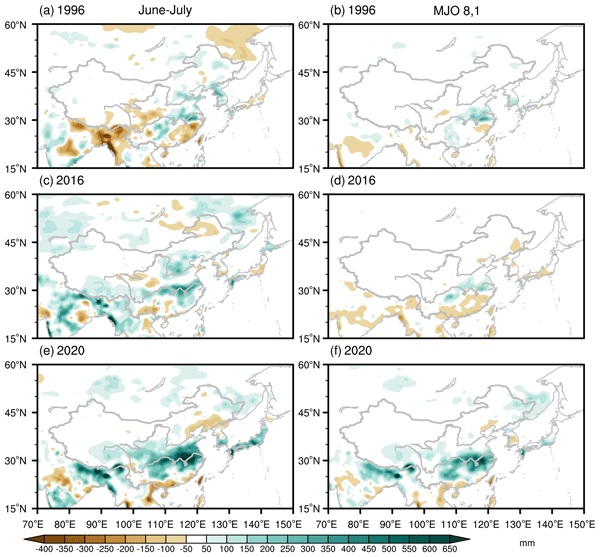
In the paper, we explored the impact of the Madden–Julian Oscillation (MJO) and the Quasi-Biennial Oscillation (QBO) on East China summer rainfall variability. It is novel to find that the combined impact of MJO and QBO is not maximized when the QBO and MJO are in phase to enhance (or suppress) the tropical convection.
Qian Lu, Jian Rao, Chunhua Shi, Dong Guo, Guiqin Fu, Ji Wang, and Zhuoqi Liang
Atmos. Chem. Phys., 22, 13087–13102, https://doi.org/10.5194/acp-22-13087-2022, https://doi.org/10.5194/acp-22-13087-2022, 2022
Short summary
Short summary
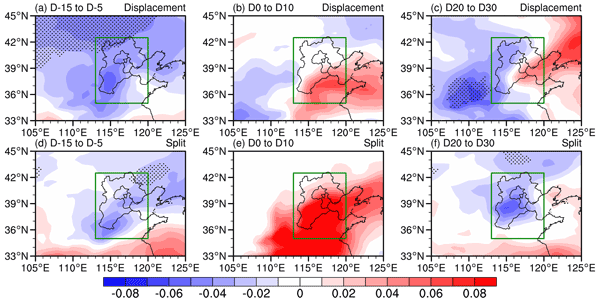
Existing evidence mainly focuses on the possible impact of tropospheric climate anomalies on the regional air pollutions, but few studies pay attention to the impact of stratospheric changes on haze pollutions in the Beijing–Tianjin–Hebei (BTH) region. Our study reveals the linkage between the stratospheric variability and the regional atmospheric environment. The downward-propagating stratospheric signals might have a cleaning effect on the atmospheric environment in the BTH region.
Chaim I. Garfinkel, Tiffany Shaw, Benny Keller, Edwin P. Gerber, Ian P. White, Martin Jucker, Wuhan Ning, Ori Adam, and Siming Liu
Weather Clim. Dynam., 7, 1951–1975, https://doi.org/10.5194/wcd-7-1951-2026, https://doi.org/10.5194/wcd-7-1951-2026, 2026
Short summary
Short summary
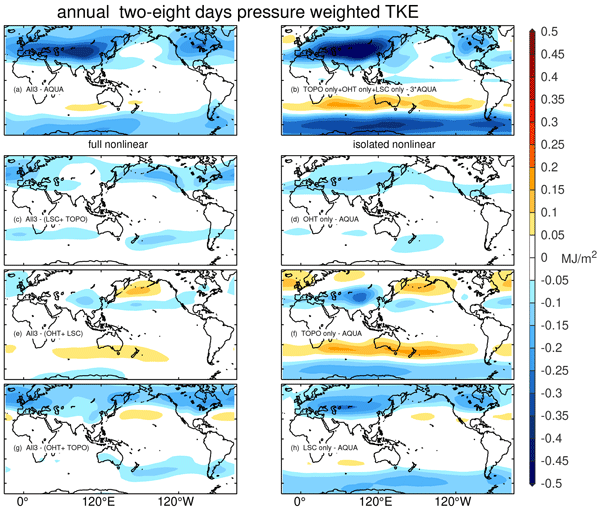
Midlatitude storm tracks are stronger over ocean basins than continents, and also stronger in the Southern Hemisphere than in the Northern Hemisphere. It is still not clear how Earth's land-ocean distribution, ocean heat transport, and orography, set up this structure. We use an intermediate complexity moist general circulation model to reveal substantial non-additivities in the response to these inhomogeneities, and then diagnose why.
Kexiang Feng, Jian Rao, Chaim I. Garfinkel, Amy H. Butler, Blanca Ayarzagüena, and Xiaoqi Zhang
EGUsphere, https://doi.org/10.5194/egusphere-2026-4971, https://doi.org/10.5194/egusphere-2026-4971, 2026
This preprint is open for discussion and under review for Weather and Climate Dynamics (WCD).
Short summary
Short summary
Sudden stratospheric warmings can influence weather at the Earth's surface, but the role of the upper atmosphere remains unclear. Using forecast models with different upper-atmosphere conditions, we find that the upper atmosphere actively affects the evolution of these events and their surface impacts. This highlights the importance of better representing the upper atmosphere to improve forecasts of sudden stratospheric warmings and their impacts.
William J. M. Seviour, Justin Finkel, Philip Rupp, Regan Mudhar, Amy H. Butler, Chaim I. Garfinkel, Peter Hitchcock, Blanca Ayarzagüena, Dong-Chan Hong, Yu-Kyung Hyun, Hera Kim, Eun-Pa Lim, Daniel De Maeseneire, Gabriele Messori, Gerbrand Koren, Michael Sigmond, Isla R. Simpson, and Seok-Woo Son
Weather Clim. Dynam., 7, 1405–1423, https://doi.org/10.5194/wcd-7-1405-2026, https://doi.org/10.5194/wcd-7-1405-2026, 2026
Short summary
Short summary
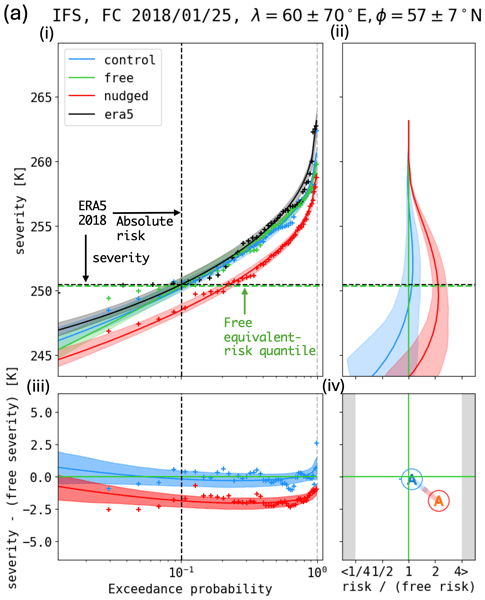
Variability of the stratospheric polar vortex is thought to play a role in driving weather extremes, but quantifying this role for a given event has proved challenging. Using a new set of perturbed subseasonal forecast experiments from 7 modelling centres, we determine the stratospheric contribution to the risk and severity of three recent extreme weather events. The forecast-based methodology that we develop is applicable to understanding a range of other drivers of weather extremes.
David Avisar and Chaim I. Garfinkel
Weather Clim. Dynam., 7, 1331–1348, https://doi.org/10.5194/wcd-7-1331-2026, https://doi.org/10.5194/wcd-7-1331-2026, 2026
Short summary
Short summary
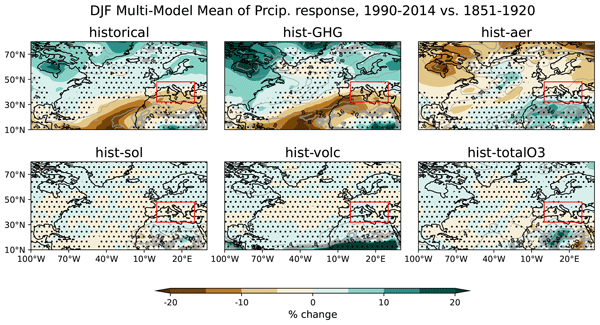
We use the Large Ensemble Single Forcing simulations to assess the role of individual forcings to the Mediterranean drying and to clarify the dynamical origin of the model’s prediction variability. A more pronounced North Atlantic warming hole, a stronger stratospheric polar vortex, and a larger poleward shift of the subtropical jet correlate with a stronger drying trend. Aerosols had a detectable influence on Mediterranean climate. Hence, their removal may have an impact in future decades.
Chaim I. Garfinkel, David Avisar, Wenjuan Huo, Ales Kuchar, Shoshiro Minobe, Scott Osprey, Katharina Perny, and Jonathon S. Wright
EGUsphere, https://doi.org/10.5194/egusphere-2026-3738, https://doi.org/10.5194/egusphere-2026-3738, 2026
Short summary
Short summary
Whether tropical volcanic eruptions lead to a circulation response in winter is still unclear. We re-evaluate this effect using large ensembles from eight separate models with only one time-varying external forcing: volcanic aerosols. We find that 75 % of models simulate the previously proposed effect, but that the signal requires at least 30 eruptions before it emerges robustly from the noise. Furthermore, we demonstrate that the El Niño signal differs from natural El Niño events.
Hongbin Chen, Jian Rao, Seok-Woo Son, Bin Guan, and Mengxin Pan
Earth Syst. Sci. Data, 18, 5357–5373, https://doi.org/10.5194/essd-18-5357-2026, https://doi.org/10.5194/essd-18-5357-2026, 2026
Short summary
Short summary
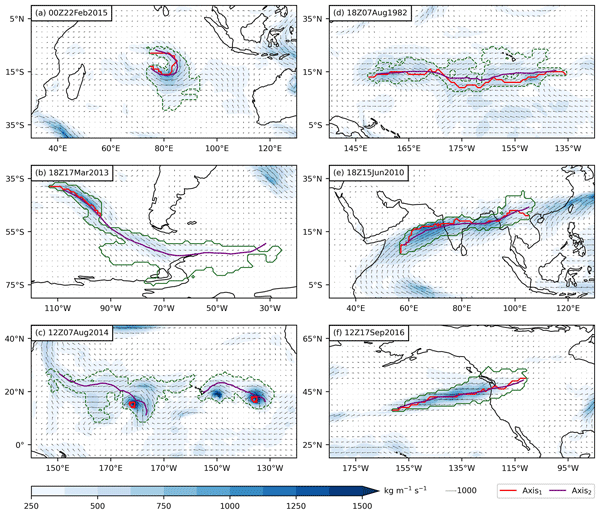
We present a global atmospheric river (AR) database derived from ERA5 reanalysis (1940–2024). By employing a novel multi-method fusion algorithm, this database provides AR identification results at a horizontal resolution of 1° × 1° and a temporal resolution of 6 hours. Characterized by enhanced algorithmic robustness and extensive temporal coverage, it offers a valuable resource for further weather and climate research.
Chaim I. Garfinkel, David Avisar, Scott M. Osprey, Doug Smith, Jian Rao, and Jonathon S. Wright
Weather Clim. Dynam., 7, 1133–1152, https://doi.org/10.5194/wcd-7-1133-2026, https://doi.org/10.5194/wcd-7-1133-2026, 2026
Short summary
Short summary
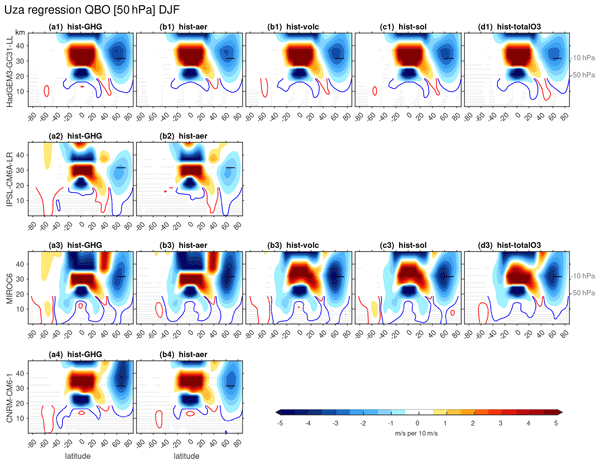
The Quasi-biennial Oscillation (QBO) dominates variability in the tropical stratosphere, & it impacts surface climate in several parts of the world. However, climate models have been shown to systematically under-estimate the influence of the QBO. Here, we re-evaluate this finding using much larger ensemble sizes than have been previously available based on four separate models. We find that the models are comparatively more successful in capturing QBO influences than reported by previous work.
Dong-Chan Hong, Seok-Woo Son, Blanca Ayarzagüena, Amy H. Butler, Chaim I. Garfinkel, Peter Hitchcock, Yu-Kyung Hyun, and Jiankai Zhang
EGUsphere, https://doi.org/10.5194/egusphere-2026-2798, https://doi.org/10.5194/egusphere-2026-2798, 2026
Short summary
Short summary
This study investigates how Sudden Stratospheric Warming (SSW) influences surface climate. By comparing multi-model simulations, we isolated and quantified the role of SSWs. Results reveal that poleward mass transport during SSWs induces high pressure over the Arctic, driving changes in extratropical circulations. While SSWs alter the troposphere, chaotic internal weather variability can amplify or suppress their influence, explaining the differing surface impacts following SSWs.
Rongzhao Lu and Jian Rao
Atmos. Chem. Phys., 26, 3723–3742, https://doi.org/10.5194/acp-26-3723-2026, https://doi.org/10.5194/acp-26-3723-2026, 2026
Short summary
Short summary
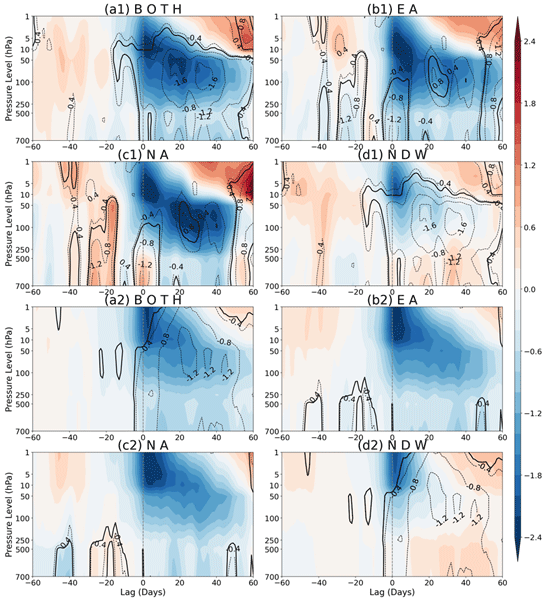
The downward impact of sudden stratospheric warming events (SSWs) on the troposphere is still controversial. We further classify downward-propagating SSWs (DWs) into three types that are followed by cold surges over Eurasia (EA), over North America (NA), and over both (BOTH), respectively. This study reveals the diversity of the DWs and distinguishes their potential impact on both continents in the Northern Hemisphere.
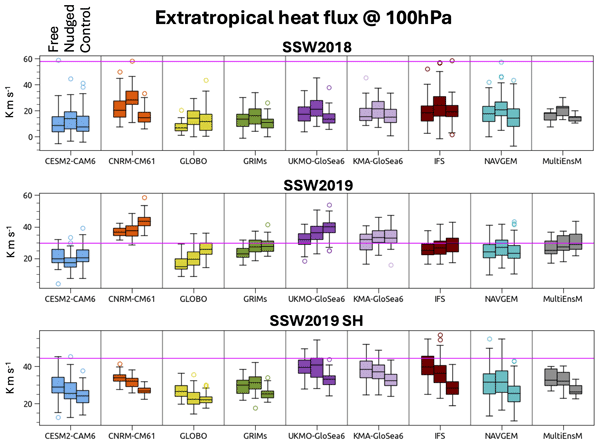
Blanca Ayarzagüena, Amy H. Butler, Peter Hitchcock, Chaim I. Garfinkel, Zac D. Lawrence, Wuhan Ning, Philip Rupp, Zheng Wu, Hilla Afargan-Gerstman, Natalia Calvo, Alvaro de la Cámara, Martin Jucker, Gerbrand Koren, Daniel De Maeseneire, Gloria L. Manney, Marisol Osman, Masakazu Taguchi, Cory Barton, Dong-Chan Hong, Yu-Kyung Hyun, Hera Kim, Jeff Knight, Piero Malguzzi, Daniele Mastrangelo, Jiyoung Oh, Inna Polichtchouk, Jadwiga H. Richter, Isla R. Simpson, Seok-Woo Son, Damien Specq, and Tim Stockdale
Weather Clim. Dynam., 7, 411–437, https://doi.org/10.5194/wcd-7-411-2026, https://doi.org/10.5194/wcd-7-411-2026, 2026
Short summary
Short summary
Sudden Stratospheric Warmings (SSWs) are known to follow a sustained wave dissipation in the stratosphere, which depends on both the tropospheric and stratospheric states. However, the relative role of each state is still unclear. Using a new set of subseasonal to seasonal forecasts, we show that the stratospheric state does not drastically affect the precursors of three recent SSWs, but modulates the stratospheric wave activity, with impacts depending on SSW features.
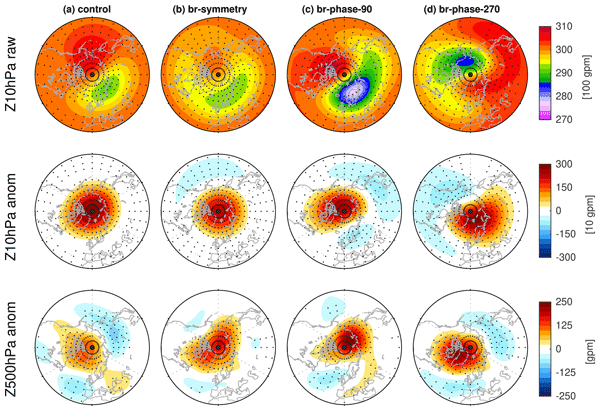
Wuhan Ning, Chaim I. Garfinkel, Judah Cohen, Ian P. White, and Jian Rao
Weather Clim. Dynam., 7, 277–295, https://doi.org/10.5194/wcd-7-277-2026, https://doi.org/10.5194/wcd-7-277-2026, 2026
Short summary
Short summary
Whether the zonal structure of a polar vortex matters for surface climate is an open question, with much observational work showing a role but with limited modeling work and demonstration of a causal influence. Here, we isolate this influence using a moist general circulation model. We find that the surface responses differ qualitatively depending on the zonal asymmetries of the shifted polar vortex and concurrently occurring wave reflection events, and provide a mechanistic explanation for why.

Cristiana Stan, Saisri Kollapaneni, Andrea M. Jenney, Jiabao Wang, Zheng Wu, Cheng Zheng, Hyemi Kim, Chaim I. Garfinkel, and Ayush Singh
Geosci. Model Dev., 18, 7969–7985, https://doi.org/10.5194/gmd-18-7969-2025, https://doi.org/10.5194/gmd-18-7969-2025, 2025
Short summary
Short summary
The diagnostics package is an open-source Python software package used for evaluating the Madden–Julian Oscillation teleconnections to the extratropics, as predicted by subseasonal-to-seasonal (S2S) forecast systems.
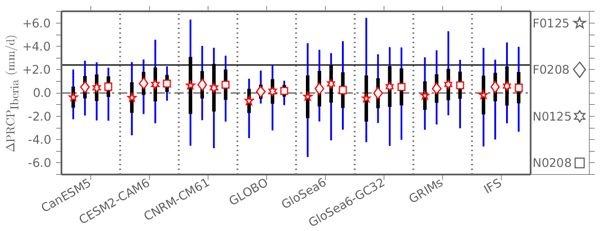
Ying Dai, Peter Hitchcock, Amy H. Butler, Chaim I. Garfinkel, and William J. M. Seviour
Weather Clim. Dynam., 6, 841–862, https://doi.org/10.5194/wcd-6-841-2025, https://doi.org/10.5194/wcd-6-841-2025, 2025
Short summary
Short summary
Using a new database of subseasonal to seasonal (S2S) forecasts, we find that with a successful forecast of the sudden stratospheric warming (SSW), S2S models can capture the European precipitation signals after the 2018 SSW several weeks in advance. The findings indicate that the stratosphere represents an important source of S2S predictability for precipitation over Europe and call for consideration of stratospheric variability in hydrological prediction at S2S timescales.
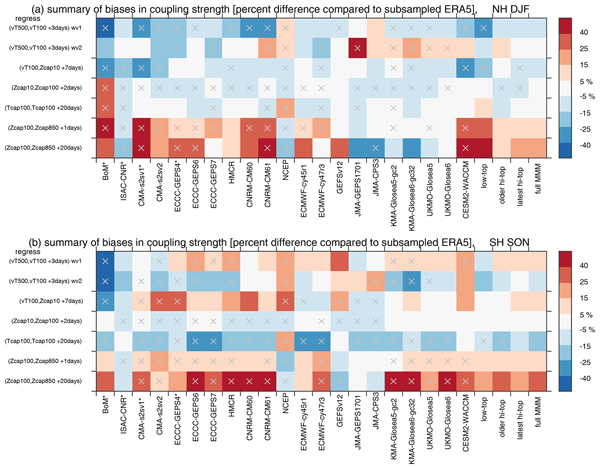
Chaim I. Garfinkel, Zachary D. Lawrence, Amy H. Butler, Etienne Dunn-Sigouin, Irene Erner, Alexey Y. Karpechko, Gerbrand Koren, Marta Abalos, Blanca Ayarzagüena, David Barriopedro, Natalia Calvo, Alvaro de la Cámara, Andrew Charlton-Perez, Judah Cohen, Daniela I. V. Domeisen, Javier García-Serrano, Neil P. Hindley, Martin Jucker, Hera Kim, Robert W. Lee, Simon H. Lee, Marisol Osman, Froila M. Palmeiro, Inna Polichtchouk, Jian Rao, Jadwiga H. Richter, Chen Schwartz, Seok-Woo Son, Masakazu Taguchi, Nicholas L. Tyrrell, Corwin J. Wright, and Rachel W.-Y. Wu
Weather Clim. Dynam., 6, 171–195, https://doi.org/10.5194/wcd-6-171-2025, https://doi.org/10.5194/wcd-6-171-2025, 2025
Short summary
Short summary
Variability in the extratropical stratosphere and troposphere is coupled, and because of the longer timescales characteristic of the stratosphere, this allows for a window of opportunity for surface prediction. This paper assesses whether models used for operational prediction capture these coupling processes accurately. We find that most processes are too weak; however downward coupling from the lower stratosphere to the near surface is too strong.
Rongzhao Lu and Jian Rao
EGUsphere, https://doi.org/10.5194/egusphere-2024-2179, https://doi.org/10.5194/egusphere-2024-2179, 2024
Preprint archived
Short summary
Short summary
The SSWs are classified into downward-propagating (DW) SSWs with noticeable impacts on the troposphere and non-downward-propagating (NDW). The DW events are further classified into three types. This study improves our understanding of the diversity of the SSWs.
Zefan Ju, Jian Rao, Yue Wang, Junfeng Yang, and Qian Lu
Atmos. Chem. Phys., 23, 14903–14918, https://doi.org/10.5194/acp-23-14903-2023, https://doi.org/10.5194/acp-23-14903-2023, 2023
Short summary
Short summary
In the paper, we explored the impact of the Madden–Julian Oscillation (MJO) and the Quasi-Biennial Oscillation (QBO) on East China summer rainfall variability. It is novel to find that the combined impact of MJO and QBO is not maximized when the QBO and MJO are in phase to enhance (or suppress) the tropical convection.
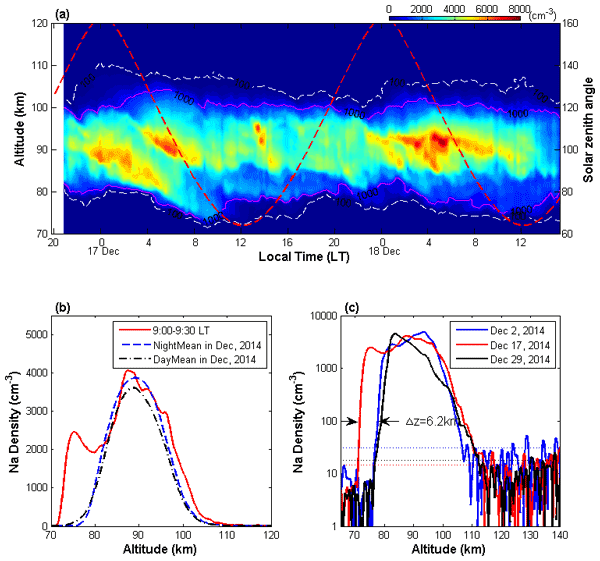
Yuan Xia, Jing Jiao, Satonori Nozawa, Xuewu Cheng, Jihong Wang, Chunhua Shi, Lifang Du, Yajuan Li, Haoran Zheng, Faquan Li, and Guotao Yang
Atmos. Chem. Phys., 22, 13817–13831, https://doi.org/10.5194/acp-22-13817-2022, https://doi.org/10.5194/acp-22-13817-2022, 2022
Short summary
Short summary
The layer of sodium atoms is generally located above 80 km. This study reports the significant enhancements of the sodium layer below 75 km where sodium atoms are short-lived. The neutral chemical reactions were suggested as making a critical contribution. The reported results provide clear observational evidence for the role of planetary waves in the variation of metal layers, and have implications for the response of the metal layers to perturbations in the lower atmosphere.
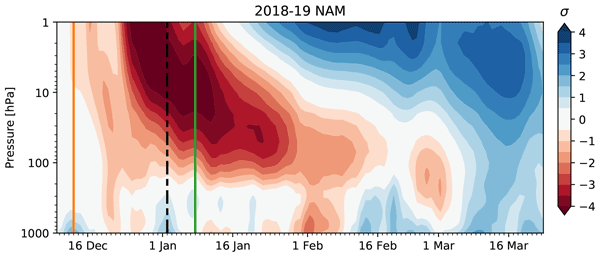
Qian Lu, Jian Rao, Chunhua Shi, Dong Guo, Guiqin Fu, Ji Wang, and Zhuoqi Liang
Atmos. Chem. Phys., 22, 13087–13102, https://doi.org/10.5194/acp-22-13087-2022, https://doi.org/10.5194/acp-22-13087-2022, 2022
Short summary
Short summary
Existing evidence mainly focuses on the possible impact of tropospheric climate anomalies on the regional air pollutions, but few studies pay attention to the impact of stratospheric changes on haze pollutions in the Beijing–Tianjin–Hebei (BTH) region. Our study reveals the linkage between the stratospheric variability and the regional atmospheric environment. The downward-propagating stratospheric signals might have a cleaning effect on the atmospheric environment in the BTH region.
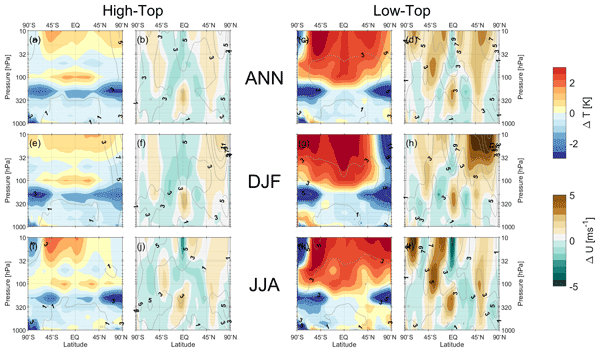
Zachary D. Lawrence, Marta Abalos, Blanca Ayarzagüena, David Barriopedro, Amy H. Butler, Natalia Calvo, Alvaro de la Cámara, Andrew Charlton-Perez, Daniela I. V. Domeisen, Etienne Dunn-Sigouin, Javier García-Serrano, Chaim I. Garfinkel, Neil P. Hindley, Liwei Jia, Martin Jucker, Alexey Y. Karpechko, Hera Kim, Andrea L. Lang, Simon H. Lee, Pu Lin, Marisol Osman, Froila M. Palmeiro, Judith Perlwitz, Inna Polichtchouk, Jadwiga H. Richter, Chen Schwartz, Seok-Woo Son, Irene Erner, Masakazu Taguchi, Nicholas L. Tyrrell, Corwin J. Wright, and Rachel W.-Y. Wu
Weather Clim. Dynam., 3, 977–1001, https://doi.org/10.5194/wcd-3-977-2022, https://doi.org/10.5194/wcd-3-977-2022, 2022
Short summary
Short summary
Forecast models that are used to predict weather often struggle to represent the Earth’s stratosphere. This may impact their ability to predict surface weather weeks in advance, on subseasonal-to-seasonal (S2S) timescales. We use data from many S2S forecast systems to characterize and compare the stratospheric biases present in such forecast models. These models have many similar stratospheric biases, but they tend to be worse in systems with low model tops located within the stratosphere.
Peter Hitchcock, Amy Butler, Andrew Charlton-Perez, Chaim I. Garfinkel, Tim Stockdale, James Anstey, Dann Mitchell, Daniela I. V. Domeisen, Tongwen Wu, Yixiong Lu, Daniele Mastrangelo, Piero Malguzzi, Hai Lin, Ryan Muncaster, Bill Merryfield, Michael Sigmond, Baoqiang Xiang, Liwei Jia, Yu-Kyung Hyun, Jiyoung Oh, Damien Specq, Isla R. Simpson, Jadwiga H. Richter, Cory Barton, Jeff Knight, Eun-Pa Lim, and Harry Hendon
Geosci. Model Dev., 15, 5073–5092, https://doi.org/10.5194/gmd-15-5073-2022, https://doi.org/10.5194/gmd-15-5073-2022, 2022
Short summary
Short summary
This paper describes an experimental protocol focused on sudden stratospheric warmings to be carried out by subseasonal forecast modeling centers. These will allow for inter-model comparisons of these major disruptions to the stratospheric polar vortex and their impacts on the near-surface flow. The protocol will lead to new insights into the contribution of the stratosphere to subseasonal forecast skill and new approaches to the dynamical attribution of extreme events.
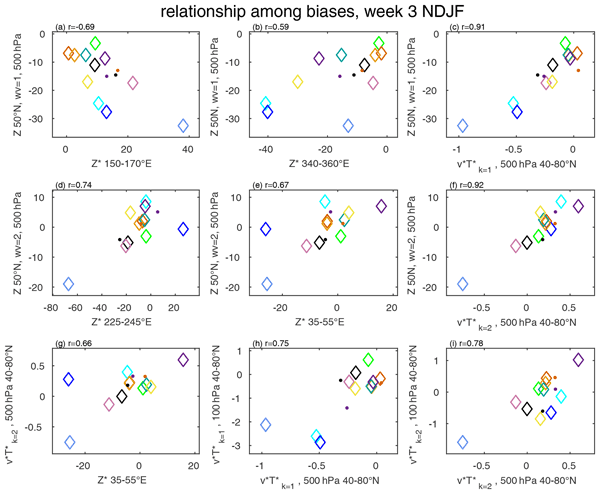
Chen Schwartz, Chaim I. Garfinkel, Priyanka Yadav, Wen Chen, and Daniela I. V. Domeisen
Weather Clim. Dynam., 3, 679–692, https://doi.org/10.5194/wcd-3-679-2022, https://doi.org/10.5194/wcd-3-679-2022, 2022
Short summary
Short summary
Eleven operational forecast models that run on subseasonal timescales (up to 2 months) are examined to assess errors in their simulated large-scale stationary waves in the Northern Hemisphere winter. We found that models with a more finely resolved stratosphere generally do better in simulating the waves in both the stratosphere (10–50 km) and troposphere below. Moreover, a connection exists between errors in simulated time-mean convection in tropical regions and errors in the simulated waves.
Shlomi Ziskin Ziv, Chaim I. Garfinkel, Sean Davis, and Antara Banerjee
Atmos. Chem. Phys., 22, 7523–7538, https://doi.org/10.5194/acp-22-7523-2022, https://doi.org/10.5194/acp-22-7523-2022, 2022
Short summary
Short summary
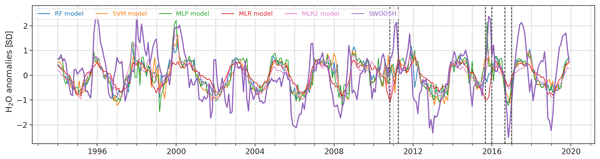
Stratospheric water vapor is important for Earth's overall greenhouse effect and for ozone chemistry; however the factors governing its variability on interannual timescales are not fully known, and previous modeling studies have indicated that models struggle to capture this interannual variability. We demonstrate that nonlinear interactions are important for determining overall water vapor concentrations and also that models have improved in their ability to capture these connections.
Adam A. Scaife, Mark P. Baldwin, Amy H. Butler, Andrew J. Charlton-Perez, Daniela I. V. Domeisen, Chaim I. Garfinkel, Steven C. Hardiman, Peter Haynes, Alexey Yu Karpechko, Eun-Pa Lim, Shunsuke Noguchi, Judith Perlwitz, Lorenzo Polvani, Jadwiga H. Richter, John Scinocca, Michael Sigmond, Theodore G. Shepherd, Seok-Woo Son, and David W. J. Thompson
Atmos. Chem. Phys., 22, 2601–2623, https://doi.org/10.5194/acp-22-2601-2022, https://doi.org/10.5194/acp-22-2601-2022, 2022
Short summary
Short summary
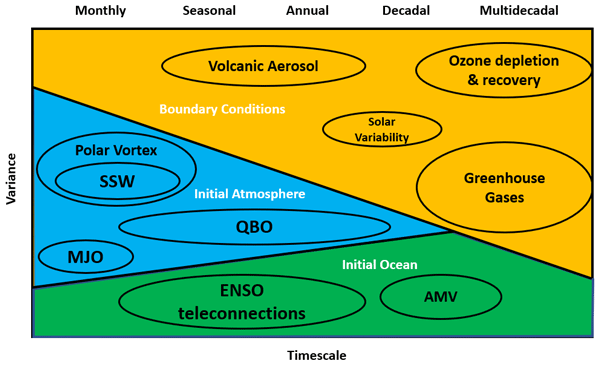
Great progress has been made in computer modelling and simulation of the whole climate system, including the stratosphere. Since the late 20th century we also gained a much clearer understanding of how the stratosphere interacts with the lower atmosphere. The latest generation of numerical prediction systems now explicitly represents the stratosphere and its interaction with surface climate, and here we review its role in long-range predictions and projections from weeks to decades ahead.
Cited articles
Abalos, M., Calvo, N., Benito-Barca, S., Garny, H., Hardiman, S. C., Lin, P., Andrews, M. B., Butchart, N., Garcia, R., Orbe, C., Saint-Martin, D., Watanabe, S., and Yoshida, K.: The Brewer–Dobson circulation in CMIP6, Atmos. Chem. Phys., 21, 13571–13591, https://doi.org/10.5194/acp-21-13571-2021, 2021.
Allen, R. J. and Sherwood, S. C.: Warming maximum in the tropical upper troposphere deduced from thermal winds, Nat. Geosci., 1, 399–403, https://doi.org/10.1038/ngeo208, 2008.
Anstey, J. A., Osprey, S. M., Alexander, J., Baldwin, M. P., Butchart, N., Gray, L., Kawatani, Y., Newman, P. A., and Richter, J. H.: Impacts, processes and projections of the quasi-biennial oscillation, Nat. Rev. Earth Environ., 3, 588–603, https://doi.org/10.1038/s43017-022-00323-7, 2022.
Baldwin, M. P., Gray, L. J., Dunkerton, T. J., Hamilton, K., Haynes, P. H., Holton, J. R., Alexander, M. J., Hirota, I., Horinouchi, T., Jones, D. B. A., Marquardt, C., Sato, K., and Takahashi, M.: The quasi-biennial oscillation, Rev. Geophys., 39, 179–229, 2001.
Banerjee, A., Chiodo, G., Previdi, M., Ponater, M., Conley, A. J., and Polvani, L. M.: Stratospheric water vapor: an important climate feedback, Clim. Dyn., 53, 1697–1710, https://doi.org/10.1007/s00382-019-04721-4, 2019.
Bi, Y., Chen, Y., Zhou, R., Yi, M., and Deng, S.: Simulation of the effect of water-vapor increase on temperature in the stratosphere, Adv. Atmos. Sci., 28, 832–842, https://doi.org/10.1007/s00376-010-0047-7, 2011.
Bramberger, M., Alexander, M. J., Davis, S., Podglajen, A., Hertzog, A., Kalnajs, L., Deshler, T., Goetz, J. D., and Khaykin, S.: First super-pressure Balloon-Borne fine-vertical-scale profiles in the upper TTL: impacts of atmospheric waves on cirrus clouds and the QBO, Geophys. Res. Lett., 49, e2021GL097596, https://doi.org/10.1029/2021GL097596, 2022.
Brewer, A. W.: Evidence for a world circulation provided by the measurements of helium and water vapor distribution in the stratosphere, Q. J. R. Meteorol. Soc., 75, 351–363, https://doi.org/10.1002/qj.49707532603, 1949.
Butchart, N.: The Brewer-Dobson circulation, Rev. Geophys., 52, 157–184, https://doi.org/10.1002/2013RG000448, 2014.
Butchart, N., Anstey, J. A., Hamilton, K., Osprey, S., McLandress, C., Bushell, A. C., Kawatani, Y., Kim, Y.-H., Lott, F., Scinocca, J., Stockdale, T. N., Andrews, M., Bellprat, O., Braesicke, P., Cagnazzo, C., Chen, C.-C., Chun, H.-Y., Dobrynin, M., Garcia, R. R., Garcia-Serrano, J., Gray, L. J., Holt, L., Kerzenmacher, T., Naoe, H., Pohlmann, H., Richter, J. H., Scaife, A. A., Schenzinger, V., Serva, F., Versick, S., Watanabe, S., Yoshida, K., and Yukimoto, S.: Overview of experiment design and comparison of models participating in phase 1 of the SPARC Quasi-Biennial Oscillation initiative (QBOi), Geosci. Model Dev., 11, 1009–1032, https://doi.org/10.5194/gmd-11-1009-2018, 2018.
Cai, Q., Chen, W., Chen, S., Ma, T., and Garfinkel, C. I.: Influence of the quasi-biennial oscillation on the spatial structure of the wintertime Arctic oscillation, J. Geophys. Res. Atmos., 127, https://doi.org/10.1029/2021JD035564, 2022.
Canziani, P. O. and Holton, J. R.: Kelvin Waves and the quasi-biennial oscillation: An observational analysis, J. Geophys. Res. Atmos., 103, 31509–31521, https://doi.org/10.1029/1998JD200021, 1998.
Charlesworth, E., Plöger, F., Birner, T., Baikhadzhaev, R., Abalos, M., Abraham, N. L., Akiyoshi, H., Bekki, S., Dennison, F., Jöckel, P., Keeble, J., Kinnison, D., Morgenstern, O., Plummer, D., Rozanov, E., Strode, S., Zeng, G., Egorova, T., and Riese, M.: Stratospheric water vapor affecting atmospheric circulation, Nat. Commun., 14, 3925, https://doi.org/10.1038/s41467-023-39559-2, 2023.
Chen, Y., Shi, C., and Zheng, B.: HCl quasi-biennial oscillation in the stratosphere and a comparison with ozone QBO, Adv. Atmos. Sci., 22, 751–758, https://doi.org/10.1007/BF02918718, 2005.
Coy, L., Newman, P. A., Pawson, S., and Lait, L. R.: Dynamics of the disrupted 2015/16 quasi-biennial oscillation, J. Clim., 30, 5661–5674, https://doi.org/10.1175/JCLI-D-16-0663.1, 2017.
Davis, S. M., Rosenlof, K. H., Hassler, B., Hurst, D. F., Read, W. G., Vömel, H., Selkirk, H., Fujiwara, M., and Damadeo, R.: The Stratospheric Water and Ozone Satellite Homogenized (SWOOSH) database: a long-term database for climate studies, Earth Syst. Sci. Data, 8, 461–490, https://doi.org/10.5194/essd-8-461-2016, 2016.
Dessler, A. E., Schoeberl, M. R., Wang, T., Davis, S. M., and Rosenlof, K. H.: Stratospheric water vapor feedback, P. Natl. Acad. Sci. USA, 110, 18087–18091, https://doi.org/10.1073/pnas.1310344110, 2013.
Diallo, M. A., Ploeger, F., Hegglin, M. I., Ern, M., Grooß, J.-U., Khaykin, S., and Riese, M.: Stratospheric water vapour and ozone response to the quasi-biennial oscillation disruptions in 2016 and 2020, Atmos. Chem. Phys., 22, 14303–14321, https://doi.org/10.5194/acp-22-14303-2022, 2022.
Dong, W. H., Lin, Y. L., Zhang, M. H., and Huang, X. M.: Footprint of tropical mesoscale convective system variability on stratospheric water vapor, Geophys. Res. Lett., 47, e2019GL086320, https://doi.org/10.1029/2019GL086320, 2020.
Evan, S., Rosenlof, K. H., Thornberry, T., and Khaykin, S.: TTL cooling and drying during the January 2013 stratospheric sudden warming, Q. J. R. Meteorol. Soc., 3030–3039, https://doi.org/10.1002/qj.2587, 2015.
Eyring, V., Bony, S., Meehl, G. A., Senior, C. A., Stevens, B., Stouffer, R. J., and Taylor, K. E.: Overview of the Coupled Model Intercomparison Project Phase 6 (CMIP6) experimental design and organization, Geosci. Model Dev., 9, 1937–1958, https://doi.org/10.5194/gmd-9-1937-2016, 2016.
de Forster, P. M. and Shine, K. P.: Stratospheric water vapor changes as a possible contributor to observed stratospheric cooling, Geophys. Res. Lett., 26, 3309–3312, https://doi.org/10.1029/1999GL010487, 1999.
Garcia, R. R. and Solomon, S.: A numerical model of the zonally averaged dynamical and chemical structure of the middle atmosphere, J. Geophys. Res. Ocean., 88, 1379–1400, https://doi.org/10.1029/JC088iC02p01379, 1983.
Garfinkel, C. I., Waugh, D. W., Oman, L. D., Wang, L., and Hurwitz, M. M.: Temperature trends in the tropical upper troposphere and lower stratosphere: Connections with sea surface temperatures and implications for water vapor and ozone, J. Geophys. Res. Atmos., 118, 9658–9672, https://doi.org/10.1002/jgrd.50772, 2013.
Garfinkel, C. I., Harari, O., Ziskin Ziv, S., Rao, J., Morgenstern, O., Zeng, G., Tilmes, S., Kinnison, D., O'Connor, F. M., Butchart, N., Deushi, M., Jöckel, P., Pozzer, A., and Davis, S.: Influence of the El Niño–Southern Oscillation on entry stratospheric water vapor in coupled chemistry–ocean CCMI and CMIP6 models, Atmos. Chem. Phys., 21, 3725–3740, https://doi.org/10.5194/acp-21-3725-2021, 2021.
Garfinkel, C. I., Gerber, E. P., Shamir, O., Rao, J., Jucker, M., White, I., and Paldor, N.: A QBO cookbook: Sensitivity of the Quasi-Biennial Oscillation to resolution, resolved waves, and parameterized gravity waves, J. Adv. Model. Earth Syst., 14, 1–17, https://doi.org/10.1029/2021MS002568, 2022.
Geller, M. A., Zhou, T., Shindell, D., Ruedy, R., Aleinov, I., Nazarenko, L., Tausnev, N. L., Kelley, M., Sun, S., Cheng, Y., Field, R. D., and Faluvegi, G.: Modeling the QBO – Improvements resulting from higher-model vertical resolution, J. Adv. Model. Earth Syst., 8, 1092–1105, https://doi.org/10.1002/2016MS000699, 2016.
Gettelman, A. and Birner, T.: Insights into tropical tropopause layer processes using global models, J. Geophys. Res. Atmos., 112, 1–15, https://doi.org/10.1029/2007JD008945, 2007.
Hardiman, S. C., Butchart, N., and Calvo, N.: The morphology of the Brewer-Dobson circulation and its response to climate change in CMIP5 simulations, Q. J. R. Meteorol. Soc., 140, 1958–1965, https://doi.org/10.1002/qj.2258, 2014.
Hardiman, S. C., Boutle, I. A., Bushell, A. C., Butchart, N., Cullen, M. J. P., Field, P. R., Furtado, K., Manners, J. C., Milton, S. F., Morcrette, C., O'Connor, F. M., Shipway, B. J., Smith, C., Walters, D. N., Willett, M. R., Williams, K. D., Wood, N., Abraham, N. L., Keeble, J., Maycock, A. C., Thuburn, J., and Woodhouse, M. T.: Processes controlling tropical tropopause temperature and stratospheric water vapor in climate models, J. Clim., 28, 6516–6535, https://doi.org/10.1175/JCLI-D-15-0075.1, 2015.
Held, I. M. and Soden, B. J.: Water vapor feedback and global warming, Annu. Rev. Energy Environ., 25, 441–475, https://doi.org/10.1146/annurev.energy.25.1.441, 2000.
Hersbach, H., Bell, B., Berrisford, P., Hirahara, S., Horányi, A., Muñoz-Sabater, J., Nicolas, J., Peubey, C., Radu, R., Schepers, D., Simmons, A., Soci, C., Abdalla, S., Abellan, X., Balsamo, G., Bechtold, P., Biavati, G., Bidlot, J., Bonavita, M., De Chiara, G., Dahlgren, P., Dee, D., Diamantakis, M., Dragani, R., Flemming, J., Forbes, R., Fuentes, M., Geer, A., Haimberger, L., Healy, S., Hogan, R. J., Hólm, E., Janisková, M., Keeley, S., Laloyaux, P., Lopez, P., Lupu, C., Radnoti, G., de Rosnay, P., Rozum, I., Vamborg, F., Villaume, S., and Thépaut, J. N.: The ERA5 global reanalysis, Q. J. R. Meteorol. Soc., 146, 1999–2049, https://doi.org/10.1002/qj.3803, 2020.
Holt, L. A., Alexander, M. J., Coy, L., Molod, A., Putman, W., and Pawson, S.: Tropical waves and the quasi-biennial oscillation in a 7-km global climate simulation, J. Atmos. Sci., 73, 3771–3783, https://doi.org/10.1175/JAS-D-15-0350.1, 2016.
Holton, J. R. and Gettelman, A.: Horizontal transport and the dehydration of the stratosphere, Geophys. Res. Lett., 28, 2799–2802, https://doi.org/10.1029/2001GL013148, 2001.
Holton, J. R., Haynes, P. H., Mcintyre, M. E., Douglass, A. R., and Rood, B.: Stratonsphere-Troposphere exchange, Rev. Geophys., 33, 403–439, https://doi.org/10.1029/95RG02097, 1995.
Kang, M.-J., Chun, H.-Y., and Garcia, R. R.: Role of equatorial waves and convective gravity waves in the 2015/16 quasi-biennial oscillation disruption, Atmos. Chem. Phys., 20, 14669–14693, https://doi.org/10.5194/acp-20-14669-2020, 2020.
Keeble, J., Hassler, B., Banerjee, A., Checa-Garcia, R., Chiodo, G., Davis, S., Eyring, V., Griffiths, P. T., Morgenstern, O., Nowack, P., Zeng, G., Zhang, J., Bodeker, G., Burrows, S., Cameron-Smith, P., Cugnet, D., Danek, C., Deushi, M., Horowitz, L. W., Kubin, A., Li, L., Lohmann, G., Michou, M., Mills, M. J., Nabat, P., Olivié, D., Park, S., Seland, Ø., Stoll, J., Wieners, K.-H., and Wu, T.: Evaluating stratospheric ozone and water vapour changes in CMIP6 models from 1850 to 2100, Atmos. Chem. Phys., 21, 5015–5061, https://doi.org/10.5194/acp-21-5015-2021, 2021.
Kim, J., Randel, W. J., and Birner, T.: Convectively driven tropopause-level cooling and its influences on stratospheric moisture, J. Geophys. Res. Atmos., 123, 590–606, https://doi.org/10.1002/2017JD027080, 2018.
Krishnamurti, T. N., Subramaniam, M., Oosterhof, D. K., and Daughenbaugh, G.: Predictability of low frequency modes, Meteorol. Atmos. Phys., 44, 63–83, https://doi.org/10.1007/BF01026811, 1990.
Krüger, K., Schäfler, A., Wirth, M., Weissmann, M., and Craig, G. C.: Vertical structure of the lower-stratospheric moist bias in the ERA5 reanalysis and its connection to mixing processes, Atmos. Chem. Phys., 22, 15559–15577, https://doi.org/10.5194/acp-22-15559-2022, 2022.
Lindzen, R. S. and Holton, J. R.: A Theory of the Quasi-Biennial Oscillation, J. Atmos. Sci., 25, 1095–1107, https://doi.org/10.1175/1520-0469(1968)025<1095:ATOTQB>2.0.CO;2, 1968.
Lott, F., Denvil, S., Butchart, N., Cagnazzo, C., Giorgetta, M. A., Hardiman, S. C., Manzini, E., Krismer, T., Duvel J.-P., Maury, P., Scinocca, J. F., Watanabe, S., and Yukimoto, S.: Kelvin and Rossby-gravity wave packets in the lower stratosphere of some high-top CMIP5 models, J. Geophys. Res. Atmos., 119, 2156–2173, https://doi.org/10.1002/2013JD020797, 2014.
Lu, J., Xie, F., Sun, C., Luo, J., Cai, Q., Zhang, J., Li, J., and Tian, H.: Analysis of factors influencing tropical lower stratospheric water vapor during 1980–2017, npj Clim. Atmos. Sci., 3, 35, https://doi.org/10.1038/s41612-020-00138-7, 2020.
Lu, Q.: Codes for Seasonality of the Quasi-biennial Oscillation signal in water vapor in the tropical stratosphere, Zenodo [code], https://doi.org/10.5281/zenodo.18072746, 2025.
Martin, Z., Sobel, A., Butler, A., and Wang, S.: Variability in QBO temperature anomalies on annual and decadal time scales, J. Climate, 34, 589–605, https://doi.org/10.1175/JCLI-D-20-0287.1, 2021.
Monier, E. and Weare, B. C.: Climatology and trends in the forcing of the stratospheric ozone transport, Atmos. Chem. Phys., 11, 6311–6323, https://doi.org/10.5194/acp-11-6311-2011, 2011.
Mote, P. W., Rosenlof, K. H., Mclntyre, M. E., Carr, E. S., Gille, J. C., Holton, J. R., Kinnersley, S., Pumphrey, H. C., Iii, J. M. R., and Vaters, J. W.: An atmospheric tape recorder: The imprint of tropical tropopause temperatures on stratospheric water vapor, J. Geophys. Res., 101, 3989–4006, https://doi.org/10.1029/95JD03422, 1996.
Mote, P. W., Clark, H. L., Dunkerton, T. J., Harwood, R. S., and Pumphrey, H. C.: Intraseasonal variations of water vapor in the tropical upper troposphere and tropopause region, J. Geophys. Res. Atmos., 105, 17457–17470, https://doi.org/10.1029/2000JD900158, 2000.
Muhsin, M., Sunilkumar, S. V, Venkat Ratnam, M., Parameswaran, K., Krishna Murthy, B. V., and Emmanuel, M.: Effect of convection on the thermal structure of the troposphere and lower stratosphere including the tropical tropopause layer in the South Asian monsoon region, J. Atmos. Sol.-Terr. Phy., 169, 52–65, https://doi.org/10.1016/j.jastp.2018.01.016, 2018.
Murakami, M.: Large-scale aspects of deep convective activity over the GATE, Mon. Weather Rev., 107, 994–1013, https://doi.org/10.1175/1520-0493(1979)107<0994:LSAODC>2.0.CO;2, 1979.
Pahlavan, H. A., Wallace, J. M., and Fu, Q.: Characteristics of tropical convective gravity waves resolved by ERA5 reanalysis, J. Atmos. Sci., 80, 777–795, https://doi.org/10.1175/JAS-D-22-0057.1, 2023.
Peña-Ortiz, C., Plaza, N. P., Gallego, D., and Ploeger, F.: Quasi-biennial oscillation modulation of stratospheric water vapour in the Asian monsoon, Atmos. Chem. Phys., 24, 5457–5478, https://doi.org/10.5194/acp-24-5457-2024, 2024.
Randel, W. and Park, M.: Diagnosing observed stratospheric water vapor relationships to the cold point tropical tropopause, J. Geophys. Res. Atmos., 124, 7018–7033, https://doi.org/10.1029/2019JD030648, 2019.
Randel, W. J. and Wu, F.: Kelvin wave variability near the equatorial tropopause observed in GPS radio occultation measurements, J. Geophys. Res., 110, 1–13, https://doi.org/10.1029/2004JD005006, 2005.
Randel, W. J., Zhang, K., and Fu, R.: What controls stratospheric water vapor in the NH summer monsoon regions?, J. Geophys. Res. Atmos., 120, 7988–8001, https://doi.org/10.1002/2015JD023622, 2015.
Rao, J., Yu, Y., Guo, D., Shi, C., Chen, D., and Hu, D.: Evaluating the Brewer–Dobson circulation and its responses to ENSO, QBO, and the solar cycle in different reanalyses, Earth Planet. Phys., 3, 166–181, https://agupubs.onlinelibrary.wiley.com/doi/10.26464/epp2019012, 2019.
Rao, J., Garfinkel, C. I., and White, I. P.: How does the quasi-biennial oscillation affect the boreal winter tropospheric circulation in cmip5/6 models?, J. Clim., 33, 8975–8996, https://doi.org/10.1175/JCLI-D-20-0024.1, 2020a.
Rao, J., Garfinkel, C. I., and White, I. P.: Impact of the quasi-biennial oscillation on the northern winter stratospheric polar vortex in CMIP5/6 models, J. Clim., 33, 4787–4813, https://doi.org/10.1175/JCLI-D-19-0663.1, 2020b.
Rao, J., Garfinkel, C. I., Ren, R., Wu, T., Lu, Y., and Chu, M.: Projected strengthening impact of the quasi-biennial oscillation on the Southern Hemisphere by CMIP5/6 Models, J. Clim., 36, 5461–5476, https://doi.org/10.1175/JCLI-D-22-0801.1, 2023a.
Rao, J., Garfinkel, C. I., Ren, R., Wu, T., and Lu, Y.: Southern Hemisphere response to the quasi-biennial oscillation in the CMIP5/6 models, J. Clim., 36, 2603–2623, https://doi.org/10.1175/JCLI-D-22-0675.1, 2023b.
Ricciardulli, L. and Garcia, R. R.: The Excitation of Equatorial Waves by Deep Convection in the NCAR Community Climate Model (CCM3), J. Atmos. Sci., 57, 3461–3487, https://doi.org/10.1175/1520-0469(2000)057<3461:TEOEWB>2.0.CO;2, 2000.
Richter, J. H., Solomon, A., and Bacmeister, J. T.: Effects of vertical resolution and nonpornographic gravity wave drag on the simulated climate in the Community Atmosphere Model, version 5, J. Adv. Model. Earth Syst., 6, 92–95, https://doi.org/10.1002/2013MS000303, 2014a.
Richter, J. H., Solomon, A., and Bacmeister, J. T.: On the simulation of the quasi-biennial oscillation in the Community Atmosphere Model, version 5, J. Geophys. Res. Atmos., 119, 3045–3062, https://doi.org/10.1002/2013JD021122, 2014b.
Richter, J. H., Anstey, J. A., Butchart, N., Kawatani, Y., Meehl, G. A., Osprey, S., Simpson, I. R.: Progress in simulating the quasi-biennial oscillation in CMIP models, J. Geophys. Res. Atmos., 125, e2019JD032362, https://doi.org/10.1029/2019JD032362, 2020.
Serva, F., Anstey, J. A., Bushell, A. C., Butchart, N., Cagnazzo, C., Gray, L. J., Kawatani, Y., Osprey, S. M., Richter, J. H., and Simpson, I. R.: The impact of the QBO on the region of the tropical tropopause in QBOi models: Present-day simulations, Q. J. R. Meteorol. Soc., 148, 1945–1964, https://doi.org/10.1002/qj.4287, 2022.
Simpkins, G.: Progress in climate modeling, Nat. Clim. Chang., 7, 684–685, https://doi.org/10.1038/nclimate3398, 2017.
Solomon, S., Rosenlof, K. H., Portmann, R. W., Daniel, J. S., Davis, S. M., Sanford, T. J., and Plattner, G. K.: Contributions of stratospheric water vapor to decadal changes in the rate of global warming, Science 80, 327, 1219–1223, https://doi.org/10.1126/science.1182488, 2010.
Tao, M., Konopka, P., Ploeger, F., Riese, M., Müller, R., and Volk, C. M.: Impact of stratospheric major warmings and the quasi-biennial oscillation on the variability of stratospheric water vapor, Geophys. Res. Lett., 42, 4599–4607, https://doi.org/10.1002/2015GL064443, 2015.
Tegtmeier, S., Anstey, J., Davis, S., Ivanciu, I., Jia, Y., McPhee, D., and Pilch Kedzierski, R.: Zonal asymmetry of the qbo temperature signal in the tropical tropopause region, Geophys. Res. Lett., 47, 1–10, https://doi.org/10.1029/2020GL089533, 2020.
Tian, E. W., Su, H., Tian, B., and Jiang, J. H.: Interannual variations of water vapor in the tropical upper troposphere and the lower and middle stratosphere and their connections to ENSO and QBO, Atmos. Chem. Phys., 19, 9913–9926, https://doi.org/10.5194/acp-19-9913-2019, 2019.
Tian, W., Chipperfield, M. P., and Lv, D.: Impact of increasing stratospheric water vapor on ozone depletion and temperature change, Adv. Atmos. Sci., 26, 423–437, https://doi.org/10.1007/s00376-009-0423-3, 2009.
Tian, W., Huang, J., and Zhang, J.: Role of stratospheric processes in climate change: Advances and Challenges, Adv. Atmos. Sci., 40, 1379–1400, https://doi.org/10.1007/s00376-023-2341-1, 2023.
Tinney, E. N. and Homeyer, C. R.: Climatology, sources, and transport characteristics of observed water vapor extrema in the lower stratosphere, Atmos. Chem. Phys., 23, 14375–14392, https://doi.org/10.5194/acp-23-14375-2023, 2023.
Tselioudis, G., Tromeur, E., Rossow, W. B., and Zerefos, C. S.: Decadal changes in tropical convection suggest effects on stratospheric water vapor, Geophys. Res. Lett., 37, L14806, https://doi.org/10.1029/2010GL044092, 2010.
UCAR/NCAR/CISL/TDD: The NCAR Command Language (Version 6.6.2), UCAR/NCAR/CISL/TDD [software], https://doi.org/10.5065/D6WD3XH5, Boulder, Colorado, 2019.
Ueyama, R., Schoeberl, M., Jensen, E., Pfister, L., Park, M., and Ryoo, J.: Convective impact on the global lower stratospheric water vapor budget, J. Geophys. Res. Atmos., 128, e2022JD037135, https://doi.org/10.1029/2022JD037135, 2016.
Wang, T., Zhang, Q., Hannachi, A., Hirooka, T., and Hegglin, M. I.: Tropical water vapor in the lower stratosphere and its relationship to tropical/extratropical dynamical processes in ERA5, Q. J. R. Meteorol. Soc., 146, 2432–2449, https://doi.org/10.1002/qj.3801, 2020.
Wang, Y., Rao, J., Lu, Y., Ju, Z., Yang, J., and Luo, J.: A revisit and comparison of the quasi-biennial oscillation (QBO) disruption events in 2015/16 and 2019/20, Atmos. Res., 294, 106970, https://doi.org/10.1016/j.atmosres.2023.106970, 2023.
Wohltmann, I., Santee, M. L., Manney, G. L., and Millán, L. F.: The chemical effect of increased water vapor from the Hunga Tongaeruption on the Antarctic, Geophys. Res. Lett., 51, e2023GL106980, https://doi.org/10.1029/2023GL106980, 2024.
Xia, Y., Huang, Y., Hu, Y., and Yang, J.: Impacts of tropical tropopause warming on the stratospheric water vapor, Clim. Dyn., 53, 3409–3418, https://doi.org/10.1007/s00382-019-04714-3, 2019.
Xia, Y., Huang, Y., Hu, Y., and Yang, J.: Lower stratospheric water vapor variations diagnosed from satellite observations, reanalysis data, and a chemistry-climate model, J. Meteorol. Res., 35, 701–715, https://doi.org/10.1007/s13351-021-0193-0, 2021.
Ye, H., Dessler, A. E., and Yu, W.: Effects of convective ice evaporation on interannual variability of tropical tropopause layer water vapor, Atmos. Chem. Phys., 18, 4425–4437, https://doi.org/10.5194/acp-18-4425-2018, 2018.
Yue, J., Russell, J., Gan, Q., Wang, T., Rong, P., Garcia, R., and Mlynczak, M.: Increasing water vapor in the stratosphere and mesosphere after 2002, Geophys. Res. Lett., 46, 13452–13460, https://doi.org/10.1029/2019GL084973, 2019.
Ziskin Ziv, S., Garfinkel, C. I., Davis, S., and Banerjee, A.: The roles of the Quasi-Biennial Oscillation and El Niño for entry stratospheric water vapor in observations and coupled chemistry–ocean CCMI and CMIP6 models, Atmos. Chem. Phys., 22, 7523–7538, https://doi.org/10.5194/acp-22-7523-2022, 2022.
Short summary
Stratospheric water vapor has an impact on global temperature changes. Tropical stratospheric water vapor exhibits a clear imprint of the Quasi-Biennial Oscillation (QBO). This study compares the water vapor variations associated with the QBO between boreal winter and summer, and the seasonal difference in the stratospheric water vapor distribution under different QBO phases is revealed.
Stratospheric water vapor has an impact on global temperature changes. Tropical stratospheric...


Altmetrics
Final-revised paper
Preprint