
Articles | Volume 26, issue 8
https://doi.org/10.5194/acp-26-5697-2026
© Author(s) 2026. This work is distributed under
the Creative Commons Attribution 4.0 License.
the Creative Commons Attribution 4.0 License.
https://doi.org/10.5194/acp-26-5697-2026
© Author(s) 2026. This work is distributed under
the Creative Commons Attribution 4.0 License.
the Creative Commons Attribution 4.0 License.
Research article
| 
27 Apr 2026
Research article |
| 27 Apr 2026
| 27 Apr 2026
Elevational dependence of global forest fires and associated aerosol optical depth: drivers and decoupling
Qiaomin Pei
Department of Atmospheric and Oceanic Sciences, School of Physics, Peking University, Beijing 100871, China

Department of Atmospheric and Oceanic Sciences, School of Physics, Peking University, Beijing 100871, China
Institute of Carbon Neutrality, Peking University, Beijing 100871, China
State Key Laboratory of Earth Surface Processes and Disaster Risk Reduction, Faculty of Geographical Science, Beijing Normal University, Beijing 100875, China
Advanced Interdisciplinary Institute of Satellite Applications, Faculty of Geographical Science, Beijing Normal University, Beijing 100875, China
Xingchuan Yang
College of Resource Environment and Tourism, Capital Normal University, Beijing 100048, China
Annan Chen
Department of Atmospheric and Oceanic Sciences, School of Physics, Peking University, Beijing 100871, China
State Key Laboratory of Tibetan Plateau Earth System, Resources and Environment (TPESRE), Institute of Tibetan Plateau Research, Chinese Academy of Sciences, Beijing 100101, China
Related authors
Qiaomin Pei, Chuanfeng Zhao, Yikun Yang, Annan Chen, Zhiyuan Cong, Xin Wan, Haotian Zhang, and Guangming Wu
Atmos. Chem. Phys., 25, 10443–10456, https://doi.org/10.5194/acp-25-10443-2025, https://doi.org/10.5194/acp-25-10443-2025, 2025
Short summary
Short summary
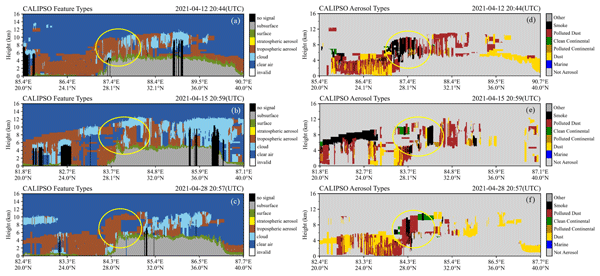
This study investigates the impact of smoke on atmospheric warming over the Himalayas and Tibetan Plateau (HTP) using MODIS fire data, ground-based and satellite aerosol observations, and model simulations. It finds that smoke aerosols, predominantly concentrated between 6 and 8 km in the mid-troposphere over southern HTP, likely alter regional atmospheric stability by modifying the vertical temperature profile, as indicated by a reduced lapse rate.
Jingxuan Zhao, Yujing Wang, Hui Chen, Mengjie Zhang, Lili Wang, Xingchuan Yang, Shuo Dong, Wenji Zhao, and Pengfei Ma
EGUsphere, https://doi.org/10.5194/egusphere-2026-2510, https://doi.org/10.5194/egusphere-2026-2510, 2026
Short summary
Short summary
This study develops a new method to estimate aerosol loading over land from the DQ-1 Wide Swath Imager satellite. The method corrects errors caused by uncertain land surface brightness while keeping a physics-based retrieval process. Tests over the Beijing–Tianjin–Hebei region show reduced bias and better spatial consistency. The work supports more reliable early use of new satellite sensors for regional air-quality monitoring.
Zhaolong Wu, Patric Seifert, Yun He, Holger Baars, Cristofer Jimenez, Chengcai Li, Jing Li, Albert Ansmann, and Chuanfeng Zhao
Atmos. Chem. Phys., 26, 11491–11523, https://doi.org/10.5194/acp-26-11491-2026, https://doi.org/10.5194/acp-26-11491-2026, 2026
Short summary
Short summary
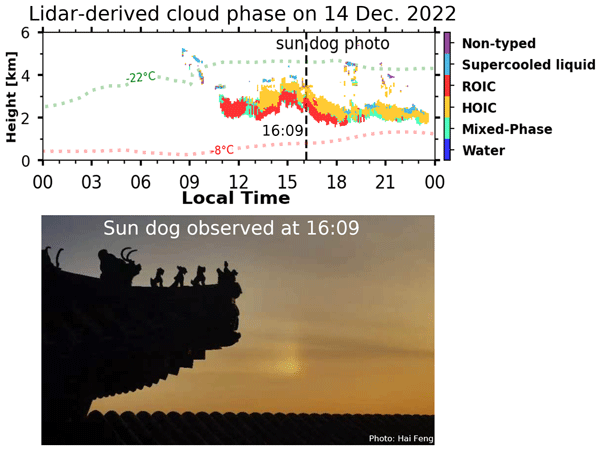
Using a full year of laser and radar observations in Beijing, this study shows when and where flat ice crystals tend to align horizontally instead of randomly, which suggests that flat ice crystals are most common in moderately cold, weakly turbulent clouds and often form below supercooled liquid water. This new finding can help weather and climate models better represent ice clouds.
Jingye Ren, Songjian Zou, Honghao Xu, Guiquan Liu, Zhe Wang, Anran Zhang, Chuanfeng Zhao, Min Hu, Dongjie Shang, Lizi Tang, Ru-Jin Huang, Yele Sun, and Fang Zhang
Geosci. Model Dev., 19, 6403–6416, https://doi.org/10.5194/gmd-19-6403-2026, https://doi.org/10.5194/gmd-19-6403-2026, 2026
Short summary
Short summary
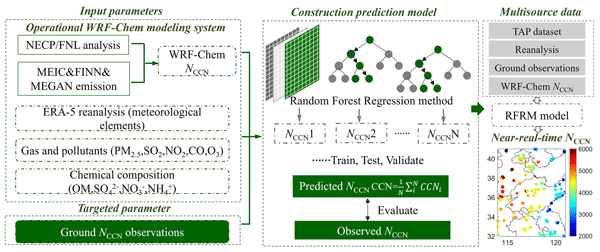
In this study, a new framework of cloud condensation nuclei (CCN) prediction in polluted region has been developed and it achieves well prediction of hourly-to-yearly scale across North China Plain. The study reveals the machine learning model can largely reduce the uncertainty in simulating cloud radiative forcing, illustrating the high sensitivity of climate forcing to changes in CCN. This improvement of our new model would be helpful to aerosols climate effect assessment in models.
Jialu Xu, Yingjie Zhang, Yuying Wang, Xing Yan, Bin Zhu, Chunsong Lu, Yuanjian Yang, Yele Sun, Junhui Zhang, Xiaofan Zuo, Zhanghanshu Han, and Rui Zhang
Atmos. Chem. Phys., 25, 18599–18616, https://doi.org/10.5194/acp-25-18599-2025, https://doi.org/10.5194/acp-25-18599-2025, 2025
Short summary
Short summary
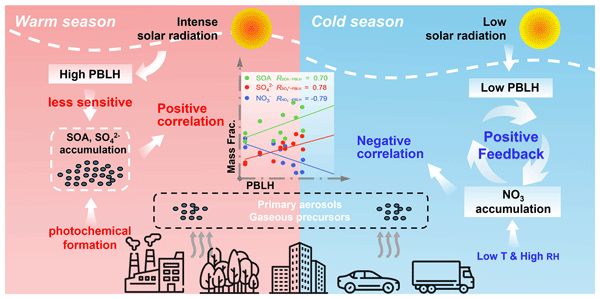
We conducted a year-long study in Nanjing to explore how the height of the atmospheric boundary layer affects fine particle pollution. We found that low boundary layers in winter trap pollutants like nitrate and primary particles, while higher layers in summer help form secondary pollutants like sulfate and organic aerosols. These findings show that boundary layer dynamics are key to understanding and managing seasonal air pollution.
Junhui Zhang, Yuying Wang, Jialu Xu, Xiaofan Zuo, Chunsong Lu, Bin Zhu, Yuanjian Yang, Xing Yan, and Yele Sun
Atmos. Chem. Phys., 25, 17413–17428, https://doi.org/10.5194/acp-25-17413-2025, https://doi.org/10.5194/acp-25-17413-2025, 2025
Short summary
Short summary
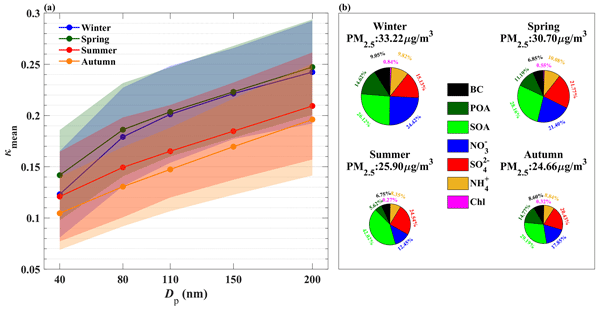
We conducted a year-long study in Nanjing to understand how tiny airborne particles take up water, which affects air quality and climate. We found that particle water uptake varies by season and size, with lower values in summer due to more organic materials. Local pollution mainly influences smaller particles, while larger ones are shaped by air mass transport. These findings help improve climate models and support better air pollution control in fast-growing cities.
Runzhuo Fang, Jinfeng Ding, Wenjuan Gao, Xi Liang, Zhuoqi Chen, Chuanfeng Zhao, Haijin Dai, and Lei Liu
Earth Syst. Sci. Data, 17, 6049–6069, https://doi.org/10.5194/essd-17-6049-2025, https://doi.org/10.5194/essd-17-6049-2025, 2025
Short summary
Short summary
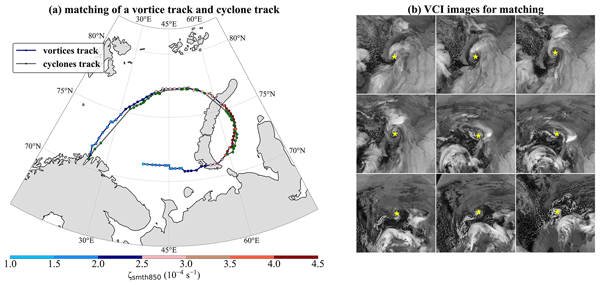
Integrated Multi-source Polar Mesoscale Cyclone Tracks (IMPMCT) is a dataset containing a 24-year record (2001–2024) of polar storms in the Nordic Seas. These storms, called Polar Mesoscale Cyclones (PMCs), sometimes cause extreme winds and waves, threatening marine operations. IMPMCT combines remote sensing measurements and reanalysis data to construct a comprehensive PMCs archive. It includes 1110 PMCs tracks, 16 001 cloud patterns, and 4472 wind records, providing fundamental data for advancing our understanding of their development mechanisms.
Qiaomin Pei, Chuanfeng Zhao, Yikun Yang, Annan Chen, Zhiyuan Cong, Xin Wan, Haotian Zhang, and Guangming Wu
Atmos. Chem. Phys., 25, 10443–10456, https://doi.org/10.5194/acp-25-10443-2025, https://doi.org/10.5194/acp-25-10443-2025, 2025
Short summary
Short summary
This study investigates the impact of smoke on atmospheric warming over the Himalayas and Tibetan Plateau (HTP) using MODIS fire data, ground-based and satellite aerosol observations, and model simulations. It finds that smoke aerosols, predominantly concentrated between 6 and 8 km in the mid-troposphere over southern HTP, likely alter regional atmospheric stability by modifying the vertical temperature profile, as indicated by a reduced lapse rate.
Jingye Ren, Songjian Zou, Honghao Xu, Guiquan Liu, Zhe Wang, Anran Zhang, Chuanfeng Zhao, Min Hu, Dongjie Shang, Lizi Tang, Ru-Jin Huang, Yele Sun, and Fang Zhang
EGUsphere, https://doi.org/10.5194/egusphere-2025-1483, https://doi.org/10.5194/egusphere-2025-1483, 2025
Preprint archived
Short summary
Short summary
In this study, a new framework of cloud condensation nuclei (CCN) prediction in polluted region has been developed and it achieves well prediction of hourly-to-yearly scale across North China Plain. The study reveals a significant long-term decreasing trend of CCN concentration at typical supersaturations due to a rapid reduction in aerosol concentrations from 2014 to 2018. This improvement of our new model would be helpful to aerosols climate effect assessment in models.
Leyan Shi, Wenji Zhao, Yanhui Wang, and Xing Yan
Int. Arch. Photogramm. Remote Sens. Spatial Inf. Sci., XLVIII-4-2024, 423–429, https://doi.org/10.5194/isprs-archives-XLVIII-4-2024-423-2024, https://doi.org/10.5194/isprs-archives-XLVIII-4-2024-423-2024, 2024
Hongfei Hao, Kaicun Wang, Chuanfeng Zhao, Guocan Wu, and Jing Li
Earth Syst. Sci. Data, 16, 3233–3260, https://doi.org/10.5194/essd-16-3233-2024, https://doi.org/10.5194/essd-16-3233-2024, 2024
Short summary
Short summary
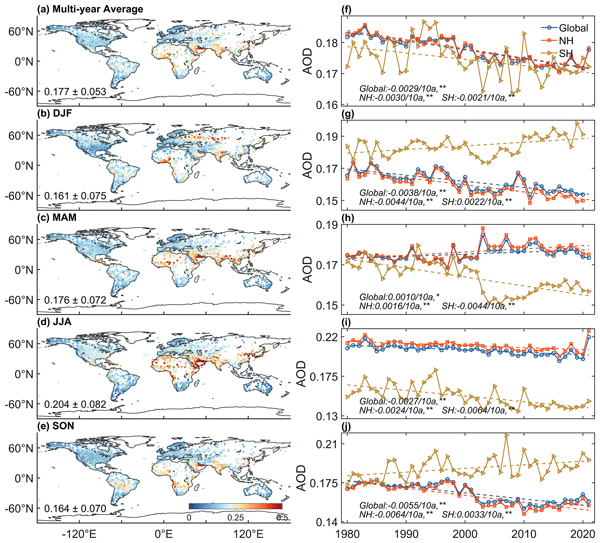
In this study, we employed a machine learning technique to derive daily aerosol optical depth from hourly visibility observations collected at more than 5000 airports worldwide from 1959 to 2021 combined with reanalysis meteorological parameters.
Hao Fan, Xingchuan Yang, Chuanfeng Zhao, Yikun Yang, and Zhenyao Shen
Atmos. Chem. Phys., 23, 7781–7798, https://doi.org/10.5194/acp-23-7781-2023, https://doi.org/10.5194/acp-23-7781-2023, 2023
Short summary
Short summary
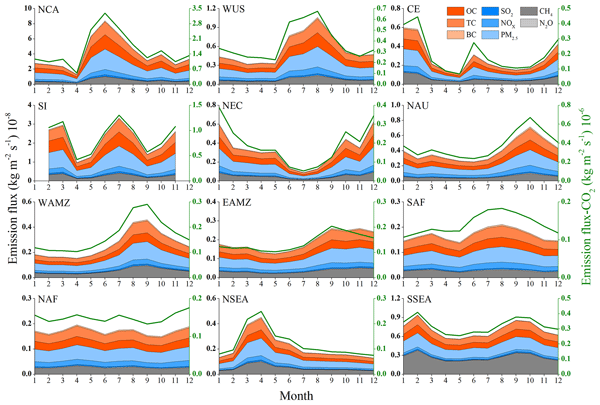
Using 20-year multi-source data, this study shows pronounced regional and seasonal variations in fire activities and emissions. Seasonal variability of fires is larger with increasing latitude. The increase in temperature in the Northern Hemisphere's middle- and high-latitude forest regions was primarily responsible for the increase in fires and emissions, while the changes in fire occurrence in tropical regions were more influenced by the decrease in precipitation and relative humidity.
Xing Yan, Zhou Zang, Zhanqing Li, Nana Luo, Chen Zuo, Yize Jiang, Dan Li, Yushan Guo, Wenji Zhao, Wenzhong Shi, and Maureen Cribb
Earth Syst. Sci. Data, 14, 1193–1213, https://doi.org/10.5194/essd-14-1193-2022, https://doi.org/10.5194/essd-14-1193-2022, 2022
Short summary
Short summary
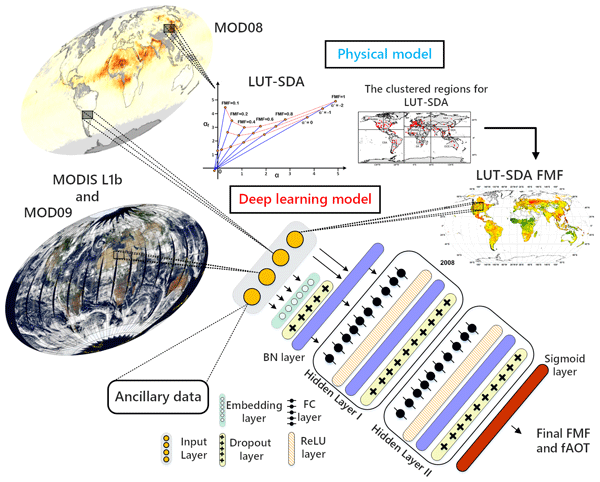
This study developed a new satellite-based global land daily FMF dataset (Phy-DL FMF) by synergizing the advantages of physical and deep learning methods at a 1° spatial resolution by covering the period from 2001 to 2020. The Phy-DL FMF was extensively evaluated against ground-truth AERONET data and tested on a global scale against conventional satellite-based FMF products to demonstrate its superiority in accuracy.
Lixing Shen, Chuanfeng Zhao, Xingchuan Yang, Yikun Yang, and Ping Zhou
Atmos. Chem. Phys., 22, 419–439, https://doi.org/10.5194/acp-22-419-2022, https://doi.org/10.5194/acp-22-419-2022, 2022
Short summary
Short summary
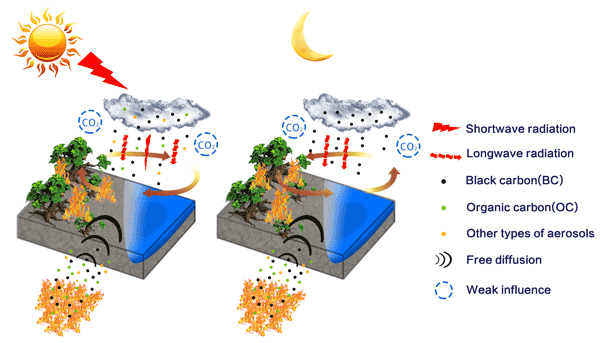
Using multi-year data, this study reveals the slump of sea land breeze (SLB) at Brisbane during mega fires and investigates the impact of fire-induced aerosols on SLB. Different aerosols have different impacts on sea wind (SW) and land wind (LW). Aerosols cause the decrease of SW, partially offset by the warming effect of black carbon (BC). The large-scale cooling effect of aerosols on sea surface temperature (SST) and the burst of BC contribute to the slump of LW.
Yue Sun and Chuanfeng Zhao
Atmos. Chem. Phys., 21, 16555–16574, https://doi.org/10.5194/acp-21-16555-2021, https://doi.org/10.5194/acp-21-16555-2021, 2021
Short summary
Short summary
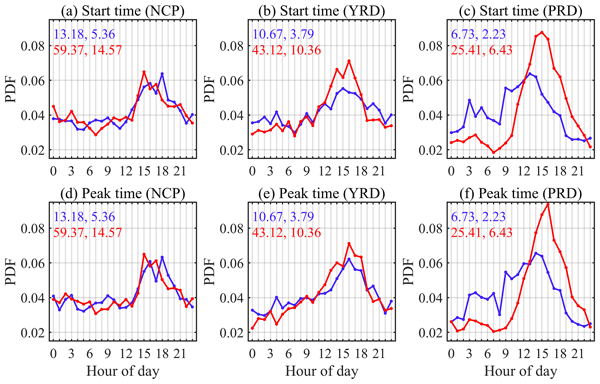
Using high-resolution multi-year warm season data, the influence of aerosol on precipitation time over the North China Plain (NCP), Yangtze River Delta (YRD), and Pearl River Delta (PRD) is investigated. Aerosol amount and type have significant influence on precipitation time: precipitation start time is advanced by 3 h in the NCP, delayed 2 h in the PRD, and negligibly changed in the YRD. Aerosol impact on precipitation is also influenced by precipitation type and meteorological conditions.
Cited articles
Abatzoglou, J. T. and Williams, A. P.: Impact of anthropogenic climate change on wildfire across western US forests, P. Natl. Acad. Sci. USA, 113, 11770–11775, https://doi.org/10.1073/pnas.1607171113, 2016.
Abatzoglou, J. T., Rupp, D. E., O'Neill, L. W., and Sadegh, M.: Compound Extremes Drive the Western Oregon Wildfires of September 2020, Geophys. Res. Lett., 48, e2021GL092520, https://doi.org/10.1029/2021GL092520, 2021.
Abatzoglou, J. T., Kolden, C. A., Williams, A. P., Sadegh, M., Balch, J. K., and Hall, A.: Downslope Wind-Driven Fires in the Western United States, Earths Future, 11, e2022EF003471, https://doi.org/10.1029/2022EF003471, 2023.
Abatzoglou, J. T., Kolden, C. A., Cullen, A. C., Sadegh, M., Williams, E. L., Turco, M., and Jones, M. W.: Climate change has increased the odds of extreme regional forest fire years globally, Nat. Commun., 16, 6390, https://doi.org/10.1038/s41467-025-61608-1, 2025.
Alexander, M. E. and Cruz, M. G.: Crown fire dynamics in conifer forests, in: Synthesis of Knowledge of Extreme Fire Behavior, US Department of Agriculture, Forest Service, Pacific Northwest Research Station, general technical report PNW-GTR-854, 107–142, https://www.researchgate.net/publication/287678357_Crown_fire_dynamics_in_conifer_forests (last access: 23 April 2026), 2011.
Andela, N., Morton, D. C., Giglio, L., Chen, Y., van der Werf, G. R., Kasibhatla, P. S., DeFries, R. S., Collatz, G. J., Hantson, S., Kloster, S., Bachelet, D., Forrest, M., Lasslop, G., Li, F., Mangeon, S., Melton, J. R., Yue, C., and Randerson, J. T.: A human-driven decline in global burned area, Science, 356, 1356–1361, https://doi.org/10.1126/science.aal4108, 2017.
Andreae, M. O., Rosenfeld, D., Artaxo, P., Costa, A. A., Frank, G. P., Longo, K. M., and Silva-Dias, M. A. F.: Smoking rain clouds over the Amazon, Science, 303, 1337–1342, https://doi.org/10.1126/science.1092779, 2004.
Baek, S., Lim, J., and Kim, W.: Analysis on the Fire Progression and Severity Variation of the Massive Forest Fire Occurred in Uljin, Korea, 2022, Forests, 13, 2185, https://doi.org/10.3390/f13122185, 2022.
Birch, D. S., Morgan, P., Kolden, C. A., Abatzoglou, J. T., Dillon, G. K., Hudak, A. T., and Smith, A. M. S.: Vegetation, topography and daily weather influenced burn severity in central Idaho and western Montana forests, Ecosphere, 6, 17, https://doi.org/10.1890/Es14-00213.1, 2015.
Blanchard-Wrigglesworth, E., DeRepentigny, P., and Frierson, D. M. W.: Increasing boreal fires reduce future global warming and sea ice loss, P. Natl. Acad. Sci., 122, e2424614122, https://doi.org/10.1073/pnas.2424614122, 2025.
Bowman, D. M. J. S., Balch, J. K., Artaxo, P., Bond, W. J., Carlson, J. M., Cochrane, M. A., D'Antonio, C. M., DeFries, R. S., Doyle, J. C., Harrison, S. P., Johnston, F. H., Keeley, J. E., Krawchuk, M. A., Kull, C. A., Marston, J. B., Moritz, M. A., Prentice, I. C., Roos, C. I., Scott, A. C., Swetnam, T. W., van der Werf, G. R., and Pyne, S. J.: Fire in the Earth System, Science, 324, 481–484, https://doi.org/10.1126/science.1163886, 2009.
Canadell, J. G., Meyer, C. P., Cook, G. D., Dowdy, A., Briggs, P. R., Knauer, J., Pepler, A., and Haverd, V.: Multi-decadal increase of forest burned area in Australia is linked to climate change, Nat. Commun., 12, 6921, https://doi.org/10.1038/s41467-021-27225-4, 2021.
Chen, J. Y., Chen, H. W., Li, Z. Q., Wang, Q., Wang, G. Q., Jia, K., and Yan, X.: Divergent radiative forcing of fine-mode aerosols across tree genera during wildfires in North America and Europe, J. Hazard. Mater., 495, 138881, https://doi.org/10.1016/j.jhazmat.2025.138881, 2025.
Clarke, H., Di Giuseppe, F., Johnston, L., Marlon, J., Penman, T., Pitman, A. J., van der Werf, G. R., and Flannigan, M. D.: Gazing into the flames: A guide to assessing the impacts of climate change on landscape fire, Sci. Adv., 11, eadz2429, https://doi.org/10.1126/sciadv.adz2429, 2025.
Copernicus Climate Change Service: Fire danger indices historical data from the Copernicus Emergency Management Service, Copernicus Climate Change Service (C3S) Climate Data Store (CDS) [data set], https://doi.org/10.24381/cds.0e89c522, 2019.
Cunningham, C. X., Williamson, G. J., and Bowman, D. M. J. S.: Increasing frequency and intensity of the most extreme wildfires on Earth, Nat. Ecol. Evol., 8, 1420–1425, https://doi.org/10.1038/s41559-024-02452-2, 2024.
Dastour, H., Ahmed, M. R., and Hassan, Q. K.: Analysis of forest fire patterns and their relationship with climate variables in Alberta's natural subregions, Ecol. Inform., 80, 102531, https://doi.org/10.1016/j.ecoinf.2024.102531, 2024.
de Laat, A. T. J., Stein Zweers, D. C., Boers, R., and Tuinder, O. N. E.: A solar escalator: Observational evidence of the self-lifting of smoke and aerosols by absorption of solar radiation in the February 2009 Australian Black Saturday plume, J. Geophys. Res.-Atmos., 117, https://doi.org/10.1029/2011jd017016, 2012.
Duane, A., Castellnou, M., and Brotons, L.: Towards a comprehensive look at global drivers of novel extreme wildfire events, Climatic Change, 165, 43, https://doi.org/10.1007/s10584-021-03066-4, 2021.
Fan, H., Wang, Y., Zhao, C. F., Yang, Y. K., Yang, X. C., Sun, Y., and Jiang, S. Y.: The Role of Primary Emission and Transboundary Transport in the Air Quality Changes During and After the COVID-19 Lockdown in China, Geophys. Res. Lett., 48, e2020GL091065, https://doi.org/10.1029/2020GL091065, 2021.
Gatti, L. V., Basso, L. S., Miller, J. B., Gloor, M., Domingues, L. G., Cassol, H. L. G., Tejada, G., Aragao, L. E. O. C., Nobre, C., Peters, W., Marani, L., Arai, E., Sanches, A. H., Corrêa, S. M., Anderson, L., Von Randow, C., Correia, C. S. C., Crispim, S. P., and Neves, R. A. L.: Amazonia as a carbon source linked to deforestation and climate change, Nature, 595, 388, https://doi.org/10.1038/s41586-021-03629-6, 2021.
GEBCO Bathymetric Compilation Group: The GEBCO_2024 Grid – a continuous terrain model of the global oceans and land, NERC EDS British Oceanographic Data Centre NOC [data set], https://doi.org/10.5285/1c44ce99-0a0d-5f4f-e063-7086abc0ea0f, 2024.
Haines, D. A.: A lower atmospheric severity index for wildland fires, National Weather Digest, 13, 23–27, 1988.
Hamilton, D. S., Perron, M. M. G., Bond, T. C., Bowie, A. R., Buchholz, R. R., Guieu, C., Ito, A., Maenhaut, W., Myriokefalitakis, S., Olgun, N., Rathod, S. D., Schepanski, K., Tagliabue, A., Wagner, R., and Mahowald, N. M.: Earth, Wind, Fire, and Pollution: Aerosol Nutrient Sources and Impacts on Ocean Biogeochemistry, Annu. Rev. Mar. Sci., 14, 303–330, https://doi.org/10.1146/annurev-marine-031921-013612, 2022.
Harper, H. and Sandwell, D. T.: Global Predicted Bathymetry Using Neural Networks, Earth Space Sci., 11, e2023EA003199, https://doi.org/10.1029/2023EA003199, 2024.
Huang, Y. H., Jin, Y. F., Schwartz, M. W., and Thorne, J. H.: Intensified burn severity in California's northern coastal mountains by drier climatic condition, Environ. Res. Lett., 15, 104033, https://doi.org/10.1088/1748-9326/aba6af, 2020.
Jolly, W. M., Cochrane, M. A., Freeborn, P. H., Holden, Z. A., Brown, T. J., Williamson, G. J., and Bowman, D. M. J. S.: Climate-induced variations in global wildfire danger from 1979 to 2013, Nat. Commun., 6, 7537, https://doi.org/10.1038/ncomms8537, 2015.
Jones, M. W., Abatzoglou, J. T., Veraverbeke, S., Andela, N., Lasslop, G., Forkel, M., Smith, A. J. P., Burton, C., Betts, R. A., van der Werf, G. R., Sitch, S., Canadell, J. G., Santín, C., Kolden, C., Doerr, S. H., and Le Quéré, C.: Global and Regional Trends and Drivers of Fire Under Climate Change, Rev. Geophys., 60, e2020RG000726, https://doi.org/10.1029/2020RG000726, 2022.
Jones, M. W., Veraverbeke, S., Andela, N., Doerr, S. H., Kolden, C., Mataveli, G., Pettinari, M. L., Le Quéré, C., Rosan, T. M., van der Werf, G. R., van Wees, D., and Abatzoglou, J. T.: Global rise in forest fire emissions linked to climate change in the extratropics, Science, 386, eadl5889, https://doi.org/10.1126/science.adl5889, 2024.
Kaskaoutis, D. G., Kumar, S., Sharma, D., Singh, R. P., Kharol, S. K., Sharma, M., Singh, A. K., Singh, S., Singh, A., and Singh, D.: Effects of crop residue burning on aerosol properties, plume characteristics, and long-range transport over northern India, J. Geophys. Res.-Atmos., 119, 5424–5444, https://doi.org/10.1002/2013jd021357, 2014.
Keywood, M., Kanakidou, M., Stohl, A., Dentener, F., Grassi, G., Meyer, C. P., Torseth, K., Edwards, D., Thompson, A. M., Lohmann, U., and Burrows, J.: Fire in the Air: Biomass Burning Impacts in a Changing Climate, Crit. Rev. Env. Sci. Tec., 43, 40–83, https://doi.org/10.1080/10643389.2011.604248, 2013.
Kim, J., Kim, T., Lee, Y. E., and Im, S.: Spatial and temporal variability of forest fires in the Republic of Korea over 1991–2020, Nat. Hazards, 121, 9801–9821, https://doi.org/10.1007/s11069-025-07169-4, 2025.
Kirchmeier-Young, M. C., Malinina, E., Barber, Q. E., Perdomo, K. G., Curasi, S. R., Liang, Y. X., Jain, P., Gillett, N. P., Parisien, M. A., Cannon, A. J., Lima, A. R., Arora, V. K., Boulanger, Y., Melton, J. R., Van Vliet, L., and Zhang, X. B.: Human driven climate change increased the likelihood of the 2023 record area burned in Canada, Npj Climate and Atmospheric Science, 7, 316, https://doi.org/10.1038/s41612-024-00841-9, 2024.
Koren, I., Kaufman, Y. J., Remer, L. A., and Martins, J. V.: Measurement of the effect of Amazon smoke on inhibition of cloud formation, Science, 303, 1342–1345, https://doi.org/10.1126/science.1089424, 2004.
Kumar, S. and Kumar, A.: Hotspot and trend analysis of forest fires and its relation to climatic factors in the western Himalayas, Nat. Hazards, 114, 3529–3544, https://doi.org/10.1007/s11069-022-05530-5, 2022.
Lapola, D. M., Pinho, P., Barlow, J., Aragao, L. E. O. C., Berenguer, E., Carmenta, R., Liddy, H. M., Seixas, H., Silva, C. V. J., Silva-Junior, C. H. L., Alencar, A. A. C., Anderson, L. O., Armenteras, D., Brovkin, V., Calders, K., Chambers, J., Chini, L., Costa, M. H., Faria, B. L., Fearnside, P. M., Ferreira, J., Gatti, L., Gutierrez-Velez, V. H., Han, Z. G., Hibbard, K., Koven, C., Lawrence, P., Pongratz, J., Portela, B. T. T., Rounsevell, M., Ruane, A. C., Schaldach, R., da Silva, S. S., von Randow, C., and Walker, W. S.: The drivers and impacts of Amazon forest degradation, Science, 379, 349, https://doi.org/10.1126/science.abp8622, 2023.
Lau, K. M., Kim, M. K., and Kim, K. M.: Asian summer monsoon anomalies induced by aerosol direct forcing: the role of the Tibetan Plateau, Clim. Dynam., 26, 855–864, https://doi.org/10.1007/s00382-006-0114-z, 2006.
Li, Y. W., Dykema, J. A., Peterson, D. A., Feng, X., Shen, X. L., June, N. A., Fromm, M. D., McHardy, T. M., Jacquot, J. L., Pittman, J. V., Daube, B. C., Wofsy, S. C., Dean-Day, J., Rapp, A. D., Bowman, K. P., Cziczo, D. J., Mickley, L. J., Pierce, J. R., and Keutsch, F. N.: Enhanced radiative cooling by large aerosol particles from wildfire-driven thunderstorms, Sci. Adv., 11, eadw6526, https://doi.org/10.1126/sciadv.adw6526, 2025.
Lin, J., Shen, X., Xing, L., Che, H., and Holben, B. N.: Analysis of Aerosol Type and Fine- and Coarse-mode Aerosol Direct Radiative Forcing over Regions in East and Southeast Asia Based on AERONET Version 3 Data, Aerosol Air Qual. Res., 21, 200503, https://doi.org/10.4209/aaqr.200503, 2021.
Liu, G. Y., Li, J., Ying, T., Su, H. X., Huang, X., and Yu, Y.: Increasing Fire Weather Potential Over Northeast China Linked to Declining Bering Sea Ice, Geophys. Res. Lett., 50, e2023GL105931, https://doi.org/10.1029/2023GL105931, 2023.
Luo, N. A., Zhang, Y., Jiang, Y. Z., Zuo, C., Chen, J. Y., Zhao, W. J., Shi, W. Z., and Yan, X.: Unveiling global land fine- and coarse-mode aerosol dynamics from 2005 to 2020 using enhanced satellite-based monthly inversion data, Environ. Pollut., 348, 123838, https://doi.org/10.1016/j.envpol.2024.123838, 2024.
Ma, Q. H., Wei, L. Y., Wang, Y., Zhang, G. J., Zhou, X. L., and Wang, B.: Fire heat affects the impacts of wildfires on air pollution in the United States, Science, 389, 1137–1142, https://doi.org/10.1126/science.ads1957, 2025.
Ma, W., Feng, Z., Cheng, Z., Chen, S., and Wang, F.: Identifying Forest Fire Driving Factors and Related Impacts in China Using Random Forest Algorithm, Forests, https://doi.org/10.3390/f11050507, 2020.
Menon, S., Hansen, J., Nazarenko, L., and Luo, Y. F.: Climate effects of black carbon aerosols in China and India, Science, 297, 2250–2253, https://doi.org/10.1126/science.1075159, 2002.
Ohneiser, K., Ansmann, A., Witthuhn, J., Deneke, H., Chudnovsky, A., Walter, G., and Senf, F.: Self-lofting of wildfire smoke in the troposphere and stratosphere: simulations and space lidar observations, Atmos. Chem. Phys., 23, 2901–2925, https://doi.org/10.5194/acp-23-2901-2023, 2023.
Pan, Y. D., Birdsey, R. A., Fang, J. Y., Houghton, R., Kauppi, P. E., Kurz, W. A., Phillips, O. L., Shvidenko, A., Lewis, S. L., Canadell, J. G., Ciais, P., Jackson, R. B., Pacala, S. W., McGuire, A. D., Piao, S. L., Rautiainen, A., Sitch, S., and Hayes, D.: A Large and Persistent Carbon Sink in the World's Forests, Science, 333, 988–993, https://doi.org/10.1126/science.1201609, 2011.
Parisien, M. A., Barber, Q. E., Bourbonnais, M. L., Daniels, L. D., Flannigan, M. D., Gray, R. W., Hoffman, K. M., Jain, P., Stephens, S. L., Taylor, S. W., and Whitman, E.: Abrupt, climate-induced increase in wildfires in British Columbia since the mid-2000s, Commun. Earth Environ., 4, 309, https://doi.org/10.1038/s43247-023-00977-1, 2023.
Parks, S. A., Holsinger, L. M., Panunto, M. H., Jolly, W. M., Dobrowski, S. Z., and Dillon, G. K.: High-severity fire: evaluating its key drivers and mapping its probability across western US forests, Environ. Res. Lett., 13, 044037, https://doi.org/10.1088/1748-9326/aab791, 2018.
Pei, Q., Zhao, C., Yang, Y., Chen, A., Cong, Z., Wan, X., Zhang, H., and Wu, G.: Wildfires heat the middle troposphere over the Himalayas and Tibetan Plateau during the peak of fire season, Atmos. Chem. Phys., 25, 10443–10456, https://doi.org/10.5194/acp-25-10443-2025, 2025.
Pinto, M. M., DaCamara, C. C., Hurduc, A., Trigo, R. M., and Trigo, I. F.: Enhancing the fire weather index with atmospheric instability information, Environ. Res. Lett., 15, 0940b0947, https://doi.org/10.1088/1748-9326/ab9e22, 2020.
Qian, Y.: Burning questions on wildfire, Science, 389, 1086–1087, https://doi.org/10.1126/science.aea7430, 2025.
Rogeau, M. P. and Armstrong, G. W.: Quantifying the effect of elevation and aspect on fire return intervals in the Canadian Rocky Mountains, Forest Ecol. Manag., 384, 248–261, https://doi.org/10.1016/j.foreco.2016.10.035, 2017.
Santos, L. C., Lima, M. M., Bento, V. A., Nunes, S. A., DaCamara, C. C., Russo, A., Soares, P. M. M., and Trigo, R. M.: An Evaluation of the Atmospheric Instability Effect on Wildfire Danger Using ERA5 over the Iberian Peninsula, Fire, 6, 120, https://doi.org/10.3390/fire6030120, 2023.
Sharples, J. J., Mills, G. A., and McRae, R. H. D.: Extreme drying events in the Australian high-country and their implications for bushfire risk management, Aust. Meteorol. Ocean., 62, 157–169, https://doi.org/10.22499/2.6203.004, 2012.
Su, H. X., Yu, Y., Guo, W. D., and Mao, J. F.: Convective potential and fuel availability complement near-surface weather in regulating global wildfire activity, Sci. Adv., 11, eadp7765, https://doi.org/10.1126/sciadv.adp7765, 2025.
Tang, W. Y., Llort, J., Weis, J., Perron, M. M. G., Basart, S., Li, Z. C., Sathyendranath, S., Jackson, T., Rodriguez, E. S., Proemse, B. C., Bowie, A. R., Schallenberg, C., Strutton, P. G., Matear, R., and Cassar, N.: Widespread phytoplankton blooms triggered by 2019–2020 Australian wildfires, Nature, 597, 370, https://doi.org/10.1038/s41586-021-03805-8, 2021.
Tian, X. R., Zhao, F. J., Shu, L. F., and Wang, M. Y.: Distribution characteristics and the influence factors of forest fires in China, Forest Ecol. Manag., 310, 460–467, https://doi.org/10.1016/j.foreco.2013.08.025, 2013.
Van Wagner, C. E.: Development and structure of the Canadian Forest Fire Weather Index System, Canadian Forestry Service, Headquarters, Ottawa, https://ostrnrcan-dostrncan.canada.ca/handle/1845/228434(last access: 23 April 2026), 1987.
Veraverbeke, S., Rogers, B. M., Goulden, M. L., Jandt, R. R., Miller, C. E., Wiggins, E. B., and Randerson, J. T.: Lightning as a major driver of recent large fire years in North American boreal forests, Nat. Clim. Change, 7, 529, https://doi.org/10.1038/Nclimate3329, 2017.
Walker, X. J., Rogers, B. M., Veraverbeke, S., Johnstone, J. F., Baltzer, J. L., Barrett, K., Bourgeau-Chavez, L., Day, N. J., de Groot, W. J., Dieleman, C. M., Goetz, S., Hoy, E., Jenkins, L. K., Kane, E. S., Parisien, M. A., Potter, S., Schuur, E. A. G., Turetsky, M., Whitman, E., and Mack, M. C.: Fuel availability not fire weather controls boreal wildfire severity and carbon emissions, Nat. Clim. Change, 10, 1130–1136, https://doi.org/10.1038/s41558-020-00920-8, 2020.
Wang, B., Spessa, A. C., Feng, P. Y., Hou, X., Yue, C., Luo, J. J., Ciais, P., Waters, C., Cowie, A., Nolan, R. H., Nikonovas, T., Jin, H. D., Walshaw, H., Wei, J. H., Guo, X. W., Liu, D. L., and Yu, Q.: Extreme fire weather is the major driver of severe bushfires in southeast Australia, Sci. Bull., 67, 655–664, https://doi.org/10.1016/j.scib.2021.10.001, 2022a.
Wang, H., Jin, B., Zhang, K., Aktar, S., and Song, Z.: Effectiveness in Mitigating Forest Fire Ignition Sources: A Statistical Study Based on Fire Occurrence Data in China, Fire, https://doi.org/10.3390/fire5060215, 2022b.
Wang, W. W., Wang, X. L., Wu, W. L., Guo, F. T., Park, J. N., and Wang, G. Y.: Burn Severity in Canada's Mountain National Parks: Patterns, Drivers, and Predictions, Geophys. Res. Lett., 49, e2022GL097945, https://doi.org/10.1029/2022GL097945, 2022c.
Wang, W. W., Wang, X. L., Flannigan, M. D., Guindon, L., Swystun, T., Castellanos-Acuna, D., Wu, W. L., and Wang, G. Y.: Canadian forests are more conducive to high-severity fires in recent decades, Science, 387, 91, https://doi.org/10.1126/science.ado1006, 2025.
Ward, M., Tulloch, A. I. T., Radford, J. Q., Williams, B. A., Reside, A. E., Macdonald, S. L., Mayfield, H. J., Maron, M., Possingham, H. P., Vine, S. J., O'Connor, J. L., Massingham, E. J., Greenville, A. C., Woinarski, J. C. Z., Garnett, S. T., Lintermans, M., Scheele, B., Carwardine, J., Nimmo, D. G., Lindenmayer, D. B., Kooyman, R. M., Simmonds, J. S., Sonter, L. J., and Watson, J. E. M.: Impact of 2019–2020 mega-fires on Australian fauna habitat, Nat. Ecol. Evol., 4, 1321, https://doi.org/10.1038/s41559-020-1251-1, 2020.
Whitman, E., Parisien, M. A., Thompson, D. K., Hall, R. J., Skakun, R. S., and Flannigan, M. D.: Variability and drivers of burn severity in the northwestern Canadian boreal forest, Ecosphere, 9, e02128, https://doi.org/10.1002/ecs2.2128, 2018.
Xu, C. and You, C.: Climate-linked increasing vegetation fires in global high mountains, Ecography, 2022, e06527, https://doi.org/10.1111/ecog.06527, 2022.
Xu, R., Yu, Y., Meng, X. L., Xue, H. W., Zhao, C. F., and Lin, J. T.: Atmospheric Convection and Aerosol Absorption Boost Wildfire Smoke Injection, Geophys. Res. Lett., 52, e2025GL115989, https://doi.org/10.1029/2025GL115989, 2025.
Yan, X., Zuo, C., Li, Z. Q., Chen, H. W., Jiang, Y. Z., Wang, Q., Wang, G. Q., Jia, K., Yinglan, A., Chen, Z. Y., and Chen, J. Y.: Substantial Underestimation of Fine-Mode Aerosol Loading from Wildfires and Its Radiative Effects in Current Satellite-Based Retrievals over the United States, Environ. Sci. Technol., 58, 15661–15671, https://doi.org/10.1021/acs.est.4c02498, 2024.
Yang, X., Zhao, C., Yang, Y., and Fan, H.: Long-term multi-source data analysis about the characteristics of aerosol optical properties and types over Australia, Atmos. Chem. Phys., 21, 3803–3825, https://doi.org/10.5194/acp-21-3803-2021, 2021a.
Yang, X., Zhao, C., Yang, Y., Yan, X., and Fan, H.: Statistical aerosol properties associated with fire events from 2002 to 2019 and a case analysis in 2019 over Australia, Atmos. Chem. Phys., 21, 3833–3853, https://doi.org/10.5194/acp-21-3833-2021, 2021b.
Yang, X., Wang, Y., Zhao, C., Fan, H., Yang, Y., Chi, Y., Shen, L., and Yan, X.: Health risk and disease burden attributable to long-term global fine-mode particles, Chemosphere, 287, 132435, https://doi.org/10.1016/j.chemosphere.2021.132435, 2022.
Yang, X. C., Zhao, C. F., Zhao, W. J., Fan, H., and Yang, Y. K.: Characterization of global fire activity and its spatiotemporal patterns for different land cover types from 2001 to 2020, Environ. Res., 227, 115746,https://doi.org/10.1016/j.envres.2023.115746, 2023.
Yu, P. F., Toon, O. B., Bardeen, C. G., Zhu, Y. Q., Rosenlof, K. H., Portmann, R. W., Thornberry, T. D., Gao, R. S., Davis, S. M., Wolf, E. T., de Gouw, J., Peterson, D. A., Fromm, M. D., and Robock, A.: Black carbon lofts wildfire smoke high into the stratosphere to form a persistent plume, Science, 365, 587–590, https://doi.org/10.1126/science.aax1748, 2019.
Yu, Y. and Ginoux, P.: Enhanced dust emission following large wildfires due to vegetation disturbance, Nat. Geosci., 15, 878, https://doi.org/10.1038/s41561-022-01046-6, 2022.
Yu, Y., Mao, J. F., Thornton, P. E., Notaro, M., Wullschleger, S. D., Shi, X. Y., Hoffman, F. M., and Wang, Y. P.: Quantifying the drivers and predictability of seasonal changes in African fire, Nat. Commun., 11, https://doi.org/10.1038/s41467-020-16692-w, 2020.
Zhang, Q., Wang, Y. X. Z., Xiao, Q. Y., Geng, G. N., Davis, S. J., Liu, X. D., Yang, J., Liu, J. J., Huang, W. Y., He, C. P., Luo, B. H., Martin, R. V., Brauer, M., Randerson, J. T., and He, K. B.: Long-range PM pollution and health impacts from the 2023 Canadian wildfires, Nature, 645, 672–678, https://doi.org/10.1038/s41586-025-09482-1, 2025.
Zhao, J., Yue, C., Wang, J., Hantson, S., Wang, X., He, B., Li, G., Wang, L., Zhao, H., and Luyssaert, S.: Forest fire size amplifies postfire land surface warming, Nature, 633, 828–834, https://doi.org/10.1038/s41586-024-07918-8, 2024.
Zheng, B., Ciais, P., Chevallier, F., Chuvieco, E., Chen, Y., and Yang, H.: Increasing forest fire emissions despite the decline in global burned area, Sci. Adv., 7, eabh2646, https://doi.org/10.1126/sciadv.abh2646, 2021.
Short summary
Using satellite observations from 2012 to 2024, we assessed global patterns of forest fire activity and smoke and examined how elevation influences these patterns. Fire occurrence has increased slightly and mainly produces fine particles. Fires are most frequent at low elevations, while smoke is greater at mid-elevations due to lifting and terrain transport. These findings show that topography strongly shapes fire impacts and improves wildfire risk and climate assessment.
Using satellite observations from 2012 to 2024, we assessed global patterns of forest fire...


Altmetrics
Final-revised paper
Preprint