Articles | Volume 26, issue 8
https://doi.org/10.5194/acp-26-5553-2026
© Author(s) 2026. This work is distributed under
the Creative Commons Attribution 4.0 License.
https://doi.org/10.5194/acp-26-5553-2026
© Author(s) 2026. This work is distributed under
the Creative Commons Attribution 4.0 License.
Impact of the Chinese Spring Festival on PM2.5 air quality in the Beijing-Tianjin-Hebei and surrounding region: a machine learning-based counterfactual modeling approach

Yuan Li
Key Laboratory of Urban Air Particulate Pollution Prevention and Control of Ministry of Ecology and Environment, College of Environmental Science and Engineering, Nankai University, Tianjin 300350, China
Tianjin Key Laboratory of Software Experience and Human Computer Interaction, Tianjin 300457, China
Wubin Zhu
Key Laboratory of Urban Air Particulate Pollution Prevention and Control of Ministry of Ecology and Environment, College of Environmental Science and Engineering, Nankai University, Tianjin 300350, China
Xuan Liu
Key Laboratory of Urban Air Particulate Pollution Prevention and Control of Ministry of Ecology and Environment, College of Environmental Science and Engineering, Nankai University, Tianjin 300350, China
Jiandong Shen
Hangzhou Ecological Environment Monitoring Center, Hangzhou 310007, China
Renchang Yan
Hangzhou Ecological Environment Monitoring Center, Hangzhou 310007, China
Yunshan Li
Key Laboratory of Urban Air Particulate Pollution Prevention and Control of Ministry of Ecology and Environment, College of Environmental Science and Engineering, Nankai University, Tianjin 300350, China
Jing Ding
Tianjin Environmental Meteorological Center, Qixiangtai Road, Tianjin 300074, China
Young Su Lee
Department of Environment and Energy, Sejong University, 209 Neungdong-ro, Gwangjin-gu, Seoul 05006, Republic of Korea
Yufen Zhang
Key Laboratory of Urban Air Particulate Pollution Prevention and Control of Ministry of Ecology and Environment, College of Environmental Science and Engineering, Nankai University, Tianjin 300350, China
Related authors
No articles found.
Wubin Zhu, Mingjie Xie, Qili Dai, Xiaohui Bi, Yufen Zhang, and Yinchang Feng
EGUsphere, https://doi.org/10.5194/egusphere-2026-474, https://doi.org/10.5194/egusphere-2026-474, 2026
Short summary
Short summary
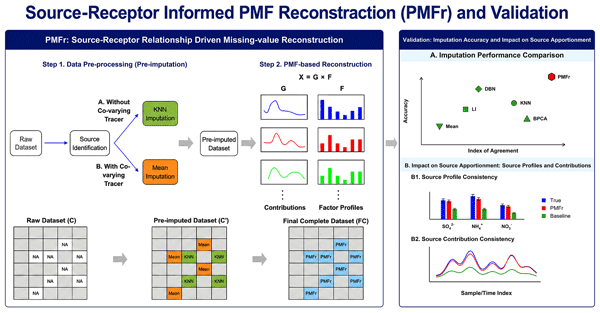
Missing values are common in air quality measurements and can lead to biased environmental conclusions if not properly addressed. We developed a new method to reconstruct missing data by leveraging inherent physical relationships between contributed emission sources and measured concentrations. Unlike existing statistical imputation approaches, this method yields more accurate particulate matter speciation data, providing a robust foundation for data-driven atmospheric research.
Jingwen Shi, Yaqin Ji, Wenju Xu, Ruixing Shen, Jiaofan Ma, Yuexin Zhao, Xingchen Zhou, Yushang Ma, and Yinchang Feng
Earth Syst. Sci. Data Discuss., https://doi.org/10.5194/essd-2025-427, https://doi.org/10.5194/essd-2025-427, 2025
Manuscript not accepted for further review
Short summary
Short summary
In this study, we constructed China's Open Biomass Combustion Emission Inventory (COBBEI) for the years 2020–2023. This was the first fusion of Fire radiation power (FRP) data from the Fengyun-4A geostationary and polar-orbiting satellites. We further proposed 5 filtering rules based on FRP characteristics. COBBEI could fill data gaps in China's open biomass burning emission inventories and provide key data for air quality models, environmental policy development, and fire emergency response.
Baoshuang Liu, Yao Gu, Yutong Wu, Qili Dai, Shaojie Song, Yinchang Feng, and Philip K. Hopke
Atmos. Chem. Phys., 24, 12861–12879, https://doi.org/10.5194/acp-24-12861-2024, https://doi.org/10.5194/acp-24-12861-2024, 2024
Short summary
Short summary
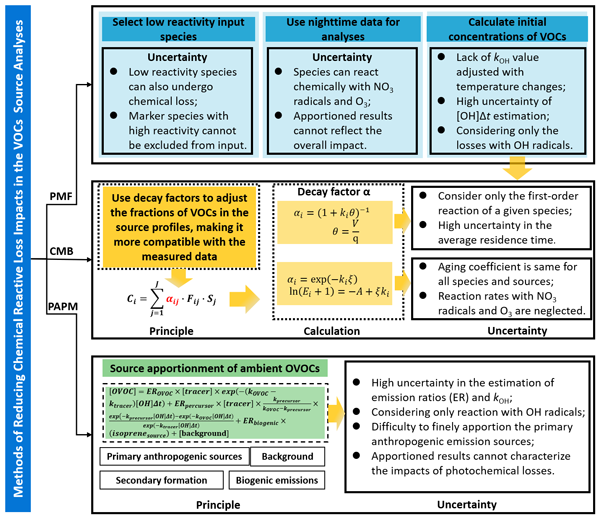
Reactive loss of volatile organic compounds (VOCs) is a long-term issue yet to be resolved in VOC source analyses. We assess common methods of, and existing issues in, reducing losses, impacts of losses, and sources in current source analyses. We offer a potential supporting role for solving issues of VOC conversion. Source analyses of consumed VOCs that reacted to produce ozone and secondary organic aerosols can play an important role in the effective control of secondary pollution in air.
Haoqi Wang, Xiao Tian, Wanting Zhao, Jiacheng Li, Haoyu Yu, Yinchang Feng, and Shaojie Song
Atmos. Chem. Phys., 24, 6583–6592, https://doi.org/10.5194/acp-24-6583-2024, https://doi.org/10.5194/acp-24-6583-2024, 2024
Short summary
Short summary
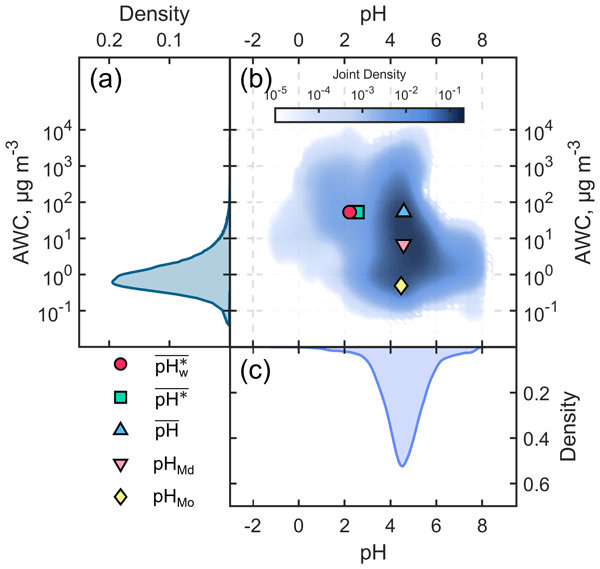
pH is a key property of ambient aerosols, which affect many atmospheric processes. As aerosol pH is a non-conservative parameter, diverse averaging metrics and temporal resolutions may influence the pH values calculated by thermodynamic models. This technical note seeks to quantitatively evaluate the average pH using varied metrics and resolutions. The ultimate goal is to establish standardized reporting practices in future research endeavors.
Zhongwei Luo, Yan Han, Kun Hua, Yufen Zhang, Jianhui Wu, Xiaohui Bi, Qili Dai, Baoshuang Liu, Yang Chen, Xin Long, and Yinchang Feng
Geosci. Model Dev., 16, 6757–6771, https://doi.org/10.5194/gmd-16-6757-2023, https://doi.org/10.5194/gmd-16-6757-2023, 2023
Short summary
Short summary
This study explores how the variation in the source profiles adopted in chemical transport models (CTMs) impacts the simulated results of chemical components in PM2.5 based on sensitivity analysis. The impact on PM2.5 components cannot be ignored, and its influence can be transmitted and linked between components. The representativeness and timeliness of the source profile should be paid adequate attention in air quality simulation.
Baoshuang Liu, Yanyang Wang, He Meng, Qili Dai, Liuli Diao, Jianhui Wu, Laiyuan Shi, Jing Wang, Yufen Zhang, and Yinchang Feng
Atmos. Chem. Phys., 22, 8597–8615, https://doi.org/10.5194/acp-22-8597-2022, https://doi.org/10.5194/acp-22-8597-2022, 2022
Short summary
Short summary
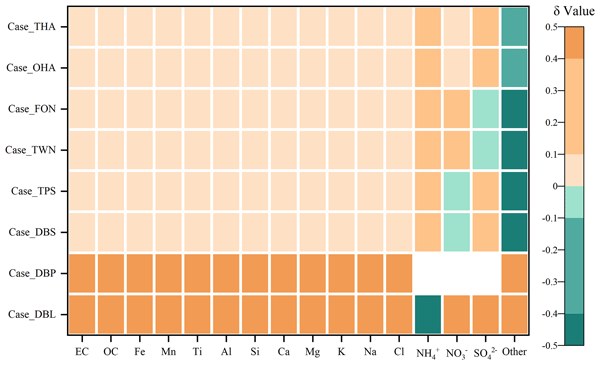
Understanding effectiveness of air pollution regulatory measures is critical for control policy. Machine learning and dispersion-normalized approaches were applied to decouple meteorologically deduced variations in Qingdao, China. Most pollutant concentrations decreased substantially after the Clean Air Action Plan. The largest emission reduction was from coal combustion and steel-related smelting. Qingdao is at risk of increased emissions from increased vehicular population and ozone pollution.
Xinyao Feng, Yingze Tian, Qianqian Xue, Danlin Song, Fengxia Huang, and Yinchang Feng
Atmos. Chem. Phys., 21, 16219–16235, https://doi.org/10.5194/acp-21-16219-2021, https://doi.org/10.5194/acp-21-16219-2021, 2021
Short summary
Short summary
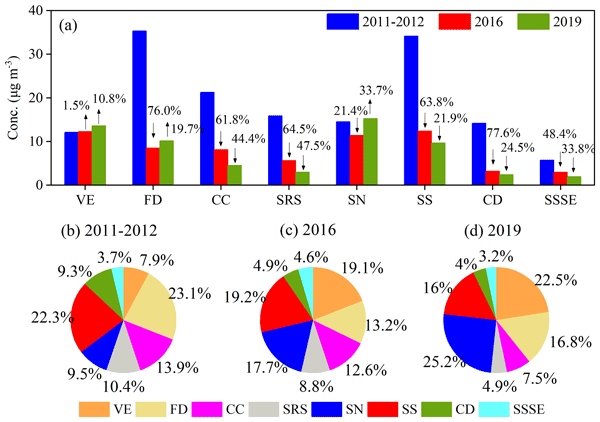
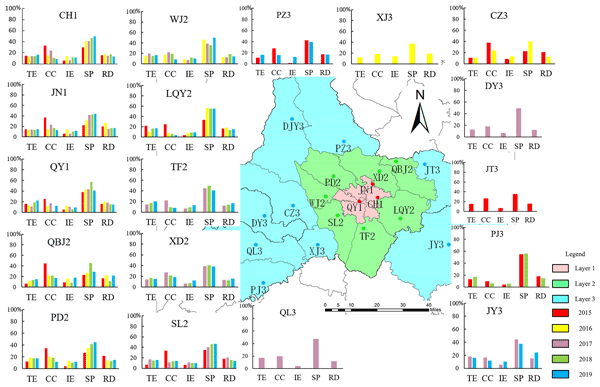
This study focused on PM2.5 compositions and sources and explored their spatiotemporal and policy-related variations based on observation at 19 sites during wintertime of 2015–2019 in a fast-developing megacity. We found that PM2.5 compositions for the outermost zone in 2019 were similar to those for the core zone 2 or 3 years ago. Percentage contributions of coal and biomass combustion dramatically declined in the core zone, while the traffic source showed an increasing trend.
Cited articles
Brown, S. G., Eberly, S., Paatero, P., and Norris, G. A.: Methods for estimating uncertainty in PMF solutions: Examples with ambient air and water quality data and guidance on reporting PMF results, Sci. Total Environ., 518, 626-635, https://doi.org/10.1016/j.scitotenv.2015.01.022, 2015.
Dai, Q., Bi, X., Liu, B., Li, L., Ding, J., Song, W., Bi, S., Schulze, B. C., Song, C., and Wu, J.: Chemical nature of PM2.5 and PM10 in Xi'an, China: Insights into primary emissions and secondary particle formation, Environ. Pollut., 240, 155–166, https://doi.org/10.1016/j.envpol.2018.04.111, 2018.
Dai, Q., Liu, B., Bi, X., Wu, J., Liang, D., Zhang, Y., Feng, Y., and Hopke, P. K.: Dispersion normalized PMF provides insights into the significant changes in source contributions to PM2.5 after the COVID-19 outbreak, Environ. Sci. Technol., 54, 9917–9927, https://doi.org/10.1021/acs.est.0c02776, 2020.
Dai, Q., Hou, L., Liu, B., Zhang, Y., Song, C., Shi, Z., Hopke, P. K., and Feng, Y.: Spring Festival and COVID-19 lockdown: disentangling PM sources in major Chinese cities, Geophys. Res. Lett., 48, https://doi.org/10.1029/2021GL093403, 2021a.
Dai, Q., Ding, J., Song, C., Liu, B., Bi, X., Wu, J., Zhang, Y., Feng, Y., and Hopke, P. K.: Changes in source contributions to particle number concentrations after the COVID-19 outbreak: Insights from a dispersion normalized PMF, Sci. Total Environ., 759, 143548, https://doi.org/10.1016/j.scitotenv.2020.143548, 2021b.
Dai, Q., Dai, T., Hou, L., Li, L., Bi, X., Zhang, Y., and Feng, Y.: Quantifying the impacts of emissions and meteorology on the interannual variations of air pollutants in major Chinese cities from 2015 to 2021, Sci. China Earth Sci., 66, 1725–1737, https://doi.org/10.1007/s11430-022-1128-1, 2023.
Dai, Q., Zhang, Y., Bi, X., and Feng, Y.: A Double Machine Learning Approach for Policy Evaluation Using Meteorologically Fixed Air Pollutant Time Series as an Emission Proxy, ACS ES&T Air, https://doi.org/10.1021/acsestair.5c00501, 2026.
Ding, J., Dai, Q., Fan, W., Lu, M., Zhang, Y., Han, S., and Feng, Y.: Impacts of meteorology and precursor emission change on O3 variation in Tianjin, China from 2015 to 2021, J. Environ. Sci., 126, 506–516, https://doi.org/10.1016/j.jes.2022.03.010, 2023.
Gao, J., Wang, K., Wang, Y., Liu, S., Zhu, C., Hao, J., Liu, H., Hua, S., and Tian, H.: Temporal-spatial characteristics and source apportionment of PM2.5 as well as its associated chemical species in the Beijing-Tianjin-Hebei region of China, Environ. Pollut., 233, 714–724, https://doi.org/10.1016/j.envpol.2017.10.123, 2018.
Grange, S. K., Carslaw, D. C., Lewis, A. C., Boleti, E., and Hueglin, C.: Random forest meteorological normalisation models for Swiss PM10 trend analysis, Atmos. Chem. Phys., 18, 6223–6239, https://doi.org/10.5194/acp-18-6223-2018, 2018.
Han, B., Yao, T., Li, G., Song, Y., Zhang, Y., Dai, Q., and Yu, J.: Marginal reduction in surface NO2 attributable to airport shutdown: A machine learning regression-based approach, Environ. Res., 214, 114117, https://doi.org/10.1016/j.envres.2022.114117, 2022.
Hou, L., Dai, Q., Song, C., Liu, B., Guo, F., Dai, T., Li, L., Liu, B., Bi, X., and Zhang, Y.: Revealing drivers of haze pollution by explainable machine learning, Environ. Sci. Tech. Let., 9, 112-119, https://doi.org/10.1021/acs.estlett.1c00865, 2022.
Hua, J., Zhang, Y., de Foy, B., Mei, X., Shang, J., and Feng, C.: Competing PM2.5 and NO2 holiday effects in the Beijing area vary locally due to differences in residential coal burning and traffic patterns, Sci. Total Environ., 750, 141575, https://doi.org/10.1016/j.scitotenv.2020.141575, 2021.
Huang, X., Ge, Y., Yang, T., Song, Z., Yu, S., Li, Q., Wang, X., Wang, Y., Wang, X., and Su, J.: Relaxation of spring festival firework regulations leads to a deterioration in air quality, Environ. Sci. Technol., 58, 10185–10194, https://doi.org/10.1021/acs.est.4c00920, 2024.
Jiang, Q., Sun, Y. L., Wang, Z., and Yin, Y.: Aerosol composition and sources during the Chinese Spring Festival: fireworks, secondary aerosol, and holiday effects, Atmos. Chem. Phys., 15, 6023–6034, https://doi.org/10.5194/acp-15-6023-2015, 2015.
Joshi, M., Nakhwa, A., Khandare, P., Khan, A., and Sapra, B.: Simultaneous measurements of mass, chemical compositional and number characteristics of aerosol particles emitted during fireworks, Atmos. Environ., 217, 116925, https://doi.org/10.1016/j.atmosenv.2019.116925, 2019.
Lai, Y. and Brimblecombe, P.: Regulatory effects on particulate pollution in the early hours of Chinese New Year, 2015, Environ. Monit. Assess., 189, 1–14, https://doi.org/10.1007/s10661-017-6167-0, 2017.
Lai, Y. and Brimblecombe, P.: Changes in air pollution and attitude to fireworks in Beijing, Atmos. Environ., 231, 117549, https://doi.org/10.1016/j.atmosenv.2020.117549, 2020.
Leist, A. K., Klee, M., Kim, J. H., Rehkopf, D. H., Bordas, S. P., Muniz-Terrera, G., and Wade, S.: Mapping of machine learning approaches for description, prediction, and causal inference in the social and health sciences, Sci. Adv., 8, eabk1942, https://doi.org/10.1126/sciadv.abk1942, 2022.
Li, C., van Donkelaar, A., Hammer, M. S., McDuffie, E. E., Burnett, R. T., Spadaro, J. V., Chatterjee, D., Cohen, A. J., Apte, J. S., and Southerland, V. A.: Reversal of trends in global fine particulate matter air pollution, Nat. Commun., 14, 5349, https://doi.org/10.1038/s41467-023-41086-z, 2023.
Li, D., Wu, Q., Wang, H., Xiao, H., Xu, Q., Wang, L., Feng, J., Yang, X., Cheng, H., and Wang, L.: The Spring Festival Effect: The change in NO2 column concentration in China caused by the migration of human activities, Atmos. Pollut. Res., 12, 101232, https://doi.org/10.1016/j.apr.2021.101232, 2021.
Li, X., Cohen, J. B., Tiwari, P., Wu, L., Wang, S., He, Q., Yang, H., and Qin, K.: Space-based inversion reveals underestimated carbon monoxide emissions over Shanxi, Commun. Earth Environ., 6, 357, https://doi.org/10.1038/s43247-025-02301-5 , 2025.
Li, Y.: Machine Learning-based Intervention Evaluation of Chinese Spring Festival Fireworks, Zenodo [data set], https://doi.org/10.5281/zenodo.19338129, 2026.
Paatero, P. and Tapper, U.: Positive matrix factorization: A non-negative factor model with optimal utilization of error estimates of data values, Environmetrics, 5, 111–126, https://doi.org/10.1002/env.3170050203, 1994.
Prosperi, M., Guo, Y., Sperrin, M., Koopman, J. S., Min, J. S., He, X., Rich, S., Wang, M., Buchan, I. E., and Bian, J.: Causal inference and counterfactual prediction in machine learning for actionable healthcare, Nat. Mach. Intell., 2, 369–375, https://doi.org/10.1038/s42256-020-0197-y, 2020.
Pui, D. Y., Chen, S.-C., and Zuo, Z.: PM2.5 in China: Measurements, sources, visibility and health effects, and mitigation, Particuology, 13, 1–26, https://doi.org/10.1016/j.partic.2013.11.001, 2014.
Pye, H. O., Ward-Caviness, C. K., Murphy, B. N., Appel, K. W., and Seltzer, K. M.: Secondary organic aerosol association with cardiorespiratory disease mortality in the United States, Nat. Commun., 12, 7215, https://doi.org/10.1038/s41467-021-27484-1, 2021.
Shi, Z., Song, C., Liu, B., Lu, G., Xu, J., Van Vu, T., Elliott, R. J., Li, W., Bloss, W. J., and Harrison, R. M.: Abrupt but smaller than expected changes in surface air quality attributable to COVID-19 lockdowns, Sci. Adv., 7, eabd6696, https://doi.org/10.1126/sciadv.abd6696, 2021.
Tian, Y. Z., Wang, J., Peng, X., Shi, G. L., and Feng, Y. C.: Estimation of the direct and indirect impacts of fireworks on the physicochemical characteristics of atmospheric PM10 and PM2.5, Atmos. Chem. Phys., 14, 9469–9479, https://doi.org/10.5194/acp-14-9469-2014, 2014.
Tiwari, P., Cohen, J. B., Lu, L., Wang, S., Li, X., Guan, L., Liu, Z., Li, Z., and Qin, K.: Multi-platform observations and constraints reveal overlooked urban sources of black carbon in Xuzhou and Dhaka, Commun. Earth Environ., 6, 38, https://doi.org/10.1038/s43247-025-02012-x, 2025.
Viana, M., Kuhlbusch, T. A., Querol, X., Alastuey, A., Harrison, R. M., Hopke, P. K., Winiwarter, W., Vallius, M., Szidat, S., and Prévôt, A. S.: Source apportionment of particulate matter in Europe: a review of methods and results, J. Aerosol Sci., 39, 827–849, https://doi.org/10.1016/j.jaerosci.2008.05.007, 2008.
Vu, T. V., Shi, Z., Cheng, J., Zhang, Q., He, K., Wang, S., and Harrison, R. M.: Assessing the impact of clean air action on air quality trends in Beijing using a machine learning technique, Atmos. Chem. Phys., 19, 11303–11314, https://doi.org/10.5194/acp-19-11303-2019, 2019.
Wang, W., Zhou, H., Gao, Y., Shao, L., Zhou, X., Li, X., Wei, D., Xing, J., and Lyu, R.: Chemical composition and morphology of PM2.5 in a rural valley during Chinese New Year's Eve: Impact of firework/firecracker display, Atmos. Environ., 318, 120225, https://doi.org/10.1016/j.atmosenv.2023.120225, 2024.
Wang, Y., Zhuang, G., Xu, C., and An, Z.: The air pollution caused by the burning of fireworks during the lantern festival in Beijing, Atmos. Environ., 41, 417–431, https://doi.org/10.1016/j.atmosenv.2006.07.043, 2007.
Wei, P., Xie, S., Huang, L., Liu, L., Tang, Y., Zhang, Y., Wu, H., Xue, Z., and Ren, D.: Spatial interpolation of PM2.5 concentrations during holidays in south-central China considering multiple factors, Atmos. Pollut. Res., 13, 101480, https://doi.org/10.1016/j.apr.2022.101480, 2022.
Wu, G., Tian, W., Zhang, L., and Yang, H.: The Chinese spring festival impact on air quality in China: A critical review, Int. J. Env. Res. Pub. He., 19, 9074, https://doi.org/10.3390/ijerph19159074, 2022.
Yang, J., Zhou, M., Li, M., Yin, P., Hu, J., Zhang, C., Wang, H., Liu, Q., and Wang, B.: Fine particulate matter constituents and cause-specific mortality in China: a nationwide modelling study, Environ. Int., 143, 105927, https://doi.org/10.1016/j.envint.2020.105927, 2020.
Yang, T., Liu, B., Yang, Y., Dai, Q., Zhang, Y., Feng, Y., and Hopke, P. K.: Improved positive matrix factorization for source apportionment of volatile organic compounds in vehicular emissions during the Spring Festival in Tianjin, China, Environ. Pollut., 303, 119122, https://doi.org/10.1016/j.envint.2021.106979, 2022.
Yin, X., Sun, Z., Miao, S., Yan, Q., Wang, Z., Shi, G., Li, Z., and Xu, W.: Analysis of abrupt changes in the PM2.5 concentration in Beijing during the conversion period from the summer to winter half-year in 2006–2015, Atmos. Environ., 200, 319–328, https://doi.org/10.1016/j.atmosenv.2018.11.057, 2019.
Zhou, W., Xu, W., Wang, Q., Li, Y., Lei, L., Yang, Y., Zhang, Z., Fu, P., Wang, Z., and Sun, Y.: Machine learning elucidates the impact of short-term emission changes on air pollution in Beijing, Atmos. Environ., 283, 119192, https://doi.org/10.1016/j.atmosenv.2022.119192, 2022.
Short summary
Machine learning reveals air quality patterns shaped by holiday activities, with fireworks driving major PM2.5 spikes during Spring Festival.
Machine learning reveals air quality patterns shaped by holiday activities, with fireworks...
Altmetrics
Final-revised paper
Preprint