
Articles | Volume 26, issue 8
https://doi.org/10.5194/acp-26-5293-2026
© Author(s) 2026. This work is distributed under
the Creative Commons Attribution 4.0 License.
the Creative Commons Attribution 4.0 License.
https://doi.org/10.5194/acp-26-5293-2026
© Author(s) 2026. This work is distributed under
the Creative Commons Attribution 4.0 License.
the Creative Commons Attribution 4.0 License.
Research article
| 
21 Apr 2026
Research article |
| 21 Apr 2026
| 21 Apr 2026
A spectral perspective of the clear-sky OLR variability driven by ENSO

Department of Physics and Astronomy, University of Bologna, via Irnerio 46, 40126, Bologna, Italy
Institute of Atmospheric Sciences and Climate, National Research Council (ISAC-CNR), Via Piero Gobetti, 101, 40129 Bologna, Italy
Federico Fabiano
Institute of Atmospheric Sciences and Climate, National Research Council (ISAC-CNR), Via Piero Gobetti, 101, 40129 Bologna, Italy
Stefano Della Fera
Institute of Applied Physics, National Research Council (IFAC-CNR), Sesto Fiorentino (FI), Via Madonna del Piano, 10, 50019 Sesto Fiorentino, Firenze, Italy
Elisa Castelli
Institute of Atmospheric Sciences and Climate, National Research Council (ISAC-CNR), Via Piero Gobetti, 101, 40129 Bologna, Italy
Bianca Maria Dinelli
Institute of Atmospheric Sciences and Climate, National Research Council (ISAC-CNR), Via Piero Gobetti, 101, 40129 Bologna, Italy
Related authors
No articles found.
Pierre Gramme, Cedric Busschots, Emmanuel Dekemper, Didier Pieroux, Noel Baker, Stefano Casadio, Anna Maria Iannarelli, Nicola Ferrante, Annalisa Di Bernardino, Paolo Pettinari, Elisa Castelli, Luca Di Liberto, and Francesco Cairo
Atmos. Meas. Tech., 18, 6021–6037, https://doi.org/10.5194/amt-18-6021-2025, https://doi.org/10.5194/amt-18-6021-2025, 2025
Short summary
Short summary
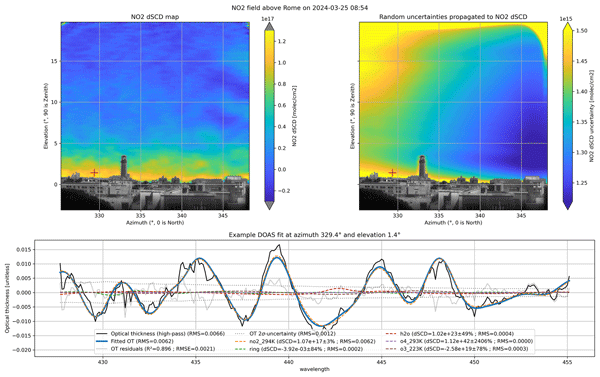
We present a new remote sensing instrument using hyperspectral imaging to observe the variability in space and time of the nitrogen dioxide concentration. We also show the results of its validation campaign in a challenging urban setting in Rome, showing very good agreement with two reference instruments. Having an imaging instrument rather than the currently state-of-the-art unidirectional spectrometers brings promising capability in the context of satellite product validation.
Tim Trent, Marc Schröder, Shu-Peng Ho, Steffen Beirle, Ralf Bennartz, Eva Borbas, Christian Borger, Helene Brogniez, Xavier Calbet, Elisa Castelli, Gilbert P. Compo, Wesley Ebisuzaki, Ulrike Falk, Frank Fell, John Forsythe, Hans Hersbach, Misako Kachi, Shinya Kobayashi, Robert E. Kursinski, Diego Loyola, Zhengzao Luo, Johannes K. Nielsen, Enzo Papandrea, Laurence Picon, Rene Preusker, Anthony Reale, Lei Shi, Laura Slivinski, Joao Teixeira, Tom Vonder Haar, and Thomas Wagner
Atmos. Chem. Phys., 24, 9667–9695, https://doi.org/10.5194/acp-24-9667-2024, https://doi.org/10.5194/acp-24-9667-2024, 2024
Short summary
Short summary
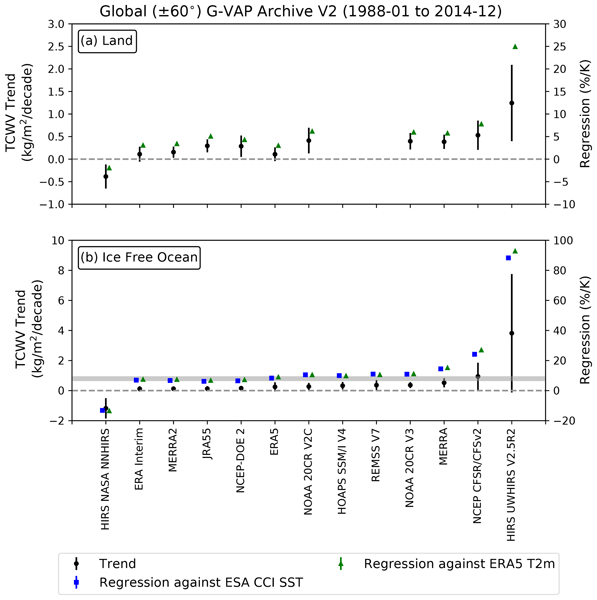
In a warmer future, water vapour will spend more time in the atmosphere, changing global rainfall patterns. In this study, we analysed the performance of 28 water vapour records between 1988 and 2014. We find sensitivity to surface warming generally outside expected ranges, attributed to breakpoints in individual record trends and differing representations of climate variability. The implication is that longer records are required for high confidence in assessing climate trends.
Manuel López-Puertas, Federico Fabiano, Victor Fomichev, Bernd Funke, and Daniel R. Marsh
Geosci. Model Dev., 17, 4401–4432, https://doi.org/10.5194/gmd-17-4401-2024, https://doi.org/10.5194/gmd-17-4401-2024, 2024
Short summary
Short summary
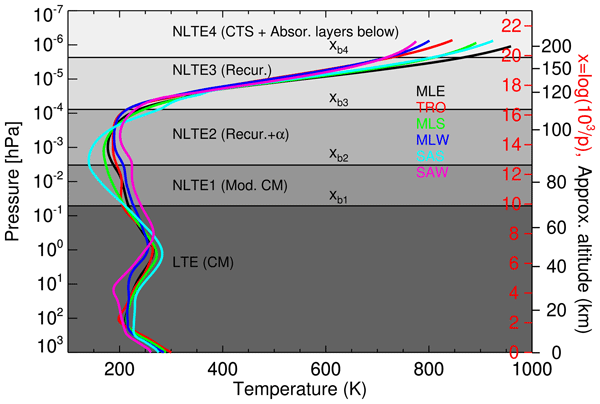
The radiative infrared cooling of CO2 in the middle atmosphere is crucial for computing its thermal structure. It requires one however to include non-local thermodynamic equilibrium processes which are computationally very expensive, which cannot be afforded by climate models. In this work, we present an updated, efficient, accurate and very fast (~50 µs) parameterization of that cooling able to cope with CO2 abundances from half the pre-industrial values to 10 times the current abundance.
Federico Fabiano, Paolo Davini, Virna L. Meccia, Giuseppe Zappa, Alessio Bellucci, Valerio Lembo, Katinka Bellomo, and Susanna Corti
Earth Syst. Dynam., 15, 527–546, https://doi.org/10.5194/esd-15-527-2024, https://doi.org/10.5194/esd-15-527-2024, 2024
Short summary
Short summary
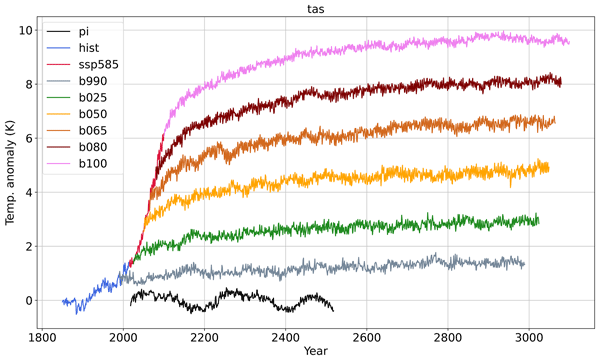
Even after the concentration of greenhouse gases is stabilized, the climate will continue to adapt, seeking a new equilibrium. We study this long-term stabilization through a set of 1000-year simulations, obtained by suddenly "freezing" the atmospheric composition at different levels. If frozen at the current state, global warming surpasses 3° in the long term with our model. We then study how climate impacts will change after various centuries and how the deep ocean will warm.
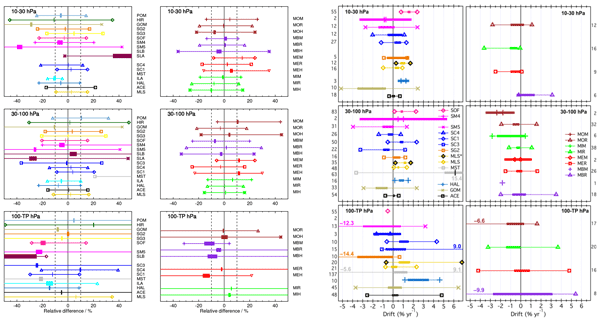
Michael Kiefer, Dale F. Hurst, Gabriele P. Stiller, Stefan Lossow, Holger Vömel, John Anderson, Faiza Azam, Jean-Loup Bertaux, Laurent Blanot, Klaus Bramstedt, John P. Burrows, Robert Damadeo, Bianca Maria Dinelli, Patrick Eriksson, Maya García-Comas, John C. Gille, Mark Hervig, Yasuko Kasai, Farahnaz Khosrawi, Donal Murtagh, Gerald E. Nedoluha, Stefan Noël, Piera Raspollini, William G. Read, Karen H. Rosenlof, Alexei Rozanov, Christopher E. Sioris, Takafumi Sugita, Thomas von Clarmann, Kaley A. Walker, and Katja Weigel
Atmos. Meas. Tech., 16, 4589–4642, https://doi.org/10.5194/amt-16-4589-2023, https://doi.org/10.5194/amt-16-4589-2023, 2023
Short summary
Short summary
We quantify biases and drifts (and their uncertainties) between the stratospheric water vapor measurement records of 15 satellite-based instruments (SATs, with 31 different retrievals) and balloon-borne frost point hygrometers (FPs) launched at 27 globally distributed stations. These comparisons of measurements during the period 2000–2016 are made using robust, consistent statistical methods. With some exceptions, the biases and drifts determined for most SAT–FP pairs are < 10 % and < 1 % yr−1.
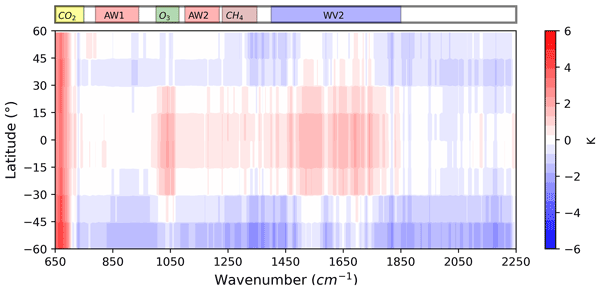
Stefano Della Fera, Federico Fabiano, Piera Raspollini, Marco Ridolfi, Ugo Cortesi, Flavio Barbara, and Jost von Hardenberg
Geosci. Model Dev., 16, 1379–1394, https://doi.org/10.5194/gmd-16-1379-2023, https://doi.org/10.5194/gmd-16-1379-2023, 2023
Short summary
Short summary
The long-term comparison between observed and simulated outgoing longwave radiances represents a strict test to evaluate climate model performance. In this work, 9 years of synthetic spectrally resolved radiances, simulated online on the basis of the atmospheric fields predicted by the EC-Earth global climate model (v3.3.3) in clear-sky conditions, are compared to IASI spectral radiance climatology in order to detect model biases in temperature and humidity at different atmospheric levels.
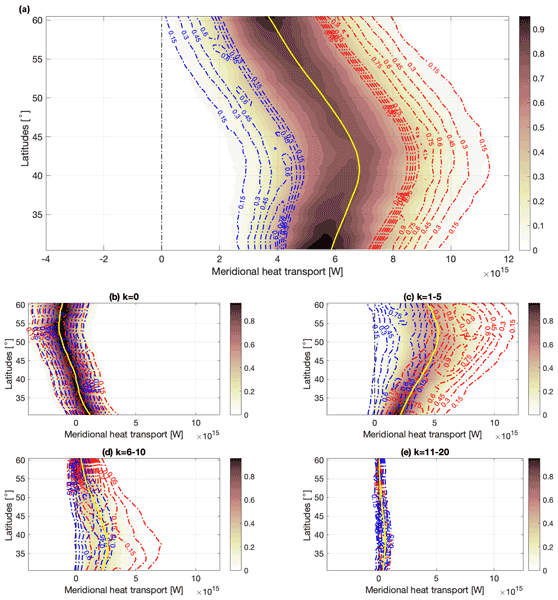
Valerio Lembo, Federico Fabiano, Vera Melinda Galfi, Rune Grand Graversen, Valerio Lucarini, and Gabriele Messori
Weather Clim. Dynam., 3, 1037–1062, https://doi.org/10.5194/wcd-3-1037-2022, https://doi.org/10.5194/wcd-3-1037-2022, 2022
Short summary
Short summary
Eddies in mid-latitudes characterize the exchange of heat between the tropics and the poles. This exchange is largely uneven, with a few extreme events bearing most of the heat transported across latitudes in a season. It is thus important to understand what the dynamical mechanisms are behind these events. Here, we identify recurrent weather regime patterns associated with extreme transports, and we identify scales of mid-latitudinal eddies that are mostly responsible for the transport.
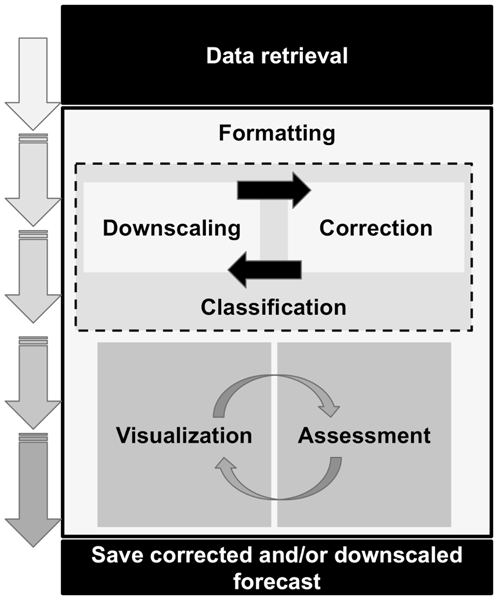
Núria Pérez-Zanón, Louis-Philippe Caron, Silvia Terzago, Bert Van Schaeybroeck, Llorenç Lledó, Nicolau Manubens, Emmanuel Roulin, M. Carmen Alvarez-Castro, Lauriane Batté, Pierre-Antoine Bretonnière, Susana Corti, Carlos Delgado-Torres, Marta Domínguez, Federico Fabiano, Ignazio Giuntoli, Jost von Hardenberg, Eroteida Sánchez-García, Verónica Torralba, and Deborah Verfaillie
Geosci. Model Dev., 15, 6115–6142, https://doi.org/10.5194/gmd-15-6115-2022, https://doi.org/10.5194/gmd-15-6115-2022, 2022
Short summary
Short summary
CSTools (short for Climate Service Tools) is an R package that contains process-based methods for climate forecast calibration, bias correction, statistical and stochastic downscaling, optimal forecast combination, and multivariate verification, as well as basic and advanced tools to obtain tailored products. In addition to describing the structure and methods in the package, we also present three use cases to illustrate the seasonal climate forecast post-processing for specific purposes.
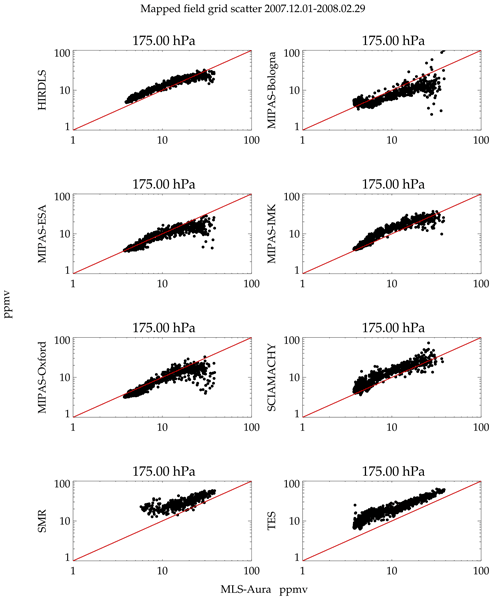
William G. Read, Gabriele Stiller, Stefan Lossow, Michael Kiefer, Farahnaz Khosrawi, Dale Hurst, Holger Vömel, Karen Rosenlof, Bianca M. Dinelli, Piera Raspollini, Gerald E. Nedoluha, John C. Gille, Yasuko Kasai, Patrick Eriksson, Christopher E. Sioris, Kaley A. Walker, Katja Weigel, John P. Burrows, and Alexei Rozanov
Atmos. Meas. Tech., 15, 3377–3400, https://doi.org/10.5194/amt-15-3377-2022, https://doi.org/10.5194/amt-15-3377-2022, 2022
Short summary
Short summary
This paper attempts to provide an assessment of the accuracy of 21 satellite-based instruments that remotely measure atmospheric humidity in the upper troposphere of the Earth's atmosphere. The instruments made their measurements from 1984 to the present time; however, most of these instruments began operations after 2000, and only a few are still operational. The objective of this study is to quantify the accuracy of each satellite humidity data set.
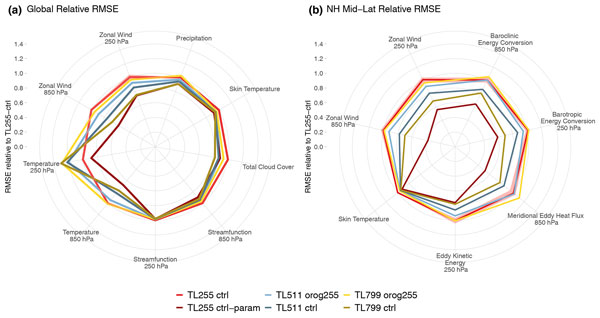
Paolo Davini, Federico Fabiano, and Irina Sandu
Weather Clim. Dynam., 3, 535–553, https://doi.org/10.5194/wcd-3-535-2022, https://doi.org/10.5194/wcd-3-535-2022, 2022
Short summary
Short summary
In climate models, improvements obtained in the winter mid-latitude circulation following horizontal resolution increase are mainly caused by the more detailed representation of the mean orography. A high-resolution climate model with low-resolution orography might underperform compared to a low-resolution model with low-resolution orography. The absence of proper model tuning at high resolution is considered the potential reason behind such lack of improvements.
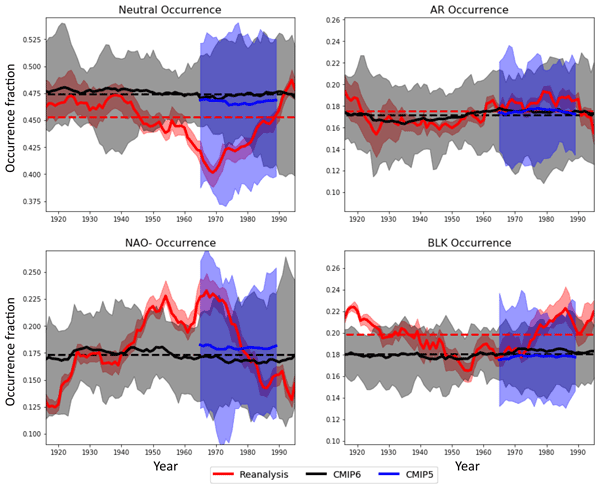
Joshua Dorrington, Kristian Strommen, and Federico Fabiano
Weather Clim. Dynam., 3, 505–533, https://doi.org/10.5194/wcd-3-505-2022, https://doi.org/10.5194/wcd-3-505-2022, 2022
Short summary
Short summary
We investigate how well current state-of-the-art climate models reproduce the wintertime weather of the North Atlantic and western Europe by studying how well different "regimes" of weather are captured. Historically, models have struggled to capture these regimes, making it hard to predict future changes in wintertime extreme weather. We show models can capture regimes if the right method is used, but they show biases, partially as a result of biases in jet speed and eddy strength.
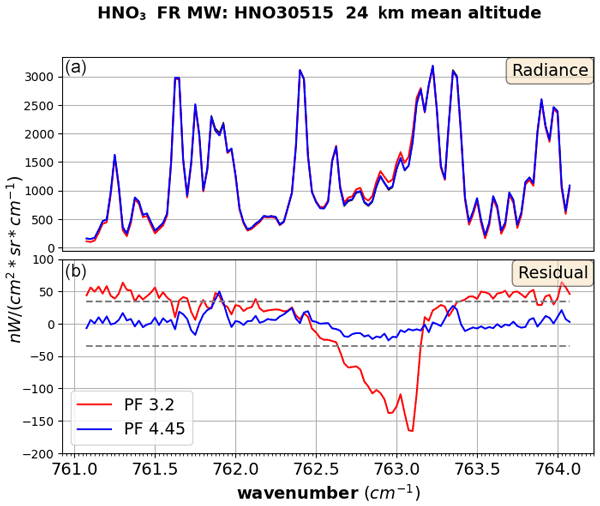
Piera Raspollini, Enrico Arnone, Flavio Barbara, Massimo Bianchini, Bruno Carli, Simone Ceccherini, Martyn P. Chipperfield, Angelika Dehn, Stefano Della Fera, Bianca Maria Dinelli, Anu Dudhia, Jean-Marie Flaud, Marco Gai, Michael Kiefer, Manuel López-Puertas, David P. Moore, Alessandro Piro, John J. Remedios, Marco Ridolfi, Harjinder Sembhi, Luca Sgheri, and Nicola Zoppetti
Atmos. Meas. Tech., 15, 1871–1901, https://doi.org/10.5194/amt-15-1871-2022, https://doi.org/10.5194/amt-15-1871-2022, 2022
Short summary
Short summary
The MIPAS instrument onboard the ENVISAT satellite provided 10 years of measurements of the atmospheric emission al limb that allow for the retrieval of latitude- and altitude-resolved atmospheric composition. We describe the improvements implemented in the retrieval algorithm used for the full mission reanalysis, which allows for the generation of the global distributions of 21 atmospheric constituents plus temperature with increased accuracy with respect to previously generated data.
Paolo Ghinassi, Federico Fabiano, and Susanna Corti
Weather Clim. Dynam., 3, 209–230, https://doi.org/10.5194/wcd-3-209-2022, https://doi.org/10.5194/wcd-3-209-2022, 2022
Short summary
Short summary
In this work we examine the ability of global climate models in representing the atmospheric circulation in the upper troposphere, focusing on the eventual benefits of an increased horizontal resolution. Our results confirm that a higher horizontal resolution has a positive impact, especially in those models in which the resolution is increased in both the atmosphere and the ocean, whereas when the resolution is increased only in the atmosphere no substantial improvements are found.
Bianca Maria Dinelli, Piera Raspollini, Marco Gai, Luca Sgheri, Marco Ridolfi, Simone Ceccherini, Flavio Barbara, Nicola Zoppetti, Elisa Castelli, Enzo Papandrea, Paolo Pettinari, Angelika Dehn, Anu Dudhia, Michael Kiefer, Alessandro Piro, Jean-Marie Flaud, Manuel López-Puertas, David Moore, John Remedios, and Massimo Bianchini
Atmos. Meas. Tech., 14, 7975–7998, https://doi.org/10.5194/amt-14-7975-2021, https://doi.org/10.5194/amt-14-7975-2021, 2021
Short summary
Short summary
The level-2 v8 database from the measurements of the Michelson Interferometer for Passive Atmospheric Sounding (MIPAS), aboard the European Space Agency Envisat satellite, containing atmospheric fields of pressure, temperature, and volume mixing ratio of 21 trace gases, is described in this paper. The database covers all the measurements acquired by MIPAS (from July 2002 to April 2012). The number of species included makes it of particular importance for the studies of stratospheric chemistry.
Paolo Pettinari, Flavio Barbara, Simone Ceccherini, Bianca Maria Dinelli, Marco Gai, Piera Raspollini, Luca Sgheri, Massimo Valeri, Gerald Wetzel, Nicola Zoppetti, and Marco Ridolfi
Atmos. Meas. Tech., 14, 7959–7974, https://doi.org/10.5194/amt-14-7959-2021, https://doi.org/10.5194/amt-14-7959-2021, 2021
Short summary
Short summary
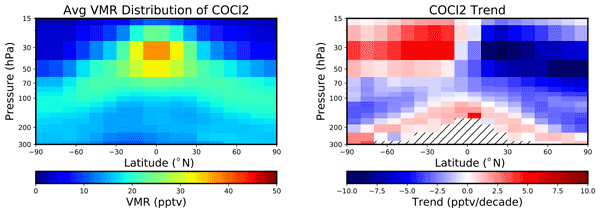
Phosgene (COCl2) is a toxic gas whose presence is a consequence of human activity. Besides its direct injection in the troposphere, stratospheric COCl2 is produced from the decomposition of CCl4, an anthropogenic gas regulated by the Montreal Protocol. As a consequence, COCl2 negative trends characterize the lower and part of the middle stratosphere. However, we find positive trends in the upper troposphere, demonstrating the non-negligible role of other Cl-containing species not yet regulated.
Cited articles
Andrews, T., Gregory, J. M., and Webb, M. J.: The dependence of radiative forcing and feedback on evolving patterns of surface temperature change in climate models, Journal of Climate, 28, 1630–1648, 2015. a
Andrews, T., Bodas-Salcedo, A., Gregory, J. M., Dong, Y., Armour, K. C., Paynter, D., Lin, P., Modak, A., Mauritsen, T., Cole, J. N., Medeiros, B., Benedict, J. J., Douville, H., Roehrig, R., Koshiro, T., Kawai, H., Ogura, T., Dufresne, J.-L., Allan, R., and Liu, C.: On the effect of historical SST patterns on radiative feedback, Journal of Geophysical Research: Atmospheres, 127, e2022JD036675, https://doi.org/10.1029/2022JD036675, 2022. a
Armour, K. C., Proistosescu, C., Dong, Y., Hahn, L. C., Blanchard-Wrigglesworth, E., Pauling, A. G., Jnglin Wills, R. C., Andrews, T., Stuecker, M. F., Po-Chedley, S., Mitevsky, I., Forster, P. M., and Gregory, J. M.: Sea-surface temperature pattern effects have slowed global warming and biased warming-based constraints on climate sensitivity, Proceedings of the National Academy of Sciences, 121, e2312093121, https://doi.org/10.1073/pnas.2312093121, 2024. a
Aumann, H. H., Chahine, M. T., Gautier, C., Goldberg, M. D., Kalnay, E., McMillin, L. M., Revercomb, H., Rosenkranz, P. W., Smith, W. L., Staelin, D. H., Strow, L. L., and Susskind, L.: AIRS/AMSU/HSB on the Aqua mission: Design, science objectives, data products, and processing systems, IEEE Transactions on Geoscience and Remote Sensing, 41, 253–264, 2003. a
Bjerknes, J.: A possible response of the atmospheric Hadley circulation to equatorial anomalies of ocean temperature, Tellus, 18, 820–829, 1966. a
Brindley, H. and Bantges, R.: The spectral signature of recent climate change, Current Climate Change Reports, 2, 112–126, 2016. a
Calvo, N., García-Herrera, R., and Garcia, R. R.: The ENSO signal in the stratosphere, Annals of the New York Academy of Sciences, 1146, 16–31, 2008. a
Clough, S. A., Iacono, M. J., and Moncet, J.-L.: Line-by-line calculations of atmospheric fluxes and cooling rates: Application to water vapor, Journal of Geophysical Research: Atmospheres, 97, 15761–15785, 1992. a
Della Fera, S.: Spectral Kernel, Zenodo [data set], https://doi.org/10.5281/zenodo.15487604, 2025. a
Della Fera, S., Fabiano, F., Raspollini, P., Ridolfi, M., Cortesi, U., Barbara, F., and von Hardenberg, J.: On the use of Infrared Atmospheric Sounding Interferometer (IASI) spectrally resolved radiances to test the EC-Earth climate model (v3.3.3) in clear-sky conditions, Geoscientific Model Development, 16, 1379–1394, https://doi.org/10.5194/gmd-16-1379-2023, 2023. a
Dessler, A., Zhang, Z., and Yang, P.: Water-vapor climate feedback inferred from climate fluctuations, 2003–2008, Geophysical Research Letters, 35, https://doi.org/10.1029/2008GL035333, 2008. a
Dessler, A. E.: A determination of the cloud feedback from climate variations over the past decade, Science, 330, 1523–1527, 2010. a
Dessler, A. E.: Observations of climate feedbacks over 2000–10 and comparisons to climate models, Journal of Climate, 26, 333–342, 2013. a
Garfinkel, C. I., Gordon, A., Oman, L. D., Li, F., Davis, S., and Pawson, S.: Nonlinear response of tropical lower-stratospheric temperature and water vapor to ENSO, Atmospheric Chemistry and Physics, 18, 4597–4615, https://doi.org/10.5194/acp-18-4597-2018, 2018. a
Harries, J., Carli, B., Rizzi, R., Serio, C., Mlynczak, M., Palchetti, L., Maestri, T., Brindley, H., and Masiello, G.: The far-infrared Earth, Reviews of Geophysics, 46, https://doi.org/10.1029/2007RG000233, 2008. a, b
Hersbach, H., Bell, B., Berrisford, P., Biavati, G., Horányi, A., Muñoz Sabater, J., Nicolas, J., Peubey, C., Radu, R., Rozum, I., Schepers, D., Simmons, A., Soci, C., Dee, D., and Thépaut, J.-N.: ERA5 monthly averaged data on pressure levels from 1940 to present, Copernicus Climate Change Service (C3S) Climate Data Store (CDS) [data set], https://doi.org/10.24381/cds.6860a573, 2023. a, b
Huang, H. and Huang, Y.: Radiative sensitivity quantified by a new set of radiation flux kernels based on the ECMWF Reanalysis v5 (ERA5), Earth System Science Data, 15, 3001–3021, https://doi.org/10.5194/essd-15-3001-2023, 2023. a, b, c
Huang, X.: Aqua AIRS Level 3 Spectral Outgoing Longwave Radiation (OLR) Monthly, GES DISC [data set], https://doi.org/10.5067/5P7KQ31XI7XJ, 2020. a
Huang, X. and Yung, Y. L.: Spatial and spectral variability of the outgoing thermal IR spectra from AIRS: A case study of July 2003, Journal of Geophysical Research: Atmospheres, 110, https://doi.org/10.1029/2004JD005530, 2005. a
Huang, X., Yang, W., Loeb, N. G., and Ramaswamy, V.: Spectrally resolved fluxes derived from collocated AIRS and CERES measurements and their application in model evaluation: Clear sky over the tropical oceans, Journal of Geophysical Research: Atmospheres, 113, https://doi.org/10.1029/2007JD009219, 2008. a, b, c
Huang, X., Chen, X., Soden, B. J., and Liu, X.: The spectral dimension of longwave feedback in the CMIP3 and CMIP5 experiments, Geophysical Research Letters, 41, 7830–7837, 2014. a
Huang, Y. and Ramaswamy, V.: Observed and simulated seasonal co-variations of outgoing longwave radiation spectrum and surface temperature, Geophysical Research Letters, 35, https://doi.org/10.1029/2008GL034859, 2008. a
Huang, Y., Ramaswamy, V., Huang, X., Fu, Q., and Bardeen, C.: A strict test in climate modeling with spectrally resolved radiances: GCM simulation versus AIRS observations, Geophysical Research Letters, 34, https://doi.org/10.1029/2007GL031409, 2007. a
Konopka, P., Ploeger, F., Tao, M., and Riese, M.: Zonally resolved impact of ENSO on the stratospheric circulation and water vapor entry values, Journal of Geophysical Research: Atmospheres, 121, 11–486, 2016. a
Leroy, S., Anderson, J., Dykema, J., and Goody, R.: Testing climate models using thermal infrared spectra, Journal of Climate, 21, 1863–1875, 2008. a
Loeb, N. G., Kato, S., Su, W., Wong, T., Rose, F. G., Doelling, D. R., Norris, J. R., and Huang, X.: Advances in understanding top-of-atmosphere radiation variability from satellite observations, Surveys in Geophysics, 33, 359–385, 2012. a
Manatsa, D. and Mukwada, G.: A connection from stratospheric ozone to El Niño-Southern Oscillation, Scientific Reports, 7, 5558, https://doi.org/10.1038/s41598-017-05111-8, 2017. a
Manzini, E.: ENSO and the stratosphere, Nature Geoscience, 2, 749–750, 2009. a
Matricardi, M.: Technical Note: An assessment of the accuracy of the RTTOV fast radiative transfer model using IASI data, Atmospheric Chemistry and Physics, 9, 6899–6913, https://doi.org/10.5194/acp-9-6899-2009, 2009. a
McPhaden, M. J., Santoso, A., and Cai, W.: Introduction to El Niño Southern Oscillation in a changing climate, El Niño Southern Oscillation in a changing climate, American Geophysical Union (AGU), 19 pp., https://doi.org/10.1002/9781119548164.ch1, 2020. a
NASA/LARC/SD/ASDC: CERES Energy Balanced and Filled (EBAF) TOA Monthly means data in netCDF Edition4.1, EarthData [data set], https://doi.org/10.5067/TERRA-AQUA/CERES/EBAF-TOA_L3B004.1, 2019. a
Palchetti, L., Brindley, H., Bantges, R., Buehler, S., Camy-Peyret, C., Carli, B., Cortesi, U., Del Bianco, S., Di Natale, G., Dinelli, B., Feldman, D., Huang, X. L., Labonnote, L. C., Libois, Q., Maestri, T., Mlynczak, M. G., Murray, J. E., Oetjen, H., Ridolfi, M., Riese, M., Russell, J., Saunders, R., and Serio, C.: unique far-infrared satellite observations to better understand how Earth radiates energy to space, Bulletin of the American Meteorological Society, 101, E2030–E2046, 2020. a, b
Planton, Y. Y., Guilyardi, E., Wittenberg, A. T., Lee, J., Gleckler, P. J., Bayr, T., McGregor, S., McPhaden, M. J., Power, S., Roehrig, R., Vialard, J., and A, V.: Evaluating climate models with the CLIVAR 2020 ENSO metrics package, Bulletin of the American Meteorological Society, 102, E193–E217, 2021. a
Raghuraman, S. P., Paynter, D., Ramaswamy, V., Menzel, R., and Huang, X.: Greenhouse gas forcing and climate feedback signatures identified in hyperspectral infrared satellite observations, Geophysical Research Letters, 50, e2023GL103947, https://doi.org/10.1029/2023GL103947, 2023. a
Randel, W. J., Garcia, R. R., Calvo, N., and Marsh, D.: ENSO influence on zonal mean temperature and ozone in the tropical lower stratosphere, Geophysical Research Letters, 36, https://doi.org/10.1029/2009GL039343, 2009. a
Roemer, F. E., Buehler, S. A., Brath, M., Kluft, L., and John, V. O.: Direct observation of Earth’s spectral long-wave feedback parameter, Nature Geoscience, 16, 416–421, 2023. a
Simeoni, D., Astruc, P., Miras, D., Alis, C., Andreis, O., Scheidel, D., Degrelle, C., Nicol, P., Bailly, B., Guiard, P., Clauss, A., Blumstein, D., Maciaszek, T., Chalon, G., Carlier, T., and Kayal, G.: Design and development of IASI instrument, in: Infrared Spaceborne Remote Sensing XII, vol. 5543, SPIE, 208–219, https://doi.org/10.1117/12.561090, 2004. a
Soden, B. J., Held, I. M., Colman, R., Shell, K. M., Kiehl, J. T., and Shields, C. A.: Quantifying climate feedbacks using radiative kernels, Journal of Climate, 21, 3504–3520, 2008. a
Susskind, J., Molnar, G., Iredell, L., and Loeb, N. G.: Interannual variability of outgoing longwave radiation as observed by AIRS and CERES, Journal of Geophysical Research: Atmospheres, 117, https://doi.org/10.1029/2012JD017997, 2012. a, b
Trenberth, K. E.: The definition of el nino, Bulletin of the American Meteorological Society, 78, 2771–2778, 1997. a
Uribe, A., Bender, F. A.-M., and Mauritsen, T.: Observed and CMIP6 modeled internal variability feedbacks and their relation to forced climate feedbacks, Geophysical Research Letters, 49, e2022GL100075, https://doi.org/10.1029/2022GL100075, 2022. a
Uribe, A., Bender, F. A.-M., and Mauritsen, T.: Constraining net long-term climate feedback from satellite-observed internal variability possible by the mid-2030s, Atmospheric Chemistry and Physics, 24, 13371–13384, https://doi.org/10.5194/acp-24-13371-2024, 2024. a
Whitburn, S.: IASI-FT spectrally resolved Outgoing Longwave Radiation (from IASI/Metop-A, B and C), iASi-FT [data set], https://doi.org/10.21413/IASI-FT_METOPA_OLR_L3_ULB-LATMOS, 2021. a
Whitburn, S., Clarisse, L., Bouillon, M., Safieddine, S., George, M., Dewitte, S., De Longueville, H., Coheur, P.-F., and Clerbaux, C.: Trends in spectrally resolved outgoing longwave radiation from 10 years of satellite measurements, NPJ Climate and Atmospheric Science, 4, 48, https://doi.org/10.1038/s41612-021-00205-7, 2021. a, b, c
Wielicki, B. A., Barkstrom, B. R., Harrison, E. F., Lee III, R. B., Smith, G. L., and Cooper, J. E.: Clouds and the Earth's Radiant Energy System (CERES): An earth observing system experiment, Bulletin of the American Meteorological Society, 77, 853–868, 1996. a
Zelinka, M. D., Myers, T. A., McCoy, D. T., Po-Chedley, S., Caldwell, P. M., Ceppi, P., Klein, S. A., and Taylor, K. E.: Causes of higher climate sensitivity in CMIP6 models, Geophysical Research Letters, 47, e2019GL085782, https://doi.org/10.1029/2019GL085782, 2020. a
Zeng, G. and Pyle, J. A.: Influence of El Nino Southern Oscillation on stratosphere/troposphere exchange and the global tropospheric ozone budget, Geophysical Research Letters, 32, https://doi.org/10.1029/2004GL021353, 2005. a
Short summary
The evolution of the climate system is strictly related to its radiative response to changes in surface and atmospheric processes. Through the analysis of the Earth’s emission spectrum measured by satellite instruments, we show that the radiative response to El-Niño Southern Oscillation is wavenumber-dependent, highlighting the role of key climate variables. This makes this analysis particularly suitable for climate models evaluations.
The evolution of the climate system is strictly related to its radiative response to changes in...


Altmetrics
Final-revised paper
Preprint