
Articles | Volume 26, issue 7
https://doi.org/10.5194/acp-26-4669-2026
© Author(s) 2026. This work is distributed under
the Creative Commons Attribution 4.0 License.
the Creative Commons Attribution 4.0 License.
https://doi.org/10.5194/acp-26-4669-2026
© Author(s) 2026. This work is distributed under
the Creative Commons Attribution 4.0 License.
the Creative Commons Attribution 4.0 License.
Research article
| 
09 Apr 2026
Research article |
| 09 Apr 2026
| 09 Apr 2026
A new data set of nighttime chemical heating rates in the upper mesosphere and lower thermosphere derived from SCIAMACHY OH (9–6) emissions and SABER profiles
Xiaolin Wu
State Key Laboratory of Solar Activity and Space Weather, National Space Science Center, Chinese Academy of Sciences, Beijing, China
College of Earth and Planetary Sciences, University of Chinese Academy of Sciences, Beijing, China

State Key Laboratory of Solar Activity and Space Weather, National Space Science Center, Chinese Academy of Sciences, Beijing, China
Hainan National Field Science Observation and Research Observatory for Space Weather, Hainan, China
Anne K. Smith
NSF National Center for Atmospheric Research, Boulder, Colorado, USA
Martin Kaufmann
Institute of Climate and Energy Systems - Stratosphere (ICE-4), Forschungszentrum Jülich, Jülich, Germany
Guoying Jiang
State Key Laboratory of Solar Activity and Space Weather, National Space Science Center, Chinese Academy of Sciences, Beijing, China
Hainan National Field Science Observation and Research Observatory for Space Weather, Hainan, China
School of Astronomy and Space Science, University of Chinese Academy of Sciences, Beijing, China
Shuai Liu
State Key Laboratory of Solar Activity and Space Weather, National Space Science Center, Chinese Academy of Sciences, Beijing, China
College of Earth and Planetary Sciences, University of Chinese Academy of Sciences, Beijing, China
Jiyao Xu
State Key Laboratory of Solar Activity and Space Weather, National Space Science Center, Chinese Academy of Sciences, Beijing, China
Hainan National Field Science Observation and Research Observatory for Space Weather, Hainan, China
Related authors
No articles found.
Zheng Wang, Yusen Tian, Guangwei Cao, Guojun Wang, Guangyuan Tan, Kai Ding, Yajun Zhu, and Xiao Wang
EGUsphere, https://doi.org/10.5194/egusphere-2026-5242, https://doi.org/10.5194/egusphere-2026-5242, 2026
This preprint is open for discussion and under review for Annales Geophysicae (ANGEO).
Short summary
Short summary
Six years of observations over Hainan show that background plasma and short-timescale ionospheric structure follow different seasonal and daily cycles. Winter disturbances strengthen during the afternoon and evolve over or pass through the region. Summer disturbances intensify near midnight but are concentrated in particular directions or areas, revealing a more uneven horizontal distribution.
Tiancai Wang, Yajun Zhu, Guangyi Zhu, Wei Yuan, Zhongqi Tan, Weijun Liu, Qiucheng Gong, Hong Gao, and Jiyao Xu
EGUsphere, https://doi.org/10.5194/egusphere-2026-2475, https://doi.org/10.5194/egusphere-2026-2475, 2026
Short summary
Short summary
The Fabry-Perot interferometer (FPI) is a vital optical instrument for measuring atmospheric wind and temperature. However, traditional FPIs are often bulky and sensitive to pressure changes of the interference cavity. We have developed a novel FPI that uses an all-solid-state interference cavity to provide an aviable alternative. Laboratory and field tests demonstrated its excellent accuracy and close agreement with established instruments.
Liang Zhang, Zhongfang Liu, and Yajun Zhu
EGUsphere, https://doi.org/10.5194/egusphere-2026-4809, https://doi.org/10.5194/egusphere-2026-4809, 2026
Short summary
Short summary
Using 24 years of SABER and MLS satellite data, we show that the T80 index dominates interannual and daily variability of MLT density. Stronger upwelling (lower T80) generates a vertical density dipole over southern high latitudes (R = 0.98 at 95 km) via column adjustment and local thermal effects, while an anti-phased pattern appears at low latitudes. The robust T80-density linkage enables one-month-ahead statistical forecasts of MLT density (R up to 0.90).
Qinzeng Li, Jiyao Xu, Wei Yuan, Angel An, Shengyang Gu, Oscar A. van der Velde, Yajun Zhu, and Xiaolong Wei
EGUsphere, https://doi.org/10.5194/egusphere-2026-4160, https://doi.org/10.5194/egusphere-2026-4160, 2026
This preprint is open for discussion and under review for Atmospheric Chemistry and Physics (ACP).
Short summary
Short summary
On 19 May 2022, a powerful thunderstorm outbreak south of the Himalayas produced both unusual high-altitude lightning and large atmospheric waves. Using satellite and ground-based observations, we tracked the waves over distances exceeding 3000 kilometers. Some waves observed at the highest altitudes were likely generated by the breakdown of earlier waves. The results show how severe storms can affect atmospheric regions far above the weather systems that create them.
Aleena M. Jaison, Lesley J. Gray, Scott M. Osprey, James A. Anstey, Martin B. Andrews, Neal Butchart, Zhaoyang Chai, Dong-Chan Hong, Kai Huang, Yoshio Kawatani, Jeff R. Knight, Pu Lin, Francois Lott, Yixiong Lu, Hiroaki Naoe, Jadwiga H. Richter, Nan Rosenbloom, Federico Serva, Anne K. Smith, Seok-Woo Son, Qi Tang, Shingo Watanabe, Jinbo Xie, and Kohei Yoshida
EGUsphere, https://doi.org/10.5194/egusphere-2026-4135, https://doi.org/10.5194/egusphere-2026-4135, 2026
Short summary
Short summary
The tropical upper stratosphere has winds that switch between westerly and easterly every six months known as the semi-annual oscillation (SAO). Climate models commonly show an easterly bias in the SAO. We analysed data from many models to test if correcting the biases in winds lower in the stratosphere could improve SAO. We find correcting the lower-level wind biases reduces the SAO easterly bias, though further improvements, such as better representation of atmospheric waves, are still needed.
Liang Zhang, Zhongfang Liu, and Yajun Zhu
EGUsphere, https://doi.org/10.5194/egusphere-2026-3749, https://doi.org/10.5194/egusphere-2026-3749, 2026
Short summary
Short summary
The T80 index, a proxy for summer polar upwelling, provides a near-perfect description (R = 0.98) and a one- to two-month forecast (R = 0.90) of the Southern Hemisphere summer mesopause height. The mechanism involves a vertical dipole temperature response through coupled dynamics, microphysics, and chemistry: stronger upwelling cools below ~90 km via adiabatic ascent and warms above ~90 km via chemical and radiative heating, shifting the temperature minimum downward.
Gang Chen, Yimeng Xu, Guotao Yang, Wuhu Feng, Jiyao Xu, Shaodong Zhang, Guozhu Li, Hanxian Fang, Lifang Du, Haoran Zheng, Xuewu Cheng, Faquan Li, Yuchang Xun, Kaiming Huang, and Chunxiao Yan
EGUsphere, https://doi.org/10.5194/egusphere-2026-2356, https://doi.org/10.5194/egusphere-2026-2356, 2026
Short summary
Short summary
A new lidar for calcium ion (Ca+) observations has been operated in Yanqing, Beijing, China. Cloud-like Ca+ are observed to occur at altitudes of 120–300 km, and these clouds are composed of striped structures. These Ca+ are found to descend into Es layer and the main metal layer, and increase their ion density. According to the stripe-like structures and their influence on the metal ion layers, we believe that these metal ions observed by the lidar in Beijing come from meteoroids trails
Shuai Liu, Guoying Jiang, Bingxian Luo, Xiao Liu, Jiyao Xu, Yajun Zhu, and Wen Yi
Atmos. Chem. Phys., 25, 17725–17746, https://doi.org/10.5194/acp-25-17725-2025, https://doi.org/10.5194/acp-25-17725-2025, 2025
Short summary
Short summary
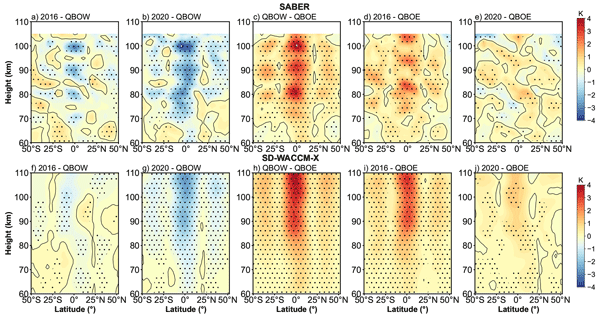
Disruptions of the Quasi-Biennial Oscillation modulate the migrating diurnal tide in the mesosphere and lower thermosphere. During the events, wavelengths and phases of the tide remain unchanged, but its amplitude strengthens. The variation of heating sources, dissipation, zonal wind latitude shear and gravity wave drag may contribute to the amplification of the tide amplitude. These features provide insight into the dynamical coupling of troposphere, stratosphere, mesosphere and lower thermosphere.
Xiaolong Wei, Guoying Jiang, Yajun Zhu, Jiyao Xu, Weijun Liu, Tiancai Wang, Guangyi Zhu, and Wei Yuan
Atmos. Meas. Tech., 18, 6959–6977, https://doi.org/10.5194/amt-18-6959-2025, https://doi.org/10.5194/amt-18-6959-2025, 2025
Short summary
Short summary
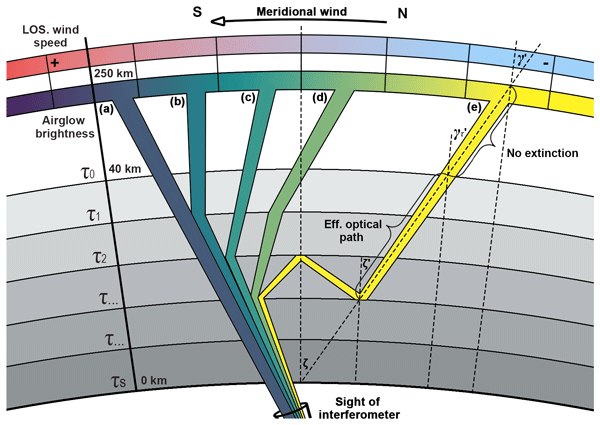
Scattered airglow can bias thermospheric wind observations by ground-based interferometers, especially when brightness is spatially uneven due to auroras. We simulated lower atmospheric scattering during two mid-latitude auroral events and confirmed that scattering can lead to line-of-sight speed biases, thereby increasing the horizontal differences between opposite cardinal directions. This scattering impact needs to be carefully considered in thermospheric dynamics analysis.
Guangyi Zhu, Yajun Zhu, Martin Kaufmann, Tiancai Wang, Weijun Liu, Wei Yuan, Siyin Liu, Guotao Yang, and Jiyao Xu
Atmos. Meas. Tech., 18, 5985–5997, https://doi.org/10.5194/amt-18-5985-2025, https://doi.org/10.5194/amt-18-5985-2025, 2025
Short summary
Short summary
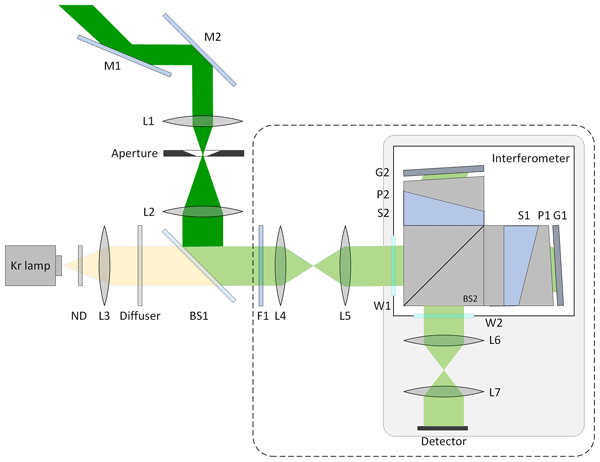
Winds in the mesopause region (85–100 km altitude) drive upper-atmospheric dynamics and energy transfer. We present the Asymmetric Spatial Heterodyne Spectrometer, a ground-based instrument, to measure winds by observing the green airglow of atomic oxygen. Lab tests demonstrated the instrument achieves better than 2 m/s accuracy. Field measurements at a high-latitude site in China showed strong agreement with independent LiDAR data, confirming that the system delivers reliable wind retrievals.
Qinzeng Li, Jiyao Xu, Yajun Zhu, Cristiano M. Wrasse, José V. Bageston, Wei Yuan, Xiao Liu, Weijun Liu, Ying Wen, Hui Li, and Zhengkuan Liu
Atmos. Chem. Phys., 25, 9719–9736, https://doi.org/10.5194/acp-25-9719-2025, https://doi.org/10.5194/acp-25-9719-2025, 2025
Short summary
Short summary
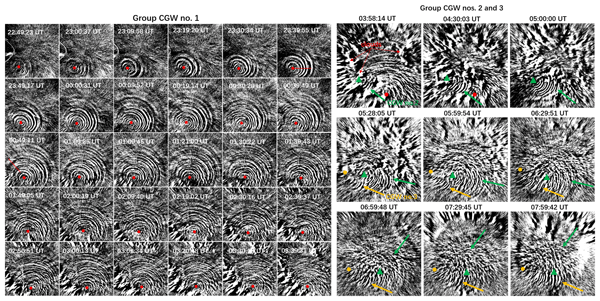
This study explores intense concentric gravity waves (CGWs) based on ground-based and multi-satellite observations over southern Brazil, revealing significant airglow perturbations and strong momentum release. Triggered by deep convection and enabled by weaker wind fields, these CGWs reached the mesopause and thermosphere. Consistent detection via OI and OH airglow emissions confirms their vertical propagation, while asymmetric thermosphere propagation is linked to Doppler-induced wavelength changes.
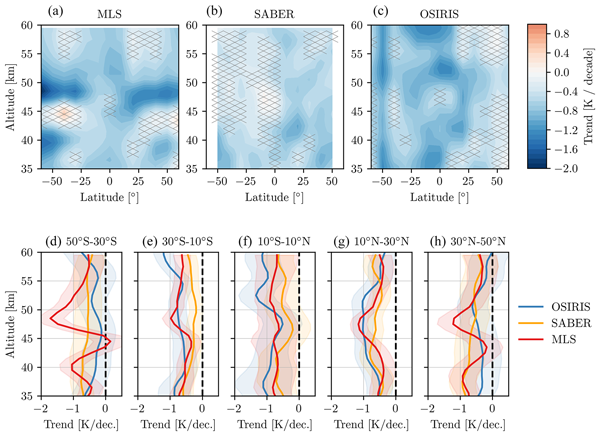
Kimberlee Dubé, Susann Tegtmeier, Adam Bourassa, Daniel Zawada, Douglas Degenstein, William Randel, Sean Davis, Michael Schwartz, Nathaniel Livesey, and Anne Smith
Atmos. Chem. Phys., 24, 12925–12941, https://doi.org/10.5194/acp-24-12925-2024, https://doi.org/10.5194/acp-24-12925-2024, 2024
Short summary
Short summary
Greenhouse gas emissions that warm the troposphere also result in stratospheric cooling. The cooling rate is difficult to quantify above 35 km due to a deficit of long-term observational data with high vertical resolution in this region. We use satellite observations from several instruments, including a new temperature product from OSIRIS, to show that the upper stratosphere, from 35–60 km, cooled by 0.5 to 1 K per decade over 2005–2021 and by 0.6 K per decade over 1979–2021.
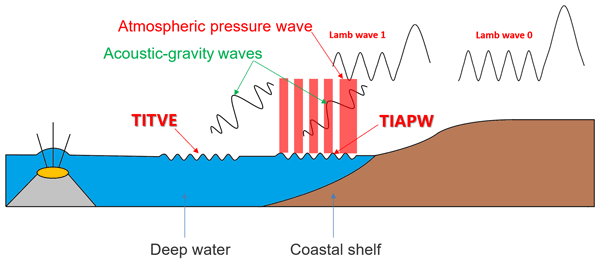
Qinzeng Li, Jiyao Xu, Aditya Riadi Gusman, Hanli Liu, Wei Yuan, Weijun Liu, Yajun Zhu, and Xiao Liu
Atmos. Chem. Phys., 24, 8343–8361, https://doi.org/10.5194/acp-24-8343-2024, https://doi.org/10.5194/acp-24-8343-2024, 2024
Short summary
Short summary
The 2022 Hunga Tonga–Hunga Ha’apai (HTHH) volcanic eruption not only triggered broad-spectrum atmospheric waves but also generated unusual tsunamis which can generate atmospheric gravity waves (AGWs). Multiple strong atmospheric waves were observed in the far-field area of the 2022 HTHH volcano eruption in the upper atmosphere by a ground-based airglow imager network. AGWs caused by tsunamis can propagate to the mesopause region; there is a good match between atmospheric waves and tsunamis.
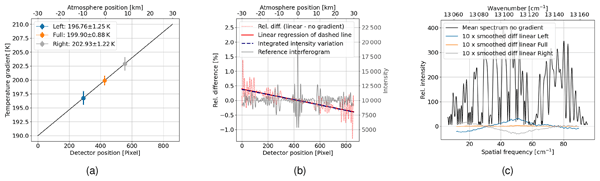
Konstantin Ntokas, Jörn Ungermann, Martin Kaufmann, Tom Neubert, and Martin Riese
Atmos. Meas. Tech., 16, 5681–5696, https://doi.org/10.5194/amt-16-5681-2023, https://doi.org/10.5194/amt-16-5681-2023, 2023
Short summary
Short summary
A nanosatellite was developed to obtain 1-D vertical temperature profiles in the mesosphere and lower thermosphere, which can be used to derive wave parameters needed for atmospheric models. A new processing method is shown, which allows one to extract two 1-D temperature profiles. The location of the two profiles is analyzed, as it is needed for deriving wave parameters. We show that this method is feasible, which however will increase the requirements of an accurate calibration and processing.
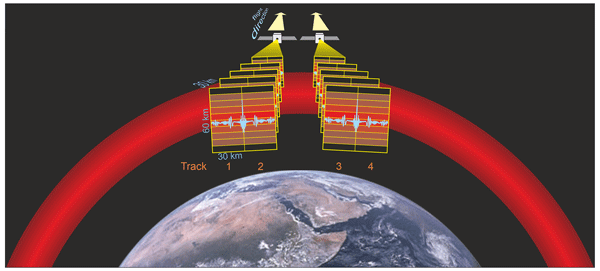
Qiuyu Chen, Konstantin Ntokas, Björn Linder, Lukas Krasauskas, Manfred Ern, Peter Preusse, Jörn Ungermann, Erich Becker, Martin Kaufmann, and Martin Riese
Atmos. Meas. Tech., 15, 7071–7103, https://doi.org/10.5194/amt-15-7071-2022, https://doi.org/10.5194/amt-15-7071-2022, 2022
Short summary
Short summary
Observations of phase speed and direction spectra as well as zonal mean net gravity wave momentum flux are required to understand how gravity waves reach the mesosphere–lower thermosphere and how they there interact with background flow. To this end we propose flying two CubeSats, each deploying a spatial heterodyne spectrometer for limb observation of the airglow. End-to-end simulations demonstrate that individual gravity waves are retrieved faithfully for the expected instrument performance.
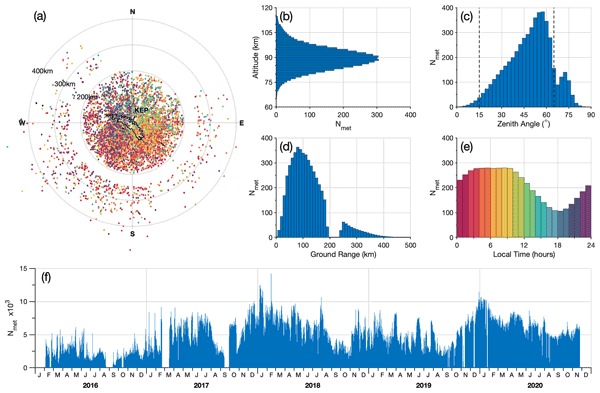
Neil P. Hindley, Nicholas J. Mitchell, Neil Cobbett, Anne K. Smith, Dave C. Fritts, Diego Janches, Corwin J. Wright, and Tracy Moffat-Griffin
Atmos. Chem. Phys., 22, 9435–9459, https://doi.org/10.5194/acp-22-9435-2022, https://doi.org/10.5194/acp-22-9435-2022, 2022
Short summary
Short summary
We present observations of winds in the mesosphere and lower thermosphere (MLT) from a recently installed meteor radar on the remote island of South Georgia (54° S, 36° W). We characterise mean winds, tides, planetary waves, and gravity waves in the MLT at this location and compare our measured winds with a leading climate model. We find that the observed wintertime winds are unexpectedly reversed from model predictions, probably because of missing impacts of secondary gravity waves in the model.
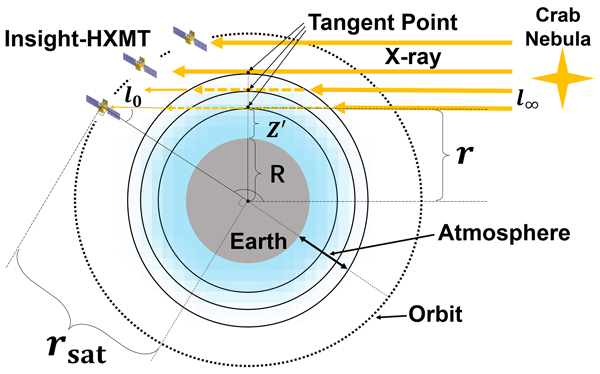
Daochun Yu, Haitao Li, Baoquan Li, Mingyu Ge, Youli Tuo, Xiaobo Li, Wangchen Xue, Yaning Liu, Aoying Wang, Yajun Zhu, and Bingxian Luo
Atmos. Meas. Tech., 15, 3141–3159, https://doi.org/10.5194/amt-15-3141-2022, https://doi.org/10.5194/amt-15-3141-2022, 2022
Short summary
Short summary
In this work, the measurement of vertical atmospheric density profiles using X-ray Earth occultation is investigated. The Earth’s density profile for the lower thermosphere is obtained with Insight-HXMT. It is shown that the Insight-HXMT X-ray satellite of China can be used as an X-ray atmospheric diagnostics instrument for the upper atmosphere. The Insight-HXMT satellite can, with other X-ray astronomical satellites in orbit, form a network for X-ray Earth occultation sounding in the future.
Cited articles
Adler-Golden, S.: Kinetic parameters for OH nightglow modeling consistent with recent laboratory measurements, J. Geophys. Res., 8, https://doi.org/10.1029/97JA01622, 1997. a
Bovensmann, H., Burrows, J. P., Buchwitz, M., Frerick, J., Noël, S., Rozanov, V. V., Chance, K. V., and Goede, A. P. H.: SCIAMACHY: Mission objectives and measurement modes, J. Atmos. Sci., 56, 127–150, https://doi.org/10.1175/1520-0469(1999)056<0127:SMOAMM>2.0.CO;2, 1999. a, b
Brasseur, G. and Offermann, D.: Recombination of atomic oxygen near the mesopause: Interpretation of rocket data, J. Geophys. Res.-Atmos., 91, 10818–10824, https://doi.org/10.1029/JD091iD10p10818, 1986. a
Burkholder, J. B., Sander, S. P., Abbatt, J. P. D., Barker, J. R., Cappa, C., Crounse, J. D., Dibble, T. S., Huie, R. E., Kolb, C. E., Kurylo, M. J., Orkin, V. L., Percival, C. J., Wilmouth, D. M., and Wine, P. H.: Chemical Kinetics and Photochemical Data for Use in Atmospheric Studies, Evaluation No. 19, Jpl publication 19-5, Jet Propulsion Laboratory, Pasadena, CA, https://jpldataeval.jpl.nasa.gov/ (last access: 28 October 2025), 2020. a, b, c
Crutzen, P. J.: Energy conversions and mean vertical motions in the high latitude summer mesosphere and lower thermosphere, in: Astrophysics and Space Science Library, Springer Netherlands, Dordrecht, 78–88, https://doi.org/10.1007/978-94-010-3114-1_4, 1971. a
Emmert, J. T., Drob, D. P., Picone, J. M., Siskind, D. E., Jones, M., Mlynczak, M. G., Bernath, P. F., Chu, X., Doornbos, E., Funke, B., Goncharenko, L. P., Hervig, M. E., Schwartz, M. J., Sheese, P. E., Vargas, F., Williams, B. P., and Yuan, T.: NRLMSIS 2.0: A whole-atmosphere empirical model of temperature and neutral species densities, Earth Space Sci., 8, e2020EA001321, https://doi.org/10.1029/2020EA001321, 2021. a
Garcia, R. R. and Solomon, S.: The effect of breaking gravity waves on the dynamics and chemical composition of the mesosphere and lower thermosphere, J. Geophys. Res.-Atmos., 90, 3850–3868, https://doi.org/10.1029/JD090iD02p03850, 1985. a, b
Gardner, C. S. and Yang, W.: Measurements of the dynamical cooling rate associated with the vertical transport of heat by dissipating gravity waves in the mesopause region, J. Geophys. Res.-Atmos., 103, 16909–16926, https://doi.org/10.1029/98JD00683, 1998. a
Gordon, I. E., Rothman, L. S., Hargreaves, R. J., Hashemi, R., Karlovets, E. V., Skinner, F. M., Conway, E. K., Hill, C., Kochanov, R. V., Tan, Y., Wcisło, P., Finenko, A. A., Nelson, K., Bernath, P. F., Birk, M., Boudon, V., Campargue, A., Chance, K. V., Coustenis, A., Drouin, B. J., Flaud, J.-M., Gamache, R. R., Hodges, J. T., Jacquemart, D., Mlawer, E. J., Nikitin, A. V., Perevalov, V. I., Rotger, M., Tennyson, J., Toon, G. C., Tran, H., Tyuterev, V. G., Adkins, E. M., Baker, A., Barbe, A., Canè, E., Császár, A. G., Dudaryonok, A., Egorov, O., Fleisher, A. J., Fleurbaey, H., Foltynowicz, A., Furtenbacher, T., Harrison, J. J., Hartmann, J.-M., Horneman, V.-M., Huang, X., Karman, T., Karns, J., Kassi, S., Kleiner, I., Kofman, V., Kwabia-Tchana, F., Lavrentieva, N. N., Lee, T. J., Long, D. A., Lukashevskaya, A. A., Lyulin, O. M., Makhnev, V. Y., Matt, W., Massie, S. T., Melosso, M., Mikhailenko, S. N., Mondelain, D., Müller, H. S. P., Naumenko, O. V., Perrin, A., Polyansky, O. L., Raddaoui, E., Raston, P. L., Reed, Z. D., Rey, M., Richard, C., Tóbiás, R., Sadiek, I., Schwenke, D. W., Starikova, E., Sung, K., Tamassia, F., Tashkun, S. A., Vander Auwera, J., Vasilenko, I. A., Vigasin, A. A., Villanueva, G. L., Vispoel, B., Wagner, G., Yachmenev, A., and Yurchenko, S. N.: The HITRAN2020 molecular spectroscopic database, J. Quant. Spectrosc. Ra., 277, 107949, https://doi.org/10.1016/j.jqsrt.2021.107949, 2022. a, b, c
Gottwald, M., Bovensmann, H., Lichtenberg, G., Noel, S., von Bargen, A., Slijkhuis, S., Piter, A., Hoogeveen, R., von Savigny, C., Buchwitz, M., Kokhanovsky, A., Richter, A., Rozanov, A., Holzer-Popp, T., Bramstedt, K., Lambert, J.-C., Skupin, J., Wittrock, F., Schrijver, H., and Burrows, J. P.: SCIAMACHY, Monitoring the Changing Earth's Atmosphere, DLR, Germany, 2006. a
Grygalashvyly, M., Strelnikov, B., Strelnikova, I., Rapp, M., Lübken, F.-J., Schütt, C., Stephan, C., Eberhart, M., Löhle, S., and Fasoulas, S.: Chemical heat derived from rocket-borne WADIS-2 experiment, Earth Planets Space, 76, 180, https://doi.org/10.1186/s40623-024-02129-x, 2024. a, b, c
Hunt, B. G.: Photochemical heating of the mesosphere and lower thermosphere, Tellus, 24, 47–55, https://doi.org/10.3402/tellusa.v24i1.10619, 1972. a
Jones, M., Forbes, J. M., and Hagan, M. E.: Tidal-induced net transport effects on the oxygen distribution in the thermosphere, Geophys. Res. Lett., 41, 5272–5279, https://doi.org/10.1002/2014GL060698, 2014. a
Kalogerakis, K. S., Smith, G. P., and Copeland, R. A.: Collisional removal of
Kalogerakis, K. S., Matsiev, D., Sharma, R. D., and Wintersteiner, P. P.: Resolving the mesospheric nighttime 4.3 µm emission puzzle: Laboratory demonstration of new mechanism for OH(v) relaxation, Geophys. Res. Lett., 43, 8835–8843, https://doi.org/10.1002/2016GL069645, 2016. a
Kaufmann, M., Lehmann, C., Hoffmann, L., and Funke, B.: Chemical heating rates derived from SCIAMACHY vibrationally excited OH limb emission spectra, Adv. Space Res., https://doi.org/10.1016/j.asr.2007.07.045, 2008. a, b, c
Kaufmann, M., Ern, M., Lehmann, C., and Riese, M.: The response of atomic hydrogen to solar radiation changes, in: Climate and Weather of the Sun-Earth System (CAWSES): Highlights from a Priority Program, edited by: Lübken, F.-J., Springer Netherlands, Dordrecht, 171–188, https://doi.org/10.1007/978-94-007-4348-9_10, 2013. a, b, c, d, e
Kellogg, W. W.: Chemical heating above the polar mesopause in winter, J. Meteorol., 18, 373–381, https://doi.org/10.1175/1520-0469(1961)018<0373:CHATPM>2.0.CO;2, 1961. a
Kulikov, M. Y., Belikovich, M. V., Grygalashvyly, M., Sonnemann, G. R., Ermakova, T. S., Nechaev, A. A., and Feigin, A. M.: Nighttime ozone chemical equilibrium in the mesopause region, J. Geophys. Res.-Atmos., 123, 3228–3242, https://doi.org/10.1002/2017JD026717, 2018. a, b
Kulikov, M. Yu., Belikovich, M. V., Chubarov, A. G., Dementyeva, S. O., and Feigin, A. M.: Boundary of nighttime ozone chemical equilibrium in the mesopause region: long-term evolution determined using 20 year satellite observations, Atmos. Chem. Phys., 23, 14593–14608, https://doi.org/10.5194/acp-23-14593-2023, 2023. a, b
Kulikov, M. Y., Belikovich, M. V., Chubarov, A. G., Dementyeva, S. O., and Feigin, A. M.: Retrieval of nighttime distributions of mesosphere–lower thermosphere characteristics from satellite data, Izv. Atmos. Ocean. Phys., 60, 74–86, https://doi.org/10.1134/S0001433824700051, 2024a. a
Kulikov, M. Yu., Belikovich, M. V., Chubarov, A. G., Dementyeva, S. O., and Feigin, A. M.: Technical note: Nighttime OH and HO2 chemical equilibria in the mesosphere–lower thermosphere, Atmos. Chem. Phys., 24, 10965–10983, https://doi.org/10.5194/acp-24-10965-2024, 2024b. a, b
Lübken, F.-J.: Seasonal variation of turbulent energy dissipation rates at high latitudes as determined by in situ measurements of neutral density fluctuations, J. Geophys. Res.-Atmos., 102, 13441–13456, https://doi.org/10.1029/97JD00853, 1997. a
Mlynczak, M. G.: A contemporary assessment of the mesospheric energy budget, in: Geophysical Monograph Series, edited by: Siskind, D. E., Eckermann, S. D., and Summers, M. E., vol. 123, American Geophysical Union, Washington, DC, 37–52, https://doi.org/10.1029/GM123p0037, 2000. a, b
Mlynczak, M. G. and Russell, J. M.: An overview of the SABER experiment for the TIMED mission, in: Optical Remote Sensing of the Atmosphere, Optica Publishing Group, MA2, https://doi.org/10.1364/ORSA.1995.MA2, 1995. a
Mlynczak, M. G. and Solomon, S.: Middle atmosphere heating by exothermic chemical reactions involving odd-hydrogen species, Geophys. Res. Lett., 18, 37–40, https://doi.org/10.1029/90GL02672, 1991. a, b
Mlynczak, M. G., Hunt, L. A., Mast, J. C., Thomas Marshall, B., Russell, J. M., Smith, A. K., Siskind, D. E., Yee, J.-H., Mertens, C. J., Javier Martin-Torres, F., Earl Thompson, R., Drob, D. P., and Gordley, L. L.: Atomic oxygen in the mesosphere and lower thermosphere derived from SABER: Algorithm theoretical basis and measurement uncertainty, J. Geophys. Res.-Atmos., 118, 5724–5735, https://doi.org/10.1002/jgrd.50401, 2013a. a, b, c, d, e
Mlynczak, M. G., Hunt, L. H., Mertens, C. J., Marshall, B. T., Russell, J. M., López-Puertas, M., Smith, A. K., Siskind, D. E., Mast, J. C., Thompson, R. E., and Gordley, L. L.: Radiative and energetic constraints on the global annual mean atomic oxygen concentration in the mesopause region, J. Geophys. Res.-Atmos., 118, 5796–5802, https://doi.org/10.1002/jgrd.50400, 2013b. a
Mlynczak, M. G., Hunt, L. A., Garcia, R. R., Harvey, V. L., Marshall, B. T., Yue, J., Mertens, C. J., and Russell, J. M.: Cooling and contraction of the mesosphere and lower thermosphere from 2002 to 2021, J. Geophys. Res.-Atmos., 127, e2022JD036767, https://doi.org/10.1029/2022JD036767, 2022. a
Mlynczak, M. G., Hunt, L. A., Garcia, R., Lopez-Puertas, M., Mertens, C. J., Nowak, N., and Marshall, B. T.: Energy conservation in the cooling and contracting upper mesosphere and lower thermosphere, Geophys. Res. Lett., 51, e2024GL109757, https://doi.org/10.1029/2024GL109757, 2024. a
Ramesh, K., Sridharan, S., and Vijaya Bhaskara Rao, S.: Causative mechanisms for the occurrence of a triple layered mesospheric inversion event over low latitudes, J. Geophys. Res.-Space, 119, 3930–3943, https://doi.org/10.1002/2013JA019750, 2014. a
Ramesh, K., Sridharan, S., Raghunath, K., and Rao, S. V. B.: A chemical perspective of day and night tropical (10° N–15° N) mesospheric inversion layers, J. Geophys. Res.-Space, 122, 3650–3664, https://doi.org/10.1002/2016JA023721, 2017. a, b
Remsberg, E. E., Marshall, B. T., Garcia-Comas, M., Krueger, D., Lingenfelser, G. S., Martin-Torres, J., Mlynczak, M. G., Russell, J. M., Smith, A. K., Zhao, Y., Brown, C., Gordley, L. L., Lopez-Gonzalez, M. J., Lopez-Puertas, M., She, C., Taylor, M. J., and Thompson, R. E.: Assessment of the quality of the Version 1.07 temperature-versus-pressure profiles of the middle atmosphere from TIMED/SABER, J. Geophys. Res.-Atmos., 113, 2008JD010013, https://doi.org/10.1029/2008JD010013, 2008. a
Riese, M., Offermann, D., and Brasseur, G.: Energy released by recombination of atomic oxygen and related species at mesopause heights, J. Geophys. Res.-Atmos., 99, 14585–14593, https://doi.org/10.1029/94JD00356, 1994. a, b
Rothman, L., Gordon, I., Barbe, A., Benner, D., Bernath, P., Birk, M., Boudon, V., Brown, L., Campargue, A., Champion, J.-P., Chance, K., Coudert, L., Dana, V., Devi, V., Fally, S., Flaud, J.-M., Gamache, R., Goldman, A., Jacquemart, D., Kleiner, I., Lacome, N., Lafferty, W., Mandin, J.-Y., Massie, S., Mikhailenko, S., Miller, C., Moazzen-Ahmadi, N., Naumenko, O., Nikitin, A., Orphal, J., Perevalov, V., Perrin, A., Predoi-Cross, A., Rinsland, C., Rotger, M., Šimečková, M., Smith, M., Sung, K., Tashkun, S., Tennyson, J., Toth, R., Vandaele, A., and Vander Auwera, J.: The HITRAN 2008 molecular spectroscopic database, J. Quant. Spectrosc. Ra., 110, 533–572, https://doi.org/10.1016/j.jqsrt.2009.02.013, 2009. a
Russell, III, J. M., Mlynczak, M. G., and Gordley, L. L.: Overview of the Sounding of the Atmosphere Using Broadband Emission Radiometry (SABER) experiment for the Thermosphere-Ionsphere-Mesosphere Energetics and Dynamics (TIMED) mission, in: Optical Spectroscopic Techniques and Instrumentation for Atmospheric and Space Research, vol. 2266, SPIE, 406–415, https://doi.org/10.1117/12.187579, 1994. a
Sharma, R. D., Wintersteiner, P. P., and Kalogerakis, K. S.: A new mechanism for OH vibrational relaxation leading to enhanced CO2 emissions in the nocturnal mesosphere, Geophys. Res. Lett., 42, 4639–4647, https://doi.org/10.1002/2015GL063724, 2015. a
Smith, A. K., Marsh, D. R., Mlynczak, M. G., and Mast, J. C.: Temporal variations of atomic oxygen in the upper mesosphere from SABER, J. Geophys. Res., 115, D18309, https://doi.org/10.1029/2009JD013434, 2010. a, b
Smith, A. K., Harvey, V. L., Mlynczak, M. G., Funke, B., García-Comas, M., Hervig, M., Kaufmann, M., Kyrölä, E., López-Puertas, M., McDade, I., Randall, C. E., Russell III, J. M., Sheese, P. E., Shiotani, M., Skinner, W. R., Suzuki, M., and Walker, K. A.: Satellite observations of ozone in the upper mesosphere, J. Geophys. Res.-Atmos., 118, 5803–5821, https://doi.org/10.1002/jgrd.50445, 2013. a, b
Smith, A. K., López-Puertas, M., Xu, J., and Mlynczak, M. G.: The heating efficiency of the exothermic reaction H+O3 in the mesosphere, J. Geophys. Res.-Atmos., 120, 12739–12747, https://doi.org/10.1002/2015JD024061, 2015. a, b
States, R. J. and Gardner, C. S.: Thermal structure of the mesopause region (80–105 km) at 40∘N latitude. Part I: Seasonal variations, J. Atmos. Sci., 57, 66–77, https://doi.org/10.1175/1520-0469(2000)057<0066:TSOTMR>2.0.CO;2, 2000. a
Sui, Y. Y., Zhu, Y. J., Chen, Q. Y., He, M. S., and Xu, J. Y.: Inversion of O2 1.27 µm nightglow emissions: A climatological analysis using satellite limb-viewed spectra and harmonic analysis, Earth Planet. Phys., 8, 1–14, https://doi.org/10.26464/epp2024029, 2024. a
Thomas, R. J.: Atomic hydrogen and atomic oxygen density in the mesopause region: Global and seasonal variations deduced from Solar Mesosphere Explorer near-infrared emissions, J. Geophys. Res.-Atmos., 95, 16457–16476, https://doi.org/10.1029/JD095iD10p16457, 1990. a
Vincent, R. A.: The dynamics of the mesosphere and lower thermosphere: A brief review, Prog. Earth Planet. Sci., 2, 4, https://doi.org/10.1186/s40645-015-0035-8, 2015. a
Wu, X. and Zhu, Y.: Nighttime chemical heating rates at 80–100 km derived from SCIAMACHY and SABER (2003–2011), Science Data Bank [data set], https://doi.org/10.57760/sciencedb.space.03261, 2026. a
Zhang, X., Forbes, J. M., Hagan, M. E., Russell, J. M., Palo, S. E., Mertens, C. J., and Mlynczak, M. G.: Monthly tidal temperatures 20–120 km from TIMED/SABER, J. Geophys. Res.-Space, 111, https://doi.org/10.1029/2005JA011504, 2006. a
Short summary
Chemical reactions are key to the energy budget of the upper mesosphere–lower thermosphere, but this process remains poorly quantified. We derived a new dataset of nighttime chemical heating by combining observations from two different satellite instruments. The main exothermic reactions, hydrogen reacting with ozone and oxygen recombination, dominate at different altitudes and vary seasonally. The new results revise previous estimates and provide constraints on the mesopause energy budget.
Chemical reactions are key to the energy budget of the upper mesosphere–lower thermosphere, but...


Altmetrics
Final-revised paper
Preprint