
Articles | Volume 26, issue 6
https://doi.org/10.5194/acp-26-4173-2026
© Author(s) 2026. This work is distributed under
the Creative Commons Attribution 4.0 License.
the Creative Commons Attribution 4.0 License.
https://doi.org/10.5194/acp-26-4173-2026
© Author(s) 2026. This work is distributed under
the Creative Commons Attribution 4.0 License.
the Creative Commons Attribution 4.0 License.
Technical note
| 
25 Mar 2026
Technical note |
| 25 Mar 2026
| 25 Mar 2026
Technical note: Comparing ozone production efficiency (OPE) of chemical mechanisms using chemical process analysis (CPA)
Ramboll, 7250 Redwood Blvd., Suite 105, Novato, CA 94945, USA
Alan M. Dunker
A. M. Dunker, LLC, 4041 Vendome Drive, Auburn Hills, MI 48326, USA
Greg Yarwood
Ramboll, 7250 Redwood Blvd., Suite 105, Novato, CA 94945, USA
Related authors
Ling Huang, Benjie Chen, Zi'ang Wu, Katie Tuite, Pradeepa Vennam, Greg Yarwood, and Li Li
Atmos. Chem. Phys., 26, 7895–7915, https://doi.org/10.5194/acp-26-7895-2026, https://doi.org/10.5194/acp-26-7895-2026, 2026
Short summary
Short summary
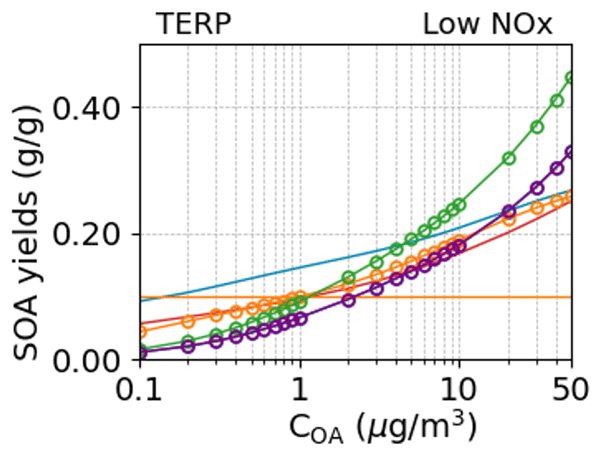
Secondary organic aerosol (SOA) constitutes a major component of atmospheric aerosol that models must account for to assess how human activities influence air quality, climate, and public health. We find substantial differences in how current air quality models represent SOA highlighting a lack of consensus within the modelling community. Our findings emphasize the need to recognize the limitations of current SOA schemes in the context of air quality management and policy development.
Shivendra G. Tewari, Krish Vijayaraghavan, Kun Zhao, Liji M. David, Katie Tuite, Felix Kristanovich, Yuan Zhuang, Benjamin Yang, Cecilia Hurtado, Dimitrios K. Papanastasiou, Paul Giffen, Holly Kimko, Megan Gibbs, and Stefan Platz
Atmos. Chem. Phys., 25, 15469–15486, https://doi.org/10.5194/acp-25-15469-2025, https://doi.org/10.5194/acp-25-15469-2025, 2025
Short summary
Short summary
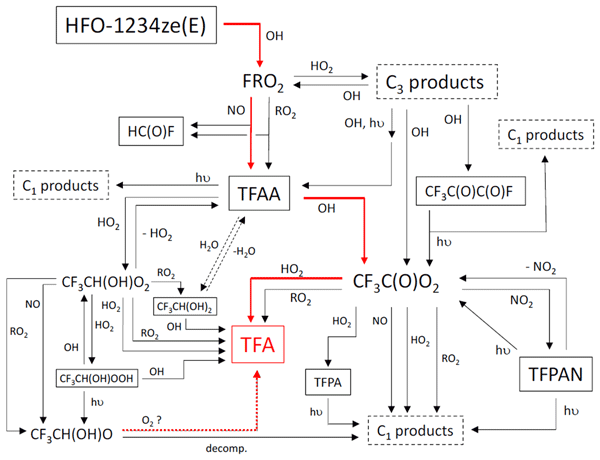
This study indicates that using HFO‑1234ze(E) as a medical propellant in pressurized metered dose inhalers (pMDIs) reduces environmental impact compared with current propellants, and that associated trifluoroacetic acid (TFA) formation levels are predicted to be significantly below all reported safety thresholds. The results suggest this next‑generation propellant supports climate goals with its near‑zero global warming potential (GWP) and offers a sustainable substitute, helping ensure future pMDI supply for people with chronic respiratory diseases.
Ling Huang, Benjie Chen, Zi'ang Wu, Katie Tuite, Pradeepa Vennam, Greg Yarwood, and Li Li
Atmos. Chem. Phys., 26, 7895–7915, https://doi.org/10.5194/acp-26-7895-2026, https://doi.org/10.5194/acp-26-7895-2026, 2026
Short summary
Short summary
Secondary organic aerosol (SOA) constitutes a major component of atmospheric aerosol that models must account for to assess how human activities influence air quality, climate, and public health. We find substantial differences in how current air quality models represent SOA highlighting a lack of consensus within the modelling community. Our findings emphasize the need to recognize the limitations of current SOA schemes in the context of air quality management and policy development.
Shivendra G. Tewari, Krish Vijayaraghavan, Kun Zhao, Liji M. David, Katie Tuite, Felix Kristanovich, Yuan Zhuang, Benjamin Yang, Cecilia Hurtado, Dimitrios K. Papanastasiou, Paul Giffen, Holly Kimko, Megan Gibbs, and Stefan Platz
Atmos. Chem. Phys., 25, 15469–15486, https://doi.org/10.5194/acp-25-15469-2025, https://doi.org/10.5194/acp-25-15469-2025, 2025
Short summary
Short summary
This study indicates that using HFO‑1234ze(E) as a medical propellant in pressurized metered dose inhalers (pMDIs) reduces environmental impact compared with current propellants, and that associated trifluoroacetic acid (TFA) formation levels are predicted to be significantly below all reported safety thresholds. The results suggest this next‑generation propellant supports climate goals with its near‑zero global warming potential (GWP) and offers a sustainable substitute, helping ensure future pMDI supply for people with chronic respiratory diseases.
Kiyeon Kim, Chul Han Song, Kyung Man Han, Greg Yarwood, Ross Beardsley, and Saewung Kim
Atmos. Chem. Phys., 25, 10293–10314, https://doi.org/10.5194/acp-25-10293-2025, https://doi.org/10.5194/acp-25-10293-2025, 2025
Short summary
Short summary
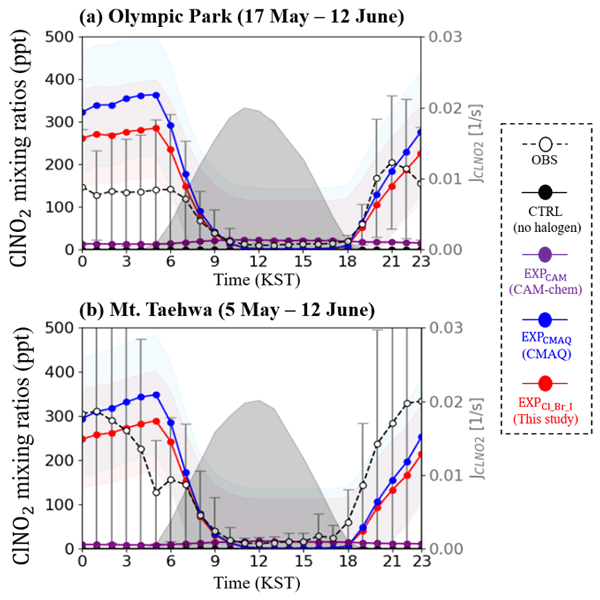
Despite the crucial role of halogen radicals in the atmosphere, current chemical transport models (CTMs) do not account for multi-phase halogen processes. To address this issue, we incorporated 177 halogen reactions, together with anthropogenic and natural halogen emissions into the CTMs. Our findings reveal that incorporation of these halogen processes significantly improves model performances compared to observations. In addition, we emphasize the influence of halogen radicals on air quality.
Ling Huang, Xinxin Zhang, Chris Emery, Qing Mu, Greg Yarwood, Hehe Zhai, Zhixu Sun, Shuhui Xue, Yangjun Wang, Joshua S. Fu, and Li Li
Atmos. Chem. Phys., 25, 4233–4249, https://doi.org/10.5194/acp-25-4233-2025, https://doi.org/10.5194/acp-25-4233-2025, 2025
Short summary
Short summary
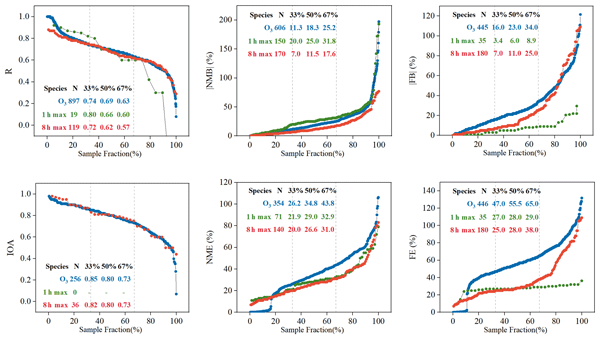
Ground-level ozone pollution has emerged as a significant air pollutant in China. Chemical transport models (CTMs) serve as crucial tools in addressing ozone pollution. This study reviews CTM applications for simulating ozone in China and proposes goal and criteria benchmark values for evaluating ozone. Along with prior work on PM₂₅ and other pollutants, this effort establishes a comprehensive framework for evaluating CTM performance in China.
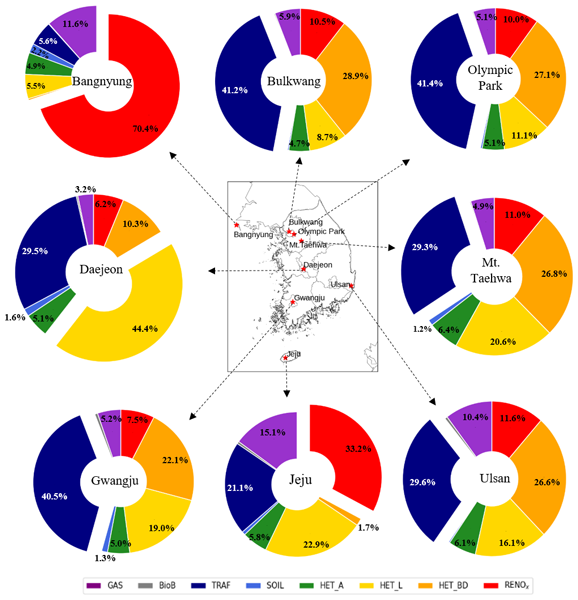
Kiyeon Kim, Kyung Man Han, Chul Han Song, Hyojun Lee, Ross Beardsley, Jinhyeok Yu, Greg Yarwood, Bonyoung Koo, Jasper Madalipay, Jung-Hun Woo, and Seogju Cho
Atmos. Chem. Phys., 24, 12575–12593, https://doi.org/10.5194/acp-24-12575-2024, https://doi.org/10.5194/acp-24-12575-2024, 2024
Short summary
Short summary
We incorporated each HONO process into the current CMAQ modeling framework to enhance the accuracy of HONO mixing ratio predictions. These results expand our understanding of HONO photochemistry and identify crucial sources of HONO that impact the total HONO budget in Seoul, South Korea. Through this investigation, we contribute to resolving discrepancies in understanding chemical transport models, with implications for better air quality management and environmental protection in the region.
Christopher A. Emery, Kirk R. Baker, Gary M. Wilson, and Greg Yarwood
Geosci. Model Dev. Discuss., https://doi.org/10.5194/gmd-2024-48, https://doi.org/10.5194/gmd-2024-48, 2024
Preprint withdrawn
Short summary
Short summary
We describe the Comprehensive Air quality Model with extensions (CAMx) and evaluate a model simulation during 2016 over nine U.S. climate zones. For ozone, the model statistically replicates measured concentrations better than most other past models and applications. For small inhalable particulates, the model replicates concentrations consistent with most other past models and applications subject to common uncertainties associated with sources, weather, and chemical interactions.
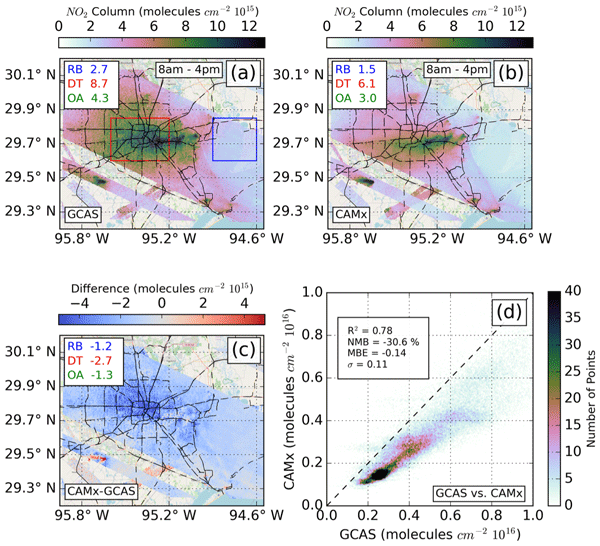
M. Omar Nawaz, Jeremiah Johnson, Greg Yarwood, Benjamin de Foy, Laura Judd, and Daniel L. Goldberg
Atmos. Chem. Phys., 24, 6719–6741, https://doi.org/10.5194/acp-24-6719-2024, https://doi.org/10.5194/acp-24-6719-2024, 2024
Short summary
Short summary
NO2 is a gas with implications for air pollution. A campaign conducted in Houston provided an opportunity to compare NO2 from different instruments and a model. Aircraft and satellite observations agreed well with measurements on the ground; however, the latter estimated lower values. We find that model-simulated NO2 was lower than observations, especially downtown, suggesting that NO2 sources associated with the urban core of Houston, such as vehicle emissions, may be underestimated.
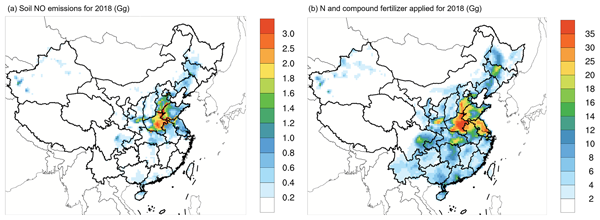
Ling Huang, Jiong Fang, Jiaqiang Liao, Greg Yarwood, Hui Chen, Yangjun Wang, and Li Li
Atmos. Chem. Phys., 23, 14919–14932, https://doi.org/10.5194/acp-23-14919-2023, https://doi.org/10.5194/acp-23-14919-2023, 2023
Short summary
Short summary
Surface ozone concentrations have emerged as a major environmental issue in China. Although control strategies aimed at reducing NOx emissions from conventional combustion sources are widely recognized, soil NOx emissions have received little attention. The impact of soil NO emissions on ground-level ozone concentration is yet to be evaluated. In this study, we estimated the soil NO emissions and evaluated its impact on ozone formation in China.
Ling Huang, Hanqing Liu, Greg Yarwood, Gary Wilson, Jun Tao, Zhiwei Han, Dongsheng Ji, Yangjun Wang, and Li Li
EGUsphere, https://doi.org/10.5194/egusphere-2022-1502, https://doi.org/10.5194/egusphere-2022-1502, 2023
Preprint archived
Short summary
Short summary
Secondary organic aerosols are an important component of PM2.5, with contributions from anthropogenic, biogenic volatile organic compounds, semi- and intermediate volatility organic compounds. Policy makers need to know which SOA precursors are important. We investigated the role of different SOA precursors and SOA algorithms by applying two commonly used models, CAMx and CMAQ. Suggestions for SOA modelling and control are provided.
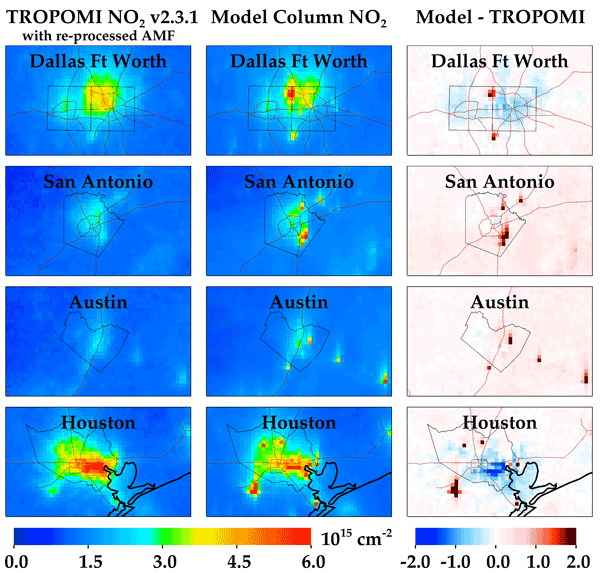
Daniel L. Goldberg, Monica Harkey, Benjamin de Foy, Laura Judd, Jeremiah Johnson, Greg Yarwood, and Tracey Holloway
Atmos. Chem. Phys., 22, 10875–10900, https://doi.org/10.5194/acp-22-10875-2022, https://doi.org/10.5194/acp-22-10875-2022, 2022
Short summary
Short summary
TROPOMI measurements offer a valuable means to validate emissions inventories and ozone formation regimes, with important limitations. Lightning NOx is important to account for in Texas and can contribute up to 24 % of the column NO2 in rural areas and 8 % in urban areas. Modeled NO2 in urban areas agrees with TROPOMI NO2 to within 20 % in most circumstances, with a small underestimate in Dallas (−13 %) and Houston (−20 %). Near Texas power plants, the satellite appears to underrepresent NO2.
Cited articles
Acdan, J. J. M., Pierce, R. B., Dickens, A. F., Adelman, Z., and Nergui, T.: Examining TROPOMI formaldehyde to nitrogen dioxide ratios in the Lake Michigan region: implications for ozone exceedances, Atmos. Chem. Phys., 23, 7867–7885, https://doi.org/10.5194/acp-23-7867-2023, 2023.
Amedro, D., Berasategui, M., Bunkan, A. J. C., Pozzer, A., Lelieveld, J., and Crowley, J. N.: Kinetics of the OH + NO2 reaction: effect of water vapour and new parameterization for global modelling, Atmos. Chem. Phys., 20, 3091–3105, https://doi.org/10.5194/acp-20-3091-2020, 2020.
Bates, K. H., Jacob, D. J., Li, K., Ivatt, P. D., Evans, M. J., Yan, Y., and Lin, J.: Development and evaluation of a new compact mechanism for aromatic oxidation in atmospheric models, Atmos. Chem. Phys., 21, 18351–18374, https://doi.org/10.5194/acp-21-18351-2021, 2021.
Blanchard, C. L. and Hidy, G. M.: Ozone response to emission reductions in the southeastern United States, Atmos. Chem. Phys., 18, 8183–8202, https://doi.org/10.5194/acp-18-8183-2018, 2018.
Burkholder, J. B., Sander, S. P., Abbatt, J., Barker, J. R., Cappa, C., Crounse, J. D., Dibble, T. S., Huie, R. E., Kolb, C. E., Kurylo, M. J., Orkin, V. L., Percival, C. J., Wilmouth, D. M., and Wine, P. H.: Chemical Kinetics and Photochemical Data for Use in Atmospheric Studies, Evaluation No. 19, JPL Publication 19-5, Jet Propulsion Laboratory, Pasadena, http://jpldataeval.jpl.nasa.gov (last access: 1 February 2025), 2019.
Carter, W. P.: Development of ozone reactivity scales for volatile organic compounds, J. Air Waste Manage. Assoc., 44, 881–899, 1994.
Carter, W. P. L.: Development of the SAPRC-07 chemical mechanism, Atmos. Environ., 44, 5324–5335, 2010a.
Carter, W. P. L.: SAPRC-07 Chemical Mechanism and Emissions Assignment File: “Toxics” version of SAPRC-07, https://intra.engr.ucr.edu/~carter/SAPRC/files.htm (last access: 29 January 2025), 2010b.
Chace, W. S., Womack, C., Ball, K., Bates, K. H., Bohn, B., Coggon, M., Crounse, J. D., Fuchs, H., Gilman, J., Gkatzelis, G. I., Jernigan, C. M., Novak, G. A., Novelli, A., Peischl, J., Pollack, I., Robinson, M. A., Rollins, A., Schafer, N. B., Schwantes, R. H., Selby, M., Stainsby, A., Stockwell, C., Taylor, R., Treadaway, V., Veres, P. R., Warneke, C., Waxman, E., Wennberg, P. O., Wolfe, G. M., Xu, L., Zuraski, K., and Brown, S. S.: Ozone production efficiencies in the three largest United States cities from airborne measurements, Environ. Sci. Technol., 59, 13306–13318, https://doi.org/10.1021/acs.est.5c02073, 2025.
Chen, X., Wang, M., He, T.-L., Jiang, Z., Zhang, Y., Zhou, L., Liu, J., Liao, H., Worden, H., Jones, D., Chen, D., Tan, Q., and Shen, Y.: Data- and model-based urban O3 responses to NOx changes in China and the United States, J. Geophys. Res.-Atmos., 128, e2022JD038228, https://doi.org/10.1029/2022JD038228, 2023.
Chen, T., Gilman, J., Kim, S.-W., Lefer, B., Washenfelder, R., Young, C. J., Rappenglueck, B., Stevens, P. S., Veres, P. R., Xue, L., de Gouw, J.: Modeling the impacts of volatile chemical product emissions on atmospheric photochemistry and ozone formation in Los Angeles, J. Geophys. Res.-Atmos., 129, e2024JD040743, https://doi.org/10.1029/2024JD040743, 2024.
Cox, R. A., Ammann, M., Crowley, J. N., Herrmann, H., Jenkin, M. E., McNeill, V. F., Mellouki, A., Troe, J., and Wallington, T. J.: Evaluated kinetic and photochemical data for atmospheric chemistry: Volume VII – Criegee intermediates, Atmos. Chem. Phys., 20, 13497–13519, https://doi.org/10.5194/acp-20-13497-2020, 2020.
Daum, P. H., Kleinman, L. I., Springston, S. R., Nunnermacker, L. J., Lee, Y.-N., Weinstein-Lloyd, J., Zheng, J., and Berkowitz, C. M.: A comparative study of O3 formation in the Houston urban and industrial plumes during the 2000 Texas Air Quality Study, J. Geophys. Res., 108, D234715, https://doi.org/10.1029/2003JD003552, 2003.
Daum, P. H., Kleinman, L. I., Springston, S. R., Nummermacker, L. J., Lee, Y.-N., Weinstein-Lloyd, J., Zheng, J., and Berkowitz, C. M.: Origin and properties of plumes of high ozone observed during the Texas 2000 Air Quality Study (TexAQS 2000), J. Geophys. Res., 109, D17306, https://doi.org/10.1029/2003JD004311, 2004.
Derwent, R.: Intercomparison of chemical mechanisms for air quality policy formulation and assessment under North American conditions, J. Air Waste Manage. Assoc., 67, 789–796, 2017.
Derwent, R. G.: Representing organic compound oxidation in chemical mechanisms for policy-relevant air quality models under background troposphere conditions, Atmosphere, 11, 171, https://doi.org/10.3390/atmos11020171, 2020.
Emery, C., Jung, J., Koo, B., and Yarwood, G.: Improvements to CAMx Snow Cover Treatments and Carbon Bond Chemical Mechanism for Winter Ozone, Prepared for the Utah Department of Environmental Quality, Division of Air Quality, Salt Lake City, UT, August 2015, http://www.camx.com/files/udaq_snowchem_final_6aug15.pdf (last access: 1 February 2025), 2015.
Emery, C., Baker, K., Wilson, G. and Yarwood, G.: Comprehensive Air Quality Model with Extensions: Formulation and Evaluation for Ozone and Particulate Matter over the US, Atmosphere, 15, https://doi.org/10.3390/atmos15101158, 2024.
Goliff, W. S., Stockwell, W. R., and Lawson, C. V.: The regional atmospheric chemistry mechanism, version 2, Atmos. Environ., 68, 174–185, https://doi.org/10.1016/j.atmosenv.2012.11.038, 2013.
Griffin, R. J., Johnson, C. A., Talbot, R. W., Mao, H., Russo, R. S., Zhou, Y., and Sive, B. C.: Quantification of ozone formation metrics at Thompson Farm during the New England Air Quality Study (NEAQS) 2002, J. Geophys. Res., 109, D24302, https://doi.org/10.1029/2004JD005344, 2004.
Hembeck, L., He, H., Vinciguerra, T. P., Canty, T. P., Dickerson, R. R., Salawitch, R. J., and Loughner, C.: Measured and modelled ozone photochemical production in the Baltimore-Washington airshed, Atmos. Environ., X2, 100017, https://doi.org/10.1016/j.aeaoa.2019.100017, 2019.
Henneman, L. R. F., Shen, H., Liu, C., Hu, Y., Mulholland, J. A., and Russell, A. G.: Responses in ozone and its production efficiency attributable to recent and future emissions changes in the eastern United States, Environ. Sci. Technol., 51, 13797–13805, https://doi.org/10.1021/acs.est.7b04109, 2017.
Hertel, O., Berkowicz, R., Christensen, J. and Hov, Ø.: Test of two numerical schemes for use in atmospheric transport-chemistry models, Atmos. Environ., 27, 2591–2611, 1993.
Kleinman, L. I., Daum, P. H., Lee, Y-N, Nunnermacker, L. J., Springston, S. R., Weinstein-Lloyd, J., and Rudolph, J.: Ozone production efficiency in an urban area, J. Geophys. Res., 107, 4733, https://doi.org/10.1029/2002JD002529, 1–12, 2002.
Liu, S., Shilling, J. E., Song, C., Hiranuma, N., Zaveri, R. A., and Russell, L. M.: Hydrolysis of organonitrate functional groups in aerosol particles, Aerosol Sci. Tech., 46, 1359–1369, 2012.
Leighton, P.: Photochemistry of Air Pollution, Elsevier, ISBN 9780323156455, 1961.
Mazzuca, G. M., Ren, X., Loughner, C. P., Estes, M., Crawford, J. H., Pickering, K. E., Weinheimer, A. J., and Dickerson, R. R.: Ozone production and its sensitivity to NOx and VOCs: results from the DISCOVER-AQ field experiment, Houston 2013, Atmos. Chem. Phys., 16, 14463–14474, https://doi.org/10.5194/acp-16-14463-2016, 2016.
NCAR: The Tropospheric Visible and Ultraviolet (TUV) Radiation Model, https://www2.acom.ucar.edu/modeling/tropospheric-ultraviolet-and-visible-tuv-radiation-model, last access: 29 January 2025.
Neuman, J. A., Nowak, J. B., Zheng, W., Flocke, F., Ryerson, T. B., Trainer, M., Holloway, J. S., Parrish, D. D., Frost, G. J., Peischl, J., Atlas, E. L., Bahreini, R., Wollny, A. G., and Fehsenfeld, F. C.: Relationship between photochemical ozone production and NOx oxidation in Houston, Texas, J. Geophys. Res., 114, D00F008, https://doi.org/10.1029/2008JD011688, 2009.
Ninneman, M., Lu, S., Lee, P., McQueen, J., Huang, J., Demerjian, K., and Schwab, J.: Observed and model-derived ozone production efficiency over urban and rural New York State, Atmosphere, 8, 126, https://doi.org/10.3390/atmos8070126, 2017.
Ninneman, M., Demerjian, K. L., and Schwab, J. J.: Ozone production efficiencies at rural New York State locations: Relationship to oxides of nitrogen concentrations, J. Geophys. Res.-Atmos., 124, 2018JD029932, https://doi.org/10.1029/2018JD029932, 2019.
Place, B. K., Hutzell, W. T., Appel, K. W., Farrell, S., Valin, L., Murphy, B. N., Seltzer, K. M., Sarwar, G., Allen, C., Piletic, I. R., D'Ambro, E. L., Saunders, E., Simon, H., Torres-Vasquez, A., Pleim, J., Schwantes, R. H., Coggon, M. M., Xu, L., Stockwell, W. R., and Pye, H. O. T.: Sensitivity of northeastern US surface ozone predictions to the representation of atmospheric chemistry in the Community Regional Atmospheric Chemistry Multiphase Mechanism (CRACMMv1.0), Atmos. Chem. Phys., 23, 9173–9190, https://doi.org/10.5194/acp-23-9173-2023, 2023.
Ramboll: Comprehensive Air Quality Model with Extensions, version 7.3, https://www.camx.com (last access: 29 January 2025), 2024.
Rolletter, M., Hofzumahaus, A., Novelli, A., Wahner, A., and Fuchs, H.: Kinetics of the reactions of OH with CO, NO, and NO2 and of HO2 with NO2 in air at 1 atm pressure, room temperature, and tropospheric water vapour concentrations, Atmos. Chem. Phys., 25, 3481–3502, https://doi.org/10.5194/acp-25-3481-2025, 2025.
Rollins, A. W., Pusede, S., Wooldridge, P., Min, K. E., Gentner, D. R., Goldstein, A. H., Liu, S., Day, D. A., Russell, L. M., Rubitschun, C. L., and Surratt, J. D.: Gas/particle partitioning of total alkyl nitrates observed with TD-LIF in Bakersfield, J. Geophys. Res.-Atmos., 118, 6651–6662, 2013.
Ryerson, T. B., Trainer, M., Angevine, W. M., Brock, C. A., Dissly, R. W., Fehsenfeld, F. C., Frost, G. J., Goldan, P. D., Holloway, J. S., Hübler, G., Jakoubek, R. O., Kuster, W. C., Neuman, J. A., Nicks Jr., D. K., Parrish, D. D., Roberts, J. M., Sueper, D. T., Atlas, E. L., Donnelly, S. G., Flocke, F., Fried, A., Potter, W. T., Schauffler, S., Stroud, V., Weinheimer, A. J., Wert, B. P., Wiedinmyer, C., Alvarez, R. J., Banta, R. M., Darby, L. S., and Senff, C. J.: Effect of petrochemical industrial emissions of reactive alkenes and NOx on tropospheric ozone formation in Houston, Texas, J. Geophys. Res., 108, 4249, https://doi.org/10.1029/2002JD003070, 2003.
Sander, S. P., Finlayson-Pitts, B. J., Friedl, R. R., Golden, D. M., Huie, R. E., Keller-Rudek, H., Kolb, C. E., Kurylo, M. J., Molina, M. J., Moortgat, G. K., and Orkin, V. L.: Chemical Kinetics and Photochemical Data for Use in Atmospheric Studies, Evaluation No. 15, JPL Publication, 06-2, http://jpldataeval.jpl.nasa.gov (last access: 1 February 2025), 2006.
Schwantes, R. H., Emmons, L. K., Orlando, J. J., Barth, M. C., Tyndall, G. S., Hall, S. R., Ullmann, K., St. Clair, J. M., Blake, D. R., Wisthaler, A., and Bui, T. P. V.: Comprehensive isoprene and terpene gas-phase chemistry improves simulated surface ozone in the southeastern US, Atmos. Chem. Phys., 20, 3739–3776, https://doi.org/10.5194/acp-20-3739-2020, 2020.
Shareef, M., Cho, S., Lyder, D., Zelensky, M., and Heckbert, S.: Evaluation of Different Chemical Mechanisms on O3 and PM2.5 Predictions in Alberta, Canada, Applied Sci., 12, 8576, https://doi.org/10.3390/app12178576, 2022.
Tao, M., Fiore, A. M., Jin, X., Schiferl, L. D., Commane, R., Judd, L. M., Janz, S., Sullivan, J. T., Miller, P. J., Karambelas, A., Davis, S., Tzortziou, M., Valin, L., Whitehill, A., Cievrolo, K., and Tian, Y.: Investigating changes in ozone formation chemistry during summertime pollution events over the northeastern United States, Environ. Sci. Technol., 56, 15312–15327, 2022.
Texas Commission on Environmental Quality (TCEQ): Highly Reactive Volatile Organic Compound Emissions Cap and Trade Program, https://www.tceq.texas.gov/airquality/banking/hrvoc_ept_prog.html (last access: 10 February 2025), 2025.
Tonnesen, G. S. and Dennis, R. L.: Analysis of radical propagation efficiency to assess ozone sensitivity to hydrocarbons and NOx: 1. Local indicators of instantaneous odd oxygen production sensitivity, J. Geophys. Res.-Atmos., 105, 9213–9225, 2000.
Tonnesen, G. S. and Luecken, D.: Intercomparison of photochemical mechanisms using response surfaces and process analysis. In Air Pollution Modeling and Its Application XIV, Springer US, Boston, MA, 511–519, https://doi.org/10.1007/0-306-47460-3_52, 2004.
Trainer, M., Parrish, D. D., Buhr, M. P., Norton, R., Fehsenfeld, F., Anlauf, K., Bottenheim, J., Tang, Y., Weibe, H., Roberts, J., Tanner, R., Newman, L., Bowersox, V., Meagher, J., Olszyna, K., Rodgers, M., Wang, T., Berresheim, H., Demerjian, K., and Roychowdhury, U.: Correlation of ozone with NOy in photochemically aged air, J. Geophys. Res., 98, 2917–2925, 1993.
Travis, K. R., Jacob, D. J., Fisher, J. A., Kim, P. S., Marais, E. A., Zhu, L., Yu, K., Miller, C. C., Yantosca, R. M., Sulprizio, M. P., Thompson, A. M., Wennberg, P. O., Crounse, J. D., St. Clair, J. M., Cohen, R. C., Laughner, J. L., Dibb, J. E., Hall, S. R., Ullmann, K., Wolfe, G. M., Pollack, I. B., Peischl, J., Neuman, J. A., and Zhou, X.: Why do models overestimate surface ozone in the Southeast United States?, Atmos. Chem. Phys., 16, 13561–13577, https://doi.org/10.5194/acp-16-13561-2016, 2016.
Tuite, K., Brockway, N., Colosimo, S. F., Grossmann, K., Tsai, C., Flynn, J., Alvarez, S., Erickson, M., Yarwood, G., Nopmongcol, U., and Stutz, J.: Iodine catalyzed ozone destruction at the Texas Coast and Gulf of Mexico, Geophys. Res. Lett., 45, 7800–7807, 2018.
Wahner, A., Mentel, T. F., and Sohn, M.: Gas-phase reaction of N2O5 with water vapor: Importance of heterogeneous hydrolysis of N2O5 and surface desorption of HNO3 in a large Teflon chamber. Geophys. Res. Lett., 25, 2169–2172, 1998.
Wennberg, P. O., Bates, K. H., Crounse, J. D., Dodson, L. G., McVay, R. C., Mertens, L. A., Nguyen, T. B., Praske, E., Schwantes, R. H., Smarte, M. D., and St. Clair, J. M.: Gas-phase reactions of isoprene and its major oxidation products, Chem. Rev., 118, 3337–3390, 2018.
Yarwood, G., Shi, Y., and Beardsley, R.: Impact of CB6r5 Mechanism Changes on Air Pollutant Modeling in Texas, Report prepared for Texas Commission on Environmental Quality, 30 July 2020, https://web.archive.org/web/20210529064250/https://www.tceq.texas.gov/assets/public/implementation/air/am/contracts/reports/pm/5822011221014-20200730-Ramboll-CB6r5MechanismChanges.pdf (last access: 1 February 2025), 2020.
Yarwood, G., Shi, Y., and Beardsley, R.: Develop CB7 Chemical Mechanism for CAMx Ozone Modeling. Report prepared for Texas Commission on Environmental Quality, 30 June 2021, https://web.archive.org/web/20220119125447/https:/www.tceq.texas.gov/downloads/air-quality/research/reports/photochemical/5822121802020-20210630-ramboll-cb7.pdf (last access: 1 February 2025), 2021.
Zaveri, R. A., Berkowitz, C. M., Kleinman, L. I., Springston, S. R., Doskey, P. V., Lonneman, W. A., and Spicer, C. W.: Ozone production efficiency and NOx depletion in an urban plume: Interpretation of field observations and implications for evaluating O3–NOx–VOC sensitivity, J. Geophys. Res., 108, 4436, https://doi.org/10.1029/2002JD003144, 2003.
Zhao, Q., Xie, H. B., Ma, F., Nie, W., Yan, C., Huang, D., Elm, J., and Chen, J.: Mechanism-based structure-activity relationship investigation on hydrolysis kinetics of atmospheric organic nitrates, npj Climate and Atmospheric Science, 6, 192, https://doi.org/10.1038/s41612-023-00517-w, 2023.
Zhou, W., Cohan, D. S., and Henderson, B. H.: Slower ozone production in Houston, Texas following emission reductions: evidence from Texas Air Quality Studies in 2000 and 2006, Atmos. Chem. Phys., 14, 2777–2788, https://doi.org/10.5194/acp-14-2777-2014, 2014.
Short summary
Gas-phase chemical mechanisms are key components of air quality models used by regulatory agencies for air quality and public health planning. We use modeled ozone concentrations and Ozone Production Efficiency (OPE) to compare four chemical mechanisms and find that OPE is a viable comparison metric under atmospheric conditions where nitrogen oxides are limited. Using OPE to predict how ozone responds to emissions reductions, however, is an oversimplification that can overstate ozone reductions.
Gas-phase chemical mechanisms are key components of air quality models used by regulatory...


Altmetrics
Final-revised paper
Preprint