
Articles | Volume 26, issue 6
https://doi.org/10.5194/acp-26-3901-2026
© Author(s) 2026. This work is distributed under
the Creative Commons Attribution 4.0 License.
the Creative Commons Attribution 4.0 License.
https://doi.org/10.5194/acp-26-3901-2026
© Author(s) 2026. This work is distributed under
the Creative Commons Attribution 4.0 License.
the Creative Commons Attribution 4.0 License.
Research article
| 
19 Mar 2026
Research article |
| 19 Mar 2026
| 19 Mar 2026
An update of shallow cloud parameterization in the AROME NWP model

CNRM, Université de Toulouse, Météo-France, CNRS, Toulouse, France
Sébastien Riette
CORRESPONDING AUTHOR
CNRM, Université de Toulouse, Météo-France, CNRS, Toulouse, France
Didier Ricard
CORRESPONDING AUTHOR
CNRM, Université de Toulouse, Météo-France, CNRS, Toulouse, France
Christine Lac
CORRESPONDING AUTHOR
CNRM, Université de Toulouse, Météo-France, CNRS, Toulouse, France
Related authors
No articles found.

Marie Mazoyer, Christine Lac, Frédéric Burnet, Benoît Vié, Marie Taufour, Théophane Costabloz, Salomé Antoine, and Maroua Fathalli
Atmos. Chem. Phys., 26, 12837–12864, https://doi.org/10.5194/acp-26-12837-2026, https://doi.org/10.5194/acp-26-12837-2026, 2026
Short summary
Short summary
Fog modelling remains a significant challenge due to the complex, interrelated physical processes involved, including microphysics. We evaluated the ability of an advanced microphysical scheme to reproduce the fog life cycle by comparing it with new vertical microphysical observations obtained using a tethered balloon during an extensive field campaign. Although realistic modelling performance was achieved, some biases remain that require further microphysics observations.
Gaston Bidou, Didier Ricard, and Christine Lac
EGUsphere, https://doi.org/10.5194/egusphere-2026-323, https://doi.org/10.5194/egusphere-2026-323, 2026
Short summary
Short summary
Thunderstorms are meteorological events whose impact ranges from mildly inconvenient to natural catastrophe. This intensity is dictated by the environment the storm takes place in. One such parameter is the vertical shear of low-altitude wind. With a set of high-resolution simulations, we quantified some of the effects of said wind shear on thunderstorms, such as increase in precipitation, storm intensity and organisation.
Théophane Costabloz, Frédéric Burnet, Christine Lac, Pauline Martinet, Julien Delanoë, Susana Jorquera, and Maroua Fathalli
Atmos. Chem. Phys., 25, 6539–6573, https://doi.org/10.5194/acp-25-6539-2025, https://doi.org/10.5194/acp-25-6539-2025, 2025
Short summary
Short summary
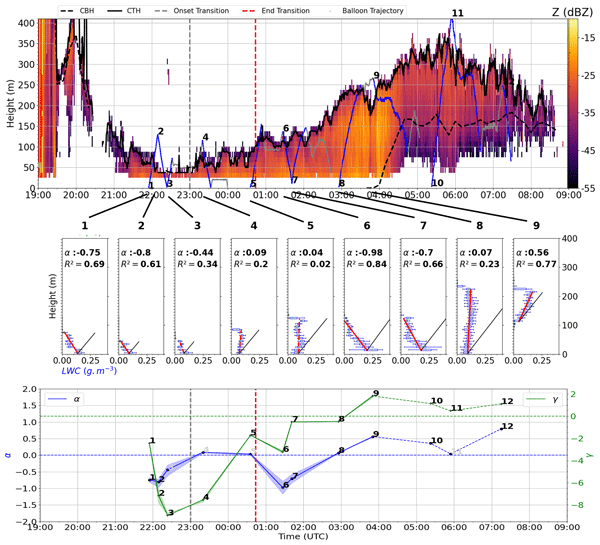
This study documents vertical profiles of liquid water content (LWC) in fogs from in situ measurements collected during the SOFOG3D field campaign in 2019–2020. The analysis of 140 vertical profiles reveals a reverse trend in LWC, maximum values at ground decreasing with height, during stable conditions in optically thin fogs, evolving towards quasi-adiabatic characteristics when fogs become thick. These results offer new perspectives for better constraining fog numerical simulations.
Florian Pantillon, Silvio Davolio, Elenio Avolio, Carlos Calvo-Sancho, Diego Saul Carrió, Stavros Dafis, Emanuele Silvio Gentile, Juan Jesus Gonzalez-Aleman, Suzanne Gray, Mario Marcello Miglietta, Platon Patlakas, Ioannis Pytharoulis, Didier Ricard, Antonio Ricchi, Claudio Sanchez, and Emmanouil Flaounas
Weather Clim. Dynam., 5, 1187–1205, https://doi.org/10.5194/wcd-5-1187-2024, https://doi.org/10.5194/wcd-5-1187-2024, 2024
Short summary
Short summary
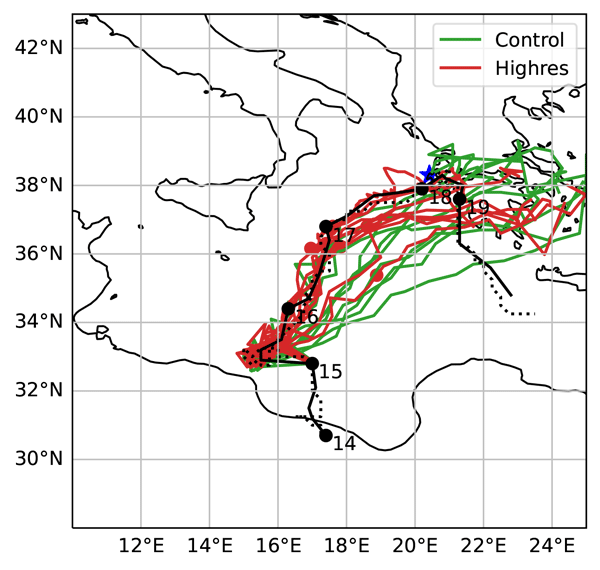
Cyclone Ianos of September 2020 was a high-impact but poorly predicted medicane (Mediterranean hurricane). A community effort of numerical modelling provides robust results to improve prediction. It is found that the representation of local thunderstorms controlled the interaction of Ianos with a jet stream at larger scales and its subsequent evolution. The results help us understand the peculiar dynamics of medicanes and provide guidance for the next generation of weather and climate models.
Marie-Adèle Magnaldo, Quentin Libois, Sébastien Riette, and Christine Lac
Geosci. Model Dev., 17, 1091–1109, https://doi.org/10.5194/gmd-17-1091-2024, https://doi.org/10.5194/gmd-17-1091-2024, 2024
Short summary
Short summary
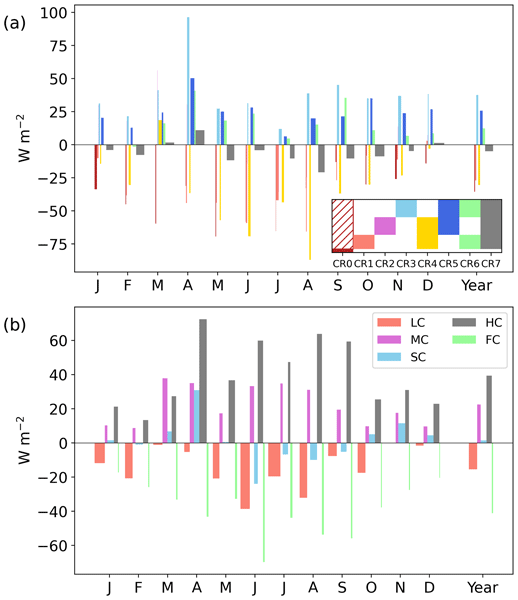
With the worldwide development of the solar energy sector, the need for reliable solar radiation forecasts has significantly increased. However, meteorological models that predict, among others things, solar radiation have errors. Therefore, we wanted to know in which situtaions these errors are most significant. We found that errors mostly occur in cloudy situations, and different errors were highlighted depending on the cloud altitude. Several potential sources of errors were identified.
Cheikh Dione, Martial Haeffelin, Frédéric Burnet, Christine Lac, Guylaine Canut, Julien Delanoë, Jean-Charles Dupont, Susana Jorquera, Pauline Martinet, Jean-François Ribaud, and Felipe Toledo
Atmos. Chem. Phys., 23, 15711–15731, https://doi.org/10.5194/acp-23-15711-2023, https://doi.org/10.5194/acp-23-15711-2023, 2023
Short summary
Short summary
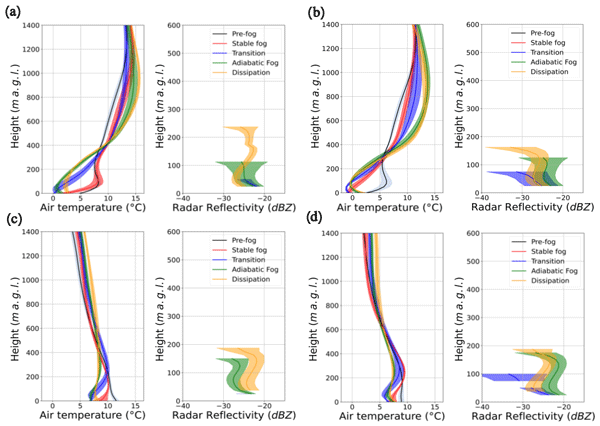
This paper documents the role of thermodynamics and turbulence in the fog life cycle over southwestern France. It is based on a unique dataset collected during the SOFOG3D field campaign in autumn and winter 2019–2020. The paper gives a threshold for turbulence driving the different phases of the fog life cycle and the role of advection in the night-time dissipation of fog. The results can be operationalised to nowcast fog and improve short-range forecasts in numerical weather prediction models.
Paolo Dandini, Céline Cornet, Renaud Binet, Laetitia Fenouil, Vadim Holodovsky, Yoav Y. Schechner, Didier Ricard, and Daniel Rosenfeld
Atmos. Meas. Tech., 15, 6221–6242, https://doi.org/10.5194/amt-15-6221-2022, https://doi.org/10.5194/amt-15-6221-2022, 2022
Short summary
Short summary
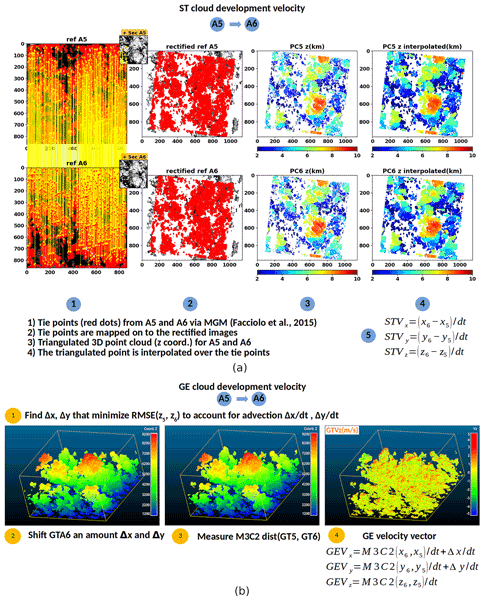
3D cloud envelope and development velocity are retrieved from realistic simulations of multi-view
CLOUD (C3IEL) images. Cloud development velocity is derived by finding matching features
between acquisitions separated by 20 s. The tie points are then mapped from image to space via 3D
reconstruction of the cloud envelope obtained from 2 simultaneous images. The retrieved cloud
topography as well as the velocities are in good agreement with the estimates obtained from the
physical models.
Emmanouil Flaounas, Silvio Davolio, Shira Raveh-Rubin, Florian Pantillon, Mario Marcello Miglietta, Miguel Angel Gaertner, Maria Hatzaki, Victor Homar, Samira Khodayar, Gerasimos Korres, Vassiliki Kotroni, Jonilda Kushta, Marco Reale, and Didier Ricard
Weather Clim. Dynam., 3, 173–208, https://doi.org/10.5194/wcd-3-173-2022, https://doi.org/10.5194/wcd-3-173-2022, 2022
Short summary
Short summary
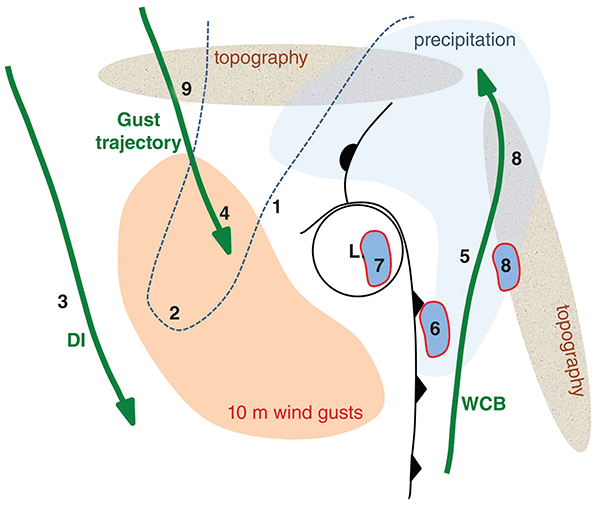
This is a collective effort to describe the state of the art in Mediterranean cyclone dynamics, climatology, prediction (weather and climate scales) and impacts. More than that, the paper focuses on the future directions of research that would advance the broader field of Mediterranean cyclones as a whole. Thereby, we propose interdisciplinary cooperation and additional modelling and forecasting strategies, and we highlight the need for new impact-oriented approaches to climate prediction.
Ian Boutle, Wayne Angevine, Jian-Wen Bao, Thierry Bergot, Ritthik Bhattacharya, Andreas Bott, Leo Ducongé, Richard Forbes, Tobias Goecke, Evelyn Grell, Adrian Hill, Adele L. Igel, Innocent Kudzotsa, Christine Lac, Bjorn Maronga, Sami Romakkaniemi, Juerg Schmidli, Johannes Schwenkel, Gert-Jan Steeneveld, and Benoît Vié
Atmos. Chem. Phys., 22, 319–333, https://doi.org/10.5194/acp-22-319-2022, https://doi.org/10.5194/acp-22-319-2022, 2022
Short summary
Short summary
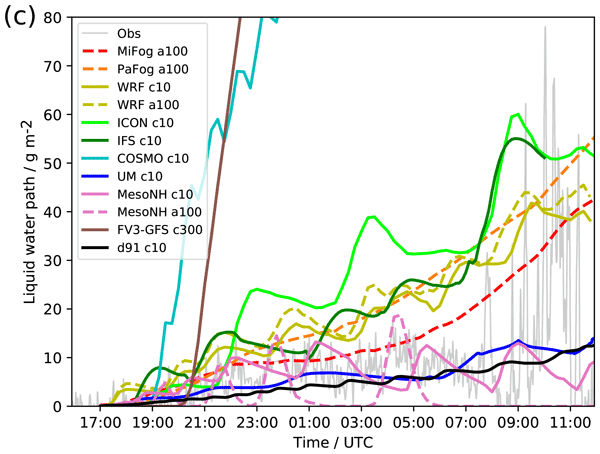
Fog forecasting is one of the biggest problems for numerical weather prediction. By comparing many models used for fog forecasting with others used for fog research, we hoped to help guide forecast improvements. We show some key processes that, if improved, will help improve fog forecasting, such as how water is deposited on the ground. We also showed that research models were not themselves a suitable baseline for comparison, and we discuss what future observations are required to improve them.
Samira Khodayar, Silvio Davolio, Paolo Di Girolamo, Cindy Lebeaupin Brossier, Emmanouil Flaounas, Nadia Fourrie, Keun-Ok Lee, Didier Ricard, Benoit Vie, Francois Bouttier, Alberto Caldas-Alvarez, and Veronique Ducrocq
Atmos. Chem. Phys., 21, 17051–17078, https://doi.org/10.5194/acp-21-17051-2021, https://doi.org/10.5194/acp-21-17051-2021, 2021
Short summary
Short summary
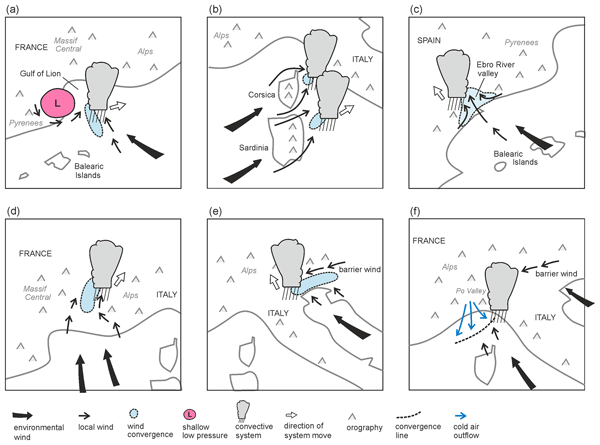
Heavy precipitation (HP) constitutes a major meteorological threat in the western Mediterranean. Every year, recurrent events affect the area with fatal consequences. Despite this being a well-known issue, open questions still remain. The understanding of the underlying mechanisms and the modeling representation of the events must be improved. In this article we present the most recent lessons learned from the Hydrological Cycle in the Mediterranean Experiment (HyMeX).
Cited articles
Arakawa, A. and Schubert, W. H.: Interaction of a Cumulus Cloud Ensemble with the Large-Scale Environment, Part I, Journal of the Atmospheric Sciences, 31, 674–701, https://doi.org/10.1175/1520-0469(1974)031<0674:ioacce>2.0.co;2, 1974. a, b
Audouin, O., Roehrig, R., Couvreux, F., and Williamson, D.: Modeling the GABLS4 Strongly‐Stable Boundary Layer With a GCM Turbulence Parameterization: Parametric Sensitivity or Intrinsic Limits?, Journal of Advances in Modeling Earth Systems, 13, https://doi.org/10.1029/2020ms002269, 2021. a, b, c
Betts, A. K. and Jakob, C.: Evaluation of the Diurnal Cycle of Precipitation, Surface Thermodynamics, and Surface Fluxes in the ECMWF Model using LBA Data, Journal of Geophysical Research: Atmospheres, 107, https://doi.org/10.1029/2001jd000427, 2002. a
Bougeault, P. and André, J.-C.: On the Stability of the THIRD-Order Turbulence Closure for the Modeling of the Stratocumulus-Topped Boundary Layer, Journal of the Atmospheric Sciences, 43, 1574–1581, https://doi.org/10.1175/1520-0469(1986)043<1574:otsott>2.0.co;2, 1986. a
Bougeault, P. and Lacarrere, P.: Parameterization of Orography-Induced Turbulence in a Mesobeta–Scale Model, Monthly Weather Review, 117, 1872–1890, https://doi.org/10.1175/1520-0493(1989)117<1872:pooiti>2.0.co;2, 1989. a
Bretherton, C. S., McCaa, J. R., and Grenier, H.: A New Parameterization for Shallow Cumulus Convection and Its Application to Marine Subtropical Cloud-Topped Boundary Layers. Part I: Description and 1D Results, Monthly Weather Review, 132, 864–882, https://doi.org/10.1175/1520-0493(2004)132<0864:ANPFSC>2.0.CO;2, 2004. a, b
Brient, F., Couvreux, F., Villefranque, N., Rio, C., and Honnert, R.: Object‐Oriented Identification of Coherent Structures in Large Eddy Simulations: Importance of Downdrafts in Stratocumulus, Geophysical Research Letters, 46, 2854–2864, https://doi.org/10.1029/2018gl081499, 2019. a
Brousseau, P., Seity, Y., Ricard, D., and Léger, J.: Improvement of the Forecast of Convective Activity from the AROME‐France System, Quarterly Journal of the Royal Meteorological Society, 142, 2231–2243, https://doi.org/10.1002/qj.2822, 2016. a
Brown, A. R., Cederwall, R. T., Chlond, A., Duynkerke, P., Golaz, J.-C., Khairoutdinov, M., Lewellen, D. C., Lock, A. P., MacVean, M. K., Moeng, C.-H., Neggers, R. A. J., Siebesma, A. P., and Stevens, B.: Large-Eddy Simulation of the Diurnal Cycle of Shallow Cumulus Convection Over Land, Quarterly Journal of the Royal Meteorological Society, 128, 1075–1093, https://doi.org/10.1256/003590002320373210, 2002. a
Burnet, F. and Brenguier, J.-L.: Observational Study of the Entrainment-Mixing Process in Warm Convective Clouds, Journal of the Atmospheric Sciences, 64, 1995–2011, https://doi.org/10.1175/jas3928.1, 2007. a
Calvet, J.-C., Roujean, J.-L., Zhang, S., Maurel, W., Piguet, B., Barrié, J., Bouhours, G., Couzinier, J., Garrouste, O., Girres, S., Suquia, D., and Tzanos, D.: METEOPOLE-FLUX: An Observatory of Terrestrial Water, Energy, and CO2 Fluxes in Toulouse, EGU General Assembly Conference Abstracts, EGU General Assembly, 22 April 2016, https://meetingorganizer.copernicus.org/EGU2016/EGU2016-2264.pdf (last access: 10 November 2025), 2016. a
Canut, G., Calvet, J.-C., Maurel, W., and Paci, A.: Seven Years (2012–2018) of Continuous Observation of the Surface Energy Budget and of Soil Moisture and Temperature Profiles in a Peri-Urban Aera, EMS Annual Meeting Abstracts, 10 September 2019, https://meetingorganizer.copernicus.org/EMS2019/EMS2019-687-1.pdf (last access: 10 November 2025), 2019. a
Canuto, V. M., Minotti, F., Ronchi, C., Ypma, R. M., and Zeman, O.: Second-Order Closure PBL Model with New Third-Order Moments: Comparison with LES Data, Journal of the Atmospheric Sciences, 51, 1605–1618, https://doi.org/10.1175/1520-0469(1994)051<1605:socpmw>2.0.co;2, 1994. a
Canuto, V. M., Howard, A., Cheng, Y., and Dubovikov, M. S.: Ocean Turbulence. Part I: One-Point Closure Model – Momentum and Heat Vertical Diffusivities, Journal of Physical Oceanography, 31, 1413–1426, https://doi.org/10.1175/1520-0485(2001)031<1413:otpiop>2.0.co;2, 2001. a
Chaboureau, J.-P. and Bechtold, P.: A Simple Cloud Parameterization Derived from Cloud Resolving Model Data: Diagnostic and Prognostic Applications, Journal of the Atmospheric Sciences, 59, 2362–2372, https://doi.org/10.1175/1520-0469(2002)059<2362:ascpdf>2.0.co;2, 2002. a
Chatfield, R. B. and Brost, R. A.: A Two-Stream Model of the Vertical Transport of Trace Species in the Convective Boundary Layer, Journal of Geophysical Research: Atmospheres, 92, 13263–13276, 1987. a
Cheinet, S.: A Multiple Mass-Flux Parameterization for the Surface-Generated Convection. Part I: Dry Plumes, Journal of the Atmospheric Sciences, 60, 2313–2327, https://doi.org/10.1175/1520-0469(2003)060<2313:AMMPFT>2.0.CO;2, 2003. a, b
Chosson, F., Brenguier, J.-L., and Schüller, L.: Entrainment-Mixing and Radiative Transfer Simulation in Boundary Layer Clouds, Journal of the Atmospheric Sciences, 64, 2670–2682, https://doi.org/10.1175/jas3975.1, 2007. a
Cohen, Y., Lopez-Gomez, I., Jaruga, A., He, J., Kaul, C. M., and Schneider, T.: Unified Entrainment and Detrainment Closures for Extended Eddy-Diffusivity Mass-Flux Schemes, Journal of Advances in Modeling Earth Systems, 12, https://doi.org/10.1029/2020MS002162, 2020. a, b
Couvreux, F., Hourdin, F., and Rio, C.: Resolved Versus Parametrized Boundary-Layer Plumes. Part I: A Parametrization-Oriented Conditional Sampling in Large-Eddy Simulations, Boundary-Layer Meteorology, 134, 441–458, https://doi.org/10.1007/s10546-009-9456-5, 2009. a, b
Couvreux, F., Hourdin, F., Williamson, D., Roehrig, R., Volodina, V., Villefranque, N., Rio, C., Audouin, O., Salter, J., Bazile, E., Brient, F., Favot, F., Honnert, R., Lefebvre, M.-P., Madeleine, J.-B., Rodier, Q., and Xu, W.: Process-Based Climate Model Development Harnessing Machine Learning: I. A Calibration Tool for Parameterization Improvement, Journal of Advances in Modeling Earth Systems, 13, https://doi.org/10.1029/2020MS002217, 2021. a, b, c, d
Cuxart, J., Bougeault, P., and Redelsperger, J.-L.: A Turbulence Scheme Allowing for Mesoscale and Large-Eddy Simulations, Quarterly Journal of the Royal Meteorological Society, 126, 1–30, https://doi.org/10.1002/qj.49712656202, 2000. a
Danabasoglu, G., Lamarque, J.-F., Bacmeister, J., Bailey, D., DuVivier, A., Edwards, J., Emmons, L., Fasullo, J., Garcia, R., Gettelman, A., Hannay, C. Holland, M. M., Large, W. G., Lauritzen, P. H., Lawrence, D. M., Lenaerts, J. T. M., Lindsay, K., Lipscomb, W. H., Mills, M. J., Neale, R., Oleson, K. W., Otto-Bliesner, B., Phillips, A. S., Sacks, W., Tilmes, S., van Kampenhout, L., Vertenstein, M., Bertini, A., Dennis, J., Deser, C., Fischer, C., Fox-Kemper, B., Kay, J. E., Kinnison, D., Kushner, P. J., Larson, V. E., Long, M. C., Mickelson, S., Moore, J. K., Nienhouse, E., Polvani, L., Rasch, P. J., and Strand, W. G: The Community Earth System Model Version 2 (CESM2), Journal of Advances in Modeling Earth Systems, 12, e2019MS001916, https://doi.org/10.1029/2019MS001916, 2020. a
de Roode, S. R., Duynkerke, P. G., and Siebesma, A. P.: Analogies between Mass-Flux and Reynolds-Averaged Equations, Journal of the Atmospheric Sciences, 57, 1585–1598, https://doi.org/10.1175/1520-0469(2000)057<1585:abmfar>2.0.co;2, 2000. a
de Rooy, W. C. and Siebesma, A. P.: A Simple Parameterization for Detrainment in Shallow Cumulus, Monthly Weather Review, 136, 560–576, https://doi.org/10.1175/2007mwr2201.1, 2008. a
de Rooy, W. C. and Siebesma, A. P.: Analytical Expressions for Entrainment and Detrainment in Cumulus Convection, Quarterly Journal of the Royal Meteorological Society, 136, 1216–1227, https://doi.org/10.1002/qj.640, 2010. a, b, c
de Rooy, W. C., Bechtold, P., Fröhlich, K., Hohenegger, C., Jonker, H., Mironov, D., Siebesma, A. P., Teixeira, J., and Yano, J.-I.: Entrainment and Detrainment in Cumulus Convection: An Overview, Quarterly Journal of the Royal Meteorological Society, 139, 1–19, https://doi.org/10.1002/qj.1959, 2012. a
Deardorff, J. W.: The Counter-Gradient Heat Flux in the Lower Atmosphere and in the Laboratory, Journal of the Atmospheric Sciences, 23, 503–506, https://doi.org/10.1175/1520-0469(1966)023<0503:tcghfi>2.0.co;2, 1966. a
Deardorff, J. W.: Stratocumulus-Capped Mixed Layers derived from a Three-Dimensional Model, Boundary-Layer Meteorology, 18, 495–527, https://doi.org/10.1007/bf00119502, 1980. a
Doms, G., Förstner, J., Heise, E., Herzog, H.-J., Mironov, D., Raschendorfer, M., Reinhardt, T., Ritter, B., Schrodin, R., Schulz, J.-P., and Vogel, G.: COSMO-Model Version 6.00: A Description of the Nonhydrostatic Regional COSMO-Model – Part II: Physical Parametrizations, DWD, https://doi.org/10.5676/DWD_PUB/NWV/COSMO-DOC_6.00_II, 2021. a
Dufresne, J.-L. and Bony, S.: An Assessment of the Primary Sources of Spread of Global Warming Estimates from Coupled Atmosphere–Ocean Models, Journal of Climate, 21, 5135–5144, https://doi.org/10.1175/2008jcli2239.1, 2008. a
Duynkerke, P. G., de Roode, S. R., van Zanten, M. C., Calvo, J., Cuxart, J., Cheinet, S., Chlond, A., Grenier, H., Jonker, P. J., Köhler, M., Lenderink, G., Lewellen, D., Lappen, C.-L., Lock, A. P., Moeng, C.-H., Müller, F., Olmeda, D., Piriou, J.-M., Sánchez, E., and Sednev, I.: Observations and Numerical Simulations of the Diurnal Cycle of the EUROCS Stratocumulus Case, Quarterly Journal of the Royal Meteorological Society, 130, 3269–3296, https://doi.org/10.1256/qj.03.139, 2004. a
ECMWF: IFS Documentation CY49R1 – Part IV: Physical Processes, ECMWF, https://doi.org/10.21957/C731EE1102, 2024. a
Fouquart, Y. and Bonnel, B.: Computations of Solar Heating of the Earth’s Atmosphere: A New Parametrization, Beitr. Phys. Atmos., 53, 35–62, 1980. a
Garanaik, A., Pereira, F. S., Smith, K., Robey, R., Li, Q., Pearson, B., and Van Roekel, L.: A New Hybrid Mass‐Flux/High‐Order Turbulence Closure for Ocean Vertical Mixing, Journal of Advances in Modeling Earth Systems, 16, https://doi.org/10.1029/2023ms003846, 2023. a
Giordani, H., Bourdallé‐Badie, R., and Madec, G.: An Eddy‐Diffusivity Mass‐Flux Parameterization for Modeling Oceanic Convection, Journal of Advances in Modeling Earth Systems, 12, https://doi.org/10.1029/2020ms002078, 2020. a
Golaz, J.-C., Larson, V. E., and Cotton, W. R.: A PDF-Based Model for Boundary Layer Clouds. Part I: Method and Model Description, Journal of the Atmospheric Sciences, 59, 3540–3551, https://doi.org/10.1175/1520-0469(2002)059<3540:apbmfb>2.0.co;2, 2002a. a
Golaz, J.-C., Larson, V. E., and Cotton, W. R.: A PDF-Based Model for Boundary Layer Clouds. Part II: Model Results, Journal of the Atmospheric Sciences, 59, 3552–3571, https://doi.org/10.1175/1520-0469(2002)059<3552:apbmfb>2.0.co;2, 2002b. a
Gregory, D.: Estimation of Entrainment Rate in Simple Models of Convective Clouds, Quarterly Journal of the Royal Meteorological Society, 127, 53–72, https://doi.org/10.1002/qj.49712757104, 2001. a, b, c, d
Gregory, D., Kershaw, R., and Inness, P. M.: Parametrization of Momentum Transport by Convection. II: Tests in Single-Column and General Circulation Models, Quarterly Journal of the Royal Meteorological Society, 123, 1153–1183, https://doi.org/10.1002/qj.49712354103, 1997. a
Gu, J., Stephen Plant, R., Holloway, C. E., and Muetzelfeldt, M. R.: Pressure Drag for Shallow Cumulus Clouds: From Thermals to the Cloud Ensemble, Geophysical Research Letters, 47, https://doi.org/10.1029/2020gl090460, 2020. a
He, J., Cohen, Y., Lopez-Gomez, I., Jaruga, A., and Schneider, T.: An Improved Perturbation Pressure Closure for Eddy-Diffusivity Mass-Flux Schemes, ESS Open Archive, https://doi.org/10.1002/essoar.10505084.1, 2020. a, b
Honnert, R., Couvreux, F., Masson, V., and Lancz, D.: Sampling the Structure of Convective Turbulence and Implications for Grey-Zone Parametrizations, Boundary-Layer Meteorology, 160, 133–156, https://doi.org/10.1007/s10546-016-0130-4, 2016. a
Honnert, R., Efstathiou, G. A., Beare, R. J., Ito, J., Lock, A., Neggers, R., Plant, R. S., Shin, H. H., Tomassini, L., and Zhou, B.: The Atmospheric Boundary Layer and the “Gray Zone” of Turbulence: A Critical Review, Journal of Geophysical Research: Atmospheres, 125, https://doi.org/10.1029/2019jd030317, 2020. a
Hourdin, F., Couvreux, F., and Menut, L.: Parameterization of the Dry Convective Boundary Layer Based on a Mass Flux Representation of Thermals, Journal of the Atmospheric Sciences, 59, 1105–1123, https://doi.org/10.1175/1520-0469(2002)059<1105:POTDCB>2.0.CO;2, 2002. a
Hourdin, F., Williamson, D., Rio, C., Couvreux, F., Roehrig, R., Villefranque, N., Musat, I., Fairhead, L., Diallo, F. B., and Volodina, V.: Process-Based Climate Model Development Harnessing Machine Learning: II. Model Calibration From Single Column to Global, Journal of Advances in Modeling Earth Systems, 13, https://doi.org/10.1029/2020MS002225, 2021. a, b, c
Jam, A., Hourdin, F., Rio, C., and Couvreux, F.: Resolved Versus Parametrized Boundary-Layer Plumes. Part III: Derivation of a Statistical Scheme for Cumulus Clouds, Boundary-Layer Meteorology, 147, 421–441, https://doi.org/10.1007/s10546-012-9789-3, 2012. a, b, c
Kain, J. S. and Fritsch, J. M.: A One-Dimensional Entraining/Detraining Plume Model and Its Application in Convective Parameterization, Journal of the Atmospheric Sciences, 47, 2784–2802, https://doi.org/10.1175/1520-0469(1990)047<2784:aodepm>2.0.co;2, 1990. a, b
Kalmus, P., Wong, S., and Teixeira, J.: The Pacific Subtropical Cloud Transition: A MAGIC Assessment of AIRS and ECMWF Thermodynamic Structure, IEEE Geoscience and Remote Sensing Letters, 12, 1586–1590, https://doi.org/10.1109/lgrs.2015.2413771, 2015. a
Kershaw, R. and Gregory, D.: Parametrization of Momentum Transport by Convection. I: Theory and Cloud Modelling Results, Quarterly Journal of the Royal Meteorological Society, 123, 1133–1151, https://doi.org/10.1002/qj.49712354102, 1997. a
Kessler, E.: On the Continuity and Distribution of Water Substance in Atmospheric Circulations, Atmospheric Research, 38, 109–145, https://doi.org/10.1016/0169-8095(94)00090-z, 1995. a
Khairoutdinov, M. F. and Randall, D. A.: Cloud Resolving Modeling of the ARM Summer 1997 IOP: Model Formulation, Results, Uncertainties, and Sensitivities, Journal of the Atmospheric Sciences, 60, 607–625, 2003. a
Kurowski, M. J., Thrastarson, H. T., Suselj, K., and Teixeira, J.: Towards Unifying the Planetary Boundary Layer and Shallow Convection in CAM5 with the Eddy-Diffusivity/Mass-Flux Approach, Atmosphere, 10, 484, https://doi.org/10.3390/atmos10090484, 2019. a
Köhler, M., Ahlgrimm, M., and Beljaars, A.: Unified Treatment of Dry Convective and Stratocumulus-Topped Boundary Layers in the ECMWF Model, Quarterly Journal of the Royal Meteorological Society, 137, 43–57, https://doi.org/10.1002/qj.713, 2011. a
Lac, C., Chaboureau, J.-P., Masson, V., Pinty, J.-P., Tulet, P., Escobar, J., Leriche, M., Barthe, C., Aouizerats, B., Augros, C., Aumond, P., Auguste, F., Bechtold, P., Berthet, S., Bielli, S., Bosseur, F., Caumont, O., Cohard, J.-M., Colin, J., Couvreux, F., Cuxart, J., Delautier, G., Dauhut, T., Ducrocq, V., Filippi, J.-B., Gazen, D., Geoffroy, O., Gheusi, F., Honnert, R., Lafore, J.-P., Lebeaupin Brossier, C., Libois, Q., Lunet, T., Mari, C., Maric, T., Mascart, P., Mogé, M., Molinié, G., Nuissier, O., Pantillon, F., Peyrillé, P., Pergaud, J., Perraud, E., Pianezze, J., Redelsperger, J.-L., Ricard, D., Richard, E., Riette, S., Rodier, Q., Schoetter, R., Seyfried, L., Stein, J., Suhre, K., Taufour, M., Thouron, O., Turner, S., Verrelle, A., Vié, B., Visentin, F., Vionnet, V., and Wautelet, P.: Overview of the Meso-NH model version 5.4 and its applications, Geoscientific Model Development, 11, 1929–1969, https://doi.org/10.5194/gmd-11-1929-2018, 2018. a
Lappen, C.-L. and Randall, D. A.: Toward a Unified Parameterization of the Boundary Layer and Moist Convection. Part I: A New Type of Mass-Flux Model, Journal of the Atmospheric Sciences, 58, 2021–2036, https://doi.org/10.1175/1520-0469(2001)058<2021:taupot>2.0.co;2, 2001a. a, b
Lappen, C.-L. and Randall, D. A.: Toward a Unified Parameterization of the Boundary Layer and Moist Convection. Part II: Lateral Mass Exchanges and Subplume-Scale Fluxes, Journal of the Atmospheric Sciences, 58, 2037–2051, https://doi.org/10.1175/1520-0469(2001)058<2037:taupot>2.0.co;2, 2001b. a, b, c
Lappen, C.-L. and Randall, D. A.: Toward a Unified Parameterization of the Boundary Layer and Moist Convection. Part III: Simulations of Clear and Cloudy Convection, Journal of the Atmospheric Sciences, 58, 2052–2072, https://doi.org/10.1175/1520-0469(2001)058<2052:taupot>2.0.co;2, 2001c. a
Larson, V. E. and Golaz, J.-C.: Using Probability Density Functions to Derive Consistent Closure Relationships among Higher-Order Moments, Monthly Weather Review, 133, 1023–1042, https://doi.org/10.1175/mwr2902.1, 2005. a
Leger, J., Lafore, J.-P., Piriou, J.-M., and Guérémy, J.-F.: A Simple Model of Convective Drafts Accounting for the Perturbation Pressure Term, Journal of the Atmospheric Sciences, 76, 3129–3149, https://doi.org/10.1175/JAS-D-18-0281.1, 2019. a
Leonard, A.: Energy Cascade in Large-Eddy Simulations of Turbulent Fluid Flows, Elsevier, 237–248, ISBN 9780120188185, https://doi.org/10.1016/s0065-2687(08)60464-1, 1975. a
Madeleine, J.-B., Hourdin, F., Grandpeix, J.-Y., Rio, C., Dufresne, J.-L., Vignon, E., Boucher, O., Konsta, D., Cheruy, F., Musat, I., Idelkadi, A., Fairhead, L., Millour, E., Lefebvre, M.-P., Mellul, L., Rochetin, N., Lemonnier, F., Touzé-Peiffer, L., and Bonazzola, M.: Improved Representation of Clouds in the Atmospheric Component LMDZ6A of the IPSL-CM6A Earth System Model, Journal of Advances in Modeling Earth Systems, 12, https://doi.org/10.1029/2020MS002046, 2020. a
Magnaldo, M.-A., Libois, Q., Riette, S., and Lac, C.: Evaluation of surface shortwave downward radiation forecasts by the numerical weather prediction model AROME, Geoscientific Model Development, 17, 1091–1109, https://doi.org/10.5194/gmd-17-1091-2024, 2024. a
Malardel, S.: (Modèle Unifié, Simple Colonne) for Arpege-Aladin-Arome-Alaro-Hirlam-(IFS) (CY31T1 Version), Tech Report, Météo-France, https://www.umr-cnrm.fr/gmapdoc/IMG/pdf_DOC_1D_MODEL.pdf (last access: 10 November 2025), 2008. a
Malardel, S., Wedi, N., Deconinck, W., Diamantakis, M., Kuehnlein, C., Mozdzynski, G., Hamrud, M., and Smolarkiewicz, P.: A New Grid for the IFS, ECMWF, https://doi.org/10.21957/ZWDU9U5I, 2016. a
Mantovani Júnior, J. A., Aravéquia, J. A., Carneiro, R. G., and Fisch, G.: Evaluation of PBL Parameterization Schemes in WRF Model Predictions during the Dry Season of the Central Amazon Basin, Atmosphere, 14, 850, https://doi.org/10.3390/atmos14050850, 2023. a
Masson, V., Le Moigne, P., Martin, E., Faroux, S., Alias, A., Alkama, R., Belamari, S., Barbu, A., Boone, A., Bouyssel, F., Brousseau, P., Brun, E., Calvet, J.-C., Carrer, D., Decharme, B., Delire, C., Donier, S., Essaouini, K., Gibelin, A.-L., Giordani, H., Habets, F., Jidane, M., Kerdraon, G., Kourzeneva, E., Lafaysse, M., Lafont, S., Lebeaupin Brossier, C., Lemonsu, A., Mahfouf, J.-F., Marguinaud, P., Mokhtari, M., Morin, S., Pigeon, G., Salgado, R., Seity, Y., Taillefer, F., Tanguy, G., Tulet, P., Vincendon, B., Vionnet, V., and Voldoire, A.: The SURFEXv7.2 land and ocean surface platform for coupled or offline simulation of earth surface variables and fluxes, Geoscientific Model Development, 6, 929–960, https://doi.org/10.5194/gmd-6-929-2013, 2013. a
Mellor, G. L.: The Gaussian Cloud Model Relations, Journal of the Atmospheric Sciences, 34, 356–358, https://doi.org/10.1175/1520-0469(1977)034<0356:tgcmr>2.0.co;2, 1977. a
Mellor, G. L. and Yamada, T.: A Hierarchy of Turbulence Closure Models for Planetary Boundary Layers, Journal of Atmospheric Sciences, 31, 1791–1806, 1974. a
Mlawer, E. J., Taubman, S. J., Brown, P. D., Iacono, M. J., and Clough, S. A.: Radiative Transfer for Inhomogeneous Atmospheres: RRTM, a Validated Correlated‐k Model for the Longwave, Journal of Geophysical Research: Atmospheres, 102, 16663–16682, https://doi.org/10.1029/97jd00237, 1997. a
Moeng, C.-H.: A Closure for Updraft–Downdraft Representation of Subgrid-Scale Fluxes in Cloud-Resolving Models, Monthly Weather Review, 142, 703–715, https://doi.org/10.1175/mwr-d-13-00166.1, 2014. a
Morrison, H. and Peters, J. M.: Theoretical Expressions for the Ascent Rate of Moist Deep Convective Thermals, Journal of the Atmospheric Sciences, 75, 1699–1719, https://doi.org/10.1175/jas-d-17-0295.1, 2018. a
Morrison, H., Jeevanjee, N., and Yano, J.-I.: Dynamic Pressure Drag on Rising Buoyant Thermals in a Neutrally Stable Environment, Journal of the Atmospheric Sciences, 79, 3045–3063, https://doi.org/10.1175/JAS-D-21-0274.1, 2022. a
Neggers, R. A. J.: A Dual Mass Flux Framework for Boundary Layer Convection. Part II: Clouds, Journal of the Atmospheric Sciences, 66, 1489–1506, https://doi.org/10.1175/2008JAS2636.1, 2009. a
Neggers, R. A. J., Köhler, M., and Beljaars, A. C. M.: A Dual Mass Flux Framework for Boundary Layer Convection. Part I: Transport, Journal of the Atmospheric Sciences, 66, 1465–1487, https://doi.org/10.1175/2008JAS2635.1, 2009. a
Nordeng, T.-E.: Extended Versions of the Convective Parametrization Scheme at ECMWF and their Impact on the Mean and Transient Activity of the Model in the Tropics, ECMWF, https://doi.org/10.21957/E34XWHYSW, 1994. a, b, c
Olson, J. B., Kenyon, J. S., Angevine, W. A., Brown, J. M., Pagowski, M., and Sušelj, K.: A Description of the MYNN-EDMF Scheme and the Coupling to Other Components in WRF-ARW, NOAA, https://doi.org/10.25923/n9wm-be49, 2019. a
Paluch, I. R.: The Entrainment Mechanism in Colorado Cumuli, Journal of the Atmospheric Sciences, 36, 2467–2478, https://doi.org/10.1175/1520-0469(1979)036<2467:temicc>2.0.co;2, 1979. a, b
Perraud, E., Couvreux, F., Malardel, S., Lac, C., Masson, V., and Thouron, O.: Evaluation of Statistical Distributions for the Parametrization of Subgrid Boundary-Layer Clouds, Boundary-Layer Meteorology, 140, 263–294, https://doi.org/10.1007/s10546-011-9607-3, 2011. a, b, c, d
Perrot, M. and Lemarié, F.: Energetically Consistent Eddy‐Diffusivity Mass‐Flux Convective Schemes: 2. Implementation and Evaluation in an Oceanic Context, Journal of Advances in Modeling Earth Systems, 17, https://doi.org/10.1029/2024ms004616, 2025. a
Peters, J. M., Morrison, H., Zhang, G. J., and Powell, S. W.: Improving the Physical Basis for Updraft Dynamics in Deep Convection Parameterizations, Journal of Advances in Modeling Earth Systems, 13, https://doi.org/10.1029/2020ms002282, 2021. a
Pinty, J. and Jabouille, P.: A mixed-Phase Cloud Parameterization for use in a Mesoscale Non-Hydrostatic Model: Simulations of a Squall Line and of Orographic Precipitations, in: Proceedings of the AMS Conference on Cloud Physics, Everett, Washington, 217–220, https://worldcat.org/oclc/39920280 (last access: 10 November 2025), 1998. a
Pruppacher, H. R. and Klett, J. D.: Microphysics of Clouds and Precipitation, Springer Netherlands, ISBN 9789400999053, https://doi.org/10.1007/978-94-009-9905-3, 1978. a
Rasch, P. J., Xie, S., Ma, P.-L., Lin, W., Wang, H., Tang, Q., Burrows, S., Caldwell, P., Zhang, K., Easter, R., Cameron-Smith, P., Singh, B., Wan, H., Golaz, J.-C., Harrop, B. E., Roesler, E., Bacmeister, J., Larson, V. E., Evans, K. J., Qian, Y., Taylor, M., Leung, L. R., Zhang, Y., Brent, L., Branstetter, M., Hannay, C., Mahajan, S., Mametjanov, A., Neale, R., Richter, J. H., Yoon, J.-H., Zender, C. S., Bader, D., Flanner, M., Foucar, J. G., Jacob, R., Keen, N., Klein, S. A., Liu, X., Salinger, A. G., Shrivastava, M., and Yang, Y.: An Overview of the Atmospheric Component of the Energy Exascale Earth System Model, Journal of Advances in Modeling Earth Systems, 11, 2377–2411, https://doi.org/10.1029/2019MS001629, 2019. a
Redelsperger, J. L. and Sommeria, G.: Three-Dimensional Simulation of a Convective Storm: Sensitivity Studies on Subgrid Parameterization and Spatial Resolution, Journal of the Atmospheric Sciences, 43, 2619–2635, https://doi.org/10.1175/1520-0469(1986)043<2619:tdsoac>2.0.co;2, 1986. a
Riette, S. and Lac, C.: A New Framework to Compare Mass-Flux Schemes Within the AROME Numerical Weather Prediction Model, Boundary-Layer Meteorology, 160, 269–297, https://doi.org/10.1007/s10546-016-0146-9, 2016. a
Rio, C., Hourdin, F., Couvreux, F., and Jam, A.: Resolved Versus Parametrized Boundary-Layer Plumes. Part II: Continuous Formulations of Mixing Rates for Mass-Flux Schemes, Boundary-Layer Meteorology, 135, 469–483, https://doi.org/10.1007/s10546-010-9478-z, 2010. a, b, c, d
Rodier, Q., Masson, V., Couvreux, F., and Paci, A.: Evaluation of a Buoyancy and Shear Based Mixing Length for a Turbulence Scheme, Frontiers in Earth Science, 5, https://doi.org/10.3389/feart.2017.00065, 2017. a, b
Salter, J. M. and Williamson, D.: A Comparison of Statistical Emulation Methodologies for Multi‐Wave Calibration of Environmental Models, Environmetrics, 27, 507–523, https://doi.org/10.1002/env.2405, 2016. a
Sandu, I. and Stevens, B.: On the Factors Modulating the Stratocumulus to Cumulus Transitions, Journal of the Atmospheric Sciences, 68, 1865–1881, https://doi.org/10.1175/2011jas3614.1, 2011. a
Seity, Y., Brousseau, P., Malardel, S., Hello, G., Bénard, P., Bouttier, F., Lac, C., and Masson, V.: The AROME-France Convective-Scale Operational Model, Monthly Weather Review, 139, 976–991, https://doi.org/10.1175/2010MWR3425.1, 2011. a, b
Shin, H. H. and Dudhia, J.: Evaluation of PBL Parameterizations in WRF at Subkilometer Grid Spacings: Turbulence Statistics in the Dry Convective Boundary Layer, Monthly Weather Review, 144, 1161–1177, https://doi.org/10.1175/mwr-d-15-0208.1, 2016. a
Siebesma, A. P., Soares, P. M. M., and Teixeira, J.: A Combined Eddy-Diffusivity Mass-Flux Approach for the Convective Boundary Layer, Journal of the Atmospheric Sciences, 64, 1230–1248, https://doi.org/10.1175/JAS3888.1, 2007. a
Soares, P., Miranda, P., Siebesma, A., and Teixeira, J.: An Eddy-Diffusivity/Mass-Flux Parametrization for Dry and Shallow Cumulus Convection, Quarterly Journal of the Royal Meteorological Society, 130, 3365–3383, https://doi.org/10.1256/qj.03.223, 2004. a
Stommel, H.: Entrainment of Air into a Cumulus Cloud, Journal of Meteorology, 4, 91–94, https://doi.org/10.1175/1520-0469(1947)004<0091:eoaiac>2.0.co;2, 1947. a
Sušelj, K., Teixeira, J., and Chung, D.: A Unified Model for Moist Convective Boundary Layers Based on a Stochastic Eddy-Diffusivity/Mass-Flux Parameterization, Journal of the Atmospheric Sciences, 70, 1929–1953, https://doi.org/10.1175/JAS-D-12-0106.1, 2013. a
Suselj, K., Kurowski, M. J., and Teixeira, J.: A Unified Eddy-Diffusivity/Mass-Flux Approach for Modeling Atmospheric Convection, Journal of the Atmospheric Sciences, 76, 2505–2537, https://doi.org/10.1175/JAS-D-18-0239.1, 2019. a
Suselj, K., Smalley, M., Lebsock, M. D., Kurowski, M. J., Witte, M. K., and Teixeira, J.: Coupling Warm Rain With an Eddy Diffusivity/Mass Flux Parameterization: 1. Model Description and Validation, Journal of Advances in Modeling Earth Systems, 14, https://doi.org/10.1029/2021MS002736, 2022. a
Tan, Z., Kaul, C. M., Pressel, K. G., Cohen, Y., Schneider, T., and Teixeira, J.: An Extended Eddy-Diffusivity Mass-Flux Scheme for Unified Representation of Subgrid-Scale Turbulence and Convection, Journal of Advances in Modeling Earth Systems, 10, 770–800, https://doi.org/10.1002/2017MS001162, 2018. a, b, c, d, e, f, g
Tomas, S. and Masson, V.: A Parameterization of Third-order Moments for the Dry Convective Boundary Layer, Boundary-Layer Meteorology, 120, 437–454, https://doi.org/10.1007/s10546-006-9071-7, 2006. a
Turner, S., Brenguier, J.-L., and Lac, C.: A subgrid parameterization scheme for precipitation, Geoscientific Model Development, 5, 499–521, https://doi.org/10.5194/gmd-5-499-2012, 2012. a, b
vanZanten, M. C., Stevens, B., Nuijens, L., Siebesma, A. P., Ackerman, A. S., Burnet, F., Cheng, A., Couvreux, F., Jiang, H., Khairoutdinov, M., Kogan, Y., Lewellen, D. C., Mechem, D., Nakamura, K., Noda, A., Shipway, B. J., Slawinska, J., Wang, S., and Wyszogrodzki, A.: Controls on Precipitation and Cloudiness in Simulations of Trade-Wind Cumulus as Observed During RICO, Journal of Advances in Modeling Earth Systems, 3, https://doi.org/10.1029/2011MS000056, 2011. a
Verrelle, A., Ricard, D., and Lac, C.: Sensitivity of High‐Resolution Idealized Simulations of Thunderstorms to Horizontal Resolution and Turbulence Parametrization, Quarterly Journal of the Royal Meteorological Society, 141, 433–448, https://doi.org/10.1002/qj.2363, 2015. a
Williamson, D., Goldstein, M., Allison, L., Blaker, A., Challenor, P., Jackson, L., and Yamazaki, K.: History Matching for Exploring and Reducing Climate Model Parameter Space using Observations and a Large Perturbed Physics Ensemble, Climate Dynamics, 41, 1703–1729, https://doi.org/10.1007/s00382-013-1896-4, 2013. a, b
Williamson, D. B., Blaker, A. T., and Sinha, B.: Tuning without over-tuning: parametric uncertainty quantification for the NEMO ocean model, Geoscientific Model Development, 10, 1789–1816, https://doi.org/10.5194/gmd-10-1789-2017, 2017. a, b, c
Witek, M. L., Teixeira, J., and Matheou, G.: An Eddy Diffusivity–Mass Flux Approach to the Vertical Transport of Turbulent Kinetic Energy in Convective Boundary Layers, Journal of the Atmospheric Sciences, 68, 2385–2394, https://doi.org/10.1175/JAS-D-11-06.1, 2011. a
Wood, R.: Stratocumulus Clouds, Monthly Weather Review, 140, 2373–2423, https://doi.org/10.1175/MWR-D-11-00121.1, 2012. a
Wyngaard, J. C.: Toward Numerical Modeling in the “Terra Incognita”, Journal of the Atmospheric Sciences, 61, 1816–1826, https://doi.org/10.1175/1520-0469(2004)061<1816:tnmitt>2.0.co;2, 2004. a
Zhou, B., Sun, S., Yao, K., and Zhu, K.: Reexamining the Gradient and Countergradient Representation of the Local and Nonlocal Heat Fluxes in the Convective Boundary Layer, Journal of the Atmospheric Sciences, 75, 2317–2336, https://doi.org/10.1175/jas-d-17-0198.1, 2018. a
Short summary
This paper provides substantial consistent updates to the atmospheric boundary layer schemes of the AROME model, yet they can be used for both forecasting and climate modelling. The study employs a single-column model versus large eddy simulations comparison and uses a machine learning tool to calibrate parameterizations. The model's ability to simulate shallow clouds has been enhanced, especially for shallow precipitating cumulus and stratocumulus clouds.
This paper provides substantial consistent updates to the atmospheric boundary layer schemes of...


Altmetrics
Final-revised paper
Preprint