
Articles | Volume 26, issue 5
https://doi.org/10.5194/acp-26-3357-2026
© Author(s) 2026. This work is distributed under
the Creative Commons Attribution 4.0 License.
the Creative Commons Attribution 4.0 License.
https://doi.org/10.5194/acp-26-3357-2026
© Author(s) 2026. This work is distributed under
the Creative Commons Attribution 4.0 License.
the Creative Commons Attribution 4.0 License.
Measurement report
| 
05 Mar 2026
Measurement report |
| 05 Mar 2026
| 05 Mar 2026
Measurement report: Impact of domestic heating on dust deposition sources in hyper-arid Qaidam Basin, northern Qinghai-Xizang Plateau
Haixia Zhu
Key Laboratory of Green and High-end Utilization of Salt Lake Resources, Qinghai Institute of Salt Lakes, Chinese Academy of Sciences, Xining, 810008, China
Qinghai Provincial Key Laboratory of Geology and Environment of Salt Lakes, Qinghai Institute of Salt Lakes, Chinese Academy of Sciences, Xining, 810008, China
University of the Chinese Academy of Sciences, Beijing, 100049, China
Lufei Zhen
Key Laboratory of Green and High-end Utilization of Salt Lake Resources, Qinghai Institute of Salt Lakes, Chinese Academy of Sciences, Xining, 810008, China
Qinghai Provincial Key Laboratory of Geology and Environment of Salt Lakes, Qinghai Institute of Salt Lakes, Chinese Academy of Sciences, Xining, 810008, China
University of the Chinese Academy of Sciences, Beijing, 100049, China
Suping Zhao
CORRESPONDING AUTHOR

Key Laboratory of Cryospheric Science and Frozen Soil Engineering, Northwest Institute of Eco-Environment and Resources, Chinese Academy of Sciences, Lanzhou, 730000, China
Xiying Zhang
CORRESPONDING AUTHOR
Key Laboratory of Green and High-end Utilization of Salt Lake Resources, Qinghai Institute of Salt Lakes, Chinese Academy of Sciences, Xining, 810008, China
Qinghai Provincial Key Laboratory of Geology and Environment of Salt Lakes, Qinghai Institute of Salt Lakes, Chinese Academy of Sciences, Xining, 810008, China
Related authors
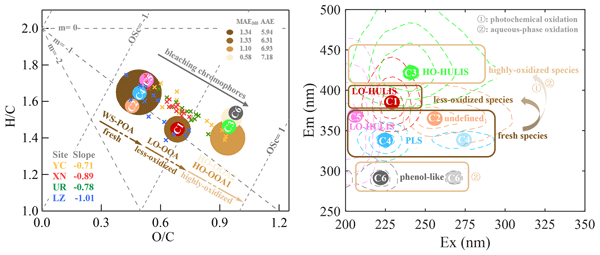
Miao Zhong, Jianzhong Xu, Huiqin Wang, Li Gao, Haixia Zhu, Lixiang Zhai, Xinghua Zhang, and Wenhui Zhao
Atmos. Chem. Phys., 23, 12609–12630, https://doi.org/10.5194/acp-23-12609-2023, https://doi.org/10.5194/acp-23-12609-2023, 2023
Short summary
Short summary
This study focus on coal-combustion-dominated aerosol in urban areas in northwestern China and combines the results of optical measurement and chemical analysis to deduce the evolution of these characteristics in the atmosphere, which has previously been unknown. The results provide insights into the effects of atmospheric processes and emissions on brown carbon properties.
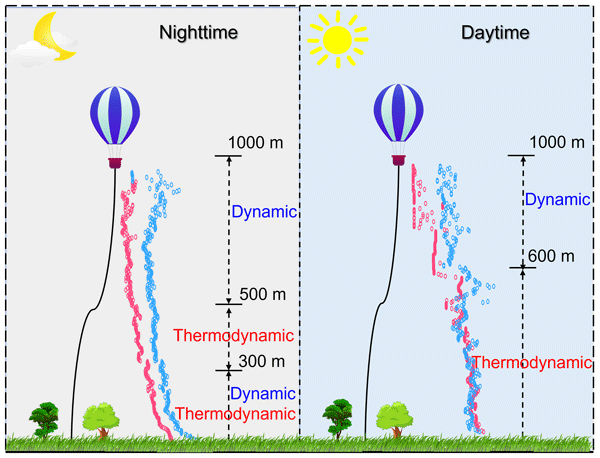
Shaofeng Qi, Suping Zhao, Ye Yu, Longxiang Dong, Tong Zhang, Guo Zhao, Jianglin Li, Xiang Zhang, and Yiting Lv
Atmos. Chem. Phys., 26, 12671–12687, https://doi.org/10.5194/acp-26-12671-2026, https://doi.org/10.5194/acp-26-12671-2026, 2026
Short summary
Short summary
This study provides the first field evidence of the impact of downward transport of residual layer pollutants on planetary boundary layer pollution, which holds significant implications for pollution control in complex terrain regions.
Ping Li, Ye Yu, and Suping Zhao
EGUsphere, https://doi.org/10.5194/egusphere-2025-5579, https://doi.org/10.5194/egusphere-2025-5579, 2025
Preprint archived
Short summary
Short summary
Vegetation releases organic gases that form ozone, but their emissions and effects over the Qinghai–Tibet Plateau remain uncertain. This study compared emissions from two versions of the MEGAN model and evaluated their impacts on simulated ozone. The newer version produces lower emissions and performs slightly better. Ozone responses are stronger in areas with higher nitrogen oxide levels. These findings improve understanding of atmospheric chemistry in clean mountain regions.
Suping Zhao, Shaofeng Qi, Jianjun He, Ye Yu, Longxiang Dong, Tong Zhang, Guo Zhao, and Yiting Lv
EGUsphere, https://doi.org/10.5194/egusphere-2025-3130, https://doi.org/10.5194/egusphere-2025-3130, 2025
Preprint archived
Short summary
Short summary
Upper-air secondary pollutants can downward invade to PBL by strong turbulence at the sloped terrain. The results are helpful for understanding formation mechanism of heavy air pollution at the complex terrain, and then taking the targeted countermeasures.
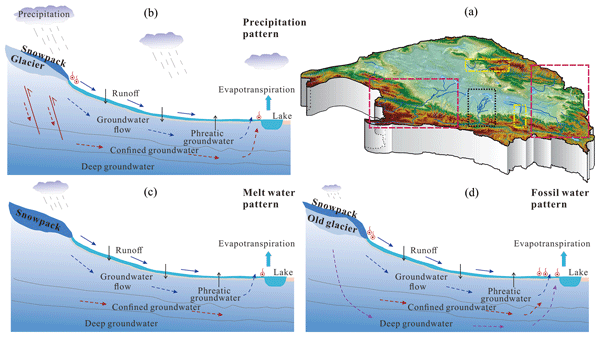
Yu Zhang, Hongbing Tan, Peixin Cong, Dongping Shi, Wenbo Rao, and Xiying Zhang
Hydrol. Earth Syst. Sci., 27, 4019–4038, https://doi.org/10.5194/hess-27-4019-2023, https://doi.org/10.5194/hess-27-4019-2023, 2023
Short summary
Short summary
Rapid climate warming creates barriers for us to investigate water resource states. Using stable and radioactive isotopes, we identified the seasonality and spatiality of the water cycle in the northeastern Tibetan Plateau. Climate warming/humidification accelerates the water cycle in alpine arid basins. Precipitation and meltwater infiltrate along preferential flow paths to facilitate rapid groundwater recharge. Total water resources may show an initially increasing and then decreasing trend.
Miao Zhong, Jianzhong Xu, Huiqin Wang, Li Gao, Haixia Zhu, Lixiang Zhai, Xinghua Zhang, and Wenhui Zhao
Atmos. Chem. Phys., 23, 12609–12630, https://doi.org/10.5194/acp-23-12609-2023, https://doi.org/10.5194/acp-23-12609-2023, 2023
Short summary
Short summary
This study focus on coal-combustion-dominated aerosol in urban areas in northwestern China and combines the results of optical measurement and chemical analysis to deduce the evolution of these characteristics in the atmosphere, which has previously been unknown. The results provide insights into the effects of atmospheric processes and emissions on brown carbon properties.
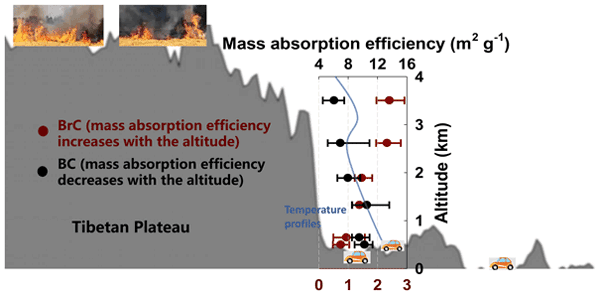
Suping Zhao, Shaofeng Qi, Ye Yu, Shichang Kang, Longxiang Dong, Jinbei Chen, and Daiying Yin
Atmos. Chem. Phys., 22, 14693–14708, https://doi.org/10.5194/acp-22-14693-2022, https://doi.org/10.5194/acp-22-14693-2022, 2022
Short summary
Short summary
Light absorption by aerosols is poorly understood at the eastern slope of the Tibetan Plateau (TP). We conducted the first in situ PM1 chemical measurements from the polluted Sichuan Basin to the eastern TP. A contrasting changes in mass absorption efficiency of black and brown carbon with altitude is found due to source differences. This study contributes to the understanding of the difference in light absorption by carbon with altitude, from the polluted basins to the pristine TP.
Suping Zhao, Ye Yu, Jianglin Li, Daiying Yin, Shaofeng Qi, and Dahe Qin
Atmos. Chem. Phys., 21, 14959–14981, https://doi.org/10.5194/acp-21-14959-2021, https://doi.org/10.5194/acp-21-14959-2021, 2021
Short summary
Short summary
We found a large PM2.5 reduction in response to Clean Air Action (CAA), but impacts of CAA on particle number concentrations (PNCs) may be different from PM2.5 mass due to newly formed particle impacts. The k-means clustering technique and Theil–Sen regression were used to analyze PNCs variations and to quantify their trends. Increased daytime solar radiation, higher temperature and lower RH at noon induced by reduced PM2.5 mass promoted formation of new particles and increased particle numbers.
Cited articles
Abdollahi, S., Karimi, A., Madadi, M., Eslamian, S., Ostad-Ali-Askari, K., and Singh, V. P.: Lead concentration in dust fall in Zahedan, Sistan and Baluchistan Province, Iran, Journal of Geography and Cartography, 4, 6, https://doi.org/10.24294/jgc.v4i2.601, 2021.
Adeniran, J. A., Yusuf, R. O., and Olajire, A. A.: Exposure to coarse and fine particulate matter at and around major intra-urban traffic intersections of Ilorin metropolis, Nigeria, Atmos. Environ., 166, 383–392, https://doi.org/10.1016/j.atmosenv.2017.07.041, 2017.
Agarwal, A., Satsangi, A., Lakhani, A., and Kumari, K. M.: Seasonal and spatial variability of secondary inorganic aerosols in PM2.5 at Agra: Source apportionment through receptor models, Chemosphere, 242, 125132, https://doi.org/10.1016/j.chemosphere.2019.125132, 2020.
Almeida, S. M., Lage, J., Fernández, B., Garcia, S., Reis, M. A., and Chaves, P. C.: Chemical characterization of atmospheric particles and source apportionment in the vicinity of a steelmaking industry, Sci. Total Environ., 521–522, 411–420, https://doi.org/10.1016/j.scitotenv.2015.03.112, 2015.
Alzahrani, A. J., Alghamdi, A. G., and Ibrahim, H. M.: Assessment of soil loss due to wind erosion and dust deposition: Implications for sustainable management in arid regions, Appl. Sci., 14, 10822, https://doi.org/10.3390/app142310822, 2024.
An, L., Che, H., Xue, M., Zhang, T., Wang, H., Wang, Y., Zhou, C., Zhao, H., Gui, K., Zheng, Y., Sun, T., Liang, Y., Sun, E., Zhang, H., and Zhang, X.: Temporal and spatial variations in sand and dust storm events in East Asia from 2007 to 2016: Relationships with surface conditions and climate change, Sci. Total Environ., 633, 452-462, https://doi.org/10.1016/j.scitotenv.2018.03.068, 2018.
Amacher, G. S., Hyde, W. F., and Kanel, K. R.: Nepali fuelwood production and consumption: Regional and household distinctions, substitution and successful intervention, J. Dev. Stud., 35, 138–163, https://doi.org/10.1080/00220389908422584, 1999.
Ambade, B., Sankar, T. K., Sahu, L. K., and Dumka, U. C.: Understanding sources and composition of black carbon and PM2.5 in urban environments in East India, Urban Science, 6, 60, https://doi.org/10.3390/urbansci6030060, 2022.
Amato, F., Alastuey, A., de la Rosa, J., Gonzalez Castanedo, Y., Sánchez de la Campa, A. M., Pandolfi, M., Lozano, A., Contreras González, J., and Querol, X.: Trends of road dust emissions contributions on ambient air particulate levels at rural, urban and industrial sites in southern Spain, Atmos. Chem. Phys., 14, 3533–3544, https://doi.org/10.5194/acp-14-3533-2014, 2014.
Arimoto, R., Duce, R. A., Savoie, D. L., Prospero, J. M., Talbot, R., Cullen, J. D., Tomza, U., Lewis, N. F., and Ray, B. J.: Relationships among aerosol constituents from Asia and the North Pacific during PEM-West A, J. Geophys. Res.-Atmos., 101, 2011–2023, https://doi.org/10.1029/95JD01071, 1996.
Ashrafi, K., Fallah, R., Hadei, M., Yarahmadi, M., and Shahsavani, A.: Source apportionment of Total Suspended Particles (TSP) by Positive Matrix Factorization (PMF) and Chemical Mass Balance (CMB) modeling in Ahvaz, Iran, Arch. Environ. Con. Tox., 75, 278–294, https://doi.org/10.1007/s00244-017-0500-z, 2018.
Aswini, M. A., Tiwari, S., Singh, U., Kurian, S., Patel, A., Gunthe, S. S., and Kumar, A.: Aeolian dust and sea salt in marine aerosols over the Arabian Sea during the Southwest Monsoon: Sources and spatial variability, ACS Earth Space Chem., 6, 1044–1058, https://doi.org/10.1021/acsearthspacechem.1c00400, 2022.
Bandowe, B. A. M., Nkansah, M. A., Leimer, S., Fischer, D., Lammel, G., and Han, Y.: Chemical (C, N, S, black carbon, soot and char) and stable carbon isotope composition of street dusts from a major West African metropolis: Implications for source apportionment and exposure, Sci. Total Environ., 655, 1468–1478, https://doi.org/10.1016/j.scitotenv.2018.11.089, 2019.
Barjoee, S. S., Abadi, S. Z. M., Elmi, M. R., Varaoon, V. T., and Nikbakht, M.: Evaluation of trace elements pollution in deposited dust on residential areas and agricultural lands around Pb/Zn mineral areas using modified pollution indices, J. Environ. Health Sci., 19, 753–769, https://doi.org/10.1007/s40201-021-00643-8, 2021.
Behera, B., Rahut, D. B., Jeetendra, A., and Ali, A.: Household collection and use of biomass energy sources in South Asia, Energy, 85, 468–480, https://doi.org/10.1016/j.energy.2015.03.059, 2015.
Belis, C. A., Pernigotti, D., Karagulian, F., Pirovano, G., Larsen, B. R., Gerboles, M., and Hopke, P. K.: A new methodology to assess the performance and uncertainty of source apportionment models in intercomparison exercises, Atmos. Environ., 119, 35–44, https://doi.org/10.1016/j.atmosenv.2015.08.002, 2015.
Bibi, S., Alam, K., Chishtie, F., Bibi, H., and Rahman, S.: Temporal variation of Black Carbon concentration using Aethalometer observations and its relationships with meteorological variables in Karachi, Pakistan, J. Atmos. Sol.-Terr. Phy., 157–158, 67–77, https://doi.org/10.1016/j.jastp.2017.03.017, 2017.
Bond, T. C. and Bergstrom, R. W.: Light absorption by carbonaceous particles: An investigative review, Aerosol Sci. Tech., 40, 27–67, https://doi.org/10.1080/02786820500421521, 2006.
Bond, T. C., Streets, D. G., Yarber, K. F., Nelson, S. M., Woo, J. H., and Klimont, Z.: A technology-based global inventory of black and organic carbon emissions from combustion, J. Geophys. Res.-Atmos., 109, https://doi.org/10.1029/2003JD003697, 2004.
Bond, T. C., Doherty, S. J., Fahey, D. W., Forster, P. M., Berntsen, T., DeAngelo, B. J., Flanner, M. G., Ghan, S., Kärcher, B., Koch, D., Kinne, S., Kondo, Y., Quinn, P. K., Sarofim, M. C., Schultz, M. G., Schulz, M., Venkataraman, C., Zhang, H., Zhang, S., Bellouin, N., Guttikunda, S. K., Hopke, P. K., Jacobson, M. Z., Kaiser, J. W., Klimont, Z., Lohmann, U., Schwarz, J. P., Shindell, D., Storelvmo, T., Warren, S. G., and Zender, C. S.: Bounding the role of black carbon in the climate system: A scientific assessment, J. Geophys. Res.-Atmos., 118, 5380–5552, https://doi.org/10.1002/jgrd.50171, 2013.
Bowen, H. J. M.: Environmental chemistry of the elements, Academic Press, https://doi.org/10.1002/9780470140451, 1979.
Butler, K. M. and Mulholland, G. W.: Generation and transport of smoke components, Fire Technol., 40, 149–176, https://doi.org/10.1023/B:FIRE.0000016841.07530.64, 2004.
Cachier, H. and Ducret, J.: Influence of biomass burning on equatorial African rains, Nature, 352, 228–230, https://doi.org/10.1038/352228a0, 1991.
Cao, J. J., Wu, F., Chow, J. C., Lee, S. C., Li, Y., Chen, S. W., An, Z. S., Fung, K. K., Watson, J. G., Zhu, C. S., and Liu, S. X.: Characterization and source apportionment of atmospheric organic and elemental carbon during fall and winter of 2003 in Xi'an, China, Atmos. Chem. Phys., 5, 3127–3137, https://doi.org/10.5194/acp-5-3127-2005, 2005.
Cao, J. J., Zhu, C. S., Chow, J. C., Watson, J. G., Han, Y. M., Wang, G. H., Shen, Z. X, and An, Z. S.: Black carbon relationships with emissions and meteorology in Xi'an, China, Atmos. Res., 94, 194–202, https://doi.org/10.1016/j.atmosres.2009.05.009, 2009.
Cao, J.-J., Zhu, C.-S., Tie, X.-X., Geng, F.-H., Xu, H.-M., Ho, S. S. H., Wang, G.-H., Han, Y.-M., and Ho, K.-F.: Characteristics and sources of carbonaceous aerosols from Shanghai, China, Atmos. Chem. Phys., 13, 803–817, https://doi.org/10.5194/acp-13-803-2013, 2013.
Casotti Rienda, I. and Alves, C. A.: Road dust resuspension: A review, Atmos. Res., 261, 105740, https://doi.org/10.1016/j.atmosres.2021.105740, 2021.
Castro, L. M., Pio, C. A., Harrison, R. M., and Smith, D. J. T.: Carbonaceous aerosol in urban and rural European atmospheres: Estimation of secondary organic carbon concentrations, Atmos. Environ., 33, 2771–2781, https://doi.org/10.1016/S1352-2310(98)00331-8, 1999.
Cesari, D., Amato, F., Pandolfi, M., Alastuey, A., Querol, X., and Contini, D.: An inter-comparison of PM10 source apportionment using PCA and PMF receptor models in three European sites, Environ. Sci. Pollut. R., 23, 15133–15148, https://doi.org/10.1007/s11356-016-6599-z, 2016.
Chen, L., Zhang, X. Y., Tang, Q. L., Geng, Y., Wang, E. L., and Li, J. Y.: Heavy metal pollution and source analysis of surface soil in the Qaidam Basin, Environ. Sci., 42, 4880–4888, https://doi.org/10.13227/j.hjkx.202101052, 2021 (in Chinese).
Chen, M., Li, M.-Y., Zhou, J. Y., Fu, R.-B., Wang, X. F., and Shen Z.: Characteristics and source analysis of heavy metal pollution in dust in a heavy industrial area of Northwest China, Environ. Sci. Technol., 47, 155–164, https://doi.org/10.19672/j.cnki.1003-6504.1004.23.338, 2024 (in Chinese).
Chen, P., Kang, S., Bai, J., Sillanpää, M., and Li, C.: Yak dung combustion aerosols in the Tibetan Plateau: Chemical characteristics and influence on the local atmospheric environment, Atmos. Res., 156, 58–66, https://doi.org/10.1016/j.atmosres.2015.01.001, 2015.
Chen, P., Kang, S., Li, C., Zhang, Q., Guo, J., Tripathee, L., Zhang, Y., Li, G., Gul, C., Cong, Z., Wan, X., Niu, H., Panday, A. K., Rupakheti, M., and Ji, Z.: Carbonaceous aerosol characteristics on the Third Pole: A primary study based on the Atmospheric Pollution and Cryospheric Change (APCC) network, Environ. Pollut., 253, 49–60, https://doi.org/10.1016/j.envpol.2019.06.112, 2019a.
Chen, P., Li, Y., Zhang, Y., Xue, C., Hopke, P. K., and Li, X.: Dynamic changes of composition of particulate matter emissions during residential biomass combustion, Environ. Sci. Technol., 57, 15193–15202, https://doi.org/10.1021/acs.est.3c05412, 2023.
Chen, S., Zhang, X., Lin, J., Huang, J., Zhao, D., Yuan, T., Huang, K., Luo, Y., Jia, Z., Zang, Z., Qiu, Y. A., and Xie, L.: Fugitive road dust PM2.5 emissions and their potential health impacts, Environ. Sci. Technol., 53, 8455–8465, https://doi.org/10.1021/acs.est.9b00666, 2019b.
Chen, W., Tong, D. Q., Dan, M., Zhang, S., Zhang, X., and Pan, Y.: Typical atmospheric haze during crop harvest season in northeastern China: A case in the Changchun region, J. Environ. Sci., 54, 101–113, https://doi.org/10.1016/j.jes.2016.03.031, 2017.
Cheng, N., Peng, L., Mou, L., Ji, H. D., Liu, X. F., Bai, H. L., and Zhao, Y. J.: Characterization of atmospheric organic and elemental carbon of PM10 in coal spontaneous combustion zone, Shanxi, Chinese Environmental Science, 35, 40–44, http://www.zghjkx.com.cn/CN/Y2015/V35/I1/40 (last access: 28 February 2026), 2015 (in Chinese).
Cheng, X. and Lin, X.: Temporal and spatial distribution characteristics of dust in Shenyang and analysis of influencing factors, Environmental Protection Science, 35, 1–3 + 58, https://doi.org/10.16803/j.cnki.issn.1004-6216.2009.06.001, 2009 (in Chinese).
Chow, J. C.: Measurement methods to determine compliance with ambient air quality standards for suspended particles, JAPCA J. Air Waste Ma., 45, 320–382, https://doi.org/10.1080/10473289.1995.10467369, 1995.
Chow, J. C., Watson, J. G., Kuhns, H., Etyemezian, V., Lowenthal, D. H., Crow, D., Kohl, S. D., Engelbrecht, J. P., and Green, M. C.: Source profiles for industrial, mobile, and area sources in the Big Bend Regional Aerosol Visibility and Observational study, Chemosphere, 54, 185–208, https://doi.org/10.1016/j.chemosphere.2003.07.004, 2004.
Chow, J. C., Watson, J. G., Robles, J., Wang, X., Chen, L. W. A., Trimble, D. L., Kohl, S. D., Tropp, R. J., and Fung, K. K.: Quality assurance and quality control for thermal/optical analysis of aerosol samples for organic and elemental carbon, Anal. Bioanal. Chem., 401, 3141–3152, https://doi.org/10.1007/s00216-011-5103-3, 2011
Christie, J. A., Elliott, H. E., O'Connell-Lopez, S. M. O., Perry, K., Pratt, K. A., Hallar, A. G., Hrdina, A., Murphy, J. G., Riedel, T. P., Long, R. W., Mitroo, D., Haskins, J. D., and Gaston, C. J.: Halogen production from playa dust emitted from the Great Salt Lake: Implications of the shrinking Great Salt Lake on regional air quality, ACS Earth Space Chem., 9, 480–493, https://doi.org/10.1021/acsearthspacechem.4c00258, 2025.
Chuang, M. T., Lee, C. T., Chou, C. C. K., Lin, N.-H., Sheu, G. R., Wang, J. L., Chang, S. C., Wang, S.MH., Chi, K. H., Young, C. Y., Huang, H., Chen, H. W., Weng, G -H., Lai, S. Y., Hsu, S. P., Chang, Y. J., Chang, J. H., and Wu, X. C.: Carbonaceous aerosols in the air masses transported from Indochina to Taiwan: Long-term observation at Mt. Lulin, Atmos. Environ., 89, 507–516, https://doi.org/10.1016/j.atmosenv.2013.11.066, 2014.
Cichowicz, R. and Bochenek, A. D.: Assessing the effects of urban heat islands and air pollution on human quality of life, Anthropocene, 46, 100433, https://doi.org/10.1016/j.ancene.2024.100433, 2024.
Cong, Z., Kang, S., Luo, C., Li, Q., Huang, J., Gao, S., and Li, X.: Trace elements and lead isotopic composition of PM10 in Lhasa, Tibet, Atmos. Environ., 45, 6210–6215, https://doi.org/10.1016/j.atmosenv.2011.07.060, 2011.
Contini, D., Cesari, D., Conte, M., and Donateo, A.: Application of PMF and CMB receptor models for the evaluation of the contribution of a large coal-fired power plant to PM10 concentrations, Sci. Total Environ., 560–561, 131–140, https://doi.org/10.1016/j.scitotenv.2016.04.031, 2016.
Dan, M.: The characteristics of carbonaceous species and their sources in PM2.5 in Beijing, Atmos. Environ., 38, 3443–3452, https://doi.org/10.1016/j.atmosenv.2004.02.052, 2004.
Demir, T., Karakaş, D., and Yenisoy-Karakaş, S.: Source identification of exhaust and non-exhaust traffic emissions through the elemental carbon fractions and Positive Matrix Factorization method, Environ. Res., 204, 112399, https://doi.org/10.1016/j.envres.2021.112399, 2022.
Deng, Z. W., Fang, F. M., Jiang, P. L., Zhang J. Q., and Lin, Y. S.: Distribution characteristics of black carbon content in surface dust in Wuhu city, Journal of Anqing Normal University (Natural Science Edition), 37, 58–62, https://doi.org/10.14182/j.cnki.1001-2443.2014.01.009, 2014 (in Chinese).
Deshmukh, D. K., Deb, M. K., Tsai, Y. I., and Mkoma, S. L.: Water soluble ions in PM2.5 and PM1 aerosols in Durg City, Chhattisgarh, India, Aerosol Air Qual. Res., 11, 696–708, https://doi.org/10.4209/aaqr.2011.03.0023, 2011.
Dickinson, K. L., Kanyomse, E., Piedrahita, R., Coffey, E., Rivera, I. J., Adoctor, J., Alirigia, R., Muvandimwe, D., Dove, M., Dukic, V., Hayden, M. H., Diaz-Sanchez, D., Abisiba, A. V., Anaseba, D., Hagar, Y., Masson, N., Monaghan, A., Titiati, A., Steinhoff, D. F., Hsu, Y. Y., Kaspar, R., Brooks, B. A., Hodgson, A., Hannigan, M., Oduro, A. R., and Wiedinmyer, C.: Research on emissions, air quality, climate, and cooking technologies in Northern Ghana (Reaccting): study rationale and protocol, BMC Public Health, 15, 126, https://doi.org/10.1186/s12889-015-1414-1, 2015.
Donahue, N. M.: Chapter 3.2 – Air pollution and air quality, in: Green chemistry, Elsevier, 151–176, https://doi.org/10.1016/B978-0-12-809270-5.00007-8, 2018.
Dong, Z., Qin, D., Kang, S., Ren, J., Chen, J., Cui, X., Du, Z., and Qin, X.: Physicochemical characteristics and sources of atmospheric dust deposition in snow packs on the glaciers of western Qilian Mountains, China, Tellus B, 66, 20956, https://doi.org/10.3402/tellusb.v66.20956, 2014.
Duan, J. and Tan, J.: Atmospheric heavy metals and Arsenic in China: Situation, sources and control policies, Atmos. Environ., 74, 93–101, https://doi.org/10.1016/j.atmosenv.2013.03.031, 2013.
Eivazzadeh, M., Hassanvand, M. S., Faridi, S., and Gholampour, A.: Source apportionment and deposition of dustfall-bound trace elements around Tabriz, Iran, Environ. Sci. Pollut. R., 28, 59403–59415, https://doi.org/10.1007/s11356-020-12173-1, 2021.
Fang, B., Zeng, H., Zhang, L., Wang, H., Liu, J., Hao, K., Zheng, G., Wang, M., Wang, Q., and Yang, W.: Toxic metals in outdoor/indoor airborne PM2.5 in port city of Northern, China: Characteristics, sources, and personal exposure risk assessment, Environ. Pollut., 279, 116937, https://doi.org/10.1016/j.envpol.2021.116937, 2021.
Feng, W., Guo, Z., Xiao, X., Peng, C., Shi, L., Ran, H., and Xu, W.: Atmospheric deposition as a source of cadmium and lead to soil-rice system and associated risk assessment, Ecotox. Environ. Safe., 180, 160–167, https://doi.org/10.1016/j.ecoenv.2019.04.090, 2019.
Feng, Y., Du, S., Fraedrich, K., and Zhang, X.: Fine-Grained Climate Classification for the Qaidam Basin, Atmosphere, 13, 913, https://doi.org/10.3390/atmos13060913, 2022.
Filonchyk, M., Yan, H., Yang, S., and Lu, X.: Detection of aerosol pollution sources during sandstorms in Northwestern China using remote sensed and model simulated data, Adv. Space Res., 61, 1035–1046, https://doi.org/10.1016/j.asr.2017.11.037, 2018.
Foysal, M., Hossain, M., Rubaiyat, A., Sultana, S., Uddin, M. K., Sayem, M., and Akhter, J.: Household energy consumption pattern in rural areas of Bangladesh, Indian Journal of Energy, 1, 72–85, 2012.
Fu, B.: Socio-economic data set of Qinghai-Tibet Plateau (1982–2018), National Tibetan Plateau/Third Pole Environment Data Center, https://data.tpdc.ac.cn/zh-hans/data/d175e9d4-89d3-41b1-a568-dc9870f6f109 (last access: 17 February 2026), 2023.
Ganor, E.: Atmospheric dust in Israel. Sedimentological and meteorological analysis of dust deposition, PhD thesis, Hebrew University of Jerusalem, Israel, 1975.
Gao, G. S., Song, L. M., and Ma, Z. T.: Temporal and spatial distribution of dust-fall in Qinghai Province and analysis of its influencing factors, Chinese Journal of Desert Research, 33, 1124–1130, https://doi.org/10.7522/j.issn.1000-694X.2013.00159, 2013 (in Chinese).
Gao, H. and Washington, R.: Arctic oscillation and the interannual variability of dust emissions from the Tarim Basin: a TOMS AI based study, Clim. Dynam., 35, 511–522, https://doi.org/10.1007/s00382-009-0687-4, 2010.
Gertler, A., Kuhns, H., Abu-Allaban, M., Damm, C., Gillies, J., Etyemezian, V., Clayton, R., and Proffitt, D.: A case study of the impact of Winter road sand/salt and street sweeping on road dust re-entrainment, Atmos. Environ., 40, 5976–5985, https://doi.org/10.1016/j.atmosenv.2005.12.047, 2006.
Gholampour, A., Nabizadeh, R., Hassanvand, M. S., Taghipour, H., Nazmara, S., and Mahvi, A. H.: Characterization of saline dust emission resulted from Urmia Lake drying, J. Environ. Health Sci., 13, 82, https://doi.org/10.1186/s40201-015-0238-3, 2015.
Gluscic, V., Zuzul, S., Pehnec, G., Jakovljevic, I., Smoljo, I., Godec, R., Beslic, I., Milinkovic, A., Alempijevic, S. B., and Frka, S.: Sources, ionic composition and acidic properties of bulk and wet atmospheric deposition in the Eastern Middle Adriatic Region, Toxics, 11, https://doi.org/10.3390/toxics11070551, 2023.
Gonçalves, C., Alves, C., Evtyugina, M., Mirante, F., Pio, C., Caseiro, A., Schmidl, C., Bauer, H., and Carvalho, F.: Characterisation of PM10 emissions from woodstove combustion of common woods grown in Portugal, Atmos. Environ., 44, 4474–4480, https://doi.org/10.1016/j.atmosenv.2010.07.026, 2010.
Gondwal, T. K. and Mandal, P.: Review on classification, sources and management of road dust and determination of uncertainty associated with measurement of particle size of road dust, Mapan, 36, 909–924, https://doi.org/10.1007/s12647-021-00501-w, 2021.
Gong, M., Yin, S., Gu, X., Xu, Y., Jiang, N., and Zhang, R.: Refined 2013-based vehicle emission inventory and its spatial and temporal characteristics in Zhengzhou, China, Sci. Total Environ., 599–600, 1149–1159, https://doi.org/10.1016/j.scitotenv.2017.03.299, 2017.
Goossens, D. and Offer, Z.: Eolian deposition of dust over symmetrical hills: an evaluation of wind-tunnel data by means of terrain measurement, Zeitschrift für Geomorphologie, 37, 103–111, https://doi.org/10.1127/zfg/37/1993/103, 1993.
Gregory, P. H.: The Microbiology of the Atmosphere, Leonard Hill, London, https://doi.org/10.1007/BF01976673, 1961.
Griffin, D. W., Kellogg, C. A., Garrison, V. H., and Shinn, E. A.: The global transport of dust: An Intercontinental river of dust, microorganisms and toxic chemicals flows through the Earth's atmosphere, Am. Sci., 90, 228–235, https://www.jstor.org/stable/27857658 (last access: January 2026), 2002.
Guo, J., Miao, Y., Zhang, Y., Liu, H., Li, Z., Zhang, W., He, J., Lou, M., Yan, Y., Bian, L., and Zhai, P.: The climatology of planetary boundary layer height in China derived from radiosonde and reanalysis data, Atmos. Chem. Phys., 16, 13309–13319, https://doi.org/10.5194/acp-16-13309-2016, 2016.
Guo, S., Wang, L., Zhou, P., Guo, S., Qin, W., An, S., Xiao, J. Y., Liu, J., and Ji, Y.: Characteristics and sources of organic carbon and elemental carbon in summer road dust in Shijiazhuang, Environ. Eng., 36, 122–126, https://doi.org/10.13205/j.hjgc.201804025, 2018 (in Chinese).
Guo, W. T., Zhao, F. Q., and Chang, H. L.: Analysis of the trend of environmental air quality changes in the main urban area of Changzhi City, Proceedings of Shanghai, China, 3, 409–411, 2010 (in Chinese).
Gupta, A. and Dhir, A.: Assessment of air quality and chemical fingerprints for atmospheric fine aerosols in an Indian smart city, Environmental Pollutants and Bioavailability, 34, 21–33, https://doi.org/10.1080/26395940.2021.2024091, 2022.
Hahnenberger, M. and Nicoll, K.: Meteorological characteristics of dust storm events in the eastern Great Basin of Utah, U.S.A., Atmos. Environ., 60, 601–612, https://doi.org/10.1016/j.atmosenv.2012.06.029, 2012.
Hama, S., Ouchen, I., Wyche, K. P., Cordell, R. L., and Monks, P. S.: Carbonaceous aerosols in five European cities: Insights into primary emissions and secondary particle formation, Atmos. Res., 274, https://doi.org/10.1016/j.atmosres.2022.106180, 2022.
Han, Y., Cao, J., An, Z., Chow, J. C., Watson, J. G., Jin, Z., Fung, K., and Liu, S.: Evaluation of the thermal/optical reflectance method for quantification of elemental carbon in sediments, Chemosphere, 69, 526–533, https://doi.org/10.1016/j.chemosphere.2007.03.035, 2007a.
Han, Y., Cao, J., Chow, J. C., Watson, J. G., An, Z., Jin, Z., Fung, K., and Liu, S.: Evaluation of the thermal/optical reflectance method for discrimination between char- and soot-EC, Chemosphere, 69, 569–574, https://doi.org/10.1016/j.chemosphere.2007.03.024, 2007b.
Han, Y. M., Han, Z. W., Cao, J. J., Chow, J. C., Watson, J. G., An, Z. S., Liu, S. X., and Zhang, R. J.: Distribution and origin of carbonaceous aerosol over a rural high-mountain lake area, Northern China and its transport significance, Atmos. Environ., 42, 2405–2414, https://doi.org/10.1016/j.atmosenv.2007.12.020, 2008.
Han, Y. M., Lee, S. C., Cao, J. J., Ho, K. F., and An, Z. S.: Spatial distribution and seasonal variation of char-EC and soot-EC in the atmosphere over China, Atmos. Environ., 43, 6066–6073, https://doi.org/10.1016/j.atmosenv.2009.08.018, 2009a.
Han, Y. M., Cao, J. J., Chow, J. C., Watson, J. G., An, Z. S., and Liu, S. X.: Elemental carbon in urban soils and road dusts in Xi'an, China and its implication for air pollution, Atmos. Environ., 43, 2464–2470, https://doi.org/10.1016/j.atmosenv.2009.01.040, 2009b.
Han, Y. M., Cao, J. J., Yan, B. Z., Kenna, T. C., Jin, Z. D., Cheng, Y., Chow, J. C., and An, Z. S.: Comparison of elemental carbon in lake sediments measured by three different methods and 150-year pollution history in Eastern China, Environ. Sci. Technol., 45, 5287–5293, https://doi.org/10.1021/es103518c, 2011.
Han, Y. M., Chen, L. W. A., Huang, R. J., Chow, J. C., Watson, J. G., Ni, H. Y., Liu, S. X., Fung, K. K., Shen, Z. X., Wei, C., Wang, Q. Y., Tian, J., Zhao, Z. Z., Prévôt, A. S. H., and Cao, J. J.: Carbonaceous aerosols in megacity Xi'an, China: Implications of thermal/optical protocols comparison, Atmos. Environ., 132, 58–68, https://doi.org/10.1016/j.atmosenv.2016.02.023, 2016.
Hand, V. L., Capes, G., Vaughan, D. J., Formenti, P., Haywood, J. M., and Coe, H.: Evidence of internal mixing of African dust and biomass burning particles by individual particle analysis using electron beam techniques, J. Geophys. Res.-Atmos., 115, https://doi.org/10.1029/2009JD012938, 2010.
He, L. Y., Hu, M., Huang, X. F., Yu, B. D., Zhang, Y. H., and Liu, D. Q.: Measurement of emissions of fine particulate organic matter from Chinese cooking, Atmos. Environ., 38, 6557–6564, https://doi.org/10.1016/j.atmosenv.2004.08.034, 2004.
Heltberg, R., Arndt, T. C., and Sekhar, N. U.: Fuelwood consumption and forest degradation: A household model for domestic energy substitution in rural India, Land Econ., 76, 213–232, https://doi.org/10.2307/3147225, 2000.
Heo, J.-B., Hopke, P. K., and Yi, S.-M.: Source apportionment of PM2.5 in Seoul, Korea, Atmos. Chem. Phys., 9, 4957–4971, https://doi.org/10.5194/acp-9-4957-2009, 2009.
Hewitt, C. N.: The atmospheric chemistry of sulphur and nitrogen in power station plumes, Atmos. Environ., 35, 1155–1170, https://doi.org/10.1016/S1352-2310(00)00463-5, 2001.
Hilary, U., Efeoghene, E. A., Issac, A. O., Sami, R., Baakdah, F., and Pareek, S.: Exposure to airborne pollutants in urban and rural areas: levels of metals and microorganisms in PM10 and gaseous pollutants in ambient air, Air Qual. Atmos. Hlth., 18, 317–332, https://doi.org/10.1007/s11869-024-01644-w, 2025.
Hoeck, T., Droux, R., Breu, T., Hurni, H., and Maselli, D.: Rural energy consumption and land degradation in a post-Soviet setting – an example from the west Pamir mountains in Tajikistan, Energy Sustain. Dev., 11, 48–57, https://doi.org/10.1016/S0973-0826(08)60563-3, 2007.
Hu, Y. N. and Liu, Y. L.: Characteristics and source analysis of heavy metal pollution in indoor dust in Jinan, Environ. Sci. Technol., 45, 179–184, https://doi.org/10.19672/j.cnki.1003-6504.0043.22.338, 2022 (in Chinese).
Hua, Y., Wang, S., Jiang, J., Zhou, W., Xu, Q., Li, X., Liu, B., Zhang, D., and Zheng, M.: Characteristics and sources of aerosol pollution at a polluted rural site southwest in Beijing, China, Sci. Total Environ., 626, 519–527, https://doi.org/10.1016/j.scitotenv.2018.01.047, 2018.
Huang, H., Xu, Z. Q., Yan, J. X., Zhao, X. G., and Wang, D. L.: Characteristics of heavy metal pollution and ecological risk evaluation of indoor dust from urban and rural areas in Taiyuan City during the heating season, J. Environ. Sci., 42, 2143–2152, https://doi.org/10.13227/j.hjkx.202008045, 2021a (in Chinese).
Huang, X. and Gao, J.: A review of near-limit opposed fire spread, Fire Safety J., 120, 103141, https://doi.org/10.1016/j.firesaf.2020.103141, 2021.
Huang, X., Tang, G., Zhang, J., Liu, B., Liu, C., Zhang, J., Cong, L., Cheng, M., Yan, G., Gao, W., Wang, Y., and Wang, Y.: Characteristics of PM2.5 pollution in Beijing after the improvement of air quality, J. Environ. Sci., 100, 1–10, https://doi.org/10.1016/j.jes.2020.06.004, 2021b.
Huss, M. and Hock, R.: Global-scale hydrological response to future glacier mass loss, Nat. Clim. Change, 8, 135–140, https://doi.org/10.1038/s41558-017-0049-x, 2018.
Jia, S. M., Chen, M. H., Yang, P. F., Wang, L., Wang, G. Y., Liu, L. Y., and Ma, W. L.: Seasonal variations and sources of atmospheric EPFRs in a megacity in severe cold region: Implications for the influence of strong coal and biomass combustion, Environ. Res., 252, https://doi.org/10.1016/j.envres.2024.119067, 2024.
Jiang, L., Xue, B., Xing, R., Chen, X., Song, L., Wang, Y., Coffman, D. M., and Mi, Z.: Rural household energy consumption of farmers and herders in the Qinghai-Tibet Plateau, Energy, 192, https://doi.org/10.1016/j.energy.2019.116649, 2020.
Jiang, Y., Shi, L., Guang, A. L., Mu, Z., Zhan, H., and Wu, Y.: Contamination levels and human health risk assessment of toxic heavy metals in street dust in an industrial city in Northwest China, Environ. Geochem. Hlth., 40, 2007–2020, https://doi.org/10.1007/s10653-017-0028-1, 2018.
Jiménez, L., Rühland, K. M., Jeziorski, A., Smol, J. P., and Pérez-Martínez, C.: Climate change and Saharan dust drive recent cladoceran and primary production changes in remote alpine lakes of Sierra Nevada, Spain, Glob. Change Biol., 24, e139–e158, https://doi.org/10.1111/gcb.13878, 2018.
Joshi, U. M., Vijayaraghavan, K., and Balasubramanian, R.: Elemental composition of urban street dusts and their dissolution characteristics in various aqueous media, Chemosphere, 77, 526–533, https://doi.org/10.1016/j.chemosphere.2009.07.043, 2009.
Kang, S., Zhang, Y., Qian, Y., and Wang, H.: A review of black carbon in snow and ice and its impact on the cryosphere, Earth-Sci. Rev., 210, https://doi.org/10.1016/j.earscirev.2020.103346, 2020.
Kataki, R., Goswami, K., Bordoloi, N. J., Narzari, R., Saikia, R., Sut, D., and Gogoi, L.: Biomass resources for biofuel production in Northeast India, in: Bioprospecting of indigenous bioresources of North-East India, Springer Singapore, Singapore, 127–151, https://doi.org/10.1007/978-981-10-0620-3_8, 2016.
Kerimray, A., Suleimenov, B., De Miglio, R., Rojas-Solórzano, L., Amouei Torkmahalleh, M., and Ó Gallachóir, B. P.: Investigating the energy transition to a coal free residential sector in Kazakhstan using a regionally disaggregated energy systems model, J. Clean. Prod., 196, 1532–1548, https://doi.org/10.1016/j.jclepro.2018.06.158, 2018.
Khan, A. J., Swami, K., Ahmed, T., Bari, A., Shareef, A., and Husain, L.: Determination of elemental carbon in lake sediments using a thermal–optical transmittance (TOT) method, Atmos. Environ., 43, 5989–5995, https://doi.org/10.1016/j.atmosenv.2009.08.030, 2009.
Kim, K. H., Sekiguchi, K., Kudo, S., and Sakamoto, K.: Characteristics of atmospheric elemental carbon (Char and Soot) in ultrafine and fine particles in a roadside environment, Japan, Aerosol Air Qual. Res., 11, 1–12, https://doi.org/10.4209/aaqr.2010.07.0061, 2011.
Kong, L., Xin, J., Gao, W., Tang, G., Wang, X., Wang, Y., Zhang, W., Chen, W., and Jia, S.: A comprehensive evaluation of aerosol extinction apportionment in Beijing using a high-resolution time-of-flight aerosol mass spectrometer, Sci. Total Environ., 783, 146976, https://doi.org/10.1016/j.scitotenv.2021.146976, 2021.
Kuang, Y., He, Y., Xu, W., Yuan, B., Zhang, G., Ma, Z., Wu, C., Wang, C., Wang, S., Zhang, S., Tao, J., Ma, N., Su, H., Cheng, Y., Shao, M., and Sun, Y.: Photochemical aqueous-phase reactions induce rapid daytime formation of oxygenated organic aerosol on the North China Plain, Environ. Sci. Technol., 54, 3849–3860, https://doi.org/10.1021/acs.est.9b06836, 2020.
Kulmala, M., Vehkamäki, H., Petäjä, T., Dal Maso, M., Lauri, A., Kerminen, V. M., Birmili, W., and McMurry, P. H.: Formation and growth rates of ultrafine atmospheric particles: a review of observations, J. Aerosol Sci., 35, 143–176, https://doi.org/10.1016/j.jaerosci.2003.10.003, 2004.
Kumar, A.: Chemical characterization of mineral aerosols: Sources, transport and atmospheric transformations, Mohanlal Sukhadia University Udaipur, https://www.prl.res.in/~library/gpdf/prl-theses/ashwini_k_2010.pdf#page=131.47 (last access: 28 February 2026), 2010.
Kundu, S. and Stone, E. A.: Composition and sources of fine particulate matter across urban and rural sites in the Midwestern United States, Environmental Science and Process Impacts, 16, 1360–1370, https://doi.org/10.1039/c3em00719g, 2014.
Lai, S., Zhao, Y., Ding, A., Zhang, Y., Song, T., Zheng, J., Ho, K. F., Lee, S. C., and Zhong, L.: Characterization of PM2.5 and the major chemical components during a 1-year campaign in rural Guangzhou, Southern China, Atmos. Res., 167, 208–215, https://doi.org/10.1016/j.atmosres, 2016.
Leavey, A., Patel, S., Martinez, R., Mitroo, D., Fortenberry, C., Walker, M., Williams, B., and Biswas, P.: Organic and inorganic speciation of particulate matter formed during different combustion phases in an improved cookstove, Environ. Res., 158, 33–42, https://doi.org/10.1016/j.envres.2017.05.025, 2017.
Lee, K. Y., Batmunkh, T., Joo, H. S., and Park, K.: Comparison of the physical and chemical characteristics of fine road dust at different urban sites, JAPCA J. Air Waste Ma., 68, 812–823, https://doi.org/10.1080/10962247.2018.1443855, 2018.
Li, J., Anderson, J. R., and Buseck, P. R.: TEM study of aerosol particles from clean and polluted marine boundary layers over the North Atlantic, J. Geophys. Res. Atmos., 108, https://doi.org/10.1029/2002JD002106, 2003.
Li, J. K., Liu, X. F., and Wang, D. H.: Overview of mineralization laws of lithium deposits in China, Acta Geol. Sin., 88, 2269–2283, https://doi.org/10.19762/j.cnki.dizhixuebao.2014.12.009, 2014 (in Chinese).
Li, M., Liu, Z., Chen, J., Huang, X., Liu, J., Xie, Y., Hu, B., Xu, Z., Zhang, Y., and Wang, Y.: Characteristics and source apportionment of metallic elements in PM2.5 at urban and suburban sites in Beijing: Implication of emission reduction, Atmosphere, 10, https://doi.org/10.3390/atmos10030105, 2019a.
Li, Q. L. and Sha, Z. J.: Remote sensing monitoring of ecological environment quality in the Qaidam Basin under climate warming, Ecol. Sci., 41, 92–99, https://doi.org/10.14108/j.cnki.1008-8873.2022.06.011, 2022 (in Chinese).
Li, R., Li, C., Zhuang, J., Zhu, H., Fang, L., and Sun, D.: Mechanistic influence of chemical agglomeration agents on removal of inhalable particles from coal combustion, ACS Omega, 5, 25906–25912, https://doi.org/10.1021/acsomega.0c03263, 2020.
Li, Y., Song, Y., Kaskaoutis, D. G., Chen, X., Mamadjanov, Y., and Tan, L.: Atmospheric dust dynamics in southern Central Asia: Implications for buildup of Tajikistan loess sediments, Atmos. Res., 229, 74–85, https://doi.org/10.1016/j.atmosres.2019.06.013, 2019b.
Li, Y., Ma, L., Ge, Y., and Abuduwaili, J.: Health risk of heavy metal exposure from dustfall and source apportionment with the PCA-MLR model: A case study in the Ebinur Lake Basin, China, Atmos. Environ., 272, 118950, https://doi.org/10.1016/j.atmosenv.2022.118950, 2022.
Li, Z., Sjödin, A., Romanoff, L. C., Horton, K., Fitzgerald, C. L., Eppler, A., Aguilar-Villalobos, M., and Naeher, L. P.: Evaluation of exposure reduction to indoor air pollution in stove intervention projects in Peru by urinary biomonitoring of polycyclic aromatic hydrocarbon metabolites, Environ. Int., 37, 1157–1163, https://doi.org/10.1016/j.envint.2011.03.024, 2011.
Li, Z., Yue, Z., Yang, D., Wang, L., Wang, X., Li, Z., Wang, Y., Chen, L., Guo, S., Yao, J., Lou, X., Xu, X., and Wei, J.: Levels, chemical compositions, and sources of PM2.5 of rural and urban area under the impact of wheat harvest, Aerosol Air Qual. Res., 21, https://doi.org/10.4209/aaqr.210026, 2021.
Li, Z., Liu, J., Zhai, Z., Liu, C., Ren, Z., Yue, Z., Yang, D., Hu, Y., Zheng, H., and Kong, S.: Heterogeneous changes of chemical compositions, sources and health risks of PM2.5 with the “Clean Heating” policy at urban/suburban/industrial sites, Sci. Total Environ., 854, 158871, https://doi.org/10.1016/j.scitotenv.2022.158871, 2023.
Lim, H. J. and Turpin, B. J.: Origins of primary and secondary organic aerosol in Atlanta: Results of time-resolved measurements during the Atlanta Supersite Experiment, Environ. Sci. Technol., 36, 4489–4496, https://doi.org/10.1021/es0206487, 2002.
Lin, Y., Mu, G., Chen, L., Wu, C., and Xu, L.: Sorting characteristics and implications indicated by the grain size of near-surface atmospheric dust fall in the Qira Oasis, Journal of Desert Research, 42, 139–146, http://www.desert.ac.cn/CN/10.7522/j.issn.1000-694X.2021.00140 (last access: December 2025), 2022a (in Chinese).
Lin, Y., Mu, G., and Xu, L.: Grain size and sedimentary sorting characteristics of atmospheric dust in the Cele Oasis, Southern Margin of Taklimakan Desert, 14, 8093, https://doi.org/10.3390/su14138093, 2022b.
Lin, Y.-C., Tsai, C.-J., Wu, Y.-C., Zhang, R., Chi, K.-H., Huang, Y.-T., Lin, S.-H., and Hsu, S.-C.: Characteristics of trace metals in traffic-derived particles in Hsuehshan Tunnel, Taiwan: size distribution, potential source, and fingerprinting metal ratio, Atmos. Chem. Phys., 15, 4117–4130, https://doi.org/10.5194/acp-15-4117-2015, 2015.
Liu, B., Song, N., Dai, Q., Mei, R., Sui, B., Bi, X., and Feng, Y.: Chemical composition and source apportionment of ambient PM2.5 during the non-heating period in Taian, China, Atmos. Res., 170, 23–33, https://doi.org/10.1016/j.atmosres, 2016a.
Liu, G., Lucas, M., and Shen, L.: Rural household energy consumption and its impacts on eco-environment in Tibet: Taking Taktse county as an example, Renew. Sust. Energ. Rev., 12, 1890–1908, https://doi.org/10.1016/j.rser.2007.03.008, 2008.
Liu, G., Li, J., Wu, D., and Xu, H.: Chemical composition and source apportionment of the ambient PM2.5 in Hangzhou, China, Particuology, 18, 135–143, https://doi.org/10.1016/j.partic.2014.03.011, 2015.
Liu, G., Yin, G., Kurban, A., Aishan, T., and You, H.: Spatiotemporal dynamics of land cover and their impacts on potential dust source regions in the Tarim Basin, NW China, Environ. Earth Sci., 75, 1477, https://doi.org/10.1007/s12665-016-6269-y, 2016b.
Liu, H., Hu, B., Zhang, L., Zhao, X. J., Shang, K. Z., Wang, Y. S., and Wang, J.: Ultraviolet radiation over China: Spatial distribution and trends, Renew. Sust. Energ. Rev., 76, 1371–1383, https://doi.org/10.1016/j.rser.2017.03.102, 2017.
Liu, H., Jia, M., Tao, J., Yao, D., Li, J., Zhang, R., Li, L., Xu, M., Fan, Y., Liu, Y., and Cheng, K.: Elucidating pollution characteristics, temporal variation and source origins of carbonaceous species in Xinxiang, a heavily polluted city in North China, Atmos. Environ., 298, 119626, https://doi.org/10.1016/j.atmosenv.2023.119626, 2023a.
Liu, P., Zhou, H., Chun, X., Wan, Z., Liu, T., Sun, B., Wang, J., and Zhang, W.: Characteristics of fine carbonaceous aerosols in Wuhai, a resource-based city in Northern China: Insights from energy efficiency and population density, Environ. Pollut., 292, 118368, https://doi.org/10.1016/j.envpol.2021.118368, 2022a.
Liu, T., Zhao, C., Chen, Q., Li, L., Si, G., Li, L., and Guo, B.: Characteristics and health risk assessment of heavy metal pollution in atmospheric particulate matter in different regions of the Yellow River Delta in China, Environ. Geochem. Hlth., 45, 2013–2030, https://doi.org/10.1007/s10653-022-01318-5, 2023b.
Liu, W., Hopke, P. K., Han, Y. J., Yi, S. M., Holsen, T. M., Cybart, S., Kozlowski, K., and Milligan, M.: Application of receptor modeling to atmospheric constituents at Potsdam and Stockton, NY, Atmos. Environ., 37, 4997–5007, https://doi.org/10.1016/j.atmosenv.2003.08.036, 2003.
Liu, X., Wang, Y., Liu, R., Zhang, Y., Shao, L., Han, K., and Zhang, Y.: Pollution characteristics, source identification and potential ecological risk of 50 elements in atmospheric particulate matter during winter in Qingdao, Arab. J. Geosci., 15, https://doi.org/10.1007/s12517-022-09521-5, 2022b.
Liu, Y., Wu, G., Duan, A., and Zhang, Q.: New evidence that climate warming in the Tibetan Plateau is a result of intensified greenhouse gas emissions, Chinese Sci. Bull., 51, 989–992, https://doi.org/10.1360/csb2006-51-8-989, 2006 (in Chinese).
Liu, Y., Zhu, Q., Huang, J., Hua, S., and Jia, R.: Impact of dust-polluted convective clouds over the Tibetan Plateau on downstream precipitation, Atmos. Environ., 209, 67–77, https://doi.org/10.1016/j.atmosenv.2019.04.001, 2019.
Liu, Y., Liu, G., Yousaf, B., Zhang, J., and Zhou, L.: Carbon fractionation and stable carbon isotopic fingerprint of road dusts near coal power plant with emphases on coal-related source apportionment, Ecotox. Environ. Safe., 202, 110888, https://doi.org/10.1016/j.ecoenv.2020.110888, 2020a.
Liu, Y., Zhu, Q., Hua, S., Alam, K., Dai, T., and Cheng, Y.: Tibetan Plateau driven impact of Taklimakan dust on northern rainfall, Atmos. Environ., 234, 117583, https://doi.org/10.1016/j.atmosenv.2020.117583, 2020b.
Liu, Z. Y., Cheng, J. L., Li, C. Y., Gao, Y., Zhan, C. L., Liu, S., Zhang, J. Q., and Liu, H. X.: Pollution characteristics and source analysis of carbon components in road dust from Qingshan District, Wuhan, Environ. Chem., 40, 772–778, https://doi.org/10.7524/j.issn.0254-6108.2020061305, 2021 (in Chinese).
Löw, F., Navratil, P., Kotte, K., Schöler, H. F., and Bubenzer, O.: Remote-sensing-based analysis of landscape change in the desiccated seabed of the Aral Sea – a potential tool for assessing the hazard degree of dust and salt storms, Environ. Monit. Assess., 185, 8303–8319, https://doi.org/10.1007/s10661-013-3174-7, 2013.
Lu, H. and An, Z. S.: An experimental study on the impacts on measurement of the grain size of loess sediment from pretreatment, Chinese Science Bulley, 42, 96–101, https://doi.org/10.1360/csb1997-42-23-2535, 1997
Luo, M., Liu, Y., Zhu, Q., Tang, Y., and Alam, K.: Role and mechanisms of black carbon affecting water vapor transport to Tibet, Remote Sensing, 12, 0231, https://doi.org/10.3390/rs12020231, 2020.
Ma, Q., Wu, Y., Tao, J., Xia, Y., Liu, X., Zhang, D., Han, Z., Zhang, X., and Zhang, R.: Variations of chemical composition and source apportionment of PM2.5 during winter haze episodes in Beijing, Aerosol Air Qual. Res., 17, 2791–2803, https://doi.org/10.4209/aaqr.2017.10.0366, 2017.
Ma, Y., Ji, Y. Q., Guo, J. J., Zhao, J. Q., Li, Y. Y., Wang, S. B., and Zhang, L.: Characteristics of carbon components and source analysis of road dust during spring in Tianjin, Acta Scientiae Circumstantiae 40, 2540–2545, https://doi.org/10.13227/j.hjkx.201811259, 2019 (in Chinese).
Mahowald, N. M., Engelstaedter, S., Luo, C., Sealy, A., Artaxo, P., Benitez-Nelson, C., Bonnet, S., Chen, Y., Chuang, P. Y., Cohen, D. D., Dulac, F., Herut, B., Johansen, A. M., Kubilay, N., Losno, R., Maenhaut, W., Paytan, A., Prospero, J. M., Shank, L. M., and Siefert, R. L.: Atmospheric iron deposition: Global distribution, variability, and human perturbations, Annu. Rev. Mar. Sci., 1, 245–278, https://doi.org/10.1146/annurev.marine.010908.163727, 2009.
Manousakas, M., Papaefthymiou, H., Diapouli, E., Migliori, A., Karydas, A. G., Bogdanovic-Radovic, I., and Eleftheriadis, K.: Assessment of PM2.5 sources and their corresponding level of uncertainty in a coastal urban area using EPA PMF 5.0 enhanced diagnostics, Sci. Total Environ., 574, 155–164, https://doi.org/10.1016/j.scitotenv.2016.09.047, 2017.
Mbengue, S., Fusek, M., Schwarz, J., Vodička, P., Šmejkalová, A. H., and Holoubek, I.: Four years of highly time resolved measurements of elemental and organic carbon at a rural background site in Central Europe, Atmos. Environ., 182, 335–346, https://doi.org/10.1016/j.atmosenv.2018.03.056, 2018.
Meng, C. C., Wang, L. T., Zhang, F. F., Wei, Z., Ma, S. M., Ma, X., and Yang, J.: Characteristics of concentrations and water-soluble inorganic ions in PM2.5 in Handan City, Hebei province, China, Atmos. Res., 171, 133–146, https://doi.org/10.1016/j.atmosres.2015.12.013, 2016.
Meng, J. H., Shi, X. F., Xiang, Y., and Ren, Y. F.: Current status and sources of heavy metal pollution in the atmosphere, Environ. Sci. Manage., 42, 51–53, https://doi.org/10.3969/j.issn.1673-1212.2017.08.011, 2017 (in Chinese).
Meng, W., Zhong, Q., Chen, Y., Shen, H., Yun, X., Smith, K. R., Li, B., Liu, J., Wang, X., Ma, J., Cheng, H., Zeng, E. Y., Guan, D., Russell, A. G., and Tao, S.: Energy and air pollution benefits of household fuel policies in northern China, P. Natl. Acad. Sci. USA, 116, 16773–16780, https://doi.org/10.1073/pnas.1904182116, 2019.
Miller, M. B., Fine, R., Pierce, A. M., and Gustin, M. S.: Identifying sources of ozone to three rural locations in Nevada, USA, using ancillary gas pollutants, aerosol chemistry, and mercury, Sci. Total Environ., 530–531, 483–492, https://doi.org/10.1016/j.scitotenv.2015.03.146, 2015.
Millet, D. B., Donahue, N. M., Pandis, S. N., Polidori, A., Stanier, C. O., Turpin, B. J., and Goldstein, A. H.: Atmospheric volatile organic compound measurements during the Pittsburgh Air Quality Study: Results, interpretation, and quantification of primary and secondary contributions, J. Geophys. Res.-Atmos., 110, https://doi.org/10.1029/2004JD004601, 2005.
Ming, J., Xiao, C., Sun, J., Kang, S., and Bonasoni, P.: Carbonaceous particles in the atmosphere and precipitation of the Nam Co region, central Tibet, J. Environ. Sci., 22, 1748–1756, https://doi.org/10.1016/S1001-0742(09)60315-6, 2010.
Mishra, M. and Kulshrestha, U.: Chemical characteristics and deposition fluxes of dust-carbon mixed coarse aerosols at three sites of Delhi, NCR, J. Atmos. Chem., 74, 399–421, https://doi.org/10.1007/s10874-016-9349-1, 2017.
Moravek, A., Murphy, J. G., Hrdina, A., Lin, J. C., Pennell, C., Franchin, A., Middlebrook, A. M., Fibiger, D. L., Womack, C. C., McDuffie, E. E., Martin, R., Moore, K., Baasandorj, M., and Brown, S. S.: Wintertime spatial distribution of ammonia and its emission sources in the Great Salt Lake region, Atmos. Chem. Phys., 19, 15691–15709, https://doi.org/10.5194/acp-19-15691-2019, 2019.
Munawer, M. E.: Human health and environmental impacts of coal combustion and post-combustion wastes, Journal of Sustainable Mining, 17, 87–96, https://doi.org/10.1016/j.jsm.2017.12.007, 2018.
Na, K., Sawant, A. A., Song, C., and Cocker, D. R.: Primary and secondary carbonaceous species in the atmosphere of Western Riverside County, California, Atmos. Environ., 38, 1345–1355, https://doi.org/10.1016/j.atmosenv.2003.11.023, 2004.
Noll, K. E. and Fang, K. Y. P.: Development of a dry deposition model for atmospheric coarse particles, Atmos. Environ., 23, 585–594, https://doi.org/10.1016/0004-6981(89)90007-3, 1989.
Norris, G., Duvall, R., Brown, S., and Bai, S.: EPA Positive Matrix Factorization (PMF) 5.0 fundamentals and user guide, The United States Environmental Protection Agency, https://www.epa.gov (last access: 11 February 2026), 2014.
Nuralykyzy, B., Wang, P., Deng, X., An, S., and Huang, Y.: Heavy metal contents and assessment of soil contamination in different land-use types in the Qaidam Basin, Sustainability, 13, 12020, https://doi.org/10.3390/su132112020, 2021.
Offer, Z. Y., Goossens, D., and Shachak, M.: Aeolian deposition of nitrogen to sandy and loessial ecosystems in the Negev Desert, J. Arid Environ., 23, 355–363, https://doi.org/10.1016/S0140-1963(18)30609-8, 1992.
Oliveira, T., Pio, C., Alves, C., Silvestre, A., Evtyugina, M., Afonso, J., Caseiro, A., and Legrand, M.: Air quality and organic compounds in aerosols from a coastal rural area in the Western Iberian Peninsula over a year long period: Characterisation, loads and seasonal trends, Atmos. Environ., 41, 3631–3643, https://doi.org/10.1016/j.atmosenv.2006.12.046, 2007.
Paatero, P. and Tapper, U.: Positive matrix factorization: A non-negative factor model with optimal utilization of error estimates of data values, Environmetrics, 5, 111–126, https://doi.org/10.1002/env.3170050203, 1994.
Pacyna, J. M. and Pacyna, E. G.: An assessment of global and regional emissions of trace metals to the atmosphere from anthropogenic sources worldwide, Environmen. Rev., 9, 269–298, https://doi.org/10.1139/a01-012, 2001.
Pandolfi, M., Gonzalez-Castanedo, Y., Alastuey, A., de la Rosa, J. D., Mantilla, E., de la Campa, A. S., Querol, X., Pey, J., Amato, F., and Moreno, T.: Source apportionment of PM10 and PM2.5 at multiple sites in the strait of Gibraltar by PMF: impact of shipping emissions, Environ. Sci. Pollut. R., 18, 260–269, https://doi.org/10.1007/s11356-010-0373-4, 2010.
Parajuli, S. P., Stenchikov, G. L., Ukhov, A., Mostamandi, S., Kucera, P. A., Axisa, D., Gustafson Jr., W. I., and Zhu, Y.: Effect of dust on rainfall over the Red Sea coast based on WRF-Chem model simulations, Atmos. Chem. Phys., 22, 8659–8682, https://doi.org/10.5194/acp-22-8659-2022, 2022.
Peng, T., Sun, C., Zhang, Y., and Fan, F.: Spatiotemporal variation of anthropogenic heat emission landscape pattern in the central urban area of Guangzhou, Journal of South China Normal University (Natural Science Edition), 53, 92–102, https://doi.org/10.6054/j.jscnun.2021080, 2021.
Pervez, S., Bano, S., Watson, J. G., Chow, J. C., Matawle, J. L., Shrivastava, A., Tiwari, S., and Pervez, Y. F.: Source profiles for PM10−2.5 resuspended dust and vehicle exhaust emissions in Central India, Aerosol Air Qual. Res., 18, 1660–1672, https://doi.org/10.4209/aaqr, 2018.
Pio, C., Cerqueira, M., Harrison, R. M., Nunes, T., Mirante, F., Alves, C., Oliveira, C., Sanchez de la Campa, A., Artíñano, B., and Matos, M.: OC/EC ratio observations in Europe: Re-thinking the approach for apportionment between primary and secondary organic carbon, Atmos. Environ., 45, 6121–6132, https://doi.org/10.1016/j.atmosenv.2011.08.045, 2011.
Pipal, A. S., Singh, S., and Satsangi, G. P.: Study on bulk to single particle analysis of atmospheric aerosols at urban region, Urban Climate, 27, 243–258, https://doi.org/10.1016/j.uclim.2018.12.008, 2019.
Popovicheva, O. B., Engling, G., Diapouli, E., Saraga, D., Persiantseva, N. M., Timofeev, M. A., Kireeva, E. D., Shonija, N. K., Chen, S. H., Nguyen, D. L., Eleftheriadis, K., and Lee, C. T.: Impact of smoke intensity on size-resolved aerosol composition and microstructure during the biomass burning season in Northwest Vietnam, Aerosol Air Qual. Res., 16, 2635–2654, https://doi.org/10.4209/aaqr, 2016.
Qi, D. L., Zhao, Q. N., Zhao, H. F., Han, T. F., and Su, W. J.: Temporal and spatial characteristics and regional differences of dust-fall in Qinghai Province from 2004 to 2017, Arid Meteorology, 36, 927–935, http://www.ghqx.org.cn/CN/Y2018/V36/I6/927 (last access: March 2025), 2018 (in Chinese).
Qian, G. Q. and Dong, Z. B.: Discussions on Different Dust Trapping Methods and on Some Related Topics, Journal of Desert Research, 24, 779–782, http://www.desert.ac.cn/CN/Y2004/V24/I6/779 (last access: 28 February 2026), 2004 (in Chinese).
Qian, Y., Yasunari, T. J., Doherty, S. J., Flanner, M. G., Lau, W. K. M., Ming, J., Wang, H., Wang, M., Warren, S. G., and Zhang, R.: Light-absorbing particles in snow and ice: Measurement and modeling of climatic and hydrological impact, Adv. Atmos. Sci., 32, 64–91, https://doi.org/10.1007/s00376-014-0010-0, 2015.
Qiao, Q., Huang, B., Zhang, C., Piper, J. D. A., Pan, Y., and Sun, Y.: Assessment of heavy metal contamination of dustfall in northern China from integrated chemical and magnetic investigation, Atmos. Environ., 74, 182–193, https://doi.org/10.1016/j.atmosenv.2013.03.039, 2013.
Qinghai Provincial Bureau of Statistics: 2023 Qinghai Statistical Yearbook, http://tjj.qinghai.gov.cn/nj/2023/indexch.htm (last access: 26 October 2025), 2024a.
Qinghai Provincial Bureau of Statistics: 2023 Statistical Yearbook of Qinghai Haixi Xizang Autonomous Prefecture Statistical Yearbook, http://tjj.qinghai.gov.cn/tjData/cityBulletin/202408/t20240807_240973.html (last access: 26 October 2025), 2024b.
Rabha, S., Saikia, B. K., Singh, G. K., and Gupta, T.: Meteorological influence and chemical compositions of atmospheric particulate matters in an Indian Urban Area, ACS Earth Space Chem., 5, 1686–1694, https://doi.org/10.1021/acsearthspacechem.1c00037, 2021.
Ramanathan, V. and Carmichael, G.: Global and regional climate changes due to black carbon, Nat. Geosci., 1, 221–227, https://doi.org/10.1038/ngeo156, 2008.
Reff, A., Eberly, S. I., and Bhave, P. V.: Receptor modeling of ambient particulate matter data using Positive Matrix Factorization: Review of existing methods, JAPCA J. Air Waste Ma., 57, 146–154, https://doi.org/10.1080/10473289.2007.10465319, 2007.
Rogge, W. F., Hildemann, L. M., Mazurek, M. A., Cass, G. R., and Simoneit, B. R. T.: Sources of fine organic aerosol. 3. Road dust, tire debris, and organometallic brake lining dust: roads as sources and sinks, Environ. Sci. Technol., 27, 1892–1904, https://doi.org/10.1021/es00046a019, 1993.
Rörig-Dalgaard, I.: Direct measurements of the deliquescence relative humidity in salt mixtures including the contribution from metastable phases, ACS Omega, 6, 16297–16306, https://doi.org/10.1021/acsomega.1c00538, 2021.
Saha, A. and Despiau, S.: Seasonal and diurnal variations of black carbon aerosols over a Mediterranean coastal zone, Atmos. Res., 92, 27–41, https://doi.org/10.1016/j.atmosres.2008.07.007, 2009.
Sandrini, S., Fuzzi, S., Piazzalunga, A., Prati, P., Bonasoni, P., Cavalli, F., Bove, M. C., Calvello, M., Cappelletti, D., Colombi, C., Contini, D., de Gennaro, G., Di Gilio, A., Fermo, P., Ferrero, L., Gianelle, V., Giugliano, M., Ielpo, P., Lonati, G., Marinoni, A., Massabò, D., Molteni, U., Moroni, B., Pavese, G., Perrino, C., Perrone, M. G., Perrone, M. R., Putaud, J.-P., Sargolini, T., Vecchi, R., and Gilardoni, S.: Spatial and seasonal variability of carbonaceous aerosol across Italy, Atmos. Environ., 99, 587–598, https://doi.org/10.1016/j.atmosenv.2014.10.032, 2014.
Saraga, D., Maggos, T., Degrendele, C., Klánová, J., Horvat, M., Kocman, D., Kanduč, T., Garcia Dos Santos, S., Franco, R., Gómez, P. M., Manousakas, M., Bairachtari, K., Eleftheriadis, K., Kermenidou, M., Karakitsios, S., Gotti, A., and Sarigiannis, D.: Multi-city comparative PM2.5 source apportionment for fifteen sites in Europe: The ICARUS project, Sci. Total Environ., 751, 141855, https://doi.org/10.1016/j.scitotenv.2020.141855, 2021.
Saud, T., Saxena, M., Singh, D. P., Saraswati, Dahiya, M., Sharma, S. K., Datta, A., Gadi, R., and Mandal, T. K.: Spatial variation of chemical constituents from the burning of commonly used biomass fuels in rural areas of the Indo-Gangetic Plain (IGP), India, Atmos. Environ., 71, 158–169, https://doi.org/10.1016/j.atmosenv.2013.01.053, 2013.
Schepanski, K.: Transport of mineral dust and its impact on climate, Geosciences, 8, 151, https://doi.org/10.3390/geosciences8050151, 2018.
Schmidl, C., Marr, I. L., Caseiro, A., Kotianová, P., Berner, A., Bauer, H., Kasper-Giebl, A., and Puxbaum, H.: Chemical characterisation of fine particle emissions from wood stove combustion of common woods growing in mid-European Alpine regions, Atmos. Environ., 42, 126–141, https://doi.org/10.1016/j.atmosenv.2007.09.028, 2008.
Secrest, M. H., Schauer, J. J., Carter, E. M., and Baumgartner, J.: Particulate matter chemical component concentrations and sources in settings of household solid fuel use, Indoor Air, 27, 1052–1066, https://doi.org/10.1111/ina.12389, 2017.
Seinfeld, J. H., Pandis, S. N., and Noone, K. J. J. P. T.: Atmospheric chemistry and physics: From air pollution to climate change, Phys. Today, 51, 88–90, 1998.
Shahram, N., Majid, K., Mehdi, F., Soodabeh, M., and Ahmad, Y.: The origins and sources of dust particles, their effects on environment and health, and control strategies: A review, Journal of Air Pollution and Health, 1, 137–152, https://api.semanticscholar.org/CorpusID:56256748 (last access: December 2024), 2016.
Sharma, S., Brook, J. R., Cachier, H., Chow, J., Gaudenzi, A., and Lu, G.: Light absorption and thermal measurements of black carbon in different regions of Canada, J. Geophys. Res.-Atmos., 107, AAC 11-11, https://doi.org/10.1029/2002JD002496, 2002.
Sheehan, P. E. and Bowman, F. M.: Estimated effects of temperature on secondary organic aerosol concentrations, Environ. Sci. Technol., 35, 2129–2135, https://doi.org/10.1021/es001547g, 2001.
Shen, G. F., Xiong, R., Cheng, H. F., and Tao, S.: Estimation of residential energy structure and primary PM2.5 emissions in rural Tibet, Sci. Bull., 66, 1900–1911, https://doi.org/10.1360/TB-2020-0408, 2021a (in Chinese).
Shen, L., Wang, H., Kong, X., Zhang, C., Shi, S., and Zhu, B.: Characterization of black carbon aerosol in the Yangtze River Delta, China: Seasonal variation and source apportionment, Atmos. Pollut. Res., 12, 195–209, https://doi.org/10.1016/j.apr.2020.08.035, 2021b.
Shen, Z., Arimoto, R., Cao, J., Zhang, R., Li, X., Du, N., Okuda, T., Nakao, S., and Tanaka, S.: Seasonal variations and evidence for the effectiveness of pollution controls on water-soluble inorganic species in total suspended particulates and fine particulate matter from Xi'an, China, JAPCA J. Air Waste Ma., 58, 1560–1570, https://doi.org/10.3155/1047-3289.58.12.1560, 2008.
Shen, Z., Zhang, Q., Cao, J., Zhang, L., Lei, Y., Huang, Y., Huang, R. J., Gao, J., Zhao, Z., Zhu, C., Yin, X., Zheng, C., Xu, H., and Liu, S.: Optical properties and possible sources of brown carbon in PM2.5 over Xi'an, China, Atmos. Environ., 150, 322–330, https://doi.org/10.1016/j.atmosenv.2016.11.024, 2017.
Shi, G., Chen, Z., Teng, J., Bi, C., Zhou, D., Sun, C., Li, Y., and Xu, S.: Fluxes, variability and sources of cadmium, lead, arsenic and mercury in dry atmospheric depositions in urban, suburban and rural areas, Environ. Res., 113, 28–32, https://doi.org/10.1016/j.envres.2012.01.001, 2012.
Shi, Z., Vu, T., Kotthaus, S., Harrison, R. M., Grimmond, S., Yue, S., Zhu, T., Lee, J., Han, Y., Demuzere, M., Dunmore, R. E., Ren, L., Liu, D., Wang, Y., Wild, O., Allan, J., Acton, W. J., Barlow, J., Barratt, B., Beddows, D., Bloss, W. J., Calzolai, G., Carruthers, D., Carslaw, D. C., Chan, Q., Chatzidiakou, L., Chen, Y., Crilley, L., Coe, H., Dai, T., Doherty, R., Duan, F., Fu, P., Ge, B., Ge, M., Guan, D., Hamilton, J. F., He, K., Heal, M., Heard, D., Hewitt, C. N., Hollaway, M., Hu, M., Ji, D., Jiang, X., Jones, R., Kalberer, M., Kelly, F. J., Kramer, L., Langford, B., Lin, C., Lewis, A. C., Li, J., Li, W., Liu, H., Liu, J., Loh, M., Lu, K., Lucarelli, F., Mann, G., McFiggans, G., Miller, M. R., Mills, G., Monk, P., Nemitz, E., O'Connor, F., Ouyang, B., Palmer, P. I., Percival, C., Popoola, O., Reeves, C., Rickard, A. R., Shao, L., Shi, G., Spracklen, D., Stevenson, D., Sun, Y., Sun, Z., Tao, S., Tong, S., Wang, Q., Wang, W., Wang, X., Wang, X., Wang, Z., Wei, L., Whalley, L., Wu, X., Wu, Z., Xie, P., Yang, F., Zhang, Q., Zhang, Y., Zhang, Y., and Zheng, M.: Introduction to the special issue “In-depth study of air pollution sources and processes within Beijing and its surrounding region (APHH-Beijing)”, Atmos. Chem. Phys., 19, 7519–7546, https://doi.org/10.5194/acp-19-7519-2019, 2019.
Shrivastava, M., Lou, S., Zelenyuk, A., Easter, R. C., Corley, R. A., Thrall, B. D., Rasch, P. J., Fast, J. D., Massey Simonich, S. L., Shen, H., and Tao, S.: Global long-range transport and lung cancer risk from polycyclic aromatic hydrocarbons shielded by coatings of organic aerosol, P. Natl. Acad. Sci. USA, 114, 1246–1251, https://doi.org/10.1073/pnas.1618475114, 2017.
Simoneit, B. R. T.: Biomass burning – a review of organic tracers for smoke from incomplete combustion, Appl. Geochem., 17, 129–162, https://doi.org/10.1016/S0883-2927(01)00061-0, 2002.
Smichowski, P., Gómez, D., Frazzoli, C., and Caroli, S.: Traffic-related elements in airborne particulate matter, Appl. Spectrosc. Rev., 43, 23–49, https://doi.org/10.1080/05704920701645886, 2007.
Smith, R. M. and Twiss, P. C.: Extensive gaging of dust deposition rates, Kansas Acad., 68, 2, https://doi.org/10.2307/3626489, 1965.
Sow, M., Goossens, D., and Rajot, J. L.: Calibration of the MDCO dust collector and of four versions of the inverted frisbee dust deposition sampler, Geomorphology, 82, 360–375, https://doi.org/10.1016/j.geomorph.2006.05.013, 2006.
Strader, R., Lurmann, F., and Pandis, S. N.: Evaluation of secondary organic aerosol formation in winter, Atmos. Environ., 33, 4849–4863, https://doi.org/10.1016/S1352-2310(99)00310-6, 1999.
Sulong, N. A., Latif, M. T., Sahani, M., Khan, M. F., Fadzil, M. F., Tahir, N. M., Mohamad, N., Sakai, N., Fujii, Y., Othman, M., and Tohno, S.: Distribution, sources and potential health risks of polycyclic aromatic hydrocarbons (PAHs) in PM2.5 collected during different monsoon seasons and haze episode in Kuala Lumpur, Chemosphere, 219, 1–14, https://doi.org/10.1016/j.chemosphere.2018.11.195, 2019.
Tang, Y., Han, G. L., and Xu, Z. F.: Characteristics of black carbon content in atmospheric dust in Beijing and its northern regions, Acta Scientiae Circumstantiae, 33, 332–338, https://doi.org/10.13671/j.hjkxxb.2013.02.033, 2013 (in Chinese).
Tao, J., Cheng, T., Zhang, R., Cao, J., Zhu, L., Wang, Q., Luo, L., and Zhang, L.: Chemical composition of PM2.5 at an urban site of Chengdu in southwestern China, Adv. Atmos. Sci., 30, 1070–1084, https://doi.org/10.1007/s00376-012-2168-7, 2013.
Tao, S., Ru, M. Y., Du, W., Zhu, X., Zhong, Q. R., Li, B. G., Shen, G. F., Pan, X. L., Meng, W. J., Chen, Y. L., Shen, H. Z., Lin, N., Su, S., Zhuo, S. J., Huang, T. B., Xu, Y., Yun, X., Liu, J. F., Wang, X. L., Liu, W. X., Cheng, H. F., and Zhu, D. Q.: Quantifying the rural residential energy transition in China from 1992 to 2012 through a representative national survey, Nature Energy, 3, 567–573, https://doi.org/10.1038/s41560-018-0158-4, 2018.
Tian, M., Gao, J., Zhang, L., Zhang, H., Feng, C., and Jia, X.: Effects of dust emissions from wind erosion of soil on ambient air quality, Atmos. Pollut. Res., 12, https://doi.org/10.1016/j.apr.2021.101108, 2021.
Tiwari, S., Pandithurai, G., Attri, S. D., Srivastava, A. K., Soni, V. K., Bisht, D. S., Anil Kumar, V., and Srivastava, M. K.: Aerosol optical properties and their relationship with meteorological parameters during wintertime in Delhi, India, Atmos. Res., 153, 465–479, https://doi.org/10.1016/j.atmosres.2014.10.003, 2015.
Turpin, B. J. and Huntzicker, J. J.: Secondary formation of organic aerosol in the Los Angeles basin: A descriptive analysis of organic and elemental carbon concentrations, Atmos. Environ., 25, 207–215, https://doi.org/10.1016/0960-1686(91)90291-E, 1991.
Turpin, B. J. and Huntzicker, J. J.: Identification of secondary organic aerosol episodes and quantitation of primary and secondary organic aerosol concentrations during SCAQS, Atmos. Environ., 29, 3527–3544, https://doi.org/10.1016/1352-2310(94)00276-Q, 1995.
Turpin, B. J., Huntzicker, J. J., and Hering, S. V.: Investigation of organic aerosol sampling artifacts in the los angeles basin, Atmos. Environ., 28, 3061–3071, https://doi.org/10.1016/1352-2310(94)00133-6, 1994.
Tuzet, F., Dumont, M., Lafaysse, M., Picard, G., Arnaud, L., Voisin, D., Lejeune, Y., Charrois, L., Nabat, P., and Morin, S.: A multilayer physically based snowpack model simulating direct and indirect radiative impacts of light-absorbing impurities in snow, The Cryosphere, 11, 2633–2653, https://doi.org/10.5194/tc-11-2633-2017, 2017.
VanCuren, R. and Gustin, M. S.: Identification of sources contributing to PM2.5 and ozone at elevated sites in the western U.S. by receptor analysis: Lassen Volcanic National Park, California, and Great Basin National Park, Nevada, Sci. Total Environ., 530–531, 505–518, https://doi.org/10.1016/j.scitotenv.2015.03.091, 2015.
Wang, F.: The mechanism and timescales of soil formation in the hyper-arid Atacama Desert, Chile, Purdue University, 2013.
Wang, F., Michalski, G., Seo, J.-H., and Ge, W.: Geochemical, isotopic, and mineralogical constraints on atmospheric deposition in the hyper-arid Atacama Desert, Chile, Geochim. Cosmochim. Ac., 135, 29–48, https://doi.org/10.1016/j.gca.2014.03.017, 2014.
Wang, H., Ding, J., Xu, J., Wen, J., Han, J., Wang, K., Shi, G., Feng, Y., Ivey, C. E., Wang, Y., Nenes, A., Zhao, Q., and Russell, A. G.: Aerosols in an arid environment: The role of aerosol water content, particulate acidity, precursors, and relative humidity on secondary inorganic aerosols, Sci. Total Environ., 646, 564–572, https://doi.org/10.1016/j.scitotenv.2018.07.321, 2019.
Wang, Z. Y., Xue, D., Jia, H. Y., Liu, J., Mao, T. Y., Song, S. J., and Li, P. H.: Characteristics of carbon components carried by atmospheric fine particles in Tianjin Binhai New Area, Environ. Chem., 40, 1871–1876, https://doi.org/10.7524/j.issn.0254-6108.2020011501, 2021.
Watson, J. G., Antony Chen, L. W., Chow, J. C., Doraiswamy, P., and Lowenthal, D. H.: Source apportionment: Findings from the U.S. supersites program, JAPCA J. Air Waste Ma., 58, 265–288, https://doi.org/10.3155/1047-3289.58.2.265, 2008.
Wei, C., Bandowe, B. A. M., Han, Y., Cao, J., Zhan, C., and Wilcke, W.: Polycyclic aromatic hydrocarbons (PAHs) and their derivatives (alkyl-PAHs, oxygenated-PAHs, nitrated-PAHs and azaarenes) in urban road dusts from Xi'an, Central China, Chemosphere, 134, 512–520, https://doi.org/10.1016/j.chemosphere.2014.11.052, 2015.
Wei, T., Dong, Z., Kang, S., Qin, X., and Guo, Z.: Geochemical evidence for sources of surface dust deposited on the Laohugou glacier, Qilian Mountains, Appl. Geochem., 79, 1–8, https://doi.org/10.1016/j.apgeochem.2017.01.024, 2017.
Wei, Y., Xie, Y., Dang, X., Guo, J., Liu, M., and Wu, H.: Characteristics of atmospheric dust deposition and influencing factors in different protection functional areas of the Jilantai Salt Lake Protection system, Research of Soil and Water Conservation, 30, 201–208, https://doi.org/10.13869/j.cnki.rswc.2023.05.027, 2023.
Wu, C. and Yu, J. Z.: Determination of primary combustion source organic carbon-to-elemental carbon (
Wu, C., Wu, D., and Yu, J. Z.: Quantifying black carbon light absorption enhancement with a novel statistical approach, Atmos. Chem. Phys., 18, 289–309, https://doi.org/10.5194/acp-18-289-2018, 2018.
Wu, Y., Zhang, R., Tian, P., Tao, J., Hsu, S. C., Yan, P., Wang, Q., Cao, J., Zhang, X., and Xia, X.: Effect of ambient humidity on the light absorption amplification of black carbon in Beijing during January 2013, Atmos. Environ., 124, 217–223, https://doi.org/10.1016/j.atmosenv.2015.04.041, 2016.
Xia, X., Zong, X., Cong, Z., Chen, H., Kang, S., and Wang, P.: Baseline continental aerosol over the central Tibetan plateau and a case study of aerosol transport from South Asia, Atmos. Environ., 45, 7370–7378, https://doi.org/10.1016/j.atmosenv.2011.07.067, 2011.
Xiao, Q., Saikawa, E., Yokelson, R. J., Chen, P., Li, C., and Kang, S.: Indoor air pollution from burning yak dung as a household fuel in Tibet, Atmos. Environ., 102, 406–412, https://doi.org/10.1016/j.atmosenv.2014.11.060, 2015.
Xie, F., Guo, L., Wang, Z., Tian, Y., Yue, C., Zhou, X., Wang, W., Xin, J., and Lu, C.: Geochemical characteristics and socioeconomic associations of carbonaceous aerosols in coal-fueled cities with significant seasonal pollution pattern, Environ. Int., 179, 108179, https://doi.org/10.1016/j.envint.2023.108179, 2023.
Xu, L., Chen, X., Chen, J., Zhang, F., He, C., Zhao, J., and Yin, L.: Seasonal variations and chemical compositions of PM2.5 aerosol in the urban area of Fuzhou, China, Atmos. Res., 104–105, 264–272, https://doi.org/10.1016/j.atmosres, 2012.
Xu, M., Liu, Z., Hu, B., Yan, G., Zou, J., Zhao, S., Zhou, J., Liu, X., Zheng, X., Zhang, X., Cao, J., Guan, M., Lv, Y., and Zhang, Y.: Chemical characterization and source identification of PM2.5 in Luoyang after the clean air actions, J. Environ. Sci., 115, 265–276, https://doi.org/10.1016/j.jes.2021.06.021, 2022.
Xu, R., Tie, X., Li, G., Zhao, S., Cao, J., Feng, T., and Long, X.: Effect of biomass burning on black carbon (BC) in South Asia and Tibetan Plateau: The analysis of WRF-Chem modeling, Sci. Total Environ., 645, 901–912, https://doi.org/10.1016/j.scitotenv.2018.07.165, 2018.
Xu, Z.: Airborne particles in outdoor air: Atmospheric dust, in: Fundamentals of air cleaning technology and its application in cleanrooms, Springer Berlin Heidelberg, 47–132, https://doi.org/10.1007/978-3-642-39374-7_2, 2014.
Xu, Z., Wang, J., and Han, J.: Ecological vulnerability assessment of the Qaidam Basin based on the SRP Model, Salt Lake Research, 32, 53–60, https://doi.org/10.3724/j.yhyj.2024009, 2024.
Xue, W., Wang, L., Yang, Z., Xiong, Z., Li, X., Xu, Q., and Cai, Z.: Can clean heating effectively alleviate air pollution: An empirical study based on the plan for cleaner winter heating in northern China, Appl. Energ., 351, 121923, https://doi.org/10.1016/j.apenergy.2023.121923, 2023.
Yang, Q. L., Wang, J. X., and Zhao, Z. X.: Temporal and spatial distribution characteristics and source analysis of heavy metals in atmospheric dust in typical industrial cities in Northeast China during winter and spring, Acta Scientiae Circumstantiae, 1–9, https://doi.org/10.13671/j.hjkxxb.2024.0254, 2024 (in Chinese).
Yang, X., Zhou, C., Huo, W., Yang, F., Liu, X., and Mamtimin, A.: A study on the effects of soil moisture, air humidity, and air temperature on wind speed threshold for dust emissions in the Taklimakan Desert, Natural Hazards, 97, 1069–1081, https://doi.org/10.1007/s11069-019-03686-1, 2019.
Yang, X. Y.: Analysis and research on the current situation of atmospheric environment in Northwestern China (Gansu, Qinghai, Xinjiang), Master's thesis, Lanzhou University, 2014.
Yao, L., Yang, L., Yuan, Q., Yan, C., Dong, C., Meng, C., Sui, X., Yang, F., Lu, Y., and Wang, W.: Sources apportionment of PM2.5 in a background site in the North China Plain, Sci. Total Environ., 541, 590–598, https://doi.org/10.1016/j.scitotenv.2015.09.123, 2016.
Ye, W., Saikawa, E., Avramov, A., Cho, S. H., and Chartier, R.: Household air pollution and personal exposure from burning firewood and yak dung in summer in the eastern Tibetan Plateau, Environ. Pollut., 263, 114531, https://doi.org/10.1016/j.envpol.2020.114531, 2020.
Yoo, H. Y., Kim, K. A., Kim, Y. P., Jung, C. H., Shin, H. J., Moon, K. J., Park, S. M., and Lee, J. Y.: Validation of SOC estimation using OC and EC concentration in PM2.5 measured at Seoul, Aerosol Air Qual. Res., 22, 210388, https://doi.org/10.4209/aaqr.210388, 2022.
You, S., Yao, Z., Dai, Y., and Wang, C. H.: A comparison of PM exposure related to emission hotspots in a hot and humid urban environment: Concentrations, compositions, respiratory deposition, and potential health risks, Sci. Total Environ., 599–600, 464–473, https://doi.org/10.1016/j.scitotenv.2017.04.217, 2017.
Yu, H., Yang, W., Wang, X., Yin, B., Zhang, X., Wang, J., Gu, C., Ming, J., Geng, C., and Bai, Z.: A seriously sand storm mixed air-polluted area in the margin of Tarim Basin: Temporal-spatial distribution and potential sources, Sci. Total Environ., 676, 436–446, https://doi.org/10.1016/j.scitotenv.2019.04.298, 2019.
Yu, L. P., Li, D., Meng, L., Du, C. Y., and Zhao, P.: Observation and data processing methods for atmospheric dust deposition, Anhui Agricultural Sciences, 44, 185–186, https://doi.org/10.13989/j.cnki.0517-6611.2016.31.064, 2016 (in Chinese).
Yue, D., Zhong, L., Zhang, T., Shen, J., Zhou, Y., Zeng, L., Dong, H., and Ye, S.: Pollution properties of water-soluble secondary inorganic ions in atmospheric PM2.5 in the Pearl River Delta Region, Aerosol Air Qual. Res., 15, 1737–1747, https://doi.org/10.4209/aaqr.2014.12.0333, 2015.
Zan, J., Maher, B. A., Fang, X., Stevens, T., Ning, W., Wu, F., Yang, Y., Kang, J., and Hu, Z.: Global dust impacts on biogeochemical cycles and climate, Nature Reviews Earth & Environment, 6, 789–807, https://doi.org/10.1038/s43017-025-00734-2, 2025.
Zang, L., Zhang, Y., Zhu, B., Mao, F., Zhang, Y., and Wang, Z.: Characteristics of water-soluble inorganic aerosol pollution and its meteorological response in Wuhan, Central China, Atmos. Pollut. Res., 12, 362–369, https://doi.org/10.1016/j.apr.2021.01.003, 2021.
Zhan, C., Han, Y., Cao, J., Wei, C., Zhang, J., and An, Z.: Validation and application of a thermal–optical reflectance (TOR) method for measuring black carbon in loess sediments, Chemosphere, 91, 1462–1470, https://doi.org/10.1016/j.chemosphere.2012.12.011, 2013.
Zhan, C. L., Zhang, J. Q., Zheng, J. G., Yao, R. Z., Xiao, W. S., and Cao, J. J.: Pollution characteristics and source analysis of black carbon in atmospheric dust along National Highway 316, Environ. Sci. Technol., 39, 154–160, https://fjks.chinajournal.net.cn/WKB2/WebPublication/paperDigest.aspx?paperID=bf804cde-1a4e-4f15-8789-d1970b615c8f (last access: December 2025), 2016 (in Chinese).
Zhan, C. L., Zhan, J. W., Ke, Z. D., Liu, S., Zhang, J. Q., and Liu, H. X.: Pollution characteristics and source analysis of black carbon in different types of dust in Xiaogan, Hubei, Environmental Pollution and Control, 44, 14–19 + 26, https://doi.org/10.15985/j.cnki.1001-3865.2022.01.003, 2022 (in Chinese).
Zhang, B., Shen, Z., Sun, J., He, K., Zou, H., Zhang, Q., Li, J., Xu, H., Liu, S., Ho, K.-F., and Cao, J.: County-level of particle and gases emission inventory for animal dung burning in the Qinghai–Tibetan Plateau, China, J. Clean. Prod., 367, https://doi.org/10.1016/j.jclepro.2022.133051, 2022a.
Zhang, C., Qiao, Q., Appel, E., and Huang, B.: Discriminating sources of anthropogenic heavy metals in urban street dusts using magnetic and chemical methods, J. Geochem. Explor., 119–120, 60–75, https://doi.org/10.1016/j.gexplo.2012.06.014, 2012.
Zhang, F.: Study on the dry deposition of organic carbon and elemental carbon in the atmosphere of Nanchang, Master's Thesis, 2014 (in Chinese).
Zhang, F., Wang, Z. W., Cheng, H. R., Lv, X. P., Gong, W., Wang, X. M., and Zhang, G.: Seasonal variations and chemical characteristics of PM2.5 in Wuhan, central China, Sci. Total Environ., 518–519, 97–105, https://doi.org/10.1016/j.scitotenv.2015.02.054, 2015a.
Zhang, J., Smith, K. R., Ma, Y., Ye, S., Jiang, F., Qi, W., Liu, P., Khalil, M. A. K., Rasmussen, R. A., and Thorneloe, S. A.: Greenhouse gases and other airborne pollutants from household stoves in China: a database for emission factors, Atmos. Environ., 34, 4537–4549, https://doi.org/10.1016/S1352-2310(99)00450-1, 2000.
Zhang, J., Liu, H. N., Zheng, Q. P., and Tang, L. J.: Correlation study between particulate matter and visibility in Suzhou, Proceedings of the 7th Annual Conference of Chinese Society of Particuology cum Symposium on Particle Technology across Taiwan Straits, Xi'an, Shaanxi, China, 1, 2010.
Zhang, J., Huang, X., Li, J., Chen, L., Zhao, R., Wang, R., Sun, W., Chen, C., Su, Y., Wang, F., Huang, Y., and Lin, C.: Chemical composition, sources and evolution of PM2.5 during wintertime in the city cluster of southern Sichuan, China, Atmos. Pollut. Res., 14, 101635, https://doi.org/10.1016/j.apr.2022.101635, 2023.
Zhang, K., Shang, X., Herrmann, H., Meng, F., Mo, Z., Chen, J., and Lv, W.: Approaches for identifying PM2.5 source types and source areas at a remote background site of South China in spring, Sci. Total Environ., 691, 1320–1327, https://doi.org/10.1016/j.scitotenv.2019.07.178, 2019.
Zhang, P. X.: Salt lakes in the Qaidam Basin, Beijing, Science Press, ISBN 130313463, 1987 (in Chinese).
Zhang, R., Jing, J., Tao, J., Hsu, S.-C., Wang, G., Cao, J., Lee, C. S. L., Zhu, L., Chen, Z., Zhao, Y., and Shen, Z.: Chemical characterization and source apportionment of PM2.5 in Beijing: seasonal perspective, Atmos. Chem. Phys., 13, 7053–7074, https://doi.org/10.5194/acp-13-7053-2013, 2013.
Zhang, R., Wang, H., Qian, Y., Rasch, P. J., Easter, R. C., Ma, P.-L., Singh, B., Huang, J., and Fu, Q.: Quantifying sources, transport, deposition, and radiative forcing of black carbon over the Himalayas and Tibetan Plateau, Atmos. Chem. Phys., 15, 6205–6223, https://doi.org/10.5194/acp-15-6205-2015, 2015b.
Zhang, R. J., Cao, J. J., Lee, S. C., Shen, Z. X., and Ho, K. F.: Carbonaceous aerosols in PM10 and pollution gases in winter in Beijing, J. Environ. Sci., 19, 564-571, https://doi.org/10.1016/S1001-0742(07)60094-1, 2007.
Zhang, S.: Spatial and temporal variation characteristics of atmospheric dust deposition flux in Hebei Province over the Recent 20 Years, Master's thesis, Hebei Normal University, 2010.
Zhang, T., Cao, J. J., Tie, X. X., Shen, Z. X., Liu, S. X., Ding, H., Han, Y. M., Wang, G. H., Ho, K. F., Qiang, J., and Li, W. T.: Water-soluble ions in atmospheric aerosols measured in Xi'an, China: Seasonal variations and sources, Atmos. Res., 102, 110–119, https://doi.org/10.1016/j.atmosres.2011.06.014, 2011.
Zhang, X. Y., Wang, Y. Q., Zhang, X. C., Guo, W., and Gong, S. L.: Carbonaceous aerosol composition over various regions of China during 2006, J. Geophys. Res.-Atmos., 113, https://doi.org/10.1029/2007jd009525, 2008.
Zhang, Y.: Satellite Observation and ground validation of volatile organic compounds emissions from biomass combustion, Master's thesis, Yunnan University, https://doi.org/10.27456/d.cnki.gyndu.2024.002784, 2024.
Zhang, Z., Zhou, Y., Zhao, N., Li, H., Tohniyaz, B., Mperejekumana, P., Hong, Q., Wu, R., Li, G., Sultan, M., Zayan, A. M. I., Cao, J., Ahmad, R., and Dong, R.: Clean heating during winter season in Northern China: A review, Renew. Sust. Energ. Rev., 149, 111339, https://doi.org/10.1016/j.rser.2021.111339, 2021.
Zhang, Z. C., Xie, Y. Q., Zhang, Z. J., Gao, G. S., Xu, B., Tian, X., Xu, H., Wie, Y. T., Shi, G. L., and Feng, Y. C.: Source analysis and seasonal variation characteristics of atmospheric dust deposition in Taiyuan City based on two receptor models, China Environmental Science, 42, 2577–2586, https://doi.org/10.3969/j.issn.1000-6923, 2022b (in Chinese).
Zhao, Z., Cao, J., Shen, Z., Xu, B., Zhu, C., Chen, L. W. A., Su, X., Liu, S., Han, Y., Wang, G., and Ho, K.: Aerosol particles at a high-altitude site on the Southeast Tibetan Plateau, China: Implications for pollution transport from South Asia, J. Geophys. Res.-Atmos., 118, https://doi.org/10.1002/jgrd.50599, 2013.
Zhen, M. P.: Salt lake resources and ecological environment in China, Acta Geol. Sin., 84, 1613–1622, https://doi.org/10.19762/j.cnki.dizhixuebao.2010.11.007, 2010.
Zheng, J., Hu, M., Du, Z., Shang, D., Gong, Z., Qin, Y., Fang, J., Gu, F., Li, M., Peng, J., Li, J., Zhang, Y., Huang, X., He, L., Wu, Y., and Guo, S.: Influence of biomass burning from South Asia at a high-altitude mountain receptor site in China, Atmos. Chem. Phys., 17, 6853–6864, https://doi.org/10.5194/acp-17-6853-2017, 2017.
Zheng, K., Li, Y., Li, Z., and Huang, J.: Provenance tracing of dust using rare earth elements in recent snow deposited during the pre-monsoon season from mountain glaciers in the central to northern Tibetan Plateau, Environmental Science and Pollution Research, 28, 45765–45779, https://doi.org/10.1007/s11356-021-13561-x, 2021.
Zhou, Y., Gao, X., and Lei, J.: Characteristics of dust weather in the Tarim Basin from 1989 to 2021 and its impact on the atmospheric environment, Remote Sens., 15, 1804, https://doi.org/10.3390/rs15071804, 2023.
Zhou, Y., Yang, J., Kang, S., Hu, Y., Chen, X., Xu, M., and Ma, M.: Black carbon aerosols impact snowfall over the Tibetan Plateau, Geosci. Front., 16, 101978, https://doi.org/10.1016/j.gsf.2024.101978, 2025.
Zhu, C. S., Chen, C. C., Cao, J. J., Tsai, C. J., Chou, C. C. K., Liu, S. C., and Roam, G. D.: Characterization of carbon fractions for atmospheric fine particles and nanoparticles in a highway tunnel, Atmos. Environ., 44, 2668–2673, https://doi.org/10.1016/j.atmosenv.2010.04.042, 2010.
Zhu, H., Li, W., Kong, X., and Zhang, X.: Overlooked contribution of salt lake emissions: A case study of dust deposition from the Qinghai-Xizang Plateau, J. Geophys. Res.-Atmos., 130, e2024JD042693, https://doi.org/10.1029/2024JD042693, 2025.
Zhu, H. X.: The dust deposition data of the Qaidam Basin, Zenodo [data set], https://doi.org/10.5281/zenodo.14382853, 2024.
Zhu, X., Zhu, K., Xie, M., Huang, A., Ouyang, Y., Chen, F., and Zhao, W.: Analysis of current situation and future trend of anthropogenic heat emissions in Jiangsu Province, Climatic and Environmental Research, 21, 306–312, https://doi.org/10.3878/j.issn.1006-9585.2016.15171, 2016.
Short summary
This study collected dust samples from six sites in the Qaidam Basin over three years to investigate the impact of domestic heating on atmospheric dust in hyper-arid region. Our results indicate that rural dust is significantly influenced by heating, particularly from coal and biomass burning, which accounts for over 70% of total sources. The unique energy structure here has resulted in distinct environmental effects from the emitted carbonaceous aerosols and useful for similar dry areas.
This study collected dust samples from six sites in the Qaidam Basin over three years to...


Altmetrics
Final-revised paper
Preprint