Articles | Volume 26, issue 5
https://doi.org/10.5194/acp-26-3321-2026
© Author(s) 2026. This work is distributed under
the Creative Commons Attribution 4.0 License.
https://doi.org/10.5194/acp-26-3321-2026
© Author(s) 2026. This work is distributed under
the Creative Commons Attribution 4.0 License.
Improving Arctic surface radiation estimation using a nonlinear perturbation model with a fused multi-satellite cloud fraction dataset

Yueming Zheng
Hubei Key Laboratory of Quantitative Remote Sensing of Land and Atmosphere, School of Remote Sensing and Information Engineering, Wuhan University, Wuhan 430079, China
Yichuan Ma
Jockey Club STEM Laboratory of Quantitative Remote Sensing, Department of Geography, The University of Hong Kong, Hong Kong, 999077, China
Xinyan Liu
Aerospace Information Research Institute, Henan Academy of Science, Henan, 450100, China
Related authors
No articles found.
Hui Liang, Shunlin Liang, Bo Jiang, Tao He, Feng Tian, Han Ma, Jianglei Xu, Wenyuan Li, Yichuan Ma, Fengjiao Zhang, and Husheng Fang
Earth Syst. Sci. Data, 17, 5571–5600, https://doi.org/10.5194/essd-17-5571-2025, https://doi.org/10.5194/essd-17-5571-2025, 2025
Short summary
Short summary
This paper describes 1 km daily mean land surface sensible heat flux (H) and land surface–air temperature difference (Ts-a) datasets on the global scale during 2000–2020. The datasets were developed using a data-driven approach and rigorously validated against in-situ observations and existing H and Ts-a datasets, demonstrating both high accuracy and exceptional spatial resolution.
Yufang Zhang, Shunlin Liang, Han Ma, Tao He, Feng Tian, Guodong Zhang, and Jianglei Xu
Earth Syst. Sci. Data, 17, 5181–5207, https://doi.org/10.5194/essd-17-5181-2025, https://doi.org/10.5194/essd-17-5181-2025, 2025
Short summary
Short summary
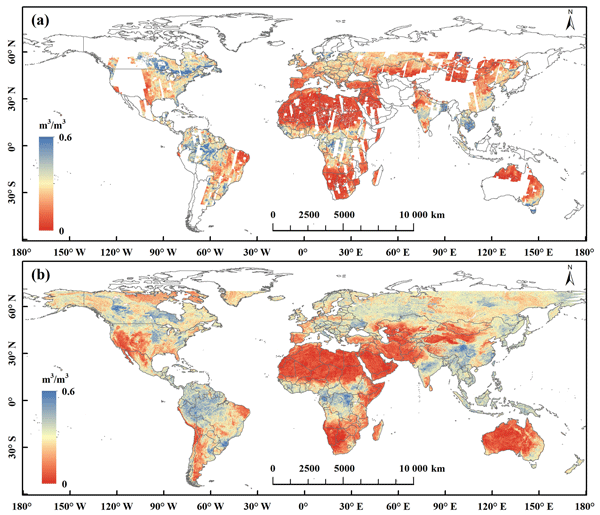
Soil moisture (SM) plays a vital role in climate, agriculture, and hydrology, yet reliable long-term, seamless global datasets remain scarce. To fill this gap, we developed a four-decade seamless global daily 5 km SM product using multi-source datasets and deep learning models. This product has long-term coverage, spatial and temporal integrity, and high accuracy, making it a valuable resource for applications like SM trend analysis, drought monitoring, and assessment of vegetation responses.
Xinyan Liu, Tao He, Qingxin Wang, Xiongxin Xiao, Yichuan Ma, Yanyan Wang, Shanjun Luo, Lei Du, and Zhaocong Wu
Earth Syst. Sci. Data, 17, 2405–2435, https://doi.org/10.5194/essd-17-2405-2025, https://doi.org/10.5194/essd-17-2405-2025, 2025
Short summary
Short summary
This study addresses the challenge of how clouds affect the Earth's energy balance, which is vital for understanding climate change. We developed a new method to create long-term cloud radiative kernels to improve the accuracy of measurements of sunlight reaching the surface, which significantly reduces errors. Findings suggest that prior estimates of cloud cooling effects may have been overstated, emphasizing the need for better strategies to manage climate change impacts in the Arctic.
Bing Li, Shunlin Liang, Han Ma, Guanpeng Dong, Xiaobang Liu, Tao He, and Yufang Zhang
Earth Syst. Sci. Data, 16, 3795–3819, https://doi.org/10.5194/essd-16-3795-2024, https://doi.org/10.5194/essd-16-3795-2024, 2024
Short summary
Short summary
This study describes 1 km all-weather instantaneous and daily mean land surface temperature (LST) datasets on the global scale during 2000–2020. It is the first attempt to synergistically estimate all-weather instantaneous and daily mean LST data on a long global-scale time series. The generated datasets were evaluated by the observations from in situ stations and other LST datasets, and the evaluation indicated that the dataset is sufficiently reliable.
Xinyan Liu, Tao He, Shunlin Liang, Ruibo Li, Xiongxin Xiao, Rui Ma, and Yichuan Ma
Earth Syst. Sci. Data, 15, 3641–3671, https://doi.org/10.5194/essd-15-3641-2023, https://doi.org/10.5194/essd-15-3641-2023, 2023
Short summary
Short summary
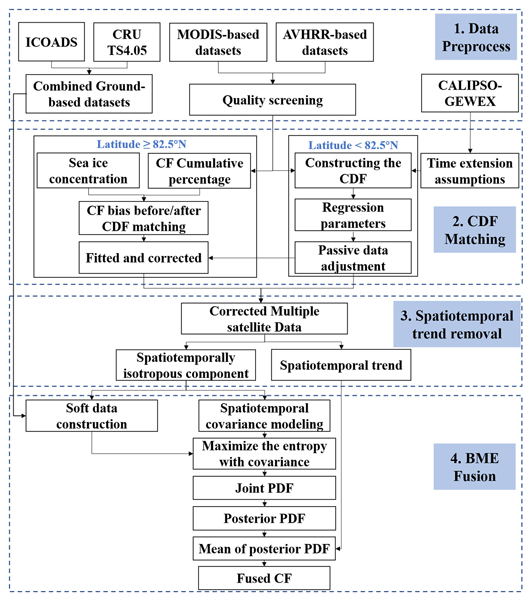
We proposed a data fusion strategy that combines the complementary features of multiple-satellite cloud fraction (CF) datasets and generated a continuous monthly 1° daytime cloud fraction product covering the entire Arctic during the sunlit months in 2000–2020. This study has positive significance for reducing the uncertainties for the assessment of surface radiation fluxes and improving the accuracy of research related to climate change and energy budgets, both regionally and globally.
Yufang Zhang, Shunlin Liang, Han Ma, Tao He, Qian Wang, Bing Li, Jianglei Xu, Guodong Zhang, Xiaobang Liu, and Changhao Xiong
Earth Syst. Sci. Data, 15, 2055–2079, https://doi.org/10.5194/essd-15-2055-2023, https://doi.org/10.5194/essd-15-2055-2023, 2023
Short summary
Short summary
Soil moisture observations are important for a range of earth system applications. This study generated a long-term (2000–2020) global seamless soil moisture product with both high spatial and temporal resolutions (1 km, daily) using an XGBoost model and multisource datasets. Evaluation of this product against dense in situ soil moisture datasets and microwave soil moisture products showed that this product has reliable accuracy and more complete spatial coverage.
Rui Ma, Jingfeng Xiao, Shunlin Liang, Han Ma, Tao He, Da Guo, Xiaobang Liu, and Haibo Lu
Geosci. Model Dev., 15, 6637–6657, https://doi.org/10.5194/gmd-15-6637-2022, https://doi.org/10.5194/gmd-15-6637-2022, 2022
Short summary
Short summary
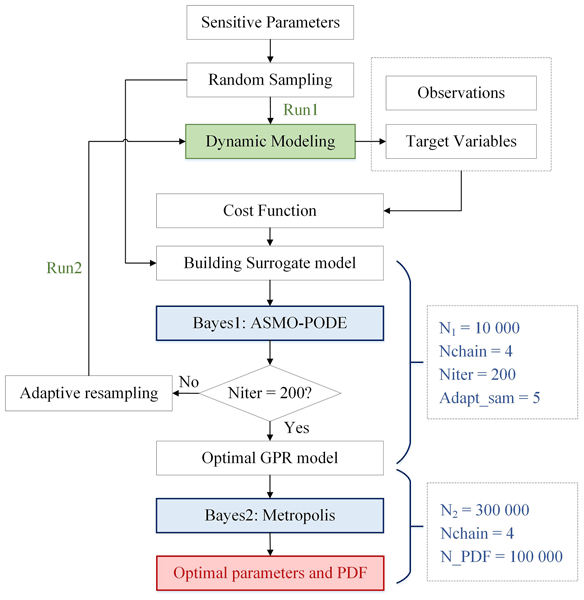
Parameter optimization can improve the accuracy of modeled carbon fluxes. Few studies conducted pixel-level parameterization because it requires a high computational cost. Our paper used high-quality spatial products to optimize parameters at the pixel level, and also used the machine learning method to improve the speed of optimization. The results showed that there was significant spatial variability of parameters and we also improved the spatial pattern of carbon fluxes.
Yan Chen, Shunlin Liang, Han Ma, Bing Li, Tao He, and Qian Wang
Earth Syst. Sci. Data, 13, 4241–4261, https://doi.org/10.5194/essd-13-4241-2021, https://doi.org/10.5194/essd-13-4241-2021, 2021
Short summary
Short summary
This study used remotely sensed and assimilated data to estimate all-sky land surface air temperature (Ta) using a machine learning method, and developed an all-sky 1 km daily mean land Ta product for 2003–2019 over mainland China. Validation results demonstrated that this dataset has achieved satisfactory accuracy and high spatial resolution simultaneously, which fills the current dataset gap in this field and plays an important role in studies of climate change and the hydrological cycle.
Cited articles
Bennartz, R., Shupe, M. D., Turner, D. D., Walden, V. P., Steffen, K., Cox, C. J., Kulie, M. S., Miller, N. B., and Pettersen, C.: July 2012 Greenland melt extent enhanced by low-level liquid clouds, Nature, 496, 83–86, https://doi.org/10.1038/nature12002, 2013.
Brown, P. T. and Caldeira, K.: Greater future global warming inferred from Earth's recent energy budget, Nature, 552, 45–50, https://doi.org/10.1038/nature24672, 2017.
Chen, J., He, T., Jiang, B., and Liang, S.: Estimation of all-sky all-wave daily net radiation at high latitudes from MODIS data, Remote Sens. Environ., 245, 111842, https://doi.org/10.1016/j.rse.2020.111842, 2020.
Chen, J., He, T., and Liang, S.: Estimation of Daily All-Wave Surface Net Radiation With Multispectral and Multitemporal Observations From GOES-16 ABI, IEEE T. Geosci. Remote, 60, 1–16, https://doi.org/10.1109/TGRS.2022.3140335, 2022.
Cheng, L., Trenberth, K. E., Fasullo, J., Boyer, T., Abraham, J., and Zhu, J.: Improved estimates of ocean heat content from 1960 to 2015, Sci. Adv., 3, https://doi.org/10.1126/sciadv.1601545, 2017.
Cohen, J., Zhang, X., Francis, J., Jung, T., Kwok, R., Overland, J., Ballinger, T. J., Bhatt, U. S., Chen, H. W., Coumou, D., Feldstein, S., Gu, H., Handorf, D., Henderson, G., Ionita, M., Kretschmer, M., Laliberte, F., Lee, S., Linderholm, H. W., Maslowski, W., Peings, Y., Pfeiffer, K., Rigor, I., Semmler, T., Stroeve, J., Taylor, P. C., Vavrus, S., Vihma, T., Wang, S., Wendisch, M., Wu, Y., and Yoon, J.: Divergent consensuses on Arctic amplification influence on midlatitude severe winter weather, Nat. Clim. Chang., 10, 20–29, https://doi.org/10.1038/s41558-019-0662-y, 2020.
Colman, R.: A comparison of climate feedbacks in general circulation models, Clim. Dynam., 20, 865–873, https://doi.org/10.1007/s00382-003-0310-z, 2003.
Coulbury, C. and Tan, I.: Top of the Atmosphere Shortwave Arctic Cloud Feedbacks: A Comparison of Diagnostic Methods, Geophys. Res. Lett., 51, e2023GL107780, https://doi.org/10.1029/2023GL107780, 2024.
Danso, D. K., Anquetin, S., Diedhiou, A., Kouadio, K., and Kobea, A. T.: Daytime low-level clouds in West Africa – occurrence, associated drivers, and shortwave radiation attenuation, Earth Syst. Dynam., 11, 1133–1152, https://doi.org/10.5194/esd-11-1133-2020, 2020.
Dessler, A. E.: A Determination of the Cloud Feedback from Climate Variations over the Past Decade, Science, 330, 1523–1527, https://doi.org/10.1126/science.1192546, 2010.
Doelling, D. R., Loeb, N. G., Keyes, D. F., Nordeen, M. L., Morstad, D., Nguyen, C., Wielicki, B. A., Young, D. F., and Sun, M.: Geostationary Enhanced Temporal Interpolation for CERES Flux Products, J. Atmos. Ocean. Tech., 30, 1072–1090, https://doi.org/10.1175/JTECH-D-12-00136.1, 2013.
Doelling, D. R., Sun, M., Nguyen, L. T., Nordeen, M. L., Haney, C. O., Keyes, D. F., and Mlynczak, P. E.: Advances in Geostationary-Derived Longwave Fluxes for the CERES Synoptic (SYN1deg) Product, J. Atmos. Ocean. Tech., 33, 503–521, https://doi.org/10.1175/JTECH-D-15-0147.1, 2016.
Fausto, R. S., van As, D., Mankoff, K. D., Vandecrux, B., Citterio, M., Ahlstrøm, A. P., Andersen, S. B., Colgan, W., Karlsson, N. B., Kjeldsen, K. K., Korsgaard, N. J., Larsen, S. H., Nielsen, S., Pedersen, A. Ø., Shields, C. L., Solgaard, A. M., and Box, J. E.: Programme for Monitoring of the Greenland Ice Sheet (PROMICE) automatic weather station data, Earth Syst. Sci. Data, 13, 3819–3845, https://doi.org/10.5194/essd-13-3819-2021, 2021.
Gelaro, R., McCarty, W., Suárez, M. J., Todling, R., Molod, A., Takacs, L., Randles, C. A., Darmenov, A., Bosilovich, M. G., Reichle, R., Wargan, K., Coy, L., Cullather, R., Draper, C., Akella, S., Buchard, V., Conaty, A., Da Silva, A. M., Gu, W., Kim, G.-K., Koster, R., Lucchesi, R., Merkova, D., Nielsen, J. E., Partyka, G., Pawson, S., Putman, W., Rienecker, M., Schubert, S. D., Sienkiewicz, M., and Zhao, B.: The Modern-Era Retrospective Analysis for Research and Applications, Version 2 (MERRA-2), J. Climate, 30, 5419–5454, https://doi.org/10.1175/JCLI-D-16-0758.1, 2017.
Gilgen, H., Wild, M., and Ohmura, A.: Means and Trends of Shortwave Irradiance at the Surface Estimated from Global Energy Balance Archive Data, J. Climate, 11, 2042–2061, https://doi.org/10.1175/1520-0442-11.8.2042, 1998.
Goessling, H. F., Rackow, T., and Jung, T.: Recent global temperature surge intensified by record-low planetary albedo, Science, 387, 68–73, https://doi.org/10.1126/science.adq7280, 2025.
Goosse, H., Kay, J. E., Armour, K. C., Bodas-Salcedo, A., Chepfer, H., Docquier, D., Jonko, A., Kushner, P. J., Lecomte, O., Massonnet, F., Park, H.-S., Pithan, F., Svensson, G., and Vancoppenolle, M.: Quantifying climate feedbacks in polar regions, Nat. Commun., 9, 1919, https://doi.org/10.1038/s41467-018-04173-0, 2018.
Hahn, L. C., Armour, K. C., Zelinka, M. D., Bitz, C. M., and Donohoe, A.: Contributions to Polar Amplification in CMIP5 and CMIP6 Models, Front. Earth Sci., 9, 710036, https://doi.org/10.3389/feart.2021.710036, 2021.
He, T., Liang, S., Yu, Y., Wang, D., Gao, F., and Liu, Q.: Greenland surface albedo changes in July 1981–2012 from satellite observations, Environ. Res. Lett., 8, 044043, https://doi.org/10.1088/1748-9326/8/4/044043, 2013.
He, T., Liang, S., Wang, D., Shi, Q., and Goulden, M. L.: Estimation of high-resolution land surface net shortwave radiation from AVIRIS data: Algorithm development and preliminary results, Remote Sens. Environ., 167, 20–30, https://doi.org/10.1016/j.rse.2015.03.021, 2015.
Huang, G., Li, X., Ma, M., Li, H., and Huang, C.: High resolution surface radiation products for studies of regional energy, hydrologic and ecological processes over Heihe river basin, northwest China, Agr. Forest Meteorol., 230–231, 67–78, https://doi.org/10.1016/j.agrformet.2016.04.007, 2016.
Huang, Y., Ding, Q., Dong, X., Xi, B., and Baxter, I.: Summertime low clouds mediate the impact of the large-scale circulation on Arctic sea ice, Commun. Earth Environ., 2, 38, https://doi.org/10.1038/s43247-021-00114-w, 2021.
Intergovernmental Panel On Climate Change (IPCC): Climate Change 2021 – The Physical Science Basis: Working Group I Contribution to the Sixth Assessment Report of the Intergovernmental Panel on Climate Change, 1st edn., Cambridge University Press, https://doi.org/10.1017/9781009157896, 2023.
Jia, K., Liang, S., Liu, S., Li, Y., Xiao, Z., Yao, Y., Jiang, B., Zhao, X., Wang, X., Xu, S., and Cui, J.: Global Land Surface Fractional Vegetation Cover Estimation Using General Regression Neural Networks From MODIS Surface Reflectance, IEEE T. Geosci. Remote, 53, 4787–4796, https://doi.org/10.1109/TGRS.2015.2409563, 2015.
Jiang, B., Zhang, Y., Liang, S., Wohlfahrt, G., Arain, A., Cescatti, A., Georgiadis, T., Jia, K., Kiely, G., Lund, M., Montagnani, L., Magliulo, V., Ortiz, P. S., Oechel, W., Vaccari, F. P., Yao, Y., and Zhang, X.: Empirical estimation of daytime net radiation from shortwave radiation and ancillary information, Agr. Forest Meteorol., 211–212, 23–36, https://doi.org/10.1016/j.agrformet.2015.05.003, 2015.
Jonko, A. K., Shell, K. M., Sanderson, B. M., and Danabasoglu, G.: Climate Feedbacks in CCSM3 under Changing CO2 Forcing. Part I: Adapting the Linear Radiative Kernel Technique to Feedback Calculations for a Broad Range of Forcings, J. Climate, 25, 5260–5272, https://doi.org/10.1175/JCLI-D-11-00524.1, 2012.
Kay, J. E. and L'Ecuyer, T.: Observational constraints on Arctic Ocean clouds and radiative fluxes during the early 21st century, J. Geophys. Res.-Atmos., 118, 7219–7236, https://doi.org/10.1002/jgrd.50489, 2013.
Kim, H.-Y. and Liang, S.: Development of a hybrid method for estimating land surface shortwave net radiation from MODIS data, Remote Sens. Environ., 114, 2393–2402, https://doi.org/10.1016/j.rse.2010.05.012, 2010.
Lee, S.-B., Kim, B.-M., Ukita, J., and Ahn, J.-B.: Uncertainties in Arctic Sea Ice Thickness Associated with Different Atmospheric Reanalysis Datasets Using the CICE5 Model, Atmosphere, 10, 361, https://doi.org/10.3390/atmos10070361, 2019.
Liu, X. and He, T.: A long-term monthly dataset of cloud fraction over the Arctic based on multiple satellite products using cumulative distribution function matching and Bayesian maximum entropy (1.2), Zenodo [data set], https://doi.org/10.5281/zenodo.7624605, 2022.
Liu, X., He, T., Liang, S., Li, R., Xiao, X., Ma, R., and Ma, Y.: A monthly 1° resolution dataset of daytime cloud fraction over the Arctic during 2000–2020 based on multiple satellite products, Earth Syst. Sci. Data, 15, 3641–3671, https://doi.org/10.5194/essd-15-3641-2023, 2023.
Liu, Y.: Impacts of active satellite sensors' low-level cloud detection limitations on cloud radiative forcing in the Arctic, Atmos. Chem. Phys., 22, 8151–8173, https://doi.org/10.5194/acp-22-8151-2022, 2022.
Loeb, N. G., Johnson, G. C., Thorsen, T. J., Lyman, J. M., Rose, F. G., and Kato, S.: Satellite and Ocean Data Reveal Marked Increase in Earth's Heating Rate, Geophys. Res. Lett., 48, https://doi.org/10.1029/2021GL093047, 2021.
Loeb, N. G., Mayer, M., Kato, S., Fasullo, J. T., Zuo, H., Senan, R., Lyman, J. M., Johnson, G. C., and Balmaseda, M.: Evaluating Twenty-Year Trends in Earth's Energy Flows From Observations and Reanalyses, J. Geophys. Res.-Atmos., 127, https://doi.org/10.1029/2022JD036686, 2022.
McCoy, D. T., Eastman, R., Hartmann, D. L., and Wood, R.: The Change in Low Cloud Cover in a Warmed Climate Inferred from AIRS, MODIS, and ERA-Interim, J. Climate, 30, 3609–3620, https://doi.org/10.1175/JCLI-D-15-0734.1, 2017.
Miller, N. B., Shupe, M. D., Cox, C. J., Walden, V. P., Turner, D. D., and Steffen, K.: Cloud Radiative Forcing at Summit, Greenland, J. Climate, 28, 6267–6280, https://doi.org/10.1175/JCLI-D-15-0076.1, 2015.
Minnis, P., Sun-Mack, S., Young, D. F., Heck, P. W., Garber, D. P., Chen, Y., Spangenberg, D. A., Arduini, R. F., Trepte, Q. Z., Smith, W. L., Ayers, J. K., Gibson, S. C., Miller, W. F., Hong, G., Chakrapani, V., Takano, Y., Liou, K.-N., Xie, Y., and Yang, P.: CERES Edition-2 Cloud Property Retrievals Using TRMM VIRS and Terra and Aqua MODIS Data – Part I: Algorithms, IEEE T. Geosci. Remote, 49, 4374–4400, https://doi.org/10.1109/TGRS.2011.2144601, 2011.
Minnis, P., Sun-Mack, S., Chen, Y., Chang, F.-L., Yost, C. R., Smith, W. L., Heck, P. W., Arduini, R. F., Bedka, S. T., Yi, Y., Hong, G., Jin, Z., Painemal, D., Palikonda, R., Scarino, B. R., Spangenberg, D. A., Smith, R. A., Trepte, Q. Z., Yang, P., and Xie, Y.: CERES MODIS Cloud Product Retrievals for Edition 4 – Part I: Algorithm Changes, IEEE T. Geosci. Remote, 59, 2744–2780, https://doi.org/10.1109/TGRS.2020.3008866, 2021.
NASA POWER Project: Solar Flux Assessment – Validation of CERES SYN1deg all-sky shortwave fluxes against BSRN observations, NASA Langley Research Center, https://power.larc.nasa.gov/docs/methodology/energy-fluxes/solar-validation/ (last access: 17 September 2025), 2024.
Oehri, J., Schaepman-Strub, G., Kim, J.-S., Grysko, R., Kropp, H., Grünberg, I., Zemlianskii, V., Sonnentag, O., Euskirchen, E. S., Reji Chacko, M., Muscari, G., Blanken, P. D., Dean, J. F., Di Sarra, A., Harding, R. J., Sobota, I., Kutzbach, L., Plekhanova, E., Riihelä, A., Boike, J., Miller, N. B., Beringer, J., López-Blanco, E., Stoy, P. C., Sullivan, R. C., Kejna, M., Parmentier, F.-J. W., Gamon, J. A., Mastepanov, M., Wille, C., Jackowicz-Korczynski, M., Karger, D. N., Quinton, W. L., Putkonen, J., Van As, D., Christensen, T. R., Hakuba, M. Z., Stone, R. S., Metzger, S., Vandecrux, B., Frost, G. V., Wild, M., Hansen, B., Meloni, D., Domine, F., Te Beest, M., Sachs, T., Kalhori, A., Rocha, A. V., Williamson, S. N., Morris, S., Atchley, A. L., Essery, R., Runkle, B. R. K., Holl, D., Riihimaki, L. D., Iwata, H., Schuur, E. A. G., Cox, C. J., Grachev, A. A., McFadden, J. P., Fausto, R. S., Göckede, M., Ueyama, M., Pirk, N., De Boer, G., Bret-Harte, M. S., Leppäranta, M., Steffen, K., Friborg, T., Ohmura, A., Edgar, C. W., Olofsson, J., and Chambers, S. D.: Vegetation type is an important predictor of the arctic summer land surface energy budget, Nat. Commun., 13, 6379, https://doi.org/10.1038/s41467-022-34049-3, 2022.
Pastorello, G., Papale, D., Chu, H., Trotta, C., Agarwal, D., Canfora, E., Baldocchi, D., and Torn, M.: A New Data Set to Keep a Sharper Eye on Land-Air Exchanges, Eos, https://doi.org/10.1029/2017EO071597, 2017.
Previdi, M., Smith, K. L., and Polvani, L. M.: Arctic amplification of climate change: a review of underlying mechanisms, Environ. Res. Lett., 16, 093003, https://doi.org/10.1088/1748-9326/ac1c29, 2021.
Prince, H. D. and L'Ecuyer, T. S.: Observed Energetic Adjustment of the Arctic and Antarctic in a Warming World, J. Climate, 37, 2611–2627, https://doi.org/10.1175/jcli-d-23-0294.1, 2024.
Qian, Y., Long, C. N., Wang, H., Comstock, J. M., McFarlane, S. A., and Xie, S.: Evaluation of cloud fraction and its radiative effect simulated by IPCC AR4 global models against ARM surface observations, Atmos. Chem. Phys., 12, 1785–1810, https://doi.org/10.5194/acp-12-1785-2012, 2012.
Rantanen, M., Karpechko, A. Yu., Lipponen, A., Nordling, K., Hyvärinen, O., Ruosteenoja, K., Vihma, T., and Laaksonen, A.: The Arctic has warmed nearly four times faster than the globe since 1979, Commun. Earth Environ., 3, 168, https://doi.org/10.1038/s43247-022-00498-3, 2022.
Rutan, D. A., Kato, S., Doelling, D. R., Rose, F. G., Nguyen, L. T., Caldwell, T. E., and Loeb, N. G.: CERES Synoptic Product: Methodology and Validation of Surface Radiant Flux, J. Atmos. Ocean. Tech., 32, 1121–1143, https://doi.org/10.1175/JTECH-D-14-00165.1, 2015.
Shell, K. M., Kiehl, J. T., and Shields, C. A.: Using the Radiative Kernel Technique to Calculate Climate Feedbacks in NCAR's Community Atmospheric Model, J. Climate, 21, 2269–2282, https://doi.org/10.1175/2007JCLI2044.1, 2008.
Sledd, A. and L'Ecuyer, T.: How Much Do Clouds Mask the Impacts of Arctic Sea Ice and Snow Cover Variations? Different Perspectives from Observations and Reanalyses, Atmosphere, 10, 12, https://doi.org/10.3390/atmos10010012, 2019.
Soden, B. J. and Held, I. M.: An Assessment of Climate Feedbacks in Coupled Ocean–Atmosphere Models, J. Climate, 19, 3354–3360, https://doi.org/10.1175/JCLI3799.1, 2006.
Soden, B. J., Broccoli, A. J., and Hemler, R. S.: On the Use of Cloud Forcing to Estimate Cloud Feedback, J. Climate, 17, 3661–3665, https://doi.org/10.1175/1520-0442(2004)017<3661:OTUOCF>2.0.CO;2, 2004.
Soden, B. J., Held, I. M., Colman, R., Shell, K. M., Kiehl, J. T., and Shields, C. A.: Quantifying Climate Feedbacks Using Radiative Kernels, J. Climate, 21, 3504–3520, https://doi.org/10.1175/2007JCLI2110.1, 2008.
Tao, C., Zhang, M., and Xie, S.: Cloud radiative effect dominates variabilities of surface energy budget in the dark Arctic, Sci. Rep., 15, 2976, https://doi.org/10.1038/s41598-025-86322-2, 2025.
Thorsen, T. J., Kato, S., Loeb, N. G., and Rose, F. G.: Observation-Based Decomposition of Radiative Perturbations and Radiative Kernels, J. Climate, 31, 10039–10058, https://doi.org/10.1175/JCLI-D-18-0045.1, 2018.
Tjernström, M., Shupe, M. D., Brooks, I. M., Achtert, P., Prytherch, J., and Sedlar, J.: Arctic Summer Airmass Transformation, Surface Inversions, and the Surface Energy Budget, J. Climate, 32, 769–789, https://doi.org/10.1175/JCLI-D-18-0216.1, 2019.
Trepte, Q. Z., Bedka, K. M., Chee, T. L., Minnis, P., Sun-Mack, S., Yost, C. R., Chen, Y., Jin, Z., Hong, G., Chang, F.-L., and Smith, W. L.: Global Cloud Detection for CERES Edition 4 Using Terra and Aqua MODIS Data, IEEE T. Geosci. Remote, 57, 9410–9449, https://doi.org/10.1109/TGRS.2019.2926620, 2019.
Van Tricht, K., Lhermitte, S., Lenaerts, J. T. M., Gorodetskaya, I. V., L'Ecuyer, T. S., Noël, B., Van Den Broeke, M. R., Turner, D. D., and Van Lipzig, N. P. M.: Clouds enhance Greenland ice sheet meltwater runoff, Nat. Commun., 7, 10266, https://doi.org/10.1038/ncomms10266, 2016.
Wang, B., Jia, K., Wei, X., Xia, M., Yao, Y., Zhang, X., Liu, D., and Tao, G.: Generating spatiotemporally consistent fractional vegetation cover at different scales using spatiotemporal fusion and multiresolution tree methods, ISPRS J. Photogramm., 167, 214–229, https://doi.org/10.1016/j.isprsjprs.2020.07.006, 2020.
Wei, J., Wang, Z., Gu, M., Luo, J.-J., and Wang, Y.: An evaluation of the Arctic clouds and surface radiative fluxes in CMIP6 models, Acta Oceanol. Sin., 40, 85–102, https://doi.org/10.1007/s13131-021-1705-6, 2021.
Wetherald, R. T. and Manabe, S.: Cloud Feedback Processes in a General Circulation Model, J. Atmos. Sci., 45, 1397–1416, https://doi.org/10.1175/1520-0469(1988)045<1397:CFPIAG>2.0.CO;2, 1988.
Wild, M., Ohmura, A., Schär, C., Müller, G., Folini, D., Schwarz, M., Hakuba, M. Z., and Sanchez-Lorenzo, A.: The Global Energy Balance Archive (GEBA) version 2017: a database for worldwide measured surface energy fluxes, Earth Syst. Sci. Data, 9, 601–613, https://doi.org/10.5194/essd-9-601-2017, 2017.
Zheng, Y., He, T., and Ma, Y.: Analysis of temporal trends and spatial distributions in top-of-atmosphere shortwave radiation based on multiple datasets from satellites observations, reanalyses, climate models, Global Planet. Change, 255, 105040, https://doi.org/10.1016/j.gloplacha.2025.105040, 2025.
Zhu, T., Huang, Y., and Wei, H.: Estimating Climate Feedbacks Using a Neural Network, J. Geophys. Res.-Atmos., 124, 3246–3258, https://doi.org/10.1029/2018JD029223, 2019.
Zib, B. J., Dong, X., Xi, B., and Kennedy, A.: Evaluation and Intercomparison of Cloud Fraction and Radiative Fluxes in Recent Reanalyses over the Arctic Using BSRN Surface Observations, J. Climate, 25, 2291–2305, https://doi.org/10.1175/JCLI-D-11-00147.1, 2012.
Short summary
Estimating surface radiation in the Arctic is difficult because cloud conditions are not well captured. We used an advanced learning-based method and a more accurate cloud dataset to correct radiation estimates that are biased by cloud fraction underestimation. The improved results greatly reduce long-standing errors and provide a new and more reliable dataset. This helps researchers better understand Arctic climate change and energy balance.
Estimating surface radiation in the Arctic is difficult because cloud conditions are not well...
Altmetrics
Final-revised paper
Preprint