
Articles | Volume 26, issue 1
https://doi.org/10.5194/acp-26-313-2026
© Author(s) 2026. This work is distributed under
the Creative Commons Attribution 4.0 License.
the Creative Commons Attribution 4.0 License.
https://doi.org/10.5194/acp-26-313-2026
© Author(s) 2026. This work is distributed under
the Creative Commons Attribution 4.0 License.
the Creative Commons Attribution 4.0 License.
Research article
| 
07 Jan 2026
Research article |
| 07 Jan 2026
| 07 Jan 2026
Fine-scale fluctuations of PM1, PM2.5, PM10 and SO2 concentrations caused by a prolonged volcanic eruption (Fagradalsfjall 2021, Iceland)
Rachel C. W. Whitty
COMET, Institute of Geophysics and Tectonics, School of Earth and Environment, University of Leeds, Leeds, LS2 9JT, United Kingdom
Evgenia Ilyinskaya
CORRESPONDING AUTHOR

COMET, Institute of Geophysics and Tectonics, School of Earth and Environment, University of Leeds, Leeds, LS2 9JT, United Kingdom
Melissa A. Pfeffer
Icelandic Meteorological Office, 150 Reykjavík, Iceland
Ragnar H. Thrastarson
Icelandic Meteorological Office, 150 Reykjavík, Iceland
Þorsteinn Johannsson
The Environment Agency of Iceland, 108 Reykjavík, Iceland
Sara Barsotti
Icelandic Meteorological Office, 150 Reykjavík, Iceland
Tjarda J. Roberts
CNRS UMR7328, Laboratoire de Physique et de Chimie de l'Environnement et de l'Espace, Universite d'Orleans, 45071 Orleans, France
LMD/IPSL, ENS, Université PSL, École Polytechnique, Institute Polytechnique de Paris, Sorbonne Université, CNRS, 75005 Paris, France
Guðni M. Gilbert
Icelandic Meteorological Office, 150 Reykjavík, Iceland
Nox Medical, 150 Reykjavík, Iceland
Tryggvi Hjörvar
Icelandic Meteorological Office, 150 Reykjavík, Iceland
Anja Schmidt
Yusuf Hamed Department of Chemistry, University of Cambridge, Cambridge, CB2 1EW, United Kingdom
Institute of Atmospheric Physics (IPA), German Aerospace Centre (DLR), 82234 Oberpfaffenhofen, Germany
Meteorological Institute, Ludwig Maximilian University of Munich, 80333 Munich, Germany
Daniela Fecht
MRC Centre for Environment and Health, School of Public Health, Imperial College London, London, W12 0BZ, United Kingdom
Grétar G. Sæmundsson
Department of Research and Analysis, Icelandic Tourist Board, 101 Reykjavík, Iceland
Related authors
No articles found.
Arnau Folch, Laura Sandri, Sara Barsotti, Simone Aguiar, Beatriz Martínez Montesinos, Alejandra Guerrero, Pablo Tierz, Heribert Pascual, Eva Hernandez, Leonardo Mingari, and Antonio Costa
EGUsphere, https://doi.org/10.5194/egusphere-2026-4485, https://doi.org/10.5194/egusphere-2026-4485, 2026
This preprint is open for discussion and under review for Natural Hazards and Earth System Sciences (NHESS).
Short summary
Short summary
Volcanic ash threatens communities near European volcanoes and aircraft across the continent. A new study has produced the first European hazard map for volcanic dispersal in the atmosphere, using more than 53,000 simulations of ash clouds from twelve European volcanoes, run on one of Europe's most powerful supercomputers. The results show where ash is likely to fall and which flight regions could be dangerous. Simulations are stored in an open catalogue that lets end-users update the hazard.
Rob Wilson, Ignacio Mundo, Lauren Marshall, Emily Reid, Michael Sigl, Anja Schmidt, Claudia Timmreck, Shih-Wei Fang, Rory Abernethy, Valerie Daux, and Ricardo Villalba
EGUsphere, https://doi.org/10.5194/egusphere-2026-4785, https://doi.org/10.5194/egusphere-2026-4785, 2026
This preprint is open for discussion and under review for Climate of the Past (CP).
Short summary
Short summary
We use tree rings from southern South America to reconstruct summer temperatures back to 1382, providing the first long-term Southern Hemisphere record that clearly captures volcanic cooling. Our results, supported by climate models, show that major tropical eruptions caused substantial cooling in northern Patagonia, but little cooling in Tasmania and New Zealand. The study highlights the importance of tree-ring density measurements for understanding past volcanic impacts on climate.
Jan-Steffen Fischer, Stefanos Fasoulas, Matthias Nützel, and Anja Schmidt
EGUsphere, https://doi.org/10.5194/egusphere-2026-3050, https://doi.org/10.5194/egusphere-2026-3050, 2026
This preprint is open for discussion and under review for Geoscientific Model Development (GMD).
Short summary
Short summary
For the calculation of emission inventories of rocket launches we developed the Launch Emission Assessment Tool (LEAT). LEAT is the first open-source emission calculation tool for rocket launch emissions that calculates individual launches and their emissions depending on the launch vehicle and trajectory. LEAT enables the therefore user to develop own trajectory and emission inventories as a basis for estimating the (global) effects of rocket launch emissions.
Man Mei Chim, Nathan Luke Abraham, Thomas J. Aubry, Ben Johnson, Hella Garny, Susan Solomon, and Anja Schmidt
Atmos. Chem. Phys., 26, 6781–6797, https://doi.org/10.5194/acp-26-6781-2026, https://doi.org/10.5194/acp-26-6781-2026, 2026
Short summary
Short summary
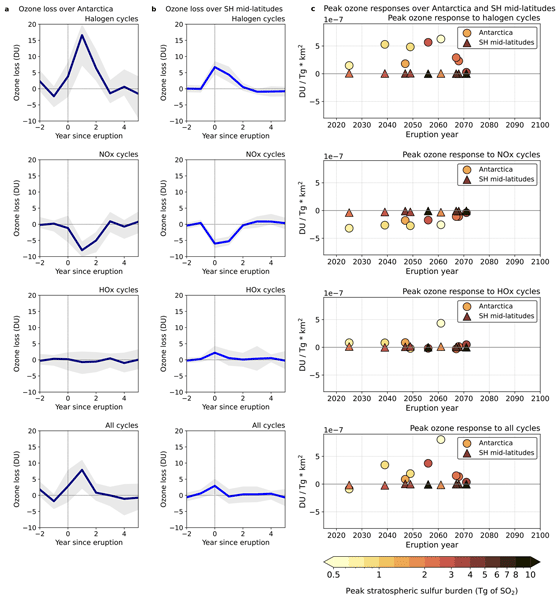
Sulfate aerosols from explosive eruptions can provide surfaces for chemical reactions destroying ozone. Assessing the effects of volcanic sulfate aerosols is crucial for understanding future ozone recovery. We find sporadic eruptions can induce a small delay in stratospheric ozone recovery by a few years over Antarctica and Southern Hemisphere mid-latitudes. Our results highlight the importance to continuously monitor atmospheric composition and processes to understand changes in ozone recovery.
Thomas J. Aubry, Matthew Toohey, Sujan Khanal, Man Mei Chim, Magali Verkerk, Ben Johnson, Anja Schmidt, Mahesh Kovilakam, Michael Sigl, Zebedee Nicholls, Larry Thomason, Vaishali Naik, Landon Rieger, Dominik Stiller, Elisa Ziegler, Paul Durack, and Isabel H. Smith
Geosci. Model Dev., 19, 3725–3756, https://doi.org/10.5194/gmd-19-3725-2026, https://doi.org/10.5194/gmd-19-3725-2026, 2026
Short summary
Short summary
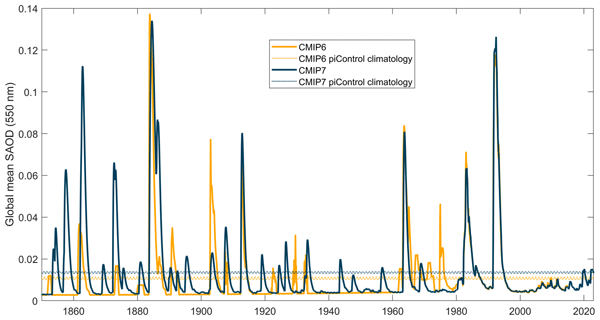
Climate forcings, such as solar radiation or anthropogenic greenhouse gases, are required to run global climate model simulations. Stratospheric aerosols, which mostly originate from large volcanic eruptions, are a key natural forcing. In this paper, we document the stratospheric aerosol forcing dataset that will feed the next generation (CMIP7) of climate models. Our dataset is very different from its predecessor (CMIP6), which might affect simulations of the 1850–2021 climate.
Thomas J. Aubry, Michael Sigl, Matthew Toohey, Man Mei Chim, Magali Verkerk, Anja Schmidt, and Simon A. Carn
EGUsphere, https://doi.org/10.5194/egusphere-2026-546, https://doi.org/10.5194/egusphere-2026-546, 2026
Short summary
Short summary
We document the historical (1750–2023) volcanic sulfur dioxide emission dataset created for phase 7 of the Coupled Model Intercomparison Project, which is a set of coordinated climate model experiments run by modelling center worldwide. Our dataset underpins the stratospheric aerosol optical property dataset which will be used as input by most climate models. However, models with interactive stratospheric aerosol capability can directly input our emission dataset to run CMIP7 experiments.
Felipe Rojas Vilches, Tobias P. Fischer, Scott Nowicki, Melissa Anne Pfeffer, Felipe Aguilera, Tom D. Pering, Thomas Wilkes, Susana Layana, Cristobal Gonzalez, Matthew Fricke, John Ericksen, and Melanie Moses
EGUsphere, https://doi.org/10.5194/egusphere-2025-6430, https://doi.org/10.5194/egusphere-2025-6430, 2026
Preprint archived
Short summary
Short summary
Water vapor makes up more than 70 % of volcanic gas emissions but accurate H2O flux measurements remain challenging. We developed a multi-band near-infrared camera system that directly measures volcanic water vapor. Testing and validating our approach at two different volcanic settings in Chile and Iceland we found underestimation of water vapor fluxes and provides data that improves our understanding of volcanic activity and gas release patterns.
Monica Sharma, Mattia Righi, Johannes Hendricks, Anja Schmidt, Daniel Sauer, and Volker Grewe
Geosci. Model Dev., 18, 8485–8510, https://doi.org/10.5194/gmd-18-8485-2025, https://doi.org/10.5194/gmd-18-8485-2025, 2025
Short summary
Short summary
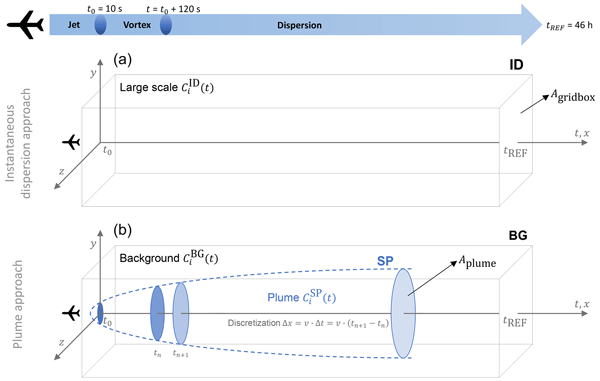
A plume model is developed to simulate aerosol microphysics in a dispersing aircraft plume, including interactions between ice crystals and aerosols in vortex regime. Compared to an instantaneous dispersion approach, the plume approach estimates 15 % lower aviation aerosol number concentrations, due to more efficient coagulation at plume scale. The model is sensitive to background conditions and initialization parameters, such as ice crystal number concentration and fuel sulfur content.
Magali Verkerk, Thomas J. Aubry, Chris Smith, Peter O. Hopcroft, Michael Sigl, Jessica E. Tierney, Kevin Anchukaitis, Matthew Osman, Anja Schmidt, and Matthew Toohey
Clim. Past, 21, 1755–1778, https://doi.org/10.5194/cp-21-1755-2025, https://doi.org/10.5194/cp-21-1755-2025, 2025
Short summary
Short summary
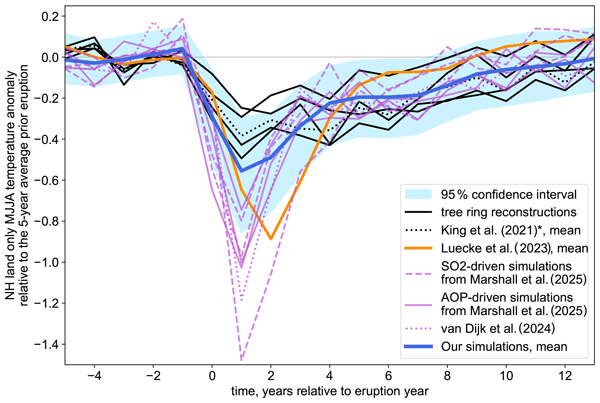
Large volcanic eruptions can trigger global cooling, affecting human societies. Using ice-core records and simple climate model to simulate volcanic effect over the last 8500 years, we show that volcanic eruptions cool the climate by 0.12 °C on average. By comparing model results with temperature recorded by tree rings over the last 1000 years, we demonstrate that our models can predict the large-scale cooling caused by volcanic eruptions and can be used in cases of large eruptions in the future.

Lauren R. Marshall, Anja Schmidt, Andrew P. Schurer, Nathan Luke Abraham, Lucie J. Lücke, Rob Wilson, Kevin J. Anchukaitis, Gabriele C. Hegerl, Ben Johnson, Bette L. Otto-Bliesner, Esther C. Brady, Myriam Khodri, and Kohei Yoshida
Clim. Past, 21, 161–184, https://doi.org/10.5194/cp-21-161-2025, https://doi.org/10.5194/cp-21-161-2025, 2025
Short summary
Short summary
Large volcanic eruptions have caused temperature deviations over the past 1000 years; however, climate model results and reconstructions of surface cooling using tree rings do not match. We explore this mismatch using the latest models and find a better match to tree-ring reconstructions for some eruptions. Our results show that the way in which eruptions are simulated in models matters for the comparison to tree-rings, particularly regarding the spatial spread of volcanic aerosol.
Jingmin Li, Mattia Righi, Johannes Hendricks, Christof G. Beer, Ulrike Burkhardt, and Anja Schmidt
Atmos. Chem. Phys., 24, 12727–12747, https://doi.org/10.5194/acp-24-12727-2024, https://doi.org/10.5194/acp-24-12727-2024, 2024
Short summary
Short summary
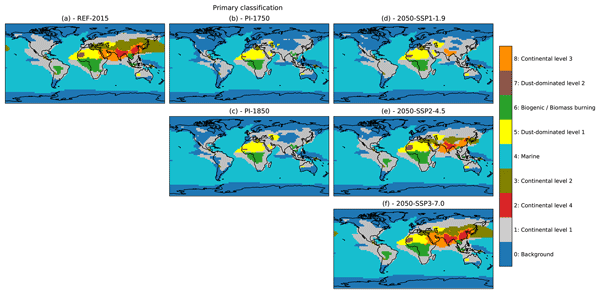
Aiming to understand underlying patterns and trends in aerosols, we characterize the spatial patterns and long-term evolution of lower tropospheric aerosols by clustering multiple aerosol properties from preindustrial times to the year 2050 under three Shared
Socioeconomic Pathway scenarios. The results provide a clear and condensed picture of the spatial extent and distribution of aerosols for different time periods and emission scenarios.
Socioeconomic Pathway scenarios. The results provide a clear and condensed picture of the spatial extent and distribution of aerosols for different time periods and emission scenarios.
Evgenia Ilyinskaya, Vésteinn Snæbjarnarson, Hanne Krage Carlsen, and Björn Oddsson
Nat. Hazards Earth Syst. Sci., 24, 3115–3128, https://doi.org/10.5194/nhess-24-3115-2024, https://doi.org/10.5194/nhess-24-3115-2024, 2024
Short summary
Short summary
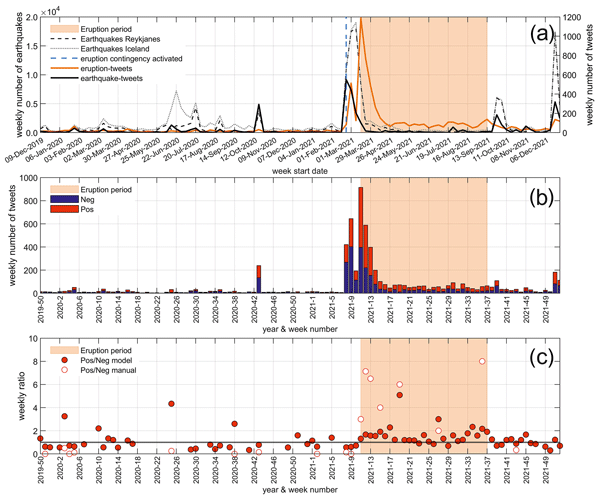
Natural hazards can have negative impacts on mental health. We used artificial intelligence to analyse sentiments expressed by people in Twitter (now X) posts during a period of heightened earthquake activity and during a small volcanic eruption in Iceland. We show that even small natural hazards which cause no material damage can still have a significant impact on people. Earthquakes had a predominantly negative impact, but, somewhat unexpectedly, the eruption seemed to have a positive impact.
Jean-Paul Vernier, Thomas J. Aubry, Claudia Timmreck, Anja Schmidt, Lieven Clarisse, Fred Prata, Nicolas Theys, Andrew T. Prata, Graham Mann, Hyundeok Choi, Simon Carn, Richard Rigby, Susan C. Loughlin, and John A. Stevenson
Atmos. Chem. Phys., 24, 5765–5782, https://doi.org/10.5194/acp-24-5765-2024, https://doi.org/10.5194/acp-24-5765-2024, 2024
Short summary
Short summary
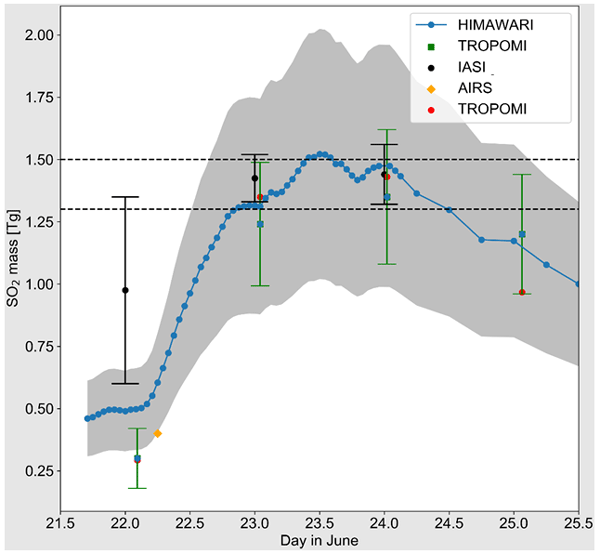
The 2019 Raikoke eruption (Kamchatka, Russia) generated one of the largest emissions of particles and gases into the stratosphere since the 1991 Mt. Pinatubo eruption. The Volcano Response (VolRes) initiative, an international effort, provided a platform for the community to share information about this eruption and assess its climate impact. The eruption led to a minor global surface cooling of 0.02 °C in 2020 which is negligible relative to warming induced by human greenhouse gas emissions.

Christina V. Brodowsky, Timofei Sukhodolov, Gabriel Chiodo, Valentina Aquila, Slimane Bekki, Sandip S. Dhomse, Michael Höpfner, Anton Laakso, Graham W. Mann, Ulrike Niemeier, Giovanni Pitari, Ilaria Quaglia, Eugene Rozanov, Anja Schmidt, Takashi Sekiya, Simone Tilmes, Claudia Timmreck, Sandro Vattioni, Daniele Visioni, Pengfei Yu, Yunqian Zhu, and Thomas Peter
Atmos. Chem. Phys., 24, 5513–5548, https://doi.org/10.5194/acp-24-5513-2024, https://doi.org/10.5194/acp-24-5513-2024, 2024
Short summary
Short summary
The aerosol layer is an essential part of the climate system. We characterize the sulfur budget in a volcanically quiescent (background) setting, with a special focus on the sulfate aerosol layer using, for the first time, a multi-model approach. The aim is to identify weak points in the representation of the atmospheric sulfur budget in an intercomparison of nine state-of-the-art coupled global circulation models.
Laura Wainman, Lauren R. Marshall, and Anja Schmidt
Clim. Past, 20, 951–968, https://doi.org/10.5194/cp-20-951-2024, https://doi.org/10.5194/cp-20-951-2024, 2024
Short summary
Short summary
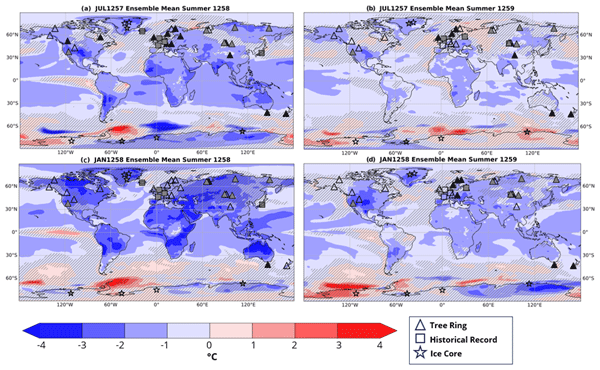
The Mt Samalas eruption had global-scale impacts on climate and has been linked to historical events throughout latter half of the 13th century. Using model simulations and multi-proxy data, we constrain the year and season of the eruption to summer 1257 and investigate the regional-scale variability in surface cooling following the eruption. We also evaluate our model-to-proxy comparison framework and discuss current limitations of the approach.
Gro B. M. Pedersen, Melissa A. Pfeffer, Sara Barsotti, Simone Tarquini, Mattia de'Michieli Vitturi, Bergrún A. Óladóttir, and Ragnar Heiðar Þrastarson
Nat. Hazards Earth Syst. Sci., 23, 3147–3168, https://doi.org/10.5194/nhess-23-3147-2023, https://doi.org/10.5194/nhess-23-3147-2023, 2023
Short summary
Short summary
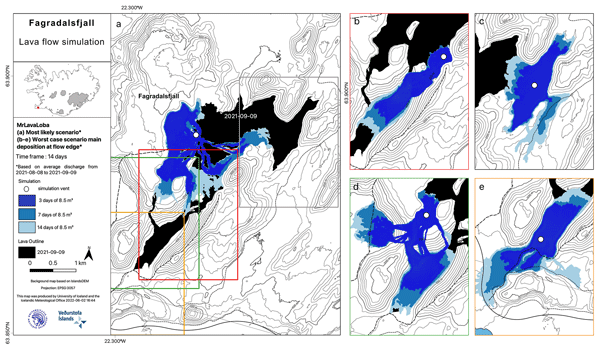
The lava eruption at Fagradalsfjall in 2021 was the most visited eruption in Iceland, with thousands of visitors per day for 6 months. To address the short- and long-term danger of lava inundating infrastructure and hiking paths, we used the lava flow model MrLavaLoba before and during the eruption. These simulations helped communicate lava hazards to stakeholders and can be used as a case study for lava hazard assessment for future eruptions in the area, which are likely to be more destructive.

Flossie Brown, Lauren Marshall, Peter H. Haynes, Rolando R. Garcia, Thomas Birner, and Anja Schmidt
Atmos. Chem. Phys., 23, 5335–5353, https://doi.org/10.5194/acp-23-5335-2023, https://doi.org/10.5194/acp-23-5335-2023, 2023
Short summary
Short summary
Large-magnitude volcanic eruptions have the potential to alter large-scale circulation patterns, such as the quasi-biennial oscillation (QBO). The QBO is an oscillation of the tropical stratospheric zonal winds between easterly and westerly directions. Using a climate model, we show that large-magnitude eruptions can delay the progression of the QBO, with a much longer delay when the shear is easterly than when it is westerly. Such delays may affect weather and transport of atmospheric gases.
Manuel Titos, Beatriz Martínez Montesinos, Sara Barsotti, Laura Sandri, Arnau Folch, Leonardo Mingari, Giovanni Macedonio, and Antonio Costa
Nat. Hazards Earth Syst. Sci., 22, 139–163, https://doi.org/10.5194/nhess-22-139-2022, https://doi.org/10.5194/nhess-22-139-2022, 2022
Short summary
Short summary
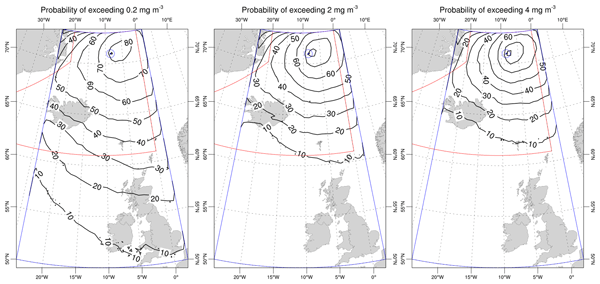
This work addresses a quantitative hazard assessment on the possible impact on air traffic of a future ash-forming eruption on the island of Jan Mayen. Through high-performance computing resources, we numerically simulate the transport of ash clouds and ash concentration at different flight levels over an area covering Iceland and the UK using the FALL3D model. This approach allows us to derive a set of probability maps explaining the extent and persisting concentration conditions of ash clouds.
Hugues Brenot, Nicolas Theys, Lieven Clarisse, Jeroen van Gent, Daniel R. Hurtmans, Sophie Vandenbussche, Nikolaos Papagiannopoulos, Lucia Mona, Timo Virtanen, Andreas Uppstu, Mikhail Sofiev, Luca Bugliaro, Margarita Vázquez-Navarro, Pascal Hedelt, Michelle Maree Parks, Sara Barsotti, Mauro Coltelli, William Moreland, Simona Scollo, Giuseppe Salerno, Delia Arnold-Arias, Marcus Hirtl, Tuomas Peltonen, Juhani Lahtinen, Klaus Sievers, Florian Lipok, Rolf Rüfenacht, Alexander Haefele, Maxime Hervo, Saskia Wagenaar, Wim Som de Cerff, Jos de Laat, Arnoud Apituley, Piet Stammes, Quentin Laffineur, Andy Delcloo, Robertson Lennart, Carl-Herbert Rokitansky, Arturo Vargas, Markus Kerschbaum, Christian Resch, Raimund Zopp, Matthieu Plu, Vincent-Henri Peuch, Michel Van Roozendael, and Gerhard Wotawa
Nat. Hazards Earth Syst. Sci., 21, 3367–3405, https://doi.org/10.5194/nhess-21-3367-2021, https://doi.org/10.5194/nhess-21-3367-2021, 2021
Short summary
Short summary
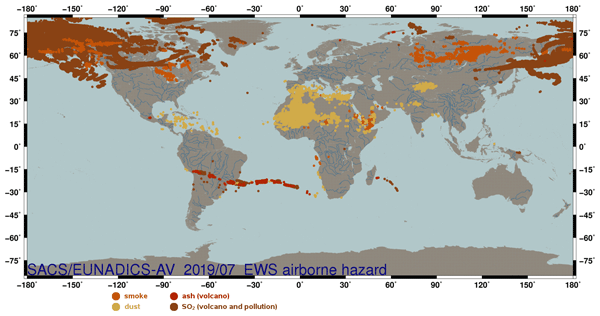
The purpose of the EUNADICS-AV (European Natural Airborne Disaster Information and Coordination System for Aviation) prototype early warning system (EWS) is to develop the combined use of harmonised data products from satellite, ground-based and in situ instruments to produce alerts of airborne hazards (volcanic, dust, smoke and radionuclide clouds), satisfying the requirement of aviation air traffic management (ATM) stakeholders (https://cordis.europa.eu/project/id/723986).
Cited articles
Apte, J. S. and Manchanda, C.: High-resolution urban air pollution mapping, Science, 385, 380–385, https://doi.org/10.1126/science.adq3678, 2024.
Barsotti, S.: Probabilistic hazard maps for operational use: the case of SO2 air pollution during the Holuhraun eruption (Bárðarbunga, Iceland) in 2014–2015, Bull. Volcanol., 82, 56, https://doi.org/10.1007/s00445-020-01395-3, 2020.
Barsotti, S., Parks, M. M., Pfeffer, M. A., Óladóttir, B. A., Barnie, T., Titos, M. M., Jónsdóttir, K., Pedersen, G. B. M., Hjartardóttir, Á. R., Stefansdóttir, G., Johannsson, T., Arason, Þ., Gudmundsson, M. T., Oddsson, B., Þrastarson, R. H., Ófeigsson, B. G., Vogfjörd, K., Geirsson, H., Hjörvar, T., von Löwis, S., Petersen, G. N., and Sigurðsson, E. M.: The eruption in Fagradalsfjall (2021, Iceland): how the operational monitoring and the volcanic hazard assessment contributed to its safe access, Nat. Hazards, 116, 3063–3092, https://doi.org/10.1007/s11069-022-05798-7, 2023.
Brauer, M., Roth, G. A., Aravkin, A. Y., et al.: Global burden and strength of evidence for 88 risk factors in 204 countries and 811 subnational locations, 1990–2021: a systematic analysis for the Global Burden of Disease Study 2021, Lancet, 403, 2162–2203, https://doi.org/10.1016/S0140-6736(24)00933-4, 2024.
Butwin, M. K., von Löwis, S., Pfeffer, M. A., and Thorsteinsson, T.: The effects of volcanic eruptions on the frequency of particulate matter suspension events in Iceland, J. Aerosol Sci., 128, 99–113, 2019.
Caplin, A., Ghandehari, M., Lim, C., Glimcher, P., and Thurston, G.: Advancing environmental exposure assessment science to benefit society, Nat. Commun., 10, 1236, https://doi.org/10.1038/s41467-019-09155-4, 2019.
Carlsen, H. K. and Thorsteinsson, T.: Associations between PM10 from traffic, resuspension, sand storms and volcanic sources and asthma drugs dispensing, ResearchSquare, https://doi.org/10.21203/rs.3.rs-1017409/v1, 2021.
Carlsen, H. K., Ilyinskaya, E., Baxter, P. J., Schmidt, A., Thorsteinsson, T., Pfeffer, M. A., Barsotti, S., Dominici, F., Finnbjornsdottir, R. G., Jóhannsson, T., Aspelund, T., Gislason, T., Valdimarsdóttir, U., Briem, H., and Gudnason, T.: Increased respiratory morbidity associated with exposure to a mature volcanic plume from a large Icelandic fissure eruption, Nat. Commun., 12, 2161, https://doi.org/10.1038/s41467-021-22432-5, 2021a.
Carlsen, H. K., Valdimarsdóttir, U., Briem, H., Dominici, F., Finnbjornsdottir, R. G., Jóhannsson, T., Aspelund, T., Gislason, T., and Gudnason, T.: Severe volcanic SO2 exposure and respiratory morbidity in the Icelandic population–a register study, Environ. Health, 20, 1–12, 2021b.
Crawford, B., Hagan, D. H., Grossman, I., Cole, E., Holland, L., Heald, C. L., and Kroll, J. H.: Mapping pollution exposure and chemistry during an extreme air quality event (the 2018 Kīlauea eruption) using a low-cost sensor network, P. Natl. Acad. Sci. USA, 118, e2025540118, https://doi.org/10.1073/pnas.2025540118, 2021.
Crilley, L. R., Shaw, M., Pound, R., Kramer, L. J., Price, R., Young, S., Lewis, A. C., and Pope, F. D.: Evaluation of a low-cost optical particle counter (Alphasense OPC-N2) for ambient air monitoring, Atmos. Meas. Tech., 11, 709–720, https://doi.org/10.5194/amt-11-709-2018, 2018.
Dagsson-Waldhauserova, P., Arnalds, O., and Olafsson, H.: Long-term variability of dust events in Iceland (1949–2011), Atmos. Chem. Phys., 14, 13411–13422, https://doi.org/10.5194/acp-14-13411-2014, 2014.
Dagsson-Waldhauserova, P., Magnusdottir, A. Ö., Olafsson, H., and Arnalds, O.: The Spatial Variation of Dust Particulate Matter Concentrations during Two Icelandic Dust Storms in 2015, Atmosphere, 7, 77, https://doi.org/10.3390/atmos7060077, 2016.
Felton, D., Grange, G., Damby, D., Bronstein, A., and Spyker, D.: Sulfur dioxide monitoring associated with the 2018 Kilauea Lower East Rift Zone Eruption, in: International Union of Toxicology (IUTOX) 15th International Congress of Toxicology, Honolulu, HI, USA, 2019.
Freire, S., Florczyk, A. J., Pesaresi, M., and Sliuzas, R.: An Improved Global Analysis of Population Distribution in Proximity to Active Volcanoes, 1975–2015, ISPRS Int. J. Geo-Inf., 8, 341, https://doi.org/10.3390/ijgi8080341, 2019.
Gan, T., Chu, J., Bambrick, H., Guo, X., and Hu, W.: Long-term exposure to PM1 and liver cancer mortality: Insights into the role of smaller particulate fractions, Ecotoxicol. Environ. Safe., 300, 118467, https://doi.org/10.1016/j.ecoenv.2025.118467, 2025.
Gíslason, S. R., Stefánsdóttir, G., Pfeffer, M. A., Barsotti, S., Jóhannsson, Th., Galeczka, I., Bali, E., Sigmarsson, O., Stefánsson, A., Keller, N. S., Sigurdsson, á., Bergsson, B., Galle, B., Jacobo, V. C., Arellano, S., Aiuppa, A., Jónasdóttir, E. B., Eiríksdóttir, E. S., Jakobsson, S., Guðfinnsson, G. H., Halldórsson, S. A., Gunnarsson, H., Haddadi, B., Jónsdóttir, I., Thordarson, Th., Riishuus, M., Högnadóttir, Th., Dürig, T., Pedersen, G. B. M., Höskuldsson, Á., and Gudmundsson, M. T.: Environmental pressure from the 2014–15 eruption of Bárðarbunga volcano, Iceland, Geochem. Perspect. Lett., 84–93, https://doi.org/10.7185/geochemlet.1509, 2015.
Grattan, J.: The distal impact of Icelandic volcanic gases and aerosols in Europe: a review of the 1783 Laki Fissure eruption and environmental vulnerability in the late 20th century, Geol. Soc. Lond. Eng. Geol. Spec. Publ., 15, 97–103, https://doi.org/10.1144/GSL.ENG.1998.015.01.10, 1998.
Green, J. R., Fiddler, M. N., Holloway, J. S., Fibiger, D. L., McDuffie, E. E., Campuzano-Jost, P., Schroder, J. C., Jimenez, J. L., Weinheimer, A. J., Aquino, J., Montzka, D. D., Hall, S. R., Ullmann, K., Shah, V., Jaeglé, L., Thornton, J. A., Bililign, S., and Brown, S. S.: Rates of wintertime atmospheric SO2 oxidation based on aircraft observations during clear-sky conditions over the eastern United States, J. Geophys. Res.-Atmos., 124, 6630–6649, 2019.
Guo, H., Li, X., Wei, J., Li, W., Wu, J., and Zhang, Y.: Smaller particular matter, larger risk of female lung cancer incidence? Evidence from 436 Chinese counties, BMC Publ. Health, 22, 344, https://doi.org/10.1186/s12889-022-12622-1, 2022.
Heaviside, C., Witham, C., and Vardoulakis, S.: Potential health impacts from sulphur dioxide and sulphate exposure in the UK resulting from an Icelandic effusive volcanic eruption, Sci. Total Environ., 145549, https://doi.org/10.1016/j.scitotenv.2021.145549, 2021.
Horwell, C. J., Elias, T., Covey, J., Bhandari, R., and Truby, J.: Perceptions of volcanic air pollution and exposure reduction practices on the Island of Hawai'i: Working towards socially relevant risk communication, Int. J. Disast. Risk Reduct., 95, 103853, https://doi.org/10.1016/j.ijdrr.2023.103853, 2023.
Icelandic Directive: Reglugerð um brennisteinsdíoxíð, köfnunarefnisdíoxíð og köfnunarefnisoxíð, bensen, kolsýring, svifryk og blý í andrúmsloftinu, B-Deild, Nr. 920, https://island.is/reglugerdir/nr/0920-2016 (last access: 21 December 2025), 2016.
Icelandic Meteorological office: Hazard map, https://en.vedur.is/volcanoes/fagradalsfjall-eruption/hazard-map/ (last access: 14 December 2025), 2025.
Ilyinskaya, E., Martin, R. S., and Oppenheimer, C.: Aerosol formation in basaltic lava fountaining: Eyjafjallajökull volcano, Iceland, J. Geophys. Res., 117, D00U27, https://doi.org/10.1029/2011JD016811, 2012.
Ilyinskaya, E., Schmidt, A., Mather, T. A., Pope, F. D., Witham, C., Baxter, P., Jóhannsson, T., Pfeffer, M., Barsotti, S., Singh, A., Sanderson, P., Bergsson, B., McCormick Kilbride, B., Donovan, A., Peters, N., Oppenheimer, C., and Edmonds, M.: Understanding the environmental impacts of large fissure eruptions: Aerosol and gas emissions from the 2014–2015 Holuhraun eruption (Iceland), Earth Planet. Sc. Lett., 472, 309–322, https://doi.org/10.1016/j.epsl.2017.05.025 2017.
Ilyinskaya, E., Mason, E., Wieser, P. E., Holland, L., Liu, E. J., Mather, T. A., Edmonds, M., Whitty, R. C. W., Elias, T., Nadeau, P. A., Schneider, D., McQuaid, J. B., Allen, S. E., Harvey, J., Oppenheimer, C., Kern, C., and Damby, D.: Rapid metal pollutant deposition from the volcanic plume of Kīlauea, Hawai'i, Commun. Earth Environ., 2, 1–15, https://doi.org/10.1038/s43247-021-00146-2, 2021.
Ilyinskaya, E., Snæbjarnarson, V., Carlsen, H. K., and Oddsson, B.: Brief communication: Small-scale geohazards cause significant and highly variable impacts on emotions, Nat. Hazards Earth Syst. Sci., 24, 3115–3128, https://doi.org/10.5194/nhess-24-3115-2024, 2024.
Janssen, N. A. H., Fischer, P., Marra, M., Ameling, C., and Cassee, F. R.: Short-term effects of PM2.5, PM10 and PM2.5–10 on daily mortality in the Netherlands, Sci. Total Environ., 463–464, 20–26, https://doi.org/10.1016/j.scitotenv.2013.05.062, 2013.
Longo, B. M.: The Kilauea Volcano Adult Health Study, Nurs. Res., 58, https://doi.org/10.1097/NNR.0b013e3181900cc5, 2009.
Longo, B. M., Rossignol, A., and Green, J. B.: Cardiorespiratory health effects associated with sulphurous volcanic air pollution, Publ. Health, 122, 809–820, https://doi.org/10.1016/j.puhe.2007.09.017, 2008.
Martin, R. S., Ilyinskaya, E., Sawyer, G. M., Tsanev, V. I., and Oppenheimer, C.: A re-assessment of aerosol size distributions from Masaya volcano (Nicaragua), Atmos. Environ., 45, 547–560, https://doi.org/10.1016/j.atmosenv.2010.10.049, 2011.
Mason, E., Wieser, P. E., Liu, E. J., Edmonds, M., Ilyinskaya, E., Whitty, R. C. W., Mather, T. A., Elias, T., Nadeau, P. A., Wilkes, T. C., McGonigle, A. J. S., Pering, T. D., Mims, F. M., Kern, C., Schneider, D. J., and Oppenheimer, C.: Volatile metal emissions from volcanic degassing and lava–seawater interactions at Kīlauea Volcano, Hawai'i, Commun. Earth Environ., 2, 1–16, https://doi.org/10.1038/s43247-021-00145-3, 2021.
Mather, T. A., Pyle, D. M., and Oppenheimer, C.: Tropospheric volcanic aerosol, in: Geophysical Monograph Series, vol. 139, edited by: Robock, A. and Oppenheimer, C., American Geophysical Union, Washington, D.C., 189–212, https://doi.org/10.1029/139GM12, 2003.
Mcdonnell, W. F., Nishino-Ishikawa, N., Petersen, F. F., Chen, L. H., and Abbey, D. E.: Relationships of mortality with the fine and coarse fractions of long-term ambient PM10 concentrations in nonsmokers, J. Exp. Sci. Environ. Epidemiol., 10, 427–436, https://doi.org/10.1038/sj.jea.7500095, 2000.
Nakashima, M. and Dagsson-Waldhauserová, P.: A 60 Year Examination of Dust Day Activity and Its Contributing Factors From Ten Icelandic Weather Stations From 1950 to 2009, Front. Earth Sci., 6, https://doi.org/10.3389/feart.2018.00245, 2019.
Pattantyus, A. K., Businger, S., and Howell, S. G.: Review of sulfur dioxide to sulfate aerosol chemistry at Kīlauea Volcano, Hawai'i, Atmos. Environ., 185, 262–271, https://doi.org/10.1016/j.atmosenv.2018.04.055, 2018.
Pfeffer, M. A., Arellano, S., Barsotti, S., Petersen, G. N., Barnie, T., Ilyinskaya, E., Hjörvar, T., Bali, E., Pedersen, G. B. M., Guðmundsson, G. B., Vogfjorð, K., Ranta, E. J., Óladóttir, B. A., Edwards, B. A., Moussallam, Y., Stefánsson, A., Scott, S. W., Smekens, J.-F., Varnam, M., and Titos, M.: SO2 emission rates and incorporation into the air pollution dispersion forecast during the 2021 eruption of Fagradalsfjall, Iceland, J. Volcanol. Geoth. Res., 449, 108064, https://doi.org/10.1016/j.jvolgeores.2024.108064, 2024.
Schmidt, A., Ostro, B., Carslaw, K. S., Wilson, M., Thordarson, T., Mann, G. W., and Simmons, A. J.: Excess mortality in Europe following a future Laki-style Icelandic eruption, P. Natl. Acad. Sci. USA, 108, 15710–15715, https://doi.org/10.1073/pnas.1108569108, 2011.
Schmidt, A., Leadbetter, S., Theys, N., Carboni, E., Witham, C. S., Stevenson, J. A., Birch, C. E., Thordarson, T., Turnock, S., Barsotti, S., Delaney, L., Feng, W., Grainger, R. G., Hort, M. C., Höskuldsson, Á., Ialongo, I., Ilyinskaya, E., Jóhannsson, T., Kenny, P., Mather, T. A., Richards, N. A. D., and Shepherd, J.: Satellite detection, long-range transport and air quality impacts of volcanic sulfur dioxide from the 2014–15 flood lava eruption at Bárðarbunga (Iceland), J. Geophys. Res.-Atmos., 2015JD023638, https://doi.org/10.1002/2015JD023638, 2015.
Sigurgeirsson, M. and Einarsson, S.: Reykjanes and Svartsengi volcanic systems, in: Catalogue of Icelandic Volcanoes, IMO, UI and CPD-NCIP, http://icelandicvolcanoes.is/?volcano=REY (last access: 21 December 2025), 2019.
Sokhi, R. S., Moussiopoulos, N., Baklanov, A., Bartzis, J., Coll, I., Finardi, S., Friedrich, R., Geels, C., Grönholm, T., Halenka, T., Ketzel, M., Maragkidou, A., Matthias, V., Moldanova, J., Ntziachristos, L., Schäfer, K., Suppan, P., Tsegas, G., Carmichael, G., Franco, V., Hanna, S., Jalkanen, J.-P., Velders, G. J. M., and Kukkonen, J.: Advances in air quality research – current and emerging challenges, Atmos. Chem. Phys., 22, 4615–4703, https://doi.org/10.5194/acp-22-4615-2022, 2022.
Sonnek, K. M., Mårtensson, T., Veibäck, E., Tunved, P., Grahn, H., von Schoenberg, P., Brännström, N., and Bucht, A.: The impacts of a Laki-like eruption on the present Swedish society, Nat. Hazards, 88, 1565–1590, https://doi.org/10.1007/s11069-017-2933-0, 2017.
Statistics Iceland: Average annual population by municipality, age and sex 1998–2022 – Current municipalities, https://px.hagstofa.is/pxen/pxweb/en/Ibuar/Ibuar__mannfjoldi__2_byggdir__sveitarfelog/MAN02008.px (last access: 21 December 2025), 2022.
Stein, A. F., Draxler, R. R., Rolph, G. D., Stunder, B. J. B., Cohen, M. D., and Ngan, F.: NOAA's HYSPLIT Atmospheric Transport and Dispersion Modeling System, B. Am. Meteorol. Soc., 96, 2059–2077, https://doi.org/10.1175/BAMS-D-14-00110.1, 2015.
Stewart, C., Damby, D. E., Horwell, C. J., Elias, T., Ilyinskaya, E., Tomašek, I., Longo, B. M., Schmidt, A., Carlsen, H. K., Mason, E., Baxter, P. J., Cronin, S., and Witham, C.: Volcanic air pollution and human health: recent advances and future directions, Bull. Volcanol., 84, 11, https://doi.org/10.1007/s00445-021-01513-9, 2021.
Tam, E., Miike, R., Labrenz, S., Sutton, A. J., Elias, T., Davis, J., Chen, Y.-L., Tantisira, K., Dockery, D., and Avol, E.: Volcanic air pollution over the Island of Hawai'i: Emissions, dispersal, and composition. Association with respiratory symptoms and lung function in Hawai'i Island school children, Environ. Int., 92–93, 543–552, https://doi.org/10.1016/j.envint.2016.03.025, 2016.
Tomášková, H., Šlachtová, H., Tomášek, I., Polaufová, P., Hellebrandová, L., Šplíchalová, A., and Argalášová, L': Short-term Exposure to PM1 and Total and Specific Mortality in the Czech Republic, in: Recent Advances in Environmental Science from the Euro-Mediterranean and Surrounding Regions 4th Edn., Springer, Cham, 1107–1110, https://doi.org/10.1007/978-3-031-51904-8_241, 2024.
Trigo, R. M., Vaquero, J. M., and Stothers, R. B.: Witnessing the impact of the 1783–1784 Laki eruption in the Southern Hemisphere, Climatic Change, 99, 535–546, hhttps://doi.org/10.1007/s10584-009-9676-1, 2009.
Twigg, M. M., Ilyinskaya, E., Beccaceci, S., Green, D. C., Jones, M. R., Langford, B., Leeson, S. R., Lingard, J. J. N., Pereira, G. M., Carter, H., Poskitt, J., Richter, A., Ritchie, S., Simmons, I., Smith, R. I., Tang, Y. S., Van Dijk, N., Vincent, K., Nemitz, E., Vieno, M., and Braban, C. F.: Impacts of the 2014–2015 Holuhraun eruption on the UK atmosphere, Atmos. Chem. Phys., 16, 11415–11431, https://doi.org/10.5194/acp-16-11415-2016, 2016.
UKCEH: Atmospheric sulphur dioxide levels hit historic high in Scotland following Icelandic volcanic eruption, UK Centre for Ecology & Hydrology, https://www.ceh.ac.uk/press/atmospheric-sulphur-dioxide-levels-hit-historic-high-scotland (last access: 21 December 2025), 2024.
U.S. EPA: Integrated Science Assessment (ISA) for Sulfur Oxides – Health Criteria (Final Report, Sep 2008), U.S. Environmental Protection Agency, Washington, DC, EPA/600/R-08/047F, https://assessments.epa.gov/isa/document/&deid=198843 (last access: 21 December 2025), 2008.
Whitty, R., Pfeffer, M., Ilyinskaya, E., Roberts, T., Schmidt, A., Barsotti, S., Strauch, W., Crilley, L., Pope, F., Bellanger, H., Mendoza, E., Mather, T., Liu, E., Peters, N., Taylor, I., Francis, H., Leiva, X. H., Lynch, D., Nobert, S., and Baxter, P.: Effectiveness of low-cost air quality monitors for identifying volcanic SO2 and PM downwind from Masaya volcano, Nicaragua, Volcanica, 5, 33–59, https://doi.org/10.30909/vol.05.01.3359, 2022.
Whitty, R. C. W., Ilyinskaya, E., Mason, E., Wieser, P. E., Liu, E. J., Schmidt, A., Roberts, T., Pfeffer, M. A., Brooks, B., Mather, T. A., Edmonds, M., Elias, T., Schneider, D. J., Oppenheimer, C., Dybwad, A., Nadeau, P. A., and Kern, C.: Spatial and Temporal Variations in SO2 and PM2.5 Levels Around Kīlauea Volcano, Hawai'i During 2007–2018, Front. Earth Sci., 8, https://doi.org/10.3389/feart.2020.00036, 2020.
World Health Organization: WHO global air quality guidelines: particulate matter (PM2.5 and PM10), ozone, nitrogen dioxide, sulfur dioxide and carbon monoxide, xxi, World Health Organization, 267 pp., ISBN 9789240034228, https://www.who.int/publications/i/item/9789240034228 (last access: 21 December 2025), 2021.
Yang, M., Chu, C., Bloom, M. S., Li, S., Chen, G., Heinrich, J., Markevych, I., Knibbs, L. D., Bowatte, G., Dharmage, S. C., Komppula, M., Leskinen, A., Hirvonen, M.-R., Roponen, M., Jalava, P., Wang, S.-Q., Lin, S., Zeng, X.-W., Hu, L.-W., Liu, K.-K., Yang, B.-Y., Chen, W., Guo, Y., and Dong, G.-H.: Is smaller worse? New insights about associations of PM1 and respiratory health in children and adolescents, Environ. Int., 120, 516–524, 2018.
Zhang, Y., Ding, Z., Xiang, Q., Wang, W., Huang, L., and Mao, F.: Short-term effects of ambient PM1 and PM2.5 air pollution on hospital admission for respiratory diseases: Case-crossover evidence from Shenzhen, China, Int. J. Hyg. Environ. Health, 224, 113418, https://doi.org/10.1016/j.ijheh.2019.11.001, 2020.
Short summary
We studied air pollution caused by volcanic emissions, a poorly understood hazard in populated areas. We present a large dataset of high-quality measurements of sulfur dioxide gas and fine aerosol particulate matter collected during ongoing series of eruptions in Iceland. We revealed rapid, localized changes in pollutant concentrations at ground level, with implications for assessing population exposure during volcanic eruptions.
We studied air pollution caused by volcanic emissions, a poorly understood hazard in populated...


Altmetrics
Final-revised paper
Preprint