
Articles | Volume 26, issue 3
https://doi.org/10.5194/acp-26-2141-2026
© Author(s) 2026. This work is distributed under
the Creative Commons Attribution 4.0 License.
the Creative Commons Attribution 4.0 License.
https://doi.org/10.5194/acp-26-2141-2026
© Author(s) 2026. This work is distributed under
the Creative Commons Attribution 4.0 License.
the Creative Commons Attribution 4.0 License.
Research article
| 
10 Feb 2026
Research article |
| 10 Feb 2026
| 10 Feb 2026
Factors controlling the concentration of water-soluble pyrogenic carbon in aerosols in Hokkaido, Japan
Graduate School of Environmental Science, Hokkaido University, Sapporo, 060-0810, Japan
Yuzo Miyazaki
Institute of Low Temperature Science, Hokkaido University, Sapporo, 060-0819, Japan
Tomohisa Irino
Faculty of Environmental Science, Hokkaido University, Sapporo, 060-0810, Japan
Youhei Yamashita
Faculty of Environmental Science, Hokkaido University, Sapporo, 060-0810, Japan
Related authors
No articles found.
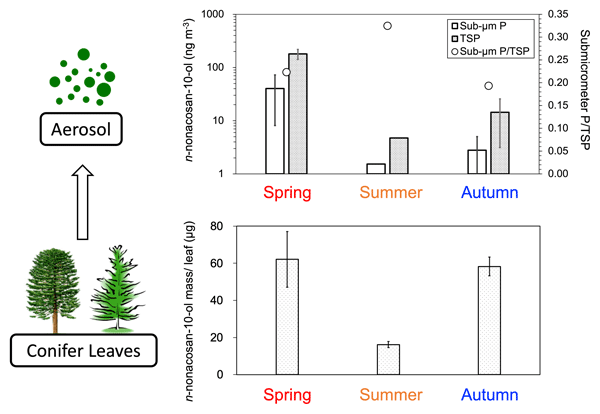
Yuhao Cui, Eri Tachibana, and Yuzo Miyazaki
Biogeosciences, 23, 2927–2938, https://doi.org/10.5194/bg-23-2927-2026, https://doi.org/10.5194/bg-23-2927-2026, 2026
Short summary
Short summary
We investigated the specific plant species that act as a source of secondary fatty alcohols (SFAs) in atmospheric aerosols and their emission processes. Our study at a cool-temperate forest site suggested that SFAs in aerosols originated from conifer leaf wax and their atmospheric emission amount is primarily controlled by conifer abundance and the phenology of leaves. Our findings provide insight into estimating the global atmospheric emission flux of primary biological aerosol particles.
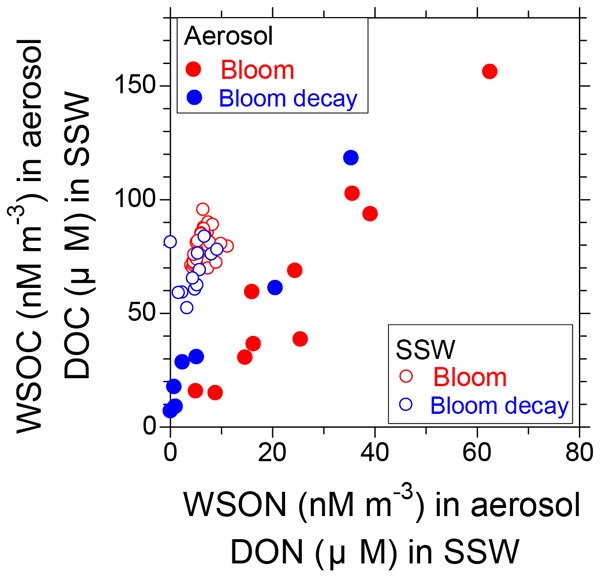
Yuzo Miyazaki, Yunhan Wang, Eri Tachibana, Koji Suzuki, Youhei Yamashita, and Jun Nishioka
Atmos. Chem. Phys., 25, 18325–18340, https://doi.org/10.5194/acp-25-18325-2025, https://doi.org/10.5194/acp-25-18325-2025, 2025
Short summary
Short summary
It is essential to understand how biologically productive oceanic regions during spring phytoplankton blooms after sea ice melting contribute to the sea-to-air emission flux of atmospheric organic aerosols (OAs) in the subarctic oceans. Our shipboard measurements highlight the preferential formation of N-containing secondary water-soluble OAs associated with the predominant diatoms including ice algae during the bloom after sea ice melting/retreat in the subarctic ocean.
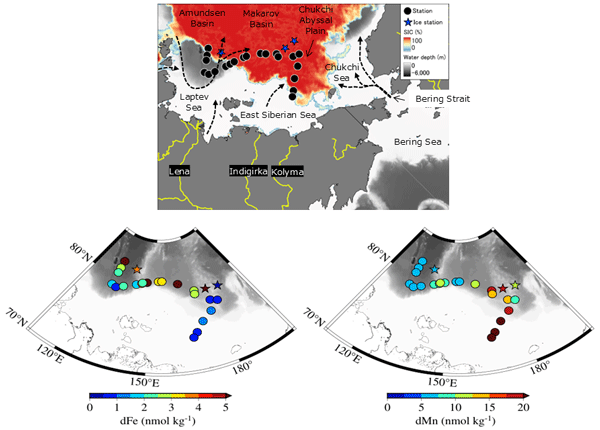
Naoya Kanna, Kazutaka Tateyama, Takuji Waseda, Anna Timofeeva, Maria Papadimitraki, Laura Whitmore, Hajime Obata, Daiki Nomura, Hiroshi Ogawa, Youhei Yamashita, and Igor Polyakov
Biogeosciences, 22, 1057–1076, https://doi.org/10.5194/bg-22-1057-2025, https://doi.org/10.5194/bg-22-1057-2025, 2025
Short summary
Short summary
This article presents data on iron and manganese, essential micronutrients for primary producers in the Arctic Laptev and East Siberian seas (LESS). There, observations were made through international cooperation with the Nansen and Amundsen Basin Observational System expedition during the late summer of 2021. The results from this study indicate that the major sources controlling the iron and manganese distributions on the LESS continental margins are river discharge and shelf sediment input.
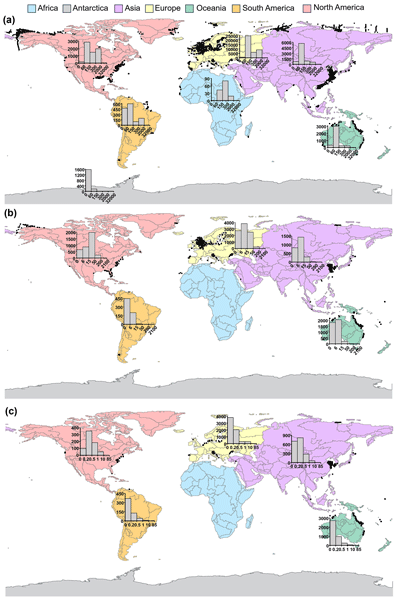
Christian Lønborg, Cátia Carreira, Gwenaël Abril, Susana Agustí, Valentina Amaral, Agneta Andersson, Javier Arístegui, Punyasloke Bhadury, Mariana B. Bif, Alberto V. Borges, Steven Bouillon, Maria Ll. Calleja, Luiz C. Cotovicz Jr., Stefano Cozzi, Maryló Doval, Carlos M. Duarte, Bradley Eyre, Cédric G. Fichot, E. Elena García-Martín, Alexandra Garzon-Garcia, Michele Giani, Rafael Gonçalves-Araujo, Renee Gruber, Dennis A. Hansell, Fuminori Hashihama, Ding He, Johnna M. Holding, William R. Hunter, J. Severino P. Ibánhez, Valeria Ibello, Shan Jiang, Guebuem Kim, Katja Klun, Piotr Kowalczuk, Atsushi Kubo, Choon-Weng Lee, Cláudia B. Lopes, Federica Maggioni, Paolo Magni, Celia Marrase, Patrick Martin, S. Leigh McCallister, Roisin McCallum, Patricia M. Medeiros, Xosé Anxelu G. Morán, Frank E. Muller-Karger, Allison Myers-Pigg, Marit Norli, Joanne M. Oakes, Helena Osterholz, Hyekyung Park, Maria Lund Paulsen, Judith A. Rosentreter, Jeff D. Ross, Digna Rueda-Roa, Chiara Santinelli, Yuan Shen, Eva Teira, Tinkara Tinta, Guenther Uher, Masahide Wakita, Nicholas Ward, Kenta Watanabe, Yu Xin, Youhei Yamashita, Liyang Yang, Jacob Yeo, Huamao Yuan, Qiang Zheng, and Xosé Antón Álvarez-Salgado
Earth Syst. Sci. Data, 16, 1107–1119, https://doi.org/10.5194/essd-16-1107-2024, https://doi.org/10.5194/essd-16-1107-2024, 2024
Short summary
Short summary
In this paper, we present the first edition of a global database compiling previously published and unpublished measurements of dissolved organic matter (DOM) collected in coastal waters (CoastDOM v1). Overall, the CoastDOM v1 dataset will be useful to identify global spatial and temporal patterns and to facilitate reuse in studies aimed at better characterizing local biogeochemical processes and identifying a baseline for modelling future changes in coastal waters.
Yuhao Cui, Eri Tachibana, Kimitaka Kawamura, and Yuzo Miyazaki
Biogeosciences, 20, 4969–4980, https://doi.org/10.5194/bg-20-4969-2023, https://doi.org/10.5194/bg-20-4969-2023, 2023
Short summary
Short summary
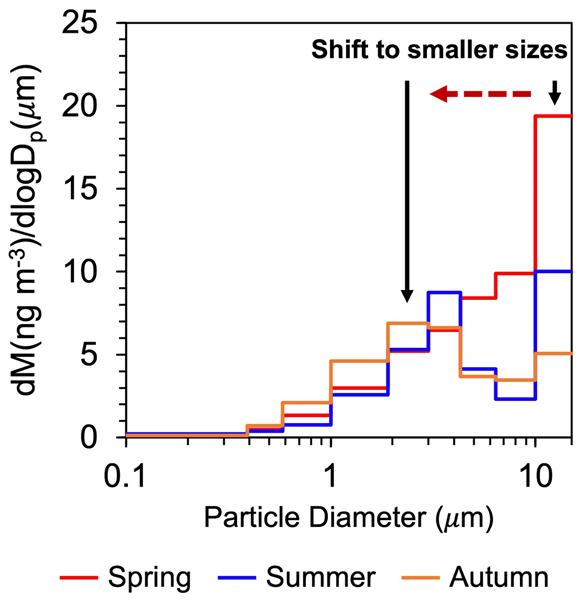
Fatty alcohols (FAs) are major components of surface lipids in plant leaves and serve as surface-active aerosols. Our study on the aerosol size distributions in a forest suggests that secondary FAs (SFAs) originated from plant waxes and that leaf senescence status is likely an important factor controlling the size distribution of SFAs. This study provides new insights into the sources of primary biological aerosol particles (PBAPs) and their effects on the aerosol ice nucleation activity.
Jinyoung Jung, Yuzo Miyazaki, Jin Hur, Yun Kyung Lee, Mi Hae Jeon, Youngju Lee, Kyoung-Ho Cho, Hyun Young Chung, Kitae Kim, Jung-Ok Choi, Catherine Lalande, Joo-Hong Kim, Taejin Choi, Young Jun Yoon, Eun Jin Yang, and Sung-Ho Kang
Atmos. Chem. Phys., 23, 4663–4684, https://doi.org/10.5194/acp-23-4663-2023, https://doi.org/10.5194/acp-23-4663-2023, 2023
Short summary
Short summary
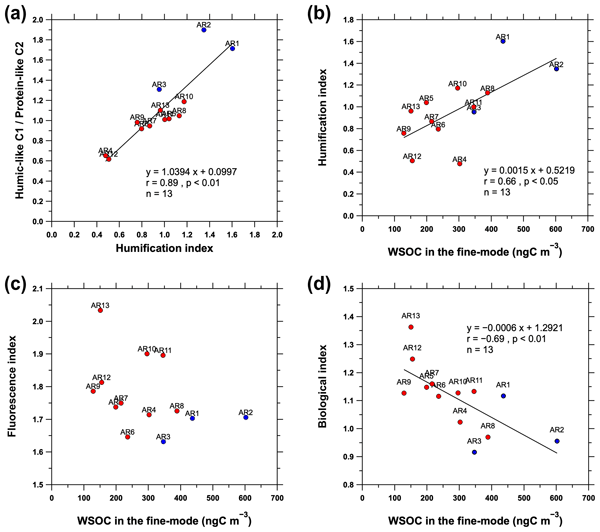
This study examined the summertime fluorescence properties of water-soluble organic carbon (WSOC) in aerosols over the western Arctic Ocean. We found that the WSOC in fine-mode aerosols in coastal areas showed a higher polycondensation degree and aromaticity than in sea-ice-covered areas. The fluorescence properties of atmospheric WSOC in the summertime marine Arctic boundary can improve our understanding of the WSOC chemical and biological linkages at the ocean–sea-ice–atmosphere interface.
Tsukasa Dobashi, Yuzo Miyazaki, Eri Tachibana, Kazutaka Takahashi, Sachiko Horii, Fuminori Hashihama, Saori Yasui-Tamura, Yoko Iwamoto, Shu-Kuan Wong, and Koji Hamasaki
Biogeosciences, 20, 439–449, https://doi.org/10.5194/bg-20-439-2023, https://doi.org/10.5194/bg-20-439-2023, 2023
Short summary
Short summary
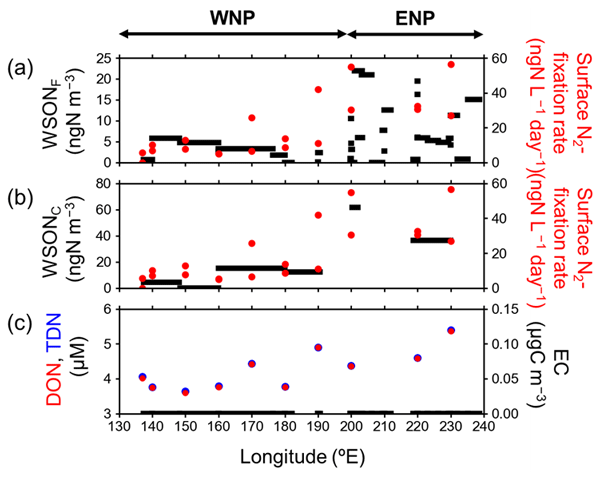
Water-soluble organic nitrogen (WSON) in marine aerosols is important for biogeochemical cycling of bioelements. Our shipboard measurements suggested that reactive nitrogen produced and exuded by nitrogen-fixing microorganisms in surface seawater likely contributed to the formation of WSON aerosols in the subtropical North Pacific. This study provides new implications for the role of marine microbial activity in the formation of WSON aerosols in the ocean surface.
Yange Deng, Hiroaki Fujinari, Hikari Yai, Kojiro Shimada, Yuzo Miyazaki, Eri Tachibana, Dhananjay K. Deshmukh, Kimitaka Kawamura, Tomoki Nakayama, Shiori Tatsuta, Mingfu Cai, Hanbing Xu, Fei Li, Haobo Tan, Sho Ohata, Yutaka Kondo, Akinori Takami, Shiro Hatakeyama, and Michihiro Mochida
Atmos. Chem. Phys., 22, 5515–5533, https://doi.org/10.5194/acp-22-5515-2022, https://doi.org/10.5194/acp-22-5515-2022, 2022
Short summary
Short summary
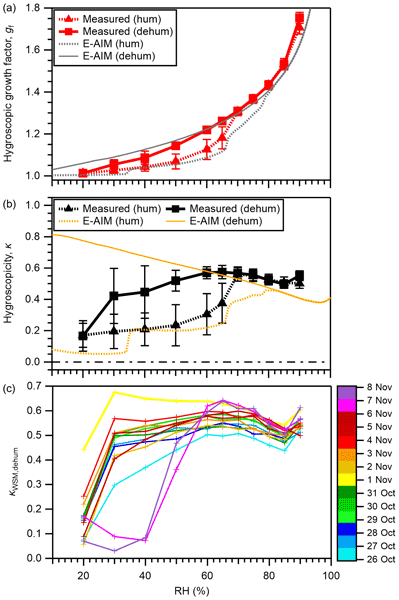
Offline analyses of the hygroscopicity and composition of atmospheric aerosols are complementary to online analyses in view of the applicability to broader sizes, specific compound groups, and investigations at remote sites. This offline study characterized the composition of water-soluble matter in aerosols and their humidity-dependent hygroscopicity on Okinawa, a receptor site of East Asian outflow. Further, comparison with online analyses showed the appropriateness of the offline method.
Sharmine Akter Simu, Yuzo Miyazaki, Eri Tachibana, Henning Finkenzeller, Jérôme Brioude, Aurélie Colomb, Olivier Magand, Bert Verreyken, Stephanie Evan, Rainer Volkamer, and Trissevgeni Stavrakou
Atmos. Chem. Phys., 21, 17017–17029, https://doi.org/10.5194/acp-21-17017-2021, https://doi.org/10.5194/acp-21-17017-2021, 2021
Short summary
Short summary
The tropical Indian Ocean (IO) is expected to be a significant source of water-soluble organic carbon (WSOC), which is relevant to cloud formation. Our study showed that marine secondary organic formation dominantly contributed to the aerosol WSOC mass at the high-altitude observatory in the southwest IO in the wet season in both marine boundary layer and free troposphere (FT). This suggests that the effect of marine secondary sources is important up to FT, a process missing in climate models.
Cited articles
Aggarwal, S. G. and Kawamura, K.: Molecular distributions and stable carbon isotopic compositions of dicarboxylic acids and related compounds in aerosols from Sapporo, Japan: Implications for photochemical aging during long-range atmospheric transport, J. Geophys. Res., 113, https://doi.org/10.1029/2007jd009365, 2008.
Bao, H., Niggemann, J., Luo, L., Dittmar, T., and Kao, S.: Aerosols as a source of dissolved black carbon to the ocean, Nat. Commun., 8, 510, https://doi.org/10.1038/s41467-017-00437-3, 2017.
Bao, H., Qiao, J., Zhang, R., Huang, D., Wang, B., Lin, X., and Kao, S.-J.: Multiproxy probing of anthropogenic influences on the different components of dissolved organic matter in coastal rainwater, Sci. Total Environ., 824, 153846, https://doi.org/10.1016/j.scitotenv.2022.153846, 2022.
Bao, H., Niggemann, J., Du, M., Zhao, W., Huang, D., Yi, Y., Yang, J. Y. T., Dittmar, T., and Kao, S. J.: Deciphering sources and processing of dissolved black carbon in coastal seas, Limnol. Oceanogr., 68, 2562–2575, https://doi.org/10.1002/lno.12442, 2023.
Barton, R. and Wagner, S.: Measuring dissolved black carbon in water via aqueous, inorganic, high-performance liquid chromatography of benzene polycarboxylic acid (BPCA) molecular markers, PLoS ONE, 17, e0268059, https://doi.org/10.1371/journal.pone.0268059, 2022.
Bond, T. C., Doherty, S. J., Fahey, D. W., Forster, P. M., Berntsen, T., Deangelo, B. J., Flanner, M. G., Ghan, S., Kärcher, B., Koch, D., Kinne, S., Kondo, Y., Quinn, P. K., Sarofim, M. C., Schultz, M. G., Schulz, M., Venkataraman, C., Zhang, H., Zhang, S., Bellouin, N., Guttikunda, S. K., Hopke, P. K., Jacobson, M. Z., Kaiser, J. W., Klimont, Z., Lohmann, U., Schwarz, J. P., Shindell, D., Storelvmo, T., Warren, S. G., and Zender, C. S.: Bounding the role of black carbon in the climate system: A scientific assessment, J. Geophys. Res.-Atmos., 118, 5380–5552, https://doi.org/10.1002/jgrd.50171, 2013.
Bouwman, A. F., Lee, D. S., Asman, W. A. H., Dentener, F. J., Van Der Hoek, K. W., and Olivier, J. G. J.: A global high-resolution emission inventory for ammonia, Global Biogeochem. Cy., 11, 561–587, https://doi.org/10.1029/97GB02266, 1997.
Briggs, N. L. and Long, C. M.: Critical review of black carbon and elemental carbon source apportionment in Europe and the United States, Atmos. Environ., 144, 409–427, https://doi.org/10.1016/j.atmosenv.2016.09.002, 2016.
Budhavant, K., Andersson, A., Holmstrand, H., Bikkina, P., Bikkina, S., Satheesh, S. K., and Gustafsson, Ö.: Enhanced Light-Absorption of Black Carbon in Rainwater Compared with Aerosols Over the Northern Indian Ocean, J. Geophys. Res., 125, e2019JD031246, https://doi.org/10.1029/2019JD031246, 2019.
Chen, Y. and Xie, S.: Characteristics and formation mechanism of a heavy air pollution episode caused by biomass burning in Chengdu, Southwest China, Sci. Total. Environ., 473–474, 507–517, https://doi.org/10.1016/j.scitotenv.2013.12.069, 2014.
Chen, Z. X., Pei, C. L., Liu, J. W., Zhang, X. Y., Ding, P., Dang, L., Zong, Z., Jiang, F., Wu, L. L., Sun, X., Zhou, S. Z., Zhang, Y. L., Zhang, Z. S., Zeng, J. Y., Tian, C. G., Li, J., and Zhang, G.: Non-agricultural source dominates the ammonium aerosol in the largest city of South China based on the vertical δ15N measurements, Sci. Total Environ., 848, 157750, https://doi.org/10.1016/j.scitotenv.2022.157750, 2022.
Chow, J. C., Watson, J. G., Kuhns, H., Etyemezian, V., Lowenthal, D. H., Crow, D., Kohl, S. D., Engelbrecht, J. P., and Green, M. C.: Source profiles for industrial, mobile, and area sources in the Big Bend Regional Aerosol Visibility and Observational study, Chemosphere, 54, 185–208, https://doi.org/10.1016/j.chemosphere.2003.07.004, 2004.
Coppola, A. I., Ziolkowski, L. A., Masiello, C. A., and Druffel, E. R. M.: Aged black carbon in marine sediments and sinking particles, Geophys. Res. Lett., 41, 2427–2433, https://doi.org/10.1002/2013GL059068, 2014.
Coppola, A. I., Wiedemeier, D. B., Galy, V., Haghipour, N., Hanke, U. M., Nascimento, G. S., Usman, M., Blattmann, T. M., Reisser, M., Freymond, C. V., Zhao, M., Voss, B., Wacker, L., Schefuß, E., Peucker-Ehrenbrink, B., Abiven, S., Schmidt, M. W. I., and Eglinton, T. I.: Global-scale evidence for the refractory nature of riverine black carbon, Nat. Geosci., 11, 584–588, https://doi.org/10.1038/s41561-018-0159-8, 2018.
Coppola, A. I., Wagner, S., Lennartz, S. T., Seidel, M., Ward, N. D., Dittmar, T., Santín, C., and Jones, M. W.: The black carbon cycle and its role in the Earth system, Nat. Rev. Earth Environ., 3, 516–532, https://doi.org/10.1038/s43017-022-00316-6, 2022.
Coppola, A. I., Druffel, E. R. M., Broek, T. A., Haghipour, N., Eglinton, T. I., McCarthy, M., and Walker, B. D.: Variable aging and storage of dissolved black carbon in the ocean, P. Natl. Acad. Sci. USA, 121, e2305030121, https://doi.org/10.1073/pnas.2305030121, 2024.
Decesari, S., Facchini, M. C., Matta, E., Mircea, M., Fuzzi, S., Chughtai, A. R., and Smith, D. M.: Water soluble organic compounds formed by oxidation of soot, Atmos. Environ., 36, 1827–1832, https://doi.org/10.1016/S1352-2310(02)00141-3, 2002.
Dittmar, T.: The molecular level determination of black carbon in marine dissolved organic matter, Org. Geochem., 39, 396–407, https://doi.org/10.1016/j.orggeochem.2008.01.015, 2008.
Dittmar, T. and Paeng, J.: A heat-induced molecular signature in marine dissolved organic matter, Nat. Geosci., 2, 175–179, https://doi.org/10.1038/ngeo440, 2009.
Dittmar, T., de Rezende, C., Manecki, M., Niggemann, J., Coelho Ovalle, A. R., Stubbins, A., and Bernardes, M. C.: Continuous flux of dissolved black carbon from a vanished tropical forest biome, Nat. Geosci., 5, 618–622, https://doi.org/10.1038/ngeo1541, 2012.
Dzepina, K., Cappa, C. D., Volkamer, R. M., Madronich, S., DeCarlo, P. F., Zaveri, R. A., and Jimenez, J. L.: Modeling the Multiday Evolution and Aging of Secondary Organic Aerosol During MILAGRO 2006, Environ. Sci. Technol., 45, 3496–3503, https://doi.org/10.1021/es103186f, 2011.
Fang, Y., Chen, Y., Tian, C., Wang, X., Lin, T., Hu, L., Li. J., Zhang, G., and Luo, Y.: Cycling and budgets of organic and black carbon in coastal Bohai Sea, China: Impacts of natural and anthropogenic perturbations, Global Biogeochem. Cy., 32, 971–986, https://doi.org/10.1029/2017GB005863, 2018.
Fang, Y., Chen, Y., Huang, G., Hu, L., Tian, C., Xie, J., Lin, J., and Lin, T.: Particulate and Dissolved Black Carbon in Coastal China Seas: Spatiotemporal Variations, Dynamics, and Potential Implications, Environ. Sci. Technol., 55, 788–796, https://doi.org/10.1021/acs.est.0c06386, 2021.
Fierce, L., Riemer, N., and Bond, T. C.: Explaining variance in black carbon's aging timescale, Atmos. Chem. Phys., 15, 3173–3191, https://doi.org/10.5194/acp-15-3173-2015, 2015.
Frank, J. M., Rainer, F., Daniel, G. W., and Trevor, J. M.: The composition of Standard Seawater and the definition of the Reference-Composition Salinity Scale, Deep-Sea Res. Pt. I, 55, 50–72, https://doi.org/10.1016/j.dsr.2007.10.001, 2008.
Geng, G., Liu, Y., Liu, Y., Liu, S., Cheng, J., Yan, L., Wu, N., Hu, H., Tong, D., Zheng, B., Yin, Z., He, K., and Zhang, Q.: Efficacy of China's clean air actions to tackle PM2.5 pollution between 2013 and 2020, Nat. Geosci., 17, 987–994, https://doi.org/10.1038/s41561-024-01540-z, 2024.
Geng, X., Zhong, G., Liu, J., Sun, Y., Yi, X., Bong, C. W., Zakaria, M. P., Gustafsson, Ö., Ouyang, Y., and Zhang, G.: Year-round measurements of dissolved black carbon in coastal Southeast Asia aerosols: Rethinking its atmospheric deposition in the ocean, J. Geophys. Res.-Atmos., 126, e2021JD034590, https://doi.org/10.1029/2021JD034590, 2021.
Geng, X., Haig, J., Lin, B., Tian, C., Zhu, S., Cheng, Z., Yuan, Y., Zhang, Y., Liu, J., Zheng, M., Li, J., Zhong, G., Zhao, S., Bird, M. I., and Zhang, G.: Provenance of aerosol black carbon over northeast indian ocean and South China Sea and implications for oceanic black carbon cycling, Environ. Sci. Technol., 57, 13067–13078, https://doi.org/10.1021/acs.est.3c03481, 2023.
Goldberg, E. D.: Black Carbon in the Environment: Properties and Distribution, John Wiley, https://doi.org/10.1002/qj.49711247219, 1985.
Grieshop, A. P., Logue, J. M., Donahue, N. M., and Robinson, A. L.: Laboratory investigation of photochemical oxidation of organic aerosol from wood fires 1: Measurement and simulation of organic aerosol evolution, Atmos. Chem. Phys., 9, 1263–1277, https://doi.org/10.5194/acp-9-1263-2009, 2009.
Han, C., Liu, Y., Ma, J., and He, H.: Key role of organic carbon in the sunlight-enhanced atmospheric aging of soot by O2, P. Natl. Acad. Sci. USA, 109, 21250–21255, https://doi.org/10.1073/pnas.1212690110, 2012.
Hecobian, A., Zhang, X., Zheng, M., Frank, N., Edgerton, E. S., and Weber, R. J.: Water-Soluble Organic Aerosol material and the light absorption characteristics of aqueous extracts measured over the Southeastern United States, Atmos. Chem. Phys., 10, 5965–5977, https://doi.org/10.5194/acp-10-5965-2010, 2010.
Hedges, J. I., Eglinton, G., Hatcher, P. G., Kirchman, D. L., Arnosti, C., Derenne, S., Evershed, R. P., Kogel-Knabner, I., de Leeuw, J. W., Littke, R., Michaelis, W., and Rullkotter, J.: The molecularly-uncharacterized component of nonliving organic matter in natural environments, Org. Geochem., 31, 945–958, https://doi.org/10.1016/S0146-6380(00)00096-6, 2000.
Herndon, S. C., Onasch, T. B., Wood, E. C., Kroll, J. H., Canagaratna, M. R., Jayne, J. T., Zavala, M. A., Knighton, W. B., Mazzoleni, C., Dubey, M. K., Ulbrich, I. M., Jimenez, J. L., Seila, R., de Gouw, J. A., de Foy, B., Fast, J., Molina, L. T., Kolb, C. E., and Worsnop, D. R.: Correlation of secondary organic aerosol with odd oxygen in Mexico City, Geophys. Res. Lett., 35, 6, https://doi.org/10.1029/2008GL034058, 2008.
Hou, D., Zhang, X., Zhao, J., Qiang, J., Wang, J., Wang, P., An, Q., Wang, Y., Wang, L., Yuan, S., and Zhang, F.: Source Apportionment of Elemental Carbon in Different Seasons in Hebei, China, Front. Environ. Sci., 10, https://doi.org/10.3389/fenvs.2022.949504, 2022.
Huo, M. Q., Sato, K., Ohizumi, T., Akimoto, H., and Takahashi, K.: Characteristics of carbonaceous components in precipitation and atmospheric particle at Japanese sites, Atmos. Environ., 146, 164–173, https://doi.org/10.1016/j.atmosenv.2016.07.017, 2016.
Iwasaka, Y., Minoura, H., and Nagaya, K.: The transport and spacial scale of Asian dust-storm clouds: a case study of the dust-storm event of April 1979, Tellus B Chem. Phys. Meteorol., 35B, 189–196, https://doi.org/10.1111/j.1600-0889.1983.tb00023.x, 1983.
Jones, M. W., Santín, C., van der Werf, G. R., and Doerr, S. H.: Global fire emissions buffered by the production of pyrogenic carbon, Nat. Geosci., 12, 742–747, https://doi.org/10.1038/s41561-019-0403-x, 2019.
Jones, M. W., Coppola, A. I., Santín, C., Dittmar, T., Jaffé, R., Doerr, S. H., and Quine, T. A.: Fires prime terrestrial organic carbon for riverine export to the global oceans, Nat. Commun., 11, 2791, https://doi.org/10.1038/s41467-020-16576-z, 2020.
Jones, M. W., Veraverbeke, S., Andela, N., Doerr, S. H., Kolden, C., Mataveli, G., Pettinari, M. L., Le Quéré, C., Rosan, T. M., van der Werf, G. R., van Wees, D., and Abatzoglou, J. T.: Global rise in forest fire emissions linked to climate change in the extratropics, Science, 386, 6719, https://doi.org/10.1126/science.adl5889, 2024.
Kondo, Y., Miyazaki, Y., Takegawa, N., Miyakawa, T., Weber, R., Jimenez, J., Zhang, Q., and Worsnop, D. R.: Oxygenated and water-soluble organic aerosols in Tokyo, J. Geophys Res., 112, D1, https://doi.org/10.1029/2006JD007056, 2007.
Li, M., Bao, F., Zhang, Y., Song, W., Chen, C., and Zhao, J.: Role of elemental carbon in the photochemical aging of soot, P. Natl. Acad. Sci. USA, 115, 7717–7722, https://doi.org/10.1073/pnas.1804481115, 2018.
Li, M., Bao, F., Zhang, Y., Sheng, H., Chen, C., and Zhao, J.: Photochemical Aging of Soot in the Aqueous Phase: Release of Dissolved Black Carbon and the Formation of 1O2, Environ. Sci. Technol., 53, 12311–12319, https://doi.org/10.1021/acs.est.9b02773, 2019.
Li, M., Li, J., Zhu, Y., Chen, J., Andreae, M. O., Pöschl, U., Su, H., Kulmala, M., Chen, C., Cheng, Y., and Zhao, J.: Highly oxygenated organic molecules with high unsaturation formed upon photochemical aging of soot, Chem, 8, 2688–2699, https://doi.org/10.1016/j.chempr.2022.06.011, 2022.
Li, X., Wang, S., Duan, L., Hao, J., and Nie, Y.: Carbonaceous aerosol emissions from household biofuel combustion in China, Environ. Sci. Technol., 43, 6076–6081, https://doi.org/10.1021/es803330j, 2009.
Lim, C. Y., Hagan, D. H., Coggon, M. M., Koss, A. R., Sekimoto, K., de Gouw, J., Warneke, C., Cappa, C. D., and Kroll, J. H.: Secondary organic aerosol formation from the laboratory oxidation of biomass burning emissions, Atmos. Chem. Phys., 19, 12797–12809, https://doi.org/10.5194/acp-19-12797-2019, 2019.
Lin, Y., Yu, M., Xie, F., and Zhang, Y.: Anthropogenic Emission Sources of Sulfate Aerosols in Hangzhou, East China: Insights from Isotope Techniques with Consideration of Fractionation Effects between Gas-to-Particle Transformations, Environ. Sci. Technol., 56, 3905–3914, https://doi.org/10.1021/acs.est.1c05823, 2022.
Lu, S., Irino, T., and Igarashi, Y.: Biomass burning history in East Asia during the last 4 million years recorded in elemental carbon variability at IODP site U1423, Progr. Earth Planet. Sci., 5, 53, https://doi.org/10.1186/s40645-018-0206-5, 2018.
Masiello, C. A.: New directions in black carbon organic geochemistry, Mar. Chem., 92, 201–213, https://doi.org/10.1016/j.marchem.2004.06.043, 2024.
Mishram, M., Chen, P. H., Lin, G. Y., Nguyen, T. T. N., Le, T. C., Dejchanchaiwong, R., Tekasakul, P., Shih, S. H., Jhang, C. W., and Tsai, C. J.: Photochemical oxidation of VOCs and their source impact assessment on ozone under de-weather conditions in Western Taiwan, Environ. Pollut., 346, 123662, https://doi.org/10.1016/j.envpol.2024.123662, 2024.
Miyase, R.: Data for Factors controlling the concentration of water-soluble pyrogenic carbon in aerosols in Hokkaido, Japan, Zenodo [data set], https://doi.org/10.5281/zenodo.15510865, 2025.
Miyazaki, Y., Kondo, Y., Takegawa, N., Komazaki, Y., Fukuda, M., Kawamura, K., Mochida, M., Okuzawa, K., and Weber, R. J.: Time-resolved measurements of water-soluble organic carbon in Tokyo, J. Geophys. Res., 111, https://doi.org/10.1029/2006jd007125, 2006.
Miyazaki, Y., Kondo, Y., Han, S., Koike, M., Kodama, D., Komazaki, Y., Tanimoto, H., and Matsueda, H.: Chemical characteristics of water-soluble organic carbon in the Asian outflow, J. Geophys. Res., 112, D22S30, https://doi.org/10.1029/2007JD009116, 2007.
Miyazaki, Y., Coburn, S., Ono, K., Ho, D. T., Pierce, R. B., Kawamura, K., and Volkamer, R.: Contribution of dissolved organic matter to submicron water-soluble organic aerosols in the marine boundary layer over the eastern equatorial Pacific, Atmos. Chem. Phys., 16, 7695–7707, https://doi.org/10.5194/acp-16-7695-2016, 2016.
Miyazaki, Y., Yamashita, Y., Kawana, K. Tachibana, E., Kagami, S., Mochida, M., Suzuki, K., and Nishioka, J.: Chemical transfer of dissolved organic matter from surface seawater to sea spray water-soluble organic aerosol in the marine atmosphere, Sci. Rep., 8, 14861, https://doi.org/10.1038/s41598-018-32864-7, 2018.
Nakamura, T., Narita, Y., Kanazawa, K., and Uematsu, M.: Organic Nitrogen of Atmospheric Aerosols in the Coastal Area of Seto Inland Sea, Aerosol Air Qual. Res., 20, 1016–1025, https://doi.org/10.4209/aaqr.2019.12.0658, 2020.
Nakane, M., Ajioka, T., and Yamashita, Y.: Distribution and Sources of Dissolved Black Carbon in Surface Waters of the Chukchi Sea, Bering Sea, and the North Pacific Ocean, Front. Earth Sci., 5, https://doi.org/10.3389/feart.2017.00034, 2017.
Ni, Y., Luo, L., Liu, S., Huang, J., Li, Y., and Qi, J.: Refined source apportionment of nitrate aerosols based on isotopes and emission inventories in coastal city of northern China, Sci. Total Environ., 957, 177388, https://doi.org/10.1016/j.scitotenv.2024.177388, 2024.
NIES: Study on characteristics of photochemical oxidants and particulate matter (Final report from type C joint research of NIES and environmental research institutes of local government FY 2007–2009), Research Report from the National Institute for Environmental Studies, Japan, 203, https://www.nies.go.jp/kanko/kenkyu/pdf/r-203-2010.pdf (last access: 8 February 2026), 2010.
Norris, G., Duvall, R., Brown, S., and Bai, S.: EPA Positive Matrix Factorization (PMF) 5.0 Fundamentals and User Guide, US EPA, https://www.epa.gov/sites/default/files/2015-02/documents/pmf_5.0_user_guide.pdf (last access: 8 February 2026), 2014.
Ohta, S. and Okita, T.: A chemical characterization of atmospheric aerosol in Sapporo, Atmos. Environ., 24, 815–822, https://doi.org/10.1016/0960-1686(90)90282-r, 1990.
Paatero, P. and Tapper, U.: Positive matrix factorization: A non-negative factor model with optimal utilization of error estimates of data values, Environmetrics, 5, 111–126, https://doi.org/10.1002/env.3170050203, 1994.
Pant, P. and Harrison, R. M.: Critical review of receptor modelling for particulate matter: A case study of India, Atmos. Environ., 49, 1–12, https://doi.org/10.1016/j.atmosenv.2011.11.060, 2012.
Pavuluri, C. M., Kawamura, K., Uchida, M., Kondo, M., and Fu, P.: Enhanced modern carbon and biogenic organic tracers in Northeast Asian aerosols during spring/summer, J. Geophys. Res.-Atmos., 118, 2362–2371, https://doi.org/10.1002/jgrd.50244, 2013.
Pavuluri, C. M., Kawamura, K., Mihalopoulos, N., and Fu, P.: Characteristics, seasonality and sources of inorganic ions and trace metals in North-east Asian aerosols, Environ. Chem., 12, 338–349, https://doi.org/10.1071/EN14186, 2015.
Petters, M. D., Prenni, A. J., Kreidenweis, S. M., DeMott, P. J., Matsunaga, A., Lim, Y. B., and Ziemann, P. J.: Chemical aging and the hydrophobic-to-hydrophilic conversion of carbonaceous aerosol, Geophys. Res. Lett., 33, L24806, https://doi.org/10.1029/2006GL027249, 2006.
Pio, C., Cerqueira, M., Harrison, R. M., Nunes, T., Mirante, F., Alves, C., Oliveira, C., Sanchez de la Campa, A., Artíñano, B., and Matos, M.: OC
Plaza, J., Artiñano, B., Salvador, P., Gómez-Moreno, F. J., Pujadas, M., and Pio, C.: Short-time SOA estimations with a modified OC
R Core Team: R: A Language and Environment for Statistical Computing, R Foundation for Statistical Computing, Vienna, Austria, https://www.R-project.org (last access: 8 February 2026), 2023.
Roebuck Jr., J. A., Podgorski, D. C., Wagner, S., and Jaffé, R.: Photodissolution of charcoal and fire-impacted soil as a potential source of dissolved black carbon in aquatic environments, Org. Geochem., 112, 16–21, https://doi.org/10.1016/j.orggeochem.2017.06.018, 2017.
Santín, C., Doerr, S. H., Kane, E. S., Masiello, C. A., Ohlson, M., de la Rosa, J. M., Preston, C. M., and Dittmar, T.: Towards a global assessment of pyrogenic carbon from vegetation fires, Global Change. Biol., 22, 76–91, https://doi.org/10.1111/gcb.12985, 2016.
Seinfeld, J. H. and Pandis, S. N.: Atmospheric chemistry and physics, in: 3rd Edn., Wiley-Blackwell, Hoboken, NJ, 1152 pp., ISBN 978-1-118-94740-1, 2016.
Sonwani, S. and Kulshrestha, U. C.: PM10 carbonaceous aerosols and their real-time wet scavenging during monsoon and non-monsoon seasons at Delhi, India, J. Atmos. Chem., 76, 171–200, https://doi.org/10.1007/s10874-019-09396-z, 2019.
Stubbins, A., Niggemann, J., and Dittmar, T.: Photo-lability of deep ocean dissolved black carbon, Biogeosciences, 9, 1661–1670, https://doi.org/10.5194/bg-9-1661-2012, 2012.
Tao, J., Zhang, L., Engling, G., Zhang, R., Yang, Y., Cao, J., Zhu, C., Wang, Q., and Luo, L.: Chemical composition of PM2.5 in an urban environment in Chengdu, China: importance of springtime dust storms and biomass burning, Atmos. Res., 122, 270–283, https://doi.org/10.1016/j.atmosres.2012.11.004, 2013.
US EPA: Particulate Matter (PM2.5) Speciation Guidance Document (Final Draft), https://www.epa.gov/sites/default/files/2017-01/documents/final_draft_pm2.5_speciation_guidance_1999.pdf (last access: 8 February 2026), 1999.
Wagner, S., Cawley, K. M., Rosario-Ortiz, F. L., and Jaffé, R.: In-stream sources and links between particulate and dissolved black carbon following a wildfire, Biogeochemistry, 124, 145–161, https://doi.org/10.1007/s10533-015-0088-1, 2015.
Wagner, S., Jaffé, R., and Stubbins, A.: Dissolved black carbon in aquatic ecosystems, Limnol. Oceanogr. Lett., 3, 168–185, https://doi.org/10.1002/lol2.10076, 2018.
Wagner, S., Brandes, J., Spencer, R. G. M., Ma, K., Rosengard, S. Z., Moura, J. M. S., and Stubbins, A.: Isotopic composition of oceanic dissolved black carbon reveals non-riverine source, Nat. Commun., 10, 5064, https://doi.org/10.1038/s41467-019-13111-7, 2019.
Wagner, S., Coppola, A. I., Stubbins, A., Dittmar, T., Niggemann, J., Drake, T. W., Seidel, M., Spencer, R. G. M., and Bao, H.: Questions remain about the biolability of dissolved black carbon along the combustion continuum, Nat. Commun., 12, 4281, https://doi.org/10.1038/s41467-021-24477-y, 2021.
Wang, W., Wang, X., Flannigan, M. D., Guindon, L., Swystun, T., Castellanos-Acuna, D., Wu, W., and Wang, G.: Canadian forests are more conducive to high-severity fires in recent decades, Science, 387, 6729, https://doi.org/10.1126/science.ado1006, 2025.
Weingartner, E., Burtscher, H., and Baltensperger, U.: Hygroscopic properties of carbon and diesel soot particles, Atmos. Environ., 31, 2311–2327, https://doi.org/10.1016/S1352-2310(97)00023-X, 1997.
Wu, G., Ram, K., Fu, P., Wang, W., Zhang, Y., Liu, X., Stone, E. A., Pradhan, B. B., Dangol, P. M., Panday, A. K., Wan, X., Bai, Z., Kang, S., Zhang, Q., and Cong, Z.: Water-Soluble Brown Carbon in Atmospheric Aerosols from Godavari (Nepal), a Regional Representative of South Asia, Environ. Sci. Technol., 53, 3471–3479, https://doi.org/10.1021/acs.est.9b00596, 2019.
Xu, J. S., Xu, M. X., Snape, C., He, j., Behera, S. N., Xu, H. H., Ji, D. S., Wang, C. J., Yu, H., Xiao, H., Jiang, Y. J., Qi, B., and Du, R. G.: Temporal and spatial variation in major ion chemistry and source identification of secondary inorganic aerosols in Northern Zhejiang Province, China, Chemosphere, 179, 316–330, https://doi.org/10.1016/j.chemosphere.2017.03.119, 2017.
Yamamoto, S., Kawamura, K., and Seki, O.: Long-range atmospheric transport of terrestrial biomarkers by the Asian winter monsoon: Evidence from fresh snow from Sapporo, northern Japan, Atmos. Environ., 45, 3553–3560, https://doi.org/10.1016/j.atmosenv.2011.03.071, 2011.
Yamashita, Y., Nosaka, Y., Suzuki, K., Ogawa, H., Takahashi, K., and Saito, H.: Photobleaching as a factor controlling spectral characteristics of chromophoric dissolved organic matter in open ocean, Biogeosciences, 10, 7207–7217, https://doi.org/10.5194/bg-10-7207-2013, 2013.
Yamashita, Y., Kojima, D., Yoshida, N., and Shibata, H.: Relationships between dissolved black carbon and dissolved organic matter in streams, Chemosphere, 271, 129824, https://doi.org/10.1016/j.chemosphere.2021.129824, 2021.
Yamashita, Y., Nakane, M., Mori, Y., Nishioka, J., and Ogawa, H.: Fate of dissolved black carbon in the deep Pacific Ocean, Nat. Commun., 13, 307, https://doi.org/10.1038/s41467-022-27954-0, 2022.
Yamashita, Y., Mori, Y., and Ogawa, H.: Hydrothermal-derived black carbon as a source of recalcitrant dissolved organic carbon in the ocean, Sci. Adv., 9, eade3807, https://doi.org/10.1126/sciadv.ade3807, 2023.
Zhan, B., Zhong, H., Chen, H., Chen, Y., Li, X., Wang, L., Wang, X., Mu, Y., Huang, R., George, C., and Chen, J.: The roles of aqueous-phase chemistry and photochemical oxidation in oxygenated organic aerosols formation, Atmos. Environ., 266, 118738, https://doi.org/10.1016/j.atmosenv.2021.118738, 2021.
Zhang, J., Liu, L., Xu, L., Lin, Q., Zhao, H., Wang, Z., Guo, S., Hu, M., Liu, D., Shi, Z., Huang, D., and Li, W.: Exploring wintertime regional haze in northeast China: role of coal and biomass burning, Atmos. Chem. Phys., 20, 5355–5372, https://doi.org/10.5194/acp-20-5355-2020, 2020.
Zhang, R., Qiao, J., Huang, D., Lin, X., Tian, L., Wang, B., Bao, H., and Kao, S. J.: Seasonal variations in the sources and influential factors of aerosol dissolved black carbon at a southeast coastal site in China, J. Geophys. Res.-Atmos., 128, e2023JD038515, https://doi.org/10.1029/2023JD038515, 2023a.
Zhang, X. Y., Wang, Y. Q., Niu, T., Zhang, X. C., Gong, S. L., Zhang, Y. M., and Sun, J. Y.: Atmospheric aerosol compositions in China: spatial/temporal variability, chemical signature, regional haze distribution and comparisons with global aerosols, Atmos. Chem. Phys., 12, 779–799, https://doi.org/10.5194/acp-12-779-2012, 2012.
Zhang, Y., Cheng, M., Gao, J., and Li, J.: Review of the influencing factors of secondary organic aerosol formation and aging mechanism based on photochemical smog chamber simulation methods, J. Environ. Sci., 123, 545–559, https://doi.org/10.1016/j.jes.2022.10.033, 2023b.
Zhao, W., Bao, H., Peng, L., Du, M., Li, K., Zhan, X., Li, S., Tian, L., Huang, D., Zou, W., Yang, J.-Y. T., and Kao, S.-J.: Transport of dissolved black carbon in three estuaries in China: Roles of flood‐ebb tides and submarine groundwater discharge, Global Biogeochem. Cycles, 39, https://doi.org/10.1029/2025gb008532, 2025.
Short summary
Water-soluble pyrogenic carbon (WSPyC) in the ocean is the ultimate sink for WSPyC, but its budget has not yet been fully quantified. This study observed the variations in the concentration of WSPyC in atmospheric aerosols in Sapporo, Hokkaido, over the course of a year, and examined its sources. The results suggest that WSPyC can be formed through the oxidation of soot during atmospheric transport, highlighting the need to reassess the global deposition flux of WSPyC.
Water-soluble pyrogenic carbon (WSPyC) in the ocean is the ultimate sink for WSPyC, but its...


Altmetrics
Final-revised paper
Preprint