
Articles | Volume 26, issue 22
https://doi.org/10.5194/acp-26-16857-2026
© Author(s) 2026. This work is distributed under
the Creative Commons Attribution 4.0 License.
https://doi.org/10.5194/acp-26-16857-2026
© Author(s) 2026. This work is distributed under
the Creative Commons Attribution 4.0 License.
Research article
| 
25 Nov 2026
Research article |
| 25 Nov 2026
Year-round aerosol variability across monsoon regimes at a near-equatorial Indian Ocean receptor
Krishnakant Babanrao Budhavant
CORRESPONDING AUTHOR

Divecha Centre for Climate Change, Indian Institute of Science, Bangalore 560012, India
Ahmed Muslim
Maldives Meteorological Service, Gan, Addu City, 19070, Republic of Maldives
Joakim Romson
Department of Environmental Science and the Bolin Centre for Climate Research, Stockholm University, Stockholm 10691, Sweden
Sreedharan Krishnakumari Satheesh
Divecha Centre for Climate Change, Indian Institute of Science, Bangalore 560012, India
Örjan Gustafsson
CORRESPONDING AUTHOR
Department of Environmental Science and the Bolin Centre for Climate Research, Stockholm University, Stockholm 10691, Sweden
Related authors
Karin Stegelius, Pauline Thompson, Pia Karbiener, Piotr Markuszewski, Andre S. H. Prevot, Sachchida N. Tripathi, Claudia Mohr, Liine Heikkinen, Krishnakant Budhavant, and Sophie L. Haslett
Atmos. Chem. Phys., 26, 16477–16500, https://doi.org/10.5194/acp-26-16477-2026, https://doi.org/10.5194/acp-26-16477-2026, 2026
Short summary
Short summary
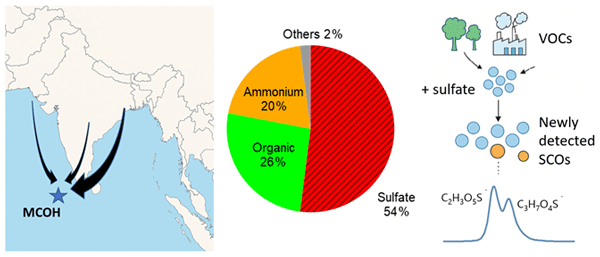
High-time-resolution observations in the Maldives indicate that submicron aerosol over the northern Indian Ocean is primarily composed of inorganic sulfate and highly oxidised organic matter, indicative of aged continental outflow. The consistent composition across various air mass origins, alongside identification of sulfur-containing organics, underscores the influence of long-range transport and sulfate-driven secondary chemistry on regional aerosol characteristics and their climate impacts.

Piotr Markuszewski, Mikołaj Mazurkiewicz, Kinga Stawiarz, Małgorzata Śmiszek, Patrycja Jutrzenka-Trzebiatowska, Luca Ferrero, Krishnakant Budhavant, Mateusz Zawadzki, Anna Waleczek, Przemysław Makuch, Douglas Nilsson, Örjan Gustafsson, and Sophie L. Haslett
Atmos. Chem. Phys., 26, 16341–16372, https://doi.org/10.5194/acp-26-16341-2026, https://doi.org/10.5194/acp-26-16341-2026, 2026
Short summary
Short summary
We investigated the occurrence and transport of microplastics in air and coastal waters around the Maldives using air and seawater sampling and particle identification. Microplastics occurred in both environments, but their size distributions and composition differed markedly. Airborne concentrations were more closely associated with polluted air transported from South Asia than with local ocean emissions, indicating that regional atmospheric transport delivers microplastics to remote islands.
Peng Yao, Katja Belec, Henry Holmstrand, Josh Balacky, Abdus Salam, Krishnakant Budhavant, Mohanan Remani Manoj, Khaled Shaifullah Joy, Md. Alamin Hossain, Atinderpal Singh, Anil Patel, Neeraj Rastogi, Chinmay Mallik, Kirpa Ram, Gyanesh Kumar Singh, and Örjan Gustafsson
Atmos. Chem. Phys., 26, 7765–7787, https://doi.org/10.5194/acp-26-7765-2026, https://doi.org/10.5194/acp-26-7765-2026, 2026
Short summary
Short summary
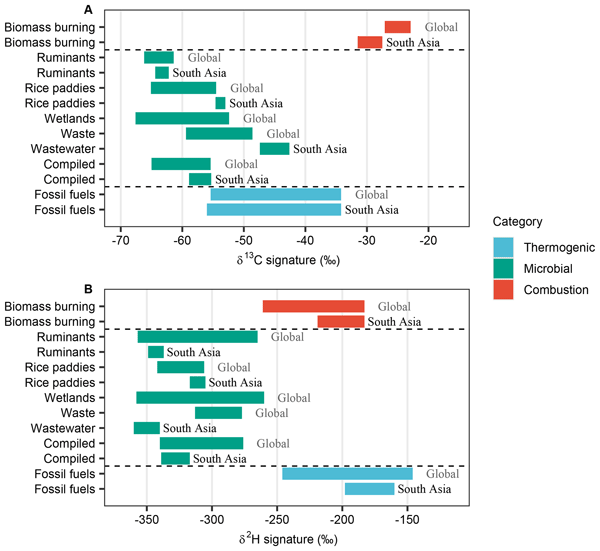
Methane is a powerful greenhouse gas, but its sources remain uncertain in many regions. The isotope fingerprints of methane are diagnostic of its sources, yet their source end-members are poorly constrained for South Asia. Here we determined the methane isotope signal for major sources in South Asia and found these to differ from global averages. Improved regional-specific isotope source fingerprints will help to improve top-down assessments of methane budgets and climate mitigation strategies.
Sean Clarke, Henry Holmstrand, Krishnakant Budhavant, Manoj Remani, Sophie Haslett, Katerina Rodiouchkina, Ellen Kooijman, and Örjan Gustafsson
Atmos. Chem. Phys., 26, 5333–5343, https://doi.org/10.5194/acp-26-5333-2026, https://doi.org/10.5194/acp-26-5333-2026, 2026
Short summary
Short summary
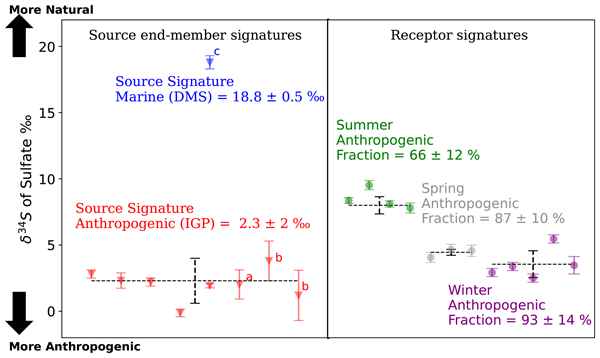
South Asia has the world's highest loadings of sulfate, scattering sunlight, altering clouds and masking greenhouse warming, yet there are large uncertainties regarding the relative contributions of natural and anthropogenic sources to the receptor atmosphere. Here we use δ34S isotopes to distinguish natural versus anthropogenic sulfate sources, revealing strong seasonal contrasts and quantifying the dominance of anthropogenic contributions.
Krishnakant Budhavant, Mohanan Remani Manoj, Hari Ram Chandrika Rajendran Nair, Samuel Mwaniki Gaita, Henry Holmstrand, Abdus Salam, Ahmed Muslim, Sreedharan Krishnakumari Satheesh, and Örjan Gustafsson
Atmos. Chem. Phys., 24, 11911–11925, https://doi.org/10.5194/acp-24-11911-2024, https://doi.org/10.5194/acp-24-11911-2024, 2024
Short summary
Short summary
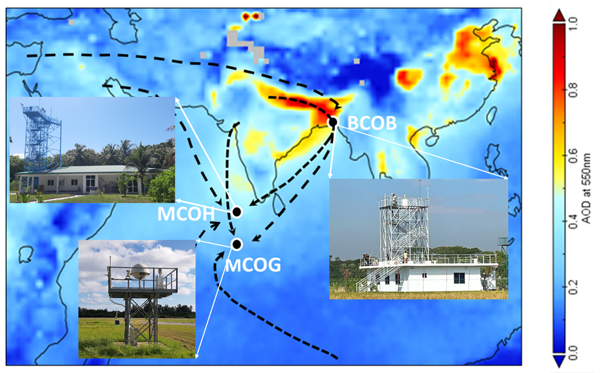
The South Asian Pollution Experiment 2018 used access to three strategically located receptor observatories. Observational constraints revealed opposing trends in the mass absorption cross sections of black carbon (BC MAC) and brown carbon (BrC MAC) during long-range transport. Models estimating the climate effects of BC aerosols may have underestimated the ambient BC MAC over distant receptor areas, leading to discrepancies in aerosol absorption predicted by observation-constrained models.
Karin Stegelius, Pauline Thompson, Pia Karbiener, Piotr Markuszewski, Andre S. H. Prevot, Sachchida N. Tripathi, Claudia Mohr, Liine Heikkinen, Krishnakant Budhavant, and Sophie L. Haslett
Atmos. Chem. Phys., 26, 16477–16500, https://doi.org/10.5194/acp-26-16477-2026, https://doi.org/10.5194/acp-26-16477-2026, 2026
Short summary
Short summary
High-time-resolution observations in the Maldives indicate that submicron aerosol over the northern Indian Ocean is primarily composed of inorganic sulfate and highly oxidised organic matter, indicative of aged continental outflow. The consistent composition across various air mass origins, alongside identification of sulfur-containing organics, underscores the influence of long-range transport and sulfate-driven secondary chemistry on regional aerosol characteristics and their climate impacts.
Piotr Markuszewski, Mikołaj Mazurkiewicz, Kinga Stawiarz, Małgorzata Śmiszek, Patrycja Jutrzenka-Trzebiatowska, Luca Ferrero, Krishnakant Budhavant, Mateusz Zawadzki, Anna Waleczek, Przemysław Makuch, Douglas Nilsson, Örjan Gustafsson, and Sophie L. Haslett
Atmos. Chem. Phys., 26, 16341–16372, https://doi.org/10.5194/acp-26-16341-2026, https://doi.org/10.5194/acp-26-16341-2026, 2026
Short summary
Short summary
We investigated the occurrence and transport of microplastics in air and coastal waters around the Maldives using air and seawater sampling and particle identification. Microplastics occurred in both environments, but their size distributions and composition differed markedly. Airborne concentrations were more closely associated with polluted air transported from South Asia than with local ocean emissions, indicating that regional atmospheric transport delivers microplastics to remote islands.
Albin Eriksson, Junjie Wu, Matt O'Regan, and Örjan Gustafsson
Clim. Past, 22, 2031–2044, https://doi.org/10.5194/cp-22-2031-2026, https://doi.org/10.5194/cp-22-2031-2026, 2026
Short summary
Short summary
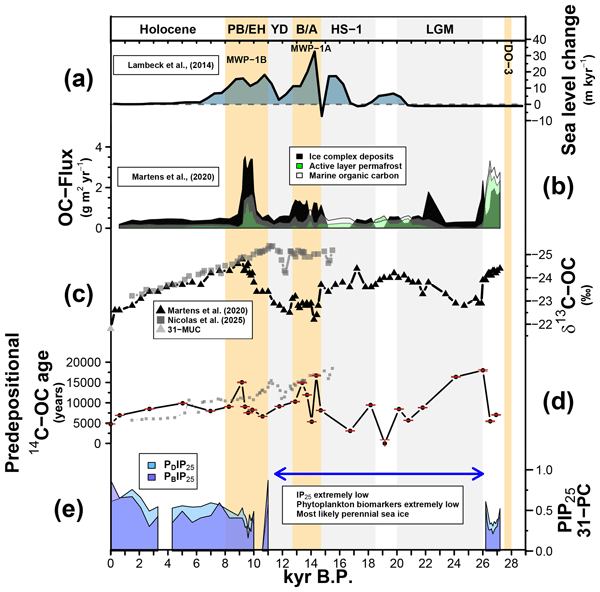
Sea ice is an important regulator of the Arctic climate systems. Records of sea ice past instrumental records are necessary to understand how sea ice is altered during past periods of abrupt climate change, and what consequences such changes have on the polar climates. Here, we reconstructed the sea ice cover of the East Siberian Arctic and found that the sea ice extent likely was linked to protecting/eroding permafrost coastlines during the last deglaciation.
Peng Yao, Katja Belec, Henry Holmstrand, Josh Balacky, Abdus Salam, Krishnakant Budhavant, Mohanan Remani Manoj, Khaled Shaifullah Joy, Md. Alamin Hossain, Atinderpal Singh, Anil Patel, Neeraj Rastogi, Chinmay Mallik, Kirpa Ram, Gyanesh Kumar Singh, and Örjan Gustafsson
Atmos. Chem. Phys., 26, 7765–7787, https://doi.org/10.5194/acp-26-7765-2026, https://doi.org/10.5194/acp-26-7765-2026, 2026
Short summary
Short summary
Methane is a powerful greenhouse gas, but its sources remain uncertain in many regions. The isotope fingerprints of methane are diagnostic of its sources, yet their source end-members are poorly constrained for South Asia. Here we determined the methane isotope signal for major sources in South Asia and found these to differ from global averages. Improved regional-specific isotope source fingerprints will help to improve top-down assessments of methane budgets and climate mitigation strategies.
Sean Clarke, Henry Holmstrand, Krishnakant Budhavant, Manoj Remani, Sophie Haslett, Katerina Rodiouchkina, Ellen Kooijman, and Örjan Gustafsson
Atmos. Chem. Phys., 26, 5333–5343, https://doi.org/10.5194/acp-26-5333-2026, https://doi.org/10.5194/acp-26-5333-2026, 2026
Short summary
Short summary
South Asia has the world's highest loadings of sulfate, scattering sunlight, altering clouds and masking greenhouse warming, yet there are large uncertainties regarding the relative contributions of natural and anthropogenic sources to the receptor atmosphere. Here we use δ34S isotopes to distinguish natural versus anthropogenic sulfate sources, revealing strong seasonal contrasts and quantifying the dominance of anthropogenic contributions.
Albin Eriksson, Birgit Wild, Wei-Li Hong, Henry Holmstrand, Francisco J. A. Nascimento, Stefano Bonaglia, Denis Kosmach, Igor Semiletov, Natalia Shakhova, and Örjan Gustafsson
Biogeosciences, 23, 1459–1475, https://doi.org/10.5194/bg-23-1459-2026, https://doi.org/10.5194/bg-23-1459-2026, 2026
Short summary
Short summary
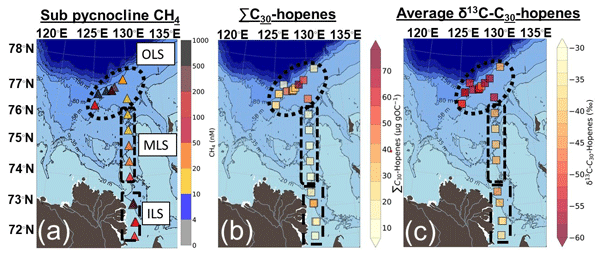
Thawing subsea permafrost in the East Siberian Arctic Seas releases methane, a potent greenhouse gas. Using molecular fossils in sediments, we traced aerobic methane oxidation as a proxy of enhanced methane cycling across the Laptev Sea, including in regions once thought low in emissions. This approach captures long-term patterns of methane cycling over years-decades , overcoming limits of short-term seawater measurements and highlights the importance of the Laptev Sea in Arctic methane cycling.
Archana Devi, Sreedharan K Satheesh, and Jayaraman Srinivasan
EGUsphere, https://doi.org/10.5194/egusphere-2025-4146, https://doi.org/10.5194/egusphere-2025-4146, 2025
Preprint archived
Short summary
Short summary
This study compares aerosol single scattering albedo data from two algorithms, CERES-MODIS and OMI, across different regions like forests, oceans, land, and deserts. It finds that CERES-MODIS tracks aerosol absorption more accurately, especially in areas with smoke and pollution. In clean regions, both algorithms perform similarly. The study helps scientists understand which satellite gives better data in different conditions, supporting improved climate and air quality research.
Krishnakant Budhavant, Mohanan Remani Manoj, Hari Ram Chandrika Rajendran Nair, Samuel Mwaniki Gaita, Henry Holmstrand, Abdus Salam, Ahmed Muslim, Sreedharan Krishnakumari Satheesh, and Örjan Gustafsson
Atmos. Chem. Phys., 24, 11911–11925, https://doi.org/10.5194/acp-24-11911-2024, https://doi.org/10.5194/acp-24-11911-2024, 2024
Short summary
Short summary
The South Asian Pollution Experiment 2018 used access to three strategically located receptor observatories. Observational constraints revealed opposing trends in the mass absorption cross sections of black carbon (BC MAC) and brown carbon (BrC MAC) during long-range transport. Models estimating the climate effects of BC aerosols may have underestimated the ambient BC MAC over distant receptor areas, leading to discrepancies in aerosol absorption predicted by observation-constrained models.
Leonard Kirago, Örjan Gustafsson, Samuel Mwaniki Gaita, Sophie L. Haslett, Michael J. Gatari, Maria Elena Popa, Thomas Röckmann, Christoph Zellweger, Martin Steinbacher, Jörg Klausen, Christian Félix, David Njiru, and August Andersson
Atmos. Chem. Phys., 23, 14349–14357, https://doi.org/10.5194/acp-23-14349-2023, https://doi.org/10.5194/acp-23-14349-2023, 2023
Short summary
Short summary
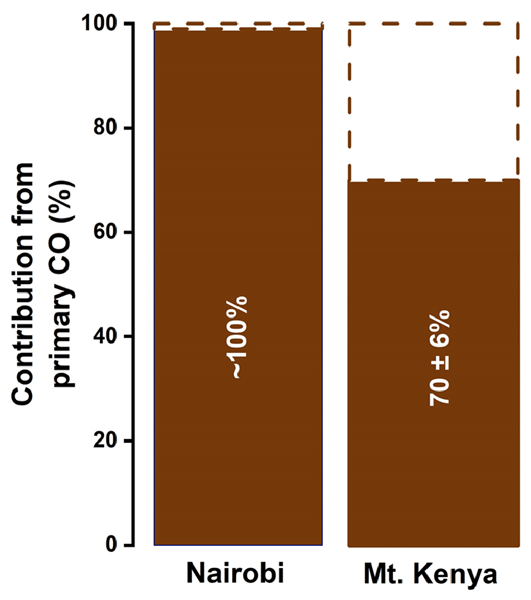
This study provides ground-observational evidence that supports earlier suggestions that savanna fires are the main emitters and modulators of carbon monoxide gas in Africa. Using isotope-based techniques, the study has shown that about two-thirds of this gas is emitted from savanna fires, while for urban areas, in this case Nairobi, primary sources approach 100 %. The latter has implications for air quality policy, suggesting primary emissions such as traffic should be targeted.
Nair Krishnan Kala, Narayana Sarma Anand, Mohanan R. Manoj, Srinivasan Prasanth, Harshavardhana S. Pathak, Thara Prabhakaran, Pramod D. Safai, Krishnaswamy K. Moorthy, and Sreedharan K. Satheesh
Atmos. Chem. Phys., 23, 12801–12819, https://doi.org/10.5194/acp-23-12801-2023, https://doi.org/10.5194/acp-23-12801-2023, 2023
Short summary
Short summary
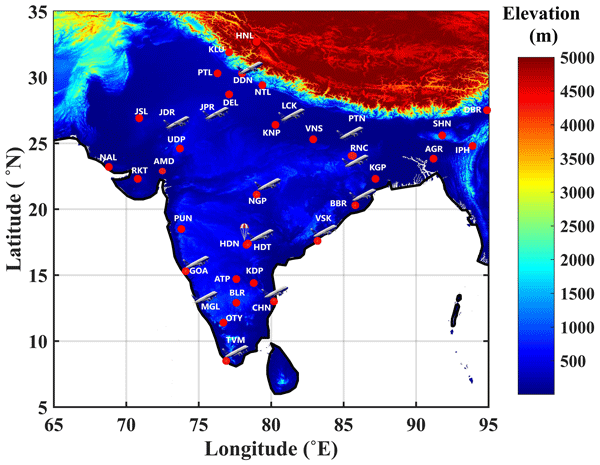
We present a 3D data set of aerosol black carbon over the Indian mainland by assimilating data from surface, aircraft, and balloon measurements, along with multi-satellite observations. Radiative transfer computations using height-resolved aerosol absorption show higher warming in the free troposphere and will have large implications for atmospheric stability. This data set will help reduce the uncertainty in aerosol radiative effects in climate model simulations over the Indian region.
Christoph Heinze, Thorsten Blenckner, Peter Brown, Friederike Fröb, Anne Morée, Adrian L. New, Cara Nissen, Stefanie Rynders, Isabel Seguro, Yevgeny Aksenov, Yuri Artioli, Timothée Bourgeois, Friedrich Burger, Jonathan Buzan, B. B. Cael, Veli Çağlar Yumruktepe, Melissa Chierici, Christopher Danek, Ulf Dieckmann, Agneta Fransson, Thomas Frölicher, Giovanni Galli, Marion Gehlen, Aridane G. González, Melchor Gonzalez-Davila, Nicolas Gruber, Örjan Gustafsson, Judith Hauck, Mikko Heino, Stephanie Henson, Jenny Hieronymus, I. Emma Huertas, Fatma Jebri, Aurich Jeltsch-Thömmes, Fortunat Joos, Jaideep Joshi, Stephen Kelly, Nandini Menon, Precious Mongwe, Laurent Oziel, Sólveig Ólafsdottir, Julien Palmieri, Fiz F. Pérez, Rajamohanan Pillai Ranith, Juliano Ramanantsoa, Tilla Roy, Dagmara Rusiecka, J. Magdalena Santana Casiano, Yeray Santana-Falcón, Jörg Schwinger, Roland Séférian, Miriam Seifert, Anna Shchiptsova, Bablu Sinha, Christopher Somes, Reiner Steinfeldt, Dandan Tao, Jerry Tjiputra, Adam Ulfsbo, Christoph Völker, Tsuyoshi Wakamatsu, and Ying Ye
Biogeosciences Discuss., https://doi.org/10.5194/bg-2023-182, https://doi.org/10.5194/bg-2023-182, 2023
Revised manuscript not accepted
Short summary
Short summary
For assessing the consequences of human-induced climate change for the marine realm, it is necessary to not only look at gradual changes but also at abrupt changes of environmental conditions. We summarise abrupt changes in ocean warming, acidification, and oxygen concentration as the key environmental factors for ecosystems. Taking these abrupt changes into account requires greenhouse gas emissions to be reduced to a larger extent than previously thought to limit respective damage.
Nair K. Kala, Narayana Sarma Anand, Mohanan R. Manoj, Harshavardhana S. Pathak, Krishnaswamy K. Moorthy, and Sreedharan K. Satheesh
Atmos. Chem. Phys., 22, 6067–6085, https://doi.org/10.5194/acp-22-6067-2022, https://doi.org/10.5194/acp-22-6067-2022, 2022
Short summary
Short summary
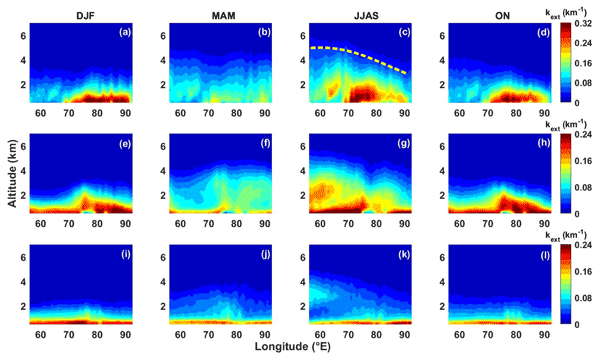
We present the 3-D distribution of atmospheric aerosols and highlight its variation with respect to longitudes over the Indian mainland and the surrounding oceans using long-term satellite observations and realistic synthesised data. The atmospheric heating due to the 3-D distribution of aerosols is estimated using radiative transfer calculations. We believe that our findings will have strong implications for aerosol–radiation interactions in regional climate simulations.
Archana Devi and Sreedharan K. Satheesh
Atmos. Chem. Phys., 22, 5365–5376, https://doi.org/10.5194/acp-22-5365-2022, https://doi.org/10.5194/acp-22-5365-2022, 2022
Short summary
Short summary
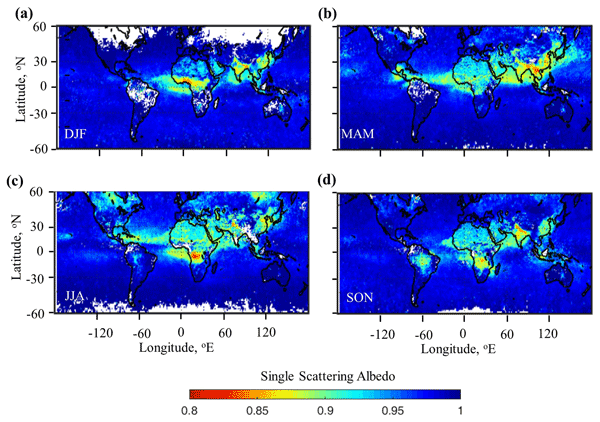
Global maps of aerosol absorption were generated using a multi-satellite retrieval algorithm. The retrieved values were validated with available aircraft-based measurements and compared with other global datasets. Seasonal and spatial distributions of aerosol absorption over various regions are also presented. The global maps of single scattering albedo with improved accuracy provide important input to climate models for assessing the climatic impact of aerosols on regional and global scales.

Priyanka Banerjee, Sreedharan Krishnakumari Satheesh, and Krishnaswamy Krishna Moorthy
Atmos. Chem. Phys., 21, 17665–17685, https://doi.org/10.5194/acp-21-17665-2021, https://doi.org/10.5194/acp-21-17665-2021, 2021
Short summary
Short summary
We show that the Atlantic Ocean is the major driver of interannual variability in dust over South Asia since the second decade of the 21st century. This is a shift from the previously important role played by the Pacific Ocean in controlling dust over this region. Following the end of the recent global warming hiatus, anomalies of the North Atlantic sea surface temperature have remotely invoked a weakening of the South Asian monsoon and a strengthening of the dust-bearing northwesterlies.
Cited articles
Andersson, A., Deng, J., Du, K., Zheng, M., Yan, C., Sköld, M., and Gustafsson, Ö.: Regionally varying combustion sources of the January 2013 severe haze events over eastern China, Environ. Sci. Technol., 49, 2038–2043, https://doi.org/10.1021/es503855e, 2015.
Bond, T. C., Doherty, S. J., Fahey, D. W., Forster, P. M., Berntsen, T., DeAngelo, B. J., Flanner, M. G., Ghan, S., Kärcher, B., Koch, D., Kinne, S., Kondo, Y., Quinn, P. K., Sarofim, M. C., Schultz, M. G., Schulz, M., Venkataraman, C., Zhang, H., Zhang, S., Bellouin, N., Guttikunda, S. K., Hopke, P. K., Jacobson, M. Z., Kaiser, J. W., Klimont, Z., Lohmann, U., Schwarz, J. P., Shindell, D., Storelvmo, T., Warren, S. G., and Zender, C. S.: Bounding the role of black carbon in the climate system: A scientific assessment, J. Geophys. Res.-Atmos., 118, 5380–5552, https://doi.org/10.1002/jgrd.50171, 2013.
Bosch, C., Andersson, A., Kirillova, E. N., Budhavant, K., Tiwari, S., Praveen, P. S., Russell, L. M., Beres, N. D., Ramanathan, V., and Gustafsson, Ö.: Source-diagnostic dual-isotope composition and optical properties of water-soluble black and elemental carbon in the South Asian outflow intercepted over the Indian Ocean, J. Geophys. Res.-Atmos., 119, 11743–11759, https://doi.org/10.1002/2014JD022127, 2014.
Budhavant, K., Andersson, A., Bosch, C., Kruså, M., Kirillova, E. N., Sheesley, R. J., Safai, P. D., Rao, P. S. P., and Gustafsson, Ö.: Radiocarbon-based source apportionment of elemental carbon aerosols at two South Asian receptor observatories over a full annual cycle, Environ. Res. Lett., 10, 064004, https://doi.org/10.1088/1748-9326/10/6/064004, 2015.
Budhavant, K., Bikkina, S., Andersson, A., Asmi, E., Kesti, J., Zahid, H., Satheesh, S. K., and Gustafsson, Ö.: Anthropogenic fine aerosols dominate the wintertime regime over the northern Indian Ocean, Tellus B, 70, 1464871, https://doi.org/10.1080/16000889.2018.1464871, 2018.
Budhavant, K., Andersson, A., Holmstrand, H., Bikkina, P., Bikkina, S., Satheesh, S. K., and Gustafsson, Ö.: Enhanced light absorption of black carbon in rainwater compared with aerosols over the northern Indian Ocean, J. Geophys. Res.-Atmos., 125, e2019JD031246, https://doi.org/10.1029/2019JD031246, 2020.
Budhavant, K., Andersson, A., Holmstrand, H., Satheesh, S. K., and Gustafsson, Ö.: Black carbon aerosols over the Indian Ocean have unique source fingerprints and optical characteristics during the monsoon season, Proc. Natl. Acad. Sci. USA, 120, e2210005120, https://doi.org/10.1073/pnas.2210005120, 2023.
Budhavant, K., Manoj, M. R., Nair, H. R. C. R., Gaita, S. M., Holmstrand, H., Salam, A., Muslim, A., Satheesh, S. K., and Gustafsson, Ö.: Changing optical properties of black carbon and brown carbon aerosols during long-range transport from the Indo-Gangetic Plain to the equatorial Indian Ocean, Atmos. Chem. Phys., 24, 11911–11925, https://doi.org/10.5194/acp-24-11911-2024, 2024.
Chen, B., Andersson, A., Lee, M., Kirillova, E. N., Xiao, Q., Kruså, M., Shi, M., Hu, K., Lu, Z., Streets, D. G., Du, K., and Gustafsson, Ö.: Source forensics of black carbon aerosols from China, Environ. Sci. Technol., 47, 9102–9108, https://doi.org/10.1021/es401599r, 2013.
Clarke, S., Holmstrand, H., Budhavant, K., Remani, M., Haslett, S., Rodiouchkina, K., Kooijman, E., and Gustafsson, Ö.: Isotopic apportionment of sulfate aerosols between natural and anthropogenic sources in the outflow of South Asia, Atmos. Chem. Phys., 26, 5333–5343, https://doi.org/10.5194/acp-26-5333-2026, 2026.
Corrigan, C. E., Ramanathan, V., and Schauer, J. J.: Impact of monsoon transition on the physical and optical properties of aerosols, J. Geophys. Res.-Atmos., 111, D18208, https://doi.org/10.1029/2005JD006370, 2006.
Dasari, S., Andersson, A., Stohl, A., Evangeliou, N., Bikkina, S., Holmstrand, H., Budhavant, K., Salam, A., and Gustafsson, Ö.: Source quantification of South Asian black carbon aerosols with isotopes and modelling, Environ. Sci. Technol., 54, 11771–11779, https://doi.org/10.1021/acs.est.0c02193, 2020.
Draxler, R. R. and Hess, G. D.: An overview of the HYSPLIT_4 modelling system for trajectories, dispersion, and deposition, Aust. Meteorol. Mag., 47, 295–308, 1998.
Giles, D. M., Sinyuk, A., Sorokin, M. G., Schafer, J. S., Smirnov, A., Slutsker, I., Eck, T. F., Holben, B. N., Lewis, J. R., Campbell, J. R., Welton, E. J., Korkin, S. V., and Lyapustin, A. I.: Advancements in the Aerosol Robotic Network (AERONET) Version 3 database – automated near-real-time quality control algorithm with improved cloud screening for Sun photometer aerosol optical depth (AOD) measurements, Atmos. Meas. Tech., 12, 169–209, https://doi.org/10.5194/amt-12-169-2019, 2019.
Gustafsson, Ö., Kruså, M., Zencak, Z., Sheesley, R. J., Granat, L., Engström, E., Praveen, P. S., Leck, C., and Rodhe, H.: Brown clouds over South Asia: Biomass or fossil fuel combustion?, Science, 323, 495–498, https://doi.org/10.1126/science.1164857, 2009.
Gustafsson, Ö., Budhavant, K., Chimurkar, N., Clarke, S., Dreyfus, G., Gong, X., Klimont, Z., Klingmüller, K., Kim, S.-W., Lelieveld, J., Myhre, G., Nair, H. R. C. R., Peng, J., Ramanathan, V., Rana, A., Manoj, M. R., Satheesh, S. K., Venkataraman, C., and Zhang, Q.: Atmospheric black carbon in the climate system, Nat. Rev. Earth Environ., https://doi.org/10.1038/s43017-026-00773-3, 2026.
Holben, B. N., Eck, T. F., Slutsker, I., Tanré, D., Buis, J. P., Setzer, A., Vermote, E., Reagan, J. A., Kaufman, Y. J., Nakajima, T., Lavenu, F., Jankowiak, I., and Smirnov, A.: AERONET – A federated instrument network and data archive for aerosol characterization, Remote Sens. Environ., 66, 1–16, https://doi.org/10.1016/S0034-4257(98)00031-5, 1998.
IPCC: Climate Change 2021: The Physical Science Basis, Contribution of Working Group I to the Sixth Assessment Report of the Intergovernmental Panel on Climate Change, Cambridge University Press, Cambridge, UK and New York, NY, USA, https://doi.org/10.1017/9781009157896, 2021.
Keene, W. C., Pszenny, A. A. P., Galloway, J. N., and Hawley, M. E.: Sea-salt corrections and interpretation of constituent ratios in marine precipitation, J. Geophys. Res.-Atmos., 91, 6647–6658, https://doi.org/10.1029/JD091iD06p06647, 1986.
Kirillova, E. N., Andersson, A., Sheesley, R. J., Kruså, M., Praveen, P. S., Budhavant, K., Safai, P. D., Rao, P. S. P., and Gustafsson, Ö.: 13C- and 14C-based study of sources and atmospheric processing of water-soluble organic carbon (WSOC) in South Asian aerosols, J. Geophys. Res.-Atmos., 118, 614–626, https://doi.org/10.1002/jgrd.50130, 2013.
Kirillova, E. N., Andersson, A., Tiwari, S., Srivastava, A. K., Bisht, D. S., and Gustafsson, Ö.: Water-soluble organic carbon aerosols during a full New Delhi winter: Isotope-based source apportionment and optical properties, J. Geophys. Res.-Atmos., 119, 3476–3485, https://doi.org/10.1002/2013JD020041, 2014.
Li, Z., Lau, W. K.-M., Ramanathan, V., Wu, G., Ding, Y., Manoj, M. G., Liu, J., Qian, Y., Li, J., Zhou, T., Fan, J., Rosenfeld, D., Ming, Y., Wang, Y., Huang, J., Wang, B., Xu, X., Lee, S.-S., Cribb, M., Zhang, F., Yang, X., Zhao, C., Takemura, T., Wang, K., Xia, X., Yin, Y., Zhang, H., Guo, J., Zhai, P. M., Sugimoto, N., Babu, S. S., and Brasseur, G. P.: Aerosol and monsoon climate interactions over Asia, Rev. Geophys., 54, 866–929, https://doi.org/10.1002/2015RG000500, 2016.
Liu, D., Whitehead, J., Alfarra, M. R., Reyes-Villegas, E., Spracklen, D. V., Reddington, C. L., Kong, S., Williams, P. I., Ting, Y.-C., Haslett, S., Taylor, J. W., Flynn, M. J., Morgan, W. T., McFiggans, G., Coe, H., and Allan, J. D.: Black-carbon absorption enhancement in the atmosphere determined by particle mixing state, Nat. Geosci., 10, 184–188, https://doi.org/10.1038/ngeo2901, 2017.
Nair, H. R. C. R., Budhavant, K., Manoj, M. R., Kirillova, E. N., Satheesh, S. K., and Gustafsson, Ö.: Roles of water-soluble aerosol coatings for the enhanced radiative absorption of black carbon over South Asia and the northern Indian Ocean, Sci. Total Environ., 926, 171721, https://doi.org/10.1016/j.scitotenv.2024.171721, 2024.
Novakov, T., Andreae, M. O., Gabriel, R., Kirchstetter, T. W., Mayol-Bracero, O. L., and Ramanathan, V.: Origin of carbonaceous aerosols over the tropical Indian Ocean: Biomass burning or fossil fuels?, Geophys. Res. Lett., 27, 4061–4064, https://doi.org/10.1029/2000GL011759, 2000.
Ram, K. and Sarin, M. M.: Absorption coefficient and site-specific mass absorption efficiency of elemental carbon in aerosols from urban, rural and high-altitude sites in India, Environ. Sci. Technol., 43, 8233–8239, https://doi.org/10.1021/es9011542, 2009.
Ramanathan, V., Crutzen, P. J., Lelieveld, J., Mitra, A. P., Althausen, D., Anderson, J., Andreae, M. O., Cantrell, W., Cass, G. R., Chung, C. E., Clarke, A. D., Coakley, J. A., Dulac, F., Heintzenberg, J., Heymsfield, A. J., Holben, B., Howell, S., Hudson, J., Jayaraman, A., Kiehl, J. T., Krishnamurti, T. N., Lubin, D., McFarquhar, G., Novakov, T., Ogren, J. A., Podgorny, I., Prather, K., Priestley, K., Prospero, J. M., Quinn, P. K., Rajeev, K., Rasch, P., Rupert, S., Sadourny, R., Satheesh, S. K., Sheridan, P., Valero, F. P. J., and Xu, Y.: Indian Ocean Experiment: An integrated analysis of the climate forcing and effects of the great Indo-Asian haze, J. Geophys. Res.-Atmos., 106, 28371–28398, https://doi.org/10.1029/2001JD900133, 2001.
Safai, P. D., Budhavant, K. B., Rao, P. S. P., Ali, K., and Sinha, A.: Source characterization for aerosol constituents and changing roles of calcium and ammonium aerosols in the neutralization of aerosol acidity at a semi-urban site in SW India, Atmos. Res., 98, 78–88, https://doi.org/10.1016/j.atmosres.2010.05.011, 2010.
Sheesley, R. J., Kirillova, E. N., Andersson, A., Kruså, M., Praveen, P. S., Budhavant, K., Safai, P. D., Rao, P. S. P., and Gustafsson, Ö.: Year-round radiocarbon-based source apportionment of carbonaceous aerosols at two background sites in South Asia, J. Geophys. Res.-Atmos., 117, D10202, https://doi.org/10.1029/2011JD017161, 2012.
Stein, A. F., Draxler, R. R., Rolph, G. D., Stunder, B. J. B., Cohen, M. D., and Ngan, F.: NOAA's HYSPLIT atmospheric transport and dispersion modeling system, B. Am. Meteorol. Soc., 96, 2059–2077, https://doi.org/10.1175/BAMS-D-14-00110.1, 2015.
Stone, E. A., Lough, G. C., Schauer, J. J., Praveen, P. S., Corrigan, C. E., and Ramanathan, V.: Understanding the origin of black carbon in the atmospheric brown cloud over the Indian Ocean, J. Geophys. Res.-Atmos., 112, D22S23, https://doi.org/10.1029/2006JD008118, 2007.
Turpin, B. J. and Lim, H.-J.: Species contributions to PM2.5 mass concentrations: Revisiting common assumptions for estimating organic mass, Aerosol Sci. Tech., 35, 602–610, https://doi.org/10.1080/02786820120648, 2001.
Weingartner, E., Saathoff, H., Schnaiter, M., Streit, N., Bitnar, B., and Baltensperger, U.: Absorption of light by soot particles: Determination of the absorption coefficient using Aethalometers, J. Aerosol. Sci., 34, 1445–1463, https://doi.org/10.1016/S0021-8502(03)00359-8, 2003.
Zencak, Z., Elmquist, M., and Gustafsson, Ö.: Quantification and radiocarbon source apportionment of black carbon in atmospheric aerosols using the CTO-375 method, Atmos. Environ., 41, 7895–7906, https://doi.org/10.1016/j.atmosenv.2007.06.006, 2007.
Short summary
We investigated year-round aerosols at a remote equatorial Indian Ocean observatory to examine how monsoon winds and rainfall influence transported pollution. Aerosol concentrations were substantially lower during the wetter southwest monsoon, reflecting cleaner marine air and enhanced removal by rain. In contrast, black carbon absorption per unit mass showed no significant seasonal difference, highlighting how monsoon conditions affect aerosol abundance and optical properties differently.
We investigated year-round aerosols at a remote equatorial Indian Ocean observatory to examine...


Altmetrics
Final-revised paper
Preprint