
Articles | Volume 26, issue 22
https://doi.org/10.5194/acp-26-16521-2026
© Author(s) 2026. This work is distributed under
the Creative Commons Attribution 4.0 License.
the Creative Commons Attribution 4.0 License.
https://doi.org/10.5194/acp-26-16521-2026
© Author(s) 2026. This work is distributed under
the Creative Commons Attribution 4.0 License.
the Creative Commons Attribution 4.0 License.
Research article
| 
19 Nov 2026
Research article |
| 19 Nov 2026
| 19 Nov 2026
Insights into the chemical and physical drivers of surface ozone in the Trans-Himalaya

Space Applications Centre, Indian Space Research Organisation, Ahmedabad, 380015, India
Mehul R. Pandya
Space Applications Centre, Indian Space Research Organisation, Ahmedabad, 380015, India
Tabish Ansari
Air Quality Modeling for Policy Advice, Research Institute for Sustainability (RIFS) at the GFZ Helmholtz Centre for Geosciences, Potsdam, 14467, Germany
Sonam Angmo
CORRESPONDING AUTHOR
Centre for Space Science & Allied Subjects, University of Ladakh, Leh, Ladakh, 194101, India
Subrat Sharma
Rashtriya Raksha University, Leh, Ladakh, 194101, India
formerly at: University of Ladakh, Leh, Ladakh, 194101, India
Bipasha Paul Shukla
Space Applications Centre, Indian Space Research Organisation, Ahmedabad, 380015, India
Aditya Vaishya
School of Arts and Sciences, Ahmedabad University, Ahmedabad, 380009, India
The Climate Institute, Ahmedabad University, Ahmedabad, 380009, India
Lokesh Kumar Sahu
Physical Research Laboratory, Ahmedabad, 380009, India
Tim Butler
Air Quality Modeling for Policy Advice, Research Institute for Sustainability (RIFS) at the GFZ Helmholtz Centre for Geosciences, Potsdam, 14467, Germany
Narendra Ojha
Physical Research Laboratory, Ahmedabad, 380009, India
Related authors
Thara Anna Mathew, Dhanyalekshmi Pillai, Jithin Sukumaran, Monish Vijay Deshpande, Michael Buchwitz, Oliver Schneising, Vishnu Thilakan, Aparnna Ravi, Sanjid Backer Kanakkassery, Advaith J. Vinod, Sivarajan Sijikumar, Imran A. Girach, and S. Suresh Babu
Atmos. Chem. Phys., 26, 4453–4477, https://doi.org/10.5194/acp-26-4453-2026, https://doi.org/10.5194/acp-26-4453-2026, 2026
Short summary
Short summary
India poses a significant methane emission burden, but limited observations challenge accurate national estimations. This study combines satellite retrievals, ground measurements, and models to improve India’s 2018–2019 methane budget. Derived emissions are higher than national reports but lower than global inventories. The findings highlight the potential of satellite instruments to report emissions accurately. Expanded methane monitoring is vital for meeting climate change mitigation targets.
Imran A. Girach, Narendra Ojha, Prabha R. Nair, Kandula V. Subrahmanyam, Neelakantan Koushik, Mohammed M. Nazeer, Nadimpally Kiran Kumar, Surendran Nair Suresh Babu, Jos Lelieveld, and Andrea Pozzer
Atmos. Chem. Phys., 24, 1979–1995, https://doi.org/10.5194/acp-24-1979-2024, https://doi.org/10.5194/acp-24-1979-2024, 2024
Short summary
Short summary
We investigate surface ozone variability in East Antarctica based on measurements and EMAC global model simulations during austral summer. Nearly half of the surface ozone is found to be of stratospheric origin. The east coast of Antarctica acts as a stronger sink of ozone than surrounding regions. Photochemical loss of ozone is counterbalanced by downward transport of ozone. The study highlights the intertwined role of chemistry and dynamics in governing ozone variations over East Antarctica.
Meghna Soni, Rolf Sander, Lokesh K. Sahu, Domenico Taraborrelli, Pengfei Liu, Ankit Patel, Imran A. Girach, Andrea Pozzer, Sachin S. Gunthe, and Narendra Ojha
Atmos. Chem. Phys., 23, 15165–15180, https://doi.org/10.5194/acp-23-15165-2023, https://doi.org/10.5194/acp-23-15165-2023, 2023
Short summary
Short summary
The study presents the implementation of comprehensive multiphase chlorine chemistry in the box model CAABA/MECCA. Simulations for contrasting urban environments of Asia and Europe highlight the significant impacts of chlorine on atmospheric oxidation capacity and composition. Chemical processes governing the production and loss of chlorine-containing species has been discussed. The updated chemical mechanism will be useful to interpret field measurements and for future air quality studies.
Tim Butler, Tabish Ansari, Claudio A. Belis, Elisa Bergas-Masso, Willem van Caspel, Hilde Fagerli, Johannes Flemming, Marta Garcia Vivanco, Paul Griffiths, Douglas S. Hamilton, Coralina Hernandez Trujillo, Lena Höglund-Isaksson, Vincent Huijnen, Johannes W. Kaiser, Gerbrand Koren, Zbigniew Klimont, Florian Lindl, Aura Lupascu, Mariano Mertens, Martijn Schaap, Steven T. Turnock, Oliver Wild, Philipp Weiss, Jacek Kaminski, Rosa Wu, and Terry Keating
Geosci. Model Dev., 19, 10023–10049, https://doi.org/10.5194/gmd-19-10023-2026, https://doi.org/10.5194/gmd-19-10023-2026, 2026
Short summary
Short summary
Air pollution travels across continents, meaning emissions in one region can affect air quality far away. To better understand this, scientists from many groups are planning to run coordinated computer simulations of the atmosphere. By comparing results across models and emission scenarios, the planned study will show how pollution moves between regions and which sources matter most, helping governments design more effective air quality policies.
Vasu Singh, Dilip Ganguly, Jaswant Rathore, Lokesh Kumar Sahu, Ravi Kumar Kunchala, and Sagnik Dey
Atmos. Chem. Phys., 26, 13227–13252, https://doi.org/10.5194/acp-26-13227-2026, https://doi.org/10.5194/acp-26-13227-2026, 2026
Short summary
Short summary
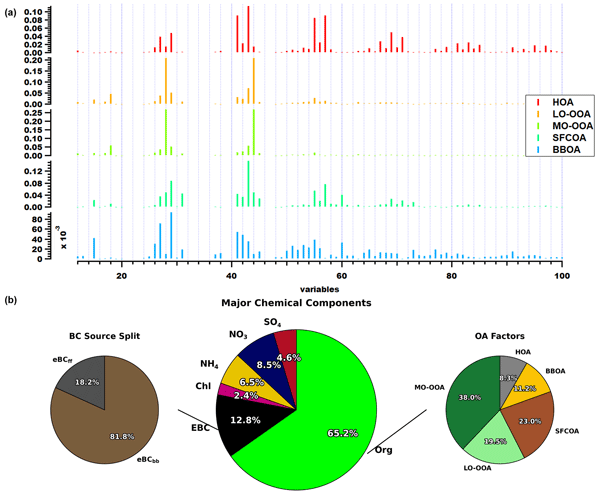
Each post-monsoon season, northern India faces severe air pollution, especially around Delhi, largely linked to crop residue burning and stagnant weather. We measured air pollution in Sonipat, northwest of Delhi, along the pathway of incoming smoke. Fine particle levels were extremely high and mainly made of carbon-rich particles from crop burning and solid fuels. Much of this pollution formed before reaching Delhi, showing regional sources drive the city’s severe haze.
Philippe Gamet, Bimal K. Bhattacharya, Jean-Louis Roujean, Gilles Boulet, Corinne Salcedo, Albert Olioso, Kanishka Mallick, Marie Weiss, Emmanuelle Sarrazin, Emmanuelle Autret, Laure Roupioz, José Antonio Sobrino, Olivier Merlin, Ghislain Picard, Thomas H. G. Vidal, Mark Irvine, Rahul Nigam, Mehul Pandya, Simon Gascoin, Sébastien Marcq, Manoj K. Mishra, Emilie Delogu, Vincent Rivalland, Jordi Etchanchu, Jean-Louis Raynaud, Meenakshi Sarkar, Rishi K. Gangwar, Sushil K. Singh, Renaud Binet, Sara Arioli, Hervé Yésou, Isabelle Dadou, Alexei Kouraev, Julien Michel, Benoit Coudert, Samuel Mwangi, Nesrine Farhani, Ayan Das, Stéphane Saux-Picart, Thierry Tormos, Jean-François Piollé, Charles Verpoorter, Auline Rodler, Jonathan Leon Tavares, Jennifer Adams, Anand S. Sahadevan, Besavaraju Santhi Sree, Manikumar Vedantam, Dheeraj Adlakha, Laurence Buffet, Kathrin Naegeli, Itziar Barat, Jerome Demarty, Olivier Hagolle, and Philippe Maisongrande
EGUsphere, https://doi.org/10.5194/egusphere-2026-4492, https://doi.org/10.5194/egusphere-2026-4492, 2026
Short summary
Short summary
This paper highlights how the upcoming TRISHNA satellite mission (launching 2027) will transform Earth observation by providing high-resolution (60 m) thermal infrared imagery with sub-weekly revisits. It details the mission's design and its synergies with other future missions to significantly improve the monitoring of global surface temperature and its dynamics, water stress, and ecosystem energy processes.
Nikhil Korhale, Tabish Ansari, Tim Butler, Jurgita Ovadnevaite, Emmanuel Chevassus, Darius Ceburnis, Damien Martin, Colin D. O'Dowd, and Liz Coleman
Atmos. Chem. Phys., 26, 6557–6577, https://doi.org/10.5194/acp-26-6557-2026, https://doi.org/10.5194/acp-26-6557-2026, 2026
Short summary
Short summary
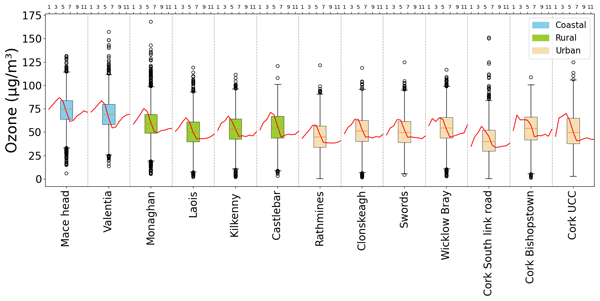
We investigate the distribution and trends of surface ozone and its precursors over Ireland using advanced modelling to determine the drivers of ozone. Trajectory analysis is used to trace the origins of air masses, revealing the impact of transboundary pollution and atmospheric transport. The rising trend has been observed at urban sites over the past two decades, but without a similar trend at coastal sites. Coastal areas consistently show higher ozone levels than rural and urban areas.
Thara Anna Mathew, Dhanyalekshmi Pillai, Jithin Sukumaran, Monish Vijay Deshpande, Michael Buchwitz, Oliver Schneising, Vishnu Thilakan, Aparnna Ravi, Sanjid Backer Kanakkassery, Advaith J. Vinod, Sivarajan Sijikumar, Imran A. Girach, and S. Suresh Babu
Atmos. Chem. Phys., 26, 4453–4477, https://doi.org/10.5194/acp-26-4453-2026, https://doi.org/10.5194/acp-26-4453-2026, 2026
Short summary
Short summary
India poses a significant methane emission burden, but limited observations challenge accurate national estimations. This study combines satellite retrievals, ground measurements, and models to improve India’s 2018–2019 methane budget. Derived emissions are higher than national reports but lower than global inventories. The findings highlight the potential of satellite instruments to report emissions accurately. Expanded methane monitoring is vital for meeting climate change mitigation targets.
Tabish Ansari, Aditya Nalam, Aurelia Lupaşcu, Carsten Hinz, Simon Grasse, and Tim Butler
Atmos. Chem. Phys., 25, 16833–16876, https://doi.org/10.5194/acp-25-16833-2025, https://doi.org/10.5194/acp-25-16833-2025, 2025
Short summary
Short summary
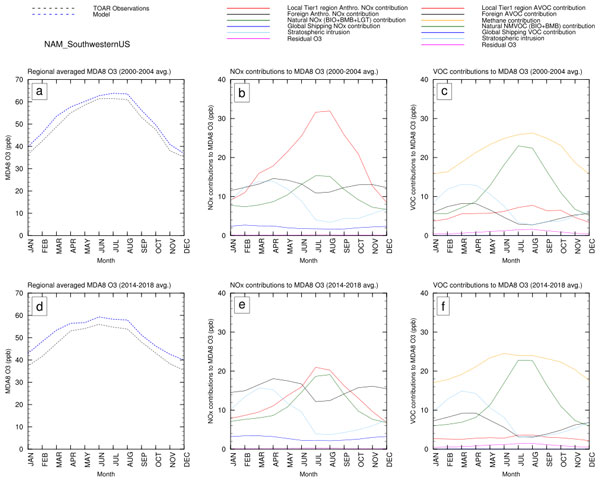
Surface ozone can travel far from its sources. In recent decades, emissions of ozone-forming gases have decreased in North America and Europe but risen in Asia, alongside rising global methane levels. Using advanced modeling, this study reveals that while local reductions in nitrogen oxides have lowered summer ozone, increases in ozone production from natural and foreign sources offset these gains. Methane remains important, but its ozone impact has declined with reduced local emissions.
Diego Guizzardi, Monica Crippa, Tim Butler, Terry Keating, Rosa Wu, Jacek Kaminski, Jeroen Kuenen, Junichi Kurokawa, Satoru Chatani, Tazuko Morikawa, George Pouliot, Jacinthe Racine, Michael D. Moran, Zbigniew Klimont, Patrick M. Manseau, Rabab Mashayekhi, Barron H. Henderson, Steven J. Smith, Rachel Hoesly, Marilena Muntean, Manjola Banja, Edwin Schaaf, Federico Pagani, Jung-Hun Woo, Jinseok Kim, Enrico Pisoni, Junhua Zhang, David Niemi, Mourad Sassi, Annie Duhamel, Tabish Ansari, Kristen Foley, Guannan Geng, Yifei Chen, and Qiang Zhang
Earth Syst. Sci. Data, 17, 5915–5950, https://doi.org/10.5194/essd-17-5915-2025, https://doi.org/10.5194/essd-17-5915-2025, 2025
Short summary
Short summary
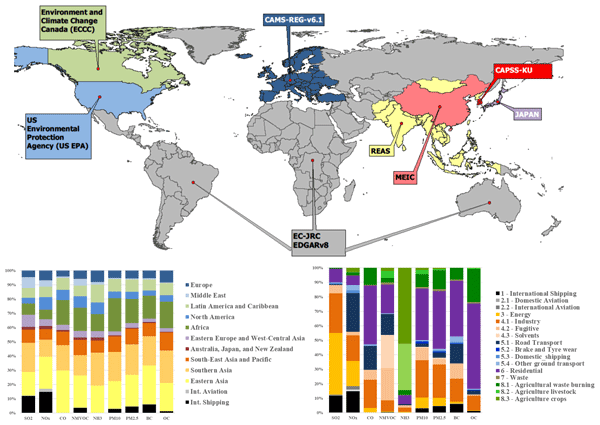
The global air pollution emission mosaic HTAP_v3.2 is the state-of-the-art inventory to address the evolution of a set of policy-relevant pollutants over the past 2 decades. The mosaic is made harmonising and blending seven regional inventories, gapfilled with the most recent release of the Emissions Database for Global Atmospheric Research. By incorporating the best available local information, the HTAP_v3.2 emission mosaic can be used for policy-relevant studies at regional and global level.
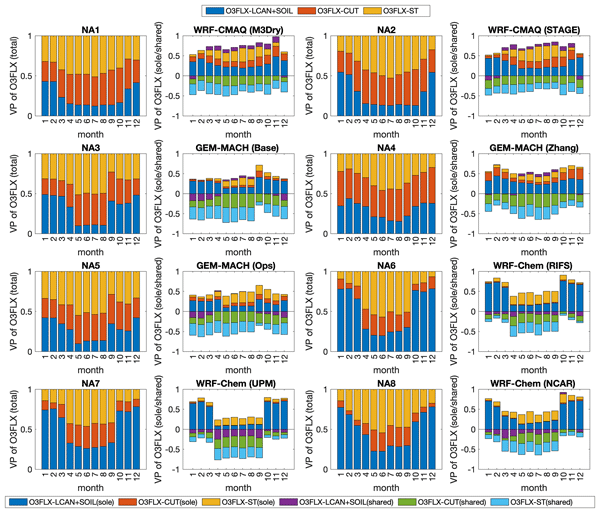
Ioannis Kioutsioukis, Christian Hogrefe, Paul A. Makar, Ummugulsum Alyuz, Jesse O. Bash, Roberto Bellasio, Roberto Bianconi, Tim Butler, Olivia E. Clifton, Philip Cheung, Alma Hodzic, Richard Kranenburg, Aura Lupascu, Kester Momoh, Juan Luis Perez-Camaño, Jonathan Pleim, Young-Hee Ryu, Roberto San Jose, Donna Schwede, Ranjeet Sokhi, and Stefano Galmarini
Atmos. Chem. Phys., 25, 12923–12953, https://doi.org/10.5194/acp-25-12923-2025, https://doi.org/10.5194/acp-25-12923-2025, 2025
Short summary
Short summary
Deposition is key in air quality modeling. An unprecedented evaluation of the Air Quality Model Evaluation International Initiative phase 4 models is performed on different deposition schemes in relation to the land use and land cover (LULC) used. Among the results, LULC masks have to be harmonized and up-to-date information used in place of masks that are outdated and too coarse. Alternatively, LULC masks should be evaluated and intercompared when multiple model results are analyzed.
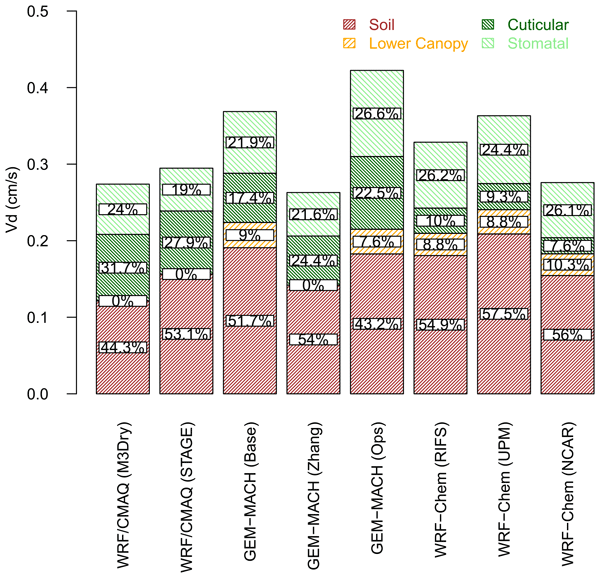
Christian Hogrefe, Stefano Galmarini, Paul A. Makar, Ioannis Kioutsioukis, Olivia E. Clifton, Ummugulsum Alyuz, Jesse O. Bash, Roberto Bellasio, Roberto Bianconi, Tim Butler, Philip Cheung, Alma Hodzic, Richard Kranenburg, Aurelia Lupascu, Kester Momoh, Juan Luis Perez-Camanyo, Jonathan E. Pleim, Young-Hee Ryu, Roberto San Jose, Martijn Schaap, Donna B. Schwede, and Ranjeet Sokhi
Atmos. Chem. Phys., 25, 12629–12656, https://doi.org/10.5194/acp-25-12629-2025, https://doi.org/10.5194/acp-25-12629-2025, 2025
Short summary
Short summary
Performed under the umbrella of Phase 4 of the Air Quality Model Evaluation International Initiative (AQMEII4), this study applies AQMEII4 diagnostic tools to better characterize how dry deposition removes pollutants from the atmosphere in regional-scale models. The results also strongly suggest that improvement and harmonization of the representation of land use in these models would serve the community in their future development efforts.
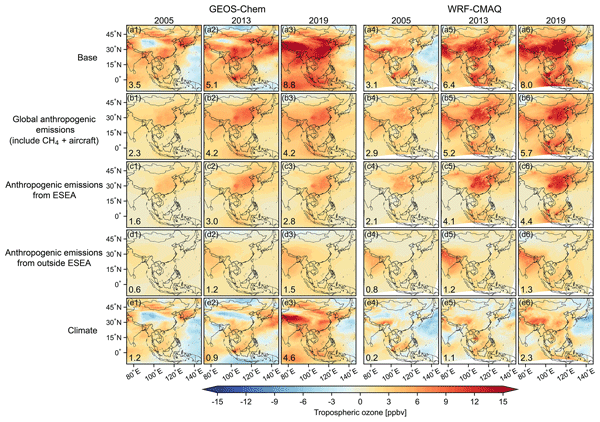
Xiao Lu, Yiming Liu, Jiayin Su, Xiang Weng, Tabish Ansari, Yuqiang Zhang, Guowen He, Yuqi Zhu, Haolin Wang, Ganquan Zeng, Jingyu Li, Cheng He, Shuai Li, Teerachai Amnuaylojaroen, Tim Butler, Qi Fan, Shaojia Fan, Grant L. Forster, Meng Gao, Jianlin Hu, Yugo Kanaya, Mohd Talib Latif, Keding Lu, Philippe Nédélec, Peer Nowack, Bastien Sauvage, Xiaobin Xu, Lin Zhang, Ke Li, Ja-Ho Koo, and Tatsuya Nagashima
Atmos. Chem. Phys., 25, 7991–8028, https://doi.org/10.5194/acp-25-7991-2025, https://doi.org/10.5194/acp-25-7991-2025, 2025
Short summary
Short summary
This study analyzes summertime ozone trends in East and Southeast Asia derived from a comprehensive observational database spanning from 1995 to 2019, incorporating aircraft observations, ozonesonde data, and measurements from 2500 surface sites. Multiple models are applied to attribute to changes in anthropogenic emissions and climate. The results highlight that increases in anthropogenic emissions are the primary driver of ozone increases both in the free troposphere and at the surface.
Cynthia H. Whaley, Tim Butler, Jose A. Adame, Rupal Ambulkar, Steve R. Arnold, Rebecca R. Buchholz, Benjamin Gaubert, Douglas S. Hamilton, Min Huang, Hayley Hung, Johannes W. Kaiser, Jacek W. Kaminski, Christoph Knote, Gerbrand Koren, Jean-Luc Kouassi, Meiyun Lin, Tianjia Liu, Jianmin Ma, Kasemsan Manomaiphiboon, Elisa Bergas Masso, Jessica L. McCarty, Mariano Mertens, Mark Parrington, Helene Peiro, Pallavi Saxena, Saurabh Sonwani, Vanisa Surapipith, Damaris Y. T. Tan, Wenfu Tang, Veerachai Tanpipat, Kostas Tsigaridis, Christine Wiedinmyer, Oliver Wild, Yuanyu Xie, and Paquita Zuidema
Geosci. Model Dev., 18, 3265–3309, https://doi.org/10.5194/gmd-18-3265-2025, https://doi.org/10.5194/gmd-18-3265-2025, 2025
Short summary
Short summary
The multi-model experiment design of the HTAP3 Fires project takes a multi-pollutant approach to improving our understanding of transboundary transport of wildland fire and agricultural burning emissions and their impacts. The experiments are designed with the goal of answering science policy questions related to fires. The options for the multi-model approach, including inputs, outputs, and model setup, are discussed, and the official recommendations for the project are presented.
Aditya Nalam, Aura Lupaşcu, Tabish Ansari, and Tim Butler
Atmos. Chem. Phys., 25, 5287–5311, https://doi.org/10.5194/acp-25-5287-2025, https://doi.org/10.5194/acp-25-5287-2025, 2025
Short summary
Short summary
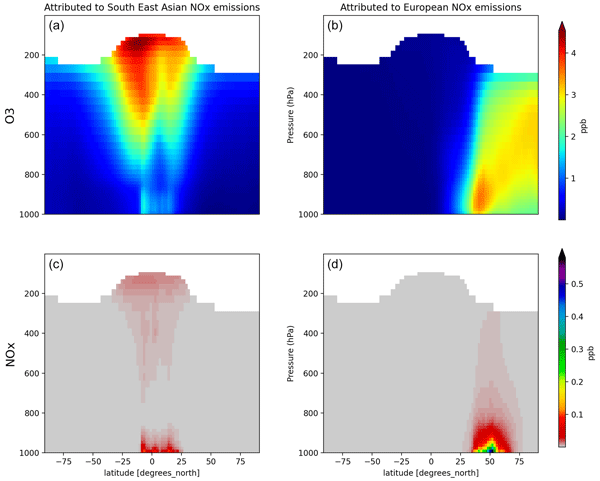
Tropospheric O3 molecules are labeled with the identity of their precursor source to simulate contributions from various emission sources to the global tropospheric O3 burden (TOB) and its trends. With an equatorward shift, anthropogenic NOx emissions become significantly more efficient at producing O3 and play a major role in driving TOB trends, mainly due to larger convection at the tropics effectively lifting O3 and its precursors to the free troposphere, where O3 lifetime is longer.
Paul A. Makar, Philip Cheung, Christian Hogrefe, Ayodeji Akingunola, Ummugulsum Alyuz, Jesse O. Bash, Michael D. Bell, Roberto Bellasio, Roberto Bianconi, Tim Butler, Hazel Cathcart, Olivia E. Clifton, Alma Hodzic, Ioannis Kioutsioukis, Richard Kranenburg, Aurelia Lupascu, Jason A. Lynch, Kester Momoh, Juan L. Perez-Camanyo, Jonathan Pleim, Young-Hee Ryu, Roberto San Jose, Donna Schwede, Thomas Scheuschner, Mark W. Shephard, Ranjeet S. Sokhi, and Stefano Galmarini
Atmos. Chem. Phys., 25, 3049–3107, https://doi.org/10.5194/acp-25-3049-2025, https://doi.org/10.5194/acp-25-3049-2025, 2025
Short summary
Short summary
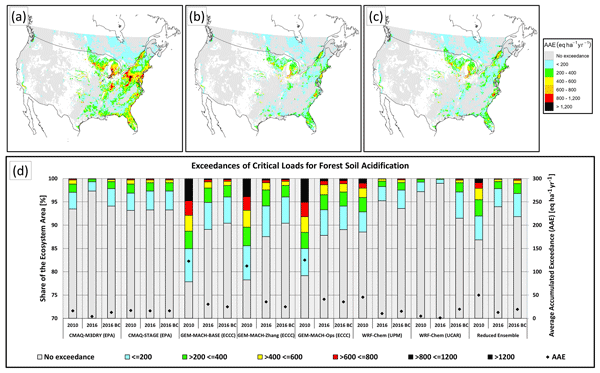
The large range of sulfur and nitrogen deposition estimates from air quality models results in a large range of predicted impacts. We used models and deposition diagnostics to identify the processes controlling atmospheric sulfur and nitrogen deposition variability. Controlling factors included the uptake of gases and aerosols by hydrometeors, aerosol inorganic chemistry, particle dry deposition, ammonia bidirectional fluxes, gas deposition via plant cuticles and soil, and land use data.

Edward C. Chan, Ilona J. Jäkel, Basit Khan, Martijn Schaap, Timothy M. Butler, Renate Forkel, and Sabine Banzhaf
Geosci. Model Dev., 18, 1119–1139, https://doi.org/10.5194/gmd-18-1119-2025, https://doi.org/10.5194/gmd-18-1119-2025, 2025
Short summary
Short summary
An enhanced emission module has been developed for the PALM model system, improving flexibility and scalability of emission source representation across different sectors. A model for parametrized domestic emissions has also been included, for which an idealized model run is conducted for particulate matter (PM10). The results show that, in addition to individual sources and diurnal variations in energy consumption, vertical transport and urban topology play a role in concentration distribution.
Priyanka Sah, Subrat Sharma, and Rehana Shaik
EGUsphere, https://doi.org/10.5194/egusphere-2024-3155, https://doi.org/10.5194/egusphere-2024-3155, 2025
Preprint archived
Short summary
Short summary
Himalayan timberlines are distinct in the their formation which is influenced by mountainous topography and local climate but formation of geological landforms in the history of earth has plays a significant role in occurrence of the present time timberline in the Himalaya.
Imran A. Girach, Narendra Ojha, Prabha R. Nair, Kandula V. Subrahmanyam, Neelakantan Koushik, Mohammed M. Nazeer, Nadimpally Kiran Kumar, Surendran Nair Suresh Babu, Jos Lelieveld, and Andrea Pozzer
Atmos. Chem. Phys., 24, 1979–1995, https://doi.org/10.5194/acp-24-1979-2024, https://doi.org/10.5194/acp-24-1979-2024, 2024
Short summary
Short summary
We investigate surface ozone variability in East Antarctica based on measurements and EMAC global model simulations during austral summer. Nearly half of the surface ozone is found to be of stratospheric origin. The east coast of Antarctica acts as a stronger sink of ozone than surrounding regions. Photochemical loss of ozone is counterbalanced by downward transport of ozone. The study highlights the intertwined role of chemistry and dynamics in governing ozone variations over East Antarctica.
Meghna Soni, Rolf Sander, Lokesh K. Sahu, Domenico Taraborrelli, Pengfei Liu, Ankit Patel, Imran A. Girach, Andrea Pozzer, Sachin S. Gunthe, and Narendra Ojha
Atmos. Chem. Phys., 23, 15165–15180, https://doi.org/10.5194/acp-23-15165-2023, https://doi.org/10.5194/acp-23-15165-2023, 2023
Short summary
Short summary
The study presents the implementation of comprehensive multiphase chlorine chemistry in the box model CAABA/MECCA. Simulations for contrasting urban environments of Asia and Europe highlight the significant impacts of chlorine on atmospheric oxidation capacity and composition. Chemical processes governing the production and loss of chlorine-containing species has been discussed. The updated chemical mechanism will be useful to interpret field measurements and for future air quality studies.

Radhika A. Chipade and Mehul R. Pandya
Atmos. Meas. Tech., 16, 5443–5459, https://doi.org/10.5194/amt-16-5443-2023, https://doi.org/10.5194/amt-16-5443-2023, 2023
Short summary
Short summary
The extinction-to-backscattering ratio, popularly known as lidar ratio of atmospheric aerosols, is an important optical property, which is essential to retrieve the extinction profiles of atmospheric aerosols. A physics-based theoretical approach is presented in the present paper that estimates lidar ratio values for CALIPSO and OPAC aerosol models, which can be used as inputs to determine the extinction profiles of aerosols using CALIPSO data.
Monica Crippa, Diego Guizzardi, Tim Butler, Terry Keating, Rosa Wu, Jacek Kaminski, Jeroen Kuenen, Junichi Kurokawa, Satoru Chatani, Tazuko Morikawa, George Pouliot, Jacinthe Racine, Michael D. Moran, Zbigniew Klimont, Patrick M. Manseau, Rabab Mashayekhi, Barron H. Henderson, Steven J. Smith, Harrison Suchyta, Marilena Muntean, Efisio Solazzo, Manjola Banja, Edwin Schaaf, Federico Pagani, Jung-Hun Woo, Jinseok Kim, Fabio Monforti-Ferrario, Enrico Pisoni, Junhua Zhang, David Niemi, Mourad Sassi, Tabish Ansari, and Kristen Foley
Earth Syst. Sci. Data, 15, 2667–2694, https://doi.org/10.5194/essd-15-2667-2023, https://doi.org/10.5194/essd-15-2667-2023, 2023
Short summary
Short summary
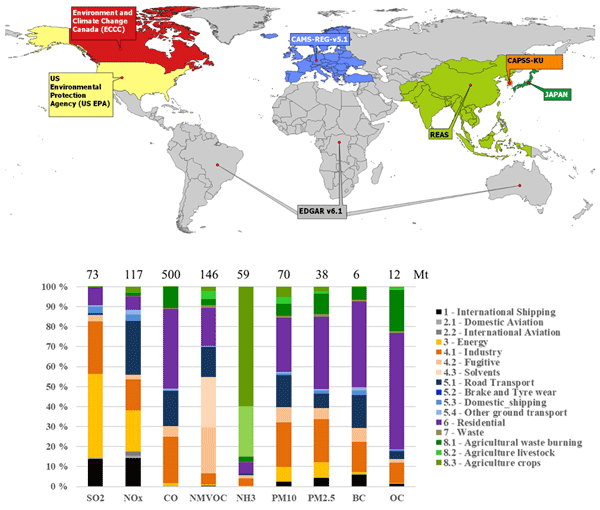
This study responds to the global and regional atmospheric modelling community's need for a mosaic of air pollutant emissions with global coverage, long time series, spatially distributed data at a high time resolution, and a high sectoral resolution in order to enhance the understanding of transboundary air pollution. The mosaic approach to integrating official regional emission inventories with a global inventory based on a consistent methodology ensures policy-relevant results.
Vaishali Jain, Nidhi Tripathi, Sachchida N. Tripathi, Mansi Gupta, Lokesh K. Sahu, Vishnu Murari, Sreenivas Gaddamidi, Ashutosh K. Shukla, and Andre S. H. Prevot
Atmos. Chem. Phys., 23, 3383–3408, https://doi.org/10.5194/acp-23-3383-2023, https://doi.org/10.5194/acp-23-3383-2023, 2023
Short summary
Short summary
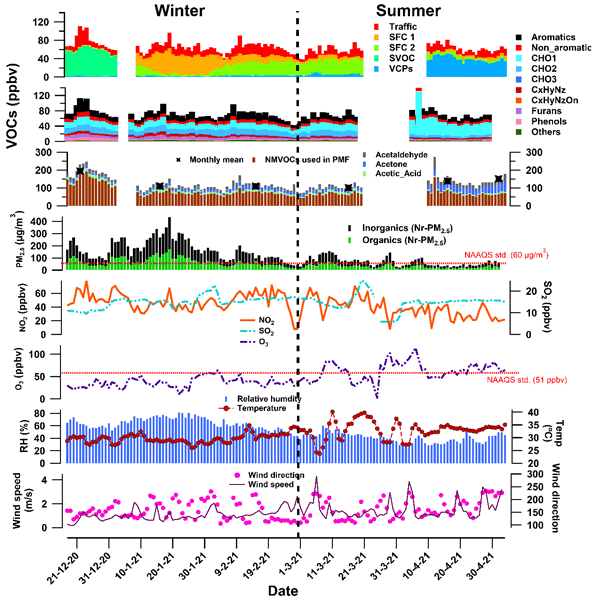
This research chemically characterises 173 different NMVOCs (non-methane volatile organic compounds) measured in real time for three seasons in the city of the central Indo-Gangetic basin of India, Lucknow. Receptor modelling is used to analyse probable sources of NMVOCs and their crucial role in forming ozone and secondary organic aerosols. It is observed that vehicular emissions and solid fuel combustion are the highest contributors to the emission of primary and secondary NMVOCs.
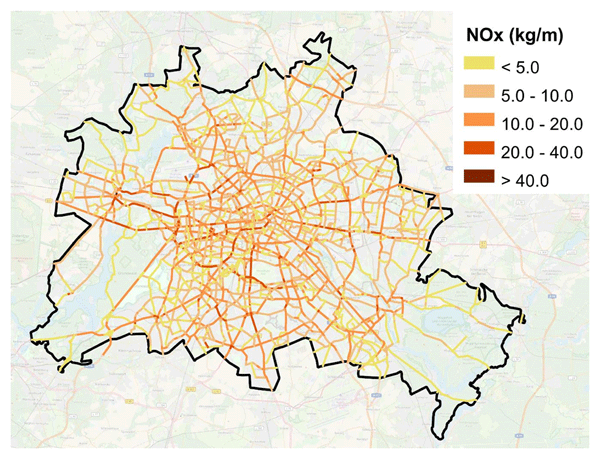
Edward C. Chan, Joana Leitão, Andreas Kerschbaumer, and Timothy M. Butler
Geosci. Model Dev., 16, 1427–1444, https://doi.org/10.5194/gmd-16-1427-2023, https://doi.org/10.5194/gmd-16-1427-2023, 2023
Short summary
Short summary
Yeti is a Handbook Emission Factors for Road Transport-based traffic emission inventory written in the Python 3 scripting language, which adopts a generalized treatment for activity data using traffic information of varying levels of detail introduced in a systematic and consistent manner, with the ability to maximize reusability. Thus, Yeti has been conceived and implemented with a high degree of data and process symmetry, allowing scalable and flexible execution while affording ease of use.
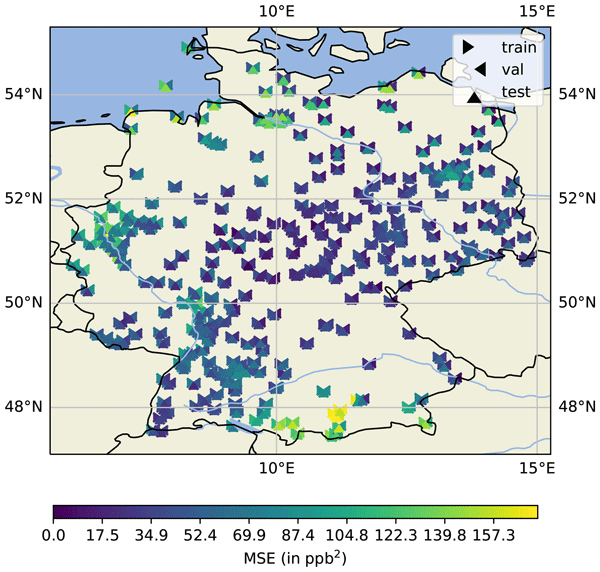
Felix Kleinert, Lukas H. Leufen, Aurelia Lupascu, Tim Butler, and Martin G. Schultz
Geosci. Model Dev., 15, 8913–8930, https://doi.org/10.5194/gmd-15-8913-2022, https://doi.org/10.5194/gmd-15-8913-2022, 2022
Short summary
Short summary
We examine the effects of spatially aggregated upstream information as input for a deep learning model forecasting near-surface ozone levels. Using aggregated data from one upstream sector (45°) improves the forecast by ~ 10 % for 4 prediction days. Three upstream sectors improve the forecasts by ~ 14 % on the first 2 d only. Our results serve as an orientation for other researchers or environmental agencies focusing on pointwise time-series predictions, for example, due to regulatory purposes.
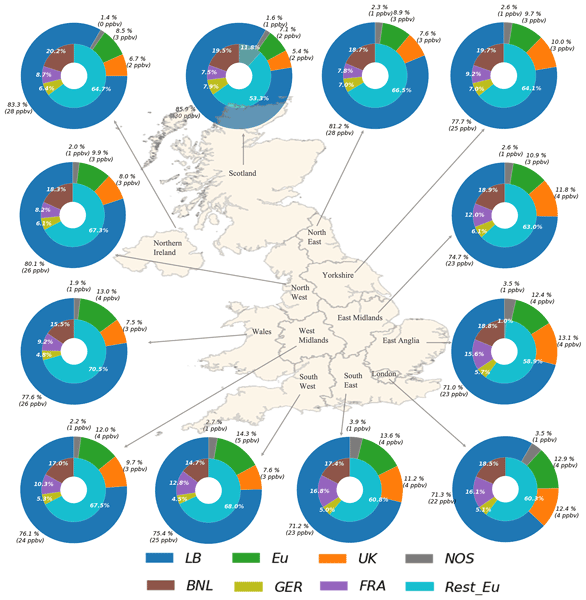
Johana Romero-Alvarez, Aurelia Lupaşcu, Douglas Lowe, Alba Badia, Scott Archer-Nicholls, Steve Dorling, Claire E. Reeves, and Tim Butler
Atmos. Chem. Phys., 22, 13797–13815, https://doi.org/10.5194/acp-22-13797-2022, https://doi.org/10.5194/acp-22-13797-2022, 2022
Short summary
Short summary
As ozone can be transported across countries, efficient air quality management and regulatory policies rely on the assessment of local ozone production vs. transport. In our study, we investigate the origin of surface ozone in the UK and the contribution of the different source regions to regulatory ozone metrics. It is shown that emission controls would be necessary over western Europe to improve health-related metrics and over larger areas to reduce impacts on ecosystems.
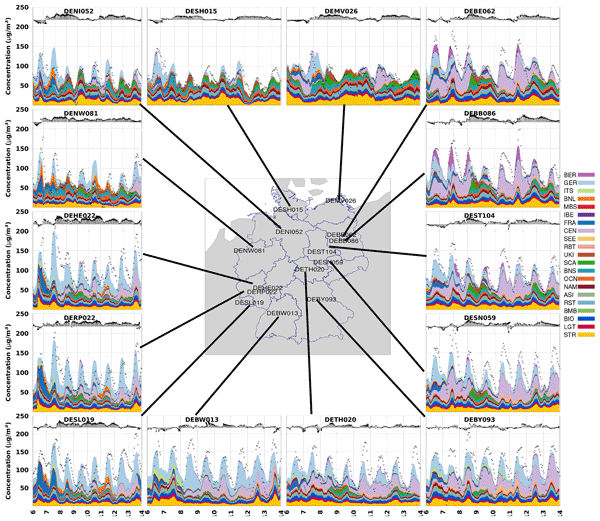
Aurelia Lupaşcu, Noelia Otero, Andrea Minkos, and Tim Butler
Atmos. Chem. Phys., 22, 11675–11699, https://doi.org/10.5194/acp-22-11675-2022, https://doi.org/10.5194/acp-22-11675-2022, 2022
Short summary
Short summary
Ground-level ozone is an important air pollutant that affects human health, ecosystems, and climate. Ozone is not emitted directly but rather formed in the atmosphere through chemical reactions involving two distinct precursors. Our results provide detailed information about the origin of ozone in Germany during two peak ozone events that took place in 2015 and 2018, thus improving our understanding of ground-level ozone.
Noelia Otero, Oscar E. Jurado, Tim Butler, and Henning W. Rust
Atmos. Chem. Phys., 22, 1905–1919, https://doi.org/10.5194/acp-22-1905-2022, https://doi.org/10.5194/acp-22-1905-2022, 2022
Short summary
Short summary
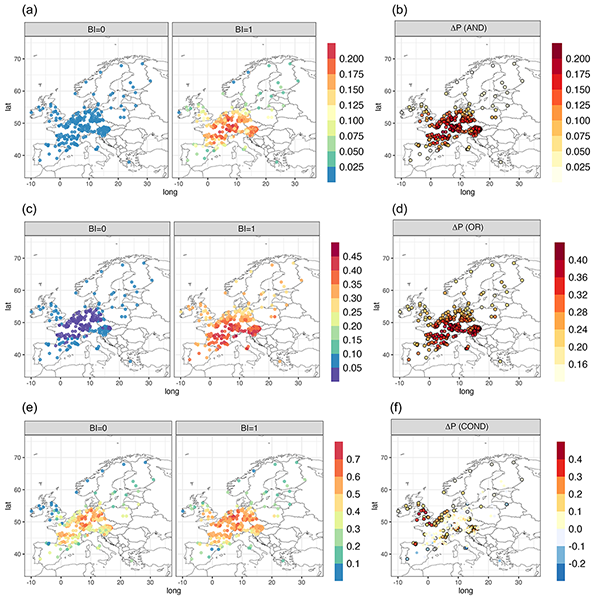
Surface ozone and temperature are strongly dependent and their extremes might be exacerbated by underlying climatological drivers, such as atmospheric blocking. Using an observational data set, we measure the dependence structure between ozone and temperature under the influence of atmospheric blocking. Blocks enhanced the probability of occurrence of compound ozone and temperature extremes over northwestern and central Europe, leading to greater health risks.
Cited articles
Acdan, J. J. M., Pierce, R. B., Dickens, A. F., Adelman, Z., and Nergui, T.: Examining TROPOMI formaldehyde to nitrogen dioxide ratios in the Lake Michigan region: implications for ozone exceedances, Atmos. Chem. Phys., 23, 7867–7885, https://doi.org/10.5194/acp-23-7867-2023, 2023.
Ajayakumar, R. S., Girach, I. A., Soni, M., Ojha, N., and Babu, S. S.: Processes governing the surface ozone over a tropical hill station in the Western Ghats, Atmos. Environ., 319, 120286, https://doi.org/10.1016/j.atmosenv.2023.120286, 2024.
Anagha, K. S. and Kuttippurath, J.: Rising ozone pollution as a threat to wheat yield in India: insights from a concentration-based approach, Environ. Sci. Process. Impacts, 28, 1047–1063, https://doi.org/10.1039/D5EM00850F, 2026.
Ansari, T., Nalam, A., Lupaşcu, A., Hinz, C., Grasse, S., and Butler, T.: Explaining trends and changing seasonal cycles of surface ozone in North America and Europe over the 2000–2018 period: a global modelling study with NOx and VOC tagging, Atmos. Chem. Phys., 25, 16833–16876, https://doi.org/10.5194/acp-25-16833-2025, 2025.
Barth, M. C., Lee, J., Hodzic, A., Pfister, G., Skamarock, W. C., Worden, J., Wong, J., and Noone, D.: Thunderstorms and upper troposphere chemistry during the early stages of the 2006 North American Monsoon, Atmos. Chem. Phys., 12, 11003–11026, https://doi.org/10.5194/acp-12-11003-2012, 2012.
Bhan, S. C., Devrani, A. K., and Sinha, V.: An analysis of monthly rainfall and the meteorological conditions associated with cloudburst over the dry region of Leh (Ladakh), India, MAUSAM, 66, 107–122, https://doi.org/10.54302/mausam.v66i1.371, 2015.
Bhattacharjee, D. and Dutta, R. K.: Mountainous Hazards and Sustainable Livelihood in Leh Valley, in: Indigenous Knowledge and Disaster Risk Reduction, edited by: Panda, G. K., Chatterjee, U., Bandyopadhyay, N., Setiawati, M. D., and Banerjee, D., Springer International Publishing, Cham, 83–105, https://doi.org/10.1007/978-3-031-26143-5_5, 2023.
Borsdorff, T., Aan de Brugh, J., Hu, H., Aben, I., Hasekamp, O., and Landgraf, J.: Measuring Carbon Monoxide With TROPOMI: First Results and a Comparison With ECMWF-IFS Analysis Data, Geophys. Res. Lett., 45, 2826–2832, https://doi.org/10.1002/2018GL077045, 2018.
Butler, T., Lupascu, A., Coates, J., and Zhu, S.: TOAST 1.0: Tropospheric Ozone Attribution of Sources with Tagging for CESM 1.2.2, Geosci. Model Dev., 11, 2825–2840, https://doi.org/10.5194/gmd-11-2825-2018, 2018.
Butler, T., Lupascu, A., and Nalam, A.: Attribution of ground-level ozone to anthropogenic and natural sources of nitrogen oxides and reactive carbon in a global chemical transport model, Atmos. Chem. Phys., 20, 10707–10731, https://doi.org/10.5194/acp-20-10707-2020, 2020.
Carslaw, K. S., Regayre, L. A., Proske, U., Gettelman, A., Sexton, D. M. H., Qian, Y., Marshall, L. R., Wild, O., van Lier-Walqui, M., Oertel, A., Peatier, S., Yang, B., Johnson, J. S., Li, S., McCoy, D. T., Sanderson, B. M., Williamson, C. J., Elsaesser, G. S., Yamazaki, K., and Booth, B. B. B.: Opinion: The importance and future development of perturbed parameter ensembles in climate and atmospheric science, Atmos. Chem. Phys., 26, 4651–4667, https://doi.org/10.5194/acp-26-4651-2026, 2026.
Chevalier, A., Gheusi, F., Delmas, R., Ordóñez, C., Sarrat, C., Zbinden, R., Thouret, V., Athier, G., and Cousin, J.-M.: Influence of altitude on ozone levels and variability in the lower troposphere: a ground-based study for western Europe over the period 2001–2004, Atmos. Chem. Phys., 7, 4311–4326, https://doi.org/10.5194/acp-7-4311-2007, 2007.
Chevuturi, A., Dimri, A. P., and Thayyen, R. J.: Climate change over Leh (Ladakh), India, Theor. Appl. Climatol., 131, 531–545, https://doi.org/10.1007/s00704-016-1989-1, 2018.
Chuwah, C., Van Noije, T., Van Vuuren, D. P., Stehfest, E., and Hazeleger, W.: Global impacts of surface ozone changes on crop yields and land use, Atmos. Environ., 106, 11–23, https://doi.org/10.1016/j.atmosenv.2015.01.062, 2015.
Crippa, M., Guizzardi, D., Oreggioni, G., Muntean, M., and Schaaf, E.: EDGARv5.0 Air Pollutant Emissions, PANGAEA [data set], https://doi.org/10.1594/PANGAEA.921922, 2020.
Crippa, M., Guizzardi, D., Butler, T., Keating, T., Wu, R., Kaminski, J., Kuenen, J., Kurokawa, J., Chatani, S., Morikawa, T., Pouliot, G., Racine, J., Moran, M. D., Klimont, Z., Manseau, P. M., Mashayekhi, R., Henderson, B. H., Smith, S. J., Suchyta, H., Muntean, M., Solazzo, E., Banja, M., Schaaf, E., Pagani, F., Woo, J.-H., Kim, J., Monforti-Ferrario, F., Pisoni, E., Zhang, J., Niemi, D., Sassi, M., Ansari, T., and Foley, K.: The HTAP_v3 emission mosaic: merging regional and global monthly emissions (2000–2018) to support air quality modelling and policies, Earth Syst. Sci. Data, 15, 2667–2694, https://doi.org/10.5194/essd-15-2667-2023, 2023.
Cristofanelli, P., Bracci, A., Sprenger, M., Marinoni, A., Bonafè, U., Calzolari, F., Duchi, R., Laj, P., Pichon, J. M., Roccato, F., Venzac, H., Vuillermoz, E., and Bonasoni, P.: Tropospheric ozone variations at the Nepal Climate Observatory-Pyramid (Himalayas, 5079
Das, S., Giorgi, F., Coppola, E., Panicker, A. S., Gautam, A. S., Nair, V. S., and Giuliani, G.: Linkage between the absorbing aerosol-induced snow darkening effects over the Himalayas-Tibetan Plateau and the pre-monsoon climate over northern India, Theor. Appl. Climatol., 147, 1033–1048, https://doi.org/10.1007/s00704-021-03871-y, 2022.
De Smedt, I., Theys, N., Yu, H., Danckaert, T., Lerot, C., Compernolle, S., Van Roozendael, M., Richter, A., Hilboll, A., Peters, E., Pedergnana, M., Loyola, D., Beirle, S., Wagner, T., Eskes, H., van Geffen, J., Boersma, K. F., and Veefkind, P.: Algorithm theoretical baseline for formaldehyde retrievals from S5P TROPOMI and from the QA4ECV project, Atmos. Meas. Tech., 11, 2395–2426, https://doi.org/10.5194/amt-11-2395-2018, 2018.
De Smedt, I., Pinardi, G., Vigouroux, C., Compernolle, S., Bais, A., Benavent, N., Boersma, F., Chan, K.-L., Donner, S., Eichmann, K.-U., Hedelt, P., Hendrick, F., Irie, H., Kumar, V., Lambert, J.-C., Langerock, B., Lerot, C., Liu, C., Loyola, D., Piters, A., Richter, A., Rivera Cárdenas, C., Romahn, F., Ryan, R. G., Sinha, V., Theys, N., Vlietinck, J., Wagner, T., Wang, T., Yu, H., and Van Roozendael, M.: Comparative assessment of TROPOMI and OMI formaldehyde observations and validation against MAX-DOAS network column measurements, Atmos. Chem. Phys., 21, 12561–12593, https://doi.org/10.5194/acp-21-12561-2021, 2021.
Dolma, Y.: Tourism in Ladakh: Trends and composition, International Journal of Research in Social Sciences, 10, 127–140, https://www.ijmra.us/2020ijrss_december.php (last access: 16 November 2026), 2020.
Dubey, J., Singh, D. S., and Sati, S. P.: Cryosphere Response to Climate Change and Disaster Risk Reduction in the Arid Northwestern Ladakh Himalaya, in: Ecosystem-based Approaches for Resilience Building in Himalayan Landscapes, edited by: Khan, Y. D. I., Goswami, M., and Nautiyal, S., Springer Nature Singapore, Singapore, 3–27, https://doi.org/10.1007/978-981-95-2007-7_1, 2025.
Emmerichs, T., Kerkweg, A., Ouwersloot, H., Fares, S., Mammarella, I., and Taraborrelli, D.: A revised dry deposition scheme for land–atmosphere exchange of trace gases in ECHAM/MESSy v2.54, Geosci. Model Dev., 14, 495–519, https://doi.org/10.5194/gmd-14-495-2021, 2021.
Emmons, L. K., Walters, S., Hess, P. G., Lamarque, J.-F., Pfister, G. G., Fillmore, D., Granier, C., Guenther, A., Kinnison, D., Laepple, T., Orlando, J., Tie, X., Tyndall, G., Wiedinmyer, C., Baughcum, S. L., and Kloster, S.: Description and evaluation of the Model for Ozone and Related chemical Tracers, version 4 (MOZART-4), Geosci. Model Dev., 3, 43–67, https://doi.org/10.5194/gmd-3-43-2010, 2010.
Fuhrer, J., Skärby, L., and Ashmore, M. R.: Critical levels for ozone effects on vegetation in Europe, Environ. Pollut., 97, 91–106, https://doi.org/10.1016/S0269-7491(97)00067-5, 1997.
Gao, Y., Kou, W., Cheng, W., Guo, X., Qu, B., Wu, Y., Zhang, S., Liao, H., Chen, D., Leung, L. R., Wild, O., Zhang, J., Lin, G., Su, H., Cheng, Y., Pöschl, U., Pozzer, A., Zhang, L., Lamarque, J., Guenther, A. B., Brasseur, G., Liu, Z., Lu, H., Li, C., Zhao, B., Wang, S., Huang, X., Pan, J., Liu, G., Liu, X., Lin, H., Zhao, Y., Zhao, C., Meng, J., Yao, X., Gao, H., and Wu, L.: Reducing Long-Standing Surface Ozone Overestimation in Earth System Modeling by High-Resolution Simulation and Dry Deposition Improvement, J. Adv. Model. Earth Sy., 17, e2023MS004192, https://doi.org/10.1029/2023MS004192, 2025.
Gaudel, A., Bourgeois, I., Li, M., Chang, K.-L., Ziemke, J., Sauvage, B., Stauffer, R. M., Thompson, A. M., Kollonige, D. E., Smith, N., Hubert, D., Keppens, A., Cuesta, J., Heue, K.-P., Veefkind, P., Aikin, K., Peischl, J., Thompson, C. R., Ryerson, T. B., Frost, G. J., McDonald, B. C., and Cooper, O. R.: Tropical tropospheric ozone distribution and trends from in situ and satellite data, Atmos. Chem. Phys., 24, 9975–10000, https://doi.org/10.5194/acp-24-9975-2024, 2024.
GBD 2019 Risk Factors Collaborators: Global burden of 87 risk factors in 204 countries and territories, 1990–2019: a systematic analysis for the Global Burden of Disease Study 2019, Lancet, 396, 1223–1249, https://doi.org/10.1016/S0140-6736(20)30752-2, 2020.
Gettelman, A., Mills, M. J., Kinnison, D. E., Garcia, R. R., Smith, A. K., Marsh, D. R., Tilmes, S., Vitt, F., Bardeen, C. G., McInerny, J., Liu, H. -L., Solomon, S. C., Polvani, L. M., Emmons, L. K., Lamarque, J. -F., Richter, J. H., Glanville, A. S., Bacmeister, J. T., Phillips, A. S., Neale, R. B., Simpson, I. R., DuVivier, A. K., Hodzic, A., and Randel, W. J.: The Whole Atmosphere Community Climate Model Version 6 (WACCM6), J. Geophys. Res.-Atmos., 124, 12380–12403, https://doi.org/10.1029/2019JD030943, 2019.
Ghude, S. D., Kalita, G., Jat, R., Govardhan, G., Debnath, S., Yadav, P. P., Ambulkar, R., Kumar, R., and Attri, S. D.: The role of atmospheric feedback and groundwater conservation policies in degrading air quality in Delhi, npj Clean Air, 1, 12, https://doi.org/10.1038/s44407-025-00012-x, 2025.
Girach, I. A., Ojha, N., Nair, P. R., Pozzer, A., Tiwari, Y. K., Kumar, K. R., and Lelieveld, J.: Variations in O3, CO, and CH4 over the Bay of Bengal during the summer monsoon season: shipborne measurements and model simulations, Atmos. Chem. Phys., 17, 257–275, https://doi.org/10.5194/acp-17-257-2017, 2017.
Girach, I., Ojha, N., and Ansari, T.: Surface ozone over the Trans-Himalaya (In situ, WRF-Chem, and CAM4-Chem), Zenodo [data set], https://doi.org/10.5281/zenodo.23916482, 2026.
Goodrich, C. G., Udas, P. B., and Larrington-Spencer, H.: Conceptualizing gendered vulnerability to climate change in the Hindu Kush Himalaya: Contextual conditions and drivers of change, Environ. Dev., 31, 9–18, https://doi.org/10.1016/j.envdev.2018.11.003, 2019.
Grell, G. A. and Dévényi, D.: A generalized approach to parameterizing convection combining ensemble and data assimilation techniques, Geophys. Res. Lett., 29, https://doi.org/10.1029/2002GL015311, 2002.
Grell, G. A., Peckham, S. E., Schmitz, R., McKeen, S. A., Frost, G., Skamarock, W. C., and Eder, B.: Fully coupled “online” chemistry within the WRF model, Atmos. Environ., 39, 6957–6975, https://doi.org/10.1016/j.atmosenv.2005.04.027, 2005.
Guenther, A., Karl, T., Harley, P., Wiedinmyer, C., Palmer, P. I., and Geron, C.: Estimates of global terrestrial isoprene emissions using MEGAN (Model of Emissions of Gases and Aerosols from Nature), Atmos. Chem. Phys., 6, 3181–3210, https://doi.org/10.5194/acp-6-3181-2006, 2006.
Harithasree, S., Sharma, K., Girach, I. A., Sahu, L. K., Nair, P. R., Singh, N., Flemming, J., Babu, S. S., and Ojha, N.: Surface ozone over Doon valley of the Indian Himalaya: Characteristics, impact assessment, and model results, Atmospheric Environment X, 21, 100247, https://doi.org/10.1016/j.aeaoa.2024.100247, 2024.
Hassan, M. A., Mehmood, T., Liu, J., Luo, X., Li, X., Tanveer, M., Faheem, M., Shakoor, A., Dar, A. A., and Abid, M.: A review of particulate pollution over Himalaya region: Characteristics and salient factors contributing ambient PM pollution, Atmos. Environ., 294, 119472, https://doi.org/10.1016/j.atmosenv.2022.119472, 2023.
Hersbach, H., Bell, B., Berrisford, P., Hirahara, S., Horányi, A., Muñoz-Sabater, J., Nicolas, J., Peubey, C., Radu, R., Schepers, D., Simmons, A., Soci, C., Abdalla, S., Abellan, X., Balsamo, G., Bechtold, P., Biavati, G., Bidlot, J., Bonavita, M., De Chiara, G., Dahlgren, P., Dee, D., Diamantakis, M., Dragani, R., Flemming, J., Forbes, R., Fuentes, M., Geer, A., Haimberger, L., Healy, S., Hogan, R. J., Hólm, E., Janisková, M., Keeley, S., Laloyaux, P., Lopez, P., Lupu, C., Radnoti, G., De Rosnay, P., Rozum, I., Vamborg, F., Villaume, S., and Thépaut, J.: The ERA5 global reanalysis, Q. J. Roy. Meteor. Soc., 146, 1999–2049, https://doi.org/10.1002/qj.3803, 2020.
Hogsett, W. E., Tingey, D. T., and Lee, E. H.: Ozone Exposure Indices: Concepts for Development and Evaluation of their Use, in: Assessment of Crop Loss From Air Pollutants, edited by: Heck, W. W., Taylor, O. C., and Tingey, D. T., Springer Netherlands, Dordrecht, 107–138, https://doi.org/10.1007/978-94-009-1367-7_7, 1988.
Hong, S.-Y., Noh, Y., and Dudhia, J.: A New Vertical Diffusion Package with an Explicit Treatment of Entrainment Processes, Mon. Weather Rev., 134, 2318–2341, https://doi.org/10.1175/MWR3199.1, 2006.
Huijnen, V., Williams, J., van Weele, M., van Noije, T., Krol, M., Dentener, F., Segers, A., Houweling, S., Peters, W., de Laat, J., Boersma, F., Bergamaschi, P., van Velthoven, P., Le Sager, P., Eskes, H., Alkemade, F., Scheele, R., Nédélec, P., and Pätz, H.-W.: The global chemistry transport model TM5: description and evaluation of the tropospheric chemistry version 3.0, Geosci. Model Dev., 3, 445–473, https://doi.org/10.5194/gmd-3-445-2010, 2010.
Inness, A., Ades, M., Agustí-Panareda, A., Barré, J., Benedictow, A., Blechschmidt, A.-M., Dominguez, J. J., Engelen, R., Eskes, H., Flemming, J., Huijnen, V., Jones, L., Kipling, Z., Massart, S., Parrington, M., Peuch, V.-H., Razinger, M., Remy, S., Schulz, M., and Suttie, M.: The CAMS reanalysis of atmospheric composition, Atmos. Chem. Phys., 19, 3515–3556, https://doi.org/10.5194/acp-19-3515-2019, 2019.
Jiao, G., Chen, L., Li, K., Zhu, J., Dong, X., Zhu, X., Yang, Y., Yue, X., and Liao, H.: Worsened Ozone Pollution Exacerbates the Loss of Agricultural Production in China, J. Geophys. Res.-Atmos., 130, e2024JD042781, https://doi.org/10.1029/2024JD042781, 2025.
Jin, X., Fiore, A. M., Murray, L. T., Valin, L. C., Lamsal, L. N., Duncan, B., Folkert Boersma, K., De Smedt, I., Abad, G. G., Chance, K., and Tonnesen, G. S.: Evaluating a Space-Based Indicator of Surface Ozone-NOx-VOC Sensitivity Over Midlatitude Source Regions and Application to Decadal Trends, J. Geophys. Res.-Atmos., 122, https://doi.org/10.1002/2017JD026720, 2017.
Kaylor, S. D., Snell Taylor, S. J., and Herrick, J. D.: Estimates of biomass reductions of ozone sensitive herbaceous plants in California, Sci. Total Environ., 878, 163134, https://doi.org/10.1016/j.scitotenv.2023.163134, 2023.
Khanday, A. A., Rather, G. M., Kumar, M. A., and Lone, A. H.: Environmental Sustainability and Its Impact on Public Health in Ladakh-India, in: Sustainability and Health Informatics, edited by: Tripathi, G., Shakya, A., Kanga, S., Guite, L. T. S., and Singh, S. K., Springer Nature Singapore, Singapore, 183–198, https://doi.org/10.1007/978-981-97-6706-9_9, 2024.
Kumar, R., Naja, M., Venkataramani, S., and Wild, O.: Variations in surface ozone at Nainital: A high-altitude site in the central Himalayas, J. Geophys. Res.-Atmos., 115, 2009JD013715, https://doi.org/10.1029/2009JD013715, 2010.
Kumar, R., Naja, M., Pfister, G. G., Barth, M. C., and Brasseur, G. P.: Simulations over South Asia using the Weather Research and Forecasting model with Chemistry (WRF-Chem): set-up and meteorological evaluation, Geosci. Model Dev., 5, 321–343, https://doi.org/10.5194/gmd-5-321-2012, 2012a.
Kumar, R., Naja, M., Pfister, G. G., Barth, M. C., Wiedinmyer, C., and Brasseur, G. P.: Simulations over South Asia using the Weather Research and Forecasting model with Chemistry (WRF-Chem): chemistry evaluation and initial results, Geosci. Model Dev., 5, 619–648, https://doi.org/10.5194/gmd-5-619-2012, 2012b.
Lal, S., Peshin, S. K., Naja, M., and Venkataramani, S.: Variability of Ozone and Related Trace Gases Over India, in: Observed Climate Variability and Change over the Indian Region, edited by: Rajeevan, M. N. and Nayak, S., Springer Singapore, Singapore, 249–269, https://doi.org/10.1007/978-981-10-2531-0_14, 2017.
Landgraf, J., aan de Brugh, J., Scheepmaker, R., Borsdorff, T., Hu, H., Houweling, S., Butz, A., Aben, I., and Hasekamp, O.: Carbon monoxide total column retrievals from TROPOMI shortwave infrared measurements, Atmos. Meas. Tech., 9, 4955–4975, https://doi.org/10.5194/amt-9-4955-2016, 2016.
Lee, E. H., Tingey, D. T., and Hogsett, W. E.: Evaluation of ozone exposure indices in exposure-response modeling, Environ. Pollut., 53, 43–62, https://doi.org/10.1016/0269-7491(88)90024-3, 1988.
Lee, J., Han, J., Park, J., Ahn, J.-Y., and Lee, G.: Long-term changes of rice yield loss estimated with AOT40 and M7 metrics using comprehensive ozone and rice cultivation data over South Korea, Asian J. Atmospheric Environ., 17, 21, https://doi.org/10.1007/s44273-023-00021-w, 2023.
Lefohn, A. S. and Runeckles, V. C.: Establishing standards to protect vegetation–ozone exposure/dose considerations, Atmos. Environ. 1967, 21, 561–568, https://doi.org/10.1016/0004-6981(87)90038-2, 1987.
Liao, Z., Zhang, J., Gao, M., and Ma, Z.: Widespread stratospheric intrusion influence on summer ozone pollution over China revealed by multi-site ozonesonde and validated EAC4 reanalysis, Atmos. Chem. Phys., 25, 14865–14877, https://doi.org/10.5194/acp-25-14865-2025, 2025.
Liu, Z., Doherty, R. M., Wild, O., O'Connor, F. M., and Turnock, S. T.: Correcting ozone biases in a global chemistry–climate model: implications for future ozone, Atmos. Chem. Phys., 22, 12543–12557, https://doi.org/10.5194/acp-22-12543-2022, 2022.
Lu, X., Liu, Y., Su, J., Weng, X., Ansari, T., Zhang, Y., He, G., Zhu, Y., Wang, H., Zeng, G., Li, J., He, C., Li, S., Amnuaylojaroen, T., Butler, T., Fan, Q., Fan, S., Forster, G. L., Gao, M., Hu, J., Kanaya, Y., Latif, M. T., Lu, K., Nédélec, P., Nowack, P., Sauvage, B., Xu, X., Zhang, L., Li, K., Koo, J.-H., and Nagashima, T.: Tropospheric ozone trends and attributions over East and Southeast Asia in 1995–2019: an integrated assessment using statistical methods, machine learning models, and multiple chemical transport models, Atmos. Chem. Phys., 25, 7991–8028, https://doi.org/10.5194/acp-25-7991-2025, 2025.
Mahata, K. S., Rupakheti, M., Panday, A. K., Bhardwaj, P., Naja, M., Singh, A., Mues, A., Cristofanelli, P., Pudasainee, D., Bonasoni, P., and Lawrence, M. G.: Observation and analysis of spatiotemporal characteristics of surface ozone and carbon monoxide at multiple sites in the Kathmandu Valley, Nepal, Atmos. Chem. Phys., 18, 14113–14132, https://doi.org/10.5194/acp-18-14113-2018, 2018.
Martin, R. V., Fiore, A. M., and Van Donkelaar, A.: Space-based diagnosis of surface ozone sensitivity to anthropogenic emissions, Geophys. Res. Lett., 31, 2004GL019416, https://doi.org/10.1029/2004GL019416, 2004.
Mills, G., Buse, A., Gimeno, B., Bermejo, V., Holland, M., Emberson, L., and Pleijel, H.: A synthesis of AOT40-based response functions and critical levels of ozone for agricultural and horticultural crops, Atmos. Environ., 41, 2630–2643, https://doi.org/10.1016/j.atmosenv.2006.11.016, 2007.
Miyazaki, K., Marchetti, Y., Montgomery, J., Lu, S., and Bowman, K.: Identifying drivers of surface ozone bias in global chemical reanalysis with explainable machine learning, Atmos. Chem. Phys., 25, 8507–8532, https://doi.org/10.5194/acp-25-8507-2025, 2025.
Mogno, C. and Marvin, M. R.: EDGAR v5.0 emissions inventory speciated for the MOZART chemical mechanism (v1.0.0), Zenodo [data set], https://doi.org/10.5281/zenodo.6130621, 2022.
Nair, P. R., Ajayakumar, R. S., David, L. M., Girach, I. A., and Mottungan, K.: Decadal changes in surface ozone at the tropical station Thiruvananthapuram (8.542° N, 76.858° E), India: effects of anthropogenic activities and meteorological variability, Environ. Sci. Pollut. Res., 25, 14827–14843, https://doi.org/10.1007/s11356-018-1695-x, 2018.
Nair, V. S., Usha, K. H., and Babu, S. S.: Elevation-dependence of warming due to aerosol-induced snow darkening over the Himalayan-Tibetan region, Environ. Res. Lett., 19, 014049, https://doi.org/10.1088/1748-9326/ad1346, 2024.
Naja, M.: Diurnal and seasonal variabilities in surface ozone at a high altitude site Mt Abu (24.6° N, 72.7° E, 1680 m asl) in India, Atmos. Environ., 37, 4205–4215, https://doi.org/10.1016/S1352-2310(03)00565-X, 2003.
Nalam, A., Lupaşcu, A., Ansari, T., and Butler, T.: Regional and sectoral contributions of NOx and reactive carbon emission sources to global trends in tropospheric ozone during the 2000–2018 period, Atmos. Chem. Phys., 25, 5287–5311, https://doi.org/10.5194/acp-25-5287-2025, 2025.
Ningombam, S. S., Bagare, S. P., Srivastava, A. K., Kanawade, V. P., Singh, R. B., and Padhy, S. K.: Temporal asymmetry in aerosol optical characteristics: A case study at a high-altitude station, Hanle, in Ladakh region, J. Atmos. Sol.-Terr. Phy., 121, 123–131, https://doi.org/10.1016/j.jastp.2014.10.012, 2014.
Ojha, N., Naja, M., Singh, K. P., Sarangi, T., Kumar, R., Lal, S., Lawrence, M. G., Butler, T. M., and Chandola, H. C.: Variabilities in ozone at a semi-urban site in the Indo-Gangetic Plain region: Association with the meteorology and regional processes, J. Geophys. Res.-Atmos., 117, 2012JD017716, https://doi.org/10.1029/2012JD017716, 2012.
Ojha, N., Girach, I., Sharma, K., Nair, P., Singh, J., Sharma, N., Singh, N., Flemming, J., Inness, A., and Subrahmanyam, K. V.: Surface ozone in the Doon Valley of the Himalayan foothills during spring, Environ. Sci. Pollut. Res., 26, 19155–19170, https://doi.org/10.1007/s11356-019-05085-2, 2019.
Ojha, N., Girach, I., Soni, M., and Singh, N.: Distribution of reactive trace gases over South Asia: Observations and modeling, in: Asian Atmospheric Pollution, edited by: Singh, R. P., Elsevier, 147–169, https://doi.org/10.1016/B978-0-12-816693-2.00022-6, 2022.
Okamoto, S. and Tanimoto, H.: A review of atmospheric chemistry observations at mountain sites, Prog. Earth Planet. Sci., 3, 34, https://doi.org/10.1186/s40645-016-0109-2, 2016.
Otte, T. L.: The Impact of Nudging in the Meteorological Model for Retrospective Air Quality Simulations. Part I: Evaluation against National Observation Networks, J. Appl. Meteorol. Clim., 47, 1853–1867, https://doi.org/10.1175/2007JAMC1790.1, 2008.
Pandit, M. K.: The Himalayas must be protected, Nature, 501, 283–283, https://doi.org/10.1038/501283a, 2013.
Park, S., Son, S.-W., Jung, M.-I., Park, J., and Park, S. S.: Evaluation of tropospheric ozone reanalyses with independent ozonesonde observations in East Asia, Geosci. Lett., 7, 12, https://doi.org/10.1186/s40562-020-00161-9, 2020.
Pasternak, A., Müller, J.-F., Poraicu, C., Merlaud, A., Tack, F., and Stavrakou, T.: Validation of TROPOMI and WRF-Chem NO2 across seasons using SWING+ and surface observations over Bucharest, Atmos. Chem. Phys., 26, 5185–5212, https://doi.org/10.5194/acp-26-5185-2026, 2026.
Prather, M. J. and Zhu, X.: Lifetimes and timescales of tropospheric ozone, Elementa Sci. Anth., 12, 00112, https://doi.org/10.1525/elementa.2023.00112, 2024.
Putero, D., Cristofanelli, P., Marinoni, A., Adhikary, B., Duchi, R., Shrestha, S. D., Verza, G. P., Landi, T. C., Calzolari, F., Busetto, M., Agrillo, G., Biancofiore, F., Di Carlo, P., Panday, A. K., Rupakheti, M., and Bonasoni, P.: Seasonal variation of ozone and black carbon observed at Paknajol, an urban site in the Kathmandu Valley, Nepal, Atmos. Chem. Phys., 15, 13957–13971, https://doi.org/10.5194/acp-15-13957-2015, 2015.
Ren, J., Guo, F., and Xie, S.: Diagnosing ozone–NOx–VOC sensitivity and revealing causes of ozone increases in China based on 2013–2021 satellite retrievals, Atmos. Chem. Phys., 22, 15035–15047, https://doi.org/10.5194/acp-22-15035-2022, 2022.
Romatschke, U. and Houze, R. A.: Characteristics of Precipitating Convective Systems in the South Asian Monsoon, J. Hydrometeorol., 12, 3–26, https://doi.org/10.1175/2010JHM1289.1, 2011.
Sahu, L. K., Lal, S., Thouret, V., and Smit, H. G.: Seasonality of tropospheric ozone and water vapor over Delhi, India: a study based on MOZAIC measurement data, J. Atmos. Chem., 62, 151–174, https://doi.org/10.1007/s10874-010-9146-1, 2009.
Santra, P.: Scope of Solar Energy in Cold Arid Region of India at Leh Ladakh, Ann. Arid Zone, 54, https://doi.org/10.56093/aaz.v54i3-4.63046, 2016.
Saraf, N. and Beig, G.: Long-term trends in tropospheric ozone over the Indian tropical region, Geophys. Res. Lett., 31, 2003GL018516, https://doi.org/10.1029/2003GL018516, 2004.
Sarangi, T., Naja, M., Ojha, N., Kumar, R., Lal, S., Venkataramani, S., Kumar, A., Sagar, R., and Chandola, H. C.: First simultaneous measurements of ozone, CO, and NOy at a high-altitude regional representative site in the central Himalayas, J. Geophys. Res.-Atmos., 119, 1592–1611, https://doi.org/10.1002/2013JD020631, 2014.
Seinfeld, J. H. and Pandis, S. N.: Atmospheric Chemistry and Physics: From Air Pollution to Climate Change, Wiley, USA, ISBN 978-1-118-94740-1, 2016.
Sharma, A., Ojha, N., Pozzer, A., Mar, K. A., Beig, G., Lelieveld, J., and Gunthe, S. S.: WRF-Chem simulated surface ozone over south Asia during the pre-monsoon: effects of emission inventories and chemical mechanisms, Atmos. Chem. Phys., 17, 14393–14413, https://doi.org/10.5194/acp-17-14393-2017, 2017.
Sharma, P., Kuniyal, J. C., Chand, K., Guleria, R. P., Dhyani, P. P., and Chauhan, C.: Surface ozone concentration and its behaviour with aerosols in the northwestern Himalaya, India, Atmos. Environ., 71, 44–53, https://doi.org/10.1016/j.atmosenv.2012.12.042, 2013.
Sindelarova, K., Markova, J., Simpson, D., Huszar, P., Karlicky, J., Darras, S., and Granier, C.: High-resolution biogenic global emission inventory for the time period 2000–2019 for air quality modelling, Earth Syst. Sci. Data, 14, 251–270, https://doi.org/10.5194/essd-14-251-2022, 2022.
Singh, J., Singh, N., Ojha, N., Sharma, A., Pozzer, A., Kiran Kumar, N., Rajeev, K., Gunthe, S. S., and Kotamarthi, V. R.: Effects of spatial resolution on WRF v3.8.1 simulated meteorology over the central Himalaya, Geosci. Model Dev., 14, 1427–1443, https://doi.org/10.5194/gmd-14-1427-2021, 2021.
Sinha, P. R., Sahu, L. K., Manchanda, R. K., Sheel, V., Deushi, M., Kajino, M., Schultz, M. G., Nagendra, N., Kumar, P., Trivedi, D. B., Koli, S. K., Peshin, S. K., Swamy, Y. V., Tzanis, C. G., and Sreenivasan, S.: Transport of tropospheric and stratospheric ozone over India: Balloon-borne observations and modeling analysis, Atmos. Environ., 131, 228–242, https://doi.org/10.1016/j.atmosenv.2016.02.001, 2016.
Skamarock, W. C., Klemp, J. B., Dudhia, J., Gill, D. O., Liu, Z., Berner, J., Wang, W., Powers, J. G., Duda, M. G., Barker, D. M., and Huang, X.-Y.: A Description of the Advanced Research WRF Model Version 4, NSF National Center for Atmospheric Research, https://doi.org/10.5065/1DFH-6P97, 2019.
Škerlak, B., Sprenger, M., and Wernli, H.: A global climatology of stratosphere–troposphere exchange using the ERA-Interim data set from 1979 to 2011, Atmos. Chem. Phys., 14, 913–937, https://doi.org/10.5194/acp-14-913-2014, 2014.
Souri, A. H., Johnson, M. S., Wolfe, G. M., Crawford, J. H., Fried, A., Wisthaler, A., Brune, W. H., Blake, D. R., Weinheimer, A. J., Verhoelst, T., Compernolle, S., Pinardi, G., Vigouroux, C., Langerock, B., Choi, S., Lamsal, L., Zhu, L., Sun, S., Cohen, R. C., Min, K.-E., Cho, C., Philip, S., Liu, X., and Chance, K.: Characterization of errors in satellite-based
Tanimoto, H., Mukai, H., Sawa, Y., Matsueda, H., Yonemura, S., Wang, T., Poon, S., Wong, A., Lee, G., Jung, J. Y., Kim, K. R., Lee, M. H., Lin, N. H., Wang, J. L., Ou-Yang, C. F., Wu, C. F., Akimoto, H., Pochanart, P., Tsuboi, K., Doi, H., Zellweger, C., and Klausen, J.: Direct assessment of international consistency of standards for ground-level ozone: strategy and implementation toward metrological traceability network in Asia, J. Environ. Monit., 9, 1183, https://doi.org/10.1039/b701230f, 2007.
Tilmes, S., Lamarque, J.-F., Emmons, L. K., Kinnison, D. E., Ma, P.-L., Liu, X., Ghan, S., Bardeen, C., Arnold, S., Deeter, M., Vitt, F., Ryerson, T., Elkins, J. W., Moore, F., Spackman, J. R., and Val Martin, M.: Description and evaluation of tropospheric chemistry and aerosols in the Community Earth System Model (CESM1.2), Geosci. Model Dev., 8, 1395–1426, https://doi.org/10.5194/gmd-8-1395-2015, 2015.
Tsutsumi, Y., Zaizen, Y., and Makino, Y.: Tropospheric ozone measurement at the top of Mt. Fuji, Geophys. Res. Lett., 21, 1727–1730, https://doi.org/10.1029/94GL01107, 1994.
Turnock, S. T., Akritidis, D., Horowitz, L., Mertens, M., Pozzer, A., Reddington, C. L., Wang, H., Zhou, P., and O'Connor, F.: Drivers of change in peak-season surface ozone concentrations and impacts on human health over the historical period (1850–2014), Atmos. Chem. Phys., 25, 7111–7136, https://doi.org/10.5194/acp-25-7111-2025, 2025.
Udayasoorian, C., Jayabalakrishnan, R. M., Suguna, A. R., Venkataramani, S., and Lal, S.: Diurnal and seasonal characteristics of ozone and NOx over a high-altitude western Ghats location in southern India, Advances in Applied Science Research, 4, 309–320, https://www.primescholars.com/abstract/diurnal-and-seasonal-characteristics-of-ozone-and-nox-over-a-high-altitudewestern-ghats-location-in-southern-india-89717.html (last access: 16 November 2026), 2013.
US EPA: Integrated Science Assessment (ISA) for Ozone and Related Photochemical Oxidants, https://assessments.epa.gov/isa/document/&deid%3D247492 (last access: 16 November 2026), 2013.
van der Werf, G. R., Randerson, J. T., Giglio, L., Collatz, G. J., Mu, M., Kasibhatla, P. S., Morton, D. C., DeFries, R. S., Jin, Y., and van Leeuwen, T. T.: Global fire emissions and the contribution of deforestation, savanna, forest, agricultural, and peat fires (1997–2009), Atmos. Chem. Phys., 10, 11707–11735, https://doi.org/10.5194/acp-10-11707-2010, 2010.
van Geffen, J., Eskes, H., Compernolle, S., Pinardi, G., Verhoelst, T., Lambert, J.-C., Sneep, M., ter Linden, M., Ludewig, A., Boersma, K. F., and Veefkind, J. P.: Sentinel-5P TROPOMI NO2 retrieval: impact of version v2.2 improvements and comparisons with OMI and ground-based data, Atmos. Meas. Tech., 15, 2037–2060, https://doi.org/10.5194/amt-15-2037-2022, 2022.
Wester, P., Mishra, A., Mukherji, A., and Shrestha, A. B. (Eds.): The Hindu Kush Himalaya Assessment: Mountains, Climate Change, Sustainability and People, Springer International Publishing, Cham, https://doi.org/10.1007/978-3-319-92288-1, 2019.
WHO: WHO global air quality guidelines: particulate matter (PM2.5 and PM10), ozone, nitrogen dioxide, sulfur dioxide and carbon monoxide, World Health Organization, https://www.who.int/publications/i/item/9789240034228 (last access: 16 November 2026), 2021.
Wiedinmyer, C., Kimura, Y., McDonald-Buller, E. C., Emmons, L. K., Buchholz, R. R., Tang, W., Seto, K., Joseph, M. B., Barsanti, K. C., Carlton, A. G., and Yokelson, R.: The Fire Inventory from NCAR version 2.5: an updated global fire emissions model for climate and chemistry applications, Geosci. Model Dev., 16, 3873–3891, https://doi.org/10.5194/gmd-16-3873-2023, 2023.
Wild, O. and Ryan, E. M.: Quantifying and addressing the uncertainties in tropospheric ozone and OH in a global chemistry transport model, Atmos. Chem. Phys., 26, 2255–2273, https://doi.org/10.5194/acp-26-2255-2026, 2026.
Yamartino, R. J.: A Comparison of Several “Single-Pass” Estimators of the Standard Deviation of Wind Direction, J. Clim. Appl. Meteorol., 23, 1362–1366, https://doi.org/10.1175/1520-0450(1984)023<1362:ACOSPE>2.0.CO;2, 1984.
Yongde, K. and Xinchun, L.: Characteristics and potential source areas of ozone pollution in Pamir Plateau, Sci. Total Environ., 967, 178783, https://doi.org/10.1016/j.scitotenv.2025.178783, 2025.
Zaveri, R. A., Easter, R. C., Fast, J. D., and Peters, L. K.: Model for Simulating Aerosol Interactions and Chemistry (MOSAIC), J. Geophys. Res.-Atmos., 113, 2007JD008782, https://doi.org/10.1029/2007JD008782, 2008.
Ziegler, A. D., Cantarero, S. I., Wasson, R. J., Srivastava, P., Spalzin, S., Chow, W. T. L., and Gillen, J.: A clear and present danger: Ladakh's increasing vulnerability to flash floods and debris flows, Hydrol. Process., 30, 4214–4223, https://doi.org/10.1002/hyp.10919, 2016.
Short summary
We investigated variabilities in free-tropospheric ozone (O3) over the Trans-Himalaya, one of the most climate-sensitive regions. Daytime O3 buildup, a unique feature not observed over high-altitude mountains, is mainly governed by photochemistry and entrainment. Manmade NOx emitted outside South Asia is a larger contributor to O3. Seasonal cycle, shaped largely by stratospheric inputs and biogenic emissions of precursors, peaks in June, unlike April-May over the Himalaya and Gangetic regions.
We investigated variabilities in free-tropospheric ozone (O3) over the Trans-Himalaya, one of...


Altmetrics
Final-revised paper
Preprint