
Articles | Volume 26, issue 21
https://doi.org/10.5194/acp-26-16101-2026
© Author(s) 2026. This work is distributed under
the Creative Commons Attribution 4.0 License.
the Creative Commons Attribution 4.0 License.
https://doi.org/10.5194/acp-26-16101-2026
© Author(s) 2026. This work is distributed under
the Creative Commons Attribution 4.0 License.
the Creative Commons Attribution 4.0 License.
Research article
| 
13 Nov 2026
Research article |
| 13 Nov 2026
| 13 Nov 2026
Characterization of trace gas emissions from controlled laboratory burning of Canadian boreal forest fuels
Rowshon Afroz
Department of Chemistry, University of Alberta, Edmonton, Alberta, Canada
Hongru Shen
Department of Chemistry, University of Toronto, Toronto, Ontario, Canada
School of Environmental Science and Engineering, Shanghai Jiao Tong University, Shanghai, China
Bradley H. Isenor
Department of Chemistry, University of Toronto, Toronto, Ontario, Canada
Samar G. Moussa
Air Quality Research Division, Environment and Climate Change Canada, Toronto, Ontario, Canada
Amanda Hanashiro Moraes
Department of Chemistry, University of Alberta, Edmonton, Alberta, Canada
Shakiba Talebian
Department of Chemistry, University of Alberta, Edmonton, Alberta, Canada
Carolyn Liu-Kang
Department of Chemistry, University of Toronto, Toronto, Ontario, Canada
Jeremy J. B. Wentzell
Air Quality Research Division, Environment and Climate Change Canada, Toronto, Ontario, Canada
Oscar Olfert
Department of Mechanical Engineering, University of Alberta, Edmonton, Alberta, Canada
Amy Leithead
Air Quality Research Division, Environment and Climate Change Canada, Toronto, Ontario, Canada
Ginny Marshall
Natural Resources Canada, Edmonton, Alberta, Canada
Ralf M. Staebler
Air Quality Research Division, Environment and Climate Change Canada, Toronto, Ontario, Canada
Cris Mihele
Air Quality Research Division, Environment and Climate Change Canada, Toronto, Ontario, Canada
Arthur W. H. Chan
Department of Chemical Engineering and Applied Chemistry, University of Toronto, Toronto, Ontario, Canada
Jason Olfert
Department of Mechanical Engineering, University of Alberta, Edmonton, Alberta, Canada
John Liggio
School of Environmental Science and Engineering, Shanghai Jiao Tong University, Shanghai, China
Jonathan Abbatt
Department of Chemistry, University of Toronto, Toronto, Ontario, Canada
Department of Chemistry, University of Alberta, Edmonton, Alberta, Canada

Air Quality Research Division, Environment and Climate Change Canada, Toronto, Ontario, Canada
Related authors
No articles found.
Veronica Z. Berta, Lynn Monica Russell, Abigail S. Williams, Jeramy L. Dedrick, Sanghee Han, Dan Lubin, Ryan N. Farley, Allison C. Aiken, Jeremy Wentzell, and John Liggio
EGUsphere, https://doi.org/10.5194/egusphere-2026-4695, https://doi.org/10.5194/egusphere-2026-4695, 2026
Short summary
Short summary
This study examines different formation pathways for various types of organic aerosol using one year of aerosol mass spectrometry measurements from the Eastern Pacific Cloud Aerosol Precipitation Experiment (EPCAPE) in La Jolla, California. The results show that photochemical, cloud and aerosol water aqueous reactions, and combustion emissions contribute differently to organic aerosol across seasons, with in-cloud aqueous reactions most strongly associated with highly oxidized organic aerosol.
Hui Wang, Hongru Shen, Defeng Zhao, Sungah Kang, Rongrong Wu, Yarê Baker, Quanfu He, Annika Zanders, Mathias Bachner, Douglas R. Worsnop, Thorsten Hohaus, Thomas F. Mentel, and Sören R. Zorn
Atmos. Chem. Phys., 26, 11153–11169, https://doi.org/10.5194/acp-26-11153-2026, https://doi.org/10.5194/acp-26-11153-2026, 2026
Short summary
Short summary
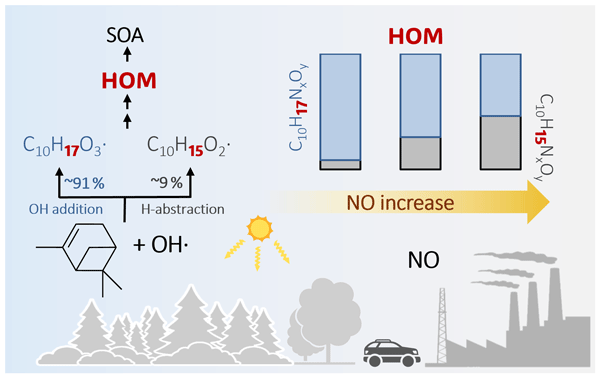
Chamber simulations were conducted to investigate formation of highly oxygenated organic molecules (HOM) from OH-initiated α-pinene oxidation under varying NO levels, with emphasis on the hydrogen-abstraction pathway. Without NO, C10H17Oₓ· species dominated. With NO, C10H15Oₓ· products became more abundant, accounting for ~34 % at high NO levels. Clustering results and comparison with α-pinene and pinonaldehyde systems show that hydrogen-abstraction is likely the source of C10H15Oₓ·-related HOM.
Fabian Schmidt-Ott, Robert Nishida, Sebastian Schmitt, Jason Olfert, George Biskos, and Juha Kangasluoma
Aerosol Research Discuss., https://doi.org/10.5194/ar-2026-29, https://doi.org/10.5194/ar-2026-29, 2026
Preprint under review for AR
Short summary
Short summary
Typical MPSS measurements rely on bipolar diffusion charging, where the steady-state particle charge distribution depends on charger ion properties. By simultaneously measuring ion properties and particle charge fractions, we show that Hoppel&Frick theory accurately describes charging of sub-20 nm particles. By introducing siloxanes via outgassing from conductive silicone tubing, we further show that ion properties, and thus particle charge distributions, are sensitive to trace-gas composition.
Timothy A. Sipkens, Joel C. Corbin, Kerry Chen, Laura-Helena Rivellini, Jonathan Abbatt, and Jason S. Olfert
Atmos. Meas. Tech., 19, 3123–3136, https://doi.org/10.5194/amt-19-3123-2026, https://doi.org/10.5194/amt-19-3123-2026, 2026
Short summary
Short summary
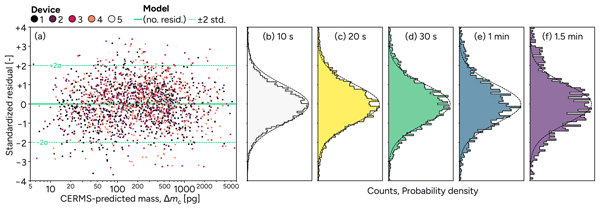
Aethalometers measure black carbon mass concentrations using light attenuation through a filter capturing particles. This work compares five micro-aethalometers using known mass concentrations of laboratory-generated soot. Uncertainties were found to scale with mass concentration, and an expression is given for the uncertainty as a function of mass concentration, sampling interval, and flow rate. An open-source algorithm is provided for the reanalysis of aethalometer data.
Zhen Song, Chenqi Zhang, Hongru Shen, Hao Ma, Iida Pullinen, and Defeng Zhao
Atmos. Chem. Phys., 26, 2769–2784, https://doi.org/10.5194/acp-26-2769-2026, https://doi.org/10.5194/acp-26-2769-2026, 2026
Short summary
Short summary
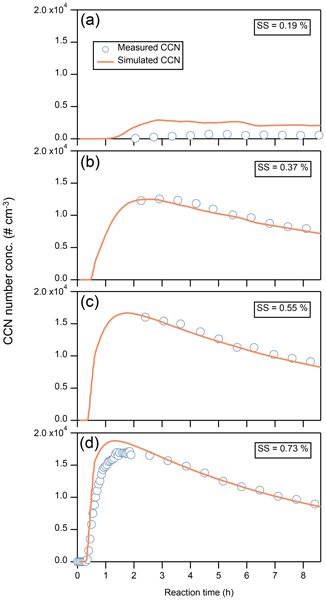
Secondary organic aerosol (SOA) can act as cloud condensation nuclei (CCN) and influence global cloud formation. This study modeled CCN and chemical composition, aerosol size and hygroscopicity (κ) of SOA using a model treating every single step. We evaluated the model ability and limitations in simulated chemical composition, κ, particle size distribution and CCN as a potential benchmark model and found that the accurate simulation of SOA size and κ is essential for reliable CCN prediction.
Yugo Kanaya, Roberto Sommariva, Alfonso Saiz-Lopez, Andrea Mazzeo, Theodore K. Koenig, Kaori Kawana, James E. Johnson, Aurélie Colomb, Pierre Tulet, Suzie Molloy, Ian E. Galbally, Rainer Volkamer, Anoop Mahajan, John W. Halfacre, Paul B. Shepson, Julia Schmale, Hélène Angot, Byron Blomquist, Matthew D. Shupe, Detlev Helmig, Junsu Gil, Meehye Lee, Sean C. Coburn, Ivan Ortega, Gao Chen, James Lee, Kenneth C. Aikin, David D. Parrish, John S. Holloway, Thomas B. Ryerson, Ilana B. Pollack, Eric J. Williams, Brian M. Lerner, Andrew J. Weinheimer, Teresa Campos, Frank M. Flocke, J. Ryan Spackman, Ilann Bourgeois, Jeff Peischl, Chelsea R. Thompson, Ralf M. Staebler, Amir A. Aliabadi, Wanmin Gong, Roeland Van Malderen, Anne M. Thompson, Ryan M. Stauffer, Debra E. Kollonige, Juan Carlos Gómez Martin, Masatomo Fujiwara, Katie Read, Matthew Rowlinson, Keiichi Sato, Junichi Kurokawa, Yoko Iwamoto, Fumikazu Taketani, Hisahiro Takashima, Mónica Navarro-Comas, Marios Panagi, and Martin G. Schultz
Earth Syst. Sci. Data, 17, 4901–4932, https://doi.org/10.5194/essd-17-4901-2025, https://doi.org/10.5194/essd-17-4901-2025, 2025
Short summary
Short summary
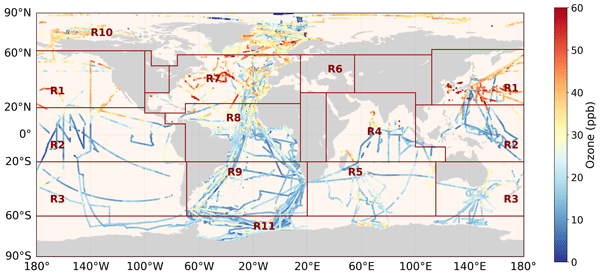
The first comprehensive dataset of tropospheric ozone over oceans/polar regions is presented, including 77 ship/buoy and 48 aircraft campaign observations (1977–2022, 0–5000 m altitude), supplemented by ozonesonde and surface data. Air masses isolated from land for 72+ hours are systematically selected as essentially oceanic. Among the 11 global regions, they show daytime decreases of 11–16 % in the tropics, while near-zero depletions are rare, unlike in the Arctic, implying different mechanisms.
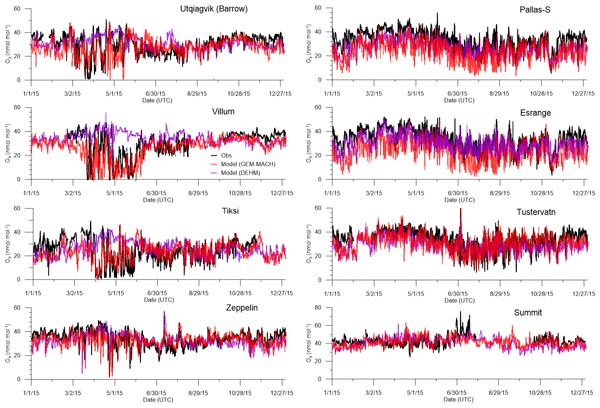
Wanmin Gong, Stephen R. Beagley, Kenjiro Toyota, Henrik Skov, Jesper Heile Christensen, Alex Lupu, Diane Pendlebury, Junhua Zhang, Ulas Im, Yugo Kanaya, Alfonso Saiz-Lopez, Roberto Sommariva, Peter Effertz, John W. Halfacre, Nis Jepsen, Rigel Kivi, Theodore K. Koenig, Katrin Müller, Claus Nordstrøm, Irina Petropavlovskikh, Paul B. Shepson, William R. Simpson, Sverre Solberg, Ralf M. Staebler, David W. Tarasick, Roeland Van Malderen, and Mika Vestenius
Atmos. Chem. Phys., 25, 8355–8405, https://doi.org/10.5194/acp-25-8355-2025, https://doi.org/10.5194/acp-25-8355-2025, 2025
Short summary
Short summary
This study showed that the springtime O3 depletion plays a critical role in driving the surface O3 seasonal cycle in the central Arctic. The O3 depletion events, while occurring most notably within the lowest few hundred metres above the Arctic Ocean, can induce a 5–7 % loss in the pan-Arctic tropospheric O3 burden during springtime. The study also found enhancements in O3 and NOy (mostly peroxyacetyl nitrate) concentrations in the Arctic due to northern boreal wildfires, particularly at higher altitudes.
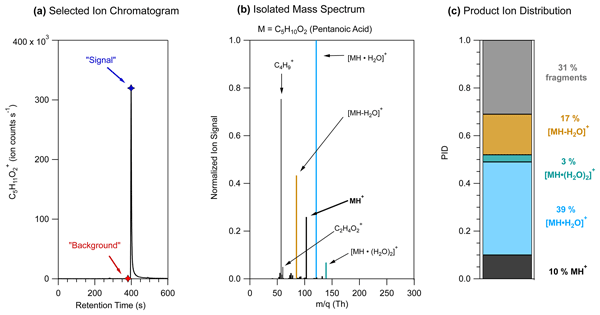
Michael F. Link, Megan S. Claflin, Christina E. Cecelski, Ayomide A. Akande, Delaney Kilgour, Paul A. Heine, Matthew Coggon, Chelsea E. Stockwell, Andrew Jensen, Jie Yu, Han N. Huynh, Jenna C. Ditto, Carsten Warneke, William Dresser, Keighan Gemmell, Spiro Jorga, Rileigh L. Robertson, Joost de Gouw, Timothy Bertram, Jonathan P. D. Abbatt, Nadine Borduas-Dedekind, and Dustin Poppendieck
Atmos. Meas. Tech., 18, 1013–1038, https://doi.org/10.5194/amt-18-1013-2025, https://doi.org/10.5194/amt-18-1013-2025, 2025
Short summary
Short summary
Proton-transfer-reaction mass spectrometry (PTR-MS) is widely used for the measurement of volatile organic compounds (VOCs) both indoors and outdoors. An analytical challenge for PTR-MS measurements is the formation of unintended measurement interferences, product ion distributions (PIDs), that may appear in the data as VOCs of interest. We developed a method for quantifying PID formation and use interlaboratory comparison data to put quantitative constraints on PID formation.
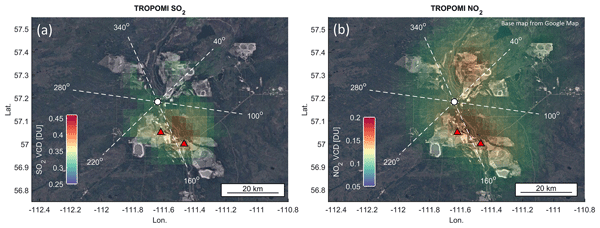
Xiaoyi Zhao, Vitali Fioletov, Debora Griffin, Chris McLinden, Ralf Staebler, Cristian Mihele, Kevin Strawbridge, Jonathan Davies, Ihab Abboud, Sum Chi Lee, Alexander Cede, Martin Tiefengraber, and Robert Swap
Atmos. Meas. Tech., 17, 6889–6912, https://doi.org/10.5194/amt-17-6889-2024, https://doi.org/10.5194/amt-17-6889-2024, 2024
Short summary
Short summary
This study explores differences between remote sensing and in situ instruments in terms of their vertical, horizontal, and temporal sampling differences. Understanding and resolving these differences are critical for future analyses linking satellite, ground-based remote sensing, and in situ observations in air quality monitoring. It shows that the meteorological conditions (wind directions, speed, and boundary layer conditions) will strongly affect the agreement between the two measurements.
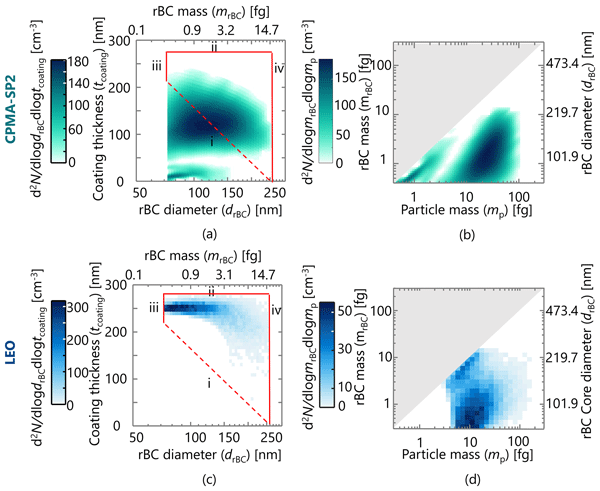
Arash Naseri, Joel C. Corbin, and Jason S. Olfert
Atmos. Meas. Tech., 17, 3719–3738, https://doi.org/10.5194/amt-17-3719-2024, https://doi.org/10.5194/amt-17-3719-2024, 2024
Short summary
Short summary
It is crucial to accurately measure the mixing states of light-absorbing carbon particles from emission sources like wildfires and biomass combustion to decrease climate forcing uncertainties. This study compares methods that measure light-absorbing carbon in the atmosphere. The CPMA-SP2 method offers more accurate results than traditional light-scattering methods, such as the leading-edge-only (LEO) method, thereby enhancing the accuracy of measuring the mixing states of light-absorbing carbon.
Yuening Li, Faqiang Zhan, Yushan Su, Ying Duan Lei, Chubashini Shunthirasingham, Zilin Zhou, Jonathan P. D. Abbatt, Hayley Hung, and Frank Wania
Atmos. Meas. Tech., 17, 715–729, https://doi.org/10.5194/amt-17-715-2024, https://doi.org/10.5194/amt-17-715-2024, 2024
Short summary
Short summary
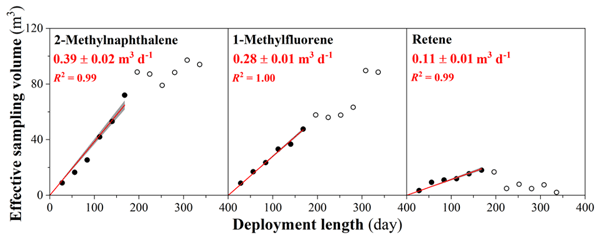
A simple device for sampling gases from the atmosphere without the help of pumps was calibrated for an important group of hazardous air pollutants called polycyclic aromatic compounds (PACs). While the sampler appeared to perform well when used for relatively short periods of up to several months, some PACs were lost from the sampler during longer deployments. Sampling rates that can be used to quantitatively interpret the quantities of PACs taken up in the device have been derived.
Yutong Liang, Rebecca A. Wernis, Kasper Kristensen, Nathan M. Kreisberg, Philip L. Croteau, Scott C. Herndon, Arthur W. H. Chan, Nga L. Ng, and Allen H. Goldstein
Atmos. Chem. Phys., 23, 12441–12454, https://doi.org/10.5194/acp-23-12441-2023, https://doi.org/10.5194/acp-23-12441-2023, 2023
Short summary
Short summary
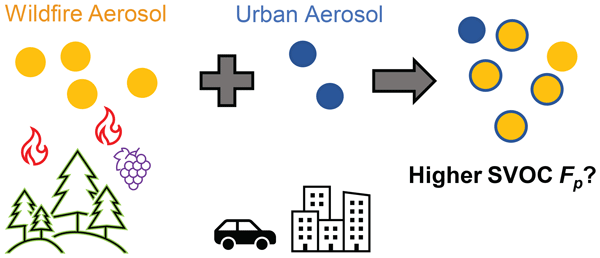
We measured the gas–particle partitioning behaviors of biomass burning markers and examined the effect of wildfire organic aerosol on the partitioning of semivolatile organic compounds. Most compounds measured are less volatile than model predictions. Wildfire aerosol enhanced the condensation of polar compounds and caused some nonpolar (e.g., polycyclic aromatic hydrocarbons) compounds to partition into the gas phase, thus affecting their lifetimes in the atmosphere and the mode of exposure.
Jonathan P. D. Abbatt and A. R. Ravishankara
Atmos. Chem. Phys., 23, 9765–9785, https://doi.org/10.5194/acp-23-9765-2023, https://doi.org/10.5194/acp-23-9765-2023, 2023
Short summary
Short summary
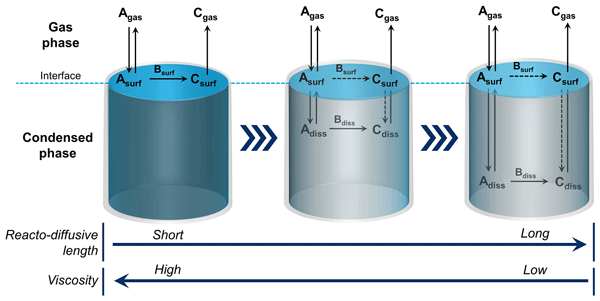
With important climate and air quality impacts, atmospheric multiphase chemistry involves gas interactions with aerosol particles and cloud droplets. We summarize the status of the field and discuss potential directions for future growth. We highlight the importance of a molecular-level understanding of the chemistry, along with atmospheric field studies and modeling, and emphasize the necessity for atmospheric multiphase chemists to interact widely with scientists from neighboring disciplines.
Hao Luo, Luc Vereecken, Hongru Shen, Sungah Kang, Iida Pullinen, Mattias Hallquist, Hendrik Fuchs, Andreas Wahner, Astrid Kiendler-Scharr, Thomas F. Mentel, and Defeng Zhao
Atmos. Chem. Phys., 23, 7297–7319, https://doi.org/10.5194/acp-23-7297-2023, https://doi.org/10.5194/acp-23-7297-2023, 2023
Short summary
Short summary
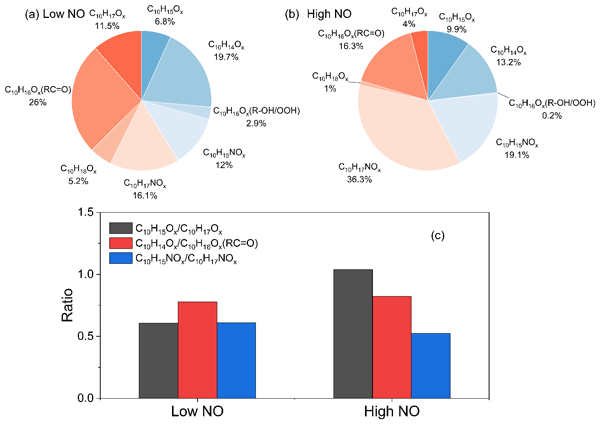
Oxidation of limonene, an element emitted by trees and chemical products, by OH, a daytime oxidant, forms many highly oxygenated organic molecules (HOMs), including C10-20 compounds. HOMs play an important role in new particle formation and growth. HOM formation can be explained by the chemistry of peroxy radicals. We found that a minor branching ratio initial pathway plays an unexpected, significant role. Considering this pathway enables accurate simulations of HOMs and other concentrations.
Mark Gordon, Dane Blanchard, Timothy Jiang, Paul A. Makar, Ralf M. Staebler, Julian Aherne, Cris Mihele, and Xuanyi Zhang
Atmos. Chem. Phys., 23, 7241–7255, https://doi.org/10.5194/acp-23-7241-2023, https://doi.org/10.5194/acp-23-7241-2023, 2023
Short summary
Short summary
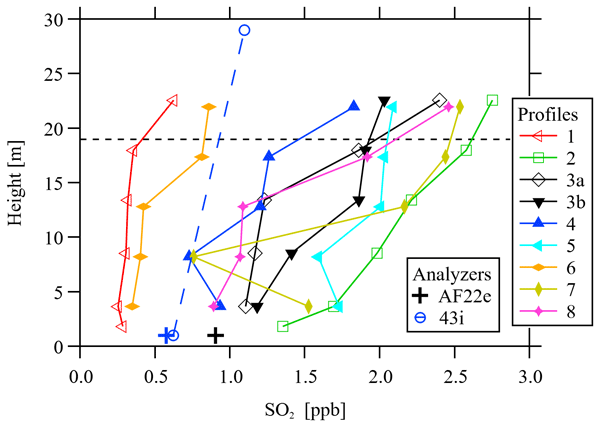
Measurements of the gas sulfur dioxide (SO2) were made in a forest downwind of oil sands mining and production facilities in northern Alberta. These measurements tell us the rate at which SO2 is absorbed by the forest. The measured rate is much higher than what is currently used by air quality models, which is supported by a previous study in this region. This suggests that SO2 may have a much shorter lifetime in the atmosphere at this location than currently predicted by models.
Timothy Jiang, Mark Gordon, Paul A. Makar, Ralf M. Staebler, and Michael Wheeler
Atmos. Chem. Phys., 23, 4361–4372, https://doi.org/10.5194/acp-23-4361-2023, https://doi.org/10.5194/acp-23-4361-2023, 2023
Short summary
Short summary
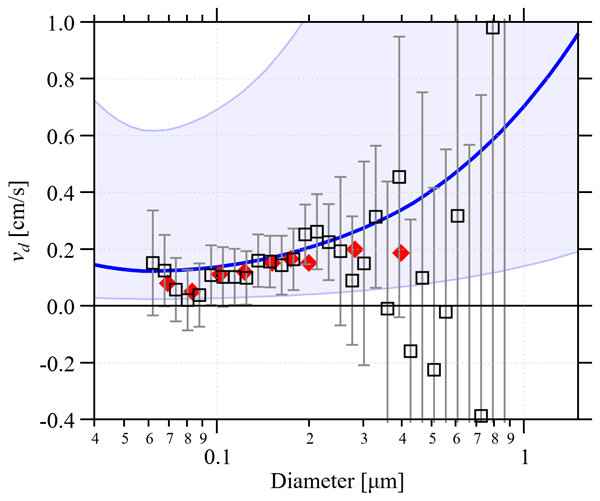
Measurements of submicron aerosols (particles smaller than 1 / 1000 of a millimeter) were made in a forest downwind of oil sands mining and production facilities in northern Alberta. These measurements tell us how quickly aerosols are absorbed by the forest (known as deposition rate) and how the deposition rate depends on the size of the aerosol. The measurements show good agreement with a parameterization developed from a recent study for deposition of aerosols to a similar pine forest.
Broghan M. Erland, Cristen Adams, Andrea Darlington, Mackenzie L. Smith, Andrew K. Thorpe, Gregory R. Wentworth, Steve Conley, John Liggio, Shao-Meng Li, Charles E. Miller, and John A. Gamon
Atmos. Meas. Tech., 15, 5841–5859, https://doi.org/10.5194/amt-15-5841-2022, https://doi.org/10.5194/amt-15-5841-2022, 2022
Short summary
Short summary
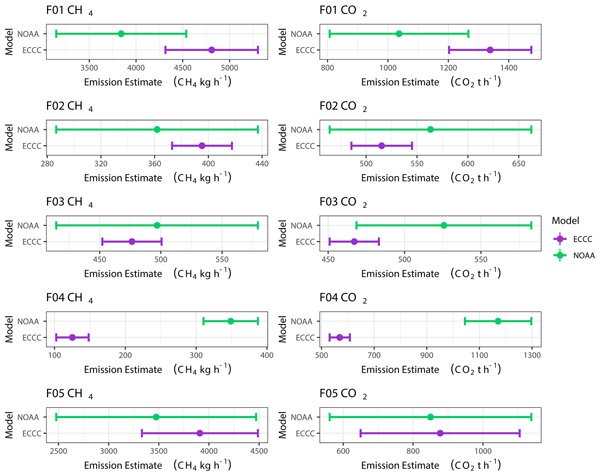
Accurately estimating greenhouse gas (GHG) emissions is essential to reaching net-zero goals to combat the climate crisis. Airborne box-flights are ideal for assessing regional GHG emissions, as they can attain small error. We compare two box-flight algorithms and found they produce similar results, but daily variability must be considered when deriving emissions inventories. Increasing the consistency and agreement between airborne methods moves us closer to achieving more accurate estimates.
Katherine L. Hayden, Shao-Meng Li, John Liggio, Michael J. Wheeler, Jeremy J. B. Wentzell, Amy Leithead, Peter Brickell, Richard L. Mittermeier, Zachary Oldham, Cristian M. Mihele, Ralf M. Staebler, Samar G. Moussa, Andrea Darlington, Mengistu Wolde, Daniel Thompson, Jack Chen, Debora Griffin, Ellen Eckert, Jenna C. Ditto, Megan He, and Drew R. Gentner
Atmos. Chem. Phys., 22, 12493–12523, https://doi.org/10.5194/acp-22-12493-2022, https://doi.org/10.5194/acp-22-12493-2022, 2022
Short summary
Short summary
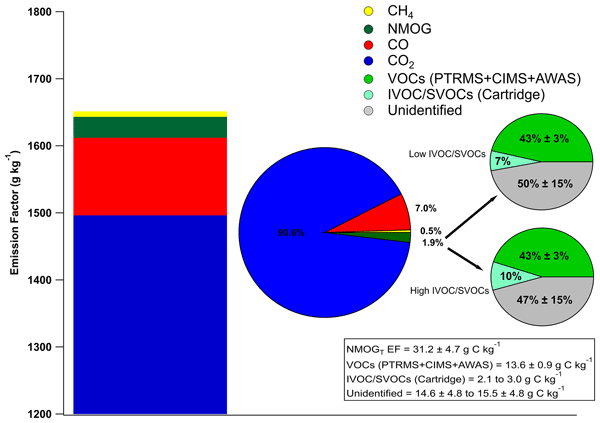
In this study, airborne measurements provided the most detailed characterization, to date, of boreal forest wildfire emissions. Measurements showed a large diversity of air pollutants expanding the volatility range typically reported. A large portion of organic species was unidentified, likely comprised of complex organic compounds. Aircraft-derived emissions improve wildfire chemical speciation and can support reliable model predictions of pollution from boreal forest wildfires.
Yindong Guo, Hongru Shen, Iida Pullinen, Hao Luo, Sungah Kang, Luc Vereecken, Hendrik Fuchs, Mattias Hallquist, Ismail-Hakki Acir, Ralf Tillmann, Franz Rohrer, Jürgen Wildt, Astrid Kiendler-Scharr, Andreas Wahner, Defeng Zhao, and Thomas F. Mentel
Atmos. Chem. Phys., 22, 11323–11346, https://doi.org/10.5194/acp-22-11323-2022, https://doi.org/10.5194/acp-22-11323-2022, 2022
Short summary
Short summary
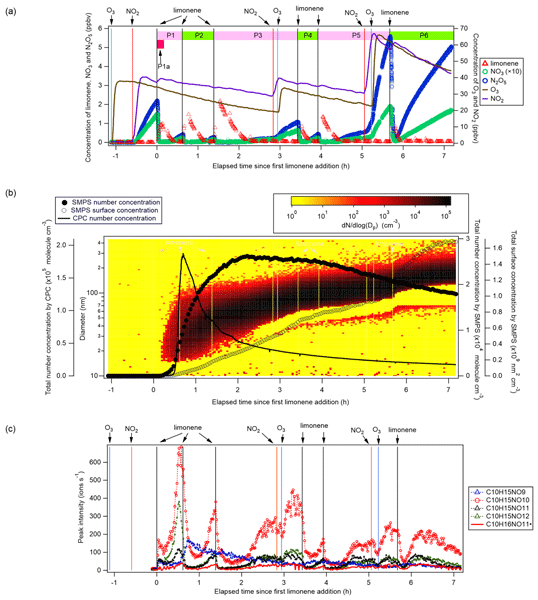
The oxidation of limonene, a common volatile emitted by trees and chemical products, by NO3, a nighttime oxidant, forms many highly oxygenated organic molecules (HOM), including C10-30 compounds. Most of the HOM are second-generation organic nitrates, in which carbonyl-substituted C10 nitrates accounted for a major fraction. Their formation can be explained by chemistry of peroxy radicals. HOM, especially low-volatile ones, play an important role in nighttime new particle formation and growth.
Rachel Y.-W. Chang, Jonathan P. D. Abbatt, Matthew C. Boyer, Jai Prakash Chaubey, and Douglas B. Collins
Atmos. Chem. Phys., 22, 8059–8071, https://doi.org/10.5194/acp-22-8059-2022, https://doi.org/10.5194/acp-22-8059-2022, 2022
Short summary
Short summary
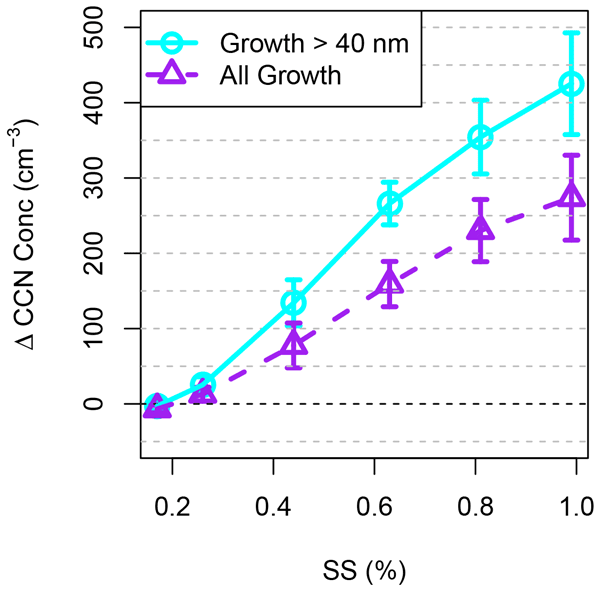
During summer 2016, the ability of newly formed particles to turn into droplets was measured in the Canadian Arctic. Our observations suggest that these small particles were growing by the condensation of organic vapours likely coming from the surrounding open waters. These particles grew large enough that they could form cloud droplets and therefore affect the earth’s radiation budget. These results are relevant as the Arctic summer rapidly warms with climate change.
Zoé Brasseur, Dimitri Castarède, Erik S. Thomson, Michael P. Adams, Saskia Drossaart van Dusseldorp, Paavo Heikkilä, Kimmo Korhonen, Janne Lampilahti, Mikhail Paramonov, Julia Schneider, Franziska Vogel, Yusheng Wu, Jonathan P. D. Abbatt, Nina S. Atanasova, Dennis H. Bamford, Barbara Bertozzi, Matthew Boyer, David Brus, Martin I. Daily, Romy Fösig, Ellen Gute, Alexander D. Harrison, Paula Hietala, Kristina Höhler, Zamin A. Kanji, Jorma Keskinen, Larissa Lacher, Markus Lampimäki, Janne Levula, Antti Manninen, Jens Nadolny, Maija Peltola, Grace C. E. Porter, Pyry Poutanen, Ulrike Proske, Tobias Schorr, Nsikanabasi Silas Umo, János Stenszky, Annele Virtanen, Dmitri Moisseev, Markku Kulmala, Benjamin J. Murray, Tuukka Petäjä, Ottmar Möhler, and Jonathan Duplissy
Atmos. Chem. Phys., 22, 5117–5145, https://doi.org/10.5194/acp-22-5117-2022, https://doi.org/10.5194/acp-22-5117-2022, 2022
Short summary
Short summary
The present measurement report introduces the ice nucleation campaign organized in Hyytiälä, Finland, in 2018 (HyICE-2018). We provide an overview of the campaign settings, and we describe the measurement infrastructure and operating procedures used. In addition, we use results from ice nucleation instrument inter-comparison to show that the suite of these instruments deployed during the campaign reports consistent results.
Debora Griffin, Chris A. McLinden, Enrico Dammers, Cristen Adams, Chelsea E. Stockwell, Carsten Warneke, Ilann Bourgeois, Jeff Peischl, Thomas B. Ryerson, Kyle J. Zarzana, Jake P. Rowe, Rainer Volkamer, Christoph Knote, Natalie Kille, Theodore K. Koenig, Christopher F. Lee, Drew Rollins, Pamela S. Rickly, Jack Chen, Lukas Fehr, Adam Bourassa, Doug Degenstein, Katherine Hayden, Cristian Mihele, Sumi N. Wren, John Liggio, Ayodeji Akingunola, and Paul Makar
Atmos. Meas. Tech., 14, 7929–7957, https://doi.org/10.5194/amt-14-7929-2021, https://doi.org/10.5194/amt-14-7929-2021, 2021
Short summary
Short summary
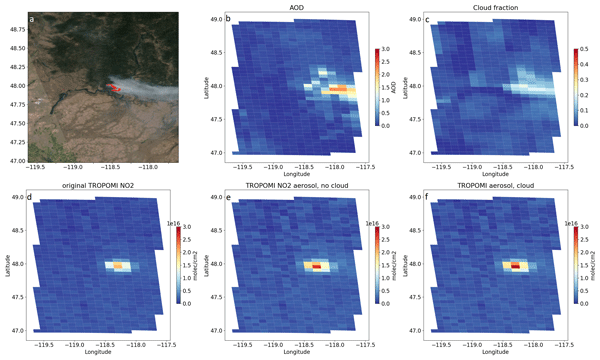
Satellite-derived NOx emissions from biomass burning are estimated with TROPOMI observations. Two common emission estimation methods are applied, and sensitivity tests with model output were performed to determine the accuracy of these methods. The effect of smoke aerosols on TROPOMI NO2 columns is estimated and compared to aircraft observations from four different aircraft campaigns measuring biomass burning plumes in 2018 and 2019 in North America.
Cited articles
Abatzoglou, J. T. and Williams, A. P.: Impact of anthropogenic climate change on wildfire across western US forests, Proc. Natl. Acad. Sci. USA, 113, 11770–11775, https://doi.org/10.1073/pnas.1607171113, 2016. a, b
Afroz, R.: Replication data for: Emission factors for gaseous species measured at the individual burn level using I-CIMS and Vocus PTR-MS, Borealis [data set], https://doi.org/10.5683/SP3/OGR3J1, 2026. a
Agee, J. K. and Skinner, C. N.: Basic principles of forest fuel reduction treatments, For. Ecol. Manage., 211, 83–96, https://doi.org/10.1016/j.foreco.2005.01.034, 2005. a, b
Akagi, S. K., Yokelson, R. J., Wiedinmyer, C., Alvarado, M. J., Reid, J. S., Karl, T., Crounse, J. D., and Wennberg, P. O.: Emission factors for open and domestic biomass burning for use in atmospheric models, Atmos. Chem. Phys., 11, 4039–4072, https://doi.org/10.5194/acp-11-4039-2011, 2011. a, b, c, d, e, f, g, h, i, j, k, l, m, n, o
Alvarado, M. J. and Prinn, R. G.: Formation of ozone and growth of aerosols in young smoke plumes from biomass burning: 1. Lagrangian parcel studies, J. Geophys. Res. Atmos., 114, https://doi.org/10.1029/2008JD011144, 2009. a
Amiro, B., Todd, J., Wotton, B., Logan, K., Flannigan, M., Stocks, B., Mason, J., Martell, D., and Hirsch, K. G.: Direct carbon emissions from Canadian forest fires, 1959–1999, Can. J. For. Res., 31, 512–525, https://doi.org/10.1139/x00-197, 2001. a
Amiro, B., Cantin, A., Flannigan, M., and De Groot, W.: Future emissions from Canadian boreal forest fires, Can. J. For. Res., 39, 383–395, https://doi.org/10.1139/X08-154, 2009. a
Andreae, M. O. and Merlet, P.: Emission of trace gases and aerosols from biomass burning, Global Biogeochem. Cy., 15, 955–966, https://doi.org/10.1029/2000GB001382, 2001. a, b
Bertschi, I., Yokelson, R. J., Ward, D. E., Babbitt, R. E., Susott, R. A., Goode, J. G., and Hao, W. M.: Trace gas and particle emissions from fires in large diameter and belowground biomass fuels, J. Geophys. Res. Atmos., 108, https://doi.org/10.1029/2002JD002100, 2003. a, b, c
Biomass Burning in Canada: Addressing Climate and Air Quality Impacts, https://bbcan.net/ (last access: 3 March 2026), 2021. a
Burling, I. R., Yokelson, R. J., Griffith, D. W. T., Johnson, T. J., Veres, P., Roberts, J. M., Warneke, C., Urbanski, S. P., Reardon, J., Weise, D. R., Hao, W. M., and de Gouw, J.: Laboratory measurements of trace gas emissions from biomass burning of fuel types from the southeastern and southwestern United States, Atmos. Chem. Phys., 10, 11115–11130, https://doi.org/10.5194/acp-10-11115-2010, 2010. a, b, c, d, e, f, g, h, i
Campos, I., Abrantes, N., Pereira, P., Micaelo, A. C., Vale, C., and Keizer, J. J.: Forest fires as potential triggers for production and mobilization of polycyclic aromatic hydrocarbons to the terrestrial ecosystem, Land Degrad. Dev., 30, 2360–2370, https://doi.org/10.1002/ldr.3427, 2019. a
Canadian Interagency Forest Fire Centre: Canada Report 2016, https://www.ciffc.ca/sites/default/files/2019-03/2016_canada_report_2017_05_15_v02.pdf (last access: 9 October 2025), 2017. a
Carter, T. S., Heald, C. L., Jimenez, J. L., Campuzano-Jost, P., Kondo, Y., Moteki, N., Schwarz, J. P., Wiedinmyer, C., Darmenov, A. S., da Silva, A. M., and Kaiser, J. W.: How emissions uncertainty influences the distribution and radiative impacts of smoke from fires in North America, Atmos. Chem. Phys., 20, 2073–2097, https://doi.org/10.5194/acp-20-2073-2020, 2020. a, b
Chen, J., Anderson, K., Pavlovic, R., Moran, M. D., Englefield, P., Thompson, D. K., Munoz-Alpizar, R., and Landry, H.: The FireWork v2.0 air quality forecast system with biomass burning emissions from the Canadian Forest Fire Emissions Prediction System v2.03, Geosci. Model Dev., 12, 3283–3310, https://doi.org/10.5194/gmd-12-3283-2019, 2019. a, b, c, d, e, f
Chen, L.-W. A., Moosmüller, H., Arnott, W. P., Chow, J. C., Watson, J. G., Susott, R. A., Babbitt, R. E., Wold, C. E., Lincoln, E. N., and Hao, W. M.: Emissions from laboratory combustion of wildland fuels: Emission factors and source profiles, Environ. Sci. Technol., 41, 4317–4325, https://doi.org/10.1021/es062364i, 2007. a
Chen, L.-W. A., Verburg, P., Shackelford, A., Zhu, D., Susfalk, R., Chow, J. C., and Watson, J. G.: Moisture effects on carbon and nitrogen emission from burning of wildland biomass, Atmos. Chem. Phys., 10, 6617–6625, https://doi.org/10.5194/acp-10-6617-2010, 2010 a, b
Chen, Q., Zhao, Y., Zheng, B., and Zhang, L.: Unexpected high ammonia emissions from boreal fires in 2021 and 2023, Geophys. Res. Lett., 52, e2024GL112396, https://doi.org/10.1029/2024GL112396, 2025. a
Coggon, M. M., Veres, P. R., Yuan, B., Koss, A., Warneke, C., Gilman, J. B., Lerner, B. M., Peischl, J., Aikin, K. C., Stockwell, C. E., Hatch, L. E., Ryerson, T. B., Roberts, J. M., Yokelson, R. J., and de Gouw, J. A.: Emissions of nitrogen-containing organic compounds from the burning of herbaceous and arboraceous biomass: Fuel composition dependence and the variability of commonly used nitrile tracers, Geophys. Res. Lett., 43, 9903–9912, https://doi.org/10.1002/2016GL070562, 2016. a
Copernicus Atmosphere Monitoring Service: Global fire emissions (CAMS GFAS), https://atmosphere.copernicus.eu/global-fire-emissions (last access: 23 December 2025), 2022. a
Crutzen, P. J. and Andreae, M. O.: Biomass burning in the tropics: Impact on atmospheric chemistry and biogeochemical cycles, Science, 250, 1669–1678, https://doi.org/10.1126/science.250.4988.1669, 1990. a
Cubison, M. J., Ortega, A. M., Hayes, P. L., Farmer, D. K., Day, D., Lechner, M. J., Brune, W. H., Apel, E., Diskin, G. S., Fisher, J. A., Fuelberg, H. E., Hecobian, A., Knapp, D. J., Mikoviny, T., Riemer, D., Sachse, G. W., Sessions, W., Weber, R. J., Weinheimer, A. J., Wisthaler, A., and Jimenez, J. L.: Effects of aging on organic aerosol from open biomass burning smoke in aircraft and laboratory studies, Atmos. Chem. Phys., 11, 12049–12064, https://doi.org/10.5194/acp-11-12049-2011, 2011. a
De Gouw, J. and Warneke, C.: Measurements of volatile organic compounds in the earth's atmosphere using proton-transfer-reaction mass spectrometry, Mass Spectrom. Rev., 26, 223–257, https://doi.org/10.1002/mas.20119, 2007. a, b
De Groot, W., Pritchard, J., and Lynham, T.: Forest floor fuel consumption and carbon emissions in Canadian boreal forest fires, Can. J. For. Res., 39, 367–382, https://doi.org/10.1139/X08-192, 2009. a, b
Dyakonov, A. J., Walker, R. T., Brown, C. A., Perini, F. R., Passer, D. S., Guan, J., and Robinson, E. A.: Studies of the formation of smoke phenols, Beitr. Tabakforsch. Int., 23, 68–84, https://doi-org/10.2478/cttr-2013-0850, 2008. a
Foresty Canada, Fire Danger Group: Development and Structure of the Canadian Forest Fire Behaviour Prediction System; Information report ST-X-3, https://ostr-backend-prod.azure.cloud.nrcan-rncan.gc.ca/server/api/core/bitstreams/c2935183-f5eb-4193-8e6e-30669d0c0614/content (last access: 23 December 2025), 1992. a
Gilman, J. B., Lerner, B. M., Kuster, W. C., Goldan, P. D., Warneke, C., Veres, P. R., Roberts, J. M., de Gouw, J. A., Burling, I. R., and Yokelson, R. J.: Biomass burning emissions and potential air quality impacts of volatile organic compounds and other trace gases from fuels common in the US, Atmos. Chem. Phys., 15, 13915–13938, https://doi.org/10.5194/acp-15-13915-2015, 2015. a, b, c, d, e, f
Goode, J. G., Yokelson, R. J., Susott, R. A., and Ward, D. E.: Trace gas emissions from laboratory biomass fires measured by open-path Fourier transform infrared spectroscopy: Fires in grass and surface fuels, J. Geophys. Res. Atmos., 104, 21237–21245, https://doi.org/10.1029/1999JD900360, 1999. a, b, c
Goode, J. G., Yokelson, R. J., Ward, D. E., Susott, R. A., Babbitt, R. E., Davies, M. A., and Hao, W. M.: Measurements of excess O3, CO2, CO, CH4, C2H4, C2H2, HCN, NO, NH3, HCOOH, CH3COOH, HCHO, and CH3OH in 1997 Alaskan biomass burning plumes by airborne Fourier transform infrared spectroscopy (AFTIR), J. Geophys. Res. Atmos., 105, 22147–22166, https://doi.org/10.1029/2000JD900287, 2000. a, b
Government of Canada: Public Safety Canada. Parliamentary Committee Notes: Canadian Wildfires, https://www.publicsafety.gc.ca/cnt/trnsprnc/brfng-mtrls/prlmntry-bndrs/20240322/16-en.aspx (last access: 9 October 2025), 2024. a
Griffin, D., Chen, J., Anderson, K., Makar, P., McLinden, C. A., Dammers, E., and Fogal, A.: Biomass burning CO emissions: exploring insights through TROPOMI-derived emissions and emission coefficients, Atmos. Chem. Phys., 24, 10159–10186, https://doi.org/10.5194/acp-24-10159-2024, 2024. a
Hatch, L. E., Rivas-Ubach, A., Jen, C. N., Lipton, M., Goldstein, A. H., and Barsanti, K. C.: Measurements of I/SVOCs in biomass-burning smoke using solid-phase extraction disks and two-dimensional gas chromatography, Atmos. Chem. Phys., 18, 17801–17817, https://doi.org/10.5194/acp-18-17801-2018, 2018. a, b
Hayden, K. L., Li, S.-M., Liggio, J., Wheeler, M. J., Wentzell, J. J. B., Leithead, A., Brickell, P., Mittermeier, R. L., Oldham, Z., Mihele, C. M., Staebler, R. M., Moussa, S. G., Darlington, A., Wolde, M., Thompson, D., Chen, J., Griffin, D., Eckert, E., Ditto, J. C., He, M., and Gentner, D. R.: Reconciling the total carbon budget for boreal forest wildfire emissions using airborne observations, Atmos. Chem. Phys., 22, 12493–12523, https://doi.org/10.5194/acp-22-12493-2022, 2022. a, b, c, d, e, f, g, h, i, j, k, l, m, n, o, p, q, r, s, t, u, v, w, x, y
Hecobian, A., Liu, Z., Hennigan, C. J., Huey, L. G., Jimenez, J. L., Cubison, M. J., Vay, S., Diskin, G. S., Sachse, G. W., Wisthaler, A., Mikoviny, T., Weinheimer, A. J., Liao, J., Knapp, D. J., Wennberg, P. O., Kürten, A., Crounse, J. D., Clair, J. St., Wang, Y., and Weber, R. J.: Comparison of chemical characteristics of 495 biomass burning plumes intercepted by the NASA DC-8 aircraft during the ARCTAS/CARB-2008 field campaign, Atmos. Chem. Phys., 11, 13325–13337, https://doi.org/10.5194/acp-11-13325-2011, 2011. a
Hu, Y. and Rein, G.: Development of gas signatures of smouldering peat wildfire from emission factors, Int. J. Wildland Fire, 31, 1014–1032, https://doi.org/10.1071/WF21093, 2022. a
Hu, Y., Fernandez-Anez, N., Smith, T. E., and Rein, G.: Review of emissions from smouldering peat fires and their contribution to regional haze episodes, Int. J. Wildland Fire, 27, 293–312, https://doi.org/10.1071/WF17084, 2018. a, b, c
Hu, Y., Christensen, E., Restuccia, F., and Rein, G.: Transient gas and particle emissions from smouldering combustion of peat, Proc. Combust. Inst., 37, 4035–4042, https://doi.org/10.1016/j.proci.2018.06.008, 2019. a, b
Jaffe, D. A. and Wigder, N. L.: Ozone production from wildfires: A critical review, Atmos. Environ., 51, 1–10, https://doi.org/10.1016/j.atmosenv.2011.11.063, 2012. a, b
Jaffe, D. A., O’Neill, S. M., Larkin, N. K., Holder, A. L., Peterson, D. L., Halofsky, J. E., and Rappold, A. G.: Wildfire and prescribed burning impacts on air quality in the United States, J. Air Waste Manag. Assoc., 70, 583–615, https://doi.org/10.1080/10962247.2020.1749731, 2020. a
Ji, Y., Huey, L. G., Tanner, D. J., Lee, Y. R., Veres, P. R., Neuman, J. A., Wang, Y., and Wang, X.: A vacuum ultraviolet ion source (VUV-IS) for iodide–chemical ionization mass spectrometry: a substitute for radioactive ion sources, Atmos. Meas. Tech., 13, 3683–3696, https://doi.org/10.5194/amt-13-3683-2020, 2020. a, b, c
Kaiser, J. W., Heil, A., Andreae, M. O., Benedetti, A., Chubarova, N., Jones, L., Morcrette, J.-J., Razinger, M., Schultz, M. G., Suttie, M., and van der Werf, G. R.: Biomass burning emissions estimated with a global fire assimilation system based on observed fire radiative power, Biogeosciences, 9, 527–554, https://doi.org/10.5194/bg-9-527-2012, 2012. a
Kallenborn, R., Halsall, C., Dellong, M., and Carlsson, P.: The influence of climate change on the global distribution and fate processes of anthropogenic persistent organic pollutants, J. Environ. Monit., 14, 2854–2869, https://doi.org/10.1039/C2EM30519D, 2012. a
Kleffmann, J.: Daytime sources of nitrous acid (HONO) in the atmospheric boundary layer, Chem. Phys. Chem., 8, 1137–1144, https://doi.org/10.1002/cphc.200700016, 2007. a
Koppmann, R., von Czapiewski, K., and Reid, J. S.: A review of biomass burning emissions, part I: gaseous emissions of carbon monoxide, methane, volatile organic compounds, and nitrogen containing compounds, Atmos. Chem. Phys. Discuss., 5, 10455–10516, https://doi.org/10.5194/acpd-5-10455-2005, 2005. a
Koss, A. R., Warneke, C., Yuan, B., Coggon, M. M., Veres, P. R., and de Gouw, J. A.: Evaluation of NO+ reagent ion chemistry for online measurements of atmospheric volatile organic compounds, Atmos. Meas. Tech., 9, 2909–2925, https://doi.org/10.5194/amt-9-2909-2016, 2016. a
Koss, A. R., Sekimoto, K., Gilman, J. B., Selimovic, V., Coggon, M. M., Zarzana, K. J., Yuan, B., Lerner, B. M., Brown, S. S., Jimenez, J. L., Krechmer, J., Roberts, J. M., Warneke, C., Yokelson, R. J., and de Gouw, J.: Non-methane organic gas emissions from biomass burning: identification, quantification, and emission factors from PTR-ToF during the FIREX 2016 laboratory experiment, Atmos. Chem. Phys., 18, 3299–3319, https://doi.org/10.5194/acp-18-3299-2018, 2018. a, b, c, d, e, f, g, h, i, j, k
Krechmer, J., Lopez-Hilfiker, F., Koss, A., Hutterli, M., Stoermer, C., Deming, B., Kimmel, J., Warneke, C., Holzinger, R., Jayne, J., Worsnop, D., Fuhrer, K., Gonin, M., and de Gouw, J.: Evaluation of a new reagent-ion source and focusing ion–molecule reactor for use in proton-transfer-reaction mass spectrometry, Anal. Chem., 90, 12011–12018, https://doi.org/10.1021/acs.analchem.8b02641, 2018. a
Kreider, M. R., Higuera, P. E., Parks, S. A., Rice, W. L., White, N., and Larson, A. J.: Fire suppression makes wildfires more severe and accentuates impacts of climate change and fuel accumulation, Nat. Commun., 15, 2412, https://doi.org/10.1038/s41467-024-46702-0, 2024. a
Kuhlbusch, T. A., Lobert, J. M., Crutzen, P. J., and Warneck, P.: Molecular nitrogen emissions from denitrification during biomass burning, Nature, 351, 135–137, https://doi.org/10.1038/351135a0, 1991. a
Larkin, N. K., Raffuse, S. M., Huang, S., Pavlovic, N., Lahm, P., and Rao, V.: The comprehensive fire information reconciled emissions (CFIRE) inventory: Wildland fire emissions developed for the 2011 and 2014 US National Emissions Inventory, J. Air Waste Manag. Assoc., 70, 1165–1185, https://doi.org/10.1080/10962247.2020.1802365, 2020. a
Lin, M., Horowitz, L. W., Hu, L., and Permar, W.: Reactive nitrogen partitioning enhances the contribution of Canadian wildfire plumes to US ozone air quality, Geophys. Res. Lett., 51, e2024GL109369, https://doi.org/10.1029/2024GL109369, 2024. a
Lindaas, J., Pollack, I. B., Garofalo, L. A., Pothier, M. A., Farmer, D. K., Kreidenweis, S. M., Campos, T. L., Flocke, F., Weinheimer, A. J., Montzka, D. D., Tyndall, G. S., Palm, B. B., Peng, Q., Thornton, J. A., Permar, W., Wielgasz, C., Hu, L., Ottmar, R. D., Restaino, J. C., Hudak, A. T., Ku, I.-T., Zhou, Y., Sive, B. C., Sullivan, A., Collett, J. L., and Fischer, E. V.: Emissions of reactive nitrogen from Western US wildfires during summer 2018, J. Geophys. Res. Atmos., 126, e2020JD032657, https://doi.org/10.1029/2020JD032657, 2021a. a, b, c, d, e
Lindaas, J., Pollack, I. B., Juncosa Calahorrano, J., O'Dell, K., Garofalo, L. A., Pothier, M. A., Farmer, D. K., Kreidenweis, S. M., Campos, T., Flocke, F., Weinheimer, A. J., Montzka, D. D., Tyndall, G. S., Apel, E. C., Hills, A. J., Hornbrook, R. S., Palm, B. B., Peng, Q., Thornton, J. A., Permar, W., Wielgasz, C., Hu, L., Pierce, J. R., Collett, J. L., Sullivan, A. P., and Fischer, E. V.: Empirical insights into the fate of ammonia in western US wildfire smoke plumes, J. Geophys. Res. Atmos., 126, e2020JD033730, https://doi.org/10.1029/2020JD033730, 2021b. a
Link, M. F., Claflin, M. S., Cecelski, C. E., Akande, A. A., Kilgour, D., Heine, P. A., Coggon, M., Stockwell, C. E., Jensen, A., Yu, J., Huynh, H. N., Ditto, J. C., Warneke, C., Dresser, W., Gemmell, K., Jorga, S., Robertson, R. L., de Gouw, J., Bertram, T., Abbatt, J. P. D., Borduas-Dedekind, N., and Poppendieck, D.: Product ion distributions using H3O+ proton-transfer-reaction time-of-flight mass spectrometry (PTR-ToF-MS): mechanisms, transmission effects, and instrument-to-instrument variability, Atmos. Meas. Tech., 18, 1013–1038, https://doi.org/10.5194/amt-18-1013-2025, 2025 a
Liu, T., Liu, Q., Li, Z., Huo, L., Chan, M., Li, X., Zhou, Z., and Chan, C. K.: Emission of volatile organic compounds and production of secondary organic aerosol from stir-frying spices, Sci. Total Environ., 599, 1614–1621, https://doi-org/10.1016/j.scitotenv.2017.05.147, 2017a. a
Liu, X., Huey, L. G., Yokelson, R. J., Selimovic, V., Simpson, I. J., Müller, M., Jimenez, J. L., Campuzano-Jost, P., Beyersdorf, A. J., Blake, D. R., Butterfield, Z., Choi, Y., Crounse, J. D., Day, D. A., Diskin, G. S., Dubey, M. K., Fortner, E., Hanisco, T. F., Hu, W., King, L. E., Kleinman, L., Meinardi, S., Mikoviny, T., Onasch, T. B., Palm, B. B., Peischl, J., Pollack, I. B., Ryerson, T. B., Sachse, G. W., Sedlacek, A. J., Shilling, J. E., Springston, S., St. Clair, J. M., Tanner, D. J., Teng, A. P., Wennberg, P. O., Wisthaler, A., and Wolfe, G. M.: Airborne measurements of western US wildfire emissions: Comparison with prescribed burning and air quality implications, J. Geophys. Res. Atmos., 122, 6108–6129, https://doi.org/10.1002/2016JD026315, 2017b. a, b
Los Gatos Research: H2S/NH3 Analyzer, https://www.yodify.com/Products/WXYooZ/www.yodify.com/Products/WXYooZ/H-S-NH-Analyzer (last access: 26 December 2025), 2025. a
Majluf, F. Y., Krechmer, J. E., Daube, C., Knighton, W. B., Dyroff, C., Lambe, A. T., Fortner, E. C., Yacovitch, T. I., Roscioli, J. R., Herndon, S. C., Worsnop, D. R., and Canagaratna, M. R.: Mobile near-field measurements of biomass burning volatile organic compounds: Emission ratios and factor analysis, Environ. Sci. Technol. Lett., 9, 383–390, https://doi.org/10.1021/acs.estlett.2c00194, 2022. a, b
May, A. A., Levin, E. J., Hennigan, C. J., Riipinen, I., Lee, T., Collett Jr, J. L., Jimenez, J. L., Kreidenweis, S. M., and Robinson, A. L.: Gas-particle partitioning of primary organic aerosol emissions: 3. Biomass burning, J. Geophys. Res.: Atmos., 118, 11–327, https://doi.org/10.1002/jgrd.50828, 2013. a
Miller, D. J., Sun, K., Zondlo, M. A., Kanter, D., Dubovik, O., Welton, E. J., Winker, D. M., and Ginoux, P.: Assessing boreal forest fire smoke aerosol impacts on US air quality: A case study using multiple data sets, J. Geophys. Res. Atmos., 116, https://doi.org/10.1029/2011JD016170, 2011. a
Mohr, C., Lopez-Hilfiker, F. D., Zotter, P., Prévôt, A. S. H., Xu, L., Ng, N. L., Herndon, S. C., Williams, L. R., Franklin, J. P., Zahniser, M. S., Worsnop, D. R., Knighton, W. B., Aiken, A. C., Gorkowski, K. J., Dubey, M. K., Allan, J. D., and Thornton, J. A.: Contribution of nitrated phenols to wood burning brown carbon light absorption in Detling, United Kingdom during winter time, Environ. Sci. Technol., 47, 6316–6324, https://doi.org/10.1021/es400683v, 2013. a
Moore, B., Thompson, D. K., Schroeder, D., Johnston, J. M., and Hvenegaard, S.: Using infrared imagery to assess fire behaviour in a mulched fuel bed in black spruce forests, Fire, 3, 37, https://doi.org/10.3390/fire3030037, 2020. a
Moraes, A. H., Talebian, S., Afroz, R., Al-Jabiri, M. H., Chan, A. W. H., Chang, R. Y.-W., Chen, K., Corbin, J. C., Drinovec, L., Isenor, B. H., Lee, A., Liggio, J., Liu-Kang, C., Marshall, G., Moallemi, A., Mocnik, G., Moussa, S. G., Olfert, O., Saleh, M., Sipkens, T. A., Shen, H., Wentzell, J. J. B., Wren, S. N., Yus-Díez, J., Hayes, P. L., Abbatt, J. P. D., Olfert, J., and Zhao, R.: Combustion Characteristics and Emission Factors of Trace Gases and Particulate Matter from Biomass Relevant to Canadian Wildfires: Overview of the 2024 BBCan Campaign, Am. Geophys. Union, https://doi.org/10.22541/essoar.15002871/v1, 2026. a, b, c, d, e, f, g, h, i, j, k, l, m, n, o, p
Moran, M. D., Savic-Jovcic, V., Stroud, C. A., Ménard, S., Gong, W., Zhang, J., Zheng, Q., Chen, J., Akingunola, A., Lupu, A., Menelaou, K., and Munoz-Alpizar, R.: Operational chemical weather forecasting with the ECCC online Regional Air Quality Deterministic Prediction System version 023 (RAQDPS023) – Part 1: System description, EGUsphere [preprint], https://doi.org/10.5194/egusphere-2025-4323, 2025. a
Natural Resources Canada: How much forest does Canada have?, https://natural-resources.canada.ca/forest-forestry/state-canada-forests/much-forest-does-canada-have (last access: 9 October 2025), 2025a. a
Pagonis, D., Krechmer, J. E., de Gouw, J., Jimenez, J. L., and Ziemann, P. J.: Effects of gas–wall partitioning in Teflon tubing and instrumentation on time-resolved measurements of gas-phase organic compounds, Atmos. Meas. Tech., 10, 4687–4696, https://doi.org/10.5194/amt-10-4687-2017, 2017. a
Pagonis, D., Selimovic, V., Campuzano-Jost, P., Guo, H., Day, D. A., Schueneman, M. K., Nault, B. A., Coggon, M. M., DiGangi, J. P., Diskin, G. S., Fortner, E. C., Gargulinski, E. M., Gkatzelis, G. I., Hair, J. W., Herndon, S. C., Holmes, C. D., Katich, J. M., Nowak, J. B., Perring, A. E., Saide, P., Shingler, T. J., Soja, A. J., Thapa, L. H., Warneke, C., Wiggins, E. B., Wisthaler, A., Yacovitch, T. I., Yokelson, R. J., and Jimenez, J. L.: Impact of biomass burning organic aerosol volatility on smoke concentrations downwind of fires, Environ. Sci. Technol., 57, 17011–17021, https://doi.org/10.1021/acs.est.3c05017, 2023. a
Pan, X., Ichoku, C., Chin, M., Bian, H., Darmenov, A., Colarco, P., Ellison, L., Kucsera, T., da Silva, A., Wang, J., Oda, T., and Cui, G.: Six global biomass burning emission datasets: intercomparison and application in one global aerosol model, Atmos. Chem. Phys., 20, 969–994, https://doi.org/10.5194/acp-20-969-2020, 2020. a
Patil Shirish, S., Kelkar Tushar, S., and Bhalerao Satish, A.: Mulching: A soil and water conservation practice, Res. J. Agric. For. Sci., 1, 26–29, https://www.isca.me/AGRI_FORESTRY/Archive/v1/i3/5.ISCA-RJAFS-2013-023.pdf (last access: 17 October 2026), 2013. a
Permar, W., Wang, Q., Selimovic, V., Wielgasz, C., Yokelson, R. J., Hornbrook, R. S., Hills, A. J., Apel, E. C., Ku, I.-T., Zhou, Y., Sive, B. C., Sullivan, A. P., Collett, J. L., Campos, T. L., Palm, B. B., Peng, Q., Thornton, J. A., Garofalo, L. A., Farmer, D. K., Kreidenweis, S. M., Levin, E. J. T., DeMott, P. J., Flocke, F., Fischer, E. V., and Hu, L.: Emissions of trace organic gases from Western US wildfires based on WE-CAN aircraft measurements, J. Geophys. Res. Atmos., 126, e2020JD033838, https://doi.org/10.1029/2020JD033838, 2021. a, b, c, d, e, f, g, h, i, j, k, l
Randerson, J., van der Werf, G., Giglio, L., Collatz, G., and Kasibhatla, P.: Global fire emissions database, version 3.1, ORNL DAAC [data set], https://doi.org/10.3334/ORNLDAAC/1191, 2013. a, b
Rein, G.: Smouldering fires and natural fuels, in: Fire Phenomena and the Earth System: An Interdisciplinary Guide to Fire Science, edited by: Belcher, C. M., John Wiley & Sons, Ltd, Chap. 2, 15–33, https://doi.org/10.1002/9781118529539.ch2, 2013. a
Rein, G., Cleaver, N., Ashton, C., Pironi, P., and Torero, J. L.: The severity of smouldering peat fires and damage to the forest soil, Catena, 74, 304–309, https://doi.org/10.1016/j.catena.2008.05.008, 2008. a
Riva, M., Pospisilova, V., Frege, C., Perrier, S., Bansal, P., Jorga, S., Sturm, P., Thornton, J. A., Rohner, U., and Lopez-Hilfiker, F.: Evaluation of a reduced-pressure chemical ion reactor utilizing adduct ionization for the detection of gaseous organic and inorganic species, Atmos. Meas. Tech., 17, 5887–5901, https://doi.org/10.5194/amt-17-5887-2024, 2024. a, b
Roberts, J. M., Stockwell, C. E., Yokelson, R. J., de Gouw, J., Liu, Y., Selimovic, V., Koss, A. R., Sekimoto, K., Coggon, M. M., Yuan, B., Zarzana, K. J., Brown, S. S., Santin, C., Doerr, S. H., and Warneke, C.: The nitrogen budget of laboratory-simulated western US wildfires during the FIREX 2016 Fire Lab study, Atmos. Chem. Phys., 20, 8807–8826, https://doi.org/10.5194/acp-20-8807-2020, 2020. a, b, c, d, e, f, g, h, i
Rogers, H. M., Ditto, J. C., and Gentner, D. R.: Evidence for impacts on surface-level air quality in the northeastern US from long-distance transport of smoke from North American fires during the Long Island Sound Tropospheric Ozone Study (LISTOS) 2018, Atmos. Chem. Phys., 20, 671–682, https://doi.org/10.5194/acp-20-671-2020, 2020. a
Romanias, M. N., Coggon, M. M., Al Ali, F., Burkholder, J. B., Dagaut, P., Decker, Z., Warneke, C., Stockwell, C. E., Roberts, J. M., Tomas, A., Houzel, N., Coeur, C., and Brown, S. S.: Emissions and Atmospheric Chemistry of Furanoids from Biomass Burning: Insights from Laboratory to Atmospheric Observations, ACS Earth Space Chem., 8, 857–899, https://doi.org/10.1021/acsearthspacechem.3c00226, 2024. a, b, c
Seinfeld, J. H. and Pandis, S. N.: Atmospheric chemistry and physics: from air pollution to climate change, John Wiley & Sons, 3rd edn., ISBN 1119221166, 2016. a
Sekimoto, K., Koss, A. R., Gilman, J. B., Selimovic, V., Coggon, M. M., Zarzana, K. J., Yuan, B., Lerner, B. M., Brown, S. S., Warneke, C., Yokelson, R. J., Roberts, J. M., and de Gouw, J.: High- and low-temperature pyrolysis profiles describe volatile organic compound emissions from western US wildfire fuels, Atmos. Chem. Phys., 18, 9263–9281, https://doi.org/10.5194/acp-18-9263-2018, 2018. a, b, c, d, e, f, g, h, i
Simon, H., Beck, L., Bhave, P. V., Divita, F., Hsu, Y., Luecken, D., Mobley, J. D., Pouliot, G. A., Reff, A., Sarwar, G., and Strum, M.: The development and uses of EPA’s SPECIATE database, Atmos. Pollut. Res., 1, 196–206, https://doi.org/10.5094/APR.2010.026, 2010. a
Simpson, I. J., Akagi, S. K., Barletta, B., Blake, N. J., Choi, Y., Diskin, G. S., Fried, A., Fuelberg, H. E., Meinardi, S., Rowland, F. S., Vay, S. A., Weinheimer, A. J., Wennberg, P. O., Wiebring, P., Wisthaler, A., Yang, M., Yokelson, R. J., and Blake, D. R.: Boreal forest fire emissions in fresh Canadian smoke plumes: C1–C10 volatile organic compounds (VOCs), CO2, CO, NO2, NO, HCN and CH3CN, Atmos. Chem. Phys., 11, 6445–6463, https://doi.org/10.5194/acp-11-6445-2011, 2011. a, b, c, d, e, f, g, h
Sommers, W. T., Loehman, R. A., and Hardy, C. C.: Wildland fire emissions, carbon, and climate: Science overview and knowledge needs, For. Ecol. Manage., 317, 1–8, https://doi.org/10.1016/j.foreco.2013.12.014, 2014. a
Stockwell, C. E., Yokelson, R. J., Kreidenweis, S. M., Robinson, A. L., DeMott, P. J., Sullivan, R. C., Reardon, J., Ryan, K. C., Griffith, D. W. T., and Stevens, L.: Trace gas emissions from combustion of peat, crop residue, domestic biofuels, grasses, and other fuels: configuration and Fourier transform infrared (FTIR) component of the fourth Fire Lab at Missoula Experiment (FLAME-4), Atmos. Chem. Phys., 14, 9727–9754, https://doi.org/10.5194/acp-14-9727-2014, 2014. a, b
Stockwell, C. E., Veres, P. R., Williams, J., and Yokelson, R. J.: Characterization of biomass burning emissions from cooking fires, peat, crop residue, and other fuels with high-resolution proton-transfer-reaction time-of-flight mass spectrometry, Atmos. Chem. Phys., 15, 845–865, https://doi.org/10.5194/acp-15-845-2015, 2015. a, b, c, d
Stockwell, C. E., Jayarathne, T., Cochrane, M. A., Ryan, K. C., Putra, E. I., Saharjo, B. H., Nurhayati, A. D., Albar, I., Blake, D. R., Simpson, I. J., Stone, E. A., and Yokelson, R. J.: Field measurements of trace gases and aerosols emitted by peat fires in Central Kalimantan, Indonesia, during the 2015 El Niño, Atmos. Chem. Phys., 16, 11711–11732, https://doi.org/10.5194/acp-16-11711-2016, 2016. a, b
Stutz, J., Oh, H.-J., Whitlow, S. I., Anderson, C., Dibb, J. E., Flynn, J. H., Rappenglück, B., and Lefer, B.: Simultaneous DOAS and mist-chamber IC measurements of HONO in Houston, TX, Atmos. Environ., 44, 4090–4098, https://doi.org/10.1016/j.atmosenv.2009.02.003, 2010. a
Teledyne: Nox analyzer (N500, Teledyne API), https://www.teledyne-api.com/en-us/products/n500 (last access: 23 December 2025), 2025. a
Thompson, D., Wotton, B., and Waddington, J.: Estimating the heat transfer to an organic soil surface during crown fire, Int. J. Wildland Fire, 24, 120–129, https://doi.org/10.1071/WF12121, 2015. a
Thompson, D. K., Schroeder, D., Wilkinson, S. L., Barber, Q., Baxter, G., Cameron, H., Hsieh, R., Marshall, G., Moore, B., Refai, R., Rodell, C., Schiks, T., Verkaik, G. J., and Zerb, J.: Recent crown thinning in a boreal black spruce forest does not reduce spread rate nor total fuel consumption: results from an experimental crown fire in Alberta, Canada, Fire, 3, 28, https://doi.org/10.3390/fire3030028, 2020. a
Turetsky, M., Wieder, K., Halsey, L., and Vitt, D.: Current disturbance and the diminishing peatland carbon sink, Geophys. Res. Lett., 29, 21–1, https://doi.org/10.1029/2001GL014000, 2002. a
Turetsky, M. R., Kane, E. S., Harden, J. W., Ottmar, R. D., Manies, K. L., Hoy, E., and Kasischke, E. S.: Recent acceleration of biomass burning and carbon losses in Alaskan forests and peatlands, Nat. Geosci., 4, 27–31, https://doi.org/10.1038/ngeo1027, 2011. a, b, c
Turetsky, M. R., Benscoter, B., Page, S., Rein, G., Van Der Werf, G. R., and Watts, A.: Global vulnerability of peatlands to fire and carbon loss, Nat. Geosci., 8, 11–14, https://doi.org/10.1038/ngeo2325, 2015. a, b
Urbanski, S. P., Long, R. W., Halliday, H., Lincoln, E. N., Habel, A., and Landis, M. S.: Fuel layer specific pollutant emission factors for fire prone forest ecosystems of the western US and Canada, Atmos. Environ.: X, 16, 100188, https://doi.org/10.1016/j.aeaoa.2022.100188, 2022. a, b, c, d, e, f, g
USEPA: Health effects of wildfire smoke, https://www.airnow.gov/sites/default/files/2021-05/wildfire-smoke-guide-revised-2019-chapters-1-3.pdf (last access: 9 October 2025), 2019. a
Voulgarakis, A. and Field, R. D.: Fire influences on atmospheric composition, air quality and climate, Curr. Pollut. Rep., 1, 70–81, https://doi.org/10.1007/s40726-015-0007-z, 2015. a
Voulgarakis, A., Marlier, M. E., Faluvegi, G., Shindell, D. T., Tsigaridis, K., and Mangeon, S.: Interannual variability of tropospheric trace gases and aerosols: The role of biomass burning emissions, J. Geophys. Res.: Atmos., 120, 7157–7173, https://doi.org/10.1002/2014JD022926, 2015. a
Wang, X., Gu, R., Wang, L., Xu, W., Zhang, Y., Chen, B., Li, W., Xue, L., Chen, J., and Wang, W.: Emissions of fine particulate nitrated phenols from the burning of five common types of biomass, Environ. Pollut., 230, 405–412, https://doi.org/10.1016/j.envpol.2017.06.072, 2017. a
Radke, L. F.: Emissions measurements from vegetation fires: A comparative evaluation of methods and results, in: Fire in the Environment: The Ecological, Atmospheric, and Climatic Importance of Vegetation Fires, Dahlem Workshop Reports: Environmental Sciences Research Report 13, edited by: Crutzen, P. J. and Goldammer, J. G., John Wiley & Sons, Chichester, England, 53–76, https://research.fs.usda.gov/download/treesearch/40604.pdf (last access: 17 October 2026), 1993. a, b
Watson, J. G., Cao, J., Chen, L.-W. A., Wang, Q., Tian, J., Wang, X., Gronstal, S., Ho, S. S. H., Watts, A. C., and Chow, J. C.: Gaseous, PM2.5 mass, and speciated emission factors from laboratory chamber peat combustion, Atmos. Chem. Phys., 19, 14173–14193, https://doi.org/10.5194/acp-19-14173-2019, 2019. a, b, c, d, e, f
Westerling, A. L., Hidalgo, H. G., Cayan, D. R., and Swetnam, T. W.: Warming and earlier spring increase western US forest wildfire activity, Science, 313, 940–943, https://doi.org/10.1126/science.1128834, 2006. a
Wiedinmyer, C., Kimura, Y., McDonald-Buller, E. C., Emmons, L. K., Buchholz, R. R., Tang, W., Seto, K., Joseph, M. B., Barsanti, K. C., Carlton, A. G., and Yokelson, R.: The Fire Inventory from NCAR version 2.5: an updated global fire emissions model for climate and chemistry applications, Geosci. Model Dev., 16, 3873–3891, https://doi.org/10.5194/gmd-16-3873-2023, 2023. a, b
Wilkinson, S., Moore, P., Thompson, D., Wotton, B. M., Hvenegaard, S., Schroeder, D., and Waddington, J. M.: The effects of black spruce fuel management on surface fuel condition and peat burn severity in an experimental fire, Can. J. For. Res., 48, 1433–1440, https://doi.org/10.1139/cjfr-2018-0217, 2018. a
Xiong, Y., Du, K., and Huang, Y.: One-third of global population at cancer risk due to elevated volatile organic compounds levels, npj Clim. Atmos. Sci., 7, 54, https://doi.org/10.1038/s41612-024-00598-1, 2024. a
Yokelson, R. J., Griffith, D. W., and Ward, D. E.: Open-path Fourier transform infrared studies of large-scale laboratory biomass fires, J. Geophys. Res. Atmos., 101, 21067–21080, https://doi.org/10.1029/96JD01800, 1996. a, b, c, d
Yokelson, R. J., Susott, R., Ward, D. E., Reardon, J., and Griffith, D. W.: Emissions from smoldering combustion of biomass measured by open-path Fourier transform infrared spectroscopy, J. Geophys. Res. Atmos., 102, 18865–18877, https://doi.org/10.1029/97JD00852, 1997. a, b, c
Yokelson, R. J., Christian, T. J., Karl, T. G., and Guenther, A.: The tropical forest and fire emissions experiment: laboratory fire measurements and synthesis of campaign data, Atmos. Chem. Phys., 8, 3509–3527, https://doi.org/10.5194/acp-8-3509-2008, 2008. a
Yokelson, R. J., Burling, I. R., Gilman, J. B., Warneke, C., Stockwell, C. E., de Gouw, J., Akagi, S. K., Urbanski, S. P., Veres, P., Roberts, J. M., Kuster, W. C., Reardon, J., Griffith, D. W. T., Johnson, T. J., Hosseini, S., Miller, J. W., Cocker III, D. R., Jung, H., and Weise, D. R.: Coupling field and laboratory measurements to estimate the emission factors of identified and unidentified trace gases for prescribed fires, Atmos. Chem. Phys., 13, 89–116, https://doi.org/10.5194/acp-13-89-2013, 2013. a, b, c, d, e, f, g, h, i, j, k
Young, C. J., Joudan, S., Tao, Y., Wentzell, J. J., and Liggio, J.: High time resolution ambient observations of gas-phase perfluoroalkyl carboxylic acids: implications for atmospheric sources, Environ. Sci. Technol. Lett., 11, 1348–1354, https://doi.org/10.1021/acs.estlett.4c00897, 2024. a, b
Zhan, J., Feng, Z., Liu, P., He, X., He, Z., Chen, T., Wang, Y., He, H., Mu, Y., and Liu, Y.: Ozone and SOA formation potential based on photochemical loss of VOCs during the Beijing summer, Environ. Pollut., 285, 117444, https://doi.org/10.1016/j.envpol.2021.117444, 2021. a
Short summary
Wildfires represent a dominant source of gaseous pollutants that affect air quality, climate, and health, but emissions from Canadian boreal fuels are not well characterized. We conducted controlled laboratory burns of representative fuels and measured gas emissions in detail. Emissions varied strongly with fuel type, moisture, and burning conditions, with peat producing especially high levels. These results improve emission estimates and help predict wildfire smoke impacts.
Wildfires represent a dominant source of gaseous pollutants that affect air quality, climate,...


Altmetrics
Final-revised paper
Preprint