
the Creative Commons Attribution 4.0 License.
the Creative Commons Attribution 4.0 License.
 | 13 Oct 2026
Electrostatics and Collision dynamics of ice and anthropogenic smoke particles in the mesosphere/lower thermosphere

Sanjay K. Mishra
The increase in satellite launches raises the anthropogenic influx of various elements into the Mesosphere and Lower Thermosphere (MLT), comparable to the natural influx caused by meteoric ablation. This study investigates the electrostatic interactions between nano-meter-sized ice particles and remnants of space debris using a classical electrostatic framework. Aside from the Coulomb interaction, the attractive force between two particles at short distances, arising from polarization, is taken into account. Collision outcomes, the effective velocity regime for collisions, and the subsequent aggregation probability are estimated. Aggregation is limited to a specific range of collision velocities between minimum and maximum values. This range varies depending on factors such as particle size, mass density, and dielectric constant. For most particles, the velocity range of aggregation is from a few m s−1 to several tens of m s−1, where smaller particles may need significantly higher velocities to form stable aggregates. When considering the collisions of particles in thermal motion, it is found that Al2O3 (due to its greater abundance) and TiO2 (due to its higher dielectric constant), both originating from anthropogenic sources, may dominate in the formation of ice-anthropogenic particle aggregates. In the MLT region, the formation of stable aggregates from the collision of ice with particles from space debris, which one may denote as anthropogenic smoke particles (ASPs), is similar to that from collisions with meteoric smoke particles (MSPs).
- Article
(2499 KB) - Full-text XML
- BibTeX
- EndNote


Due to the increasing number of space program projects, perhaps 75 000 additional satellites will be in orbit by 2030 (Schulz and Glassmeier, 2021; Howard and Ah, 2022; Murphy et al., 2023; Schulz et al., 2026). Defunct satellites, spent rocket stages, fragmentation events, and mission-related ejecta lead to the rapid accumulation of anthropogenic space debris. They pose a major concern for both spacecraft safety and the long-term sustainability of the near-Earth space environment. These pieces of space debris re-enter the Earth's upper atmosphere, along with the natural influx from meteoroids, undergo intense aerodynamic heating, ablation, and fragmentation, and inject metal atoms to form metal layers (Schulz and Glassmeier, 2021).
The space debris is composed of many elements, particularly Li, Al, Cu, Nb, Hf, Pb, Be, Mg, Ti, Cr, Fe, Ni, Zr, Ga, Mo, In, Sn, Ba, Ce, Ta, W, Sb, Bi, Cd, Pr, and Nd (Murphy et al., 2023; Schulz and Glassmeier, 2021; Schulz et al., 2026). Schulz and Glassmeier (2021) reported anthropogenic materials contribute about 2.8 % compared to the annual influx of interplanetary dust particles. They further suggested that atmospheric re-entry of space debris may increase by 13 % to 40 % in the near future. Recently, Schulz et al. (2026) updated the estimates of annual anthropogenic influx into the Earth's atmosphere. Confirming the findings from the earlier work, they further report that the injected mass doubled between 2020 and 2024, reaching 887 ± 123 t in 2024. This results in a 16 % increase in anthropogenic metal injection into the mesosphere/lower thermosphere (MLT) region (between 70 to 120 km) compared to the natural meteoric metal injection as of 2024 (Schulz et al., 2026). It is anticipated that, in the future, over 75 000 large constellation satellites could increase this value to 70 % (Schulz et al., 2026). As a result, the mass influx of elements from space debris is becoming significant and comparable to the natural input by meteoroid ablation. Additionally, some metals, such as Al and Cu, are dominantly originating from human space activities. In a 75,000-satellite constellation future scenario, Schulz et al. (2026) predicted that the annual elemental mass injection for Al and Ti will be increased by factors of 13.1 ± 4.4 and 22.9 ± 7.6 respectively. The detailed estimates for other elements are given in Table 5 of Schulz et al. (2026). Thus, space debris may significantly influence the formation of high-altitude clouds, introduce new chemical pathways, affect radiative forcing, and produce particles with unique optical properties (Murphy et al., 2023; Schulz et al., 2026).
In the MLT region, the presence of highly reactive atomic oxygen leads to the formation of metal oxides, which later form nm-sized meteoric smoke particles (MSPs) (Plane, 2003). The interactions and growth of solid particles in the MLT have been studied in detail for MSPs, focusing on their transport and growth (Megner et al., 2008; Bardeen et al., 2008), their influence on the charge balance (Baumann et al., 2013, 2015), and their origin from meteors (Plane et al., 2015). Additionally, there is evidence that charged MSPs influence the radar diagnostics of the D-region ionosphere using incoherent scatter (Gunnarsdottir et al., 2024). Charged MSPs may interact electrostatically, influencing the chemical and microphysical framework of the MLT through processes such as electron depletion, ion balance modification, and ice-particle coagulation (Baumann et al., 2015). These MSPs may also act as condensation nuclei for heterogeneous ice particle formation. In the Polar Region, during the summer, due to summer-to-winter meridional circulation, air experiences adiabatic cooling in the mesosphere, causing temperatures to drop significantly to around 120 K. The low temperatures, combined with atmospheric water, allow ice particles to form. During polar summer, the aggregation of the ice particles forms polar mesospheric clouds, which give rise to noctilucent clouds (NLC) observed from the ground and contribute to the formation of radar echoes known as polar mesospheric summer echoes. Both phenomena, which are observed from the Earth, have increased in recent years (Latteck et al., 2021). The increase in water in the MLT is likely a decisive factor for this (Lübken et al., 2021), while studies on ice formation indicate that the formation of ice particles must occur through heterogeneous condensation (Tanaka et al., 2022). These are of considerable interest on account of their potential relevance to global warming. Therefore, the influence of anthropogenically originated particles on the formation of NLC is possibly significant, and it is crucial to thoroughly investigate their role in the growth process. The formation process of these particles is poorly constrained. Due to their similarity with MSPs, we refer to these particles as anthropogenic smoke particles (ASPs).
In the MLT region, which consists of a weakly ionized, complex dusty plasma, the space debris, MSPs, and ice particles become electrically charged through mechanisms such as electron and ion accretion, photoemission, and other ionization processes (Rapp and Thomas, 2006; Mann et al., 2014). The description of the interactions is largely based on theoretical considerations, the physical properties depend on the dust composition, and in addition, small size effects become important for particle sizes of a few nm (Mann et al., 2014). As the surface charge on the particles significantly influences their agglomeration, it should be considered to investigate the growth of ice onto the ASPs, and electrostatic interactions should be taken into account. Given that the frequency of ice particles in the MLT appears to have increased in recent decades, it is reasonable to investigate the extent to which anthropogenic particles contribute to this increase.
In this paper, we investigate electrostatic interactions between charged ice and a component of the solid particles predicted to form from space debris, that is, the ASP. The model of Bichoutskaia et al. (2010) has been applied to quantify the electrostatic interaction energy between charged ice and oxides that are found in space debris. The study by Baptiste et al. (2021) demonstrated how electrostatic interactions influence the growth of MSPs and ice particles, but did not take into account space debris particles. Two particles with charges of the same sign will experience a repulsive Coulomb force at certain separation distances. However, at small separations, their dielectric properties lead to a strong attractive interaction. This attraction arises from the polarization of surface charge between like-charged particles, leading to regions of positive and negative surface charge density on one particle due to the influence of the other. Therefore, the collision outcomes and the subsequent formation of a stable aggregate differ significantly among oppositely charged, likely charged, and charge-neutral particle collisions.
The remainder of this manuscript is organized as follows: Sect. 2 outlines the applied model framework of electrostatics and collisions, along with the parameters assumed for particles in the MLT. Section 3 presents the numerical results, and Sect. 4 provides a concluding discussion. Additionally, Appendix A and B contain a series of tables summarizing the numerical results obtained.
The MLT region constitutes a weakly ionized dusty plasma environment composed of electrons, positive ions, neutral species (Mann et al., 2019). At MLT altitudes, the temperature is extremely low (110–150 K). The ambient plasma density varies strongly between day and night conditions, with typical electron densities ranging from ∼ 35 cm−3 at night to ∼ 4.5 ×103 cm−3 during daytime conditions (Havnes et al., 2001; Sodha et al., 2011). The ice, ASPs, and MSPs are embedded within this plasma medium. They undergo electrostatic charging via electron and ion collection currents at the particle surface. Further, under the exposure to extreme EUV/UV fluxes, photoelectrons are also emitted from the ice and dust particles. However, the degree of photoemission is significantly dependent on the work function of the particles. The work function of ice varies in a wide range, from as high as 8.7 eV for pure ice to as low as 2.3 eV for dirty ice (Misra et al., 2011). In the MLT region, the density of dust particles is comparable to that of the ambient plasma electrons and ions. The dust can act both as individual particles and collectively. Under the plasma conditions present in the MLT region, the dust acquires charges through plasma particle capture, photodetachment, and photoionization (Sodha et al., 2011; Misra et al., 2011; Baumann et al., 2013, 2015). For mesospheric ice particles and MSPs, the typical charge state varies around (Sodha et al., 2011). Since the dust/ice charging is independent of the origin of the particles in the MLT region, the charge state of ASPs will vary similarly to that of MSPs. Overall, the mesospheric ice and dust particles in the MLT are believed to have a charge of −1e (Rapp and Lübken, 2001). And a large fraction of nanometer-sized dust particles also remains neutral. Depending on mechanisms such as electron bite-out or dominant photoemission from dirty ice, ice and dust particles may also acquire positive charges.
Apart from the surface charge, the electrostatic interactions between charged spherical ice particles and oxides depend on their particle size and dielectric constants. To investigate the electrostatics, collision dynamics, and coalescence of ice and space debris, we consider charged ice particles with radii ranging from 1 to 100 nm. Although the actual ASP size distribution is currently unknown, we assume various representative oxides with radii ranging from 1 to 5 nm. Aluminum being the most dominant, Al2O3 has been selected for this study. TiO2 has been selected for its very high dielectric constant compared to other compounds found in space debris. We also select three other oxides, FeO, MgO, and SiO2, because Fe, Mg, and Si are the next most common elements in space debris. However, these three elements are also dominant in sources from natural influx. Note that the study of all individual oxides is computationally expensive, so we restrict our study to these five oxides. To study particle growth, collision outcomes, and the subsequent formation of a stable aggregate, it is necessary to consider the surface charges, dielectric constants, and mass densities of the two colliding particles. The dielectric constants and mass densities are given in Table 1. The selected parametric regime in this study encompasses the dielectric constants and mass densities expected for various oxides related to space debris. Figure 1 shows an example of an electrostatic interaction energy curve between like-charged spherical ice and SiO2. The distinct features are: (i) at large separations, there is no interaction. (ii) As the separation decreases to a certain amount, they will feel a repulsive Coulomb barrier (hill) (ECoul). (iii) At a very small separation (which may be considered as the point of contact), the electrostatic energy becomes negative (E0<0). E0 can be considered as the binding energy. Note that, depending on the particle sizes and dielectric constants, E0 can be negative, positive, or zero, but always less than or equal to the Coulomb barrier, i.e., ECoul≥E0. Because at a small separation, the polarization effect of one particle on the other reduces the repulsion by inducing opposite surface charge. For a system with one charged particle and another neutral, the Coulomb barrier is absent, ECoul=0, and an attractive well will be created between infinity with zero energy and at the point of contact with E0<0.
Table 1Dielectric constants and mass densities of ice and metal oxides considered in this study.
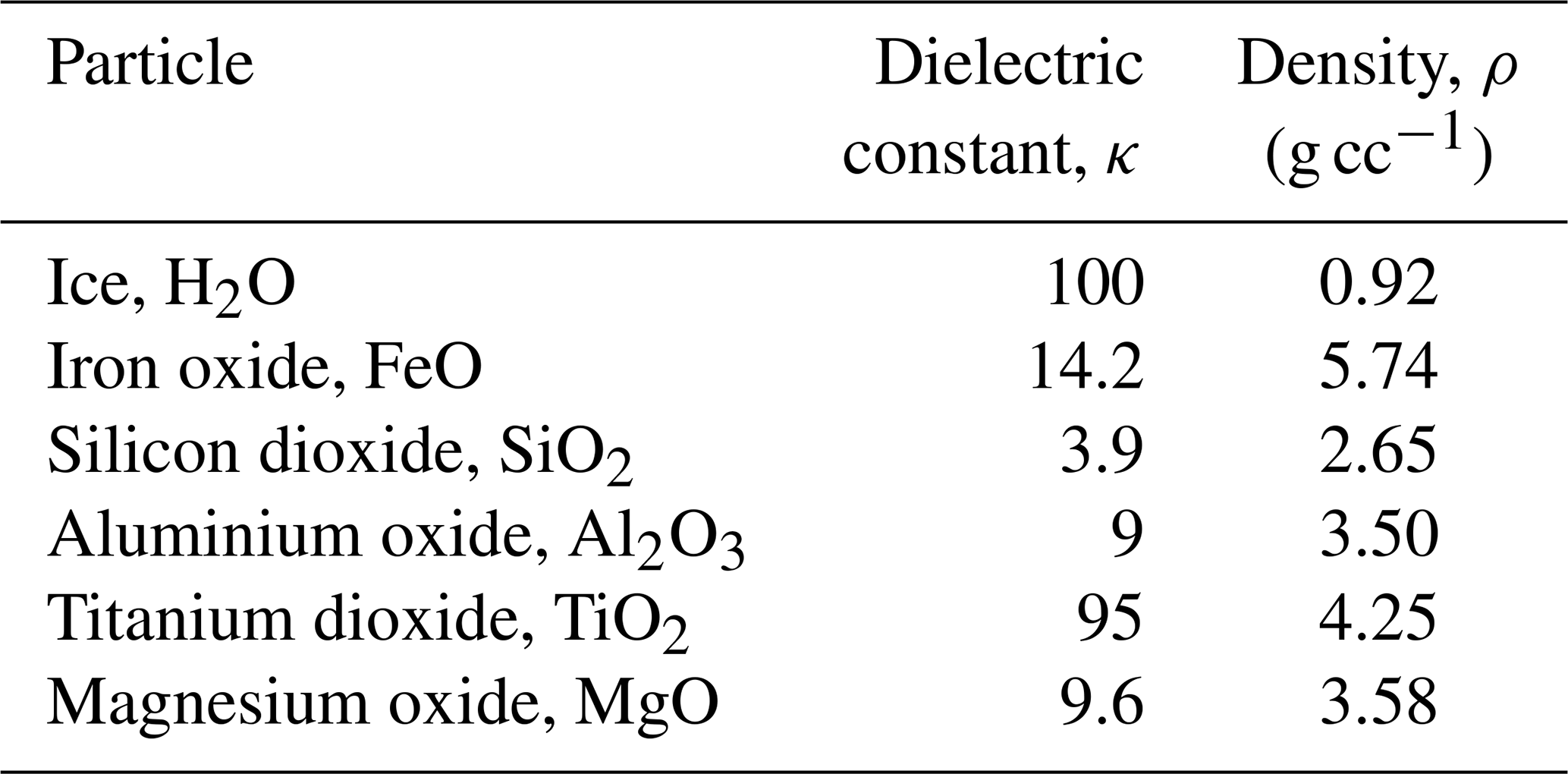
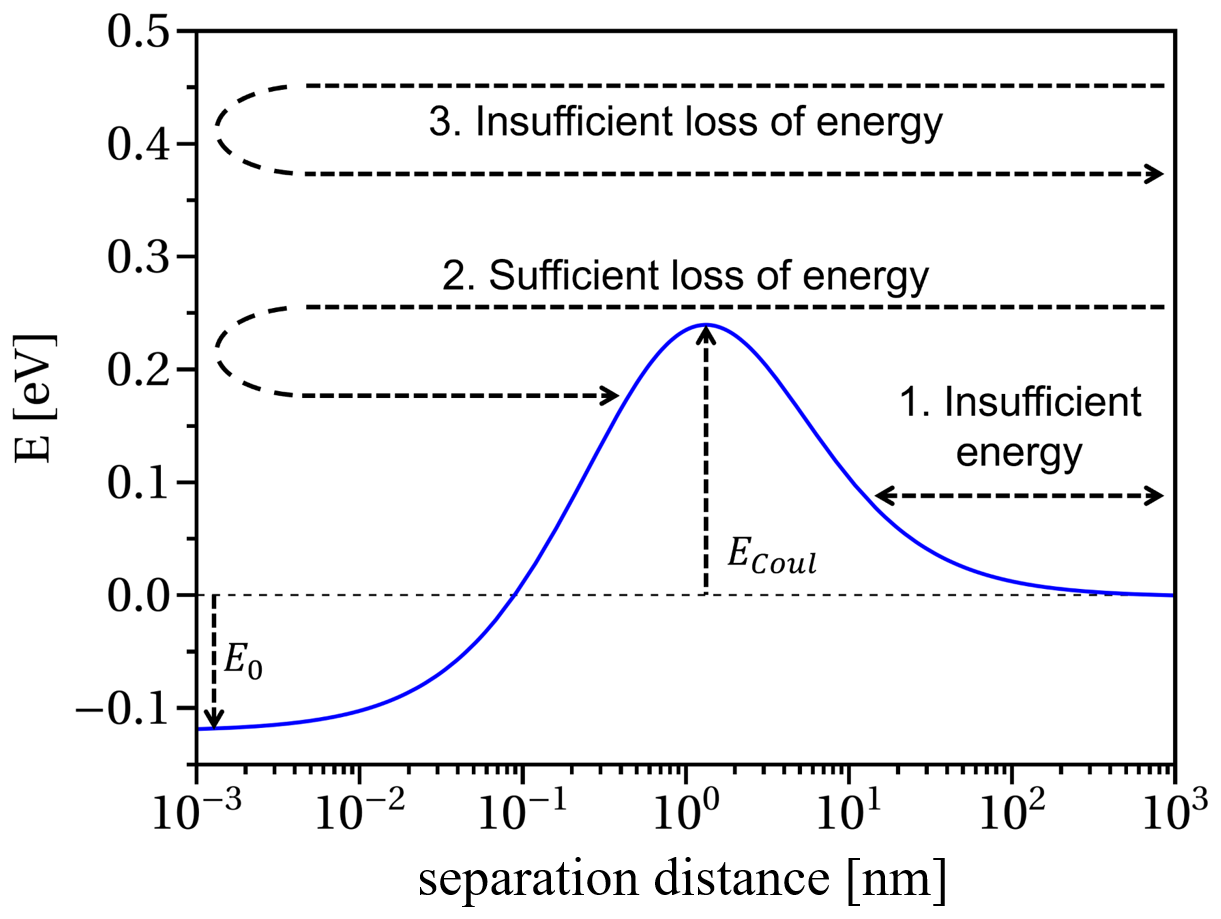
Figure 1Illustration of the electrostatic interaction energy between a singly negatively charged ice particle ( nm) and a singly negatively charged SiO2 particle ( nm) for varying separations derived using the model of Bichoutskaia et al. (2010).
The electrostatic interaction energy plays a crucial role in determining the outcome of particle collisions. It determines the effective velocity regime for the formation of a stable aggregate following a collision. Based on the Fig. 1, during a collision event between two like-charged particles, the particles have to overcome the Columb hill (ECoul). So, the relative kinetic energy with respect to the center of mass must be higher than ECoul. Therefore, the minimum relative initial velocity of the colliding particles required to overcome the Coulomb barrier is
where is the reduced mass of the colliding ice (with mass ) and oxides (with mass mOxide), and e is the electronic charge. After overcoming the Coulomb hill, the collision occurs. The kinetic energy just before the collision is
After the collision, the energy is reduced by
where kr is the coefficient of restitution, which quantifies how much kinetic energy remains after a collision. It determines the elasticity of collision, which varies according to the composition of a particle. Following Baptiste et al. (2021), we have taken kr=0.9 in this study. If this excess energy KEAfter is less than the barrier ECoul−E0, then coalescence is possible. Otherwise, the particles will move apart after the collision. Hence, the maximum velocity beyond which coalescence is not possible can be derived as
or
Therefore, particles with relative velocities between (umin, umax) can form stable aggregates after collision. In the case of a collision between charged-neutral and oppositely charged particles, the minimum speed becomes zero.
Note that the aggregation of FeO, MgO, and SiO2 with H2O ice has been discussed earlier by Baptiste et al. (2021). They highlighted that the specific location of the point charge on the particle's surface can influence the electrostatic interaction between two like-charged particles. This influence is significant for sub-nanometer-sized particles. For particle sizes of rOxide≥1 nm, we observe that the difference between the model outcomes of aggregation probability of Baptiste et al. (2021) and Bichoutskaia et al. (2010) is only about 5 % in the case of H2O ice and metal oxide aggregation. Baptiste et al. (2021) conducted their analysis of the aggregation of like-charged FeO and MgO with ice up to nm. In the present study, we are extending this analysis to nm. Additionally, we have further examined the outcomes of collisions in scenarios involving charged ice and neutral oxide aggregation.
The framework presented in Bichoutskaia et al. (2010) has been utilized to derive the electrostatic interaction energy between charged ice and various oxides. The basic equations and method to derive the electrostatic interaction energy have been briefly discussed in the Appendix A and explained in detail in Brazil Lindgren (2017). Thereafter umin and umax have been derived using Eqs. (1) and (5). Figure 2 illustrates the variation umin (blue) and umax (red) derived from the electrostatic interaction energy between a singly negatively charged ice particle and a singly negatively charged metal oxide. The variation of relative thermal speed (green) is also shown for different and rOxide. In the mesospheric condition, T is taken to be 150 K following Baptiste et al. (2021). As umin, umax, and uth are inversely proportional to the square root of the reduced mass of the system, i.e., , and larger particles have higher masses, these velocities reduce with increasing radius of the ice and oxide particles.
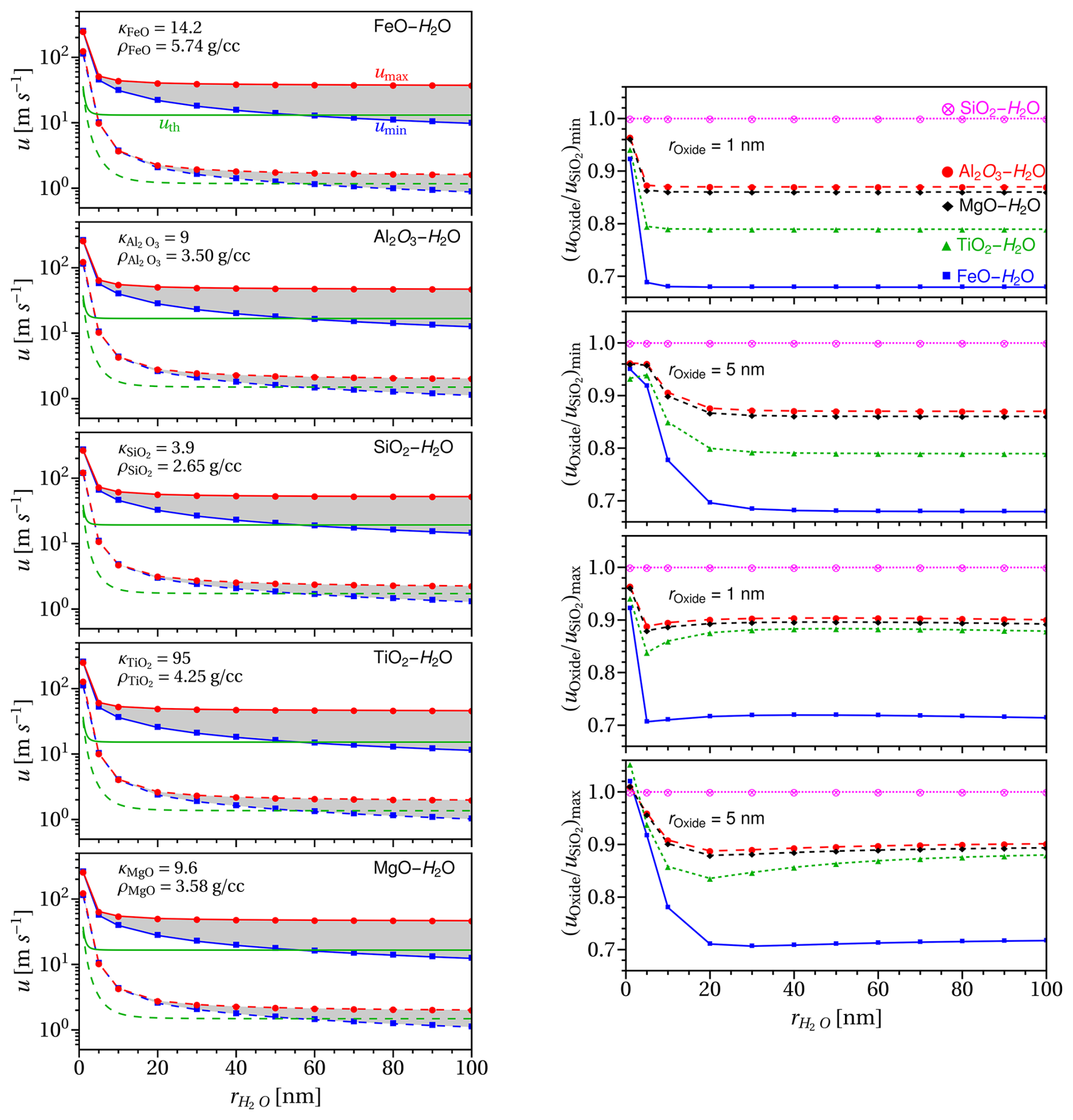
Figure 2Left Panels: Variation of umin (blue), umax (red), and (green) as a function of , needed for collision between ice and various metal oxides. The solid and dashed lines are for rOxide=1 and 5 nm, respectively. The colors are explained in the uppermost panel. Right Panels: Variation of umin and umax normalized with the same for SiO2 as a function of . Other parameter used: , and g cc−1.
The estimated (umin, umax) are around ∼ (250, 250) and ∼ (110, 125) m s−1 for (, rOxide=1 nm) and (, rOxide=5 nm) respectively. While increasing the to 100 nm, the velocity range decreases to ∼ (10, 40) and ∼ (1, 2) m s−1 for rOxide=1 and rOxide=5 nm, respectively. The detailed quantitative estimates of (umin, umax) for different like-charged ice-ASP collisions are given in the tables of Appendix A. It is further observed that the velocity interval, i.e., umax−umin, increases with increasing for . This can be attributed to the fact that charged smaller ice particles create significantly more Coulomb repulsion than the induced polarization effect on like-charged ASPs, due to their smaller available area for polarization. This results in and ECoul dominates in the estimates of (umin, umax) for smaller nm. Here represents the magnitude of a. On the contrary, a higher polarization effect is created for larger leading to , which makes E0 dominate in umax. Furthermore, the estimated umin and umax for 55 nm, are larger than the characteristic uth of the particle population. This implies that the collision velocities exceeding the thermal regime are physically accessible for the growth process. However, for nm, the thermal population can contribute to the aggregation process due to .
TiO2 and SiO2 exhibit the lowest and highest ECoul values, respectively, because of their higher and lower dielectric constants, which influence the polarization effect. Additionally, at low density, SiO2 has higher values of umin and umax (as shown in the third panel in Fig. 2). On the contrary, FeO with a higher density has the lowest values of umin and umax (as shown in the top panel in Fig. 2). Whereas with a higher dielectric constant but lower density, TiO2 has the next lowest values of umin and umax (as shown in the fourth panel from the top in Fig. 2). Lastly, with comparable values of dielectric constant and density, the umin and umax values are observed to be similar for Al2O3 and MgO (as shown in the second and fifth panels from the top in Fig. 2). For the case of fixed singly negative charge ice and oxides with (, rOxide=1 nm) and (, rOxide=5 nm), we observed that ECoul≈E0 for all the metal oxides. For these cases, the polarization effect is not strong enough to create the attractive energy well. Aggregation is not possible in these cases when considering only electrostatic interactions.
The umax for the case of charged ice and neutral metal oxide aggregation is shown in Fig. 3. In this case, umax decreases approximately three orders of magnitude within nm. Note that the charged ice particle induces polarization on the neutral oxides. The degree of polarization depends on the surface charge density on the ice. For a singly charged ice, the surface charge density decreases as , leading to a rapid decrease of E0 in magnitude. This results in a decrease in umax with increase in . For smaller values of nm, we observe an increase in umax with increase in rOxide. An increase in rOxide increases the effective area on the neutral oxides, which results in a higher area available for polarization, leading to an increase in E0 and subsequently umax. However, for nm, a slight decrease in umax is observed for larger rOxide. This can be attributed to a smaller degree of polarization from larger ice particles to relatively heavier oxides, effectively lowering umax. TiO2 with the highest dielectric constant among the oxides used in this study exhibits the highest umax due to a higher degree of polarization. For smaller values of , SiO2, with the lowest value of dielectric constant, leads to the lowest umax values. However, FeO has the lowest umax for higher due to its higher mass density.
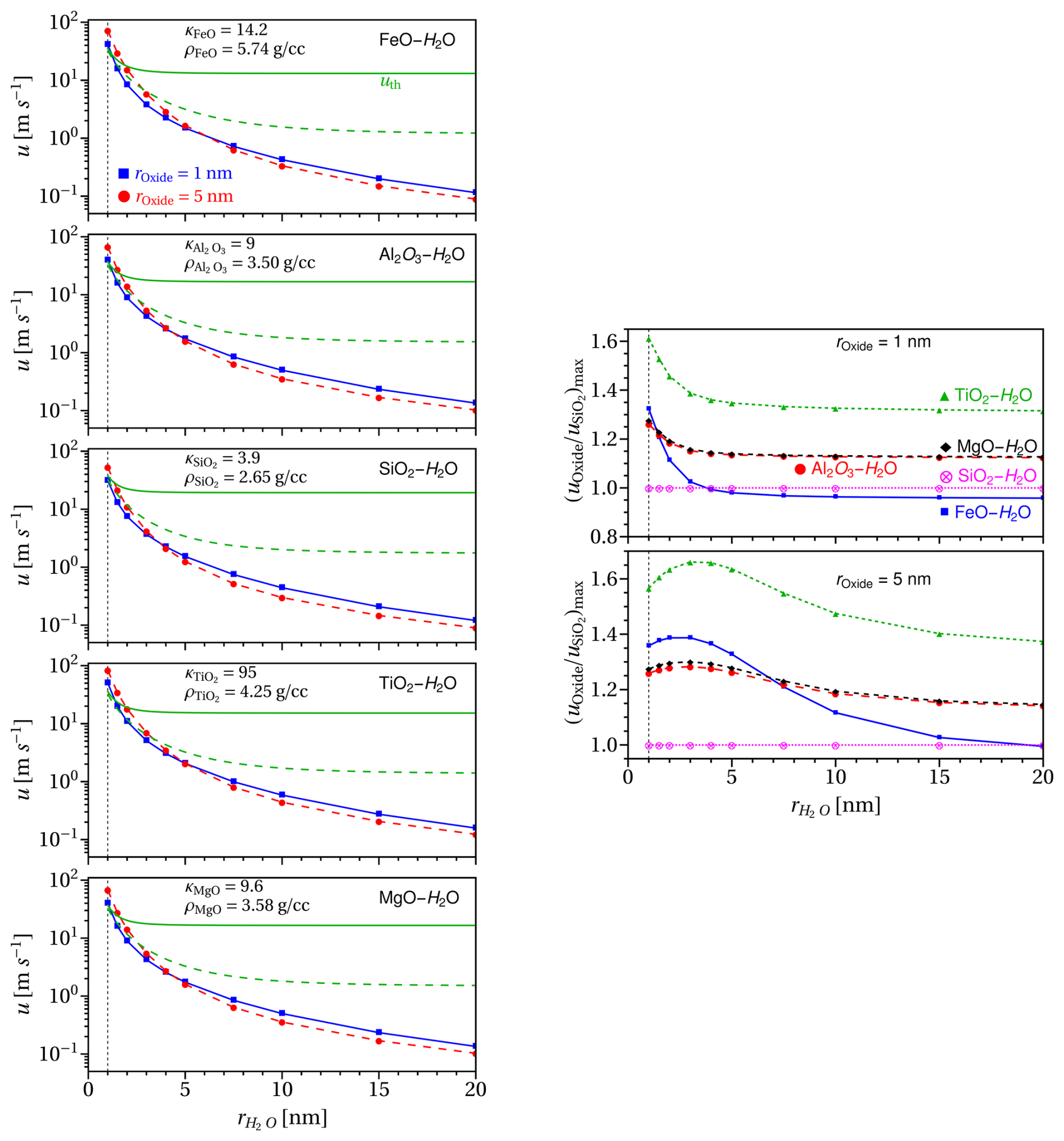
Figure 3Left Panels: Variation of umax and uth (green) as a function of needed for collision between charged ice and various neutral metal oxides. The solid and dashed lines are for rOxide=1 nm (blue) and 5 nm (red), respectively. The colors are explained in the uppermost panel. Right Panels: Variation of umax normalized with the same for SiO2 as a function of . Other parameter used: , and g cc−1.
Overall, umax ranges from few tens of m s−1 for nm to few times of 0.1 m s−1 for nm. The detailed quantitative estimates of umax for different charged-neutral ice-ASP collisions are given in the tables of Appendix B.
3.1 Aggregation probability
Based on the estimated effective relative velocity between oxides (of anthropogenic origin) and ice particles, we can establish initial constraints on the likelihood of aggregation in the MLT region. However, the actual velocity distribution of these anthropogenic particulates in the MLT region is presently unknown. The velocity regime may depend on the deceleration histories and processes during re-entry to the MLT. If the particles are moving at a roughly constant speed within the range of (umin, umax), the aggregation probability will be 100 %. However, for a first-order approximation, assuming these debris behave similarly to naturally generated MSPs, the effective velocity distribution may be represented by a Maxwell-Boltzmann distribution in the MLT temperature regime. Following Baptiste et al. (2021), the distribution can be written as
where kB is the Boltzmann constant and T is the temperature in the MLT region. Then the aggregation probability can be written as:
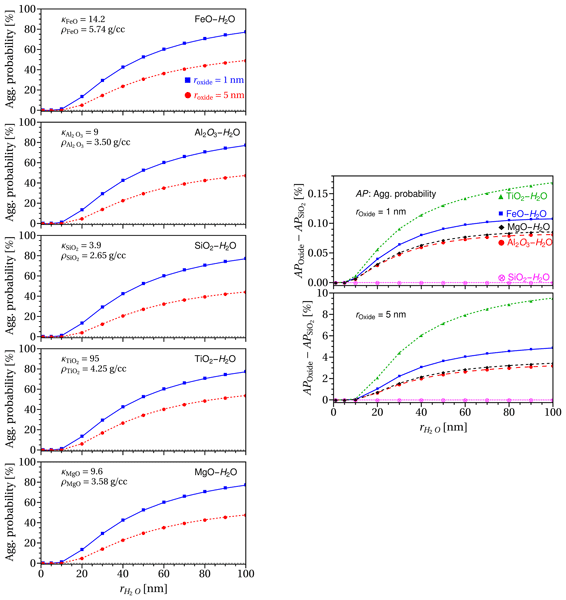
It is observed from Fig. 2 that for the like-charged ice-oxide aggregation case, for nm, umin and umax remain greater than uth, suggesting only the high-energy Maxwellian tail of the distribution forms stable aggregates after collision. For nm, umin becomes lower than uth, indicating that a significant fraction of particles near the Maxwellian peak can actively participate in the collision process. Figure 4 illustrates the aggregation probability for like-charged ice-oxide collision, where increased to 100 nm for fixed rOxide=1 (blue) and 5 (red) nm. Similar to Baptiste et al. (2021), we also observed a one order of magnitude increase in the aggregation probability with an increase in from 10 to 100 nm. Our further observations revealed no significant differences in the aggregation probability profile across different ice-oxide aggregations. Figure 4 also highlights that the maximum aggregation probability decreases from 77 % to approximately 50 % upon an increase in rOxide=1 (blue) to 5 (red) nm for nm due to the increase in mOxide.
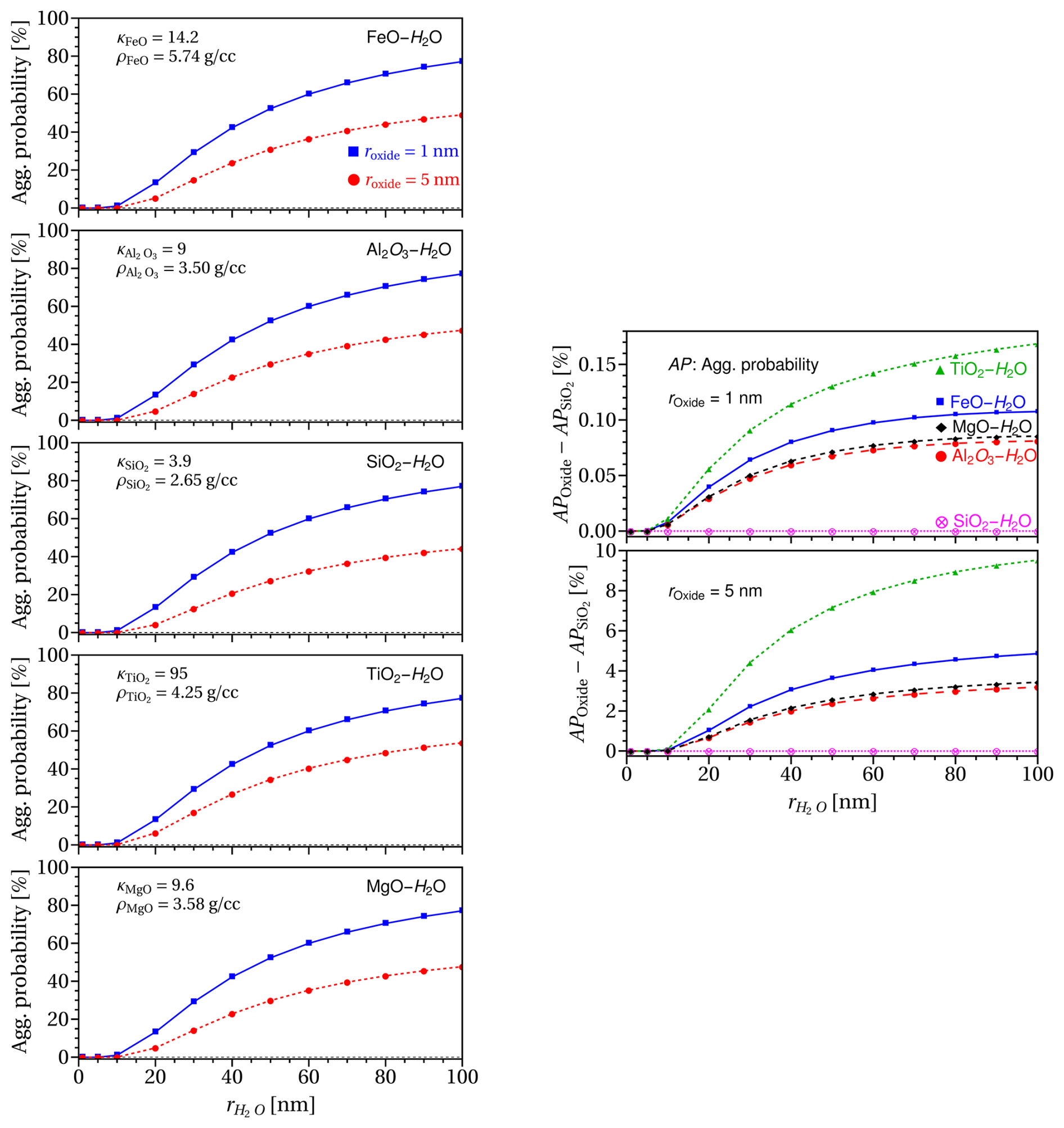
Figure 4Left Panels: Aggregation probability [%] for collision between ice and different metal oxides . varies from 1 to 100 nm. The solid and dashed lines are for rOxide=1 nm (blue) and 5 nm (red), respectively. The colors are explained in the uppermost panel. Right Panels: Difference of Aggregation probability with the same for SiO2 as a function of . Other parameter used: and g cc−1.
As noted earlier, for the case of fixed singly negative charge ice and oxides with ( nm, rOxide=1 nm) and ( nm, rOxide=5 nm), ECoul≈E0 and aggregation is not possible in these cases when considering only electrostatic interactions. Here, the van der Waals force is generally comparable to the electrostatic interaction at short separation distances of 0.1 nm to a few nanometers (Israelachvili, 2011; Filippov, 2022), leading to stronger binding near the point of contact, which may increase umax. The Van der Waals interaction may reduce the ECoul. However, the reduced value of umin will remain significantly higher than uth. As a result, the aggregation probability may not vary significantly, because most of the velocity regime of the Maxwellian distribution is not able to overcome the ECoul. However, the Van der Waals Interactions may affect the aggregation scenario.
Furthermore, the contact electrification resulting from the collision may also contribute to the formation of a bound aggregate. Laboratory experiments suggested a typical charge transfer of the order of 10−5 C m−2 (Shen et al., 2016). With a typical collisional area , and 0.123e for rOxide=1 and 5 nm, respectively, which is significantly low. Furthermore, collision event in the MLT region is not frequent enough for signficant charge transfer via contact electrification. So for nanometer-sized particles, the charge transfer due to contact electrification is marginal in the MLT region. However, the contact electrification or triboelectric charging may become significant in the environment with significant collision frequency, where dust/particle density is large, such as Earth's lower atmospheric clouds and dusty atmospheres of Mars (Di Renzo and Urzay, 2018; Johnson et al., 2025).
As this study focuses on quantifying the effect of electrostatic interactions on particle collisions and aggregation, other interactions that could bring particles close together, such as van der Waals forces and contact electrification, are not considered, which could be taken up in future work.
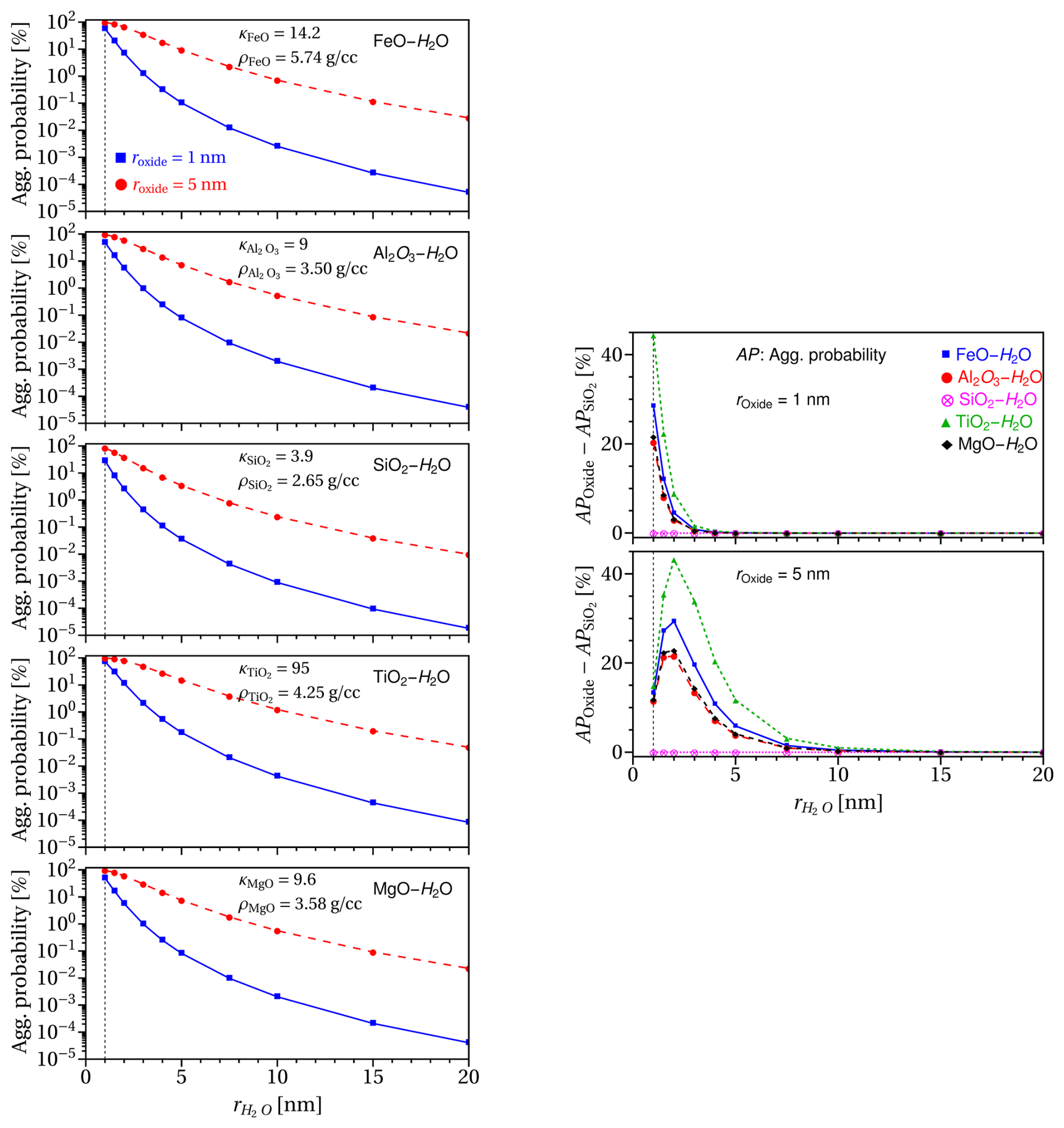
Figure 5Left Panels: Aggregation probability [%] for collision between ice and different neutral metal oxides (qOxide=0). varies from 1 to 20 nm. The solid and dashed lines are for rOxide=1 nm (blue) and 5 nm (red), respectively. The colors are explained in the uppermost panel. Right Panels: Difference of Aggregation probability with the same for SiO2 as a function of . Other parameter used: and g cc−1.
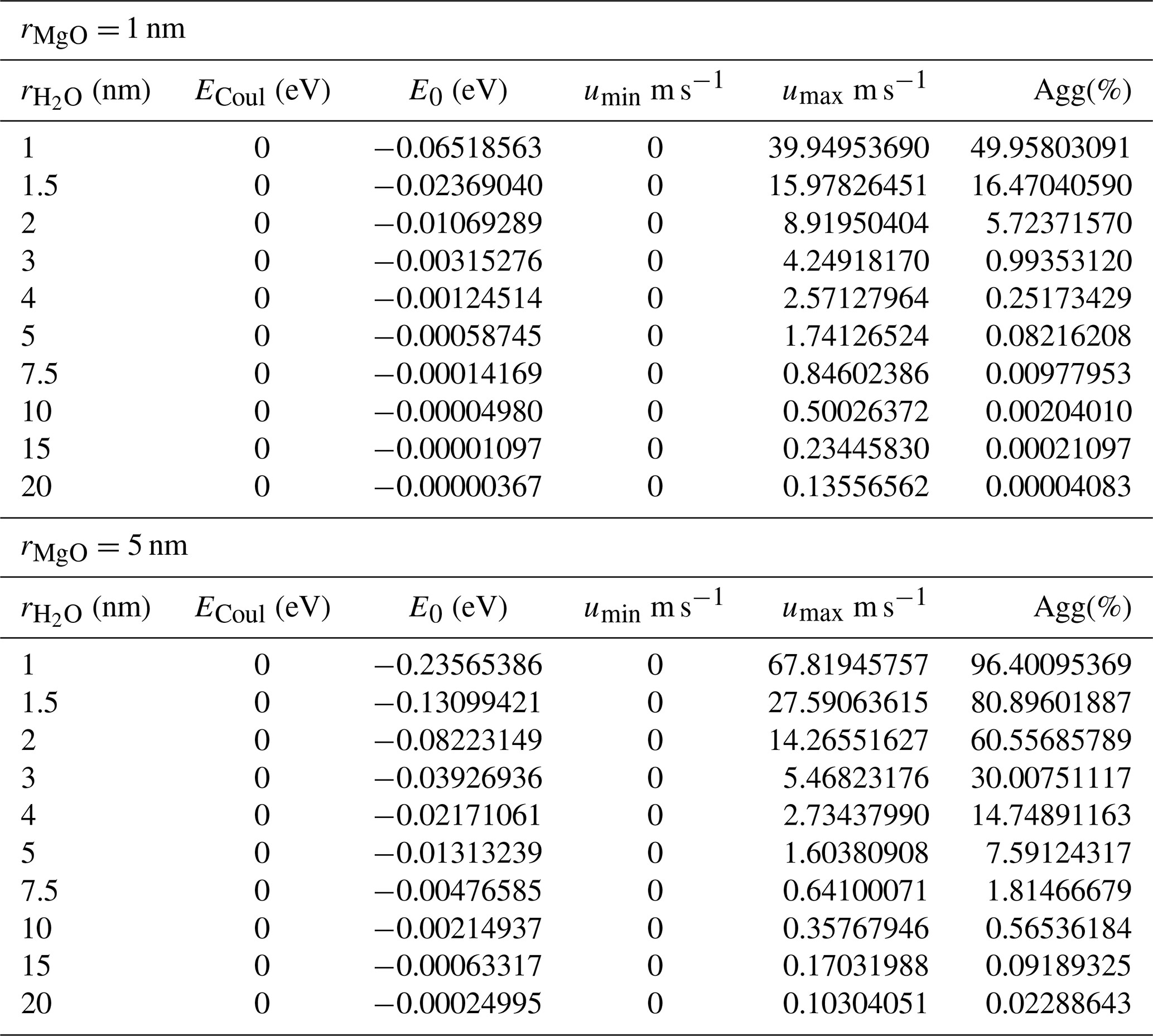
The aggregation probability for charged ice-neutral oxide collision has been shown in Fig. 5. For smaller , Fig. 3 shows that umax≥uth, which leads to greater coverage of the Maxwell–Boltzmann distribution. However, a higher results in a significantly smaller umax compared to uth, indicating that particles with high speed move apart after a collision. This results in a decrease in aggregation probability with increasing . For rOxide=1 and 5 nm, approximately seven and four orders of magnitude decrease is observed, respectively, while increasing from 1 to 20 nm. TiO2 and SiO2 exhibit the highest and lowest aggregation probability, respectively, because of their higher and lower dielectric constants. The probability of aggregation increases with the dielectric constants and radius of oxides due to the enhanced strength and effective area of the polarization effect, respectively. For a charged ice-neutral oxide collision, the Van der Waals force may influence the estimates of umax. This may lead to a different probability of aggregation. The detailed estimate of the collision dynamics considering both electrostatics and Van der Waals interaction will be taken up in future studies.
The calculation presented so far is for . For a like-charged case, increasing the charge from −1e to −2e increases the Coulomb barrier ECoul and reduces the magnitude of E0. As a result, it reduces the effective regime of (umin,umax), thereby reducing the probability of aggregation. For like-charged nm, rOxide=1 nm, changing from −2e, reduces the aggregation probability from 77 % to 46 %. For the oppositely charged case, ECoul=0, and due to polarization effect, is significantly stronger than the Coulomb attraction, which increases umax, leading to an enhancement of aggregation probability. As particle size increases with a fixed charge, surface charge density decreases. This reduction lowers the binding energy and the probability of aggregation. However, in the parametric regime used in the present analysis, the aggregation probability exceeds 99.5 %.
Overall, the collision outcome between ASPs and mesospheric ice particles depends on their surface charges, sizes, dielectric constants, and mass densities. The models of electrostatic interaction are independent of the origin of the ASPs or MSPs. Hence, ASPs exhibit aggregation behavior similar to that of the ice-MSP aggregation regime reported by Baptiste et al. (2021). The aggregation further depends on the concentrations of specific elements in the MLT region, along with the other parameters discussed above. The observed agreement suggests that this distinct anthropogenic particle population can be detected and systematically studied within the well-established naturally originated MSP framework.
The present study investigates the electrostatic interaction between charged ice and anthropogenic smoke particles (ASPs) in the MLT region. This estimation is essential for evaluating the outcomes of collisions and subsequent aggregation of ice and ASPs. Like-charged ice and ASPs feel strong Coulomb repulsion at large separations. Additionally, at small separations, they feel a strong attraction due to the induced polarization of the particle's surface charge. Hence, the electrostatic interaction between ice and ASPs offers important insights into the minimum (to overcome the Coulomb barrier) and maximum (to form a stable aggregate after contact) relative velocities necessary for the formation of stable aggregates. For ice and ASPs in thermal motion at T=150 K, aggregation depends on particle size, mass density, and dielectric constant. In the case of a like-charged ice-ASP collision, the velocity range for growth varies from several tens of meters per second to a few meters per second. For ice particles of nm, the high-energy tail of the Maxwellian distribution leads to the formation of stable aggregates. For larger particles, a significant fraction near the Maxwellian peak can actively contribute to collision and aggregation. As a result, for like-charged ice-ASP, the collision aggregation probability increases with increasing .
On the contrary, the present study found that in a charged-neutral ice-ASP collision, the aggregation probability reduces to approximately four to seven orders of magnitude with increasing to 20 nm. Larger ice particles have a low surface charge density, which prevents them from creating a sufficient polarization effect at short distances from neutral ASPs. Consequently, these particles tend to move apart after a collision, leading to aggregation primarily involving the lower part of the Maxwellian distribution. However, very small ice particles (a few nm) have a higher surface charge density because of their smaller surface area. This increased charge density can generate significant binding energy, allowing them to form stable aggregates when their relative collision velocity is comparable to the thermal velocity, uth. For charged-neutral ice-ASP collision, the maximum velocity ranges from a few tens of m s−1 for nm to a few times 0.1 m s−1 for nm. Therefore, the present study suggests that like-charged ice-ASP collisions are more favorable to form stable aggregates than charged-neutral ice-ASP collisions for larger ice particles.
The aggregation of ice and ASPs has significant implications for the formation of polar mesospheric clouds. These phenomena are of considerable interest as they serve as indicators of climate change. Therefore, understanding the composition, origin, and evolution of ASPs is essential for comprehending these processes. Natural influx from meteoric ablation is believed to be the dominant source of meteoric smoke particles (MSPs). However, a significant increase in atmospheric re-entry of space debris may enhance the presence of ASPs. As a result, ASPs enriched in specific elemental species (such as Al2O3 and TiO2) may exceed the abundance of their naturally occurring MSPs.
The present study suggests that for like-charged ice-ASP aggregation, there are no significant differences in the aggregation probability across different ice-oxide combinations. Therefore, particle growth will depend on the concentration of specific elemental species in the ASPs. In contrast, for the charged-neutral ice-ASP collision, the probability of ice-TiO2 aggregation is observed to be higher due to the large dielectric constant of TiO2, which creates a stronger polarization effect. Schulz et al. (2026) predicted that the post-ablation annual elemental mass injection of anthropogenic elements (especially Al and Ti) is going to be dominated over the natural meteoric injection in the near future. We suggest that Al2O3 (due to its greater abundance) and TiO2 (due to its higher dielectric constant), both originating from anthropogenic sources, may dominate in the formation of ice-ASP aggregates. In the near future, based on the prediction of Schulz et al. (2026), we may expect a higher concentration of Al and Ti in the in-situ detected ASPs. The findings of this study are useful for future work on the impact of human space activities in the MLT region. Additionally, these results could be significant for sounding rocket experiments focused on detecting remnants of space debris in the MLT region.
This section briefly discusses the calculation of the electrostatic interaction energy. The total electrostatic force between two dielectric spherical particles with dielectric constants (κ1 and κ2), radii (r1 and r2), charges (q1 and q2), and center-to-center separation, h can be written as (Bichoutskaia et al., 2010; Brazil Lindgren, 2017)
where and ε0 is permittivity of free space. The first term of the above equation is Coulomb's law. The second term (terms inside parentheses) is the polarization term derived from the multipole expansion of the electric potential, and Ai,l is the lth moment coefficient of particle i. The multipole moment coefficients can be derived from the following equations
and
Here, is the free surface charge density of the ith particle. The infinite series has been truncated at an upper bound N, yielding a convergent solution. Equations (A2) and (A3) can be converted to matrix representation of linear system:
where is the vector of dimension N with coefficient Ai,l. The detailed expression of Ci and Di can be found in Brazil Lindgren (2017). The system of linear equations can be solved by iterative methods, and Ai,l can be derived. After deriving the moment coefficients for each h the electrostatic force given in Eq. (A1) can be derived. The force can then be numerically integrated to derive the electrostatic interaction energy as a function of separation distance.
Table B1ECoul, E0, umin, umax, and the percentage of aggregation values for like-charged ice-FeO collisions. Two different radii (1 and 5 nm) of FeO have been used, and the size of the ice particle is varied. The relevant dielectric constants and mass density values are taken from Table 1. Other parameters used: , T=150 K, and kr=0.9.
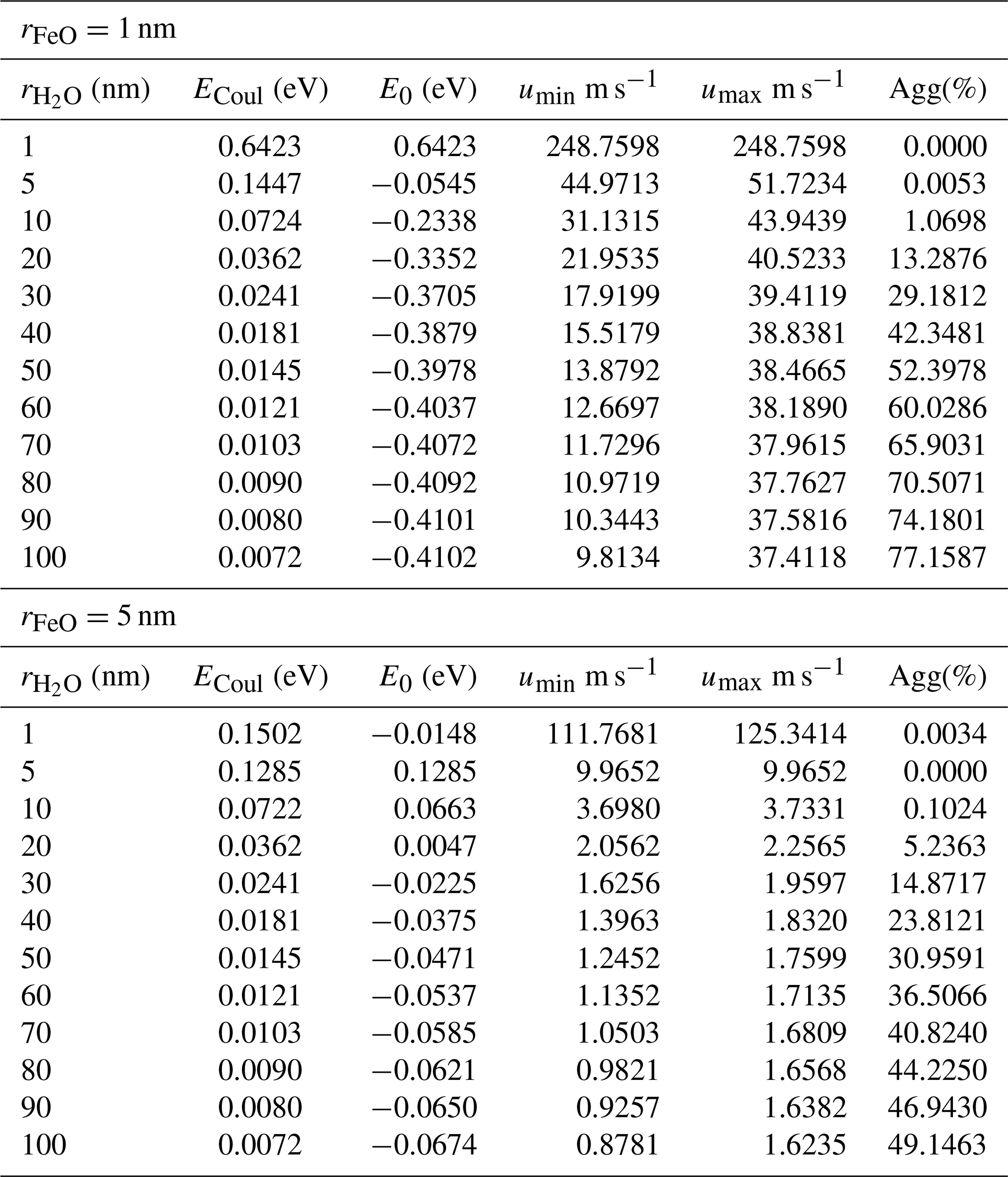
Table B2ECoul, E0, umin, umax, and the percentage of aggregation values for like-charged ice-Al2O3 collisions. Two different radii (1 and 5 nm) of Al2O3 have been used, and the size of the ice particle is varied. The relevant dielectric constants and mass density values are taken from Table 1. Other parameters used: , T=150 K, and kr=0.9.
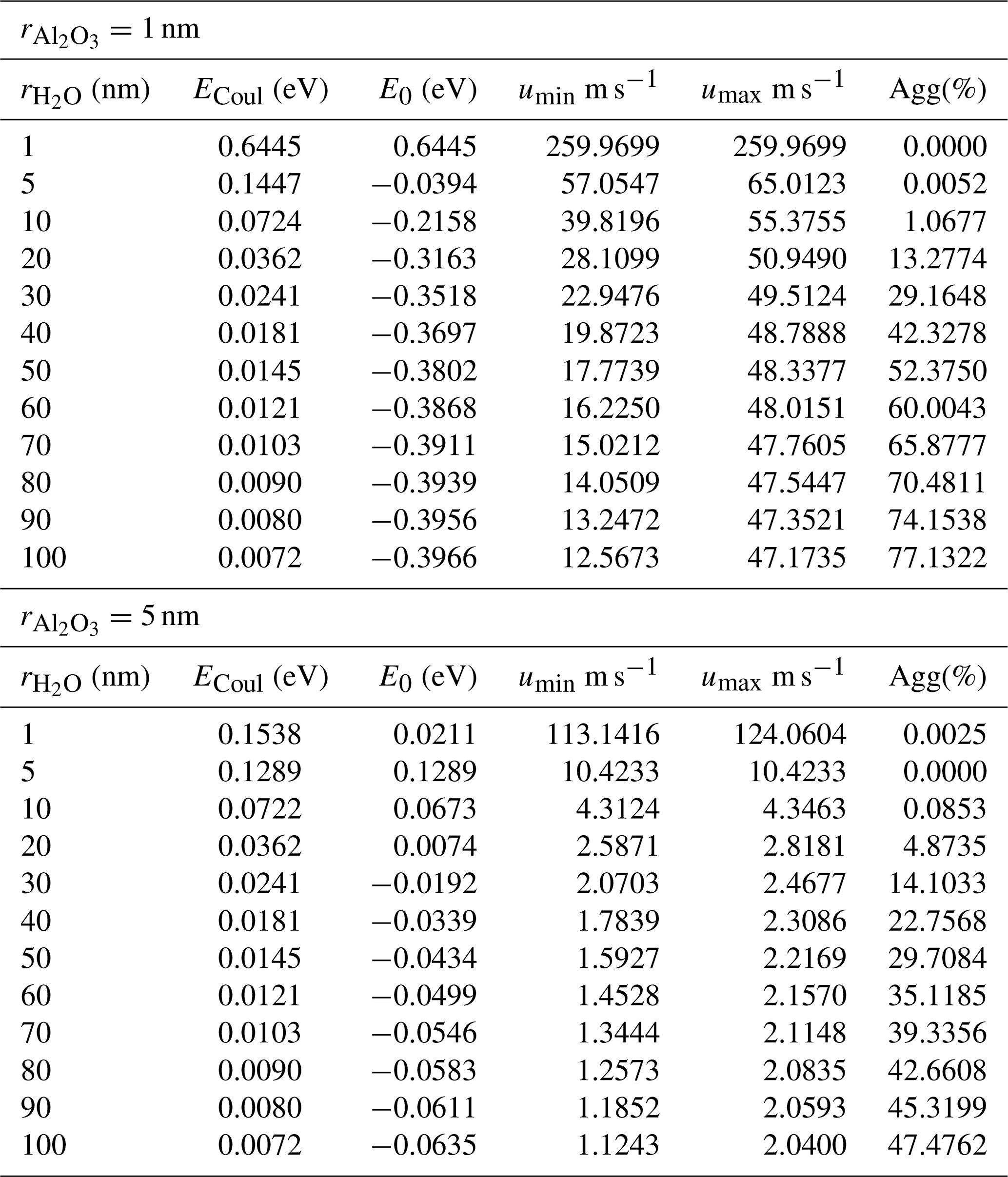
Table B3ECoul, E0, umin, umax, and the percentage of aggregation values for like-charged ice-SiO2 collisions. Two different radii (1 and 5 nm) of SiO2 have been used, and the size of the ice particle is varied. The relevant dielectric constants and mass density values are taken from Table 1. Other parameters used: , T=150 K, and kr=0.9.
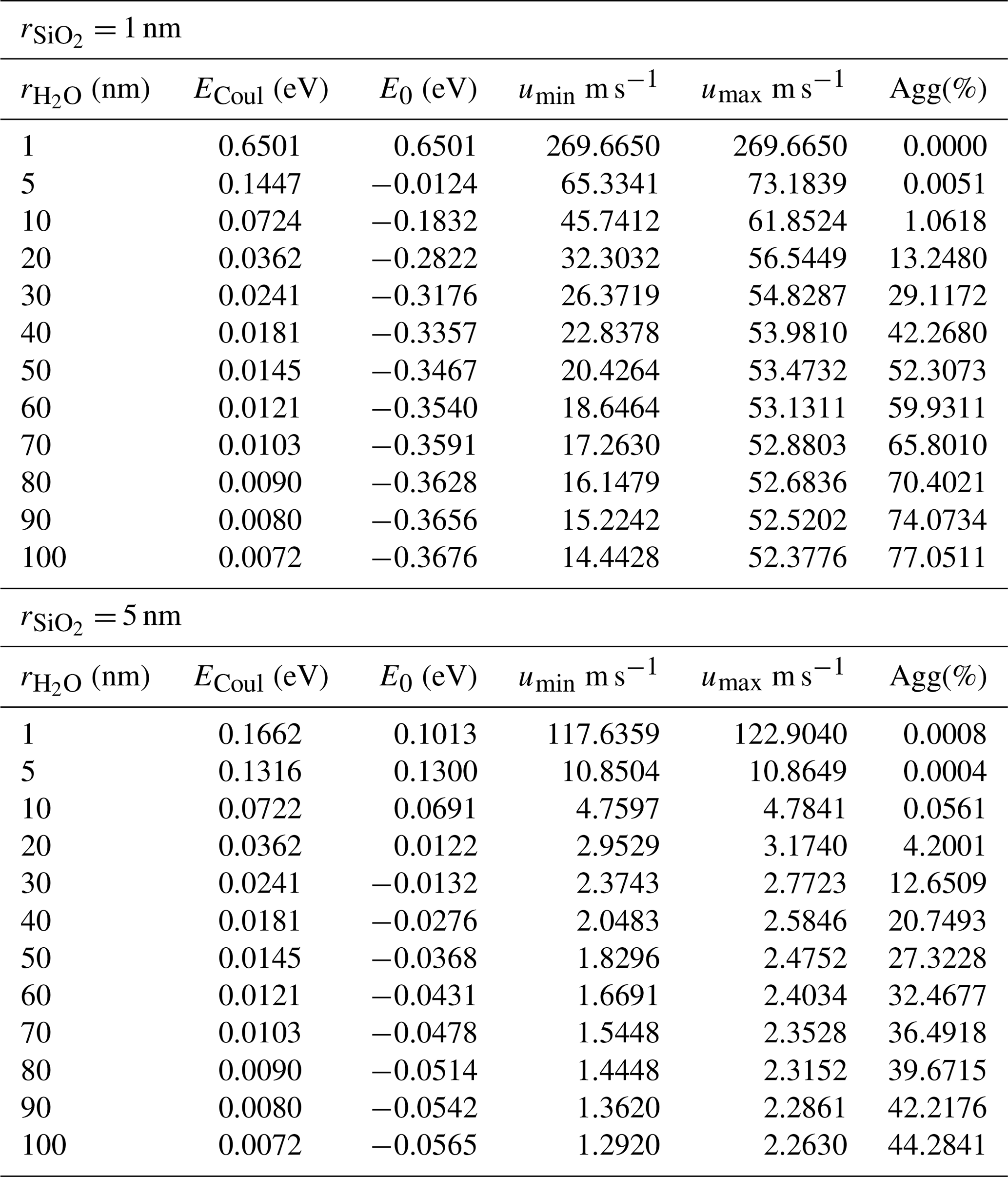
Table B4ECoul, E0, umin, umax, and the percentage of aggregation values for like-charged ice-TiO2 collisions. Two different radii (1 and 5 nm) of TiO2 have been used, and the size of the ice particle is varied. The relevant dielectric constants and mass density values are taken from Table 1. Other parameters used: , T=150 K, and kr=0.9.
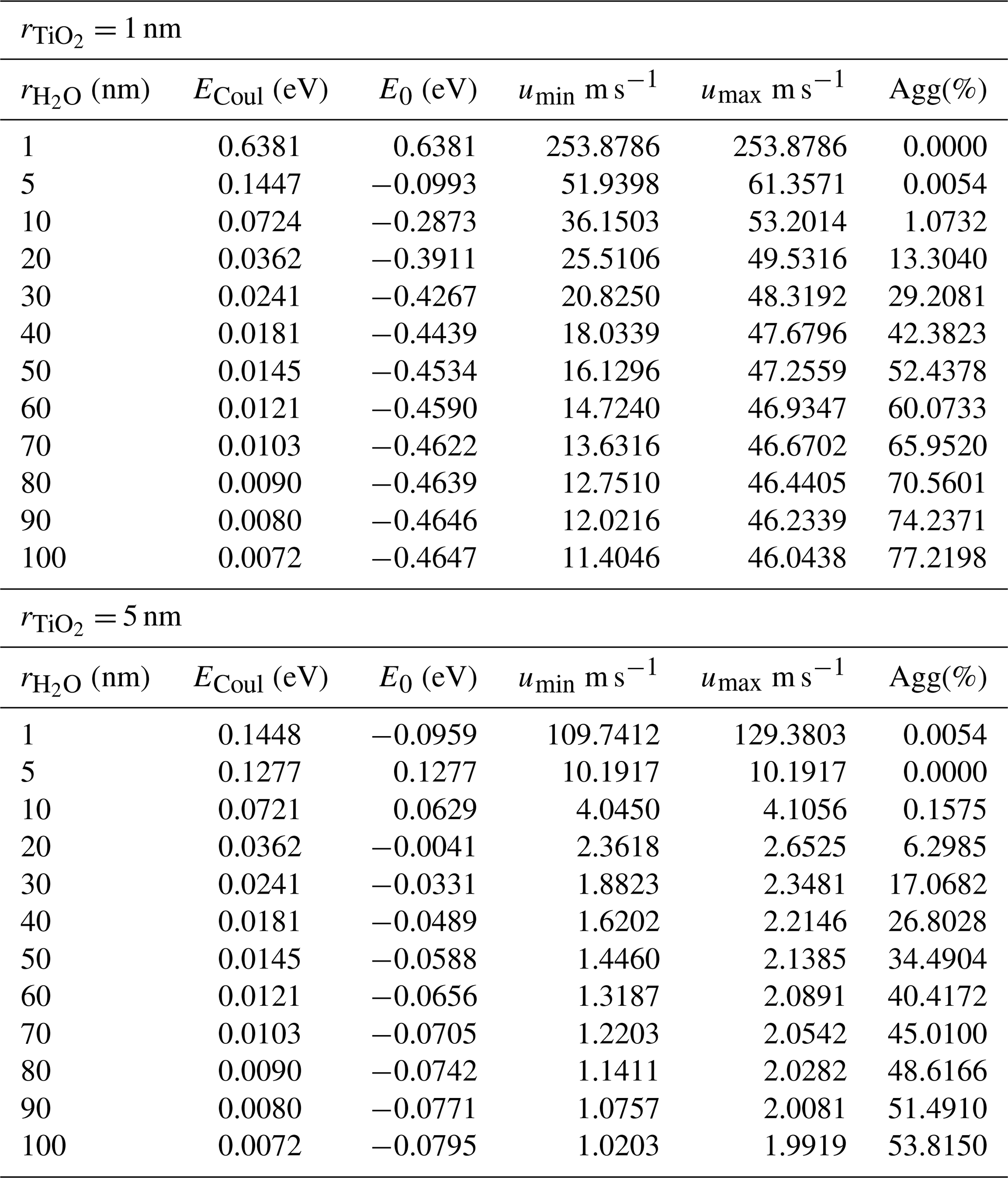
Table B5ECoul, E0, umin, umax, and the percentage of aggregation values for like-charged ice-MgO collisions. Two different radii (1 and 5 nm) of MgO have been used, and the size of the ice particle is varied. The relevant dielectric constants and mass density values are taken from Table 1. Other parameters used: , T=150 K, and kr=0.9.
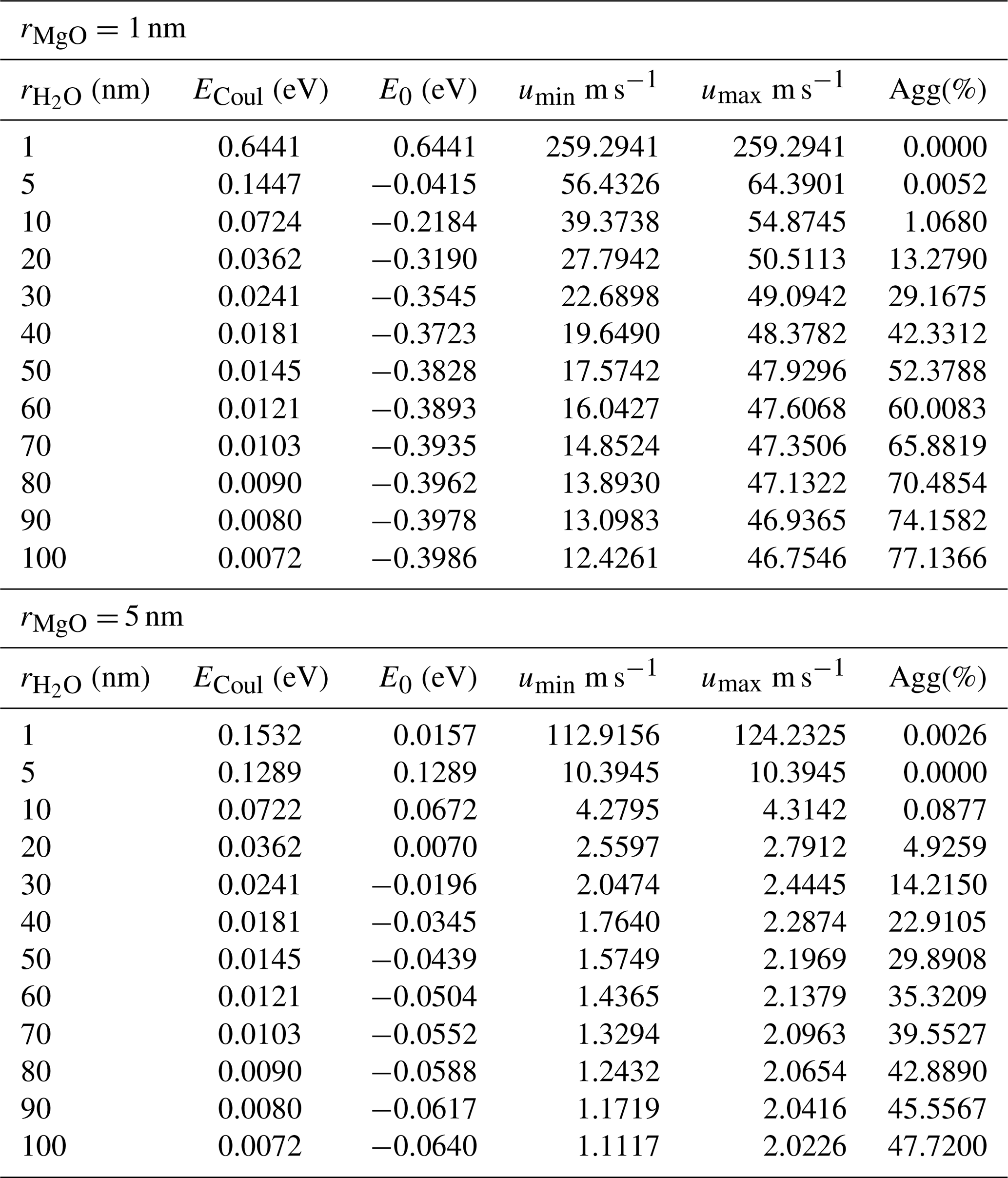
Table C1ECoul, E0, umin, umax, and the percentage of aggregation values for charged-neutral ice-FeO collisions. Two different radii (1 and 5 nm) of FeO have been used, and the size of the ice particle is varied. The relevant dielectric constants and mass density values are taken from Table 1. Other parameters used: , qFeO=0 , T=150 K, and kr=0.9.
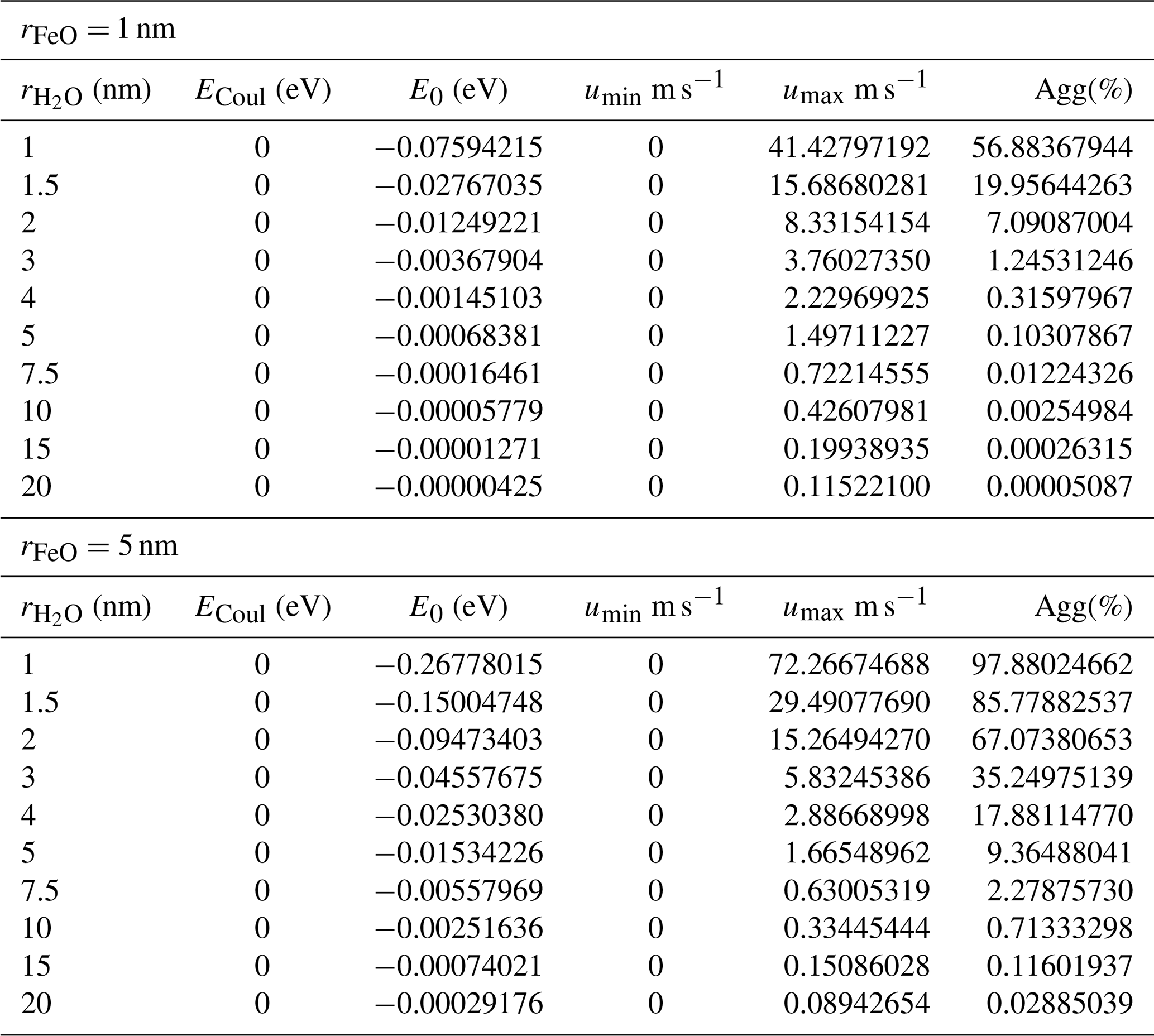
Table C2ECoul, E0, umin, umax, and the percentage of aggregation values for charged-neutral ice-Al2O3 collisions. Two different radii (1 and 5 nm) of Al2O3 have been used, and the size of the ice particle is varied. The relevant dielectric constants and mass density values are taken from Table 1. Other parameters used: , , T=150 K, and kr=0.9.
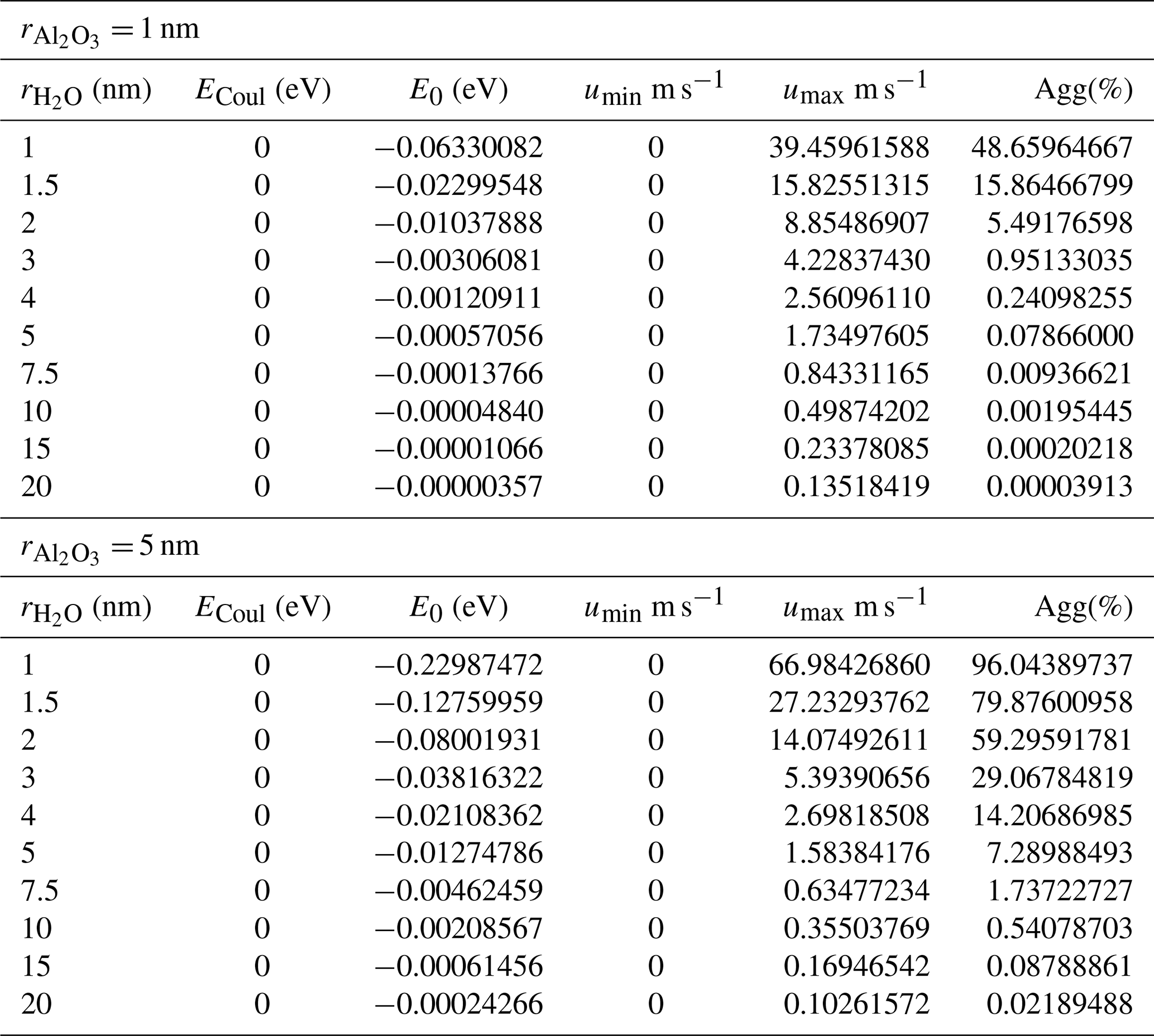
Table C3ECoul, E0, umin, umax, and the percentage of aggregation values for charged-neutral ice-SiO2 collisions. Two different radii (1 and 5 nm) of SiO2 have been used, and the size of the ice particle is varied. The relevant dielectric constants and mass density values are taken from Table 1. Other parameters used: , , T=150 K, and kr=0.9.
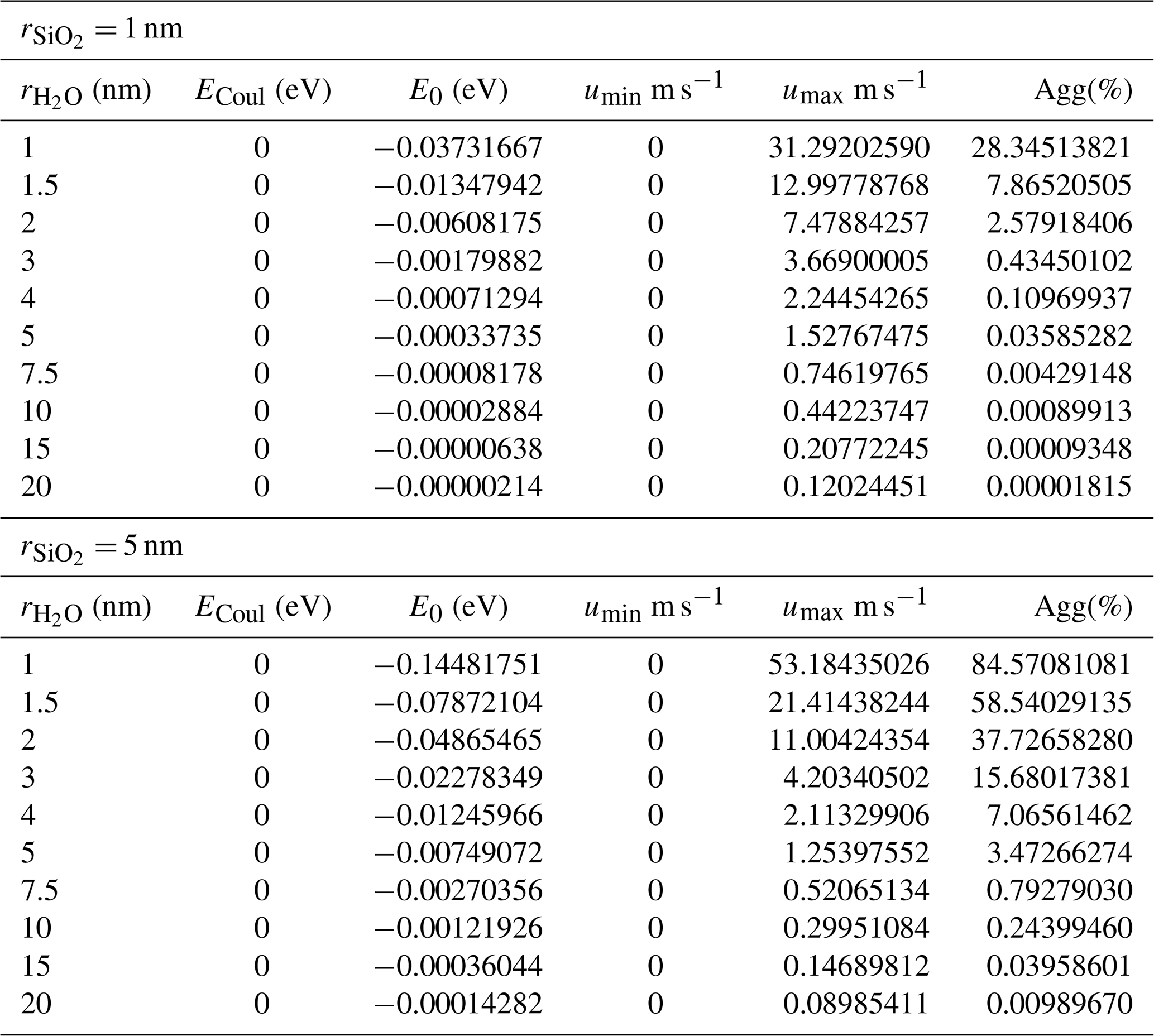
Table C4ECoul, E0, umin, umax, and the percentage of aggregation values for charged-neutral ice-TiO2 collisions. Two different radii (1 and 5 nm) of TiO2 have been used, and the size of the ice particle is varied. The relevant dielectric constants and mass density values are taken from Table 1. Other parameters used: , , T=150 K, and kr=0.9.
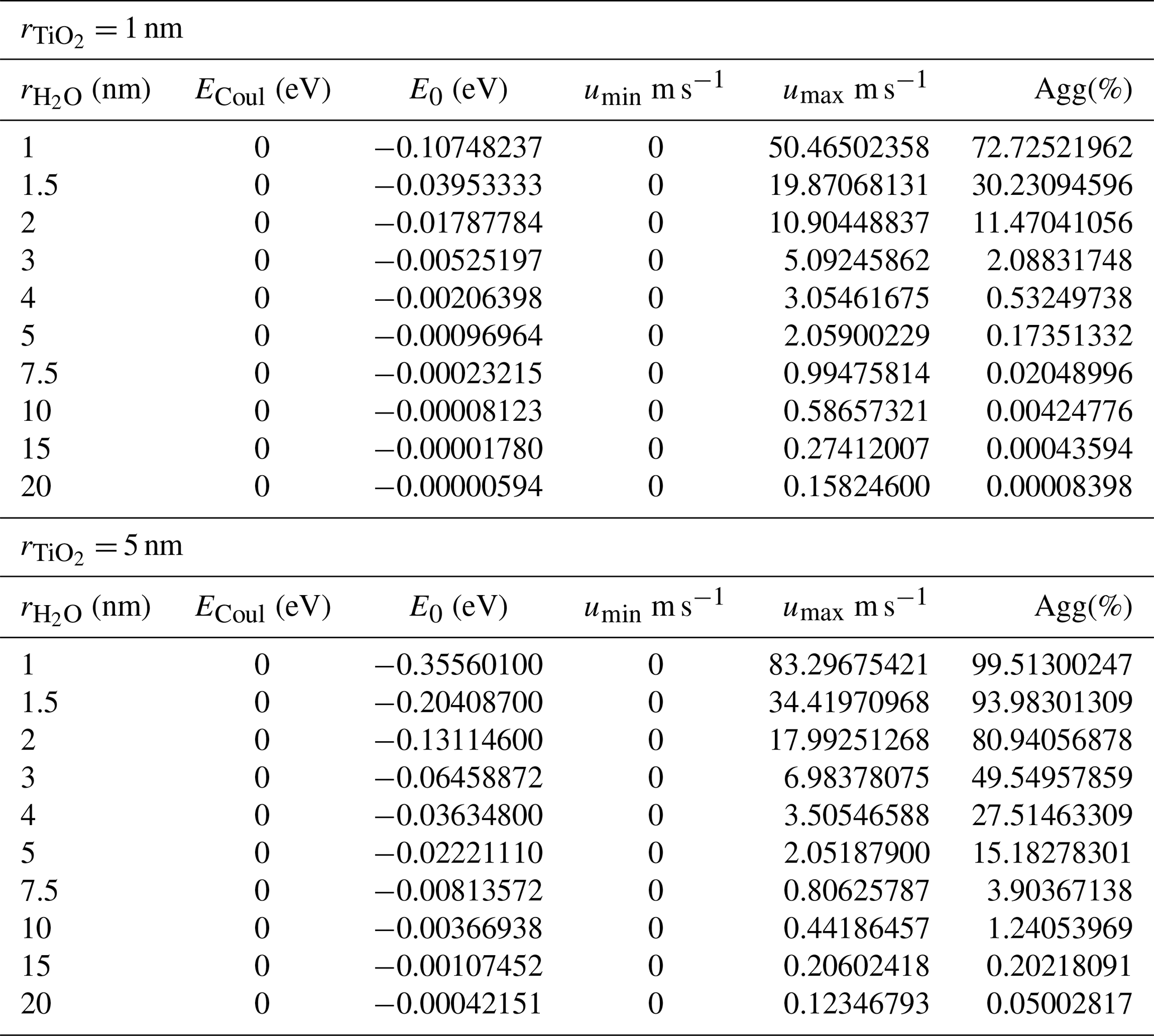
Table C5ECoul, E0, umin, umax, and the percentage of aggregation values for charged-neutral ice-MgO collisions. Two different radii (1 and 5 nm) of MgO have been used, and the size of the ice particle is varied. The relevant dielectric constants and mass density values are taken from Table 1. Other parameters used: , qMgO=0, T=150 K, and kr=0.9.
The data supporting this study's findings are available within the article and Appendix B and C.
TS and IM conceptualized the study. TS implemented and performed the numerical analysis. All authors contributed to the analysis, discussion, writing, and editing of the manuscript and approved the final version for submission.
The contact author has declared that none of the authors has any competing interests.
Publisher's note: Copernicus Publications remains neutral with regard to jurisdictional claims made in the text, published maps, institutional affiliations, or any other geographical representation in this paper. The authors bear the ultimate responsibility for providing appropriate place names. Views expressed in the text are those of the authors and do not necessarily reflect the views of the publisher.
IM acknowledges the support from the Research Council of Norway. TS and SKM acknowledge the support from the Department of Space, Government of India. TS is thankful to Prof. Elena Besley and Mr. Cameron Reeve for their suggestions regarding the calculation of electrostatic interaction energy.
This research has been supported by the Research Council of Norway through grant no. NFR 353378 (Cosmic Dust Injection into the Upper Earth Atmosphere). The APC for this article is covered by UiT's Publication Fund.
This paper was edited by John Plane and reviewed by Lorin S. Matthews and one anonymous referee.
Baptiste, J., Williamson, C., Fox, J., Stace, A. J., Hassan, M., Braun, S., Stamm, B., Mann, I., and Besley, E.: The influence of surface charge on the coalescence of ice and dust particles in the mesosphere and lower thermosphere, Atmos. Chem. Phys., 21, 8735–8745, https://doi.org/10.5194/acp-21-8735-2021, 2021. a, b, c, d, e, f, g, h, i
Bardeen, C., Toon, O., Jensen, E., Marsh, D., and Harvey, V.: Numerical simulations of the three-dimensional distribution of meteoric dust in the mesosphere and upper stratosphere, J. Geophys. Res.-Atmos., 113, https://doi.org/10.1029/2007JD009515, 2008. a
Baumann, C., Rapp, M., Kero, A., and Enell, C.-F.: Meteor smoke influences on the D-region charge balance – review of recent in situ measurements and one-dimensional model results, Ann. Geophys., 31, 2049–2062, https://doi.org/10.5194/angeo-31-2049-2013, 2013. a, b
Baumann, C., Rapp, M., Anttila, M., Kero, A., and Verronen, P. T.: Effects of meteoric smoke particles on the D region ion chemistry, J. Geophys. Res.-Space, 120, 10–823, 2015. a, b, c
Bichoutskaia, E., Boatwright, A. L., Khachatourian, A., and Stace, A. J.: Electrostatic analysis of the interactions between charged particles of dielectric materials, J. Chem. Phys., 133, https://doi.org/10.1063/1.3457157, 2010. a, b, c, d, e
Brazil Lindgren, E.: Theoretical analysis of the electrostatic interactions between charged polarisable particles, PhD thesis, University of Nottingham, https://repository.nottingham.ac.uk/handle/123456789/29030 (last access: 9 October 2026), 2017. a, b, c
Di Renzo, M. and Urzay, J.: Aerodynamic generation of electric fields in turbulence laden with charged inertial particles, Nat. Commun., 9, 1676, https://doi.org/10.1038/s41467-018-03958-7, 2018. a
Filippov, A.: Electrostatic interaction of a charged dielectric sphere with a flat charged interface between homogeneous dielectrics, J. Exp. Theor. Phys.+, 134, 590–599, 2022. a
Gunnarsdottir, T. L., Mann, I., Feng, W., Huyghebaert, D. R., Haeggstroem, I., Ogawa, Y., Saito, N., Nozawa, S., and Kawahara, T. D.: Influence of meteoric smoke particles on the incoherent scatter measured with EISCAT VHF, Ann. Geophys., 42, 213–228, https://doi.org/10.5194/angeo-42-213-2024, 2024. a
Havnes, O., Aslaksen, T., and Brattli, A.: Charged dust in the Earth's middle atmosphere, Phys. Scripta, 2001, 133–137, 2001. a
Howard, K. and Ah, A.: Large constellations of satellites: Mitigating environmental and other effects, United States Government Accountability Office, Washington, DC, Tech. Rep. GAO-22–105166, https://www.gao.gov/products/gao-22-105166 (last access: 9 October 2026), 2022. a
Israelachvili, J. N.: Intermolecular and surface forces, Academic Press, ISBN 978-0-12-375182-9, https://doi.org/10.1016/C2009-0-21560-1, 2011. a
Johnson, D. R., Bocanski, A., Diorio, E. M., Chen, J., and Meng, H.: Amplification of particle collision through contact electrification in isotropic turbulence, P. Natl. Acad. Sci. USA, 122, e2507580122, https://doi.org/10.1073/pnas.2507580122, 2025. a
Latteck, R., Renkwitz, T., and Chau, J. L.: Two decades of long-term observations of polar mesospheric echoes at 69 N, J. Atmos. Sol.-Terr. Phy., 216, 105576, https://doi.org/10.1016/j.jastp.2021.105576, 2021. a
Lübken, F.-J., Baumgarten, G., and Berger, U.: Long term trends of mesopheric ice layers: A model study, J. Atmos. Sol.-Terr. Phy., 214, 105378, https://doi.org/10.1016/j.jastp.2020.105378, 2021. a
Mann, I., Meyer-Vernet, N., and Czechowski, A.: Dust in the planetary system: Dust interactions in space plasmas of the solar system, Phys. Rep., 536, 1–39, 2014. a, b
Mann, I., Gunnarsdottir, T., Häggström, I., Eren, S., Tjulin, A., Myrvang, M., Rietveld, M., Dalin, P., Jozwicki, D., and Trollvik, H.: Radar studies of ionospheric dusty plasma phenomena, Contrib. Plasm. Phys., 59, e201900005, https://doi.org/10.1002/ctpp.201900005, 2019. a
Megner, L., Siskind, D., Rapp, M., and Gumbel, J.: Global and temporal distribution of meteoric smoke: A two-dimensional simulation study, J. Geophys. Res.-Atmos., 113, https://doi.org/10.1029/2007JD009054 2008. a
Misra, S., Mishra, S., and Sodha, M.: Charge Distribution in Mesospheric Clouds, in: Dusty/complex Plasmas: Basic and Interdisciplinary Research: Sixth International Conference on the Physics of Dusty Plasmas, AIP Conference Proceedings, 1397, 417–418, https://doi.org/10.1063/1.3659871, 2011. a, b
Murphy, D. M., Abou-Ghanem, M., Cziczo, D. J., Froyd, K. D., Jacquot, J., Lawler, M. J., Maloney, C., Plane, J. M., Ross, M. N., Schill, G. P., and Shen, X.: Metals from spacecraft reentry in stratospheric aerosol particles, P. Natl. Acad. Sci. USA, 120, e2313374120, https://doi.org/10.1073/pnas.2313374120, 2023. a, b, c
Plane, J. M.: Atmospheric chemistry of meteoric metals, Chem. Rev., 103, 4963–4984, 2003. a
Plane, J. M., Feng, W., and Dawkins, E. C.: The mesosphere and metals: Chemistry and changes, Chem. Rev., 115, 4497–4541, 2015. a
Rapp, M. and Lübken, F.-J.: Modelling of particle charging in the polar summer mesosphere: Part 1 – General results, J. Atmos. Sol.-Terr. Phy., 63, 759–770, 2001. a
Rapp, M. and Thomas, G. E.: Modeling the microphysics of mesospheric ice particles: Assessment of current capabilities and basic sensitivities, J. Atmos. Sol.-Terr. Phy., 68, 715–744, 2006. a
Schulz, L. and Glassmeier, K.-H.: On the anthropogenic and natural injection of matter into Earth’s atmosphere, Adv. Space Res., 67, 1002–1025, 2021. a, b, c, d
Schulz, L., Glassmeier, K.-H., Herberhold, M., Mitchell, A., Murphy, D. M., Plane, J. M., and Plaschke, F.: Space waste: An update of the anthropogenic matter injection into Earth’s atmosphere, Adv. Space Res., 77, 9589–9616, https://doi.org/10.1016/j.asr.2026.03.026, 2026. a, b, c, d, e, f, g, h, i, j
Shen, X., Wang, A. E., Sankaran, R. M., and Lacks, D. J.: First-principles calculation of contact electrification and validation by experiment, J. Electrostat., 82, 11–16, 2016. a
Sodha, M., Misra, S., Mishra, S., and Dixit, A.: Kinetics of polar mesospheric plasma layers: Comparison of theoretical results with observations, Phys. Plasmas, 18, https://doi.org/10.1063/1.3624758, 2011. a, b, c
Tanaka, K. K., Mann, I., and Kimura, Y.: Formation of ice particles through nucleation in the mesosphere, Atmos. Chem. Phys., 22, 5639–5650, https://doi.org/10.5194/acp-22-5639-2022, 2022. a