Articles | Volume 26, issue 2
https://doi.org/10.5194/acp-26-1359-2026
© Author(s) 2026. This work is distributed under
the Creative Commons Attribution 4.0 License.
https://doi.org/10.5194/acp-26-1359-2026
© Author(s) 2026. This work is distributed under
the Creative Commons Attribution 4.0 License.
Carbon emission reduction requires attention to the contribution of natural gas use: Combustion and leakage

Haoyuan Chen
Key Laboratory of Atmospheric Environment and Extreme Meteorology, Institute of Atmospheric Physics, Chinese Academy of Sciences, Beijing, China
University of Chinese Academy of Sciences, Beijing 100049, China
Tao Song
CORRESPONDING AUTHOR
Key Laboratory of Atmospheric Environment and Extreme Meteorology, Institute of Atmospheric Physics, Chinese Academy of Sciences, Beijing, China
University of Chinese Academy of Sciences, Beijing 100049, China
Xiaodong Chen
Beijing Aozuo Ecological Instrument Co., Ltd., Beijing 100080, China
Yinghong Wang
Key Laboratory of Atmospheric Environment and Extreme Meteorology, Institute of Atmospheric Physics, Chinese Academy of Sciences, Beijing, China
Mengtian Cheng
Key Laboratory of Atmospheric Environment and Extreme Meteorology, Institute of Atmospheric Physics, Chinese Academy of Sciences, Beijing, China
Kai Wang
Key Laboratory of Atmospheric Environment and Extreme Meteorology, Institute of Atmospheric Physics, Chinese Academy of Sciences, Beijing, China
Fuxin Liu
Anhui University of Science and Technology, Anhui 232001, China
Baoxian Liu
Beijing Key Laboratory of Airborne Particulate Matter Monitoring Technology, Beijing Municipal Environmental Monitoring Center, Beijing, 100048, China
Guiqian Tang
CORRESPONDING AUTHOR
Key Laboratory of Atmospheric Environment and Extreme Meteorology, Institute of Atmospheric Physics, Chinese Academy of Sciences, Beijing, China
University of Chinese Academy of Sciences, Beijing 100049, China
Yuesi Wang
Key Laboratory of Atmospheric Environment and Extreme Meteorology, Institute of Atmospheric Physics, Chinese Academy of Sciences, Beijing, China
University of Chinese Academy of Sciences, Beijing 100049, China
Related authors
No articles found.
Weibin Zhu, Sai Shang, Jieqi Wang, Yunfei Wu, Zhaoze Deng, Liang Ran, Ye Kuang, Guiqian Tang, Xiangpeng Huang, Xiaole Pan, Lanzhong Liu, Weiqi Xu, Yele Sun, Bo Hu, Zifa Wang, and Zirui Liu
EGUsphere, https://doi.org/10.5194/egusphere-2025-4901, https://doi.org/10.5194/egusphere-2025-4901, 2025
Short summary
Short summary
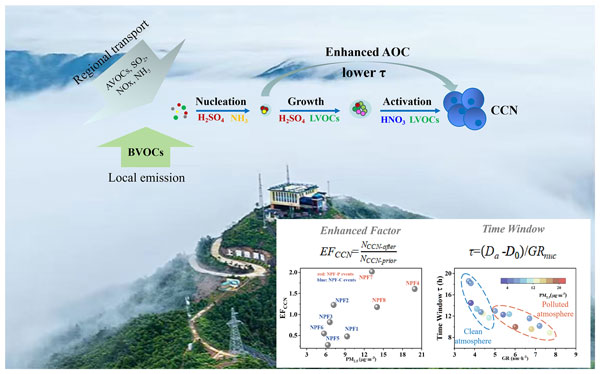
New particle formation (NPF) contributes to cloud condensation nuclei (CCN), but its role at the boundary-layer top (BLT) under polluted conditions remains unclear. Based on springtime mountain-top observations in the Yangtze River Delta, we show that polluted air masses enhance NPF intensity and accelerate NPF-to-CCN conversion. Ammonia was found to play a crucial role and a new “Time Window” metric reveals oxidation-driven growth and cross-regional transport as key factors.
Xiao-Bing Li, Bin Yuan, Yibo Huangfu, Suxia Yang, Xin Song, Jipeng Qi, Xianjun He, Sihang Wang, Yubin Chen, Qing Yang, Yongxin Song, Yuwen Peng, Guiqian Tang, Jian Gao, Dasa Gu, and Min Shao
Atmos. Chem. Phys., 25, 2459–2472, https://doi.org/10.5194/acp-25-2459-2025, https://doi.org/10.5194/acp-25-2459-2025, 2025
Short summary
Short summary
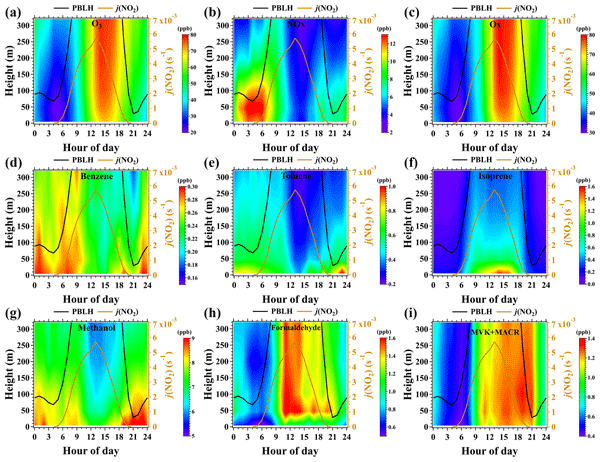
Online vertical gradient measurements of volatile organic compounds (VOCs), ozone, and NOx were conducted based on a 325 m tall tower in urban Beijing. Vertical changes in the concentrations, compositions, key drivers, and environmental impacts of VOCs were analyzed in this study. We find that VOC species display differentiated vertical variation patterns and distinct roles in contributing to photochemical ozone formation with increasing height in the urban planetary boundary layer.
Wei Zhang, Xunhua Zheng, Siqi Li, Shenghui Han, Chunyan Liu, Zhisheng Yao, Rui Wang, Kai Wang, Xiao Chen, Guirui Yu, Zhi Chen, Jiabing Wu, Huimin Wang, Junhua Yan, and Yong Li
Geosci. Model Dev. Discuss., https://doi.org/10.5194/gmd-2024-141, https://doi.org/10.5194/gmd-2024-141, 2024
Revised manuscript not accepted
Short summary
Short summary
Process-oriented biogeochemical models are promising tools for estimating the carbon fluxes of forest ecosystems. In this study, the hydro-biogeochemical model of CNMM-DNDC was improved by incorporating a new forest growth module derived from the Biome-BGC. The updated model was validated using the multiple-year observed carbon fluxes and showed better performance in capturing the daily dynamics and annual variations. The sensitive eco-physiological parameters were also identified.
Siqi Li, Bo Zhu, Xunhua Zheng, Pengcheng Hu, Shenghui Han, Jihui Fan, Tao Wang, Rui Wang, Kai Wang, Zhisheng Yao, Chunyan Liu, Wei Zhang, and Yong Li
Biogeosciences, 20, 3555–3572, https://doi.org/10.5194/bg-20-3555-2023, https://doi.org/10.5194/bg-20-3555-2023, 2023
Short summary
Short summary
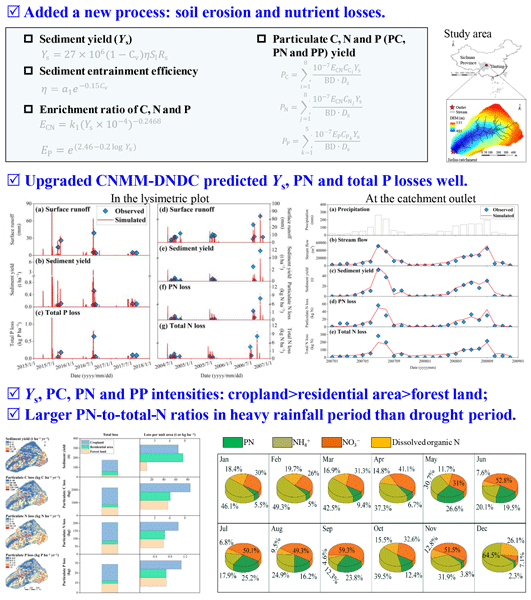
Physical soil erosion and particulate carbon, nitrogen and phosphorus loss modules were incorporated into the process-oriented hydro-biogeochemical model CNMM-DNDC to realize the accurate simulation of water-induced erosion and subsequent particulate nutrient losses at high spatiotemporal resolution.
Hang Liu, Xiaole Pan, Shandong Lei, Yuting Zhang, Aodong Du, Weijie Yao, Guiqian Tang, Tao Wang, Jinyuan Xin, Jie Li, Yele Sun, Junji Cao, and Zifa Wang
Atmos. Chem. Phys., 23, 7225–7239, https://doi.org/10.5194/acp-23-7225-2023, https://doi.org/10.5194/acp-23-7225-2023, 2023
Short summary
Short summary
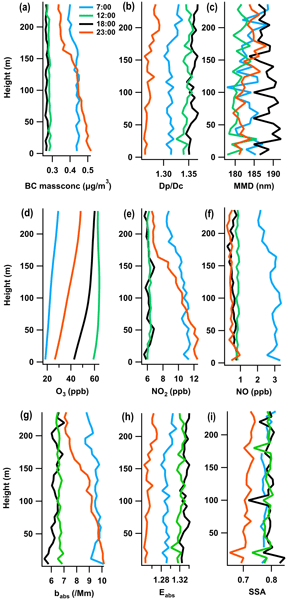
We provide the average vertical profiles of black carbon (BC) concentration, size distribution and coating thickness at different times of the day in an urban area based on 112 vertical profiles. In addition, it is found that BC in the residual layer generally has a thicker coating, higher absorption enhancement and hygroscopicity than on the surface. Such aged BC could enter into the boundary layer and influence the BC properties in the early morning.
Siqi Li, Wei Zhang, Xunhua Zheng, Yong Li, Shenghui Han, Rui Wang, Kai Wang, Zhisheng Yao, Chunyan Liu, and Chong Zhang
Biogeosciences, 19, 3001–3019, https://doi.org/10.5194/bg-19-3001-2022, https://doi.org/10.5194/bg-19-3001-2022, 2022
Short summary
Short summary
The CNMM–DNDC model was modified to simulate ammonia volatilization (AV) from croplands. AV from cultivated uplands followed the first-order kinetics, which was jointly regulated by the factors of soil properties and meteorological conditions. AV simulation from rice paddy fields was improved by incorporating Jayaweera–Mikkelsen mechanisms. The modified model performed well in simulating the observed cumulative AV measured from 63 fertilization events in China.
Chenhong Zhou, Fan Wang, Yike Guo, Cheng Liu, Dongsheng Ji, Yuesi Wang, Xiaobin Xu, Xiao Lu, Yan Wang, Gregory Carmichael, and Meng Gao
Earth Syst. Sci. Data Discuss., https://doi.org/10.5194/essd-2022-187, https://doi.org/10.5194/essd-2022-187, 2022
Manuscript not accepted for further review
Short summary
Short summary
We develop an eXtreme Gradient Boosting (XGBoost) model integrating high-resolution meteorological data, satellite retrievals of trace gases, etc. to provide reconstructed daily ground-level O3 over 2005–2021 in China. It can facilitate climatological, ecological, and health research. The dataset is freely available at Zenodo (https://zenodo.org/record/6507706#.Yo8hKujP13g; Zhou, 2022).
Quan Liu, Dantong Liu, Yangzhou Wu, Kai Bi, Wenkang Gao, Ping Tian, Delong Zhao, Siyuan Li, Chenjie Yu, Guiqian Tang, Yunfei Wu, Kang Hu, Shuo Ding, Qian Gao, Fei Wang, Shaofei Kong, Hui He, Mengyu Huang, and Deping Ding
Atmos. Chem. Phys., 21, 14749–14760, https://doi.org/10.5194/acp-21-14749-2021, https://doi.org/10.5194/acp-21-14749-2021, 2021
Short summary
Short summary
Through simultaneous online measurements of detailed aerosol compositions at both surface and surface-influenced mountain sites, the evolution of aerosol composition during daytime vertical transport was investigated. The results show that, from surface to the top of the planetary boundary layer, the oxidation state of organic aerosol had been significantly enhanced due to evaporation and further oxidation of these evaporated gases.
Meng Gao, Yang Yang, Hong Liao, Bin Zhu, Yuxuan Zhang, Zirui Liu, Xiao Lu, Chen Wang, Qiming Zhou, Yuesi Wang, Qiang Zhang, Gregory R. Carmichael, and Jianlin Hu
Atmos. Chem. Phys., 21, 11405–11421, https://doi.org/10.5194/acp-21-11405-2021, https://doi.org/10.5194/acp-21-11405-2021, 2021
Short summary
Short summary
Light absorption and radiative forcing of black carbon (BC) is influenced by both BC itself and its interactions with other aerosol chemical compositions. In this study, we used the online coupled WRF-Chem model to examine how emission control measures during the Asian-Pacific Economic Cooperation (APEC) conference affect the mixing state and light absorption of BC and the associated implications for BC-PBL interactions.
Wei Zhang, Zhisheng Yao, Siqi Li, Xunhua Zheng, Han Zhang, Lei Ma, Kai Wang, Rui Wang, Chunyan Liu, Shenghui Han, Jia Deng, and Yong Li
Biogeosciences, 18, 4211–4225, https://doi.org/10.5194/bg-18-4211-2021, https://doi.org/10.5194/bg-18-4211-2021, 2021
Short summary
Short summary
The hydro-biogeochemical model Catchment Nutrient Management Model – DeNitrification-DeComposition (CNMM-DNDC) is improved by incorporating a soil thermal module to simulate the soil thermal regime in the presence of freeze–thaw cycles. The modified model is validated at a seasonally frozen catchment with typical alpine ecosystems (wetland, meadow and forest). The simulated aggregate emissions of methane and nitrous oxide are highest for the wetland, which is dominated by the methane emissions.
Zhaobin Sun, Xiujuan Zhao, Ziming Li, Guiqian Tang, and Shiguang Miao
Atmos. Chem. Phys., 21, 8863–8882, https://doi.org/10.5194/acp-21-8863-2021, https://doi.org/10.5194/acp-21-8863-2021, 2021
Short summary
Short summary
Different weather types will shape significantly different structures of the pollution boundary layer. The findings of this study allow us to understand the inherent difference among heavy pollution boundary layers; in addition, they reveal the formation mechanism of haze pollution from an integrated synoptic-scale and boundary layer structure perspective.
Yunyan Jiang, Jinyuan Xin, Ying Wang, Guiqian Tang, Yuxin Zhao, Danjie Jia, Dandan Zhao, Meng Wang, Lindong Dai, Lili Wang, Tianxue Wen, and Fangkun Wu
Atmos. Chem. Phys., 21, 6111–6128, https://doi.org/10.5194/acp-21-6111-2021, https://doi.org/10.5194/acp-21-6111-2021, 2021
Short summary
Short summary
Multiscale-circulation coupling affects pollution by changing the planetary boundary layer (PBL) structure. The multilayer PBL under cyclonic circulation has no diurnal variation; the temperature inversion and zero-speed zone can reach 600–900 m with strong mountain winds. The monolayer PBL under southwestern circulation can reach 2000 m; the inversion is lower than nocturnal PBL (400 m) with strong ambient winds. The zonal winds' vertical shear produces the inversion under western circulation.
Dandan Zhao, Jinyuan Xin, Chongshui Gong, Jiannong Quan, Yuesi Wang, Guiqian Tang, Yongxiang Ma, Lindong Dai, Xiaoyan Wu, Guangjing Liu, and Yongjing Ma
Atmos. Chem. Phys., 21, 5739–5753, https://doi.org/10.5194/acp-21-5739-2021, https://doi.org/10.5194/acp-21-5739-2021, 2021
Short summary
Short summary
The influence of aerosol radiative forcing (ARF) on the boundary layer structure is nonlinear. The threshold of the modification effects of ARF on the boundary layer structure was determined for the first time, highlighting that once ARF exceeded a certain value, the boundary layer would quickly stabilize and aggravate air pollution. This could provide useful information for relevant atmospheric-environment improvement measures and policies.
Lei Kong, Xiao Tang, Jiang Zhu, Zifa Wang, Jianjun Li, Huangjian Wu, Qizhong Wu, Huansheng Chen, Lili Zhu, Wei Wang, Bing Liu, Qian Wang, Duohong Chen, Yuepeng Pan, Tao Song, Fei Li, Haitao Zheng, Guanglin Jia, Miaomiao Lu, Lin Wu, and Gregory R. Carmichael
Earth Syst. Sci. Data, 13, 529–570, https://doi.org/10.5194/essd-13-529-2021, https://doi.org/10.5194/essd-13-529-2021, 2021
Short summary
Short summary
China's air pollution has changed substantially since 2013. Here we have developed a 6-year-long high-resolution air quality reanalysis dataset over China from 2013 to 2018 to illustrate such changes and to provide a basic dataset for relevant studies. Surface fields of PM2.5, PM10, SO2, NO2, CO, and O3 concentrations are provided, and the evaluation results indicate that the reanalysis dataset has excellent performance in reproducing the magnitude and variation of air pollution in China.
Lei Zhang, Sunling Gong, Tianliang Zhao, Chunhong Zhou, Yuesi Wang, Jiawei Li, Dongsheng Ji, Jianjun He, Hongli Liu, Ke Gui, Xiaomei Guo, Jinhui Gao, Yunpeng Shan, Hong Wang, Yaqiang Wang, Huizheng Che, and Xiaoye Zhang
Geosci. Model Dev., 14, 703–718, https://doi.org/10.5194/gmd-14-703-2021, https://doi.org/10.5194/gmd-14-703-2021, 2021
Short summary
Short summary
Development of chemical transport models with advanced physics and chemical schemes is important for improving air-quality forecasts. This study develops the chemical module CUACE by updating with a new particle dry deposition scheme and adding heterogenous chemical reactions and couples it with the WRF model. The coupled model (WRF/CUACE) was able to capture well the variations of PM2.5, O3, NO2, and secondary inorganic aerosols in eastern China.
Cited articles
Ars, S., Vogel, F., Arrowsmith, C., Heerah, S., Knuckey, E., Lavoie, J., Lee, C., Pak, N. M., Phillips, J. L., and Wunch, D.: Investigation of the Spatial Distribution of Methane Sources in the Greater Toronto Area Using Mobile Gas Monitoring Systems, Environ. Sci. Technol., 54, 15671–15679, https://doi.org/10.1021/acs.est.0c05386, 2020.
Barlow, J. F.: Progress in observing and modelling the urban boundary layer, Urban Climate, 10, 216–240, https://doi.org/10.1016/j.uclim.2014.03.011, 2014.
Chen, Z., Jacob, D. J., Nesser, H., Sulprizio, M. P., Lorente, A., Varon, D. J., Lu, X., Shen, L., Qu, Z., Penn, E., and Yu, X.: Methane emissions from China: a high-resolution inversion of TROPOMI satellite observations, Atmos. Chem. Phys., 22, 10809–10826, https://doi.org/10.5194/acp-22-10809-2022, 2022.
Cheng, X. L., Liu, X. M., Liu, Y. J., and Hu, F.: Characteristics of CO2 concentration and flux in the Beijing urban area, J. Geophys. Res-Atmos., 123, 1785–1801, https://doi.org/10.1002/2017JD027409, 2018.
Cusworth, D. H., Jacob, D. J., Sheng, J.-X., Benmergui, J., Turner, A. J., Brandman, J., White, L., and Randles, C. A.: Detecting high-emitting methane sources in oil/gas fields using satellite observations, Atmos. Chem. Phys., 18, 16885–16896, https://doi.org/10.5194/acp-18-16885-2018, 2018.
Cusworth, D. H., Duren, R. M., Ayasse, A. K., Jiorle, R., Howell, K., Aubrey, A., Green, R. O., Eastwood, M. L., Chapman, J. W., Thorpe, A. K., Heckler, J., Asner, G. P., Smith, M. L., Thoma, E., Krause, M. J., Heins, D., and Thorneloe, S.: Quantifying methane emissions from United States landfills, Science, 383, 1499–1504, https://doi.org/10.1126/science.adi7735, 2024.
Donateo, A., Conte, M., Grasso, F. M., and Contini, D.: Seasonal and diurnal behaviour of size segregated particles fluxes in a suburban area, Atmos. Environ, 219, 117052, https://doi.org/10.1016/j.atmosenv.2019.117052, 2019.
Duren, R. M., Thorpe, A. K., Foster, K. T., Rafiq, T., Hopkins, F. M., Yadav, V., Bue, B. D., Thompson, D. R., Conley, S., Colombi, N. K., Frankenberg, C., McCubbin, I. B., Eastwood, M. L., Falk, M., Herner, J. D., Croes, B. E., Green, R. O., and Miller, C. E.: California's methane super-emitters, Nature, 575, 180–184, https://doi.org/10.1038/s41586-019-1720-3, 2019.
Economics-and-Development-Research-Institute: World and China Energy Outlook 2060, https://www.docin.com/p-2955292161.html (last access: 6 August 2025), 2021.
Economics & Development Research Institute of SINOPEC: China Energy Outlook 2060 (Research Report, Project No.: 2021TS31), Beijing: China Petroleum & Chemical Corporation, https://max.book118.com/html/2022/0114/8053004077004055.shtm (last access: 18 August 2024), 2022.
Economics & Development Research Institute of SINOPEC: China Gas Development Report 2023, https://www.nea.gov.cn/2023-07/21/c_1310733569.htm (last access: 21 August 2024), 2024.
Environmental-Protection-Agency: Understanding global warming potentials, https://www.epa.gov/ghgemissions/understanding-global-warming-potentials, last access: 22 October 2024.
Fan, S. M., Wofsy, S. C., Bakwin, P. S., Jacob, D. J., and Fitzjarrald, D. R.: Atmosphere-biosphere exchange of CO2 and O3 in the central Amazon Forest, JGR: Atmospheres, 95, 16851–16864, https://doi.org/10.1029/JD095iD10p16851, 2012.
Frankenberg, C., Thorpe, A. K., Thompson, D. R., Hulley, G., Kort, E. A., Vance, N., Borchardt, J., Krings, T., Gerilowski, K., Sweeney, C., Conley, S., Bue, B. D., Aubrey, A. D., Hook, S., and Green, R. O.: Airborne methane remote measurements reveal heavy-tail flux distribution in Four Corners region, Proc. Natl. Acad. Sci. U. S. A., 113, 9734-9739, https://doi.org/10.1073/pnas.1605617113, 2016.
Gao, S., Tian, W., and Wang, C.: A method, system, equipment, and medium for determining methane leakage in a natural gas pipeline network (Chinese Patent No. CN118333786A). National Intellectual Property Administration, PRC, http://epub.cnipa.gov.cn/ (last access: 18 December 2025), 2024 (in Chinese).
Gioli, B., Toscano, P., Lugato, E., Matese, A., Miglietta, F., Zaldei, A., and Vaccari, F. P.: Methane and carbon dioxide fluxes and source partitioning in urban areas: the case study of Florence, Italy, Environ. Pollut., 164, 125–131, https://doi.org/10.1016/j.envpol.2012.01.019, 2012.
Helfter, C., Tremper, A. H., Halios, C. H., Kotthaus, S., Bjorkegren, A., Grimmond, C. S. B., Barlow, J. F., and Nemitz, E.: Spatial and temporal variability of urban fluxes of methane, carbon monoxide and carbon dioxide above London, UK, Atmos. Chem. Phys., 16, 10543–10557, https://doi.org/10.5194/acp-16-10543-2016, 2016.
Hu, W., Qin, K., Lu, F., Li, D., and Cohen, J. B.: Merging TROPOMI and eddy covariance observations to quantify 5-years of daily CH4 emissions over coal-mine dominated region, Int. J. Coal Sci. Technol., 11, 56, https://doi.org/10.1007/s40789-024-00700-1, 2024.
Hurry, J., Risk, D., Lavoie, M., Brooks, B.-G., Phillips, C. L., and Göckede, M.: Atmospheric monitoring and detection of fugitive emissions for Enhanced Oil Recovery, Int. J. Greenh. Gas Con., 45, 1–8, https://doi.org/10.1016/j.ijggc.2015.11.031, 2016.
Kaimal, J. C. and Finnigan, J. J.: Atmospheric boundary layer flows: their structure and measurement, New York: Oxford University Press, https://doi.org/10.1093/oso/9780195062397.001.0001, 1994.
Kaimal, J. C., Wyngaard, J. C., Izumi, Y., and Coté, O. R.: Spectral characteristics of surface-layer turbulence, Quart. J. R. Met. Soc., 98, 563–589, https://doi.org/10.1002/qj.49709841707, 1972.
Kemfert, C., Präger, F., Braunger, I., Hoffart, F. M., and Brauers, H.: The expansion of natural gas infrastructure puts energy transitions at risk, Nature Energy, 7, 582–587, https://doi.org/10.1038/s41560-022-01060-3, 2022.
Kljun, N., Calanca, P., Rotach, M. W., and Schmid, H. P.: A Simple Parameterisation for Flux Footprint Predictions, Boundary-Layer Meteorology, 112, 503–523, https://doi.org/10.1023/b:Boun.0000030653.71031.96, 2004.
Lamb, B. K., McManus, J. B., Shorter, J. H., Kolb, C. E., Mosher, B., Harriss, R. C., Allwine, E., Blaha, D., Howard, T., Guenther, A., Lott, R. A., Siverson, R., Westburg, H., and Zimmerman, P.: Development of atmospheric tracer methods to measure methane emissions from natural gas facilities and urban areas, Environ. Sci. Technol., 29, 1468–1479, https://doi.org/10.1021/es00006a007, 1995.
Lee, X.: Handbook of micrometeorology: A Guide for surface Flux Measurement and Analysis, New York: Klewer Academic Publishers, https://doi.org/10.1007/1-4020-2265-4, 2004.
Li, X., Cohen, J. B., Tiwari, P., Wu, L., Wang, S., He, Q., Yang, H., and Qin, K.: Space-based inversion reveals underestimated carbon monoxide emissions over Shanxi, Commun. Earth Environ., 6, 357, https://doi.org/10.1038/s43247-025-02301-5, 2025.
Liu, H. Z., Feng, J. W., Järvi, L., and Vesala, T.: Four-year (2006–2009) eddy covariance measurements of CO2 flux over an urban area in Beijing, Atmos. Chem. Phys., 12, 7881–7892, https://doi.org/10.5194/acp-12-7881-2012, 2012.
Liu, S., Liu, K., Wang, K., Chen, X., and Wu, K.: Fossil-Fuel and Food Systems Equally Dominate Anthropogenic Methane Emissions in China, Environ. Sci. Technol., 57, 2495–2505, https://doi.org/10.1021/acs.est.2c07933, 2023.
Liu, Z., Liu, Z., Song, T., Gao, W., Wang, Y., Wang, L., Hu, B., Xin, J., and Wang, Y.: Long-term variation in CO2 emissions with implications for the interannual trend in PM2.5 over the last decade in Beijing, China, Environ. Pollut., 266, 115014, https://doi.org/10.1016/j.envpol.2020.115014, 2020.
Lu, F., Qin, K., Cohen, J. B., He, Q., Tiwari, P., Hu, W., Ye, C., Shan, Y., Xu, Q., Wang, S., and Tu, Q.: Surface-observation-constrained high-frequency coal mine methane emissions in Shanxi, China, reveal more emissions than inventories, consistent with satellite inversion, Atmos. Chem. Phys., 25, 5837–5856, https://doi.org/10.5194/acp-25-5837-2025, 2025.
Mauder, M. and Foken, T.: Documentation and Instruction Manual of the Eddy Covariance Software Package TK2, Zenodo [software], https://doi.org/10.5281/zenodo.20349, 2004.
Moncrieff, J. B., Malhi, Y., and Leuning, R.: The propagation of errors in long-term measurements of land–fluxes of carbon and water, Global Change Biology, 2, 231–240, https://doi.org/10.1111/j.1365-2486.1996.tb00075.x, 1996.
Pawlak, W. and Fortuniak, K.: Eddy covariance measurements of the net turbulent methane flux in the city centre – results of 2-year campaign in Łódź, Poland, Atmos. Chem. Phys., 16, 8281–8294, https://doi.org/10.5194/acp-16-8281-2016, 2016.
Pu, W., Sheng, J., Tian, P., Huang, M., Liu, X., Collett Jr., J. L., Li, Z., Zhao, X., He, D., and Dong, F.: On-road mobile mapping of spatial variations and source contributions of ammonia in Beijing, China, Sci. Total Environ., 864, 160869, https://doi.org/10.1016/j.scitotenv.2022.160869, 2023.
Qin, K., Hu, W., He, Q., Lu, F., and Cohen, J. B.: Individual coal mine methane emissions constrained by eddy covariance measurements: low bias and missing sources, Atmos. Chem. Phys., 24, 3009–3028, https://doi.org/10.5194/acp-24-3009-2024, 2024.
Sargent, M. R., Floerchinger, C., McKain, K., Budney, J., Gottlieb, E. W., Hutyra, L. R., Rudek, J., and Wofsy, S. C.: Majority of US urban natural gas emissions unaccounted for in inventories, Proc. Natl. Acad. Sci. U. S. A., 118, e2105804118, https://doi.org/10.1073/pnas.2105804118, 2021.
Schiferl, L. D., Hallward-Driemeier, A., Zhao, Y., Toledo-Crow, R., and Commane, R.: Missing wintertime methane emissions from New York City related to combustion, Atmos. Chem. Phys., 25, 15683–15700, https://doi.org/10.5194/acp-25-15683-2025, 2025.
Seneviratne, S. I., Rogelj, J., Seferian, R., Wartenburger, R., Allen, M. R., Cain, M., Millar, R. J., Ebi, K. L., Ellis, N., Hoegh-Guldberg, O., Payne, A. J., Schleussner, C. F., Tschakert, P., and Warren, R. F.: The many possible climates from the Paris Agreement's aim of 1.5 °C warming, Nature, 558, 41–49, https://doi.org/10.1038/s41586-018-0181-4, 2018.
Shen, L., Jacob, D. J., Gautam, R., Omara, M., Scarpelli, T. R., Lorente, A., Zavala-Araiza, D., Lu, X., Chen, Z., and Lin, J.: National quantifications of methane emissions from fuel exploitation using high resolution inversions of satellite observations, Nat. Commun., 14, 4948, https://doi.org/10.1038/s41467-023-40671-6, 2023.
Sherwin, E. D., Rutherford, J. S., Zhang, Z., Chen, Y., Wetherley, E. B., Yakovlev, P. V., Berman, E. S. F., Jones, B. B., Cusworth, D. H., Thorpe, A. K., Ayasse, A. K., Duren, R. M., and Brandt, A. R.: US oil and gas system emissions from nearly one million aerial site measurements, Nature, 627, 328–334, https://doi.org/10.1038/s41586-024-07117-5, 2024.
Sun, W., Deng, L., Wu, G., Wu, L., Han, P., Miao, Y., and Yao, B.: Atmospheric Monitoring of Methane in Beijing Using a Mobile Observatory, Atmosphere, 10, 554, https://doi.org/10.3390/atmos10090554, 2019.
Vickers, D. and Mahrt, L.: Quality Control and Flux Sampling Problems for Tower and Aircraft Data, J. Atmos. Oceanic Technol., 14, 512–526, https://doi.org/10.1175/1520-0426(1997)014<0512:Qcafsp>2.0.Co;2, 1997.
Wang, P., Zhou, W., Xiong, X., Wu, S., Niu, Z., Cheng, P., Du, H., and Hou, Y.: Stable carbon isotopic characteristics of fossil fuels in China, Sci. Total. Environ., 805, 150240, https://doi.org/10.1016/j.scitotenv.2021.150240, 2022a.
Wang, P., Zhou, W., Xiong, X., Wu, S., Niu, Z., Yu, Y., Liu, J., Feng, T., Cheng, P., Du, H., Lu, X., Chen, N., and Hou, Y.: Source Attribution of Atmospheric CO2 Using 14C and 13C as Tracers in Two Chinese Megacities During Winter, JGR: Atmospheres, 127, e2022JD036504, https://doi.org/10.1029/2022jd036504, 2022b.
Wang, Y., Guo, C. H., Chen, X. J., Jia, L. Q., Guo, X. N., Chen, R. S., and Wang, H. D.: Global climate governance strategies and prospects for China's carbon neutrality path. Forecasting And Prospects Research Report, https://ceep.bit.edu.cn/docs/2021-01/0d8cba76b1fc4ec3943194d8fa0104eb.pdf (last access: 12 December 2024), 2021.
Webb, E. K., Pearman, G. I., and Leuning, R.: Correction of flux measurements for density effects due to heat and water vapour transfer, Q. J. R. Meteorolog. Soc., 106, 85–100, https://doi.org/10.1002/qj.49710644707, 2007.
Weller, Z. D., Roscioli, J. R., Daube, W. C., Lamb, B. K., Ferrara, T. W., Brewer, P. E., and von Fischer, J. C.: Vehicle-Based Methane Surveys for Finding Natural Gas Leaks and Estimating Their Size: Validation and Uncertainty, Environ. Sci. Technol., 52, 11922–11930, https://doi.org/10.1021/acs.est.8b03135, 2018.
Weller, Z. D., Yang, D. K., and von Fischer, J. C.: An open source algorithm to detect natural gas leaks from mobile methane survey data, PLoS One, 14, e0212287, https://doi.org/10.1371/journal.pone.0212287, 2019.
Wunch, D., Toon, G. C., Hedelius, J. K., Vizenor, N., Roehl, C. M., Saad, K. M., Blavier, J.-F. L., Blake, D. R., and Wennberg, P. O.: Quantifying the loss of processed natural gas within California's South Coast Air Basin using long-term measurements of ethane and methane, Atmos. Chem. Phys., 16, 14091–14105, https://doi.org/10.5194/acp-16-14091-2016, 2016.
Zheng, B., Cohen, J. B., Lu, L., Hu, W., Tiwari, P., Lolli, S., Garzelli, A., Su, H., and Qin, K.: How can we trust TROPOMI based Methane Emissions Estimation: Calculating Emissions over Unidentified Source Regions, EGUsphere [preprint], https://doi.org/10.5194/egusphere-2025-1446, 2025.
Zöll, U., Brümmer, C., Schrader, F., Ammann, C., Ibrom, A., Flechard, C. R., Nelson, D. D., Zahniser, M., and Kutsch, W. L.: Surface–atmosphere exchange of ammonia over peatland using QCL-based eddy-covariance measurements and inferential modeling, Atmos. Chem. Phys., 16, 11283–11299, https://doi.org/10.5194/acp-16-11283-2016, 2016.
Short summary
The methane leakage from natural gas may offset the reduced CO2 emissions from its combustion, To quantify its effect, we established the flux observation platform in Beijing, the results showed that natural gas has become a common source of both after the transformation of energy structure, the natural gas could escape during production, storage and use. Although the natural gas leakage rate is not high (1.12 %), the greenhouse effect caused by natural gas leakage can not be ignored.
The methane leakage from natural gas may offset the reduced CO2 emissions from its combustion,...
Altmetrics
Final-revised paper
Preprint