
Articles | Volume 26, issue 18
https://doi.org/10.5194/acp-26-13531-2026
© Author(s) 2026. This work is distributed under
the Creative Commons Attribution 4.0 License.
the Creative Commons Attribution 4.0 License.
https://doi.org/10.5194/acp-26-13531-2026
© Author(s) 2026. This work is distributed under
the Creative Commons Attribution 4.0 License.
the Creative Commons Attribution 4.0 License.
Research article
| 
25 Sep 2026
Research article |
| 25 Sep 2026
| 25 Sep 2026
The dynamics and atmospheric impact of fire-induced circulations in idealised large-eddy simulations inspired by the Santa Coloma de Queralt fire
Tristan Roelofs
CORRESPONDING AUTHOR

Meteorology and Air Quality Group, Wageningen University & Research, Wageningen, the Netherlands
Marc Castellnou
Meteorology and Air Quality Group, Wageningen University & Research, Wageningen, the Netherlands
Catalan Fire & Rescue Service, Bombers GRAF, Barcelona, Spain
Jordi Vilà-Guerau de Arellano
Meteorology and Air Quality Group, Wageningen University & Research, Wageningen, the Netherlands
Martin Janssens
Meteorology and Air Quality Group, Wageningen University & Research, Wageningen, the Netherlands
Chiel van Heerwaarden
Meteorology and Air Quality Group, Wageningen University & Research, Wageningen, the Netherlands
Related authors
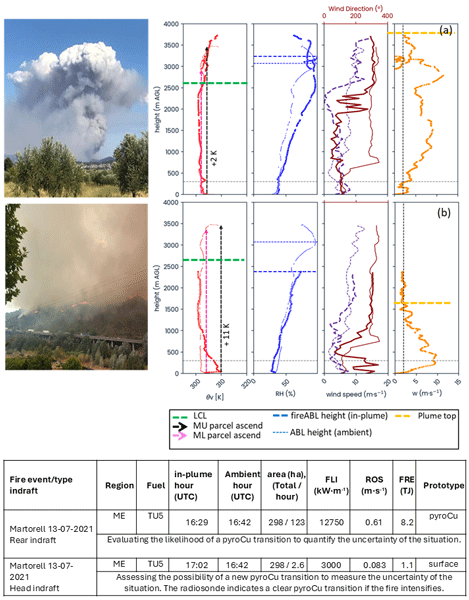
Marc Castellnou Ribau, Mercedes Bachfischer, Pau Guarque, Laia Estivill, Marta Miralles Bover, Borja Ruiz, Jordi Pagès, Brian Verhoeven, Zisoula Ntasiou, Ove Stokkeland, Chiel van Heerwaarden, Tristan Roelofs, Martin Janssens, Cathelijne R. Stoof, and Jordi Vilà-Guerau de Arellano
Atmos. Meas. Tech., 18, 7805–7831, https://doi.org/10.5194/amt-18-7805-2025, https://doi.org/10.5194/amt-18-7805-2025, 2025
Short summary
Short summary
Firefighter entrapments can occur when wildfires escalate suddenly due to fire-atmosphere interactions. This study presents a method to analyze this in real-time using two weather balloon measurements: ambient and in-plume conditions. Researchers launched 156 balloons during wildfire seasons in Spain, Chile, Greece, and the Netherlands. This methodology detects sudden changes in fire behavior by comparing ambient and in-plume data, ultimately enhancing research on fire-atmosphere interactions.
Vicente Espinoza, Oscar Hartogensis, Felipe Lobos-Roco, and Jordi Vilà-Guerau de Arellano
EGUsphere, https://doi.org/10.5194/egusphere-2026-4980, https://doi.org/10.5194/egusphere-2026-4980, 2026
This preprint is open for discussion and under review for Atmospheric Chemistry and Physics (ACP).
Short summary
Short summary
Marine low clouds from the Southeast Pacific enter the Atacama Desert coastal region as fog. Understanding the dynamics of this transition is vital as fog is the sole source of fresh water in this hyper-arid region. We study how sinking air motions and dry-air mixing shape the cloud layer in its transition from ocean to land. We show that along the transition, the cloud layer weakens, governed by the interplay of these processes, whose relative importance shifts spatially.
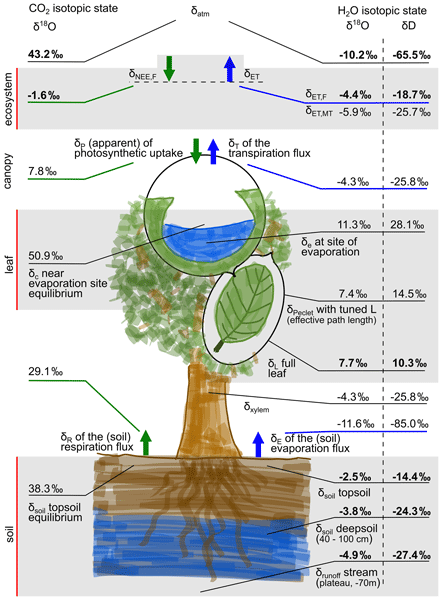
Robbert P. J. Moonen, Getachew A. Adnew, Jordi Vilà-Guerau de Arellano, David J. Bonell Fontas, and Thomas Röckmann
Biogeosciences, 23, 5163–5184, https://doi.org/10.5194/bg-23-5163-2026, https://doi.org/10.5194/bg-23-5163-2026, 2026
Short summary
Short summary
We used high-frequency H₂O and CO₂ isotope measurements taken in the Amazon Tall Tower Observatory (ATTO) to separate water vapour and carbon dioxide fluxes into their component processes. During midday, ~95 % of evapotranspiration came from plant transpiration. Isotopes also revealed the balance between photosynthesis and respiration, showing strong sensitivity to leaf CO₂ ratios. These results improve understanding of Amazon ecosystem function.
Sinclair Chinyoka, Masilin Gudoshava, Hussen Seid Endris, Shingirai Shepard Nangombe, Jordi Vila-Guerau De Arellano, and Gert-Jan Steeneveld
EGUsphere, https://doi.org/10.5194/egusphere-2026-2832, https://doi.org/10.5194/egusphere-2026-2832, 2026
Short summary
Short summary
Rainfall from March to May is vital for farming, water supply, and disaster planning in East Africa (EA)8, but it remains difficult to predict. We used climate data and machine learning to identify early signs that influence wet and dry seasons. The results show that EA rainfall is shaped by linked ocean, land, air temperature, and pressure patterns across several regions. This approach improves forecast skill and can support earlier, clearer warnings for climate-sensitive communities.
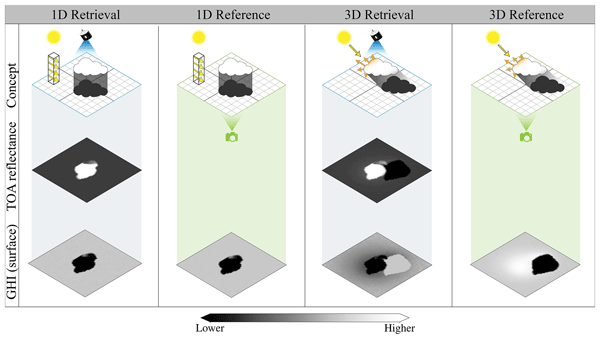
Job I. Wiltink, Victor J. H. Trees, Chiel C. van Heerwaarden, and Jan Fokke Meirink
Atmos. Chem. Phys., 26, 7207–7233, https://doi.org/10.5194/acp-26-7207-2026, https://doi.org/10.5194/acp-26-7207-2026, 2026
Short summary
Short summary
Retrievals of surface solar radiation from passive satellite instruments normally neglect the three-dimensional (3D) interaction between clouds and radiation. This study identifies error sources arising from this neglect and demonstrates their influence on retrieval accuracy across a range of spatial resolutions. At the resolution of current geostationary satellites, 3D interactions can already introduce considerable errors, underscoring the need to develop corrections that account for them.
Michiel K. van der Molen, Henk Snellen, Rupert Holzinger, Johannes G. M. Barten, Hong Zhao, Laurens Ganzeveld, Julie Fry, Wouter Peters, Maarten Krol, Jordi Vila-Guerau de Arrelano, and Bart Kruijt
Earth Syst. Sci. Data Discuss., https://doi.org/10.5194/essd-2026-99, https://doi.org/10.5194/essd-2026-99, 2026
Revised manuscript under review for ESSD
Short summary
Short summary
In 2021, a second tower was built in Loobos (NL-Loo) to measure carbon dioxide and water fluxes, as an Integrated Carbon Observing System (ICOS) Class 2 Ecosystem station. Instrumentation was installed to measure volatile organic compound and ozone fluxes. This paper describes the site’s geological and cultural history, ecosystem composition, instrumentation and ancillary ecosystem measurements. The paper goes into the quality of the measurements and continuity with respect to the first tower.
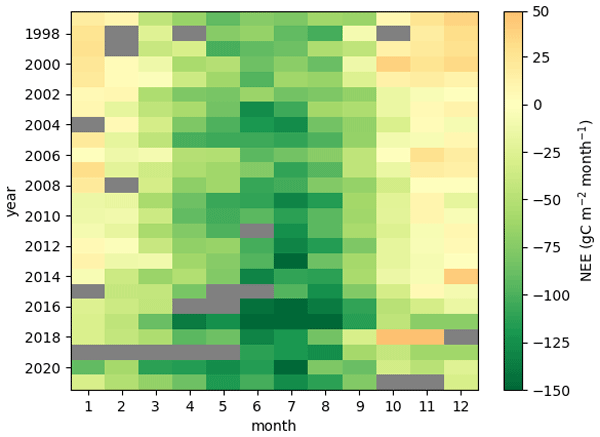
Hong Zhao, Han Dolman, Jan Elbers, Wilma Jans, Bart Kruijt, Eddy Moors, Henk Snellen, Jordi Vila-Guerau de Arellano, Wouter Peters, Maarten C. Krol, Ronald Hutjes, and Michiel van der Molen
Earth Syst. Sci. Data, 18, 2023–2045, https://doi.org/10.5194/essd-18-2023-2026, https://doi.org/10.5194/essd-18-2023-2026, 2026
Short summary
Short summary
Under the Kyoto Protocol the carbon dioxide (CO2) balance for forest ecosystems was required to be measured. Consequently, CO2 flux measurements have been conducted in Loobos site in the Netherlands since 1996, becoming one of the 17 first FLUXNET sites globally. This paper provides a comprehensive overview of the instrumentation, data processing and the resulting data archive, enabling its further use in data analysis, model development and validation of satellite data retrievals.
Anna C. Huitema, Vincent S. de Feiter, Raquel González-Armas, Oscar K. Hartogensis, Hella van Asperen, Cleo Quaresma Dias-Júnior, and Jordi Vilà-Guerau de Arellano
EGUsphere, https://doi.org/10.5194/egusphere-2026-684, https://doi.org/10.5194/egusphere-2026-684, 2026
Short summary
Short summary
We investigated nighttime CO2 exchange within and above the Amazon rainforest canopy using observations from the CloudRoots-Amazon22 campaign. Two atmospheric regimes were identified: a turbulent state, in which CO2 exchange between the within- and above-canopy layers was enhanced, and a calm state, with little turbulence and minimal exchange between the layers. Our results indicate that accounting for these two regimes is essential to reproduce nighttime CO2 dynamics correctly.
Marc Castellnou Ribau, Mercedes Bachfischer, Pau Guarque, Laia Estivill, Marta Miralles Bover, Borja Ruiz, Jordi Pagès, Brian Verhoeven, Zisoula Ntasiou, Ove Stokkeland, Chiel van Heerwaarden, Tristan Roelofs, Martin Janssens, Cathelijne R. Stoof, and Jordi Vilà-Guerau de Arellano
Atmos. Meas. Tech., 18, 7805–7831, https://doi.org/10.5194/amt-18-7805-2025, https://doi.org/10.5194/amt-18-7805-2025, 2025
Short summary
Short summary
Firefighter entrapments can occur when wildfires escalate suddenly due to fire-atmosphere interactions. This study presents a method to analyze this in real-time using two weather balloon measurements: ambient and in-plume conditions. Researchers launched 156 balloons during wildfire seasons in Spain, Chile, Greece, and the Netherlands. This methodology detects sudden changes in fire behavior by comparing ambient and in-plume data, ultimately enhancing research on fire-atmosphere interactions.
Dieu Anh Tran, Jordi Vilà-Guerau de Arellano, Ingrid T. Luijkx, Christoph Gerbig, Michał Gałkowski, Santiago Botía, Kim Faassen, and Sönke Zaehle
Atmos. Chem. Phys., 25, 16553–16588, https://doi.org/10.5194/acp-25-16553-2025, https://doi.org/10.5194/acp-25-16553-2025, 2025
Short summary
Short summary
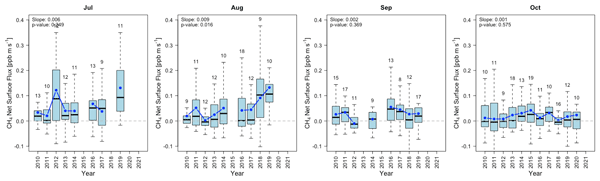
Analysis of CH4 data (2010–2021) from ZOtino Tall Tower Observatory in Central Siberia shows an increase in the late summer diurnal amplitude, driven by nighttime emissions. These trends correlate with rising soil temperature and moisture during the late summer and snow depth of the preceding spring. Peaks in 2012 and 2019 emission link to wildfires activity. Findings suggest wetlands as key CH4 sources and underscore the need for ongoing high-resolution monitoring in this region.
Jolanda J. E. Theeuwen, Sarah N. Warnau, Imme B. Benedict, Stefan C. Dekker, Hubertus V. M. Hamelers, Chiel C. van Heerwaarden, and Arie Staal
Biogeosciences, 22, 6913–6936, https://doi.org/10.5194/bg-22-6913-2025, https://doi.org/10.5194/bg-22-6913-2025, 2025
Short summary
Short summary
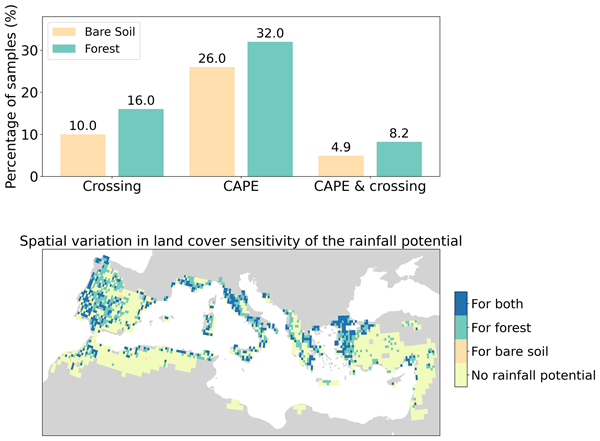
The Mediterranean Basin is prone to drying. This study uses a simple model to explore how forests affect the potential for rainfall by analyzing the lowest part of the atmosphere. Results show that forest contributes to rainfall potential in wet regions, where it also promotes cooling, and may reduce local precipitation in dry regions. These findings suggest that the impact of forestation varies with soil moisture, and may possibly mitigate or intensify future drying.
Jordi Vilà-Guerau de Arellano, Roderick Dewar, Kim A. P. Faassen, Teemu Hölttä, Remco de Kok, Ingrid T. Luijkx, and Timo Vesala
Biogeosciences, 22, 6327–6341, https://doi.org/10.5194/bg-22-6327-2025, https://doi.org/10.5194/bg-22-6327-2025, 2025
Short summary
Short summary
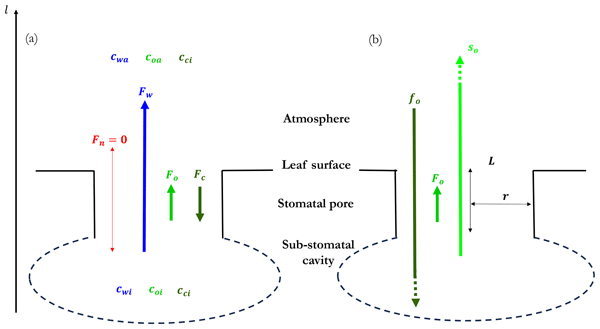
This study explores how oxygen moves through tiny pores in leaves, especially when water vapor is also flowing out. We show that under common conditions, oxygen can move from the leaf to the air even when its concentration is higher outside – a surprising effect. Our findings help explain oxygen exchange in still air and support better models of plant–atmosphere interactions.
Hans Segura, Xabier Pedruzo-Bagazgoitia, Philipp Weiss, Sebastian K. Müller, Thomas Rackow, Junhong Lee, Edgar Dolores-Tesillos, Imme Benedict, Matthias Aengenheyster, Razvan Aguridan, Gabriele Arduini, Alexander J. Baker, Jiawei Bao, Swantje Bastin, Eulàlia Baulenas, Tobias Becker, Sebastian Beyer, Hendryk Bockelmann, Nils Brüggemann, Lukas Brunner, Suvarchal K. Cheedela, Sushant Das, Jasper Denissen, Ian Dragaud, Piotr Dziekan, Madeleine Ekblom, Jan Frederik Engels, Monika Esch, Richard Forbes, Claudia Frauen, Lilli Freischem, Diego García-Maroto, Philipp Geier, Paul Gierz, Álvaro González-Cervera, Katherine Grayson, Matthew Griffith, Oliver Gutjahr, Helmuth Haak, Ioan Hadade, Kerstin Haslehner, Shabeh ul Hasson, Jan Hegewald, Lukas Kluft, Aleksei Koldunov, Nikolay Koldunov, Tobias Kölling, Shunya Koseki, Sergey Kosukhin, Josh Kousal, Peter Kuma, Arjun U. Kumar, Rumeng Li, Nicolas Maury, Maximilian Meindl, Sebastian Milinski, Kristian Mogensen, Bimochan Niraula, Jakub Nowak, Divya Sri Praturi, Ulrike Proske, Dian Putrasahan, René Redler, David Santuy, Domokos Sármány, Reiner Schnur, Patrick Scholz, Dmitry Sidorenko, Dorian Spät, Birgit Sützl, Daisuke Takasuka, Adrian Tompkins, Alejandro Uribe, Mirco Valentini, Menno Veerman, Aiko Voigt, Sarah Warnau, Fabian Wachsmann, Marta Wacławczyk, Nils Wedi, Karl-Hermann Wieners, Jonathan Wille, Marius Winkler, Yuting Wu, Florian Ziemen, Janos Zimmermann, Frida A.-M. Bender, Dragana Bojovic, Sandrine Bony, Simona Bordoni, Patrice Brehmer, Marcus Dengler, Emanuel Dutra, Saliou Faye, Erich Fischer, Chiel van Heerwaarden, Cathy Hohenegger, Heikki Järvinen, Markus Jochum, Thomas Jung, Johann H. Jungclaus, Noel S. Keenlyside, Daniel Klocke, Heike Konow, Martina Klose, Szymon Malinowski, Olivia Martius, Thorsten Mauritsen, Juan Pedro Mellado, Theresa Mieslinger, Elsa Mohino, Hanna Pawłowska, Karsten Peters-von Gehlen, Abdoulaye Sarré, Pajam Sobhani, Philip Stier, Lauri Tuppi, Pier Luigi Vidale, Irina Sandu, and Bjorn Stevens
Geosci. Model Dev., 18, 7735–7761, https://doi.org/10.5194/gmd-18-7735-2025, https://doi.org/10.5194/gmd-18-7735-2025, 2025
Short summary
Short summary
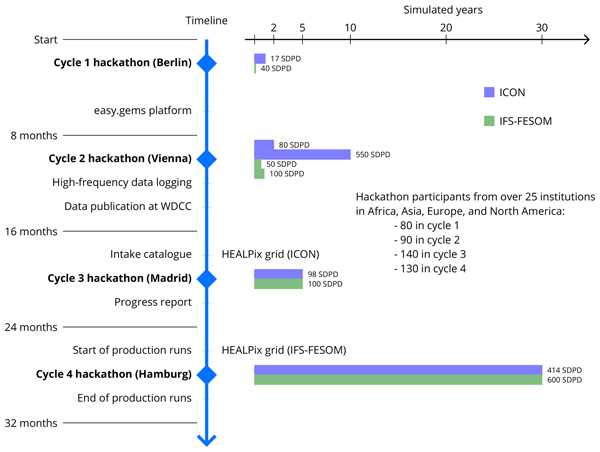
The Next Generation of Earth Modeling Systems project (nextGEMS) developed two Earth system models that use horizontal grid spacing of 10 km and finer, giving more fidelity to the representation of local phenomena, globally. In its fourth cycle, nextGEMS simulated the Earth System climate over the 2020–2049 period under the SSP3-7.0 scenario. Here, we provide an overview of nextGEMS, insights into the model development, and the realism of multi-decadal, kilometer-scale simulations.
Robbert P. J. Moonen, Getachew A. Adnew, Jordi Vilà-Guerau de Arellano, Oscar K. Hartogensis, David J. Bonell Fontas, Shujiro Komiya, Sam P. Jones, and Thomas Röckmann
Atmos. Chem. Phys., 25, 12197–12212, https://doi.org/10.5194/acp-25-12197-2025, https://doi.org/10.5194/acp-25-12197-2025, 2025
Short summary
Short summary
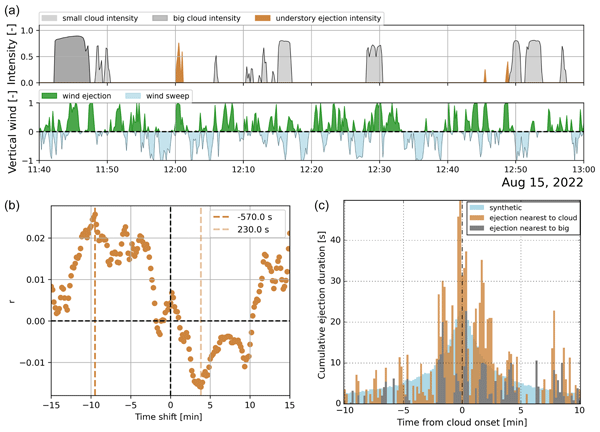
Understory ejections are distinct turbulent features emerging in prime tall-forest ecosystems. We share a method to isolate understory ejections based on H2O–CO2 anomaly quadrants. From these, we calculate the flux contributions of understory ejections and all flux quadrants. In addition, we show that a distinctly depleted isotopic composition can be found in the ejected water vapour. Finally, we explored the role of clouds as a potential trigger for understory ejections.
Leon Geers, Ruud Janssen, Gudrun Thorkelsdottir, Jordi Vilà-Guerau de Arellano, and Martijn Schaap
Geosci. Model Dev., 18, 6647–6669, https://doi.org/10.5194/gmd-18-6647-2025, https://doi.org/10.5194/gmd-18-6647-2025, 2025
Short summary
Short summary
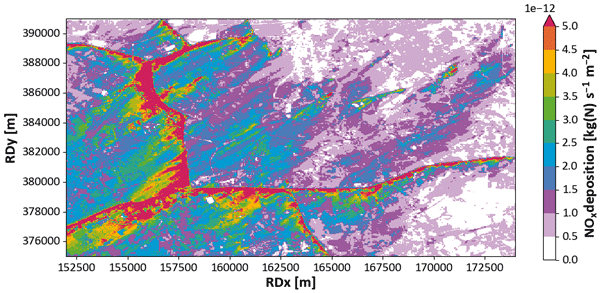
High-resolution data on reactive nitrogen deposition are needed to inform cost-effective policies. Here, we describe the implementation of a dry deposition module in a large eddy simulation code. With this model, we are able to represent the turbulent exchange of tracers at the hectometer resolution. The model calculates the dispersion and deposition of NOx and NH3 in great spatial detail, clearly showing the influence of local land use patterns.
Job I. Wiltink, Hartwig Deneke, Chiel C. van Heerwaarden, and Jan Fokke Meirink
Atmos. Meas. Tech., 18, 3917–3936, https://doi.org/10.5194/amt-18-3917-2025, https://doi.org/10.5194/amt-18-3917-2025, 2025
Short summary
Short summary
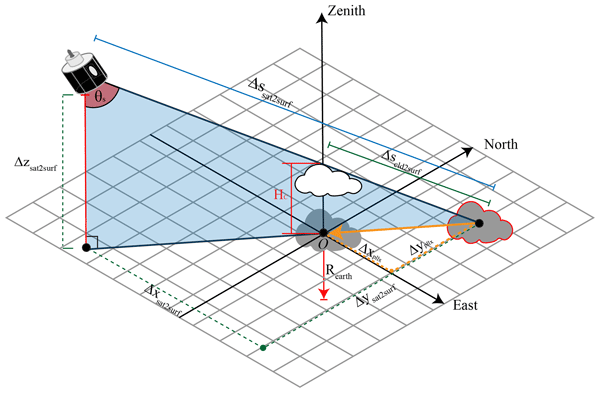
Global horizontal irradiance retrievals from satellite observations are affected by spatial displacements due to parallax and cloud shadows. We assess different approaches to correct for these displacements and quantify their added value by comparison with a network of ground-based pyranometer observations. The corrections are found to become increasingly important at higher spatial resolutions and are most relevant for variable cloud types.
Mary Rose Mangan, Jordi Vilà-Guerau de Arellano, Bart J. H. van Stratum, Marie Lothon, Guylaine Canut-Rocafort, and Oscar K. Hartogensis
Atmos. Chem. Phys., 25, 8959–8981, https://doi.org/10.5194/acp-25-8959-2025, https://doi.org/10.5194/acp-25-8959-2025, 2025
Short summary
Short summary
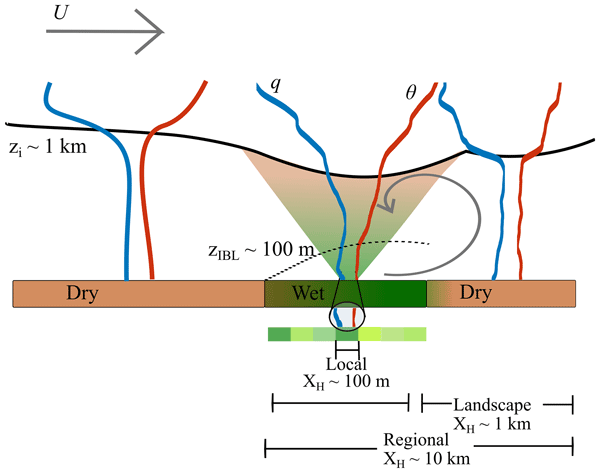
Using observations and high-resolution turbulence modeling, we examine the influence of irrigation-driven surface heterogeneity on the atmospheric boundary layer (ABL). We use a multi-scale approach for characterizing surface heterogeneity to explore how its influence on the ABL within a grid cell would change with higher-resolution models. We find that the height of the ABL is variable across short distances and that the surface heterogeneity is felt least strongly in the middle of the ABL.
Arseniy Karagodin-Doyennel, Fredrik Jansson, Bart J. H. van Stratum, Hugo Denier van der Gon, Jordi Vilà-Guerau de Arellano, and Sander Houweling
Geosci. Model Dev., 18, 4571–4599, https://doi.org/10.5194/gmd-18-4571-2025, https://doi.org/10.5194/gmd-18-4571-2025, 2025
Short summary
Short summary
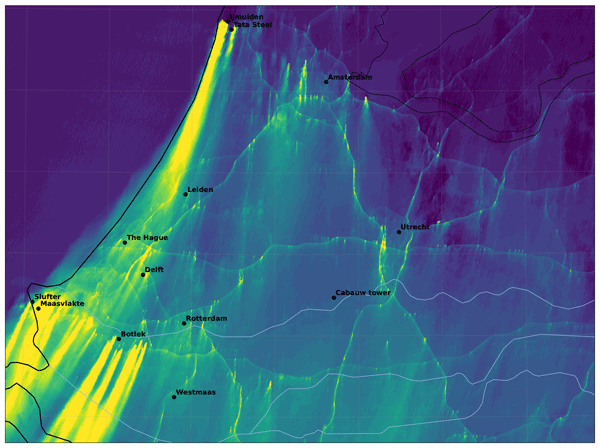
We introduce a new simulation platform based on the Dutch Atmospheric Large-Eddy Simulation (DALES) to simulate carbon dioxide (CO2) emissions and their dispersion in turbulent environments at a hectometer resolution. This model incorporates both anthropogenic emission inventories and online ecosystem fluxes. Simulation results for the main urban area in the Netherlands demonstrate the strong potential of DALES to improve CO2 emission modeling and to support mitigation strategies.
Wouter Mol and Chiel van Heerwaarden
Atmos. Chem. Phys., 25, 4419–4441, https://doi.org/10.5194/acp-25-4419-2025, https://doi.org/10.5194/acp-25-4419-2025, 2025
Short summary
Short summary
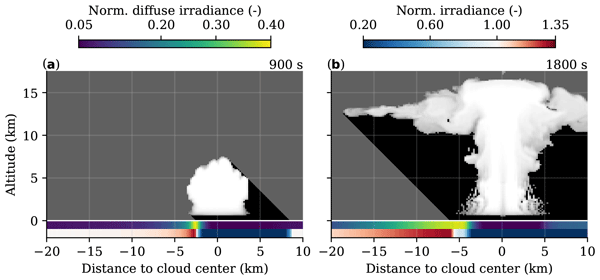
Sunlight varies often and quickly under broken cloud cover, and every cloud field creates a unique pattern of sunlight on the surface below. These variations affect many processes in the Earth system, from photosynthesis and chemistry to cloud formation itself. The exact way in which cloud particles interact with sunlight is complex and expensive to calculate. We demonstrate a simplified framework which explains how sunlight changes for potentially any cloud field.
Sreehari Kizhuveettil, Jordi Vila-Guerau de Arellano, Martina Krämer, Armin Afchine, Luiz A. T. Machado, Martin Zöger, and Wiebke Frey
EGUsphere, https://doi.org/10.5194/egusphere-2025-1637, https://doi.org/10.5194/egusphere-2025-1637, 2025
Preprint archived
Short summary
Short summary
Aircraft measurements are used to investigate high-altitude downdrafts in tropical deep convective clouds. The cloud water present in the downdrafts and its intensity do not show any correlation. Surprisingly, downdrafts occurred in supersaturated regions, contradicting the classical view of subsaturated downdrafts. Up- and downdrafts of similar strength show similar particle size distributions. These findings shed new light on the interplay between deep convection dynamics and microphysics.
Felipe Lobos-Roco, Jordi Vilà-Guerau de Arellano, and Camilo del Río
Hydrol. Earth Syst. Sci., 29, 109–125, https://doi.org/10.5194/hess-29-109-2025, https://doi.org/10.5194/hess-29-109-2025, 2025
Short summary
Short summary
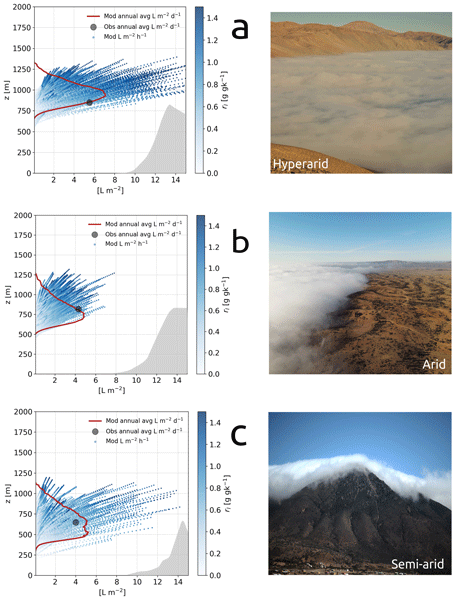
Water resources are fundamental for the social, economic, and natural development of (semi-)arid regions. Precipitation decreases due to climate change obligate us to find new water resources. Fog harvesting (FH) emerges as a complementary resource in regions where it is abundant but untapped. This research proposes a model to estimate FH potential in coastal (semi-)arid regions. This model could have broader applicability worldwide in regions where FH could be a viable water source.
Job I. Wiltink, Hartwig Deneke, Yves-Marie Saint-Drenan, Chiel C. van Heerwaarden, and Jan Fokke Meirink
Atmos. Meas. Tech., 17, 6003–6024, https://doi.org/10.5194/amt-17-6003-2024, https://doi.org/10.5194/amt-17-6003-2024, 2024
Short summary
Short summary
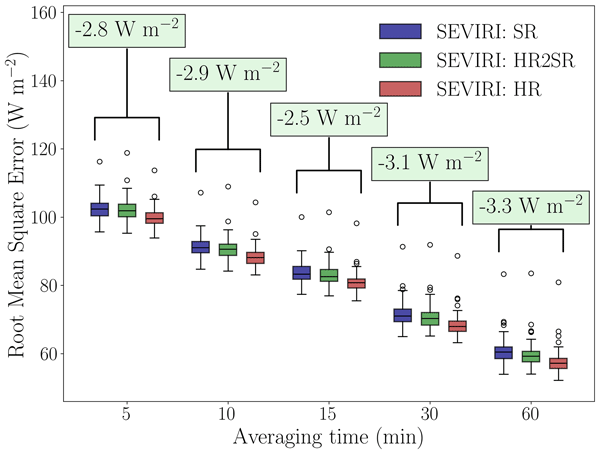
Meteosat Spinning Enhanced Visible and Infrared Imager (SEVIRI) global horizontal irradiance (GHI) retrievals are validated at standard and increased spatial resolution against a network of 99 pyranometers. GHI accuracy is strongly dependent on the cloud regime. Days with variable cloud conditions show significant accuracy improvements when retrieved at higher resolution. We highlight the benefits of dense network observations and a cloud-regime-resolved approach in validating GHI retrievals.
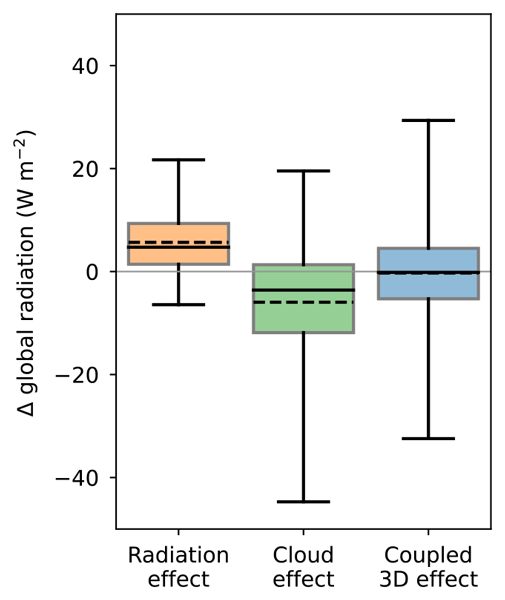
Mirjam Tijhuis, Bart J. H. van Stratum, and Chiel C. van Heerwaarden
Atmos. Chem. Phys., 24, 10567–10582, https://doi.org/10.5194/acp-24-10567-2024, https://doi.org/10.5194/acp-24-10567-2024, 2024
Short summary
Short summary
Radiative transfer in the atmosphere is a 3D processes, which is often modelled in 1D for computational efficiency. We studied the differences between using 1D and 3D radiative transfer. With 3D radiation, larger clouds that contain more liquid water develop. However, they cover roughly the same part of the sky, and the average total radiation at the surface is nearly unchanged. The increase in cloud size might be important for weather models, as it can impact the formation of rain, for example.
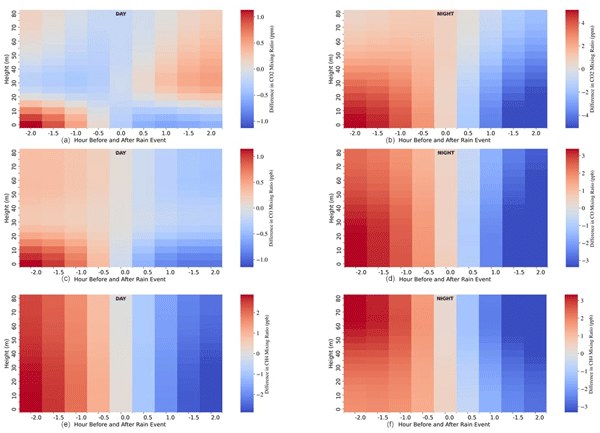
Luiz A. T. Machado, Jürgen Kesselmeier, Santiago Botía, Hella van Asperen, Meinrat O. Andreae, Alessandro C. de Araújo, Paulo Artaxo, Achim Edtbauer, Rosaria R. Ferreira, Marco A. Franco, Hartwig Harder, Sam P. Jones, Cléo Q. Dias-Júnior, Guido G. Haytzmann, Carlos A. Quesada, Shujiro Komiya, Jost Lavric, Jos Lelieveld, Ingeborg Levin, Anke Nölscher, Eva Pfannerstill, Mira L. Pöhlker, Ulrich Pöschl, Akima Ringsdorf, Luciana Rizzo, Ana M. Yáñez-Serrano, Susan Trumbore, Wanda I. D. Valenti, Jordi Vila-Guerau de Arellano, David Walter, Jonathan Williams, Stefan Wolff, and Christopher Pöhlker
Atmos. Chem. Phys., 24, 8893–8910, https://doi.org/10.5194/acp-24-8893-2024, https://doi.org/10.5194/acp-24-8893-2024, 2024
Short summary
Short summary
Composite analysis of gas concentration before and after rainfall, during the day and night, gives insight into the complex relationship between trace gas variability and precipitation. The analysis helps us to understand the sources and sinks of trace gases within a forest ecosystem. It elucidates processes that are not discernible under undisturbed conditions and contributes to a deeper understanding of the trace gas life cycle and its intricate interactions with cloud dynamics in the Amazon.
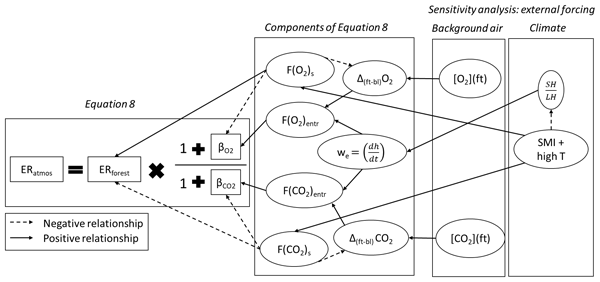
Kim A. P. Faassen, Jordi Vilà-Guerau de Arellano, Raquel González-Armas, Bert G. Heusinkveld, Ivan Mammarella, Wouter Peters, and Ingrid T. Luijkx
Biogeosciences, 21, 3015–3039, https://doi.org/10.5194/bg-21-3015-2024, https://doi.org/10.5194/bg-21-3015-2024, 2024
Short summary
Short summary
The ratio between atmospheric O2 and CO2 can be used to characterize the carbon balance at the surface. By combining a model and observations from the Hyytiälä forest (Finland), we show that using atmospheric O2 and CO2 measurements from a single height provides a weak constraint on the surface CO2 exchange because large-scale processes such as entrainment confound this signal. We therefore recommend always using multiple heights of O2 and CO2 measurements to study surface CO2 exchange.
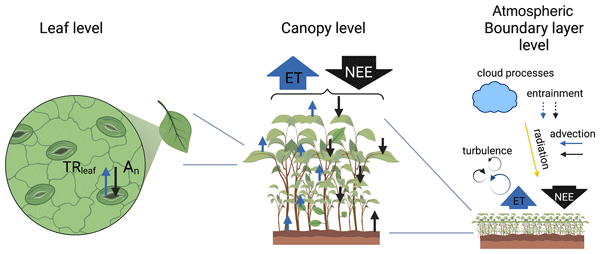
Raquel González-Armas, Jordi Vilà-Guerau de Arellano, Mary Rose Mangan, Oscar Hartogensis, and Hugo de Boer
Biogeosciences, 21, 2425–2445, https://doi.org/10.5194/bg-21-2425-2024, https://doi.org/10.5194/bg-21-2425-2024, 2024
Short summary
Short summary
This paper investigates the water and CO2 exchange for an alfalfa field with observations and a model with spatial scales ranging from the stomata to the atmospheric boundary layer. To relate the environmental factors to the leaf gas exchange, we developed three equations that quantify how many of the temporal changes of the leaf gas exchange occur due to changes in the environmental variables. The novelty of the research resides in the capacity to dissect the dynamics of the leaf gas exchange.
Ruben B. Schulte, Jordi Vilà-Guerau de Arellano, Susanna Rutledge-Jonker, Shelley van der Graaf, Jun Zhang, and Margreet C. van Zanten
Biogeosciences, 21, 557–574, https://doi.org/10.5194/bg-21-557-2024, https://doi.org/10.5194/bg-21-557-2024, 2024
Short summary
Short summary
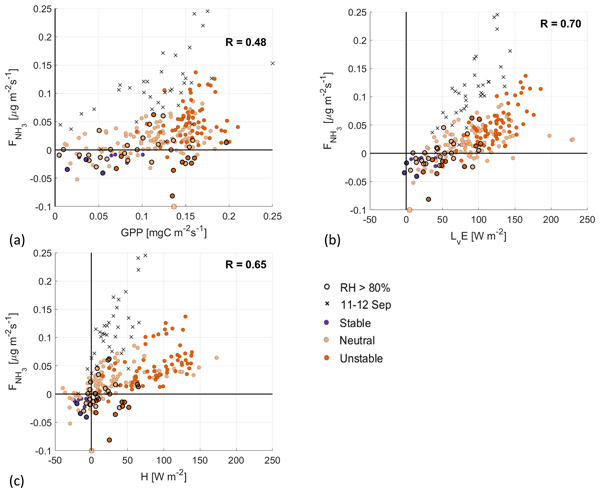
We analyzed measurements with the aim of finding relations between the surface atmosphere exchange of NH3 and the CO2 uptake and transpiration by vegetation. We found a high correlation of daytime NH3 emissions with both latent heat flux and photosynthetically active radiation. Very few simultaneous measurements of NH3, CO2 fluxes and meteorological variables exist at sub-diurnal timescales. This study paves the way to finding more robust relations between the NH3 exchange flux and CO2 uptake.
Robbert P. J. Moonen, Getachew A. Adnew, Oscar K. Hartogensis, Jordi Vilà-Guerau de Arellano, David J. Bonell Fontas, and Thomas Röckmann
Atmos. Meas. Tech., 16, 5787–5810, https://doi.org/10.5194/amt-16-5787-2023, https://doi.org/10.5194/amt-16-5787-2023, 2023
Short summary
Short summary
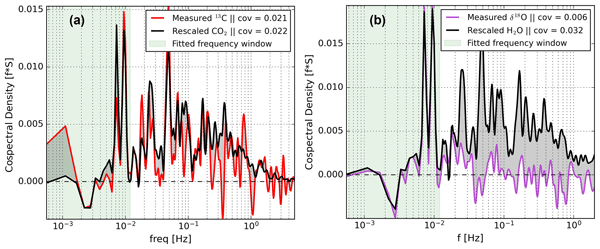
Isotope fluxes allow for net ecosystem gas exchange fluxes to be partitioned into sub-components like plant assimilation, respiration and transpiration, which can help us better understand the environmental drivers of each partial flux. We share the results of a field campaign isotope fluxes were derived using a combination of laser spectroscopy and eddy covariance. We found lag times and high frequency signal loss in the isotope fluxes we derived and present methods to correct for both.
Bert G. Heusinkveld, Wouter B. Mol, and Chiel C. van Heerwaarden
Atmos. Meas. Tech., 16, 3767–3785, https://doi.org/10.5194/amt-16-3767-2023, https://doi.org/10.5194/amt-16-3767-2023, 2023
Short summary
Short summary
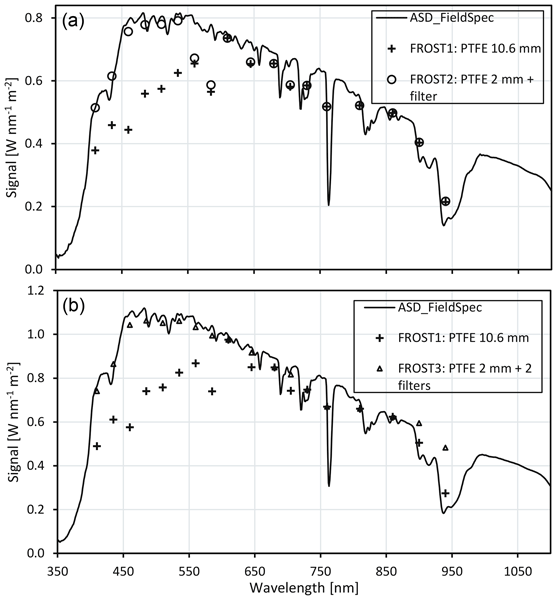
This paper presents a new instrument for fast measurements of solar irradiance in 18 wavebands (400–950 nm): GPS perfectly synchronizes 10 Hz measurement speed to universal time, low-cost (< EUR 200) complete standalone solution for realizing dense measurement grids to study cloud-shading dynamics, 940 nm waveband reveals atmospheric moisture column information, 11 wavebands to study photosynthetic active radiation and light interaction with vegetation, and good reflection spectra performance.

Wouter B. Mol, Wouter H. Knap, and Chiel C. van Heerwaarden
Earth Syst. Sci. Data, 15, 2139–2151, https://doi.org/10.5194/essd-15-2139-2023, https://doi.org/10.5194/essd-15-2139-2023, 2023
Short summary
Short summary
We describe a dataset of detailed measurements of sunlight reaching the surface, recorded at a rate of one measurement per second for 10 years. The dataset includes detailed information on direct and scattered sunlight; classifications and statistics of variability; and observations of clouds, atmospheric composition, and wind. The dataset can be used to study how the atmosphere influences sunlight variability and to validate models that aim to predict this variability with greater accuracy.
Kim A. P. Faassen, Linh N. T. Nguyen, Eadin R. Broekema, Bert A. M. Kers, Ivan Mammarella, Timo Vesala, Penelope A. Pickers, Andrew C. Manning, Jordi Vilà-Guerau de Arellano, Harro A. J. Meijer, Wouter Peters, and Ingrid T. Luijkx
Atmos. Chem. Phys., 23, 851–876, https://doi.org/10.5194/acp-23-851-2023, https://doi.org/10.5194/acp-23-851-2023, 2023
Short summary
Short summary
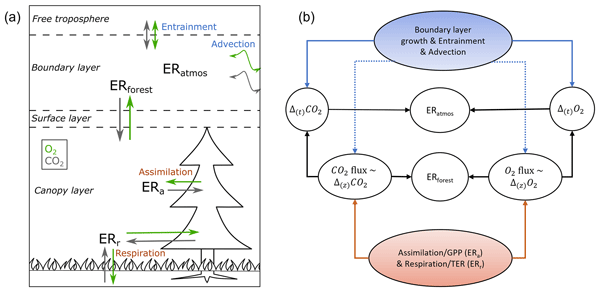
The exchange ratio (ER) between atmospheric O2 and CO2 provides a useful tracer for separately estimating photosynthesis and respiration processes in the forest carbon balance. This is highly relevant to better understand the expected biosphere sink, which determines future atmospheric CO2 levels. We therefore measured O2, CO2, and their ER above a boreal forest in Finland and investigated their diurnal behaviour for a representative day, and we show the most suitable way to determine the ER.
Luuk D. van der Valk, Adriaan J. Teuling, Luc Girod, Norbert Pirk, Robin Stoffer, and Chiel C. van Heerwaarden
The Cryosphere, 16, 4319–4341, https://doi.org/10.5194/tc-16-4319-2022, https://doi.org/10.5194/tc-16-4319-2022, 2022
Short summary
Short summary
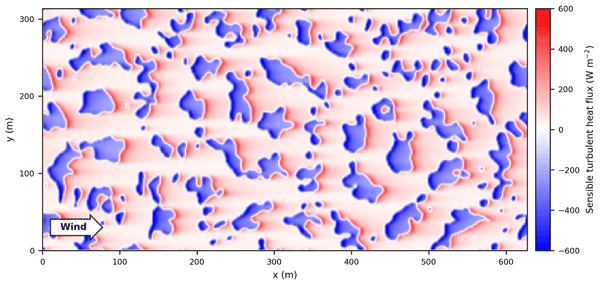
Most large-scale hydrological and climate models struggle to capture the spatially highly variable wind-driven melt of patchy snow cover. In the field, we find that 60 %–80 % of the total melt is wind driven at the upwind edge of a snow patch, while it does not contribute at the downwind edge. Our idealized simulations show that the variation is due to a patch-size-independent air-temperature reduction over snow patches and also allow us to study the role of wind-driven snowmelt on larger scales.

Micael Amore Cecchini, Marco de Bruine, Jordi Vilà-Guerau de Arellano, and Paulo Artaxo
Atmos. Chem. Phys., 22, 11867–11888, https://doi.org/10.5194/acp-22-11867-2022, https://doi.org/10.5194/acp-22-11867-2022, 2022
Short summary
Short summary
Shallow clouds (vertical extent up to 3 km height) are ubiquitous throughout the Amazon and are responsible for redistributing the solar heat and moisture vertically and horizontally. They are a key component of the water cycle because they can grow past the shallow phase to contribute significantly to the precipitation formation. However, they need favourable environmental conditions to grow. In this study, we analyse how changing wind patterns affect the development of such shallow clouds.
Felipe Lobos-Roco, Oscar Hartogensis, Francisco Suárez, Ariadna Huerta-Viso, Imme Benedict, Alberto de la Fuente, and Jordi Vilà-Guerau de Arellano
Hydrol. Earth Syst. Sci., 26, 3709–3729, https://doi.org/10.5194/hess-26-3709-2022, https://doi.org/10.5194/hess-26-3709-2022, 2022
Short summary
Short summary
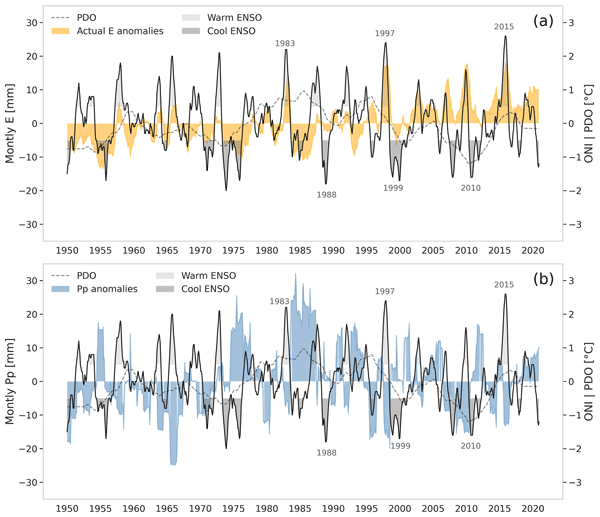
This research brings a multi-scale temporal analysis of evaporation in a saline lake of the Atacama Desert. Our findings reveal that evaporation is controlled differently depending on the timescale. Evaporation is controlled sub-diurnally by wind speed, regulated seasonally by radiation and modulated interannually by ENSO. Our research extends our understanding of evaporation, contributing to improving the climate change assessment and efficiency of water management in arid regions.
Ruben B. Schulte, Margreet C. van Zanten, Bart J. H. van Stratum, and Jordi Vilà-Guerau de Arellano
Atmos. Chem. Phys., 22, 8241–8257, https://doi.org/10.5194/acp-22-8241-2022, https://doi.org/10.5194/acp-22-8241-2022, 2022
Short summary
Short summary
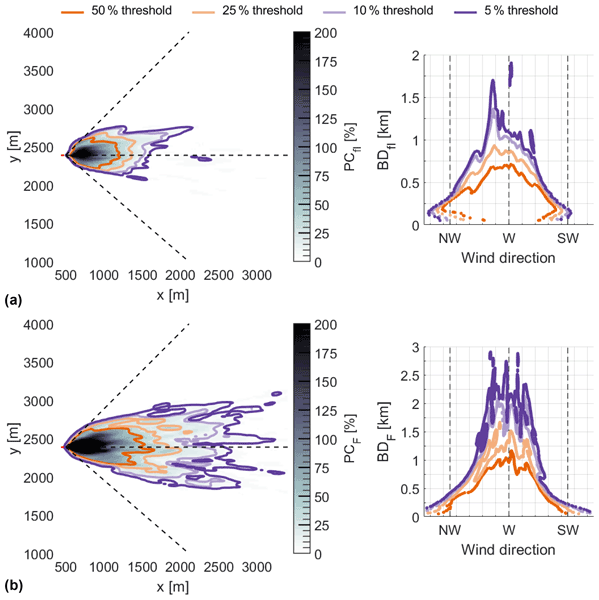
We present a fine-scale simulation framework, utilizing large-eddy simulations, to assess NH3 measurements influenced by boundary-layer dynamics and turbulent dispersion of a nearby emission source. The minimum required distance from an emission source differs for concentration and flux measurements, from 0.5–3.0 km and 0.75–4.5 km, respectively. The simulation framework presented here proves to be a powerful and versatile tool for future NH3 research at high spatio-temporal resolutions.
Anja Ražnjević, Chiel van Heerwaarden, and Maarten Krol
Atmos. Meas. Tech., 15, 3611–3628, https://doi.org/10.5194/amt-15-3611-2022, https://doi.org/10.5194/amt-15-3611-2022, 2022
Short summary
Short summary
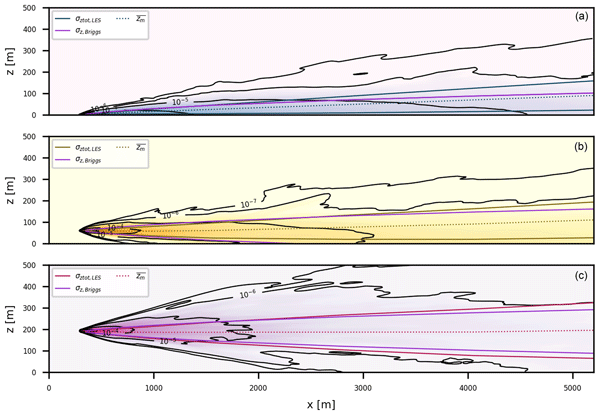
We evaluate two widely used observational techniques (Other Test Method (OTM) 33A and car drive-bys) that estimate point source gas emissions. We performed our analysis on high-resolution plume dispersion simulation. For car drive-bys we found that at least 15 repeated measurements were needed to get within 40 % of the true emissions. OTM 33A produced large errors in estimation (50 %–200 %) due to its sensitivity to dispersion coefficients and underlying simplifying assumptions.
Anja Ražnjević, Chiel van Heerwaarden, Bart van Stratum, Arjan Hensen, Ilona Velzeboer, Pim van den Bulk, and Maarten Krol
Atmos. Chem. Phys., 22, 6489–6505, https://doi.org/10.5194/acp-22-6489-2022, https://doi.org/10.5194/acp-22-6489-2022, 2022
Short summary
Short summary
Mobile measurement techniques (e.g., instruments placed in cars) are often employed to identify and quantify individual sources of greenhouse gases. Due to road restrictions, those observations are often sparse (temporally and spatially). We performed high-resolution simulations of plume dispersion, with realistic weather conditions encountered in the field, to reproduce the measurement process of a methane plume emitted from an oil well and provide additional information about the plume.
Cited articles
Badlan, R. L., Sharples, J. J., Evans, J. P., and McRae, R. H. D.: Factors influencing the development of violent pyroconvection. Part I: Fire size and stability, Int. J. Wildland Fire, 30, 484–497, https://doi.org/10.1071/WF20040, 2021a. a, b
Badlan, R. L., Sharples, J. J., Evans, J. P., and McRae, R. H. D.: Factors influencing the development of violent pyroconvection. Part II: Fire geometry and intensity, Int. J. Wildland Fire, 30, 498–512, https://doi.org/10.1071/WF20041, 2021b. a, b
Balch, J. K., Abatzoglou, J. T., Joseph, M. B., Koontz, M. J., Mahood, A. L., McGlinchy, J., Cattau, M. E., and Williams, A. P.: Warming weakens the night-time barrier to global fire, Nature, 602, 442–448, https://doi.org/10.1038/s41586-021-04325-1, 2022. a
Banta, R. M., Olivier, L. D., Holloway, E. T., Kropfli, R. A., Bartram, B. W., Cupp, R. E., and Post, M. J.: Smoke-column observations from two forest fires using Doppler lidar and Doppler radar, J. Appl. Meteorol., 31, 1328–1349, https://doi.org/10.1175/1520-0450(1992)031<1328:SCOFTF>2.0.CO;2, 1992. a, b, c, d, e, f
Bessardon, G. E. Q., Fosu-Amankwah, K., Petersson, A., and Brooks, B. J.: Evaluation of Windsond S1H2 performance in Kumasi during the 2016 DACCIWA field campaign, Atmos. Meas. Tech., 12, 1311–1324, https://doi.org/10.5194/amt-12-1311-2019, 2019. a
Byram, G. M.: Combustion of forest fuels, in: Forest Fire: Control and Use, edited by: Davis, K. P., McGraw-Hill, New York, 61–89, ISBN 9780070154841, 1959. a
Castellnou, M., Bachfisher, M., Miralles, M., Ruiz, B., Stoof, C. R., and de Arellano, J. V.-G.: Pyroconvection classificatin based on atmospheric vertical profiling correlation with extreme fire spread observations, J. Geophys. Res.-Atmos., 127, e2022JD036920, https://doi.org/10.1029/2022JD036920, 2022. a, b, c, d, e, f, g, h, i, j
Castellnou Ribau, M., Bachfischer, M., Guarque, P., Estivill, L., Miralles Bover, M., Ruiz, B., Pagès, J., Verhoeven, B., Ntasiou, Z., Stokkeland, O., van Heerwaarden, C., Roelofs, T., Janssens, M., Stoof, C. R., and Vilà-Guerau de Arellano, J.: Integrating fireline observations to characterize fire plumes during pyroconvective extreme wildfire events: implications for firefighter safety and plume modeling, Atmos. Meas. Tech., 18, 7805–7831, https://doi.org/10.5194/amt-18-7805-2025, 2025. a
CFRS: Fire Information Sheet: Santa Coloma de Queralt, Tech. rep., Catalan Fire Rescue Service (GRAF unit), https://interior.gencat.cat/web/.content/home/030_arees_dactuacio/bombers/foc_forestal/consulta_incendis_forestals/informes_incendis_forestals/2020-2029/2021/20210724_I_RET_Santa_Coloma_de_Queralt_ENGLISH.pdf (last access: 8 September 2026) 2022. a, b, c
Clements, C. B., Lareau, N. P., Kingsmill, D. E., Bowers, C. L., Camacho, C. P., Bagley, R., and Davis, B.: The rapid deployments to wildfires experiment (RaDFIRE): observations from the fire zone, B. Am. Meteorol. Soc., 99, 2539–2559, https://doi.org/10.1175/BAMS-D-17-0230.1, 2018. a, b
Coen, J. L., Cameron, M., Michalakes, J., Patton, E. G., Riggan, P. J., and Yedinak, K. M.: WRF-fire: coupled weather–wildland fire modeling with the weather research and forecasting model, J. Appl. Meteorol., 52, 16–38, https://doi.org/10.1175/JAMC-D-12-023.1, 2013. a
Commissão Téchnica Independente: Análise e Apuramento Dos Factos Relativos Aos Incêndios Que Ocorreram Em Pedrogão Grande, Castanheira de Pera, Ansião, Alvaiázere, Figueiró Dos Vinhos, Arganil, Góis, Penela, Pampilhose Da Serra, Oleiros e Sertã, Entre 17 e 24 de Junho de 2017., Tech. rep., Assembleia Da Republica, ISBN 9789725567883, 2017. a
Duane, A., Castellnou, M., Bachfisher, M., and Brotons, L.: Fire rate of spread and growth rate in a set of 30 global wildfires: new evidence of extreme fire behavior, J. Environ. Inform., 44, 87–99, https://doi.org/10.3808/jei.202400526, 2024. a
Finney, M. A., McAllister, S., Grumstrup, T. P., and Forthofer, J. M.: Wildland Fire Behaviour Dynamics, Principles and Processes, CSIRO Publishing, Clayton South, VIC, ISBN 9781486309085, 2021. a
Gualtieri, G.: Reliability of ERA5 reanalysis data for wind resource assessment: a comparison against tall towers, Energies, 14, https://doi.org/10.3390/en14144169, 2021. a
Hersbach, H., Bell, B., Berrisford, P., Hirahara, S., Horányi, A., Muñoz-Sabater, J., Nicolas, J., Peubey, C., Radu, R., Schepers, D., Simmons, A., Soci, C., Abdalla, S., Abellan, X., Balsamo, G., Bechtold, P., Biavati, G., Bidlot, J., Bonavita, M., De Chiara, G., Dahlgren, P., Dee, D., Diamantakis, M., Dragani, R., Flemming, J., Forbes, R., Fuentes, M., Geer, A., Haimberger, L., Healy, S., Hogan, R. J., Hólm, E., Janisková, M., Keeley, S., Laloyaux, P., Lopez, P., Lupu, C., Radnoti, G., de Rosnay, P., Rozum, I., Vamborg, F., Villaume, S., and Thépaut, J.-N.: The ERA5 global reanalysis, Q. J. Roy. Meteor. Soc., 146, 1999–2049, https://doi.org/10.1002/qj.3803, 2020. a, b
Kochanski, A. K., Jenkins, M. A., Mandel, J., Beezley, J. D., and Krueger, S. K.: Real time simulation of 2007 Santa Ana fires, Forest Ecol. Manag., 294, 136–149, https://doi.org/10.1016/j.foreco.2012.12.014, 2013. a
Lareau, N. P. and Clements, C. B.: Environmental controls on pyrocumulus and pyrocumulonimbus initiation and development, Atmos. Chem. Phys., 16, 4005–4022, https://doi.org/10.5194/acp-16-4005-2016, 2016. a
Lareau, N. P. and Clements, C. B.: The mean and turbulent properties of a wildfire convective plume, J. Appl. Meteorol., 56, 2289–2299, https://doi.org/10.1175/JAMC-D-16-0384.1, 2017. a, b, c
Lareau, N. P., Nauslar, N. J., Bentley, E., Roberts, M., Emmerson, S., Brong, B., Mehle, M., and Wallman, J.: Fire-generated tornadic vortices, B. Am. Meteorol. Soc., 103, 1296–1320, https://doi.org/10.1175/BAMS-D-21-0199.1, 2022. a
Mangan, M. R., Hartogensis, O., Boone, A., Branch, O., Canut, G., Cuxart, J., de Boer, H. J., Le Page, M., Martínez-Villagrasa, D., Miró, J. R., Price, J., and Vilà-Guerau de Arellano, J.: The surface-boundary layer connection across spatial scales of irrigation-driven thermal heterogeneity: an integrated data and modeling study of the LIAISE field campaign, Agr. Forest Meteorol., 335, 109452, https://doi.org/10.1016/j.agrformet.2023.109452, 2023. a
Moisseeva, N. and Stull, R.: Wildfire smoke-plume rise: a simple energy balance parameterization, Atmos. Chem. Phys., 21, 1407–1425, https://doi.org/10.5194/acp-21-1407-2021, 2021. a
Nelson, R. M.: Prediction of diurnal change in 10-h fuel stick moisture content, Can. J. Forest Res., 30, 1071–1087, https://doi.org/10.1139/x00-032, 2000. a
Peace, M., Mattner, T., Mills, G., Kepert, J., and McCaw, L.: Coupled fire–atmosphere simulations of the Rocky River fire using WRF-SFIRE, J. Appl. Meteorol., 55, 1151–1168, https://doi.org/10.1175/JAMC-D-15-0157.1, 2016. a
Potter, B. E.: Atmospheric interactions with wildland fire behaviour – II. Plume and vortex dynamics, Int. J. Wildland Fire, 21, 802–817, https://doi.org/10.1071/WF11129, 2012. a
Ražnjević, A., van Heerwaarden, C., van Stratum, B., Hensen, A., Velzeboer, I., van den Bulk, P., and Krol, M.: Technical note: Interpretation of field observations of point-source methane plume using observation-driven large-eddy simulations, Atmos. Chem. Phys., 22, 6489–6505, https://doi.org/10.5194/acp-22-6489-2022, 2022. a
Ribau, M. C., Bachfischer, M., Miralles, M., Ruiz, B., Stoof, C. R., and de Arellano, J. V.-G.: Pyroconvection Classification Based on Atmospheric Vertical Profiling Correlation with Extreme Fire Spread Observations, Zenodo [data set] https://doi.org/10.5281/zenodo.6433389, 2022. a, b, c
Rio, C., Hourdin, F., and Chédin, A.: Numerical simulation of tropospheric injection of biomass burning products by pyro-thermal plumes, Atmos. Chem. Phys., 10, 3463–3478, https://doi.org/10.5194/acp-10-3463-2010, 2010. a
Roberts, M., Lareau, N. P., Juliano, T. W., Shamsaei, K., Ebrahimian, H., and Kosovic, B.: Sensitivity of simulated fire-generated circulations to fuel characteristics during large wildfires, J. Geophys. Res.-Atmos., 129, e2023JD040548, https://doi.org/10.1029/2023JD040548, 2024. a
Roelofs, T., Castellnou Ribau, M., Vila, J., Janssens, M., and van Heerwaarden, C.: Dataset for paper: The dynamics and atmospheric impact of fire-induced circulations in idealised large-eddy simulations inspired by the Santa Coloma de Queralt fire (Version 1), Zenodo [data set], https://doi.org/10.5281/zenodo.17159896, 2025. a, b
SparvEmbedded: Windsond Product Catalogue, https://windsond.com/windsond_catalog_Dec2016.pdf (last access: 8 September 2026), 2016. a
Sun, R., Krueger, S. K., Jenkins, M. A., Zulauf, M. A., and Charney, J. J.: The importance of fire–atmosphere coupling and boundary-layer turbulence to wildfire spread, Int. J. Wildland Fire, 18, 50–60, https://doi.org/10.1071/WF07072, 2009. a, b
Taszarek, M., Pilguj, N., Allen, J. T., Gensini, V., Brooks, H. E., and Szuster, P.: Comparison of convective parameters derived from ERA5 and MERRA-2 with rawinsonde data over Europe and North America, J. Climate, 34, 3211–3237, https://doi.org/10.1175/JCLI-D-20-0484.1, 2021. a
Tedim, F., Leone, V., Amraoui, M., Bouillon, C., Coughlan, M. R., Delogu, G. M., Fernandes, P. M., Ferreira, C., McCaffrey, S., McGee, T. K., Parente, J., Paton, D., Pereira, M. G., Ribeiro, L. M., Viegas, D. X., and Xanthopoulos, G.: Defining extreme wildfire events: difficulties, challenges, and impacts, Fire, 1, 9, https://doi.org/10.3390/fire1010009, 2018. a
van Heerwaarden, C. C., Mellado, J. P., and Lozar, A. D.: Scaling laws for the heterogeneously heated free convective boundary layer, J. Atmos. Sci., 71, 3975–4000, https://doi.org/10.1175/JAS-D-13-0383.1, 2014. a
van Heerwaarden, C. C., van Stratum, B. J. H., Heus, T., Gibbs, J. A., Fedorovich, E., and Mellado, J. P.: MicroHH 1.0: a computational fluid dynamics code for direct numerical simulation and large-eddy simulation of atmospheric boundary layer flows, Geosci. Model Dev., 10, 3145–3165, https://doi.org/10.5194/gmd-10-3145-2017, 2017. a, b, c, d
van Stratum, B. J. H., van Heerwaarden, C. C., and Vilà-Guerau de Arellano, J.: The benefits and challenges of downscaling a global reanalysis with doubly-periodic large-eddy simulations, J. Adv. Model. Earth Sy., 15, https://doi.org/10.1029/2023MS003750, 2023. a
Vaz, R., Silva, R., Cardoso Pereira, S., Carvalho, A. C., Carvalho, D., and Rocha, A.: Coupled atmosphere–fire modelling of pyroconvective activity in Portugal, Fire, 8, 153, https://doi.org/10.3390/fire8040153, 2025. a, b, c, d
Vilà-Guerau De Arellano, J., van Heerwaarden, C. C., Van Stratum, B. J. H., and Van den Dries, K.: Atmospheric boundary layer dynamics, in: Atmospheric Boundary Layer: Intergrating Air Chemistry and Land Interactions, Cambridge University Press, New York, 21–32, https://doi.org/10.1017/CBO9781316117422, 2015. a
Wang, Q., Gazen, C., Ihme, M., Carver, R., Parker, J. B., Schneider, T., Chammas, S., Chen, Y.-F., and Anderson, J.: High-Resolution Simulations Unravel Intensification Mechanisms of Pyrocumulonimbus Clouds, arXiv [preprint], https://arxiv.org/abs/2507.01237, 11 July 2025. a
Werth, P. A., Potter, B. E., Alexander, M. E., Cruz, M. G., Clements, C. B., Finney, M. A., Forthofer, J. M., Goodrick, S. L., Hoffman, C., Jolly, W. M., McAllister, S. S., Ottmar, R. D., and Parsons, R. A.: Synthesis of Knowledge of Extreme Fire Behavior: Volume 2 for Fire Behavior Specialists, Researchers, and Meteorologists, General Technical Report PNW-GTR-891, U.S. Department of Agriculture, Forest Service, Pacific Northwest Research Station, https://doi.org/10.2737/PNW-GTR-891, 2016. a
Zuo, P., Chen, X., Zhu, L., Zuo, P., Chen, X., and Zhu, L.: Applicability assessment of ERA5 surface wind speed data across different landforms in China, Atmosphere-Basel, 16, https://doi.org/10.3390/atmos16080956, 2025. a
Short summary
With simulations, we studied the impact of fire-induced circulations on the atmosphere and the factors governing these circulations. The results showed that two parts of the circulations, the up- and downdrafts, altered the vertical structure of the atmosphere ahead of the fire. Furthermore, we found that the wind speed in the direction of the circulation determines whether a circulation can develop. Further research is needed to study how fire-induced circulations affect the fire behaviour.
With simulations, we studied the impact of fire-induced circulations on the atmosphere and the...


Altmetrics
Final-revised paper
Preprint