
Articles | Volume 26, issue 2
https://doi.org/10.5194/acp-26-1211-2026
© Author(s) 2026. This work is distributed under
the Creative Commons Attribution 4.0 License.
the Creative Commons Attribution 4.0 License.
https://doi.org/10.5194/acp-26-1211-2026
© Author(s) 2026. This work is distributed under
the Creative Commons Attribution 4.0 License.
the Creative Commons Attribution 4.0 License.
Research article
| 
26 Jan 2026
Research article |
| 26 Jan 2026
| 26 Jan 2026
Unique microphysical properties of small boundary layer ice particles under pristine conditions on Dome C, Antarctica

Institute of Meteorology and Climate Research Atmospheric Aerosol Research (IMKAAF), Karlsruhe Institute of Technology, Karlsruhe, Germany
Massimo del Guasta
Istituto Nazionale Ottica CNR, Sesto Fiorentino, 50019 Firenze, Italy
Carl Schmitt
University of Alaska Fairbanks, Fairbanks, USA
Christophe Genthon
Laboratoire de Météorologie Dynamique, IPSL, CNRS, Ecole Normale Supérieure, Sorbonne Université, PSL Research, Paris, France
Emma Järvinen
Institute for Atmospheric and Environmental Research, University of Wuppertal, Wuppertal, Germany
Martin Schnaiter
CORRESPONDING AUTHOR
Institute for Atmospheric and Environmental Research, University of Wuppertal, Wuppertal, Germany
schnaiTEC GmbH, Wuppertal, Germany
Related authors
Adrian Hamel, Martin Schnaiter, Masanori Saito, Robert Wagner, and Emma Järvinen
Atmos. Chem. Phys., 26, 1277–1300, https://doi.org/10.5194/acp-26-1277-2026, https://doi.org/10.5194/acp-26-1277-2026, 2026
Short summary
Short summary
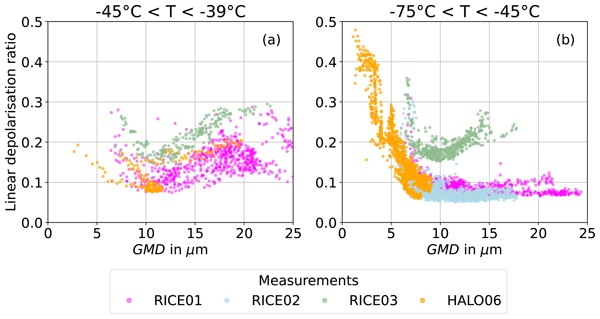
The depolarisation ratio of ice clouds is commonly measured by satellites and ground-based instruments to learn about ice particle shapes. In our cloud chamber experiments, we found that for small ice crystals, the depolarisation ratio is more strongly influenced by particle size than by nano-scale structure. The measured trends could be reproduced with numerical simulations. This result helps improve the interpretation of remote sensing data and the accuracy of light scattering models.
Pierre Grzegorczyk, Lea Raillard, Valentin Wiener, Étienne Vignon, Christophe Genthon, and Alexis Berne
EGUsphere, https://doi.org/10.5194/egusphere-2026-4473, https://doi.org/10.5194/egusphere-2026-4473, 2026
This preprint is open for discussion and under review for Geoscientific Model Development (GMD).
Short summary
Short summary
Evaluating cloud representation in Atmospheric General Circulation Models (AGCMs) is important for surface precipitation and the Earth radiative balance. The LORIS (LMDZ Offline Radar Instrument Simulator) is a new tool designed to evaluate clouds in LMDZ (the atmospheric component of the IPSL Coupled Model). LORIS offers flexible options for subgrid representation, scattering assumptions, and microphysics properties, enabling the evaluation and improvement of cloud and precipitation in LMDZ.
Harry Ballington, Martin Schnaiter, and Emma Järvinen
EGUsphere, https://doi.org/10.5194/egusphere-2026-4436, https://doi.org/10.5194/egusphere-2026-4436, 2026
This preprint is open for discussion and under review for Atmospheric Chemistry and Physics (ACP).
Short summary
Short summary
High altitude clouds known as cirrus cover about one third of the planet and strongly influence global climate. Our understanding of how they scatter light is poorly understood because ice crystals are highly varied and it is impossible to account for them all individually. We combine measurements from the new EarthCARE satellite with in-situ aircraft data and with computer simulations to determine which crystal shapes best match observations.
Thomas Lauwers, Elise Fourré, Niels Dutrievoz, Cécile Agosta, Olivier Jossoud, Bénédicte Minster, Frédéric Prié, Olivier Cattani, Valérie Masson-Delmotte, Mathieu Casado, Christophe Genthon, and Amaëlle Landais
Atmos. Meas. Tech., 19, 4743–4758, https://doi.org/10.5194/amt-19-4743-2026, https://doi.org/10.5194/amt-19-4743-2026, 2026
Short summary
Short summary
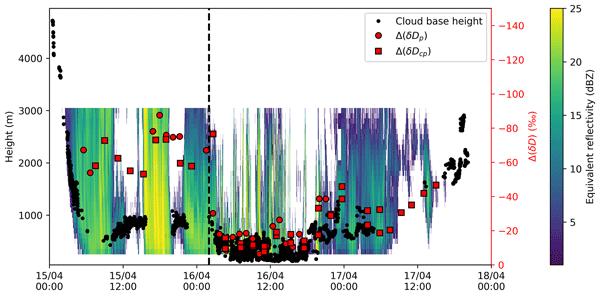
This study presents a new method to measure the isotopic composition of snowfall and atmospheric water vapor in Antarctica. With a single laser spectrometer, it enables continuous, high frequency observations without human intervention. Tests in East Antarctica show a very good agreement with conventionnal snow sampling. This new sampling method opens new opportunities to better understand snowfall formation, improve climate models, and refine the interpretation of ice core climate records.
Heather Corden, Julien Delanoë, Massimo Del Guasta, and Alexis Berne
EGUsphere, https://doi.org/10.5194/egusphere-2026-3964, https://doi.org/10.5194/egusphere-2026-3964, 2026
Short summary
Short summary
In Antarctica, intrusions of warm, moist air from the coast to the high plateau are responsible for a significant proportion of the snow accumulating on the ice sheet each year. We present a case study of an intrusion in East Antarctica in February 2025. Meteorological radars along a 1100-km transect were used to investigate the processes leading to precipitation in the intrusion. The processes vary according to the changing temperature, humidity and wind dynamics between the coast and plateau.
Elisa Fabbri, Tiziano Maestri, Michele Martinazzo, Federico Donat, Giovanni Bianchini, Massimo Del Guasta, Gianluca Di Natale, Luca Palchetti, Guido Masiello, Giuliano Liuzzi, Tong Ren, and Ping Yang
EGUsphere, https://doi.org/10.5194/egusphere-2026-2806, https://doi.org/10.5194/egusphere-2026-2806, 2026
Short summary
Short summary
Nine years of ground-based far-infrared spectral observations and lidar measurements at Dome C, Antarctica, are used to investigate cloud occurrence and microphysical properties over the Antarctic Plateau. The study shows that Antarctic clouds are dominated by optically thin ice clouds and derives a new parameterization of ice crystal effective dimension specifically adapted to Antarctic conditions, providing improved observational constraints for climate and numerical weather prediction models.
Aymeric Dziduch, Antoine Baudoux, Guillaume Mioche, Antoine Canzi, Benjamin Doiteau, Manuel Moser, Emma Järvinen, Étienne Vignon, Jean-Christophe Raut, Régis Dupuy, Christophe Gourbeyre, Jean-Luc Baray, Marie Monier, Frédéric Szczap, Guillaume Penide, Julien Delanoë, Odran Sourdeval, Alfons Schwarzenboeck, Stephan Mertes, Franz Martin Schnaiter, Christiane Voigt, Mario Mech, Susanne Crewell, Andreas Herber, Christof Lüpkes, André Ehrlich, Manfred Wendisch, and Olivier Jourdan
EGUsphere, https://doi.org/10.5194/egusphere-2026-3265, https://doi.org/10.5194/egusphere-2026-3265, 2026
This preprint is open for discussion and under review for Atmospheric Chemistry and Physics (ACP).
Short summary
Short summary
This study examines the microphysical properties and ice crystal habits of low-level Arctic mixed-phase clouds around Svalbard. Using airborne in situ observations from four campaigns, we show that cloud microphysical structure and ice crystal habits are influenced by weather conditions and surface type. These results provide quantitative observations to better understand low-level Arctic clouds, their ice formation processes, and their influence on the Arctic atmosphere and climate system.
Tomi Raatikainen, Silvia Calderón, Emma Järvinen, Marje Prank, and Sami Romakkaniemi
Atmos. Chem. Phys., 26, 5019–5038, https://doi.org/10.5194/acp-26-5019-2026, https://doi.org/10.5194/acp-26-5019-2026, 2026
Short summary
Short summary
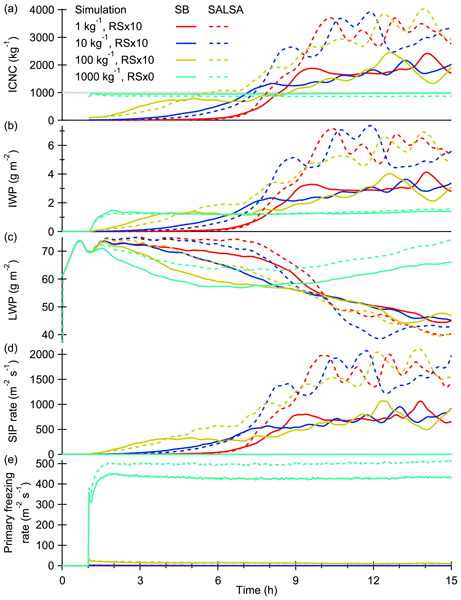
We used high-resolution simulations to examine if secondary ice production could explain the high ice particle concentrations observed during an airborne Arctic cloud study. For these clouds, the dominating secondary ice production process was rime splintering. It can produce high ice concentrations, but some model adjustments may be needed. Clouds in our simulations reached realistic steady states where rime splintering became a self-sustaining process.
Emma Järvinen and Franz Martin Schnaiter
Atmos. Chem. Phys., 26, 2465–2486, https://doi.org/10.5194/acp-26-2465-2026, https://doi.org/10.5194/acp-26-2465-2026, 2026
Short summary
Short summary
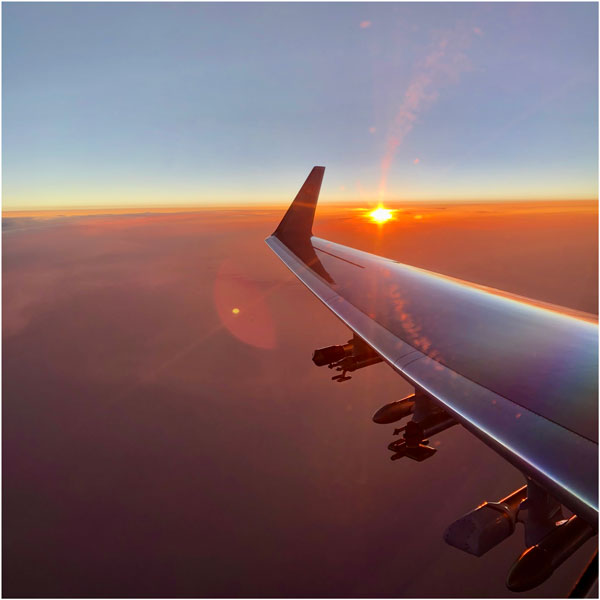
Ice clouds in the Arctic and mid-latitudes were investigated using in situ aircraft observations combining single-particle imaging with simultaneous light-scattering measurements. The joint characterisation of ice particle size, shape, and optical response shows that these clouds reflect substantially more solar radiation than is typically represented in models. The observations provide an empirical basis for improving the physical realism of ice cloud optical properties in climate models.
Adrian Hamel, Martin Schnaiter, Masanori Saito, Robert Wagner, and Emma Järvinen
Atmos. Chem. Phys., 26, 1277–1300, https://doi.org/10.5194/acp-26-1277-2026, https://doi.org/10.5194/acp-26-1277-2026, 2026
Short summary
Short summary
The depolarisation ratio of ice clouds is commonly measured by satellites and ground-based instruments to learn about ice particle shapes. In our cloud chamber experiments, we found that for small ice crystals, the depolarisation ratio is more strongly influenced by particle size than by nano-scale structure. The measured trends could be reproduced with numerical simulations. This result helps improve the interpretation of remote sensing data and the accuracy of light scattering models.
Étienne Vignon, Nicolas Chiabrando, Cécile Agosta, Charles Amory, Valentin Wiener, Justine Charrel, Thomas Dubos, and Christophe Genthon
Geosci. Model Dev., 19, 239–259, https://doi.org/10.5194/gmd-19-239-2026, https://doi.org/10.5194/gmd-19-239-2026, 2026
Short summary
Short summary
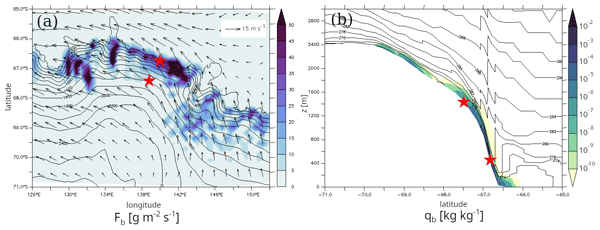
The erosion of surface snow by the wind is an important process for the Antarctic surface mass balance. This study presents the first development of a parameterisation of blowing snow for a global climate model. Simulations avec evaluated using measurements in Antarctica. Results show an overall decrease of the snow accumulation in the escarpment region of the ice sheet due to snow erosion and an increase at the coast due to blowing snow deposition and increase in precipitation.
Valentin Wiener, Étienne Vignon, Thomas Caton Harrison, Christophe Genthon, Felipe Toledo, Guylaine Canut-Rocafort, Yann Meurdesoif, and Alexis Berne
Weather Clim. Dynam., 6, 1605–1627, https://doi.org/10.5194/wcd-6-1605-2025, https://doi.org/10.5194/wcd-6-1605-2025, 2025
Short summary
Short summary
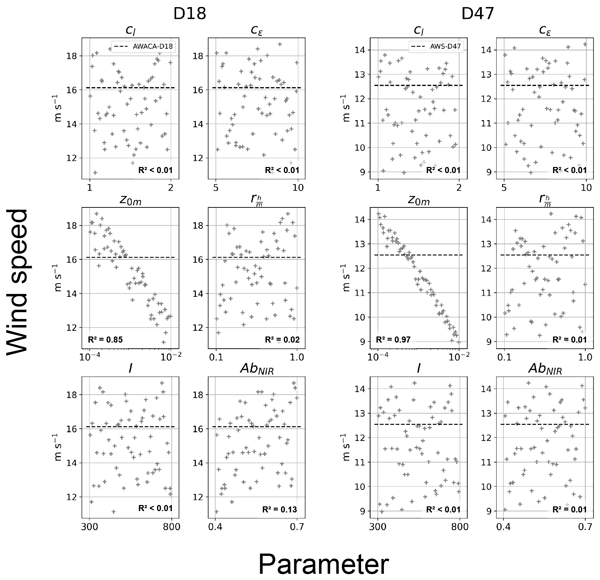
Katabatic winds are a key feature of the climate of Antarctica, but substantial biases remain in their representation in atmospheric models. This study investigates a katabatic wind event in an atmospheric circulation model using in-situ observations. The framework allows to disentangle which part of the bias is due to horizontal resolution, to parameter calibration and to structural deficiencies in the model. We underline in particular the need to refine the physics of the model snow cover.
Marco Zanatta, Pia Bogert, Patrick Ginot, Yiwei Gong, Gholam Ali Hoshyaripour, Yaqiong Hu, Feng Jiang, Paolo Laj, Yanxia Li, Claudia Linke, Ottmar Möhler, Harald Saathoff, Martin Schnaiter, Nsikanabasi Silas Umo, Franziska Vogel, and Robert Wagner
Aerosol Research, 3, 477–502, https://doi.org/10.5194/ar-3-477-2025, https://doi.org/10.5194/ar-3-477-2025, 2025
Short summary
Short summary
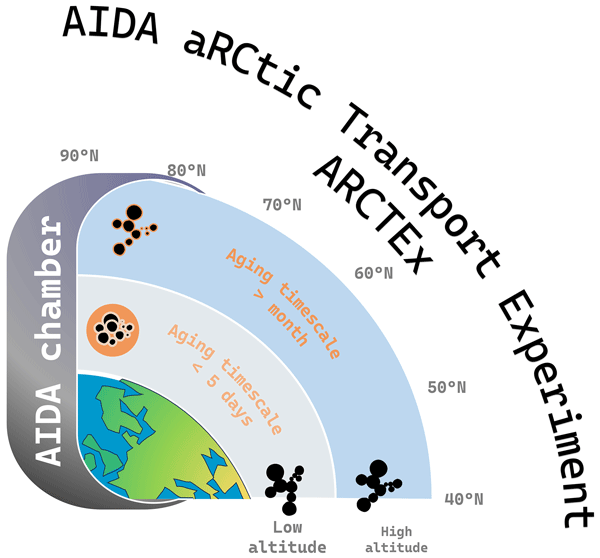
Back carbon is an atmospheric pollutant from combustion and contributes to the Arctic warming. However, its properties change as it travels through the atmosphere, affecting its impact. We recreated Arctic transport conditions in a laboratory to study how black carbon evolves over time. Our findings show that temperature and altitude strongly influence its transformation, providing key insights for improving climate models and understanding Arctic pollution.
Inès Ollivier, Thomas Lauwers, Niels Dutrievoz, Cécile Agosta, Mathieu Casado, Elise Fourré, Christophe Genthon, Olivier Jossoud, Frédéric Prié, Hans Christian Steen-Larsen, and Amaëlle Landais
Earth Syst. Sci. Data, 17, 5655–5674, https://doi.org/10.5194/essd-17-5655-2025, https://doi.org/10.5194/essd-17-5655-2025, 2025
Short summary
Short summary
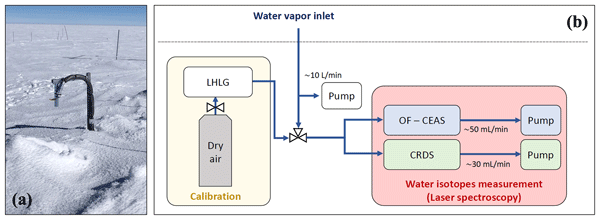
We present a novel 2.5-month record of the atmospheric water vapour isotopic composition during the austral summer 2023–2024 at Concordia Station on the Antarctic Plateau. We show that two independent laser spectrometers accurately record the diurnal variability of the atmospheric water vapour 𝛿18O, 𝛿D, and d-excess. We compare the measurements against outputs of the isotope-enabled general circulation model LMDZ6-iso to show how the data can be used to evaluate such models.
Shawn W. Wagner, Martin Schnaiter, Guanglang Xu, Franziska Rogge, and Emma Järvinen
Atmos. Chem. Phys., 25, 8785–8804, https://doi.org/10.5194/acp-25-8785-2025, https://doi.org/10.5194/acp-25-8785-2025, 2025
Short summary
Short summary
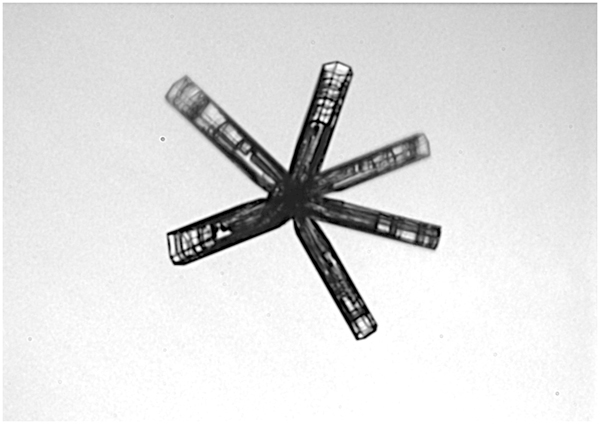
Understanding the interaction between cirrus clouds and solar radiation is critical for modeling the Earth's climate. A common crystal type found in cirrus clouds is the bullet rosette. Here, atmospheric bullet rosettes measured from jet aircraft are analyzed for their morphological and radiative properties. Atmospheric bullet rosettes are found to be more morphologically complex than previously assumed. This complexity has a significant impact on their radiative properties.
Federico Donat, Tiziano Maestri, Elisa Fabbri, Michele Martinazzo, Giovanni Bianchini, Massimo Del Guasta, Gianluca Di Natale, Luca Palchetti, Guido Masiello, Carmine Serio, and Giuliano Liuzzi
EGUsphere, https://doi.org/10.5194/egusphere-2025-2793, https://doi.org/10.5194/egusphere-2025-2793, 2025
Short summary
Short summary
The cloud occurrence over the Antarctic Plateau is characterized using ground-based interferometric data from 2012 to 2020. The results show a yearly pattern, and a six-month cycle linked to atmospheric oscillations. The cloud radiative forcing at far infrared doubles during cloud occurrence oscillation peaks. Infrared Atmospheric Sounding Interferometer (IASI) Level 2 products are compared to ground data, showing an improved agreement in cloud identification from year 2020.
Inès Ollivier, Hans Christian Steen-Larsen, Barbara Stenni, Laurent Arnaud, Mathieu Casado, Alexandre Cauquoin, Giuliano Dreossi, Christophe Genthon, Bénédicte Minster, Ghislain Picard, Martin Werner, and Amaëlle Landais
The Cryosphere, 19, 173–200, https://doi.org/10.5194/tc-19-173-2025, https://doi.org/10.5194/tc-19-173-2025, 2025
Short summary
Short summary
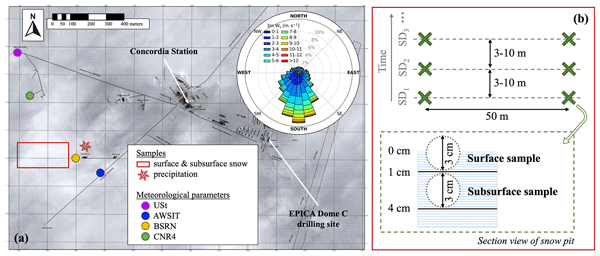
The role of post-depositional processes taking place at the ice sheet's surface on the water stable isotope signal measured in polar ice cores is not fully understood. Using field observations and modelling results, we show that the original precipitation isotopic signal at Dome C, East Antarctica, is modified by post-depositional processes and provide the first quantitative estimation of their mean impact on the isotopic signal observed in the snow.
Philippe Ricaud, Pierre Durand, Paolo Grigioni, Massimo Del Guasta, Giuseppe Camporeale, Axel Roy, Jean-Luc Attié, and John Bognar
Atmos. Meas. Tech., 17, 5071–5089, https://doi.org/10.5194/amt-17-5071-2024, https://doi.org/10.5194/amt-17-5071-2024, 2024
Short summary
Short summary
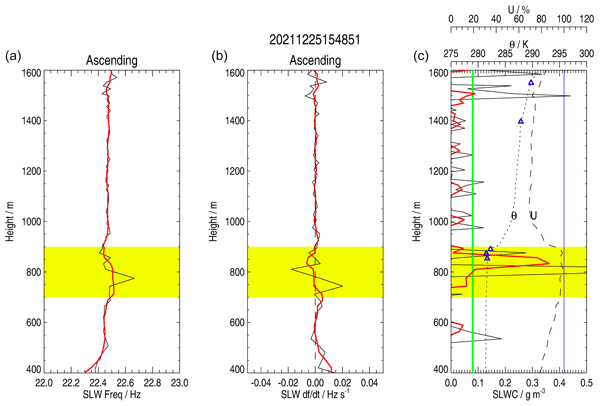
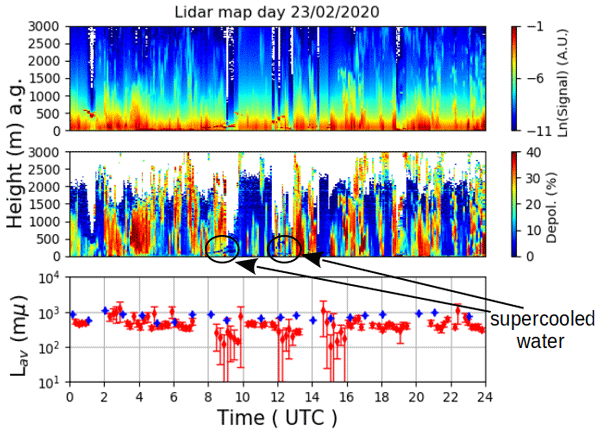
Clouds in Antarctica are key elements affecting climate evolution. Some clouds are composed of supercooled liquid water (SLW; water held in liquid form below 0 °C) and are difficult to forecast by models. We performed in situ observations of SLW clouds at Concordia Station using SLW sondes attached to meteorological balloons in summer 2021–2022. The SLW clouds were observed in a saturated layer at the top of the planetary boundary layer in agreement with ground-based lidar observations.
Giuliano Dreossi, Mauro Masiol, Barbara Stenni, Daniele Zannoni, Claudio Scarchilli, Virginia Ciardini, Mathieu Casado, Amaëlle Landais, Martin Werner, Alexandre Cauquoin, Giampietro Casasanta, Massimo Del Guasta, Vittoria Posocco, and Carlo Barbante
The Cryosphere, 18, 3911–3931, https://doi.org/10.5194/tc-18-3911-2024, https://doi.org/10.5194/tc-18-3911-2024, 2024
Short summary
Short summary
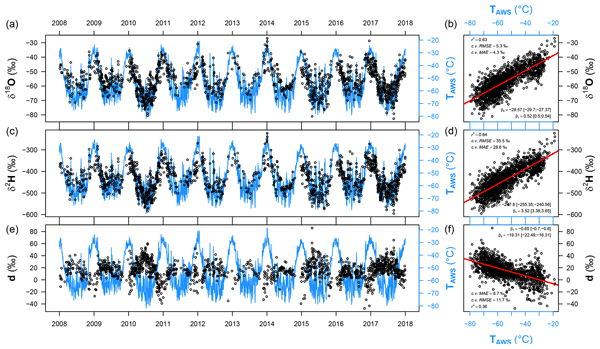
Oxygen and hydrogen stable isotopes have been extensively used to reconstruct past temperatures, with precipitation representing the input signal of the isotopic records in ice cores. We present a 10-year record of stable isotopes in daily precipitation at Concordia Station: this is the longest record for inland Antarctica and represents a benchmark for quantifying post-depositional processes and improving the paleoclimate interpretation of ice cores.
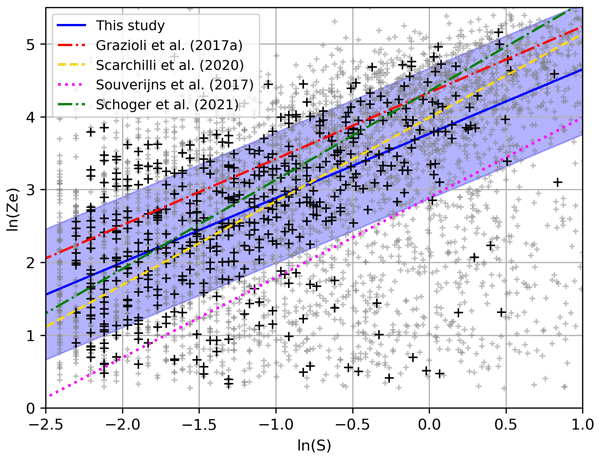
Valentin Wiener, Marie-Laure Roussel, Christophe Genthon, Étienne Vignon, Jacopo Grazioli, and Alexis Berne
Earth Syst. Sci. Data, 16, 821–836, https://doi.org/10.5194/essd-16-821-2024, https://doi.org/10.5194/essd-16-821-2024, 2024
Short summary
Short summary
This paper presents 7 years of data from a precipitation radar deployed at the Dumont d'Urville station in East Antarctica. The main characteristics of the dataset are outlined in a short statistical study. Interannual and seasonal variability are also investigated. Then, we extensively describe the processing method to retrieve snowfall profiles from the radar data. Lastly, a brief comparison is made with two climate models as an application example of the dataset.
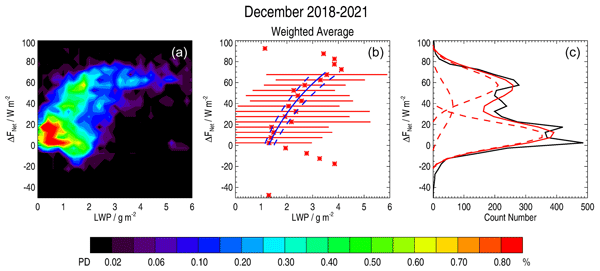
Philippe Ricaud, Massimo Del Guasta, Angelo Lupi, Romain Roehrig, Eric Bazile, Pierre Durand, Jean-Luc Attié, Alessia Nicosia, and Paolo Grigioni
Atmos. Chem. Phys., 24, 613–630, https://doi.org/10.5194/acp-24-613-2024, https://doi.org/10.5194/acp-24-613-2024, 2024
Short summary
Short summary
Clouds affect the Earth's climate in ways that depend on the type of cloud (solid/liquid water). From observations at Concordia (Antarctica), we show that in supercooled liquid water (liquid water for temperatures below 0°C) clouds (SLWCs), temperature and SLWC radiative forcing increase with liquid water (up to 70 W m−2). We extrapolated that the maximum SLWC radiative forcing can reach 40 W m−2 over the Antarctic Peninsula, highlighting the importance of SLWCs for global climate prediction.
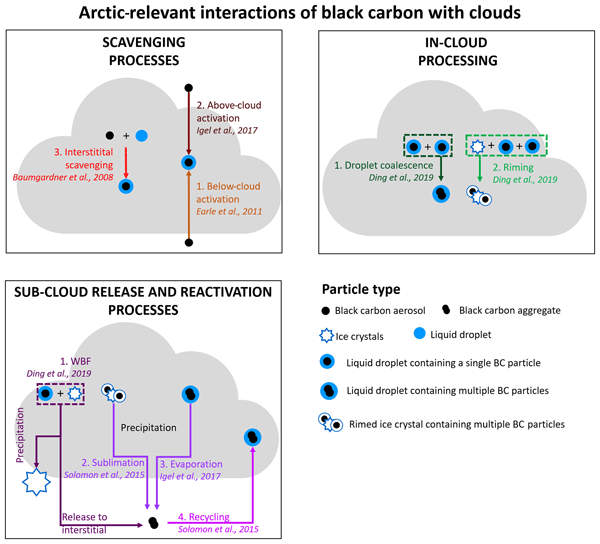
Marco Zanatta, Stephan Mertes, Olivier Jourdan, Regis Dupuy, Emma Järvinen, Martin Schnaiter, Oliver Eppers, Johannes Schneider, Zsófia Jurányi, and Andreas Herber
Atmos. Chem. Phys., 23, 7955–7973, https://doi.org/10.5194/acp-23-7955-2023, https://doi.org/10.5194/acp-23-7955-2023, 2023
Short summary
Short summary
Black carbon (BC) particles influence the Arctic radiative balance. Vertical measurements of black carbon were conducted during the ACLOUD campaign in the European Arctic to study the interaction of BC with clouds. This study shows that clouds influence the vertical variability of BC properties across the inversion layer and that multiple activation and transformation mechanisms of BC may occur in the presence of low-level, persistent, mixed-phase clouds.
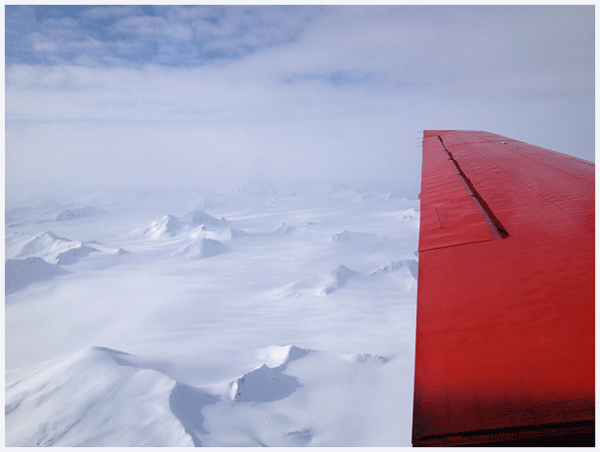
Emma Järvinen, Franziska Nehlert, Guanglang Xu, Fritz Waitz, Guillaume Mioche, Regis Dupuy, Olivier Jourdan, and Martin Schnaiter
Atmos. Chem. Phys., 23, 7611–7633, https://doi.org/10.5194/acp-23-7611-2023, https://doi.org/10.5194/acp-23-7611-2023, 2023
Short summary
Short summary
The Arctic is warming faster than other regions. Arctic low-level mixed-phase clouds, where ice crystals and liquid droplets co-exist, are thought to have an important role in Arctic warming. Here we show airborne measurements of vertical distribution of liquid and ice particles and their relative abundance. Ice particles are found in relative warm clouds, which can be explained by multiplication of existing ice crystals. However, the role of ice particles in redistributing sun light is minimal.
Robert Wagner, Alexander D. James, Victoria L. Frankland, Ottmar Möhler, Benjamin J. Murray, John M. C. Plane, Harald Saathoff, Ralf Weigel, and Martin Schnaiter
Atmos. Chem. Phys., 23, 6789–6811, https://doi.org/10.5194/acp-23-6789-2023, https://doi.org/10.5194/acp-23-6789-2023, 2023
Short summary
Short summary
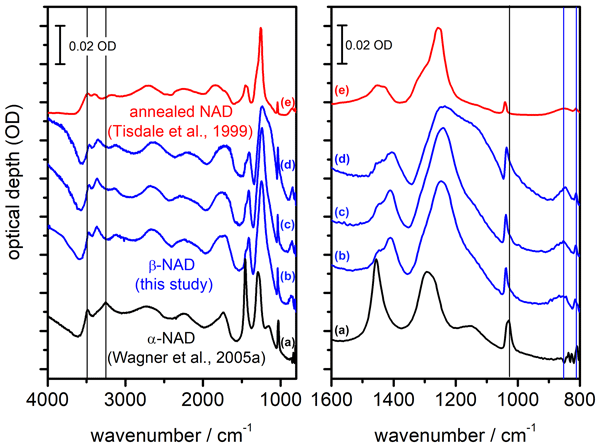
Polar stratospheric clouds (PSCs) play an important role in the depletion of stratospheric ozone. They can consist of different chemical species, including crystalline nitric acid hydrates. We found that mineral dust or meteoric ablation material can efficiently catalyse the formation of a specific phase of nitric acid dihydrate crystals. We determined predominant particle shapes and infrared optical properties of these crystals, which are important inputs for remote sensing detection of PSCs.
Franz Martin Schnaiter, Claudia Linke, Eija Asmi, Henri Servomaa, Antti-Pekka Hyvärinen, Sho Ohata, Yutaka Kondo, and Emma Järvinen
Atmos. Meas. Tech., 16, 2753–2769, https://doi.org/10.5194/amt-16-2753-2023, https://doi.org/10.5194/amt-16-2753-2023, 2023
Short summary
Short summary
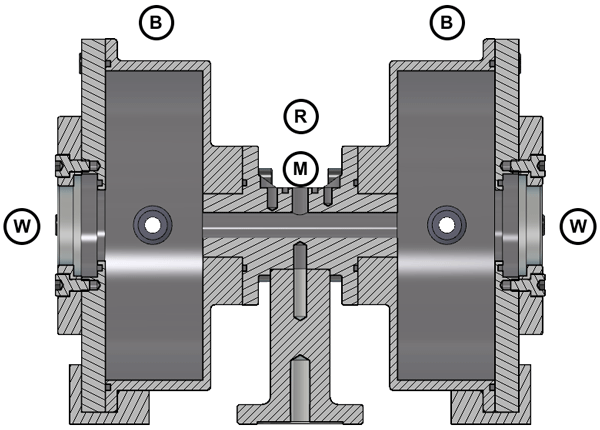
Light-absorbing particles from combustion processes are important contributors to climate warming. Their highly variable spectral light absorption properties need to be monitored in the field. Commonly used methods show measurement artefacts that are difficult to correct. We introduce a new instrument that is based on the photoacoustic effect. Long-term operation in the Finnish Arctic demonstrates the applicability of the new instrument for unattended light absorption monitoring.
Gianluca Di Natale, David D. Turner, Giovanni Bianchini, Massimo Del Guasta, Luca Palchetti, Alessandro Bracci, Luca Baldini, Tiziano Maestri, William Cossich, Michele Martinazzo, and Luca Facheris
Atmos. Meas. Tech., 15, 7235–7258, https://doi.org/10.5194/amt-15-7235-2022, https://doi.org/10.5194/amt-15-7235-2022, 2022
Short summary
Short summary
In this paper, we describe a new approach to test the consistency of the precipitating ice cloud optical and microphysical properties in Antarctica, Dome C, retrieved from hyperspectral measurements in the far-infrared, with the reflectivity detected by a co-located micro rain radar operating at 24 GHz. The retrieved ice crystal sizes were found in accordance with the direct measurements of an optical imager, also installed at Dome C, which can collect the falling ice particles.
Massimo Del Guasta
Atmos. Meas. Tech., 15, 6521–6544, https://doi.org/10.5194/amt-15-6521-2022, https://doi.org/10.5194/amt-15-6521-2022, 2022
Short summary
Short summary
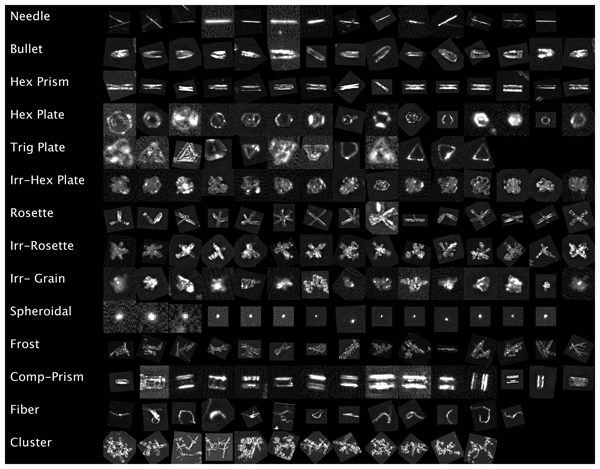
Any instrument on the Antarctic plateau must cope with a harsh environment. Concordia station is a special place for testing new instruments. With low temperatures and weak winds, precipitation can be studied by simply collecting it on horizontal surfaces. This is typically done manually. ICE-CAMERA is intended as an automatic alternative. The combined construction of rugged equipment for taking photographs of particles and the adoption of machine learning techniques have served this purpose.

Étienne Vignon, Lea Raillard, Christophe Genthon, Massimo Del Guasta, Andrew J. Heymsfield, Jean-Baptiste Madeleine, and Alexis Berne
Atmos. Chem. Phys., 22, 12857–12872, https://doi.org/10.5194/acp-22-12857-2022, https://doi.org/10.5194/acp-22-12857-2022, 2022
Short summary
Short summary
The near-surface atmosphere over the Antarctic Plateau is cold and pristine and resembles to a certain extent the high troposphere where cirrus clouds form. In this study, we use innovative humidity measurements at Concordia Station to study the formation of ice fogs at temperatures <−40°C. We provide observational evidence that ice fogs can form through the homogeneous freezing of solution aerosols, a common nucleation pathway for cirrus clouds.

Fritz Waitz, Martin Schnaiter, Thomas Leisner, and Emma Järvinen
Atmos. Chem. Phys., 22, 7087–7103, https://doi.org/10.5194/acp-22-7087-2022, https://doi.org/10.5194/acp-22-7087-2022, 2022
Short summary
Short summary
Riming, i.e., the accretion of small droplets on the surface of ice particles via collision, is one of the major uncertainties in model prediction of mixed-phase clouds. We discuss the occurrence (up to 50% of particles) and aging of rimed ice particles and show correlations of the occurrence and the degree of riming with ambient meteorological parameters using data gathered by the Particle Habit Imaging and Polar Scattering (PHIPS) probe during three airborne in situ field campaigns.
Christophe Genthon, Dana E. Veron, Etienne Vignon, Jean-Baptiste Madeleine, and Luc Piard
Earth Syst. Sci. Data, 14, 1571–1580, https://doi.org/10.5194/essd-14-1571-2022, https://doi.org/10.5194/essd-14-1571-2022, 2022
Short summary
Short summary
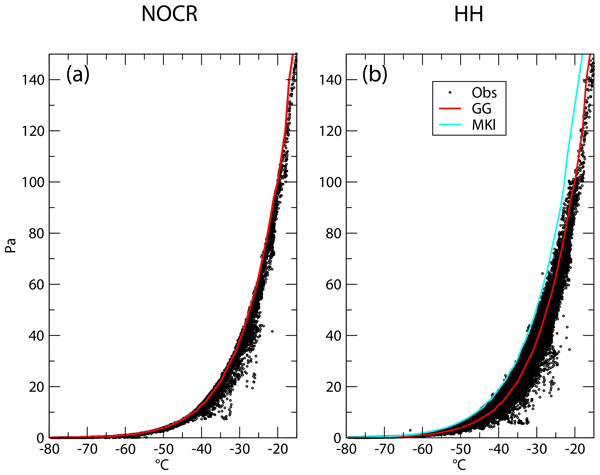
The surface atmosphere of the high Antarctic Plateau is very cold and clean. Such conditions favor water vapor supersaturation. A 3-year quasi-continuous series of atmospheric moisture in a ~40 m atmospheric layer at Dome C is reported that documents time variability, vertical profiles and occurrences of supersaturation. Supersaturation with respect to ice is frequently observed throughout the column, with relative humidities occasionally reaching values near liquid water saturation.
Christophe Genthon, Dana Veron, Etienne Vignon, Delphine Six, Jean-Louis Dufresne, Jean-Baptiste Madeleine, Emmanuelle Sultan, and François Forget
Earth Syst. Sci. Data, 13, 5731–5746, https://doi.org/10.5194/essd-13-5731-2021, https://doi.org/10.5194/essd-13-5731-2021, 2021
Short summary
Short summary
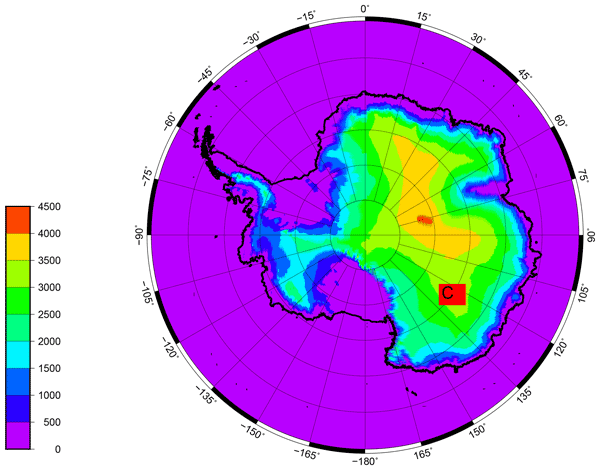
A 10-year dataset of observation in the atmospheric boundary layer at Dome C on the high Antarctic plateau is presented. This is obtained with sensors at six levels along a tower higher than 40 m. The temperature inversion can reach more than 25 °C along the tower in winter, while full mixing by convection can occur in summer. Different amplitudes of variability for wind and temperature at the different levels reflect different signatures of solar vs. synoptic forcing of the boundary layer.
Cited articles
Aubry, C., Delanoë, J., Groß, S., Ewald, F., Tridon, F., Jourdan, O., and Mioche, G.: Lidar–radar synergistic method to retrieve ice, supercooled water and mixed-phase cloud properties, Atmospheric Measurement Techniques, 17, 3863–3881, https://doi.org/10.5194/amt-17-3863-2024, 2024. a, b
Bailey, M. P. and Hallett, J.: A comprehensive habit diagram for atmospheric ice crystals: Confirmation from the laboratory, AIRS II, and other field studies, Journal of the Atmospheric Sciences, 66, 2888–2899, https://doi.org/10.1175/2009jas2883.1, 2009. a, b
Belosi, F., Santachiara, G., and Prodi, F.: Ice-forming nuclei in Antarctica: New and past measurements, Atmospheric Research, 145, 105–111, https://doi.org/10.1016/j.atmosres.2014.03.030, 2014. a
Cox, C. J., Noone, D. C., Berkelhammer, M., Shupe, M. D., Neff, W. D., Miller, N. B., Walden, V. P., and Steffen, K.: Supercooled liquid fogs over the central Greenland Ice Sheet, Atmospheric Chemistry and Physics, 19, 7467–7485, https://doi.org/10.5194/acp-19-7467-2019, 2019. a
Del Guasta, M.: ICE-CAMERA: a flatbed scanner to study inland Antarctic polar precipitation, Atmospheric Measurement Techniques, 15, 6521–6544, https://doi.org/10.5194/amt-15-6521-2022, 2022. a, b
Del Guasta, M., Ricaud, P., Scarchilli, C., and Dreossi, G.: A statistical study of precipitation on the eastern antarctic plateau (Dome-C) using remote sensing and in-situ instrumentation, Polar Science, 42, 101106, https://doi.org/10.1016/j.polar.2024.101106, 2024. a, b
Di Natale, G., Turner, D. D., Bianchini, G., Del Guasta, M., Palchetti, L., Bracci, A., Baldini, L., Maestri, T., Cossich, W., Martinazzo, M., and Facheris, L.: Consistency test of precipitating ice cloud retrieval properties obtained from the observations of different instruments operating at Dome C (Antarctica), Atmospheric Measurement Techniques, 15, 7235–7258, https://doi.org/10.5194/amt-15-7235-2022, 2022. a, b
Dittmann, A., Schlosser, E., Masson-Delmotte, V., Powers, J. G., Manning, K. W., Werner, M., and Fujita, K.: Precipitation regime and stable isotopes at Dome Fuji, East Antarctica, Atmospheric Chemistry and Physics, 16, 6883–6900, https://doi.org/10.5194/acp-16-6883-2016, 2016. a
Genthon, C., Piard, L., Vignon, E., Madeleine, J.-B., Casado, M., and Gallée, H.: Atmospheric moisture supersaturation in the near-surface atmosphere at Dome C, Antarctic Plateau, Atmospheric Chemistry and Physics, 17, 691–704, https://doi.org/10.5194/acp-17-691-2017, 2017. a
Genthon, C., Veron, D. E., Vignon, E., Madeleine, J.-B., and Piard, L.: Water vapor in cold and clean atmosphere: a 3-year data set in the boundary layer of Dome C, East Antarctic Plateau, Earth System Science Data, 14, 1571–1580, https://doi.org/10.5194/essd-14-1571-2022, 2022. a
Girard, E. and Blanchet, J.-P.: Simulation of Arctic diamond dust, ice fog, and thin stratus using an explicit aerosol–cloud–radiation model, Journal of the Atmospheric Sciences, 58, 1199–1221, https://doi.org/10.1175/1520-0469(2001)058<1199:soaddi>2.0.co;2, 2001b. a, b
Grigioni, P., Camporeale, G., Ciardini, V., De Silvestri, L., Iaccarino, A., Proposito, M., and Scarchilli, C.: Dati meteorologici della Stazione meteorologica CONCORDIA presso la Base CONCORDIA STATION (DomeC), Osservatorio Meteo-Climatologico Antartico [data set], https://doi.org/10.12910/DATASET2022-002, 2022. a, b, c
Gultepe, I., Heymsfield, A. J., Gallagher, M., Ickes, L., and Baumgardner, D.: Ice fog: The current state of knowledge and future challenges, Meteorological Monographs, 58, 4–1, https://doi.org/10.1175/amsmonographs-d-17-0002.1, 2017. a, b, c
Hamel, A., Del Guasta, M., Schmitt, C., Genthon, C., Järvinen, E., and Schnaiter, M.: Particle shape and particle size distribution, remote sensing lidar and in-situ temperature and humidity data from DOME-C, Antarctica during austral summer 2023/2024, Zenodo [data set], https://doi.org/10.5281/zenodo.17616458, 2025. a
Heumann, K. G.: Determination of inorganic and organic traces in the clean room compartment of Antarctica, Analytica Chimica Acta, 283, 230–245, https://doi.org/10.1016/0003-2670(93)85227-b, 1993. a, b
Heymsfield, A. J., Krämer, M., Luebke, A., Brown, P., Cziczo, D. J., Franklin, C., Lawson, P., Lohmann, U., McFarquhar, G., Ulanowski, Z., and Van Tricht, K.: Cirrus clouds, Meteorological Monographs, 58, 2–1, https://doi.org/10.1175/amsmonographs-d-16-0010.1, 2017. a
Järvinen, E., Schnaiter, M., Mioche, G., Jourdan, O., Shcherbakov, V. N., Costa, A., Afchine, A., Krämer, M., Heidelberg, F., Jurkat, T., Voigt, C., Schlager, H., Nichman, L., Gallagher, M., Hirst, E., Schmitt, C., Bansemer, A., Heymsfield, A., Lawson, P., Tricoli, U., Pfeilsticker, K., Vochezer, P., Möhler, O., and Leisner, T.: Quasi-spherical ice in convective clouds, Journal of the Atmospheric Sciences, 73, 3885–3910, https://doi.org/10.1175/jas-d-15-0365.1, 2016. a
Kaye, P. H., Hirst, E., Greenaway, R. S., Ulanowski, Z., Hesse, E., DeMott, P. J., Saunders, C., and Connolly, P.: Classifying atmospheric ice crystals by spatial light scattering, Optics Letters, 33, 1545–1547, https://doi.org/10.1364/ol.33.001545, 2008. a, b, c, d
Koop, T., Luo, B., Tsias, A., and Peter, T.: Water activity as the determinant for homogeneous ice nucleation in aqueous solutions, Nature, 406, 611–614, https://doi.org/10.1038/35020537, 2000. a, b, c
Lawson, R. P. and Gettelman, A.: Impact of Antarctic mixed-phase clouds on climate, Proceedings of the National Academy of Sciences, 111, 18156–18161, https://doi.org/10.1073/pnas.1418197111, 2014. a
Lawson, R. P., Baker, B. A., Zmarzly, P., O'Connor, D., Mo, Q., Gayet, J.-F., and Shcherbakov, V.: Microphysical and optical properties of atmospheric ice crystals at South Pole Station, Journal of Applied Meteorology and Climatology, 45, 1505–1524, https://doi.org/10.1175/jam2421.1, 2006. a, b, c, d, e
Libois, Q., Picard, G., Arnaud, L., Morin, S., and Brun, E.: Modeling the impact of snow drift on the decameter-scale variability of snow properties on the Antarctic Plateau, Journal of Geophysical Research: Atmospheres, 119, 11–662, https://doi.org/10.1002/2014jd022361, 2014. a
Lu, R.-S., Tian, G.-Y., Gledhill, D., and Ward, S.: Grinding surface roughness measurement based on the co-occurrence matrix of speckle pattern texture, Applied Optics, 45, 8839–8847, https://doi.org/10.1364/ao.45.008839, 2006. a, b
Maciel, F. V., Diao, M., and Patnaude, R.: Examination of aerosol indirect effects during cirrus cloud evolution, Atmospheric Chemistry and Physics, 23, 1103–1129, https://doi.org/10.5194/acp-23-1103-2023, 2023. a
Mishra, S., Mitchell, D. L., Turner, D. D., and Lawson, R.: Parameterization of ice fall speeds in midlatitude cirrus: Results from SPartICus, Journal of Geophysical Research: Atmospheres, 119, 3857–3876, https://doi.org/10.1002/2013JD020602, 2014. a
Murphy, D. M. and Koop, T.: Review of the vapour pressures of ice and supercooled water for atmospheric applications, Quarterly Journal of the Royal Meteorological Society, 131, 1539–1565, https://doi.org/10.1256/qj.04.94, 2005. a
Palm, S. P., Yang, Y., Spinhirne, J. D., and Marshak, A.: Satellite remote sensing of blowing snow properties over Antarctica, Journal of Geophysical Research: Atmospheres, 116, https://doi.org/10.1029/2011jd015828, 2011. a
Ricaud, P., Bazile, E., del Guasta, M., Lanconelli, C., Grigioni, P., and Mahjoub, A.: Genesis of diamond dust, ice fog and thick cloud episodes observed and modelled above Dome C, Antarctica, Atmospheric Chemistry and Physics, 17, 5221–5237, https://doi.org/10.5194/acp-17-5221-2017, 2017. a
Rolph, G., Stein, A., and Stunder, B.: Real-time environmental applications and display system: READY, Environmental Modelling & Software, 95, 210–228, https://doi.org/10.1016/j.envsoft.2017.06.025, 2017. a, b
Santachiara, G., Belosi, F., and Prodi, F.: Ice crystal precipitation at Dome C site (East Antarctica), Atmospheric Research, 167, 108–117, https://doi.org/10.1016/j.atmosres.2015.08.006, 2016. a
Sauerland, F., Souverijns, N., Possner, A., Wex, H., Van Overmeiren, P., Mangold, A., Van Weverberg, K., and van Lipzig, N.: Ice-nucleating particle concentration impacts cloud properties over Dronning Maud Land, East Antarctica, in COSMO-CLM2, Atmospheric Chemistry and Physics, 24, 13751–13768, https://doi.org/10.5194/acp-24-13751-2024, 2024. a
Schlosser, E., Stenni, B., Valt, M., Cagnati, A., Powers, J. G., Manning, K. W., Raphael, M., and Duda, M. G.: Precipitation and synoptic regime in two extreme years 2009 and 2010 at Dome C, Antarctica – implications for ice core interpretation, Atmospheric Chemistry and Physics, 16, 4757–4770, https://doi.org/10.5194/acp-16-4757-2016, 2016. a
Schmitt, C. G., Stuefer, M., Heymsfield, A. J., and Kim, C. K.: The microphysical properties of ice fog measured in urban environments of Interior Alaska, Journal of Geophysical Research: Atmospheres, 118, 11–136, https://doi.org/10.1002/jgrd.50822, 2013. a, b, c
Schmitt, C. G., Järvinen, E., Schnaiter, M., Vas, D., Hartl, L., Wong, T., and Stuefer, M.: Classification of ice particle shapes using machine learning on forward light scattering images, Artificial Intelligence for the Earth Systems, https://doi.org/10.1175/aies-d-23-0091.1, 2024a. a, b, c, d, e, f
Schmitt, C. G., Vas, D., Schnaiter, M., Järvinen, E., Hartl, L., Wong, T., Cassella, V., and Stuefer, M.: Microphysical characterization of boundary layer ice particles: results from a 3-year measurement campaign in interior Alaska, Journal of Applied Meteorology and Climatology, https://doi.org/10.1175/jamc-d-23-0190.1, 2024b. a, b, c, d, e, f, g, h, i, j
Schnaiter, M., Järvinen, E., Vochezer, P., Abdelmonem, A., Wagner, R., Jourdan, O., Mioche, G., Shcherbakov, V. N., Schmitt, C. G., Tricoli, U., Ulanowski, Z., and Heymsfield, A. J.: Cloud chamber experiments on the origin of ice crystal complexity in cirrus clouds, Atmospheric Chemistry and Physics, 16, 5091–5110, https://doi.org/10.5194/acp-16-5091-2016, 2016. a, b, c, d, e, f, g, h, i, j
Schneider, J., Höhler, K., Wagner, R., Saathoff, H., Schnaiter, M., Schorr, T., Steinke, I., Benz, S., Baumgartner, M., Rolf, C., Krämer, M., Leisner, T., and Möhler, O.: High homogeneous freezing onsets of sulfuric acid aerosol at cirrus temperatures, Atmospheric Chemistry and Physics, 21, 14403–14425, https://doi.org/10.5194/acp-21-14403-2021, 2021. a
Shupe, M. D. and Intrieri, J. M.: Cloud radiative forcing of the Arctic surface: The influence of cloud properties, surface albedo, and solar zenith angle, Journal of Climate, 17, 616–628, https://doi.org/10.1175/1520-0442(2004)017<0616:CRFOTA>2.0.CO;2, 2004. a
Sourdeval, O., Gryspeerdt, E., Krämer, M., Goren, T., Delanoë, J., Afchine, A., Hemmer, F., and Quaas, J.: Ice crystal number concentration estimates from lidar–radar satellite remote sensing – Part 1: Method and evaluation, Atmospheric Chemistry and Physics, 18, 14327–14350, https://doi.org/10.5194/acp-18-14327-2018, 2018. a
Stein, A. F., Draxler, R. R., Rolph, G. D., Stunder, B. J., Cohen, M. D., and Ngan, F.: NOAA's HYSPLIT atmospheric transport and dispersion modeling system, Bulletin of the American Meteorological Society, 96, 2059–2077, https://doi.org/10.1175/bams-d-14-00110.1, 2015. a, b
Ulanowski, Z., Kaye, P. H., Hirst, E., and Greenaway, R.: Light scattering by ice particles in the Earth's atmosphere and related laboratory measurements, in: Procs 12th Int Conf on Electromagnetic and Light Scattering, University of Helsinki, https://api.semanticscholar.org/CorpusID:17077450 (last access: 14 Febuary 2025), 2010. a, b, c
Ulanowski, Z., Kaye, P. H., Hirst, E., Greenaway, R. S., Cotton, R. J., Hesse, E., and Collier, C. T.: Incidence of rough and irregular atmospheric ice particles from Small Ice Detector 3 measurements, Atmospheric Chemistry and Physics, 14, 1649–1662, https://doi.org/10.5194/acp-14-1649-2014, 2014. a, b, c
Vanderpool, R. W., Krug, J. D., Kaushik, S., Gilberry, J., Dart, A., and Witherspoon, C. L.: Size-selective sampling performance of six low-volume “total” suspended particulate (TSP) inlets, Aerosol Science and Technology, 52, 98–113, https://doi.org/10.1080/02786826.2017.1386766, 2018. a
Vignon, É., Raillard, L., Genthon, C., Del Guasta, M., Heymsfield, A. J., Madeleine, J.-B., and Berne, A.: Ice fog observed at cirrus temperatures at Dome C, Antarctic Plateau, Atmospheric Chemistry and Physics, 22, 12857–12872, https://doi.org/10.5194/acp-22-12857-2022, 2022. a, b, c, d
Virkkula, A., Grythe, H., Backman, J., Petäjä, T., Busetto, M., Lanconelli, C., Lupi, A., Becagli, S., Traversi, R., Severi, M., Vitale, V., Sheridan, P., and Andrews, E.: Aerosol optical properties calculated from size distributions, filter samples and absorption photometer data at Dome C, Antarctica, and their relationships with seasonal cycles of sources, Atmospheric Chemistry and Physics, 22, 5033–5069, https://doi.org/10.5194/acp-22-5033-2022, 2022. a, b, c
Vochezer, P., Järvinen, E., Wagner, R., Kupiszewski, P., Leisner, T., and Schnaiter, M.: In situ characterization of mixed phase clouds using the Small Ice Detector and the Particle Phase Discriminator, Atmospheric Measurement Techniques, 9, 159–177, https://doi.org/10.5194/amt-9-159-2016, 2016. a, b, c, d, e, f, g, h, i
Walden, V. P., Warren, S. G., and Tuttle, E.: Atmospheric ice crystals over the Antarctic Plateau in winter, Journal of Applied Meteorology, 42, 1391–1405, https://doi.org/10.1175/1520-0450(2003)042<1391:aicota>2.0.co;2, 2003. a, b, c, d
Wang, Z. and Sassen, K.: Cloud type and macrophysical property retrieval using multiple remote sensors, Journal of Applied Meteorology and Climatology, 40, 1665–1682, https://doi.org/10.1175/1520-0450(2001)040<1665:ctampr>2.0.co;2, 2001. a
Waugh, D. W. and Randel, W. J.: Climatology of Arctic and Antarctic polar vortices using elliptical diagnostics, Journal of the Atmospheric Sciences, 56, 1594–1613, https://doi.org/10.1175/1520-0469(1999)056<1594:coaaap>2.0.co;2, 1999. a
Yang, P., Bi, L., Baum, B. A., Liou, K.-N., Kattawar, G. W., Mishchenko, M. I., and Cole, B.: Spectrally consistent scattering, absorption, and polarization properties of atmospheric ice crystals at wavelengths from 0.2 to 100 µm, Journal of the Atmospheric Sciences, 70, 330–347, https://doi.org/10.1175/jas-d-12-039.1, 2013. a
Short summary
Size and shape of small ice particles in the dry and cold atmosphere of inland Antarctica were measured. We observed that particles originating near the surface are smaller than those falling from higher altitudes. Inland Antarctic particles of frozen fog occur at lower concentrations and are less complex than those observed in an urban, polluted environment. These findings can help to improve Antarctic climate models and to accurately interpret satellite observations of the polar atmosphere.
Size and shape of small ice particles in the dry and cold atmosphere of inland Antarctica were...


Altmetrics
Final-revised paper
Preprint