
Articles | Volume 26, issue 16
https://doi.org/10.5194/acp-26-11785-2026
© Author(s) 2026. This work is distributed under
the Creative Commons Attribution 4.0 License.
the Creative Commons Attribution 4.0 License.
https://doi.org/10.5194/acp-26-11785-2026
© Author(s) 2026. This work is distributed under
the Creative Commons Attribution 4.0 License.
the Creative Commons Attribution 4.0 License.
Measurement report
| 
20 Aug 2026
Measurement report |
| 20 Aug 2026
| 20 Aug 2026
Measurement Report: Quantitative analysis of aerosol acidity and its driving factors in Guanzhong area, Northwest China
Qian Wang
State Key Laboratory of Loess Science, Institute of Earth Environment, Chinese Academy of Sciences, Xi'an, China
University of Chinese Academy of Sciences, Beijing, China
Xiao Guo
State Key Laboratory of Loess Science, Institute of Earth Environment, Chinese Academy of Sciences, Xi'an, China
Minxia Shen
State Key Laboratory of Loess Science, Institute of Earth Environment, Chinese Academy of Sciences, Xi'an, China
Yali Liu
Xi'an Institute for Innovative Earth Environment Research, Xi'an, China
Yifan Zhang
Xi'an Institute for Innovative Earth Environment Research, Xi'an, China
Lu Li
State Key Laboratory of Loess Science, Institute of Earth Environment, Chinese Academy of Sciences, Xi'an, China
Weining Qi
State Key Laboratory of Loess Science, Institute of Earth Environment, Chinese Academy of Sciences, Xi'an, China
University of Chinese Academy of Sciences, Beijing, China
Yue Cao
Xi'an Institute for Innovative Earth Environment Research, Xi'an, China
Shicong Li
State Key Laboratory of Loess Science, Institute of Earth Environment, Chinese Academy of Sciences, Xi'an, China
Zhuoer Dong
State Key Laboratory of Loess Science, Institute of Earth Environment, Chinese Academy of Sciences, Xi'an, China
University of Chinese Academy of Sciences, Beijing, China
Wenting Dai
State Key Laboratory of Loess Science, Institute of Earth Environment, Chinese Academy of Sciences, Xi'an, China
National Field Observation and Research Station (Shaanxi) for Ecological and Environment Changes and Integrated Management in the Guanzhong Plain Region, Xi'an, China

State Key Laboratory of Loess Science, Institute of Earth Environment, Chinese Academy of Sciences, Xi'an, China
National Field Observation and Research Station (Shaanxi) for Ecological and Environment Changes and Integrated Management in the Guanzhong Plain Region, Xi'an, China
Related authors
Minxia Shen, Weining Qi, Yali Liu, Yifan Zhang, Wenting Dai, Lu Li, Xiao Guo, Yue Cao, Yingkun Jiang, Qian Wang, Shicong Li, Qiyuan Wang, and Jianjun Li
Atmos. Chem. Phys., 25, 16147–16165, https://doi.org/10.5194/acp-25-16147-2025, https://doi.org/10.5194/acp-25-16147-2025, 2025
Short summary
Short summary
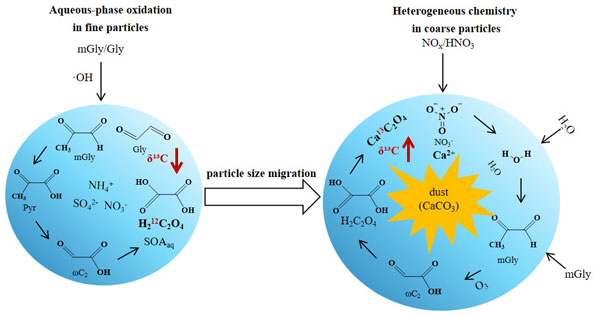
This study examines how dust transport modulates oxalic acid formation pathways in aerosols across different elevations of Mount Hua. During dust events, oxalic acid and precursors shift from fine to coarse particles, with concurrent heterogeneous reactions on coarse particle surfaces. The characteristic isotopic fractionation signatures accompanying these transformations yield novel theoretical frameworks for elucidating aerosol aging mechanisms in mountainous environments.
Ju-Lian Shi, Chong-Shu Zhu, Yao Qu, Xiao Wang, Nan Wang, Lu-Yao Wang, Wen-Ting Dai, Hong Huang, and Jun-Ji Cao
EGUsphere, https://doi.org/10.5194/egusphere-2026-4438, https://doi.org/10.5194/egusphere-2026-4438, 2026
This preprint is open for discussion and under review for Atmospheric Chemistry and Physics (ACP).
Short summary
Short summary
Carbonaceous aerosols at three sites spanning the western, central, and eastern Himalayas were investigated during the pre-monsoon period. Primary brown carbon contributed substantially to light absorption and radiative forcing in the central Himalayas. Orographic effects regulated the spatial distribution of light absorption. Mineral dust, pollution-modified dust, and biomass burning emissions dominated the aerosol characteristics in the western, central, and eastern Himalayas, respectively.

Xin Zhang, Lijuan Li, Jianjun Li, Yue Lin, Yan Cheng, Rui Wang, Shuyan Xing, Chongshu Zhu, Junji Cao, and Yuemei Han
Atmos. Chem. Phys., 25, 17139–17158, https://doi.org/10.5194/acp-25-17139-2025, https://doi.org/10.5194/acp-25-17139-2025, 2025
Short summary
Short summary
The influence of anthropogenic pollution on atmospheric organic composition was studied to explore the chemical processes of anthropogenic–biogenic interactions in the Qinling Mountains region of central China using advanced Orbitrap mass spectrometry. Organic molecular species exhibited distinct seasonal variabilities and were more abundant and chemically diverse in winter. Anthropogenic pollution played key roles in altering their composition and related properties under various conditions.
Minxia Shen, Weining Qi, Yali Liu, Yifan Zhang, Wenting Dai, Lu Li, Xiao Guo, Yue Cao, Yingkun Jiang, Qian Wang, Shicong Li, Qiyuan Wang, and Jianjun Li
Atmos. Chem. Phys., 25, 16147–16165, https://doi.org/10.5194/acp-25-16147-2025, https://doi.org/10.5194/acp-25-16147-2025, 2025
Short summary
Short summary
This study examines how dust transport modulates oxalic acid formation pathways in aerosols across different elevations of Mount Hua. During dust events, oxalic acid and precursors shift from fine to coarse particles, with concurrent heterogeneous reactions on coarse particle surfaces. The characteristic isotopic fractionation signatures accompanying these transformations yield novel theoretical frameworks for elucidating aerosol aging mechanisms in mountainous environments.
Can Wu, Yubao Chen, Yuwei Sun, Huijun Zhang, Si Zhang, Cong Cao, Jianjun Li, and Gehui Wang
Atmos. Chem. Phys., 25, 11975–11989, https://doi.org/10.5194/acp-25-11975-2025, https://doi.org/10.5194/acp-25-11975-2025, 2025
Short summary
Short summary
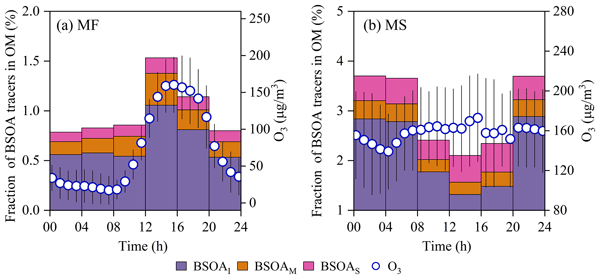
Biogenic secondary organic aerosol (BSOA), as an important atmospheric component, is prevalent within the boundary layer and can influence air quality and human health. Our observations demonstrate that anthropogenic NOx and the enhanced aerosol water driven by sulfate inhibit BSOA formation in lifting air masses, leading to a moderate reduction in the SOA burden in the upper boundary layer.
Jiamao Zhou, Jiarui Wu, Xiaoli Su, Ruonan Wang, Imad EI Haddad, Xia Li, Qian Jiang, Ting Zhang, Wenting Dai, Junji Cao, Andre S. H. Prevot, Xuexi Tie, and Guohui Li
Atmos. Chem. Phys., 25, 7563–7580, https://doi.org/10.5194/acp-25-7563-2025, https://doi.org/10.5194/acp-25-7563-2025, 2025
Short summary
Short summary
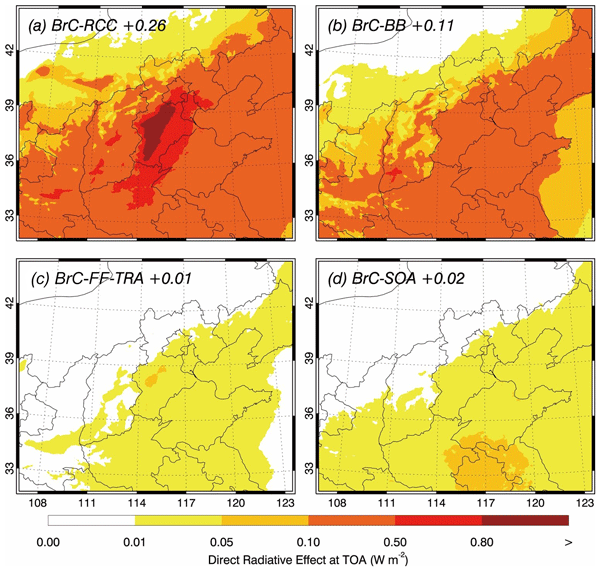
Brown carbon (BrC) is a type of airborne particle produced from various combustion sources which is light absorption. Historically, climate models have categorizing organic particles as either non-absorbing or purely reflective. Our study shows that BrC can reduce the usual cooling effect of organic particles. While BrC is often linked to biomass burning, however, BrC from fossil fuels contributes significantly to atmospheric heating.
Can Wu, Xiaodi Liu, Ke Zhang, Si Zhang, Cong Cao, Jianjun Li, Rui Li, Fan Zhang, and Gehui Wang
Atmos. Chem. Phys., 24, 9263–9275, https://doi.org/10.5194/acp-24-9263-2024, https://doi.org/10.5194/acp-24-9263-2024, 2024
Short summary
Short summary
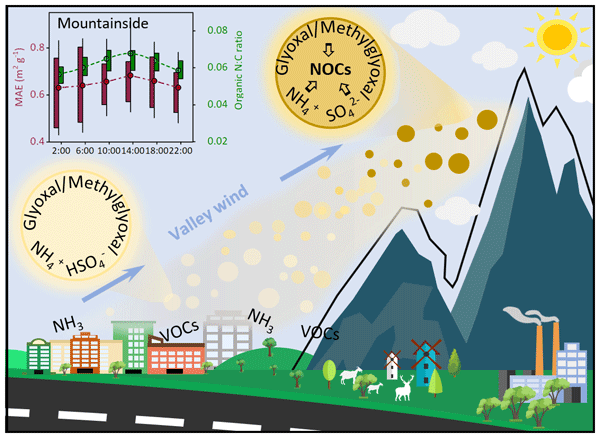
Brown carbon (BrC) is prevalent in the troposphere and can efficiently absorb solar and terrestrial radiation. Our observations show that the enhanced light absorption of BrC relative to black carbon at the tropopause can be attributed to the formation of nitrogen-containing organic compounds through the aqueous-phase reactions of carbonyls with ammonium.

Can Wu, Cong Cao, Jianjun Li, Shaojun Lv, Jin Li, Xiaodi Liu, Si Zhang, Shijie Liu, Fan Zhang, Jingjing Meng, and Gehui Wang
Atmos. Chem. Phys., 22, 15621–15635, https://doi.org/10.5194/acp-22-15621-2022, https://doi.org/10.5194/acp-22-15621-2022, 2022
Short summary
Short summary
Over the past decade, the relative abundance of NH4NO3 in aerosol has been enhanced in most urban areas of China, which profoundly affects the PM2.5 pollution episodes. Our work finds that fine-particle nitrate and ammonium exhibited distinct, different physicochemical behaviors in the aerosol aging process.

Minxia Shen, Kin Fai Ho, Wenting Dai, Suixin Liu, Ting Zhang, Qiyuan Wang, Jingjing Meng, Judith C. Chow, John G. Watson, Junji Cao, and Jianjun Li
Atmos. Chem. Phys., 22, 7489–7504, https://doi.org/10.5194/acp-22-7489-2022, https://doi.org/10.5194/acp-22-7489-2022, 2022
Short summary
Short summary
Looking at characteristics and δ13C compositions of dicarboxylic acids and related compounds in BB aerosols, we used a combined combustion and aging system to generate fresh and aged aerosols from burning straw. The results showed the emission factors (EFaged) of total diacids of aging experiments were around an order of magnitude higher than EFfresh. This meant that dicarboxylic acids are involved with secondary photochemical processes in the atmosphere rather than primary emissions from BB.
Cited articles
Brook, R., Wiebe, A. H., Woodhouse, A., Audette, V., Piechowski, M., Dabek-Zlotorzynska, E., and Dloughy, F.: Temporal and spatial relationships in fine particle strong acidity, sulphate, PM10, and PM2.5 across multiple Canadian locations, Atmos. Environ., 31, 4223–4236, https://doi.org/10.1016/S1352-2310(97)00248-3, 1997.
Chen, G., Fan, X., Lin, Z., Ji, X., Chen, Z., Xu, L., and Chen, J.: Driving factors and photochemical impacts of Cl2 in coastal atmosphere of southeast China, npj Clim. Atmos. Sci., 8, 135, https://doi.org/10.1038/s41612-025-01022-y, 2025.
Clegg, S. L., Brimblecombe, P., and Wexler, A. S.: Thermodynamic model of the system H+-NH
Cui, H., Du, Y., Zhang, H., Deng, M., Zhang, Q., Chen, W., Su, S., Li, X., Sarkar, S., Yang, L., Wang, X., and Jia, S.: A quantitative study on the influencing pathways of aerosol acidity: the non-neglectable role of non-ideality, Atmos. Environ., 354, 121256, https://doi.org/10.1016/j.atmosenv.2025.121256, 2025.
Ding, J., Zhao, P., Su, J., Dong, Q., Du, X., and Zhang, Y.: Aerosol pH and its driving factors in Beijing, Atmos. Chem. Phys., 19, 7939–7954, https://doi.org/10.5194/acp-19-7939-2019, 2019.
Du, C., Yang, H., Wang, N., Pang, S., and Zhang, Y.: pH effect on the release of NH3 from the internally mixed sodium succinate and ammonium sulfate aerosols, Atmos. Environ., 220, 117101, https://doi.org/10.1016/j.atmosenv.2019.117101, 2020.
Feng, Q., Liu, H., Dai, W., Cao, Y., Shen, M., Liu, Y., Qi, W., Chen, Y., Guo, X., Zhang, Y., Li, L., Zhou, B., and Li, J.: Comparison of chemical composition and acidity of size-resolved inorganic aerosols at the top and foot of mt. Hua, northwest China: the role of the gas-particle distribution of ammonia, Sci. Total Environ., 905, 166985, https://doi.org/10.1016/j.scitotenv.2023.166985, 2023.
Fountoukis, C. and Nenes, A.: ISORROPIA II: a computationally efficient thermodynamic equilibrium model for K+–Ca2+–Mg2+–NH
Fu, Z., Cheng, L., Ye, X., Ma, Z., Wang, R., Duan, Y., Tao, J., and Cheng, J.: Characteristics of aerosol chemistry and acidity in shanghai after PM2.5 satisfied national guideline: Insight into future emission control, Sci. Total Environ., 827, 154319, https://doi.org/10.1016/j.scitotenv.2022.154319, 2022.
Guo, H., Xu, L., Bougiatioti, A., Cerully, K. M., Capps, S. L., Hite Jr., J. R., Carlton, A. G., Lee, S.-H., Bergin, M. H., Ng, N. L., Nenes, A., and Weber, R. J.: Fine-particle water and pH in the southeastern United States, Atmos. Chem. Phys., 15, 5211–5228, https://doi.org/10.5194/acp-15-5211-2015, 2015.
Guo, H., Sullivan, A. P., Campuzano-Jost, P., Schroder, J. C., Lopez-Hilfiker, F. D., Dibb, J. E., Jimenez, J. L., Thornton, J. A., Brown, S. S., Nenes, A., and Weber, R. J.: Fine particle pH and the partitioning of nitric acid during winter in the northeastern united states, J. Geophys. Res.-Atmos., 121, https://doi.org/10.1002/2016JD025311, 2016.
Guo, H., Otjes, R., Schlag, P., Kiendler-Scharr, A., Nenes, A., and Weber, R. J.: Effectiveness of ammonia reduction on control of fine particle nitrate, Atmos. Chem. Phys., 18, 12241–12256, https://doi.org/10.5194/acp-18-12241-2018, 2018.
Hennigan, C. J., Izumi, J., Sullivan, A. P., Weber, R. J., and Nenes, A.: A critical evaluation of proxy methods used to estimate the acidity of atmospheric particles, Atmos. Chem. Phys., 15, 2775–2790, https://doi.org/10.5194/acp-15-2775-2015, 2015.
Huang, R., Zhang, Y., Bozzetti, C., Ho, K., Cao, J., Han, Y., Daellenbach, K. R., Slowik, J. G., Platt, S. M., Canonaco, F., Zotter, P., Wolf, R., Pieber, S. M., Bruns, E. A., Crippa, M., Ciarelli, G., Piazzalunga, A., Schwikowski, M., Abbaszade, G., Schnelle-Kreis, J., Zimmermann, R., An, Z., Szidat, S., Baltensperger, U., Haddad, I. E., and Prévôt, A. S. H.: High secondary aerosol contribution to particulate pollution during haze events in China, Nature, 514, 218–222, https://doi.org/10.1038/nature13774, 2014.
Jia, S., Chen, W., Zhang, Q., Krishnan, P., Mao, J., Zhong, B., Huang, M., Fan, Q., Zhang, J., Chang, M., Yang, L., and Wang, X.: A quantitative analysis of the driving factors affecting seasonal variation of aerosol pH in Guangzhou, China, Sci. Total Environ., 725, 138228, https://doi.org/10.1016/j.scitotenv.2020.138228, 2020.
Karydis, V. A., Tsimpidi, A. P., Pozzer, A., and Lelieveld, J.: How alkaline compounds control atmospheric aerosol particle acidity, Atmos. Chem. Phys., 21, 14983–15001, https://doi.org/10.5194/acp-21-14983-2021, 2021.
Krotkov, N. A., McLinden, C. A., Li, C., Lamsal, L. N., Celarier, E. A., Marchenko, S. V., Swartz, W. H., Bucsela, E. J., Joiner, J., Duncan, B. N., Boersma, K. F., Veefkind, J. P., Levelt, P. F., Fioletov, V. E., Dickerson, R. R., He, H., Lu, Z., and Streets, D. G.: Aura OMI observations of regional SO2 and NO2 pollution changes from 2005 to 2015, Atmos. Chem. Phys., 16, 4605–4629, https://doi.org/10.5194/acp-16-4605-2016, 2016.
Li, K., Jacob, D. J., Liao, H., Qiu, Y., Shen, L., Zhai, S., Bates, K. H., Sulprizio, M. P., Song, S., Lu, X., Zhang, Q., Zheng, B., Zhang, Y., Zhang, J., Lee, H. C., and Kuk, S. K.: Ozone pollution in the north China plain spreading into the late-winter haze season, P. Natl. Acad. Sci. USA, 118, e2015797118, https://doi.org/10.1073/pnas.2015797118, 2021.
Liu, H., Feng, Q., Huang, Y., Wu, F., Liu, Y., Shen, M., Guo, X., Dai, W., Qi, W., Zhang, Y., Li, L., Wang, Q., Zhou, B., and Li, J.: Composition and size distribution of wintertime inorganic aerosols at ground and alpine regions of northwest China, Chinese Chem. Lett., 35, 109636, https://doi.org/10.1016/j.cclet.2024.109636, 2024.
Liu, M., Song, Y., Zhou, T., Xu, Z., Yan, C., Zheng, M., Wu, Z., Hu, M., Wu, Y., and Zhu, T.: Fine particle pH during severe haze episodes in northern China, Geophys. Res. Lett., 44, 5213–5221, https://doi.org/10.1002/2017GL073210, 2017.
Liu, M., Huang, X., Song, Y., Tang, J., Cao, J., Zhang, X., Zhang, Q., Wang, S., Xu, T., Kang, L., Cai, X., Zhang, H., Yang, F., Wang, H., Yu, J. Z., Lau, A. K., He, L., Huang, X., Duan, L., Ding, A., Xue, L., Gao, J., Liu, B., and Zhu, T.: Ammonia emission control in China would mitigate haze pollution and nitrogen deposition, but worsen acid rain, P. Natl. Acad. Sci. USA, 116, 7760–7765, https://doi.org/10.1073/pnas.1814880116, 2019.
Liu, M., Liu, Z., Wang, J., Chen, W., Feng, T., Pan, T., Yuan, B., Huang, S., Shao, M., Hu, M., Wang, X., and Hu, W.: The variation, source, and environmental impact of chloride across China: summarized field results based on the aerosol mass spectrometer (AMS), J. Geophys. Res.-Atmos., 130, e2024JD043275, https://doi.org/10.1029/2024JD043275, 2025a.
Liu, P., Zhao, X., Zhang, C., Chen, H., Wang, J., Xue, L., Chen, J., and Mu, Y.: Fine particle pH and its influencing factors during summer at Mt. Tai: comparison between mountain and urban sites, Atmos. Environ., 261, 118607, https://doi.org/10.1016/j.atmosenv.2021.118607, 2021.
Liu, P., Chen, H., Song, Y., Xue, C., Ye, C., Zhao, X., Zhang, C., Liu, J., and Mu, Y.: Atmospheric ammonia in the rural North China Plain during wintertime: Variations, sources, and implications for HONO heterogeneous formation, Sci. Total Environ., 861, 160768, https://doi.org/10.1016/j.scitotenv.2022.160768, 2023.
Liu, Y., Guo, X., Zhang, Y., Cao, Y., Jiang, Y., Qi, W., Shen, M., Li, L., Wang, Q., Dai, W., and Li, J.: Chemical characteristics of wintertime PM2.5 in background region of northwest China during urban emission reduction, Iscience, 28, 113528, https://doi.org/10.1016/j.isci.2025.113528, 2025b.
Mao, I., Lin, C, Lin, C., Chen, Y., Sung, F., and Chen, M.: Exposure of acid aerosol for schoolchildren in metropolitan Taipei, Atmos. Environ., 43, 5622–5629, https://doi.org/10.1016/j.atmosenv.2009.07.054, 2009.
Mao, M., Rao, L., Jiang, H., He, S., and Zhang, X.: Air pollutants in metropolises of eastern coastal China, Int. J. Env. Res. Pub. He., 19, 15332, https://doi.org/10.3390/ijerph192215332, 2022.
Meng, Z., Xu, X., Lin, W., Ge, B., Xie, Y., Song, B., Jia, S., Zhang, R., Peng, W., Wang, Y., Cheng, H., Yang, W., and Zhao, H.: Role of ambient ammonia in particulate ammonium formation at a rural site in the North China Plain, Atmos. Chem. Phys., 18, 167–184, https://doi.org/10.5194/acp-18-167-2018, 2018.
Nah, T., Lam, Y. H., Yang, J., and Yang, L.: Long-term trends and sensitivities of PM2.5 pH and aerosol liquid water to chemical composition changes and meteorological parameters in Hong Kong, south China: insights from 10-year records from three urban sites, Atmos. Environ., 302, 119725, https://doi.org/10.1016/j.atmosenv.2023.119725, 2023.
Nenes, A., Pandis, S. N., and Pilinis, C.: ISORROPIA: A new thermodynamic equilibrium model for multiphase multicomponent inorganic aerosols, Aquat. Geochem., 4, 123–152, https://doi.org/10.1023/A:1009604003981, 1998.
Niu, X., Cao, J., Shen, Z., Ho, S. S. H., Tie, X., Zhao, S., Xu, H., Zhang, T., and Huang, R.: PM2.5 from the Guanzhong Plain: chemical composition and implications for emission reductions, Atmos. Environ., 147, 458–469, https://doi.org/10.1016/j.atmosenv.2016.10.029, 2016.
Paglione, M., Decesari, S., Rinaldi, M., Tarozzi, L., Manarini, F., Gilardoni, S., Facchini, M. C., Fuzzi, S., Bacco, D., Trentini, A., Pandis, S. N., and Nenes, A.: Historical changes in seasonal aerosol acidity in the po valley (Italy) as inferred from fog water and aerosol measurements, Environ. Sci. Technol., 55, 7307–7315, https://doi.org/10.1021/acs.est.1c00651, 2021.
Pye, H. O. T., Nenes, A., Alexander, B., Ault, A. P., Barth, M. C., Clegg, S. L., Collett Jr., J. L., Fahey, K. M., Hennigan, C. J., Herrmann, H., Kanakidou, M., Kelly, J. T., Ku, I.-T., McNeill, V. F., Riemer, N., Schaefer, T., Shi, G., Tilgner, A., Walker, J. T., Wang, T., Weber, R., Xing, J., Zaveri, R. A., and Zuend, A.: The acidity of atmospheric particles and clouds, Atmos. Chem. Phys., 20, 4809–4888, https://doi.org/10.5194/acp-20-4809-2020, 2020.
Rengarajan, R., Sudheer, A., and Sarin, M.: Aerosol acidity and secondary organic aerosol formation during wintertime over urban environment in western India, Atmos. Environ., 45, 1940–1945, https://doi.org/10.1016/j.atmosenv.2011.01.026, 2011.
Saraswati, Sharma, S., Saxena, M., and Mandal, T.: Characteristics of gaseous and particulate ammonia and their role in the formation of secondary inorganic particulate matter at Delhi, India, Atmos. Res., 218, 34–49, https://doi.org/10.1016/j.atmosres.2018.11.010, 2019.
Shah, V., Jaeglé, L., Thornton, J., Lopez-Hilfiker, F., Lee, B., Schroder, J., Campuzano-Jost, P., Jimenez, J., Guo, H., Sullivan, A., Weber, R., Green, J., Fiddler, M., Bililign, S., Campos, T., Stell, M., Weinheimer, A., Montzka, D., and Brown, S.: Chemical feedbacks weaken the wintertime response of particulate sulfate and nitrate to emissions reductions over the eastern United States, P. Natl. Acad. Sci. USA, 115, 8110–8115, https://doi.org/10.1073/pnas.1803295115, 2018.
Shen, M., Li, J., Liu, Y., Dai, W., Wang, G., Qi, W., Chen, Y., Guo, X., Zhang, Y., Li, L., Cao, Y., Feng, Q., Su, H., and Cao, J.: Comparison of acidity and chemical composition of summertime cloud water and aerosol at an alpine site in northwest China: Implications for the neutral property of clouds in the free troposphere, Sci. Total Environ., 925, 171775, https://doi.org/10.1016/j.scitotenv.2024.171775, 2024.
Shi, G., Xu, J., Shi, X., Liu, B., Bi, X., Xiao, Z., Chen, K., Wen, J., Dong, S., Tian, Y., Feng, Y., Yu, H., Song, S., Zhao, Q., Gao, J., and Russell, A. G.: Aerosol pH dynamics during haze periods in an urban environment in China: use of detailed, hourly, speciated observations to study the role of ammonia availability and secondary aerosol formation and urban environment, J. Geophys. Res.-Atmos., 124, 9730–9742, https://doi.org/10.1029/2018JD029976, 2019.
Shi, Z., Bonneville, S., Krom, M. D., Carslaw, K. S., Jickells, T. D., Baker, A. R., and Benning, L. G.: Iron dissolution kinetics of mineral dust at low pH during simulated atmospheric processing, Atmos. Chem. Phys., 11, 995–1007, https://doi.org/10.5194/acp-11-995-2011, 2011.
Song, S., Nenes, A., Gao, M., Zhang, Y., Liu, P., Shao, J., Ye, D., Xu, W., Sun, Y., Liu, B., and McElroy, M.: Thermodynamic Modeling Suggests Declines in Water Uptake and Acidity of Inorganic Aerosols in Beijing Winter Haze Events during 2014/2015–2018/2019, Environ. Sci. Technol., 6, 752–760, https://doi.org/10.1021/acs.estlett.9b00621, 2019.
Su, H., Zhang, T., Liu, S., Qu, Y., Li, H., Zhou, J., Zhao, Z., Wang, Q., Li, L., Shen, M., and Chen, S.: Growth of nitrate contribution to aerosol pollution during wintertime in Xi'an, northwest China: Formation mechanism and effects of NH3, Particuology, 87, 303–315, https://doi.org/10.1016/j.partic.2023.09.014, 2024.
Su, J., Zhao, P., Ge, S., and Ding, J.: Aerosol liquid water content of PM2.5 and its influencing factors in Beijing, China, Sci. Total Environ., 839, 156342, https://doi.org/10.1016/j.scitotenv.2022.156342, 2022.
Sun, Y. L., Wang, Z. F., Fu, P. Q., Yang, T., Jiang, Q., Dong, H. B., Li, J., and Jia, J. J.: Aerosol composition, sources and processes during wintertime in Beijing, China, Atmos. Chem. Phys., 13, 4577–4592, https://doi.org/10.5194/acp-13-4577-2013, 2013.
Tan, T., Hu, M., Li, M., Guo, Q., Wu, Y., Fang, X., Gu, F., Wang, Y., and Wu, Z.: New insight into PM2.5 pollution patterns in Beijing based on one-year measurement of chemical compositions, Sci. Total Environ., 621, 734–743, https://doi.org/10.1016/j.scitotenv.2017.11.208, 2018.
Tang, I.: Chemical and size effects of hygroscopic aerosols on light scattering coefficients. J. Geophys. Res.-Atmos., 101, 19245–19250, https://doi.org/10.1029/96JD03003, 1996.
Tao, J., Wu, Y., Deng, Y., Hu, B., and Zhou, Z.: Thermodynamic regulation of aerosol pH by temperature and humidity: the role of gas-particle partitioning of semi-volatile inorganic species in a subtropical region, Environ. Res., 286, 122727, https://doi.org/10.1016/j.envres.2025.122727, 2025.
Tao, Y. and Murphy, J. G.: The sensitivity of PM2.5 acidity to meteorological parameters and chemical composition changes: 10-year records from six Canadian monitoring sites, Atmos. Chem. Phys., 19, 9309–9320, https://doi.org/10.5194/acp-19-9309-2019, 2019.
Wang, G., Zhang, R., Gomez, M., Yang, L., Levy Zamora, M., Hu, M., Lin, Y., Peng, J., Guo, S., Meng, J., Li, J., Cheng, C., Hu, T., Ren, Y., Wang, Y., Gao, J., Cao, J., An, Z., Zhou, W., Li, G., Wang, J., Tian, P., Marrero-Ortiz, W., Secrest, J., Du, Z., Zheng, J., Shang, D., Zeng, L., Shao, M., Wang, W., Huang, Y., Wang, Y., Zhu, Y., Li, Y., Hu, J., Pan, B., Cai, L., Cheng, Y., Ji, Y., Zhang, F., Rosenfeld, D., Liss, P., Duce, R., Kolb, C., and Molina, M.: Persistent sulfate formation from London fog to Chinese haze, P. Natl. Acad. Sci. USA, 113, 13630–13635, https://doi.org/10.1073/pnas.1616540113, 2016.
Wang, Q., Guo, Xiao., Shen, M., Liu, Y., Zhang, Y., Li, L., Qi, W., Cao, Y., Li, S., Dong, Z., and Dai, W.: Measurement report: quantitative analysis of aerosol acidity and its driving factors in guanzhong area, northwest China, Zenodo [data set], https://doi.org/10.5281/zenodo.18455742, 2026.
Wang, Z., Wang, R., Wang, J., Wang, Y., McPherson Donahue, N., Tang, R., Dong, Z., Li, X., Wang, L., Han, Y., and Cao, J.: The seasonal variation, characteristics and secondary generation of PM2.5 in Xi'an, China, especially during pollution events, Environ. Res., 212, 113388, https://doi.org/10.1016/j.envres.2022.113388, 2022.
Wei, Y., Wang, S., Jiang, N., Zhang, R., and Hao, Q.: Comparative multi-model study of PM2.5 acidity trend changes in ammonia-rich regions in winter: based on a new ammonia concentration assessment method, J. Hazard. Mater., 458, 131970, https://doi.org/10.1016/j.jhazmat.2023.131970, 2023.
Wu, C., Wang, G., Li, J., Li, J., Cao, C., Ge, S., Xie, Y., Chen, J., Li, X., Xue, G., Wang, X., Zhao, Z., and Cao, F.: The characteristics of atmospheric brown carbon in Xi'an, inland China: sources, size distributions and optical properties, Atmos. Chem. Phys., 20, 2017–2030, https://doi.org/10.5194/acp-20-2017-2020, 2020.
Xie, Y., Lu, H., Yi, A., Zhang, Z., Zheng, N., Fang, X., and Xiao, H.: Characterization and source analysis of water–soluble ions in PM2.5 at a background site in central China, Atmos. Res., 239, 104881, https://doi.org/10.1016/j.atmosres.2020.104881, 2020.
Xu, K., Yin, L., Chen, Q., Liao, D., Ji, X., Zhang, K., Wu, Y., Xu, L., Li, M., Fan, X., Zhang, F., Huang, Z., Chen, J., and Hong, Y.: Quantitative analysis of influencing factors to aerosol pH and its responses to PM2.5 and O3 pollution in a coastal city, J. Environ. Sci., 151, 284–297, https://doi.org/10.1016/j.jes.2024.03.044, 2025.
Ye, X., Tao, Y., Liu, Y., Wang, R., Li, Q., Yang, X., and Chen, J.: Size-fractionated water-soluble ions during autumn and winter: Insights into volatile ammonium formation mechanisms in Shanghai, a megacity of China, Atmos. Environ., 2, 100011, https://doi.org/10.1016/j.aeaoa.2019.100011, 2019.
Zhang, B., Shen, H., Liu, P., Guo, H., Hu, Y., Chen, Y., Xie, S., Xi, Z., Skipper, T. N., and Russell, A. G.: Significant contrasts in aerosol acidity between China and the United States, Atmos. Chem. Phys., 21, 8341–8356, https://doi.org/10.5194/acp-21-8341-2021, 2021a.
Zhang, Q., Shen, Z., Lei, Y., Zhang, T., and Zhang, R.: Optical properties and source identification of black carbon and brown carbon: Comparison of winter and summer haze episodes in Xi'an, northwest China, Environ. Sci.: Processes Impacts, 21, 2058–2069, 2019.
Zhang, R., Han, Y., Shi, A., Sun, X., Yan, X., Huang, Y., and Wang, Y.: Characteristics of ambient ammonia and its effects on particulate ammonium in winter of urban Beijing, China, Environ. Sci. Pollut. Res., 28, 62828–62838, https://doi.org/10.1007/s11356-021-14108-w, 2021b.
Zhang, T., Shen, Z., Su, H., Liu, S., Zhou, J., Zhao, Z., Wang, Q., Prévôt, A. S. H., and Cao, J. J.: Effects of aerosol water content on the formation of secondary inorganic aerosol during a winter heavy PM2.5 pollution episode in Xi'an, China, Atmos. Environ., 252, 118304, https://doi.org/10.1016/j.atmosenv.2021.118304, 2021c.
Zhang, Y., Cai, J., Wang, S., He, K., and Zheng, M.: Review of receptor-based source apportionment research of fine particulate matter and its challenges in China, Sci. Total Environ., 586, 917–929, https://doi.org/10.1016/j.scitotenv.2017.02.071, 2017.
Zheng, G., Su, H., Wang, S., Andreae, M., Pöschl, U., and Cheng, Y.: Multiphase buffer theory explains contrasts in atmospheric aerosol acidity, Science, 369, 1374–1377, https://doi.org/10.1126/science.aba3719, 2020.
Zheng, G., Su, H., and Cheng, Y.: Role of carbon dioxide, ammonia, and organic acids in buffering atmospheric acidity: The distinct contribution in clouds and aerosols, Environ. Sci. Technol., 57, 12571–12582, https://doi.org/10.1021/acs.est.2c09851, 2023.
Zhou, M., Zheng, G., Wang, H., Qiao, L., Zhu, S., Huang, D., An, J., Lou, S., Tao, S., Wang, Q., Yan, R., Ma, Y., Chen, C., Cheng, Y., Su, H., and Huang, C.: Long-term trends and drivers of aerosol pH in eastern China, Atmos. Chem. Phys., 22, 13833–13844, https://doi.org/10.5194/acp-22-13833-2022, 2022.
Short summary
We studied fine particle acidity over one year in northwest China. Average pH was 3.8, highest in winter, lowest in summer. Pollution made particles less acidic. Temperature drove seasonal changes; ammonia was key in autumn and winter, dust calcium in spring, and humidity in summer. Humidity had a non-linear effect around 60–85% relative humidity. Our results enhance the understanding of the contributions of various factors to aerosol pH.
We studied fine particle acidity over one year in northwest China. Average pH was 3.8, highest...


Altmetrics
Final-revised paper
Preprint