
the Creative Commons Attribution 4.0 License.
the Creative Commons Attribution 4.0 License.
 | 19 Aug 2026
A comprehensive assessment of emissions from prescribed fires in two Mediterranean shrublands: chemical and morphological analysis
Ana Isabel Calvo
Fernanda Oduber
Esther Coz
Célia Alves
Luz Valbuena
Rosa María Cadenas
Fernando Castedo
Roberto Fraile
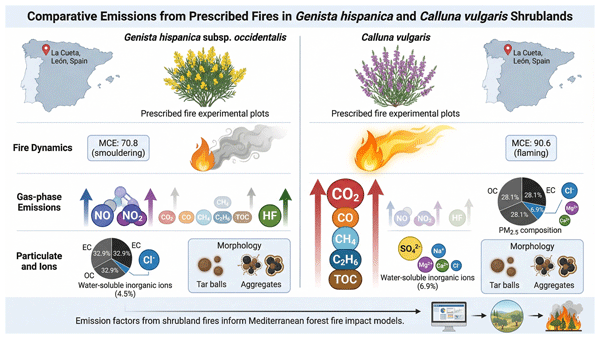
Prescribed burning is widely used to reduce fuel loads and mitigate wildfire risk in Mediterranean shrublands, yet field-based emission factors (EFs) for these ecosystems remain scarce, limiting the accuracy of emission inventories and atmospheric models. This study investigates gaseous and particulate emissions from prescribed fires in Calluna vulgaris and Genista hispanica shrublands in northwestern Spain to characterize emission profiles and evaluate how vegetation-specific fire behaviour influences atmospheric emissions. A field-based approach combined gravimetric analysis, thermal–optical transmittance, ion chromatography, Fourier-transform infrared spectroscopy (FTIR), and scanning electron microscopy (SEM). Calluna burns were more intense and flaming (modified combustion efficiency, MCE = 90.6 %), whereas Genista burns were dominated by smouldering combustion (MCE = 70.8 %). Gas-phase concentrations of CO2, CO, CH4, C2H6, and total organic carbon were higher in Calluna fires, although EFs for incomplete-combustion products (CO, CH4, TOC, and elemental carbon) were generally higher for Genista. PM2.5 EFs reached 53.5 g kg−1 for Calluna and 44.7 g kg−1 for Genista. Organic and elemental carbon accounted for 28.1 % and 32.9 % of PM2.5 mass, respectively, while water-soluble inorganic ions contributed 6.9 % and 4.5 %. Morphological analysis revealed abundant tar-ball-like submicrometric organic particles and aggregates with thick organic coatings, suggesting effects on aerosol optical properties, hygroscopicity, and cloud condensation nuclei activity. These field-derived EFs improve the representation of Mediterranean shrubland fires in emission inventories and atmospheric chemistry–transport models, contributing to a better understanding of their impacts on air quality and the carbon cycle.
- Article
(2168 KB) - Full-text XML
- BibTeX
- EndNote


In Europe, vegetation fires have increased in number and area over the last 50 years and the Mediterranean region is particularly affected. The depopulation of mountain areas has led to the uncontrolled development of shrublands, increasing the amount of fuel and the risk of fire (Elia et al., 2020). Thus, around two-thirds of forest land burned annually in the NW of Spain correspond to shrublands (Vega et al., 2022). Shrubland fires release significant quantities of atmospheric carbonaceous material and greenhouse gases, with major impacts on air quality and the carbon cycle (Jacobson, 2001; Yokelson et al., 2007).
In the Mediterranean area, prescribed fire is a widely used management tool to reduce wildfire risk and to manage habitats for pastoral, hunting or nature conservation purposes. Prescribed burning is increasingly recognised as a cost-effective strategy to reduce wildfire risk and is now integrated into adaptive fire management frameworks guided by seasonal forecasts (Fernandes et al., 2013; Turco et al., 2019). This is because it reduces the spread and intensity of subsequent wildfires, increasing the effectiveness and safety of fire suppression operations (Fernandes and Botelho, 2003) or decreasing impacts on ecosystems (Huffman et al., 2020; Reinhardt et al., 2008), and on people and assets (Burrows and McCaw, 2013). Furthermore, burning provides the additional benefit of ash fertilisation by quickly recycling minerals back to the soil (McCarty, 2011) and influences the ecological aspects of the environment due to the observation of a close relationship between smoke from shrubland fires and post-fire seed germination processes after the fire (Bargmann et al., 2014). However, despite its growing use, emission factors for shrublands in Mediterranean Europe remain understudied, particularly under real field conditions.
The main disadvantage of prescribed burnings is the emission of particulate matter (PM) and gaseous pollutants, which can affect local and regional air quality and inhalation exposures. Ambient particulate matter with an aerodynamic diameter of 2.5 µm or less (PM2.5), has been classified as a Group I carcinogen by the International Agency for Research on Cancer (Loomis et al., 2013). Combustion produces large amounts of carbonaceous material in the atmosphere, especially elemental carbon (EC) and organic carbon (OC), which alter the Earth's radiative balance (Bond et al., 2013). EC is an important absorber of solar radiation, playing an important role in climate change, while OC primarily scatters solar radiation opposing the heating effect of EC. However, biomass-burning OC can contain light-absorbing brown carbon (BrC), which absorbs radiation mainly at near-UV and short visible wavelengths and can partly offset the cooling effect of scattering organic aerosol (Saleh et al., 2015). Recent studies also show that combustion conditions such as fuel moisture, oxygen availability, and heat flux can significantly influence the emission of toxic compounds like polycyclic aromatic hydrocarbons (PAHs), offering insights into how prescribed burning might be optimized to reduce harmful byproducts (Töpperwien et al., 2025). During biomass combustion, CO2 and water are the main products generated, mainly during the flaming phase, while CH4, N2O, CO and other hydrocarbons are mostly emitted during the smouldering phase (Ward and Hardy, 1991). Recent estimates indicate that global carbon emissions from biomass burning range between 2200 and 2700 Tg C yr−1, while fossil fuel combustion and cement production alone emitted approximately 9839 Tg C yr−1 in 2017 (Gilfillan and Marland, 2021).
The analysis of emissions from biomass burning is important because forest ecosystems (occupying more than 4×10⁹ ha globally) are natural carbon and nitrogen sinks that could play an important role against climate change (Evgrafova et al., 2018; Luyssaert et al., 2008). Numerous studies have assessed emission factors of gaseous and particulate constituents, such as the one by Yang et al. (2019), who have characterised air pollutants emitted by eight main tree species in subtropical China, under both smouldering and flaming stages, using a self-designed combustion system. However, studies in the Mediterranean region are scarce (Alves et al., 2010b, a; Andreae, 2019; Bertschi et al., 2003; Soares Neto et al., 2009; Yokelson et al., 2009). One of the main findings is that fire characteristics can influence emission factors of gaseous and particulate constituents. The Modified Combustion Efficiency (MCE) is often used to assess the combustion efficiency, with a strong correlation between high MCE values and a high degree of fuel packing (Soares Neto et al., 2009).
The morphology of the particles emitted during biomass burning, specifically the presence of tar balls (spherical organic particles), plays a crucial role in the optical properties of the aerosol. These particles can experience a “lensing effect” that enhances light absorption when they coat carbonaceous cores, thereby affecting radiative forcing. Likewise, the internal mixing of organic matter with inorganic salts during atmospheric aging increases the particles' hygroscopicity, facilitating their role as cloud condensation nuclei (CCN) (Bond et al., 2013; Moffet and Prather, 2009; Pósfai et al., 2004). European heathlands dominated by the ericaceous shrub Calluna vulgaris are ecosystems of high ecological, cultural, and carbon-storage value (Fagúndez, 2013), but they are also affected by both wildfires and prescribed fires (Grau-Andrés et al., 2019; McMorrow, 2011). In a study carried out in Scotland, Grau-Andrés et al. (2019) observed that a higher fire severity improved the abundance of ericoid and graminoid species, suggesting that a specific prescribed fire condition can help achieve management objectives. Similarly, in Norway, Vandvik et al. (2014) reported that young Calluna vulgaris stands showed vigorous resprouting and germination after moderately severe fires. In the same way, shrublands dominated by Genista hispanica are also important in areas with alkaline soil reaction in Northern Spain. After a fire, this species usually regenerates by vegetative regrowth, as seed-based regeneration is very scarce. Prescribed fires and the feed by native livestock are usually necessary to avoid high fuel loads in these formations (Martín and Oria de Rueda, 2021).
The main aim of this study is to estimate particulate and gaseous emission factors, including water-soluble inorganic ions, for two shrub species: Calluna vulgaris and Genista hispanica subsp. occidentalis. By integrating gas analysis, PM2.5chemical composition, and particle morphology, this study establishes a direct link between the fire behaviour of each species and its atmospheric impact. Notably, this work is based on a field campaign rather than laboratory experiments, thereby reflecting in-situ fire conditions. Estimated emission factors will provide valuable input for numerical models evaluating the impacts of prescribed and unplanned forest fires in the Mediterranean region for a deeper understanding of fire–atmosphere interactions.
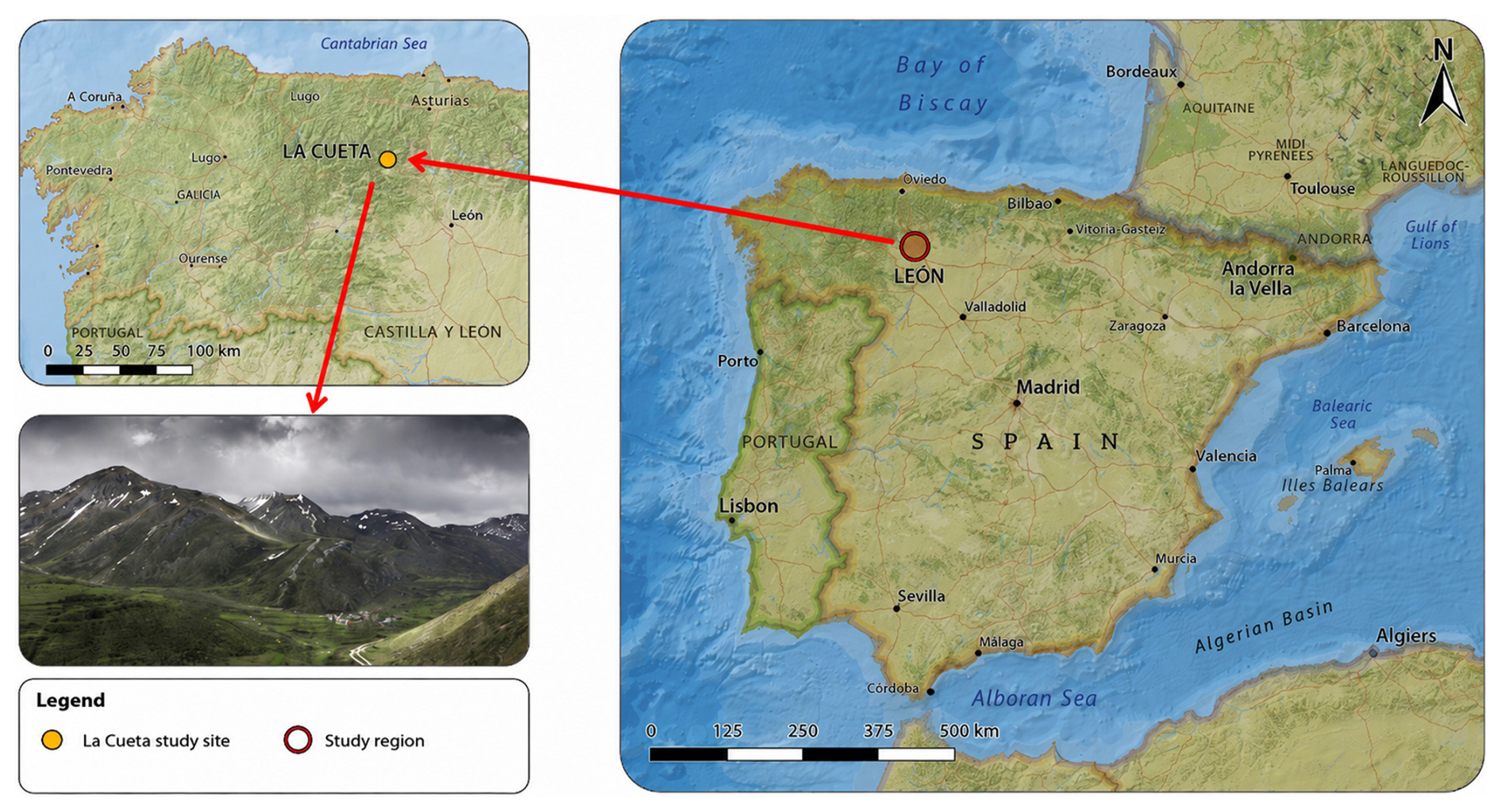
Figure 1Location of La Cueta in northwestern Spain and surrounding areas. Site of prescribed fire experiments. The base map was designed and developed by Esri | Powered by Esri.
2.1 Sampling campaign
Six prescribed fires were conducted on two types of shrub species (Genista hispanica subsp. occidentalis (hereafter Genista) and Calluna vulgaris (hereafter Calluna)) to characterise the emissions (particulates and gases) from the burning process. Four quartz filters were sampled during Genista burning and two during Calluna burning (∼1000 m2 were burned in each plot). The fires were carried out in La Cueta, León (NW Spain), within a protected natural area (“Natural park of Babia y Luna”) on 3 and 4 October 2016 (Fig. 1). Several sampling and monitoring instruments were used: (i) a low volume TECORA ECHOPM sampler operated at a flow rate of 38.3 L min−1 to collect PM2.5 onto quartz filters; (ii) Tedlar bags to sample smoke for further analysis; (iii) CO and CO2 Combo IAQ Meter; and (iv) a weather station Geos N11 to record meteorological variables at 1.85 m above the ground, at 10 s intervals; (v) an infrared camera type Flir Systems to obtain the characteristics of the fires (mean rate of spread, mean temperatures and residence time). The sampling duration for each PM2.5 filter was adjusted to the duration of the smoke plume generated by each prescribed fire and ranged from 6 to 15 min. Four PM2.5 filter samples were collected during Genista burning and two during Calluna burning. Smoke samples for gaseous analysis were collected in Tedlar bags during the active combustion period, avoiding the entrainment of background air as far as possible. The PM2.5 sampler, Tedlar bag sampling system, monitor, meteorological station, and infrared camera were positioned at ground level approximately 10 m downwind of the fire front.
2.2 Chemical analysis
We conducted various chemical analyses to characterise the particulate matter and gases emitted during the burning:
-
Elemental analysis of Calluna and Genista fuel samples before burning was carried out by combustion at high temperatures, separation of the gases produced and detection by TCD (Dumas Method) with an accuracy of 0.2 %. The parameters analysed were total humidity, volatiles, ash at 550 and 815 °C, C, H, N, and S content, Low Calorific Value (LCV), and High Calorific Value (HCV). The analysis was carried out according to the current regulations (ASTM International, 2016, 2018, 2019; UNE, 1984a, b, 1995, 2010).
-
The quartz filters were used to quantify PM2.5 by gravimetry (sensitivity: 0.00001 g) on an electronic semi-microbalance (Mettler Toledo, XPE105DR) and total carbon (TC) by a Thermal Optical Transmittance method. This method allows the split of TC mass into organic carbon (OC) and elemental carbon (EC). The technique and equipment used are described in Pio et al. (2011) and Castro et al. (1999).
-
The concentration of the main water-soluble inorganic ions in Teflon filters was obtained through ion chromatography using a Thermo Scientific DionexTM ICS5000 equipment provided with an IonPac® CS16 column (4×250 mm) for the analysis of cations (Li+, Na+, K+, Ca2+, Mg2+, NH) and an IonPac® AS11 column (4×250 mm) for the analysis of anions (F−, Cl−, SO, NO3, NO2).
-
Major gaseous components in the smoke samples were obtained from samples collected in Tedlar bags, previously flushed with N2. To avoid secondary reactions, the samples were protected from UV radiation and analysed within a few hours after sampling. Gas-phase species were quantified using a Gasmet™ DX-4000 multicomponent analyser equipped with a high-resolution Fourier transform infrared (FTIR) spectrometer. The FTIR method identifies and quantifies gases from their compound-specific infrared absorption spectra, allowing simultaneous multi-compound analysis. The analysed species included CO2, CO, N2O, NO, NO2, SO2, NH3, CH4, ethane (C2H6), propene (C3H6), acetylene (C2H2) and methanol (CH3OH), hydrogen chloride (HCl), hydrogen fluoride (HF), and formaldehyde (CH2O). A detailed description of the preparation of the Tedlar bags before and after sampling and of the instrumentation procedure can be found in Alves et al. (2010b).
It should be noted that the measured concentrations may be underestimates of atmospheric concentrations, since adsorption onto the bag walls, diffusion through the polymer film, or chemical transformation during storage may have occurred. These effects are particularly relevant for reactive, soluble, or polar compounds such as NH3 and oxygenated VOCs such as methanol, whose stability in polymer sampling bags can be affected by storage time, humidity, concentration, and bag material (Szyłak-Szydłowski, 2015). In addition, some compounds such as SO2, NH3, and CH4 may have been trapped in the air sampling system. Therefore, the concentrations of NH3, methanol, and other highly reactive or polar compounds reported here should be interpreted as conservative lower-limit estimates.
2.3 Data analysis
The parameter used to characterise combustion is Modified Combustion Efficiency (MCE). It assesses the completeness of combustion, taking into account that >90 % of the carbon combusted is emitted in the form of CO2 and CO and <10 % of the carbon is emitted in the form of hydrocarbons and particulate carbon. The MCE, expressed as a percentage, is calculated as (Eq. 1):
If MCE value is higher than 90 %, it indicates that more than 50 % of the emissions were produced by flaming combustion, whereas if MCE is lower than 90 %, it suggests that more than 50 % of the emissions were caused by smouldering combustion (Ward and Hardy, 1991).
The emission factor (EF) is a parameter that relates the emission of a particular species to the amount of biomass burned. The carbon combusted during biomass burning is emitted as CO2, CO, CH4, non-methane hydrocarbons (NMHC), and particulate carbon (EC + OC). Therefore, the EF of a specie n, is estimated from the ratio of n mass concentration to the total carbon concentration emitted. Thus, EF is defined as the amount of a compound released per amount of dry fuel consumed, expressed in units of g kg−1, where the above ratio is multiplied by the mass percentage of carbon in the fuel (Reid et al., 2005) using Eq. (2). The term NMHC is less than 2 % and includes the sum of methanol, ethane, propene and acetylene, while the sum of CO2 and CO is 8792 % of the total carbon emitted (Urbanski et al., 2008). The carbon mass fraction of the dry fuel used in Eq. (2) was obtained from the elemental analysis described in Sect. 2.2 and reported in Table 2. The %Cfuel values were 53.3 % for Calluna and 53.2 % for Genista.
2.4 Morphological analysis
Particle morphology was analysed by scanning electron microscopy (SEM). PM10 polycarbonate filter membranes were mounted on aluminium SEM stubs using conductive carbon tape and sputter-coated with a 1–2 nm thick layer to minimize charging effects. Sampling periods for SEM analysis were kept short and adjusted according to smoke-plume intensity to minimize filter overloading and particle overlap on the substrate, which is essential for reliable single-particle SEM/EDS analysis (Mamane et al., 2001).
Observations were performed using a field-emission SEM (JEOL JSM-6335F) equipped with an Oxford Instruments X-Max energy-dispersive X-ray spectroscopy (EDS) detector at the Spanish National Center for Electron Microscopy (ICTS), Complutense University of Madrid (UCM). Multiple random SEM fields of view were inspected for each sample to ensure that the reported morphologies were representative of the overall particle population. This approach has been previously applied in similar studies (Coz et al., 2008).
Table 1Summary of mean meteorological conditions in Calluna and Genista prescribed fires. Data provided by: Molina and Rodríguez y Silva (2016).

Table 2Characteristics of the solid biomass fuels (Calluna and Genista).

a Sample major partially dried in field. b HCV (High Calorific Value); LCV (Low Calorific Value).
3.1 Sampling conditions
Aerosol and gas sample characteristics depend on: (i) meteorological conditions, (ii) biomass properties, and (iii) combustion dynamics (Pio et al., 2008):
- i.
Calluna burnings were carried out at an altitude of 1534 m with a mean wind speed of 4.3±1.7 m s1, a mean temperature of 17.7±0.6 °C and a relative humidity (RH) of 40.1±1.1 %. Meteorological variables were similar for Genista burnings (at 1395 m) with a mean wind speed of 3.6±1.8 m s1, a mean temperature of 19.7±0.8 °C and a RH of 37.4±1.3 %. Meteorological conditions during the fires are therefore comparable. Table 1 summarises the recorded meteorological data.
- ii.
The vegetation cover in the Genista plots was dominated by Genista hispanica subsp. occidentalis (82.4 %) while the remaining area was covered by herbaceous plants. In Calluna plots, Calluna vulgaris represented a similar share of 84.7 %, with the leftover fraction of the land also occupied by herbaceous plants. The biomass fuels were subjected to elemental analysis, the results of which are presented in Table 2. The analyses show very similar values for the two species. The main difference between the two fuels is the N content (Genista 1.19 % vs. Calluna 0.9 %) and the ash content at 815 °C (Genista 1.58 % vs. Calluna 1.74 %). The High Calorific Values of both species are almost identical. It should be noted that the value of humidity should be treated with caution because the samples were received some time after being cut, so they may have dried partially. The live/dead proportion in the fuel load was determined from pre-fire vegetation sampling by separating, drying, and weighing live and dead biomass fractions. The live fraction was calculated as the dry mass of live biomass divided by the total dry fuel mass. The resulting live biomass proportions were 53.5 % for Genista and 59.6 % for Calluna.
- iii.
Combustion efficiency was evaluated by calculating the MCE (Sect. 2.3). In the prescribed fires on the Calluna plots, the MCE was higher than 90 % (90.6 %), indicating that more than 50 % of the emissions were produced by flaming combustion. On the other hand, in the Genista plots, the MCE was lower than 90 % (70.8 %), suggesting that more than 50 % of the emissions resulted from smouldering combustion (Ward and Hardy, 1991). Differences in combustion efficiency may be related to variations in fuel humidity and fuel packing, given that it has been argued that MCE increases with decreasing biofuel packing (Soares Neto et al., 2009). The lower MCE observed for Genista may also be partly associated with the presence of litter and mulch beneath the shrub layer, which may favour smouldering combustion. However, because litter and mulch loads were not quantified separately, this interpretation should be considered qualitative. Fires on the Genista plots were characterised by a rate of spread of 0.40 m min1, a mean maximum temperature of 454 °C at ground level and a residence time of 23.7 s, defined as the period where temperatures exceeded 300 °C (Wotton et al., 2012). Calluna burning was the most intense, presenting higher values of mean rate of spread (4.23 m min1), mean maximum temperature (809 °C) and residence time (103.3 s). Rate of spread and residence time describe different aspects of fire behaviour: the former represents the horizontal advance of the fire front, whereas the latter represents the duration of heating above 300 °C at the measurement point. Thus, a faster-spreading fire may also show a longer residence time when the flaming zone is broader or combustion is more intense.
3.2 Air quality: emission factors
The PM2.5 concentrations registered in the smoke plume for the burnings of Calluna and Genista were 31.1±13.1 mg m−3 and 12.0±6.1 mg m−3, respectively. Carbonaceous constituents (TC) accounted for 48.6 % and 30.7 % of the mass of PM2.5 from Calluna and Genista combustion. Concentrations of organic and elemental carbon during Genista fires were 2.05±1.51 and 0.60±0.41 mg m−3, respectively, while for the Calluna fires the levels were 9.94±2.97 and 1.40±0.98 mg m−3. It is noteworthy that the ratio was more than twice as high for Calluna (8.4±3.8) compared to Genista (3.2±1.6). For Calluna, the sum EC+OC represented 28.1 % of PM2.5, while for Genista it represented 32.9 %. These percentages are lower than those reported by Andreae (2019) for savanna (52.6 %) and temperate forest (61.9 %).
Table 3Concentrations and emission factors of gaseous and carbonaceous species from Calluna and Genista fires.

Net concentrations (concentrations measured in the smoke plume minus the corresponding background concentration) of gases obtained through high-resolution Fourier transform infrared (FTIR) analysis of combustion products collected from Calluna and Genista burnings are shown in Table 3. CO2 was by far the most abundant gas emitted during combustion, with mean concentrations of 653 ppm for Calluna and 54 ppm for Genista. Of the total measured carbon emitted during combustion, carbon dioxide (CO2) was by far the dominant component, representing 89 % in Calluna fires and 65 % in Genista fires. These results confirm that Calluna combustion was more efficient and dominated by flaming phases, while Genista fires exhibited incomplete combustion associated with smouldering conditions. The higher proportion of CO and CH4 in Genista is consistent with lower modified combustion efficiency (MCE), as previously observed in low-intensity fires (Ward and Hardy, 1991).
Interestingly, despite its higher combustion efficiency, Calluna emitted more TOC than Genista. This may be attributed to intense flaming combustion, which enhances the volatilisation of organic compounds and the release of oxygenated hydrocarbons (Yokelson et al., 2013).
The remaining measured gaseous species – including nitrogen oxides (NO and NO2), ethylene (C2H4), ethane (C2H6), hydrogen fluoride (HF), and formaldehyde (CH2O) – were present at concentrations typically below 1 % of the total gas mixture. Although their contribution to total carbon emissions was minimal, these compounds are atmospherically relevant due to their roles in ozone formation, secondary aerosol production, and potential health effects (Andreae, 2019). Notably, NO and NO2 concentrations were slightly higher in Genista fires, while ethane, formaldehyde, and hexane showed significantly greater concentrations in Calluna fires, indicating differences in combustion conditions and fuel composition. The elevated levels of light hydrocarbons such as ethane and hexane in Calluna emissions point to higher pyrolysis activity and faster fuel volatilisation, typical of more intense flaming combustion (Urbanski, 2014).
Calluna Genista concentration ratios were calculated for all measured gases. The largest differences were observed for CO2 (12.1), hexane (6.7), CO (3.0), TOC (2.6), CH4 (2.3), and ethane (2.5). These results reinforce the idea that plant species exert a strong influence on the gaseous composition of emissions, even under similar prescribed fire conditions. Such differences should be considered in emission inventories and atmospheric models for Mediterranean shrublands (Alves et al., 2010a; Andreae, 2019).
The emission factors (EF) of carbonaceous species: CO, CO2, CH4, C2H6, C2H4, C3H8, C6H14, CHOH, organic carbon (OC), elemental carbon (EC) and PM2.5, for Calluna and Genista burning were calculated as indicated in Sect. 2.3 (Table 3). The EF for Calluna (1703 g kg−1) is similar to that obtained for an Amazonian forest clearing fire and higher than that obtained for Genista fires (592 g kg1). Soares Neto et al. (2009) carried out a study in Mato Grosso (Brazil) in the deforestation arc and reported CO2 EFs for different combustion stages of Amazonian Forest clearing fires: ignition (1631–1625 g kg−1), flaming (1690–1741 g kg1) and smouldering (1540–1548 g kg−1). (Andreae, 2019) reported an EF of 1660±90 g kg−1 for savanna and grassland.
A similar pattern between the shrubs species was obtained for the values of EF and EFOC. The EF values obtained for Calluna and Genista were 53.5 and 44.7 g kg−1, respectively. Andreae (2019) in a compilation of emission factors from 370 studies across 121 species and biomass types, reported average EF values of 6.7±3.3 g kg−1 for savanna and grassland and 18.5±14.4 g kg−1 for temperate forest. In addition, contrary to what was observed by Alves et al. (2010b), whom carried out an analysis of emissions from prescribed fires in a shrub-dominated forest with some pine trees in the Lousã Mountain (Portugal) in 2008, EF was higher in prescribed fires here than in wildfires reported by Alves et al. (2010b), and EF was either similar (Calluna) or lower (Genista), suggesting less efficient combustion in the latter.

Figure 2Comparison of emission factors (EF) for CO, CO2, CH4, PM2.5, organic carbon (OC) and elemental carbon (EC) during Calluna and Genista prescribed fires with Mediterranean shrubland wildfire values from Garcia-Hurtado et al. (2013) and literature-average values for savannas/grasslands and temperate forests (Andreae, 2019). The Andreae (2019) values are compiled averages from multiple biomass-burning studies and represent a mixture of fire types and measurement conditions, including field and laboratory burns.
The pattern of EFCO, EF and EFEC is opposite to that of EF (Fig. 2) with higher values for Genista than for Calluna. The EF and EFCO are explained by differences in combustion efficiencies, flaming in Calluna and smouldering in Genista fires. Typically, CO and PM2.5 emissions increase as combustion efficiency decreases (Ward and Hardy, 1991). However, the higher EF observed in Calluna fires (53.5 g kg−1) suggests that intense flaming combustion may have enhanced the release of fine particles, possibly due to higher volatile content or fuel characteristics that promote aerosol formation during flaming. Other studies reported a clear correlation between MCE and EFs (Alves et al., 2010b; Soares Neto et al., 2009).
Regarding EFCO, Bertschi et al. (2003) conducted a laboratory study to evaluate smouldering combustion of tropical wooded savanna and obtained EFCO values similar to the of the present research (128–165 g kg−1). Similarly, Yokelson et al. (2009) characterised emissions from deforestation and crop residue burning, reporting EFCO values of 75±26 and 83±14 g kg−1, respectively, lower than the values observed here (Calluna: 113 g kg−1; Genista: 155 g kg−1).
Additionally, the EFCO and EF values for both shrubs are higher than those typically reported for savanna and grassland, and closer to those found in temperate forests. The EFEC values for Calluna (1.85 g kg−1) and Genista (3.32 g kg−1) also exceed the averages reported for savanna and grassland (0.53±0.35 g kg−1 and temperate forest (0.55±0.36 g kg−1) (Andreae, 2019).
The remaining carbonaceous species – ethane, ethylene, hexane, and formaldehyde – showed higher EFs in Genista than in Calluna, reflecting enhanced pyrolysis under smouldering conditions (Andreae, 2019; Yokelson et al., 2009). Although their absolute values were low (<7 g kg−1), their atmospheric relevance lies in their contribution to ozone formation, secondary aerosol production, and toxicological impacts (Alves et al., 2010a; Bertschi et al., 2003).
A more regionally specific comparison is provided by the experimental Mediterranean shrubland wildfires reported by Garcia-Hurtado et al. (2013), who obtained emission factors of 1257±40 g kg−1 for CO2, 453±28 g kg−1 for CO, 46±12 g kg−1 for CH4, 3.4±1.39 g kg−1 for PM2.5, 1.4±0.34 g kg−1 for OC, and 0.051±0.028 g kg−1 for EC. Compared with those values, EFCO2 in the present study was higher for Calluna (1700 g kg−1) and lower for Genista (592 g kg−1), which is consistent with the different combustion efficiencies observed for the two fuels. In contrast, EFCO and EFCH4 were substantially lower in both prescribed fires than in Garcia-Hurtado et al. (2013), consistent with the strong smouldering contribution reported in their experiments. Conversely, EFPM2.5, EFOC, and EFEC were markedly higher in the present study, particularly for PM2.5 and EC. These differences highlight the influence of fuel type, combustion phase, fire behaviour, and sampling strategy on emission factors, even within Mediterranean shrubland ecosystems.

Figure 3Water-soluble ions, expressed as wt % (mass fraction of the species times 100 of particle mass), in Calluna and Genista burnings.
3.3 Water-soluble ions
As observed for gaseous compounds, most water-soluble ions in PM2.5 from Calluna combustion – with the exception of Cl− and Na+ – were present at higher mass fractions than those emitted by Genista (Fig. 3). Overall, water-soluble ions represented 6.9 % of the PM2.5 mass in Calluna and 4.5 % in Genista. The elevated ionic content in Calluna-derived particles may reflect a higher ash yield from this fuel. Similar proportions were reported by Alves et al. (2010b) for prescribed shrubland fires in Portugal. Although potassium (K+) is often used as a tracer of biomass burning, no clear correlation was observed between K+ and either organic carbon (OC) or elemental carbon (EC) in this study.
Na+, SO, Mg2+, Cl− and Ca2+ were the most abundant water-soluble inorganic ions emitted during the burning of Genista, in that order. In contrast, the same ionic species dominated Calluna emissions, but with a different ranking: Cl−, Na+, SO, Mg2+ and Ca2+ (Andreae et al., 1998). reported that Cl, SO, K+ and NH were the predominant ions in savanna fires (similar to Calluna), while Falkovich et al. (2005) indicated that the predominant ionic species in Amazon basin fires were SO, NH, K+, NO and Cl−.
The K+ mass fraction (0.21±0.04 wt % for Calluna and 0.32±0.20 wt % for Genista) was very close to the values reported for fires in a Mediterranean shrubland (Alves et al., 2010b), but lower than typical values for savannas and more comparable to those observed in temperate forests. Laboratory studies have shown a wide variability in K+ fractions, ranging from <1 % to 24 % (Andreae, 2019).
The Cl− EC ratios were 3.4±2.0 for Genista and 4.2±2.1 for Calluna, while the K+ EC ratios were 0.104±0.071 and 0.241±0.045, respectively. The presence of K+ relative to EC supports the influence of biomass combustion, as water-soluble potassium is widely used as a tracer of biomass-burning aerosol (Andreae, 2019; Yu et al., 2018). Together with the observed Cl− levels, this suggests the possible presence of potassium-containing salts such as KCl internally mixed with carbonaceous particles. These species may act as cloud condensation nuclei (CCN), contributing to regional indirect radiative forcing in Mediterranean regions (Alves et al., 2010a; Petters et al., 2009).
However, it should be noted that comparisons across studies may be affected by multiple factors, including: (i) biome characteristics of each site; (ii) variability in combustion efficiencies or (iii) sampling (ground-based measurements, mast, distance to the fire, PM inlets or different devices).
The ionic composition and particle-phase characteristics reported here may also support the refinement of next-generation air quality models. Recent AI-based tools for simulating PM2.5 transport and chemical aging from prescribed fires (Liao et al., 2025) highlight the importance of comprehensive field emission datasets like those obtained in this study.
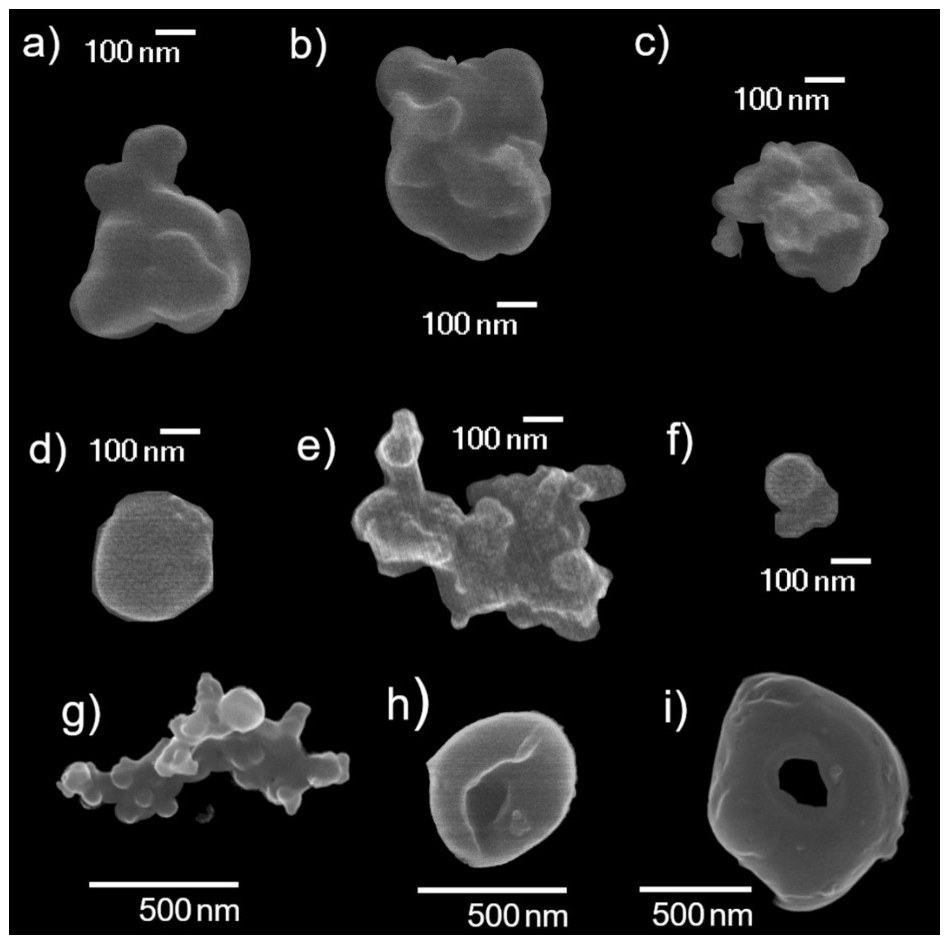
Figure 4Representative SEM images of PM particles collected during prescribed burnings episodes: (a)–(g) show sub-spherical highly coated particles and aggregates, likely composed of organic material, ash residues, and inorganic inclusions; (h)–(i) show hollow or shell-like particles, indicative of rapid condensation and subsequent volatilization or restructuring processes. Scale bars are 100 nm (a–f) and 500 nm (g–i).
3.4 Morphological analysis
Scanning electron microscopy (SEM) analysis showed that PM samples collected during prescribed burning episodes were dominated by particles with irregular morphologies and complex aggregated structures, typical of biomass burning aerosols (Fig. 4). The particles shown in Fig. 4 are representative of the dominant morphologies observed across the analysed samples. A minor fraction of the particulate matter could be tentatively identified as soot-like carbonaceous agglomerates; however, these structures were frequently partially or completely obscured by thick surface coatings, preventing the clear observation of their characteristic open fractal geometry when present.
The particle population was largely dominated by spherical and sub-spherical particles (Fig. 4a–g), resembling so-called tar balls (Pósfai et al., 2004), with sizes below 100 nm to several cents of nanometers. The presence of tar balls is commonly associated with the condensation of semi-volatile organic compounds and the rapid cooling of combustion vapours in fire plumes. Qualitative inspection of multiple SEM fields of view indicated that these spherical and compact morphologies accounted for most of the observed particles. These particles exhibited smooth to slightly textured surfaces and sizes predominantly in the submicrometer range. Several particles displayed hollow or shell-like morphologies (Fig. 4h–i), suggesting rapid gas-phase condensation and subsequent volatilization or restructuring, possibly during atmospheric transport; however, changes can occur during the analysis. In addition, irregularly shaped and porous aggregates were observed, likely corresponding to internally mixed particles composed of organic material, ash residues, and inorganic inclusions. These mixed particles frequently showed thick coatings and poorly defined boundaries between phases, indicating extensive internal mixing and potential atmospheric aging (Li et al., 2011).
Energy-dispersive X-ray spectroscopy (EDS) revealed a dominant contribution of carbon and oxygen, together with variable amounts of potassium, silicon, calcium, aluminium, and iron, often forming part of the coated mixed particles. The frequent presence of potassium- and calcium-containing inclusions within the aggregates further supports the strong influence of biomass combustion, as these elements are well-established tracers of wood and vegetation burning emissions. The predominance of spherical, compact, and internally mixed particles with thick organic coatings is expected to influence both the optical properties and hygroscopic behaviour of the aerosol. Such coatings can modify particle refractive index and morphology, by enhancing light absorption through “lensing effects” when carbonaceous cores are present and increasing the particles' optical thickness (Bond et al., 2013; Moffet and Prather, 2009). Additionally, the internal mixing of inorganic salts (K, Ca) with organic matter suggests a transition toward higher hygroscopicity during atmospheric aging (Coz et al., 2008), by changing their effective chemical composition and surface properties, thereby promoting water uptake at elevated relative humidity and enhancing cloud condensation nuclei (CCN) activity. These effects are likely to play an important role in controlling the radiative and microphysical impacts of aerosols from biomass burning during transport and aging in the atmosphere (Carrico et al., 2010; Pósfai et al., 2004).
This study provides a field-based characterisation of gaseous and particulate emissions from prescribed fires in two Mediterranean shrubland communities dominated by Calluna vulgaris and Genista hispanica subsp. occidentalis. The results show that, under broadly comparable meteorological conditions, the two fuels produced markedly different combustion regimes. Calluna fires were more intense and predominantly flaming, with an MCE of 90.6 %, whereas Genista fires were dominated by smouldering combustion, with an MCE of 70.8 %. These differences indicate that shrubland type, fuel-bed structure, and combustion regime strongly influence the chemical signature of prescribed-fire emissions.
The findings indicate that biomass structure and litter presence – substantial in Genista and virtually absent in Calluna – are the fundamental reasons for the observed differences in fire behaviour. The intense flaming combustion in Calluna not only produces more CO2 but also enhances the volatilization of organic compounds, leading to higher concentrations of methane and total organic carbon (TOC) despite the higher efficiency. Conversely, the smouldering nature of Genista fires favours the production of hydrogen fluoride and nitrogen oxides.
Compared with literature-average values for savannas/grasslands and temperate forests, the PM2.5 emission factors measured here were substantially higher, suggesting that Mediterranean shrubland fires may be poorly represented by generic biomass-burning emission factors. Relative to previous Mediterranean shrubland wildfire experiments, the present prescribed fires showed lower CO and CH4 emission factors but higher PM2.5, OC, and EC emission factors. These differences highlight the need for fuel-specific and combustion-specific emission factors in regional fire-emission inventories and atmospheric models.
Scanning Electron Microscopy (SEM) observations showed that the emitted particles were dominated by spherical and compact particles in the submicrometre size range, including tar-ball-like particles and internally mixed aggregates with thick organic coatings and inorganic inclusions. These characteristics suggest that aerosols from Mediterranean shrubland prescribed fires may influence aerosol optical properties, hygroscopicity, and cloud condensation nuclei activity during atmospheric ageing. However, these implications should be interpreted cautiously because optical properties, hygroscopic growth, and cloud condensation nuclei (CCN) activity were not directly measured.
Several limitations should be considered when extrapolating the results. The study is based on a limited number of field burns, gas samples collected in Tedlar bags may underestimate reactive or polar compounds, fuel moisture may have been affected by partial drying before analysis, and litter and mulch loads were not quantified separately. In addition, the SEM analysis was qualitative, and the measurements represent near-source fresh smoke rather than aged regional plumes.
Overall, this work shows that prescribed burning in Mediterranean shrublands can generate substantial short-term emissions of fine particulate matter and carbonaceous aerosol, even when used as a fuel-management strategy. These results have profound implications for our understanding of climate forcing. The dominance of submicrometer “tar balls” with thick organic coatings suggests an enhanced “lensing effect” that increases light absorption and radiative forcing. Simultaneously, the internal mixing of inorganic salts (such as KCl) with organic matter increases particle hygroscopicity, promoting their ability to act as CCN. The field-based emission factors and particle-composition data reported here can improve the representation of prescribed and unplanned fires in Mediterranean emission inventories, numerical models, receptor modelling studies, and SPECIEUROPE source profiles, thereby supporting more robust assessments of fire impacts on air quality, aerosol–radiation interactions, and aerosol–cloud processes, as well as decision-making in fire management.
The data supporting the findings of this study, including those required to reproduce the figures and results, are available from the corresponding author upon reasonable request.
CBA: Conceptualization, Methodology, Formal analysis, Investigation, Writing – original draft preparation. AIC: Investigation, Data curation, Formal analysis, Writing – review and editing. FO: Investigation, Writing – review and editing. EC: Investigation, Investigation, Writing – review and editing. CA: Investigation, Methodology, Validation, Writing – review and editing. LV: Investigation, Writing – review and editing. RMC: Investigation, Writing – review and editing. FC: Formal analysis, Investigation, Writing – review and editing. RF: Supervision, Methodology, Writing – review and editing.
The contact author has declared that none of the authors has any competing interests.
Publisher's note: Copernicus Publications remains neutral with regard to jurisdictional claims made in the text, published maps, institutional affiliations, or any other geographical representation in this paper. The authors bear the ultimate responsibility for providing appropriate place names. Views expressed in the text are those of the authors and do not necessarily reflect the views of the publisher.
The authors acknowledge the ICTS Centro Nacional de Microscopía Electrónica (CNME) at the Universidad Complutense de Madrid (UCM) for the use of their facilities and the technical support provided in the acquisition of microscopy images. Special thanks are given to the firefighters and the auxiliary people for their kindness and help during the sampling campaign. The help of Luís Tarelho in the FTIR analyses is also thanked.
This research has been supported by the Consejería de Educación, Junta de Castilla y León (grant no. LE025P20), the Ministerio de Ciencia, Innovación y Universidades (grant no. PID2023-152799OB-I00), the Ministerio de Ciencia e Innovación (grant nos. TED2021-132292B-I00 and PID2019-106164RBI00), and the Fundação para a Ciência e a Tecnologia (grant nos. UIDP/50017/2020, UIDB/50017/2020, and LA/P/0094/2020).
This paper was edited by Arthur Chan and reviewed by two anonymous referees.
Alves, C. A., Gonçalves, C., Evtyugina, M., Pio, C. A., Mirante, F., and Puxbaum, H.: Particulate organic compounds emitted from experimental wildland fires in a Mediterranean ecosystem, Atmos. Environ., 44, 2750–2759, https://doi.org/10.1016/j.atmosenv.2010.04.029, 2010a.
Alves, C. A., Gonçalves, C., Pio, C. A., Mirante, F., Caseiro, A., Tarelho, L., Freitas, M. C., and Viegas, D. X.: Smoke emissions from biomass burning in a Mediterranean shrubland, Atmos. Environ., 44, 3024–3033, https://doi.org/10.1016/j.atmosenv.2010.05.010, 2010b.
Andreae, M. O.: Emission of trace gases and aerosols from biomass burning – an updated assessment, Atmos. Chem. Phys., 19, 8523–8546, https://doi.org/10.5194/acp-19-8523-2019, 2019.
Andreae, M. O., Andreae, T. W., Annegarn, H., Beer, J., Cachier, H., Canut, P., Elbert, W., Maenhaut, W., Salma, I., Wienhold, F. G., Zenker, T., and Planck, M.: Airbone Studies Africa: 2. Aerosol Chemical Composition, J. Geophys. Res., 103, 119–128, 1998.
ASTM International: ASTM D5373-16, Standard Test Methods for Determination of Carbon, Hydrogen and Nitrogen in Analysis Samples of Coal and Carbon in Analysis Samples of Coal and Coke, ASTM International, West Conshohocken, PA, USA, https://doi.org/10.1520/D5373-16, 2016.
ASTM International: ASTM D4239-18e1, Standard Test Method for Sulfur in the Analysis Sample of Coal and Coke Using High-Temperature Tube Furnace Combustion, ASTM International, West Conshohocken, PA, USA, https://doi.org/10.1520/D4239-18E01, 2018.
ASTM International: ASTM D3302/D3302M-19, Standard Test Method for Total Moisture in Coal, ASTM International, https://doi.org/10.1520/D3302_D3302M-19, 2019.
Bargmann, T., Måren, I. E., and Vandvik, V.: Life after fire: Smoke and ash as germination cues in ericads, herbs and graminoids of northern heathlands, Appl. Veg. Sci., 17, 670–679, https://doi.org/10.1111/avsc.12106, 2014.
Bertschi, I., Yokelson, R. J., Ward, D. E., Babbitt, R. E., Susott, R. A., Goode, J. G., and Hao, W. M.: Trace gas and particle emissions from fires in large diameter and belowground biomass fuels, J. Geophys. Res.-Atmos., 108, https://doi.org/10.1029/2002jd002100, 2003.
Bond, T. C., Doherty, S. J., Fahey, D. W., Forster, P. M., Berntsen, T., Deangelo, B. J., Flanner, M. G., Ghan, S., Kärcher, B., Koch, D., Kinne, S., Kondo, Y., Quinn, P. K., Sarofim, M. C., Schultz, M. G., Schulz, M., Venkataraman, C., Zhang, H., Zhang, S., Bellouin, N., Guttikunda, S. K., Hopke, P. K., Jacobson, M. Z., Kaiser, J. W., Klimont, Z., Lohmann, U., Schwarz, J. P., Shindell, D., Storelvmo, T., Warren, S. G., and Zender, C. S.: Bounding the role of black carbon in the climate system: A scientific assessment, J. Geophys. Res.-Atmos., 118, 5380–5552, https://doi.org/10.1002/jgrd.50171, 2013.
Burrows, N. and McCaw, L.: Prescribed burning in southwestern Australian forests, Front. Ecol. Environ., 11, https://doi.org/10.1890/120356, 2013.
Carrico, C. M., Petters, M. D., Kreidenweis, S. M., Sullivan, A. P., McMeeking, G. R., Levin, E. J. T., Engling, G., Malm, W. C., and Collett Jr., J. L.: Water uptake and chemical composition of fresh aerosols generated in open burning of biomass, Atmos. Chem. Phys., 10, 5165–5178, https://doi.org/10.5194/acp-10-5165-2010, 2010.
Castro, L. M., Pio, C. A., Harrison, R. M., and Smith, D. J. T.: Carbonaceous aerosol in urban and rural European atmospheres: estimation of secondary organic carbon concentrations, Atmos. Environ., 33, 2771–2781, https://doi.org/10.1016/S1352-2310(98)00331-8, 1999.
Coz, E., Artíñano, B., Robinson, A. L., Casuccio, G. S., Lersch, T. L., and Pandis, S. N.: Individual particle morphology and acidity, Aerosol Sci. Technol., 42, 224–232, https://doi.org/10.1080/02786820801958759, 2008.
Elia, M., D'Este, M., Ascoli, D., Giannico, V., Spano, G., Ganga, A., Colangelo, G., Lafortezza, R., and Sanesi, G.: Estimating the probability of wildfire occurrence in Mediterranean landscapes using Artificial Neural Networks, Environ. Impact Assess. Rev., 85, 106474, https://doi.org/10.1016/j.eiar.2020.106474, 2020.
Evgrafova, A., de la Haye, T. R., Haase, I., Shibistova, O., Guggenberger, G., Tananaev, N., Sauheitl, L., and Spielvogel, S.: Small-scale spatial patterns of soil organic carbon and nitrogen stocks in permafrost-affected soils of northern Siberia, Geoderma, 329, 91–107, https://doi.org/10.1016/j.geoderma.2018.05.014, 2018.
Fagúndez, J.: Heathlands confronting global change: Drivers of biodiversity loss from past to future scenarios, Ann. Bot., 111, 151–172, https://doi.org/10.1093/aob/mcs257, 2013.
Falkovich, A. H., Graber, E. R., Schkolnik, G., Rudich, Y., Maenhaut, W., and Artaxo, P.: Low molecular weight organic acids in aerosol particles from Rondônia, Brazil, during the biomass-burning, transition and wet periods, Atmos. Chem. Phys., 5, 781–797, https://doi.org/10.5194/acp-5-781-2005, 2005.
Fernandes, P. M. and Botelho, H. S.: A review of prescribed burning effectiveness in fire hazard reduction, Int. J. Wildland Fire, 12, 117, https://doi.org/10.1071/WF02042, 2003.
Fernandes, P. M., Davies, G. M., Ascoli, D., Fernández, C., Moreira, F., Rigolot, E., Stoof, C. R., Vega, J. A., and Molina, D.: Prescribed burning in southern Europe: Developing fire management in a dynamic landscape, Front. Ecol. Evol., 11, e4–e14, https://doi.org/10.1890/120298, August 2013.
Garcia-Hurtado, E., Pey, J., Baeza, M. J., Carrara, A., Llovet, J., Querol, X., Alastuey, A., and Vallejo, V. R.: Carbon emissions in Mediterranean shrubland wildfires: An experimental approach, Atmos. Environ., 69, 86–93, https://doi.org/10.1016/j.atmosenv.2012.11.063, 2013.
Gilfillan, D. and Marland, G.: CDIAC-FF: global and national CO2 emissions from fossil fuel combustion and cement manufacture: 1751–2017, Earth Syst. Sci. Data, 13, 1667–1680, https://doi.org/10.5194/essd-13-1667-2021, 2021.
Grau-Andrés, R., Davies, G. M., Waldron, S., Scott, E. M., and Gray, A.: Increased fire severity alters initial vegetation regeneration across Calluna-dominated ecosystems, J. Environ. Manage., 231, 1004–1011, https://doi.org/10.1016/j.jenvman.2018.10.113, 2019.
Huffman, D. W., Roccaforte, J. P., Springer, J. D., and Crouse, J. E.: Restoration applications of resource objective wildfires in western US forests: a status of knowledge review, Fire Ecol., 16, 18, https://doi.org/10.1186/s42408-020-00077-x, 2020.
Jacobson, M. Z.: Strong radiative heating due to the mixing state of black carbon in atmospheric aerosols, Nature, 409, 695–697, https://doi.org/10.1038/35055518, 2001.
Li, W., Li, P., Sun, G., Zhou, S., Yuan, Q., and Wang, W.: Cloud residues and interstitial aerosols from non-precipitating clouds over an industrial and urban area in northern China, Atmos. Environ., 45, 2488–2495, https://doi.org/10.1016/j.atmosenv.2011.02.044, 2011.
Liao, K., Buch, J., Lamb, K. D., and Gentine, P.: Simulating the air quality impact of prescribed fires using graph neural network-based PM2.5 forecasts, Environ. Data Sci., 4, https://doi.org/10.1017/eds.2025.4, 2025.
Loomis, D., Grosse, Y., Lauby-Secretan, B., Ghissassi, F. El, Bouvard, V., Benbrahim-Tallaa, L., Guha, N., Baan, R., Mattock, H., and Straif, K.: The carcinogenicity of outdoor air pollution, Lancet Oncol., 14, 1262–1263, https://doi.org/10.1016/S1470-2045(13)70487-X, 2013.
Luyssaert, S., Schulze, E. D., Börner, A., Knohl, A., Hessenmöller, D., Law, B. E., Ciais, P., and Grace, J.: Old-growth forests as global carbon sinks, Nature, 455, 213–215, https://doi.org/10.1038/nature07276, 2008.
Mamane, Y., Willis, R., and Conner, T.: Evaluation of Computer-Controlled Scanning Electron Microscopy Applied to an Ambient Urban Aerosol Sample, Aerosol Sci. Technol., 34, 97–107, https://doi.org/10.1080/02786820118842, 2001.
Martín, P. and Oria de Rueda, J. A. (Eds.): Guía técnica de gestión de matorrales ibéricos: Prevención de incendios y producción de hongos comestibles, Ministerio para la Transición Ecológica y el Reto Demográfico (MITECO), Madrid, Spain, Ministerio para la Transición Ecológica y el Reto Demográfico (MITECO), NIPO 665-21-060-6, 2021.
McCarty, J. L.: Remote sensing-based estimates of annual and seasonal emissions from crop residue burning in the contiguous United States, J. Air Waste Manage. Assoc., 61, 22–34, https://doi.org/10.3155/1047-3289.61.1.22, 2011.
McMorrow, J.: Wildfire in the United Kingdom: Status and key issues, in: Proceedings of the Second Conference on the Human Dimensions of Wildland Fire, edited by: McCaffrey, S. M. and Fisher, C. L., General Technical Report NRS-P-84, 44–56, U.S. Department of Agriculture, Forest Service, Northern Research Station, Newtown Square, PA, USA, 2011.
Moffet, R. C. and Prather, K. A.: In-situ measurements of the mixing state and optical properties of soot with implications for radiative forcing estimates, P. Natl. Acad. Sci. USA, 106, 11872–11877, https://doi.org/10.1073/pnas.0900040106, 2009.
Molina, J. R. and Rodríguez y Silva, F.: Laboratorio de Incendios Forestales, Univ. de Córdoba (Spain), LABIF-UCO, https://labif.es/ (last access: 18 June 2024), 2016.
Petters, M. D., Carrico, C. M., Kreidenweis, S. M., Prenni, A. J., DeMott, P. J., Collett, J. L., and Moosmüller, H.: Cloud condensation nucleation activity of biomass burning aerosol, J. Geophys. Res.-Atmos., 114, 1–16, https://doi.org/10.1029/2009JD012353, 2009.
Pio, C., Cerqueira, M., Harrison, R. M., Nunes, T., Mirante, F., Alves, C., Oliveira, C., Sanchez, A., Campa, D., Artíñano, B., and Matos, M.: OC / EC ratio observations in Europe : Re-thinking the approach for apportionment between primary and secondary organic carbon, Atmos. Environ., 45, 6121–6132, https://doi.org/10.1016/j.atmosenv.2011.08.045, 2011.
Pio, C. A., Legrand, M., Alves, C. A., Oliveira, T., Afonso, J., Caseiro, A., Puxbaum, H., Sanchez-Ochoa, A., and Gelencsér, A.: Chemical composition of atmospheric aerosols during the 2003 summer intense forest fire period, Atmos. Environ., 42, 7530–7543, https://doi.org/10.1016/j.atmosenv.2008.05.032, 2008.
Pósfai, M., Gelencsér, A., Simonics, R., Arató, K., Li, J., Hobbs, P. V., and Buseck, P. R.: Atmospheric tar balls: Particles from biomass and biofuel burning, J. Geophys. Res.-Atmos., 109, https://doi.org/10.1029/2003jd004169, 2004.
Reid, J. S., Eck, T. F., Christopher, S. A., Koppmann, R., Dubovik, O., Eleuterio, D. P., Holben, B. N., Reid, E. A., and Zhang, J.: A review of biomass burning emissions part III: intensive optical properties of biomass burning particles, Atmos. Chem. Phys., 5, 827–849, https://doi.org/10.5194/acp-5-827-2005, 2005.
Reinhardt, E. D., Keane, R. E., Calkin, D. E., and Cohen, J. D.: Objectives and considerations for wildland fuel treatment in forested ecosystems of the interior western United States, For. Ecol. Manage., 256, 1997–2006, https://doi.org/10.1016/j.foreco.2008.09.016, 2008.
Saleh, R., Marks, M., Heo, J., Adams, P. J., Donahue, N. M., and Robinson, A. L.: Contribution of brown carbon and lensing to the direct radiative effect of carbonaceous aerosols from biomass and biofuel burning emissions, J. Geophys. Res.-Atmos., 120, https://doi.org/10.1002/2015JD023697, 2015.
Soares Neto, T. G., Carvalho, J. A., Veras, C. A. G. G., Alvarado, E. C., Gielow, R., Lincoln, E. N., Christian, T. J., Yokelson, R. J., and Santos, J. C.: Biomass consumption and CO2, CO and main hydrocarbon gas emissions in an Amazonian forest clearing fire, Atmos. Environ., 43, 438–446, https://doi.org/10.1016/j.atmosenv.2008.07.063, 2009.
Szyłak-Szydłowski, M.: Odour Samples Degradation During Detention in Tedlar® Bags, Water Air Soil Pollut., 226, 227, https://doi.org/10.1007/s11270-015-2495-2, 2015.
Töpperwien, K., Vignat, G., Feinberg, A. J., Daube, C., Alton, M. W., Fortner, E. C., Canagaratna, M. R., Kling, M. F., Johnson, M., Nadeau, K., Herndon, S., Jayne, J. T., and Ihme, M.: Burn parameters affect PAH emissions at conditions relevant for prescribed fires, Atmos. Pollut. Res., 16, https://doi.org/10.1016/j.apr.2025.102438, 2025.
Turco, M., Marcos-Matamoros, R., Castro, X., Canyameras, E., and Llasat, M. C.: Seasonal prediction of climate-driven fire risk for decision-making and operational applications in a Mediterranean region, Sci. Total Environ., 676, 577–583, https://doi.org/10.1016/j.scitotenv.2019.04.296, 2019.
UNE: UNE 32004:1984 – Solid mineral fuels. Determination of ash, UNE (Spanish Association for Standardization), 1984a.
UNE: UNE 32019:1984 – Hard coal and coke. Determination of volatile matter content, UNE (Spanish Association for Standardization), 1984b.
UNE: UNE 32006:1995 – Solid mineral fuels. Determination of gross calorific value by automatic calorimeter, UNE (Spanish Association for Standardization), 1995.
UNE: UNE-EN 14775:2010 – Solid biofuels – Determination of ash content, UNE (Spanish Association for Standardization), 2010.
Urbanski, S.: Wildland fire emissions, carbon, and climate: Emission factors, For. Ecol. Manage., 317, 51–60, https://doi.org/10.1016/j.foreco.2013.05.045, 2014.
Urbanski, S. P., Hao, W. M., and Baker, S.: Chapter 4 Chemical Composition of Wildland Fire Emissions, in: Developments in Environmental Science, edited by: Bytnerowicz, A., Arbaugh, M. J., Riebau, A. R., and Andersen, C., vol. 8, Elsevier, 79–107, https://doi.org/10.1016/S1474-8177(08)00004-1, 2008.
Vandvik, V., Töpper, J. P., Cook, Z., Daws, M. I., Heegaard, E., Måren, I. E., and Velle, L. G.: Management-driven evolution in a domesticated ecosystem, Biol. Lett., 10, 1–6, https://doi.org/10.1098/rsbl.2013.1082, 2014.
Vega, J. A., Arellano-Pérez, S., Álvarez-González, J. G., Fernández, C., Jiménez, E., Fernández-Alonso, J. M., Vega-Nieva, D. J., Briones-Herrera, C., Alonso-Rego, C., Fontúrbel, T., and Ruiz-González, A. D.: Modelling aboveground biomass and fuel load components at stand level in shrub communities in NW Spain, For. Ecol. Manage., 505, https://doi.org/10.1016/j.foreco.2021.119926, 2022.
Ward, D. E. and Hardy, C. C.: Smoke emissions from wildland fires, Environ. Int., 17, 117–134, https://doi.org/10.1016/0160-4120(91)90095-8, 1991.
Wotton, B. M., Gould, J. S., McCaw, W. L., Cheney, N. P., and Taylor, S. W.: Flame temperature and residence time of fires in dry eucalypt forest, Int. J. Wildland Fire, 21, 270–281, https://doi.org/10.1071/WF10127, 2012.
Yang, X., Ma, Y., Wang, G., Alvarado, E. C., Tigabu, M., Ju, Y., and Guo, F.: Characterization of pollutants emitted during burning of eight main tree species in subtropical China, Atmos. Environ., 215, 116899, https://doi.org/10.1016/j.atmosenv.2019.116899, 2019.
Yokelson, R. J., Urbanski, S. P., Atlas, E. L., Toohey, D. W., Alvarado, E. C., Crounse, J. D., Wennberg, P. O., Fisher, M. E., Wold, C. E., Campos, T. L., Adachi, K., Buseck, P. R., and Hao, W. M.: Emissions from forest fires near Mexico City, Atmos. Chem. Phys., 7, 5569–5584, https://doi.org/10.5194/acp-7-5569-2007, 2007.
Yokelson, R. J., Crounse, J. D., DeCarlo, P. F., Karl, T., Urbanski, S., Atlas, E., Campos, T., Shinozuka, Y., Kapustin, V., Clarke, A. D., Weinheimer, A., Knapp, D. J., Montzka, D. D., Holloway, J., Weibring, P., Flocke, F., Zheng, W., Toohey, D., Wennberg, P. O., Wiedinmyer, C., Mauldin, L., Fried, A., Richter, D., Walega, J., Jimenez, J. L., Adachi, K., Buseck, P. R., Hall, S. R., and Shetter, R.: Emissions from biomass burning in the Yucatan, Atmos. Chem. Phys., 9, 5785–5812, https://doi.org/10.5194/acp-9-5785-2009, 2009.
Yokelson, R. J., Burling, I. R., Gilman, J. B., Warneke, C., Stockwell, C. E., de Gouw, J., Akagi, S. K., Urbanski, S. P., Veres, P., Roberts, J. M., Kuster, W. C., Reardon, J., Griffith, D. W. T., Johnson, T. J., Hosseini, S., Miller, J. W., Cocker III, D. R., Jung, H., and Weise, D. R.: Coupling field and laboratory measurements to estimate the emission factors of identified and unidentified trace gases for prescribed fires, Atmos. Chem. Phys., 13, 89–116, https://doi.org/10.5194/acp-13-89-2013, 2013.
Yu, J., Yan, C., Liu, Y., Li, X., Zhou, T., and Zheng, M.: Potassium: A Tracer for Biomass Burning in Beijing?, Aerosol Air Qual. Res., 18, 2447–2459, https://doi.org/10.4209/aaqr.2017.11.0536, 2018.