
Articles | Volume 26, issue 16
https://doi.org/10.5194/acp-26-11695-2026
© Author(s) 2026. This work is distributed under
the Creative Commons Attribution 4.0 License.
the Creative Commons Attribution 4.0 License.
https://doi.org/10.5194/acp-26-11695-2026
© Author(s) 2026. This work is distributed under
the Creative Commons Attribution 4.0 License.
the Creative Commons Attribution 4.0 License.
Research article
| 
19 Aug 2026
Research article |
| 19 Aug 2026
| 19 Aug 2026
A comprehensive assessment of emissions from prescribed fires in two Mediterranean shrublands: chemical and morphological analysis

Departamento de Química y Física Aplicadas, Facultad de Ciencias Biológicas y Ambientales, Universidad de León, Campus de Vegazana s/n, 24071, León, Spain
Ana Isabel Calvo
Departamento de Química y Física Aplicadas, Facultad de Ciencias Biológicas y Ambientales, Universidad de León, Campus de Vegazana s/n, 24071, León, Spain
Fernanda Oduber
Departamento de Química y Física Aplicadas, Facultad de Ciencias Biológicas y Ambientales, Universidad de León, Campus de Vegazana s/n, 24071, León, Spain
Esther Coz
Department of Environment, Center for Energy, Environmental and Technological Research (CIEMAT), Avenida Complutense 40, 28040 Madrid, Spain
Célia Alves
Centre for Environmental and Marine Studies (CESAM), Department of Environment and Planning, University of Aveiro, Aveiro, 3810-193, Portugal
Luz Valbuena
Department of Biodiversity and Environmental Management, Area of Ecology, University of León, 24071 León, Spain
Rosa María Cadenas
Department of Biodiversity and Environmental Management, Area of Ecology, University of León, 24071 León, Spain
Fernando Castedo
Department of Engineering and Agricultural Sciences, University of León, 24071 León, Spain
Roberto Fraile
Departamento de Química y Física Aplicadas, Facultad de Ciencias Biológicas y Ambientales, Universidad de León, Campus de Vegazana s/n, 24071, León, Spain
Related authors
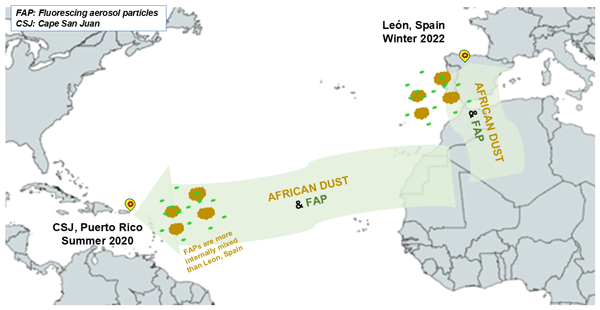
Bighnaraj Sarangi, Darrel Baumgardner, Ana Isabel Calvo, Benjamin Bolaños-Rosero, Roberto Fraile, Alberto Rodríguez-Fernández, Delia Fernández-González, Carlos Blanco-Alegre, Cátia Gonçalves, Estela D. Vicente, and Olga L. Mayol-Bracero
Atmos. Chem. Phys., 25, 843–865, https://doi.org/10.5194/acp-25-843-2025, https://doi.org/10.5194/acp-25-843-2025, 2025
Short summary
Short summary
Measurements of fluorescing aerosol particle properties have been made during two major African dust events, one over the island of Puerto Rico and the other over the city of León, Spain. The measurements were made with two wideband integrated bioaerosol spectrometers. A significant change in the background aerosol properties, at both locations, is observed when the dust is in the respective regions.
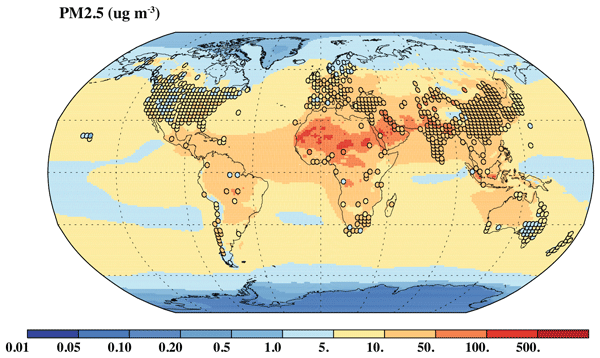
Natalie M. Mahowald, Longlei Li, Julius Vira, Marje Prank, Douglas S. Hamilton, Hitoshi Matsui, Ron L. Miller, P. Louis Lu, Ezgi Akyuz, Daphne Meidan, Peter Hess, Heikki Lihavainen, Christine Wiedinmyer, Jenny Hand, Maria Grazia Alaimo, Célia Alves, Andres Alastuey, Paulo Artaxo, Africa Barreto, Francisco Barraza, Silvia Becagli, Giulia Calzolai, Shankararaman Chellam, Ying Chen, Patrick Chuang, David D. Cohen, Cristina Colombi, Evangelia Diapouli, Gaetano Dongarra, Konstantinos Eleftheriadis, Johann Engelbrecht, Corinne Galy-Lacaux, Cassandra Gaston, Dario Gomez, Yenny González Ramos, Roy M. Harrison, Chris Heyes, Barak Herut, Philip Hopke, Christoph Hüglin, Maria Kanakidou, Zsofia Kertesz, Zbigniew Klimont, Katriina Kyllönen, Fabrice Lambert, Xiaohong Liu, Remi Losno, Franco Lucarelli, Willy Maenhaut, Beatrice Marticorena, Randall V. Martin, Nikolaos Mihalopoulos, Yasser Morera-Gómez, Adina Paytan, Joseph Prospero, Sergio Rodríguez, Patricia Smichowski, Daniela Varrica, Brenna Walsh, Crystal L. Weagle, and Xi Zhao
Atmos. Chem. Phys., 25, 4665–4702, https://doi.org/10.5194/acp-25-4665-2025, https://doi.org/10.5194/acp-25-4665-2025, 2025
Short summary
Short summary
Aerosol particles are an important part of the Earth system, but their concentrations are spatially and temporally heterogeneous, as well as being variable in size and composition. Here, we present a new compilation of PM2.5 and PM10 aerosol observations, focusing on the spatial variability across different observational stations, including composition, and demonstrate a method for comparing the data sets to model output.
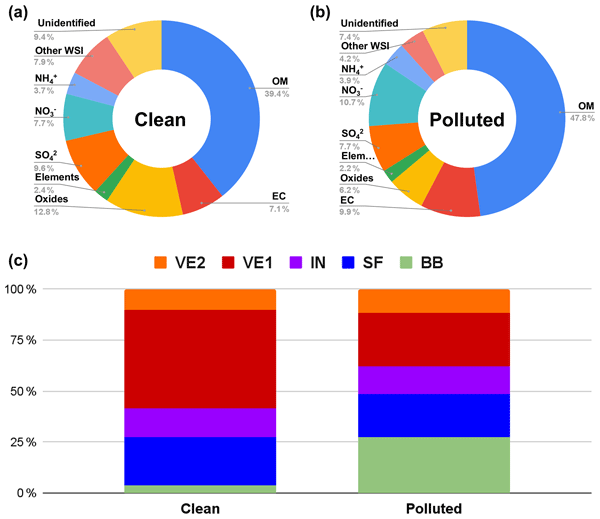
Guilherme Martins Pereira, Leonardo Yoshiaki Kamigauti, Rubens Fabio Pereira, Djacinto Monteiro dos Santos, Thayná da Silva Santos, José Vinicius Martins, Célia Alves, Cátia Gonçalves, Ismael Casotti Rienda, Nora Kováts, Thiago Nogueira, Luciana Rizzo, Paulo Artaxo, Regina Maura de Miranda, Marcia Akemi Yamasoe, Edmilson Dias de Freitas, Pérola de Castro Vasconcellos, and Maria de Fatima Andrade
Atmos. Chem. Phys., 25, 4587–4616, https://doi.org/10.5194/acp-25-4587-2025, https://doi.org/10.5194/acp-25-4587-2025, 2025
Short summary
Short summary
The chemical composition of fine particulate matter was studied in the megacity of São Paulo (Brazil) during a polluted period. Vehicular-related sources remain relevant; however, a high contribution of biomass burning was observed and correlated with sample ecotoxicity. Emerging biomass burning sources, such as forest fires and sugarcane-bagasse-based power plants, highlight the need for additional control measures alongside stricter rules concerning vehicular emissions.
Bighnaraj Sarangi, Darrel Baumgardner, Ana Isabel Calvo, Benjamin Bolaños-Rosero, Roberto Fraile, Alberto Rodríguez-Fernández, Delia Fernández-González, Carlos Blanco-Alegre, Cátia Gonçalves, Estela D. Vicente, and Olga L. Mayol-Bracero
Atmos. Chem. Phys., 25, 843–865, https://doi.org/10.5194/acp-25-843-2025, https://doi.org/10.5194/acp-25-843-2025, 2025
Short summary
Short summary
Measurements of fluorescing aerosol particle properties have been made during two major African dust events, one over the island of Puerto Rico and the other over the city of León, Spain. The measurements were made with two wideband integrated bioaerosol spectrometers. A significant change in the background aerosol properties, at both locations, is observed when the dust is in the respective regions.
Natalie M. Mahowald, Longlei Li, Julius Vira, Marje Prank, Douglas S. Hamilton, Hitoshi Matsui, Ron L. Miller, Louis Lu, Ezgi Akyuz, Daphne Meidan, Peter Hess, Heikki Lihavainen, Christine Wiedinmyer, Jenny Hand, Maria Grazia Alaimo, Célia Alves, Andres Alastuey, Paulo Artaxo, Africa Barreto, Francisco Barraza, Silvia Becagli, Giulia Calzolai, Shankarararman Chellam, Ying Chen, Patrick Chuang, David D. Cohen, Cristina Colombi, Evangelia Diapouli, Gaetano Dongarra, Konstantinos Eleftheriadis, Corinne Galy-Lacaux, Cassandra Gaston, Dario Gomez, Yenny González Ramos, Hannele Hakola, Roy M. Harrison, Chris Heyes, Barak Herut, Philip Hopke, Christoph Hüglin, Maria Kanakidou, Zsofia Kertesz, Zbiginiw Klimont, Katriina Kyllönen, Fabrice Lambert, Xiaohong Liu, Remi Losno, Franco Lucarelli, Willy Maenhaut, Beatrice Marticorena, Randall V. Martin, Nikolaos Mihalopoulos, Yasser Morera-Gomez, Adina Paytan, Joseph Prospero, Sergio Rodríguez, Patricia Smichowski, Daniela Varrica, Brenna Walsh, Crystal Weagle, and Xi Zhao
Earth Syst. Sci. Data Discuss., https://doi.org/10.5194/essd-2024-1, https://doi.org/10.5194/essd-2024-1, 2024
Preprint withdrawn
Short summary
Short summary
Aerosol particles can interact with incoming solar radiation and outgoing long wave radiation, change cloud properties, affect photochemistry, impact surface air quality, and when deposited impact surface albedo of snow and ice, and modulate carbon dioxide uptake by the land and ocean. Here we present a new compilation of aerosol observations including composition, a methodology for comparing the datasets to model output, and show the implications of these results using one model.
Cited articles
Alves, C. A., Gonçalves, C., Evtyugina, M., Pio, C. A., Mirante, F., and Puxbaum, H.: Particulate organic compounds emitted from experimental wildland fires in a Mediterranean ecosystem, Atmos. Environ., 44, 2750–2759, https://doi.org/10.1016/j.atmosenv.2010.04.029, 2010a.
Alves, C. A., Gonçalves, C., Pio, C. A., Mirante, F., Caseiro, A., Tarelho, L., Freitas, M. C., and Viegas, D. X.: Smoke emissions from biomass burning in a Mediterranean shrubland, Atmos. Environ., 44, 3024–3033, https://doi.org/10.1016/j.atmosenv.2010.05.010, 2010b.
Andreae, M. O.: Emission of trace gases and aerosols from biomass burning – an updated assessment, Atmos. Chem. Phys., 19, 8523–8546, https://doi.org/10.5194/acp-19-8523-2019, 2019.
Andreae, M. O., Andreae, T. W., Annegarn, H., Beer, J., Cachier, H., Canut, P., Elbert, W., Maenhaut, W., Salma, I., Wienhold, F. G., Zenker, T., and Planck, M.: Airbone Studies Africa: 2. Aerosol Chemical Composition, J. Geophys. Res., 103, 119–128, 1998.
ASTM International: ASTM D5373-16, Standard Test Methods for Determination of Carbon, Hydrogen and Nitrogen in Analysis Samples of Coal and Carbon in Analysis Samples of Coal and Coke, ASTM International, West Conshohocken, PA, USA, https://doi.org/10.1520/D5373-16, 2016.
ASTM International: ASTM D4239-18e1, Standard Test Method for Sulfur in the Analysis Sample of Coal and Coke Using High-Temperature Tube Furnace Combustion, ASTM International, West Conshohocken, PA, USA, https://doi.org/10.1520/D4239-18E01, 2018.
ASTM International: ASTM D3302/D3302M-19, Standard Test Method for Total Moisture in Coal, ASTM International, https://doi.org/10.1520/D3302_D3302M-19, 2019.
Bargmann, T., Måren, I. E., and Vandvik, V.: Life after fire: Smoke and ash as germination cues in ericads, herbs and graminoids of northern heathlands, Appl. Veg. Sci., 17, 670–679, https://doi.org/10.1111/avsc.12106, 2014.
Bertschi, I., Yokelson, R. J., Ward, D. E., Babbitt, R. E., Susott, R. A., Goode, J. G., and Hao, W. M.: Trace gas and particle emissions from fires in large diameter and belowground biomass fuels, J. Geophys. Res.-Atmos., 108, https://doi.org/10.1029/2002jd002100, 2003.
Bond, T. C., Doherty, S. J., Fahey, D. W., Forster, P. M., Berntsen, T., Deangelo, B. J., Flanner, M. G., Ghan, S., Kärcher, B., Koch, D., Kinne, S., Kondo, Y., Quinn, P. K., Sarofim, M. C., Schultz, M. G., Schulz, M., Venkataraman, C., Zhang, H., Zhang, S., Bellouin, N., Guttikunda, S. K., Hopke, P. K., Jacobson, M. Z., Kaiser, J. W., Klimont, Z., Lohmann, U., Schwarz, J. P., Shindell, D., Storelvmo, T., Warren, S. G., and Zender, C. S.: Bounding the role of black carbon in the climate system: A scientific assessment, J. Geophys. Res.-Atmos., 118, 5380–5552, https://doi.org/10.1002/jgrd.50171, 2013.
Burrows, N. and McCaw, L.: Prescribed burning in southwestern Australian forests, Front. Ecol. Environ., 11, https://doi.org/10.1890/120356, 2013.
Carrico, C. M., Petters, M. D., Kreidenweis, S. M., Sullivan, A. P., McMeeking, G. R., Levin, E. J. T., Engling, G., Malm, W. C., and Collett Jr., J. L.: Water uptake and chemical composition of fresh aerosols generated in open burning of biomass, Atmos. Chem. Phys., 10, 5165–5178, https://doi.org/10.5194/acp-10-5165-2010, 2010.
Castro, L. M., Pio, C. A., Harrison, R. M., and Smith, D. J. T.: Carbonaceous aerosol in urban and rural European atmospheres: estimation of secondary organic carbon concentrations, Atmos. Environ., 33, 2771–2781, https://doi.org/10.1016/S1352-2310(98)00331-8, 1999.
Coz, E., Artíñano, B., Robinson, A. L., Casuccio, G. S., Lersch, T. L., and Pandis, S. N.: Individual particle morphology and acidity, Aerosol Sci. Technol., 42, 224–232, https://doi.org/10.1080/02786820801958759, 2008.
Elia, M., D'Este, M., Ascoli, D., Giannico, V., Spano, G., Ganga, A., Colangelo, G., Lafortezza, R., and Sanesi, G.: Estimating the probability of wildfire occurrence in Mediterranean landscapes using Artificial Neural Networks, Environ. Impact Assess. Rev., 85, 106474, https://doi.org/10.1016/j.eiar.2020.106474, 2020.
Evgrafova, A., de la Haye, T. R., Haase, I., Shibistova, O., Guggenberger, G., Tananaev, N., Sauheitl, L., and Spielvogel, S.: Small-scale spatial patterns of soil organic carbon and nitrogen stocks in permafrost-affected soils of northern Siberia, Geoderma, 329, 91–107, https://doi.org/10.1016/j.geoderma.2018.05.014, 2018.
Fagúndez, J.: Heathlands confronting global change: Drivers of biodiversity loss from past to future scenarios, Ann. Bot., 111, 151–172, https://doi.org/10.1093/aob/mcs257, 2013.
Falkovich, A. H., Graber, E. R., Schkolnik, G., Rudich, Y., Maenhaut, W., and Artaxo, P.: Low molecular weight organic acids in aerosol particles from Rondônia, Brazil, during the biomass-burning, transition and wet periods, Atmos. Chem. Phys., 5, 781–797, https://doi.org/10.5194/acp-5-781-2005, 2005.
Fernandes, P. M. and Botelho, H. S.: A review of prescribed burning effectiveness in fire hazard reduction, Int. J. Wildland Fire, 12, 117, https://doi.org/10.1071/WF02042, 2003.
Fernandes, P. M., Davies, G. M., Ascoli, D., Fernández, C., Moreira, F., Rigolot, E., Stoof, C. R., Vega, J. A., and Molina, D.: Prescribed burning in southern Europe: Developing fire management in a dynamic landscape, Front. Ecol. Evol., 11, e4–e14, https://doi.org/10.1890/120298, August 2013.
Garcia-Hurtado, E., Pey, J., Baeza, M. J., Carrara, A., Llovet, J., Querol, X., Alastuey, A., and Vallejo, V. R.: Carbon emissions in Mediterranean shrubland wildfires: An experimental approach, Atmos. Environ., 69, 86–93, https://doi.org/10.1016/j.atmosenv.2012.11.063, 2013.
Gilfillan, D. and Marland, G.: CDIAC-FF: global and national CO2 emissions from fossil fuel combustion and cement manufacture: 1751–2017, Earth Syst. Sci. Data, 13, 1667–1680, https://doi.org/10.5194/essd-13-1667-2021, 2021.
Grau-Andrés, R., Davies, G. M., Waldron, S., Scott, E. M., and Gray, A.: Increased fire severity alters initial vegetation regeneration across Calluna-dominated ecosystems, J. Environ. Manage., 231, 1004–1011, https://doi.org/10.1016/j.jenvman.2018.10.113, 2019.
Huffman, D. W., Roccaforte, J. P., Springer, J. D., and Crouse, J. E.: Restoration applications of resource objective wildfires in western US forests: a status of knowledge review, Fire Ecol., 16, 18, https://doi.org/10.1186/s42408-020-00077-x, 2020.
Jacobson, M. Z.: Strong radiative heating due to the mixing state of black carbon in atmospheric aerosols, Nature, 409, 695–697, https://doi.org/10.1038/35055518, 2001.
Li, W., Li, P., Sun, G., Zhou, S., Yuan, Q., and Wang, W.: Cloud residues and interstitial aerosols from non-precipitating clouds over an industrial and urban area in northern China, Atmos. Environ., 45, 2488–2495, https://doi.org/10.1016/j.atmosenv.2011.02.044, 2011.
Liao, K., Buch, J., Lamb, K. D., and Gentine, P.: Simulating the air quality impact of prescribed fires using graph neural network-based PM2.5 forecasts, Environ. Data Sci., 4, https://doi.org/10.1017/eds.2025.4, 2025.
Loomis, D., Grosse, Y., Lauby-Secretan, B., Ghissassi, F. El, Bouvard, V., Benbrahim-Tallaa, L., Guha, N., Baan, R., Mattock, H., and Straif, K.: The carcinogenicity of outdoor air pollution, Lancet Oncol., 14, 1262–1263, https://doi.org/10.1016/S1470-2045(13)70487-X, 2013.
Luyssaert, S., Schulze, E. D., Börner, A., Knohl, A., Hessenmöller, D., Law, B. E., Ciais, P., and Grace, J.: Old-growth forests as global carbon sinks, Nature, 455, 213–215, https://doi.org/10.1038/nature07276, 2008.
Mamane, Y., Willis, R., and Conner, T.: Evaluation of Computer-Controlled Scanning Electron Microscopy Applied to an Ambient Urban Aerosol Sample, Aerosol Sci. Technol., 34, 97–107, https://doi.org/10.1080/02786820118842, 2001.
Martín, P. and Oria de Rueda, J. A. (Eds.): Guía técnica de gestión de matorrales ibéricos: Prevención de incendios y producción de hongos comestibles, Ministerio para la Transición Ecológica y el Reto Demográfico (MITECO), Madrid, Spain, Ministerio para la Transición Ecológica y el Reto Demográfico (MITECO), NIPO 665-21-060-6, 2021.
McCarty, J. L.: Remote sensing-based estimates of annual and seasonal emissions from crop residue burning in the contiguous United States, J. Air Waste Manage. Assoc., 61, 22–34, https://doi.org/10.3155/1047-3289.61.1.22, 2011.
McMorrow, J.: Wildfire in the United Kingdom: Status and key issues, in: Proceedings of the Second Conference on the Human Dimensions of Wildland Fire, edited by: McCaffrey, S. M. and Fisher, C. L., General Technical Report NRS-P-84, 44–56, U.S. Department of Agriculture, Forest Service, Northern Research Station, Newtown Square, PA, USA, 2011.
Moffet, R. C. and Prather, K. A.: In-situ measurements of the mixing state and optical properties of soot with implications for radiative forcing estimates, P. Natl. Acad. Sci. USA, 106, 11872–11877, https://doi.org/10.1073/pnas.0900040106, 2009.
Molina, J. R. and Rodríguez y Silva, F.: Laboratorio de Incendios Forestales, Univ. de Córdoba (Spain), LABIF-UCO, https://labif.es/ (last access: 18 June 2024), 2016.
Petters, M. D., Carrico, C. M., Kreidenweis, S. M., Prenni, A. J., DeMott, P. J., Collett, J. L., and Moosmüller, H.: Cloud condensation nucleation activity of biomass burning aerosol, J. Geophys. Res.-Atmos., 114, 1–16, https://doi.org/10.1029/2009JD012353, 2009.
Pio, C., Cerqueira, M., Harrison, R. M., Nunes, T., Mirante, F., Alves, C., Oliveira, C., Sanchez, A., Campa, D., Artíñano, B., and Matos, M.: OC / EC ratio observations in Europe : Re-thinking the approach for apportionment between primary and secondary organic carbon, Atmos. Environ., 45, 6121–6132, https://doi.org/10.1016/j.atmosenv.2011.08.045, 2011.
Pio, C. A., Legrand, M., Alves, C. A., Oliveira, T., Afonso, J., Caseiro, A., Puxbaum, H., Sanchez-Ochoa, A., and Gelencsér, A.: Chemical composition of atmospheric aerosols during the 2003 summer intense forest fire period, Atmos. Environ., 42, 7530–7543, https://doi.org/10.1016/j.atmosenv.2008.05.032, 2008.
Pósfai, M., Gelencsér, A., Simonics, R., Arató, K., Li, J., Hobbs, P. V., and Buseck, P. R.: Atmospheric tar balls: Particles from biomass and biofuel burning, J. Geophys. Res.-Atmos., 109, https://doi.org/10.1029/2003jd004169, 2004.
Reid, J. S., Eck, T. F., Christopher, S. A., Koppmann, R., Dubovik, O., Eleuterio, D. P., Holben, B. N., Reid, E. A., and Zhang, J.: A review of biomass burning emissions part III: intensive optical properties of biomass burning particles, Atmos. Chem. Phys., 5, 827–849, https://doi.org/10.5194/acp-5-827-2005, 2005.
Reinhardt, E. D., Keane, R. E., Calkin, D. E., and Cohen, J. D.: Objectives and considerations for wildland fuel treatment in forested ecosystems of the interior western United States, For. Ecol. Manage., 256, 1997–2006, https://doi.org/10.1016/j.foreco.2008.09.016, 2008.
Saleh, R., Marks, M., Heo, J., Adams, P. J., Donahue, N. M., and Robinson, A. L.: Contribution of brown carbon and lensing to the direct radiative effect of carbonaceous aerosols from biomass and biofuel burning emissions, J. Geophys. Res.-Atmos., 120, https://doi.org/10.1002/2015JD023697, 2015.
Soares Neto, T. G., Carvalho, J. A., Veras, C. A. G. G., Alvarado, E. C., Gielow, R., Lincoln, E. N., Christian, T. J., Yokelson, R. J., and Santos, J. C.: Biomass consumption and CO2, CO and main hydrocarbon gas emissions in an Amazonian forest clearing fire, Atmos. Environ., 43, 438–446, https://doi.org/10.1016/j.atmosenv.2008.07.063, 2009.
Szyłak-Szydłowski, M.: Odour Samples Degradation During Detention in Tedlar® Bags, Water Air Soil Pollut., 226, 227, https://doi.org/10.1007/s11270-015-2495-2, 2015.
Töpperwien, K., Vignat, G., Feinberg, A. J., Daube, C., Alton, M. W., Fortner, E. C., Canagaratna, M. R., Kling, M. F., Johnson, M., Nadeau, K., Herndon, S., Jayne, J. T., and Ihme, M.: Burn parameters affect PAH emissions at conditions relevant for prescribed fires, Atmos. Pollut. Res., 16, https://doi.org/10.1016/j.apr.2025.102438, 2025.
Turco, M., Marcos-Matamoros, R., Castro, X., Canyameras, E., and Llasat, M. C.: Seasonal prediction of climate-driven fire risk for decision-making and operational applications in a Mediterranean region, Sci. Total Environ., 676, 577–583, https://doi.org/10.1016/j.scitotenv.2019.04.296, 2019.
UNE: UNE 32004:1984 – Solid mineral fuels. Determination of ash, UNE (Spanish Association for Standardization), 1984a.
UNE: UNE 32019:1984 – Hard coal and coke. Determination of volatile matter content, UNE (Spanish Association for Standardization), 1984b.
UNE: UNE 32006:1995 – Solid mineral fuels. Determination of gross calorific value by automatic calorimeter, UNE (Spanish Association for Standardization), 1995.
UNE: UNE-EN 14775:2010 – Solid biofuels – Determination of ash content, UNE (Spanish Association for Standardization), 2010.
Urbanski, S.: Wildland fire emissions, carbon, and climate: Emission factors, For. Ecol. Manage., 317, 51–60, https://doi.org/10.1016/j.foreco.2013.05.045, 2014.
Urbanski, S. P., Hao, W. M., and Baker, S.: Chapter 4 Chemical Composition of Wildland Fire Emissions, in: Developments in Environmental Science, edited by: Bytnerowicz, A., Arbaugh, M. J., Riebau, A. R., and Andersen, C., vol. 8, Elsevier, 79–107, https://doi.org/10.1016/S1474-8177(08)00004-1, 2008.
Vandvik, V., Töpper, J. P., Cook, Z., Daws, M. I., Heegaard, E., Måren, I. E., and Velle, L. G.: Management-driven evolution in a domesticated ecosystem, Biol. Lett., 10, 1–6, https://doi.org/10.1098/rsbl.2013.1082, 2014.
Vega, J. A., Arellano-Pérez, S., Álvarez-González, J. G., Fernández, C., Jiménez, E., Fernández-Alonso, J. M., Vega-Nieva, D. J., Briones-Herrera, C., Alonso-Rego, C., Fontúrbel, T., and Ruiz-González, A. D.: Modelling aboveground biomass and fuel load components at stand level in shrub communities in NW Spain, For. Ecol. Manage., 505, https://doi.org/10.1016/j.foreco.2021.119926, 2022.
Ward, D. E. and Hardy, C. C.: Smoke emissions from wildland fires, Environ. Int., 17, 117–134, https://doi.org/10.1016/0160-4120(91)90095-8, 1991.
Wotton, B. M., Gould, J. S., McCaw, W. L., Cheney, N. P., and Taylor, S. W.: Flame temperature and residence time of fires in dry eucalypt forest, Int. J. Wildland Fire, 21, 270–281, https://doi.org/10.1071/WF10127, 2012.
Yang, X., Ma, Y., Wang, G., Alvarado, E. C., Tigabu, M., Ju, Y., and Guo, F.: Characterization of pollutants emitted during burning of eight main tree species in subtropical China, Atmos. Environ., 215, 116899, https://doi.org/10.1016/j.atmosenv.2019.116899, 2019.
Yokelson, R. J., Urbanski, S. P., Atlas, E. L., Toohey, D. W., Alvarado, E. C., Crounse, J. D., Wennberg, P. O., Fisher, M. E., Wold, C. E., Campos, T. L., Adachi, K., Buseck, P. R., and Hao, W. M.: Emissions from forest fires near Mexico City, Atmos. Chem. Phys., 7, 5569–5584, https://doi.org/10.5194/acp-7-5569-2007, 2007.
Yokelson, R. J., Crounse, J. D., DeCarlo, P. F., Karl, T., Urbanski, S., Atlas, E., Campos, T., Shinozuka, Y., Kapustin, V., Clarke, A. D., Weinheimer, A., Knapp, D. J., Montzka, D. D., Holloway, J., Weibring, P., Flocke, F., Zheng, W., Toohey, D., Wennberg, P. O., Wiedinmyer, C., Mauldin, L., Fried, A., Richter, D., Walega, J., Jimenez, J. L., Adachi, K., Buseck, P. R., Hall, S. R., and Shetter, R.: Emissions from biomass burning in the Yucatan, Atmos. Chem. Phys., 9, 5785–5812, https://doi.org/10.5194/acp-9-5785-2009, 2009.
Yokelson, R. J., Burling, I. R., Gilman, J. B., Warneke, C., Stockwell, C. E., de Gouw, J., Akagi, S. K., Urbanski, S. P., Veres, P., Roberts, J. M., Kuster, W. C., Reardon, J., Griffith, D. W. T., Johnson, T. J., Hosseini, S., Miller, J. W., Cocker III, D. R., Jung, H., and Weise, D. R.: Coupling field and laboratory measurements to estimate the emission factors of identified and unidentified trace gases for prescribed fires, Atmos. Chem. Phys., 13, 89–116, https://doi.org/10.5194/acp-13-89-2013, 2013.
Yu, J., Yan, C., Liu, Y., Li, X., Zhou, T., and Zheng, M.: Potassium: A Tracer for Biomass Burning in Beijing?, Aerosol Air Qual. Res., 18, 2447–2459, https://doi.org/10.4209/aaqr.2017.11.0536, 2018.
Short summary
Emissions from controlled shrubland fires in northern Spain were analysed to assess how vegetation type affects smoke composition. Fires in Calluna shrubs produced higher amounts of most gases and fine particles, while Genista fires released relatively more nitrogen-related gases and hydrogen fluoride. Smoke particles were mainly carbon-based and often showed rounded shapes. These results improve emission estimates for assessing air quality and climate impacts of Mediterranean fires.
Emissions from controlled shrubland fires in northern Spain were analysed to assess how...


Altmetrics
Final-revised paper
Preprint