
Articles | Volume 26, issue 16
https://doi.org/10.5194/acp-26-11543-2026
© Author(s) 2026. This work is distributed under
the Creative Commons Attribution 4.0 License.
the Creative Commons Attribution 4.0 License.
https://doi.org/10.5194/acp-26-11543-2026
© Author(s) 2026. This work is distributed under
the Creative Commons Attribution 4.0 License.
the Creative Commons Attribution 4.0 License.
Research article
| 
17 Aug 2026
Research article |
| 17 Aug 2026
| 17 Aug 2026
Spatiotemporal linkage and transmission of urban heat islands in the Yangtze River Delta urban agglomeration: the role of urban heat advection
Jiesheng Xue
State Key Laboratory of Climate System Prediction and Risk Management, School of Atmospheric Physics, Nanjing University of Information Science & Technology, Nanjing, 210044, China
Yuanjian Yang
CORRESPONDING AUTHOR

State Key Laboratory of Climate System Prediction and Risk Management, School of Atmospheric Physics, Nanjing University of Information Science & Technology, Nanjing, 210044, China
Guoyu Ren
Department of Atmospheric Science, School of Environmental Studies, China University of Geosciences, Wuhan, 430070, China
Simone Lolli
CNR-IMAA, Contrada S. Loja snc, Tito Scalo (PZ), 85050, Italy
Related authors
No articles found.
Guicai Ning, Jiayi Xing, Tianliang Zhao, Shigong Wang, Yuanjian Yang, and Xiangde Xu
EGUsphere, https://doi.org/10.5194/egusphere-2026-5585, https://doi.org/10.5194/egusphere-2026-5585, 2026
This preprint is open for discussion and under review for Atmospheric Chemistry and Physics (ACP).
Short summary
Short summary
Local atmospheric circulations are frequent and diverse over plateau-basin regions, yet their vertical structures remain unclear. Here, we develop and apply a physical-constrained framework to identify terrain-driven circulations over the Tibetan Plateau-Sichuan Basin and quantify their intensity, spatial extent, and central height. Three typical local circulations including one-cell, two-cell, and three-cell circulations are detected, which become more frequent while spatial extent shrinks.
Wei Hu, Jason Blake Cohen, Lingxiao Lu, Bo Zheng, Pravash Tiwari, Simone Lolli, Andrea Garzelli, Jun Li, and Kai Qin
EGUsphere, https://doi.org/10.5194/egusphere-2026-4468, https://doi.org/10.5194/egusphere-2026-4468, 2026
This preprint is open for discussion and under review for Atmospheric Chemistry and Physics (ACP).
Short summary
Short summary
This study presents a perturbation experiment to investigate the impact of satellite data uncertainty which are not fully removed using a fast and physically-based divergence operator. The shape of the uncertainty distribution governs error propagation and thus effects the stability of derived fluxes. Coal-based emissions sources are reliably captured. These results provide a practical, uncertainty‑aware filter for satellite‑derived methane emissions.
Antonio Mazza, Benedetto De Rosa, Ilaria Gandolfi, Emilio Lapenna, Simone Lolli, Fabrizio Marra, Lucia Mona, Ermann Ripepi, Marco Rosoldi, Gemine Vivone, and Giuseppe D'Amico
EGUsphere, https://doi.org/10.5194/egusphere-2026-4448, https://doi.org/10.5194/egusphere-2026-4448, 2026
This preprint is open for discussion and under review for Atmospheric Measurement Techniques (AMT).
Short summary
Short summary
We developed and tested a new method to estimate the height of the atmospheric boundary layer, the lowest part of the atmosphere where pollutants and heat are mixed. We applied it to three widely used ceiometers and compared the results with radiosonde observations. The method produced reliable estimates and can be used with existing observation networks, supporting improved monitoring of air quality and atmospheric processes.
Carina I. Argañaraz, Andreu Salcedo-Bosch, Simone Lolli, and Gabriele Curci
Atmos. Meas. Tech., 19, 5697–5715, https://doi.org/10.5194/amt-19-5697-2026, https://doi.org/10.5194/amt-19-5697-2026, 2026
Short summary
Short summary
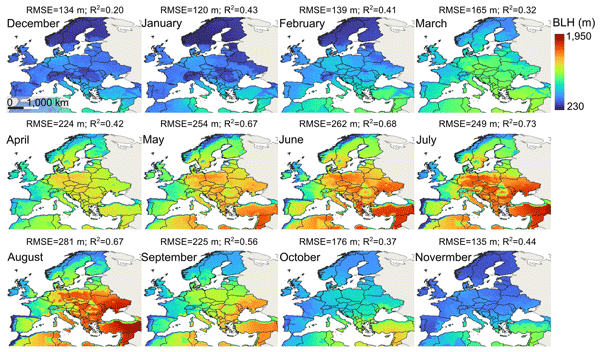
In this study, maps of the planetary boundary layer over Europe were generated by integrating multiple data sources. The results show higher accuracy compared with the widely used ERA5 reanalysis. The proposed regression kriging method performed well in estimating the height of the boundary layer at 12:00 UTC, and to a lesser extent at 00:00 UTC.
Jiawei Yan, Lu Zhang, Yizhou Xu, Xinfeng Ling, Weiwei Ding, Yubin Li, Yuan Wang, and Yuanjian Yang
EGUsphere, https://doi.org/10.5194/egusphere-2026-3201, https://doi.org/10.5194/egusphere-2026-3201, 2026
Short summary
Short summary
Paddy fields play an important role in greenhouse gas budgets and carbon cycling. Based on in-situ observation, we found that under calm nighttime conditions, weak turbulent mixing renders carbon dioxide and methane accumulate near the surface, whereas short bursts of turbulence rapidly disperse them upward. This transport processes cannot be fully described by conventional physical framework due to the influence of submeso motions. The understanding is helpful to improve the relevant models.
Fu Luo, Yuanjian Yang, Ting Sun, Zuofang Zheng, Xueyan Bi, Guoyu Ren, and Simone Lolli
EGUsphere, https://doi.org/10.5194/egusphere-2026-3392, https://doi.org/10.5194/egusphere-2026-3392, 2026
Short summary
Short summary
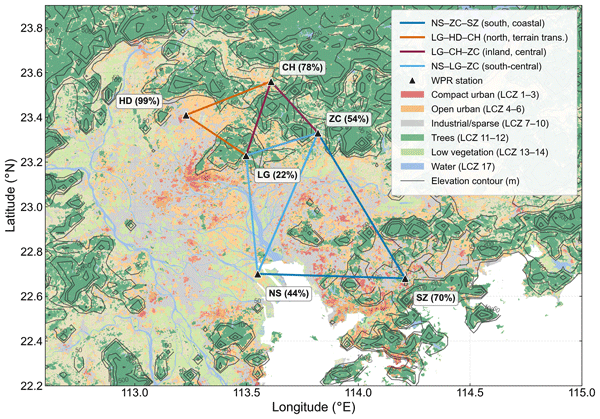
Cities are hotter than surrounding countryside, and heatwaves intensify this contrast. How combined warming reshapes air above different urban areas remains unclear. Using a high-resolution model, we examined two 2020 heatwaves over Guangzhou, China, finding extra warming strongest above densely built neighbourhoods and weakest over open low-rise areas. Dense areas retain heat overnight, adding to next-day warming and showing how urban form shapes extreme heat from surface to lower atmosphere.
Wanju Li, Lifang Sheng, Xueyan Bi, Zehao Huang, Yali Luo, Shiqi Xiao, Chao Liu, Yang Yang, Jiandong Wang, Yuanjian Yang, and Simone Lolli
Atmos. Chem. Phys., 26, 11943–11965, https://doi.org/10.5194/acp-26-11943-2026, https://doi.org/10.5194/acp-26-11943-2026, 2026
Short summary
Short summary
Heavy rain in South China often strikes suddenly far from weather fronts and is hard to forecast. Using five years of radar wind data and rainfall records from Guangdong, we studied 226 events and found warning signs one to four hours before onset that differ by region. In the west, strengthening low-level winds drive the rain; in the Pearl River Delta, friction reshapes the surface wind; in the east, warm surface air stores energy that fuels the storm.
Wenjie Zhang, Mengxi Qu, Ranhao Sun, Jiarui Zhao, Guicai Ning, Aziz Inamov, Zokhid Mamatkulovd, Di Zhou, Bakhtiyor Pulatov, and Yuanjian Yang
EGUsphere, https://doi.org/10.5194/egusphere-2026-2290, https://doi.org/10.5194/egusphere-2026-2290, 2026
Short summary
Short summary
MODIS satellite temperature data lack full validation across China. Using 18 years of balloon data from 74 stations, we evaluated its accuracy, lower-atmosphere stability, and inversion detection. Nighttime accuracy exceeds daytime; upper layers outperform lower layers . A bias exists at 700 hPa. Stability retrieval is more reliable by day. Inversion detection rates are low: 6.6 % day, 13.1 % night. This guides appropriate use of MOD07_L2 in atmospheric science, hydrology, and ecology.
Yunhua Chang, Tianhao Ding, Haifeng Yu, Yuanjian Yang, Liang Zhu, Xiaozheng Liu, and Wen Tan
Atmos. Meas. Tech., 19, 1515–1528, https://doi.org/10.5194/amt-19-1515-2026, https://doi.org/10.5194/amt-19-1515-2026, 2026
Short summary
Short summary
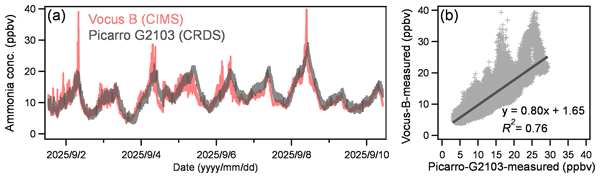
We validate a novel chemical ionization mass spectrometer for simultaneous measurements of volatile organic and inorganic compounds. A field comparison with a Cavity Ring-Down Spectroscopy analyzer for NH3 validated its accuracy and superior time resolution for capturing transient pollution peaks. Versatility is demonstrated across three key applications: stationary urban monitoring, mobile source mapping, and industrial process control.
Daihao Yu, Qiuwei Xia, Saifen Yu, Yixiang Chen, Keyi Xu, Haobin Han, Jianjun Guo, Kexin Guo, Jiadong Hu, Zhen Zhang, Jing Cai, Yuanjian Yang, and Haiyun Xia
EGUsphere, https://doi.org/10.5194/egusphere-2025-6470, https://doi.org/10.5194/egusphere-2025-6470, 2026
Short summary
Short summary
Industrial parks are critical nodes in the global carbon cycle. This study combines high-resolution lidar observations and the WRF-GHG model to examine CO2 accumulation and dispersion in a semi-enclosed bay. Distinct diurnal patterns emerge: nighttime accumulation and daytime dispersion driven by terrain, atmospheric stability and sea breezes. WRF-GHG captures temporal trends, but it underestimates CO2 levels, indicating limitations in emission inventories and terrain-wind interactions.
Yuanjian Yang, Chenjie Qian, Minxuan Zhang, Chenchao Zhan, Zhenxin Liu, Pak Wai Chan, Xueyan Bi, Meng Gao, and Simone Lolli
Atmos. Meas. Tech., 19, 1345–1363, https://doi.org/10.5194/amt-19-1345-2026, https://doi.org/10.5194/amt-19-1345-2026, 2026
Short summary
Short summary
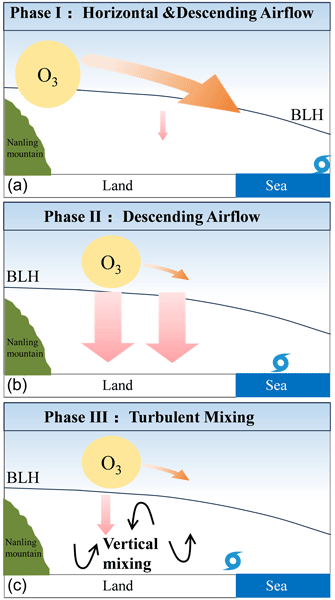
Up to ~ 40 % of ozone pollution in the Greater Bay Area of China is related to tropical cyclones. The O3 pollution was found to be transported from inland areas to coastal areas. The transport process can be roughly divided into three phases: downdraft control, horizontal transport, and vertical mixing.
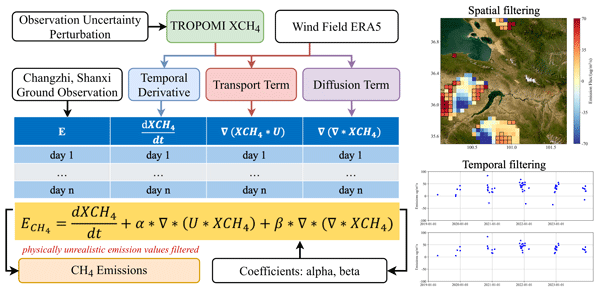
Bo Zheng, Jason Blake Cohen, Lingxiao Lu, Wei Hu, Pravash Tiwari, Simone Lolli, Andrea Garzelli, Hui Su, and Kai Qin
Atmos. Chem. Phys., 26, 1931–1946, https://doi.org/10.5194/acp-26-1931-2026, https://doi.org/10.5194/acp-26-1931-2026, 2026
Short summary
Short summary
This study provides TROPOMI (TROPOspheric Monitoring Instrument) with a new methane emission estimation method that can accurately identify emission sources. Our results generate non-negative emission datasets using objective selection and filtering methods. The results include lower minimum emission thresholds for all power grids and fewer false positives. The new method provides more robust emission quantification in the face of data uncertainty, going beyond traditional plume identification and background subtraction.
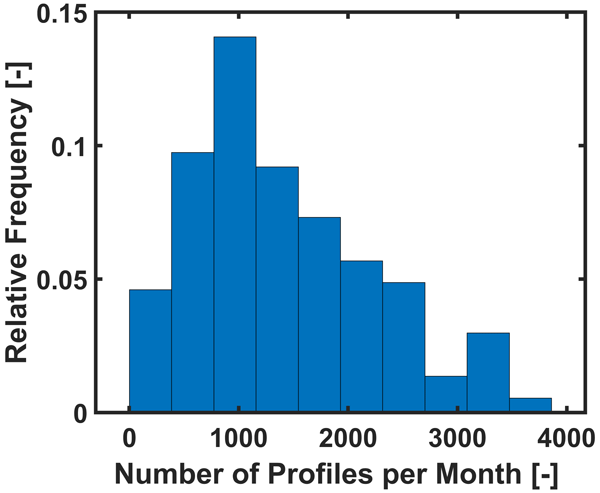
Simone Lolli, Erica K. Dolinar, Jasper R. Lewis, Andreu Salcedo-Bosch, James R. Campbell, and Ellsworth J. Welton
Atmos. Chem. Phys., 26, 411–426, https://doi.org/10.5194/acp-26-411-2026, https://doi.org/10.5194/acp-26-411-2026, 2026
Short summary
Short summary
Over the past twenty years, continuous lidar observations at NASA's Goddard Space Flight Center have assessed the radiative impact of cirrus clouds on the Earth–atmosphere system. Findings show these clouds increasingly trap heat as surface reflectivity drops with less snow and ice, contributing to local warming. Continued cirrus monitoring is crucial to refine climate forecasts and support effective climate action.
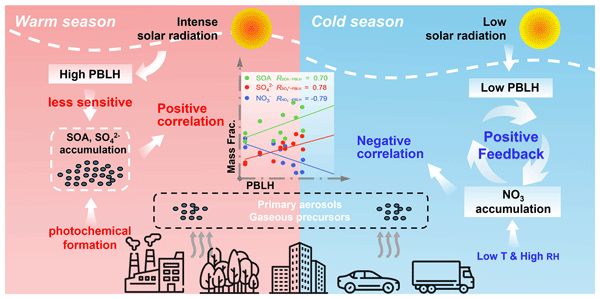
Jialu Xu, Yingjie Zhang, Yuying Wang, Xing Yan, Bin Zhu, Chunsong Lu, Yuanjian Yang, Yele Sun, Junhui Zhang, Xiaofan Zuo, Zhanghanshu Han, and Rui Zhang
Atmos. Chem. Phys., 25, 18599–18616, https://doi.org/10.5194/acp-25-18599-2025, https://doi.org/10.5194/acp-25-18599-2025, 2025
Short summary
Short summary
We conducted a year-long study in Nanjing to explore how the height of the atmospheric boundary layer affects fine particle pollution. We found that low boundary layers in winter trap pollutants like nitrate and primary particles, while higher layers in summer help form secondary pollutants like sulfate and organic aerosols. These findings show that boundary layer dynamics are key to understanding and managing seasonal air pollution.
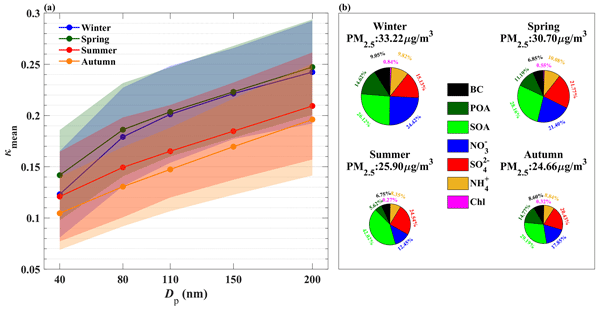
Junhui Zhang, Yuying Wang, Jialu Xu, Xiaofan Zuo, Chunsong Lu, Bin Zhu, Yuanjian Yang, Xing Yan, and Yele Sun
Atmos. Chem. Phys., 25, 17413–17428, https://doi.org/10.5194/acp-25-17413-2025, https://doi.org/10.5194/acp-25-17413-2025, 2025
Short summary
Short summary
We conducted a year-long study in Nanjing to understand how tiny airborne particles take up water, which affects air quality and climate. We found that particle water uptake varies by season and size, with lower values in summer due to more organic materials. Local pollution mainly influences smaller particles, while larger ones are shaped by air mass transport. These findings help improve climate models and support better air pollution control in fast-growing cities.

Tao Shi, Yuanjian Yang, Ping Qi, and Simone Lolli
Atmos. Chem. Phys., 25, 17069–17090, https://doi.org/10.5194/acp-25-17069-2025, https://doi.org/10.5194/acp-25-17069-2025, 2025
Short summary
Short summary
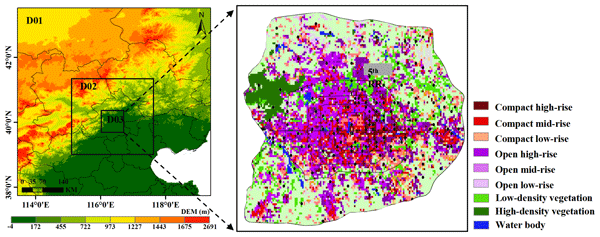
Using Beijing’s Fifth Ring Road, the team combined data and models. Heatwave results: canopy heat island was 91.3 % stronger day/52.7 % night. Day heat relied on building coverage, night on sky visibility. Tall buildings block sun by day, trap heat at night. Night ventilation cools, day winds spread heat. Urban design must consider day-night cycles to fight extreme heat, guiding risk reduction.
Tao Shi, Yuanjian Yang, Gaopeng Lu, Zuofang Zheng, Yucheng Zi, Ye Tian, Lei Liu, and Simone Lolli
Atmos. Chem. Phys., 25, 9219–9234, https://doi.org/10.5194/acp-25-9219-2025, https://doi.org/10.5194/acp-25-9219-2025, 2025
Short summary
Short summary
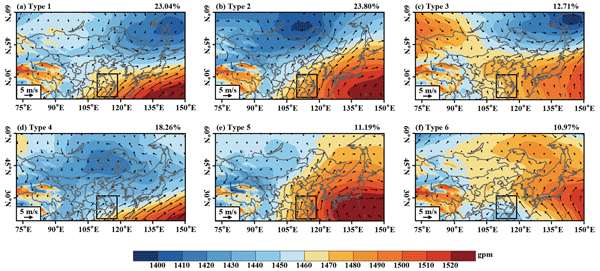
The city significantly influences thunderstorm and lightning activity, yet the potential mechanisms remain largely unexplored. Our study has revealed that both city size and building density play pivotal roles in modulating thunderstorm and lightning activity. This research not only deepens our understanding of urban meteorology but also lays an important foundation for developing accurate and targeted urban thunderstorm risk prediction models.
Tao Shi, Yuanjian Yang, Lian Zong, Min Guo, Ping Qi, and Simone Lolli
Atmos. Chem. Phys., 25, 4989–5007, https://doi.org/10.5194/acp-25-4989-2025, https://doi.org/10.5194/acp-25-4989-2025, 2025
Short summary
Short summary
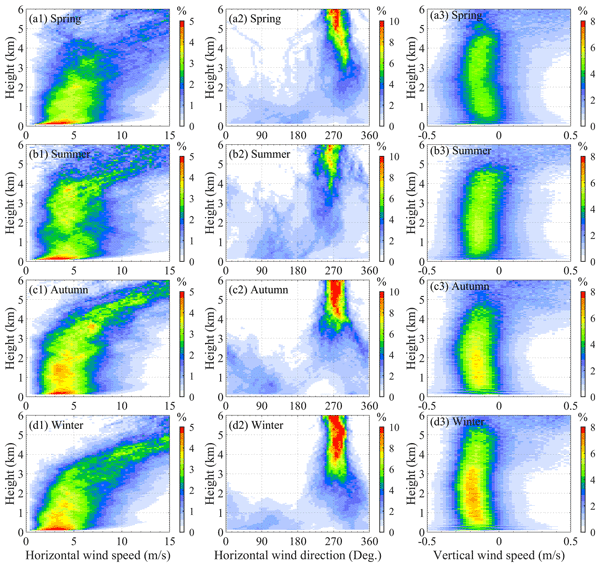
Our study explored the daily temperature patterns in urban areas of the Yangtze River Delta, focusing on how weather and human activities impact these patterns. We found that temperatures were higher at night, and weather patterns had a bigger impact during the day, while human activities mattered more at night. This helps us understand and address urban overheating.
Tianwen Wei, Mengya Wang, Kenan Wu, Jinlong Yuan, Haiyun Xia, and Simone Lolli
Atmos. Meas. Tech., 18, 1841–1857, https://doi.org/10.5194/amt-18-1841-2025, https://doi.org/10.5194/amt-18-1841-2025, 2025
Short summary
Short summary
This study analyzes three years of wind lidar measurements to explore the dynamics of the urban planetary boundary layer in Hefei, China. Results reveal that nocturnal low-level jets are most frequent in spring and intensify in summer, significantly enhancing turbulence and shear near the surface, particularly at night. Additionally, cloud cover raises the mixing layer height by approximately 100 m at night due to the greenhouse effect but reduces it by up to 200 m in the afternoon.
Fengjiao Chen, Yuanjian Yang, Lu Yu, Yang Li, Weiguang Liu, Yan Liu, and Simone Lolli
Atmos. Chem. Phys., 25, 1587–1601, https://doi.org/10.5194/acp-25-1587-2025, https://doi.org/10.5194/acp-25-1587-2025, 2025
Short summary
Short summary
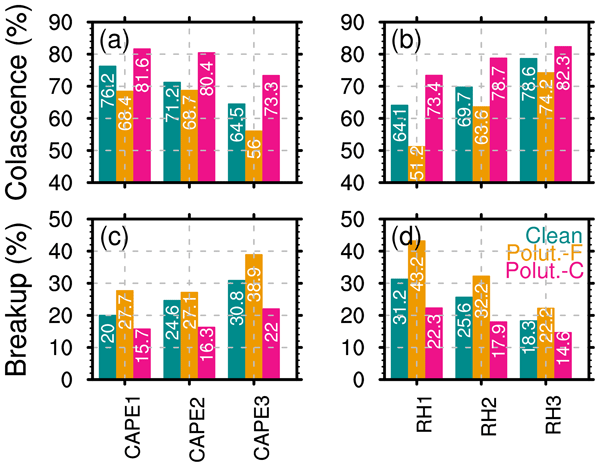
The microphysical mechanisms of precipitation responsible for the varied impacts of aerosol particles on shallow precipitation remain unclear. This study reveals that coarse aerosol particles invigorate shallow rainfall through enhanced coalescence processes, whereas fine aerosol particles suppress shallow rainfall through intensified microphysical breaks. These impacts are independent of thermodynamic environments but are more significant in low-humidity conditions.
Tao Shi, Yuanjian Yang, Ping Qi, and Simone Lolli
Atmos. Chem. Phys., 24, 12807–12822, https://doi.org/10.5194/acp-24-12807-2024, https://doi.org/10.5194/acp-24-12807-2024, 2024
Short summary
Short summary
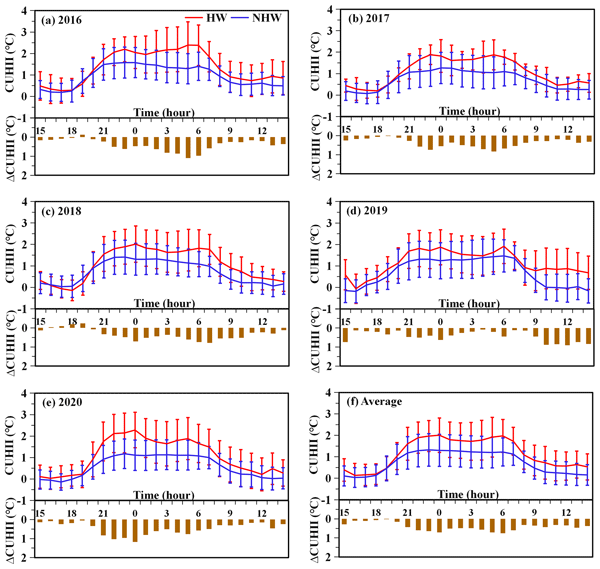
This paper explored the formation mechanisms of the amplified canopy urban heat island intensity (ΔCUHII) during heat wave (HW) periods in the megacity of Beijing from the perspectives of mountain–valley breeze and urban morphology. During the mountain breeze phase, high-rise buildings with lower sky view factors (SVFs) had a pronounced effect on the ΔCUHII. During the valley breeze phase, high-rise buildings exerted a dual influence on the ΔCUHII.
Chaman Gul, Shichang Kang, Yuanjian Yang, Xinlei Ge, and Dong Guo
EGUsphere, https://doi.org/10.5194/egusphere-2024-1144, https://doi.org/10.5194/egusphere-2024-1144, 2024
Preprint archived
Short summary
Short summary
Long-term variations in upper atmospheric temperature and water vapor in the selected domains of time and space are presented. The temperature during the past two decades showed a cooling trend and water vapor showed an increasing trend and had an inverse relation with temperature in selected domains of space and time. Seasonal temperature variations are distinct, with a summer minimum and a winter maximum. Our results can be an early warning indication for future climate change.
Cristina Gil-Díaz, Michäel Sicard, Adolfo Comerón, Daniel Camilo Fortunato dos Santos Oliveira, Constantino Muñoz-Porcar, Alejandro Rodríguez-Gómez, Jasper R. Lewis, Ellsworth J. Welton, and Simone Lolli
Atmos. Meas. Tech., 17, 1197–1216, https://doi.org/10.5194/amt-17-1197-2024, https://doi.org/10.5194/amt-17-1197-2024, 2024
Short summary
Short summary
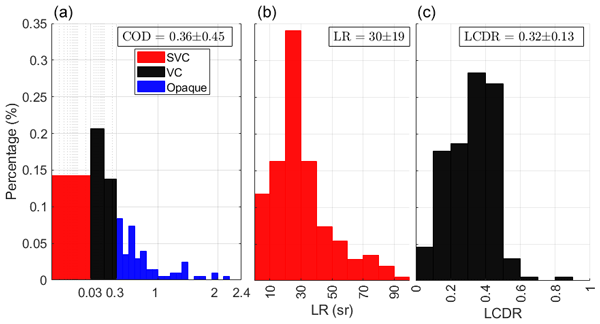
In this paper, a statistical study of cirrus geometrical and optical properties based on 4 years of continuous ground-based lidar measurements with the Barcelona (Spain) Micro Pulse Lidar (MPL) is analysed. The cloud optical depth, effective column lidar ratio and linear cloud depolarisation ratio have been calculated by a new approach to the two-way transmittance method, which is valid for both ground-based and spaceborne lidar systems. Their associated errors are also provided.
Simone Lolli, Michaël Sicard, Francesco Amato, Adolfo Comeron, Cristina Gíl-Diaz, Tony C. Landi, Constantino Munoz-Porcar, Daniel Oliveira, Federico Dios Otin, Francesc Rocadenbosch, Alejandro Rodriguez-Gomez, Andrés Alastuey, Xavier Querol, and Cristina Reche
Atmos. Chem. Phys., 23, 12887–12906, https://doi.org/10.5194/acp-23-12887-2023, https://doi.org/10.5194/acp-23-12887-2023, 2023
Short summary
Short summary
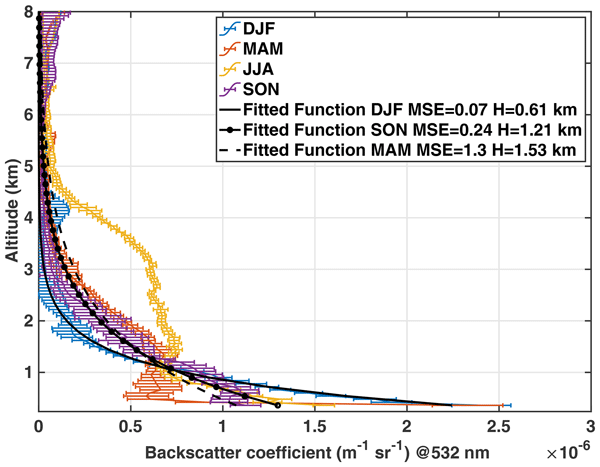
We evaluated the long-term trends and seasonal variability of the vertically resolved aerosol properties over the past 17 years in Barcelona. Results shows that air quality is improved, with a consistent drop in PM concentrations at the surface, as well as the column aerosol optical depth. The results also show that natural dust outbreaks are more likely in summer, with aerosols reaching an altitude of 5 km, while in winter, aerosols decay as an exponential with a scale height of 600 m.
Yuan Wang, Qiangqiang Yuan, Tongwen Li, Yuanjian Yang, Siqin Zhou, and Liangpei Zhang
Earth Syst. Sci. Data, 15, 3597–3622, https://doi.org/10.5194/essd-15-3597-2023, https://doi.org/10.5194/essd-15-3597-2023, 2023
Short summary
Short summary
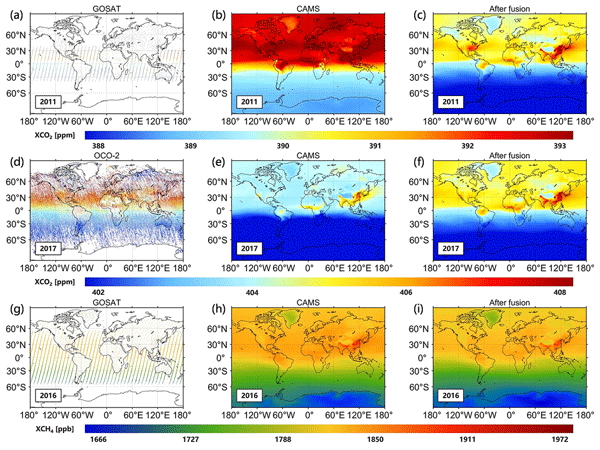
We propose a novel spatiotemporally self-supervised fusion method to establish long-term daily seamless global XCO2 and XCH4 products. Results show that the proposed method achieves a satisfactory accuracy that distinctly exceeds that of CAMS-EGG4 and is superior or close to those of GOSAT and OCO-2. In particular, our fusion method can effectively correct the large biases in CAMS-EGG4 due to the issues from assimilation data, such as the unadjusted anthropogenic emission for COVID-19.
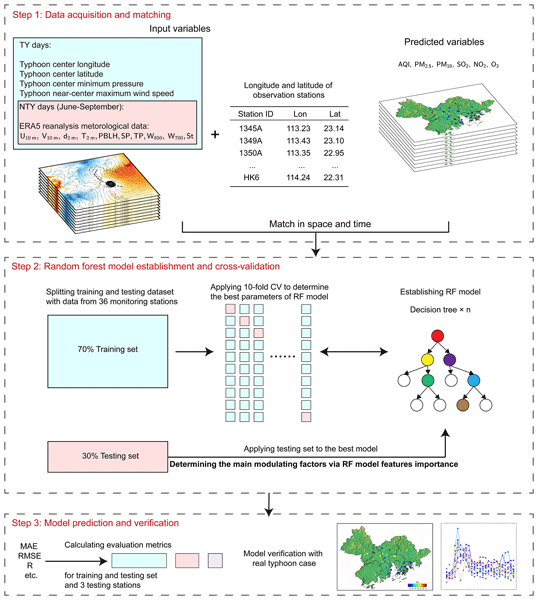
Yilin Chen, Yuanjian Yang, and Meng Gao
Atmos. Meas. Tech., 16, 1279–1294, https://doi.org/10.5194/amt-16-1279-2023, https://doi.org/10.5194/amt-16-1279-2023, 2023
Short summary
Short summary
The Guangdong–Hong Kong–Macao Greater Bay Area suffers from summertime air pollution events related to typhoons. The present study leverages machine learning to predict typhoon-associated air quality over the area. The model evaluation shows that the model performs excellently. Moreover, the change in meteorological drivers of air quality on typhoon days and non-typhoon days suggests that air pollution control strategies should have different focuses on typhoon days and non-typhoon days.
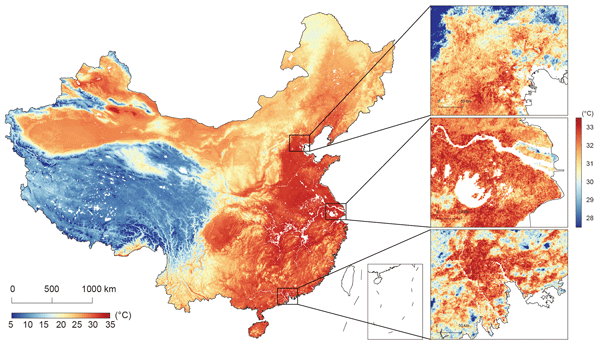
Hui Zhang, Ming Luo, Yongquan Zhao, Lijie Lin, Erjia Ge, Yuanjian Yang, Guicai Ning, Jing Cong, Zhaoliang Zeng, Ke Gui, Jing Li, Ting On Chan, Xiang Li, Sijia Wu, Peng Wang, and Xiaoyu Wang
Earth Syst. Sci. Data, 15, 359–381, https://doi.org/10.5194/essd-15-359-2023, https://doi.org/10.5194/essd-15-359-2023, 2023
Short summary
Short summary
We generate the first monthly high-resolution (1 km) human thermal index collection (HiTIC-Monthly) in China over 2003–2020, in which 12 human-perceived temperature indices are generated by LightGBM. The HiTIC-Monthly dataset has a high accuracy (R2 = 0.996, RMSE = 0.693 °C, MAE = 0.512 °C) and describes explicit spatial variations for fine-scale studies. It is freely available at https://zenodo.org/record/6895533 and https://data.tpdc.ac.cn/disallow/036e67b7-7a3a-4229-956f-40b8cd11871d.
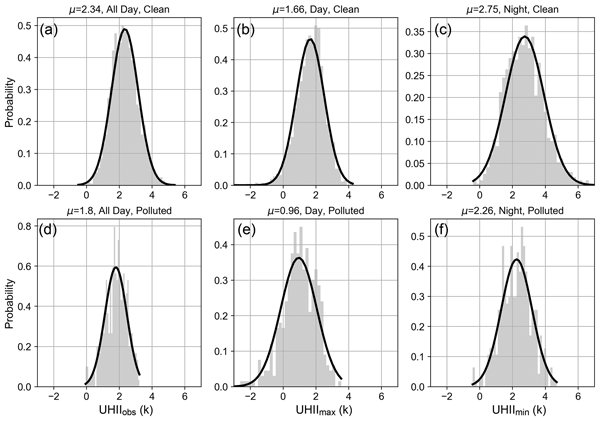
Fan Wang, Gregory R. Carmichael, Jing Wang, Bin Chen, Bo Huang, Yuguo Li, Yuanjian Yang, and Meng Gao
Atmos. Chem. Phys., 22, 13341–13353, https://doi.org/10.5194/acp-22-13341-2022, https://doi.org/10.5194/acp-22-13341-2022, 2022
Short summary
Short summary
Unprecedented urbanization in China has led to serious urban heat island (UHI) issues, exerting intense heat stress on urban residents. We find diverse influences of aerosol pollution on urban heat island intensity (UHII) under different circulations. Our results also highlight the role of black carbon in aggravating UHI, especially during nighttime. It could thus be targeted for cooperative management of heat islands and aerosol pollution.
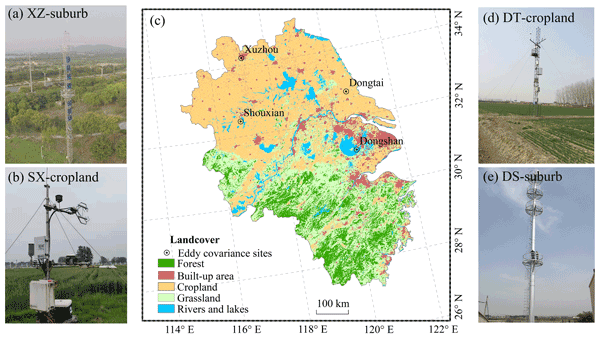
Zexia Duan, Zhiqiu Gao, Qing Xu, Shaohui Zhou, Kai Qin, and Yuanjian Yang
Earth Syst. Sci. Data, 14, 4153–4169, https://doi.org/10.5194/essd-14-4153-2022, https://doi.org/10.5194/essd-14-4153-2022, 2022
Short summary
Short summary
Land–atmosphere interactions over the Yangtze River Delta (YRD) in China are becoming more varied and complex, as the area is experiencing rapid land use changes. In this paper, we describe a dataset of microclimate and eddy covariance variables at four sites in the YRD. This dataset has potential use cases in multiple research fields, such as boundary layer parametrization schemes, evaluation of remote sensing algorithms, and development of climate models in typical East Asian monsoon regions.
Xiaodan Zhang, Guoyu Ren, Yuda Yang, He Bing, Zhixin Hao, and Panfeng Zhang
Clim. Past, 18, 1775–1796, https://doi.org/10.5194/cp-18-1775-2022, https://doi.org/10.5194/cp-18-1775-2022, 2022
Short summary
Short summary
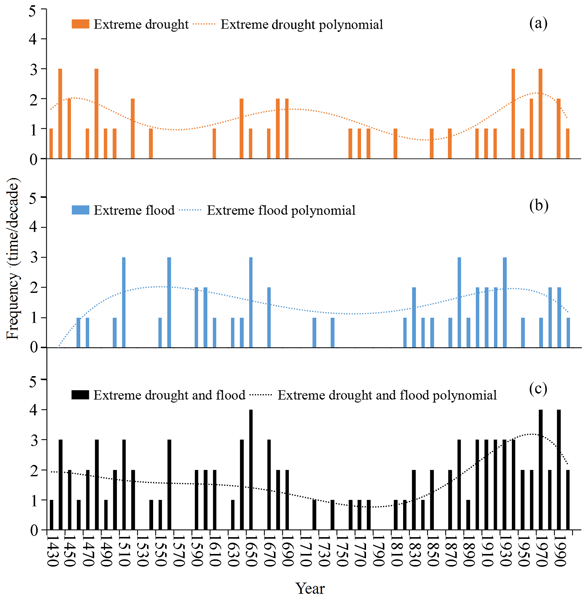
Applying yearly drought and flood records from historical documents and precipitation data in the period of instrumental measurements, this study constructs a time series of extreme droughts and floods in the Hanjiang River Basin from 1426–2017 and analyzes the temporal and spatial characteristics of the extreme drought and flood event variations.
Lian Zong, Yuanjian Yang, Haiyun Xia, Meng Gao, Zhaobin Sun, Zuofang Zheng, Xianxiang Li, Guicai Ning, Yubin Li, and Simone Lolli
Atmos. Chem. Phys., 22, 6523–6538, https://doi.org/10.5194/acp-22-6523-2022, https://doi.org/10.5194/acp-22-6523-2022, 2022
Short summary
Short summary
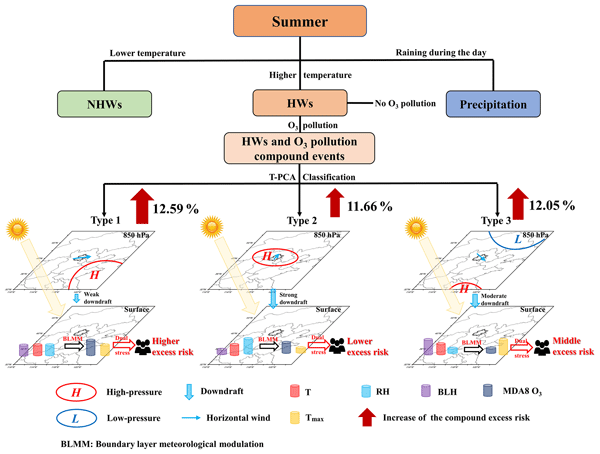
Heatwaves (HWs) paired with higher ozone (O3) concentration at surface level pose a serious threat to human health. Taking Beijing as an example, three unfavorable synoptic weather patterns were identified to dominate the compound HW and O3 pollution events. Under the synergistic stress of HWs and O3 pollution, public mortality risk increased, and synoptic patterns and urbanization enhanced the compound risk of events in Beijing by 33.09 % and 18.95 %, respectively.
Shaohui Zhou, Yuanjian Yang, Zhiqiu Gao, Xingya Xi, Zexia Duan, and Yubin Li
Atmos. Meas. Tech., 15, 757–773, https://doi.org/10.5194/amt-15-757-2022, https://doi.org/10.5194/amt-15-757-2022, 2022
Short summary
Short summary
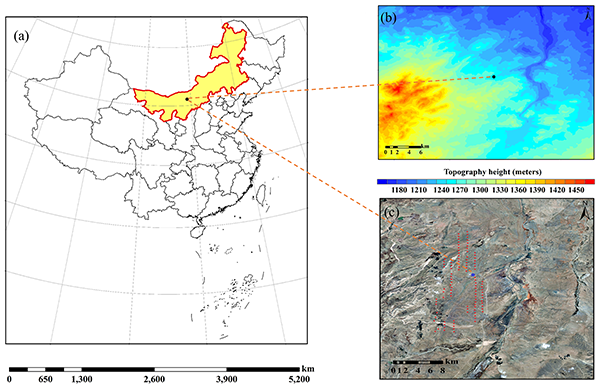
Our research has determined the possible relationship between Weibull natural wind mesoscale parameter c and shape factor k with height under the conditions of a desert steppe terrain in northern China, which has great potential in wind power generation. We have gained an enhanced understanding of the seasonal changes in the surface roughness of the desert grassland and the changes in the incoming wind direction.
Shihan Chen, Yuanjian Yang, Fei Deng, Yanhao Zhang, Duanyang Liu, Chao Liu, and Zhiqiu Gao
Atmos. Meas. Tech., 15, 735–756, https://doi.org/10.5194/amt-15-735-2022, https://doi.org/10.5194/amt-15-735-2022, 2022
Short summary
Short summary
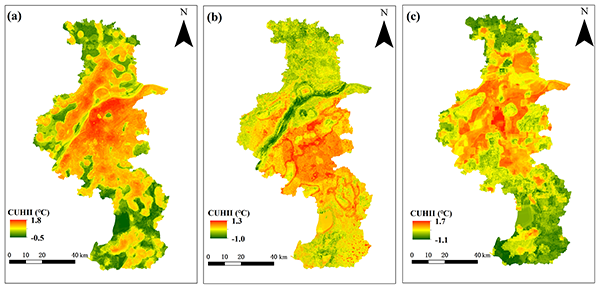
This paper proposes a method for evaluating canopy UHI intensity (CUHII) at high resolution by using remote sensing data and machine learning with a random forest (RF) model. The spatial distribution of CUHII was evaluated at 30 m resolution based on the output of the RF model. The present RF model framework for real-time monitoring and assessment of high-resolution CUHII provides scientific support for studying the changes and causes of CUHII.
Xinyan Li, Yuanjian Yang, Jiaqin Mi, Xueyan Bi, You Zhao, Zehao Huang, Chao Liu, Lian Zong, and Wanju Li
Atmos. Meas. Tech., 14, 7007–7023, https://doi.org/10.5194/amt-14-7007-2021, https://doi.org/10.5194/amt-14-7007-2021, 2021
Short summary
Short summary
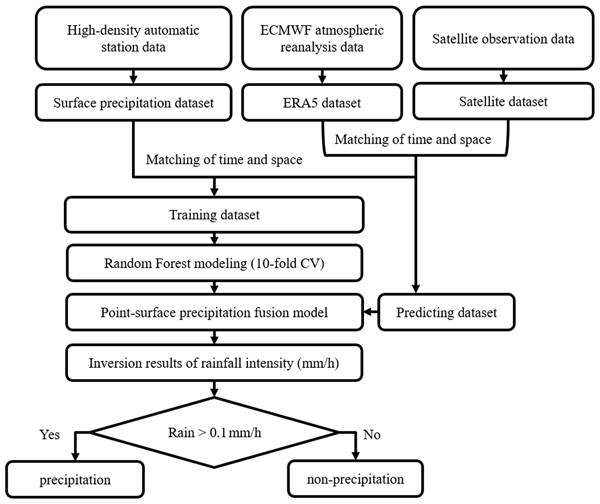
A random forest (RF) model framework for Fengyun-4A (FY-4A) daytime and nighttime quantitative precipitation estimation (QPE) is established using FY-4A multi-band spectral information, cloud parameters, high-density precipitation observations and physical quantities from reanalysis data. The RF model of FY-4A QPE has a high accuracy in estimating precipitation at the heavy-rain level or below, which has advantages for quantitative estimation of summer precipitation over East Asia in future.
Cited articles
Baklanov, A., Molina, L. T., and Gauss, M.: Megacities, air quality and climate, Atmos. Environ., 126, 235–249, https://doi.org/10.1016/j.atmosenv.2015.11.059, 2016.
Bassett, R., Cai, X., Chapman, L., Heaviside, C., Thornes, J. E., Muller, C. L., Young, D. T., and Warren, E. L.: Observations of urban heat island advection from a high‐density monitoring network, Q. J. Roy. Meteorol. Soc., 142, 2434–2441, https://doi.org/10.1002/qj.2836, 2016.
Bassett, R., Cai, X., Chapman, L., Heaviside, C., and Thornes, J. E.: The Effects of Heat Advection on UK Weather and Climate Observations in the Vicinity of Small Urbanized Areas, Bound.-Lay. Meteorol., 165, 181–196, https://doi.org/10.1007/s10546-017-0263-0, 2017.
Bassett, R., Cai, X., Chapman, L., Heaviside, C., and Thornes, J. E.: Semi‐idealized urban heat advection simulations using the Weather Research and Forecasting mesoscale model, Int. J. Climatol., 39, 1345–1358, https://doi.org/10.1002/joc.5885, 2019.
Brandsma, T., Können, G. P., and Wessels, H. R. A.: Empirical estimation of the effect of urban heat advection on the temperature series of De Bilt (The Netherlands), Int. J. Climatol., 23, 829–845, https://doi.org/10.1002/joc.902, 2003.
Brousse, O., Simpson, C., Walker, N., Fenner, D., Meier, F., Taylor, J., and Heaviside, C.: Evidence of horizontal urban heat advection in London using six years of data from a citizen weather station network, Environ. Res. Lett., 17, 044041, https://doi.org/10.1088/1748-9326/ac5c0f, 2022.
Chen, S., Yang, Y., Deng, F., Zhang, Y., Liu, D., Liu, C., and Gao, Z.: A high-resolution monitoring approach of canopy urban heat island using a random forest model and multi-platform observations, Atmos. Meas. Tech., 15, 735–756, https://doi.org/10.5194/amt-15-735-2022, 2022.
Chou, M.-D. and Suarez, M. J.: An efficient thermal infrared radiation parameterization for use in general circulation models, NASA Tech. Memo., 19950009331, https://ntrs.nasa.gov/citations/19950009331 (last access: 23 July 2026), 1994.
Cosgrove, A. and Berkelhammer, M.: Downwind footprint of an urban heat island on air and lake temperatures, npj Clim. Atmos. Sci., 1, 46, https://doi.org/10.1038/s41612-018-0055-3, 2018.
Dai, Y.-L., Sun, B., Zhou, B.-T., Li, H.-X., He, S., Li, F., Huang, Y.-T., and Tang, W.-C.: Intensified extreme cold surges in northern East Asia and the associated changes in atmospheric circulation under climate change, Adv. Clim. Change Res., 16, 960–973, https://doi.org/10.1016/j.accre.2025.07.003, 2025.
Danzig, T. B., Pal, S., Medley, Z., Dhaliwal, H., Hamel, M., Sorensen, M., Das, D., Menon, K. V., Lee, T. R., and Conder, M.: Impact of advection on the urban heat of a small-sized city: The Urban Heat island Experiment Around Lubbock, Texas (U-HEAT), Urban Climate, 64, 102714, https://doi.org/10.1016/j.uclim.2025.102714, 2025.
Dinda, A. and Chatterjee, S.: Assessing the local- impacts of heat advection on urban heat islands in Kolkata Metropolitan Area, Urban Climate, 42, 101139, https://doi.org/10.1016/j.uclim.2022.101139, 2022.
Dirks, R. A.: Urban atmosphere: Warm dry envelope over St. Louis, J. Geophys. Res., 79, 3473–3475, https://doi.org/10.1029/JC079i024p03473, 1974.
Friedl, M. and Sulla-Menashe, D.: MODIS/Terra+Aqua Land Cover Type Yearly L3 Global 500m SIN Grid V061, NASA Land Processes Distributed Active Archive Center [data set], https://doi.org/10.5067/MODIS/MCD12Q1.061, 2022.
Fung, W., Lam, K., Hung, W., Pang, S., and Lee, Y.: Impact of urban temperature on energy consumption of Hong Kong, Energy, 31, 2623–2637, https://doi.org/10.1016/j.energy.2005.12.009, 2006.
Guo, J., Zhang, J., Shao, J., Chen, T., Bai, K., Sun, Y., Li, N., Wu, J., Li, R., Li, J., Guo, Q., Cohen, J. B., Zhai, P., Xu, X., and Hu, F.: A merged continental planetary boundary layer height dataset based on high-resolution radiosonde measurements, ERA5 reanalysis, and GLDAS, Earth Syst. Sci. Data, 16, 1–14, https://doi.org/10.5194/essd-16-1-2024, 2024.
Haeffelin, M., Ribaud, J.-F., Céspedes, J., Dupont, J.-C., Lemonsu, A., Masson, V., Nagel, T., and Kotthaus, S.: Impact of boundary layer stability on urban park cooling effect intensity, Atmos. Chem. Phys., 24, 14101–14122, https://doi.org/10.5194/acp-24-14101-2024, 2024.
He, B.-J.: Potentials of meteorological characteristics and synoptic conditions to mitigate urban heat island effects, Urban Climate, 24, 26–33, https://doi.org/10.1016/j.uclim.2018.01.004, 2018.
Heaviside, C., Cai, X.-M., and Vardoulakis, S.: The effects of horizontal advection on the urban heat island in Birmingham and the West Midlands, United Kingdom during a heatwave, Q. J. Roy. Meteorol. Soc., 141, 1429–1441, https://doi.org/10.1002/qj.2452, 2015.
Hong, S.-Y., Noh, Y., and Dudhia, J.: A New Vertical Diffusion Package with an Explicit Treatment of Entrainment Processes, Mon. Weather Rev., 134, 2318–2341, https://doi.org/10.1175/MWR3199.1, 2006.
Huang, X., Li, J., Yang, J., Zhang, Z., Li, D., and Liu, X.: 30 m global impervious surface area dynamics and urban expansion pattern observed by Landsat satellites: From 1972 to 2019, Sci. China Earth Sci., 64, 1922–1933, https://doi.org/10.1007/s11430-020-9797-9, 2021.
Janjić, Z. I.: The Step-Mountain Eta Coordinate Model: Further Developments of the Convection, Viscous Sublayer, and Turbulence Closure Schemes, Mon. Weather Rev., 122, 927–945, https://doi.org/10.1175/1520-0493(1994)122<0927:TSMECM>2.0.CO;2, 1994.
Kittner, J., Fenner, D., Demuzere, M., and Bechtel, B.: Analysis of nocturnal urban heat advection using crowd weather stations, Q. J. Roy. Meteorol. Soc., 151, e5065, https://doi.org/10.1002/qj.5065, 2025.
Liao, W., Li, Y., Liu, X., Wang, Y., Che, Y., Shao, L., Chen, G., Yuan, H., Zhang, N., and Chen, F.: GloUCP: a global 1 km spatially continuous urban canopy parameters for the WRF model, Earth Syst. Sci. Data, 17, 2535–2551, https://doi.org/10.5194/essd-17-2535-2025, 2025.
Lowry, W. P.: Empirical Estimation of Urban Effects on Climate: A Problem Analysis, J. Appl. Meteorol., 16, 129–135, https://doi.org/10.1175/1520-0450(1977)016<0129:EEOUEO>2.0.CO;2, 1977.
Lu, H., Zhang, M., Sun, W., and Li, W.: Expansion Analysis of Yangtze River Delta Urban Agglomeration Using DMSP/OLS Nighttime Light Imagery for 1993 to 2012, ISPRS Int. J. Geo-Inf., 7, 52, https://doi.org/10.3390/ijgi7020052, 2018.
Mahrt, L.: Stably Stratified Atmospheric Boundary Layers, Ann. Rev. Fluid Mech., 46, 23–45, https://doi.org/10.1146/annurev-fluid-010313-141354, 2014.
Meng, F., Guo, J., Ren, G., Zhang, L., and Zhang, R.: Impact of urban heat island on the variation of heating loads in residential and office buildings in Tianjin, Energ. Buildings, 226, 110357, https://doi.org/10.1016/j.enbuild.2020.110357, 2020.
Mlawer, E. J., Taubman, S. J., Brown, P. D., Iacono, M. J., and Clough, S. A.: Radiative transfer for inhomogeneous atmospheres: RRTM, a validated correlated‐k model for the longwave, J. Geophys. Res., 102, 16663–16682, https://doi.org/10.1029/97JD00237, 1997.
Moustaoui, M. and Georgescu, M.: Winds of Change: The Role of Urban Expansion and Thermal Advection in Driving Phoenix's (AZ) Warming Trends, J. Geophys. Res.-Atmos., 130, e2024JD043166, https://doi.org/10.1029/2024JD043166, 2025.
Oke, T. R.: City size and the urban heat island, Atmos. Environ., 7, 769–779, https://doi.org/10.1016/0004-6981(73)90140-6, 1973.
Oke, T. R.: The distinction between canopy and boundary‐layer urban heat islands, Atmosphere, 14, 268–277, https://doi.org/10.1080/00046973.1976.9648422, 1976.
Oke, T. R., Mills, G., Christen, A., and Voogt, J. A.: Urban Climates, 1st edn., Cambridge University Press, https://doi.org/10.1017/9781139016476, 2017.
Phelan, P. E., Kaloush, K., Miner, M., Golden, J., Phelan, B., Silva, H., and Taylor, R. A.: Urban Heat Island: Mechanisms, Implications, and Possible Remedies, Annu. Rev. Environ. Resour., 40, 285–307, https://doi.org/10.1146/annurev-environ-102014-021155, 2015.
Qian, J., Zhang, L., Schlink, U., Meng, Q., Liu, X., and Janscó, T.: High spatial and temporal resolution multi-source anthropogenic heat estimation for China, Resour. Conserv. Recy., 203, 107451, https://doi.org/10.1016/j.resconrec.2024.107451, 2024.
Salamanca, F., Krpo, A., Martilli, A., and Clappier, A.: A new building energy model coupled with an urban canopy parameterization for urban climate simulations – Part I. formulation, verification, and sensitivity analysis of the model, Theor. Appl. Climatol., 99, 331–344, https://doi.org/10.1007/s00704-009-0142-9, 2010.
Shi, T., Yang, Y., Qi, P., Ren, G., Wen, X., and Gul, C.: Adjustment of the urbanization bias in surface air temperature series based on urban spatial morphologies and using machine learning, Urban Climate, 55, 101991, https://doi.org/10.1016/j.uclim.2024.101991, 2024.
Shi, T., Yang, Y., Zong, L., Guo, M., Qi, P., and Lolli, S.: The modulation of synoptic weather patterns and human activities on the diurnal cycle of the summertime canopy urban heat island in the Yangtze River Delta Urban Agglomeration, China, Atmos. Chem. Phys., 25, 4989–5007, https://doi.org/10.5194/acp-25-4989-2025, 2025.
Stull, R. B. (Ed.): An Introduction to Boundary Layer Meteorology, Springer Netherlands, Dordrecht, https://doi.org/10.1007/978-94-009-3027-8, 1988.
Sun, J., Mahrt, L., Banta, R. M., and Pichugina, Y. L.: Turbulence Regimes and Turbulence Intermittency in the Stable Boundary Layer during CASES-99, J. Atmos. Sci., 69, 338–351, https://doi.org/10.1175/JAS-D-11-082.1, 2012.
Tewari, M., Chen, F., Wang, W., Dudhia, J., LeMone, M. A., Mitchell, K., Ek, M., Gayno, G., Wegiel, J., and Cuenca, R. H.: Implementation and verification of the unified NOAH land surface model in the WRF model, 20th conference on weather analysis and forecasting/16th conference on numerical weather prediction, https://n2t.org/ark:/85065/d7fb523p (last access: 24 July 2026), 2004.
Thompson, G., Field, P. R., Rasmussen, R. M., and Hall, W. D.: Explicit Forecasts of Winter Precipitation Using an Improved Bulk Microphysics Scheme, Part II: Implementation of a New Snow Parameterization, Mon. Weather Rev., 136, 5095–5115, https://doi.org/10.1175/2008MWR2387.1, 2008.
Tian, G., Jiang, J., Yang, Z., and Zhang, Y.: The urban growth, size distribution and spatio-temporal dynamic pattern of the Yangtze River Delta megalopolitan region, China, Ecol. Model., 222, 865–878, https://doi.org/10.1016/j.ecolmodel.2010.09.036, 2011.
Tian, W., Yang, Y., Wang, L., Zong, L., Zhang, Y., and Liu, D.: Role of local climate zones and urban ventilation in canopy urban heat island–heatwave interaction in Nanjing megacity, China, Urban Climate, 49, 101474, https://doi.org/10.1016/j.uclim.2023.101474, 2023.
Varentsov, M., Konstantinov, P., Baklanov, A., Esau, I., Miles, V., and Davy, R.: Anthropogenic and natural drivers of a strong winter urban heat island in a typical Arctic city, Atmos. Chem. Phys., 18, 17573–17587, https://doi.org/10.5194/acp-18-17573-2018, 2018.
Wang, L., Fan, S., Hu, F., Miao, S., Yang, A., Li, Y., Liu, J., Liu, C., Chen, S., Ho, H. C., Duan, Z., Gao, Z., and Yang, Y.: Vertical Gradient Variations in Radiation Budget and Heat Fluxes in the Urban Boundary Layer: A Comparison Study Between Polluted and Clean Air Episodes in Beijing During Winter, J. Geophys. Res.-Atmos., 125, e2020JD032478, https://doi.org/10.1029/2020JD032478, 2020.
Wong, K. K. and Dirks, R. A.: Mesoscale Perturbations on Airflow in the Urban Mixing Layer, J. Appl. Meteor., 17, 677–688, https://doi.org/10.1175/1520-0450(1978)017<0677:MPOAIT>2.0.CO;2, 1978.
Xian, J., Luo, H., Lu, C., Lin, X., Yang, H., and Zhang, N.: Characteristics of the atmospheric boundary layer height: A perspective on turbulent motion, Sci. Total Environ., 919, 170895, https://doi.org/10.1016/j.scitotenv.2024.170895, 2024.
Xue, J., Zong, L., Yang, Y., Bi, X., Zhang, Y., and Zhao, M.: Diurnal and interannual variations of canopy urban heat island (CUHI) effects over a mountain–valley city with a semi-arid climate, Urban Climate, 48, 101425, https://doi.org/10.1016/j.uclim.2023.101425, 2023.
Xue, J., Zhang, L., Wang, L., Baklanov, A., and Yang, Y.: Characteristics and Mechanisms of Non‐Stationary Turbulence in a Megacity Area, Geophys. Res. Lett., 52, e2025GL114978, https://doi.org/10.1029/2025GL114978, 2025.
Yang, Y., Zheng, Z., Yim, S. Y. L., Roth, M., Ren, G., Gao, Z., Wang, T., Li, Q., Shi, C., Ning, G., and Li, Y.: PM 2.5 Pollution Modulates Wintertime Urban Heat Island Intensity in the Beijing‐Tianjin‐Hebei Megalopolis, China, Geophys. Res. Lett., 47, https://doi.org/10.1029/2019GL084288, 2020.
Yang, Y., Guo, M., Wang, L., Zong, L., Liu, D., Zhang, W., Wang, M., Wan, B., and Guo, Y.: Unevenly spatiotemporal distribution of urban excess warming in coastal Shanghai megacity, China: Roles of geophysical environment, ventilation and sea breezes, Build. Environ., 235, 110180, https://doi.org/10.1016/j.buildenv.2023.110180, 2023.
Yao, L., Sailor, D. J., Yang, X., Xu, G., and Zhao, L.: Are water bodies effective for urban heat mitigation? Evidence from field studies of urban lakes in two humid subtropical cities, Build. Environ., 245, 110860, https://doi.org/10.1016/j.buildenv.2023.110860, 2023.
Yu, M., Chen, X., Yang, J., and Miao, S.: A new perspective on evaluating high-resolution urban climate simulation with urban canopy parameters, Urban Climate, 38, 100919, https://doi.org/10.1016/j.uclim.2021.100919, 2021.
Zhang, D., Shou, Y., and Dickerson, R. R.: Upstream urbanization exacerbates urban heat island effects, Geophys. Res. Lett., 36, 2009GL041082, https://doi.org/10.1029/2009GL041082, 2009.
Zhang, L., Zhang, H., Zhang, X., Li, Q., Wu, B., Cai, X., Song, Y., and Zhu, T.: Dissimilarity of Turbulent Transport of Momentum and Heat Under Unstable Conditions Linked to Convective Circulations, J. Geophys. Res.-Atmos., 128, e2022JD037997, https://doi.org/10.1029/2022JD037997, 2023.
Zhang, L., Luo, F., Pan, G., Zhang, W., Ren, G., Zheng, Z., and Yang, Y.: Elucidating the Multi‐Timescale Variability of a Canopy Urban Heat Island by Using the Short‐Time Fourier Transform, Geophys. Res. Lett., 51, e2023GL106221, https://doi.org/10.1029/2023GL106221, 2024a.
Zhang, L., Zhang, H., Cai, X., Song, Y., and Zhang, X.: Characteristics of Turbulence Intermittency, Fine Structure, and Flux Correction in the Taklimakan Desert, J. Atmos. Sci., 81, 459–475, https://doi.org/10.1175/JAS-D-23-0107.1, 2024b.
Zhao, Y., Zhong, L., Ma, Y., Fu, Y., Chen, M., Ma, W., Zhao, C., Huang, Z., and Zhou, K.: WRF/UCM simulations of the impacts of urban expansion and future climate change on atmospheric thermal environment in a Chinese megacity, Climatic Change, 169, 38, https://doi.org/10.1007/s10584-021-03287-7, 2021.
Zheng, Z., Ren, G., Gao, H., and Yang, Y.: Urban ventilation planning and its associated benefits based on numerical experiments: A case study in beijing, China, Build. Environ., 222, 109383, https://doi.org/10.1016/j.buildenv.2022.109383, 2022.
Zheng, Z., Luo, F., Li, N., Gao, H., and Yang, Y.: Impact of Local Climate Zones on the Urban Heat and Dry Islands in Beijing: Spatial Heterogeneity and Relative Contributions, J. Meteorol. Res., 38, 126–137, https://doi.org/10.1007/s13351-024-3081-6, 2024.
Zhou, D., Bonafoni, S., Zhang, L., and Wang, R.: Remote sensing of the urban heat island effect in a highly populated urban agglomeration area in East China, Sci. Total Environ., 628–629, 415–429, https://doi.org/10.1016/j.scitotenv.2018.02.074, 2018.
Zhu, D. and Ooka, R.: WRF-based scenario experiment research on urban heat island: A review, Urban Climate, 49, 101512, https://doi.org/10.1016/j.uclim.2023.101512, 2023.
Zilitinkevich, S., Baklanov, A., Rost, J., Smedman, A., Lykosov, V., and Calanca, P.: Diagnostic and prognostic equations for the depth of the stably stratified Ekman boundary layer, Q. J. Roy. Meteorol. Soc., 128, 25–46, https://doi.org/10.1256/00359000260498770, 2002.
Zong, L., Yang, Y., Gao, M., Wang, H., Wang, P., Zhang, H., Wang, L., Ning, G., Liu, C., Li, Y., and Gao, Z.: Large-scale synoptic drivers of co-occurring summertime ozone and PM2.5 pollution in eastern China, Atmos. Chem. Phys., 21, 9105–9124, https://doi.org/10.5194/acp-21-9105-2021, 2021.
Short summary
With the reduction in inter-city distances, the wind carries heat downstream to neighboring cities. Focusing on the urban agglomeration area in China, we demonstrate the spatiotemporal variations of this heat transfer process, the moderating influence of meteorological factors, and quantify its effect on the intensity of the urban heat island in downstream cities. The results highlight the necessity of considering inter-city heat interactions in thermal risk management.
With the reduction in inter-city distances, the wind carries heat downstream to neighboring...


Altmetrics
Final-revised paper
Preprint