
Articles | Volume 26, issue 15
https://doi.org/10.5194/acp-26-10751-2026
© Author(s) 2026. This work is distributed under
the Creative Commons Attribution 4.0 License.
the Creative Commons Attribution 4.0 License.
https://doi.org/10.5194/acp-26-10751-2026
© Author(s) 2026. This work is distributed under
the Creative Commons Attribution 4.0 License.
the Creative Commons Attribution 4.0 License.
Research article
| 
03 Aug 2026
Research article |
| 03 Aug 2026
| 03 Aug 2026
Secondary processes driven by multi-factor interactions dominate the aerosol nitroaromatic compound pollution during winter in China
School of Agriculture and Biology, Shanghai Jiao Tong University, Shanghai 200240, China
Shanghai Yangtze River Delta Eco-Environmental Change and Management Observation and Research Station (Shanghai Urban Ecosystem Research Station), Ministry of Science and Technology, National Forestry and Grassland Administration, 800 Dongchuan Rd., Shanghai 200240, China
Yu-Cheng You
School of Agriculture and Biology, Shanghai Jiao Tong University, Shanghai 200240, China
Shanghai Yangtze River Delta Eco-Environmental Change and Management Observation and Research Station (Shanghai Urban Ecosystem Research Station), Ministry of Science and Technology, National Forestry and Grassland Administration, 800 Dongchuan Rd., Shanghai 200240, China
Ting Yang
School of Agriculture and Biology, Shanghai Jiao Tong University, Shanghai 200240, China
Shanghai Yangtze River Delta Eco-Environmental Change and Management Observation and Research Station (Shanghai Urban Ecosystem Research Station), Ministry of Science and Technology, National Forestry and Grassland Administration, 800 Dongchuan Rd., Shanghai 200240, China
Lin Gui
School of Agriculture and Biology, Shanghai Jiao Tong University, Shanghai 200240, China
Shanghai Yangtze River Delta Eco-Environmental Change and Management Observation and Research Station (Shanghai Urban Ecosystem Research Station), Ministry of Science and Technology, National Forestry and Grassland Administration, 800 Dongchuan Rd., Shanghai 200240, China
Jun-Liang Tao
School of Agriculture and Biology, Shanghai Jiao Tong University, Shanghai 200240, China
Shanghai Yangtze River Delta Eco-Environmental Change and Management Observation and Research Station (Shanghai Urban Ecosystem Research Station), Ministry of Science and Technology, National Forestry and Grassland Administration, 800 Dongchuan Rd., Shanghai 200240, China
Tian-Shu Chen
School of Agriculture and Biology, Shanghai Jiao Tong University, Shanghai 200240, China
Shanghai Yangtze River Delta Eco-Environmental Change and Management Observation and Research Station (Shanghai Urban Ecosystem Research Station), Ministry of Science and Technology, National Forestry and Grassland Administration, 800 Dongchuan Rd., Shanghai 200240, China
Hao Xiao
CORRESPONDING AUTHOR
School of Agriculture and Biology, Shanghai Jiao Tong University, Shanghai 200240, China
Shanghai Yangtze River Delta Eco-Environmental Change and Management Observation and Research Station (Shanghai Urban Ecosystem Research Station), Ministry of Science and Technology, National Forestry and Grassland Administration, 800 Dongchuan Rd., Shanghai 200240, China
Mei-Ju Yin
School of Agriculture and Biology, Shanghai Jiao Tong University, Shanghai 200240, China
Shanghai Yangtze River Delta Eco-Environmental Change and Management Observation and Research Station (Shanghai Urban Ecosystem Research Station), Ministry of Science and Technology, National Forestry and Grassland Administration, 800 Dongchuan Rd., Shanghai 200240, China
Hong-Wei Xiao
School of Agriculture and Biology, Shanghai Jiao Tong University, Shanghai 200240, China
Shanghai Yangtze River Delta Eco-Environmental Change and Management Observation and Research Station (Shanghai Urban Ecosystem Research Station), Ministry of Science and Technology, National Forestry and Grassland Administration, 800 Dongchuan Rd., Shanghai 200240, China
Hua-Yun Xiao
School of Agriculture and Biology, Shanghai Jiao Tong University, Shanghai 200240, China
Shanghai Yangtze River Delta Eco-Environmental Change and Management Observation and Research Station (Shanghai Urban Ecosystem Research Station), Ministry of Science and Technology, National Forestry and Grassland Administration, 800 Dongchuan Rd., Shanghai 200240, China
Related authors
Yu Xu, Yi-Jia Ma, Ting Yang, Qi-Bin Sun, Yu-Chen Wang, Lin Gui, Hong-Wei Xiao, Hao Xiao, and Hua-Yun Xiao
Atmos. Chem. Phys., 25, 13621–13634, https://doi.org/10.5194/acp-25-13621-2025, https://doi.org/10.5194/acp-25-13621-2025, 2025
Short summary
Short summary
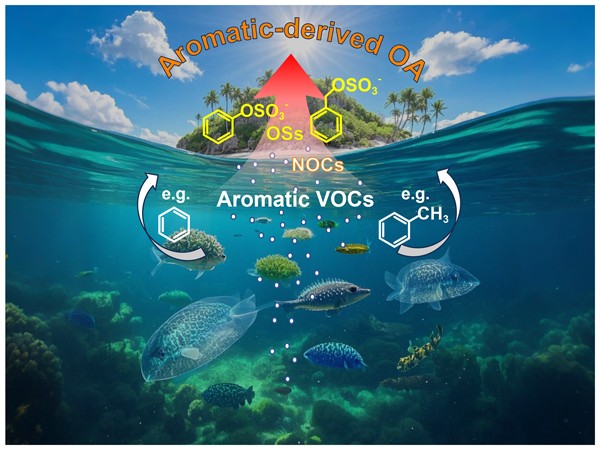
This study represents the inaugural instance of simultaneous comprehensive characterization of organosulfates and nitrogen-containing organic compounds (detected in both electrospray ionization positive (ESI+) and negative (ESI−) modes) in PM2.5 in tropical marine areas with minimal anthropogenic pollution. The overall results provide the observation-based molecular evidence that marine emissions may play a significant role in the formation of aromatic and aliphatic organic sulfur and nitrogen aerosols in the South China Sea.
Ting Yang, Yu Xu, Yu-Chen Wang, Yi-Jia Ma, Hong-Wei Xiao, Hao Xiao, and Hua-Yun Xiao
Atmos. Chem. Phys., 25, 2967–2978, https://doi.org/10.5194/acp-25-2967-2025, https://doi.org/10.5194/acp-25-2967-2025, 2025
Short summary
Short summary
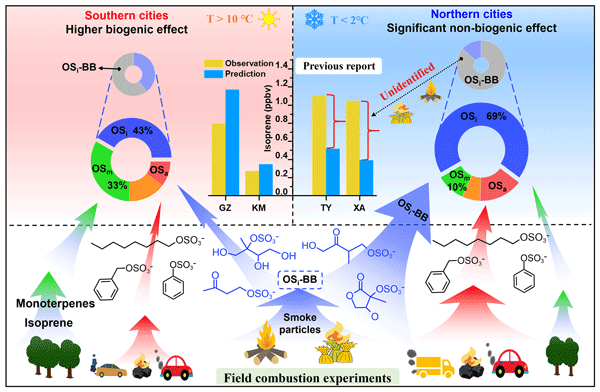
Previous measurement–model comparisons of atmospheric isoprene levels showed a significant unidentified source of isoprene in some northern Chinese cities during winter. Here, the first combination of large-scale observations and field combustion experiments provides novel insights into biomass burning emissions as a significant source of isoprene-derived organosulfates during winter in northern cities of China.
Yi-Jia Ma, Yu Xu, Ting Yang, Lin Gui, Hong-Wei Xiao, Hao Xiao, and Hua-Yun Xiao
Atmos. Chem. Phys., 25, 2763–2780, https://doi.org/10.5194/acp-25-2763-2025, https://doi.org/10.5194/acp-25-2763-2025, 2025
Short summary
Short summary
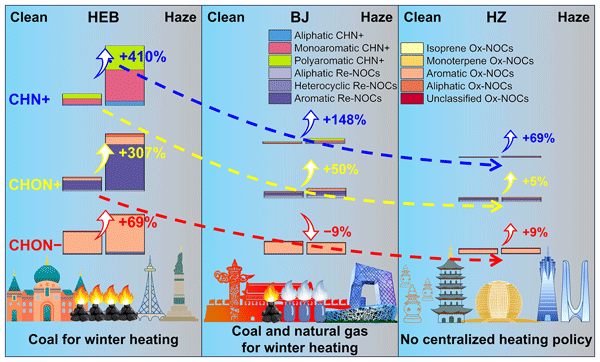
The abundance, potential precursors, and main formation mechanisms of nitrogen-containing organic compounds (NOCs) in PM2.5 during winter were compared among cities with different energy consumption patterns. The aerosol NOC pollution during winter in China is closely associated with the intensity of precursor emissions and the aqueous-phase processes. Our results highlight the importance of emission reduction strategies in controlling aerosol NOCs pollution during winter in China.
Yu Xu, Tang Liu, Yi-Jia Ma, Qi-Bin Sun, Hong-Wei Xiao, Hao Xiao, Hua-Yun Xiao, and Cong-Qiang Liu
Atmos. Chem. Phys., 24, 10531–10542, https://doi.org/10.5194/acp-24-10531-2024, https://doi.org/10.5194/acp-24-10531-2024, 2024
Short summary
Short summary
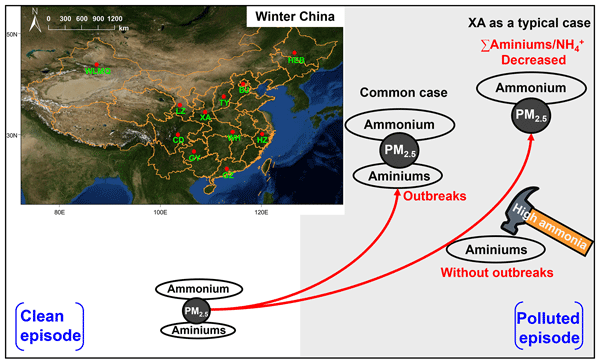
This study investigates the characteristics of aminiums and ammonium in PM2.5 on clean and polluted winter days in 11 Chinese cities, highlighting the possibility of the competitive uptake of ammonia versus amines on acidic aerosols or the displacement of aminiums by ammonia under high-ammonia conditions. The overall results deepen the understanding of the spatiotemporal differences in aminium characteristics and formation in China.
Yi-Jia Ma, Yu Xu, Ting Yang, Hong-Wei Xiao, and Hua-Yun Xiao
Atmos. Chem. Phys., 24, 4331–4346, https://doi.org/10.5194/acp-24-4331-2024, https://doi.org/10.5194/acp-24-4331-2024, 2024
Short summary
Short summary
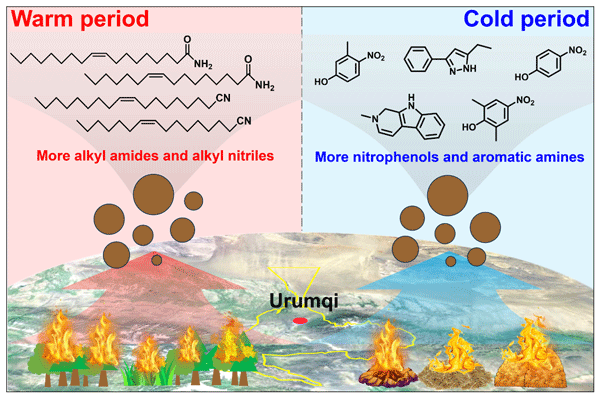
This study provides field-based evidence about the differential impacts of combustion of fresh and aged biomass materials on aerosol nitrogen-containing organic compounds (NOCs) in different seasons in Ürümqi, bridging the linkages between the observations and previous laboratory studies showing the formation mechanisms of NOCs.
Ting Yang, Yu Xu, Qing Ye, Yi-Jia Ma, Yu-Chen Wang, Jian-Zhen Yu, Yu-Sen Duan, Chen-Xi Li, Hong-Wei Xiao, Zi-Yue Li, Yue Zhao, and Hua-Yun Xiao
Atmos. Chem. Phys., 23, 13433–13450, https://doi.org/10.5194/acp-23-13433-2023, https://doi.org/10.5194/acp-23-13433-2023, 2023
Short summary
Short summary
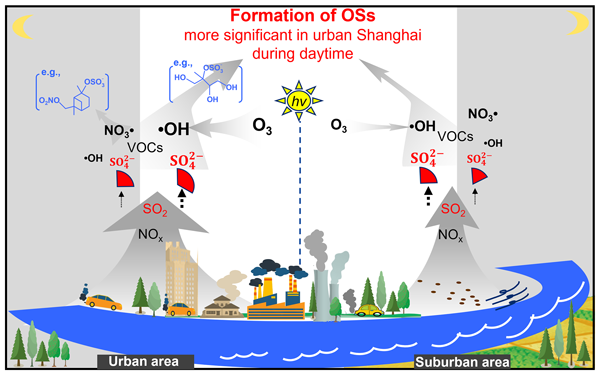
In this study, 130 OS species were quantified in ambient fine particulate matter (PM2.5) collected in urban and suburban Shanghai (East China) in the summer of 2021. The daytime OS formation was concretized based on the interactions among OSs, ultraviolet (UV), ozone (O3), and sulfate. Our finding provides field evidence for the influence of photochemical process and anthropogenic sulfate on OS formation and has important implications for the mitigation of organic particulate pollution.
Yu Xu, Xin-Ni Dong, Chen He, Dai-She Wu, Hong-Wei Xiao, and Hua-Yun Xiao
Atmos. Chem. Phys., 23, 6775–6788, https://doi.org/10.5194/acp-23-6775-2023, https://doi.org/10.5194/acp-23-6775-2023, 2023
Short summary
Short summary
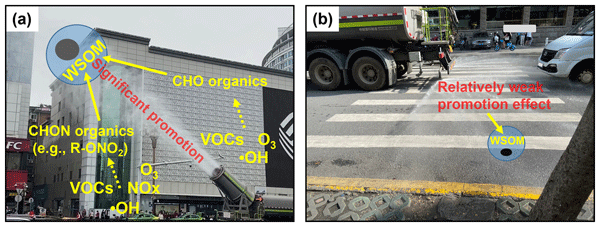
The air pollution associated with fine particles and secondary organic aerosol is not weakened by the application of mist cannon trucks but rather is aggravated. Our results provide not only new insights into the formation processes of aerosol water-soluble organic compounds associated with the water mist sprayed by mist cannon trucks in the road atmospheric environment but also crucial information for the decision makers to regulate the operation of mist cannon trucks in many cities in China.
Huilin Hu, Yunyi Liang, Ting Li, Yongliang She, Yao Wang, Ting Yang, Min Zhou, Ziyue Li, Chenxi Li, Huayun Xiao, Jianlin Hu, Jingyi Li, and Yue Zhao
Atmos. Chem. Phys., 25, 17889–17906, https://doi.org/10.5194/acp-25-17889-2025, https://doi.org/10.5194/acp-25-17889-2025, 2025
Short summary
Short summary
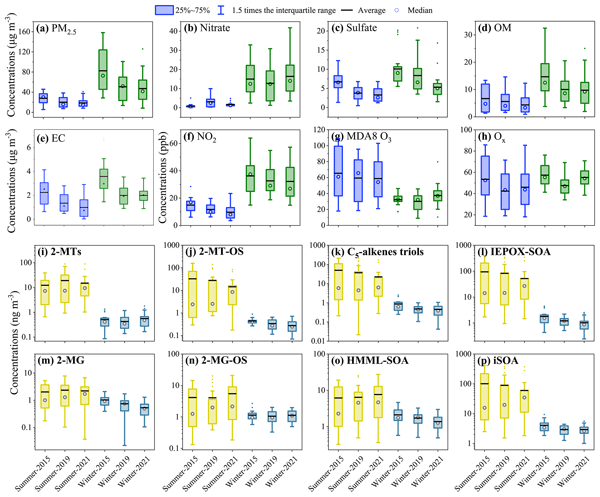
Isoprene-derived secondary organic aerosol (iSOA) is a major type of biogenic SOA in the atmosphere, yet its response to long-term anthropogenic emission reductions remains poorly understood. Here, combing field observations and model simulations, we characterized the abundance, trend, and underlying drivers of iSOA in Shanghai, China during 2015–2021, which will advance our understandings of the formation and impacts of biogenic SOA under rapidly evolving emission scenarios in urban regions.
Yu Xu, Yi-Jia Ma, Ting Yang, Qi-Bin Sun, Yu-Chen Wang, Lin Gui, Hong-Wei Xiao, Hao Xiao, and Hua-Yun Xiao
Atmos. Chem. Phys., 25, 13621–13634, https://doi.org/10.5194/acp-25-13621-2025, https://doi.org/10.5194/acp-25-13621-2025, 2025
Short summary
Short summary
This study represents the inaugural instance of simultaneous comprehensive characterization of organosulfates and nitrogen-containing organic compounds (detected in both electrospray ionization positive (ESI+) and negative (ESI−) modes) in PM2.5 in tropical marine areas with minimal anthropogenic pollution. The overall results provide the observation-based molecular evidence that marine emissions may play a significant role in the formation of aromatic and aliphatic organic sulfur and nitrogen aerosols in the South China Sea.
Wei Guo, Zicong Li, Renguo Zhu, Zhongkui Zhou, Hongwei Xiao, and Huayun Xiao
Atmos. Chem. Phys., 25, 13221–13243, https://doi.org/10.5194/acp-25-13221-2025, https://doi.org/10.5194/acp-25-13221-2025, 2025
Short summary
Short summary
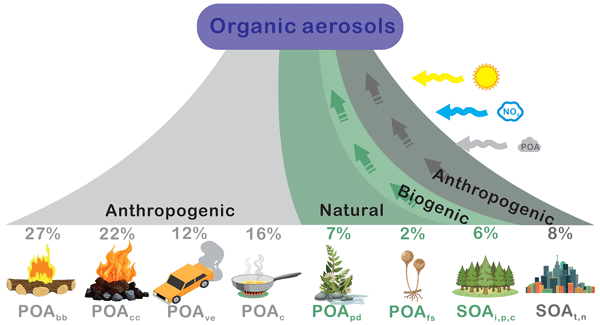
Through a comprehensive year-long analysis of major polar organic compounds in PM2.5, we elucidate the complex composition and sources of organic aerosols (OAs) within the urban environment of Nanchang, China. Given the significant health and environmental impacts of PM2.5, our research provides critical insights into the contributions of primary emissions and secondary formation processes to urban OA, and confirm the sources and the influencing factors of OA during pollution episodes.
Ren-Guo Zhu, Hua-Yun Xiao, Meiju Yin, Hao Xiao, Zhongkui Zhou, Yuanyuan Pan, Guo Wei, and Cheng Liu
Atmos. Chem. Phys., 25, 7699–7718, https://doi.org/10.5194/acp-25-7699-2025, https://doi.org/10.5194/acp-25-7699-2025, 2025
Short summary
Short summary
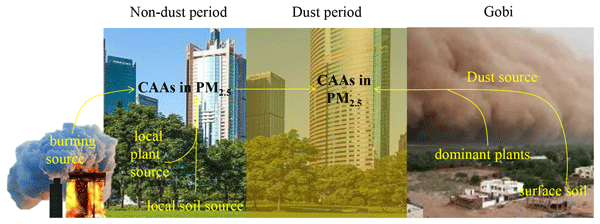
The concentrations and δ15N isotopic values of CAAs (combined amino acids) in surface soil and plants from the Gobi Desert, as well as in PM2.5 samples from four cities in Northern China, were measured. CAAs transported by Gobi dust were rich in alanine, glycine and glutamic acid. Glycine and leucine in Gobi Desert sources exhibited δ15N depletion by more than 6 ‰ compared to their values in urban PM2.5. Substantial protein-N deposition can be transported by the Gobi Desert to northern China over brief periods.
Ting Yang, Yu Xu, Yu-Chen Wang, Yi-Jia Ma, Hong-Wei Xiao, Hao Xiao, and Hua-Yun Xiao
Atmos. Chem. Phys., 25, 2967–2978, https://doi.org/10.5194/acp-25-2967-2025, https://doi.org/10.5194/acp-25-2967-2025, 2025
Short summary
Short summary
Previous measurement–model comparisons of atmospheric isoprene levels showed a significant unidentified source of isoprene in some northern Chinese cities during winter. Here, the first combination of large-scale observations and field combustion experiments provides novel insights into biomass burning emissions as a significant source of isoprene-derived organosulfates during winter in northern cities of China.
Yi-Jia Ma, Yu Xu, Ting Yang, Lin Gui, Hong-Wei Xiao, Hao Xiao, and Hua-Yun Xiao
Atmos. Chem. Phys., 25, 2763–2780, https://doi.org/10.5194/acp-25-2763-2025, https://doi.org/10.5194/acp-25-2763-2025, 2025
Short summary
Short summary
The abundance, potential precursors, and main formation mechanisms of nitrogen-containing organic compounds (NOCs) in PM2.5 during winter were compared among cities with different energy consumption patterns. The aerosol NOC pollution during winter in China is closely associated with the intensity of precursor emissions and the aqueous-phase processes. Our results highlight the importance of emission reduction strategies in controlling aerosol NOCs pollution during winter in China.
Yu Xu, Tang Liu, Yi-Jia Ma, Qi-Bin Sun, Hong-Wei Xiao, Hao Xiao, Hua-Yun Xiao, and Cong-Qiang Liu
Atmos. Chem. Phys., 24, 10531–10542, https://doi.org/10.5194/acp-24-10531-2024, https://doi.org/10.5194/acp-24-10531-2024, 2024
Short summary
Short summary
This study investigates the characteristics of aminiums and ammonium in PM2.5 on clean and polluted winter days in 11 Chinese cities, highlighting the possibility of the competitive uptake of ammonia versus amines on acidic aerosols or the displacement of aminiums by ammonia under high-ammonia conditions. The overall results deepen the understanding of the spatiotemporal differences in aminium characteristics and formation in China.
Hao Xiao, Qinkai Li, Shiyuan Ding, Wenjing Dai, Gaoyang Cui, and Xiaodong Li
EGUsphere, https://doi.org/10.5194/egusphere-2024-1621, https://doi.org/10.5194/egusphere-2024-1621, 2024
Preprint archived
Short summary
Short summary
This study established a refined isotopic fingerprint of NOx sources in local Tianjin, which included previously uncharacterized sources in China. Results shown that the representative nature and region-specific characteristics of isotopic fingerprints for six categories of NOx sources in Tianjin. A reasonable source-resolved structure of NO3– could obtained by MixSIAR model using the δ15N values of NOx source established in this study, suggest the important of the refined isotopic fingerprint.
Yi-Jia Ma, Yu Xu, Ting Yang, Hong-Wei Xiao, and Hua-Yun Xiao
Atmos. Chem. Phys., 24, 4331–4346, https://doi.org/10.5194/acp-24-4331-2024, https://doi.org/10.5194/acp-24-4331-2024, 2024
Short summary
Short summary
This study provides field-based evidence about the differential impacts of combustion of fresh and aged biomass materials on aerosol nitrogen-containing organic compounds (NOCs) in different seasons in Ürümqi, bridging the linkages between the observations and previous laboratory studies showing the formation mechanisms of NOCs.
Ting Yang, Yu Xu, Qing Ye, Yi-Jia Ma, Yu-Chen Wang, Jian-Zhen Yu, Yu-Sen Duan, Chen-Xi Li, Hong-Wei Xiao, Zi-Yue Li, Yue Zhao, and Hua-Yun Xiao
Atmos. Chem. Phys., 23, 13433–13450, https://doi.org/10.5194/acp-23-13433-2023, https://doi.org/10.5194/acp-23-13433-2023, 2023
Short summary
Short summary
In this study, 130 OS species were quantified in ambient fine particulate matter (PM2.5) collected in urban and suburban Shanghai (East China) in the summer of 2021. The daytime OS formation was concretized based on the interactions among OSs, ultraviolet (UV), ozone (O3), and sulfate. Our finding provides field evidence for the influence of photochemical process and anthropogenic sulfate on OS formation and has important implications for the mitigation of organic particulate pollution.
Han Zang, Dandan Huang, Jiali Zhong, Ziyue Li, Chenxi Li, Huayun Xiao, and Yue Zhao
Atmos. Chem. Phys., 23, 12691–12705, https://doi.org/10.5194/acp-23-12691-2023, https://doi.org/10.5194/acp-23-12691-2023, 2023
Short summary
Short summary
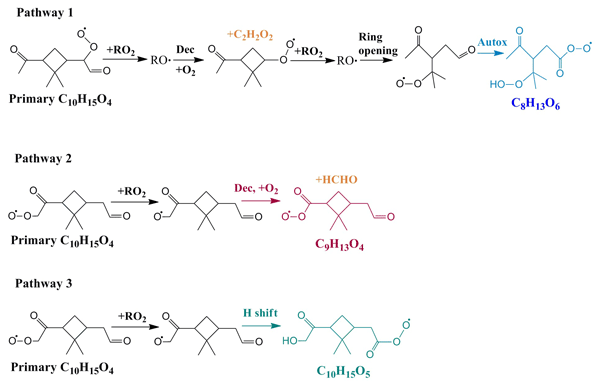
Acylperoxy radicals (RO2) are key intermediates in the atmospheric oxidation of organic compounds, yet our knowledge of their identities and chemistry remains poor. Using direct measurements and kinetic modeling, we identify the composition and formation pathways of acyl RO2 and quantify their contribution to highly oxygenated organic molecules during α-pinene ozonolysis, which will help to understand oxidation chemistry of monoterpenes and sources of low-volatility organics in the atmosphere.
Chenxi Li, Yuyang Li, Xiaoxiao Li, Runlong Cai, Yaxin Fan, Xiaohui Qiao, Rujing Yin, Chao Yan, Yishuo Guo, Yongchun Liu, Jun Zheng, Veli-Matti Kerminen, Markku Kulmala, Huayun Xiao, and Jingkun Jiang
Atmos. Chem. Phys., 23, 6879–6896, https://doi.org/10.5194/acp-23-6879-2023, https://doi.org/10.5194/acp-23-6879-2023, 2023
Short summary
Short summary
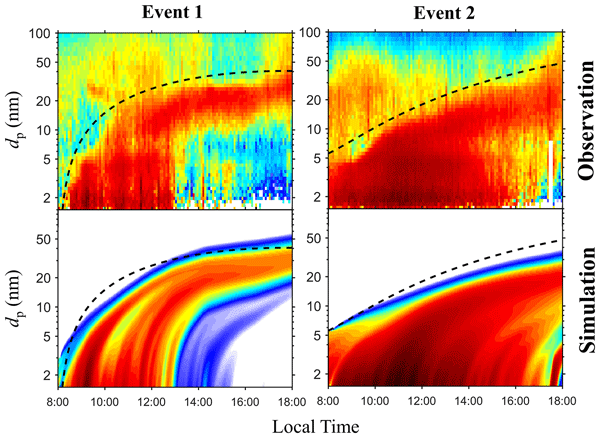
New particle formation and growth in polluted environments are not fully understood despite intensive research. We applied a cluster dynamics–multicomponent sectional model to simulate the new particle formation events observed in Beijing, China. The simulation approximately captures how the events evolve. Further diagnosis shows that the oxygenated organic molecules may have been under-detected, and modulating their abundance leads to significantly improved simulation–observation agreement.
Yu Xu, Xin-Ni Dong, Chen He, Dai-She Wu, Hong-Wei Xiao, and Hua-Yun Xiao
Atmos. Chem. Phys., 23, 6775–6788, https://doi.org/10.5194/acp-23-6775-2023, https://doi.org/10.5194/acp-23-6775-2023, 2023
Short summary
Short summary
The air pollution associated with fine particles and secondary organic aerosol is not weakened by the application of mist cannon trucks but rather is aggravated. Our results provide not only new insights into the formation processes of aerosol water-soluble organic compounds associated with the water mist sprayed by mist cannon trucks in the road atmospheric environment but also crucial information for the decision makers to regulate the operation of mist cannon trucks in many cities in China.
Ren-Guo Zhu, Hua-Yun Xiao, Liqin Cheng, Huixiao Zhu, Hongwei Xiao, and Yunyun Gong
Atmos. Chem. Phys., 22, 14019–14036, https://doi.org/10.5194/acp-22-14019-2022, https://doi.org/10.5194/acp-22-14019-2022, 2022
Short summary
Short summary
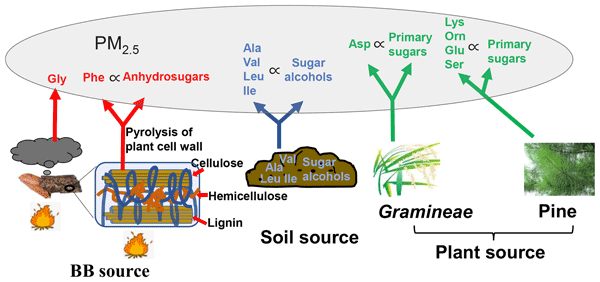
Sugars and amino acids are major classes of organic components in atmospheric fine particles and play important roles in the atmosphere. To identify their sources in different regions, the concentrations and compositions of sugar amino acids in fine particles were analysed. Our findings suggest that combining specific sugar tracers and chemical profiles of combined amino acids in local emission sources can identify various source characteristics of primary sources.
Han Zang, Yue Zhao, Juntao Huo, Qianbiao Zhao, Qingyan Fu, Yusen Duan, Jingyuan Shao, Cheng Huang, Jingyu An, Likun Xue, Ziyue Li, Chenxi Li, and Huayun Xiao
Atmos. Chem. Phys., 22, 4355–4374, https://doi.org/10.5194/acp-22-4355-2022, https://doi.org/10.5194/acp-22-4355-2022, 2022
Short summary
Short summary
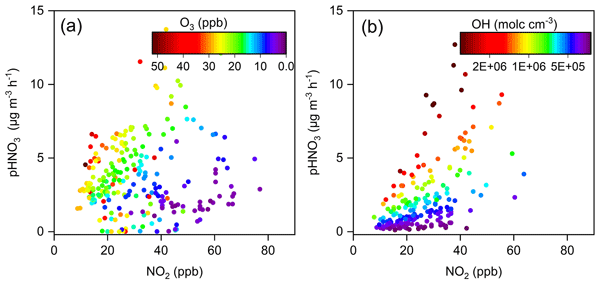
Particulate nitrate plays an important role in wintertime haze pollution in eastern China, yet quantitative constraints on detailed nitrate formation mechanisms remain limited. Here we quantified the contributions of the heterogeneous N2O5 hydrolysis (66 %) and gas-phase OH + NO2 reaction (32 %) to nitrate formation in this region and identified the atmospheric oxidation capacity (i.e., availability of O3 and OH radicals) as the driving factor of nitrate formation from both processes.
Cited articles
Atkinson, R., Aschmann, S. M., and Arey, J.: Reactions of hydroxyl and nitrogen trioxide radicals with phenol, cresols, and 2-nitrophenol at 296 .+-. 2 K, Environ. Sci. Technol., 26, 1397-1403, https://doi.org/10.1021/es00031a018, 1992.
Boreddy, S. K. R. and Kawamura, K.: A 12-year observation of water-soluble ions in TSP aerosols collected at a remote marine location in the western North Pacific: an outflow region of Asian dust, Atmos. Chem. Phys., 15, 6437–6453, https://doi.org/10.5194/acp-15-6437-2015, 2015.
Cai, D., Wang, X., George, C., Cheng, T., Herrmann, H., Li, X., and Chen, J.: Formation of Secondary Nitroaromatic Compounds in Polluted Urban Environments, J. Geophys. Res.-Atmos., 127, e2021JD036167, https://doi.org/10.1029/2021JD036167, 2022.
Chen, Y., Zheng, P., Wang, Z., Pu, W., Tan, Y., Yu, C., Xia, M., Wang, W., Guo, J., Huang, D., Yan, C., Nie, W., Ling, Z., Chen, Q., Lee, S., and Wang, T.: Secondary Formation and Impacts of Gaseous Nitro-Phenolic Compounds in the Continental Outflow Observed at a Background Site in South China, Environ. Sci. Technol., 56, 6933–6943, https://doi.org/10.1021/acs.est.1c04596, 2022.
Ehhalt, D. H. and Rohrer, F.: Dependence of the OH concentration on solar UV, J. Geophys. Res.-Atmos., 105, 3565–3571, https://doi.org/10.1029/1999jd901070, 2000.
Finewax, Z., de Gouw, J. A., and Ziemann, P. J.: Identification and Quantification of 4-Nitrocatechol Formed from OH and NO3 Radical-Initiated Reactions of Catechol in Air in the Presence of NOx: Implications for Secondary Organic Aerosol Formation from Biomass Burning, Environ. Sci. Technol., 52, 1981–1989, https://doi.org/10.1021/acs.est.7b05864, 2018.
Frka, S., Šala, M., Brodnik, H., Štefane, B., Kroflič, A., and Grgić, I.: Seasonal variability of nitroaromatic compounds in ambient aerosols: Mass size distribution, possible sources and contribution to water-soluble brown carbon light absorption, Chemosphere, 299, 134381, https://doi.org/10.1016/j.chemosphere.2022.134381, 2022.
Gu, C., Cui, S., Ge, X., Wang, Z., Chen, M., Qian, Z., Liu, Z., Wang, X., and Zhang, Y.: Chemical composition, sources and optical properties of nitrated aromatic compounds in fine particulate matter during winter foggy days in Nanjing, China, Environ. Res., 212, 113255, https://doi.org/10.1016/j.envres.2022.113255, 2022.
Gui, L., Xu, Y., You, Y.-C., Ma, Y.-J., Yang, T., Liu, T., Xiao, H.-W., Xiao, H., and Xiao, H.-Y.: Oxidative Degradation of Higher-Molecular-Weight Aromatic Amine Compounds Is a Potential Source of Anilinium in Urban Aerosols, Environ. Sci. Tech. Let., 11, 1355–1361, https://doi.org/10.1021/acs.estlett.4c00935, 2024.
Gui, L., Xu, Y., Ma, Y.-J., Yang, T., Xiao, H.-W., Xiao, H., and Xiao, H.-Y.: Firework Display Is a Newly Identified Source of Gaseous and Particulate Amines, Environ. Sci. Tech. Let., 12, 1387–1393, https://doi.org/10.1021/acs.estlett.5c00806, 2025.
Guo, Z., Hu, X., Sun, W., Peng, X., Fu, Y., Liu, K., Liu, F., Meng, H., Zhu, Y., Zhang, G., Wang, X., Xue, L., Wang, J., Wang, X., Peng, P. a., and Bi, X.: Mixing state and influence factors controlling diurnal variation of particulate nitrophenol compounds at a suburban area in northern China, Environ. Pollut., 344, 123368, https://doi.org/10.1016/j.envpol.2024.123368, 2024.
Hao, Y., Sun, G., Fan, T., Tang, X., Zhang, J., Liu, Y., Zhang, N., Zhao, L., Zhong, R., and Peng, Y.: In vivo toxicity of nitroaromatic compounds to rats: QSTR modelling and interspecies toxicity relationship with mouse, J. Hazard. Mater., 399, 122981, https://doi.org/10.1016/j.jhazmat.2020.122981, 2020.
Harrison, M. A. J., Barra, S., Borghesi, D., Vione, D., Arsene, C., and Iulian Olariu, R.: Nitrated phenols in the atmosphere: a review, Atmos. Environ., 39, 231–248, https://doi.org/10.1016/j.atmosenv.2004.09.044, 2005.
Huang, S., Yang, X., Xu, H., Zeng, Y., Li, D., Sun, J., Ho, S. S. H., Zhang, Y., Cao, J., and Shen, Z.: Insights into the nitroaromatic compounds, formation, and light absorption contributing emissions from various geological maturity coals, Sci. Total Environ., 870, 162033, https://doi.org/10.1016/j.scitotenv.2023.162033, 2023.
Huang, S., Shen, Z., Yang, X., Bai, G., Zhang, L., Zeng, Y., Sun, J., Xu, H., Ho, S. S. H., Zhang, Y., and Cao, J.: Nitroaromatic compounds in six major Chinese cities: Influence of different formation mechanisms on light absorption properties, Sci. Total Environ., 930, 172672, https://doi.org/10.1016/j.scitotenv.2024.172672, 2024.
Huang, S., Shen, Z., Bai, G., Zhang, L., Wang, D., Li, C., Zheng, H., Xu, H., and Zhang, Y.: Photochemical Aging of PM2.5 Nitroaromatic Compounds From Solid Fuel Combustion Enhanced Light Absorption and Oxidation Potential, J. Geophys. Res.-Atmos., 130, e2025JD043471, https://doi.org/10.1029/2025JD043471, 2025.
Huo, Y., Li, M., Wang, X., Sun, J., Zhou, Y., Ma, Y., and He, M.: Rapid oxidation of phenolic compounds by O3 and HO⚫: effects of the air–water interface and mineral dust in tropospheric chemical processes, Atmos. Chem. Phys., 24, 12409–12423, https://doi.org/10.5194/acp-24-12409-2024, 2024.
Kahnt, A., Behrouzi, S., Vermeylen, R., Safi Shalamzari, M., Vercauteren, J., Roekens, E., Claeys, M., and Maenhaut, W.: One-year study of nitro-organic compounds and their relation to wood burning in PM10 aerosol from a rural site in Belgium, Atmos. Environ., 81, 561–568, https://doi.org/10.1016/j.atmosenv.2013.09.041, 2013.
Kitanovski, Z., Grgić, I., Vermeylen, R., Claeys, M., and Maenhaut, W.: Liquid chromatography tandem mass spectrometry method for characterization of monoaromatic nitro-compounds in atmospheric particulate matter, J. Chromatogr. A, 1268, 35–43, https://doi.org/10.1016/j.chroma.2012.10.021, 2012.
Kroflič, A., Anders, J., Drventić, I., Mettke, P., Böge, O., Mutzel, A., Kleffmann, J., and Herrmann, H.: Guaiacol Nitration in a Simulated Atmospheric Aerosol with an Emphasis on Atmospheric Nitrophenol Formation Mechanisms, ACS Earth Space Chem., 5, 1083–1093, https://doi.org/10.1021/acsearthspacechem.1c00014, 2021.
Li, K., Li, J., Tong, S., Wang, W., Huang, R.-J., and Ge, M.: Characteristics of wintertime VOCs in suburban and urban Beijing: concentrations, emission ratios, and festival effects, Atmos. Chem. Phys., 19, 8021–8036, https://doi.org/10.5194/acp-19-8021-2019, 2019.
Li, M., Wang, X., Lu, C., Li, R., Zhang, J., Dong, S., Yang, L., Xue, L., Chen, J., and Wang, W.: Nitrated phenols and the phenolic precursors in the atmosphere in urban Jinan, China, Sci. Total Environ., 714, 136760, https://doi.org/10.1016/j.scitotenv.2020.136760, 2020a.
Li, X., Jiang, L., Hoa, L. P., Lyu, Y., Xu, T., Yang, X., Iinuma, Y., Chen, J., and Herrmann, H.: Size distribution of particle-phase sugar and nitrophenol tracers during severe urban haze episodes in Shanghai, Atmos. Environ., 145, 115–127, https://doi.org/10.1016/j.atmosenv.2016.09.030, 2016.
Li, X., Yang, Y., Liu, S., Zhao, Q., Wang, G., and Wang, Y.: Light absorption properties of brown carbon (BrC) in autumn and winter in Beijing: Composition, formation and contribution of nitrated aromatic compounds, Atmos. Environ., 223, 117289, https://doi.org/10.1016/j.atmosenv.2020.117289, 2020b.
Li, X., Wang, Y., Hu, M., Tan, T., Li, M., Wu, Z., Chen, S., and Tang, X.: Characterizing chemical composition and light absorption of nitroaromatic compounds in the winter of Beijing, Atmos. Environ., 237, 117712, https://doi.org/10.1016/j.atmosenv.2020.117712, 2020c.
Liao, T., Wang, S., Ai, J., Gui, K., Duan, B., Zhao, Q., Zhang, X., Jiang, W., and Sun, Y.: Heavy pollution episodes, transport pathways and potential sources of PM2.5 during the winter of 2013 in Chengdu (China), Sci. Total Environ., 584–585, 1056–1065, https://doi.org/10.1016/j.scitotenv.2017.01.160, 2017.
Liu, S., Wang, H., Hu, Z., Zhang, X., Sun, Y., and Dong, F.: Resolving the overlooked photochemical nitrophenol transformation mechanism induced by nonradical species under visible light, P. Natl. Acad. Sci. USA, 121, e2401452121, https://doi.org/10.1073/pnas.2401452121, 2024.
Liu, T., Xu, Y., Sun, Q.-B., Xiao, H.-W., Zhu, R.-G., Li, C.-X., Li, Z.-Y., Zhang, K.-Q., Sun, C.-X., and Xiao, H.-Y.: Characteristics, Origins, and Atmospheric Processes of Amines in Fine Aerosol Particles in Winter in China, J. Geophys. Res.-Atmos., 128, e2023JD038974, https://doi.org/10.1029/2023JD038974, 2023a.
Liu, X., Wang, H., Wang, F., Lv, S., Wu, C., Zhao, Y., Zhang, S., Liu, S., Xu, X., Lei, Y., and Wang, G.: Secondary Formation of Atmospheric Brown Carbon in China Haze: Implication for an Enhancing Role of Ammonia, Environ. Sci. Technol., 57, 11163–11172, https://doi.org/10.1021/acs.est.3c03948, 2023b.
Liu, Y., Huang, R.-J., Lin, C., Yuan, W., Li, Y. J., Zhong, H., Yang, L., Wang, T., Huang, W., Xu, W., Huang, D. D., and Huang, C.: Nitrate-Photolysis Shortens the Lifetimes of Brown Carbon Tracers from Biomass Burning, Environ. Sci. Technol., 59, 640–649, https://doi.org/10.1021/acs.est.4c06123, 2025.
Lu, C., Wang, X., Dong, S., Zhang, J., Li, J., Zhao, Y., Liang, Y., Xue, L., Xie, H., Zhang, Q., and Wang, W.: Emissions of fine particulate nitrated phenols from various on-road vehicles in China, Environ. Res., 179, 108709, https://doi.org/10.1016/j.envres.2019.108709, 2019.
Ma, Y.-J., Xu, Y., Yang, T., Xiao, H.-W., and Xiao, H.-Y.: Measurement report: Characteristics of nitrogen-containing organics in PM2.5 in Ürümqi, northwestern China – differential impacts of combustion of fresh and aged biomass materials, Atmos. Chem. Phys., 24, 4331–4346, https://doi.org/10.5194/acp-24-4331-2024, 2024.
Ma, Y.-J., Xu, Y., Yang, T., Gui, L., Xiao, H.-W., Xiao, H., and Xiao, H.-Y.: The critical role of aqueous-phase processes in aromatic-derived nitrogen-containing organic aerosol formation in cities with different energy consumption patterns, Atmos. Chem. Phys., 25, 2763–2780, https://doi.org/10.5194/acp-25-2763-2025, 2025.
MacFarlane, S. M., Fisher, J. A., Xu, L., Wennberg, P. O., Crounse, J. D., Ball, K., Zhai, S., Bates, K. H., Kim, Y., Zhang, Q., and Blake, D. R.: Sources, Sinks, and Oxidation Pathways of Phenolic Compounds in South Korea Constrained Using KORUS-AQ Airborne Observations, J. Geophys. Res.-Atmos., 130, e2024JD043110, https://doi.org/10.1029/2024JD043110, 2025.
Mayorga, R. J., Zhao, Z., and Zhang, H.: Formation of secondary organic aerosol from nitrate radical oxidation of phenolic VOCs: Implications for nitration mechanisms and brown carbon formation, Atmos. Environ., 244, 117910, https://doi.org/10.1016/j.atmosenv.2020.117910, 2021.
Mohr, C., Lopez-Hilfiker, F. D., Zotter, P., Prévôt, A. S. H., Xu, L., Ng, N. L., Herndon, S. C., Williams, L. R., Franklin, J. P., Zahniser, M. S., Worsnop, D. R., Knighton, W. B., Aiken, A. C., Gorkowski, K. J., Dubey, M. K., Allan, J. D., and Thornton, J. A.: Contribution of Nitrated Phenols to Wood Burning Brown Carbon Light Absorption in Detling, United Kingdom during Winter Time, Environ. Sci. Technol., 47, 6316–6324, https://doi.org/10.1021/es400683v, 2013.
Morales, J. A., Pirela, D., de Nava, M. G., de Borrego, B. S., Velásquez, H., and Durán, J.: Inorganic water soluble ions in atmospheric particles over Maracaibo Lake Basin in the western region of Venezuela, Atmos. Res., 46, 307–320, https://doi.org/10.1016/S0169-8095(97)00071-9, 1998.
Nguyen, T. K. V., Zhang, Q., Jimenez, J. L., Pike, M., and Carlton, A. G.: Liquid water: ubiquitous contributor to aerosol mass, Environ. Sci. Tech. Let., 3, 257–263, 2016.
Olariu, R. I., Klotz, B., Barnes, I., Becker, K. H., and Mocanu, R.: FT–IR study of the ring-retaining products from the reaction of OH radicals with phenol, o-, m-, and p-cresol, Atmos. Environ., 36, 3685–3697, https://doi.org/10.1016/S1352-2310(02)00202-9, 2002.
Olariu, R. I., Barnes, I., Bejan, I., Arsene, C., Vione, D., Klotz, B., and Becker, K. H.: FT-IR Product Study of the Reactions of NO3 Radicals With ortho-, meta-, and para-Cresol, Environ. Sci. Technol., 47, 7729–7738, https://doi.org/10.1021/es401096w, 2013.
Rana, M. S. and Guzman, M. I.: Oxidation of Catechols at the Air–Water Interface by Nitrate Radicals, Environ. Sci. Technol., 56, 15437–15448, https://doi.org/10.1021/acs.est.2c05640, 2022.
Salvador, C. M. G., Tang, R., Priestley, M., Li, L., Tsiligiannis, E., Le Breton, M., Zhu, W., Zeng, L., Wang, H., Yu, Y., Hu, M., Guo, S., and Hallquist, M.: Ambient nitro-aromatic compounds – biomass burning versus secondary formation in rural China, Atmos. Chem. Phys., 21, 1389–1406, https://doi.org/10.5194/acp-21-1389-2021, 2021.
Sareen, N., Waxman, E. M., Turpin, B. J., Volkamer, R., and Carlton, A. G.: Potential of aerosol liquid water to facilitate organic aerosol formation: assessing knowledge gaps about precursors and partitioning, Environ. Sci. Technol., 51, 3327–3335, 2017.
Selimovic, V., Yokelson, R. J., McMeeking, G. R., and Coefield, S.: Aerosol Mass and Optical Properties, Smoke Influence on O3, and High NO3 Production Rates in a Western U.S. City Impacted by Wildfires, J. Geophys. Res.-Atmos., 125, e2020JD032791, https://doi.org/10.1029/2020JD032791, 2020.
Shi, X., Qiu, X., Li, A., Jiang, X., Wei, G., Zheng, Y., Chen, Q., Chen, S., Hu, M., Rudich, Y., and Zhu, T.: Polar Nitrated Aromatic Compounds in Urban Fine Particulate Matter: A Focus on Formation via an Aqueous-Phase Radical Mechanism, Environ. Sci. Technol., 57, 5160–5168, https://doi.org/10.1021/acs.est.2c07324, 2023.
Vidović, K., Lašič Jurković, D., Šala, M., Kroflič, A., and Grgić, I.: Nighttime Aqueous-Phase Formation of Nitrocatechols in the Atmospheric Condensed Phase, Environ. Sci. Technol., 52, 9722–9730, https://doi.org/10.1021/acs.est.8b01161, 2018.
Wang, D., Shen, Z., Zhang, Q., Lei, Y., Zhang, T., Huang, S., Sun, J., Xu, H., and Cao, J.: Winter brown carbon over six of China's megacities: light absorption, molecular characterization, and improved source apportionment revealed by multilayer perceptron neural network, Atmos. Chem. Phys., 22, 14893–14904, https://doi.org/10.5194/acp-22-14893-2022, 2022.
Wang, H., Gao, Y., Wang, S., Wu, X., Liu, Y., Li, X., Huang, D., Lou, S., Wu, Z., Guo, S., Jing, S., Li, Y., Huang, C., Tyndall, G. S., Orlando, J. J., and Zhang, X.: Atmospheric Processing of Nitrophenols and Nitrocresols From Biomass Burning Emissions, J. Geophys. Res.-Atmos., 125, e2020JD033401, https://doi.org/10.1029/2020JD033401, 2020.
Wang, S. and Li, H.: NO3⚫-Initiated Gas-Phase Formation of Nitrated Phenolic Compounds in Polluted Atmosphere, Environ. Sci. Technol., 55, 2899–2907, https://doi.org/10.1021/acs.est.0c08041, 2021.
Wang, X., Gu, R., Wang, L., Xu, W., Zhang, Y., Chen, B., Li, W., Xue, L., Chen, J., and Wang, W.: Emissions of fine particulate nitrated phenols from the burning of five common types of biomass, Environ. Pollut., 230, 405–412, https://doi.org/10.1016/j.envpol.2017.06.072, 2017.
Wang, Y., Hu, M., Wang, Y., Zheng, J., Shang, D., Yang, Y., Liu, Y., Li, X., Tang, R., Zhu, W., Du, Z., Wu, Y., Guo, S., Wu, Z., Lou, S., Hallquist, M., and Yu, J. Z.: The formation of nitro-aromatic compounds under high NOx and anthropogenic VOC conditions in urban Beijing, China, Atmos. Chem. Phys., 19, 7649–7665, https://doi.org/10.5194/acp-19-7649-2019, 2019.
Wang, Y., Zhao, Y., Wang, Y., Yu, J.-Z., Shao, J., Liu, P., Zhu, W., Cheng, Z., Li, Z., Yan, N., and Xiao, H.: Organosulfates in atmospheric aerosols in Shanghai, China: seasonal and interannual variability, origin, and formation mechanisms, Atmos. Chem. Phys., 21, 2959–2980, https://doi.org/10.5194/acp-21-2959-2021, 2021.
Xie, M., Chen, X., Hays, M. D., and Holder, A. L.: Composition and light absorption of N-containing aromatic compounds in organic aerosols from laboratory biomass burning, Atmos. Chem. Phys., 19, 2899–2915, https://doi.org/10.5194/acp-19-2899-2019, 2019.
Xiong, H., Liu, X., Sun, C., Zhang, X., Wang, X., Lin, J., Xue, L., Sun, X., Shang, X., Ma, F., Xie, H., Chen, J., Yan, G., Shu, J., Fu, H., Wang, L., Rudich, Y., George, C., Mellouki, A., Zhao, D., Wang, X., Herrmann, H., and Chen, J.: Atmospheric water cluster–catalyzed formation of nitroaromatics as a secondary aerosol source, Sci. Adv., 11, eadv7805, https://doi.org/10.1126/sciadv.adv7805, 2025.
Xu, Y., Xiao, H., Wu, D., and Long, C.: Abiotic and Biological Degradation of Atmospheric Proteinaceous Matter Can Contribute Significantly to Dissolved Amino Acids in Wet Deposition, Environ. Sci. Technol., 54, 6551–6561, 2020a.
Xu, Y., Dong, X.-N., Xiao, H.-Y., Zhou, J.-X., and Wu, D.-S.: Proteinaceous Matter and Liquid Water in Fine Aerosols in Nanchang, Eastern China: Seasonal Variations, Sources, and Potential Connections, J. Geophys. Res.-Atmos., 127, e2022JD036589, https://doi.org/10.1029/2022JD036589, 2022.
Xu, Y., Miyazaki, Y., Tachibana, E., Sato, K., Ramasamy, S., Mochizuki, T., Sadanaga, Y., Nakashima, Y., Sakamoto, Y., Matsuda, K., and Kajii, Y.: Aerosol Liquid Water Promotes the Formation of Water-Soluble Organic Nitrogen in Submicrometer Aerosols in a Suburban Forest, Environ. Sci. Technol., 54, 1406–1414, 2020b.
Xu, Y., Dong, X.-N., He, C., Wu, D.-S., Xiao, H.-W., and Xiao, H.-Y.: Mist cannon trucks can exacerbate the formation of water-soluble organic aerosol and PM2.5 pollution in the road environment, Atmos. Chem. Phys., 23, 6775–6788, https://doi.org/10.5194/acp-23-6775-2023, 2023.
Xu, Y., Lin, X., Sun, Q.-B., Xiao, H.-W., Xiao, H., and Xiao, H.-Y.: Elaborating the Atmospheric Transformation of Combined and Free Amino Acids From the Perspective of Observational Studies, J. Geophys. Res.-Atmos., 129, e2024JD040730, https://doi.org/10.1029/2024JD040730, 2024a.
Xu, Y., Liu, T., Ma, Y.-J., Sun, Q.-B., Xiao, H.-W., Xiao, H., Xiao, H.-Y., and Liu, C.-Q.: Measurement report: Occurrence of aminiums in PM2.5 during winter in China – aminium outbreak during polluted episodes and potential constraints, Atmos. Chem. Phys., 24, 10531–10542, https://doi.org/10.5194/acp-24-10531-2024, 2024b.
Xu, Y., Ma, Y.-J., Yang, T., Sun, Q.-B., Wang, Y.-C., Gui, L., Xiao, H.-W., Xiao, H., and Xiao, H.-Y.: Molecular evidence on potential contribution of marine emissions to aromatic and aliphatic organic sulfur and nitrogen aerosols in the South China Sea, Atmos. Chem. Phys., 25, 13621–13634, https://doi.org/10.5194/acp-25-13621-2025, 2025.
Yang, T., Xu, Y., Ye, Q., Ma, Y.-J., Wang, Y.-C., Yu, J.-Z., Duan, Y.-S., Li, C.-X., Xiao, H.-W., Li, Z.-Y., Zhao, Y., and Xiao, H.-Y.: Spatial and diurnal variations of aerosol organosulfates in summertime Shanghai, China: potential influence of photochemical processes and anthropogenic sulfate pollution, Atmos. Chem. Phys., 23, 13433–13450, https://doi.org/10.5194/acp-23-13433-2023, 2023.
Yang, T., Xu, Y., Ma, Y.-J., Wang, Y.-C., Yu, J. Z., Sun, Q.-B., Xiao, H.-W., Xiao, H.-Y., and Liu, C.-Q.: Field Evidence for Constraints of Nearly Dry and Weakly Acidic Aerosol Conditions on the Formation of Organosulfates, Environ. Sci. Tech. Let., 11, 981–987, https://doi.org/10.1021/acs.estlett.4c00522, 2024.
Yang, T., Xu, Y., Wang, Y.-C., Ma, Y.-J., Xiao, H.-W., Xiao, H., and Xiao, H.-Y.: Non-biogenic sources are an important but overlooked contributor to aerosol isoprene-derived organosulfates during winter in northern China, Atmos. Chem. Phys., 25, 2967–2978, https://doi.org/10.5194/acp-25-2967-2025, 2025.
Yang, W., You, D., Li, C., Han, C., Tang, N., Yang, H., and Xue, X.: Photolysis of Nitroaromatic Compounds under Sunlight: A Possible Daytime Photochemical Source of Nitrous Acid?, Environ. Sci. Tech. Let., 8, 747–752, https://doi.org/10.1021/acs.estlett.1c00614, 2021.
Yang, Y., Li, X., Shen, R., Liu, Z., Ji, D., and Wang, Y.: Seasonal variation and sources of derivatized phenols in atmospheric fine particulate matter in North China Plain, J. Environ. Sci., 89, 136–144, https://doi.org/10.1016/j.jes.2019.10.015, 2020.
Yin, M.-J., Xu, Y., Zhu, R.-G., Wang, Y., Sun, Q.-B., Gui, L., You, Y.-C., Tao, J.-L., Xiao, H.-W., Xiao, H., and Xiao, H.-Y.: Field New Insights into Bioaerosol Amino Acid Origin and Atmospheric Degradation: Significant Dust Contribution and Drying Effect, Environ. Sci. Technol., 60, 688–699, https://doi.org/10.1021/acs.est.5c12980, 2026.
You, Y.-C., Yang, T., Xu, Y., Gui, L., Wang, Y.-C., Yin, M.-J., Xiao, H., Xiao, H.-W., and Xiao, H.-Y.: Novel Discoveries about the Potential Nonsecondary Origins of C2–C3 Organosulfates in Ambient Aerosol Particles, Environ. Sci. Technol., 60, 6298–6309, https://doi.org/10.1021/acs.est.5c18511, 2026.
Yu, X.: Dataset, Zenodo [data set], https://doi.org/10.5281/zenodo.21510754, 2026.
Zhang, B., Shen, Z., He, K., Sun, J., Huang, S., Xu, H., Li, J., Ho, S. S. H., and Cao, J.-j.: Insight into the Primary and Secondary Particle-Bound Methoxyphenols and Nitroaromatic Compound Emissions from Solid Fuel Combustion and the Updated Source Tracers, Environ. Sci. Technol., 57, 14280–14288, https://doi.org/10.1021/acs.est.3c04370, 2023.
Zhang, Y.-L. and Cao, F.: Fine particulate matter (PM2.5) in China at a city level, Sci. Rep., 5, 14884, https://doi.org/10.1038/srep14884, 2015.
Short summary
This study presents the characteristics and potential origins of nitroaromatics (NACs) in winter PM2.5 across 11 Chinese cities, along with key factors controlling their formation. We propose that relative humidity- or aerosol liquid water-promoted NAC formation from lab studies may not be universally interpretable in real atmospheres, where multi-factor interactions are critical. This work highlights the need to consider complex field conditions in future research on NAC formation mechanisms.
This study presents the characteristics and potential origins of nitroaromatics (NACs) in winter...


Altmetrics
Final-revised paper
Preprint