Articles | Volume 16, issue 4
https://doi.org/10.5194/acp-16-2059-2016
© Author(s) 2016. This work is distributed under
the Creative Commons Attribution 3.0 License.
https://doi.org/10.5194/acp-16-2059-2016
© Author(s) 2016. This work is distributed under
the Creative Commons Attribution 3.0 License.
Properties of young contrails – a parametrisation based on large-eddy simulations
Simon Unterstrasser
CORRESPONDING AUTHOR
Deutsches Zentrum für Luft- und Raumfahrt (DLR), Institut
für Physik der Atmosphäre, Oberpfaffenhofen, 82234 Wessling, Germany
Related authors
Dennis Hillenbrand and Simon Unterstrasser
J. Env. Com. Air Transp. Sys. Discuss., https://doi.org/10.5194/jecats-2026-16, https://doi.org/10.5194/jecats-2026-16, 2026
Preprint under review for JECATS
Short summary
Short summary
We study contrail formation behind future fuel cell-based aircraft fueled by hydrogen. Simulations show that, under certain conditions, small droplets can form via a process not occurring in current plumes. This can increase ice crystal numbers in contrails, boosting their climate impact. The effect is strongest in cold air and for high plume mixing rates with air. We suggest to decrease the mixing rate and exhaust humidity by technical design to reduce the climate impact of such aircraft.
Simon Braun, Magdalena Pühl, Andreas Marsing, Daniel Sauer, Gregor Neumann, Elena de la Torre Castro, Valerian Hahn, Michael Lichtenstern, Paul Stock, Christopher Heckl, Dennis Hillenbrand, Anke Roiger, Christiane Voigt, Simon Unterstraßer, Arne Vasenden, Roberta Vasenden, Jean Cammas, Florian Thorey, Catherine Mackay, Charles Renard, and Tina Jurkat-Witschas
EGUsphere, https://doi.org/10.5194/egusphere-2026-2887, https://doi.org/10.5194/egusphere-2026-2887, 2026
This preprint is open for discussion and under review for Atmospheric Measurement Techniques (AMT).
Short summary
Short summary
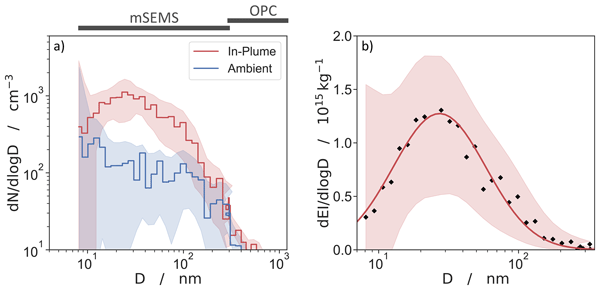
In this work, we share the results of first in-flight emission and contrail measurements behind a fuel cell exhaust emulator, with the goal of quantifying the contrail properties for this new aviation propulsion concept. An artificial dilution tracer system was used to assess plume dilution and derive emission indices. At ambient temperatures close to the homogeneous freezing threshold, a strong temperature-dependence of the number of contrail ice crystals, due to droplet freezing, was observed.
Hannes Bruder, Robin N. Thor, Malte Niklaß, Katrin Dahlmann, Roland Eichinger, Florian Linke, Volker Grewe, Sigrun Matthes, and Simon Unterstrasser
Geosci. Model Dev., 19, 3551–3567, https://doi.org/10.5194/gmd-19-3551-2026, https://doi.org/10.5194/gmd-19-3551-2026, 2026
Short summary
Short summary
We develop an easy-to-use tool to estimate the per-flight climate effect of CO2 and non-CO2 emissions, based only on aircraft size as well as origin and destination airports. The implemented model results from a comparison of Multiple and Symbolic Regression approaches and exhibits a mean relative error of 21 % with respect to climate response model results. The simplified method is designed for climate footprint assessment and covers jet-powered passenger aircraft with over 20 seats.
Josef Zink, Cornelius Weiß-Rehm, Simon Unterstrasser, and Ulrike Burkhardt
EGUsphere, https://doi.org/10.5194/egusphere-2026-1088, https://doi.org/10.5194/egusphere-2026-1088, 2026
Short summary
Short summary
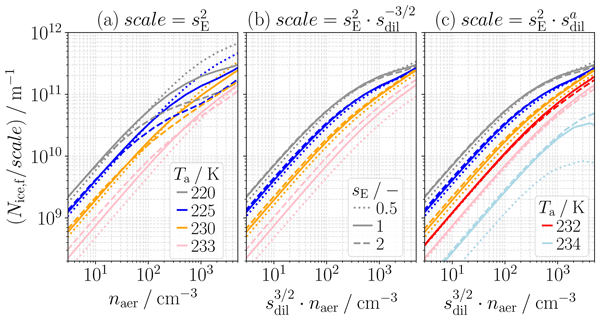
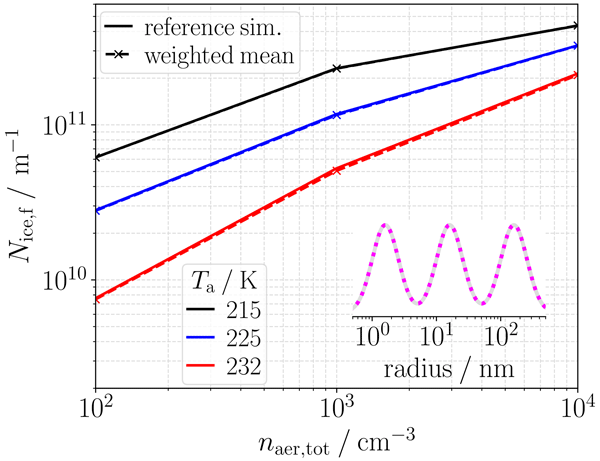
The study introduces a novel parameterization for the number of contrail ice crystals formed on ambient aerosols entrained into the exhaust plume behind aircraft burning hydrogen. This parameterization can be integrated into large-scale models to assess the radiative impacts of contrails originating from a fleet of aircraft with hydrogen combustion.
Vanessa Santos Gabriel, Luca Bugliaro, Mara Montag, Sabrina Ries, Ziming Wang, Kai Widmaier, Matteo Arico, Simon Unterstrasser, Johanna Mayer, Deniz Menekay, Andreas Marsing, Elena de la Torre Castro, Liam Megill, Monika Scheibe, and Christiane Voigt
Earth Syst. Sci. Data, 18, 2397–2412, https://doi.org/10.5194/essd-18-2397-2026, https://doi.org/10.5194/essd-18-2397-2026, 2026
Short summary
Short summary
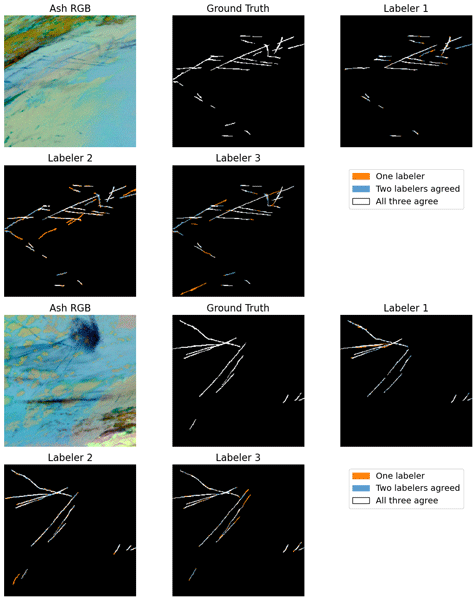
We provide observations of the geostationary Meteosat satellite with contrails labeled by three people complemented with detailed cloud information. Contrails influence climate but are hard to identify in satellite imagery. With this study, we support contrail detection development and evaluation, stress the subjectivity of human labeling and reveal which meteorological conditions highlight or hide contrails. This dataset contributes to a better understanding of aviation’s climate impact.
Josef Zink and Simon Unterstrasser
Atmos. Chem. Phys., 26, 3145–3165, https://doi.org/10.5194/acp-26-3145-2026, https://doi.org/10.5194/acp-26-3145-2026, 2026
Short summary
Short summary
The climate impact of aviation-induced contrail cirrus clouds is strongly influenced by the number of ice crystals that form in the wake of an aircraft under certain conditions. In this study, we investigate how engine-related aspects influence the number of ice crystals formed for hydrogen combustion. We derive suitable (scaling) relations that can be integrated into large-scale models used to estimate the climate impact of contrail cirrus clouds.
Josef Zink, Simon Unterstrasser, and Ulrike Burkhardt
Atmos. Chem. Phys., 26, 3125–3143, https://doi.org/10.5194/acp-26-3125-2026, https://doi.org/10.5194/acp-26-3125-2026, 2026
Short summary
Short summary
The climate impact of aviation-induced contrail cirrus is strongly influenced by the number of ice crystals that form in an aircraft's exhaust plume. In this study, we systematically investigate the key microphysical processes of contrail formation for hydrogen combustion. A large simulation data set provides the basis for a data-driven parameterization of ice crystal number that can be integrated into large-scale models.
Gregor Neumann, Andreas Marsing, Theresa Harlass, Daniel Sauer, Simon Braun, Magdalena Pühl, Christopher Heckl, Paul Stock, Elena De La Torre Castro, Valerian Hahn, Anke Roiger, Christiane Voigt, Simon Unterstraßer, Jean Cammas, Charles Renard, Roberta Vasenden, Arnold Vasenden, and Tina Jurkat-Witschas
Atmos. Meas. Tech., 18, 6795–6816, https://doi.org/10.5194/amt-18-6795-2025, https://doi.org/10.5194/amt-18-6795-2025, 2025
Short summary
Short summary
This study presents the first successful in-flight emission characterization of a turboprop engine using a fully autonomous airborne measurement platform, offering new insights into the atmospheric impacts of regional aviation. By equipping the high-altitude Grob G 520 Egrett with a suite of custom and modified commercial instruments, we demonstrate precise, high-resolution measurements of aerosol particles, trace gases, and contrail ice in the engine exhaust plume at cruise altitudes.
Annemarie Lottermoser and Simon Unterstrasser
Atmos. Chem. Phys., 25, 7903–7924, https://doi.org/10.5194/acp-25-7903-2025, https://doi.org/10.5194/acp-25-7903-2025, 2025
Short summary
Short summary
Contrail cirrus significantly contributes to aviation's overall climate impact. As hydrogen combustion and fuel cell use are emerging technologies for aircraft propulsion, we simulated individual contrails from hydrogen propulsion during the first 6 min after exhaust emission, termed the vortex phase. The ice crystal loss during that stage is crucial, as the number of ice crystals has a large impact on the further evolution of contrails into contrail cirrus and their radiative forcing.
Andreas Bier, Simon Unterstrasser, Josef Zink, Dennis Hillenbrand, Tina Jurkat-Witschas, and Annemarie Lottermoser
Atmos. Chem. Phys., 24, 2319–2344, https://doi.org/10.5194/acp-24-2319-2024, https://doi.org/10.5194/acp-24-2319-2024, 2024
Short summary
Short summary
Using hydrogen as aviation fuel affects contrails' climate impact. We study contrail formation behind aircraft with H2 combustion. Due to the absence of soot emissions, contrail ice crystals are assumed to form only on ambient particles mixed into the plume. The ice crystal number, which strongly varies with temperature and aerosol number density, is decreased by more than 80 %–90 % compared to kerosene contrails. However H2 contrails can form at lower altitudes due to higher H2O emissions.
Michael A. Olesik, Jakub Banaśkiewicz, Piotr Bartman, Manuel Baumgartner, Simon Unterstrasser, and Sylwester Arabas
Geosci. Model Dev., 15, 3879–3899, https://doi.org/10.5194/gmd-15-3879-2022, https://doi.org/10.5194/gmd-15-3879-2022, 2022
Short summary
Short summary
In systems such as atmospheric clouds, droplets undergo growth through condensation of vapor. The broadness of the resultant size spectrum of droplets influences precipitation likelihood and the radiative properties of clouds. One of the inherent limitations of simulations of the problem is the so-called numerical diffusion causing overestimation of the spectrum width, hence the term numerical broadening. In the paper, we take a closer look at one of the algorithms used in this context: MPDATA.
Andreas Bier, Simon Unterstrasser, and Xavier Vancassel
Atmos. Chem. Phys., 22, 823–845, https://doi.org/10.5194/acp-22-823-2022, https://doi.org/10.5194/acp-22-823-2022, 2022
Short summary
Short summary
We investigate contrail formation in an aircraft plume with a particle-based multi-trajectory 0D model. Due to the high plume heterogeneity, contrail ice crystals form first near the plume edge and then in the plume centre. The number of ice crystals varies strongly with ambient conditions and soot properties near the contrail formation threshold. Our results imply that the multi-trajectory approach does not necessarily lead to improved scientific results compared to a single mean trajectory.
Dennis Hillenbrand and Simon Unterstrasser
J. Env. Com. Air Transp. Sys. Discuss., https://doi.org/10.5194/jecats-2026-16, https://doi.org/10.5194/jecats-2026-16, 2026
Preprint under review for JECATS
Short summary
Short summary
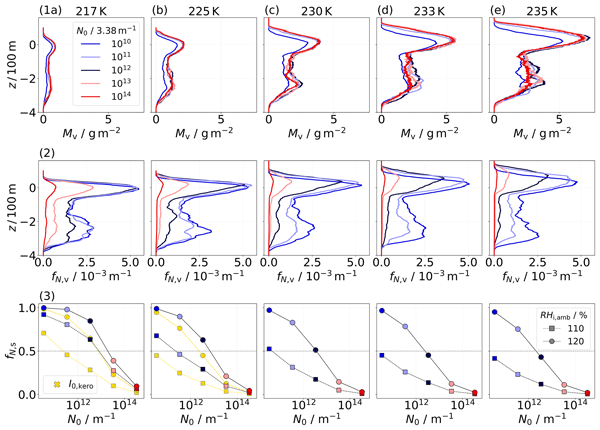
We study contrail formation behind future fuel cell-based aircraft fueled by hydrogen. Simulations show that, under certain conditions, small droplets can form via a process not occurring in current plumes. This can increase ice crystal numbers in contrails, boosting their climate impact. The effect is strongest in cold air and for high plume mixing rates with air. We suggest to decrease the mixing rate and exhaust humidity by technical design to reduce the climate impact of such aircraft.
Simon Braun, Magdalena Pühl, Andreas Marsing, Daniel Sauer, Gregor Neumann, Elena de la Torre Castro, Valerian Hahn, Michael Lichtenstern, Paul Stock, Christopher Heckl, Dennis Hillenbrand, Anke Roiger, Christiane Voigt, Simon Unterstraßer, Arne Vasenden, Roberta Vasenden, Jean Cammas, Florian Thorey, Catherine Mackay, Charles Renard, and Tina Jurkat-Witschas
EGUsphere, https://doi.org/10.5194/egusphere-2026-2887, https://doi.org/10.5194/egusphere-2026-2887, 2026
This preprint is open for discussion and under review for Atmospheric Measurement Techniques (AMT).
Short summary
Short summary
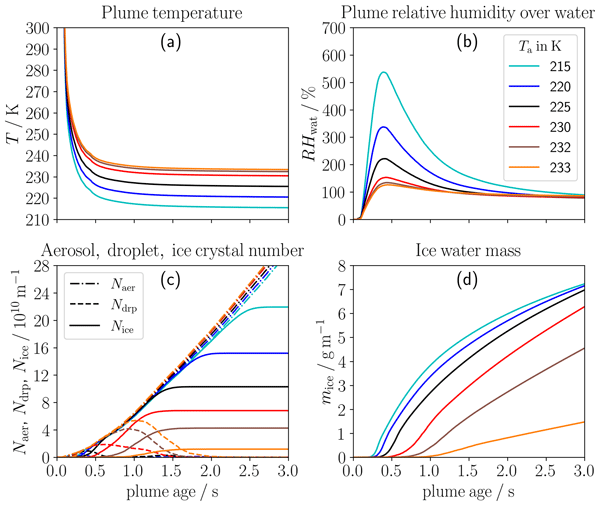
In this work, we share the results of first in-flight emission and contrail measurements behind a fuel cell exhaust emulator, with the goal of quantifying the contrail properties for this new aviation propulsion concept. An artificial dilution tracer system was used to assess plume dilution and derive emission indices. At ambient temperatures close to the homogeneous freezing threshold, a strong temperature-dependence of the number of contrail ice crystals, due to droplet freezing, was observed.
Hannes Bruder, Robin N. Thor, Malte Niklaß, Katrin Dahlmann, Roland Eichinger, Florian Linke, Volker Grewe, Sigrun Matthes, and Simon Unterstrasser
Geosci. Model Dev., 19, 3551–3567, https://doi.org/10.5194/gmd-19-3551-2026, https://doi.org/10.5194/gmd-19-3551-2026, 2026
Short summary
Short summary
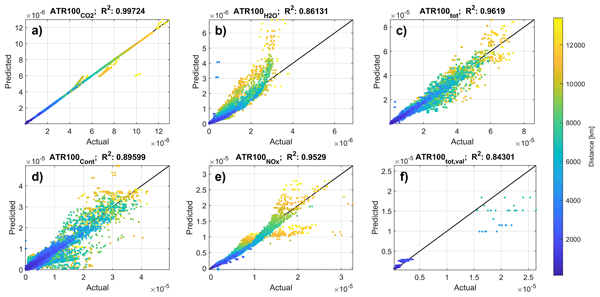
We develop an easy-to-use tool to estimate the per-flight climate effect of CO2 and non-CO2 emissions, based only on aircraft size as well as origin and destination airports. The implemented model results from a comparison of Multiple and Symbolic Regression approaches and exhibits a mean relative error of 21 % with respect to climate response model results. The simplified method is designed for climate footprint assessment and covers jet-powered passenger aircraft with over 20 seats.
Josef Zink, Cornelius Weiß-Rehm, Simon Unterstrasser, and Ulrike Burkhardt
EGUsphere, https://doi.org/10.5194/egusphere-2026-1088, https://doi.org/10.5194/egusphere-2026-1088, 2026
Short summary
Short summary
The study introduces a novel parameterization for the number of contrail ice crystals formed on ambient aerosols entrained into the exhaust plume behind aircraft burning hydrogen. This parameterization can be integrated into large-scale models to assess the radiative impacts of contrails originating from a fleet of aircraft with hydrogen combustion.
Vanessa Santos Gabriel, Luca Bugliaro, Mara Montag, Sabrina Ries, Ziming Wang, Kai Widmaier, Matteo Arico, Simon Unterstrasser, Johanna Mayer, Deniz Menekay, Andreas Marsing, Elena de la Torre Castro, Liam Megill, Monika Scheibe, and Christiane Voigt
Earth Syst. Sci. Data, 18, 2397–2412, https://doi.org/10.5194/essd-18-2397-2026, https://doi.org/10.5194/essd-18-2397-2026, 2026
Short summary
Short summary
We provide observations of the geostationary Meteosat satellite with contrails labeled by three people complemented with detailed cloud information. Contrails influence climate but are hard to identify in satellite imagery. With this study, we support contrail detection development and evaluation, stress the subjectivity of human labeling and reveal which meteorological conditions highlight or hide contrails. This dataset contributes to a better understanding of aviation’s climate impact.
Josef Zink and Simon Unterstrasser
Atmos. Chem. Phys., 26, 3145–3165, https://doi.org/10.5194/acp-26-3145-2026, https://doi.org/10.5194/acp-26-3145-2026, 2026
Short summary
Short summary
The climate impact of aviation-induced contrail cirrus clouds is strongly influenced by the number of ice crystals that form in the wake of an aircraft under certain conditions. In this study, we investigate how engine-related aspects influence the number of ice crystals formed for hydrogen combustion. We derive suitable (scaling) relations that can be integrated into large-scale models used to estimate the climate impact of contrail cirrus clouds.
Josef Zink, Simon Unterstrasser, and Ulrike Burkhardt
Atmos. Chem. Phys., 26, 3125–3143, https://doi.org/10.5194/acp-26-3125-2026, https://doi.org/10.5194/acp-26-3125-2026, 2026
Short summary
Short summary
The climate impact of aviation-induced contrail cirrus is strongly influenced by the number of ice crystals that form in an aircraft's exhaust plume. In this study, we systematically investigate the key microphysical processes of contrail formation for hydrogen combustion. A large simulation data set provides the basis for a data-driven parameterization of ice crystal number that can be integrated into large-scale models.
Gregor Neumann, Andreas Marsing, Theresa Harlass, Daniel Sauer, Simon Braun, Magdalena Pühl, Christopher Heckl, Paul Stock, Elena De La Torre Castro, Valerian Hahn, Anke Roiger, Christiane Voigt, Simon Unterstraßer, Jean Cammas, Charles Renard, Roberta Vasenden, Arnold Vasenden, and Tina Jurkat-Witschas
Atmos. Meas. Tech., 18, 6795–6816, https://doi.org/10.5194/amt-18-6795-2025, https://doi.org/10.5194/amt-18-6795-2025, 2025
Short summary
Short summary
This study presents the first successful in-flight emission characterization of a turboprop engine using a fully autonomous airborne measurement platform, offering new insights into the atmospheric impacts of regional aviation. By equipping the high-altitude Grob G 520 Egrett with a suite of custom and modified commercial instruments, we demonstrate precise, high-resolution measurements of aerosol particles, trace gases, and contrail ice in the engine exhaust plume at cruise altitudes.
Annemarie Lottermoser and Simon Unterstrasser
Atmos. Chem. Phys., 25, 7903–7924, https://doi.org/10.5194/acp-25-7903-2025, https://doi.org/10.5194/acp-25-7903-2025, 2025
Short summary
Short summary
Contrail cirrus significantly contributes to aviation's overall climate impact. As hydrogen combustion and fuel cell use are emerging technologies for aircraft propulsion, we simulated individual contrails from hydrogen propulsion during the first 6 min after exhaust emission, termed the vortex phase. The ice crystal loss during that stage is crucial, as the number of ice crystals has a large impact on the further evolution of contrails into contrail cirrus and their radiative forcing.
Andreas Bier, Simon Unterstrasser, Josef Zink, Dennis Hillenbrand, Tina Jurkat-Witschas, and Annemarie Lottermoser
Atmos. Chem. Phys., 24, 2319–2344, https://doi.org/10.5194/acp-24-2319-2024, https://doi.org/10.5194/acp-24-2319-2024, 2024
Short summary
Short summary
Using hydrogen as aviation fuel affects contrails' climate impact. We study contrail formation behind aircraft with H2 combustion. Due to the absence of soot emissions, contrail ice crystals are assumed to form only on ambient particles mixed into the plume. The ice crystal number, which strongly varies with temperature and aerosol number density, is decreased by more than 80 %–90 % compared to kerosene contrails. However H2 contrails can form at lower altitudes due to higher H2O emissions.
Michael A. Olesik, Jakub Banaśkiewicz, Piotr Bartman, Manuel Baumgartner, Simon Unterstrasser, and Sylwester Arabas
Geosci. Model Dev., 15, 3879–3899, https://doi.org/10.5194/gmd-15-3879-2022, https://doi.org/10.5194/gmd-15-3879-2022, 2022
Short summary
Short summary
In systems such as atmospheric clouds, droplets undergo growth through condensation of vapor. The broadness of the resultant size spectrum of droplets influences precipitation likelihood and the radiative properties of clouds. One of the inherent limitations of simulations of the problem is the so-called numerical diffusion causing overestimation of the spectrum width, hence the term numerical broadening. In the paper, we take a closer look at one of the algorithms used in this context: MPDATA.
Andreas Bier, Simon Unterstrasser, and Xavier Vancassel
Atmos. Chem. Phys., 22, 823–845, https://doi.org/10.5194/acp-22-823-2022, https://doi.org/10.5194/acp-22-823-2022, 2022
Short summary
Short summary
We investigate contrail formation in an aircraft plume with a particle-based multi-trajectory 0D model. Due to the high plume heterogeneity, contrail ice crystals form first near the plume edge and then in the plume centre. The number of ice crystals varies strongly with ambient conditions and soot properties near the contrail formation threshold. Our results imply that the multi-trajectory approach does not necessarily lead to improved scientific results compared to a single mean trajectory.
Cited articles
Boucher, O., Randall, D., Artaxo, P., Bretherton, C., Feingold, G., Forster,
P., Kerminen, V.-M., Kondo, Y., Liao, H., Lohmann, U., Rasch, P., Satheesh,
S., Sherwood, S., Stevens, B., and Zhang, X.: Clouds and Aerosols, book
section 7, 571–658, Cambridge University Press, Cambridge, UK and NY, USA,
https://doi.org/10.1017/CBO9781107415324.016, 2013.
Burkhardt, U. and Kärcher, B.: Process-based simulation of contrail
cirrus in a global climate model, J. Geophys. Res., 114, D16201,
https://doi.org/10.1029/2008JD011491, 2009.
Burkhardt, U. and Kärcher, B.: Global radiative forcing from contrail
cirrus, Nature Climate Change, 1, 54–58, 2011.
Chen, C.-C. and Gettelman, A.: Simulated radiative forcing from contrails and
contrail cirrus, Atmos. Chem. Phys., 13, 12525–12536,
https://doi.org/10.5194/acp-13-12525-2013, 2013.
Crow, S.: Stability theory for a pair of trailing vortices, AIAA J., 8,
2172–2179, 1970.
Freudenthaler, V., Homburg, F., and Jäger, H.: Contrail observations by
ground-based scanning lidar: Cross-sectional growth, Geophys. Res. Lett., 22,
3501–3504, 1995.
Garnier, F., Maglaras, E., Morency, F., and Vancassel, X.: Effect of
Compressibility on Contrail Ice Particle Growth in an Engine Jet, Int. J.
Turbo. Jet. Eng., 31, 131–140, 2014.
Gerz, T., Holzäpfel, F., and Darracq, D.: Commercial aircraft wake
vortices, Prog. Aerosp. Sci., 38, 181–208, 2002.
Ghosh, S., Dobbie, S., Marsham, J., and Jonas, P.: On the importance of the
diffusional uptake of water vapour for the development and radiative
properties of high altitude clouds: a large eddy model sensitivity study,
Q. J. Roy. Meteor. Soc., 133, 1731–1741, 2007.
Hennemann, I. and Holzäpfel, F.: Large-eddy simulation of aircraft wake
vortex deformation and topology, P. I. Mech. Eng. G.-J. Aer., 225,
1336–1350, https://doi.org/10.1177/0954410011402257, 2011.
Hoshizaki, H., Anderson, L. B., Conti, R. J., Farlow, N., Meyer, J. W.,
Overcamp, T., Redler, K. O., and Watson, V.: Aircraft Wake Microscale
Phenomena, in: The Stratosphere perturbed by Propulsion Effluents, U. S. Dep.
of Transportation DOT-TST-75-53, Washington, D.C., USA, 1975.
Huebsch, W. and Lewellen, D.: Sensitivity Study on Contrail Evolution, 36th
AIAA Fluid Dynamics Conference and Exhibit, 5–8 June 2006, San Francisco,
USA, AIAA 2006-3749, 1–14, https://doi.org/10.2514/6.2006-3749, 2006.
Kärcher, B. and Yu, F.: Role of aircraft soot emissions in contrail
formation, Geophys. Res. Lett., 36, L01804, https://doi.org/10.1029/2008GL036649, 2009.
Kärcher, B., Busen, R., Petzold, A., Schröder, F. P., Schumann, U.,
and Jensen, E. J.: Physicochemistry of aircraft-generated liquid aerosols,
soot, and ice particles. 2. Comparison with observations and sensitivity
studies, J. Geophys. Res., 103, 17129–17148, 1998.
Kärcher, B., Burkhardt, U., Unterstrasser, S., and Minnis, P.: Factors
controlling contrail cirrus optical depth, Atmos. Chem. Phys., 9, 6229–6254,
https://doi.org/10.5194/acp-9-6229-2009, 2009.
Kaufmann, S., Voigt, C., Jeßberger, P., Jurkat, T., Schlager, H.,
Schwarzenboeck, A., Klingebiel, M., and Thornberry, T.: In situ measurements
of ice saturation in young contrails, Geophys. Res. Lett., 41, 702–709,
https://doi.org/10.1002/2013GL058276, 2014.
Lewellen, D. and Lewellen, W.: The effects of aircraft wake dynamics on
contrail development, J. Atmos. Sci., 58, 390–406, 2001.
Lewellen, D., Lewellen, W., Poole, L., DeCoursey, R., Hansen, G., Hostetler,
C., and Kent, G.: Large-eddy simulations and lidar measurements of
vortex-pair breakup in aircraft wakes, AIAA J., 36, 1439–1445, 1998.
Lewellen, D. C.: Persistent contrails and contrail cirrus. Part 2: Full
Lifetime Behavior, J. Atmos. Sci., 71, 4420–4438,
https://doi.org/10.1175/JAS-D-13-0317.1, 2014.
Lewellen, D. C., Meza, O., and Huebsch, W. W.: Persistent contrails and
contrail cirrus. Part 1: Large-eddy simulations from inception to demise, J.
Atmos. Sci., 71, 4399–4419, https://doi.org/10.1175/JAS-D-13-0316.1, 2014.
Naiman, A. D., Lele, S. K., and Jacobsen, M. Z.: Large eddy simulations of
contrail development: Sensitivity to initial and ambient conditions over
first twenty minutes, J. Geophys. Res., 116, D21208,
https://doi.org/10.1029/2011JD015806, 2011.
Nuic, A.: User manual for the Base of Aircraft Data (BADA), Revision 3.9,
Tech. rep., EEC Technical/Scientific Report No. 11/03/08-08, EUROCONTROL,
Bruxelles, Belgium, 2011.
Paoli, R., Hélie, J., and Poinsot, T.: Contrail formation in aircraft
wakes, J. Fluid Mech., 502, 361–373, 2004.
Paoli, R., Nybelen, L., Picot, J., and Cariolle, D.: Effects of jet/vortex
interaction on contrail formation in supersaturated conditions, Phys. Fluids,
25, 1–28, 2013.
Paugam, R., Paoli, R., and Cariolle, D.: Influence of vortex dynamics and
atmospheric turbulence on the early evolution of a contrail, Atmos. Chem.
Phys., 10, 3933–3952, https://doi.org/10.5194/acp-10-3933-2010, 2010.
Picot, J., Paoli, R., Thouron, O., and Cariolle, D.: Large-eddy simulation of
contrail evolution in the vortex phase and its interaction with atmospheric
turbulence, Atmos. Chem. Phys., 15, 7369–7389,
https://doi.org/10.5194/acp-15-7369-2015, 2015.
Ponater, M., Marquart, S., and Sausen, R.: Contrails in a comprehensive
global climate model: Parameterization and radiative forcing results,
J. Geophys. Res., 107, 941–960, 2002.
Pruppacher, H. and Klett, J.: Microphysics of clouds and precipitation,
Kluwer Academic Publishers, Dordrecht, the Netherlands, 1997.
Rap, A., Forster, P., Jones, A., Boucher, O., Haywood, J., Bellouin, N., and
De Leon, R.: Parameterization of contrails in the UK Met Office Climate
Model, J. Geophys. Res., 115, D10205, https://doi.org/10.1029/2009JD012443, 2010.
Schumann, U.: On conditions for contrail formation from aircraft exhausts,
Meteorol. Z., 5, 4–23, 1996.
Schumann, U.: A contrail cirrus prediction model, Geosci. Model Dev., 5,
543–580, https://doi.org/10.5194/gmd-5-543-2012, 2012.
Sölch, I. and Kärcher, B.: A large-eddy model for cirrus clouds with
explicit aerosol and ice microphysics and Lagrangian ice particle tracking,
Q. J. Roy. Meteor. Soc., 136, 2074–2093, 2010.
Sussmann, R. and Gierens, K.: Lidar and numerical studies on the different
evolution of vortex pair and secondary wake in young contrails, J. Geophys.
Res., 104, 2131–2142, 1999.
Unterstraßer, S.: Numerische Simulationen von Kondensstreifen und deren
Übergang in Zirren, PhD thesis, LMU München, Germany, 2008.
Unterstrasser, S.: Large eddy simulation study of contrail microphysics and
geometry during the vortex phase and consequences on contrail-to-cirrus
transition, J. Geophys. Res., 119, 7537–7555, https://doi.org/10.1002/2013JD021418,
2014.
Unterstrasser, S. and Gierens, K.: Numerical simulations of
contrail-to-cirrus transition – Part 1: An extensive parametric study,
Atmos. Chem. Phys., 10, 2017–2036, https://doi.org/10.5194/acp-10-2017-2010, 2010a.
Unterstrasser, S. and Gierens, K.: Numerical simulations of
contrail-to-cirrus transition – Part 2: Impact of initial ice crystal
number, radiation, stratification, secondary nucleation and layer depth,
Atmos. Chem. Phys., 10, 2037–2051, https://doi.org/10.5194/acp-10-2037-2010, 2010b.
Unterstrasser, S. and Görsch, N.: Aircraft-type dependency of contrail
evolution, J. Geophys. Res., 119, 14015–14027, https://doi.org/10.1002/2014JD022642,
2014.
Unterstrasser, S. and Sölch, I.: Study of contrail microphysics in the
vortex phase with a Lagrangian particle tracking model, Atmos. Chem. Phys.,
10, 10003–10015, https://doi.org/10.5194/acp-10-10003-2010, 2010.
Unterstrasser, S., Gierens, K., and Spichtinger, P.: The evolution of
contrail microphysics in the vortex phase, Meteorol. Z., 17, 145–156, 2008.
Unterstrasser, S., Paoli, R., Sölch, I., Kühnlein, C., and Gerz, T.:
Dimension of aircraft exhaust plumes at cruise conditions: effect of wake
vortices, Atmos. Chem. Phys., 14, 2713–2733, https://doi.org/10.5194/acp-14-2713-2014,
2014.
Voigt, C., Schumann, U., Jessberger, P., Jurkat, T., Petzold, A., Gayet,
J.-F., Krämer, M., Thornberry, T., and Fahey, D.: Extinction and optical
depth of contrails, Geophys. Res. Lett., 38, L11806,
https://doi.org/10.1029/2011GL047189, 2011.
Yu, F. and Turco, R. P.: Contrail formation and impacts on aerosol properties
in aircraft plumes: Effects of fuel sulfur content, Geophys. Res. Lett., 25,
313–316, 1998.
Short summary
A large comprehensive data set of 3-D large eddy simulation (LES) of young contrails has been analysed.
Parametrisations of the most important properties of young contrails, namely the ice crystal number and geometric depth, are provided taking into account the effect of many environmental and aircraft parameters.
The parametrisation is suited to be incorporated in larger-scale models like GCMs.
A large comprehensive data set of 3-D large eddy simulation (LES) of young contrails has been...
Altmetrics
Final-revised paper
Preprint