
Articles | Volume 26, issue 11
https://doi.org/10.5194/acp-26-8255-2026
© Author(s) 2026. This work is distributed under
the Creative Commons Attribution 4.0 License.
the Creative Commons Attribution 4.0 License.
https://doi.org/10.5194/acp-26-8255-2026
© Author(s) 2026. This work is distributed under
the Creative Commons Attribution 4.0 License.
the Creative Commons Attribution 4.0 License.
Research article
| 
12 Jun 2026
Research article |
| 12 Jun 2026
| 12 Jun 2026
OH-initiated aqueous photooxidation of smoke extracts from maize straw and coal combustion: optical properties and molecular composition
Zhaolian Ye
CORRESPONDING AUTHOR

School of Resources and Environmental Engineering, Jiangsu University of Technology, Changzhou 213001, China
Dandan Hu
School of Resources and Environmental Engineering, Jiangsu University of Technology, Changzhou 213001, China
Qiuyan Chen
School of Resources and Environmental Engineering, Jiangsu University of Technology, Changzhou 213001, China
Xiangpeng Huang
School of Resources and Environmental Engineering, Jiangsu University of Technology, Changzhou 213001, China
Xinlei Ge
CORRESPONDING AUTHOR
School of Energy and Environment, Southeast University, Nanjing 211189, China
Related authors
Xudong Li, Ye Tao, Longwei Zhu, Shuaishuai Ma, Shipeng Luo, Zhuzi Zhao, Ning Sun, Xinlei Ge, and Zhaolian Ye
Atmos. Chem. Phys., 22, 7793–7814, https://doi.org/10.5194/acp-22-7793-2022, https://doi.org/10.5194/acp-22-7793-2022, 2022
Short summary
Short summary
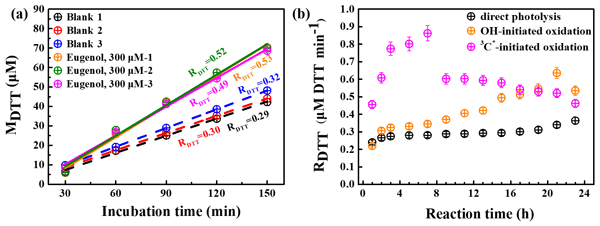
This work has, for the first time, investigated the optical and chemical properties and oxidative potential of aqueous-phase photooxidation products of eugenol (a biomass-burning-emitted compound) and elucidated the interplay among these properties. Large mass yields exceeding 100 % were found, and the aqueous processing is a source of BrC (likely relevant with humic-like substances). We also show that aqueous processing can produce species that are more toxic than that of its precursor.
Yuan Dai, Junfeng Wang, Mindong Chen, Su Zhang, Haiwei Li, Yunjiang Zhang, Yun Wu, Ming Wang, and Xinlei Ge
Atmos. Chem. Phys., 26, 14015–14029, https://doi.org/10.5194/acp-26-14015-2026, https://doi.org/10.5194/acp-26-14015-2026, 2026
Short summary
Short summary
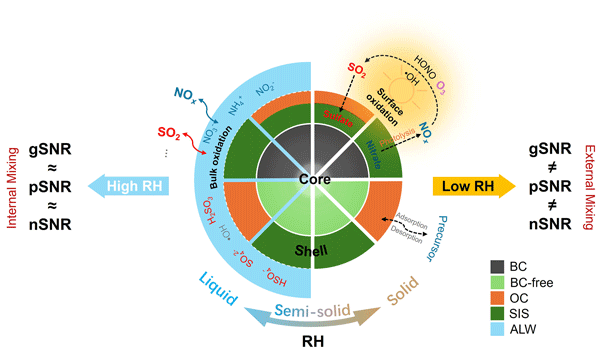
Air pollution involves complex interactions between airborne particles and gases, but these links are not fully understood. We analyzed individual particles and gases across different emission levels. We found that relative sulfur and nitrogen levels influence how gases interact with particles and alter their properties. These processes vary by particle type and humidity, helping explain how pollution forms and evolves. Our findings provide new evidence for particle-gas interactions.
Ning Zhang, Jialiang Feng, Simon Patrick O'Meara, Ziyi Liu, Yingge Ma, Xinlei Ge, Wenjing Li, Piero Chiacchiaretta, Piero Di Carlo, Junfeng Wang, and Eleonora Aruffo
Atmos. Chem. Phys., 26, 9793–9807, https://doi.org/10.5194/acp-26-9793-2026, https://doi.org/10.5194/acp-26-9793-2026, 2026
Short summary
Short summary
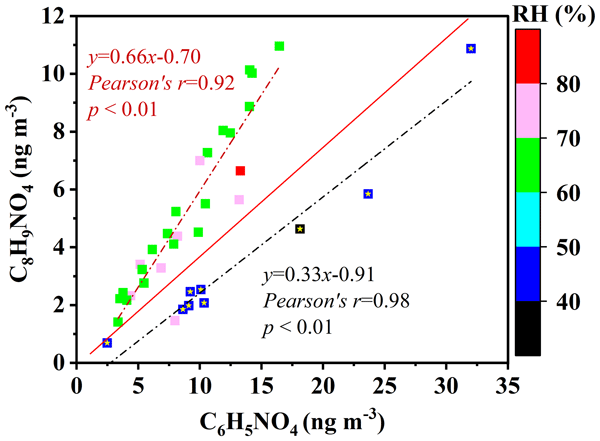
We investigated how nitrogen-containing organic compounds form and evolve in fine particles using field measurements in Myanmar and box-model simulations. We show that relative humidity, photochemistry, and precursor availability jointly control the formation and gas–particle partitioning of light-absorbing nitrophenolic compounds. These findings improve understanding of their impacts on air quality and climate.
Weibin Zhu, Sai Shang, Jieqi Wang, Yunfei Wu, Zhaoze Deng, Liang Ran, Ye Kuang, Guiqian Tang, Xiangpeng Huang, Xiaole Pan, Lanzhong Liu, Weiqi Xu, Yele Sun, Bo Hu, Zifa Wang, and Zirui Liu
Atmos. Chem. Phys., 26, 1947–1965, https://doi.org/10.5194/acp-26-1947-2026, https://doi.org/10.5194/acp-26-1947-2026, 2026
Short summary
Short summary
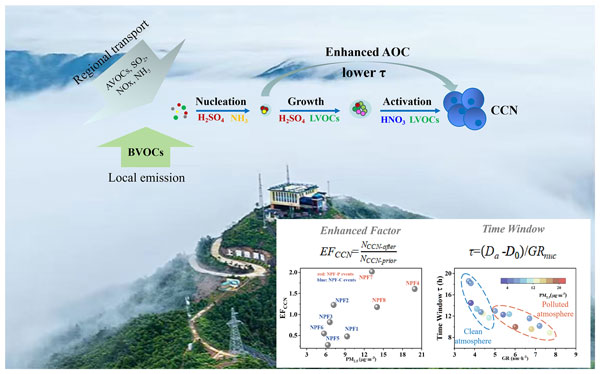
NPF (new particle formation) is a key global CCN (cloud condensation nuclei) source, but its contribution at the polluted boundary-layer top remains unclear. Based on mountaintop observations in the Yangtze River Delta, we show that under polluted conditions, NPF at the boundary-layer top is enhanced and accelerates its conversion to CCN. Ammonia plays a key role, and a newly defined "Time Window" metric highlights the importance of oxidation-driven growth and regional transport in this process.
Jie Fang, Yunjiang Zhang, Didier Hauglustaine, Bo Zheng, Ming Wang, Jingyi Li, Yong Sun, Haiwei Li, Junfeng Wang, Yun Wu, Bin Yuan, Mindong Chen, and Xinlei Ge
Atmos. Chem. Phys., 26, 851–867, https://doi.org/10.5194/acp-26-851-2026, https://doi.org/10.5194/acp-26-851-2026, 2026
Short summary
Short summary
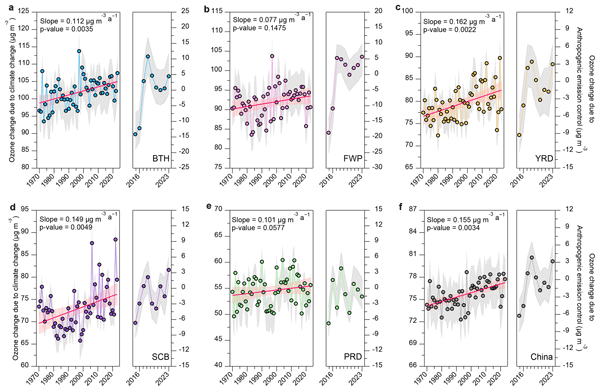
Surface ozone pollution is a pressing global challenge driven by human activities and a warming climate. Using nationwide observations (2013–2023) across China together with satellite data, we developed a new machine learning approach to decouple the impacts of emission controls and weather changes. Our results show that while emission reductions improved ozone in some regions, climate change is increasingly offsetting these gains, underscoring the need for joint air quality and climate actions.
Xudong Li, Ye Tao, Longwei Zhu, Shuaishuai Ma, Shipeng Luo, Zhuzi Zhao, Ning Sun, Xinlei Ge, and Zhaolian Ye
Atmos. Chem. Phys., 22, 7793–7814, https://doi.org/10.5194/acp-22-7793-2022, https://doi.org/10.5194/acp-22-7793-2022, 2022
Short summary
Short summary
This work has, for the first time, investigated the optical and chemical properties and oxidative potential of aqueous-phase photooxidation products of eugenol (a biomass-burning-emitted compound) and elucidated the interplay among these properties. Large mass yields exceeding 100 % were found, and the aqueous processing is a source of BrC (likely relevant with humic-like substances). We also show that aqueous processing can produce species that are more toxic than that of its precursor.
Cited articles
Arakaki, T., Anastasio, C., Kuroki, Y., Nakajima, H., Okada, K., Kotani, Y., Handa, D., Azechi, S., Kimura, T., Tsuhako, A., and Miyagi, Y.: A general scavenging rate constant for reaction of hydroxyl radical with organic carbon in atmospheric waters, Environ. Sci. Technol., 47, 8196–8203, https://doi.org/10.1021/es401927b, 2013.
Arciva, S., Niedek, C., Mavis, C., Yoon, M., Sanchez, M. E., Zhang, Q., and Anastasio, C.: Aqueous ⚫OH oxidation of highly substituted phenols as a source of secondary organic aerosol, Environ. Sci. Technol., 56, 9959–9967, https://doi.org/10.1021/acs.est.2c02225, 2022.
Arciva, S., Ma, L., Mavis, C., Guzman, C., and Anastasio, C.: Formation and loss of light absorbance by phenolic aqueous SOA by ⚫OH and an organic triplet excited state, Atmos. Chem. Phys., 24, 4473–4485, https://doi.org/10.5194/acp-24-4473-2024, 2024.
Bogler, S., Daellenbach, K. R., Bell, D. M., Prévôt, A. S. H., El Haddad, I., and Borduas-Dedekind, N.: Singlet oxygen seasonality in aqueous PM10 is driven by biomass burning and anthropogenic secondary organic aerosol, Environ. Sci. Technol., 56, 15389–15397, https://doi.org/10.1021/acs.est.2c04554, 2022.
Cao, T., Xu, C., Chen, H., Song, J., Li, J., Song, H., Jiang, B., Zhong, Y., and Peng, P.: Molecular insight into aqueous-phase photolysis and photooxidation of water-soluble organic matter emitted from biomass burning and coal combustion, Atmos. Chem. Phys., 25, 11597–11610, https://doi.org/10.5194/acp-25-11597-2025, 2025.
Chen, Q., Wang, M., Wang, Y., Zhang, L., Li, Y., and Han, Y.: Oxidative potential of water-soluble matter associated with chromophoric substances in PM2.5 over Xi'an, China, Environ. Sci. Technol., 53, 8574–8584, https://doi.org/10.1021/acs.est.9b01976, 2019.
Chen, W., Zhang, H., Xu, S., Jia, H., Qi, Z., Farooq, U., Wang, Z., and Dai, Q.: New insights into the molecular characteristics-dependent light absorption variation of water-soluble organic matter in biomass burning smoke, Atmos. Res., 316, 107951, https://doi.org/10.1016/j.atmosres.2025.107951, 2025.
Cook, R. D., Lin, Y.-H., Peng, Z., Boone, E., Chu, R. K., Dukett, J. E., Gunsch, M. J., Zhang, W., Tolic, N., Laskin, A., and Pratt, K. A.: Biogenic, urban, and wildfire influences on the molecular composition of dissolved organic compounds in cloud water, Atmos. Chem. Phys., 17, 15167–15180, https://doi.org/10.5194/acp-17-15167-2017, 2017.
Fan, X., Wei, S., Zhu, M., Song, J., and Peng, P.: Comprehensive characterization of humic-like substances in smoke PM2.5 emitted from the combustion of biomass materials and fossil fuels, Atmos. Chem. Phys., 16, 13321–13340, https://doi.org/10.5194/acp-16-13321-2016, 2016.
Fan, X., Li, M., Cao, T., Cheng, C., Li, F., Xie, Y., Wei, S., Song, J., and Peng, P.: Optical properties and oxidative potential of water- and alkaline-soluble brown carbon in smoke particles emitted from laboratory simulated biomass burning, Atmos. Environ., 194, 48–57, https://doi.org/10.1016/j.atmosenv.2018.09.025, 2018.
Fan, X., Xie, S., Yu, X., Cheng, A., Chen, D., Ji, W., Liu, X., Song, J., and Peng, P.: Molecular-level transformations of biomass burning-derived water-soluble organic carbon during dark aqueous OH oxidation: Insights from absorption, fluorescence, high-performance size exclusion chromatography and high-resolution mass spectrometry analysis, Sci. Total Environ., 912, 169290, https://doi.org/10.1016/j.scitotenv.2023.169290, 2024.
Fang, Z., Lai, A., Cai, D., Li, C., Carmieli, R., Chen, J., Wang, X., and Rudich, Y.: Secondary organic aerosol generated from biomass burning emitted phenolic compounds: Oxidative potential, reactive oxygen species, and cytotoxicity, Environ. Sci. Technol., 58, 8194–8206, https://doi.org/10.1021/acs.est.3c09903, 2024.
Gerritz, L., Wei, J., Fang, T., Wong, C., Klodt, A. L., Nizkorodov, S. A., and Shiraiwa, M.: Reactive oxygen species formation and peroxide and carbonyl decomposition in aqueous photolysis of secondary organic aerosols, Environ. Sci. Technol., 58, 4716–4726, https://doi.org/10.1021/acs.est.3c08662, 2024.
Go, B. R., Li, Y. J., Huang, D. D., Wang, Y., and Chan, C. K.: Comparison of aqueous secondary organic aerosol (aqSOA) product distributions from guaiacol oxidation by non-phenolic and phenolic methoxybenzaldehydes as photosensitizers in the absence and presence of ammonium nitrate, Atmos. Chem. Phys., 23, 2859–2875, https://doi.org/10.5194/acp-23-2859-2023, 2023.
Go, B. R., Li, Y. J., Huang, D. D., and Chan, C. K.: Aqueous-phase photoreactions of mixed aromatic carbonyl photosensitizers yield more oxygenated, oxidized, and less light-absorbing secondary organic aerosol (SOA) than single systems, Environ. Sci. Technol., 58, 7924–7936, https://doi.org/10.1021/acs.est.3c10199, 2024.
Hems, R. F., Schnitzler, E. G., Bastawrous, M., Soong, R., Simpson, A. J., and Abbatt, J. P. D.: Aqueous photoreactions of wood smoke brown carbon, ACS Earth Space Chem., 4, 1149–1160, https://doi.org/10.1021/acsearthspacechem.0c00117, 2020.
Hu, D., Ye, Z., Wang, Z., Topping, D., Aruffo, E., Wang, H., and Ge, X.: Kinetics and quantum yield of photosensitized reactions from substituted phenols via chemical probe approach, Atmos. Environ., 360, 121419, https://doi.org/10.1016/j.atmosenv.2025.121419, 2025a.
Hu, D., Wang, Z., Aruffo, E., Dai, X., Zhao, Z., and Ye, Z.: Kinetics of different substituted Phenolic compounds' aqueous OH oxidation in atmosphere, Atmosphere, 16, https://doi.org/10.3390/atmos16050567, 2025b.
Huang, Y., Li, X., Huang, D. D., Lei, R., Zhou, B., Zhang, Y., and Ge, X.: Machine-learning-assisted chemical characterization and optical properties of atmospheric brown carbon in Nanjing, China, Atmos. Chem. Phys., 25, 7619–7645, https://doi.org/10.5194/acp-25-7619-2025, 2025.
Jiang, H. and Jang, M.: Dynamic oxidative potential of atmospheric organic aerosol under ambient sunlight, Environ. Sci. Technol., 52, 7496–7504, https://doi.org/10.1021/acs.est.8b00148, 2018.
Jiang, W., Misovich, M. V., Hettiyadura, A. P. S., Laskin, A., McFall, A. S., Anastasio, C., and Zhang, Q.: Photosensitized reactions of a phenolic carbonyl from wood combustion in the aqueous phase – Chemical evolution and light absorption properties of aqSOA, Environ. Sci. Technol., https://doi.org/10.1021/acs.est.0c07581, 2021.
Jiang, W., Niedek, C., Anastasio, C., and Zhang, Q.: Photoaging of phenolic secondary organic aerosol in the aqueous phase: evolution of chemical and optical properties and effects of oxidants, Atmos. Chem. Phys., 23, 7103–7120, https://doi.org/10.5194/acp-23-7103-2023, 2023.
Lei, R., Sha, Y., Meng, H., Huang, Y., Ye, J., Huang, D. D., Zhang, Y., Wu, Y., Li, Y., and Ge, X.: Aqueous phase photolysis of 4-nitrocatechol: Reaction kinetics, evolutions of chemical composition, light absorption and oxidation potential, Atmos. Environ., 343, 120981, https://doi.org/10.1016/j.atmosenv.2024.120981, 2025.
Lei, Y., Yu, Y., Lei, X., Liang, X., Cheng, S., Ouyang, G., and Yang, X.: Assessing the use of probes and quenchers for understanding the reactive species in advanced oxidation processes, Environ. Sci. Technol., 57, 5433–5444, https://doi.org/10.1021/acs.est.2c09338, 2023.
Lei, Y., Lei, X., Tian, G., Yang, J., Huang, D., Yang, X., Chen, C., and Zhao, J.: Optical variation and molecular transformation of brown carbon during oxidation by NO3⚫ in the aqueous phase, Environ. Sci. Technol., 58, 3353–3362, https://doi.org/10.1021/acs.est.3c08726, 2024.
Leresche, F., Salazar, J. R., Pfotenhauer, D. J., Hannigan, M. P., Majestic, B. J., and Rosario-Ortiz, F. L.: Photochemical aging of atmospheric particulate matter in the aqueous phase, Environ. Sci. Technol., 55, 13152–13163, https://doi.org/10.1021/acs.est.1c00978, 2021.
Li, F., Tsona, N. T., Li, J., and Du, L.: Aqueous-phase oxidation of syringic acid emitted from biomass burning: Formation of light-absorbing compounds, Sci. Total Environ., 765, 144239, https://doi.org/10.1016/j.scitotenv.2020.144239, 2021.
Li, F., Zhou, S., Du, L., Zhao, J., Hang, J., and Wang, X.: Aqueous-phase chemistry of atmospheric phenolic compounds: A critical review of laboratory studies, Sci. Total Environ., 856, 158895, https://doi.org/10.1016/j.scitotenv.2022.158895, 2023.
Li, F., Zhou, S., Zhao, J., Hang, J., Lu, H., Li, X., Gao, M., Li, Y., and Wang, X.: Aqueous photosensitization of syringaldehyde: Reactivity, effects of environmental factors, and formation of brown carbon products, ACS Earth Space Chem., 8, 1193–1203, https://doi.org/10.1021/acsearthspacechem.4c00004, 2024a.
Li, L., Han, Y., Li, J., Lin, Y., Zhang, X., Wang, Q., and Cao, J.: Effects of photochemical aging on the molecular composition of organic aerosols derived from agricultural biomass burning in whole combustion process, Sci. Total Environ., 946, 174152, https://doi.org/10.1016/j.scitotenv.2024.174152, 2024b.
Lin, P., Aiona, P. K., Li, Y., Shiraiwa, M., Laskin, J., Nizkorodov, S. A., and Laskin, A: Molecular characterization of brown carbon in biomass burning aerosol particles, Environ. Sci. Technol., 50, 11815–11824, https://https://doi.org/10.1021/acs.est.6b03024, 2016.
Li, X., Tao, Y., Zhu, L., Ma, S., Luo, S., Zhao, Z., Sun, N., Ge, X., and Ye, Z.: Optical and chemical properties and oxidative potential of aqueous-phase products from OH and 3C∗-initiated photooxidation of eugenol, Atmos. Chem. Phys., 22, 7793–7814, https://doi.org/10.5194/acp-22-7793-2022, 2022.
Liu-Kang, C., Sokolova, A., Gong, Y., Fahy, W. D., Peng, H., and Abbatt, J. P. D.: Light exposure of wood smoke aerosol: Connecting optical properties, oxidation, radical formation, and chemical composition, ACS EST Air, 1, 273–282, https://doi.org/10.1021/acsestair.3c00063, 2024.
Ma, L., Worland, R., Jiang, W., Niedek, C., Guzman, C., Bein, K. J., Zhang, Q., and Anastasio, C.: Predicting photooxidant concentrations in aerosol liquid water based on laboratory extracts of ambient particles, Atmos. Chem. Phys., 23, 8805–8821, https://doi.org/10.5194/acp-23-8805-2023, 2023.
Ma, L., Worland, R., Heinlein, L., Guzman, C., Jiang, W., Niedek, C., Bein, K. J., Zhang, Q., and Anastasio, C.: Seasonal variations in photooxidant formation and light absorption in aqueous extracts of ambient particles, Atmos. Chem. Phys., 24, 1–21, https://doi.org/10.5194/acp-24-1-2024, 2024.
Mahamuni, G., Rutherford, J., Davis, J., Molnar, E., Posner, J. D., Seto, E., Korshin, G., and Novosselov, I.: Excitation–emission matrix spectroscopy for analysis of chemical composition of combustion generated particulate matter, Environ. Sci. Technol., 54, 8198–8209, https://doi.org/10.1021/acs.est.0c01110, 2020.
Manfrin, A., Nizkorodov, S. A., Malecha, K. T., Getzinger, G. J., McNeill, K., and Borduas-Dedekind, N.: Reactive oxygen species production from secondary organic aerosols: The importance of singlet oxygen, Environ. Sci. Technol., 53, 8553–8562, https://doi.org/10.1021/acs.est.9b01609, 2019.
Ning, C., Tang, Y., Sun, S., Wang, D., and Gao, Y.: Molecular level characteristics and sources of rainwater water-soluble organic matter in different regions of China by FT-ICR MS, Atmos. Environ., 350, 121175, https://doi.org/10.1016/j.atmosenv.2025.121175, 2025.
Song, J., Li, M., Jiang, B., Wei, S., Fan, X., and Peng, P.: Molecular characterization of water-soluble humic like substances in smoke particles emitted from combustion of biomass materials and coal using ultrahigh-resolution electrospray ionization Fourier Transform Ion Cyclotron Resonance Mass Spectrometry, Environ. Sci. Technol., 52, 2575–2585, https://doi.org/10.1021/acs.est.7b06126, 2018.
Tang, J., Li, J., Su, T., Han, Y., Mo, Y., Jiang, H., Cui, M., Jiang, B., Chen, Y., Tang, J., Song, J., Peng, P., and Zhang, G.: Molecular compositions and optical properties of dissolved brown carbon in biomass burning, coal combustion, and vehicle emission aerosols illuminated by excitation–emission matrix spectroscopy and Fourier transform ion cyclotron resonance mass spectrometry analysis, Atmos. Chem. Phys., 20, 2513–2532, https://doi.org/10.5194/acp-20-2513-2020, 2020.
Tang, R., Ma, J., Zhang, R., Cui, W., Qin, Y., Chu, Y., Qin, Y., Vogel, A. L., and Chan, C. K.: Enhanced sulfate formation in mixed biomass burning and sea-salt interactions mediated by photosensitization: effects of chloride, nitrogen-containing compounds, and atmospheric aging, Atmos. Chem. Phys., 25, 425–439, https://doi.org/10.5194/acp-25-425-2025, 2025.
Tomaz, S., Cui, T., Chen, Y., Sexton, K. G., Roberts, J. M., Warneke, C., Yokelson, R. J., Surratt, J. D., and Turpin, B. J.: Photochemical cloud processing of primary wildfire emissions as a potential source of secondary organic aerosol, Environ. Sci. Technol., 52, 11027–11037, https://doi.org/10.1021/acs.est.8b03293, 2018.
Verma, V., Rico-Martinez, R., Kotra, N., King, L., Liu, J., Snell, T. W., and Weber, R. J.: Contribution of water-soluble and insoluble components and their hydrophobic/hydrophilic subfractions to the reactive oxygen species-generating potential of fine ambient aerosols, Environ. Sci. Technol., 46, 11384–11392, https://doi.org/10.1021/es302484r, 2012.
Vione, D., Albinet, A., Barsotti, F., Mekic, M., Jiang, B., Minero, C., Brigante, M., and Gligorovski, S.: Formation of substances with humic-like fluorescence properties, upon photoinduced oligomerization of typical phenolic compounds emitted by biomass burning, Atmos. Environ., 206, 197–207, https://doi.org/10.1016/j.atmosenv.2019.03.005, 2019.
Wang, H., Zheng, N., Du, H., Chen, Z., Sha, H., Zhou, H., and Ye, Z.: Microheterogeneous photogeneration of hydroxyl radical in sunlit dissolved black carbon solution, J. Hazard. Mater., 498, 139840, https://doi.org/10.1016/j.jhazmat.2025.139840, 2025.
Wang, J. and Wang, S: Reactive species in advanced oxidation processes: Formation, identification and reaction mechanism, Chem. Eng. J., 401, 126158, https://doi.org/10.1016/j.cej.2020.126158, 2020.1261582020, 2020.
Wang, X., Hayeck, N., Brüggemann, M., Yao, L., Chen, H., Zhang, C., Emmelin, C., Chen, J., George, C., and Wang, L.: Chemical characteristics of organic aerosols in Shanghai: A study by ultrahigh-performance liquid chromatography coupled with orbitrap mass spectrometry, J. Geophys. Res. Atmos., 122, 11703–11722, https://doi.org/10.1002/2017JD026930, 2017.
Wong, J. P. S., Nenes, A., and Weber, R. J.: Changes in light absorptivity of molecular weight separated brown carbon due to photolytic aging, Environ. Sci. Technol., 51, 8414–8421, https://doi.org/10.1021/acs.est.7b01739, 2017.
Wong, J. P. S., Tsagkaraki, M., Tsiodra, I., Mihalopoulos, N., Violaki, K., Kanakidou, M., Sciare, J., Nenes, A., and Weber, R. J.: Effects of atmospheric processing on the oxidative potential of biomass burning organic aerosols, Environ. Sci. Technol., 53, 6747–6756, https://doi.org/10.1021/acs.est.9b01034, 2019.
Wu, G., Fu, P., Ram, K., Song, J., Chen, Q., Kawamura, K., Wan, X., Kang, S., Wang, X., Laskin, A., and Cong, Z.: Fluorescence characteristics of water-soluble organic carbon in atmospheric aerosol, Environ. Pollut., 268, 115906, https://doi.org/10.1016/j.envpol.2020.115906, 2021.
Yang, N., Wang, J., Jacob, D. J., Ye, J., Sheng, M., Niu, M., Qin, Y., Ge, X., Sun, Y., Wang, Z., Wang, Y., Wu, F., Liu, C.-Q., George, C., and Fu, P.: Aqueous production of sulfur-containing aerosols from nitroaromatic compounds and SO2 in wintertime urban haze, Sci. Bull., 70, 1846–1855, https://doi.org/10.1016/j.scib.2025.03.013, 2025.
Ye, Z., Hu, D., Wang, Z., Wang, H., and Ge, X.: Aqueous photochemical aging of water-soluble smoke particles from crop straws burning, Atmos. Environ., 340, 120897, https://doi.org/10.1016/j.atmosenv.2024.120897, 2025.
Zhang, H., Wu, L., Qian, W., Ni, J., Wei, R., Qi, Z., and Chen, W.: Spectral characteristics of dissolved organic carbon derived from biomass-pyrogenic smoke (SDOC) in the aqueous environment and its solubilization effect on hydrophobic organic pollutants, Water Res., 203, 117515, https://doi.org/10.1016/j.watres.2021.117515, 2021.
Zhang, J., Shrivastava, M., Ma, L., Jiang, W., Anastasio, C., Zhang, Q., and Zelenyuk, A.: Modeling novel aqueous particle and cloud chemistry processes of biomass burning phenols and their potential to form secondary organic aerosols, Environ. Sci. Technol., 58, 3776–3786, https://doi.org/10.1021/acs.est.3c07762, 2024.
Short summary
Few studies have compared the molecular and optical evolution of smoke extracts during aqueous photooxidation. Here, OH-initiated aqueous photodegradation of two smoke extracts was investigated. Optical and molecular changes were characterized using a combination of analytical techniques. Reactive oxygen species contributions and potential reaction mechanisms were also examined. These results improve understanding of aqueous photochemistry and support more accurate representation in atmospheric models.
Few studies have compared the molecular and optical evolution of smoke extracts during...


Altmetrics
Final-revised paper
Preprint