
Articles | Volume 26, issue 11
https://doi.org/10.5194/acp-26-7827-2026
© Author(s) 2026. This work is distributed under
the Creative Commons Attribution 4.0 License.
the Creative Commons Attribution 4.0 License.
https://doi.org/10.5194/acp-26-7827-2026
© Author(s) 2026. This work is distributed under
the Creative Commons Attribution 4.0 License.
the Creative Commons Attribution 4.0 License.
Research article
| 
04 Jun 2026
Research article |
| 04 Jun 2026
| 04 Jun 2026
Synchronization of source and sink by boundary layer evolution: a key to new particle formation under varying ozone pollution
Yulin Wang
Collaborative Innovation Center on Forecast and Evaluation of Meteorological Disasters (CIC–FEMD), China Meteorological Administration Aerosol–Cloud and Precipitation Key Laboratory, Nanjing University of Information Science and Technology, Nanjing 210044, China
Deyu Liu
Collaborative Innovation Center on Forecast and Evaluation of Meteorological Disasters (CIC–FEMD), China Meteorological Administration Aerosol–Cloud and Precipitation Key Laboratory, Nanjing University of Information Science and Technology, Nanjing 210044, China
Honglei Wang
CORRESPONDING AUTHOR

Collaborative Innovation Center on Forecast and Evaluation of Meteorological Disasters (CIC–FEMD), China Meteorological Administration Aerosol–Cloud and Precipitation Key Laboratory, Nanjing University of Information Science and Technology, Nanjing 210044, China
State Key Laboratory of Atmospheric Environment and Extreme Meteorology, Institute of Atmospheric Physics, Chinese Academy of Sciences, Beijing, China
Shuangshuang Shi
School of Atmosphere and Remote Sensing, Wuxi University, Wuxi 214105, China
Qun Hu
CORRESPONDING AUTHOR
Dongsheng Meteorological Bureau, Erdos 017000, China
Zihan Wang
Collaborative Innovation Center on Forecast and Evaluation of Meteorological Disasters (CIC–FEMD), China Meteorological Administration Aerosol–Cloud and Precipitation Key Laboratory, Nanjing University of Information Science and Technology, Nanjing 210044, China
Zirui Liu
State Key Laboratory of Atmospheric Environment and Extreme Meteorology, Institute of Atmospheric Physics, Chinese Academy of Sciences, Beijing, China
Tianliang Zhao
Collaborative Innovation Center on Forecast and Evaluation of Meteorological Disasters (CIC–FEMD), China Meteorological Administration Aerosol–Cloud and Precipitation Key Laboratory, Nanjing University of Information Science and Technology, Nanjing 210044, China
Lijuan Shen
School of Atmosphere and Remote Sensing, Wuxi University, Wuxi 214105, China
Related authors
No articles found.
Yongqing Bai, Wen Lu, Tian Zhan, Xiao Yun Sun, Tianliang Zhao, Lijuan Shen, Guicai Ning, Zewen Lin, Kai Meng, and Wuke Wang
EGUsphere, https://doi.org/10.5194/egusphere-2026-4625, https://doi.org/10.5194/egusphere-2026-4625, 2026
This preprint is open for discussion and under review for Atmospheric Chemistry and Physics (ACP).
Short summary
Short summary
The Twain-Hu Basin in central China has extreme heat and severe ozone, yet few combined events. We show that basin O₃ is driven by synoptic transport from upwind sources rather than local heat, with the O₃ peak shifting to September, decoupling ozone from temperature. This pattern may be common in multi-source receptor basins.
Yulin Wang, Yichen Lu, Honglei Wang, Chunsong Lu, Sihan Liu, Yang Yang, Zirui Liu, Yan Yin, Deyu Liu, Yue Chen, and Tianliang Zhao
EGUsphere, https://doi.org/10.5194/egusphere-2026-5114, https://doi.org/10.5194/egusphere-2026-5114, 2026
This preprint is open for discussion and under review for Atmospheric Chemistry and Physics (ACP).
Short summary
Short summary
Cloud water shapes rain and climate, and droplets can stay liquid even below freezing, but differences between warm and supercooled clouds remain unclear. We analysed aircraft observations and used machine learning to identify the controls. The cold clouds were deeper but held less water. Wind was the main control in both, while temperature mattered mainly through its interaction with wind rather than on its own. This should help improve weather and climate models.
Yichen Lu, Honglei Wang, Deyu Liu, Yue Chen, Chong Peng, and Can Song
EGUsphere, https://doi.org/10.5194/egusphere-2026-4682, https://doi.org/10.5194/egusphere-2026-4682, 2026
Short summary
Short summary
Clouds are affected by tiny airborne particles that influence cloud formation and climate. Using aircraft observations over eastern China, this study reveals how the vertical distribution of atmospheric particles controls their cloud-forming ability. The findings improve our understanding of aerosol–cloud interactions and provide new insights for weather and climate modeling.
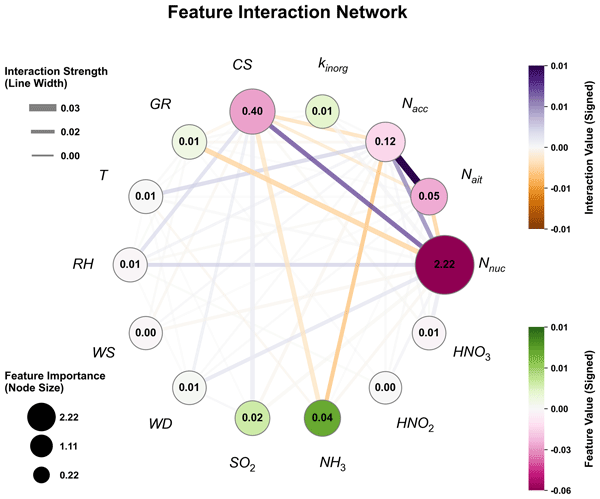
Zihan Wang, Yishu Bian, Fuwang Zhang, Honglei Wang, Wen Lin, Jun Hu, Tianliang Zhao, Lijian Shen, and Zuxin Xie
Atmos. Chem. Phys., 26, 7539–7554, https://doi.org/10.5194/acp-26-7539-2026, https://doi.org/10.5194/acp-26-7539-2026, 2026
Short summary
Short summary
We investigated how new air particles form in cities and affect clouds. Our year-long study revealed a key seasonal pattern: while particle formation events are most frequent in spring, they are surprisingly inefficient at creating the seeds for clouds due to high pollution. In contrast, the cleaner summer air, despite having fewer events, allows the new particles to grow larger and much more effectively enhance potential cloud formation.
Can Song, Chong Peng, Ting Bai, Honglei Wang, Yimei Huang, Jianfang Ding, Yanhua Liu, Zhenping Shao, and Xiuzhu Sha
EGUsphere, https://doi.org/10.5194/egusphere-2026-1706, https://doi.org/10.5194/egusphere-2026-1706, 2026
Short summary
Short summary
Using aircraft and ground-based observations, this study analyzes a spring snowstorm over North China Plain. It reveals distinct microphysics: stratiform regions feature ice growth by deposition/aggregation, while thunderstorms areas show higher supercooled water content and riming. The precipitation particle distribution characteristic of thunderstorm areas is also revealed. The vertical precipitation structure varies across stages, influenced by phase transitions and updrafts.
Deyu Liu, Yue Chen, Sihan Liu, Honglei Wang, Jingyi Chen, Yang Yang, Zihan Wang, Kun Cui, and Tianliang Zhao
Atmos. Chem. Phys., 26, 5781–5797, https://doi.org/10.5194/acp-26-5781-2026, https://doi.org/10.5194/acp-26-5781-2026, 2026
Short summary
Short summary
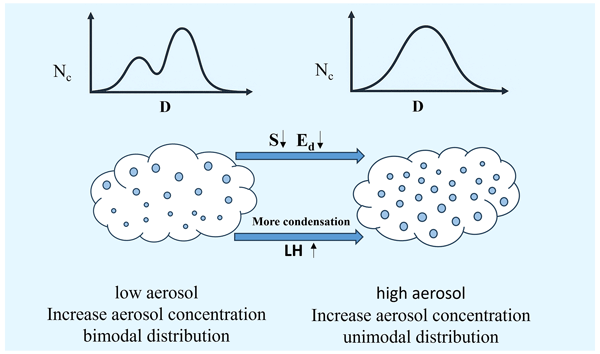
Cloud droplets are vital for rainfall and climate, and tiny airborne particles called aerosols can change their size and number. Using airplane observations over Hebei and simulations, we found that aerosols strongly affect droplet vertical distribution. Under high aerosols, lower droplets are larger and more numerous; under low aerosols, upper droplets are larger. These changes affect cloud development, precipitation, and atmospheric energy.
Chunshui Lin, Ru-Jin Huang, Jing Duan, Jing Qu, Jiahua Liu, Yi Liu, Yan Luo, Wei Huang, Wei Xu, Yanan Zhan, Zhitao Liu, Sihan Liu, Qingshuang Zhang, Quan Liu, Zirui Liu, Shengrong Lou, Huinan Yang, Dan Dan Huang, Cheng Huang, and Hongli Wang
Atmos. Chem. Phys., 26, 2635–2647, https://doi.org/10.5194/acp-26-2635-2026, https://doi.org/10.5194/acp-26-2635-2026, 2026
Short summary
Short summary
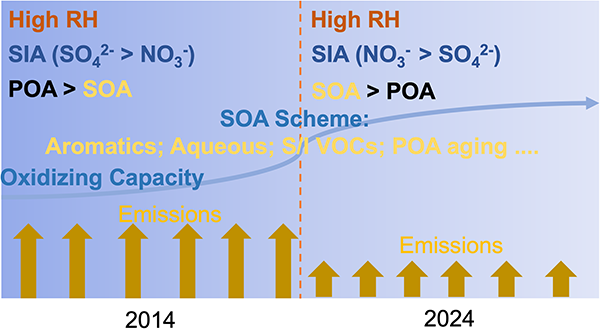
Since China's 2013 Clean Air Act cut PM2.5 by over half, winter haze in the North China Plain persists partly due to secondary organic aerosols now dominating primary organic aerosol, requiring urgent regional cooperation to address model-underestimated chemical transformations and cross-border pollution.
Weibin Zhu, Sai Shang, Jieqi Wang, Yunfei Wu, Zhaoze Deng, Liang Ran, Ye Kuang, Guiqian Tang, Xiangpeng Huang, Xiaole Pan, Lanzhong Liu, Weiqi Xu, Yele Sun, Bo Hu, Zifa Wang, and Zirui Liu
Atmos. Chem. Phys., 26, 1947–1965, https://doi.org/10.5194/acp-26-1947-2026, https://doi.org/10.5194/acp-26-1947-2026, 2026
Short summary
Short summary
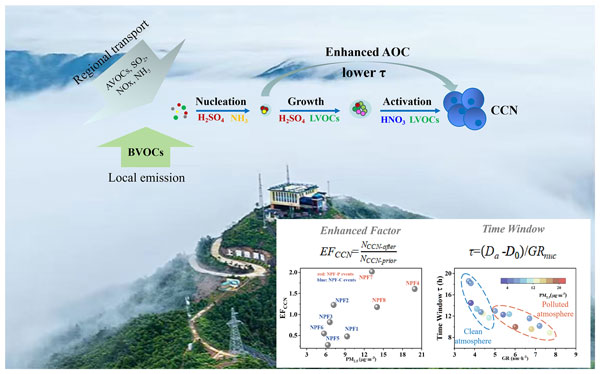
NPF (new particle formation) is a key global CCN (cloud condensation nuclei) source, but its contribution at the polluted boundary-layer top remains unclear. Based on mountaintop observations in the Yangtze River Delta, we show that under polluted conditions, NPF at the boundary-layer top is enhanced and accelerates its conversion to CCN. Ammonia plays a key role, and a newly defined "Time Window" metric highlights the importance of oxidation-driven growth and regional transport in this process.
Sihan Liu, Honglei Wang, Delong Zhao, Wei Zhou, Yuanmou Du, Zhengguo Zhang, Peng Cheng, Tianliang Zhao, Yue Ke, Zihao Wu, and Mengyu Huang
Atmos. Chem. Phys., 25, 4151–4165, https://doi.org/10.5194/acp-25-4151-2025, https://doi.org/10.5194/acp-25-4151-2025, 2025
Short summary
Short summary
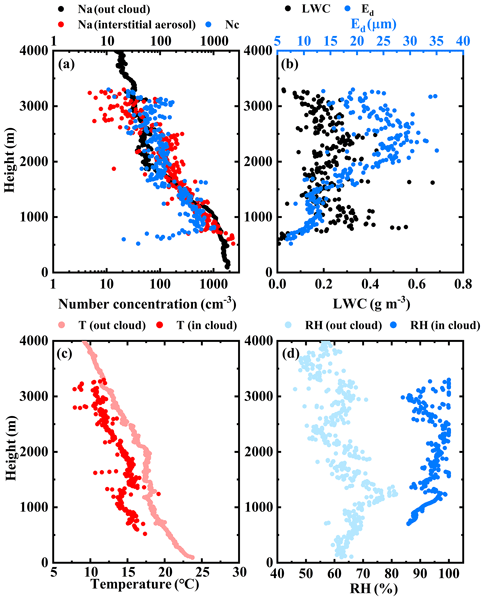
To understand the effect of aerosols on the vertical distribution of stratocumulus microphysical quantities in southwest China, the daily variation characteristics and formation mechanism of the vertical profiles of stratocumulus microphysical characteristics in this region were described using the data of nine cloud-crossing aircraft observations over Guangxi from 10 October to 3 November 2020.
Honglei Wang, David W. Tarasick, Jane Liu, Herman G. J. Smit, Roeland Van Malderen, Lijuan Shen, Romain Blot, and Tianliang Zhao
Atmos. Chem. Phys., 24, 11927–11942, https://doi.org/10.5194/acp-24-11927-2024, https://doi.org/10.5194/acp-24-11927-2024, 2024
Short summary
Short summary
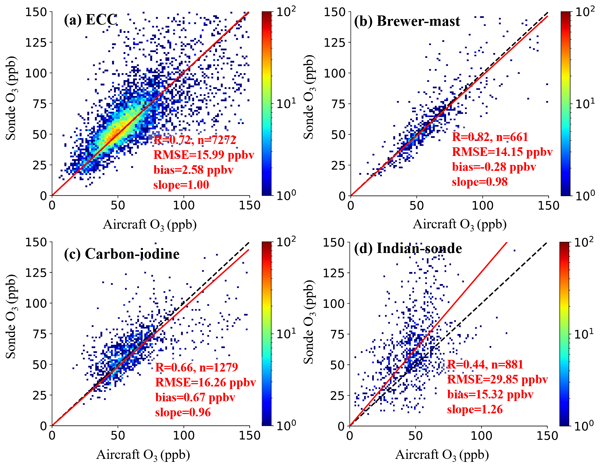
In this study, we identify 23 suitable pairs of sites from World Ozone and Ultraviolet Radiation Data Centre (WOUDC) and In-service Aircraft for a Global Observing System (IAGOS) datasets (1995 to 2021), compare the average vertical distributions of tropospheric O3 from ozonesonde and aircraft measurements, and analyze the differences based on ozonesonde type and station–airport distance.
Mengying Li, Shaocai Yu, Xue Chen, Zhen Li, Yibo Zhang, Zhe Song, Weiping Liu, Pengfei Li, Xiaoye Zhang, Meigen Zhang, Yele Sun, Zirui Liu, Caiping Sun, Jingkun Jiang, Shuxiao Wang, Benjamin N. Murphy, Kiran Alapaty, Rohit Mathur, Daniel Rosenfeld, and John H. Seinfeld
Atmos. Chem. Phys., 22, 11845–11866, https://doi.org/10.5194/acp-22-11845-2022, https://doi.org/10.5194/acp-22-11845-2022, 2022
Short summary
Short summary
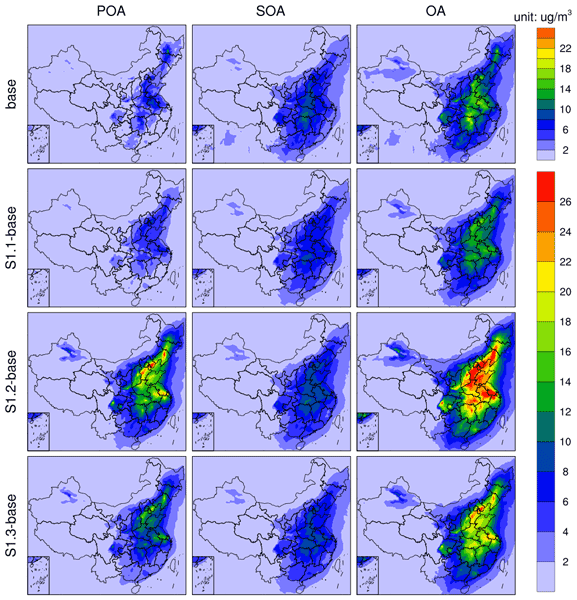
This study constructed an emission inventory of condensable particulate matter (CPM) in China with a focus on organic aerosols (OAs), based on collected CPM emission information. The results show that OA emissions are enhanced twofold for the years 2014 and 2017 after the inclusion of CPM in the new inventory. Sensitivity cases demonstrated the significant contributions of CPM emissions from stationary combustion and mobile sources to primary, secondary, and total OA concentrations.
Cited articles
Aas, K., Jullum, M., and Løland, A.: Explaining individual predictions when features are dependent: more accurate approximations to Shapley values, arXiv [preprint], https://doi.org/10.48550/arXiv.1903.10464, 2019.
Ali, U., Singh, V., Faisal, M., Kumar, M., and Gani, S.: Exploring the influence of physical and chemical factors on new particle formation in a polluted megacity, Environ. Sci.: Atmos., 5, 25–47, https://doi.org/10.1039/D4EA00114A, 2025.
Birmili, W. and Wiedensohler, A.: New particle formation in the continental boundary layer: meteorological and gas phase parameter influence, Geophys. Res. Lett., 27, 3325–3328, https://doi.org/10.1029/1999GL011221, 2000.
Birmili, W., Berresheim, H., Plass-Dülmer, C., Elste, T., Gilge, S., Wiedensohler, A., and Uhrner, U.: The Hohenpeissenberg aerosol formation experiment (HAFEX): a long-term study including size-resolved aerosol, H2SO4, OH, and monoterpenes measurements, Atmos. Chem. Phys., 3, 361–376, https://doi.org/10.5194/acp-3-361-2003, 2003.
Bordt, S. and Luxburg, U. V.: From Shapley values to generalized additive models and back, Proc. Int. Conf. Artif. Intell. Stat. (AISTATS), 121–134, https://doi.org/10.48550/arXiv.2209.04012, 2022.
Carnerero, C., Pérez, N., Petäjä, T., Laurila, T. M., Ahonen, L. R., Kontkanen, J., Ahn, K.-H., Alastuey, A., Querol, X., and Guo, Y.: Relating high ozone, ultrafine particles, and new particle formation episodes using cluster analysis, Atmos. Environ.: X, 4, 100051, https://doi.org/10.1016/j.aeaoa.2019.100051, 2019.
Dai, L., Wang, H., Zhou, L., An, J., Tang, L., Lu, C., Yan, W., Liu, R., Kong, S., Chen, M., Lee, S., and Yu, H.: Regional and local new particle formation events observed in the Yangtze River Delta region, China, J. Geophys. Res.-Atmos., 122, 2389–2402, https://doi.org/10.1002/2016JD026030, 2017.
Dal Maso, M., Kulmala, M., Riipinen, I., Wagner, R., Hussein, T., Aalto, P. P., and Lehtinen, K. E. J.: Formation and growth of fresh atmospheric aerosols: eight years of aerosol size distribution data from SMEAR II, Hyytiälä, Finland, Boreal Environ. Res., 10, 323–336, 2005.
Ding, A. J., Huang, X., Nie, W., Sun, J. N., Kerminen, V.-M., Petäjä, T., Su, H., Cheng, Y. F., Yang, X.-Q., Wang, M. H., Chi, X. G., Wang, J. P., Virkkula, A., Guo, W. D., Yuan, J., and Wang, S. Y.: Enhanced haze pollution by black carbon in megacities in China, Geophys. Res. Lett., 43, 2873–2879, https://doi.org/10.1002/2016GL067745, 2016.
Du, W., Cai, J., Zheng, F., Yan, C., Zhou, Y., Guo, Y., Chu, B., Yao, L., Heikkinen, L. M., Fan, X., Wang, Y., Cai, R., Hakala, S., Chan, T., Kontkanen, J., Tuovinen, S., Petäjä, T., Kangasluoma, J., Bianchi, F., Paasonen, P., Sun, Y., Kerminen, V.-M., Liu, Y., Daellenbach, K. R., Dada, L., and Kulmala, M.: Influence of aerosol chemical composition on condensation sink efficiency and new particle formation in Beijing, Environ. Sci. Tech. Let., 9, 375–382, https://doi.org/10.1021/acs.estlett.2c00159, 2022.
Fiore, A. M., Naik, V., and Leibensperger, E. M.: Air quality and climate connections, J. Air Waste Manage., 65, 645–685, https://doi.org/10.1080/10962247.2015.1040526, 2015.
Fuchs, N. A., Daisley, R. E., Fuchs, M., Davies, C. N., and Straumanis, M. E.: The mechanics of aerosols, Phys. Today, 18, 73, https://doi.org/10.1063/1.3047354, 1965.
Gordon, H., Kirkby, J., Baltensperger, U., Bianchi, F., Breitenlechner, M., Curtius, J., Dias, A., Dommen, J., Donahue, N. M., Dunne, E. M., Duplissy, J., Ehrhart, S., Flagan, R. C., Frege, C., Fuchs, C., Hansel, A., Hoyle, C. R., Kulmala, M., Kürten, A., Lehtipalo, K., Makhmutov, V., Molteni, U., Rissanen, M. P., Stozhkov, Y., Tröstl, J., Tsagkogeorgas, G., Wagner, R., Williamson, C., Wimmers, D., Winkler, P. M., Yan, C., and Carslaw, K. S.: Causes and importance of new particle formation in the present-day and preindustrial atmospheres, J. Geophys. Res.-Atmos., 122, 8739–8760, https://doi.org/10.1002/2017JD026844, 2017.
Hamed, A., Joutsensaari, J., Mikkonen, S., Sogacheva, L., Dal Maso, M., Kulmala, M., Cavalli, F., Fuzzi, S., Facchini, M. C., Decesari, S., Mircea, M., Lehtinen, K. E. J., and Laaksonen, A.: Nucleation and growth of new particles in Po Valley, Italy, Atmos. Chem. Phys., 7, 355–376, https://doi.org/10.5194/acp-7-355-2007, 2007.
Herrmann, E., Ding, A. J., Kerminen, V.-M., Petäjä, T., Yang, X. Q., Sun, J. N., Qi, X. M., Manninen, H., Hakala, J., Nieminen, T., Aalto, P. P., Kulmala, M., and Fu, C. B.: Aerosols and nucleation in eastern China: first insights from the new SORPES-NJU station, Atmos. Chem. Phys., 14, 2169–2183, https://doi.org/10.5194/acp-14-2169-2014, 2014.
Hou, Y., Wang, Q., and Tan, T.: Evaluating drivers of PM2.5 air pollution at urban scales using interpretable machine learning, Waste Manage., 192, 114–124, https://doi.org/10.1016/j.wasman.2024.11.025, 2025.
Houdou, A., El Badisy, I., Khomsi, K., Abdala, S. A., Abdulla, F., Najmi, H., Obtel, M., Belyamani, L., Ibrahimi, A., and Khalis, M.: Interpretable machine learning approaches for forecasting and predicting air pollution: a systematic review, Aerosol Air Qual. Res., 24, 230151, https://doi.org/10.4209/aaqr.230151, 2024.
Huang, X., Wang, Z., and Ding, A.: Impact of aerosol–PBL interaction on haze pollution: multiyear observational evidences in North China, Geophys. Res. Lett., 45, 8596–8603, https://doi.org/10.1029/2018GL079239, 2018.
Jacob, D. J. and Winner, D. A.: Effect of climate change on air quality, Atmos. Environ., 43, 51–63, https://doi.org/10.1016/j.atmosenv.2008.09.051, 2009.
Jiang, S., Zhang, F., Ren, J., Chen, L., Yan, X., Liu, J., Sun, Y., and Li, Z.: Evaluation of the contribution of new particle formation to cloud droplet number concentration in the urban atmosphere, Atmos. Chem. Phys., 21, 14293–14308, https://doi.org/10.5194/acp-21-14293-2021, 2021.
Jin, J., Cai, R., Liu, Y., Yang, G., Li, Y., Li, C., Yao, L., Jiang, J., Zhang, X., and Wang, L.: Atmospheric new particle formation in the eastern region of China: an investigation on mechanism and influencing factors at multiple sites, Atmos. Chem. Phys., 25, 17125–17138, https://doi.org/10.5194/acp-25-17125-2025, 2025.
Jonsson, Å. M., Hallquist, M., and Saathoff, H.: Volatility of secondary organic aerosols from the ozone initiated oxidation of α-pinene and limonene, J. Aerosol Sci., 38, 843–852, https://doi.org/10.1016/j.jaerosci.2007.06.008, 2007.
Kaimal, J. C., Wyngaard, J. C., Haugen, D. A., Coté, O. R., Izumi, Y., Caughey, S. J., and Readings, C. J.: Turbulence structure in the convective boundary layer, J. Atmos. Sci., 33, 2152–2169, https://doi.org/10.1175/1520-0469(1976)033<2152:TSITCB>2.0.CO;2, 1976.
Kanawade, V. P., Jobson, B. T., Guenther, A. B., Erupe, M. E., Pressley, S. N., Tripathi, S. N., and Lee, S.-H.: Isoprene suppression of new particle formation in a mixed deciduous forest, Atmos. Chem. Phys., 11, 6013–6027, https://doi.org/10.5194/acp-11-6013-2011, 2011.
Kerminen, V.-M., Chen, X., Vakkari, V., Petäjä, T., Kulmala, M., and Bianchi, F.: Atmospheric new particle formation and growth: review of field observations, Environ. Res. Lett., 13, 103003, https://doi.org/10.1088/1748-9326/aadf3c, 2018.
Korhonen, H., Lehtinen, K. E. J., and Kulmala, M.: Multicomponent aerosol dynamics model UHMA: model development and validation, Atmos. Chem. Phys., 4, 757–771, https://doi.org/10.5194/acp-4-757-2004, 2004.
Kulmala, M., Dal Maso, M., Mäkelä, J. M., Pirjola, L., Väkevä, M., Aalto, P., Miikkulainen, P., Hämeri, K., and O'Dowd, C. D.: On the formation, growth and composition of nucleation mode particles, Tellus B, 53, 479–490, https://doi.org/10.1034/j.1600-0889.2001.530411.x, 2001a.
Kulmala, M., Hämeri, K., Aalto, P. P., Mäkelä, J. M., Pirjola, L., Nilsson, E. D., Buzorius, G., Rannik, Ü., Dal Maso, M., Seidl, W., Hoffmann, T., Janson, R., Hansson, H.-C., Viisanen, Y., Laaksonen, A., and O'Dowd, C. D.: Overview of the international project on biogenic aerosol formation in the boreal forest (BIOFOR), Tellus B, 53, 324–343, https://doi.org/10.1034/j.1600-0889.2001.530402.x, 2001b.
Kulmala, M., Vehkamäki, H., Petäjä, T., Dal Maso, M., Lauri, A., Kerminen, V.-M., Birmili, W., and McMurry, P. H.: Formation and growth rates of ultrafine atmospheric particles: a review of observations, J. Aerosol Sci., 35, 143–176, https://doi.org/10.1016/j.jaerosci.2003.10.003, 2004.
Kulmala, M., Petäjä, T., Nieminen, T., Sipilä, M., Manninen, H. E., Lehtipalo, K., Dal Maso, M., Aalto, P. P., Junninen, H., Paasonen, P., Riipinen, I., Lehtinen, K. E. J., Laaksonen, A., and Kerminen, V. M.: Measurement of the nucleation of atmospheric aerosol particles, Nat. Protoc., 7, 1651–1667, https://doi.org/10.1038/nprot.2012.091, 2012.
Kulmala, M., Dada, L., Daellenbach, K. R., Yan, C., Stolzenburg, D., Kontkanen, J., Ezhova, E., Hakala, S., Tuovinen, S., Kokkonen, T. V., Kurppa, M., Cai, R., Zhou, Y., Yin, R., Baalbaki, R., Chan, T., Chu, B., Deng, C., Fu, Y., Ge, M., He, H., Heikkinen, L., Junninen, H., Liu, Y., Lu, Y., Nie, W., Rusanen, A., Vakkari, V., Wang, Y., Yang, G., Yao, L., Zheng, J., Kujansuu, J., Kangasluoma, J., Petäjä, T., Paasonen, P., Järvi, L., Worsnop, D., Ding, A., Liu, Y., Wang, L., Jiang, J., Bianchi, F., and Kerminen, V.-M.: Is reducing new particle formation a plausible solution to mitigate particulate air pollution in Beijing and other Chinese megacities?, Faraday Discuss., 226, 334–347, https://doi.org/10.1039/D0FD00078g, 2021.
Lai, S., Hai, S., Gao, Y., Wang, Y., Sheng, L., Lupascu, A., Ding, A., Nie, W., Qi, X., Huang, X., Chi, X., Zhao, C., Zhao, B., Shrivastava, M., Fast, J., Yao, X., and Gao, H.: The striking effect of vertical mixing in the planetary boundary layer on new particle formation in the Yangtze River Delta, Sci. Total Environ., 829, 154607, https://doi.org/10.1016/j.scitotenv.2022.154607, 2022a.
Lai, S., Huang, X., Qi, X., Chen, L., Ren, C., Wang, Z., Wang, J., Lou, S., Chi, X., Gao, Y., Hai, S., Petäjä, T., Kerminen, V.-M., Kulmala, M., and Ding, A.: Vigorous new particle formation above polluted boundary layer in the North China Plain, Geophys. Res. Lett., 49, e2022GL100301, https://doi.org/10.1029/2022GL100301, 2022b.
Lampilahti, J., Leino, K., Manninen, A., Poutanen, P., Franck, A., Peltola, M., Hietala, P., Beck, L., Dada, L., Quéléver, L., Öhrnberg, R., Zhou, Y., Ekblom, M., Vakkari, V., Zilitinkevich, S., Kerminen, V.-M., Petäjä, T., and Kulmala, M.: Aerosol particle formation in the upper residual layer, Atmos. Chem. Phys., 21, 7901–7915, https://doi.org/10.5194/acp-21-7901-2021, 2021.
Lapworth, A. J.: The morning transition of the nocturnal boundary layer, Bound.-Lay. Meteorol., 119, 501–526, https://doi.org/10.1007/s10546-005-9046-0, 2006.
Lehtinen, K. E. J., Korhonen, H., Dal Maso, M., and Kulmala, M.: On the concept of condensation sink diameter, Boreal Environ. Res., 8, 405–411, 2003.
Lelieveld, J., Butler, T. M., Crowley, J. N., Dillon, T. J., Fischer, H., Ganzeveld, L., Harder, H., Lawrence, M. G., Martinez, M., and Taraborrelli, D.: Atmospheric oxidation capacity sustained by a tropical forest, Nature, 452, 737–740, https://doi.org/10.1038/nature06870, 2008.
Li, X., Hu, X.-M., Wei, W., Zhang, L., Ren, Y., Zhang, H., and Zhang, L.: Impact of surface and entrainment heat fluxes on the thermodynamic structure of the convective boundary layer over the Tibetan Plateau: observations and modeling analysis, Atmos. Res., 329, 108459, https://doi.org/10.1016/j.atmosres.2025.108459, 2026.
Li, Z., Guo, J., Ding, A., Liao, H., Liu, J., Sun, Y., Wang, T., Xue, H., Zhang, H., and Zhu, B.: Aerosol and boundary-layer interactions and impact on air quality, Natl. Sci. Rev., 4, 810–833, https://doi.org/10.1093/nsr/nwx117, 2017.
Liao, H., Zhang, Y., Chen, W. T., Raes, F., and Seinfeld, J. H.: Effect of chemistry–aerosol–climate coupling on predictions of future climate and future levels of tropospheric ozone and aerosols, J. Geophys. Res.-Atmos., 114, D10, https://doi.org/10.1029/2008JD010984, 2009.
Liu, C. and Shi, K.: A review on methodology in O3–NOx–VOC sensitivity study, Environ. Pollut., 291, 118249, https://doi.org/10.1016/j.envpol.2021.118249, 2021.
Liu, S., Wang, P., Ma, Q., Shen, X., Kang, H., Sun, J., Liu, Q., Zhang, Y., Shi, M., Yu, D., Zhong, J., Hu, X., Lu, J., Yu, A., Che, H., and Zhang, X.: Key characteristics of new particle formation events occurring simultaneously in the Yangtze River Delta and northeast rural sites in China, Atmos. Environ., 324, 120406, https://doi.org/10.1016/j.atmosenv.2024.120406, 2024.
Liu, T., Hong, Y., Li, M., Xu, L., Chen, J., Bian, Y., Yang, C., Dan, Y., Zhang, Y., Xue, L., Zhao, M., Huang, Z., and Wang, H.: Atmospheric oxidation capacity and ozone pollution mechanism in a coastal city of southeastern China: analysis of a typical photochemical episode by an observation-based model, Atmos. Chem. Phys., 22, 2173–2190, https://doi.org/10.5194/acp-22-2173-2022, 2022.
Lundberg, S. M. and Lee, S.-I.: A unified approach to interpreting model predictions, Adv. Neur. In., 30, 4765–4774, 2017.
Lundberg, S. M., Erion, G. G., and Lee, S.-I.: Consistent individualized feature attribution for tree ensembles, arXiv [preprint], https://doi.org/10.48550/arXiv.1802.03888, 2018.
Lundberg, S. M., Erion, G., Chen, H., DeGrave, A., Prutkin, J. M., Nair, B., Katz, R., Himmelfarb, J., Bansal, N., and Lee, S.-I.: From local explanations to global understanding with explainable AI for trees, Nat. Mach. Intell., 2, 56–67, https://doi.org/10.1038/s42256-019-0138-9, 2020.
Lyu, Y., Wu, H., Liu, X., Han, F., Lv, F., Pang, X., and Chen, J.: Co-occurring extremes of fine particulate matter (PM2.5) and ground-level ozone in the summer of southern China, Geophys. Res. Lett., 51, e2023GL106527, https://doi.org/10.1029/2023GL106527, 2024.
Ma, L., Graham, D. J., and Stettler, M. E. J.: Using explainable machine learning to interpret the effects of policies on air pollution: COVID-19 lockdown in London, Environ. Sci. Technol., 57, 19189–19198, https://doi.org/10.1021/acs.est.2c09596, 2023.
Makkonen, R., Asmi, A., Kerminen, V.-M., Boy, M., Arneth, A., Hari, P., and Kulmala, M.: Air pollution control and decreasing new particle formation lead to strong climate warming, Atmos. Chem. Phys., 12, 1515–1524, https://doi.org/10.5194/acp-12-1515-2012, 2012.
Matsui, H., Koike, M., Kondo, Y., Takegawa, N., Wiedensohler, A., Fast, J. D., and Zaveri, R. A.: Impact of new particle formation on the concentrations of aerosols and cloud condensation nuclei around Beijing, J. Geophys. Res.-Atmos., 116, D19208, https://doi.org/10.1029/2011JD016025, 2011.
MEE (Ministry of Ecology and Environment of the People's Republic of China): Ambient air quality standards (GB 3095–2012), Ministry of Ecology and Environment of the People's Republic of China 2012a.
MEE (Ministry of Ecology and Environment of the People's Republic of China): Technical regulation on Ambient Air Quality Index (HJ 633–2012), Ministry of Ecology and Environment of the People's Republic of China, 2012b.
Molnár, A., Imre, K., Ferenczi, Z., Kiss, G., and Gelencsér, A.: Aerosol hygroscopicity: hygroscopic growth proxy based on visibility for low-cost PM monitoring, Atmos. Res., 236, 104815, https://doi.org/10.1016/j.atmosres.2019.104815, 2020.
Murase, H., Nagashima, H., Yonezaki, S., Matsukura, R., and Kitakado, T.: Application of a generalized additive model (GAM) to reveal relationships between environmental factors and distributions of pelagic fish and krill: a case study in Sendai Bay, Japan, ICES J. Mar. Sci., 66, 1417–1424, https://doi.org/10.1093/icesjms/fsp105, 2009.
Neu, U., Künzle, T., and Wanner, H.: On the relation between ozone storage in the residual layer and daily variation in near-surface ozone concentration – a case study, Bound.-Lay. Meteorol., 69, 221–247, https://doi.org/10.1007/BF00708857, 1994.
Nie, W., Ding, A., Wang, T., Kerminen, V.-M., George, C., Xue, L., Wang, W., Zhang, Q., Petäjä, T., Qi, X., Gao, X., Wang, X., Yang, X., Fu, C., and Kulmala, M.: Polluted dust promotes new particle formation and growth, Sci. Rep.-UK, 4, 6634, https://doi.org/10.1038/srep06634, 2014.
Nieminen, T., Lehtinen, K. E. J., and Kulmala, M.: Sub-10 nm particle growth by vapor condensation – effects of vapor molecule size and particle thermal speed, Atmos. Chem. Phys., 10, 9773–9779, https://doi.org/10.5194/acp-10-9773-2010, 2010.
Nilsson, E. D., Rannik, Ü., Kulmala, M., Buzorius, G., and O'Dowd, C. D.: Effects of continental boundary layer evolution, convection, turbulence and entrainment on aerosol formation, Tellus B, 53, 441–461, https://doi.org/10.3402/tellusb.v53i4.16617, 2001.
Petäjä, T., Järvi, L., Kerminen, V.-M., Ding, A. J., Sun, J. N., Nie, W., Kujansuu, J., Virkkula, A., Yang, X.-Q., Fu, C. B., Zilitinkevich, S., and Kulmala, M.: Enhanced air pollution via aerosol–boundary layer feedback in China, Sci. Rep.-UK, 6, 18998, https://doi.org/10.1038/srep18998, 2016.
Qi, L., Zheng, H., Ding, D., and Wang, S.: A comparison of meteorological normalization of PM2.5 by multiple linear regression, general additive model, and random forest methods, Atmos. Environ., 338, 120854, https://doi.org/10.1016/j.atmosenv.2024.120854, 2024.
Sebastian, M., Kanawade, V. P., Soni, V. K., Asmi, E., Westervelt, D. M., Vakkari, V., Hyvärinen, A.-P., Pierce, J. R., and Hooda, R. K.: New particle formation and growth to climate-relevant aerosols at a background remote site in the western Himalaya, J. Geophys. Res.-Atmos., 126, e2020JD033267, https://doi.org/10.1029/2020JD033267, 2021.
Shang, D., Hu, M., Tang, L., Fang, X., Chen, S., Zeng, L., Guo, S., Zhang, Y., and Wu, Z.: New particle formation occurrence in the urban atmosphere of Beijing during 2013–2020, J. Geophys. Res.-Atmos., 128, e2022JD038334, https://doi.org/10.1029/2022JD038334, 2023.
Shapley, L.: 7. A Value for n-Person Games. Contributions to the Theory of Games II (1953) 307–317, in: Classics in Game Theory (69–79), edited by: Kuhn, H., Princeton University Press, Princeton, https://doi.org/10.1515/9781400829156-012, 2020.
Shi, S., Zhu, B., Tang, G., Liu, C., An, J., Liu, D., Xu, J., Xu, H., Liao, H., and Zhang, Y.: Observational evidence of aerosol radiation modifying photochemical ozone profiles in the lower troposphere, Geophys. Res. Lett., 49, e2022GL099274, https://doi.org/10.1029/2022GL099274, 2022.
Song, X., Li, X.-B., Yuan, B., He, X., Chen, Y., Wang, S., Huangfu, Y., Peng, Y., Zhang, C., Liu, A., Yang, H., Liu, C., Li, J., and Shao, M.: Elucidating key factors in regulating budgets of ozone and its precursors in atmospheric boundary layer, npj Clim. Atmos. Sci., 7, 262, https://doi.org/10.1038/s41612-024-00818-8, 2024.
Stull, R. B.: An Introduction to Boundary Layer Meteorology, 100 Springer, Dordrecht, the Netherlands, https://doi.org/10.1515/9781400829156-012, 1988.
Su, T., Li, Z., and Kahn, R.: Relationships between the planetary boundary layer height and surface pollutants derived from lidar observations over China: regional pattern and influencing factors, Atmos. Chem. Phys., 18, 15921–15935, https://doi.org/10.5194/acp-18-15921-2018, 2018.
Su, T., Li, Z., Zheng, Y., Wu, T., Wu, H., and Guo, J.: Aerosol-boundary layer interaction modulated entrainment process, npj Clim. Atmos. Sci., 5, 64, https://doi.org/10.1038/s41612-022-00283-1, 2022.
Sullivan, R. C., Crippa, P., Matsui, H., Leung, L. R., Zhao, C., and Thota, A.: New particle formation leads to cloud dimming, npj Clim. Atmos. Sci., 1, 19, https://doi.org/10.1038/s41612-018-0019-7, 2018.
Tan, S., Chen, X., and Yin, S.: Comparison results of eight oxygenated organic molecules: unexpected contribution to new particle formation in the atmosphere, Atmos. Environ., 268, 118817, https://doi.org/10.1016/j.atmosenv.2021.118817, 2022.
Tang, L., Shang, D., Fang, X., Wu, Z., Qiu, Y., Chen, S., Li, X., Zeng, L., Guo, S., and Hu, M.: More significant impacts from new particle formation on haze formation during COVID-19 lockdown, Geophys. Res. Lett., 48, e2020GL091591, https://doi.org/10.1029/2020GL091591, 2021.
Tiszenkel, L. and Lee, S.-H.: Synergetic effects of isoprene and HOx on biogenic new particle formation, Geophys. Res. Lett., 50, e2023GL103545, https://doi.org/10.1029/2023GL103545, 2023.
Wang, H., Shi, G. Y., Zhang, X. Y., Gong, S. L., Tan, S. C., Chen, B., Che, H. Z., and Li, T.: Mesoscale modelling study of the interactions between aerosols and PBL meteorology during a haze episode in China Jing–Jin–Ji and its near surrounding region – Part 2: Aerosols' radiative feedback effects, Atmos. Chem. Phys., 15, 3277–3287, https://doi.org/10.5194/acp-15-3277-2015, 2015.
Wang, Y., Wang, H., Shi, S., Shen, L., Zhu, B., and Zhao, T.: Observational study of the regional PM2.5–O3 pollution in the Yangtze River Delta region: vertical distribution, temporal evolution and comparison of different pollution types, Atmos. Environ., 345, 121072, https://doi.org/10.1016/j.atmosenv.2025.121072, 2025.
Wang, Z., Huang, X., and Ding, A.: Dome effect of black carbon and its key influencing factors: a one-dimensional modelling study, Atmos. Chem. Phys., 18, 2821–2834, https://doi.org/10.5194/acp-18-2821-2018, 2018.
Wang, Z. B., Hu, M., Mogensen, D., Yue, D. L., Zheng, J., Zhang, R. Y., Liu, Y., Yuan, B., Li, X., Shao, M., Zhou, L., Wu, Z. J., Wiedensohler, A., and Boy, M.: The simulations of sulfuric acid concentration and new particle formation in an urban atmosphere in China, Atmos. Chem. Phys., 13, 11157–11167, https://doi.org/10.5194/acp-13-11157-2013, 2013a.
Wang, Z. B., Hu, M., Sun, J. Y., Wu, Z. J., Yue, D. L., Shen, X. J., Zhang, Y. M., Pei, X. Y., Cheng, Y. F., and Wiedensohler, A.: Characteristics of regional new particle formation in urban and regional background environments in the North China Plain, Atmos. Chem. Phys., 13, 12495–12506, https://doi.org/10.5194/acp-13-12495-2013, 2013b.
Watson, Z., Tiszenkel, L., Pour Biazar, A., Knupp, K., and Lee, S.: Effects of boundary layer dynamics and meteorology on ultrafine particle formation and growth, Atmos. Environ., 309, 119952, https://doi.org/10.1016/j.atmosenv.2023.119952, 2023.
Wehner, B., Siebert, H., Ansmann, A., Ditas, F., Seifert, P., Stratmann, F., Wiedensohler, A., Apituley, A., Shaw, R. A., Manninen, H. E., and Kulmala, M.: Observations of turbulence-induced new particle formation in the residual layer, Atmos. Chem. Phys., 10, 4319–4330, https://doi.org/10.5194/acp-10-4319-2010, 2010.
Wei, Q., Chen, Y., Zhang, H., Jia, Z., Yang, J., Niu, B., and Chen, Y.: Simulation and prediction of PM2.5 concentrations and analysis of driving factors using interpretable tree-based models in Shanghai, China, Environ. Res., 270, 121003, https://doi.org/10.1016/j.envres.2025.121003, 2025.
Xia, X., Zhang, K., Yang, R., Zhang, Y., Xu, D., Bai, K., and Guo, J.: Impact of near-surface turbulence on PM2.5 concentration in Chengdu during the COVID-19 pandemic, Atmos. Environ., 268, 118848, https://doi.org/10.1016/j.atmosenv.2021.118848, 2022.
Yenkikar, A., Mishra, V. P., Bali, M., and Ara, T.: Explainable forecasting of air quality index using a hybrid random forest and ARIMA model, MethodsX, 15, 103517, https://doi.org/10.1016/j.mex.2025.103517, 2025.
Yuan, X., Hong, X., Huang, Z., Sheng, L., Zhang, J., Chen, D., Zhong, Z., Wang, B., and Zheng, J.: Uncovering key sources of regional ozone simulation biases using machine learning and SHAP analysis, Environ. Pollut., 372, 126012, https://doi.org/10.1016/j.envpol.2025.126012, 2025.
Yue, D., Hu, M., Zhang, R., Wu, Z., Su, H., Wang, Z., Peng, J., He, L., Huang, X., Gong, Y., and Wiedensohler, A.: Potential contribution of new particle formation to cloud condensation nuclei in Beijing, Atmos. Environ., 45, 6070–6077, https://doi.org/10.1016/j.atmosenv.2011.07.037, 2011.
Zang, L., Wang, Z., Zhu, B., Zhang, Y., and Xu, D.: Roles of relative humidity in aerosol pollution aggravation over Central China during wintertime, Int. J. Env. Res. Pub. He., 16, 4422, https://doi.org/10.3390/ijerph16224422, 2019.
Zhang, J., Gong, X., Crosbie, E., Diskin, G., Froyd, K., Hall, S., Kupc, A., Moore, R., Peischl, J., Rollins, A., Schwarz, J., Shook, M., Thompson, C., Ullmann, K., Williamson, C., Wisthaler, A., Xu, L., Ziemba, L., Brock, C. A., and Wang, J.: Stratospheric air intrusions promote global-scale new particle formation, Science, 385, 210–216, https://doi.org/10.1126/science.adn2961, 2024.
Zhao, C., Lin, Z., Yang, L., Jiang, M., Qiu, Z., Wang, S., Gu, Y., Ye, W., Pan, Y., Zhang, Y., Wang, T., Jia, Y., and Chen, Z.: A study on the impact of meteorological and emission factors on PM2.5 concentrations based on machine learning, J. Environ. Manage., 360, 124347, https://doi.org/10.1016/j.jenvman.2025.124347, 2025.
Zheng, H., Kong, S., Zhai, S., Sun, X., Cheng, Y., Yao, L., Song, C., Zheng, Z., Shi, Z., and Harrison, R. M.: An intercomparison of weather normalization of PM2.5 concentration using traditional statistical methods, machine learning, and chemistry transport models, npj Clim. Atmos. Sci., 6, 214, https://doi.org/10.1038/s41612-023-00536-7, 2023.
Zhu, Y., Shen, Y., Li, K., Meng, H., Sun, Y., Yao, X., Gao, H., Xue, L., and Wang, W.: Investigation of particle number concentrations and new particle formation with largely reduced air pollutant emissions at a coastal semi-urban site in Northern China, J. Geophys. Res.-Atmos., 127, e2021JD035419, https://doi.org/10.1029/2021JD035419, 2022.
Zong, L., Yang, Y., Gao, M., Wang, H., Wang, P., Zhang, H., Wang, L., Ning, G., Liu, C., Li, Y., and Gao, Z.: Large-scale synoptic drivers of co-occurring summertime ozone and PM2.5 pollution in eastern China, Atmos. Chem. Phys., 21, 9105–9124, https://doi.org/10.5194/acp-21-9105-2021, 2021.
Short summary
Atmospheric new particles formation plays an important role in air quality and climate change, but it does not always appear even in the similar situation. Using ground measurements and vertical observations, we found this process occurs only when the source increases while the sink weakens at the same time, which is mainly controlled by the development of the boundary layer. The finding helps us better understand particle formation in complex atmospheric environments.
Atmospheric new particles formation plays an important role in air quality and climate change,...


Altmetrics
Final-revised paper
Preprint