
Articles | Volume 26, issue 8
https://doi.org/10.5194/acp-26-5861-2026
© Author(s) 2026. This work is distributed under
the Creative Commons Attribution 4.0 License.
the Creative Commons Attribution 4.0 License.
https://doi.org/10.5194/acp-26-5861-2026
© Author(s) 2026. This work is distributed under
the Creative Commons Attribution 4.0 License.
the Creative Commons Attribution 4.0 License.
Research article
| 
30 Apr 2026
Research article |
| 30 Apr 2026
| 30 Apr 2026
A dipole pattern of orbital-scale precipitation oxygen isotope variation in North African monsoon region and the driving mechanism
Chengwei Ji
State Key Laboratory of Climate System Prediction and Risk Management, Key Laboratory for Virtual Geographic Environment of Ministry of Education, Jiangsu Center for Collaborative Innovation in Geographical Information Resource Development and Application, Nanjing, 210023, China
School of Geography, Nanjing Normal University, Nanjing, 210023, China

State Key Laboratory of Climate System Prediction and Risk Management, Key Laboratory for Virtual Geographic Environment of Ministry of Education, Jiangsu Center for Collaborative Innovation in Geographical Information Resource Development and Application, Nanjing, 210023, China
School of Geography, Nanjing Normal University, Nanjing, 210023, China
Zhengyu Liu
Department of Geography, Ohio State University, Columbus, OH 43210, USA
State Key Laboratory of Climate System Prediction and Risk Management, Key Laboratory for Virtual Geographic Environment of Ministry of Education, Jiangsu Center for Collaborative Innovation in Geographical Information Resource Development and Application, Nanjing, 210023, China
School of Geography, Nanjing Normal University, Nanjing, 210023, China
Jiangsu Provincial Key Laboratory for Numerical Simulation of Large-Scale Complex Systems, School of Mathematical Science, Nanjing Normal University, Nanjing, 210023, China
Deliang Chen
Department of Earth System Science, Tsinghua University, Beijing, 100084, China
Liang Ning
State Key Laboratory of Climate System Prediction and Risk Management, Key Laboratory for Virtual Geographic Environment of Ministry of Education, Jiangsu Center for Collaborative Innovation in Geographical Information Resource Development and Application, Nanjing, 210023, China
School of Geography, Nanjing Normal University, Nanjing, 210023, China
State Key Laboratory of Climate System Prediction and Risk Management, Key Laboratory for Virtual Geographic Environment of Ministry of Education, Jiangsu Center for Collaborative Innovation in Geographical Information Resource Development and Application, Nanjing, 210023, China
School of Geography, Nanjing Normal University, Nanjing, 210023, China
Qiuzhen Yin
Earth and Climate Research Center, Earth and Life Institute, Université catholique de Louvain, 1348, Louvain-la-Neuve, Belgium
Related authors
No articles found.
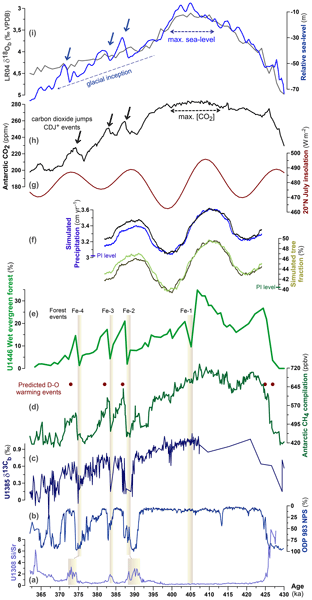
Dulce Oliveira, Stéphanie Desprat, Qiuzhen Yin, Coralie Zorzi, Zhipeng Wu, Krishnamurthy Anupama, Srinivasan Prasad, Montserrat Alonso-García, and Philippe Martinez
Clim. Past, 22, 1691–1709, https://doi.org/10.5194/cp-22-1691-2026, https://doi.org/10.5194/cp-22-1691-2026, 2026
Short summary
Short summary
We present an unprecedented record of Indian summer monsoon (ISM)-induced vegetation changes for Marine Isotope Stage (MIS) 11, a key interglacial. Site U1446 pollen data and models show that ISM-vegetation shifts stem from an interplay of dominant forcings based on boundary conditions. Insolation is the main driver during MIS 11c interglacial conditions, akin to future scenarios, while ice volume and CO₂ prevail in the glacial inception. Superimposed changes are marked by prominent forest contractions and expansions.
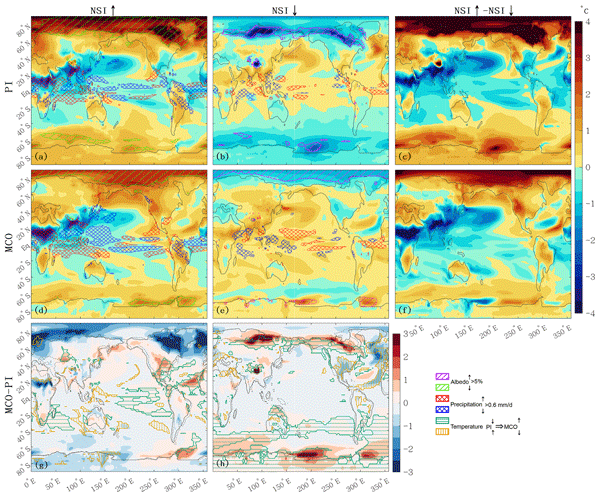
Yurui Zhang, Jilin Wei, Zhen Li, Nan Dai, Weipeng Zheng, Qiuzhen Yin, Agatha M. de Boer, Zhengguo Shi, and Lixia Zhang
Clim. Past, 22, 879–889, https://doi.org/10.5194/cp-22-879-2026, https://doi.org/10.5194/cp-22-879-2026, 2026
Short summary
Short summary
This study examines how the warm Miocene (~23–5 Ma) climate responded to orbital changes compared with modern day. Simulations show weaker Miocene temperature responses with distinct spatial patterns. High latitudes were less sensitive due to weaker albedo feedback, while tropical Africa cooled more strongly from an enhanced water cycle. The Southern Ocean warmed under low insolation as winter sea ice shrank. These findings highlight how background climate states shape orbital climate responses.
Héloïse Guilluy, Émilie Capron, Frédéric Parrenin, Vladimir Lipenkov, Jochen Schmitt, Patricia Martinerie, Zhipeng Wu, Qiuzhen Yin, Anna Maria Klüssendorf, Amaëlle Landais, Barbara Seth, Hubertus Fischer, and Dominique Raynaud
EGUsphere, https://doi.org/10.5194/egusphere-2026-953, https://doi.org/10.5194/egusphere-2026-953, 2026
Short summary
Short summary
Air bubbles in polar ice cores retain information about past climates over hundreds of thousands of years. The total air content (TAC) trapped within these bubbles varies with summer insolation cycles, making it a tool for dating ice cores. We present a multi-site update on TAC, combining new and published data. We confirm that insolation impacts bubble volume in East Antarctica, but surface climate changes can hide the insolation signal in the TAC record, impacting the TAC-derived chronologies.
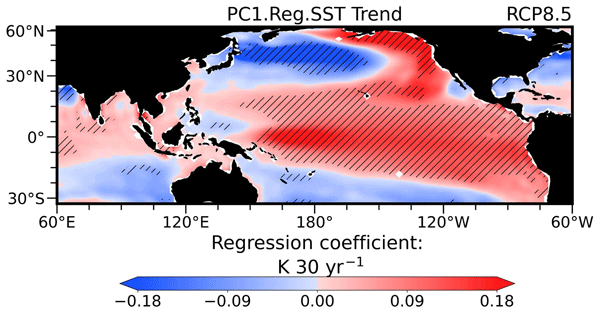
Cheng Shen, Hui-Shuang Yuan, Zhi-Bo Li, Jinling Piao, Youli Chang, and Deliang Chen
Earth Syst. Dynam., 16, 1959–1969, https://doi.org/10.5194/esd-16-1959-2025, https://doi.org/10.5194/esd-16-1959-2025, 2025
Short summary
Short summary
Near-surface wind speed affects air quality, water cycles, and wind energy, but its future changes in South Asia remain uncertain. This study explores how internal climate variability, particularly the Interdecadal Pacific Oscillation, affects wind speed trends in the region. Using advanced climate simulations, we show that accounting for this variability reduces uncertainty in future projections. Our findings could improve climate adaptation strategies and wind energy planning.
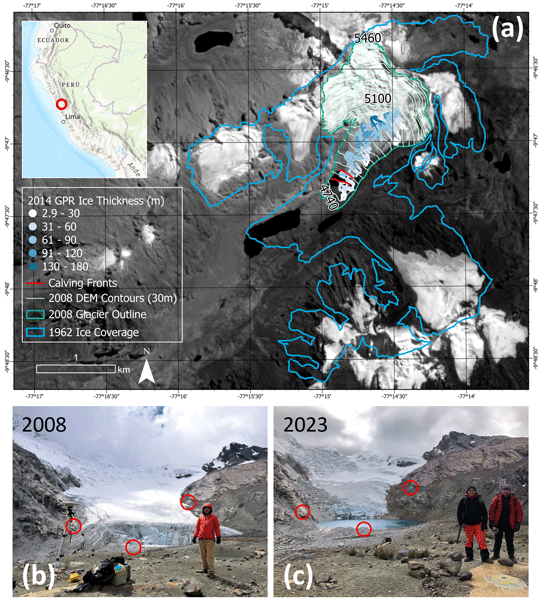
Tal Y. Shutkin, Bryan G. Mark, Nathan D. Stansell, Rolando Cruz Encarnación, Henry H. Brecher, Zhengyu Liu, Bidhyananda Yadav, and Forrest S. Schoessow
The Cryosphere, 19, 4835–4853, https://doi.org/10.5194/tc-19-4835-2025, https://doi.org/10.5194/tc-19-4835-2025, 2025
Short summary
Short summary
Queshque Glacier of Peru's tropical Andes has retreated rapidly since the mid-20th century. Using a glacier model, we show that this has primarily been driven by steady warming despite the counteracting effect of recent snowfall amounts. Independently from climatic trends, we find that the formation of a new lake at the glacier's base has further accelerated ice loss. This research demonstrates the utility of empirical glacier models for interpreting past and future changes in the tropics.
Zhi-Bo Li, Chao Liu, Cesar Azorin-Molina, Soon-Il An, Yang Zhao, Yang Xu, Jongsoo Shin, Deliang Chen, and Cheng Shen
Weather Clim. Dynam., 6, 1107–1117, https://doi.org/10.5194/wcd-6-1107-2025, https://doi.org/10.5194/wcd-6-1107-2025, 2025
Short summary
Short summary
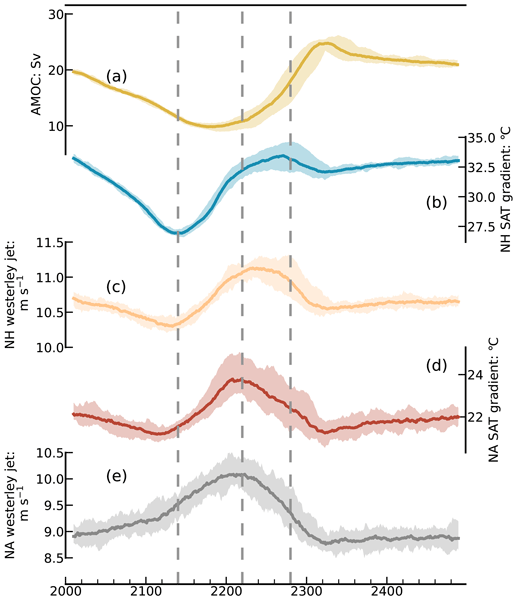
Our research explores how Northern Hemisphere near-surface wind speeds respond to the removal of CO2 from the atmosphere. Using advanced CESM (Community Earth System Model) simulations, we discovered that wind speeds react differently during periods of increased and decreased carbon dioxide levels. Different responses are attributed to changes in global surface temperature and AMOC (Atlantic Meridional Overturning Circulation). This study not only advances our understanding of climate dynamics but also aids in optimizing strategies for wind energy.
Takashi Obase, Laurie Menviel, Ayako Abe-Ouchi, Tristan Vadsaria, Ruza Ivanovic, Brooke Snoll, Sam Sherriff-Tadano, Paul J. Valdes, Lauren Gregoire, Marie-Luise Kapsch, Uwe Mikolajewicz, Nathaelle Bouttes, Didier Roche, Fanny Lhardy, Chengfei He, Bette Otto-Bliesner, Zhengyu Liu, and Wing-Le Chan
Clim. Past, 21, 1443–1463, https://doi.org/10.5194/cp-21-1443-2025, https://doi.org/10.5194/cp-21-1443-2025, 2025
Short summary
Short summary
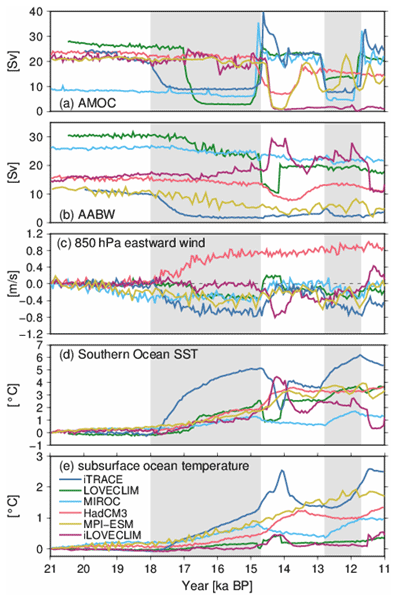
This study analyses transient simulations of the last deglaciation performed by six climate models to understand the processes driving high-southern-latitude temperature changes. We find that atmospheric CO2 and AMOC (Atlantic Meridional Overturning Circulation) changes are the primary drivers of the warming and cooling during the middle stage of the deglaciation. The analysis highlights the model's sensitivity of CO2 and AMOC to meltwater and the meltwater history of temperature changes at high southern latitudes.
Peter U. Clark, Jeremy D. Shakun, Yair Rosenthal, Chenyu Zhu, Patrick J. Bartlein, Jonathan M. Gregory, Peter Köhler, Zhengyu Liu, and Daniel P. Schrag
Clim. Past, 21, 973–1000, https://doi.org/10.5194/cp-21-973-2025, https://doi.org/10.5194/cp-21-973-2025, 2025
Short summary
Short summary
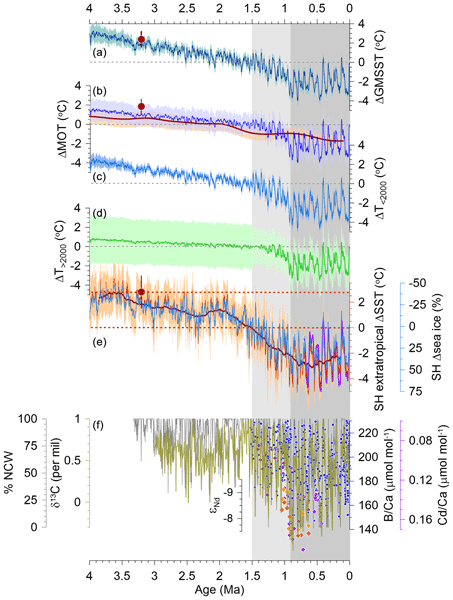
We reconstruct changes in mean ocean temperature (ΔMOT) over the last 4.5 Myr. We find that the ratio of ΔMOT to changes in global mean sea surface temperature was around 0.5 before the Middle Pleistocene transition but was 1 thereafter. We subtract our ΔMOT reconstruction from the global δ18O record to derive the δ18O of seawater. Finally, we develop a theoretical understanding of why the ratio of ΔMOT / ΔGMSST changed over the Plio-Pleistocene.
He Sun, Tandong Yao, Fengge Su, Wei Yang, and Deliang Chen
Hydrol. Earth Syst. Sci., 28, 4361–4381, https://doi.org/10.5194/hess-28-4361-2024, https://doi.org/10.5194/hess-28-4361-2024, 2024
Short summary
Short summary
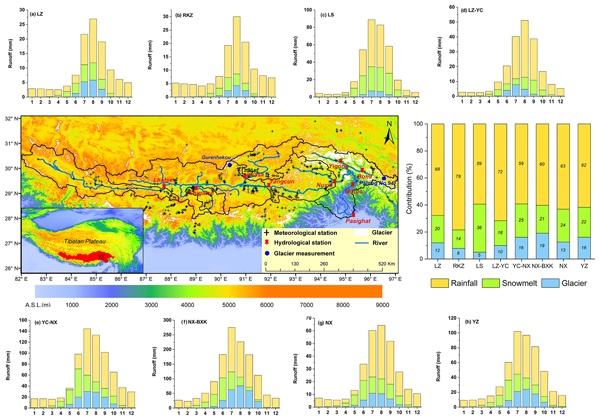
Our findings show that runoff in the Yarlung Zangbo (YZ) basin is primarily driven by rainfall, with the largest glacier runoff contribution in the downstream sub-basin. Annual runoff increased in the upper stream but decreased downstream due to varying precipitation patterns. It is expected to rise throughout the 21st century, mainly driven by increased rainfall.
Dominique Raynaud, Qiuzhen Yin, Emilie Capron, Zhipeng Wu, Frédéric Parrenin, André Berger, and Vladimir Lipenkov
Clim. Past, 20, 1269–1282, https://doi.org/10.5194/cp-20-1269-2024, https://doi.org/10.5194/cp-20-1269-2024, 2024
Short summary
Short summary
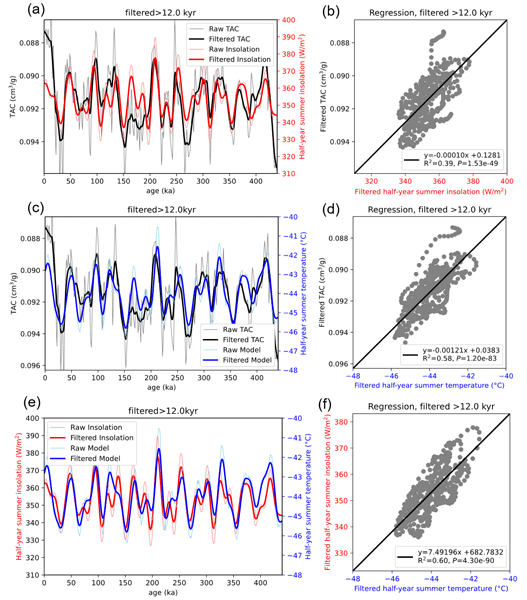
There is a lack of reconstructions from Antarctic ice cores of the temperature during the summer, a critical season in terms of solar energy received, preventing a good understanding of the link between Antarctic past climate and astronomically induced insolation changes. Here, the variations in total air content in an Antarctic ice core are found to be correlated to local summer temperatures simulated with a climate model. This tracer can be used to reconstruct past local summer temperatures.
Zengyun Hu, Xi Chen, Deliang Chen, Zhuo Zhang, Qiming Zhou, and Qingxiang Li
Geosci. Model Dev. Discuss., https://doi.org/10.5194/gmd-2024-82, https://doi.org/10.5194/gmd-2024-82, 2024
Preprint withdrawn
Short summary
Short summary
ERC firstly unified the evaluating, ranking, and clustering by a simple mathematic equation based on Euclidean Distance. It provides new system to solve the evaluating, ranking, and clustering tasks in SDGs. In fact, ERC system can be applied in any scientific domain.
Lingwei Li, Zhengyu Liu, Jinbo Du, Lingfeng Wan, and Jiuyou Lu
Clim. Past, 20, 1161–1175, https://doi.org/10.5194/cp-20-1161-2024, https://doi.org/10.5194/cp-20-1161-2024, 2024
Short summary
Short summary
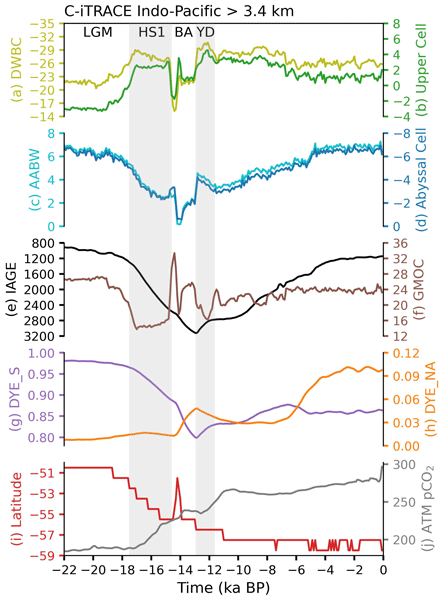
Radiocarbon proxies suggest that the deep waters are poorly ventilated during the Last Glacial Maximum (LGM). Here we use two transient simulations with tracers of radiocarbon and ideal age to show that the deep-ocean ventilation age is not much older at the LGM compared to the present day because of the strong glacial Antarctic Bottom Water transport. In contrast, the ventilation age is older during deglaciation mainly due to weakening of Antarctic Bottom Water transport.
Qian Lin, Jie Chen, and Deliang Chen
EGUsphere, https://doi.org/10.5194/egusphere-2024-826, https://doi.org/10.5194/egusphere-2024-826, 2024
Preprint archived
Short summary
Short summary
Glaciers of the Tibetan Plateau (TP) have experienced widespread retreat in recent decades, but impacts of glacier changes that have occurred on regional climate, including precipitation, is still unknown. Thus, this study addressed this knowledge gap, and found that glacier changes exert a more pronounced impact on summer extreme precipitation events than mean precipitation over the TP. This provides a certain theoretical reference for the further improvement of long-term glacier projection.
Fangzhong Shi, Xiaoyan Li, Shaojie Zhao, Yujun Ma, Junqi Wei, Qiwen Liao, and Deliang Chen
Hydrol. Earth Syst. Sci., 28, 163–178, https://doi.org/10.5194/hess-28-163-2024, https://doi.org/10.5194/hess-28-163-2024, 2024
Short summary
Short summary
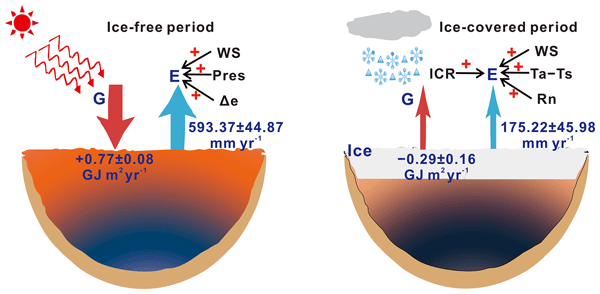
(1) Evaporation under ice-free and sublimation under ice-covered conditions and its influencing factors were first quantified based on 6 years of eddy covariance observations. (2) Night evaporation of Qinghai Lake accounts for more than 40 % of the daily evaporation. (3) Lake ice sublimation reaches 175.22 ± 45.98 mm, accounting for 23 % of the annual evaporation. (4) Wind speed weakening may have resulted in a 7.56 % decrease in lake evaporation during the ice-covered period from 2003 to 2017.
Danyang Ma, Tijian Wang, Hao Wu, Yawei Qu, Jian Liu, Jane Liu, Shu Li, Bingliang Zhuang, Mengmeng Li, and Min Xie
Atmos. Chem. Phys., 23, 6525–6544, https://doi.org/10.5194/acp-23-6525-2023, https://doi.org/10.5194/acp-23-6525-2023, 2023
Short summary
Short summary
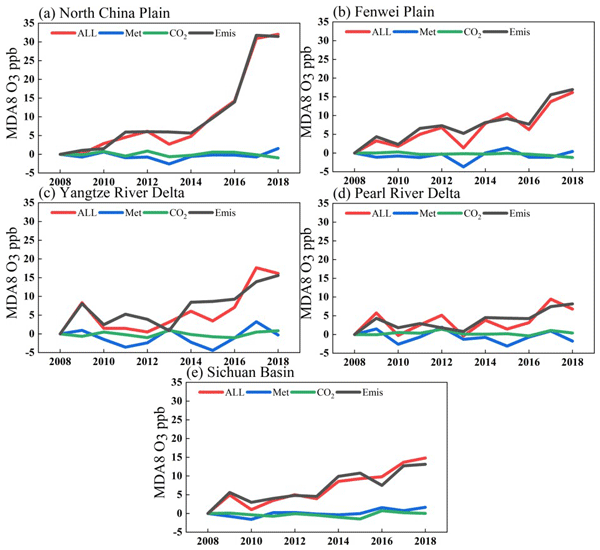
Increasing surface ozone (O3) concentrations have long been a significant environmental issue in China, despite the Clean Air Action Plan launched in 2013. Most previous research ignores the contributions of CO2 variations. Our study comprehensively analyzed O3 variation across China from various perspectives and highlighted the importance of considering CO2 variations when designing long-term O3 control policies, especially in high-vegetation-coverage areas.
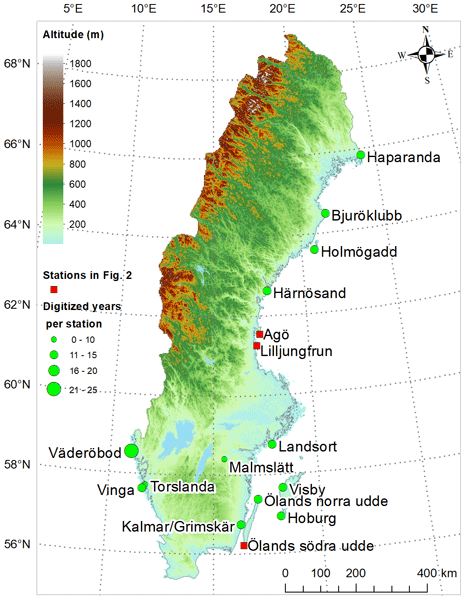
John Erik Engström, Lennart Wern, Sverker Hellström, Erik Kjellström, Chunlüe Zhou, Deliang Chen, and Cesar Azorin-Molina
Earth Syst. Sci. Data, 15, 2259–2277, https://doi.org/10.5194/essd-15-2259-2023, https://doi.org/10.5194/essd-15-2259-2023, 2023
Short summary
Short summary
Newly digitized wind speed observations provide data from the time period from around 1920 to the present, enveloping one full century of wind measurements. The results of this work enable the investigation of the historical variability and trends in surface wind speed in Sweden for
the last century.
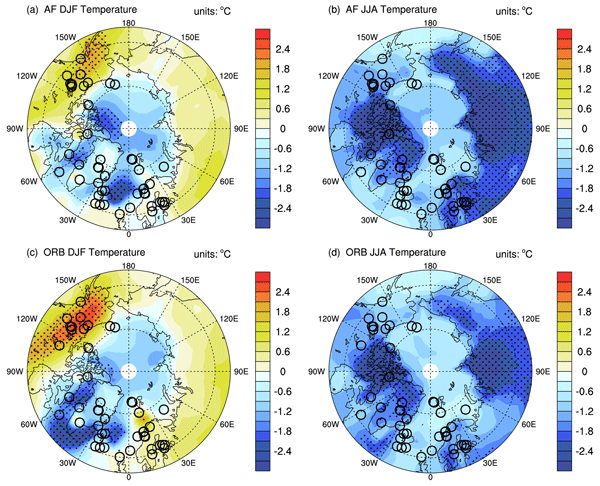
Hongyue Zhang, Jesper Sjolte, Zhengyao Lu, Jian Liu, Weiyi Sun, and Lingfeng Wan
Clim. Past, 19, 665–680, https://doi.org/10.5194/cp-19-665-2023, https://doi.org/10.5194/cp-19-665-2023, 2023
Short summary
Short summary
Based on proxy data and modeling, the Arctic temperature has an asymmetric cooling trend with more cooling over the Atlantic Arctic than the Pacific Arctic during the Holocene, dominated by orbital forcing. There is a seasonal difference in the asymmetric cooling trend, which is dominated by the DJF (December, January, and February) temperature variability. The Arctic dipole mode of sea level pressure and sea ice play a major role in asymmetric temperature changes.
He Sun, Tandong Yao, Fengge Su, Wei Yang, Guifeng Huang, and Deliang Chen
Hydrol. Earth Syst. Sci. Discuss., https://doi.org/10.5194/hess-2023-16, https://doi.org/10.5194/hess-2023-16, 2023
Manuscript not accepted for further review
Short summary
Short summary
Based on field research campaigns since 2017 in the Yarlung Zangbo (YZ) river basin and a well-validated model, our results reveal that large regional differences in runoff regimes and changes exist in the basin. Annual runoff shows decreasing trend in the downstream sub-basin but increasing trends in the upper and middle sub-basins, due to opposing precipitation changes. Glacier runoff plays more important role in annual total runoff in downstream basin.
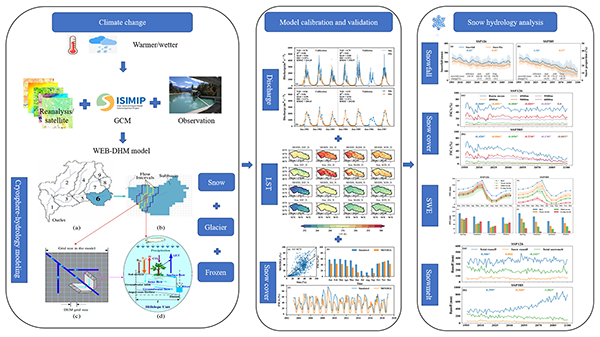
Chenhao Chai, Lei Wang, Deliang Chen, Jing Zhou, Hu Liu, Jingtian Zhang, Yuanwei Wang, Tao Chen, and Ruishun Liu
Hydrol. Earth Syst. Sci., 26, 4657–4683, https://doi.org/10.5194/hess-26-4657-2022, https://doi.org/10.5194/hess-26-4657-2022, 2022
Short summary
Short summary
This work quantifies future snow changes and their impacts on hydrology in the upper Salween River (USR) under SSP126 and SSP585 using a cryosphere–hydrology model. Future warm–wet climate is not conducive to the development of snow. The rain–snow-dominated pattern of runoff will shift to a rain-dominated pattern after the 2040s under SSP585 but is unchanged under SSP126. The findings improve our understanding of cryosphere–hydrology processes and can assist water resource management in the USR.
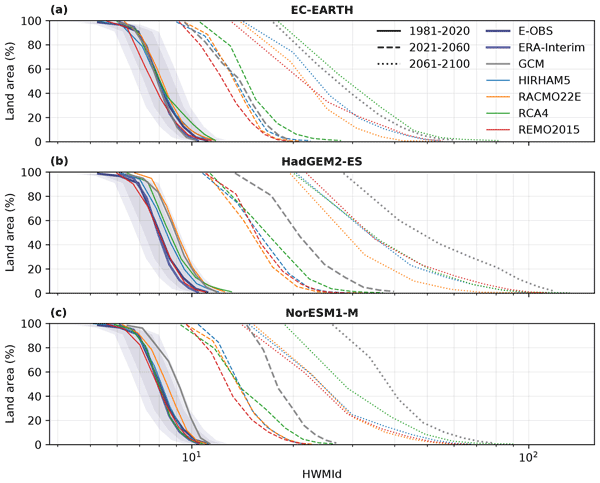
Changgui Lin, Erik Kjellström, Renate Anna Irma Wilcke, and Deliang Chen
Earth Syst. Dynam., 13, 1197–1214, https://doi.org/10.5194/esd-13-1197-2022, https://doi.org/10.5194/esd-13-1197-2022, 2022
Short summary
Short summary
This study endorses RCMs' added value on the driving GCMs in representing observed heat wave magnitudes. The future increase of heat wave magnitudes projected by GCMs is attenuated when downscaled by RCMs. Within the downscaling, uncertainties can be attributed almost equally to choice of RCMs and to the driving data associated with different GCMs. Uncertainties of GCMs in simulating heat wave magnitudes are transformed by RCMs in a complex manner rather than simply inherited.
Chunlüe Zhou, Cesar Azorin-Molina, Erik Engström, Lorenzo Minola, Lennart Wern, Sverker Hellström, Jessika Lönn, and Deliang Chen
Earth Syst. Sci. Data, 14, 2167–2177, https://doi.org/10.5194/essd-14-2167-2022, https://doi.org/10.5194/essd-14-2167-2022, 2022
Short summary
Short summary
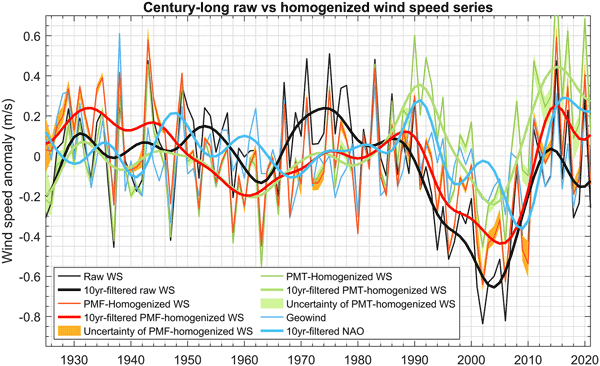
To fill the key gap of short availability and inhomogeneity of wind speed (WS) in Sweden, we rescued the early paper records of WS since 1925 and built the first 10-member centennial homogenized WS dataset (HomogWS-se) for community use. An initial WS stilling and recovery before the 1990s was observed, and a strong link with North Atlantic Oscillation was found. HomogWS-se improves our knowledge of uncertainty and causes of historical WS changes.
Xiangde Xu, Chan Sun, Deliang Chen, Tianliang Zhao, Jianjun Xu, Shengjun Zhang, Juan Li, Bin Chen, Yang Zhao, Hongxiong Xu, Lili Dong, Xiaoyun Sun, and Yan Zhu
Atmos. Chem. Phys., 22, 1149–1157, https://doi.org/10.5194/acp-22-1149-2022, https://doi.org/10.5194/acp-22-1149-2022, 2022
Short summary
Short summary
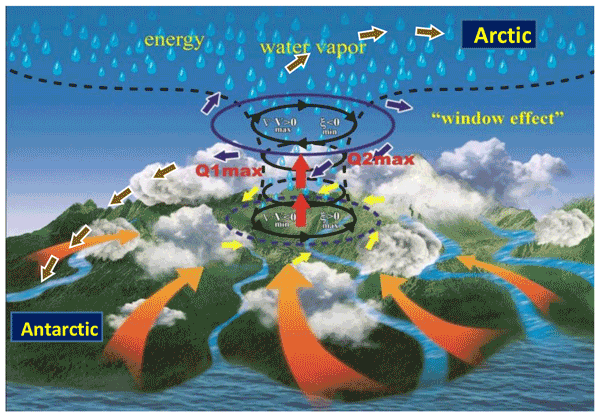
A vertical transport window of tropospheric vapor exists on the Tibetan Plateau (TP). The TP's thermal forcing drives the vertical transport
windowof vapor in the troposphere. The effects of the TP's vertical transport window of vapor are of importance in global climate change.
Cited articles
An, Z., Zhou, W., Zhang, Z., Zhang, X., Liu, Z., Sun, Y., Clemens, S. C., Wu, L., Zhao, J., Shi, Z., Ma, X., Yan, H., Li, G., Cai, Y., Yu, J., Sun, Y., Li, S., Zhang, Y., Stepanek, C., Lohmann, G., Dong, G., Cheng, H., Liu, Y., Jin, Z., Li, T., Hao, Y., Lei, J., and Cai, W.: Mid-Pleistocene climate transition triggered by Antarctic Ice Sheet growth, Science, 385, 560–565, https://doi.org/10.1126/science.abn4861, 2024.
Armitage, S. J., Bristow, C. S., and Drake, N. A.: West African monsoon dynamics inferred from abrupt fluctuations of Lake Mega-Chad, Proc. Natl. Acad. Sci., 112, 8543–8548, https://doi.org/10.1073/pnas.1417655112, 2015.
Ayalon, A., Bar-Matthews, M., and Kaufman, A.: Climatic conditions during marine oxygen isotope stage 6 in the eastern Mediterranean region from the isotopic composition of speleothems of Soreq Cave, Israel, Geology, 30, 303–306, https://doi.org/10.1130/0091-7613(2002)030<0303:CCDMOI>2.0.CO;2, 2002.
Bao, Y., Liu, Z., and He, C.: Dipole Response of Millennial Variability in Tropical South American Precipitation and δ18Op during the Last Deglaciation. Part II: δ18Op Response, J. Clim., 36, 4709–4721, https://doi.org/10.1175/JCLI-D-22-0289.1, 2023.
Bar-Matthews, M., Ayalon, A., Gilmour, M., Matthews, A., and Hawkesworth, C. J.: Sea–land oxygen isotopic relationships from planktonic foraminifera and speleothems in the Eastern Mediterranean region and their implication for paleorainfall during interglacial intervals, Geochim. Cosmochim. Acta, 67, 3181–3199, https://doi.org/10.1016/S0016-7037(02)01031-1, 2003.
Bartlein, P. J., Harrison, S. P., Brewer, S., Connor, S., Davis, B. A. S., Gajewski, K., Guiot, J., Harrison-Prentice, T. I., Henderson, A., Peyron, O., Prentice, I. C., Scholze, M., Seppä, H., Shuman, B., Sugita, S., Thompson, R. S., Viau, A. E., Williams, J., and Wu, H.: Pollen-based continental climate reconstructions at 6 and 21 ka: a global synthesis, Clim. Dyn., 37, 775–802, https://doi.org/10.1007/s00382-010-0904-1, 2011.
Battisti, D. S., Ding, Q., and Roe, G. H.: Coherent pan-Asian climatic and isotopic response to orbital forcing of tropical insolation, J. Geophys. Res. Atmos., 119, 11997–12020, https://doi.org/10.1002/2014JD021960, 2014.
Berger, A.: Long-term variations of caloric insolation resulting from the earth's orbital elements, Quat. Res., 9, 139–167, https://doi.org/10.1016/0033-5894(78)90064-9, 1978.
Berger, A. and Pestiaux, P.: Accuracy and stability of the Quaternary terrestrial insolation, Milankovitch and Climate, 83–112, https://ui.adsabs.harvard.edu/abs/1984mcur.conf...83B (last access: April 2026), 1984.
Berger, A., Loutre, M., and Tricot, C.: Insolation and Earth's orbital periods, J. Geophys. Res., 98, 10341–10362, https://doi.org/10.1029/93JD00222, 1993.
Blanchet, C. L., Osborne, A. H., Tjallingii, R., Ehrmann, W., Friedrich, T., Timmermann, A., Brückmann, W., and Frank, M.: Drivers of river reactivation in North Africa during the last glacial cycle, Nat. Geosci., 14, 97–103, https://doi.org/10.1038/s41561-020-00671-3, 2021.
Bosmans, J. H. C., Drijfhout, S. S., Tuenter, E., Hilgen, F. J., and Lourens, L. J.: Response of the North African summer monsoon to precession and obliquity forcings in the EC-Earth GCM, Clim. Dyn., 44, 279–297, https://doi.org/10.1007/s00382-014-2260-z, 2015.
Braconnot, P., Harrison, S. P., Kageyama, M., Bartlein, P. J., Masson-Delmotte, V., Abe-Ouchi, A., Otto-Bliesner, B., and Zhao, Y.: Evaluation of climate models using palaeoclimatic data, Nat. Clim. Chang., 2, 417–424, https://doi.org/10.1038/nclimate1456, 2012.
Brady, E., Stevenson, S., Bailey, D., Liu, Z., Noone, D., Nusbaumer, J., Otto-Bliesner, B. L., Tabor, C., Tomas, R., Wong, T., Zhang, J., and Zhu, J.: The Connected Isotopic Water Cycle in the Community Earth System Model Version 1, J. Adv. Model. Earth Syst., 11, 2547–2566, https://doi.org/10.1029/2019MS001663, 2019.
Brahim, Y. A., Sha, L., Wassenburg, J. A., Azennoud, K., Cheng, H., Cruz, F. W., and Bouchaou, L.: The spatiotemporal extent of the Green Sahara during the last glacial period, iScience, 26, 107018, https://doi.org/10.1016/j.isci.2023.107018, 2023.
Cauquoin, A., Werner, M., and Lohmann, G.: Water isotopes – climate relationships for the mid-Holocene and preindustrial period simulated with an isotope-enabled version of MPI-ESM, Clim. Past, 15, 1913–1937, https://doi.org/10.5194/cp-15-1913-2019, 2019.
Chen, J. and Bordoni, S.: Orographic Effects of the Tibetan Plateau on the East Asian Summer Monsoon: An Energetic Perspective, J. Clim., 27, 3052–3072, https://doi.org/10.1175/JCLI-D-13-00479.1, 2014.
Cheng, H., Sinha, A., Wang, X., Cruz, F. W., and Edwards, R. L.: The Global Paleomonsoon as seen through speleothem records from Asia and the Americas, Clim. Dyn., 39, 1045–1062, https://doi.org/10.1007/s00382-012-1363-7, 2012.
Cheng, H., Sinha, A., Cruz, F. W., Wang, X., Edwards, R. L., d'Horta, F. M., Ribas, C. C., Vuille, M., Stott, L. D., and Auler, A. S.: Climate change patterns in Amazonia and biodiversity, Nat. Commun., 4, 1411–1416, https://doi.org/10.1038/ncomms2415, 2013.
Cheng, H., Edwards, R. L., Sinha, A., Spötl, C., Yi, L., Chen, S., Kelly, M., Kathayat, G., Wang, X., Li, X., Kong, X., Wang, Y., Ning, Y., and Zhang, H.: The Asian monsoon over the past 640 000 years and ice age terminations, Nature, 534, 640–646, https://doi.org/10.1038/nature18591, 2016.
Cheng, H., Li, H., Zhang, X., Zhang, H., Yi, L., Cai, Y., Hu, Y., Shi, Z., Peng, Y., Zhao, J., Gayatri, K., and Ashish, S.: European-Asian-African continent: An early form of supercontinent and supermonsoon, Quat. Sci., 40, 1381–1396, https://doi.org/10.11928/j.issn.1001-7410.2020.06.01, 2020.
Cole, J. E., Rind, D., Webb, R. S., Jouzel, J., and Healy, R.: Climatic controls on interannual variability of precipitation δ18O: Simulated influence of temperature, precipitation amount, and vapor source region, J. Geophys. Res. Atmos., 104, 14223–14235, https://doi.org/10.1029/1999JD900182, 1999.
Cook, K. H. and Vizy, E. K.: Contemporary Climate Change of the African Monsoon Systems, Curr. Clim. Change Rep., 5, 145–159, https://doi.org/10.1007/s40641-019-00130-1, 2019.
Coplen, T. B., Kendall, C., and Hopple, J.: Comparison of stable isotope reference samples, Nature, 302, 236–238, https://doi.org/10.1038/302236a0, 1983.
Crocker, A. J., Naafs, B. D. A., Westerhold, T., James, R. H., Cooper, M. J., Röhl, U., Pancost, R. D., Xuan, C., Osborne, C. P., Beerling, D. J., and Wilson, P. A.: Astronomically controlled aridity in the Sahara since at least 11 million years ago, Nat. Geosci., 15, 671–676, https://doi.org/10.1038/s41561-022-00990-7, 2022.
Cruz, F. W., Burns, S. J., Karmann, I., Sharp, W. D., Vuille, M., Cardoso, A. O., Ferrari, J. A., Silva Dias, P. L., and Viana, O.: Insolation-driven changes in atmospheric circulation over the past 116 000 years in subtropical Brazil, Nature, 434, 63–66, https://doi.org/10.1038/nature03365, 2005.
Dansgaard, W.: Stable isotopes in precipitation, Tellus, 16, 436–468, https://doi.org/10.3402/tellusa.v16i4.8993, 1964.
Datti, A. D., Zeng, G., Monerie, P.-A., Oo, K. T., and Chen, C.: A Review of the arctic-West African monsoon nexus: How arctic sea ice decline influences monsoon system, Theor. Appl. Climatol., 156, 9–29, https://doi.org/10.1007/s00704-024-05255-4, 2025.
deMenocal, P., Ortiz, J., Guilderson, T., and Sarnthein, M.: Coherent High- and Low-Latitude Climate Variability During the Holocene Warm Period, Science, 288, 2198–2202, https://doi.org/10.1126/science.288.5474.2198, 2000.
deMenocal, P. B.: African climate change and faunal evolution during the Pliocene–Pleistocene, Earth Planet. Sci. Lett., 220, 3–24, https://doi.org/10.1016/S0012-821X(04)00003-2, 2004.
deMenocal, P. B. and Tierney, J. E.: Green Sahara: African Humid Periods paces by Earth's orbital changes, Nat. Educ. Knowl., 3, 12–17, 2012.
Ehrmann, W., Schmiedl, G., Seidel, M., Krüger, S., and Schulz, H.: A distal 140 kyr sediment record of Nile discharge and East African monsoon variability, Clim. Past, 12, 713–727, https://doi.org/10.5194/cp-12-713-2016, 2016.
Ehrmann, W., Schmiedl, G., Beuscher, S., and Krüger, S.: Intensity of African Humid Periods Estimated from Saharan Dust Fluxes, PloS One, 12, e0170989, https://doi.org/10.1371/journal.pone.0170989, 2017.
Fairchild, I. J., Baker, A., and Bradley, R.(Eds.): Speleothem Science: From Process to Past Environments, John Wiley & Sons, 432 pp., https://doi.org/10.1002/9781444361094, 2012.
Fersi, W., Lézine, A.-M., and Bassinot, F.: Hydro-climate changes over southwestern Arabia and the Horn of Africa during the last glacial–interglacial transition: A pollen record from the Gulf of Aden, Rev. Palaeobot. Palynol., 233, 176–185, https://doi.org/10.1016/j.revpalbo.2016.04.002, 2016.
Grant, K. M., Grimm, R., Mikolajewicz, U., Marino, G., Ziegler, M., and Rohling, E. J.: The timing of Mediterranean sapropel deposition relative to insolation, sea-level and African monsoon changes, Quat. Sci. Rev., 140, 125–141, https://doi.org/10.1016/j.quascirev.2016.03.026, 2016.
Grant, K. M., Rohling, E. J., Westerhold, T., Zabel, M., Heslop, D., Konijnendijk, T., and Lourens, L.: A 3 million year index for North African humidity/aridity and the implication of potential pan-African Humid periods, Quat. Sci. Rev., 171, 100–118, https://doi.org/10.1016/j.quascirev.2017.07.005, 2017.
He, C., Liu, Z., Otto-Bliesner, B. L., Brady, E. C., Zhu, C., Tomas, R., Clark, P. U., Zhu, J., Jahn, A., Gu, S., Zhang, J., Nusbaumer, J., Noone, D., Cheng, H., Wang, Y., Yan, M., and Bao, Y.: Hydroclimate footprint of pan-Asian monsoon water isotope during the last deglaciation, Sci. Adv., 7, https://doi.org/10.1126/sciadv.abe2611, 2021.
Herold, M. and Lohmann, G.: Eemian tropical and subtropical African moisture transport: an isotope modelling study, Clim. Dyn., 33, 1075–1088, https://doi.org/10.1007/s00382-008-0515-2, 2009.
Hill, S. A., Ming, Y., Held, I. M., and Zhao, M.: A Moist Static Energy Budget–Based Analysis of the Sahel Rainfall Response to Uniform Oceanic Warming, J. Clim., 30, 5637–5660, https://doi.org/10.1175/JCLI-D-16-0785.1, 2017.
Hu, J., Emile-Geay, J., Tabor, C., Nusbaumer, J., and Partin, J.: Deciphering Oxygen Isotope Records From Chinese Speleothems With an Isotope-Enabled Climate Model, Paleoceanogr. Paleoclimatol., 34, 2098–2112, https://doi.org/10.1029/2019PA003741, 2019.
Hunke, E. C.: Thickness sensitivities in the CICE sea ice model, Ocean Model., 34, 137–149, https://doi.org/10.1016/j.ocemod.2010.05.004, 2010.
Ji, C., Wen, Q., Liu, Z., Liu, J., Chen, D., Ning, L., Yan, M., and Yin, Q.: A dipole pattern of orbital-scale precipitation oxygen isotope variation in North African monsoon region and the driving mechanism, Zenodo [data set], https://doi.org/10.5281/zenodo.17659273, 2025.
Kohfeld, K. E. and Harrison, S. P.: How well can we simulate past climates? Evaluating the models using global palaeoenvironmental datasets, Quat. Sci. Rev., 19, 321–346, https://doi.org/10.1016/S0277-3791(99)00068-2, 2000.
Kurita, N.: Water isotopic variability in response to mesoscale convective system over the tropical ocean, J. Geophys. Res. Atmos., 118, 10376–10390, https://doi.org/10.1002/jgrd.50754, 2013.
Kutzbach, J. E. and Liu, Z.: Response of the African Monsoon to Orbital Forcing and Ocean Feedbacks in the Middle Holocene, Science, 278, 440–443, https://doi.org/10.1126/science.278.5337.440, 1997.
Kutzbach, J. E., Liu, X., Liu, Z., and Chen, G.: Simulation of the evolutionary response of global summer monsoons to orbital forcing over the past 280 000 years, Clim. Dyn., 30, 567–579, https://doi.org/10.1007/s00382-007-0308-z, 2008.
Kutzbach, J. E., Guan, J., He, F., Cohen, A. S., Orland, I. J., and Chen, G.: African climate response to orbital and glacial forcing in 140 000-y simulation with implications for early modern human environments, PNAS, 117, 2255–2264, https://doi.org/10.1073/pnas.1917673117, 2020.
Lachniet, M. S.: Climatic and environmental controls on speleothem oxygen-isotope values, Quat. Sci. Rev., 28, 412–432, https://doi.org/10.1016/j.quascirev.2008.10.021, 2009.
Lee, J.-E. and Fung, I.: “Amount effect” of water isotopes and quantitative analysis of post-condensation processes, Hydrol. Process., 22, 1–8, https://doi.org/10.1002/hyp.6637, 2007.
Lee, J.-E., Johnson, K., and Fung, I.: Precipitation over South America during the Last Glacial Maximum: An analysis of the “amount effect” with a water isotope-enabled general circulation model, Geophys. Res. Lett., 36, https://doi.org/10.1029/2009GL039265, 2009.
Lézine, A.-M., Duplessy, J.-C., and Cazet, J.-P.: West African monsoon variability during the last deglaciation and the Holocene: Evidence from fresh water algae, pollen and isotope data from core KW31, Gulf of Guinea, Palaeogeogr. Palaeocl., 219, 225–237, https://doi.org/10.1016/j.palaeo.2004.12.027, 2005.
Lézine, A.-M., Hély, C., Grenier, C., Braconnot, P., and Krinner, G.: Sahara and Sahel vulnerability to climate changes, lessons from Holocene hydrological data, Quat. Sci. Rev., 30, 3001–3012, https://doi.org/10.1016/j.quascirev.2011.07.006, 2011.
Liu, X. and Battisti, D. S.: The Influence of Orbital Forcing of Tropical Insolation on the Climate and Isotopic Composition of Precipitation in South America, J. Clim., 28, 4841–4862, https://doi.org/10.1175/JCLI-D-14-00639.1, 2015.
Liu, Z., Wen, X., Brady, E. C., Otto-Bliesner, B., Yu, G., Lu, H., Cheng, H., Wang, Y., Zheng, W., Ding, Y., Edwards, R. L., Cheng, J., Liu, W., and Yang, H.: Chinese cave records and the East Asia Summer Monsoon, Quat. Sci. Rev., 83, 115–128, https://doi.org/10.1016/j.quascirev.2013.10.021, 2014.
Lorenz, S. J. and Lohmann, G.: Acceleration technique for Milankovitch type forcing in a coupled atmosphere-ocean circulation model: method and application for the Holocene, Clim. Dyn., 23, 727–743, https://doi.org/10.1007/s00382-004-0469-y, 2004.
Marzocchi, A., Lunt, D. J., Flecker, R., Bradshaw, C. D., Farnsworth, A., and Hilgen, F. J.: Orbital control on late Miocene climate and the North African monsoon: insight from an ensemble of sub-precessional simulations, Clim. Past, 11, 1271–1295, https://doi.org/10.5194/cp-11-1271-2015, 2015.
McDougall, I., Brown, F. H., and Fleagle, J. G.: Stratigraphic placement and age of modern humans from Kibish, Ethiopia, Nature, 433, 733–736, https://doi.org/10.1038/nature03258, 2005.
Messori, G., Gaetani, M., Zhang, Q., Zhang, Q., and Pausata, F. S. R.: The water cycle of the mid-Holocene West African monsoon: The role of vegetation and dust emission changes, Int. J. Climatol., 39, 1927–1939, https://doi.org/10.1002/joc.5924, 2019.
Moore, M., Kuang, Z., and Blossey, P. N.: A moisture budget perspective of the amount effect, Geophys. Res. Lett., 41, 1329–1335, https://doi.org/10.1002/2013GL058302, 2014.
Muschitiello, F., Zhang, Q., Sundqvist, H. S., Davies, F. J., and Renssen, H.: Arctic climate response to the termination of the African Humid Period, Quat. Sci. Rev., 125, 91–97, https://doi.org/10.1016/j.quascirev.2015.08.012, 2015.
Neale, R. B., Chen, C.-C., Gettelman, A., Lauritzen, P. H., Park, S., Williamson, D. L., Conley, A. J., Garcia, R., Kinnison, D., Lamarque, J.-F., Marsh, D., Mills, M., Smith, A. K., Tilmes, S., Vitt, F., Morrison, H., Cameron-Smith, P., Collins, W. D., Iacono, M. J., Easter, R. C., Ghan, S. J., Liu, X., Rasch, P. J., and Taylor, M. A.: Description of the NCAR community atmosphere model (CAM 5.0), NCAR Tech Note NCARTN-486 STR, 1, 1–12, https://opensky.ucar.edu/system/files/2024-08/technotes_594.pdf (last access: April 2026), 2010.
Nusbaumer, J., Wong, T. E., Bardeen, C., and Noone, D.: Evaluating hydrological processes in the Community Atmosphere Model Version 5 (CAM5) using stable isotope ratios of water, J. Adv. Model. Earth Syst., 9, 949–977, https://doi.org/10.1002/2016MS000839, 2017.
Oleson, K. W., Lawrence, D. M., Flanner, M. G., Kluzek, E., Levis, S., Swenson, S. C., Thornton, E., Dai, A., Decker, M., Dickinson, R., Feddema, J., Heald, C. L., Lamarque, J.-F., Niu, G.-Y., Qian, T., Running, S., Sakaguchi, K., Slater, A., Stöckli, R., Wang, A., Yang, L., Zeng, X., and Zeng, X.: Technical Description of version 4.0 of the Community Land Model (CLM), NCAR Tech Note NCARTN-4781STR, 257, https://doi.org/10.5065/D6FB50WZ, 2010.
O'Mara, N. A., Skonieczny, C., McGee, D., Winckler, G., Bory, A. J.-M., Bradtmiller, L. I., Malaizé, B., and Polissar, P. J.: Pleistocene drivers of Northwest African hydroclimate and vegetation, Nat. Commun., 13, 3552, https://doi.org/10.1038/s41467-022-31120-x, 2022.
O'Neil, J. R., Clayton, R. N., and Mayeda, T. K.: Oxygen Isotope Fractionation in Divalent Metal Carbonates, J. Chem. Phys., 51, 5547–5558, https://doi.org/10.1063/1.1671982, 1969.
Patricola, C. M. and Cook, K. H.: Dynamics of the West African Monsoon under Mid-Holocene Precessional Forcing: Regional Climate Model Simulations, J. Clim., 20, 694–716, https://doi.org/10.1175/JCLI4013.1, 2007.
Pausata, F. S. R., Battisti, D. S., Nisancioglu, K. H., and Bitz, C. M.: Chinese stalagmite δ18O controlled by changes in the Indian monsoon during a simulated Heinrich event, Nat. Geosci., 4, 474–480, https://doi.org/10.1038/ngeo1169, 2011.
Pausata, F. S. R., Messori, G., and Zhang, Q.: Impacts of dust reduction on the northward expansion of the African monsoon during the Green Sahara period, Earth Planet. Sci. Lett., 434, 298–307, https://doi.org/10.1016/j.epsl.2015.11.049, 2016.
Pausata, F. S. R., Gaetani, M., Messori, G., Berg, A., Maia De Souza, D., Sage, R. F., and deMenocal, P. B.: The Greening of the Sahara: Past Changes and Future Implications, One Earth, 2, 235–250, https://doi.org/10.1016/j.oneear.2020.03.002, 2020.
Pokras, E. M. and Mix, A. C.: Earth's precession cycle and Quaternary climatic change in tropical Africa, Nature, 326, 486–487, https://doi.org/10.1038/326486a0, 1987.
Revel, M., Ducassou, E., Grousset, F. E., Bernasconi, S. M., Migeon, S., Revillon, S., Mascle, J., Murat, A., Zaragosi, S., and Bosch, D.: 100 000 Years of African monsoon variability recorded in sediments of the Nile margin, Quat. Sci. Rev., 29, 1342–1362, https://doi.org/10.1016/j.quascirev.2010.02.006, 2010.
Risi, C., Bony, S., and Vimeux, F.: Influence of convective processes on the isotopic composition (δ18O and δD) of precipitation and water vapor in the tropics: 2. Physical interpretation of the amount effect, J. Geophys. Res. Atmos., 113, 306, https://doi.org/10.1029/2008JD009943, 2008.
Roe, G. H., Ding, Q., Battisti, D. S., Molnar, P., Clark, M. K., and Garzione, C. N.: A modeling study of the response of Asian summertime climate to the largest geologic forcings of the past 50 Ma, J. Geophys. Res.: Atmos, 121, 5453–5470, https://doi.org/10.1002/2015JD024370, 2016.
Rohling, E. J., Marino, G., and Grant, K. M.: Mediterranean climate and oceanography, and the periodic development of anoxic events (sapropels), Earth Sci. Rev., 143, 62–97, https://doi.org/10.1016/j.earscirev.2015.01.008, 2015.
Rose, C., Polissar, P. J., Tierney, J. E., Filley, T., and deMenocal, P. B.: Changes in northeast African hydrology and vegetation associated with Pliocene–Pleistocene sapropel cycles, Philos. Trans. R. Soc. B, 371, 20150243, https://doi.org/10.1098/rstb.2015.0243, 2016.
Schneider, T., Bischoff, T., and Haug, G. H.: Migrations and dynamics of the intertropical convergence zone, Nature, 513, 45–53, https://doi.org/10.1038/nature13636, 2014.
Schurgers, G., Mikolajewicz, U., Gröger, M., Maier-Reimer, E., Vizcaíno, M., and Winguth, A.: The effect of land surface changes on Eemian climate, Clim. Dyn., 29, 357–373, https://doi.org/10.1007/s00382-007-0237-x, 2007.
Selami, N., Sèze, G., Gaetani, M., Grandpeix, J.-Y., Flamant, C., Cuesta, J., and Benabadji, N.: Cloud Cover over the Sahara during the Summer and Associated Circulation Features, Atmosphere, 12, 428–460, https://doi.org/10.3390/atmos12040428, 2021.
Shi, X., Cauquoin, A., Lohmann, G., Jonkers, L., Wang, Q., Yang, H., Sun, Y., and Werner, M.: Simulated stable water isotopes during the mid-Holocene and pre-industrial periods using AWI-ESM-2.1-wiso, Geosci. Model Dev., 16, 5153–5178, https://doi.org/10.5194/gmd-16-5153-2023, 2023.
Shi, X., Werner, M., Pausata, F. S. R., Yang, H., Liu, J., D'Agostino, R., Ingrosso, R., Yang, C., Gao, Q., and Lohmann, G.: On the length and intensity of the West African summer monsoon during the last interglacial African humid period, Quat. Sci. Rev., 328, 108542, https://doi.org/10.1016/j.quascirev.2024.108542, 2024.
Shi, X., Werner, M., Wang, Q., Yang, H., and Lohmann, G.: Simulated Mid-Holocene and Last Interglacial Climate Using Two Generations of AWI-ESM, J. Clim., 35, 7811–7831, https://doi.org/10.1175/JCLI-D-22-0354.1, 2022.
Shi, X., Werner, M., Yang, H., Gao, Q., Liu, J., and Lohmann, G.: Precession Controls on Climate and Water Isotope Signals in Northern Africa, Paleoceanogr. Paleoclimatol., 40, https://doi.org/10.1029/2024PA004999, 2025.
Skonieczny, C., McGee, D., Winckler, G., Bory, A., Bradtmiller, L. I., Kinsley, C. W., Polissar, P. J., De Pol-Holz, R., Rossignol, L., and Malaizé, B.: Monsoon-driven Saharan dust variability over the past 240,000 years, Sci. Adv., 5, https://doi.org/10.1126/sciadv.aav1887, 2019.
Smith, R., Jones, P., Briegleb, B., Bryan, F., Danabasoglu, G., Dennis, J., Dukowicz, J., Eden, C., Fox-Kemper, B., Gent, P., Hecht, M., Jayne, S., Jochum, M., Large, M., Lindsay, K., Maltrud, M., Norton, N., Peacock, S., Vertenstein, M., and Yeager, S.: The parallel ocean program (POP) reference manual: Ocean component of the community climate system model (CCSM), LAUR-01853, 141, 1–141, https://opensky.ucar.edu/system/files/2024-09/manuscripts_825.pdf (last access: April 2026), 2010.
Sultan, B. and Gaetani, M.: Agriculture in West Africa in the Twenty-First Century: Climate Change and Impacts Scenarios, and Potential for Adaptation, Front. Plant Sci., 7, 1262, https://doi.org/10.3389/fpls.2016.01262, 2016.
Sultan, B. and Janicot, S.: The West African Monsoon Dynamics. Part II: The “Preonset” and “Onset” of the Summer Monsoon, J. Clim., 16, 3407–3427, https://doi.org/10.1175/JCLI-D-22-0289.1, 2003.
Sultan, B., Baron, C., Dingkuhn, M., Sarr, B., and Janicot, S.: Agricultural impacts of large-scale variability of the West African monsoon, Agric. For. Meteorol., 128, 93–110, https://doi.org/10.1016/j.agrformet.2004.08.005, 2005.
Tabor, C. R., Otto-Bliesner, B. L., Brady, E. C., Nusbaumer, J., Zhu, J., Erb, M. P., Wong, T. E., Liu, Z., and Noone, D.: Interpreting Precession-Driven δ18O Variability in the South Asian Monsoon Region, J. Geophys. Res. Atmos., 123, 5927–5946, https://doi.org/10.1029/2018JD028424, 2018.
Tabor, C., Otto-Bliesner, B., and Liu, Z.: Speleothems of South American and Asian Monsoons Influenced by a Green Sahara, Geophys. Res. Lett., 47, https://doi.org/10.1029/2020GL089695, 2020.
Tierney, J. E., Lewis, S. C., Cook, B. I., LeGrande, A. N., and Schmidt, G. A.: Model, proxy and isotopic perspectives on the East African Humid Period, Earth Planet. Sci. Lett., 307, 103–112, https://doi.org/10.1016/j.epsl.2011.04.038, 2011.
Tierney, J. E., Pausata, F. S. R., and deMenocal, P. B.: Rainfall regimes of the Green Sahara, Sci. Adv., 3, https://doi.org/10.1126/sciadv.1601503, 2017a.
Tierney, J. E., deMenocal, P. B., and Zander, P. D.: A climatic context for the out-of-Africa migration, Geology, 45, 1023–1026, https://doi.org/10.1130/G39457.1, 2017b.
Timm, O. and Timmermann, A.: Simulation of the Last 21 000 Years Using Accelerated Transient Boundary Conditions, J. Clim., 20, 4377–4401, https://doi.org/10.1175/JCLI4237.1, 2007.
Tuenter, E., Weber, S. L., Hilgen, F. J., and Lourens, L. J.: The response of the African summer monsoon to remote and local forcing due to precession and obliquity, Glob. Planet. Change, 36, 219–235, https://doi.org/10.1016/S0921-8181(02)00196-0, 2003.
Vaks, A., Bar-Matthews, M., Ayalon, A., Matthews, A., Halicz, L., and Frumkin, A.: Desert speleothems reveal climatic window for African exodus of early modern humans, Geology, 35, 831–834, https://doi.org/10.1130/G23794A.1, 2007.
Voigt, A., Biasutti, M., Scheff, J., Bader, J., Bordoni, S., Codron, F., Dixon, R. D., Jonas, J., Kang, S. M., Klingaman, N. P., Leung, R., Lu, J., Mapes, B., Maroon, E. A., McDermid, S., Park, J., Roehrig, R., Rose, B. E. J., Russell, G. L., Seo, J., Toniazzo, T., Wei, H.-H., Yoshimori, M., and Vargas Zeppetello, L. R.: The tropical rain belts with an annual cycle and a continent model intercomparison project: TRACMIP, J. Adv. Model. Earth Syst., 8, 1868–1891, https://doi.org/10.1002/2016MS000748, 2016.
Vuille, M., Bradley, R. S., Werner, M., Healy, R., and Keimig, F.: Modeling δ18O in precipitation over the tropical Americas: 1. Interannual variability and climatic controls, J. Geophys. Res. Atmos., 108, 4174, https://doi.org/10.1029/2001JD002038, 2003.
Waldmann, N., Torfstein, A., and Stein, M.: Northward intrusions of low- and mid-latitude storms across the Saharo-Arabian belt during past interglacials, Geology, 38, 567–570, https://doi.org/10.1130/G30654.1, 2010.
Wang, Y. J., Cheng, H., Edwards, R. L., An, Z. S., Wu, J. Y., Shen, C.-C., and Dorale, J. A.: A High-Resolution Absolute-Dated Late Pleistocene Monsoon Record from Hulu Cave, China, Science, 294, 2345–2348, https://doi.org/10.1126/science.1064618, 2001.
Weber, S. L. and Tuenter, E.: The impact of varying ice sheets and greenhouse gases on the intensity and timing of boreal summer monsoons, Quat. Sci. Rev., 30, 469–479, https://doi.org/10.1016/j.quascirev.2010.12.009, 2011.
Wen, Q., Liu, Z., Zhu, J., Yan, M., He, C., Han, J., Liu, J., and Liang, Y.: Local Insolation Drives Afro-Asian Monsoon at Orbital-Scale in Holocene, Geophys. Res. Lett., 49, https://doi.org/10.1029/2021GL097661, 2022.
Wen, Q., Liu, Z., Jing, Z., Clemens, S. C., Wang, Y., Yan, M., Ning, L., and Liu, J.: Grand dipole response of Asian summer monsoon to orbital forcing, Npj Clim. Atmo. Sci., 7, 1–11, https://doi.org/10.1038/s41612-024-00749-4, 2024.
Werner, M., Langebroek, P. M., Carlsen, T., Herold, M., and Lohmann, G.: Stable water isotopes in the ECHAM5 general circulation model: Toward high-resolution isotope modeling on a global scale, J. Geophys. Res. Atmos., 116, https://doi.org/10.1029/2011JD015681, 2011.
Yin, Q. and Berger, A.: Interglacial analogues of the Holocene and its natural near future, Quat. Sci. Rev., 120, 28–46, https://doi.org/10.1016/j.quascirev.2015.04.008, 2015.
Ziegler, M., Tuenter, E., and Lourens, L. J.: The precession phase of the boreal summer monsoon as viewed from the eastern Mediterranean (ODP Site 968), Quat. Sci. Rev., 29, 1481–1490, https://doi.org/10.1016/j.quascirev.2010.03.011, 2010.
Short summary
Geologist commonly use speleothem δ18Oc records to reconstruct past North African monsoon variability based on “amount effect” relationship between δ18Oc and monsoon rainfall. However, the interpretation of these records has been challenged in recent years. Here, we use isotope-enabled climate model to simulate climate change during the past 150,000 years. We find that changes in δ18Op across North African region are caused by multiple atmospheric processes, rather than by “amount effect”.
Geologist commonly use speleothem δ18Oc records to reconstruct past North African monsoon...


Altmetrics
Final-revised paper
Preprint