
Articles | Volume 26, issue 5
https://doi.org/10.5194/acp-26-3867-2026
© Author(s) 2026. This work is distributed under
the Creative Commons Attribution 4.0 License.
the Creative Commons Attribution 4.0 License.
https://doi.org/10.5194/acp-26-3867-2026
© Author(s) 2026. This work is distributed under
the Creative Commons Attribution 4.0 License.
the Creative Commons Attribution 4.0 License.
Research article
| 
18 Mar 2026
Research article |
| 18 Mar 2026
| 18 Mar 2026
Rapid formation of hydroxymethyl hydroperoxide and its vital role in methanesulfonic acid-methylamine nucleation: impacts of urban industrial areas
Rongrong Li
Institute of Theoretical and Computational Chemistry, Shaanxi Key Laboratory of Catalysis, School of Chemical & Environment Science, Shaanxi University of Technology, Hanzhong, Shaanxi, 723000, P.R. China
Zeyao Li
Institute of Theoretical and Computational Chemistry, Shaanxi Key Laboratory of Catalysis, School of Chemical & Environment Science, Shaanxi University of Technology, Hanzhong, Shaanxi, 723000, P.R. China
Chengyan Zhang
Institute of Theoretical and Computational Chemistry, Shaanxi Key Laboratory of Catalysis, School of Chemical & Environment Science, Shaanxi University of Technology, Hanzhong, Shaanxi, 723000, P.R. China
Rui Wang
CORRESPONDING AUTHOR

Institute of Theoretical and Computational Chemistry, Shaanxi Key Laboratory of Catalysis, School of Chemical & Environment Science, Shaanxi University of Technology, Hanzhong, Shaanxi, 723000, P.R. China
Jihuan Yang
Institute of Theoretical and Computational Chemistry, Shaanxi Key Laboratory of Catalysis, School of Chemical & Environment Science, Shaanxi University of Technology, Hanzhong, Shaanxi, 723000, P.R. China
Heran Cui
Institute of Theoretical and Computational Chemistry, Shaanxi Key Laboratory of Catalysis, School of Chemical & Environment Science, Shaanxi University of Technology, Hanzhong, Shaanxi, 723000, P.R. China
Xuanye Li
Institute of Theoretical and Computational Chemistry, Shaanxi Key Laboratory of Catalysis, School of Chemical & Environment Science, Shaanxi University of Technology, Hanzhong, Shaanxi, 723000, P.R. China
Nini Huo
Institute of Theoretical and Computational Chemistry, Shaanxi Key Laboratory of Catalysis, School of Chemical & Environment Science, Shaanxi University of Technology, Hanzhong, Shaanxi, 723000, P.R. China
Tianlei Zhang
CORRESPONDING AUTHOR
Institute of Theoretical and Computational Chemistry, Shaanxi Key Laboratory of Catalysis, School of Chemical & Environment Science, Shaanxi University of Technology, Hanzhong, Shaanxi, 723000, P.R. China
Related authors
Rui Wang, Rongrong Li, Shasha Chen, Ruxue Mu, Changming Zhang, Xiaohui Ma, Majid Khan, and Tianlei Zhang
Atmos. Chem. Phys., 25, 5695–5709, https://doi.org/10.5194/acp-25-5695-2025, https://doi.org/10.5194/acp-25-5695-2025, 2025
Short summary
Short summary
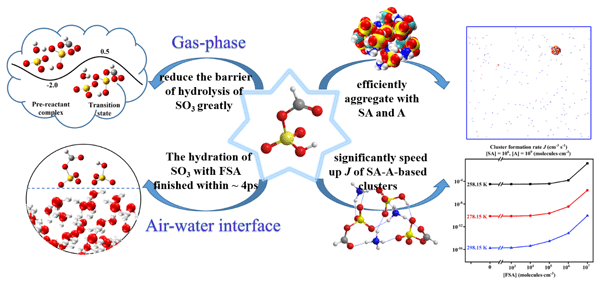
Gaseous results indicated that SO3 hydrolysis with formic sulfuric anhydride (FSA) has a Gibbs free energy barrier as low as 1.5 kcal mol-1 and can effectively compete with other SO3 hydrolysis. Interfacial BOMD (Born–Oppenheimer molecular dynamics) simulations illustrated that FSA-mediated SO3 hydrolysis at the gas–liquid interface occurs through a stepwise mechanism and can be completed within a few picoseconds. ACDC (Atmospheric Clusters Dynamics Code) kinetic simulations indicated that FSA significantly enhances cluster formation rates in the H2SO4–NH3 system.
Hui Wang, Shuqin Wei, Jihuan Yang, Yanlong Yang, Rongrong Li, Rui Wang, Chongqin Zhu, Tianlei Zhang, and Changming Zhang
Atmos. Chem. Phys., 25, 2829–2844, https://doi.org/10.5194/acp-25-2829-2025, https://doi.org/10.5194/acp-25-2829-2025, 2025
Short summary
Short summary
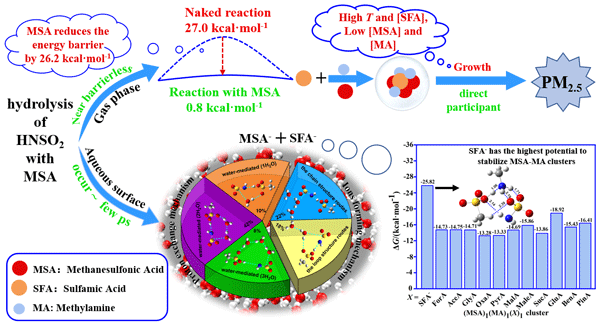
In the gaseous reaction, the activation energy for the hydrolysis of HNSO2 catalyzed by MSA was only 0.8 kcal mol−1. Atmospheric Cluster Dynamic Code kinetic simulations disclosed that sulfamic acid markedly enhances the assembly of a methanesulfonic acid–methylamine-based cluster. At the air–water interface, the NH2SO3− and H3O+ ion formation mechanism and the proton exchange mechanism were observed.
Rui Wang, Yang Cheng, Shasha Chen, Rongrong Li, Yue Hu, Xiaokai Guo, Tianlei Zhang, Fengmin Song, and Hao Li
Atmos. Chem. Phys., 24, 4029–4046, https://doi.org/10.5194/acp-24-4029-2024, https://doi.org/10.5194/acp-24-4029-2024, 2024
Short summary
Short summary
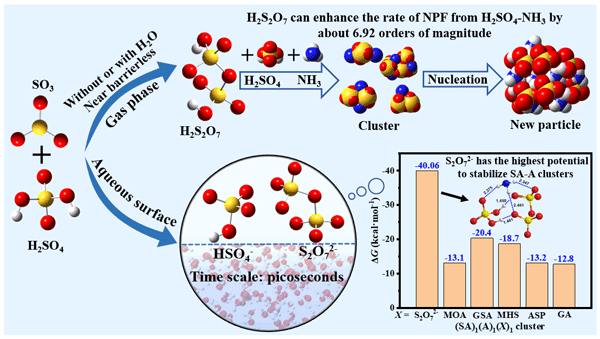
We used quantum chemical calculations, Born–Oppenheimer molecular dynamics simulations, and the ACDC kinetic model to characterize SO3–H2SO4 interaction in the gas phase and at the air–water interface and to study the effect of H2S2O7 on H2SO4–NH3-based clusters. The work expands our understanding of new pathways for the loss of SO3 in acidic polluted areas and helps reveal some missing sources of NPF in metropolitan industrial regions and understand the atmospheric organic–sulfur cycle better.
Guanhua Wang, Chengyan Zhang, Xiaokai Guo, Rui Su, Xintong Cai, Yuan Zuo, and Tianlei Zhang
EGUsphere, https://doi.org/10.5194/egusphere-2026-3408, https://doi.org/10.5194/egusphere-2026-3408, 2026
This preprint is open for discussion and under review for Atmospheric Chemistry and Physics (ACP).
Short summary
Short summary
Nitric acid affects air pollution, acid rain, and climate-related particle formation. Using atmospheric dynamics, we found that water greatly accelerates nitric acid formation, especially at water surfaces. We also found that nitric acid promotes the growth of airborne particles by attracting water and stabilizing small molecular clusters.
Chengyan Zhang, Guanhua Wang, Xiaokai Guo, Yaogeng Li, Xueping Feng, Yuan Zuo, and Rui Wang
EGUsphere, https://doi.org/10.5194/egusphere-2026-3682, https://doi.org/10.5194/egusphere-2026-3682, 2026
Short summary
Short summary
In this work, NSA formation from SO3 + HNO3 was studied using quantum chemistry + ACDC. The reaction has a 3.61 kcal·mol-1 barrier and competes with SO3 sinks (HCOOH, C6H5COOH, NH3, H2O). NSA enhances interactions, lowers free energies, stabilizing SA–A clusters. ACDC shows SA–A nucleation up to ~10-3 cm-3 s-1 (278 .15K), ~5 orders above binary. NSA contribution increases with concentration and is stronger than HNO3.
Xiaokai Guo, Yaogeng Li, Rui Su, Yanlong Yang, Xueping Feng, Guane Wang, Yuan Zuo, Rui Wang, and Tianlei Zhang
EGUsphere, https://doi.org/10.5194/egusphere-2026-2831, https://doi.org/10.5194/egusphere-2026-2831, 2026
Short summary
Short summary
Benzoic sulfuric anhydride is a potential precursor to atmospheric new particle formation. We used calculations and kinetic modeling to investigate how it forms and influences sulfuric acid-amine particle formation. It forms readily in the gas phase and is a previously unrecognized sulfur-containing species that stabilizes molecular clusters more effectively than benzoic acid. Thus, it promotes particle formation in polluted cities and helps explain why these events occur so frequently.
Rui Wang, Shuqin Wei, Zeyao Li, Kaiyu Xue, Rui Bai, and Tianlei Zhang
Atmos. Chem. Phys., 26, 3091–3105, https://doi.org/10.5194/acp-26-3091-2026, https://doi.org/10.5194/acp-26-3091-2026, 2026
Short summary
Short summary
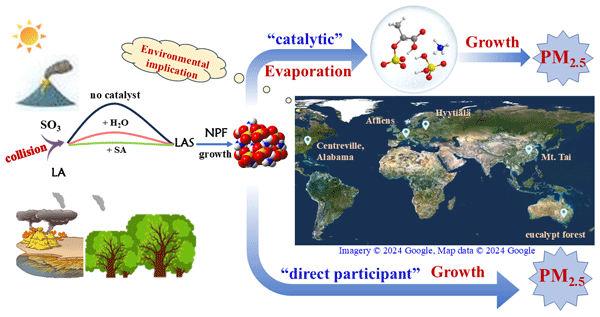
This study investigates the atmospheric formation of lactic acid sulfate and its role in new particle formation, with implications for air quality and climate. The results show that lactic acid sulfate enhances particle cluster stability and promotes new particle formation, particularly in forested and agricultural regions. These findings highlight the important role of organic compounds like lactic acid sulfate in particle formation, offering insights for mitigating haze and health risks.
Rui Wang, Rongrong Li, Shasha Chen, Ruxue Mu, Changming Zhang, Xiaohui Ma, Majid Khan, and Tianlei Zhang
Atmos. Chem. Phys., 25, 5695–5709, https://doi.org/10.5194/acp-25-5695-2025, https://doi.org/10.5194/acp-25-5695-2025, 2025
Short summary
Short summary
Gaseous results indicated that SO3 hydrolysis with formic sulfuric anhydride (FSA) has a Gibbs free energy barrier as low as 1.5 kcal mol-1 and can effectively compete with other SO3 hydrolysis. Interfacial BOMD (Born–Oppenheimer molecular dynamics) simulations illustrated that FSA-mediated SO3 hydrolysis at the gas–liquid interface occurs through a stepwise mechanism and can be completed within a few picoseconds. ACDC (Atmospheric Clusters Dynamics Code) kinetic simulations indicated that FSA significantly enhances cluster formation rates in the H2SO4–NH3 system.
Hui Wang, Shuqin Wei, Jihuan Yang, Yanlong Yang, Rongrong Li, Rui Wang, Chongqin Zhu, Tianlei Zhang, and Changming Zhang
Atmos. Chem. Phys., 25, 2829–2844, https://doi.org/10.5194/acp-25-2829-2025, https://doi.org/10.5194/acp-25-2829-2025, 2025
Short summary
Short summary
In the gaseous reaction, the activation energy for the hydrolysis of HNSO2 catalyzed by MSA was only 0.8 kcal mol−1. Atmospheric Cluster Dynamic Code kinetic simulations disclosed that sulfamic acid markedly enhances the assembly of a methanesulfonic acid–methylamine-based cluster. At the air–water interface, the NH2SO3− and H3O+ ion formation mechanism and the proton exchange mechanism were observed.
Rui Wang, Yang Cheng, Shasha Chen, Rongrong Li, Yue Hu, Xiaokai Guo, Tianlei Zhang, Fengmin Song, and Hao Li
Atmos. Chem. Phys., 24, 4029–4046, https://doi.org/10.5194/acp-24-4029-2024, https://doi.org/10.5194/acp-24-4029-2024, 2024
Short summary
Short summary
We used quantum chemical calculations, Born–Oppenheimer molecular dynamics simulations, and the ACDC kinetic model to characterize SO3–H2SO4 interaction in the gas phase and at the air–water interface and to study the effect of H2S2O7 on H2SO4–NH3-based clusters. The work expands our understanding of new pathways for the loss of SO3 in acidic polluted areas and helps reveal some missing sources of NPF in metropolitan industrial regions and understand the atmospheric organic–sulfur cycle better.
Cited articles
Allen, H. M., Crounse, J. D., Bates, K. H., Teng, A. P., Krawiec-Thayer, M. P., Rivera-Rios, J. C., Keutsch, F. N., St. Clair, J. M., Hanisco, T. F., Møller, K. H., Kjaergaard, H. G., and Wennberg, P. O.: Kinetics and Product Yields of the OH Initiated Oxidation of Hydroxymethyl Hydroperoxide, J. Phys. Chem. A, 122, 6292–6302, https://doi.org/10.1021/acs.jpca.8b04577, 2018.
Anglada, J. M. and Solé, A.: Impact of the water dimer on the atmospheric reactivity of carbonyl oxides, Phys. Chem. Chem. Phys., 18, 17698–17712, https://doi.org/10.1039/C6CP02531E, 2016.
Anglada, J. M., Hoffman, G. J., Slipchenko, L. V., M.Costa, M., Ruiz-López, M. F., and Francisco, J. S.: Atmospheric Significance of Water Clusters and Ozone-Water Complexes, J. Phys. Chem. A, 117, 10381–10396, https://doi.org/10.1021/jp407282c, 2013.
Arquero, K. D., Gerber, R. B., and Finlayson-Pitts, B. J.: The Role of Oxalic Acid in New Particle Formation from Methanesulfonic Acid, Methylamine, and Water, Environ. Sci. Technol., 51, 2124–2130, https://doi.org/10.1021/acs.est.6b05056, 2017.
Barnes, I., Hjorth, J., and Mihalopoulos, N.: Dimethyl Sulfide and Dimethyl Sulfoxide and Their Oxidation in the Atmosphere, Chem. Rev., 106, 940–975, https://doi.org/10.1021/cr020529+, 2006.
Becke, A. D.: Density-functional exchange-energy approximation with correct asymptotic behavior, Phys. Rev. A, 38, 3098–3100, https://doi.org/10.1103/PhysRevA.38.3098, 1988.
Berndt, T., Kaethner, R., Voigtländer, J., Stratmann, F., Pfeifle, M., Reichle, P., Sipilä, M., Kulmala, M., and Olzmann, M.: Kinetics of the unimolecular reaction of CH2OO and the bimolecular reactions with the water monomer, acetaldehyde and acetone under atmospheric conditions, Phys. Chem. Chem. Phys., 17, 19862–19873, https://doi.org/10.1039/C5CP02224J, 2015.
Berresheim, H., Elste, T., Tremmel, H. G., Allen, A. G., Hansson, H.-C., Rosman, K., Dal Maso, M., Mäkelä, J. M., Kulmala, M., and O'Dowd, C. D.: Gas-aerosol relationships of H2SO4, MSA, and OH: Observations in the coastal marine boundary layer at Mace Head, Ireland, J. Geophys. Res., 107, 1–12, https://doi.org/10.1029/2000JD000229, 2002.
Chao, W., Hsieh, J.-T., Chang, C.-H., and Lin, J. J.-M.: Direct kinetic measurement of the reaction of the simplest Criegee intermediate with water vapor, Science, 347, 751–754, https://doi.org/10.1126/science.1261549, 2015.
Chao, W., Yin, C., Takahashi, K., and Lin, J. J.-M.: Effects of water vapor on the reaction of CH2OO with NH3, Phys. Chem. Chem. Phys., 21, 22589–22597, https://doi.org/10.1039/C9CP04682H, 2019.
Chen, D., Li, D., Wang, C., Liu, F., and Wang, W.: Formation mechanism of methanesulfonic acid and ammonia clusters: A kinetics simulation study, Atmos. Environ., 222, 117161, https://doi.org/10.1016/j.atmosenv.2019.117161, 2020.
Chen, H., Varner, M. E., Gerber, R. B., and Finlayson-Pitts, B. J.: Reactions of Methanesulfonic Acid with Amines and Ammonia as a Source of New Particles in Air, J. Phys. Chem. B, 120, 1526–1536, https://doi.org/10.1021/acs.jpcb.5b07433, 2016.
Cheng, Y., Ding, C., Zhang, T., Wang, R., Mu, R., Li, Z., Li, R., Shi, J., and Zhu, C.: Barrierless reactions of C2 Criegee intermediates with H2SO4 and their implication to oligomers and new particle formation, J. Environ. Sci., 149, 574–584, https://doi.org/10.1016/j.jes.2023.12.020, 2025.
Ding, C., Wen, M., Zhang, T., Li, Z., Li, R., Wang, R., Ou, T., Song, F., and Zhang, Q.: Molecular mechanisms and atmospheric implications of the simplest criegee intermediate and hydrochloric acid chemistry in the gas phase and at the aqueous interfaces, Atmos. Environ., 330, 120558, https://doi.org/10.1016/j.atmosenv.2024.120558, 2024.
Dong, Z., Francisco, J. S., and Long, B.: Ammonolysis of Glyoxal at the Air-Water Nanodroplet Interface, Angew. Chem. Int. Ed., 63, e202316060, https://doi.org/10.1002/anie.202316060, 2024.
Elm, J.: Clusteromics II: Methanesulfonic Acid-Base Cluster Formation, ACS Omega, 6, 17035–17044, https://doi.org/10.1021/acsomega.1c02115, 2021.
Fang, Y.-G., Wei, L., Francisco, J. S., Zhu, C., and Fang, W.-H.: Mechanistic Insights into Chloric Acid Production by Hydrolysis of Chlorine Trioxide at an Air-Water Interface, J. Am. Chem. Soc., 146, 21052–21060, https://doi.org/10.1021/jacs.4c06269, 2024.
Gaston, C. J., Pratt, K. A., Qin, X., and Prather, K. A.: Real-Time Detection and Mixing State of Methanesulfonate in Single Particles at an Inland Urban Location during a Phytoplankton Bloom, Environ. Sci. Technol., 44, 1566–1572, https://doi.org/10.1021/es902069d, 2010.
Glowacki, D. R., Liang, C.-H., Morley, C., Pilling, M. J., and Robertson, S. H.: MESMER: An Open-Source Master Equation Solver for Multi-Energy Well Reactions, J. Phys. Chem. A, 116, 9545–9560, https://doi.org/10.1021/jp3051033, 2012.
Goedecker, S., Teter, M., and Hutter, J.: Separable dual-space Gaussian pseudopotentials, Phys. Rev. B, 54, 1703–1710, https://doi.org/10.1103/PhysRevB.54.1703, 1996.
Grimme, S., Antony, J., Ehrlich, S., and Krieg, H.: A consistent and accurate ab initio parametrization of density functional dispersion correction (DFT-D) for the 94 elements H-Pu, J. Chem. Phys., 132, https://doi.org/10.1063/1.3382344, 2010.
Grossmann, D., Moortgat, G. K., Kibler, M., Schlomski, S., Bächmann, K., Alicke, B., Geyer, A., Platt, U., Hammer, M.-U., Vogel, B., Mihelcic, D., Hofzumahaus, A., Holland, F., and Volz-Thomas, A.: Hydrogen peroxide, organic peroxides, carbonyl compounds, and organic acids measured at Pabstthum during BERLIOZ, J. Geophys. Res.-Atmos., 108, https://doi.org/10.1029/2001JD001096, 2003.
Hewitt, C. N. and Kok, G. L.: Formation and occurrence of organic hydroperoxides in the troposphere: Laboratory and field observations, J. Atmos. Chem., 12, 181–194, https://doi.org/10.1007/BF00115779, 1991.
Hodshire, A. L., Campuzano-Jost, P., Kodros, J. K., Croft, B., Nault, B. A., Schroder, J. C., Jimenez, J. L., and Pierce, J. R.: The potential role of methanesulfonic acid (MSA) in aerosol formation and growth and the associated radiative forcings, Atmos. Chem. Phys., 19, 3137–3160, https://doi.org/10.5194/acp-19-3137-2019, 2019.
Hu, Y., Chen, S., Ye, S., Wei, S., Chu, B., Wang, R., Li, H., and Zhang, T.: The role of trifluoroacetic acid in new particle formation from methanesulfonic acid-methylamine, Atmos. Environ., 311, 120001, https://doi.org/10.1016/j.atmosenv.2023.120001, 2023.
Hutter, J., Iannuzzi, M., Schiffmann, F., and VandeVondele, J.: cp2k: atomistic simulations of condensed matter systems, WIREs Comput. Mol. Sci., 4, 15–25, https://doi.org/10.1002/wcms.1159, 2014.
Jackson, A. V. and Hewitt, C. N.: Hydrogen peroxide and organic hydroperoxide concentrations in air in a eucalyptus forest in central Portugal, Atmos. Environ., 30, 819–830, https://doi.org/10.1016/1352-2310(95)00348-7, 1996.
Khan, M. A. H., Percival, C. J., Caravan, R. L., Taatjes, C. A., and Shallcross, D. E.: Criegee intermediates and their impacts on the troposphere, Environ. Sci.-Proc. Imp., 20, 437–453, https://doi.org/10.1039/C7EM00585G, 2018.
Kumar, A., Mallick, S., and Kumar, P.: Oxidation of HOSO⚫ by Cl⚫: a new source of SO2 in the atmosphere?, Phys. Chem. Chem. Phys., 23, 18707–18711, https://doi.org/10.1039/D1CP01048D, 2021.
Lee, J. H., Leahy, D. F., Tang, I. N., and Newman, L.: Measurement and speciation of gas phase peroxides in the atmosphere, J. Geophys. Res.-Atmos., 98, 2911–2915, https://doi.org/10.1029/92JD02514, 1993.
Lee, S.-H., Gordon, H., Yu, H., Lehtipalo, K., Haley, R., Li, Y., and Zhang, R.: New Particle Formation in the Atmosphere: From Molecular Clusters to Global Climate, J. Geophys. Res.-Atmos., 124, 7098–7146, https://doi.org/10.1029/2018JD029356, 2019.
Li, J., Ning, A., Liu, L., and Zhang, X.: Atmospheric Bases-Enhanced Iodic Acid Nucleation: Altitude-Dependent Characteristics and Molecular Mechanisms, Environ. Sci. Technol., 58, 16962–16973, https://doi.org/10.1021/acs.est.4c06053, 2024a.
Li, J., Wu, N., Chu, B., Ning, A., and Zhang, X.: Molecular-level study on the role of methanesulfonic acid in iodine oxoacid nucleation, Atmos. Chem. Phys., 24, 3989–4000, https://doi.org/10.5194/acp-24-3989-2024, 2024b.
Li, L., Zhang, Q., Wei, Y., Wang, Q., and Wang, W.: Theoretical Study on the Gas Phase and Gas-Liquid Interface Reaction Mechanism of Criegee Intermediates with Glycolic Acid Sulfate, Int. J. Mol. Sci., 24, 3355, https://doi.org/10.3390/ijms24043355, 2023.
Li, M., Li, L., Liu, S., Zhang, Q., Wang, W., and Wang, Q.: Insights into the catalytic effect of atmospheric organic trace species on the hydration of Criegee intermediates, Sci. Total Environ., 949, 174877, https://doi.org/10.1016/j.scitotenv.2024.174877, 2024c.
Lin, L.-C., Chang, H.-T., Chang, C.-H., Chao, W., Smith, M. C., Chang, C.-H., Jr-Min Lin, J., and Takahashi, K.: Competition between H2O and (H2O)2 reactions with CH2OO/CH3CHOO, Phys. Chem. Chem. Phys., 18, 4557–4568, https://doi.org/10.1039/C5CP06446E, 2016.
Liu, J., Liu, L., Rong, H., and Zhang, X.: The potential mechanism of atmospheric new particle formation involving amino acids with multiple functional groups, Phys. Chem. Chem. Phys., 23, 10184–10195, https://doi.org/10.1039/D0CP06472F, 2021.
Liu, Y., Xie, H.-B., Ma, F., Chen, J., and Elm, J.: Amine-Enhanced Methanesulfonic Acid-Driven Nucleation: Predictive Model and Cluster Formation Mechanism, Environ. Sci. Technol., 56, 7751–7760, https://doi.org/10.1021/acs.est.2c01639, 2022.
Long, B., Bao, J. L., and Truhlar, D. G.: Atmospheric Chemistry of Criegee Intermediates: Unimolecular Reactions and Reactions with Water, J. Am. Chem. Soc., 138, 14409–14422, https://doi.org/10.1021/jacs.6b08655, 2016.
Ma, Y. L. and Zhang Y. H.: The Study on Pollution of Atmospheric Photochemical Oxidants in Beijing, Res. Environ. Sci., 13, 14–17, https://api.semanticscholar.org/CorpusID:98884920 (last access: 15 January 2025), 2000.
Mardirossian, N. and Head-Gordon, M.: How Accurate Are the Minnesota Density Functionals for Noncovalent Interactions, Isomerization Energies, Thermochemistry, and Barrier Heights Involving Molecules Composed of Main-Group Elements?, J. Chem. Theory Comput., 12, 4303–4325, https://doi.org/10.1021/acs.jctc.6b00637, 2016.
McGrath, M. J., Olenius, T., Ortega, I. K., Loukonen, V., Paasonen, P., Kurtén, T., Kulmala, M., and Vehkamäki, H.: Atmospheric Cluster Dynamics Code: a flexible method for solution of the birth-death equations, Atmos. Chem. Phys., 12, 2345–2355, https://doi.org/10.5194/acp-12-2345-2012, 2012.
Meana-Pañeda, R., Zheng, J., Bao, J. L., Zhang, S., Lynch, B. J., Corchado, J. C., Chuang, Y.-Y., Fast, P. L., Hu, W.-P., Liu, Y.-P., Lynch, G. C., Nguyen, K. A., Jackels, C. F., Fernández-Ramos, A., Ellingson, B. A., Melissas, V. S., Villà, J., Rossi, I., Coitiño, E. L., Pu, J., Albu, T. V., Zhang, R. M., Xu, X., Ratkiewicz, A., Steckler, R., Garrett, B. C., Isaacson, A. D., and Truhlar, D. G.: Polyrate 2023: A computer program for the calculation of chemical reaction rates for polyatomics. New version announcement, Comput. Phys. Commun., 294, 108933, https://doi.org/10.1016/j.cpc.2023.108933, 2024.
Neese, F.: The ORCA program system, Mol. Sci., 2, 73–78, https://doi.org/10.1002/wcms.81, 2012.
Newland, M. J., Rickard, A. R., Vereecken, L., Muñoz, A., Ródenas, M., and Bloss, W. J.: Atmospheric isoprene ozonolysis: impacts of stabilised Criegee intermediate reactions with SO2, H2O and dimethyl sulfide, Atmos. Chem. Phys., 15, 9521–9536, https://doi.org/10.5194/acp-15-9521-2015, 2015.
Nguyen, T. B., Crounse, J. D., Teng, A. P., St. Clair, J. M., Paulot, F., Wolfe, G. M., and Wennberg, P. O.: Rapid deposition of oxidized biogenic compounds to a temperate forest, Proc. Natl. Acad. Sci. USA, 112, E392–E401, https://doi.org/10.1073/pnas.1418702112, 2015.
Ning, A. and Zhang, X.: The synergistic effects of methanesulfonic acid (MSA) and methanesulfinic acid (MSIA) on marine new particle formation, Atmos. Environ., 269, 118826, https://doi.org/10.1016/j.atmosenv.2021.118826, 2022.
Ning, A., Liu, L., Ji, L., and Zhang, X.: Molecular-level nucleation mechanism of iodic acid and methanesulfonic acid, Atmos. Chem. Phys., 22, 6103–6114, https://doi.org/10.5194/acp-22-6103-2022, 2022.
Ning, A., Shen, J., Zhao, B., Wang, S., Cai, R., Jiang, J., Yan, C., Fu, X., Zhang, Y., Li, J., Ouyang, D., Sun, Y., Saiz-Lopez, A., Francisco, J. S., and Zhang, X.: Overlooked significance of iodic acid in new particle formation in the continental atmosphere, Proc. Natl. Acad. Sci. USA, 121, e2404595121, https://doi.org/10.1073/pnas.2404595121, 2024.
Ouyang, B., McLeod, M. W., Jones, R. L., and Bloss, W. J.: NO3 radical production from the reaction between the Criegee intermediate CH2OO and NO2, Phys. Chem. Chem. Phys., 15, 17070–17075, https://doi.org/10.1039/C3CP53024H, 2013.
Partanen, L., Vehkamäki, H., Hansen, K., Elm, J., Henschel, H., Kurtén, T., Halonen, R., and Zapadinsky, E.: Effect of Conformers on Free Energies of Atmospheric Complexes, J. Phys. Chem. A, 120, 8613–8624, https://doi.org/10.1021/acs.jpca.6b04452, 2016.
Pereira, A. T., Ribeiro, A. J. M., Fernandes, P. A., and Ramos, M. J.: Benchmarking of density functionals for the kinetics and thermodynamics of the hydrolysis of glycosidic bonds catalyzed by glycosidases, Int. J. Quantum Chem., 117, e25409, https://doi.org/10.1002/qua.25409, 2017.
Perraud, V., Horne, J. R., Martinez, A. S., Kalinowski, J., Meinardi, S., Dawson, M. L., Wingen, L. M., Dabdub, D., Blake, D. R., Gerber, R. B., and Finlayson-Pitts, B. J.: The future of airborne sulfur-containing particles in the absence of fossil fuel sulfur dioxide emissions, Proc. Natl. Acad. Sci. USA, 112, 13514–13519, https://doi.org/10.1073/pnas.1510743112, 2015.
Phillips, J. C., Braun, R., Wang, W., Gumbart, J., Tajkhorshid, E., Villa, E., Chipot, C., Skeel, R. D., Kalé, L., and Schulten, K.: Scalable molecular dynamics with NAMD, J. Comput Chem., 26, 1781–1802, https://doi.org/10.1002/jcc.20289, 2005.
Qiao, F., Zhang, R., Zhao, Q., Ma, F., Chen, J., and Xie, H.-B.: A Surprisingly High Enhancing Potential of Nitric Acid in Sulfuric Acid–Methylamine Nucleation, Atmosphere, 15, 467, https://doi.org/10.3390/atmos15040467, 2024.
Rissanen, M. P., Kurtén, T., Sipilä, M., Thornton, J. A., Kangasluoma, J., Sarnela, N., Junninen, H., Jørgensen, S., Schallhart, S., Kajos, M. K., Taipale, R., Springer, M., Mentel, T. F., Ruuskanen, T., Petäjä, T., Worsnop, D. R., Kjaergaard, H. G., and Ehn, M.: The Formation of Highly Oxidized Multifunctional Products in the Ozonolysis of Cyclohexene, J. Am. Chem. Soc., 136, 15596–15606, https://doi.org/10.1021/ja507146s, 2014.
Sakamoto, Y., Inomata, S., and Hirokawa, J.: Oligomerization Reaction of the Criegee Intermediate Leads to Secondary Organic Aerosol Formation in Ethylene Ozonolysis, J. Phys. Chem. A, 117, 12912–12921, https://doi.org/10.1021/jp408672m, 2013.
Shen, J., Elm, J., Xie, H.-B., Chen, J., Niu, J., and Vehkamäki, H.: Structural Effects of Amines in Enhancing Methanesulfonic Acid-Driven New Particle Formation, Environ. Sci. Technol., 54, 13498–13508, https://doi.org/10.1021/acs.est.0c05358, 2020.
Stone, D., Blitz, M., Daubney, L., Howes, N. U. M., and Seakins, P.: Kinetics of CH2OO reactions with SO2, NO2, NO, H2O and CH3CHO as a function of pressure, Phys. Chem. Chem. Phys, 16, 1139–1149, https://doi.org/10.1039/C3CP54391A, 2014.
Tang, B., Bai, Q., Fang, Y.-G., Francisco, J. S., Zhu, C., and Fang, W.-H.: Mechanistic Insights into N2O5-Halide Ions Chemistry at the Air-Water Interface, J. Am. Chem. Soc., 146, 21742–21751, https://doi.org/10.1021/jacs.4c05850, 2024.
Tröstl, J., Chuang, W. K., Gordon, H., Heinritzi, M., Yan, C., Molteni, U., Ahlm, L., Frege, C., Bianchi, F., Wagner, R., Simon, M., Lehtipalo, K., Williamson, C., Craven, J. S., Duplissy, J., Adamov, A., Almeida, J., Bernhammer, A.-K., Breitenlechner, M., Brilke, S., Dias, A., Ehrhart, S., Flagan, R. C., Franchin, A., Fuchs, C., Guida, R., Gysel, M., Hansel, A., Hoyle, C. R., Jokinen, T., Junninen, H., Kangasluoma, J., Keskinen, H., Kim, J., Krapf, M., Kürten, A., Laaksonen, A., Lawler, M., Leiminger, M., Mathot, S., Möhler, O., Nieminen, T., Onnela, A., Petäjä, T., Piel, F. M., Miettinen, P., Rissanen, M. P., Rondo, L., Sarnela, N., Schobesberger, S., Sengupta, K., Sipilä, M., Smith, J. N., Steiner, G., Tomè, A., Virtanen, A., Wagner, A. C., Weingartner, E., Wimmer, D., Winkler, P. M., Ye, P., Carslaw, K. S., Curtius, J., Dommen, J., Kirkby, J., Kulmala, M., Riipinen, I., Worsnop, D. R., Donahue, N. M., and Baltensperger, U.: The role of low-volatility organic compounds in initial particle growth in the atmosphere, Nature, 533, 527–531, https://doi.org/10.1038/nature18271, 2016.
Tsona Tchinda, N., Du, L., Liu, L., and Zhang, X.: Pyruvic acid, an efficient catalyst in SO3 hydrolysis and effective clustering agent in sulfuric-acid-based new particle formation, Atmos. Chem. Phys., 22, 1951–1963, https://doi.org/10.5194/acp-22-1951-2022, 2022.
Wang, H., Wei, S., Yang, J., Yang, Y., Li, R., Wang, R., Zhu, C., Zhang, T., and Zhang, C.: A novel formation mechanism of sulfamic acid and its enhancing effect on methanesulfonic acid–methylamine aerosol particle formation in agriculture-developed and coastal industrial areas, Atmos. Chem. Phys., 25, 2829–2844, https://doi.org/10.5194/acp-25-2829-2025, 2025.
Wang, R., Wen, M., Chen, X., Mu, R., Zeng, Z., Chai, G., Lily, M., Wang, Z., and Zhang, T.: Atmospheric Chemistry of CH2OO: The Hydrolysis of CH2OO in Small Clusters of Sulfuric Acid, J. Phys. Chem. A, 125, 2642–2652, https://doi.org/10.1021/acs.jpca.1c02006, 2021a.
Wang, R., Wen, M., Liu, S., Lu, Y., Makroni, L., Muthiah, B., Zhang, T., Wang, Z., and Wang, Z.: The favorable routes for the hydrolysis of CH2OO with H2On (n = 1–4) investigated by global minimum searching combined with quantum chemical methods, Phys. Chem. Chem. Phys., 23, 12749–12760, https://doi.org/10.1039/D0CP00028K, 2021b.
Wang, S., Zhao, Y., Chan, A. W. H., Yao, M., Chen, Z., and Abbatt, J. P. D.: Organic Peroxides in Aerosol: Key Reactive Intermediates for Multiphase Processes in the Atmosphere, Chem. Rev., 123, 1635–1679, https://doi.org/10.1021/acs.chemrev.2c00430, 2023.
Wei, S., Wan, Q., Zhou, S., Nie, W., and Chen, S.: Spontaneous Generation of −CH2CN from Acetonitrile at the Air-Water Interface, J. Am. Chem. Soc., 146, 32777–32784, https://doi.org/10.1021/jacs.4c13013, 2024.
Wen, H., Huang, T., Wang, C.-Y., Peng, X.-Q., Jiang, S., Liu, Y.-R., and Huang, W.: A study on the microscopic mechanism of methanesulfonic acid-promoted binary nucleation of sulfuric acid and water, Atmos. Environ., 191, 214–226, https://doi.org/10.1016/j.atmosenv.2018.07.050, 2018.
Wu, H., Fu, Y., Dong, W., Fu, B., and Zhang, D. H.: Full-dimensional neural network potential energy surface and dynamics of the CH2OO + H2O reaction, RSC Adv., 13, 13397–13404, https://doi.org/10.1039/D3RA02069J, 2023a.
Wu, H., Fu, Y., Fu, B., and Zhang, D. H.: Roaming Dynamics in Hydroxymethyl Hydroperoxide Decomposition Revealed by the Full-Dimensional Potential Energy Surface of the CH2OO + H2O Reaction, J. Phys. Chem. A, 127, 9098–9105, https://doi.org/10.1021/acs.jpca.3c05818, 2023b.
Wu, N., Ning, A., Liu, L., Zu, H., Liang, D., and Zhang, X.: Methanesulfonic acid and iodous acid nucleation: a novel mechanism for marine aerosols, Phys. Chem. Chem. Phys., 25, 16745–16752, https://doi.org/10.1039/d3cp01198d, 2023c.
Xu, J., Finlayson-Pitts, B. J., and Gerber, R. B.: Nanoparticles grown from methanesulfonic acid and methylamine: microscopic structures and formation mechanism, Phys. Chem. Chem. Phys., 19, 31949–31957, https://doi.org/10.1039/d3cp01198d, 2017a.
Xu, J., Finlayson-Pitts, B. J., and Gerber, R. B.: Proton Transfer in Mixed Clusters of Methanesulfonic Acid, Methylamine, and Oxalic Acid: Implications for Atmospheric Particle Formation, J. Phys. Chem. A, 121, 2377–2385, https://doi.org/10.1021/acs.jpca.7b01223, 2017b.
Xu, Q., Ma, F., Xia, D., Li, X., Chen, J., Xie, H.-B., and Francisco, J. S.: Two-Step Noncatalyzed Hydrolysis Mechanism of Imines at the Air-Water Interface, J. Am. Chem. Soc., 146, 28866–28873, https://doi.org/10.1021/jacs.4c09080, 2024.
Yin, R., Yan, C., Cai, R., Li, X., Shen, J., Lu, Y., Schobesberger, S., Fu, Y., Deng, C., Wang, L., Liu, Y., Zheng, J., Xie, H., Bianchi, F., Worsnop, D. R., Kulmala, M., and Jiang, J.: Acid-Base Clusters during Atmospheric New Particle Formation in Urban Beijing, Environ. Sci. Technol., 55, 10994–11005, https://doi.org/10.1021/acs.est.1c02701, 2021.
Zhang, J. and Dolg, M.: ABCluster: the artificial bee colony algorithm for cluster global optimization, Phys. Chem. Chem. Phys., 17, 24173–24181, https://doi.org/10.1039/C5CP04060D, 2015.
Zhang, R., Shen, J., Xie, H.-B., Chen, J., and Elm, J.: The role of organic acids in new particle formation from methanesulfonic acid and methylamine, Atmos. Chem. Phys., 22, 2639–2650, https://doi.org/10.5194/acp-22-2639-2022, 2022.
Zhang, T., Lan, X., Wang, R., Roy, S., Qiao, Z., Lu, Y., and Wang, Z.: The catalytic effects of H2CO3, CH3COOH, HCOOH and H2O on the addition reaction of CH2OO + H2O → CH2(OH)OOH, Mol. Phys., 116, 1783–1794, https://doi.org/10.1080/00268976.2018.1454612, 2018.
Zhang, Y., Ma, Y., Zeng, L., Shao, K., and Qi, B.: Study of atmospheric peroxides in Guangzhou city, China Environ. Sci., 21, 221–225, https://en.cnki.com.cn/Article_en/CJFDTOTAL-ZGHJ200103008.htm (last access: 1 March 2025), 2001.
Zhang, Z., Yin, H., Shang, Y., and Luo, S.-N.: Accurate rate constants for barrierless dissociation of ethanol: VRC-VTST and SS-QRRK calculations with the cheaper DFT method, Chem. Phys. Lett., 823, 140522, https://doi.org/10.1016/j.cplett.2023.140522, 2023.
Zhang, Z. P., Wang, S. H., Shang, Y. L., Liu, J. H., and Luo, S. N.: Theoretical Study on Ethylamine Dissociation Reactions Using VRC-VTST and SS-QRRK Methods, J. Phys. Chem. A, 128, 2191–2199, https://doi.org/10.1021/acs.jpca.3c08373, 2024.
Zhao, H., Jiang, X., and Du, L.: Contribution of methane sulfonic acid to new particle formation in the atmosphere, Chemosphere, 174, 689–699, https://doi.org/10.1016/j.chemosphere.2017.02.040, 2017.
Short summary
This study investigates the formation of hydroxymethyl hydroperoxide (HMHP) through methanesulfonic acid (MSA)-catalyzed hydrolysis of CH2OO in the gas phase and at the air-water interface. HMHP forms rapidly and stably in both environments. Further analysis shows that HMHP enhances the stability of MSA-methylamine (MA) clusters and highlights HMHP's key role in MSA-MA-HMHP nucleation, especially in urban and forested regions.
This study investigates the formation of hydroxymethyl hydroperoxide (HMHP) through...


Altmetrics
Final-revised paper
Preprint