
Articles | Volume 26, issue 5
https://doi.org/10.5194/acp-26-3723-2026
© Author(s) 2026. This work is distributed under
the Creative Commons Attribution 4.0 License.
the Creative Commons Attribution 4.0 License.
https://doi.org/10.5194/acp-26-3723-2026
© Author(s) 2026. This work is distributed under
the Creative Commons Attribution 4.0 License.
the Creative Commons Attribution 4.0 License.
Research article
| 
16 Mar 2026
Research article |
| 16 Mar 2026
| 16 Mar 2026
Sorting sudden stratospheric warmings with the downward tropospheric influence using ERA5 and CESM2-WACCM
Rongzhao Lu
Collaborative Innovation Center on Forecast and Evaluation of Meteorological Disasters/Key Laboratory of Meteorological Disaster of Ministry of Education, Nanjing University of Information Science and Technology, Nanjing 210044, China

Collaborative Innovation Center on Forecast and Evaluation of Meteorological Disasters/Key Laboratory of Meteorological Disaster of Ministry of Education, Nanjing University of Information Science and Technology, Nanjing 210044, China
Related authors
Rongzhao Lu and Jian Rao
EGUsphere, https://doi.org/10.5194/egusphere-2024-2179, https://doi.org/10.5194/egusphere-2024-2179, 2024
Preprint archived
Short summary
Short summary
The SSWs are classified into downward-propagating (DW) SSWs with noticeable impacts on the troposphere and non-downward-propagating (NDW). The DW events are further classified into three types. This study improves our understanding of the diversity of the SSWs.
Kexiang Feng, Jian Rao, Chaim I. Garfinkel, Amy H. Butler, Blanca Ayarzagüena, and Xiaoqi Zhang
EGUsphere, https://doi.org/10.5194/egusphere-2026-4971, https://doi.org/10.5194/egusphere-2026-4971, 2026
This preprint is open for discussion and under review for Weather and Climate Dynamics (WCD).
Short summary
Short summary
Sudden stratospheric warmings can influence weather at the Earth's surface, but the role of the upper atmosphere remains unclear. Using forecast models with different upper-atmosphere conditions, we find that the upper atmosphere actively affects the evolution of these events and their surface impacts. This highlights the importance of better representing the upper atmosphere to improve forecasts of sudden stratospheric warmings and their impacts.
Hongbin Chen, Jian Rao, Seok-Woo Son, Bin Guan, and Mengxin Pan
Earth Syst. Sci. Data, 18, 5357–5373, https://doi.org/10.5194/essd-18-5357-2026, https://doi.org/10.5194/essd-18-5357-2026, 2026
Short summary
Short summary
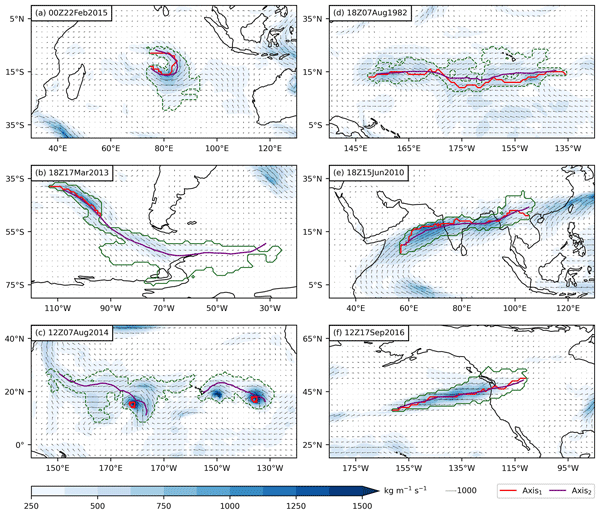
We present a global atmospheric river (AR) database derived from ERA5 reanalysis (1940–2024). By employing a novel multi-method fusion algorithm, this database provides AR identification results at a horizontal resolution of 1° × 1° and a temporal resolution of 6 hours. Characterized by enhanced algorithmic robustness and extensive temporal coverage, it offers a valuable resource for further weather and climate research.
Chaim I. Garfinkel, David Avisar, Scott M. Osprey, Doug Smith, Jian Rao, and Jonathon S. Wright
Weather Clim. Dynam., 7, 1133–1152, https://doi.org/10.5194/wcd-7-1133-2026, https://doi.org/10.5194/wcd-7-1133-2026, 2026
Short summary
Short summary
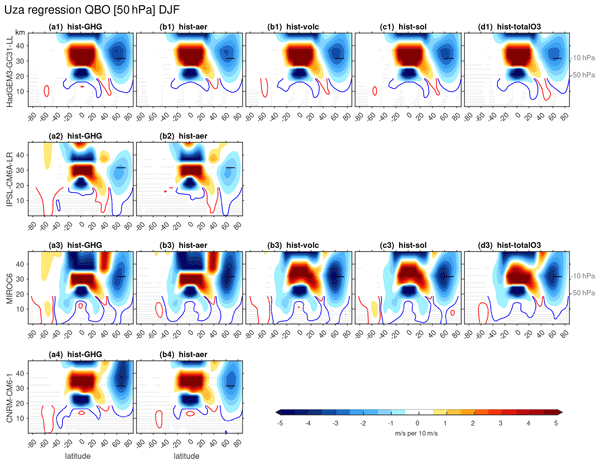
The Quasi-biennial Oscillation (QBO) dominates variability in the tropical stratosphere, & it impacts surface climate in several parts of the world. However, climate models have been shown to systematically under-estimate the influence of the QBO. Here, we re-evaluate this finding using much larger ensemble sizes than have been previously available based on four separate models. We find that the models are comparatively more successful in capturing QBO influences than reported by previous work.
Qian Lu, Jian Rao, Chunhua Shi, and Chaim I. Garfinkel
Atmos. Chem. Phys., 26, 5763–5780, https://doi.org/10.5194/acp-26-5763-2026, https://doi.org/10.5194/acp-26-5763-2026, 2026
Short summary
Short summary
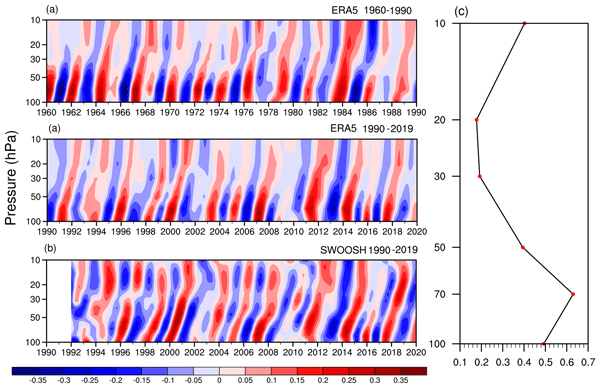
Stratospheric water vapor has an impact on global temperature changes. Tropical stratospheric water vapor exhibits a clear imprint of the Quasi-Biennial Oscillation (QBO). This study compares the water vapor variations associated with the QBO between boreal winter and summer, and the seasonal difference in the stratospheric water vapor distribution under different QBO phases is revealed.
Wuhan Ning, Chaim I. Garfinkel, Judah Cohen, Ian P. White, and Jian Rao
Weather Clim. Dynam., 7, 277–295, https://doi.org/10.5194/wcd-7-277-2026, https://doi.org/10.5194/wcd-7-277-2026, 2026
Short summary
Short summary
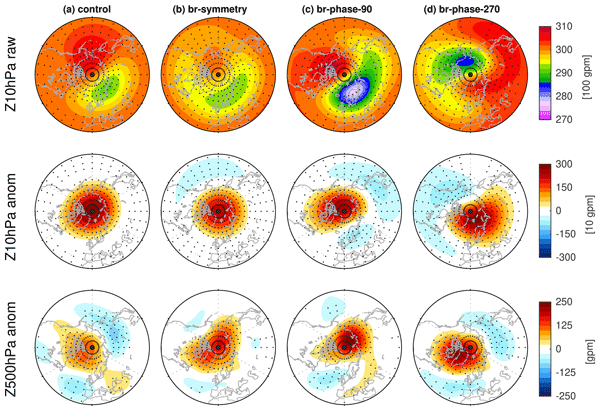
Whether the zonal structure of a polar vortex matters for surface climate is an open question, with much observational work showing a role but with limited modeling work and demonstration of a causal influence. Here, we isolate this influence using a moist general circulation model. We find that the surface responses differ qualitatively depending on the zonal asymmetries of the shifted polar vortex and concurrently occurring wave reflection events, and provide a mechanistic explanation for why.
Chaim I. Garfinkel, Zachary D. Lawrence, Amy H. Butler, Etienne Dunn-Sigouin, Irene Erner, Alexey Y. Karpechko, Gerbrand Koren, Marta Abalos, Blanca Ayarzagüena, David Barriopedro, Natalia Calvo, Alvaro de la Cámara, Andrew Charlton-Perez, Judah Cohen, Daniela I. V. Domeisen, Javier García-Serrano, Neil P. Hindley, Martin Jucker, Hera Kim, Robert W. Lee, Simon H. Lee, Marisol Osman, Froila M. Palmeiro, Inna Polichtchouk, Jian Rao, Jadwiga H. Richter, Chen Schwartz, Seok-Woo Son, Masakazu Taguchi, Nicholas L. Tyrrell, Corwin J. Wright, and Rachel W.-Y. Wu
Weather Clim. Dynam., 6, 171–195, https://doi.org/10.5194/wcd-6-171-2025, https://doi.org/10.5194/wcd-6-171-2025, 2025
Short summary
Short summary
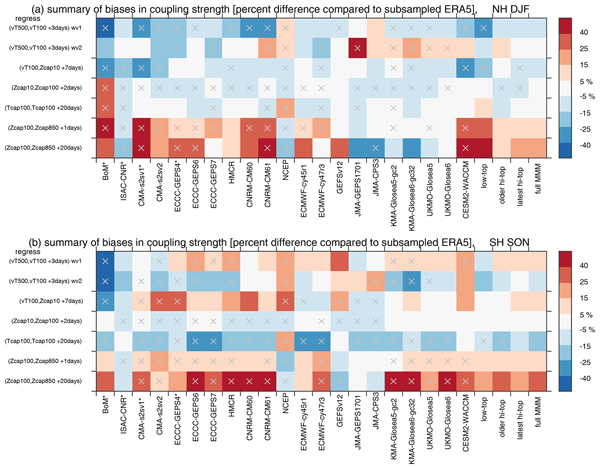
Variability in the extratropical stratosphere and troposphere is coupled, and because of the longer timescales characteristic of the stratosphere, this allows for a window of opportunity for surface prediction. This paper assesses whether models used for operational prediction capture these coupling processes accurately. We find that most processes are too weak; however downward coupling from the lower stratosphere to the near surface is too strong.
Rongzhao Lu and Jian Rao
EGUsphere, https://doi.org/10.5194/egusphere-2024-2179, https://doi.org/10.5194/egusphere-2024-2179, 2024
Preprint archived
Short summary
Short summary
The SSWs are classified into downward-propagating (DW) SSWs with noticeable impacts on the troposphere and non-downward-propagating (NDW). The DW events are further classified into three types. This study improves our understanding of the diversity of the SSWs.
Zefan Ju, Jian Rao, Yue Wang, Junfeng Yang, and Qian Lu
Atmos. Chem. Phys., 23, 14903–14918, https://doi.org/10.5194/acp-23-14903-2023, https://doi.org/10.5194/acp-23-14903-2023, 2023
Short summary
Short summary
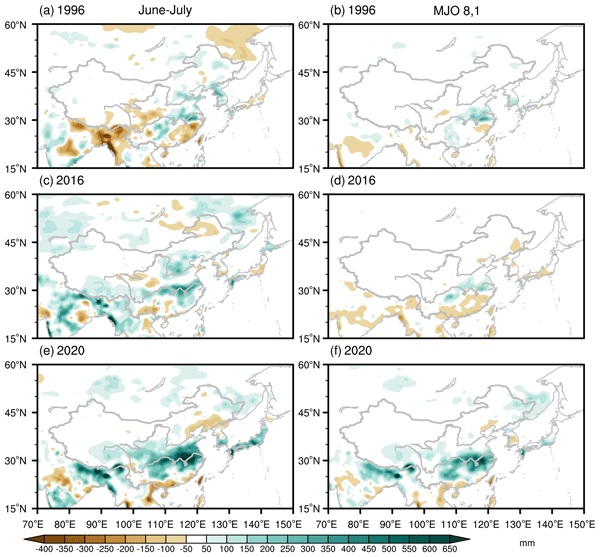
In the paper, we explored the impact of the Madden–Julian Oscillation (MJO) and the Quasi-Biennial Oscillation (QBO) on East China summer rainfall variability. It is novel to find that the combined impact of MJO and QBO is not maximized when the QBO and MJO are in phase to enhance (or suppress) the tropical convection.
Qian Lu, Jian Rao, Chunhua Shi, Dong Guo, Guiqin Fu, Ji Wang, and Zhuoqi Liang
Atmos. Chem. Phys., 22, 13087–13102, https://doi.org/10.5194/acp-22-13087-2022, https://doi.org/10.5194/acp-22-13087-2022, 2022
Short summary
Short summary
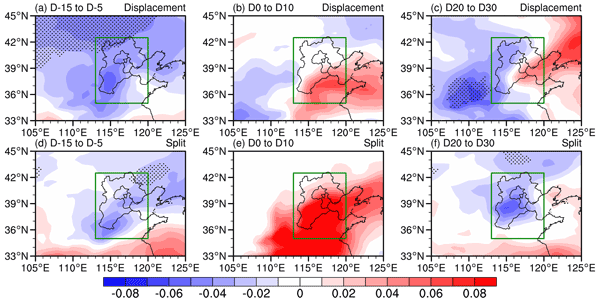
Existing evidence mainly focuses on the possible impact of tropospheric climate anomalies on the regional air pollutions, but few studies pay attention to the impact of stratospheric changes on haze pollutions in the Beijing–Tianjin–Hebei (BTH) region. Our study reveals the linkage between the stratospheric variability and the regional atmospheric environment. The downward-propagating stratospheric signals might have a cleaning effect on the atmospheric environment in the BTH region.
Cited articles
Afargan-Gerstman, H. and Domeisen, D. I. V.: Pacific modulation of the North Atlantic storm track response to sudden stratospheric warming events, Geophys. Res. Lett., 47, e2019GL085007, https://doi.org/10.1029/2019GL085007, 2020.
Ambaum, M. H. P. and Hoskins, B. J.: The NAO troposphere–stratosphere connection, J. Climate, 15, 1969–1978, https://doi.org/10.1175/1520-0442(2002)015<1969:TNTSC>2.0.CO;2, 2002.
Anstey, J., Gray, L. J., Mitchell, D. M., Baldwin, M. P., and Charlton-Perez, A. J.: The influence of stratospheric vortex displacements and splits on surface climate, J. Climate, 26, 2668–2682, https://doi.org/10.1175/jcli-d-12-00030.1, 2013.
Baldwin, M. P. and Dunkerton, T. J.: Stratospheric harbingers of anomalous weather regimes, Science, 294, 581–584, https://doi.org/10.1126/science.1063315, 2001.
Baldwin, M. P. and Thompson, D. W. J.: A critical comparison of stratosphere–troposphere coupling indices, Q. J. Roy. Meteor. Soc., 135, 1661–1672, https://doi.org/10.1002/qj.479, 2009.
Baldwin, M. P., Ayarzagüena, B., Birner, T., Butchart, N., Butler, A. H., Charlton-Perez, A. J., Domeisen, D. I. V., Garfinkel, C. I., Garny, H., Gerber, E. P., Hegglin, M. I., Langematz, U., and Pedatella, N. M.: Sudden stratospheric warmings, Rev. Geophys., 59, e2020RG000708, https://doi.org/10.1029/2020RG000708, 2021.
Black, R. X.: Stratospheric forcing of surface climate in the arctic oscillation, J. Climate, 15, 268–277, https://doi.org/10.1175/1520-0442(2002)015<0268:SFOSCI>2.0.CO;2, 2002.
Butler, A. H. and Gerber, E. P.: Optimizing the definition of a sudden stratospheric warming, J. Climate, 31, 2337–2344, https://doi.org/10.1175/jcli-d-17-0648.1, 2018.
Butler, A. H., Seidel, D. J., Hardiman, S. C., Butchart, N., Birner, T., and Match, A.: Defining sudden stratospheric warmings, B. Am. Meteorol. Soc., 96, 1913–1928, https://doi.org/10.1175/BAMS-D-13-00173.1, 2015.
Butler, A. H., Sjoberg, J. P., Seidel, D. J., and Rosenlof, K. H.: A sudden stratospheric warming compendium, Earth Syst. Sci. Data, 9, 63–76, https://doi.org/10.5194/essd-9-63-2017, 2017.
Cai, M. and Shin, C.-S.: A total flow perspective of atmospheric mass and angular momentum circulations: Boreal winter mean state, J. Atmos. Sci., 71, 2244–2263, https://doi.org/10.1175/JAS-D-13-0175.1, 2014.
Charlton, A. J. and Polvani, L. M.: A new look at stratospheric sudden warmings, Part I: Climatology and modeling benchmarks, J. Climate, 20, 449–469, https://doi.org/10.1175/JCLI3996.1, 2007.
Chwat, D., Garfinkel, C. I., Chen, W., and Rao, J.: Which sudden stratospheric warming events are most predictable?, J. Geophys. Res.-Atmos., 127, e2022JD037521, https://doi.org/10.1029/2022JD037521, 2022.
Colucci, S. J. and Kelleher, M. E.: Diagnostic comparison of tropospheric blocking events with and without sudden stratospheric warming, J. Atmos. Sci., 72, 2227–2240, https://doi.org/10.1175/JAS-D-14-0160.1, 2015.
Dall'Amico, M., Stott, P. A., Scaife, A. A., Gray, L. J., Rosenlof, K. H., and Karpechko, A. Y.: Impact of stratospheric variability on tropospheric climate change, Clim. Dynam., 34, 399–417, https://doi.org/10.1007/s00382-009-0580-1, 2010.
Domeisen, D. I. V., Grams, C. M., and Papritz, L.: The role of North Atlantic–European weather regimes in the surface impact of sudden stratospheric warming events, Weather Clim. Dynam., 1, 373–388, https://doi.org/10.5194/wcd-1-373-2020, 2020.
Edmon, H. J., Hoskins, B. J., and McIntyre, M. E.: Eliassen–Palm cross sections for the troposphere, J. Atmos. Sci., 37, 2600–2616, https://doi.org/10.1175/1520-0469(1980)037<2600:EPCSFT>2.0.CO;2, 1980.
Hartmann, D. L.: The key role of lower-level meridional shear in baroclinic wave life cycles, J. Atmos. Sci., 57, 389–401, https://doi.org/10.1175/1520-0469(2000)057<0389:TKROLL>2.0.CO;2, 2000.
Haynes, P. H., McIntyre, M. E., Shepherd, T. G., Marks, C. J., and Shine, K. P.: On the “downward control” of extratropical diabatic circulations by eddy-induced mean zonal forces, J. Atmos. Sci., 48, 651–678, https://doi.org/10.1175/1520-0469(1991)048<0651:OTCOED>2.0.CO;2, 1991.
Hitchcock, P. and Simpson, I. R.: The downward influence of stratospheric sudden warmings, J. Atmos. Sci., 71, 3856–3876, https://doi.org/10.1175/JAS-D-14-0012.1, 2014.
Hoskins, B. J., McIntyre, M. E., and Robertson, A. W.: On the use and significance of isentropic potential vorticity maps, Q. J. Roy. Meteor. Soc., 111, 877–946, https://doi.org/10.1002/qj.49711147002, 1985.
Huang, P. and Xie, S.-P.: Mechanisms of change in ENSO-induced tropical Pacific rainfall variability in a warming climate, Nat. Geosci., 8, 922–926, https://doi.org/10.1038/ngeo2571, 2015.
Jeong, J.-H., Kim, B.-M., Ho, C.-H., Chen, D., and Lim, G.-H.: Stratospheric origin of cold surge occurrence in East Asia, Geophys. Res. Lett., 33, https://doi.org/10.1029/2006GL026607, 2006.
Jucker, M.: Are sudden stratospheric warmings generic? Insights from an Idealized GCM, J. Atmos. Sci., 73, 5061–5080, https://doi.org/10.1175/jas-d-15-0353.1, 2016.
Karpechko, A. Y. and Manzini, E.: Stratospheric influence on tropospheric climate change in the Northern Hemisphere, J. Geophys. Res.-Atmos., 117, https://doi.org/10.1029/2011jd017036, 2012.
Karpechko, A. Y., Hitchcock, P., Peters, D. H. W., and Schneidereit, A.: Predictability of downward propagation of major sudden stratospheric warmings, Q. J. Roy. Meteor. Soc., 143, 1459–1470, https://doi.org/10.1002/qj.3017, 2017.
Kidston, J., Scaife, A. A., Hardiman, S. C., Mitchell, D. M., Butchart, N., Baldwin, M. P., and Gray, L. J.: Stratospheric influence on tropospheric jet streams, storm tracks and surface weather, Nat. Geosci., 8, 433–440, https://doi.org/10.1038/ngeo2424, 2015.
King, A. D., Butler, A. H., Jucker, M., Earl, N. O., and Rudeva, I.: Observed relationships between sudden stratospheric warmings and european climate extremes, J. Geophys. Res.-Atmos., 124, 13943–13961, https://doi.org/10.1029/2019JD030480, 2019.
Kodera, K., Mukougawa, H., Maury, P., Ueda, M., and Claud, C.: Absorbing and reflecting sudden stratospheric warming events and their relationship with tropospheric circulation, J. Geophys. Res.-Atmos., 121, 80–94, https://doi.org/10.1002/2015jd023359, 2016.
Kunz, T. and Greatbatch, R. J.: On the northern annular mode surface signal associated with stratospheric variability, J. Atmos. Sci., 70, 2103–2118, https://doi.org/10.1175/JAS-D-12-0158.1, 2013.
Kuroda, Y. and Kodera, K.: Role of planetary waves in the stratosphere–troposphere coupled variability in the northern hemisphere winter, Geophys. Res. Lett., 26, 2375–2378, https://doi.org/10.1029/1999gl900507, 1999.
Lehtonen, I. and Karpechko, A. Y.: Observed and modeled tropospheric cold anomalies associated with sudden stratospheric warmings, J. Geophys. Res.-Atmos., 121, 1591–1610, https://doi.org/10.1002/2015jd023860, 2016.
Liang, Z., Rao, J., Guo, D., and Lu, Q.: Simulation and projection of the sudden stratospheric warming events in different scenarios by CESM2-WACCM, Clim. Dynam., 59, 3741–3761, https://doi.org/10.1007/s00382-022-06293-2, 2022.
Lindgren, E. A. and Sheshadri, A.: The role of wave–wave interactions in sudden stratospheric warming formation, Weather Clim. Dynam., 1, 93–109, https://doi.org/10.5194/wcd-1-93-2020, 2020.
Liu, S.-M., Chen, Y.-H., Rao, J., Cao, C., Li, S.-Y., Ma, M.-H., and Wang, Y.-B.: Parallel comparison of major sudden stratospheric warming events in CESM1-WACCM and CESM2-WACCM, Atmosphere-Basel, 10, 679, https://doi.org/10.3390/atmos10110679, 2019.
Lu, C. and Ding, Y.: Analysis of isentropic potential vorticities for the relationship between stratospheric anomalies and the cooling process in China, Sci. Bull., 60, 726–738, https://doi.org/10.1007/s11434-015-0757-4, 2015.
Lu, Q., Rao, J., Shi, C., Guo, D., Fu, G., Wang, J., and Liang, Z.: Possible influence of sudden stratospheric warmings on the atmospheric environment in the Beijing–Tianjin–Hebei region, Atmos. Chem. Phys., 22, 13087–13102, https://doi.org/10.5194/acp-22-13087-2022, 2022.
Lu, Q., Rao, J., Shi, C., Ren, R., Liu, Y., and Liu, S.: Stratosphere–troposphere coupling during stratospheric extremes in the 2022/23 winter, Weather Clim. Extremes, 42, 100627, https://doi.org/10.1016/j.wace.2023.100627, 2023.
Maycock, A. C. and Hitchcock, P.: Do split and displacement sudden stratospheric warmings have different annular mode signatures?, Geophys. Res. Lett., 42, https://doi.org/10.1002/2015gl066754, 2015.
McAfee, S. A. and Russell, J. L.: Northern annular mode impact on spring climate in the western United States, Geophys. Res. Lett., 35, https://doi.org/10.1029/2008GL034828, 2008.
Mitchell, D. M., Charlton-Perez, A. J., and Gray, L. J.: Characterizing the Variability and Extremes of the Stratospheric Polar Vortices Using 2D Moment Analysis, J. Atmos. Sci., 68, 1194–1213, https://doi.org/10.1175/2010JAS3555.1, 2011.
Oehrlein, J., Polvani, L. M., Sun, L., and Deser, C.: How well do we know the surface impact of sudden stratospheric warmings?, Geophys. Res. Lett., 48, e2021GL095493, https://doi.org/10.1029/2021GL095493, 2021.
Polvani, L. M. and Waugh, D. W.: Upward wave activity flux as a precursor to extreme stratospheric events and subsequent anomalous surface weather regimes, J. Climate, 17, 3548–3554, https://doi.org/10.1175/1520-0442(2004)017<3548:UWAFAA>2.0.CO;2, 2004.
Rao, J. and Garfinkel, C. I.: CMIP5/6 models project little change in the statistical characteristics of sudden stratospheric warmings in the 21st century, Environ. Res. Lett., 16, 034024, https://doi.org/10.1088/1748-9326/abd4fe, 2021.
Rao, J., Ren, R., Chen, H., Yu, Y., and Zhou, Y.: The stratospheric sudden warming event in February 2018 and its prediction by a climate system model, J. Geophys. Res.-Atmos., 123, 13332–13345, https://doi.org/10.1029/2018JD028908, 2018.
Rao, J., Ren, R., Chen, H., Liu, X., Yu, Y., Hu, J., and Zhou, Y.: Predictability of stratospheric sudden warmings in the Beijing climate center forecast system with statistical error corrections, J. Geophys. Res.-Atmos., 124, 8385–8400, https://doi.org/10.1029/2019JD030900, 2019.
Rao, J., Garfinkel, C. I., and White, I. P.: Predicting the downward and surface influence of the February 2018 and January 2019 sudden stratospheric warming events in subseasonal to seasonal (S2S) models, J. Geophys. Res.-Atmos., 125, e2019JD031919, https://doi.org/10.1029/2019JD031919, 2020.
Rao, J., Garfinkel, C. I., Wu, T., Lu, Y., Lu, Q., and Liang, Z.: The January 2021 sudden stratospheric warming and its prediction in subseasonal to seasonal models, J. Geophys. Res.-Atmos., 126, e2021JD035057, https://doi.org/10.1029/2021JD035057, 2021.
Runde, T., Dameris, M., Garny, H., and Kinnison, D. E.: Classification of stratospheric extreme events according to their downward propagation to the troposphere, Geophys. Res. Lett., 43, 6665–6672, https://doi.org/10.1002/2016GL069569, 2016.
Scaife, A. A., Arribas, A., Blockley, E., Brookshaw, A., Clark, R. T., Dunstone, N., Eade, R., Fereday, D., Folland, C. K., Gordon, M., Hermanson, L., Knight, J. R., Lea, D. J., MacLachlan, C., Maidens, A., Martin, M., Peterson, A. K., Smith, D., Vellinga, M., Wallace, E., Waters, J., and Williams, A.: Skillful long-range prediction of European and North American winters, Geophys. Res. Lett., 41, 2514–2519, https://doi.org/10.1002/2014GL059637, 2014.
Schmitz, G. and Grieger, N.: Model calculations on the structure of planetary waves in the upper troposphere and lower stratosphere as a function of the wind field in the upper stratosphere, Tellus, 32, 207–214, https://doi.org/10.3402/tellusa.v32i3.10576, 1980.
Seviour, W. J. M., Mitchell, D. M., and Gray, L. J.: A practical method to identify displaced and split stratospheric polar vortex events, Geophys. Res. Lett., 40, 5268–5273, https://doi.org/10.1002/grl.50927, 2013.
Shi, Y., Evtushevsky, O., Milinevsky, G., Wang, X., Klekociuk, A., Han, W., Grytsai, A., Wang, Y., Wang, L., Novosyadlyj, B., and Andrienko, Y.: Impact of the 2018 major sudden stratospheric warming on weather over the midlatitude regions of Eastern Europe and East Asia, Atmos. Res., 297, https://doi.org/10.1016/j.atmosres.2023.107112, 2024.
Sjoberg, J. P. and Birner, T.: Transient tropospheric forcing of sudden stratospheric warmings, J. Atmos. Sci., 69, 3420–3432, https://doi.org/10.1175/JAS-D-11-0195.1, 2012.
Thompson, D. W. J. and Wallace, J. M.: Regional climate impacts of the northern hemisphere annular mode, Science, 293, 85–89, https://doi.org/10.1126/science.1058958, 2001.
White, I., Garfinkel, C. I., Gerber, E. P., Jucker, M., Aquila, V., and Oman, L. D.: The downward influence of sudden stratospheric warmings: Association with tropospheric precursors, J. Climate, 32, 85–108, https://doi.org/10.1175/JCLI-D-18-0053.1, 2019.
Wu, Z. and Reichler, T.: Surface control of the frequency of stratospheric sudden warming events, J. Climate, 32, 4753–4766, https://doi.org/10.1175/JCLI-D-18-0801.1, 2019.
Yan, H., Yuan, Y., Guirong, T., and Yucheng, Z.: Possible impact of sudden stratospheric warming on the intraseasonal reversal of the temperature over East Asia in winter 2020/21, Atmos. Res., 268, https://doi.org/10.1016/j.atmosres.2022.106016, 2022.
Yang, P., Bao, M., and Ren, X.: Influence of preconditioned stratospheric state on the surface response to displacement and split sudden stratospheric warmings, Geophys. Res. Lett., 50, e2023GL103992, https://doi.org/10.1029/2023GL103992, 2023.
Yu, Y., Ren, R., Li, Y., Yu, X., Yang, X., Liu, B., and Sun, M.: Continental cold-air-outbreaks under the varying stratosphere–troposphere coupling regimes during stratospheric Northern Annular Mode events, Clim. Dynam., https://doi.org/10.1007/s00382-024-07275-2, 2024.
Zhang, L. and Chen, Q.: Analysis of the variations in the strength and position of stratospheric sudden warming in the past three decades, Atmos. Ocean. Sci. Lett., 12, 147–154, https://doi.org/10.1080/16742834.2019.1586267, 2019.
Short summary
The downward impact of sudden stratospheric warming events (SSWs) on the troposphere is still controversial. We further classify downward-propagating SSWs (DWs) into three types that are followed by cold surges over Eurasia (EA), over North America (NA), and over both (BOTH), respectively. This study reveals the diversity of the DWs and distinguishes their potential impact on both continents in the Northern Hemisphere.
The downward impact of sudden stratospheric warming events (SSWs) on the troposphere is still...


Altmetrics
Final-revised paper
Preprint