
Articles | Volume 26, issue 5
https://doi.org/10.5194/acp-26-3417-2026
© Author(s) 2026. This work is distributed under
the Creative Commons Attribution 4.0 License.
the Creative Commons Attribution 4.0 License.
https://doi.org/10.5194/acp-26-3417-2026
© Author(s) 2026. This work is distributed under
the Creative Commons Attribution 4.0 License.
the Creative Commons Attribution 4.0 License.
Research article
| 
05 Mar 2026
Research article |
| 05 Mar 2026
| 05 Mar 2026
Sub-seasonal and spatial variations in ozone formation and co-control potential for secondary aerosols in the Guanzhong basin, central China
Ruonan Wang
State Key Laboratory of Loess Science, Institute of Earth Environment, Chinese Academy of Sciences, Xi'an 710061, China
National Observation and Research Station of Regional Ecological Environment Change and Comprehensive Management in the Guanzhong Plain, Xi'an 710049, China
Ningning Zhang
CORRESPONDING AUTHOR

State Key Laboratory of Loess Science, Institute of Earth Environment, Chinese Academy of Sciences, Xi'an 710061, China
Jiarui Wu
State Key Laboratory of Loess Science, Institute of Earth Environment, Chinese Academy of Sciences, Xi'an 710061, China
National Observation and Research Station of Regional Ecological Environment Change and Comprehensive Management in the Guanzhong Plain, Xi'an 710049, China
Qian Jiang
State Key Laboratory of Loess Science, Institute of Earth Environment, Chinese Academy of Sciences, Xi'an 710061, China
Jiaoyang Yu
State Key Laboratory of Loess Science, Institute of Earth Environment, Chinese Academy of Sciences, Xi'an 710061, China
National Observation and Research Station of Regional Ecological Environment Change and Comprehensive Management in the Guanzhong Plain, Xi'an 710049, China
Yuxuan Lu
State Key Laboratory of Loess Science, Institute of Earth Environment, Chinese Academy of Sciences, Xi'an 710061, China
Xuexi Tie
State Key Laboratory of Loess Science, Institute of Earth Environment, Chinese Academy of Sciences, Xi'an 710061, China
Related authors
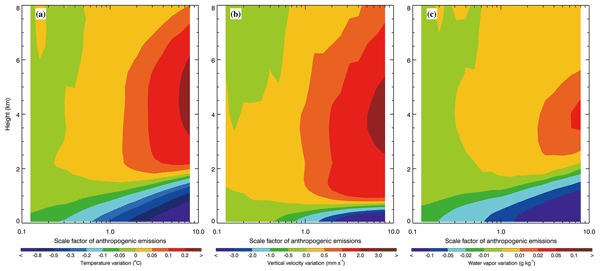
Yuning Yang, Naifang Bei, Ruonan Wang, Qing Ji, Haiyue Hong, Zhe Li, Xuexi Tie, and Guohui Li
Atmos. Chem. Phys., 26, 11923–11942, https://doi.org/10.5194/acp-26-11923-2026, https://doi.org/10.5194/acp-26-11923-2026, 2026
Short summary
Short summary
This study examines how air pollution affects snowfall during a winter storm in central China. Using a detailed computer model of weather and air pollution, we compared conditions with different pollution levels. We find that pollution can either increase or decrease snowfall, depending on air moisture and whether snow forms mainly as ice or liquid. Pollution mainly changes how often snowfall occurs, rather than where it falls, improving understanding of weather and climate impacts.
Yuxuan Lu, Ruonan Wang, Ningning Zhang, Qiyuan Wang, Yuepeng Pan, Qian Jiang, and Xuexi Tie
EGUsphere, https://doi.org/10.5194/egusphere-2026-2692, https://doi.org/10.5194/egusphere-2026-2692, 2026
Short summary
Short summary
This study explored how ammonia reacts with secondary organic aerosols over northern China using model simulations constrained by observational data. The reaction had little effect on overall fine particle pollution but produced noticeable nitrogen-containing organic particles, improving understanding of atmospheric pollution formation and chemical processes in air quality models.
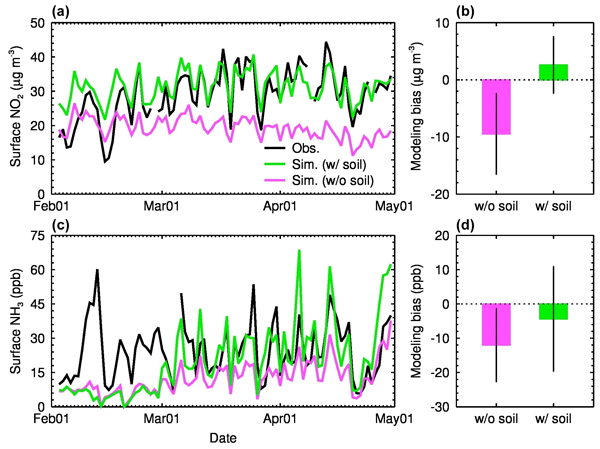
Tian Feng, Guohui Li, Shuyu Zhao, Naifang Bei, Xin Long, Yuepeng Pan, Yu Song, Ruonan Wang, Xuexi Tie, and Luisa T. Molina
Atmos. Chem. Phys., 25, 11703–11718, https://doi.org/10.5194/acp-25-11703-2025, https://doi.org/10.5194/acp-25-11703-2025, 2025
Short summary
Short summary
The impacts of agricultural fertilization on nitrogen oxide and air quality are becoming more pronounced with continuous reductions in fossil fuel sources in China. We report that atmospheric nitrogen dioxide pulses driven by agricultural fertilization largely complicate air pollution in the North China Plain, highlighting the necessity of agricultural emission control.
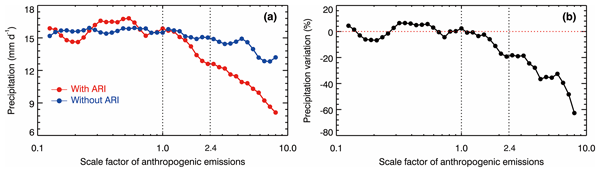
Naifang Bei, Bo Xiao, Ruonan Wang, Yuning Yang, Lang Liu, Yongming Han, and Guohui Li
Atmos. Chem. Phys., 25, 10931–10948, https://doi.org/10.5194/acp-25-10931-2025, https://doi.org/10.5194/acp-25-10931-2025, 2025
Short summary
Short summary
This study uses a cloud-resolving model to examine how aerosols influence a mesoscale convective system (MCS) in central China via aerosol–radiation interaction (ARI) and aerosol–cloud interaction (ACI). Without ARIs, added aerosols do not significantly affect precipitation due to cloud competition for moisture. ARIs can stabilize or enhance convection. High aerosol levels lead to a combined ARI and ACI effect that greatly reduces precipitation.
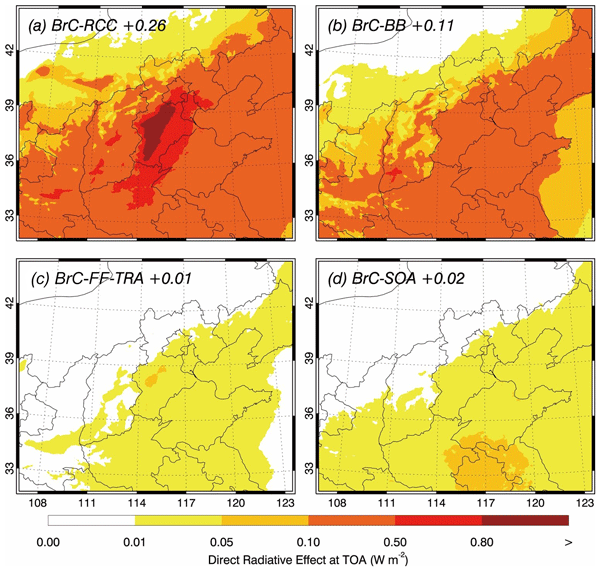
Jiamao Zhou, Jiarui Wu, Xiaoli Su, Ruonan Wang, Imad EI Haddad, Xia Li, Qian Jiang, Ting Zhang, Wenting Dai, Junji Cao, Andre S. H. Prevot, Xuexi Tie, and Guohui Li
Atmos. Chem. Phys., 25, 7563–7580, https://doi.org/10.5194/acp-25-7563-2025, https://doi.org/10.5194/acp-25-7563-2025, 2025
Short summary
Short summary
Brown carbon (BrC) is a type of airborne particle produced from various combustion sources which is light absorption. Historically, climate models have categorizing organic particles as either non-absorbing or purely reflective. Our study shows that BrC can reduce the usual cooling effect of organic particles. While BrC is often linked to biomass burning, however, BrC from fossil fuels contributes significantly to atmospheric heating.
Yuning Yang, Naifang Bei, Ruonan Wang, Qing Ji, Haiyue Hong, Zhe Li, Xuexi Tie, and Guohui Li
Atmos. Chem. Phys., 26, 11923–11942, https://doi.org/10.5194/acp-26-11923-2026, https://doi.org/10.5194/acp-26-11923-2026, 2026
Short summary
Short summary
This study examines how air pollution affects snowfall during a winter storm in central China. Using a detailed computer model of weather and air pollution, we compared conditions with different pollution levels. We find that pollution can either increase or decrease snowfall, depending on air moisture and whether snow forms mainly as ice or liquid. Pollution mainly changes how often snowfall occurs, rather than where it falls, improving understanding of weather and climate impacts.
Yuxuan Lu, Ruonan Wang, Ningning Zhang, Qiyuan Wang, Yuepeng Pan, Qian Jiang, and Xuexi Tie
EGUsphere, https://doi.org/10.5194/egusphere-2026-2692, https://doi.org/10.5194/egusphere-2026-2692, 2026
Short summary
Short summary
This study explored how ammonia reacts with secondary organic aerosols over northern China using model simulations constrained by observational data. The reaction had little effect on overall fine particle pollution but produced noticeable nitrogen-containing organic particles, improving understanding of atmospheric pollution formation and chemical processes in air quality models.
Shuyu Zhao, Tian Feng, Xuexi Tie, Biao Tian, Xiao Hu, Bo Hu, Dong Yang, Sinan Gu, and Minghu Ding
Atmos. Chem. Phys., 25, 12483–12496, https://doi.org/10.5194/acp-25-12483-2025, https://doi.org/10.5194/acp-25-12483-2025, 2025
Short summary
Short summary
This study investigated how cloud–radiation interactions influence ozone formation in a warming climate. Using measurements, reanalysis data, and models, we found that cloud–radiation interactions can worsen O3 pollution, and climate warming will amplify the influence. We highlight that climate change will pose greater challenges for China's O3 pollution prevention and control, and actions such as reducing O3 precursors emissions and mitigating climate change are urgently needed.
Tian Feng, Guohui Li, Shuyu Zhao, Naifang Bei, Xin Long, Yuepeng Pan, Yu Song, Ruonan Wang, Xuexi Tie, and Luisa T. Molina
Atmos. Chem. Phys., 25, 11703–11718, https://doi.org/10.5194/acp-25-11703-2025, https://doi.org/10.5194/acp-25-11703-2025, 2025
Short summary
Short summary
The impacts of agricultural fertilization on nitrogen oxide and air quality are becoming more pronounced with continuous reductions in fossil fuel sources in China. We report that atmospheric nitrogen dioxide pulses driven by agricultural fertilization largely complicate air pollution in the North China Plain, highlighting the necessity of agricultural emission control.
Naifang Bei, Bo Xiao, Ruonan Wang, Yuning Yang, Lang Liu, Yongming Han, and Guohui Li
Atmos. Chem. Phys., 25, 10931–10948, https://doi.org/10.5194/acp-25-10931-2025, https://doi.org/10.5194/acp-25-10931-2025, 2025
Short summary
Short summary
This study uses a cloud-resolving model to examine how aerosols influence a mesoscale convective system (MCS) in central China via aerosol–radiation interaction (ARI) and aerosol–cloud interaction (ACI). Without ARIs, added aerosols do not significantly affect precipitation due to cloud competition for moisture. ARIs can stabilize or enhance convection. High aerosol levels lead to a combined ARI and ACI effect that greatly reduces precipitation.
Jiamao Zhou, Jiarui Wu, Xiaoli Su, Ruonan Wang, Imad EI Haddad, Xia Li, Qian Jiang, Ting Zhang, Wenting Dai, Junji Cao, Andre S. H. Prevot, Xuexi Tie, and Guohui Li
Atmos. Chem. Phys., 25, 7563–7580, https://doi.org/10.5194/acp-25-7563-2025, https://doi.org/10.5194/acp-25-7563-2025, 2025
Short summary
Short summary
Brown carbon (BrC) is a type of airborne particle produced from various combustion sources which is light absorption. Historically, climate models have categorizing organic particles as either non-absorbing or purely reflective. Our study shows that BrC can reduce the usual cooling effect of organic particles. While BrC is often linked to biomass burning, however, BrC from fossil fuels contributes significantly to atmospheric heating.
Cited articles
Baró, R., Palacios-Peña, L., Baklanov, A., Balzarini, A., Brunner, D., Forkel, R., Hirtl, M., Honzak, L., Jiménez-Guerrero, P., Langer, M., Pérez, J. L., Pirovano, G., San José, R., Rodríguez, S., and Tuccella, P.: Regional effects of atmospheric aerosols on temperature: an evaluation of an ensemble of online coupled models, Atmos. Chem. Phys., 17, 9677–9696, https://doi.org/10.5194/acp-17-9677-2017, 2017.
Bei, N., Liang, J., Li, X., and Wang, R.: Worsening summertime ozone pollution in the Guanzhong Basin, China from 2014 to 2018: impacts of synoptic conditions and anthropogenic emissions, Atmos. Environ., 274, 118974, https://doi.org/10.1016/j.atmosenv.2022.118974, 2022.
Cardelino, C. A. and Chameides, W. L.: An observation-based model for analyzing ozone precursor relationships in the urban atmosphere, J. Air Waste Manage. Assoc., 45, 161–180, https://doi.org/10.1080/10473289.1995.10467354, 1995.
Chameides, W. L., Fehsenfeld, F., Rodgers, M. O., Cardelino, C., Martinez, J., Parrish, D., Lonneman, W., Lawson, D. R., Rasmussen, R. A., and Zimmerman, P.: Ozone precursor relationships in the ambient atmosphere, J. Geophys. Res., 97, 6037–6055, https://doi.org/10.1029/91JD03014, 1992.
Chapman, S.: A theory of upper-atmospheric ozone: Edward Stanford, Mem. R. Meteorol. Soc., 3, 103–125, 1930.
Dai, J., Brasseur, G. P., Vrekoussis, M., Kanakidou, M., Qu, K., Zhang, Y., Zhang, H., and Wang, T.: The atmospheric oxidizing capacity in China – Part 2: Sensitivity to emissions of primary pollutants, Atmos. Chem. Phys., 24, 12943–12962, https://doi.org/10.5194/acp-24-12943-2024, 2024a.
Dai, J., Zhang, K., Feng, Y., Yi, X., Li, R., Xue, J., Li, Q., Shi, L., Liao, J., Yi, Y., Wang, F., Yang, J., Chen, H., Huang, L., Tan, J., and Wang, Y.: Significant influence of oxygenated volatile organic compounds on atmospheric chemistry: a case study in a typical industrial city in China, Atmos. Chem. Phys., 25, 7467–7484, https://doi.org/10.5194/acp-25-7467-2025, 2025.
Dai, W., Wang, R., Zhong, H., Li, L., Zhang, Y., Li, J., Huang, T., and Tie, X.: Impact of formaldehyde on ozone formation in Central China: important role of biogenic emission in forest region, Sci. Total Environ., 949, 175182, https://doi.org/10.1016/j.scitotenv.2024.175182, 2024b.
Du, S., He, C., Zhang, L., Zhao, Y., Chu, L., and Ni, J.: Policy implications for synergistic management of PM2.5 and O3 pollution from a pattern–process–sustainability perspective in China, Sci. Total Environ., 916, 170210, https://doi.org/10.1016/j.scitotenv.2024.170210, 2024.
Dunker, A. M., Morris, R. E., Pollack, A. K., Schleyer, C. H., and Yarwood, G.: Photochemical modeling of the impact of fuels and vehicles on urban ozone using Auto/Oil Program data, Environ. Sci. Technol., 30, 787–801, https://doi.org/10.1021/es950175m, 1996.
Elshorbany, Y., Ziemke, J. R., Strode, S., Petetin, H., Miyazaki, K., De Smedt, I., Pickering, K., Seguel, R. J., Worden, H., Emmerichs, T., Taraborrelli, D., Cazorla, M., Fadnavis, S., Buchholz, R. R., Gaubert, B., Rojas, N. Y., Nogueira, T., Salameh, T., and Huang, M.: Tropospheric ozone precursors: global and regional distributions, trends, and variability, Atmos. Chem. Phys., 24, 12225–12257, https://doi.org/10.5194/acp-24-12225-2024, 2024.
Feng, T., Bei, N., Huang, R., Liu, S., Wang, Q., Xue, M., and Li, G.: Summertime ozone formation in Xi'an and surrounding areas, China, Atmos. Chem. Phys., 16, 4323–4342, https://doi.org/10.5194/acp-16-4323-2016, 2016.
Feng, Z., Xu, Y., Kobayashi, K., and Emberson, L.: Ozone pollution threatens the production of major staple crops in East Asia, Nat. Food, 3, 47–56, https://doi.org/10.1038/s43016-021-00422-6, 2022.
Gao, C., Zhang, X., Lun, X., Gao, Y., Guenther, A., Zhao, H., Zhang, S., Huang, L., Song, K., Huang, X., Gao, M., Ma, P., Jia, Z., Xiu, A., and Zhang, Y.: BVOCs' role in dynamic shifts of summer ozone formation regimes across China and policy implications, J. Environ. Manage., 376, 124150, https://doi.org/10.1016/j.jenvman.2025.124150, 2025.
Grell, G. A., Peckham, S. E., Schmitz, R., McKeen, S. A., Frost, G., Skamarock, W. C., and Eder, B.: Fully coupled “online” chemistry within the WRF model, Atmos. Environ., 39, 6957–6975, https://doi.org/10.1016/j.atmosenv.2005.04.027, 2005.
Han, H., Liu, J., Guo, S., Tan, Q., Li, J., Li, Y., and Mao, H.: Formation mechanisms of a severe ozone episode over Beijing–Tianjin–Hebei and its implications for ozone control strategies in summer, Atmos. Chem. Phys., 20, 4399–4414, https://doi.org/10.5194/acp-20-4399-2020, 2020.
Hata, H., Inoue, K., Yoshikado, H., Genchi, Y., and Tsunemi, K.: Impact of introducing electric vehicles on ground-level O3 and PM2.5 in the Greater Tokyo Area: yearly trends and the importance of changes in the Urban Heat Island effect, Atmos. Chem. Phys., 25, 1037–1056, https://doi.org/10.5194/acp-25-1037-2025, 2025
Jenkin, M. E. and Clemitshaw, K. C.: Ozone and other secondary photochemical pollutants: chemical processes governing their formation in the planetary boundary layer, Atmos. Environ., 34, 2499–2527, https://doi.org/10.1016/S1352-2310(99)00478-1, 2000.
Jin, X., and Holloway, T.: Spatial and temporal variability of ozone sensitivity over China observed from the Ozone Monitoring Instrument, J. Geophys. Res.-Atmos., 120, 7229–7246, https://doi.org/10.1002/2015JD023250, 2015.
Jin, X., Pusede, E. A., Wiedinmyer, C. J., Fischer, M. L., and Oetjen, H. J.: Evaluating a space-based indicator of surface ozone–NOX–VOC sensitivity over midlatitude source regions and application to decadal trends, J. Geophys. Res.-Atmos., 122, 10451–10471, https://doi.org/10.1002/2017JD026720, 2017.
Kong, L., Song, M., Li, X., Liu, Y., Lu, S., Zeng, L., and Zhang, Y.: Analysis of China's PM2.5 and ozone coordinated control strategy based on the observation data from 2015 to 2020, J. Environ. Sci., 138, 385–394, https://doi.org/10.1016/j.jes.2023.05.015, 2024.
Li, G., Lei, W., Zavala, M., Volkamer, R., Dusanter, S., Stevens, P., and Molina, L. T.: Impacts of HONO sources on the photochemistry in Mexico City during the MCMA-2006/MILAGO Campaign, Atmos. Chem. Phys., 10, 6551–6567, https://doi.org/10.5194/acp-10-6551-2010, 2010.
Li, G., Bei, N., Tie, X., and Molina, L. T.: Aerosol effects on the photochemistry in Mexico City during MCMA-2006/MILAGRO campaign, Atmos. Chem. Phys., 11, 5169–5182, https://doi.org/10.5194/acp-11-5169-2011, 2011a.
Li, G., Zavala, M., Lei, W., Tsimpidi, A. P., Karydis, V. A., Pandis, S. N., Canagaratna, M. R., and Molina, L. T.: Simulations of organic aerosol concentrations in Mexico City using the WRF-CHEM model during the MCMA-2006/MILAGRO campaign, Atmos. Chem. Phys., 11, 3789–3809, https://doi.org/10.5194/acp-11-3789-2011, 2011b.
Li, G., Lei, W., Bei, N., and Molina, L. T.: Contribution of garbage burning to chloride and PM2.5 in Mexico City, Atmos. Chem. Phys., 12, 8751–8761, https://doi.org/10.5194/acp-12-8751-2012, 2012.
Li, K., Jacob, D. J., Liao, H., Zhu, J., Shah, V., Shen, L., Bates, K. H., Zhang, Q., and Zhai, S.: Anthropogenic drivers of 2013–2017 trends in summer surface ozone in China, P. Natl. Acad. Sci. USA, 116, 422–427, https://doi.org/10.1073/pnas.1812168116, 2019.
Li, K., Jacob, D. J., Shen, L., Lu, X., De Smedt, I., and Liao, H.: Increases in surface ozone pollution in China from 2013 to 2019: anthropogenic and meteorological influences, Atmos. Chem. Phys., 20, 11423–11433, https://doi.org/10.5194/acp-20-11423-2020, 2020.
Li, L., Chen, C., Huang, C., Huang, H., Zhang, G., Wang, Y., and Wang, H.: Ozone sensitivity analysis with the MM5-CMAQ modeling system for Shanghai, J. Environ. Sci., 23, 1150–1157, https://doi.org/10.1016/S1001-0742(10)60531-0, 2011.
Li, N., He, Q., Greenberg, J., Guenther, A., Li, J., Cao, J., Wang, J., Liao, H., Wang, Q., and Zhang, Q.: Impacts of biogenic and anthropogenic emissions on summertime ozone formation in the Guanzhong Basin, China, Atmos. Chem. Phys., 18, 7489–7507, https://doi.org/10.5194/acp-18-7489-2018, 2018.
Li, P., Yang, Y., Wang, H., Li, S., Li, K., Wang, P., Li, B., and Liao, H.: Source attribution of near-surface ozone trends in the United States during 1995–2019, Atmos. Chem. Phys., 23, 5403–5417, https://doi.org/10.5194/acp-23-5403-2023, 2023.
Li, Q., Zhang, L., Wang, T., Wang, Z., Fu, X., and Zhang, Q.: “New” reactive nitrogen chemistry reshapes the relationship of ozone to its precursors, Environ. Sci. Technol., 52, 2810–2818, https://doi.org/10.1021/acs.est.7b05771, 2018.
Li, Y., Gao, M., Liu, Y., Wang, Y., Zhang, L., Chen, X., and Wang, T.: Ozone formation sensitivity at various altitudes: seeking the best control strategies in the Beijing–Tianjin–Hebei region, Environ. Sci. Technol. Lett., 11, 785–791, https://doi.org/10.1021/acs.estlett.4c00777, 2024.
Lin, M., Horowitz, L. W., Xie, Y., Paulot, F., Malyshev, S., Shevliakova, E., Finco, A., Gerosa, G., Kubistin, D., and Pilegaard, K.: Vegetation feedbacks during drought exacerbate ozone air pollution extremes in Europe, Nat. Clim. Change, 10, 444–451, https://doi.org/10.1038/s41558-020-0743-y, 2020.
Liu, Y. and Wang, T.: Worsening urban ozone pollution in China from 2013 to 2017 – Part 2: the effects of emission changes and implications for multi-pollutant control, Atmos. Chem. Phys., 20, 6323–6337, https://doi.org/10.5194/acp-20-6323-2020, 2020.
Lu, H., Lyu, X., Cheng, H., Ling, Z., and Guo, H.: Overview on the spatial–temporal characteristics of the ozone formation regime in China, Environ. Sci. Proc. Imp., 21, 916–929, 2019.
Martin, R. V., Fiore, A. M., and van Donkelaar, A.: Space-based diagnosis of surface ozone sensitivity to anthropogenic emissions, Geophys. Res. Lett., 31, L33102, https://doi.org/10.1029/2004GL020939, 2004.
MEE (Ministry of Ecology and Environment): Action Plan for Continuous Improvement of Air Quality, State Council, Beijing, China, https://www.gov.cn/zhengce/content/202312/content_6919000.htm (last access: 9 September 2025), 2023.
Ou, J., Yuan, Z., Zheng, J., Huang, Z., Shao, M., Li, Z., Huang, X., Guo, H., and Louie, P. K. K.: Ambient ozone control in a photochemically active region: short-term despiking or long-term attainment?, Environ. Sci. Technol., 50, 5720–5728, https://doi.org/10.1021/acs.est.6b00345, 2016.
Qu, K., Wang, X., Cai, X., Yan, Y., Jin, X., Vrekoussis, M., Kanakidou, M., Brasseur, G. P., Shen, J., Xiao, T., Zeng, L., and Zhang, Y.: Rethinking the role of transport and photochemistry in regional ozone pollution: insights from ozone concentration and mass budgets, Atmos. Chem. Phys., 23, 7653–7671, https://doi.org/10.5194/acp-23-7653-2023, 2023.
Ouyang, B., Ling, Z., Guo, H., Wang, X., Wang, D., Zhou, M., and Wang, B.: Seasonal characteristics and meteorological drivers of ozone pollution in the Pearl River Delta, China, Atmos. Environ., 269, 118856, https://doi.org/10.1016/j.atmosenv.2021.118856, 2022.
Pay, M. T., Gangoiti, G., Guevara, M., Napelenok, S., Querol, X., Jorba, O., and Pérez García-Pando, C.: Ozone source apportionment during peak summer events over southwestern Europe, Atmos. Chem. Phys., 19, 5467–5494, https://doi.org/10.5194/acp-19-5467-2019, 2019.
Rahman, M. M., Shults, R., and Ali, M. F.: Formaldehyde-to-nitrogen dioxide ratio (FNR) analysis for ozone sensitivity: a case study over Bangladesh using OMI data, Air Qual. Atmos. Health, 18, 1879–1886, https://doi.org/10.1007/s11869-025-01732-5, 2025.
Ren, S., Wang, Y., Zhang, R., Zhao, Y., Zhang, L., and Wang, X.: Ozone pollution and its precursors in China: trends, drivers, and implications for control, Environ. Sci. Technol., 56, 1794–1804, https://doi.org/10.1021/acs.est.1c06401, 2022.
Shu, Q., Napelenok, S. L., Hutzell, W. T., Baker, K. R., Henderson, B. H., Murphy, B. N., and Hogrefe, C.: Comparison of ozone formation attribution techniques in the northeastern United States, Geosci. Model Dev., 16, 2303–2322, https://doi.org/10.5194/gmd-16-2303-2023, 2023.
Sillman, S.: The use of NOy, H2O2, and HNO3 as indicators for ozone–NOX–hydrocarbon sensitivity in urban locations, J. Geophys. Res., 100, 14175–14188, https://doi.org/10.1029/94JD02953, 1995.
Song, K., Liu, R., Wang, Y., Liu, T., Wei, L., Wu, Y., Shao, M., Zeng, L., and Liu, S. C.: Observation-based analysis of ozone production sensitivity for two persistent ozone episodes in Guangdong, China, Atmos. Chem. Phys., 22, 8403–8416, https://doi.org/10.5194/acp-22-8403-2022, 2022.
Souri, A. H., Johnson, M. S., Wolfe, G. M., Crawford, J. H., Fried, A., Wisthaler, A., Brune, W. H., Blake, D. R., Weinheimer, A. J., Verhoelst, T., Compernolle, S., Pinardi, G., Vigouroux, C., Langerock, B., Choi, S., Lamsal, L., Zhu, L., Sun, S., Cohen, R. C., Min, K.-E., Cho, C., Philip, S., Liu, X., and Chance, K.: Characterization of errors in satellite-based HCHO
State Council: Air Pollution Prevention and Control Action Plan (Guofa (2013) No. 37), Beijing, China, https://www.gov.cn/zwgk/2013-09/12/content_2486773.htm (last access: 5 September 2025), 2013.
State Council: Three-Year Action Plan for Winning the Blue Sky War (2018–2020), Beijing, China, https://www.gov.cn/zhengce/content/2018-07/03/content_5303154.htm (last access: 5 September 2025), 2018.
Sun, L., Xue, L., Wang, T., Wang, X., Gao, J., Nie, W., Wang, X., Xu, P., Gao, R., and Wang, Y.: Significant increase of summertime ozone at Mount Tai in Central Eastern China, Atmos. Chem. Phys., 16, 10637–10650, https://doi.org/10.5194/acp-16-10637-2016, 2016.
Sun, Y., Liu, C., Palm, M., Vigouroux, C., Notholt, J., Hu, Q., Liu, J., and Wang, T.: Ozone seasonal evolution and photochemical production regime in the polluted troposphere in eastern China derived from high-resolution Fourier-transform spectrometry observations, Atmos. Chem. Phys., 18, 14569–14583, https://doi.org/10.5194/acp-18-14569-2018, 2018.
Tang, G., Liu, Y., Zhang, J., Liu, B., Li, Q., Sun, J., Wang, Y., Xuan, Y., Li, Y., Pan, J., Li, X., and Wang, Y.: Bypassing the NOX titration trap in ozone pollution control in Beijing, Atmos. Res., 249, 105333, https://doi.org/10.1016/j.atmosres.2020.105333, 2021.
Valacchi, G., Porada, E., and Rowe, B. H.: Ambient ozone and bacterium Streptococcus: A link between cellulitis and pharyngitis, Int. J. Occup. Med. Environ. Health, 28, 771–774, https://doi.org/10.13075/ijomeh.1896.00267, 2015.
Wang, J., Gao, J., Che, F., Yang, X., Yang, Y., Liu, L., Li, H., and Wang, T.: Summertime response of ozone and fine particulate matter to mixing-layer meteorology over the North China Plain, Atmos. Chem. Phys., 23, 14715–14733, https://doi.org/10.5194/acp-23-14715-2023, 2023a.
Wang, N., Liu, S., Xu, J., Wang, Y., Li, C., Xie, Y., Lu, H., and Yang, F.: Climate-driven biogenic emissions alleviate the impact of human-made emission reductions on O3 control in the Pearl River Delta region, southern China, Atmos. Chem. Phys., 25, 8859–8870, https://doi.org/10.5194/acp-25-8859-2025, 2025a.
Wang, R., Bei, N., Tie, X., Wu, J., Liu, S., Li, X., Liu, L., and Li, G.: Effects of hydroperoxy radical heterogeneous loss on the summertime ozone formation in the North China Plain, Sci. Total Environ., 825, 153993, https://doi.org/10.1016/j.scitotenv.2022.153993, 2022a.
Wang, T., Wei, X. L., Ding, A. J., Poon, C. N., Lam, K. S., Li, Y. S., Chan, L. Y., and Anson, M.: Increasing surface ozone concentrations in the background atmosphere of Southern China, 1994–2007, Atmos. Chem. Phys., 9, 6217–6227, https://doi.org/10.5194/acp-9-6217-2009, 2009.
Wang, T., Xue, L., Brimblecombe, P., Lam, Y. F., Li, L., and Zhang, L.: Ozone pollution in China: a review of concentrations, meteorological influences, chemical precursors, and effects, Sci. Total Environ., 575, 1582–1596, https://doi.org/10.1016/j.scitotenv.2016.10.081, 2017.
Wang, T., Xue, L., Brimblecombe, P., Lam, Y. F., Li, L., and Zhang, L.: Seasonality and reduced nitric oxide titration dominated ozone increases in China, npj Clim. Atmos. Sci., 5, 3, https://doi.org/10.1038/s41612-022-00249-3, 2022.
Wang, W., Parrish, D. D., Wang, S., Bao, F., Ni, R., Li, X., Wu, X., Feng, X., Zhang, F., and Su, H.: Long-term trend of ozone pollution in China during 2014–2020: distinct seasonal and spatial characteristics and ozone sensitivity, Atmos. Chem. Phys., 22, 8935–8949, https://doi.org/10.5194/acp-22-8935-2022, 2022.
Wang, W., Li, X., Cheng, Y., Parrish, D. D., Ni, R., Tan, Z., Wang, S., Bao, F., and Zhang, Y.: Ozone-pollution mitigation strategy informed by long-term trends of atmospheric oxidation capacity, Nat. Geosci., 17, 20–25, https://doi.org/10.1038/s41561-023-01287-7, 2024.
Wang, X., Fu, T. M., Zhang, L., Cao, H., Zhang, Q., Ma, H., Zhao, B., and Henze, D. K.: Sensitivities of ozone air pollution in the Beijing–Tianjin–Hebei area to local and upwind precursor emissions using adjoint modeling, Environ. Sci. Technol., 55, 5752–5762, https://doi.org/10.1021/acs.est.0c08167, 2021.
Wang, Y., Zhao, Y., Liu, Y., Jiang, Y., Zheng, B., Xing, J., Wang, S., Zhang, L., and Nielsen, C. P.: Sustained emission reductions have restrained the ozone pollution over China, Nat. Geosci., 16, 967– 974, https://doi.org/10.1038/s41561-023-01284-2, 2023b.
Wang, Z., Zhang, H., Shi, C., Ji, X., Zhu, Y., Xia, C., Sun, X., Zhang, M., Lin, X., Yan, S., Zhou, Y., Xing, C., Chen, Y., and Liu, C.: Vertical and spatial differences in ozone formation sensitivities under different ozone pollution levels in eastern Chinese cities, npj Clim. Atmos. Sci., 8, 30, https://doi.org/10.1038/s41612-024-00855-3, 2025b.
Wu, J., Bei, N., Hu, B., Liu, S., Wang, Y., Shen, Z., Li, X., Liu, L., Wang, R., Liu, Z., and Li, G.: Aerosol–photolysis interaction reduces particulate matter during wintertime haze events, P. Natl. Acad. Sci. USA, 117, 9755–9761, https://doi.org/10.1073/pnas.1916775117, 2020a.
Wu, K., Yang, X., Chen, D., Gu, S., Lu, Y., Jiang, Q., Bi, X., Wang, X., Li, Z., and Lu, S.: Estimation of biogenic VOC emissions and their corresponding impact on ozone and secondary organic aerosol formation in China, Atmos. Res., 231, 104656, https://doi.org/10.1016/j.atmosres.2019.104656, 2020b.
Wu, R. and Xie, S.: Spatial distribution of ozone formation in China derived from emissions of speciated volatile organic compounds, Environ. Sci. Technol., 51, 2574–2583, https://doi.org/10.1021/acs.est.6b03634, 2017.
Xiao, Q., Geng, G., Xue, T., Liu, S., Cai, C., He, K., and Zhang, Q.: Tracking PM2.5 and O3 pollution and the related health burden in China 2013–2020, Environ. Sci. Technol., 56, 6922–6932, https://doi.org/10.1021/acs.est.1c08835, 2022.
Xu, D., Yuan, Z., Wang, M., Zhao, K., Liu, X., Duan, Y., and Zhao, X.: Multi-factor reconciliation of discrepancies in ozone-precursor sensitivity retrieved from observation- and emission-based models, Environ. Int., 158, 106952, https://doi.org/10.1016/j.envint.2021.106952, 2022.
Xu, W., Lin, W., Xu, X., Tang, J., Huang, K., Gao, W., and Zhang, G.: Long-term trends of surface ozone and its influencing factors at the Mt. Waliguan GAW station, China – Part 1: overall trends and characteristics, Atmos. Chem. Phys., 16, 6191–6205, https://doi.org/10.5194/acp-16-6191-2016, 2016.
Xu, W., Wang, T., Xue, L., Louie, P. K. K., Luk, C. W. Y., Gao, J., Wang, S., Chai, F., Wang, W., and Wang, X.: Long-term measurements of surface ozone and its precursors in the Yangtze River Delta, China: characteristics, trends, and meteorological influences, Sci. Total Environ., 699, 134236, https://doi.org/10.1016/j.scitotenv.2019.134236, 2020.
Ye, X., Yang, J., Wang, R., Sun, J., Liu, Z., Chen, Z., Li, G., and Shen, Z.: From sensitivity regimes to policy action: Evaluating EKMA curve effectiveness with WRF-Chem, OBM, and machine learning, Atmos. Environ., 365, 121689, https://doi.org/10.1016/j.atmosenv.2025.121689, 2025.
Yu, H., Chang, Y., Cheng, L., Duan, Y., and Hu, J.: Measurement report: Long-term assessment of primary and secondary organic aerosols in the Shanghai megacity throughout China's Clean Air actions since 2010, Atmos. Chem. Phys., 25, 5355–5369, https://doi.org/10.5194/acp-25-5355-2025, 2025.
Yu, X., Zhao, B., Chen, Y., Li, J., Wang, S., and Wu, J.: Diagnosing ozone formation regimes and optimal precursor reduction ratios in Zhengzhou, China, Atmos. Environ., 319, 120218, https://doi.org/10.1016/j.atmosenv.2025.120218, 2025.
Zhang, Q., Zheng, Y., Tong, D., Shao, M., Wang, S., Zhang, Y., Xu, X., Wang, J., He, H., Liu, W., Ding, Y., Lei, Y., Li, J., Wang, Z., Zhang, X., Wang, Y., Cheng, J., Liu, Y., Shi, Q., Yan, L., Geng, G., Hong, C., Li, M., Liu, F., Zheng, B., Cao, J., Ding, A., Gao, J., Fu, Q., Huo, J., Liu, B., Liu, Z., Yang, F., He, K., and Hao, J.: Drivers of improved PM2.5 air quality in China from 2013 to 2017, P. Natl. Acad. Sci. USA, 116, 24463–24469, https://doi.org/10.1073/pnas.1907956116, 2019.
Zhao, C., Sun, Y., Yang, J., Li, J., Zhou, Y., Yang, Y., Fan, H., and Zhao, X.: Decadal evolution of aerosol-mediated ozone responses in Eastern China under clean-air actions and carbon-neutrality policies, Atmos. Chem. Phys., 26, 1301–1318, https://doi.org/10.5194/acp-26-1301-2026, 2026.
Zhao, M., Zhang, Y., Pei, C., Chen, T., Mu, J., Liu, Y., Wang, Y., and Xue, L.: Worsening ozone air pollution with reduced NOX and VOCs in the Pearl River Delta region in autumn 2019: implications for national control policy in China, J. Environ. Manage., 324, 116327, https://doi.org/10.1016/j.jenvman.2022.116327, 2022.
Zhao, X., Tian, W., and Chen, D.: Impacts of thermal power industry emissions on air quality in China, Sustainability, 17, 441, https://doi.org/10.3390/su17020441, 2025.
Zheng, B., Tong, D., Li, M., Liu, F., Hong, C., Geng, G., Li, H., Li, X., Peng, L., Qi, J., Yan, L., Zhang, Y., Zhao, H., Zheng, Y., He, K., and Zhang, Q.: Trends in China's anthropogenic emissions since 2010 as the consequence of clean air actions, Atmos. Chem. Phys., 18, 14095–14111, https://doi.org/10.5194/acp-18-14095-2018, 2018.
Zhu, S., Liu, Y., Xie, Y., Ren, J., Cheng, H., and Shen, L.: Shifts of formation regimes and increases of atmospheric oxidation led to ozone increase in North China Plain and Yangtze River Delta from 2016 to 2019, J. Geophys. Res. Atmos., 127, e2022JD038373, https://doi.org/10.1029/2022JD038373, 2022.
Short summary
Air pollution in China has shifted from particles to ozone as a main concern in warm-seasons. We combined ten years of observations with model simulations to explore how ozone and secondary particles change in the Guanzhong Basin. We find that chemical drivers shift during the season, leading to different pollution responses. These insights point to targeted, season-specific strategies that can improve air quality more effectively.
Air pollution in China has shifted from particles to ozone as a main concern in warm-seasons. We...


Altmetrics
Final-revised paper
Preprint