Articles | Volume 26, issue 3
https://doi.org/10.5194/acp-26-2103-2026
© Author(s) 2026. This work is distributed under
the Creative Commons Attribution 4.0 License.
https://doi.org/10.5194/acp-26-2103-2026
© Author(s) 2026. This work is distributed under
the Creative Commons Attribution 4.0 License.
Elucidation of the myrcene ozonolysis mechanism from a Criegee Chemistry perspective

Meifang Chen
State Key Laboratory for Structural Chemistry of Unstable and Stable Species, Beijing National Laboratory for Molecular Sciences (BNLMS), Institute of Chemistry Chinese Academy of Sciences, Beijing 100190, P.R. China
University of Chinese Academy of Sciences, Beijing 100049, P.R. China
Shengrui Tong
CORRESPONDING AUTHOR
State Key Laboratory for Structural Chemistry of Unstable and Stable Species, Beijing National Laboratory for Molecular Sciences (BNLMS), Institute of Chemistry Chinese Academy of Sciences, Beijing 100190, P.R. China
Shanshan Yu
State Key Laboratory for Structural Chemistry of Unstable and Stable Species, Beijing National Laboratory for Molecular Sciences (BNLMS), Institute of Chemistry Chinese Academy of Sciences, Beijing 100190, P.R. China
Xiaofan Lv
State Key Laboratory for Structural Chemistry of Unstable and Stable Species, Beijing National Laboratory for Molecular Sciences (BNLMS), Institute of Chemistry Chinese Academy of Sciences, Beijing 100190, P.R. China
University of Chinese Academy of Sciences, Beijing 100049, P.R. China
Yanyong Xu
State Key Laboratory for Structural Chemistry of Unstable and Stable Species, Beijing National Laboratory for Molecular Sciences (BNLMS), Institute of Chemistry Chinese Academy of Sciences, Beijing 100190, P.R. China
University of Chinese Academy of Sciences, Beijing 100049, P.R. China
Hailiang Zhang
State Key Laboratory for Structural Chemistry of Unstable and Stable Species, Beijing National Laboratory for Molecular Sciences (BNLMS), Institute of Chemistry Chinese Academy of Sciences, Beijing 100190, P.R. China
University of Chinese Academy of Sciences, Beijing 100049, P.R. China
Related authors
No articles found.
Yongxin Yan, Junling Li, Yufei Song, Yushi Gong, Shudan Wei, Zhaolin Wang, Haijie Zhang, Yanqin Ren, Maofa Ge, and Hong Li
EGUsphere, https://doi.org/10.5194/egusphere-2025-5992, https://doi.org/10.5194/egusphere-2025-5992, 2026
This preprint is open for discussion and under review for Atmospheric Chemistry and Physics (ACP).
Short summary
Short summary
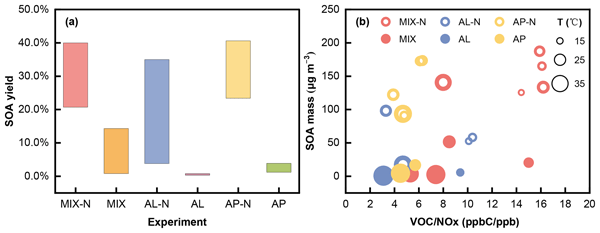
This study examines NH3 effects on photochemical oxidation of mixed AVOC and BVOC under high-NOx conditions. NH3 promotes nucleation and accelerates SOA formation, though its impact on particle size is limited by the VOC/NOx ratio. NH3 enhances carbonyl production, strengthens SOA formation through acid-base and radical reactions, and suppresses OOMs. The results improve understanding of SOA formation in complex emission environments and support more accurate air quality forecasting.
Mingzhu Zhai, Shengrui Tong, Wenqian Zhang, Hailiang Zhang, Xin Li, Xiaoqi Wang, and Maofa Ge
Atmos. Chem. Phys., 25, 16679–16695, https://doi.org/10.5194/acp-25-16679-2025, https://doi.org/10.5194/acp-25-16679-2025, 2025
Short summary
Short summary
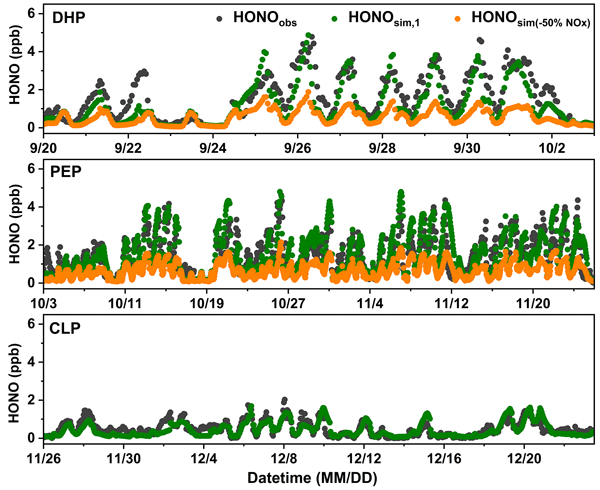
To explore how anthropogenic activities affect HONO formation, we conducted comprehensive observations in Beijing. During clean periods with a 53 % drop in Traffic Performance Index, HONO, CO, and NO2 levels decreased by 2–3 times compared to polluted periods. Emission reduction simulations showed that a 50 % NOx reduction could lower HONO by up to 46.3 %, indicating that reducing anthropogenic activities significantly suppresses HONO formation and provides direct evidence for pollution control.
Narcisse Tsona Tchinda, Xiaofan Lv, Stanley Numbonui Tasheh, Julius Numbonui Ghogomu, and Lin Du
Atmos. Chem. Phys., 25, 8575–8590, https://doi.org/10.5194/acp-25-8575-2025, https://doi.org/10.5194/acp-25-8575-2025, 2025
Short summary
Short summary
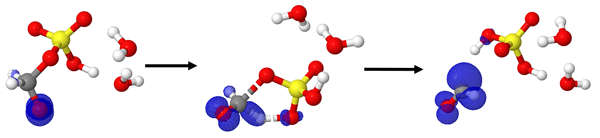
This study examines the transformation of organosulfates through reaction with HO• radicals. The results show that the nature of substituents on the carbon chain can effectively affect the decomposition rate of organosulfates, and ozone is unveiled as a complementary oxidant in the intermediate steps of this decomposition. The primary products from these reactions include carbonyl compounds and inorganic sulfate, which highlights the role of organosulfates in altering aerosol chemical composition.
Junling Li, Chaofan Lian, Mingyuan Liu, Hao Zhang, Yongxin Yan, Yufei Song, Chun Chen, Jiaqi Wang, Haijie Zhang, Yanqin Ren, Yucong Guo, Weigang Wang, Yisheng Xu, Hong Li, Jian Gao, and Maofa Ge
Atmos. Chem. Phys., 25, 2551–2568, https://doi.org/10.5194/acp-25-2551-2025, https://doi.org/10.5194/acp-25-2551-2025, 2025
Short summary
Short summary
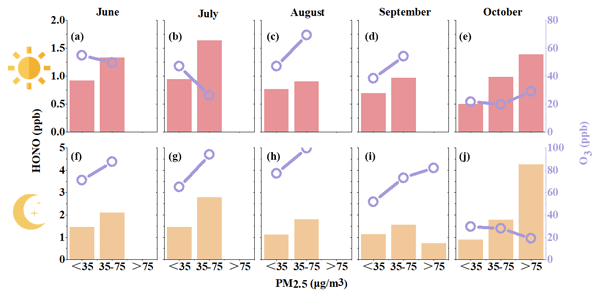
As a key source of hydroxyl (OH) radical, nitrous acid (HONO) has attracted much attention for its important role in the atmospheric oxidant capacity (AOC) increase. In this study, we made a comparison of the ambient levels, variation patterns, sources, and formation pathway in the warm season on the basis of continuous intensive observations at an urban site of Beijing. This work highlights the importance of HONO for the AOC in the warm season.
Junling Li, Kun Li, Hao Zhang, Xin Zhang, Yuanyuan Ji, Wanghui Chu, Yuxue Kong, Yangxi Chu, Yanqin Ren, Yujie Zhang, Haijie Zhang, Rui Gao, Zhenhai Wu, Fang Bi, Xuan Chen, Xuezhong Wang, Weigang Wang, Hong Li, and Maofa Ge
Atmos. Chem. Phys., 22, 10489–10504, https://doi.org/10.5194/acp-22-10489-2022, https://doi.org/10.5194/acp-22-10489-2022, 2022
Short summary
Short summary
Ozone formation is enhanced by higher OH concentration and higher temperature but is influenced little by SO2. SO2 can largely enhance the particle formation. Organo-sulfates and organo-nitrates are detected in the formed particles, and the presence of SO2 can promote the formation of organo-sulfates. The results provide a scientific basis for systematically evaluating the effects of SO2, OH concentration, and temperature on the oxidation of mixed organic gases in the atmosphere.
Jingwei Zhang, Chaofan Lian, Weigang Wang, Maofa Ge, Yitian Guo, Haiyan Ran, Yusheng Zhang, Feixue Zheng, Xiaolong Fan, Chao Yan, Kaspar R. Daellenbach, Yongchun Liu, Markku Kulmala, and Junling An
Atmos. Chem. Phys., 22, 3275–3302, https://doi.org/10.5194/acp-22-3275-2022, https://doi.org/10.5194/acp-22-3275-2022, 2022
Short summary
Short summary
This study added six potential HONO sources to the WRF-Chem model, evaluated their impact on HONO and O3 concentrations, including surface and vertical concentrations. The simulations extend our knowledge on atmospheric HONO sources, especially for nitrate photolysis. The study also explains the HONO difference in O3 formation on clean and hazy days, and reveals key potential HONO sources to O3 enhancements in haze-aggravating processes with a co-occurrence of high PM2.5 and O3 concentrations.
Junling Li, Hong Li, Kun Li, Yan Chen, Hao Zhang, Xin Zhang, Zhenhai Wu, Yongchun Liu, Xuezhong Wang, Weigang Wang, and Maofa Ge
Atmos. Chem. Phys., 21, 7773–7789, https://doi.org/10.5194/acp-21-7773-2021, https://doi.org/10.5194/acp-21-7773-2021, 2021
Short summary
Short summary
SOA formation from the mixed anthropogenic volatile organic compounds was enhanced compared to the predicted SOA mass concentration based on the SOA yield of single species; interaction occurred between intermediate products from the two precursors. Interactions between the intermediate products from the mixtures and the effect on SOA formation give us a further understanding of the SOA formed in the atmosphere.
Chao Peng, Patricia N. Razafindrambinina, Kotiba A. Malek, Lanxiadi Chen, Weigang Wang, Ru-Jin Huang, Yuqing Zhang, Xiang Ding, Maofa Ge, Xinming Wang, Akua A. Asa-Awuku, and Mingjin Tang
Atmos. Chem. Phys., 21, 7135–7148, https://doi.org/10.5194/acp-21-7135-2021, https://doi.org/10.5194/acp-21-7135-2021, 2021
Short summary
Short summary
Organosulfates are important constituents in tropospheric aerosol particles, but their hygroscopic properties and cloud condensation nuclei activities are not well understood. In our work, three complementary techniques were employed to investigate the interactions of 11 organosulfates with water vapor under sub- and supersaturated conditions.
Weigang Wang, Ting Lei, Andreas Zuend, Hang Su, Yafang Cheng, Yajun Shi, Maofa Ge, and Mingyuan Liu
Atmos. Chem. Phys., 21, 2179–2190, https://doi.org/10.5194/acp-21-2179-2021, https://doi.org/10.5194/acp-21-2179-2021, 2021
Short summary
Short summary
Aerosol mixing state regulates the interactions between water molecules and particles and thus controls aerosol activation and hygroscopic growth, which thereby influences visibility degradation, cloud formation, and its radiative forcing. However, there are few studies attempting to investigate their interactions with water molecules. Here, we investigated the effect of organic coatings on the hygroscopic behavior of the inorganic core.
Cited articles
Anglada, J. M. and Sole, A.: Impact of the water dimer on the atmospheric reactivity of carbonyl oxides, Phys. Chem. Chem. Phys., 18, 17698–17712, https://doi.org/10.1039/c6cp02531e, 2016.
Aschmann, S. M., Arey, J., and Atkinson, R.: OH radical formation from the gas-phase reactions of O3 with a series of terpenes, Atmos. Environ., 36, 4347–4355, https://doi.org/10.1016/s1352-2310(02)00355-2, 2002.
Atkinson, R., Hasegawa, D., and Aschmann, S. M.: Rate constants for the gas-phase reactions of O3 with a series of monoterpenes and related-compounds at 296 ± 2 K, Int. J. Chem. Kinet., 22, 871–887, https://doi.org/10.1002/kin.550220807, 1990.
Bach, S. B. H.: Matrix-Isolation Techniques: A Practical Approach. The Practical Approach in Chemistry Series By Ian R. Dunkin (University of Strathclyde), Oxford Press: New York, 1998, 242 pp., ISBN 0-19-855863-5, J. Am. Chem. Soc., 121, 5618–5618, https://doi.org/10.1021/ja9857099, 1999.
Baker, Y., Kang, S., Wang, H., Wu, R., Xu, J., Zanders, A., He, Q., Hohaus, T., Ziehm, T., Geretti, V., Bannan, T. J., O'Meara, S. P., Voliotis, A., Hallquist, M., McFiggans, G., Zorn, S. R., Wahner, A., and Mentel, T. F.: Impact of ratio on highly oxygenated α-pinene photooxidation products and secondary organic aerosol formation potential, Atmos. Chem. Phys., 24, 4789–4807, https://doi.org/10.5194/acp-24-4789-2024, 2024.
Boge, O., Mutzel, A., Iinuma, Y., Yli-Pirila, P., Kahnt, A., Joutsensaari, J., and Herrmann, H.: Gas-phase products and secondary organic aerosol formation from the ozonolysis and photooxidation of myrcene, Atmos. Environ., 79, 553–560, https://doi.org/10.1016/j.atmosenv.2013.07.034, 2013.
Boy, M., Mogensen, D., Smolander, S., Zhou, L., Nieminen, T., Paasonen, P., Plass-Dülmer, C., Sipilä, M., Petäjä, T., Mauldin, L., Berresheim, H., and Kulmala, M.: Oxidation of SO2 by stabilized Criegee intermediate (sCI) radicals as a crucial source for atmospheric sulfuric acid concentrations, Atmos. Chem. Phys., 13, 3865–3879, https://doi.org/10.5194/acp-13-3865-2013, 2013.
Caravan, R. L., Bannan, T. J., Winiberg, F. A. F., Khan, M. A. H., Rousso, A. C., Jasper, A. W., Worrall, S. D., Bacak, A., Artaxo, P., Brito, J., Priestley, M., Allan, J. D., Coe, H., Ju, Y., Osborn, D. L., Hansen, N., Klippenstein, S. J., Shallcross, D. E., Taatjes, C. A., and Percival, C. J.: Observational evidence for Criegee intermediate oligomerization reactions relevant to aerosol formation in the troposphere, Nat. Geosci., 17, 219–226, https://doi.org/10.1038/s41561-023-01361-6, 2024.
Chao, W., Markus, C. R., Okumura, M., Winiberg, F. A. F., and Percival, C. J.: Chemical Kinetic Study of the Reaction of CH2OO with CH3O2, J. Phys. Chem. Lett., 15, 3690–3697, https://doi.org/10.1021/acs.jpclett.4c00159, 2024.
Chen, L., Huang, Y., Xue, Y., Shen, Z., Cao, J., and Wang, W.: Mechanistic and kinetics investigations of oligomer formation from Criegee intermediate reactions with hydroxyalkyl hydroperoxides, Atmos. Chem. Phys., 19, 4075–4091, https://doi.org/10.5194/acp-19-4075-2019, 2019.
Chen, L., Huang, Y., Xue, Y., Jia, Z., and Wang, W.: Oligomer formation from the gas-phase reactions of Criegee intermediates with hydroperoxide esters: mechanism and kinetics, Atmos. Chem. Phys., 22, 14529–14546, https://doi.org/10.5194/acp-22-14529-2022, 2022.
Chen, M. F., Tong, S. R., Wang, Z., Li, W. R., Xu, Y. Y., Wang, S. F., and Ge, M. F.: Reaction mechanism and kinetics of Criegee intermediate and hydroperoxymethyl formate, J. Environ. Sci., 105, 128-137, https://doi.org/10.1016/j.jes.2020.12.029, 2021.
Chen, M. F., Tong, S. R., Yu, S. S., Xu, Y. Y., Lv, X. F., Zhang, H. L., Wang, S. F,, and Ge, M. F.: Impact of the Criegee Intermediate on the Formation of Secondary Organic Aerosols during E-4-Hexen-1-ol Ozonolysis, J. Phys. Chem. A, 129, 1704–1713, https://doi.org/10.1021/acs.jpca.4c08028, 2025.
Chen, T., Zhang, P., Chu, B., Ma, Q., Ge, Y., Liu, J., and He, H.: Secondary organic aerosol formation from mixed volatile organic compounds: Effect of RO2 chemistry and precursor concentration, Npj Clim. Atmos. Sci., 5, 95, https://doi.org/10.1038/s41612-022-00321-y, 2022.
Chhantyal-Pun, R., Davey, A., Shallcross, D. E., Percival, C. J., and Orr-Ewing, A. J.: A kinetic study of the CH2OO Criegee intermediate self-reaction, reaction with SO2 and unimolecular reaction using cavity ring-down spectroscopy, Phys. Chem. Chem. Phys., 17, 3617–3626, https://doi.org/10.1039/c4cp04198d, 2015.
Chhantyal-Pun, R., Khan, M. A. H., Zachhuber, N., Percival, C. J., Shallcross, D. E., and Orr-Ewing, A. J.: Impact of Criegee Intermediate Reactions with Peroxy Radicals on Tropospheric Organic Aerosol, Acs Earth Space Chem., 4, 1743–1755, https://doi.org/10.1021/acsearthspacechem.0c00147, 2020.
Cox, R. A., Ammann, M., Crowley, J. N., Herrmann, H., Jenkin, M. E., McNeill, V. F., Mellouki, A., Troe, J., and Wallington, T. J.: Evaluated kinetic and photochemical data for atmospheric chemistry: Volume VII – Criegee intermediates, Atmos. Chem. Phys., 20, 13497–13519, https://doi.org/10.5194/acp-20-13497-2020, 2020.
Criegee, R.: Mechanism of Ozonolysis, Angew. Chem. Int. Edit., 14, 745–752, https://doi.org/10.1002/anie.197507451, 1975.
Deng, P., Wang, L., and Wang, L.: Mechanism of Gas-Phase Ozonolysis of β-Myrcene in the Atmosphere, J. Phys. Chem. A, 122, 3013–3020, https://doi.org/10.1021/acs.jpca.8b00983, 2018.
Donahue, N. M., Epstein, S. A., Pandis, S. N., and Robinson, A. L.: A two-dimensional volatility basis set: 1. organic-aerosol mixing thermodynamics, Atmos. Chem. Phys., 11, 3303–3318, https://doi.org/10.5194/acp-11-3303-2011, 2011.
Donahue, N. M., Kroll, J. H., Pandis, S. N., and Robinson, A. L.: A two-dimensional volatility basis set – Part 2: Diagnostics of organic-aerosol evolution, Atmos. Chem. Phys., 12, 615–634, https://doi.org/10.5194/acp-12-615-2012, 2012.
Frandsen, B. N., Franzon, L., Meder, M., Pasik, D., Ahongshangbam, E., Vinkvist, N., Myllys, N., Iyer, S., Rissanen, M. P., Ehn, M., and Kurtén, T. C.: Detailed Investigation of 2,3-Dimethyl-2-butene Ozonolysis-Derived Hydroxyl, Peroxy, and Alkoxy Radical Chemistry, ACS Earth Space Chem., 9, 1322–1337, https://doi.org/10.1021/acsearthspacechem.4c00355, 2025.
Frisch, M. J., Trucks, G. W., Schlegel, H. B., Scuseria, G. E., Robb, M. A., Cheeseman, J. R., Scalmani, G., Barone, V., Petersson, G. A., Nakatsuji, H., Li, X., Caricato, M., Marenich, A. V., Bloino, J., Janesko, B. G., Gomperts, R., Mennucci, B., Hratchian, H. P., Ortiz, J. V., Izmaylov, A. F., Sonnenberg, J. L., Williams, Ding, F., Lipparini, F., Egidi, F., Goings, J., Peng, B., Petrone, A., Henderson, T., Ranasinghe, D., Zakrzewski, V. G., Gao, J., Rega, N., Zheng, G., Liang, W., Hada, M., Ehara, M., Toyota, K., Fukuda, R., Hasegawa, J., Ishida, M., Nakajima, T., Honda, Y., Kitao, O., Nakai, H., Vreven, T., Throssell, K., Montgomery Jr., J. A., Peralta, J. E., Ogliaro, F., Bearpark, M. J., Heyd, J. J., Brothers, E. N., Kudin, K. N., Staroverov, V. N., Keith, T. A., Kobayashi, R., Normand, J., Raghavachari, K., Rendell, A. P., Burant, J. C., Iyengar, S. S., Tomasi, J., Cossi, M., Millam, J. M., Klene, M., Adamo, C., Cammi, R., Ochterski, J. W., Martin, R. L., Morokuma, K., Farkas, O., Foresman, J. B., and Fox, D. J.: Gaussian 16 Rev. A.03, Gaussian 16 Rev. A.03, Gaussian, Inc., Wallingford, CT, https://www.gaussian.com (last access: 8 February 2026), 2016.
Gong, Y. and Chen, Z.: Quantification of the role of stabilized Criegee intermediates in the formation of aerosols in limonene ozonolysis, Atmos. Chem. Phys., 21, 813–829, https://doi.org/10.5194/acp-21-813-2021, 2021.
Han, S. W. and Kim, K.: Infrared matrix isolation study of acetone and methanol in solid argon, J. Phys. Chem., 100, 17124–17132, https://doi.org/10.1021/jp961538n, 1996.
Harvey, R. M., Bateman, A. P., Jain, S., Li, Y. J., Martin, S., and Petrucci, G. A.: Optical Properties of Secondary Organic Aerosol from cis-3-Hexenol and cis-3-Hexenyl Acetate: Effect of Chemical Composition, Humidity, and Phase, Environ. Sci. Technol., 50, 4997–5006, https://doi.org/10.1021/acs.est.6b00625, 2016.
Hassan, Z., Stahlberger, M., Rosenbaum, N., and Braese, S.: Criegee Intermediates Beyond Ozonolysis: Synthetic and Mechanistic Insights, Angew. Chem. Int. Edit., 60, 15138–15152, https://doi.org/10.1002/anie.202014974, 2021.
Helmig, D., Daly, R. W., Milford, J., and Guenther, A.: Seasonal trends of biogenic terpene emissions, Chemosphere, 93, 35–46, https://doi.org/10.1016/j.chemosphere.2013.04.058, 2013.
Hofzumahaus, A., Rohrer, F., Lu, K. D., Bohn, B., Brauers, T., Chang, C. C., Fuchs, H., Holland, F., Kita, K., Kondo, Y., Li, X., Lou, S. R., Shao, M., Zeng, L. M., Wahner, A., and Zhang, Y. H.: Amplified Trace Gas Removal in the Troposphere, Science, 324, 1702–1704, https://doi.org/10.1126/science.1164566, 2009.
Jiang, H. T., Xie, C. L., Liu, Y., Xiao, C. L., Zhang, W. Q., Li, H. W., Long, B., Dong, W. R., Truhlar, D. G., and Yang, X. M.: Criegee Intermediates Significantly Reduce Atmospheric (CF3)2CFCN, J. Am. Chem. Soc., 147, 12263–12272, https://doi.org/10.1021/jacs.5c01737, 2025.
Jokinen, T., Sipila, M., Richters, S., Kerminen, V. M., Paasonen, P., Stratmann, F., Worsnop, D., Kulmala, M., Ehn, M., Herrmann, H., and Berndt, T.: Rapid Autoxidation Forms Highly Oxidized RO2 Radicals in the Atmosphere, Angew. Chem. Int. Edit., 53, 14596–14600, https://doi.org/10.1002/anie.201408566, 2014.
Jr-Min Lin, J. and Chao, W.: Structure-dependent reactivity of Criegee intermediates studied with spectroscopic methods, Chem. Soc. Rev., 46, 7483–7497, https://doi.org/10.1039/C7CS00336F, 2017.
Khan, M. A. H., Percival, C. J., Caravan, R. L., Taatjes, C. A., and Shallcross, D. E.: Criegee intermediates and their impacts on the troposphere, Environ. Sci.-Proc. Imp., 20, 437–453, https://doi.org/10.1039/c7em00585g, 2018.
Kidwell, N. M., Li, H., Wang, X., Bowman, J. M., and Lester, M. I.: Unimolecular dissociation dynamics of vibrationally activated CH3CHOO Criegee intermediates to OH radical products, Nature Chemistry, 8, 509–514, https://doi.org/10.1038/nchem.2488, 2016.
Kostiainen, R.: Volatile organic compounds in the indoor air of normal and sick houses, Atmos. Environ., 29, 693–702, https://doi.org/10.1016/1352-2310(94)00309-9, 1995.
Lelieveld, J., Gromov, S., Pozzer, A., and Taraborrelli, D.: Global tropospheric hydroxyl distribution, budget and reactivity, Atmos. Chem. Phys., 16, 12477–12493, https://doi.org/10.5194/acp-16-12477-2016, 2016.
Lin, H.-Y., Huang, Y.-H., Wang, X., Bowman, J. M., Nishimura, Y., Witek, H. A., and Lee, Y.-P.: Infrared identification of the Criegee intermediates syn- and anti-CH3CHOO, and their distinct conformation-dependent reactivity, Nat. Commun., 6, 7012, https://doi.org/10.1038/ncomms8012, 2015.
Lin, L. C., Chang, H. T., Chang, C. H., Chao, W., Smith, M. C., Chang, C. H., Lin, J. J. M., and Takahashi, K.: Competition between H2O and (H2O)(2) reactions with CH2OO/CH3CHOO, Phys. Chem. Chem. Phys., 18, 4557–4568, https://doi.org/10.1039/c5cp06446e, 2016.
Lin, Y.-H., Yin, C., Lin, W.-H., Li, Y.-L., Takahashi, K., and Lin, J. J.-M.: Criegee Intermediate Reaction with Alcohol Is Enhanced by a Single Water Molecule, J. Phys. Chem. Lett., 9, 7040–7044, https://doi.org/10.1021/acs.jpclett.8b03349, 2018.
Liu, D., Zhang, Y., Zhong, S., Chen, S., Xie, Q., Zhang, D., Zhang, Q., Hu, W., Deng, J., Wu, L., Ma, C., Tong, H., and Fu, P.: Large differences of highly oxygenated organic molecules (HOMs) and low-volatile species in secondary organic aerosols (SOAs) formed from ozonolysis of β-pinene and limonene, Atmos. Chem. Phys., 23, 8383–8402, https://doi.org/10.5194/acp-23-8383-2023, 2023.
Liu, S., Galeazzo, T., Valorso, R., Shiraiwa, M., Faiola, C. L., and Nizkorodov, S. A.: Secondary Organic Aerosol from OH-Initiated Oxidation of Mixtures of d-Limonene and beta-Myrcene, Environ. Sci. Technol., https://doi.org/10.1021/acs.est.4c04870, 2024.
Long, B., Bao, J. L., and Truhlar, D. G.: Unimolecular reaction of acetone oxide and its reaction with water in the atmosphere, Proc. Natl. Acad. Sci. USA, 115, 6135–6140, https://doi.org/10.1073/pnas.1804453115, 2018.
Long, B., Bao, J. L., and Truhlar, D. G.: Rapid unimolecular reaction of stabilized Criegee intermediates and implications for atmospheric chemistry, Nat. Commun., 10, 2003, https://doi.org/10.1038/s41467-019-09948-7, 2019.
Long, B., Xie, C., and Truhlar, D. G.: Criegee Intermediates Compete Well with OH as a Cleaning Agent for Atmospheric Amides, J. Am. Chem. Soc., https://doi.org/10.1021/jacs.5c07439, 2025.
Lu, T.: Molclus, Version 1.1.2., http://www.keinsci.com/research/molclus.html (last access: 6 November 2024), 2023.
Luo, Y., Franzon, L., Zhang, J., Sarnela, N., Donahue, N. M., Kurtén, T., and Ehn, M.: Gas-phase observations of accretion products from stabilized Criegee intermediates in terpene ozonolysis with two dicarboxylic acids, Atmos. Chem. Phys., 25, 4655–4664, https://doi.org/10.5194/acp-25-4655-2025, 2025.
Mauldin, R. L., Berndt, T., Sipilä, M., Paasonen, P., Petäjä, T., Kim, S., Kurtén, T., Stratmann, F., Kerminen, V. M., and Kulmala, M.: A new atmospherically relevant oxidant of sulphur dioxide, Nature, 488, 193-196, https://doi.org/10.1038/nature11278, 2012.
Munshi, H. B., Rao, K., and Iyer, R. M.: Rate constants of the reactions of ozone with nitriles, acrylates and terpenes in gas-phase, Atmos. Environ., 23, 1971–1976, https://doi.org/10.1016/0004-6981(89)90522-2, 1989.
Neese, F.: Software update: The ORCA program system-Version 5.0, WIREs Comput. Mol. Sci., https://doi.org/10.1002/wcms.1606, 2022.
Newland, M. J., Rickard, A. R., Sherwen, T., Evans, M. J., Vereecken, L., Muñoz, A., Ródenas, M., and Bloss, W. J.: The atmospheric impacts of monoterpene ozonolysis on global stabilised Criegee intermediate budgets and SO2 oxidation: experiment, theory and modelling, Atmos. Chem. Phys., 18, 6095–6120, https://doi.org/10.5194/acp-18-6095-2018, 2018.
Peräkylä, O., Berndt, T., Franzon, L., Hasan, G., Meder, M., Valiev, R. R., Daub, C. D., Varelas, J. G., Geiger, F. M., Thomson, R. J., Rissanen, M., Kurtén, T., and Ehn, M.: Large Gas-Phase Source of Esters and Other Accretion Products in the Atmosphere, J. Am. Chem. Soc., 145, 7780–7790, https://doi.org/10.1021/jacs.2c10398, 2023.
Ringsdorf, A., Edtbauer, A., Vila-Guerau de Arellano, J., Pfannerstill, E. Y., Gromov, S., Kumar, V., Pozzer, A., Wolff, S., Tsokankunku, A., Soergel, M., Sa, M. O., Araujo, A., Ditas, F., Poehlker, C., Lelieveld, J., and Williams, J.: Inferring the diurnal variability of OH radical concentrations over the Amazon from BVOC measurements, Sci. Rep., 13, https://doi.org/10.1038/s41598-023-41748-4, 2023.
Sakamoto, Y., Inomata, S., and Hirokawa, J.: Oligomerization reaction of the Criegee intermediate leads to secondary organic aerosol formation in ethylene ozonolysis, J. Phys. Chem. A, 117, 12912–12921, https://doi.org/10.1021/jp408672m, 2013.
Sindelarova, K., Granier, C., Bouarar, I., Guenther, A., Tilmes, S., Stavrakou, T., Müller, J.-F., Kuhn, U., Stefani, P., and Knorr, W.: Global data set of biogenic VOC emissions calculated by the MEGAN model over the last 30 years, Atmos. Chem. Phys., 14, 9317–9341, https://doi.org/10.5194/acp-14-9317-2014, 2014.
Sipilä, M., Jokinen, T., Berndt, T., Richters, S., Makkonen, R., Donahue, N. M., Mauldin III, R. L., Kurtén, T., Paasonen, P., Sarnela, N., Ehn, M., Junninen, H., Rissanen, M. P., Thornton, J., Stratmann, F., Herrmann, H., Worsnop, D. R., Kulmala, M., Kerminen, V.-M., and Petäjä, T.: Reactivity of stabilized Criegee intermediates (sCIs) from isoprene and monoterpene ozonolysis toward SO2 and organic acids, Atmos. Chem. Phys., 14, 12143–12153, https://doi.org/10.5194/acp-14-12143-2014, 2014.
Su, Y.-T., Huang, Y.-H., Witek, H. A., and Lee, Y.-P.: Infrared Absorption Spectrum of the Simplest Criegee Intermediate CH2OO, Science, 340, 174–176, https://doi.org/10.1126/science.1234369, 2013.
Su, Y.-T., Lin, H.-Y., Putikam, R., Matsui, H., Lin, M. C., and Lee, Y.-P.: Extremely rapid self-reaction of the simplest Criegee intermediate CH2OO and its implications in atmospheric chemistry, Nat. Chem., 6, 477–483, https://doi.org/10.1038/nchem.1890, 2014.
Taatjes, C. A., Welz, O., Eskola, A. J., Savee, J. D., Scheer, A. M., Shallcross, D. E., Rotavera, B., Lee, E. P. F., Dyke, J. M., Mok, D. K. W., Osborn, D. L., and Percival, C. J.: Direct Measurements of Conformer-Dependent Reactivity of the Criegee Intermediate CH3CHOO, Science, 340, 177–180, https://doi.org/10.1126/science.1234689, 2013.
Vereecken, L., Harder, H., and Novelli, A.: The reaction of Criegee intermediates with NO, RO2, and SO2, and their fate in the atmosphere, Phys. Chem. Chem. Phys., 14, 14682–14695, https://doi.org/10.1039/c2cp42300f, 2012.
Vereecken, L., Novelli, A., and Taraborrelli, D.: Unimolecular decay strongly limits the atmospheric impact of Criegee intermediates, Phys. Chem. Chem. Phys., 19, 31599–31612, https://doi.org/10.1039/c7cp05541b, 2017.
Vereecken, L., Novelli, A., Kiendler-Scharr, A., and Wahner, A.: Unimolecular and water reactions of oxygenated and unsaturated Criegee intermediates under atmospheric conditions, Phys. Chem. Chem. Phys., 24, 6428-6443, https://doi.org/10.1039/d1cp05877k, 2022.
Wang, Y.-Y., Chung, C.-Y., and Lee, Y.-P.: Infrared spectral identification of the Criegee intermediate (CH3)2COO, J. Chem. Phys., 145, 154303, https://doi.org/10.1063/1.4964658, 2016.
Wang, Z., Tong, S. R., Chen M. F., Jing, B., Li, W. R., Guo, Y. C., Ge, M. F., and Wang, S. F.: Study on ozonolysis of asymmetric alkenes with matrix isolation and FT-IR spectroscopy, Chemosphere, 252, 126413, https://doi.org/10.1016/j.chemosphere.2020.126413, 2020.
Welz, O., Eskola, A. J., Sheps, L., Rotavera, B., Savee, J. D., Scheer, A. M., Osborn, D. L., Lowe, D., Booth, A. M., Xiao, P., Khan, M. A. H., Percival, C. J., and Shallcross, D. E.: Rate Coefficients of C1 and C2 Criegee Intermediate Reactions with Formic and Acetic Acid Near the Collision Limit: Direct Kinetics Measurements and Atmospheric Implications, Angew. Chem. Int. Edit., 53, 4547–4550, https://doi.org/10.1002/anie.201400964, 2014.
Yang, X., Deng, J., Li, D., Chen, J., Xu, Y., Zhang, K., Shang, X., and Cao, Q.: Transient species in the ozonolysis of tetramethylethene, J. Environ. Sci., 95, 210–216, https://doi.org/10.1016/j.jes.2020.03.027, 2020.
Yin, C. and Takahashi, K.: Effect of unsaturated substituents in the reaction of Criegee intermediates with water vapor, Phys. Chem. Chem. Phys., 20, 20217–20227, https://doi.org/10.1039/c8cp02064g, 2018.
Yu, S. S., Tong, S. R., Chen, M. F., Zhang, H. L., Xu, Y. Y., Guo, Y. C., and Ge, M. F.: Characterization of Key Intermediates and Products from the Ozonolysis of Styrene-Like Compounds, Environ. Sci. Technol., https://doi.org/10.1021/acs.est.5c00769, 2025.
Zhang, D. and Zhang, R.: Ozonolysis of alpha-pinene and beta-pinene: Kinetics and mechanism, J. Chem. Phys., 122, https://doi.org/10.1063/1.1862616, 2005.
Zhang, S., Du, L., Yang, Z., Tchinda, N. T., Li, J., and Li, K.: Contrasting impacts of humidity on the ozonolysis of monoterpenes: insights into the multi-generation chemical mechanism, Atmos. Chem. Phys., 23, 10809–10822, https://doi.org/10.5194/acp-23-10809-2023, 2023.
Zhao, Q., Wang, W., Liu, F., Lu, J., and Wang, W.: Oligomerization reactions for precursors to secondary organic aerosol: Comparison between two formation mechanisms for the oligomeric hydroxyalkyl hydroperoxides, Atmos. Environ., 166, 1–8, https://doi.org/10.1016/j.atmosenv.2017.07.008, 2017.
Zhao, Y., Wingen, L. M., Perraud, V., Greaves, J., and Finlayson-Pitts, B. J.: Role of the reaction of stabilized Criegee intermediates with peroxy radicals in particle formation and growth in air, Phys. Chem. Chem. Phys., 17, 12500–12514, https://doi.org/10.1039/c5cp01171j, 2015.
Zhao, Z., Zhang, W., Alexander, T., Zhang, X., Martin, D. B. C., and Zhang, H.: Isolating α-Pinene Ozonolysis Pathways Reveals New Insights into Peroxy Radical Chemistry and Secondary Organic Aerosol Formation, Environ. Sci. Technol., 55, 6700–6709, https://doi.org/10.1021/acs.est.1c02107, 2021.
Short summary
The critical role of Criegee intermediates (CIs) in the myrcene ozonolysis was elucidated through the combined approach of matrix isolation Fourier transform infrared spectroscopy and smog chamber experiments. Distinct mechanisms of different-sized CIs in secondary organic aerosol formation were proposed, and a synergistic effect between RO2 autoxidation and CIs oligomerization was identified. This study provided new insights into the ozonolysis process from the Criegee chemistry perspective.
The critical role of Criegee intermediates (CIs) in the myrcene ozonolysis was elucidated...
Altmetrics
Final-revised paper
Preprint