
Articles | Volume 26, issue 1
https://doi.org/10.5194/acp-26-15-2026
© Author(s) 2026. This work is distributed under
the Creative Commons Attribution 4.0 License.
the Creative Commons Attribution 4.0 License.
https://doi.org/10.5194/acp-26-15-2026
© Author(s) 2026. This work is distributed under
the Creative Commons Attribution 4.0 License.
the Creative Commons Attribution 4.0 License.
Research article
| 
05 Jan 2026
Research article |
| 05 Jan 2026
| 05 Jan 2026
The impact of Sahara dust aerosols on the three-dimensional structure of precipitation systems of different sizes in spring
Jing Xi
School of Earth and Space Sciences, Joint Laboratory of Fengyun Remote Sensing, University of Science and Technology of China, Hefei, 230026, China
Yu Wang
CORRESPONDING AUTHOR

School of Earth and Space Sciences, Joint Laboratory of Fengyun Remote Sensing, University of Science and Technology of China, Hefei, 230026, China
China Meteorological Administration Xiong'an Atmospheric Boundary Layer Key Laboratory, Xiong'an New Area, Baoding, 071800, China
Chinese Academy of Science (CAS) Center for Excellence in Comparative Planetory, Hefei, 230026, China
Rui Li
School of Earth and Space Sciences, Joint Laboratory of Fengyun Remote Sensing, University of Science and Technology of China, Hefei, 230026, China
Banghai Wu
School of Earth and Space Sciences, Joint Laboratory of Fengyun Remote Sensing, University of Science and Technology of China, Hefei, 230026, China
Xiaoye Fan
School of Earth and Space Sciences, Joint Laboratory of Fengyun Remote Sensing, University of Science and Technology of China, Hefei, 230026, China
Xinbin Ma
School of Earth and Space Sciences, Joint Laboratory of Fengyun Remote Sensing, University of Science and Technology of China, Hefei, 230026, China
Zixiang Meng
School of Earth and Space Sciences, Joint Laboratory of Fengyun Remote Sensing, University of Science and Technology of China, Hefei, 230026, China
Related authors
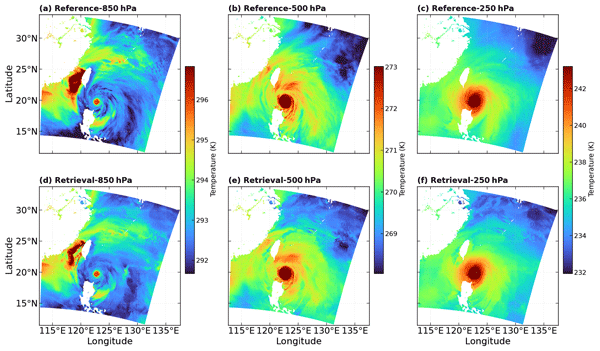
Yu Wang, Xinbin Ma, Banghai Wu, Qiang Guo, Jing Xi, Rui Li, Xin Wang, and Xiaoqing Li
Atmos. Meas. Tech., 19, 6553–6569, https://doi.org/10.5194/amt-19-6553-2026, https://doi.org/10.5194/amt-19-6553-2026, 2026
Short summary
Short summary
China’s Fengyun-4M, planned for launch in late 2026, will be the first geostationary satellite to carry a passive microwave instrument, opening a new era of weather observation. To better use its more than one hundred channels, we developed a retrieval method and an optimized channel setup for all-sky temperature profile retrieval over ocean. The results indicate that this algorithm shows low errors while reducing computing time, which is a preferred choice for future operational use.
Yu Wang, Xinbin Ma, Banghai Wu, Qiang Guo, Jing Xi, Rui Li, Xin Wang, and Xiaoqing Li
Atmos. Meas. Tech., 19, 6553–6569, https://doi.org/10.5194/amt-19-6553-2026, https://doi.org/10.5194/amt-19-6553-2026, 2026
Short summary
Short summary
China’s Fengyun-4M, planned for launch in late 2026, will be the first geostationary satellite to carry a passive microwave instrument, opening a new era of weather observation. To better use its more than one hundred channels, we developed a retrieval method and an optimized channel setup for all-sky temperature profile retrieval over ocean. The results indicate that this algorithm shows low errors while reducing computing time, which is a preferred choice for future operational use.
Panxiang Zhang, Peng Zhang, Gang Ma, Rui Li, Lu Lee, Wenguang Bai, and Chengli Qi
EGUsphere, https://doi.org/10.5194/egusphere-2025-5121, https://doi.org/10.5194/egusphere-2025-5121, 2026
Short summary
Short summary
To enhance atmospheric transmittance accuracy in strong water vapor absorption bands, this study proposes an optimized scheme for the fast transmittance algorithm applied to the Hyperspectral Infrared Atmospheric Sounder-II. It introduces a transmittance threshold for sample selection and a weighted least squares regression with transmittance weighting. Validation against line-by-line models and observations shows significant improvements in forward model accuracy and stability at 6.7 μm.
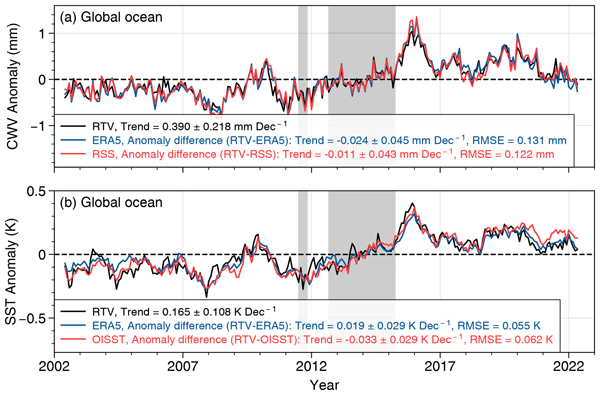
Yixiao Fu, Cheng-Zhi Zou, Peng Zhang, Banghai Wu, Shengli Wu, Shi Liu, and Yu Wang
Earth Syst. Sci. Data, 17, 4651–4670, https://doi.org/10.5194/essd-17-4651-2025, https://doi.org/10.5194/essd-17-4651-2025, 2025
Short summary
Short summary
This study presents a climate data record (CDR) of atmospheric column water vapor and sea surface temperature using over two decades of stable-orbit satellite-based passive microwave imagery observations. The evaluation results show that the CDR has long-term consistency and continuity, and is more accurate than other similar products in climate covariability, suggesting that the CDR is suitable for climate change research and for constraining climate model simulations.

Hongxia Zhu, Rui Li, Shuping Yang, Chun Zhao, Zhe Jiang, and Chen Huang
Atmos. Chem. Phys., 23, 2421–2437, https://doi.org/10.5194/acp-23-2421-2023, https://doi.org/10.5194/acp-23-2421-2023, 2023
Short summary
Short summary
The impacts of atmospheric dust aerosols and cloud dynamic conditions on precipitation vertical development in southeastern China were studied using multiple satellite observations. It was found that the precipitating drops under dusty conditions grow faster in the middle layer but slower in the upper and lower layers compared with their pristine counterparts. Quantitative estimation of the sensitivity of the precipitation top temperature to the dust aerosol optical depth is also provided.
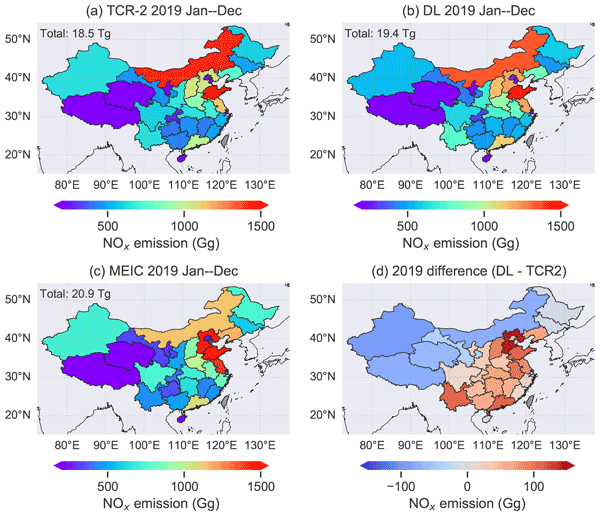
Tai-Long He, Dylan B. A. Jones, Kazuyuki Miyazaki, Kevin W. Bowman, Zhe Jiang, Xiaokang Chen, Rui Li, Yuxiang Zhang, and Kunna Li
Atmos. Chem. Phys., 22, 14059–14074, https://doi.org/10.5194/acp-22-14059-2022, https://doi.org/10.5194/acp-22-14059-2022, 2022
Short summary
Short summary
We use a deep-learning (DL) model to estimate Chinese NOx emissions by combining satellite analysis and in situ measurements. Our results are consistent with conventional analyses of Chinese NOx emissions. Comparison with mobility data shows that the DL model has a better capability to capture changes in NOx. We analyse Chinese NOx emissions during the COVID-19 pandemic lockdown period. Our results illustrate the potential use of DL as a complementary tool for conventional air quality studies.
Cited articles
Alappattu, D. P. and Kunhikrishnan, P.: Premonsoon estimates of convective available potential energy over the oceanic region surrounding the Indian subcontinent, J. Geophys. Res. Atmos., 114, D08108, https://doi.org/10.1029/2008JD011521, 2009.
Awaka, J., Iguchi, T., and Okamoto, K.: TRMM PR standard algorithm 2A23 and its performance on bright band detection, J. Meteor. Soc. Japan, 87A, 31–52, https://doi.org/10.2151/jmsj.87A.31, 2009.
Barnes, W. L., Xiong, X., and Salomonson, V. V.: Status of terra MODIS and aqua MODIS, Adv. Space Res., 32, 2099–2106, https://doi.org/10.1016/S0273-1177(03)90529-1, 2003.
Barreto, Á., Cuevas, E., García, R. D., Carrillo, J., Prospero, J. M., Ilić, L., Basart, S., Berjón, A. J., Marrero, C. L., Hernández, Y., Bustos, J. J., Ničković, S., and Yela, M.: Long-term characterisation of the vertical structure of the Saharan Air Layer over the Canary Islands using lidar and radiosonde profiles: implications for radiative and cloud processes over the subtropical Atlantic Ocean, Atmos. Chem. Phys., 22, 739–763, https://doi.org/10.5194/acp-22-739-2022, 2022.
Braun, S. A.: Reevaluating the role of the Saharan Air Layer in Atlantic tropical cyclogenesis and evolution, Mon. Weather Rev., 138, 2007–2037, https://doi.org/10.1175/2009mwr3135.1, 2010.
Chaboureau, J. and Martínez, I. R.: Precipitation and mesoscale convective systems: radiative impact of dust over northern Africa, Mon. Weather Rev., 146, 3011–3029, https://doi.org/10.1175/mwr-d-18-0103.1, 2018.
Chen, B., Liu, C., and Mapes, B. E.: Relationships between large precipitating systems and atmospheric factors at a grid scale, J. Atmos. Sci., 74, 531–552, https://doi.org/10.1175/jas-d-16-0049.1, 2017.
Chen, Q., Yin, Y., Jiang, H., Chu, Z., Xue, L., Shi, R., Zhang, X., and Chen, J.: The roles of mineral dust as cloud condensation nuclei and ice nuclei during the evolution of a hail storm, J. Geophys. Res. Atmos., 124, 14262–14284, https://doi.org/10.1029/2019jd031403, 2019.
Chen, Q., Fan, J., Yin, Y., and Han, B.: Aerosol impacts on mesoscale convective systems forming under different vertical wind shear conditions, J. Geophys. Res. Atmos., 125, e2018JD030027, https://doi.org/10.1029/2018jd030027, 2020.
Cheng, C.-T., Chen, J.-P., Tsai, I. C., Lee, H.-H., Matsui, T., Earl, K., Lin, Y.-C., Chen, S.-H., and Huang, C.-C.: Impacts of dust–radiation versus dust–cloud interactions on the development of a modeled mesoscale convective system over North Africa, Mon. Weather Rev., 147, 3301–3326, https://doi.org/10.1175/mwr-d-18-0459.1, 2019.
Choobari, O. A., Zawar-Reza, P., and Sturman, A.: The global distribution of mineral dust and its impacts on the climate system: a review, Atmos. Res., 138, 152–165, https://doi.org/10.1016/j.atmosres.2013.11.007, 2014.
Christopher, S. A. and Gupta, P.: Satellite remote sensing of particulate matter air quality: the cloud-cover problem, J. Air Waste Manag. Assoc., 60, 596–602, https://doi.org/10.3155/1047-3289.60.5.596, 2012.
Cziczo, D. J., Froyd, K. D., Hoose, C., Jensen, E. J., Diao, M. H., Zondlo, M. A., Smith, J. B., Twohy, C. H., and Murphy, D. M.: Clarifying the dominant sources and mechanisms of cirrus cloud formation, Science, 340, 1320–1324, https://doi.org/10.1126/science.1234145, 2013.
DeMott, P. J., Sassen, K., Poellot, M. R., Baumgardner, D., Rogers, D. C., Brooks, S. D., Prenni, A. J., and Kreidenweis, S. M.: African dust aerosols as atmospheric ice nuclei, Geophys. Res. Lett., 30, https://doi.org/10.1029/2003gl017410, 2003.
Dong, X., Li, R., Wang, Y., Fu, Y., and Zhao, C.: Potential impacts of Sahara dust aerosol on rainfall vertical structure over the Atlantic Ocean as identified from EOF analysis, J. Geophys. Res. Atmos., 123, 8850–8868, https://doi.org/10.1029/2018jd028500, 2018.
Douglas, A. and L'Ecuyer, T.: Global evidence of aerosol-induced invigoration in marine cumulus clouds, Atmos. Chem. Phys., 21, 15103–15114, https://doi.org/10.5194/acp-21-15103-2021, 2021.
Dunion, J. P. and Velden, C. S.: The impact of the Saharan air layer on Atlantic tropical cyclone activity, Bull. Am. Meteorol. Soc., 85, 353-366, https://doi.org/10.1175/bams-85-3-353, 2004.
ECMWF: ECMWF Reanalysis v5, ECMWF, https://www.ecmwf.int/ (last access: 18 December 2025), 2025.
Fan, X., Wu, B., Wang, Y., and Xi, J.: Diurnal cycles of rain storms over South China during the presummer rainy season, Atmos. Res., 310, 107641, https://doi.org/10.1016/j.atmosres.2024.107641, 2024.
French, J., Geerts, B., and Wang, Y.: Dynamics of the cumulus cloud margin: an observational study, J. Atmos. Sci., 66, 3660–3677, https://doi.org/10.1175/2009jas3129.1, 2009.
Fu, Y. and Liu, G.: The variability of tropical precipitation profiles and its impact on microwave brightness temperatures as inferred from TRMM data, J. Appl. Meteorol., 40, 2130-2143, https://doi.org/10.1175/1520-0450(2001)040<2130:Tvotpp>2.0.Co;2, 2001.
Fu, Y., Liu, Q., Gao, Y., Hong, X., Zi, Y., Zheng, Y., Li, R., and Heng, Z.: A feasible method for merging the TRMM microwave imager and precipitation radar data, J. Quant. Spectrosc. Ra., 122, 155–169, https://doi.org/10.1016/j.jqsrt.2012.08.028, 2013.
Fu, Y., Chen, Y., Zhang, X., Wang, Y., Li, R., Liu, Q., Zhong, L., Zhang, Q., and Zhang, A.: Fundamental characteristics of tropical rain cell structures as measured by TRMM PR, J. Meteorol. Res., 34, 1129–1150, https://doi.org/10.1007/s13351-020-0035-5, 2021.
Gibbons, M., Min, Q., and Fan, J.: Investigating the impacts of Saharan dust on tropical deep convection using spectral bin microphysics, Atmos. Chem. Phys., 18, 12161–12184, https://doi.org/10.5194/acp-18-12161-2018, 2018.
Guo, J., Su, T., Li, Z., Miao, Y., Li, J., Liu, H., Xu, H., Cribb, M., and Zhai, P.: Declining frequency of summertime local-scale precipitation over eastern China from 1970 to 2010 and its potential link to aerosols, Geophys. Res. Lett., 44, 5700–5708, https://doi.org/10.1002/2017gl073533, 2017.
Guo, J., Su, T., Chen, D., Wang, J., Li, Z., Lv, Y., Guo, X., Liu, H., Cribb, M., and Zhai, P.: Declining summertime local-scale precipitation frequency over China and the United States, 1981–2012: the disparate roles of aerosols, Geophys. Res. Lett., 46, 13281–13289, https://doi.org/10.1029/2019gl085442, 2019.
Guo, J., Liu, H., Li, Z., Rosenfeld, D., Jiang, M., Xu, W., Jiang, J. H., He, J., Chen, D., Min, M., and Zhai, P.: Aerosol-induced changes in the vertical structure of precipitation: a perspective of TRMM precipitation radar, Atmos. Chem. Phys., 18, 13329–13343, https://doi.org/10.5194/acp-18-13329-2018, 2018.
Han, X., Zhao, B., Lin, Y., Chen, Q., Shi, H., Jiang, Z., Fan, X., Wang, J., Liou, K. N., and Gu, Y.: Type-dependent impact of aerosols on precipitation associated with deep convective cloud over East Asia, J. Geophys. Res. Atmos., 127, e2021JD036127, https://doi.org/10.1029/2021jd036127, 2022.
Hersbach, H., Bell, B., Berrisford, P., Hirahara, S., Horányi, A., Muñoz-Sabater, J., Nicolas, J., Peubey, C., Radu, R., Schepers, D., Simmons, A., Soci, C., Abdalla, S., Abellan, X., Balsamo, G., Bechtold, P., Biavati, G., Bidlot, J., Bonavita, M., Chiara, G., Dahlgren, P., Dee, D., Diamantakis, M., Dragani, R., Flemming, J., Forbes, R., Fuentes, M., Geer, A., Haimberger, L., Healy, S., Hogan, R. J., Hólm, E., Janisková, M., Keeley, S., Laloyaux, P., Lopez, P., Lupu, C., Radnoti, G., Rosnay, P., Rozum, I., Vamborg, F., Villaume, S., and Thépaut, J. N.: The ERA5 global reanalysis, Q. J. R. Meteorol. Soc., 146, 1999–2049, https://doi.org/10.1002/qj.3803, 2020.
Houze, R. A.: Nimbostratus and the separation of convective and stratiform precipitation, in: International geophysics, edited by: Houze, R. A., Academic Press, 141–163, https://doi.org/10.1016/B978-0-12-374266-7.00006-8, 2014.
Huang, C. C., Chen, S. H., Lin, Y. C., Earl, K., Matsui, T., Lee, H. H., Tsai, I. C., Chen, J. P., and Cheng, C. T.: Impacts of dust-radiation versus dust-cloud interactions on the development of a modeled mesoscale convective system over North Africa, Mon. Weather Rev., 147, 3301–3326, https://doi.org/10.1175/mwr-d-18-0459.1, 2019.
Huang, J., Minnis, P., Lin, B., Wang, T., Yi, Y., Hu, Y., Sun-Mack, S., and Ayers, K.: Possible influences of Asian dust aerosols on cloud properties and radiative forcing observed from MODIS and CERES, Geophys. Res. Lett., 33, L06824, https://doi.org/10.1029/2005gl024724, 2006.
Jiang, J. H., Su, H., Huang, L., Wang, Y., Massie, S., Zhao, B., Omar, A., and Wang, Z.: Contrasting effects on deep convective clouds by different types of aerosols, Nat. Commun., 9, 3874, https://doi.org/10.1038/s41467-018-06280-4, 2018.
Kaufman, Y. J., Koren, I., Remer, L. A., Rosenfeld, D., and Rudich, Y.: The effect of smoke, dust, and pollution aerosol on shallow cloud development over the Atlantic Ocean, Proc. Natl. Acad. Sci. USA, 102, 11207–11212, https://doi.org/10.1073/pnas.0505191102, 2005.
Kelly, J. T., Chuang, C. C., and Wexler, A. S.: Influence of dust composition on cloud droplet formation, Atmos. Environ., 41, 2904–2916, https://doi.org/10.1016/j.atmosenv.2006.12.008, 2007.
Knippertz, P. and Stuut, J. B. W. (Eds.): Mineral dust: a key player in the earth system, Springer Netherlands, https://doi.org/10.1007/978-94-017-8978-3, 2014.
Koren, I., Altaratz, O., Remer, L. A., Feingold, G., Martins, J. V., and Heiblum, R. H.: Aerosol-induced intensification of rain from the tropics to the mid-latitudes, Nat. Geosci., 5, 118–122, https://doi.org/10.1038/ngeo1364, 2012.
Kummerow, C., Barnes, W., Kozu, T., Shiue, J., and Simpson, J.: The Tropical Rainfall Measuring Mission (TRMM) sensor package, J. Atmos. Oceanic Technol., 15, 809-817, https://doi.org/10.1175/1520-0426(1998)015<0809:Ttrmmt>2.0.Co;2, 1998.
Levy, R. C., Mattoo, S., Munchak, L. A., Remer, L. A., Sayer, A. M., Patadia, F., and Hsu, N. C.: The Collection 6 MODIS aerosol products over land and ocean, Atmos. Meas. Tech., 6, 2989–3034, https://doi.org/10.5194/amt-6-2989-2013, 2013.
Li, R. and Min, Q. L.: Impacts of mineral dust on the vertical structure of precipitation, J. Geophys. Res. Atmos., 115, D09203, https://doi.org/10.1029/2009jd011925, 2010.
Li, R., Qi, D., Zhang, Y., and Wang, K.: A new pixel-to-object method for evaluating the capability of the GPM IMERG product to quantify precipitation systems, J. Hydrol., 613, 128476, https://doi.org/10.1016/j.jhydrol.2022.128476, 2022.
Li, R., Dong, X., Guo, J., Fu, Y., Zhao, C., Wang, Y., and Min, Q.: The implications of dust ice nuclei effect on cloud top temperature in a complex mesoscale convective system, Sci. Rep., 7, 13826, https://doi.org/10.1038/s41598-017-12681-0, 2017.
Liu, C. and Liu, N.: Synoptic environments and characteristics of convection reaching the tropopause over Northeast China, Mon. Weather Rev., 146, 745–759, https://doi.org/10.1175/mwr-d-17-0245.1, 2018.
Liu, C. and Zipser, E. J.: Why does radar reflectivity tend to increase downward toward the ocean surface, but decrease downward toward the land surface?, J. Geophys. Res. Atmos., 118, 135–148, https://doi.org/10.1029/2012jd018134, 2013.
Liu, C. and Zipser, E. J.: The global distribution of largest, deepest, and most intense precipitation systems, Geophys. Res. Lett., 42, 3591–3595, https://doi.org/10.1002/2015gl063776, 2015.
Liu, C., Zipser, E. J., Cecil, D. J., Nesbitt, S. W., and Sherwood, S.: A cloud and precipitation feature database from nine years of TRMM observations, J. Appl. Meteor. Climatol., 47, 2712–2728, https://doi.org/10.1175/2008jamc1890.1, 2008.
Liu, C., Chen, B., and Mapes, B. E.: Relationships between large precipitating systems and atmospheric factors at a grid scale, J. Atmos. Sci., 74, 531–552, https://doi.org/10.1175/jas-d-16-0049.1, 2017.
Liu, G. S. and Fu, Y. F.: The characteristics of tropical precipitation profiles as inferred from satellite radar measurements, J. Meteorol. Soc. Jpn., 79, 131–143, https://doi.org/10.2151/jmsj.79.131, 2001.
Liu, N., Liu, C., and Lavigne, T.: The variation of the intensity, height, and size of precipitation systems with El Niño–Southern Oscillation in the tropics and subtropics, J. Climate, 32, 4281–4297, https://doi.org/10.1175/jcli-d-18-0766.1, 2019.
Martinez-Villalobos, C. and Neelin, J. D.: Why do precipitation intensities tend to follow gamma distributions?, J. Atmos. Sci., 76, 3611–3631, https://doi.org/10.1175/jas-d-18-0343.1, 2019.
Min, Q. and Li, R.: Longwave indirect effect of mineral dusts on ice clouds, Atmos. Chem. Phys., 10, 7753–7761, https://doi.org/10.5194/acp-10-7753-2010, 2010.
Min, Q.-L., Li, R., Lin, B., Joseph, E., Wang, S., Hu, Y., Morris, V., and Chang, F.: Evidence of mineral dust altering cloud microphysics and precipitation, Atmos. Chem. Phys., 9, 3223–3231, https://doi.org/10.5194/acp-9-3223-2009, 2009.
NASA: The Tropical Rainfall Measuring Mission (TRMM), NASA, https://gpm.nasa.gov/missions/trmm (last access: 18 December 2025), 2025a.
NASA: MODIS Aerosol Product, NASA [data set], https://modis.gsfc.nasa.gov/data (last access: 18 December 2025), 2025b.
Nesbitt, S. W., Cifelli, R., and Rutledge, S. A.: Storm morphology and rainfall characteristics of TRMM precipitation features, Mon. Weather Rev., 134, 2702–2721, https://doi.org/10.1175/mwr3200.1, 2006.
Patel, P. N., Gautam, R., Michibata, T., and Gadhavi, H.: Strengthened Indian summer monsoon precipitation susceptibility linked to dust-induced ice cloud modification, Geophys. Res. Lett., 46, 8431–8441, https://doi.org/10.1029/2018gl081634, 2019.
Prospero, J. M., Delany, A. C., Delany, A. C., and Carlson, T. N.: The discovery of African dust transport to the Western Hemisphere and the Saharan Air Layer: a history, Bull. Am. Meteorol. Soc., 102, E1239–E1260, https://doi.org/10.1175/bams-d-19-0309.1, 2021.
Remer, L. A., Kaufman, Y. J., Tanre, D., Mattoo, S., Chu, D. A., Martins, J. V., Li, R. R., Ichoku, C., Levy, R. C., Kleidman, R. G., Eck, T. F., Vermote, E., and Holben, B. N.: The MODIS aerosol algorithm, products, and validation, J. Atmos. Sci., 62, 947–973, https://doi.org/10.1175/jas3385.1, 2005.
Rosenfeld, D., Rudich, Y., and Lahav, R.: Desert dust suppressing precipitation: a possible desertification feedback loop, Proc. Natl. Acad. Sci. USA, 98, 5975–5980, https://doi.org/10.1073/pnas.101122798, 2001.
Rosenfeld, D., Andreae, M. O., Asmi, A., Chin, M., de Leeuw, G., Donovan, D. P., Kahn, R., Kinne, S., Kivekäs, N., Kulmala, M., Lau, W., Schmidt, K. S., Suni, T., Wagner, T., Wild, M., and Quaas, J.: Global observations of aerosol-cloud-precipitation-climate interactions, Rev. Geophys., 52, 750–808, https://doi.org/10.1002/2013rg000441, 2014.
Roy Bhowmik, S., Sen Roy, S., and Kundu, P.: Analysis of large-scale conditions associated with convection over the Indian monsoon region, Int. J. Climatol., 28, 797–821, 2008.
Ryder, C. L., Highwood, E. J., Walser, A., Seibert, P., Philipp, A., and Weinzierl, B.: Coarse and giant particles are ubiquitous in Saharan dust export regions and are radiatively significant over the Sahara, Atmos. Chem. Phys., 19, 15353–15376, https://doi.org/10.5194/acp-19-15353-2019, 2019.
Sassen, K., DeMott, P. J., Prospero, J. M., and Poellot, M. R.: Saharan dust storms and indirect aerosol effects on clouds: CRYSTAL-FACE results, Geophys. Res. Lett., 30, 1633, https://doi.org/10.1029/2003gl017371, 2003.
Schneider, T., Bischoff, T., and Haug, G. H.: Migrations and dynamics of the intertropical convergence zone, Nature, 513, 45–53, https://doi.org/10.1038/nature13636, 2014.
Schumacher, C. and Houze, R. A.: Stratiform rain in the tropics as seen by the TRMM precipitation radar, J. Climate, 16, 1739–1756, https://doi.org/10.1175/1520-0442(2003)016<1739:Sritta>2.0.Co;2, 2003.
Shin, M., Kang, Y., Park, S., Im, J., Yoo, C., and Quackenbush, L. J.: Estimating ground-level particulate matter concentrations using satellite-based data: a review, GISci. Remote Sens., 57, 174–189, https://doi.org/10.1080/15481603.2019.1703288, 2019.
Stevens, B. and Feingold, G.: Untangling aerosol effects on clouds and precipitation in a buffered system, Nature, 461, 607–613, https://doi.org/10.1038/nature08281, 2009.
Sun, Y., Wang, Y., Zhao, C., Zhou, Y., Yang, Y., Yang, X., Fan, H., Zhao, X., and Yang, J.: Vertical dependency of aerosol impacts on local scale convective precipitation, Geophys. Res. Lett., 50, e2022GL102186, https://doi.org/10.1029/2022gl102186, 2023.
Tobo, Y., Adachi, K., DeMott, P. J., Hill, T. C. J., Hamilton, D. S., Mahowald, N. M., Nagatsuka, N., Ohata, S., Uetake, J., Kondo, Y., and Koike, M.: Glacially sourced dust as a potentially significant source of ice nucleating particles, Nat. Geosci., 12, 253–258, https://doi.org/10.1038/s41561-019-0314-x, 2019.
Toracinta, E. R., Cecil, D. J., Zipser, E. J., and Nesbitt, S. W.: Radar, passive microwave, and lightning characteristics of precipitating systems in the tropics, Mon. Weather Rev., 130, 802–824, https://doi.org/10.1175/1520-0493(2002)130<0802:Rpmalc>2.0.Co;2, 2002.
van den Heever, S. C., Carrio, G. G., Cotton, W. R., DeMott, P. J., and Prenni, A. J.: Impacts of nucleating aerosol on Florida storms. Part I: Mesoscale simulations, J. Atmos. Sci., 63, 1752–1775, https://doi.org/10.1175/jas3713.1, 2006.
Vivekanandan, J., Turk, J., and Bringi, V. N.: Ice water path estimation and characterization using passive microwave radiometry, J. Appl. Meteor. Climatol., 30, 1407-1421, https://doi.org/10.1175/1520-0450(1991)030<1407:Iwpeac>2.0.Co;2, 1991.
Wall, C., Zipser, E., and Liu, C. T.: An investigation of the aerosol indirect effect on convective intensity using satellite observations, J. Atmos. Sci., 71, 430–447, https://doi.org/10.1175/jas-d-13-0158.1, 2014.
Xi, J., Li, R., Fan, X., and Wang, Y.: Aerosol effects on the three-dimensional structure of organized precipitation systems over Beijing-Tianjin-Hebei region in summer, Atmos. Res., 298, 107146, https://doi.org/10.1016/j.atmosres.2023.107146, 2024.
Xu, W., Zipser, E. J., and Liu, C.,: Rainfall characteristics and convective properties of mei-yu precipitation systems over South China, Taiwan, and the South China Sea. Part I: TRMM observations, Mon. Weather Rev., 137, 4261–4275, https://doi.org/10.1175/2009mwr2982.1, 2009.
Zang, L., Rosenfeld, D., Pan, Z., Mao, F., Zhu, Y., Lu, X., and Gong, W.: Observing aerosol primary convective invigoration and its meteorological feedback, Geophys. Res. Lett., 50, e2023GL104151, https://doi.org/10.1029/2023gl104151, 2023.
Zhang, A., Chen, C., Chen, Y., Li, W., Chen, S., and Fu, Y.: Resilient dataset of rain clusters with life cycle evolution during April to June 2016–2020 over eastern Asia based on observations from the GPM DPR and Himawari-8 AHI, Earth Syst. Sci. Data, 14, 1433–1445, https://doi.org/10.5194/essd-14-1433-2022, 2022.
Zhang, Y. and Wang, K.: Global precipitation system scale increased from 2001 to 2020, J. Hydrol., 616, 128768, https://doi.org/10.1016/j.jhydrol.2022.128768, 2023.
Zhang, Y., Yu, F., Luo, G., Chen, J. P., and Chou, C. C. K.: Impact of mineral dust on summertime precipitation over the Taiwan region, J. Geophys. Res. Atmos., 125, e2020JD033120, https://doi.org/10.1029/2020jd033120, 2020.
Zhang, Y., Yu, F., Luo, G., Fan, J., and Liu, S.: Impacts of long-range-transported mineral dust on summertime convective cloud and precipitation: a case study over the Taiwan region, Atmos. Chem. Phys., 21, 17433–17451, https://doi.org/10.5194/acp-21-17433-2021, 2021.
Zhao, C., Sun, Y., Yang, J., Li, J., Zhou, Y., Yang, Y., Fan, H., and Zhao, X.: Observational evidence and mechanisms of aerosol effects on precipitation, Sci. Bull., 69, 1569–1580, https://doi.org/10.1016/j.scib.2024.03.014, 2024.
Zhou, Y., Lau, W. K. M., and Liu, C.: Rain characteristics and large-scale environments of precipitation objects with extreme rain volumes from TRMM observations, J. Geophys. Res. Atmos., 118, 9673–9689, https://doi.org/10.1002/jgrd.50776, 2013.
Zhu, H., Li, R., Yang, S., Zhao, C., Jiang, Z., and Huang, C.: The impacts of dust aerosol and convective available potential energy on precipitation vertical structure in southeastern China as seen from multisource observations, Atmos. Chem. Phys., 23, 2421–2437, https://doi.org/10.5194/acp-23-2421-2023, 2023.
Zhu, H., Yang, S., Zhao, H., Wang, Y., and Li, R.: Complex interplay of sulfate aerosols and meteorology conditions on precipitation and latent heat vertical structure, npj Clim. Atmos. Sci., 7, 191, https://doi.org/10.1038/s41612-024-00743-w, 2024.
Zipser, E. J. and Lutz, K. R.: The vertical profile of radar reflectivity of convective cells: a strong indicator of storm intensity and lightning probability, Mon. Weather Rev., 122, 1751–1759, https://doi.org/10.1175/1520-0493(1994)122<1751:Tvporr>2.0.Co;2, 1994.
Zipser, E. J., Cecil, D. J., Liu, C., Nesbitt, S. W., and Yorty, D. P.: Where are the most intense thunderstorms on Earth?, Bull. Am. Meteorol. Soc., 87, 1057–1072, https://doi.org/10.1175/bams-87-8-1057, 2006.
Zipser, E. J., Liu, C., Cecil, D. J., Nesbitt, S. W., and Sherwood, S.: A cloud and precipitation feature database from nine years of TRMM observations, J. Appl. Meteorol., 47, 2712–2728, https://doi.org/10.1175/2008jamc1890.1, 2008.
Short summary
The impacts of Saharan dust aerosols on 3-D structure of organized precipitation systems of different horizontal sizes over the tropical Atlantic Ocean in spring were studied using multiple satellite observations. Results show that under comparable thermodynamic conditions, dust-laden precipitation systems have higher storm tops, broader upper-level precipitation areas with more large particles, stronger convective activities, and heavier surface rain rates than clean ones.
The impacts of Saharan dust aerosols on 3-D structure of organized precipitation systems of...


Altmetrics
Final-revised paper
Preprint