
Articles | Volume 26, issue 20
https://doi.org/10.5194/acp-26-14961-2026
© Author(s) 2026. This work is distributed under
the Creative Commons Attribution 4.0 License.
the Creative Commons Attribution 4.0 License.
https://doi.org/10.5194/acp-26-14961-2026
© Author(s) 2026. This work is distributed under
the Creative Commons Attribution 4.0 License.
the Creative Commons Attribution 4.0 License.
Research article
| 
23 Oct 2026
Research article |
| 23 Oct 2026
| 23 Oct 2026
Long-term land-atmosphere carbon monoxide exchange from a tall tower in a rural Central European region

HUN-REN Institute for Nuclear Research, 4026 Debrecen, Hungary
HUN-REN Institute of Earth Physics and Space Science, 9400 Sopron, Hungary
Zoltán Barcza
ELTE Eötvös Loránd University, Department of Meteorology, 1117 Budapest, Hungary
Global Change Research Institute, Czech Academy of Sciences, 603 00 Brno, Czech Republic
Anikó Kern
Obuda University, Karman Space Center, 1034 Budapest, Hungary
Obuda University, Kandó Kálmán Faculty of Electrical Engineering, 1034 Budapest, Hungary
ELTE Eötvös Loránd University, Institute of Geography and Earth Sciences, Department of Geophysics and Space Science, 1117 Budapest, Hungary
Nándor Zrinyi
ELTE Eötvös Loránd University, Department of Meteorology, 1117 Budapest, Hungary
ELTE Eötvös Loránd University, Doctoral School of Earth Sciences, 1117 Budapest, Hungary
HUN-REN, Agricultural Institute, Centre for Agricultural Research, 2462 Martonvásár, Hungary
Natascha Kljun
Department of Earth and Environmental Sciences, Lund University, 223 62 Lund, Sweden
Related authors
Hélène De Longueville, Daniela B. Melo, Alison L. Redington, Alice Ramsden, Alexandre Danjou, Peter Andrews, Joseph Pitt, Brendan Murphy, Lionel Constantin, Kieran M. Stanley, Simon O'Doherty, Angelina Wenger, Dickon Young, Andreas Engel, Tanja Schuck, Katharina Meixner, Thomas Wagenhaeuser, Fides Gad, Martin K. Vollmer, Stefan Reimann, Michela Maoine, Jgor Arduini, Chris Lunder, Norbert Schmidtbauer, László Haszpra, Mihály Molnár, Arnoud Frumau, Cedric Couret, Matthew Rigby, Stephan Henne, Alistair Manning, and Anita L. Ganesan
Atmos. Chem. Phys., 26, 7647–7675, https://doi.org/10.5194/acp-26-7647-2026, https://doi.org/10.5194/acp-26-7647-2026, 2026
Short summary
Short summary
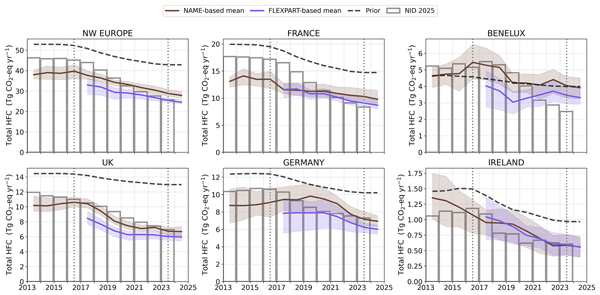
This study estimates emissions of hydrofluorocarbons, potent greenhouse gases, in north-western Europe using atmospheric observations and atmospheric modelling. The estimates are compared with nationally reported emissions submitted to the United Nations. Overall, our results are consistent with reported values, although differences are found for some gases and countries. The findings indicate that emissions in north-western Europe are declining, reflecting the effects of climate regulations.
Liang Feng, Paul I. Palmer, Haolin Wang, Robert Parker, Hartmut Boesch, Sébastien C. Biraud, Łukasz Chmura, Emanuel Gloor, László Haszpra, Elena Kozlova, Euan G. Nisbet, Steffen M. Noe, Thomas Röckmann, Rodrigo Augusto Ferreira de Souza, and Martin Steinbacher
EGUsphere, https://doi.org/10.5194/egusphere-2026-2662, https://doi.org/10.5194/egusphere-2026-2662, 2026
Short summary
Short summary
This study examines the relative roles of emissions and oxidation in recent rapid methane growth. Using an ensemble Kalman filter, we quantify global methane sources and sinks for 2018–2024. Emission changes dominate the increase, except in 2020 when a COVID‑19‑related OH decline strongly affected sinks. Atmospheric photochemistry—including OH and CH₄ variability and temperature‑dependent oxidation—also significantly shapes the methane budget.

Samuel Upton, Markus Reichstein, Wouter Peters, Santiago Botía, Jacob A. Nelson, Sophia Walther, Martin Jung, Fabian Gans, László Haszpra, and Ana Bastos
Atmos. Chem. Phys., 26, 2561–2595, https://doi.org/10.5194/acp-26-2561-2026, https://doi.org/10.5194/acp-26-2561-2026, 2026
Short summary
Short summary
We create a hybrid ecosystem-level carbon flux model using both eddy-covariance observations and observations of the atmospheric mole fraction of CO2 at three tall-tower observatories. Our study uses an atmospheric transport model (STILT) to connect the atmospheric signal to the ecosystem-level model. We show that this inclusion of atmospheric information meaningfully improves the model's representation of the interannual variability of the global net flux of CO2.
László Haszpra
Atmos. Meas. Tech., 17, 4629–4647, https://doi.org/10.5194/amt-17-4629-2024, https://doi.org/10.5194/amt-17-4629-2024, 2024
Short summary
Short summary
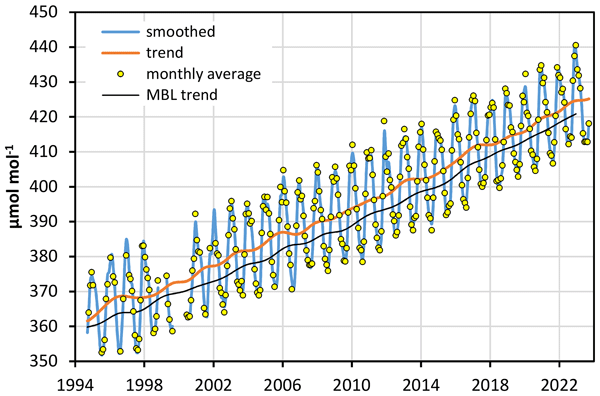
The paper evaluates a 30-year-long atmospheric CO2 data series from a mid-continental central European site, Hegyhátsál (HUN). It presents the site-specific features observed in the long-term evolution of the atmospheric CO2 concentration. Since the measurement data are widely used in atmospheric inverse models and budget calculations all around the world, the paper provides potentially valuable information for model tuning and interpretation of the model results.
László Haszpra, Zoltán Barcza, Zita Ferenczi, Roland Hollós, Anikó Kern, and Natascha Kljun
Atmos. Meas. Tech., 15, 5019–5031, https://doi.org/10.5194/amt-15-5019-2022, https://doi.org/10.5194/amt-15-5019-2022, 2022
Short summary
Short summary
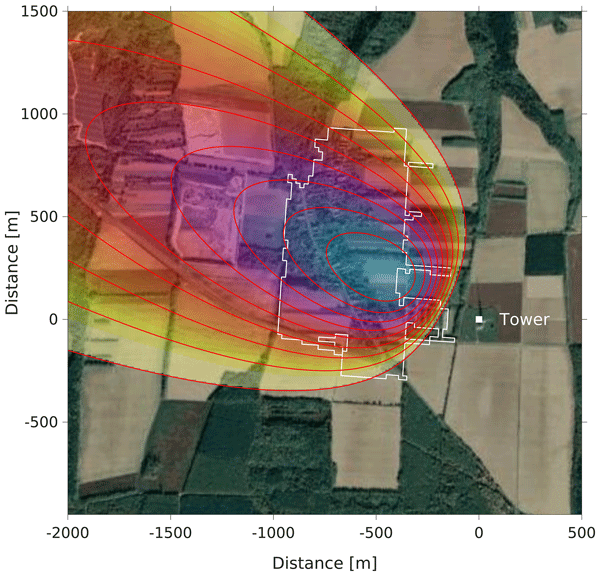
A novel approach is used for the determination of greenhouse gas (GHG) emissions of small rural settlements, which may significantly differ from those of urban regions and have hardly been studied yet. Among other results, it turned out that wintertime nitrous oxide emission is significantly underestimated in the official emission inventories. Given the large number of such settlements, the underestimation may also distort the national total emission values reported to international databases.
Julia Kelly, Tim Schacherl, Lars Eklundh, Hongxiao Jin, Anne Klosterhalfen, Alexander Knohl, and Natascha Kljun
Biogeosciences, 23, 6557–6582, https://doi.org/10.5194/bg-23-6557-2026, https://doi.org/10.5194/bg-23-6557-2026, 2026
Short summary
Short summary
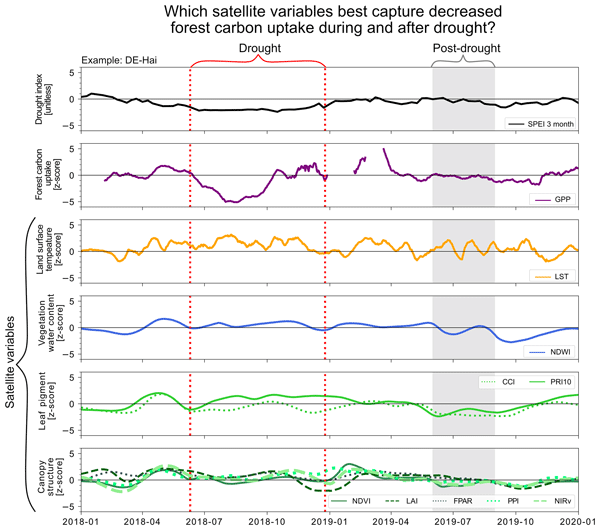
It is vital to monitor drought-related reductions in forest productivity over large areas. We tested the ability of 12 satellite variables to capture negative drought impacts on forest productivity across 18 European forest sites. Surface temperature worked best across all forest sites and droughts. After drought, forest productivity recovered faster than some commonly-used satellite variables, meaning use of these variables may underestimate forests’ resilience to drought.
Anna-Maria Virkkala, Isabel Wargowsky, Judith Vogt, McKenzie A. Kuhn, Simran Madaan, Tiffany Windholz, Kyle A. Arndt, Gerard Rocher-Ros, Mathias Göckede, David Olefeldt, Edward A. G. Schuur, David Bastviken, Richard O'Keefe, Brendan M. Rogers, Jennifer D. Watts, Kelcy Kent, Kristoffer Aalstad, Kelly Aho, Joonatan Ala-Könni, Haley Alcock, Inge Althuizen, Christopher D. Arp, Jun Asanuma, Mika Aurela, Sivakiruthika Balathandayuthabani, Katrin Attermeyer, Alan Barr, Maialen Barret, Ochirbat Batkhishig, Christina Biasi, Mats P. Björkman, Andrew Black, Elena Blanc-Betes, Pascal Bodmer, Julia Boike, Abdullah Bolek, Frédéric Bouchard, Ingeborg Bussmann, Lea Cabrol, Eleonora Canfora, Sean Carey, Karel Castro-Morales, Namyi Chae, Andreas Christen, Torben R. Christensen, Casper T. Christiansen, Housen Chu, Graham Clark, Francois Clayer, Patrick Crill, Christopher Cunada, Scott J. Davidson, Joshua F. Dean, Sigrid Dengel, Matteo Detto, Catherine Dieleman, Florent Domine, Egor Dyukarev, Colin Edgar, Bo Elberling, Craig A. Emmerton, Eugenie Euskirchen, Grant Falvo, Thomas Friborg, Michelle Garneau, Mariasilvia Giamberini, Mikhail V. Glagolev, Miquel A. Gonzalez-Meler, Gustaf Granath, Jón Guðmundsson, Konsta Happonen, Yoshinobu Harazono, Lorna Harris, Josh Hashemi, Nicholas Hasson, Janna Heerah, Liam Heffernan, Manuel Helbig, Warren Helgason, Michal Heliasz, Greg Henry, Geert Hensgens, Tetsuya Hiyama, Beth Holmes, Macall Hock, David Holl, Jutta Holst, Thomas Holst, Gabriel Hould-Gosselin, Elyn Humphreys, Jacqueline Hung, Jussi Huotari, Hiroki Ikawa, Danil V. Ilyasov, Mamoru Ishikawa, Go Iwahana, Hiroki Iwata, Marcin Antoni Jackowicz-Korczynski, Joachim Jansen, Järvi Järveoja, Vincent E. J. Jassey, Rasmus Jensen, Katharina Jentzsch, Robert G. Jespersen, Carl-Fredrik Johannesson, Cheristy P. Jones, Anders Jonsson, Ji Young Jung, Sari Juutinen, Evan Kane, Jan Karlsson, Sergey Karsanaev, Kuno Kasak, Julia Kelly, Kasha Kempton, Marcus Klaus, George W. Kling, Natascha Kljun, Jacqueline Knutson, Hideki Kobayashi, John Kochendorfer, Kukka-Maaria Kohonen, Pasi Kolari, Mika Korkiakoski, Aino Korrensalo, Pirkko Kortelainen, Egle Koster, Kajar Koster, Ayumi Kotani, Praveena Krishnan, Juliya Kurbatova, Lars Kutzbach, Min Jung Kwon, Ethan D. Kyzivat, Jessica Lagroix, Theodore Langhorst, Elena Lapshina, Tuula Larmola, Klaus S. Larsen, Isabelle Laurion, Justin Ledman, Hanna Lee, A. Joshua Leffler, Lance Lesack, Anders Lindroth, David Lipson, Annalea Lohila, Efrén López-Blanco, Vincent L. St. Louis, Erik Lundin, Miska Luoto, Takashi Machimura, Marta Magnani, Avni Malhotra, Marja Maljanen, Ivan Mammarella, Elisa Männistö, Luca Belelli Marchesini, Phil Marsh, Pertti J. Martikainen, Maija E. Marushchak, Mikhail Mastepanov, Alex Mavrovic, Trofim Maximov, Christina Minions, Daniel F. Nadeau, Marco Montemayor, Tomoaki Morishita, Patrick Murphy, Erin Nicholls, Mats B. Nilsson, Anastasia Niyazova, Jenni Nordén, Koffi Dodji Noumonvi, Hannu Nykänen, Walter Oechel, Anne Ojala, Tomohiro Okadera, Sujan Pal, Alexey V. Panov, Tim Papakyriakou, Dario Papale, Sang-Jong Park, Frans-Jan W. Parmentier, Gilberto Pastorello, Mike Peacock, Matthias Peichl, Roman Petrov, Kyra St. Pierre, Norbert Pirk, Jessica Plein, Vilmantas Preskienis, Anatoly Prokushkin, Jukka Pumpanen, Hilary A. Rains, Niklas Rakos, Aleksi Räsänen, Helena Rautakoski, Riikka Rinnan, Janne Rinne, Adrian Rocha, Nigel Roulet, Alexandre Roy, Anna Rutgersson, Aleksandr F. Sabrekov, Torsten Sachs, Erik Sahlée, Alejandro Salazar, Henrique Oliveira Sawakuchi, Christopher Schulze, Roger Seco, Armando Sepulveda-Jauregui, Svetlana Serikova, Abbey Serrone, Hanna M. Silvennoinen, Sofie Sjogersten, June Skeeter, Jo Snöälv, Sebastian Sobek, Oliver Sonnentag, Emily H. Stanley, Maria Strack, Lena Strom, Patrick Sullivan, Ryan Sullivan, Anna Sytiuk, Torbern Tagesson, Pierre Taillardat, Julie Talbot, Suzanne E. Tank, Mario Tenuta, Irina Terenteva, Frederic Thalasso, Antoine Thiboult, Halldor Thorgeirsson, Fenix Garcia Tigreros, Margaret Torn, Amy Townsend-Small, Claire Treat, Alain Tremblay, Carlo Trotta, Eeva-Stiina Tuittila, Merritt Turetsky, Masahito Ueyama, Muhammad Umair, Aki Vähä, Lona van Delden, Maarten van Hardenbroek, Andrej Varlagin, Ruth K. Varner, Tarmo Virtanen, Elena Veretennikova, Timo Vesala, Carolina Voigt, Jorien E. Vonk, Robert Wagner, Katey Walter Anthony, Qinxue Wang, Masataka Watanabe, Hailey Webb, Jeffrey M. Welker, Andreas Westergaard-Nielsen, Sebastian Westermann, Jeffrey R. White, Christian Wille, Scott N. Williamson, Scott Zolkos, Donatella Zona, and Susan M. Natali
Earth Syst. Sci. Data, 18, 6357–6409, https://doi.org/10.5194/essd-18-6357-2026, https://doi.org/10.5194/essd-18-6357-2026, 2026
Short summary
Short summary
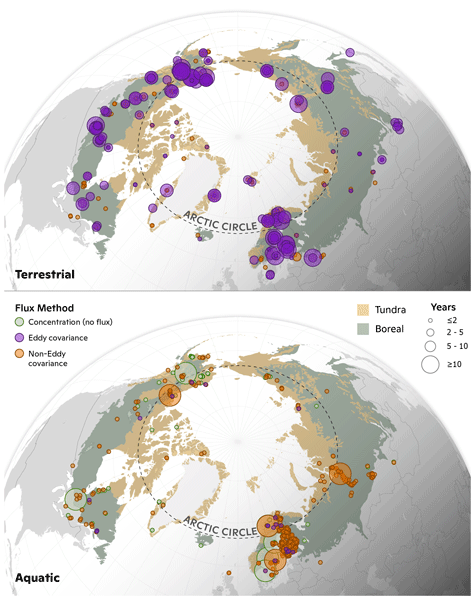
This dataset includes monthly measurements of carbon dioxide and methane exchange between land, water, and the atmosphere from over 1000 sites in Arctic and boreal regions. It combines measurements from a variety of ecosystems, including wetlands, forests, tundra, lakes, and rivers, gathered by over 260 researchers from 1984–2024. This dataset can be used to improve and reduce uncertainty in carbon budgets in order to strengthen our understanding of climate feedbacks in a warming world.
Erica Jaakkola, Johan Lindström, Julia Kelly, Natascha Kljun, and Thomas Holst
EGUsphere, https://doi.org/10.5194/egusphere-2026-5083, https://doi.org/10.5194/egusphere-2026-5083, 2026
This preprint is open for discussion and under review for Biogeosciences (BG).
Short summary
Short summary
Wildfires are increasing in boreal forests, but little is known about how they affect natural emissions of volatile compounds from forest soils. We measured these emissions during the first four years after a major wildfire in Sweden. Emission recovery depended strongly on fire severity, stand age, and post-fire management. Early emissions were largely driven by litter from damaged trees, highlighting how wildfire and forest management can influence atmospheric chemistry and climate feedbacks.
Jesse Juhani Soininen, Kukka-Maaria Kohonen, Stavros Stagakis, Ara Cho, Betty Molinier, Pascal Rubli, Rainer Hilland, Natascha Kljun, and Leena Järvi
EGUsphere, https://doi.org/10.5194/egusphere-2026-4603, https://doi.org/10.5194/egusphere-2026-4603, 2026
This preprint is open for discussion and under review for Atmospheric Chemistry and Physics (ACP).
Short summary
Short summary
Carbonyl sulfide is increasingly used to estimate how much carbon dioxide plants absorb from the atmosphere, but this is difficult in cities because human activities also emit this gas. We measured its exchange between the atmosphere and the urban area of Zurich and found that vegetation remained the main sink, while emissions from human activities reduced this uptake in densely built areas. These results improve the interpretation of urban carbon exchange.
Hélène De Longueville, Daniela B. Melo, Alison L. Redington, Alice Ramsden, Alexandre Danjou, Peter Andrews, Joseph Pitt, Brendan Murphy, Lionel Constantin, Kieran M. Stanley, Simon O'Doherty, Angelina Wenger, Dickon Young, Andreas Engel, Tanja Schuck, Katharina Meixner, Thomas Wagenhaeuser, Fides Gad, Martin K. Vollmer, Stefan Reimann, Michela Maoine, Jgor Arduini, Chris Lunder, Norbert Schmidtbauer, László Haszpra, Mihály Molnár, Arnoud Frumau, Cedric Couret, Matthew Rigby, Stephan Henne, Alistair Manning, and Anita L. Ganesan
Atmos. Chem. Phys., 26, 7647–7675, https://doi.org/10.5194/acp-26-7647-2026, https://doi.org/10.5194/acp-26-7647-2026, 2026
Short summary
Short summary
This study estimates emissions of hydrofluorocarbons, potent greenhouse gases, in north-western Europe using atmospheric observations and atmospheric modelling. The estimates are compared with nationally reported emissions submitted to the United Nations. Overall, our results are consistent with reported values, although differences are found for some gases and countries. The findings indicate that emissions in north-western Europe are declining, reflecting the effects of climate regulations.
Liang Feng, Paul I. Palmer, Haolin Wang, Robert Parker, Hartmut Boesch, Sébastien C. Biraud, Łukasz Chmura, Emanuel Gloor, László Haszpra, Elena Kozlova, Euan G. Nisbet, Steffen M. Noe, Thomas Röckmann, Rodrigo Augusto Ferreira de Souza, and Martin Steinbacher
EGUsphere, https://doi.org/10.5194/egusphere-2026-2662, https://doi.org/10.5194/egusphere-2026-2662, 2026
Short summary
Short summary
This study examines the relative roles of emissions and oxidation in recent rapid methane growth. Using an ensemble Kalman filter, we quantify global methane sources and sinks for 2018–2024. Emission changes dominate the increase, except in 2020 when a COVID‑19‑related OH decline strongly affected sinks. Atmospheric photochemistry—including OH and CH₄ variability and temperature‑dependent oxidation—also significantly shapes the methane budget.
Roland Hollós, Nándor Zrinyi, Zoltán Barcza, Gianni Bellocchi, Renáta Sándor, János Ruff, and Nándor Fodor
Geosci. Model Dev., 19, 4385–4438, https://doi.org/10.5194/gmd-19-4385-2026, https://doi.org/10.5194/gmd-19-4385-2026, 2026
Short summary
Short summary
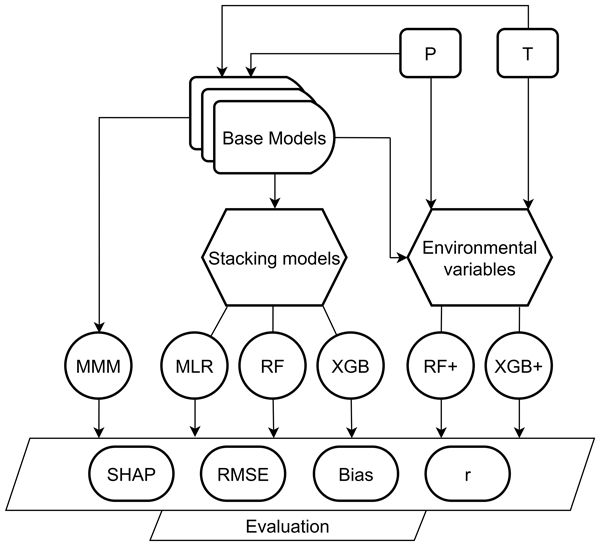
This work builds upon and extends previous multi-model ensemble studies by introducing five meta-modelling approaches to predict ecosystem-scale C fluxes. Our results show that meta-models consistently outperform both the multi-model median and the best individual process-based models, improving explained variance and substantially reducing bias, even for challenging fluxes such as total ecosystem respiration and net ecosystem exchange.
Ann-Kristin Kunz, Samuel Hammer, Patrick Aigner, Laura Bignotti, Lars Borchardt, Jia Chen, Julian Della Coletta, Lukas Emmenegger, Markus Eritt, Xochilt Gutiérrez, Josh Hashemi, Rainer Hilland, Christopher Holst, Armin Jordan, Natascha Kljun, Richard Kneißl, Changxing Lan, Virgile Legendre, Ingeborg Levin, Benjamin Loubet, Matthias Mauder, Betty Molinier, Susanne Preunkert, Michel Ramonet, Stavros Stagakis, and Andreas Christen
Atmos. Chem. Phys., 26, 4967–5003, https://doi.org/10.5194/acp-26-4967-2026, https://doi.org/10.5194/acp-26-4967-2026, 2026
Short summary
Short summary
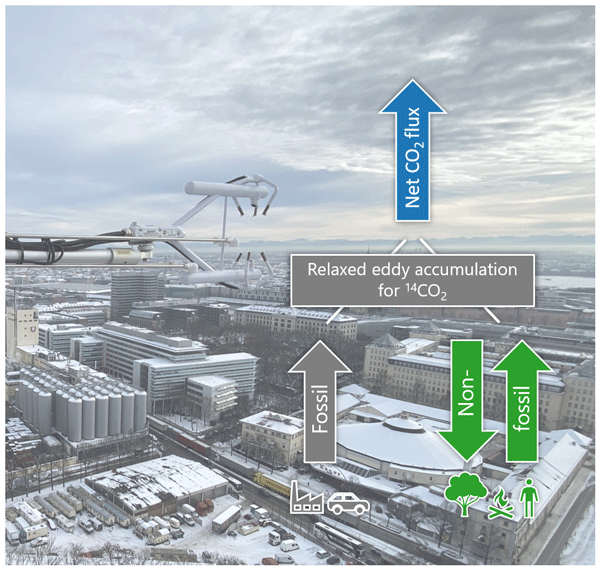
We present radiocarbon (14C)-based fossil fuel CO2 fluxes from relaxed eddy accumulation measurements on tall towers in the cities of Zurich, Paris, and Munich. By separating net CO2 fluxes into fossil and non-fossil components, these data reveal significant and variable contributions from human, plant, and soil respiration, as well as point-source emissions. These unique insights into CO2 flux composition offer crucial information for observation-based validation of urban emission estimates.
Samuel Upton, Markus Reichstein, Wouter Peters, Santiago Botía, Jacob A. Nelson, Sophia Walther, Martin Jung, Fabian Gans, László Haszpra, and Ana Bastos
Atmos. Chem. Phys., 26, 2561–2595, https://doi.org/10.5194/acp-26-2561-2026, https://doi.org/10.5194/acp-26-2561-2026, 2026
Short summary
Short summary
We create a hybrid ecosystem-level carbon flux model using both eddy-covariance observations and observations of the atmospheric mole fraction of CO2 at three tall-tower observatories. Our study uses an atmospheric transport model (STILT) to connect the atmospheric signal to the ecosystem-level model. We show that this inclusion of atmospheric information meaningfully improves the model's representation of the interannual variability of the global net flux of CO2.
Rainer Hilland, Josh Hashemi, Stavros Stagakis, Dominik Brunner, Lionel Constantin, Natascha Kljun, Ann-Kristin Kunz, Betty Molinier, Samuel Hammer, Lukas Emmenegger, and Andreas Christen
Atmos. Chem. Phys., 25, 14279–14299, https://doi.org/10.5194/acp-25-14279-2025, https://doi.org/10.5194/acp-25-14279-2025, 2025
Short summary
Short summary
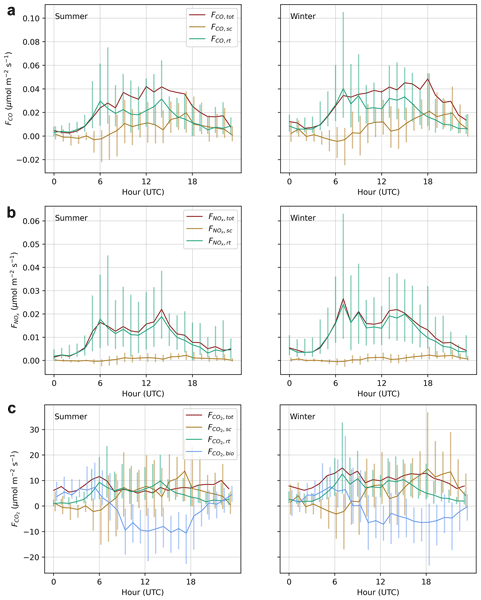
We present a study of simultaneously measured fluxes of carbon dioxide (CO2) and co-emitted species in the city of Zurich. Flux measurements of CO2 alone cannot be attributed to specific emission sectors, such as road transport or residential heating. We present a model which uses the measured ratios of CO2 to carbon monoxide (CO) and nitrogen oxides (NOx) as well as sector-specific reference ratios, to attribute measured fluxes to their emission sectors.
Beata Bukosa, Sara Mikaloff-Fletcher, Gordon Brailsford, Dan Smale, Elizabeth D. Keller, W. Troy Baisden, Miko U. F. Kirschbaum, Donna L. Giltrap, Lìyǐn Liáng, Stuart Moore, Rowena Moss, Sylvia Nichol, Jocelyn Turnbull, Alex Geddes, Daemon Kennett, Dóra Hidy, Zoltán Barcza, Louis A. Schipper, Aaron M. Wall, Shin-Ichiro Nakaoka, Hitoshi Mukai, and Andrea Brandon
Atmos. Chem. Phys., 25, 6445–6473, https://doi.org/10.5194/acp-25-6445-2025, https://doi.org/10.5194/acp-25-6445-2025, 2025
Short summary
Short summary
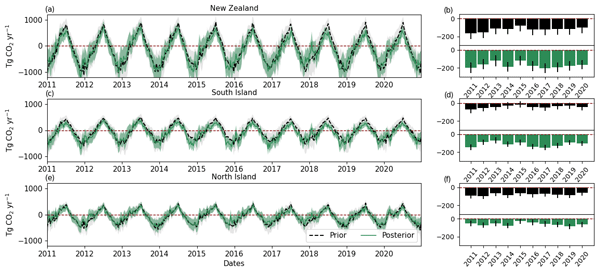
We used atmospheric measurements and inverse modelling to estimate New Zealand's carbon dioxide (CO2) emissions and removals from 2011 to 2020. Our study reveals that New Zealand's land absorbs more CO2 than previously estimated, particularly in areas dominated by indigenous forests. Our results highlight gaps in current national CO2 estimates and methods, suggesting a need for further research to improve emissions reports and refine approaches to track progress toward climate mitigation goals.

Katarína Merganičová, Ján Merganič, Laura Dobor, Roland Hollós, Zoltán Barcza, Dóra Hidy, Zuzana Sitková, Pavel Pavlenda, Hrvoje Marjanovic, Daniel Kurjak, Michal Bošel'a, Doroteja Bitunjac, Maša Zorana Ostrogović Sever, Jiří Novák, Peter Fleischer, and Tomáš Hlásny
Geosci. Model Dev., 17, 7317–7346, https://doi.org/10.5194/gmd-17-7317-2024, https://doi.org/10.5194/gmd-17-7317-2024, 2024
Short summary
Short summary
We developed a multi-objective calibration approach leading to robust parameter values aiming to strike a balance between their local precision and broad applicability. Using the Biome-BGCMuSo model, we tested the calibrated parameter sets for simulating European beech forest dynamics across large environmental gradients. Leveraging data from 87 plots and five European countries, the results demonstrated reasonable local accuracy and plausible large-scale productivity responses.
László Haszpra
Atmos. Meas. Tech., 17, 4629–4647, https://doi.org/10.5194/amt-17-4629-2024, https://doi.org/10.5194/amt-17-4629-2024, 2024
Short summary
Short summary
The paper evaluates a 30-year-long atmospheric CO2 data series from a mid-continental central European site, Hegyhátsál (HUN). It presents the site-specific features observed in the long-term evolution of the atmospheric CO2 concentration. Since the measurement data are widely used in atmospheric inverse models and budget calculations all around the world, the paper provides potentially valuable information for model tuning and interpretation of the model results.
Julia Kelly, Stefan H. Doerr, Johan Ekroos, Theresa S. Ibáñez, Md. Rafikul Islam, Cristina Santín, Margarida Soares, and Natascha Kljun
EGUsphere, https://doi.org/10.5194/egusphere-2024-2016, https://doi.org/10.5194/egusphere-2024-2016, 2024
Preprint archived
Short summary
Short summary
We measured soil carbon fluxes during the first four years after a wildfire in the Swedish boreal forest. Soil CO2 emissions decreased substantially only when trees were killed by fire or by post-fire logging, but not when trees survived the fire and were left standing. Soil methane flux was not affected by fire. Logging trees already killed by fire had no additional impact on soil carbon fluxes. Post-fire forest management strategy impacted vegetation regrowth and carbon dynamics.
Ross Petersen, Thomas Holst, Meelis Mölder, Natascha Kljun, and Janne Rinne
Atmos. Chem. Phys., 23, 7839–7858, https://doi.org/10.5194/acp-23-7839-2023, https://doi.org/10.5194/acp-23-7839-2023, 2023
Short summary
Short summary
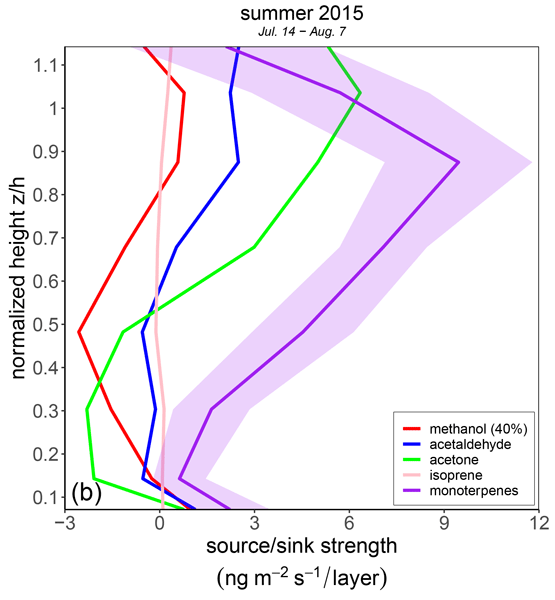
We investigate variability in the vertical distribution of volatile organic compounds (VOCs) in boreal forest, determined through multiyear measurements at several heights in a boreal forest in Sweden. VOC source/sink seasonality in canopy was explored using these vertical profiles and with measurements from a collection of sonic anemometers on the station flux tower. Our results show seasonality in the source/sink distribution for several VOCs, such as monoterpenes and water-soluble compounds.
Janne Rinne, Patryk Łakomiec, Patrik Vestin, Joel D. White, Per Weslien, Julia Kelly, Natascha Kljun, Lena Ström, and Leif Klemedtsson
Biogeosciences, 19, 4331–4349, https://doi.org/10.5194/bg-19-4331-2022, https://doi.org/10.5194/bg-19-4331-2022, 2022
Short summary
Short summary
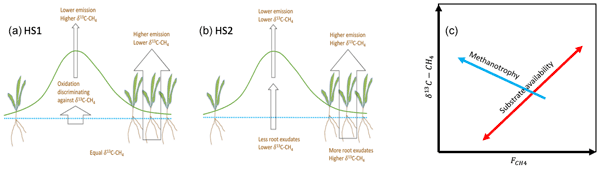
The study uses the stable isotope 13C of carbon in methane to investigate the origins of spatial and temporal variation in methane emitted by a temperate wetland ecosystem. The results indicate that methane production is more important for spatial variation than methane consumption by micro-organisms. Temporal variation on a seasonal timescale is most likely affected by more than one driver simultaneously.
László Haszpra, Zoltán Barcza, Zita Ferenczi, Roland Hollós, Anikó Kern, and Natascha Kljun
Atmos. Meas. Tech., 15, 5019–5031, https://doi.org/10.5194/amt-15-5019-2022, https://doi.org/10.5194/amt-15-5019-2022, 2022
Short summary
Short summary
A novel approach is used for the determination of greenhouse gas (GHG) emissions of small rural settlements, which may significantly differ from those of urban regions and have hardly been studied yet. Among other results, it turned out that wintertime nitrous oxide emission is significantly underestimated in the official emission inventories. Given the large number of such settlements, the underestimation may also distort the national total emission values reported to international databases.

Dóra Hidy, Zoltán Barcza, Roland Hollós, Laura Dobor, Tamás Ács, Dóra Zacháry, Tibor Filep, László Pásztor, Dóra Incze, Márton Dencső, Eszter Tóth, Katarína Merganičová, Peter Thornton, Steven Running, and Nándor Fodor
Geosci. Model Dev., 15, 2157–2181, https://doi.org/10.5194/gmd-15-2157-2022, https://doi.org/10.5194/gmd-15-2157-2022, 2022
Short summary
Short summary
Biogeochemical models used by the scientific community can support society in the quantification of the expected environmental impacts caused by global climate change. The Biome-BGCMuSo v6.2 biogeochemical model has been created by implementing a lot of developments related to soil hydrology as well as the soil carbon and nitrogen cycle and by integrating crop model components. Detailed descriptions of developments with case studies are presented in this paper.

Patryk Łakomiec, Jutta Holst, Thomas Friborg, Patrick Crill, Niklas Rakos, Natascha Kljun, Per-Ola Olsson, Lars Eklundh, Andreas Persson, and Janne Rinne
Biogeosciences, 18, 5811–5830, https://doi.org/10.5194/bg-18-5811-2021, https://doi.org/10.5194/bg-18-5811-2021, 2021
Short summary
Short summary
Methane emission from the subarctic mire with heterogeneous permafrost status was measured for the years 2014–2016. Lower methane emission was measured from the palsa mire sector while the thawing wet sector emitted more. Both sectors have a similar annual pattern with a gentle rise during spring and a decrease during autumn. The highest emission was observed in the late summer. Winter emissions were positive during the measurement period and have a significant impact on the annual budgets.
Cited articles
Aubinet, M., Vesala, T., and Papale, D. (Eds.): Eddy covariance: A practical guide to measurement and data analysis, Springer, Dordrecht, Heidelberg, London, New York, https://doi.org/10.1007/978-94-007-2351-1, 2012.
Balogh, B. S., Csákó, Z., Nyiri, Z., Berlinger, B., Molnár, M., Major, I., Gergely, V., and Szigeti, T.: Residential solid fuel combustion and its contribution to air pollution in Hungary: A comparative study, Atmos. Environ., 360, 121399, https://doi.org/10.1016/j.atmosenv.2025.121399, 2025.
Barcza, Z.: Long term atmosphere/biosphere exchange of CO2 in Hungary, PhD thesis, Eötvös Loránd University, Department of Meteorology, Budapest, http://nimbus.elte.hu/~bzoli/thesis/ (last access: 18 February 2026), 2001.
Barcza, Z., Haszpra, L., Kondo, H., Saigusa, N., Yamamoto, S., and Bartholy, J.: Carbon exchange of grass in Hungary, Tellus B, 55, 187–196, 2003.
Barcza, Z., Kern, A., Haszpra, L., and Kljun, N.: Spatial representativeness of tall tower eddy covariance measurements using remote sensing and footprint analysis, Agr. Forest Meteorol., 149, 795–807, https://doi.org/10.1016/j.agrformet.2008.10.021, 2009.
Barcza, Z., Kern, A., Davis, K. J., and Haszpra, L.: Analysis of the 21-years long carbon dioxide flux dataset from a Central European tall tower site, Agr. Forest Meteorol., 290, 108027, https://doi.org/10.1016/j.agrformet.2020.108027, 2020.
Berger, B. W., Davis, K. J., Yi, C., Bakwin, P. S., and Zhao, C. L.: Long-Term Carbon Dioxide Fluxes from a Very Tall Tower in a Northern Forest: Flux Measurement Methodology, J. Atmos. Ocean. Tech., 18, 529–542, https://doi.org/10.1175/1520-0426(2001)018<0529:LTCDFF>2.0.CO;2, 2001.
Blomquist, B. W., Fairall, C. W., Huebert, B. J., and Wilson, S. T.: Direct measurement of the oceanic carbon monoxide flux by eddy correlation, Atmos. Meas. Tech., 5, 3069–3075, https://doi.org/10.5194/amt-5-3069-2012, 2012.
Bruhn, D., Albert, K. R., Mikkelsen, T. N., and Ambus, P.: UV-induced carbon monoxide emission from living vegetation, Biogeosciences, 10, 7877–7882, https://doi.org/10.5194/bg-10-7877-2013, 2013.
Chi, J., Nilsson, M. B., Kljun, N., Wallerman, J., Fransson, J. E. S., Laudon, H., Lundmark, T., and Peichl, M.: The carbon balance of a managed boreal landscape measured from a tall tower in northern Sweden, Agr. Forest Meteorol., 274, 29–41, https://doi.org/10.1016/j.agrformet.2019.04.010, 2019.
Constant, P., Poissant, L., and Villemur, R.: Annual hydrogen, carbon monoxide and carbon dioxide concentrations and surface to air exchanges in a rural area (Québec, Canada), Atmos. Environ., 42, 5090–5100, https://doi.org/10.1016/j.atmosenv.2008.02.021, 2008.
Copernicus Climate Change Service: ERA5-Land hourly data from 1950 to present, Copernicus Climate Change Service Climate Data Store, https://doi.org/10.24381/cds.e2161bac, 2022.
Cowan, N., Helfter, C., Langford, B., Coyle, M., Levy, P., Moxley, J., Simmons, I., Leeson, S., Nemitz, E., and Skiba, U.: Seasonal fluxes of carbon monoxide from an intensively grazed grassland in Scotland, Atmos. Environ., 194, 170–178, https://doi.org/10.1016/j.atmosenv.2018.09.039, 2018.
Crippa, M., Guizzardi, D., Pagani, F., Banja, M., Muntean, M., Schaaf, E., Becker, W., Monforti Ferrario, F., Quadrelli, R., Risquez Martin, A., Grassi, G., Rossi, S,. Brandao De Melo, J., Jacome Felix Oom, D., Branco, A., San-Miguel, J., Vignati, E.: EDGAR v8.1 Global Air Pollutant Emissions. European Commission, Joint Research Centre [data set], https://doi.org/10.2905/JRC.E1ZGQER, 2026.
Crutzen, P. J., Lawrence, M. G., and Pöschl, U.: On the background photochemistry of tropospheric ozone, Tellus B, https://doi.org/10.3402/tellusb.v51i1.16264, 1999.
Davis, K. J., Bakwin, P. S., Yi, C., Berger, B. W., Zhao, C., Teclaw, R. M., and Isebrands, J. G.: The annual cycles of CO2 and H2O exchange over a northern mixed forest as observed from a very tall tower, Global Change Biol., 9, 1278–1293, https://doi.org/10.1046/j.1365-2486.2003.00672.x, 2003.
Desai, A. R., Xu, K., Tian, H., Weishampel, P., Thom, J., Baumann, D., Andrews, A. E., Cook, B. D., King, J. Y., and Kolka, R.: Landscape-level terrestrial methane flux observed from a very tall tower, Agr. Forest Meteorol., 201, 61–75, https://doi.org/10.1016/j.agrformet.2014.10.017, 2015.
Duncan, B. N., Logan, J. A., Bey, I., Megretskaia, I. A., Yantosca, R. M., Novelli, P. C., Jones, N. B., and Rinsland, C. P.: Global budget of CO, 1988–1997: Source estimates and validation with a global model, J. Geophys. Res., 112D, D22301, https://doi.org/10.1029/2007JD008459, 2007.
Gaubert, B., Worden, H. M., Arellano, A. F. J., Emmons, L. K., Tilmes, S., Barré, J., Martinez Alonso, S., Vitt, F., Anderson, J. L., Alkemade, F., Houweling, S., and Edwards, D. P.: Chemical feedback from decreasing carbon monoxide emissions, Geophys. Res. Lett., 44, 9985–9995, https://doi.org/10.1002/2017gl074987, 2017.
Gelybó, G., Barcza, Z., Kern, A., and Kljun, N.: Effect of spatial heterogeneity on the validation of remote sensing based GPP estimations, Agr. Forest Meteorol., 174–175, 43–53, https://doi.org/10.1016/j.agrformet.2013.02.003, 2013.
Greco, S. and Baldocchi, D. D.: Seasonal variations of CO2 and water vapour exchange rates over a temperate deciduous forest, Global Change Biol., 2, 183–197, https://doi.org/10.1111/j.1365-2486.1996.tb00071.x, 1996.
Haszpra, L. and Barcza, Z.: Climate variability as reflected in a regional atmospheric CO2 record, Tellus B, 62, 417–426, https://doi.org/10.1111/j.1600-0889.2010.00505.x, 2010.
Haszpra, L. and Barcza, Z.: Hourly surface-atmosphere carbon monoxide fluxes at Hegyhátsál (Hungary) tall-tower atmospheric monitoring site with environmental data (1 July 2015–30 June 2025) (Versions v01_18092025_23042026) [Dataset], Zenodo [data set], https://doi.org/10.5281/zenodo.20025124, 2026.
Haszpra, L., Barcza, Z., Bakwin, P. S., Berger, B. W., Davis, K. J., and Weidinger, T.: Measuring system for the long-term monitoring of biosphere/atmosphere exchange of carbon dioxide, J. Geophys. Res., 106D, 3057–3070, https://doi.org/10.1029/2000JD900600, 2001.
Haszpra, L., Barcza, Z., Davis, K. J., and Tarczay, K.: Long term tall tower carbon dioxide flux monitoring over an area of mixed vegetation, Agr. Forest Meteorol., 132, 58–77, https://doi.org/10.1016/j.agrformet.2005.07.002, 2005.
Haszpra, L., Hidy, D., Taligás, T., and Barcza, Z.: First results of tall tower based nitrous oxide flux monitoring over an agricultural region in Central Europe, Atmos. Environ., 176, 240–251, https://doi.org/10.1016/j.atmosenv.2017.12.035, 2018.
Haszpra, L., Barcza, Z., Ferenczi, Z., Hollós, R., Kern, A., and Kljun, N.: Real-world wintertime CO, N2O, and CO2 emissions of a central European village, Atmos. Meas. Tech., 15, 5019–5031, https://doi.org/10.5194/amt-15-5019-2022, 2022.
Hedelius, J. K., Toon, G. C., Buchholz, R. R., Iraci, L. T., Podolske, J. R., Roehl, C. M., Wennberg, P. O., Worden, H. M., and Wunch, D.: Regional and Urban Column CO Trends and Anomalies as Observed by MOPITT Over 16 Years, J. Geophys. Res.-Atmos., 126, e2020JD033967, https://doi.org/10.1029/2020JD033967, 2021.
Heidbach, K., Schmid, H. P., and Mauder, M.: Experimental evaluation of flux footprint models, Agr. Forest Meteorol., 246, 142–153, https://doi.org/10.1016/j.agrformet.2017.06.008, 2017.
Helbig, M., Chasmer, L. E., Kljun, N., Quinton, W. L., Treat, C. C., and Sonnentag, O.: The positive net radiative greenhouse gas forcing of increasing methane emissions from a thawing boreal forest-wetland landscape, Global Change Biol., 23, 2413–2427, https://doi.org/10.1111/gcb.13520, 2017.
Herig Coimbra, P. H., Loubet, B., Laurent, O., Bignotti, L., Lozano, M., and Ramonet, M.: Eddy covariance with slow-response greenhouse gas analysers on tall towers: bridging atmospheric and ecosystem greenhouse gas networks, Atmos. Meas. Tech., 17, 6625–6645, https://doi.org/10.5194/amt-17-6625-2024, 2024.
Herig Coimbra, P. H., Loubet, B., Laurent, O., Mauder, M., Heinesch, B., Bitton, J., Delpierre, N., Berveiller, D., Depuydt, J., and Buysse, P.: Evaluation of a novel approach to partitioning respiration and photosynthesis using eddy covariance, wavelets and conditional sampling, Agr. Forest Meteorol., 372, 110684, https://doi.org/10.1016/j.agrformet.2025.110684, 2025.
Hernandez Rodriguez, L. C., Goodwell, A. E., and Kumar, P.: Inside the flux footprint: The role of organized land cover heterogeneity on the dynamics of observed land-atmosphere exchange fluxes, Frontiers in Water, 5, https://doi.org/10.3389/frwa.2023.1033973, 2023.
Hilland, R., Hashemi, J., Stagakis, S., Brunner, D., Constantin, L., Kljun, N., Kunz, A.-K., Molinier, B., Hammer, S., Emmenegger, L., and Christen, A.: Sectoral attribution of greenhouse gas and pollutant emissions using multi-species eddy covariance on a tall tower in Zurich, Switzerland, Atmos. Chem. Phys., 25, 14279–14299, https://doi.org/10.5194/acp-25-14279-2025, 2025.
Holtslag, A. A. M. and Nieuwstadt, F. T. M.: Scaling the atmospheric boundary layer, Bound.-Lay. Meteorol., 36, 201–209, https://doi.org/10.1007/bf00117468, 1986.
Horner, J. M.: Anthropogenic emissions of carbon monoxide, Rev. Environ. Health, 15, 289–298, https://doi.org/10.1515/REVEH.2000.15.3.289, 2000.
Hungarian Central Statistical Office: Hegyhátsál, Detailed Gazeteer, https://www.ksh.hu/apps/hntr.telepules?p_lang=EN&p_id=30216, last access: 19 September 2025.
IPCC: 2006 IPCC Guidelines for National Greenhouse Gas Inventories – Prepared by the National Greenhouse Gas Inventories Programme, edited by: Eggleston, H. S., Buendia, L., Miwa, K., Ngara, T., and Tanabe, K., https://www.ipcc-nggip.iges.or.jp/public/2006gl/ (last access: 10 December 2025), 2006.
Khalil, M. A. K., Pinto, J. P., and Shearer, M. J.: Atmospheric carbon monoxide, Chemosphere – Global Change Science, 1, ix–xi, https://doi.org/10.1016/S1465-9972(99)00053-7, 1999.
King, G. M.: Land use impacts on atmospheric carbon monoxide consumption by soils, Global Biogeochem. Cy., 14, 1161–1172, https://doi.org/10.1029/2000GB001272, 2000.
King, G. M. and Weber, C. F.: Distribution, diversity and ecology of aerobic CO-oxidizing bacteria, Nat. Rev. Microbiol., 5, 107–118, https://doi.org/10.1038/nrmicro1595, 2007.
Kljun, N., Rotach, M. W., and Schmid, H. P.: A three-dimensional backward Lagrangian footprint model for a wide range of boundary-layer stratifications, Bound.-Lay. Meteorol., 103, 205–226, https://doi.org/10.1023/A:1014556300021, 2002.
Kljun, N., Calanca, P., Rotach, M. W., and Schmid, H. P.: A Simple Parameterisation for Flux Footprint Predictions, Bound.-Lay. Meteorol., 112, 503–523, https://doi.org/10.1023/B:BOUN.0000030653.71031.96, 2004.
Kljun, N., Calanca, P., Rotach, M. W., and Schmid, H. P.: A simple two-dimensional parameterisation for Flux Footprint Prediction (FFP), Geosci. Model Dev., 8, 3695–3713, https://doi.org/10.5194/gmd-8-3695-2015, 2015.
Kroon, P. S., Hensen, A., Jonker, H. J. J., Ouwersloot, H. G., Vermeulen, A. T., and Bosveld, F. C.: Uncertainties in eddy covariance flux measurements assessed from CH4 and N2O observations, Agr. Forest Meteorol., 150, 806–816, https://doi.org/10.1016/j.agrformet.2009.08.008, 2010.
Laasonen, A.: Biogenic carbon monoxide fluxes in four terrestrial ecocystems, MS thesis, University of Helsinki, Faculty of Science, http://hdl.handle.net/10138/337751 (last access: 14 November 2025), 2021.
Laasonen, A., Buzacott, A., Kohonen, K.-M., Lundin, E., Meire, A., Pihlatie, M., and Mammarella, I.: Radiation and surface wetness drive carbon monoxide fluxes from an Arctic peatland, Biogeosciences, 22, 7505–7518, https://doi.org/10.5194/bg-22-7505-2025, 2025.
Lee, X.: On micrometeorological observations of surface-air exchange over tall vegetation, Agr. Forest Meteorol., 91, 39–49, https://doi.org/10.1016/S0168-1923(98)00071-9, 1998.
Lelieveld, J., Gromov, S., Pozzer, A., and Taraborrelli, D.: Global tropospheric hydroxyl distribution, budget and reactivity, Atmos. Chem. Phys., 16, 12477–12493, https://doi.org/10.5194/acp-16-12477-2016, 2016.
Liu, L., Zhuang, Q., Zhu, Q., Liu, S., van Asperen, H., and Pihlatie, M.: Global soil consumption of atmospheric carbon monoxide: an analysis using a process-based biogeochemistry model, Atmos. Chem. Phys., 18, 7913–7931, https://doi.org/10.5194/acp-18-7913-2018, 2018.
Magyar Közút: Az országos közutak 2023. évre vonatkozó keresztmetszeti forgalma, https://internet.kozut.hu/download/az-orszagos-kozutak-2023-evre-vonatkozo-keresztmetszeti- forgalma/, last access: 19 September 2025.
Massman, W. J.: The attenuation of concentration fluctuations in turbulent flow through a tube, J. Geophys. Res.-Atmos., 96, 15269–15273, https://doi.org/10.1029/91jd01514, 1991.
Molinier, B., Aigner, P., Brunner, D., Chen, J., Christen, A., Constantin, L., Denier van der Gon, H., Hilland, R., Kühbacher, D., Li, J., Maiwald, R., Super, I., Vardag, S. N., and Kljun, N.: Insights from the convolution of emission inventories with flux footprints from tall eddy covariance towers at three European cities, ACS ES&T Air, 3, 1664–1676, https://doi.org/10.1021/acsestair.6c00148, 2026.
Moore, C. J.: Frequency response corrections for eddy correlation systems, Bound.-Lay. Meteorol., 37, 17–35, https://doi.org/10.1007/bf00122754, 1986.
Murphy, R. M., Lanigan, G., Martin, D., and Cowan, N.: Carbon monoxide fluxes measured using the eddy covariance method from an intensively managed grassland in Ireland, Environmental Science: Atmospheres, 3, 1834–1846, https://doi.org/10.1039/d3ea00112a, 2023.
Peltola, O., Hensen, A., Belelli Marchesini, L., Helfter, C., Bosveld, F. C., van den Bulk, W. C. M., Haapanala, S., van Huissteden, J., Laurila, T., Lindroth, A., Nemitz, E., Röckmann, T., Vermeulen, A. T., and Mammarella, I.: Studying the spatial variability of methane flux with five eddy covariance towers of varying height, Agr. Forest Meteorol., 214–215, 456–472, https://doi.org/10.1016/j.agrformet.2015.09.007, 2015.
Pihlatie, M., Rannik, Ü., Haapanala, S., Peltola, O., Shurpali, N., Martikainen, P. J., Lind, S., Hyvönen, N., Virkajärvi, P., Zahniser, M., and Mammarella, I.: Seasonal and diurnal variation in CO fluxes from an agricultural bioenergy crop, Biogeosciences, 13, 5471–5485, https://doi.org/10.5194/bg-13-5471-2016, 2016.
Ragsdale, S. W.: Life with carbon monoxide, Critical Reviews in Biochemistry and Molecular Biology, 39, 165–195, https://doi.org/10.1080/10409230490496577, 2004.
Schade, G. W., Hofmann, R.-M., and Crutzen, P. J.: CO emissions from degrading plant matter (I): Measurements, Tellus B, 51, 889–908, https://doi.org/10.3402/tellusb.v51i5.16501, 1999.
Schmidt, G. A., Ruedy, R. A., Miller, R. L., and Lacis, A. A.: Attribution of the present-day total greenhouse effect., J. Geophys. Res., 115D, D20106, https://doi.org/10.1029/2010JD014287, 2010.
Seiler, W. and Giehl, H.: Influence of plants on the atmospheric carbon monoxide, Geophys. Res. Lett., 4, 329–332, https://doi.org/10.1029/GL004i008p00329, 1977.
Sun, W., Kooijmans, L. M. J., Maseyk, K., Chen, H., Mammarella, I., Vesala, T., Levula, J., Keskinen, H., and Seibt, U.: Soil fluxes of carbonyl sulfide (COS), carbon monoxide, and carbon dioxide in a boreal forest in southern Finland, Atmos. Chem. Phys., 18, 1363–1378, https://doi.org/10.5194/acp-18-1363-2018, 2018.
Szopa, S., Naik, V., Adhikary, B., Artaxo, P., Berntsen, T., Collins, W. D., Fuzzi, S., Gallardo, L., Kiendler-Scharr, A., Klimont, Z., Liao, H., Unger, N., and Zani, P.: Short-lived Climate Forcers, In Climate Change 2021: The Physical Science Basis. Contribution of Working Group I to the Sixth Assessment Report of the Intergovernmental Panel on Climate Change, edited by: Masson-Delmotte, V., Zhai, P., Pirani, A., Connors, S. L., Péan, C., Berger, S., Caud, N., Chen, Y., Goldfarb, L., Gomis, M. I., Huang, M., Leitzell, K., Lonnoy, E., Matthews, J. B. R., Maycock, T. K., Waterfield, T., Yelekçi, O., Yu, R., and Zhou, B., Cambridge University Press, Cambridge, United Kingdom and New York, NY, USA, 817–922, https://doi.org/10.1017/9781009157896.008, 2023.
Tanács, E., Belényesi, M., Lehoczki, R., Pataki, R., Petrik, O., Standovár, T., Pásztor, L., Laborczi, A., Szatmári, G., Molnár, Z., Bede-Fazekas, Á., Somodi, I., Kristóf, D., Kovács-Hostyánszki, A., Török, K., Kisné Fodor, L., Zsembery, Z., Friedl, Z., and Maucha, G.: Compiling a high-resolution country-level ecosystem map to support environmental policy: methodological challenges and solutions from Hungary, Geocarto Int., 37, 8746–8769, https://doi.org/10.1080/10106049.2021.2005158, 2021.
Tarr, M. A., Miller, W. L., and Zepp, R. G.: Direct carbon monoxide photoproduction from plant matter, J. Geophys. Res.-Atmos., 100, 11403–11413, https://doi.org/10.1029/94JD03324, 1995.
Tikkasalo, O.-P., Peltola, O., Alekseychik, P., Heikkinen, J., Launiainen, S., Lehtonen, A., Li, Q., Martínez-García, E., Peltoniemi, M., Salovaara, P., Tuominen, V., and Mäkipää, R.: Eddy-covariance fluxes of CO2, CH4 and N2O in a drained peatland forest after clear-cutting, Biogeosciences, 22, 1277–1300, https://doi.org/10.5194/bg-22-1277-2025, 2025.
Tuovinen, J.-P., Aurela, M., Hatakka, J., Räsänen, A., Virtanen, T., Mikola, J., Ivakhov, V., Kondratyev, V., and Laurila, T.: Interpreting eddy covariance data from heterogeneous Siberian tundra: land-cover-specific methane fluxes and spatial representativeness, Biogeosciences, 16, 255–274, https://doi.org/10.5194/bg-16-255-2019, 2019.
van Asperen, H., Warneke, T., Sabbatini, S., Nicolini, G., Papale, D., and Notholt, J.: The role of photo- and thermal degradation for CO2 and CO fluxes in an arid ecosystem, Biogeosciences, 12, 4161–4174, https://doi.org/10.5194/bg-12-4161-2015, 2015.
van Asperen, H., Warneke, T., Carioca de Araújo, A., Forsberg, B., José Filgueiras Ferreira, S., Röckmann, T., van der Veen, C., Bulthuis, S., Ramos de Oliveira, L., de Lima Xavier, T., da Mata, J., de Oliveira Sá, M., Ricardo Teixeira, P., Andrews de França e Silva, J., Trumbore, S., and Notholt, J.: The emission of CO from tropical rainforest soils, Biogeosciences, 21, 3183–3199, https://doi.org/10.5194/bg-21-3183-2024, 2024.
van der Molen, M. K., Gash, J. H. C., and Elbers, J. A.: Sonic anemometer (co)sine response and flux measurement: II. The effect of introducing an angle of attack dependent calibration, Agr. Forest Meteorol., 122, 95–109, 2004.
Vickers, D. and Mahrt, L.: Quality Control and Flux Sampling Problems for Tower and Aircraft Data, J. Atmos. Ocean. Tech., 14, 512–526, https://doi.org/10.1175/1520-0426(1997)014<0512:qcafsp>2.0.co;2, 1997.
Webb, E. K., Pearman, G. I., and Leuning, R.: Correction of flux measurements for density effects due to heat and water vapour transfer, Q. J. Roy. Meteor. Soc., 106, 85–100, https://doi.org/10.1002/qj.49710644707, 1980.
Whalen, S. C. and Reeburgh, W. S.: Carbon monoxide consumption in upland boreal forest soils, Soil Biol. Biochem., 33, 1329–1338, https://doi.org/10.1016/S0038-0717(01)00038-4, 2001.
WMO: Twenty-First WMO/IAEA Meeting on Carbon Dioxide, Other Greenhouse Gases and Related Tracers Measurement Techniques (GGMT-2022), edited by: Crotwell, A., Huang, L., Sperlich, P., and Vogel, F., WMO GAW Report no. 292, https://library.wmo.int/idurl/4/68925 (last access: 18 December 2025), 2024.
Zhao, Y., Saunois, M., Bousquet, P., Lin, X., Berchet, A., Hegglin, M. I., Canadell, J. G., Jackson, R. B., Deushi, M., Jöckel, P., Kinnison, D., Kirner, O., Strode, S., Tilmes, S., Dlugokencky, E. J., and Zheng, B.: On the role of trend and variability in the hydroxyl radical (OH) in the global methane budget, Atmos. Chem. Phys., 20, 13011–13022, https://doi.org/10.5194/acp-20-13011-2020, 2020.
Zheng, B., Chevallier, F., Yin, Y., Ciais, P., Fortems-Cheiney, A., Deeter, M. N., Parker, R. J., Wang, Y., Worden, H. M., and Zhao, Y.: Global atmospheric carbon monoxide budget 2000–2017 inferred from multi-species atmospheric inversions, Earth Syst. Sci. Data, 11, 1411–1436, https://doi.org/10.5194/essd-11-1411-2019, 2019.
Short summary
The net land-atmosphere exchange of carbon monoxide remains highly uncertain due to the scarcity of long-term monitoring. This study analyses a 10-year-long data series from a tall-tower eddy covariance system. The flux footprint of this system covers a heterogeneous landscape. Vegetation-dominated areas acted as a weak net source. Solar radiation was identified as the primary driver of the emissions. Emissions from the populated areas significantly exceeded the activity-based estimations.
The net land-atmosphere exchange of carbon monoxide remains highly uncertain due to the scarcity...


Altmetrics
Final-revised paper
Preprint